Contents(6)
In 2021, BlueTrend established Taiwan's Ocean Citizen Scientist marine life database platform, collecting photographs of marine life from across Taiwan. In 2022, the team consolidated user feedback and carried out the platform's first major overhaul — redesigning the database interface to be more intuitive, streamlining the upload process, and introducing a community-based identification feature to put the spirit of citizen science into practice. In 2023, the revamped database officially launched; paired with a series of events, it accumulated over ten thousand photos by year's end.
To ensure the accuracy of information, every identification record is reviewed and verified by a biologist. The surge in incoming data also significantly increased the manpower required for photo identification. Against this backdrop, the idea of integrating AI identification was born — with the hope that AI could ease the burden on human identifiers. In 2023, the team participated in the Taiwan Mobile Foundation's Tech The Dreamers programme, securing funding to begin planning a technological system for AI-based marine life photo identification. (Truth be told, we secretly sent Blu off for training!)
Acquiring Marine Life Data Is No Easy Task
AI image recognition is already a well-matured technology, yet resources for identifying marine life remain far fewer than those for terrestrial animals. The primary reason is that marine research is inherently more challenging than research conducted on land. Due to the technical and financial constraints of ocean exploration, relevant biological data is comparatively scarce — and this directly affects the building of datasets for AI training.
The team encountered the very same challenge when training "AI Blu." Effective machine learning and AI development rely on vast amounts of data to train models; each species requires at least 500–1,000 photographs to achieve meaningful training results. However, the number of marine life photos available is severely lacking, and photo identification also demands very distinct visual features before it can be carried out — making the development of an AI marine life photo identification system all the more difficult. At present, "AI Blu's" knowledge is still at a relatively early stage, which is why expanding the collection of marine life photographs is a top priority.
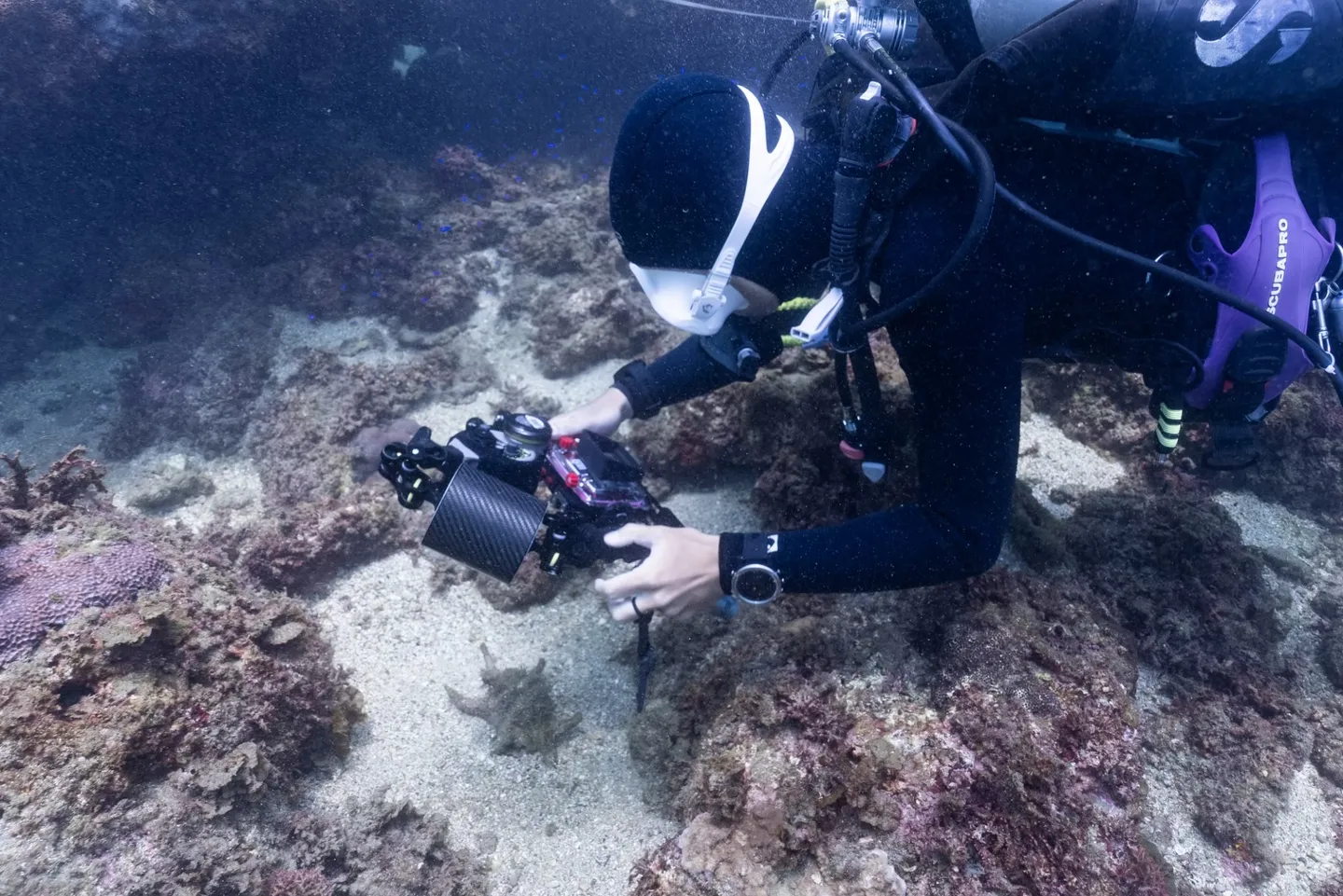
Underwater photography demands far greater technical skill and cost than photography on land


Introducing the AI Ocean Database Identification System
Many thanks to the Taiwan Mobile Foundation for their financial support — this year, Blu has finally enrolled in marine life school and begun formal training!
When selecting species, the team naturally started with the underwater photography superstar: the nudibranch. After all, the cameras of macro photography enthusiasts are surely packed with sharp, detailed nudibranch shots! Even so, the collection process proved extremely challenging. Blu has currently learned to identify over 20 species of nudibranch, with 100–300 training photos per species — just those 20 species alone required more than 3,000 photographs. (The Editor is quietly wishing everyone would upload more photos!)
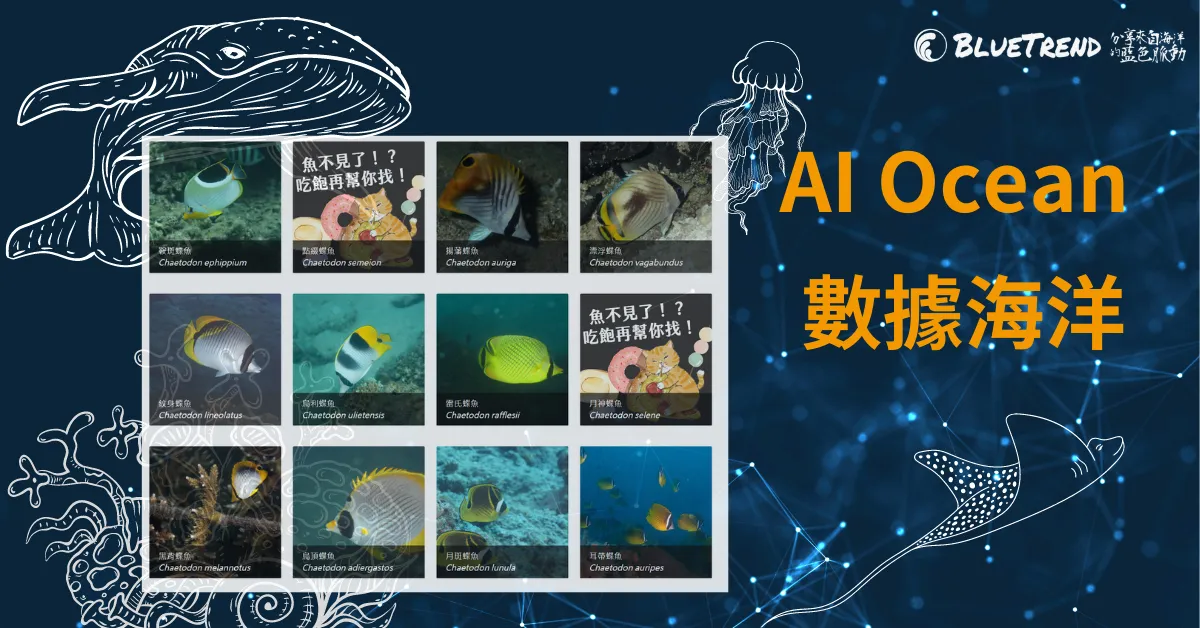
In addition, Blu has been learning about echinoderms, gastropods and bivalves, molluscs, and the sea turtles most commonly spotted around Xiaoliuqiu. The selection has focused primarily on photogenic, representative marine species. Blu can now identify 80 species of marine life, and the goal is to reach 150 species by the end of 2024, at which point fish identification will begin as well.

Have you spotted the AI special-edition Blu?
Decoding the AI Identification Logic
For those of you who have had AI Blu identify a photo — has anyone ever wondered what those percentages actually mean? Here's an explanation of how the AI identification logic works.
We group submissions by broad category — that is, the main category you select when uploading a photo. From there, labels are assigned within each group, photos are fed to AI Blu for each label, and the learning process begins. So please make absolutely sure you choose the correct category when uploading — don't get it wrong!!
Next comes the computation method. Because Blu learns from a large number of different photos rather than repeatedly training on the same image, it will search within the category you've selected and return the closest match it can find. Since the current training database is not yet robust enough, AI Blu still has a long way to go before becoming a master identifier — so the team asked the engineers to add a correction button on the front end. If AI Blu gets an identification wrong, users can step in and correct it.
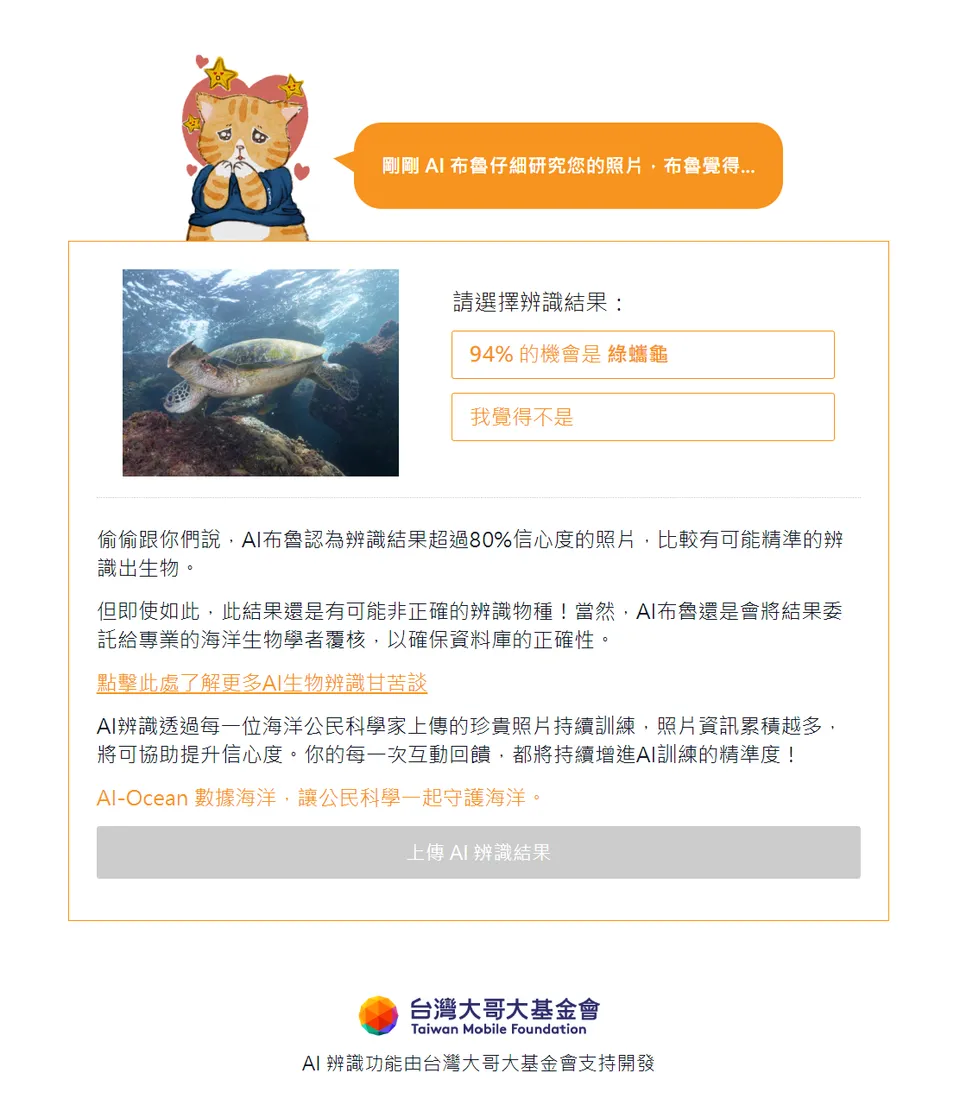
AI Blu will show you the likelihood for each species — the final call is yours!
Maintaining the Highest Database Accuracy
If you've read this far through all the technical details, give yourself a round of applause — three claps for you!
Many people may start to wonder: "I don't even recognise these species myself — how am I supposed to know whether AI Blu has made a mistake?" Please rest assured on this point. Before any data is exported or used, the team will still have professional identification experts review it, and will periodically browse the database to check for any photos that may have been placed in the wrong category.
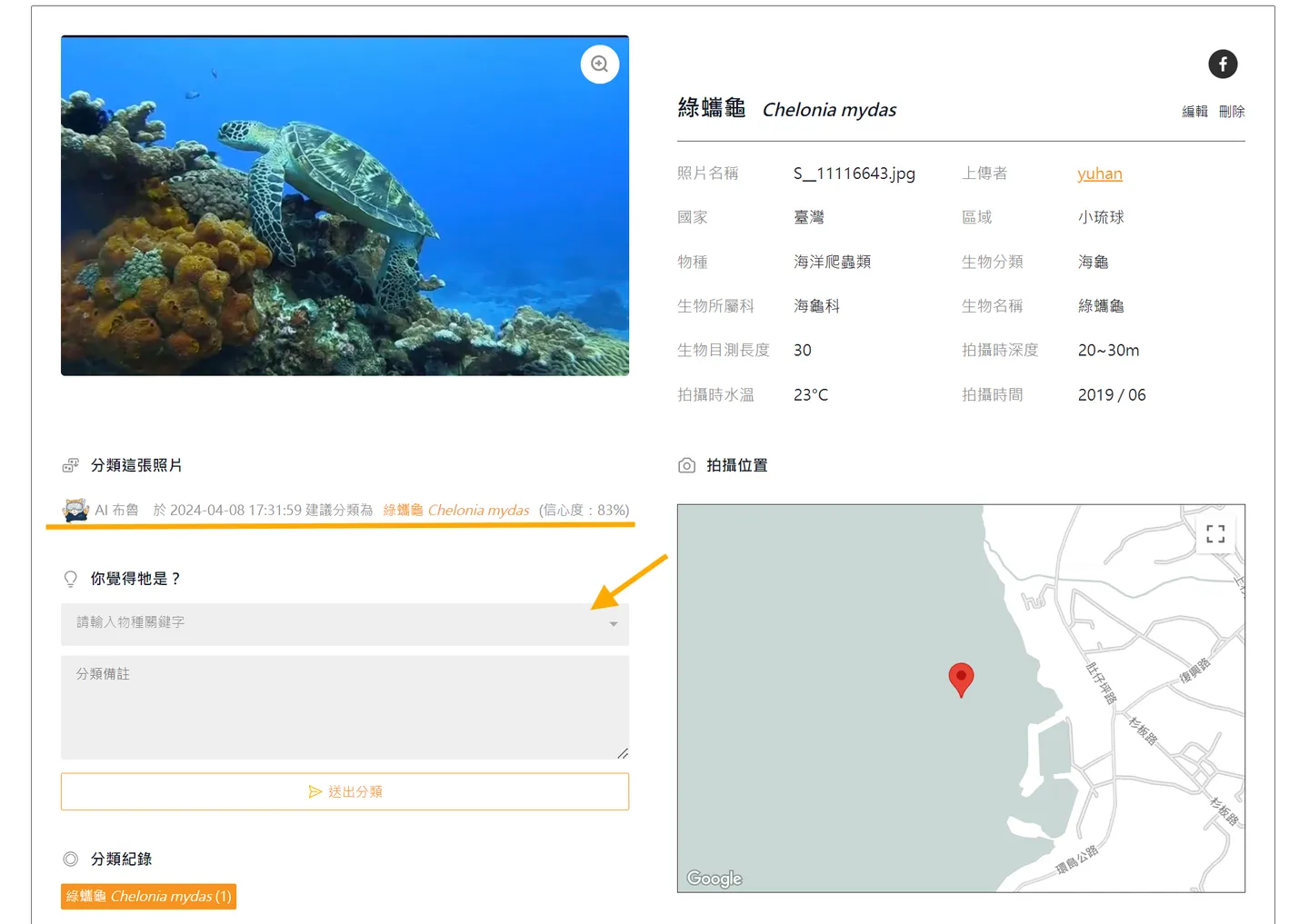
If you think AI Blu has made an incorrect identification, go ahead and enter the correct species to override it
A heartfelt thank you to all our users for your continued support — your contributions have allowed the database to advance so rapidly. We also hope everyone will keep uploading photos; the Editor will be feeding them into AI Blu's dataset so it can hit the books and sharpen its skills!
Once again, our sincere thanks to the Taiwan Mobile Foundation's Tech The Dreamers programme for enabling the team to build AI Blu and take the database to the next level.
AI Ocean — combining technology and citizen science with marine research, for a biodiverse future for Taiwan's oceans.
Related Links
Further Reading

![[Marine Field Guide] Can You Tell the Difference — Is This a Rhinopias frondosa or a Rhinopias eschmeyeri?](/_astro/%E6%88%AA%E5%9C%96-2021-05-17-09.50.14-1_GWENy.webp)