

![[Taiwan Diving – Dylan Chen Column] How to Deliver a Dive Briefing That Leaves Students Feeling Completely Clear](/_images/81793145df95-1440w.webp)
Contents(5)
I will never forget my first date with my wife — we went to "A-Gui Diving" on Xiaoliuqiu, which was also my first time diving at an offshore island. I was so green that I actually brought my own weights, having no idea that dive shops supply them.
We hopped on a bamboo raft and headed out to Wugui Cave. Once we reached the dive site, A-Gui launched into his briefing, and I was completely transfixed. It was practically a landscape painting — the topography was crystal clear, every creature you might encounter was noted, and nothing worth paying attention to was left out. For a rookie like me at the time, it was nothing short of a revelation. Even now, my own site sketches are still pretty rough, but I've developed a sense for what makes a dive briefing good — and what makes one truly great.
How to Make It Clearer: The 3 Essential Elements Every Dive Briefing Must Have
A pre-dive briefing doesn't need to be long — around five to eight minutes is usually plenty — but it must clearly cover everything divers are likely to encounter, so that students feel both excited about the dive and aware of what they need to watch out for. Here are the three essential elements every dive briefing must include:
1. Dive Conditions – The Fun Factor
You need to clearly explain the conditions at the site. Most importantly, you want students to feel a sense of anticipation — you want them excited — so make sure to spend extra time on marine life introductions.
The following should always be covered: site name, description, depth, water temperature, visibility, current, topography (site map), direction, interesting highlights, and marine life introductions.
If you're not sure where to get this kind of information, consider picking up books from the series on Kenting's best dive sites, Orchid Island's best dive sites, and Green Island's best dive sites — they'll quickly help you get to know each location.
2. Dive Procedures – A Relaxed Flow
Next, brief your divers on your role and how they can identify you underwater, the planned dive duration, how to enter and exit the water, the recommended route, when to begin the 5-metre safety stop, air management, the pressure levels at which they should report back (typically 120 bar and 70 bar), group control, and a review of hand signals.
The main goal here is to put students at ease — to make them feel that the dive is well within their abilities and won't push beyond their current experience level. The more clearly you explain things, the more relaxed they'll feel.
3. Emergency Situations – Knowing How to Respond
Diving always carries risk, and our job as instructors is to minimise it. Covering emergency procedures is therefore essential. Explain what to do if a dive buddy is separated — using the one-minute emergency procedure (if separated underwater, spend one minute searching; if you can't find your buddy, surface immediately and regroup — both parties will be able to meet on the surface). Cover what to do when air runs low or runs out, including how to use the octopus / alternate second stage or end the dive, diver recall procedures, and how to use the surface marker buoy (SMB).
A good briefing doesn't shy away from discussing risks — it ensures students know what situations they may face and exactly how to respond. That is what truly needs to be communicated.


The Dive Depends on the Weather, But a Great Dive Depends on You
If you arrive at a dive site for a diving activity and find that after collecting payment and handing out equipment, the operator simply leads you to the water without giving you a dive briefing, take that as a serious warning sign. An instructor who skips the most fundamental duty of a dive guide — how can you possibly expect them to look after you properly underwater?
A good dive briefing should leave students feeling "good, clear, and fully informed" about every move they'll make in the water and every procedure they may need to follow.
I place great importance on delivering a pre-dive briefing before every single dive. Every dive should be planned. "Plan your dive, Dive your plan" — planning your dive and then following that plan is what every good dive guide and instructor must uphold.
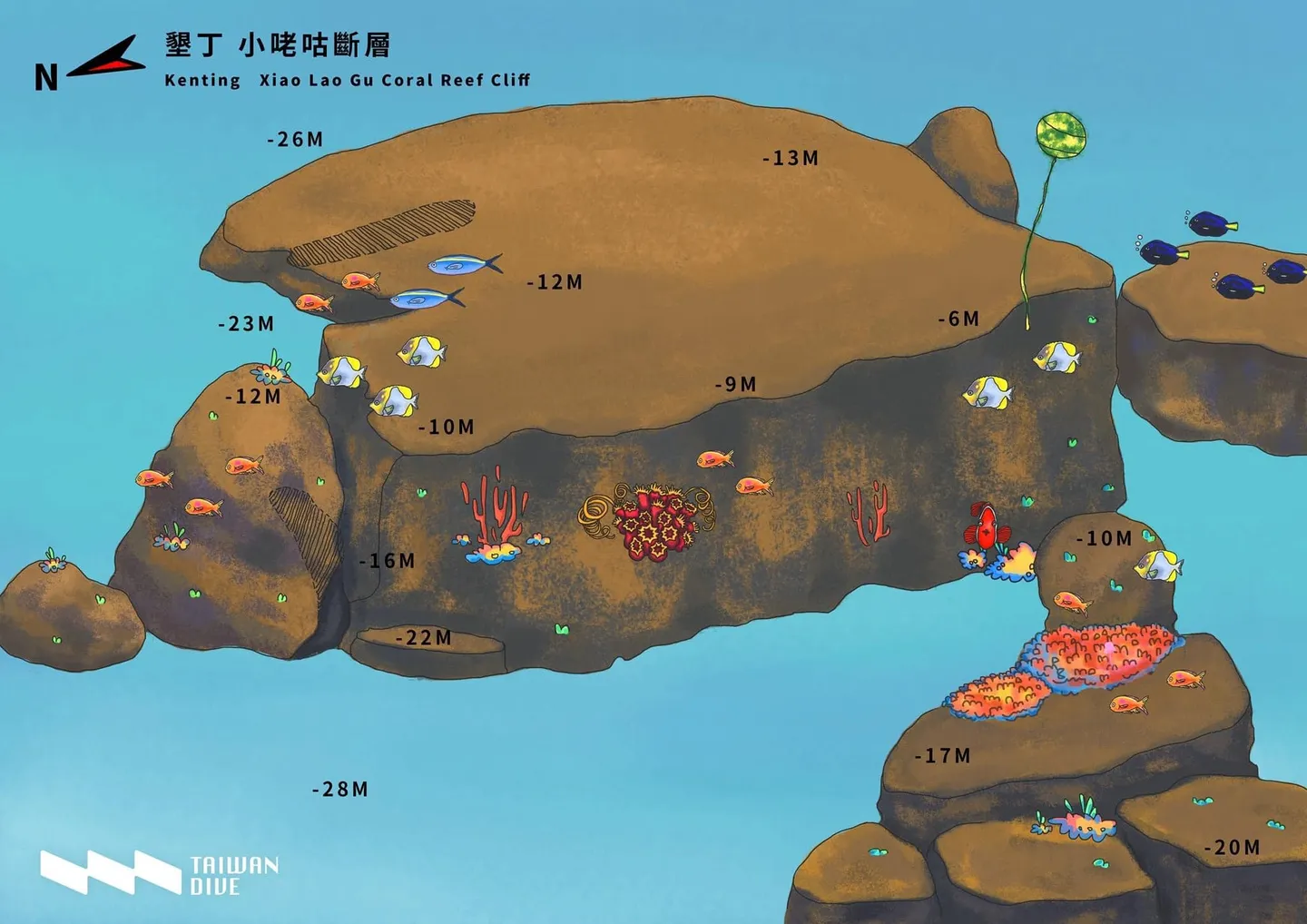
Dive site map for Xiao Lao Gu, Kenting
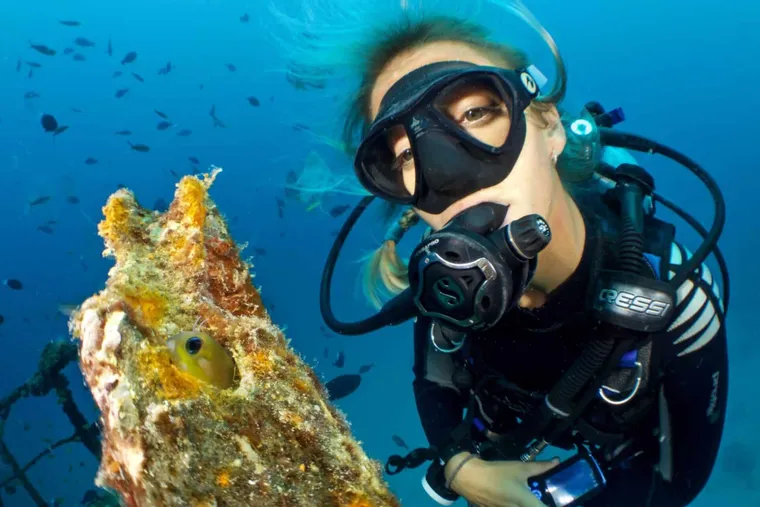
Cover image credit — Photographer: Maël BALLAND, via Pexels
Editor: Jenny Tsai
Further reading:

![[Taiwan Diving – Dylan Chen Column] 3 Essential Qualities of a Competent Divemaster Assistant Instructor (The Second-in-Command)](/_astro/0503_Z1EK3hU.webp)
![[Taiwan Diving – Dylan Chen Column] When Planning a Dive Trip, How to Choose a Dive Shop: 3 Key Dimensions — "Dive, Life, Style"](/_astro/FB_IMG_1618541278834-1_Z2vhciJ.webp)