![[Diving with Da-Tou Shi] How to Organize a Safe Ocean Cleanup Dive](/_images/d3082dfef0f5-960w.webp)
Contents(5)
Before you read on, the Editor has a great giveaway to share first! Simply leave a comment with a photo of yourself participating in a beach cleanup or ocean cleanup dive on the BlueTrend fan page event post before 22:00 on 8/12, 2019, and you'll have a chance to win a MIT premium regulator set sponsored by YHS Yuhsin Management Consulting! Event link — click here <=
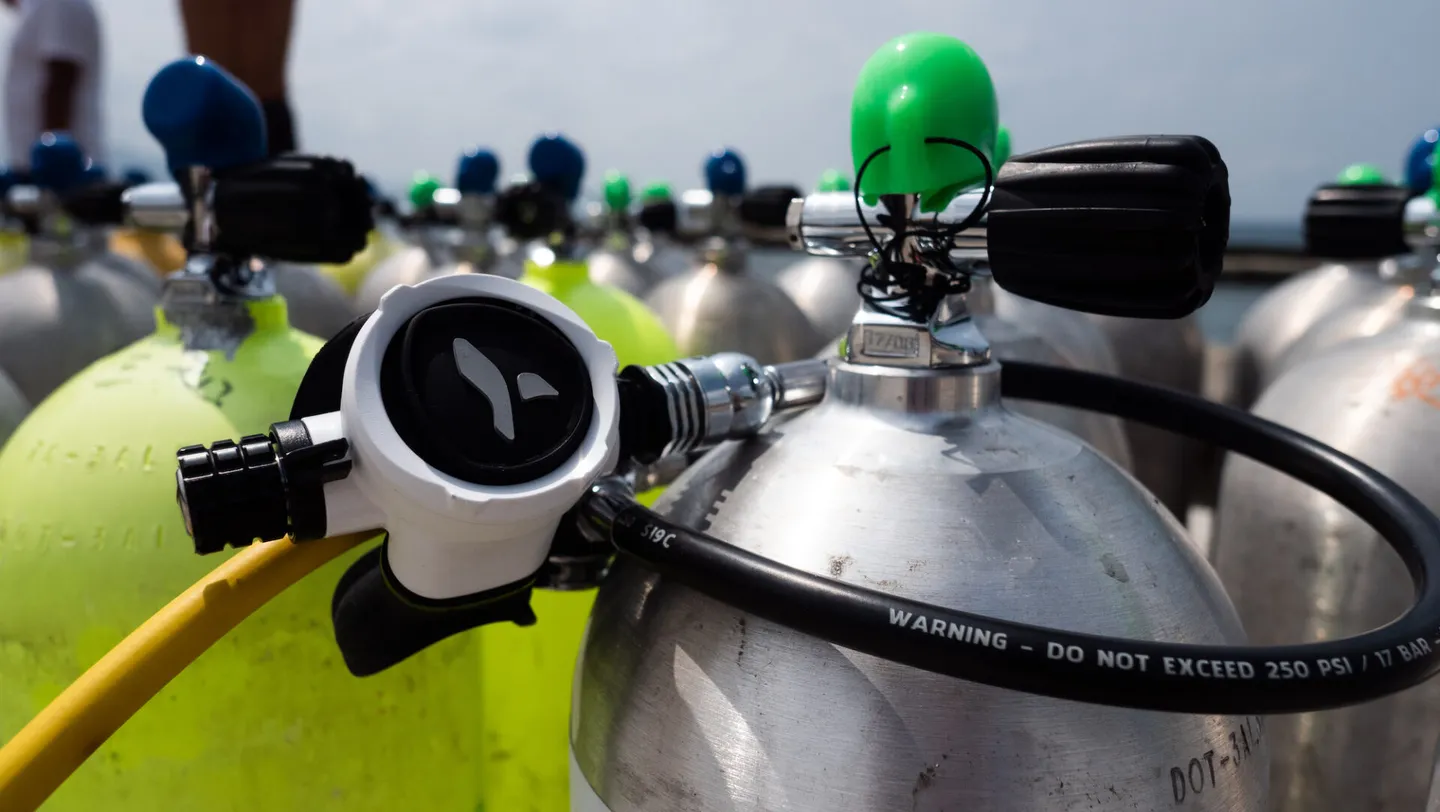
MIT premium regulator set sponsored by YHS Yuhsin Management Consulting
Beyond Beach Cleanups — We Can Dive to Clean the Ocean Too!
As conservation awareness grows, more and more organizations are spontaneously holding beach cleanup events, and taking part in these meaningful activities has almost become a mainstream form of environmental action. But beyond cleaning up on shore, those of us who are divers can actually strap on a scuba tank and head underwater to collect trash. In this article, we asked Da-Tou Shi to share how he efficiently and safely plans an ocean cleanup dive — experience he gained over a year of coaching training with the Jiu Diving Club.
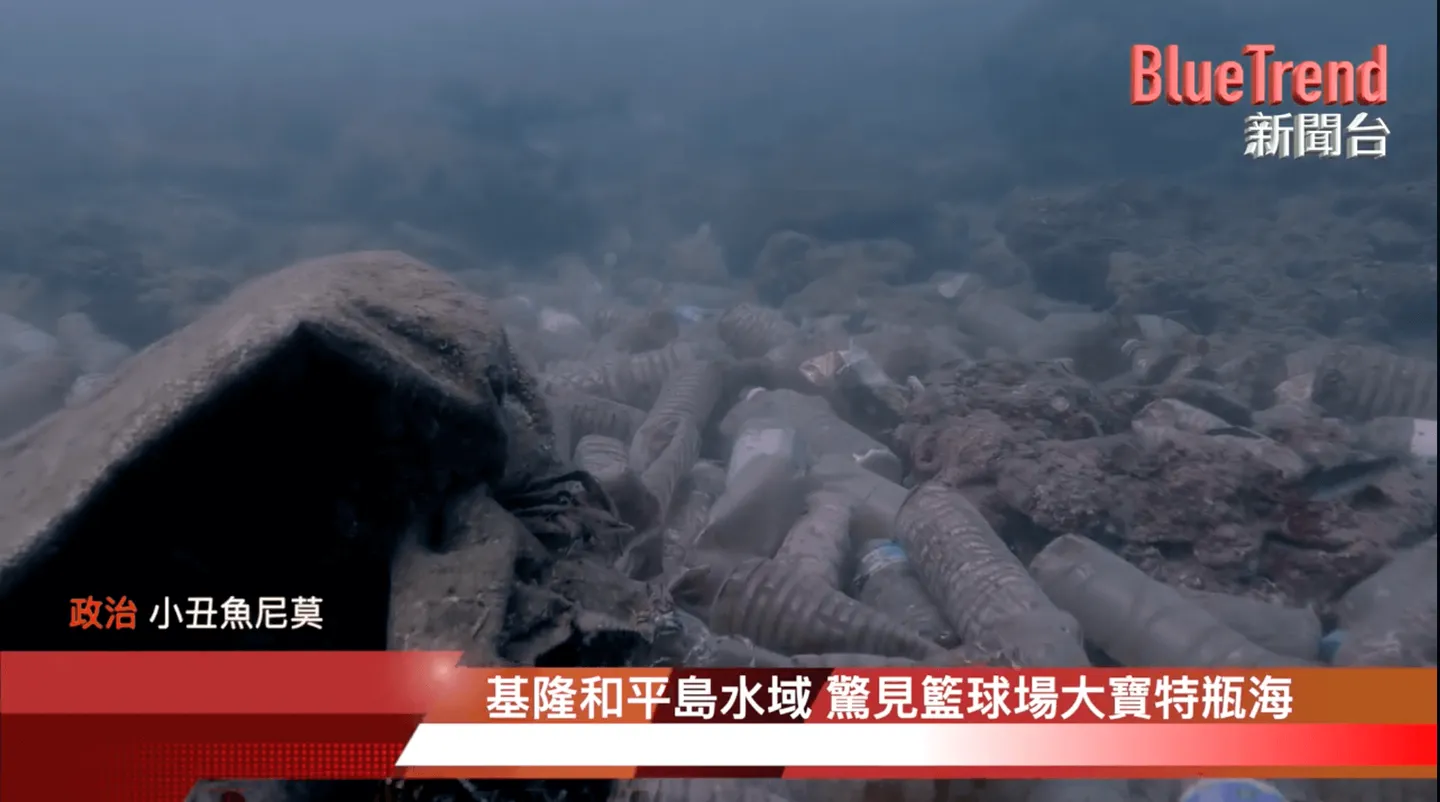
First, take a look at this shocking footage of a "plastic bottle sea" at Heping Island that we filmed this year!
[fb_plugin video href="https://www.facebook.com/BlueTrend.Media/videos/678695082580792/" autoplay="true" ]


TIP 1: Choosing a Location
When organizing an ocean cleanup dive, besides the safety of the water itself, the thing we as organizers fear most is actually not finding any trash!! That's a genuinely dreadful scenario — you gather everyone together, but nobody comes back with bags overflowing with rubbish, and there's an inexplicable sense of disappointment (the Editor genuinely thinks everyone who shows up for an ocean cleanup has an incredibly generous spirit).
So we can start by looking at the geography of the area. Here are two bodies of water where we frequently hold ocean cleanup dives, shared for your reference.
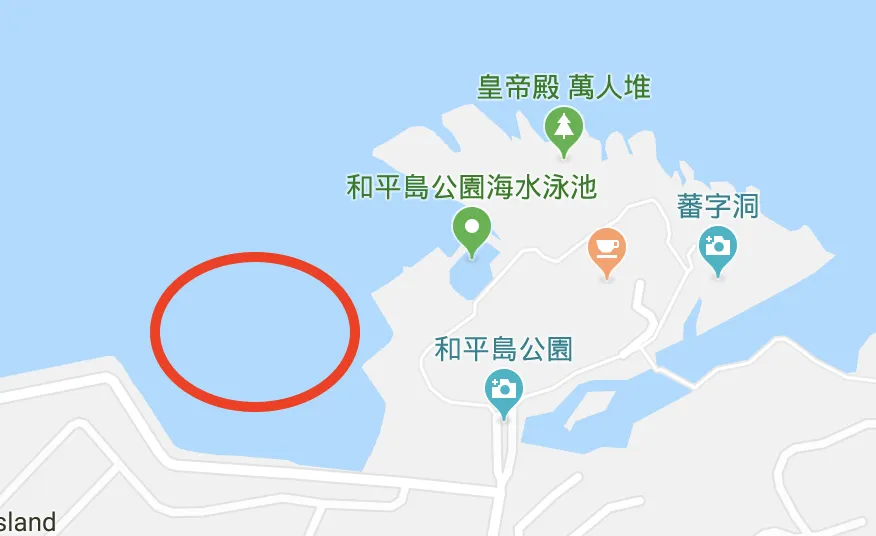
The waters around Heping Island are well-known for their famous "plastic bottle seas"
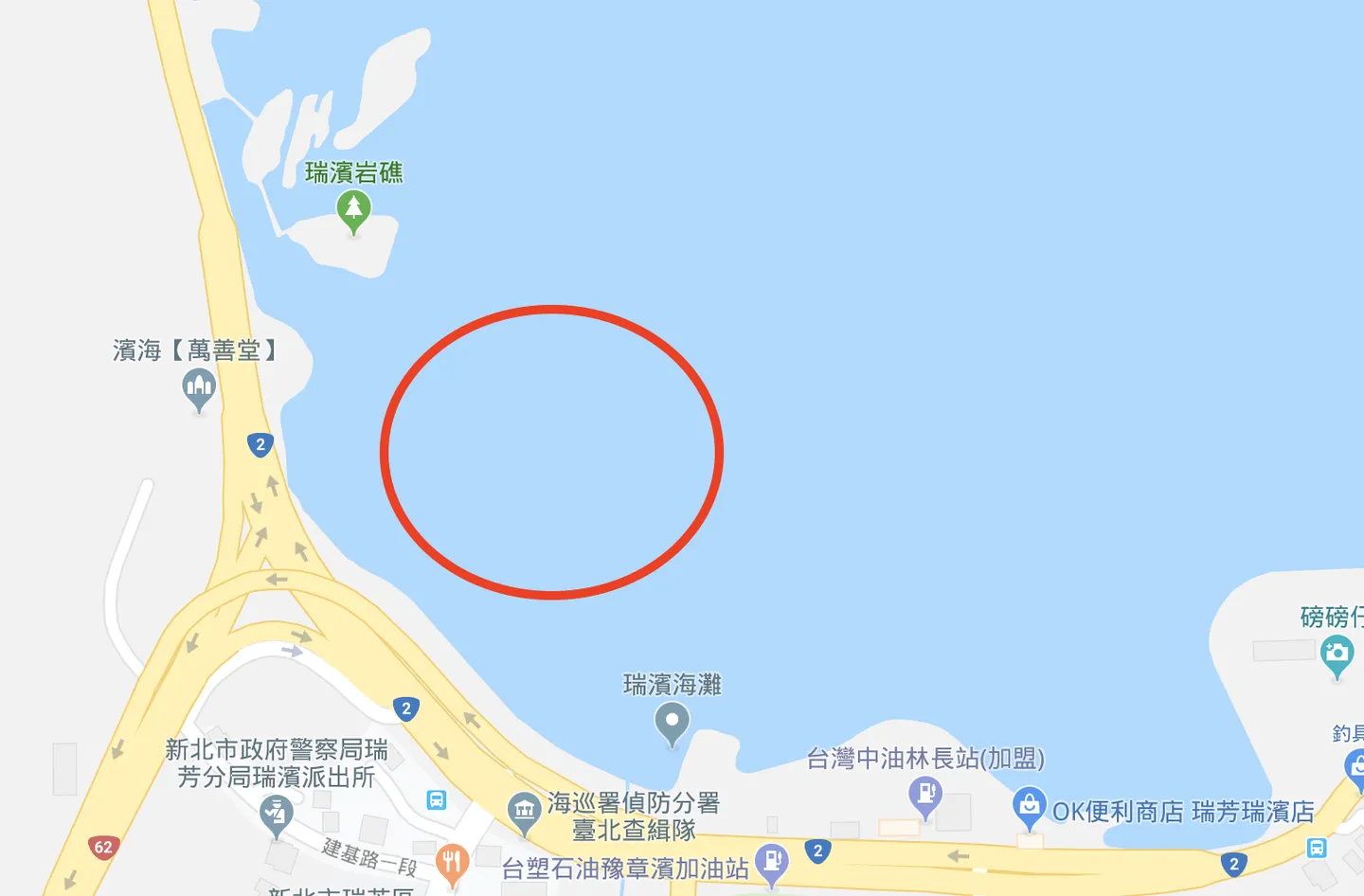
The small cove accessed from Route 62 is also a known gathering point for marine debris
As the images above show, trash tends to accumulate inside small coves because currents drift in and stall — sometimes even forming eddy currents — trapping debris with nowhere to escape (a bit like catching turtles in a jar). So when selecting a location, it's worth starting your scouting with this kind of topography in mind.
TIP 2: Ensuring Safety
Once you've confirmed the location, you can proceed with an on-site reconnaissance dive. Before assembling your scouting team, make sure everyone has a few key concepts in mind!
- Since we're calling it a "team," please make sure at least two people go together — always follow the dive buddy system.
- Bring a camera or video camera to document conditions underwater.
- A surface marker buoy (SMB) is essential. If you're lucky enough to discover a "plastic bottle sea," you can use it to mark your position at the surface.
On the subject of location recommendations for ocean cleanup dives, Da-Tou Shi also shared some practical insights. The following guidance is aimed at entry-level group ocean cleanup dives. If your team is an advanced cleanup crew (deep-water cleanups, ghost net removal, lifting heavy objects using an SMB, etc.), those scenarios are beyond the scope of this article.
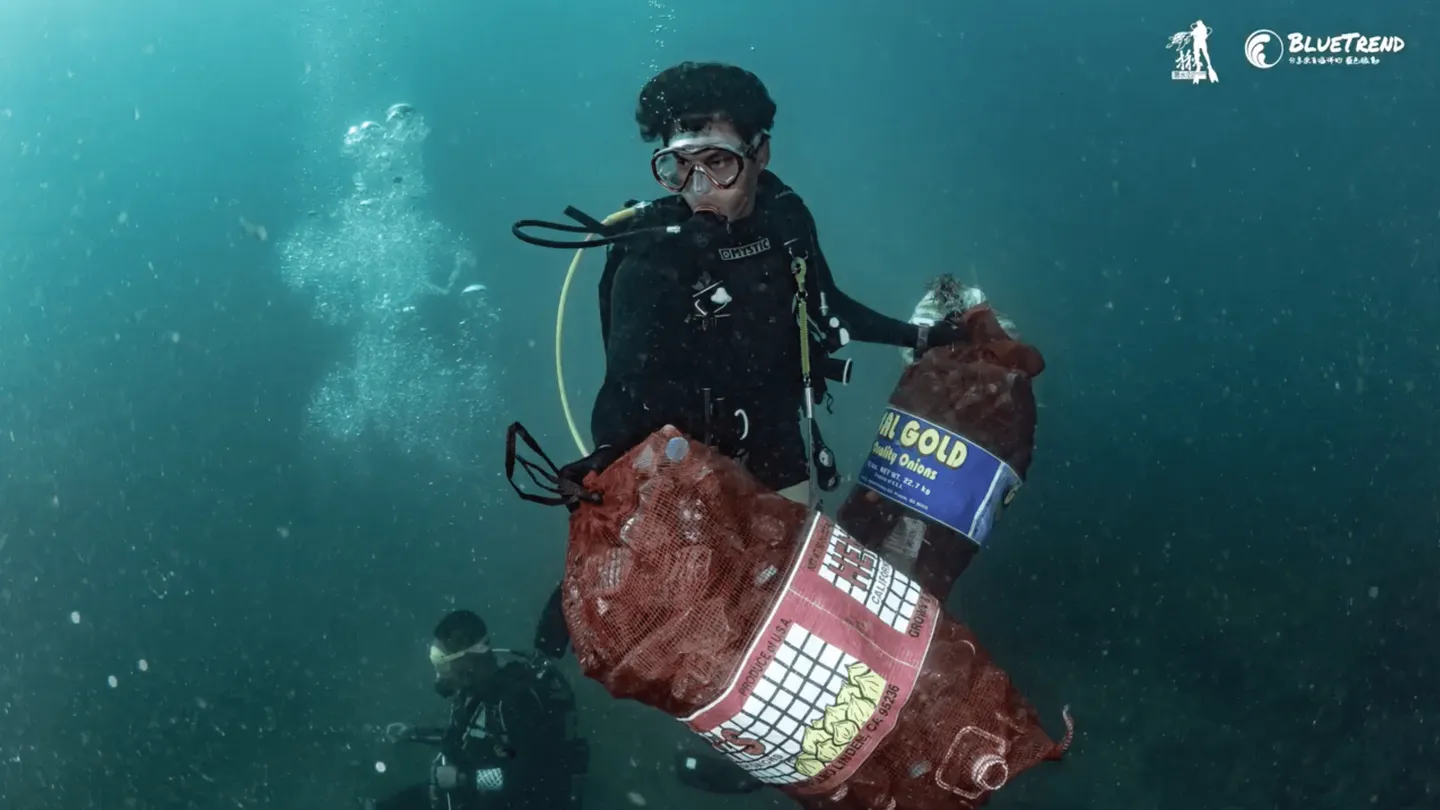
There are many details to keep track of during an underwater cleanup — the organizers have a tough job. photo Ming-Shun Bill Hsu
-
First: Choose a flat, shallow area with a depth of no more than 10m. As you may recall from dive physiology, at 10m or shallower, regardless of dive time, you can ascend directly to the surface without worrying about nitrogen loading. If anyone feels unwell during the cleanup, or if bags become too full and divers need to surface, the safety margin is much greater. The deeper you go, the more limited your working time becomes — whether on air or nitrox — and the greater the risk throughout the cleanup.
-
Second: Choose a flat, low-current area. In TIP 1 we already zeroed in on small coves, which typically have calmer, more gentle currents and sandy bottoms, making the cleanup process safer. That said, sea conditions can be unpredictable. When scouting, it's a good idea to visit at both high and low tide to assess the current at different times.
-
Third: Try to schedule the event during neap tides. The reason is simple: smaller currents and better visibility.
All three points above are aimed at reducing risk through careful selection of location and timing — because even a minor incident during an organized event puts enormous pressure on the organizers.
Once the location is confirmed, you can contact the local environmental protection bureau or relevant management authority to arrange waste collection and disposal after the cleanup. We've previously seen groups leave collected trash by the roadside after an event, causing complaints from nearby shop owners. Don't let a wonderful effort turn into a nuisance!
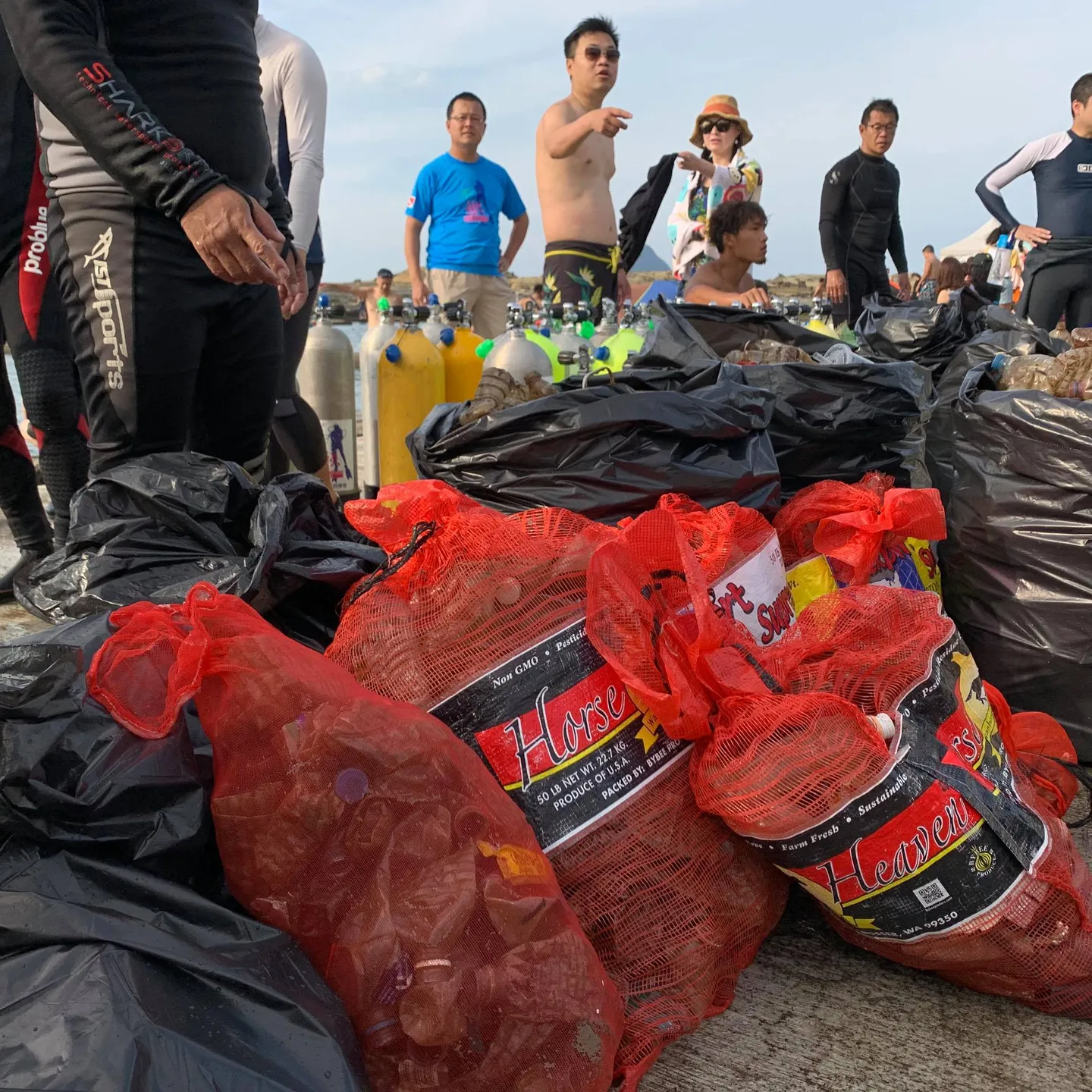
Once you've zeroed in on your target, the amount of trash collected can be staggering — just make sure you don't cause trouble for residents and shop owners on land
TIP 3: Team Composition
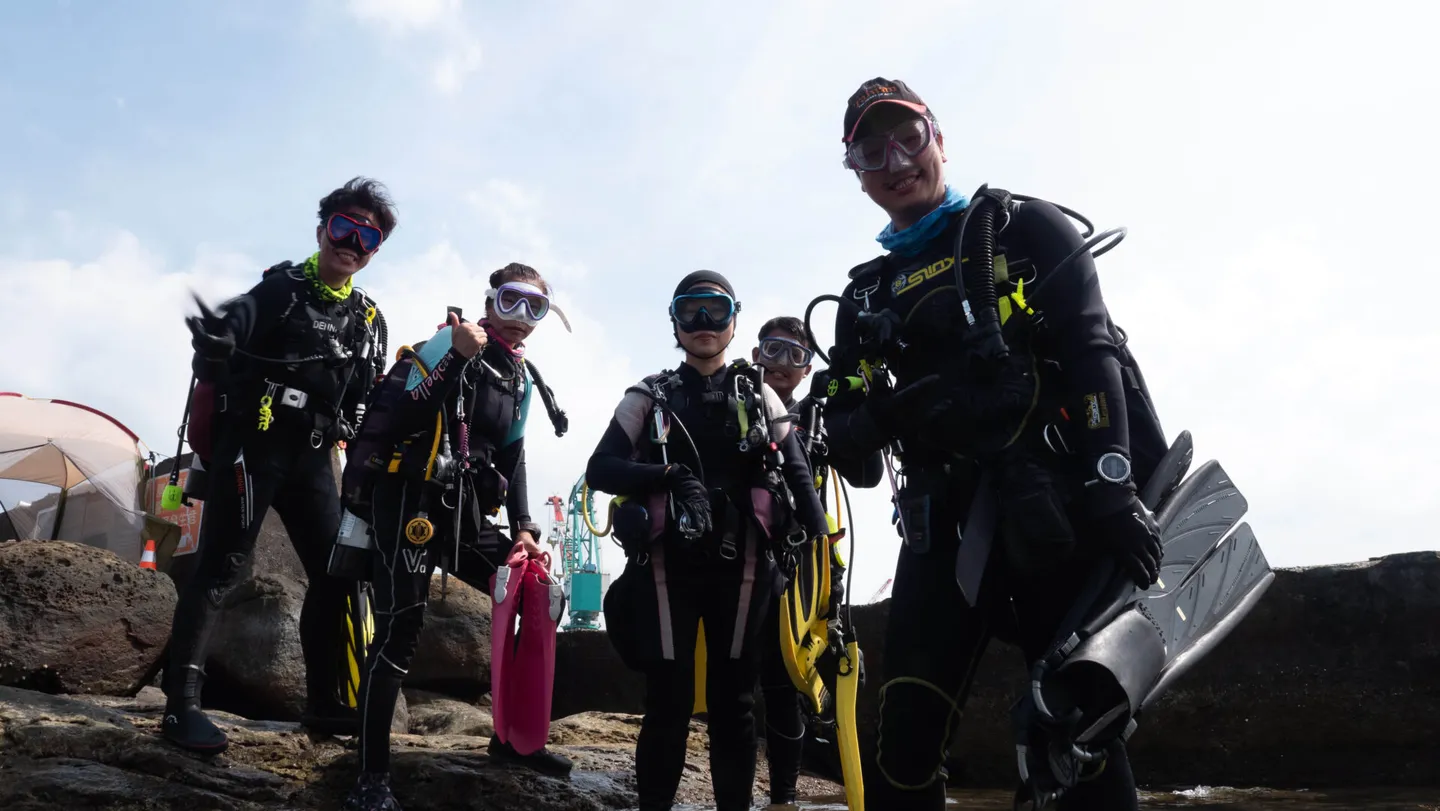
Team composition is also an important factor in an ocean cleanup dive
For an entry-level group ocean cleanup dive, there are usually specific goals — for example, using the activity to teach students or team members about the importance of reducing plastic in daily life. When participants are relatively inexperienced, it's recommended that the lead instructor not take more than 3 divers per group. When people spot trash underwater, they get excited and start picking things up frantically, often forgetting to check their pressure gauge or maintain neutral buoyancy. This is where the lead instructor becomes critically important — the lead instructor's focus is not on collecting trash, but on monitoring the condition of every member of the group.
Even if everyone is experienced, Da-Tou Shi recommends keeping groups — including the lead instructor — to no more than 5 people. Taiwan's Water Recreation Management Regulations do permit one lead instructor to lead up to 8 divers in water activities, but during an ocean cleanup, having too many people crowded together — combined with the silt stirred up as trash is collected — actually reduces efficiency.
When forming groups, we also recommend assigning each member a basic role:
- Lead Instructor ×1: Maintain bearing and track the return route; monitor depth, dive time, and the condition of every team member.
- Strikers ×3: These are the main collectors — their job is to stuff everything into mesh bags as fast as possible.
- Support Diver ×1: This person carries the heavier load — extra mesh bags, a surface marker buoy (SMB), a dive knife, and other tools — ready to hand them to the Strikers as needed. The Support Diver can also wear a small camera to help document the dive, as this will be highlighted in TIP 4 below.
Finally, safety is the most important element of any organized event. Beyond the points above, transferring risk when something does go wrong — insurance — is absolutely essential. The current state of dive insurance in Taiwan is somewhat complex, and we may dedicate a separate article to it in the future. In practice, for a one-day entry-level group ocean cleanup dive, a standard travel accident insurance policy from a general insurer is usually sufficient. It covers unexpected incidents throughout the entire day — for instance, if someone accidentally drops a weight on their foot while loading gear on the way home after the cleanup. Even though the activity itself is over, as long as the incident occurs on the insured day, it should be covered. For any insurance-related questions, feel free to contact Alice: LINE ID: BlueORCAS.
TIP 4: Do Good and Spread the Word
After all the hard work of organizing an ocean cleanup dive, the Support Diver's role becomes vital! In the age of the internet and social media, with a little creativity you can transform a straightforward cleanup event into something engaging and shareable — spreading the deeper message behind ocean cleanup to more people around you.
Ocean cleanup is not the ultimate answer to marine debris, but it is the beginning of humanity re-examining its relationship with the ocean.
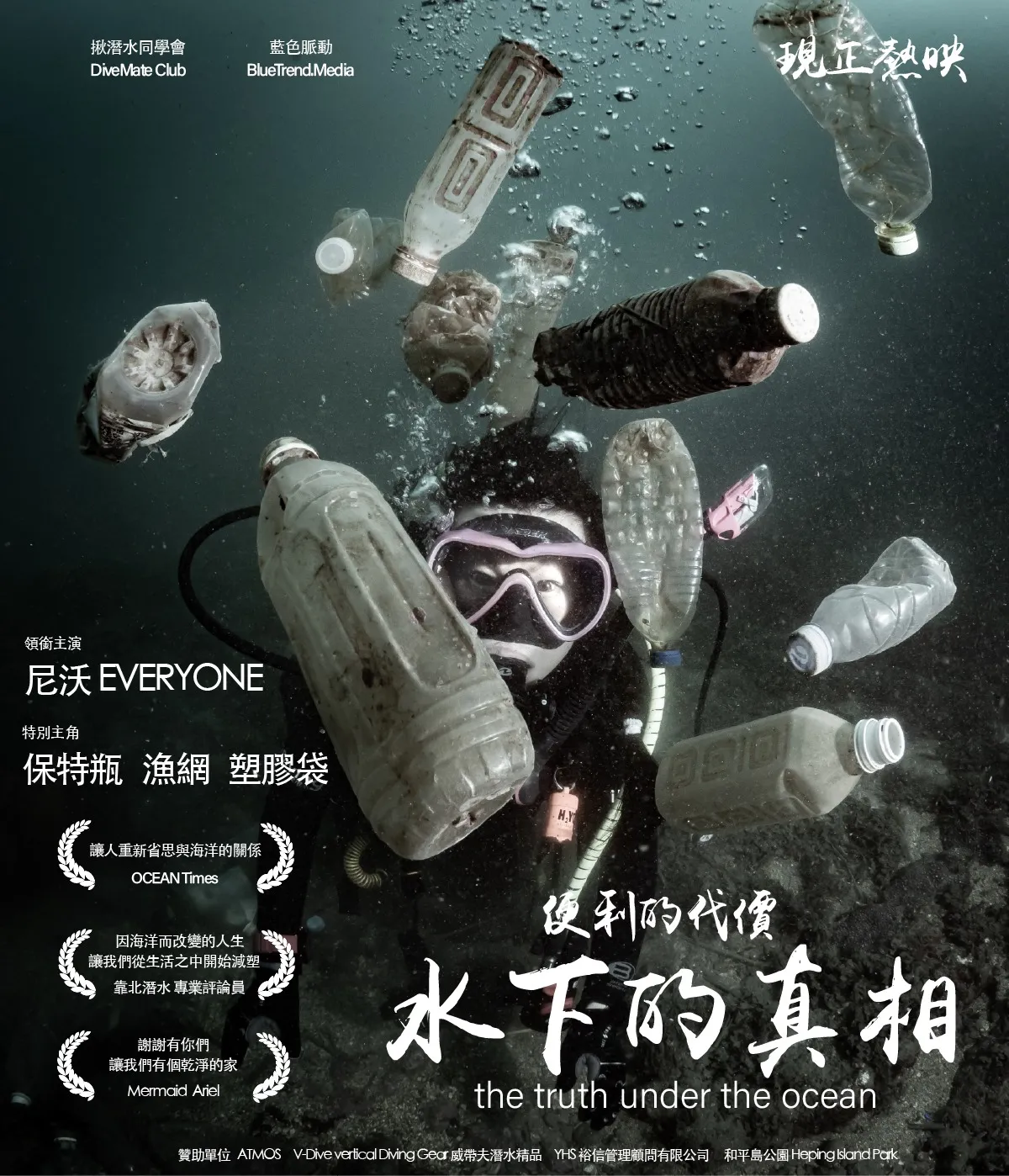
A little creativity goes a long way in making the marine debris issue more accessible to the general public. photo Ming-Shun Bill Hsu, model Shih-chuan Wang Angel
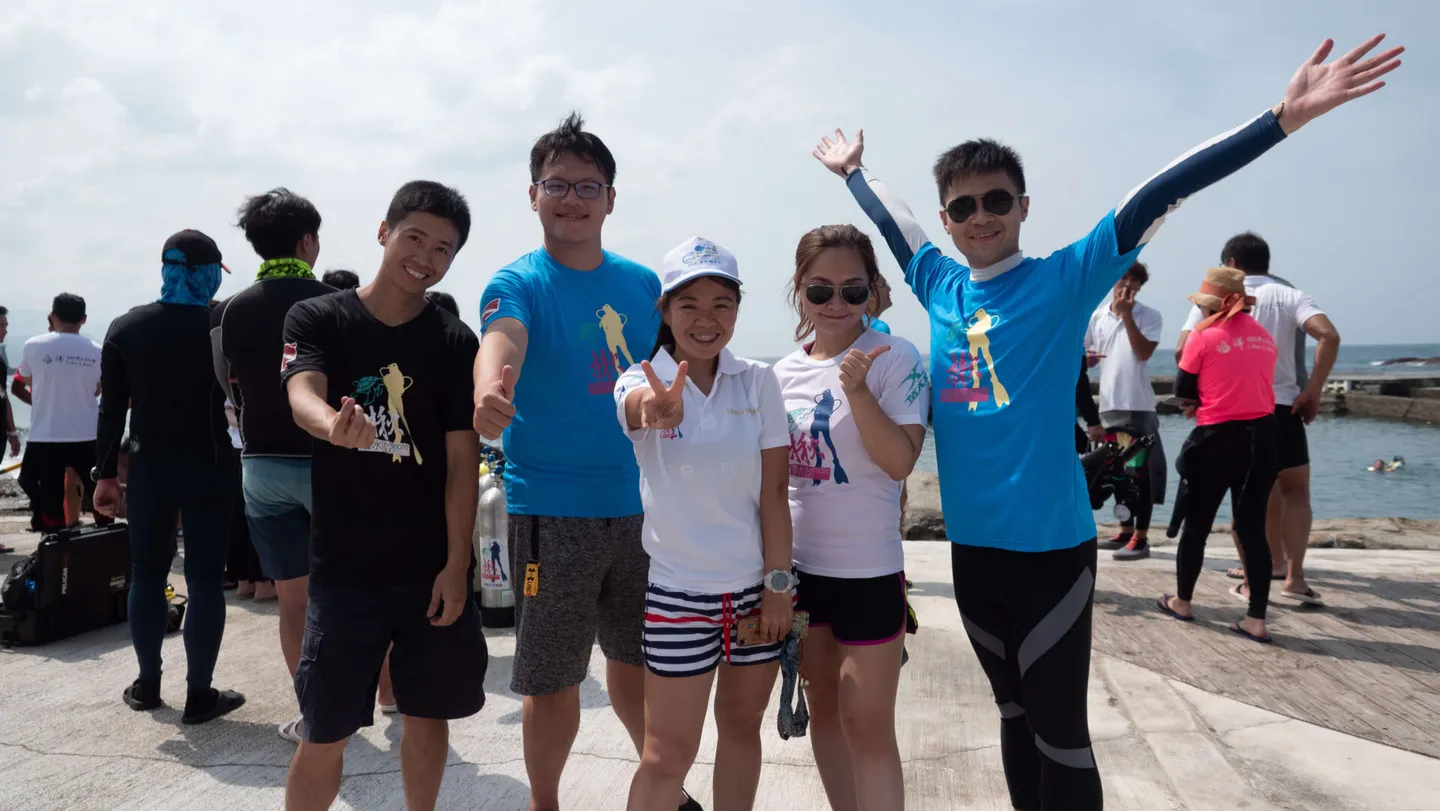
Diving is more than a leisure activity — it can change the ocean
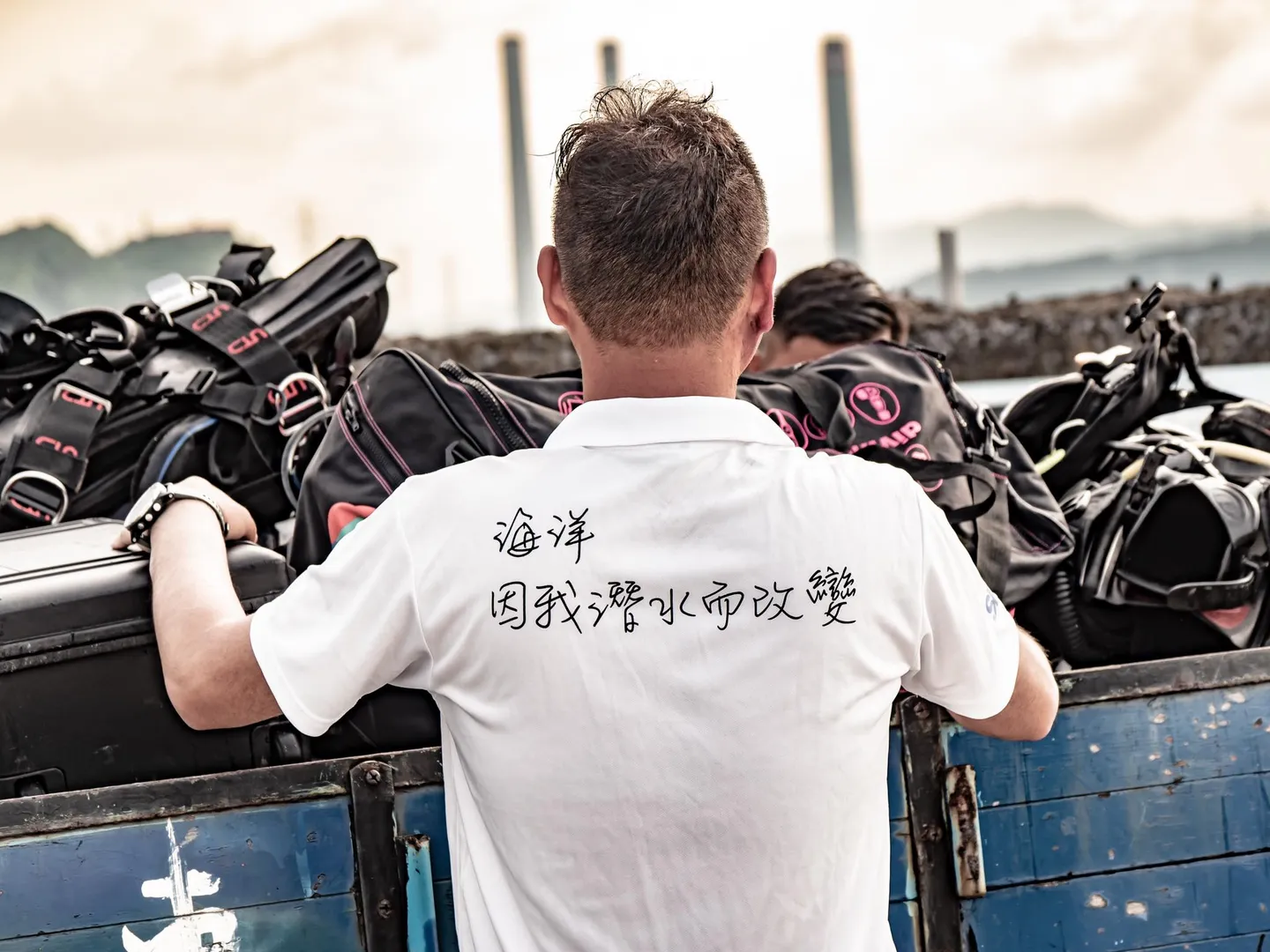
The ocean changes because I dive. photo Ming-Shun Bill Hsu
Related links — Da-Tou Shi feature series:

![[Diving with Datou Shi] 3 Steps to Reading the Windy App — Judge Ocean Conditions for Diving on Your Own](/_astro/%E8%9E%A2%E5%B9%95%E5%BF%AB%E7%85%A7-2019-07-04-%E4%B8%8A%E5%8D%889.27.14_ZPj2rR.webp)