the Editor says: As underwater photography gear becomes more and more affordable (though the Editor still can't quite afford it…), many divers are picking up camera equipment to shoot beneath the surface. Beyond rinsing gear in fresh water after each dive and replacing O-rings regularly, salt crystal build-up on screws is another issue that frequently plagues underwater photographers. Let's take a look at what the professional team at 水舍水中攝影器材 — and its owner, Hao — has to share about the causes and prevention of the salt crystal screw syndrome! (Reproduced in full from the 水舍水中攝影器材 Facebook page)
Most underwater photography equipment today uses aluminum alloy as its primary metal material. However, aluminum alloy is highly susceptible to corrosion by seawater, so during manufacturing, an anodized layer is applied to the exterior of the aluminum alloy, which also changes its surface color — though silver anodizing is available as well. Think of the anodized layer as a protective shield for the aluminum alloy, preventing the corrosion-prone material from coming into direct contact with seawater. Because aluminum alloy is lightweight and highly versatile in machining, it has become the dominant material in underwater photography equipment.
Why Do Screws Get Salt Build-Up?
To hold various components together, stainless steel screws are almost universally used as fasteners. But you've probably noticed that after a period of use, the threads of screws locked into aluminum alloy become coated with white crystalline powder — commonly referred to as salt build-up. This white powder, however, is not actually salt crystals; it is composed of trace metals and minerals found in seawater. But why do these crystals form specifically on stainless steel screws?
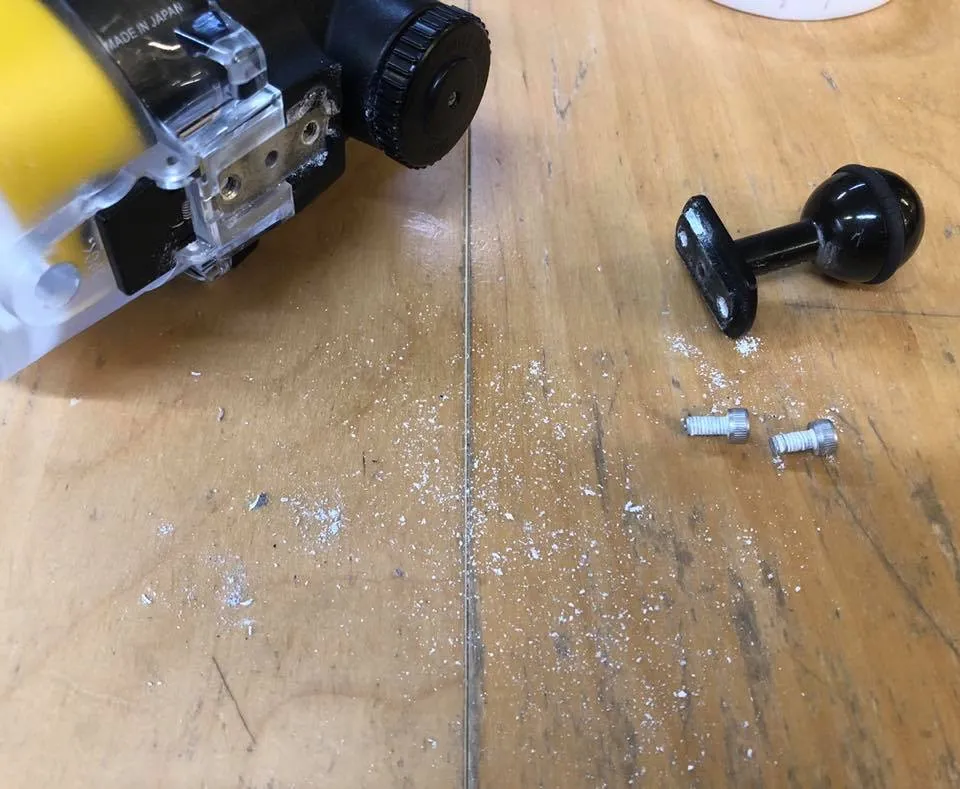
Just two screws managed to collect this much crystal build-up — and removing them nearly snapped both screws in the process!
Most underwater photography equipment is electrical in nature, especially high-powered strobes and Torches. When electrical devices operate, they generate static electricity. On land, our electronics are protected by grounding wires that dissipate static charges, but no such solution exists for underwater equipment. Although the aluminum alloy body is anodized as an insulating shell, the stainless steel screws have no such insulating coating. As a result of the galvanic potential difference between metals and the electrolytic reaction that occurs, mineral crystals form on the stainless steel screws at the interface closest to the aluminum alloy. Over time, these crystals fill the entire thread and begin to degrade the nearby anodized layer of the aluminum alloy. As the crystals accumulate and pack every gap, the screw eventually seizes up completely.
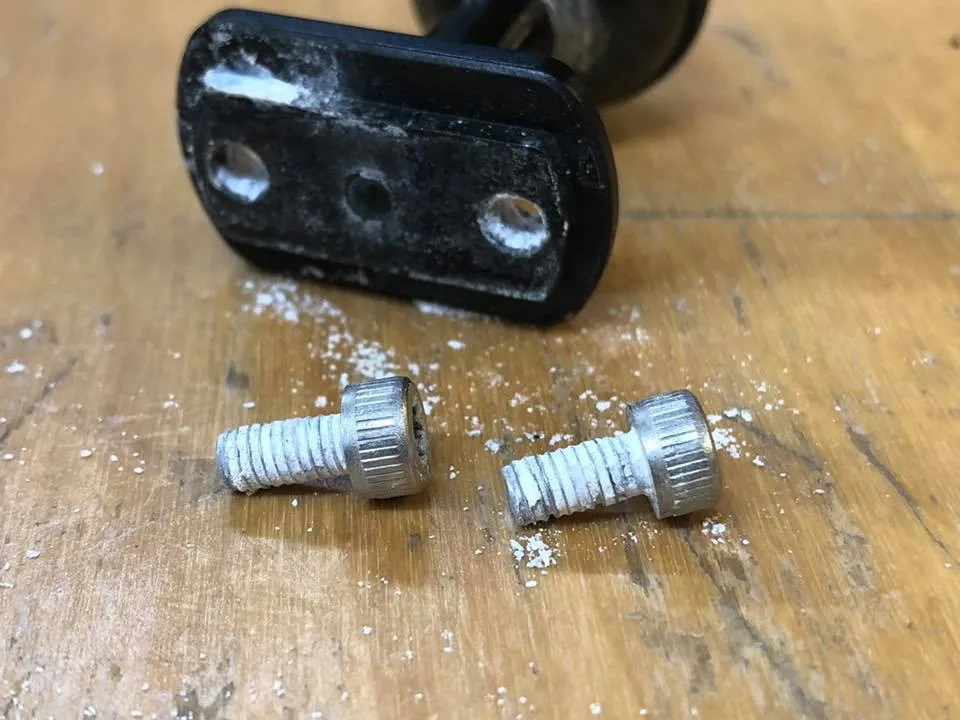
A screw that was never lubricated — the threads are packed with crystals and almost completely fused to the aluminum alloy ball mount.
If the anodizing on an aluminum alloy underwater housing is not done properly, localized corrosion can also occur. Experienced users will know that when tiny bubbles appear on the housing body, it means the aluminum alloy is under corrosive attack!
>>Wake up! The boring part is over.<<


How Do You Prevent Crystal Build-Up on Screws?
The solution is to apply an isolating substance between the stainless steel and the aluminum alloy. The most common options are silicone oil and waterproof grease. If you opt for silicone oil, white silicone oil is recommended — white silicone oil currently offers better waterproofing performance and is less likely to be washed away by water. Another option is waterproof grease, which can be purchased at hardware stores; look specifically for automotive or marine-grade grease. The formulations vary in effectiveness, but in my experience, red or blue waterproof grease is almost always a safe bet. The earth-tone yellow grease is less recommended — that formulation tends to emulsify after prolonged contact with seawater, meaning it will gradually become sticky and may even harden, which in severe cases can also cause screws to seize up!
In my experience, the red or blue waterproof grease I currently use shows no signs of hardening or becoming sticky after six months of seawater exposure — only a slight darkening in color or a reduction in volume. It can maintain protection for up to a year. On average, simply disassemble once a year, wipe off the old grease, and apply fresh grease. This will keep your screws from seizing up in your underwater photography equipment!
Of course, if you'd rather not go through all this trouble, you can simply purchase directly from 水舍水中攝影器材 — we grease all the screws for you during assembly!
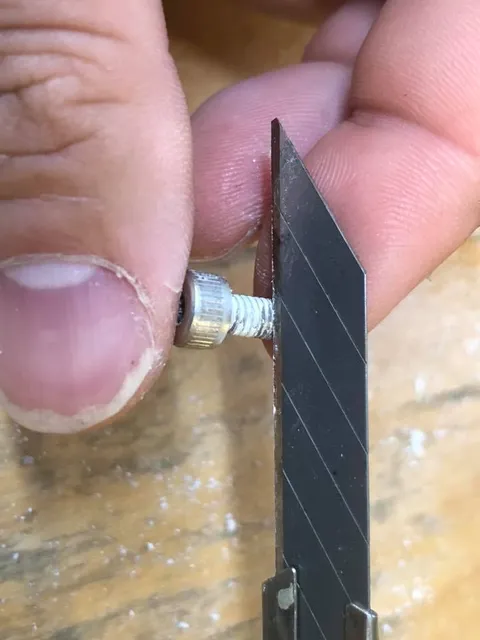
If you can replace the screws with new ones, that's the easy route — but you can also scrape off the crystals with a blade, and pairing that with an ultrasonic cleaner makes the process even more efficient.

Just look at all that white powder covering the table~~~
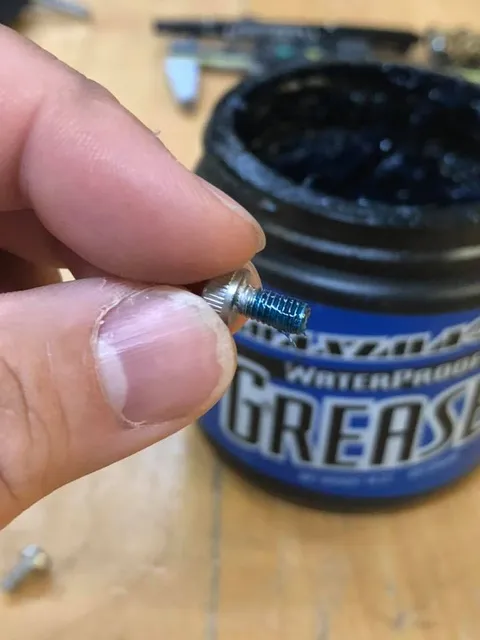
Applying waterproof grease to the screws.
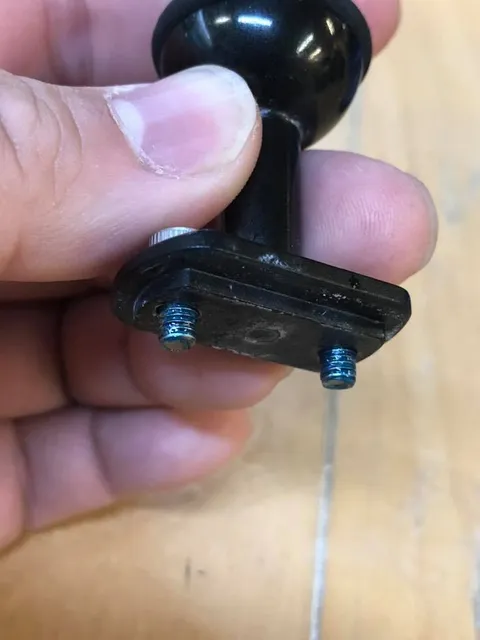
And just like that, you can say goodbye to seized screws for good.
Further reading: