The Editor says: As a primarily scuba-diving editor, I've actually witnessed underwater many times how freediving bottom weights damage habitats — and I've even had the terrifying experience of nearly being struck on the head by a bottom weight dropping from above. Sharing this article is not meant to create conflict between scuba divers and freedivers, but rather to promote safer and more responsible ocean activity practices. After all, the ocean is a wonderful place, and we don't want incorrect attitudes toward water activities to create disputes — or worse, lead to permanent diving bans in certain areas, what we might call a "no-diving culture." That would be the worst possible outcome for scuba diving, freediving, boating, SUP, and all other water sports alike. This article is reproduced in full from 魚式生活, with additional commentary from the Editor on water activity practices.
Over the past year when overseas travel wasn't possible, more and more people have taken up freediving. During the summer diving season, popular training spots like Chaoching Park and Longdong are packed with people — the surface is full of freedivers while the bottom is full of scuba divers, all sharing the marine ecosystem together. Unfortunately, some improper methods of rigging bottom weights beneath floats have been damaging the environment and causing conflicts between scuba divers and freedivers (e.g., bottom weight lines being cut or removed). You can see posts about this blowing up online every week or two, and it's honestly quite disheartening. Since the seafloor doesn't always offer suitable anchor points — and at a place like the Northeast Coast, where visibility can be poor, finding a suitable rock to tie off to is genuinely difficult — I'd like to share the correct way to set up a bottom weight, one that protects the ecosystem while keeping everyone's dive environment safe.
Editor's note: The photos below were taken at the Northeast Coast and document real situations. Once again, we are not here to call anyone out or pit scuba divers against freedivers — we simply want more people to understand how important this issue is.
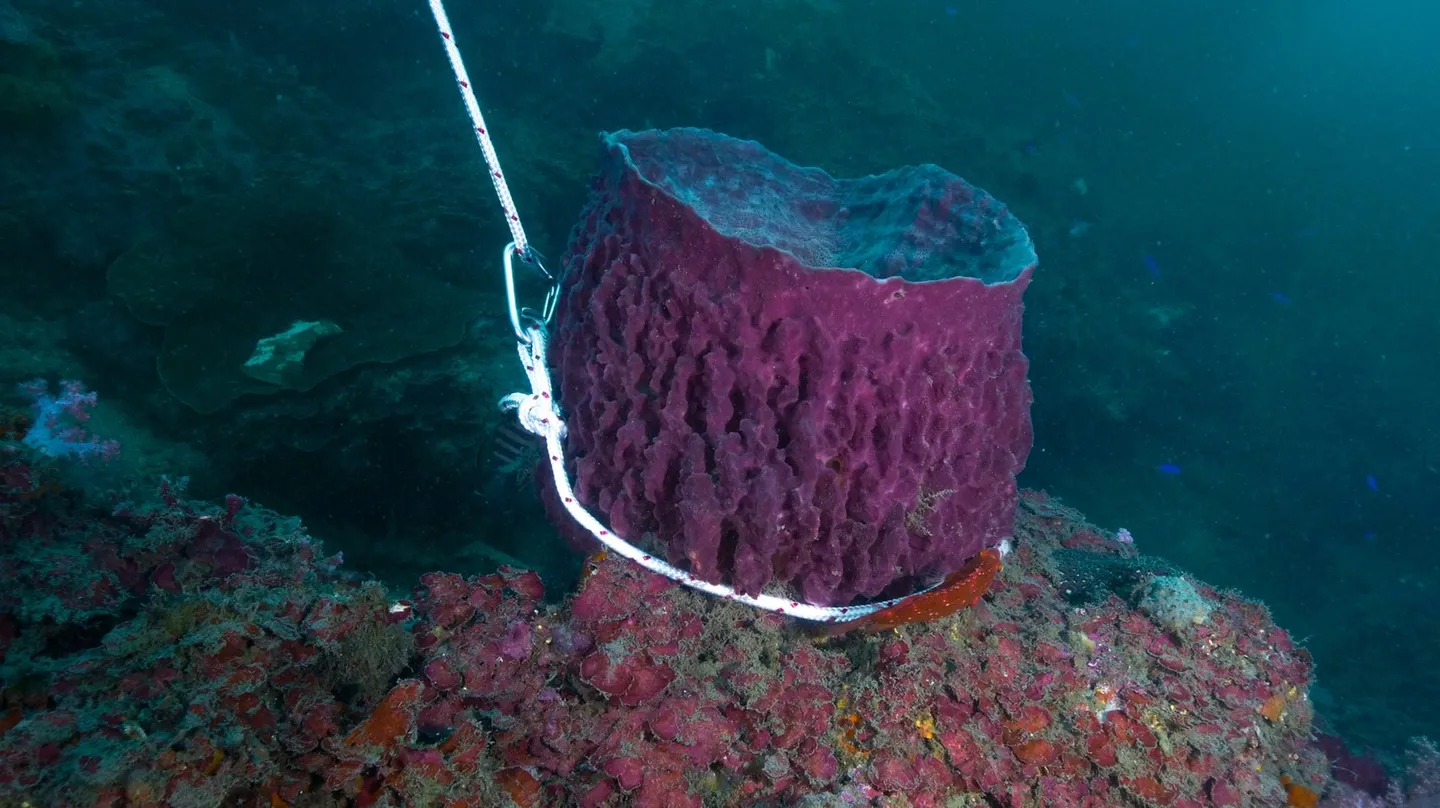
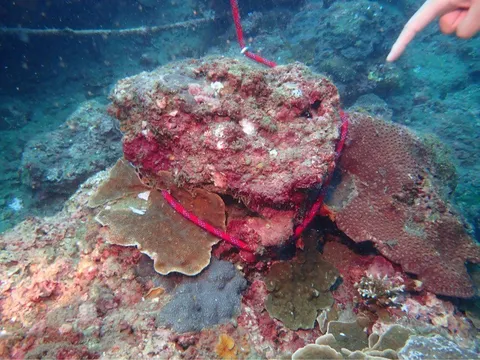
Left: a line tied around a barrel sponge. Source: Spark. Right: a line tied to a reef with coral on it. Source: provided by a dive buddy from the group.
The Editor says: For those of us who call ourselves ocean people, failing to respect nature could result in a permanent ban on water activities in a given area. Some might say, "I'll just go somewhere else then" — but if that mindset never changes, all that happens is that the next stretch of ocean gets damaged instead.
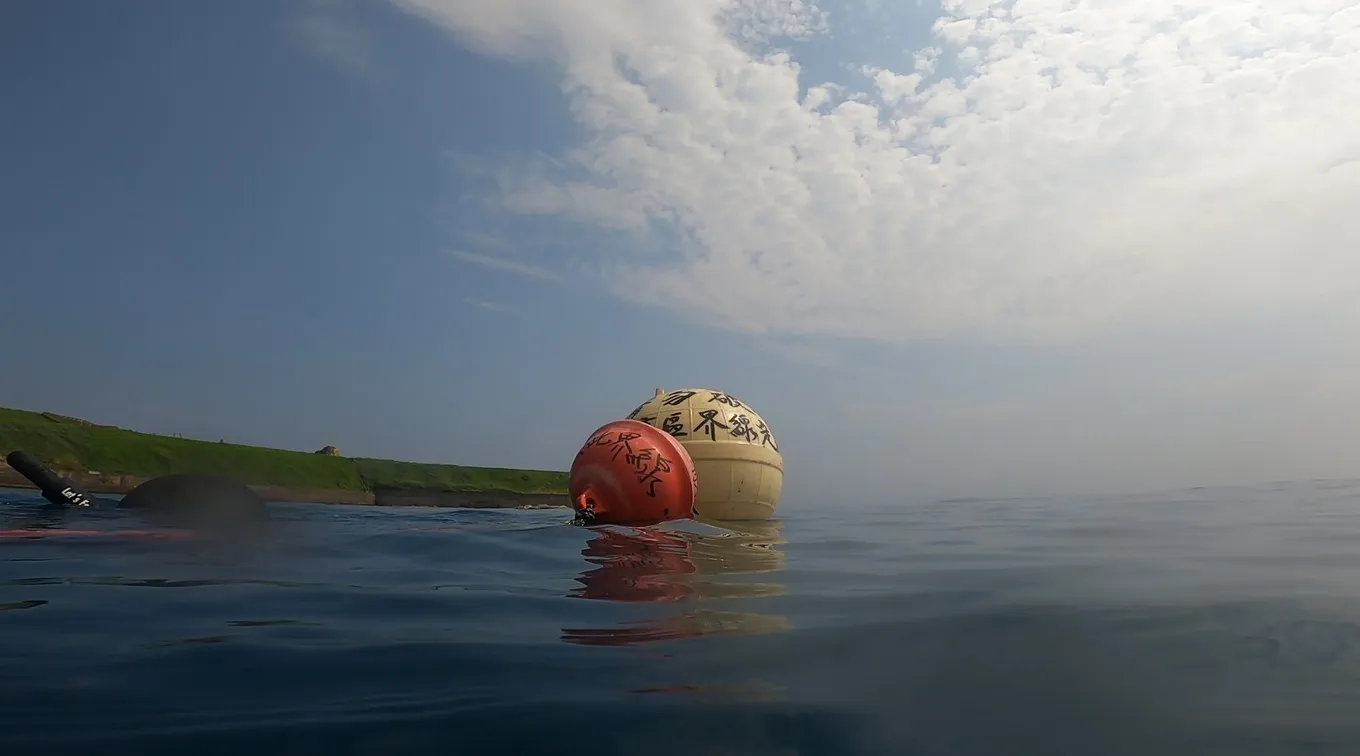
A fixed mooring buoy — not all fixed buoys can be used freely
There are many fixed mooring buoys along the Northeast Coast. Some are used as ecological research markers, some indicate navigation channels, and some are set up by dive instructors for use with scuba divers. Most beginner freedivers will use these fixed buoys by attaching a connecting line and bottom weight for practice. The Editor adds: some fixed buoys are designated exclusively for vessel use, and attaching a freediving float line to them creates safety risks and potential disputes. Some research buoys are equipped with sensitive data sensors, and tampering with them could compromise research results. Always consult a local instructor or experienced diver about the relevant rules before entering the water.
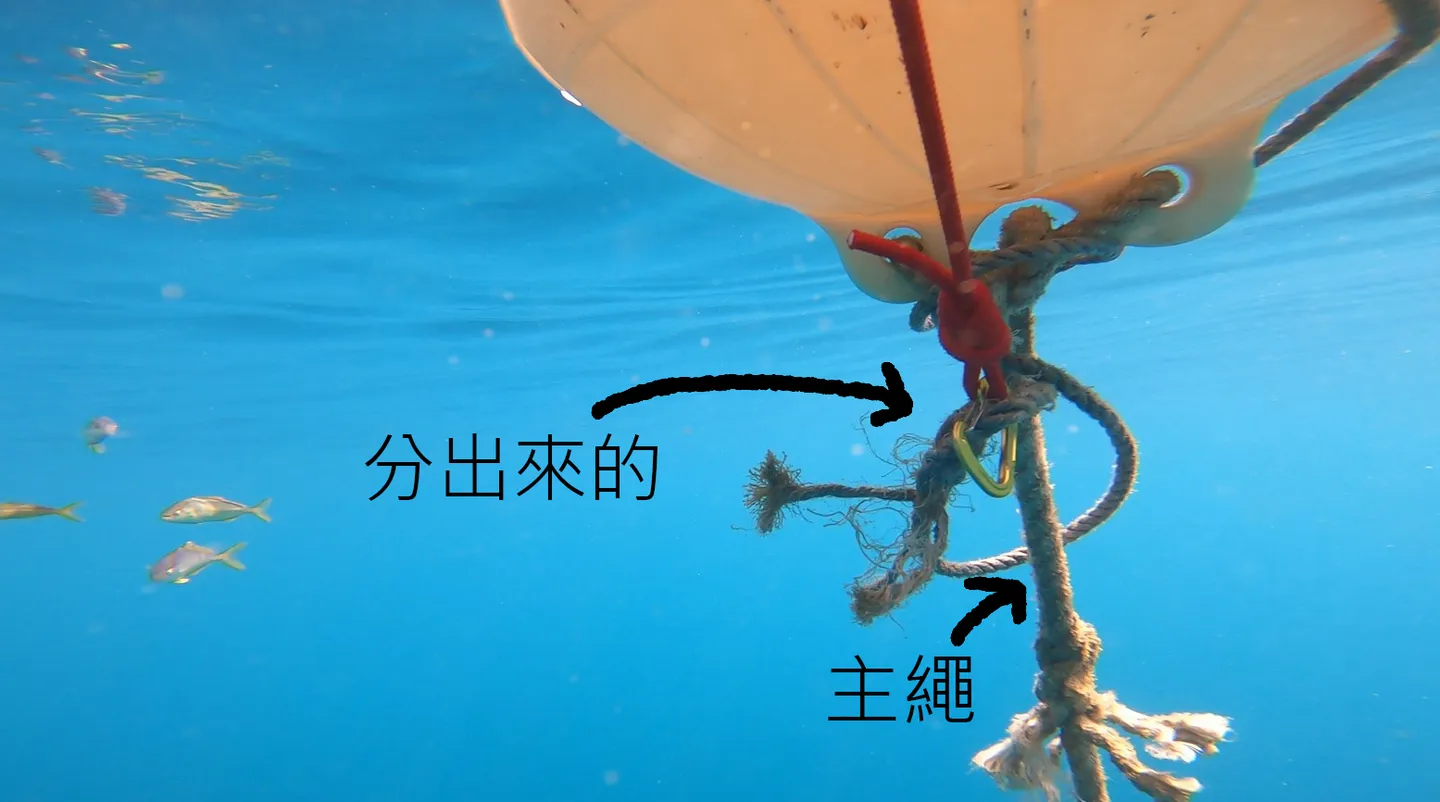
A fixed mooring buoy
One important thing to note: near the waterline, the main line of a fixed buoy typically branches into a secondary line used for anchoring. Your connecting line should be attached to this secondary line — not the main line — otherwise, in a strong current, the force could rip the entire buoy out of the water. (Setting up a fixed buoy is a major undertaking — please treat every fixed buoy with care.) In the buoy shown here, there was no secondary branch, so I avoided the main line and secured my line to an extra knot at the side. Editor's note: On the Northeast Coast, a research buoy once had over 10 freediving float lines attached to it simultaneously. When a current came, the entire research setup was displaced, wiping out six months of research data — and the freedivers themselves were swept into the navigation channel. It was an extremely dangerous situation.
Due to poor visibility at the Northeast Coast, clear photos are difficult to take — the following animated illustrations make the key points easier to understand.
Quick summary:
①②③ All bottom weights must be at least 5 m away from the reef bottom and surrounding environment.
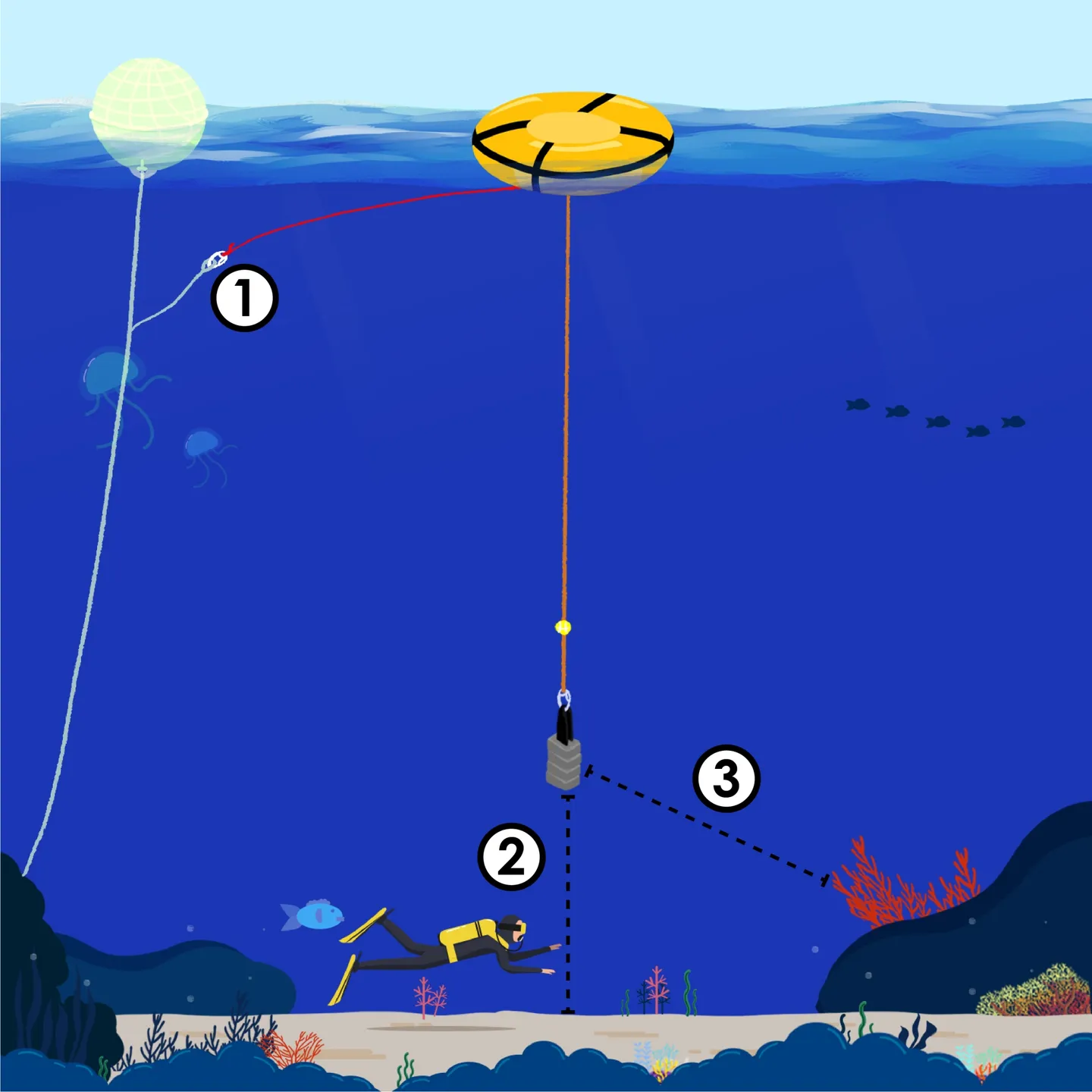
When you reach a fixed mooring buoy, please follow these steps:
**Situation A —
There is already another freediving float in front of you**
- Politely ask: "Would it be alright if I attach my float behind yours?"
(A single fixed buoy should only have one chain of freediving floats — never a radial arrangement! The current will tangle all the floats together!!) - Ask the person on the float ahead how deep the bottom is and how long their line is.
- Clip your connecting line to the float in front.
- Watch for a large number of bubbles rising from below. If you see them, there are scuba divers underneath — wait a moment before dropping your bottom weight.
- Based on the information provided by the diver on the float ahead, follow their line length but subtract 2–3 m as the setting for your bottom weight. (Subtract 2–3 m because the terrain nearby may have variations in height, or the person in front may not have set theirs with enough clearance from the bottom — and we definitely don't want to repeat that mistake 😄)
- After deploying the bottom weight, follow the guide line down to the bottom weight's position and check the surrounding terrain.
- Adjust the bottom weight so that it is at least 5 m away from the seafloor and all surrounding reef.
- Once training begins, check on every dive that the bottom weight remains at least 5 m from the surroundings, and adjust as needed.


**Situation B —
There are no other freediving floats in front of you**
- Clip your connecting line to the fixed mooring buoy.
- Dive down along the fixed buoy's line to assess the depth and terrain below.
- Watch for a large number of bubbles rising from below. If you see them, there are scuba divers underneath — wait a moment before dropping your bottom weight.
- Set the guide line length to the total depth minus 5–7 m.
- After deploying the bottom weight, follow the guide line down to the bottom weight's position and check the surrounding terrain.
- Adjust the bottom weight again so that it is at least 5 m away from the seafloor and all surrounding reef.
- Once training begins, check on every dive that the bottom weight remains at least 5 m from the surroundings, and adjust as needed.
There are many reasons why the bottom weight needs to be at least 5 m from the seafloor and surrounding reef. Here are the various scenarios that can occur:
- A sudden current: the bottom weight will be pulled and swung around by the current. Without sufficient clearance, it will strike the surrounding reef and coral — or even scuba divers below.
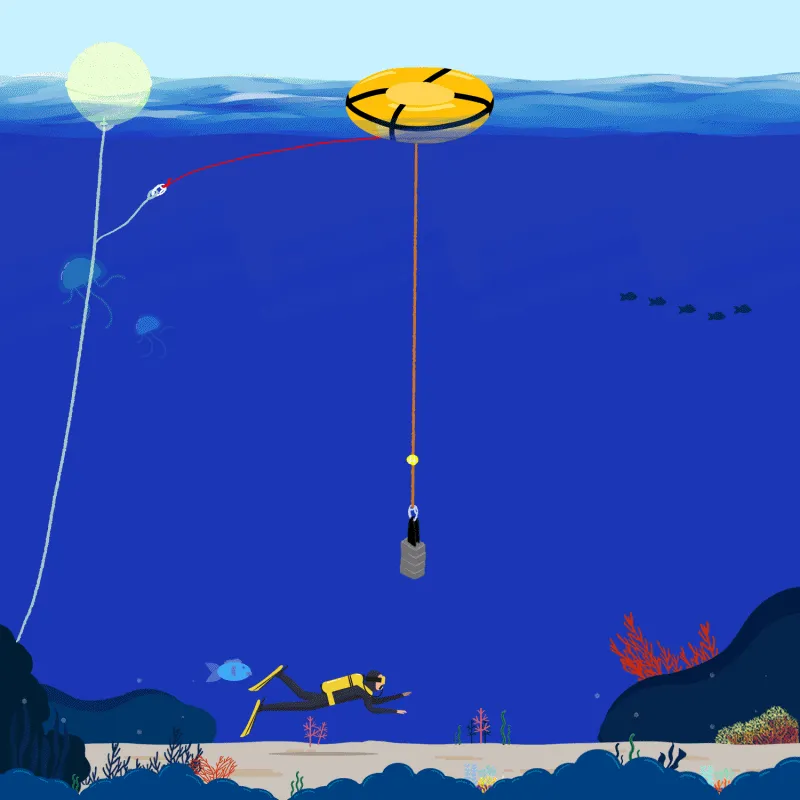
Correct setup
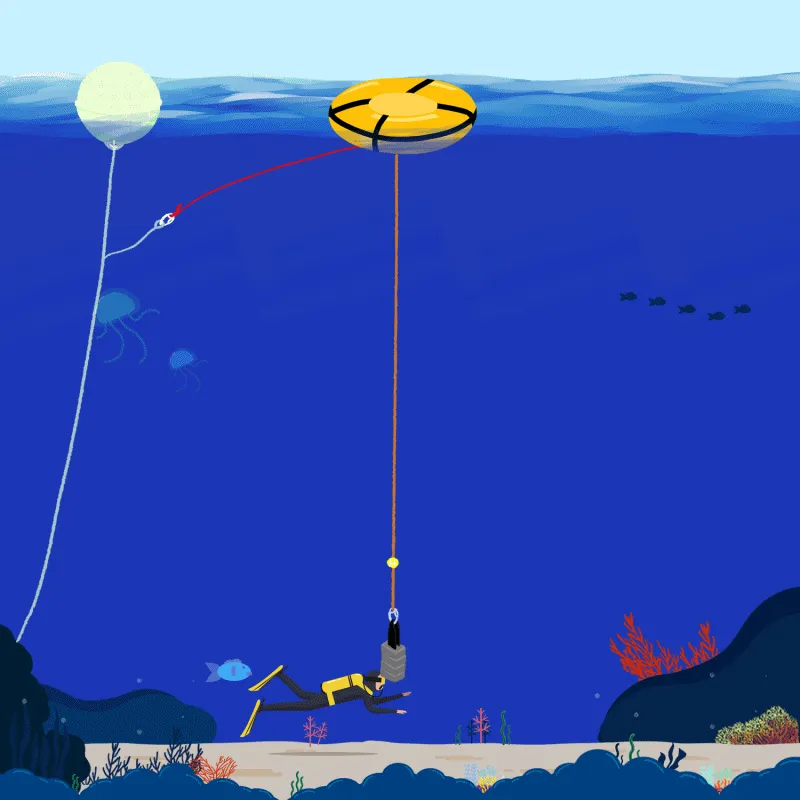
Incorrect setup
- Sudden surge from waves: the bottom weight will be jerked up and down. Without enough clearance above the seafloor, it will come crashing down onto coral below — or onto a scuba diver.
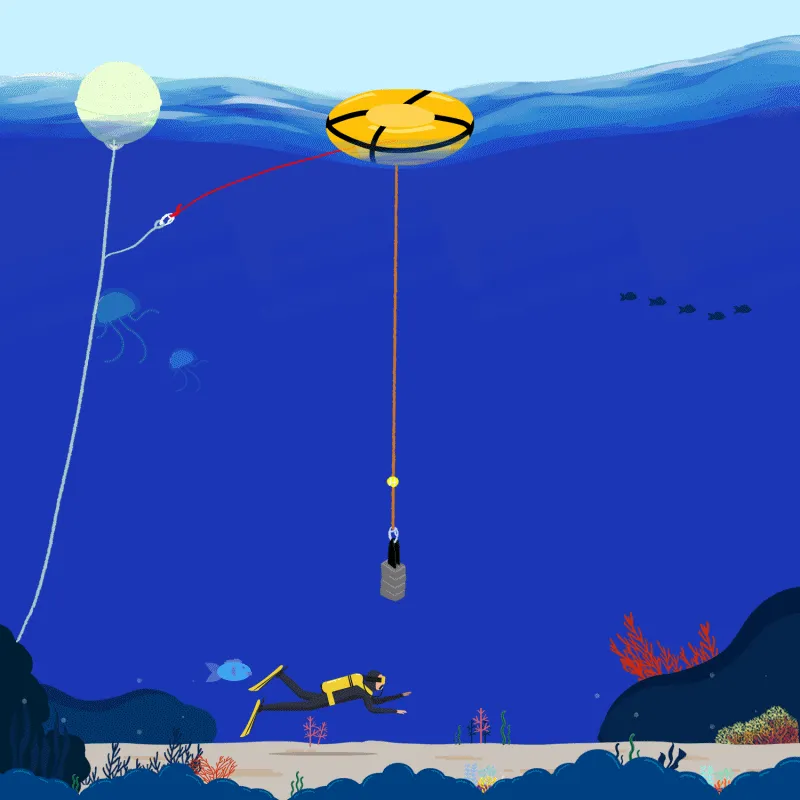
Correct setup
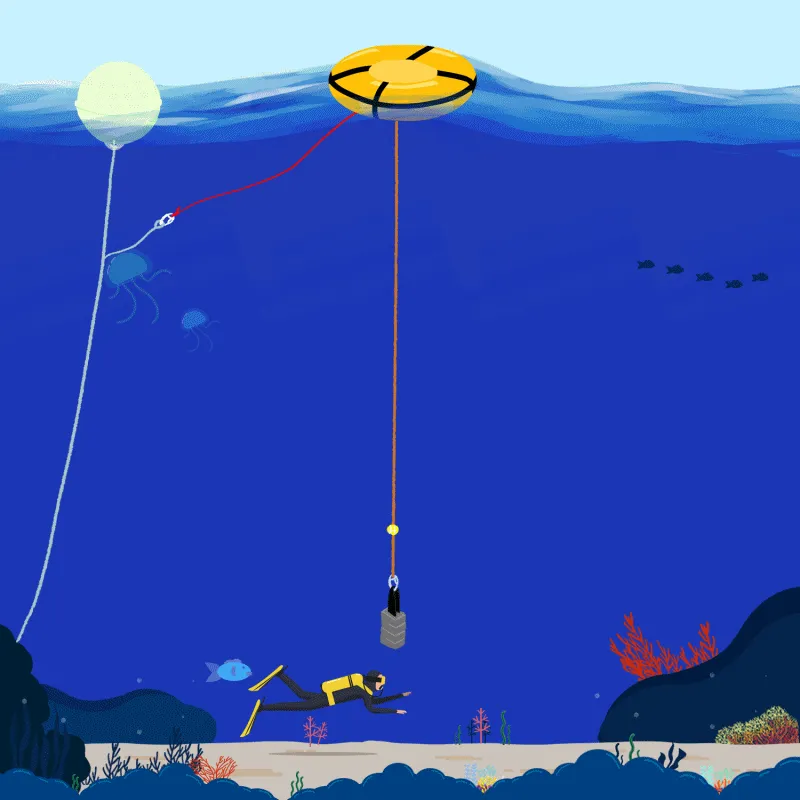
Incorrect setup
Editor's note: When there is no fixed mooring buoy available, freedivers may find it difficult to monitor what is happening below their float due to current or poor visibility. However, a qualified instructor or responsible freediver should have the basic skill of knowing the local environment and hydrological conditions. From the surface, you can use reference points on land to roughly estimate the depth directly below, which will help you position your float appropriately. If you were to see the following scene underwater, wouldn't it break your heart? The video below is shared courtesy of 京太郎.
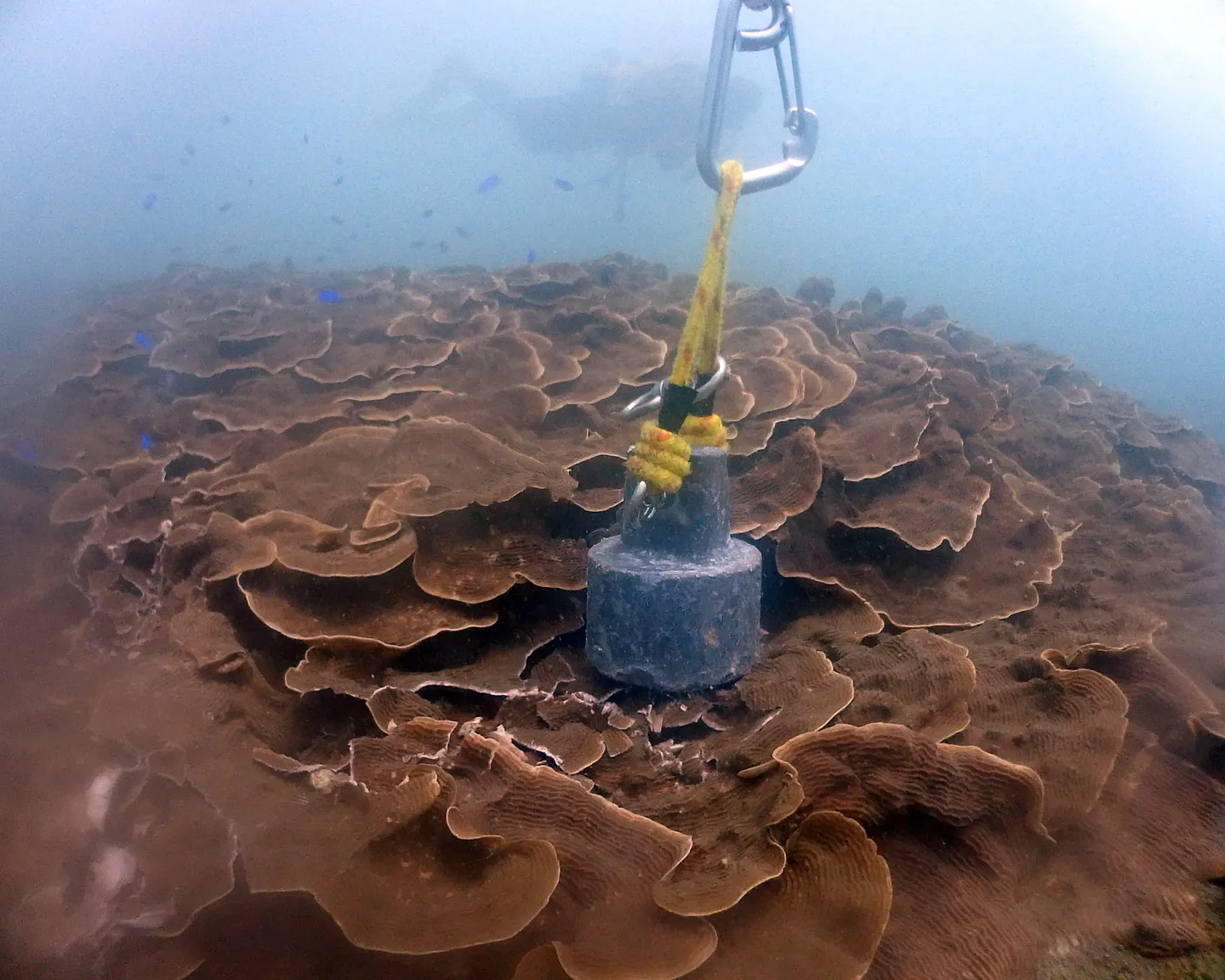
Real-life damage to coral caused by a bottom weight. Source: 京太郎
- Low tide: during spring tides, the tidal range can exceed 1 m — meaning the water depth from high tide to low tide decreases by more than 1 m, which can also result in insufficient clearance between the bottom weight and the surrounding environment.
- A freediver hitting their head: during freefall, a diver may close their eyes to maximize focus. As they approach the bottom weight, they may very easily hit their head on a nearby rock. (This actually happened to me when the current suddenly shifted — I hit my head and looked over to find the bottom weight wedged in the reef. The first thing I did when I got back to the surface was shorten the line. Fortunately I wasn't too deep and wasn't descending very fast — otherwise the impact could have been really serious…)
The following are common mistakes made by beginner freedivers. Key reminders once more:
- Only let out as much line as the depth you can consistently and stably reach.
- Check on every dive that the bottom weight is at least 5 m from all surrounding reef and seafloor.
- A single fixed mooring buoy should only have one chain of freediving floats attached to it.
Let's all be freedivers who respect the environment and each other, shall we?
Wishing everyone safe dives!
One more word from the Editor:
- Scuba divers, please be mindful of your neutral buoyancy control. Instructors leading groups should strictly monitor their students' behavior — do not take groups with poor buoyancy control into ecologically sensitive areas such as areas dense with rose coral or sea fans.
- When scuba dive instructors are training beginners, please arrange training in sandy-bottom environments. Having students kneel on the seafloor to practice skills silently destroys the habitat.
- Scuba divers should avoid wearing gloves, and cultivate the good habit of not touching the environment.
- Both scuba divers and freedivers should be mindful of their fin kick technique. Scuba divers should avoid a bicycle-kick style with feet above the head; freedivers using long fins (freediving) should avoid kicking shallow reef coral.
- Freedivers should seek guidance from a senior diver or instructor who is familiar with the local hydrological conditions and environment. Properly setting up your float line not only reduces environmental damage but also reduces your own personal risk.
- Freedivers should be aware of local navigation channels and restricted zones. The Editor has heard fishing boat captains complain more than once: "When our large fishing vessels are close by, we genuinely cannot see your tiny floats and heads at the surface!"
Finally, we again urge everyone who enjoys the ocean to adopt the right mindset — so that your respect for the ocean comes from both your heart and your actions. And when you respect the ocean, you are also respecting yourself!
Further reading:
![[What's Going On] 2021 Happiness Cup Freediving Competition — Do You Know What It Takes to Organize a Freediving Event?](/_astro/%E6%88%AA%E5%9C%96-2021-07-26-16.54.22_Z2sTxVT.webp)