Contents(6)
- Who Is Manta Trust — and What Does the Dedicated Website Do?
- For Snorkellers: 6 Steps to Swimming with Mantas (Steps 1–6)
- For Scuba Divers — Don't Barge into the Cleaning Station (Steps 7–10)
- Essential Reading for Dive Operators: Download the Free Media Kit and Join the Global Responsible Operator Directory
- A Word from the Editor: The Photo You Take Today Determines Whether the Next Person Gets to See a Manta Too
- References and Sources
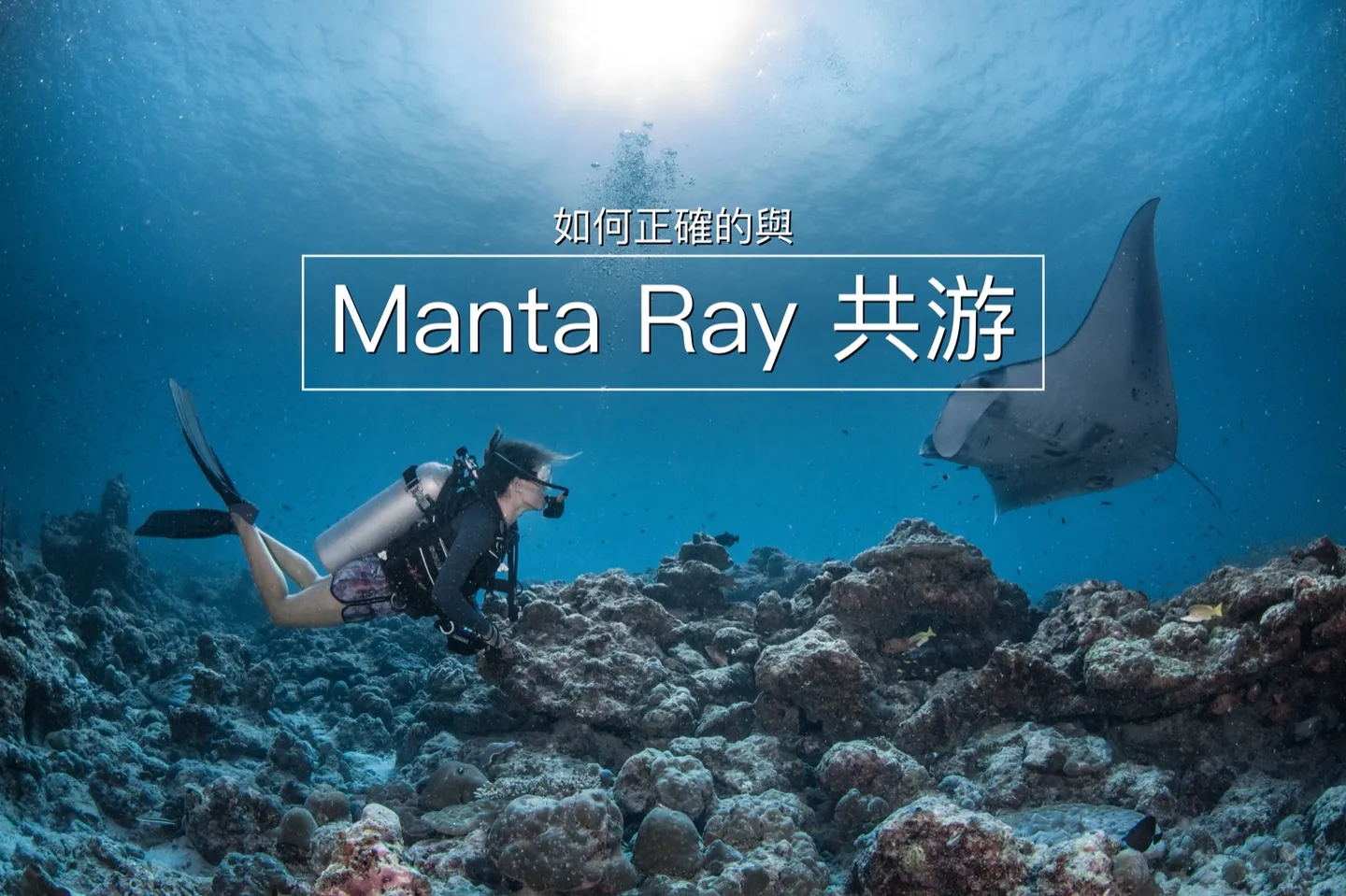
The moment a manta ray glides overhead, almost no diver can keep their cool. But that instinctive urge to chase after it may be the very thing that sends it fleeing. Marine conservation organisation Manta Trust has released a sustainable tourism guide at swimwithmantas.org, distilling the experience of swimming with mantas into 10 steps — covering how to enter the water, how many metres to maintain, and exactly where to position yourself near a cleaning station. In this article, the Editor breaks down all ten steps one by one, and tells you how to get the free Traditional Chinese PDF to save on your phone and put to use on your next dive trip abroad.
The Editor has to be honest: the moment you encounter a manta ray in the ocean is a genuine "achievement unlocked" moment for any diver. Watching a creature with a wingspan of 4 metres or more glide silently over your head is enough to bring tears to your eyes.
But here's the thing — at many popular manta ray tourism hotspots, the biggest headache isn't whether the mantas will show up. It's the people. Twenty snorkellers leaping off a boat all at once, someone reaching out to touch, someone chasing endlessly for the perfect shot — and the manta simply turns around and disappears, leaving everyone staring at bubbles for the rest of the afternoon.
Manta Trust, the world's leading manta ray conservation organisation, recognised this pattern and compiled more than a decade of field and industry observations into a Code of Conduct for swimming with mantas. They built a dedicated website at swimwithmantas.org, with the goal of ensuring that everyone lucky enough to encounter these gentle giants knows how to do so properly.
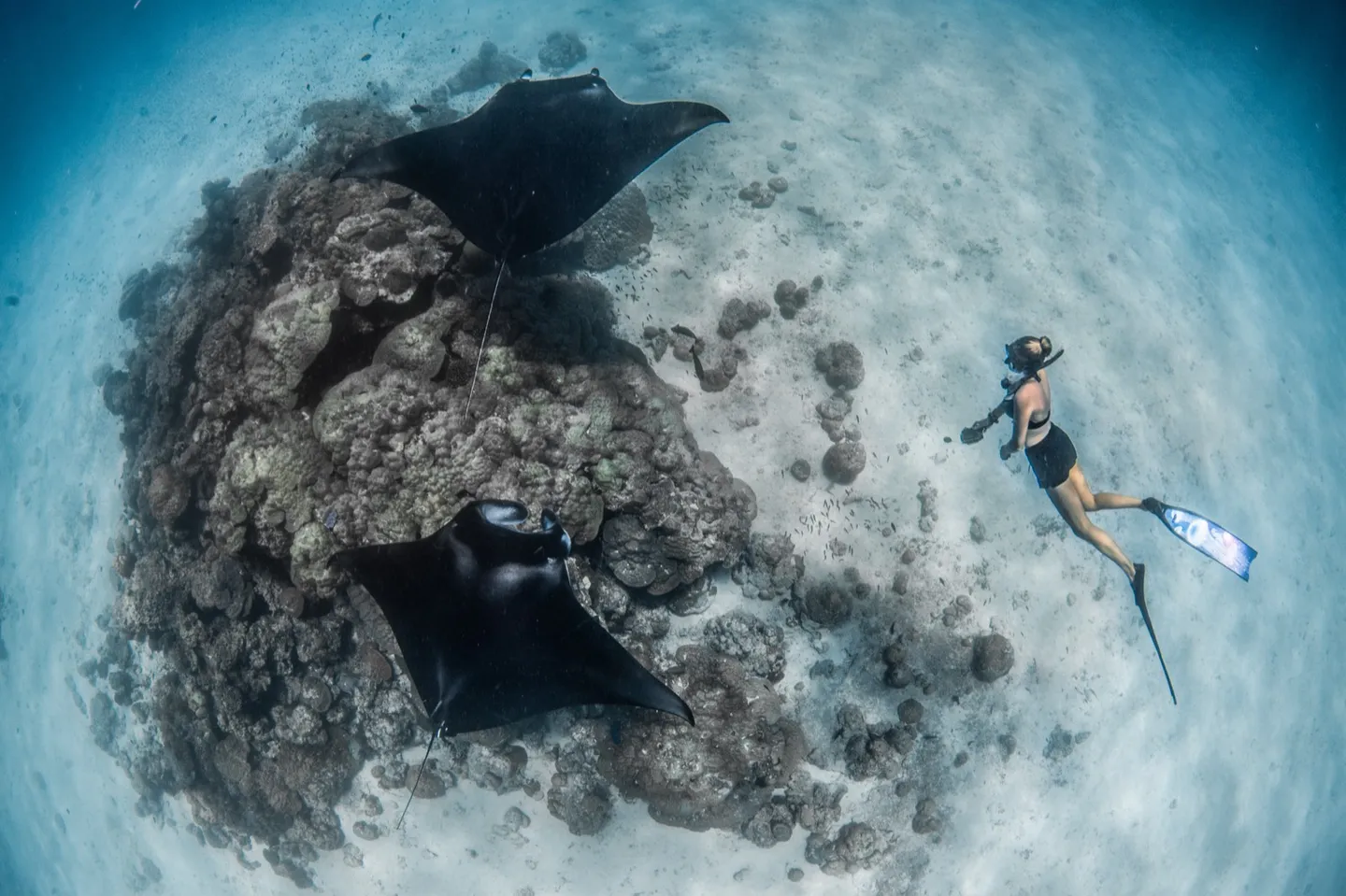
A freediver in the Maldives observes a manta ray from a respectful distance — low profile, clear of its path, exactly the right approach. Photo credit: Simon Hilbourne / Manta Trust
Who Is Manta Trust — and What Does the Dedicated Website Do?
Manta Trust is a globally recognised marine conservation organisation headquartered in the UK, with research bases spanning manta ray hotspots including the Maldives, Indonesia, and Mexico. Their most celebrated achievement is building the world's largest individual manta ray identification database at Hanifaru Bay in the Maldives.
swimwithmantas.org is Manta Trust's dedicated sustainable tourism hub, with one clear purpose: to bring divers, snorkellers, and operators all under the same set of rules. The site is built around three core elements:
- Code of Conduct: how to move in the water when you encounter a manta ray, how far to stay, and what not to do
- Responsible Operator Directory: a global list of dive shops and tour companies that have committed to conservation standards and have undergone relevant training
- Educational Resources: tutorial videos, posters, and guides available for free download — ready for dive shops and tourism operators to use in their briefings
What the Editor finds most important is that these guidelines weren't written as empty slogans. They were reverse-engineered from years of on-the-ground scientific research by Manta Trust in the Maldives — identifying which specific behaviours genuinely startle mantas away and cause cleaning stations to "break down" — then translated into practical, actionable advice.
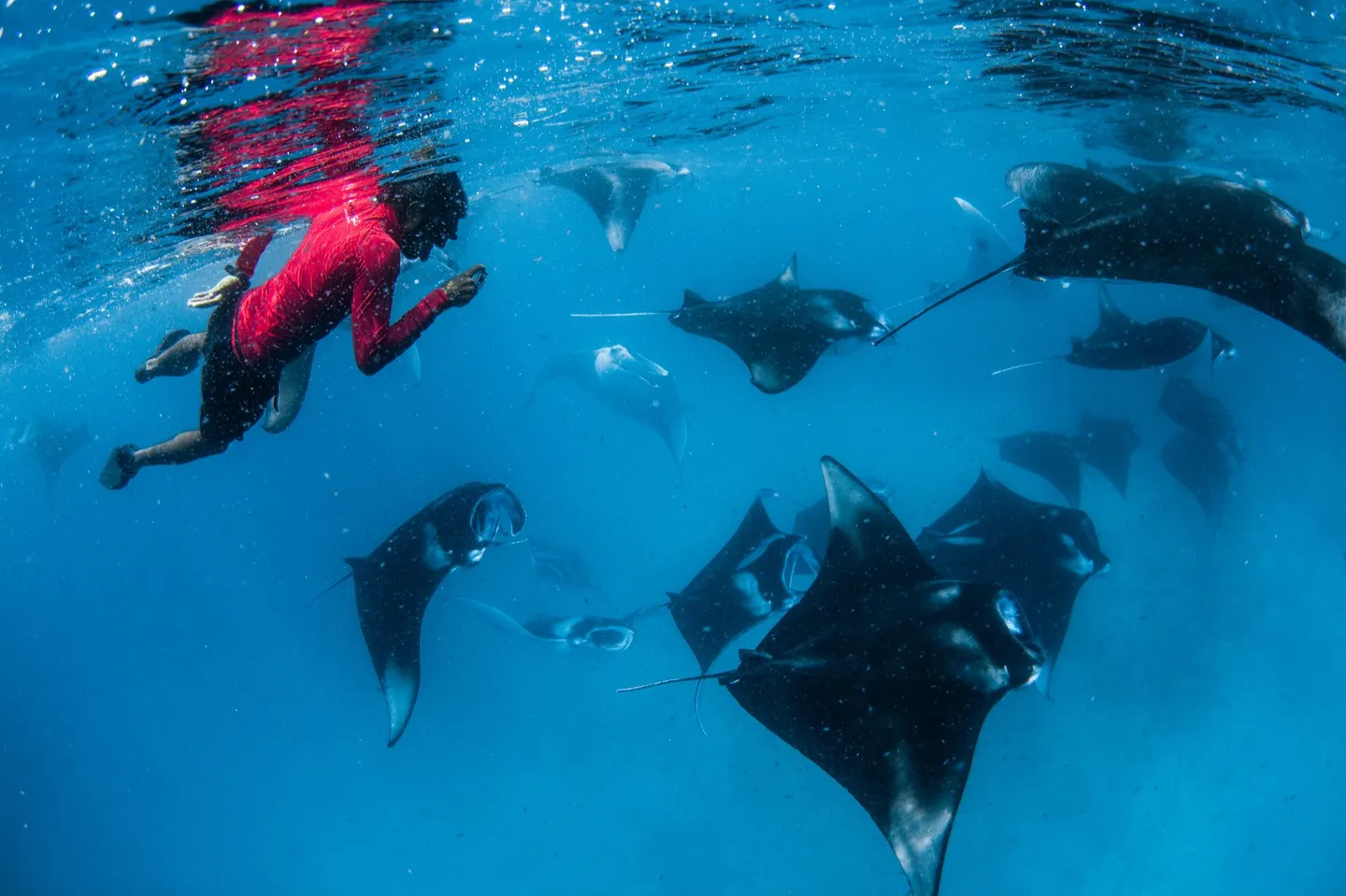
Hanifaru Bay in the Maldives is one of the most important manta ray feeding hotspots in the world, and the primary research base for Manta Trust. Photo credit: Simon Hilbourne / Manta Trust


For Snorkellers: 6 Steps to Swimming with Mantas (Steps 1–6)
If you're heading out on a snorkelling trip abroad to see manta rays, the first 6 steps are your essential foundation — memorise every single one.
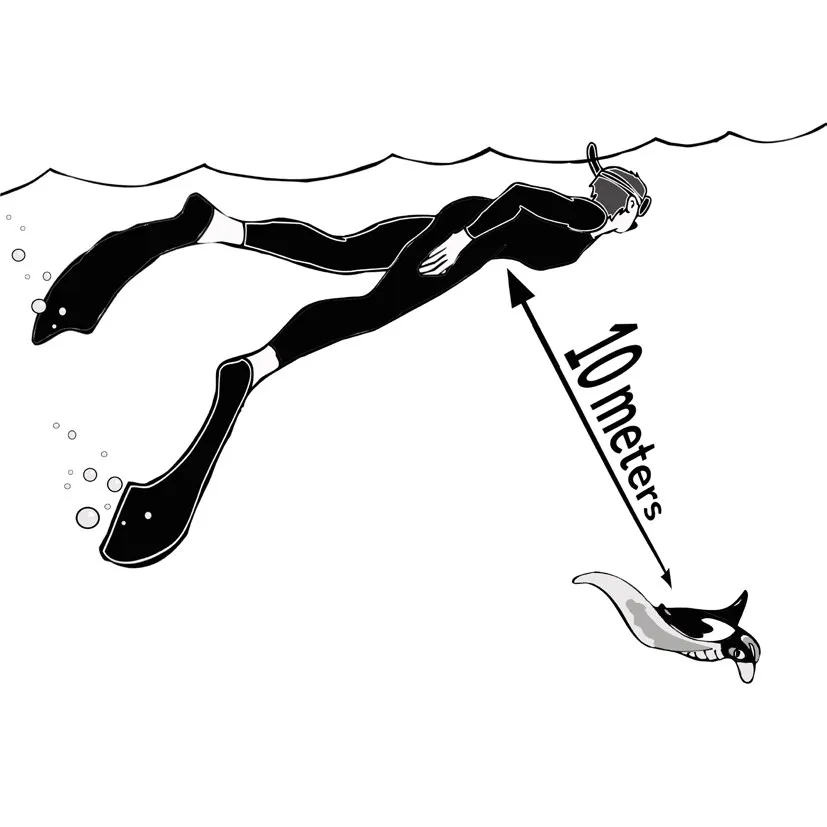
Step 1 illustration: maintain at least 10 metres distance from a manta ray upon entering the water. Image credit: Manta Trust
Step 1 | Enter Quietly, at Least 10 Metres from the Manta
The moment you hit the water is critical. Slide gently over the side of the boat — do not leap off the gunwale with a loud splash, and absolutely do not have a group of people enter simultaneously. The very first rule: enter the water at least 10 metres (33 ft) from the manta ray. Give it space, and give yourself time to settle down.
Step 2 | Keep Your Fins Below the Surface, Approach Quietly
While swimming, keep your fins fully submerged at all times — do not kick up splashes at the surface. The Editor repeats this every single time before taking people into the water, because the "slapping" noise at the surface is an enormous disturbance to marine life below. Quiet movement is what invites an approach — that is the golden rule of manta ray encounters.
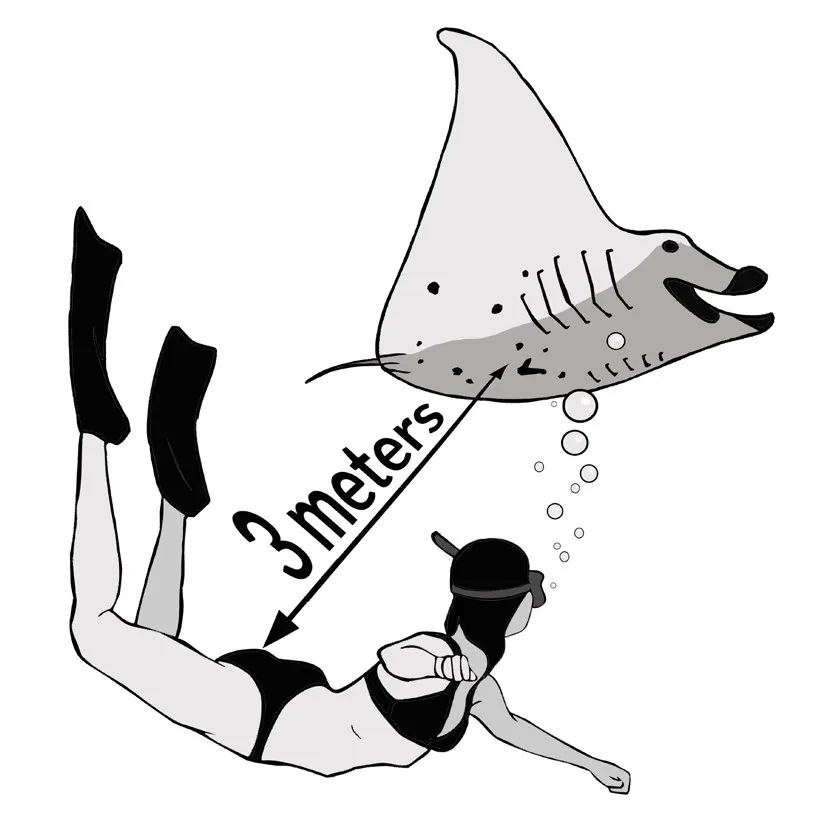
Step 3 illustration: maintain 3 metres distance and let the manta ray decide whether to approach you. Image credit: Manta Trust
Step 3 | Don't Move Within 3 Metres — Let the Manta Come to You
The instinct the moment you see a manta ray is to charge forward for a closer shot. Wrong. Keep at least 3 metres (10 ft) of distance, float calmly at the surface, and let the manta decide whether it wants to come closer.
From the Editor's own experience: the calmer you are, the more curious they become. Stop moving, and you may find yourself surrounded by three or four manta rays, each taking turns to inspect you — a scene infinitely more spectacular than anything you'd capture by chasing.
Step 4 | Approach from the Side, Never Block Its Path
If you do move toward a manta ray, remember: approach from the side and always leave a clear path ahead of it. Approaching head-on is essentially telling it "road closed, please reverse." Chasing from directly behind will only get you a view of its tail — not particularly rewarding.
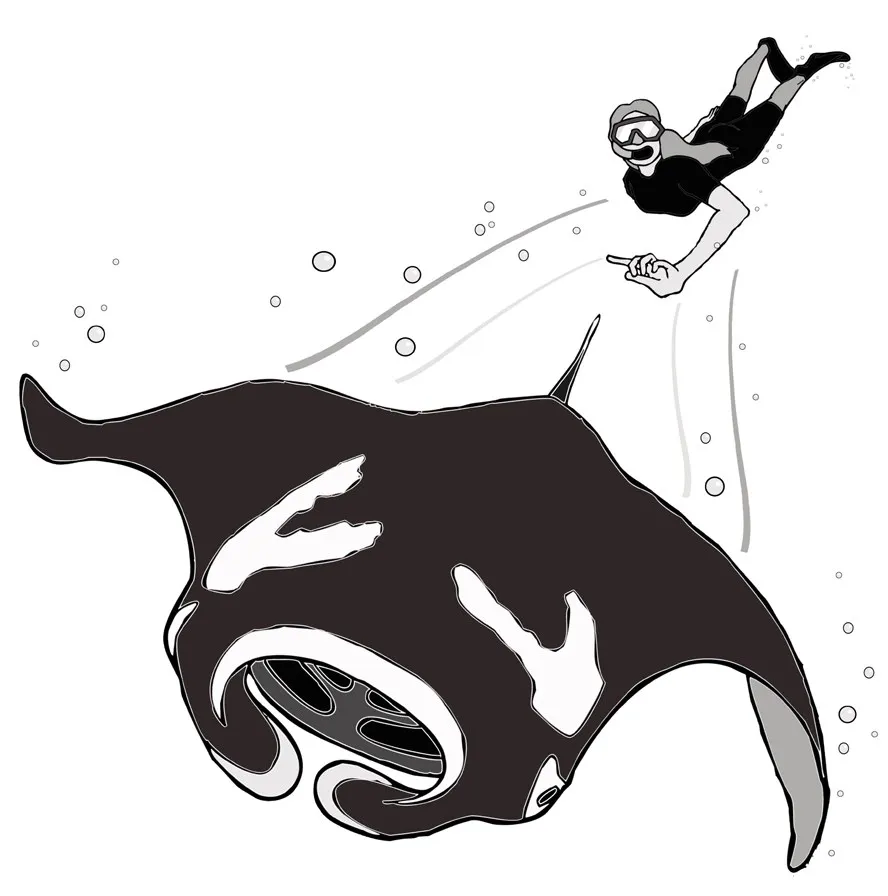
Step 5 illustration: when a manta ray passes by, do not give chase — you will never catch it. Image credit: Manta Trust
Step 5 | When a Manta Passes By, Don't Chase It
This is the rule that breaks down most often. The instant a manta ray glides past you, adrenaline spikes and your feet kick instinctively. The Editor will say it plainly: you will never catch it. An adult manta ray cruises at around 9 km/h and can burst far faster. All you'll accomplish is scaring it off — and everyone else in the group goes home empty-handed too.
Step 6 | Never, Ever Touch a Manta Ray
Manta rays are coated in a layer of mucus that protects them from parasites and infection. One touch doesn't just spoil the experience — it can strip that protective layer and leave the animal vulnerable to illness. More practically, many of the locations where manta rays are found — the Maldives, Indonesia, and parts of the Philippines — have laws explicitly prohibiting touching, with on-the-spot fines for violations. One touch: bad for the manta ray, bad for your wallet. Not worth it.
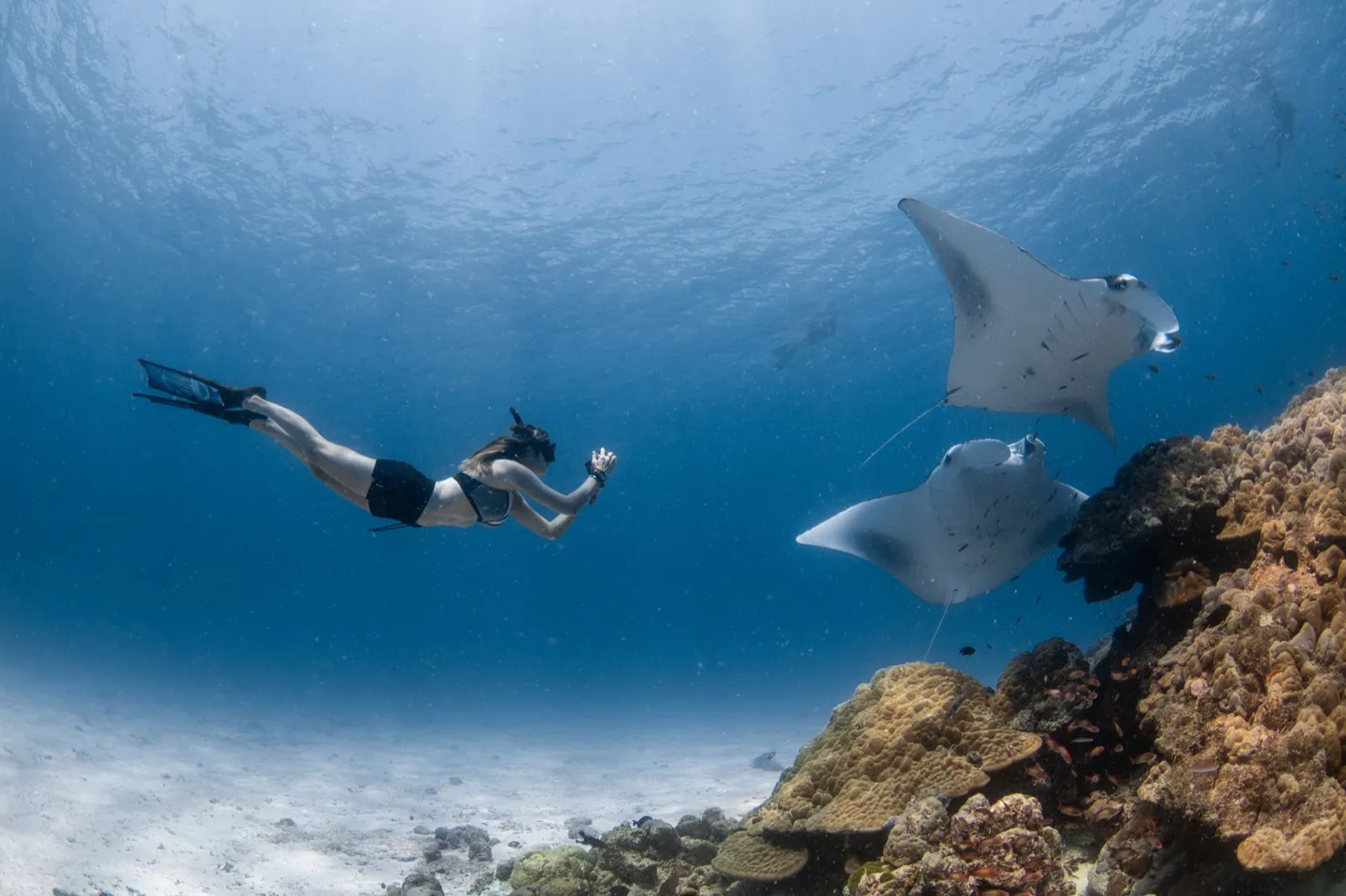
Staying to the side at a respectful distance, without chasing, is what earns you an experience like this. Photo credit: Simon Hilbourne / Manta Trust
For Scuba Divers — Don't Barge into the Cleaning Station (Steps 7–10)
If you're a scuba diver, the final 4 steps are especially important — because the scenario where scuba divers encounter manta rays almost always takes place at a cleaning station.
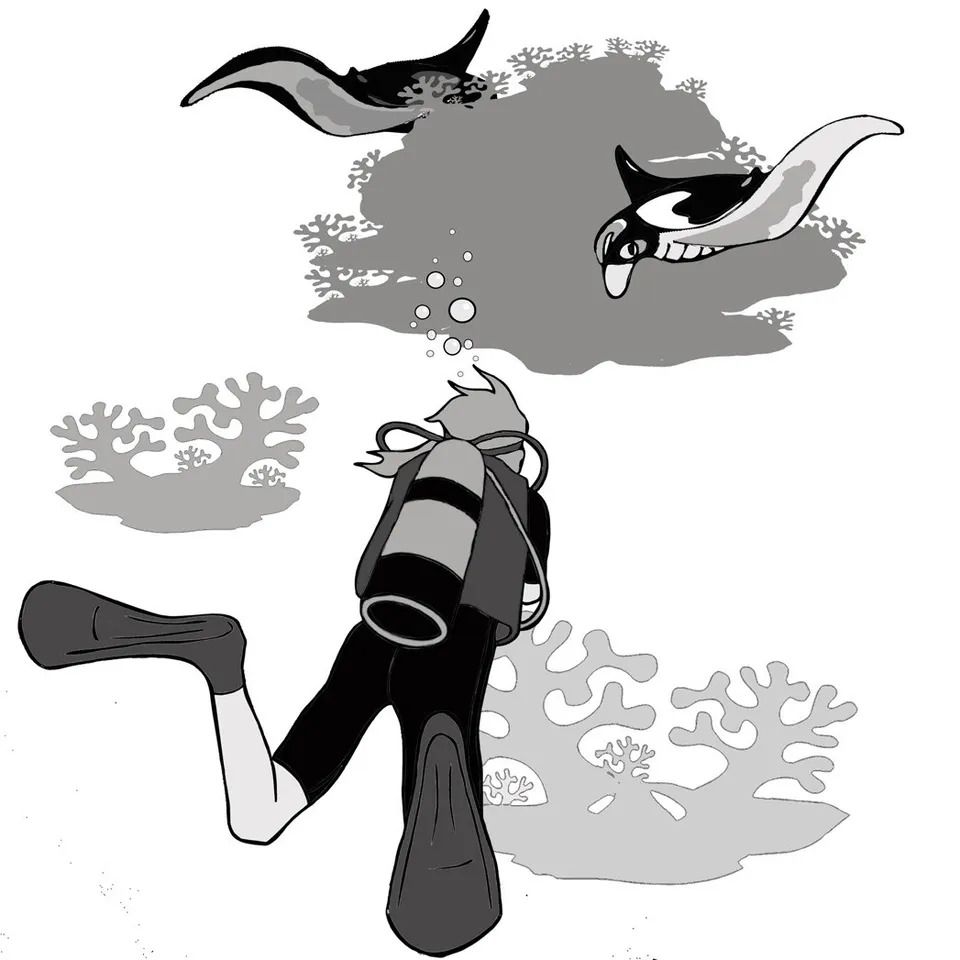
Step 7 illustration: a cleaning station is the manta ray's grooming time — divers stay on the periphery to observe and never swim into the main cleaning zone. Image credit: Manta Trust
Step 7 | Stay on the Edge of the Cleaning Station — Never Enter the Main Cleaning Zone
A cleaning station is a specific small area on the reef where cleaner fish (such as bluestreak cleaner wrasse) remove parasites from manta rays. For the manta, this is the most important "grooming session" of its day.
If you find a manta ray at a cleaning station, your job is to stay on the periphery and observe — never swim into the centre of the main cleaning zone. The moment you do, the cleaner fish scatter, the manta turns and leaves, and the entire ecological theatre comes to an abrupt end.
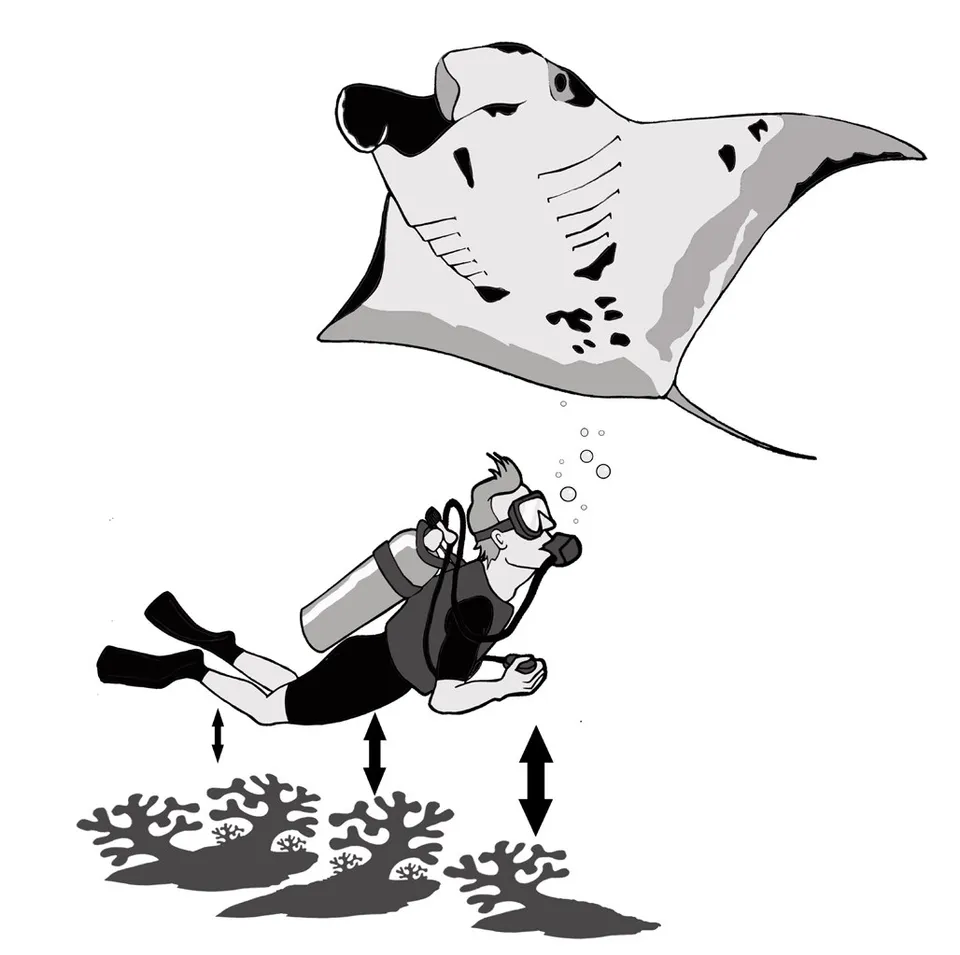
Step 8 illustration: maintain a low profile close to the seabed — but be careful not to damage the coral below. Image credit: Manta Trust
Step 8 | Get Low Near the Seabed — But Don't Damage the Coral
Near a cleaning station, maintain a low profile (trim flat, hover close to the seabed) to minimise visual disturbance to the manta ray. But mind your neutral buoyancy: the Editor has seen far too many divers try to get low, only to send a fin sweeping through an entire gorgonian colony. That is the real disaster. Some dive sites designate specific "diver observation zones" — stay within them.
Step 9 | When a Manta Passes Overhead, Stay Put and Don't Move
This is the moment that stays with you: lying low at the reef's edge, a manta ray glides directly over your head, and for an instant the whole world goes quiet.
The one thing to remember: keep your low profile, stay where you are, and do not rise up to block its path. Let it continue along its chosen route — that's what ensures it will return.
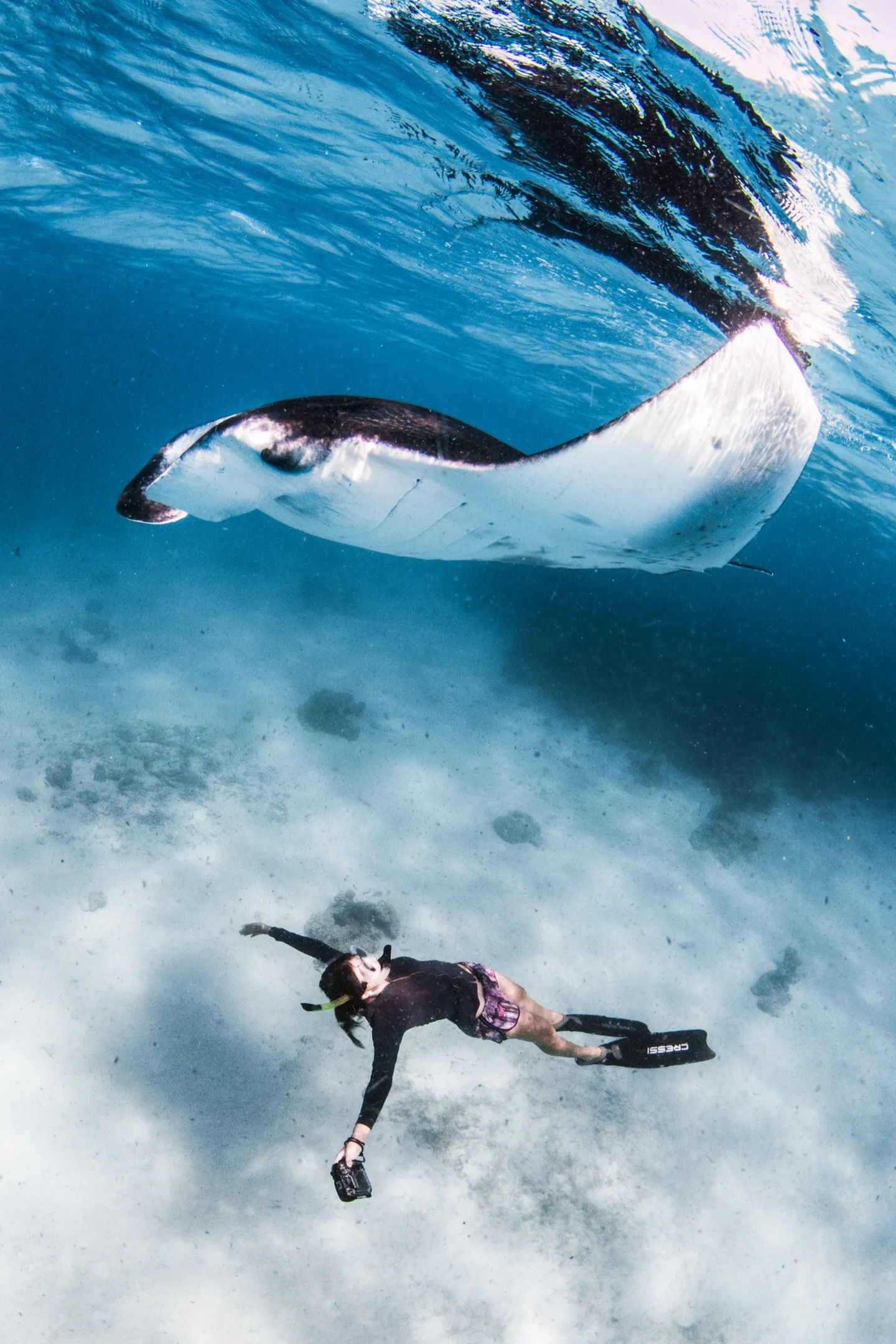
Low profile, clear path — the perfect posture for a manta ray to glide right over you. Photo credit: Simon Hilbourne / Manta Trust
Step 10 | Follow All Additional Rules Specific to That Dive Site
Different locations have their own regulations. Hanifaru Bay in the Maldives caps the number of people allowed in the water at any one time. Raja Ampat in Indonesia prohibits GoPro selfie sticks. Revillagigedo in Mexico limits the size of liveaboard groups. Every destination is different. Ask your dive shop before you go, listen carefully to the briefing, and follow local rules on the day. "We do it differently back home" is never an excuse.
Essential Reading for Dive Operators: Download the Free Media Kit and Join the Global Responsible Operator Directory
The Editor wants to address this directly to all dive shops, dive instructors, liveaboards, and travel operators: Manta Trust has made its Media Kit freely available, hoping that operators in the Chinese-speaking world will help carry this code of conduct to their guests. There are two concrete things you can do:
1. Register on the Official Website and Download the Free Traditional Chinese Media Kit
Head to swimwithmantas.org/registration, fill in a short form, and you'll receive a password to access the RESOURCES page. Inside you'll find the 10-Step Guide PDF in Traditional Chinese, posters, and promotional videos — all free to download.
Print the PDF and display it in your briefing area, run through it with guests before each trip, or slip it into your liveaboard welcome pack. Once you see how much effort it saves you from having to shout "don't chase, don't touch" underwater, you'll understand just how useful this guide really is.
2. Apply to Become a Manta Trust Responsible Operator
swimwithmantas.org maintains a global Responsible Tour Operators directory listing dive centres and tour companies that have committed to conservation standards, support Manta Trust's scientific research, and have undergone relevant training.
This directory is an important reference for international travellers planning manta ray itineraries. If your dive shop runs manta ray programmes, the Editor strongly encourages you to apply for inclusion — not only so customers can find you, but to put a badge on your brand that the ocean can be proud of. BlueTrend would love to see more Chinese-speaking dive shops and liveaboards appearing on that list.
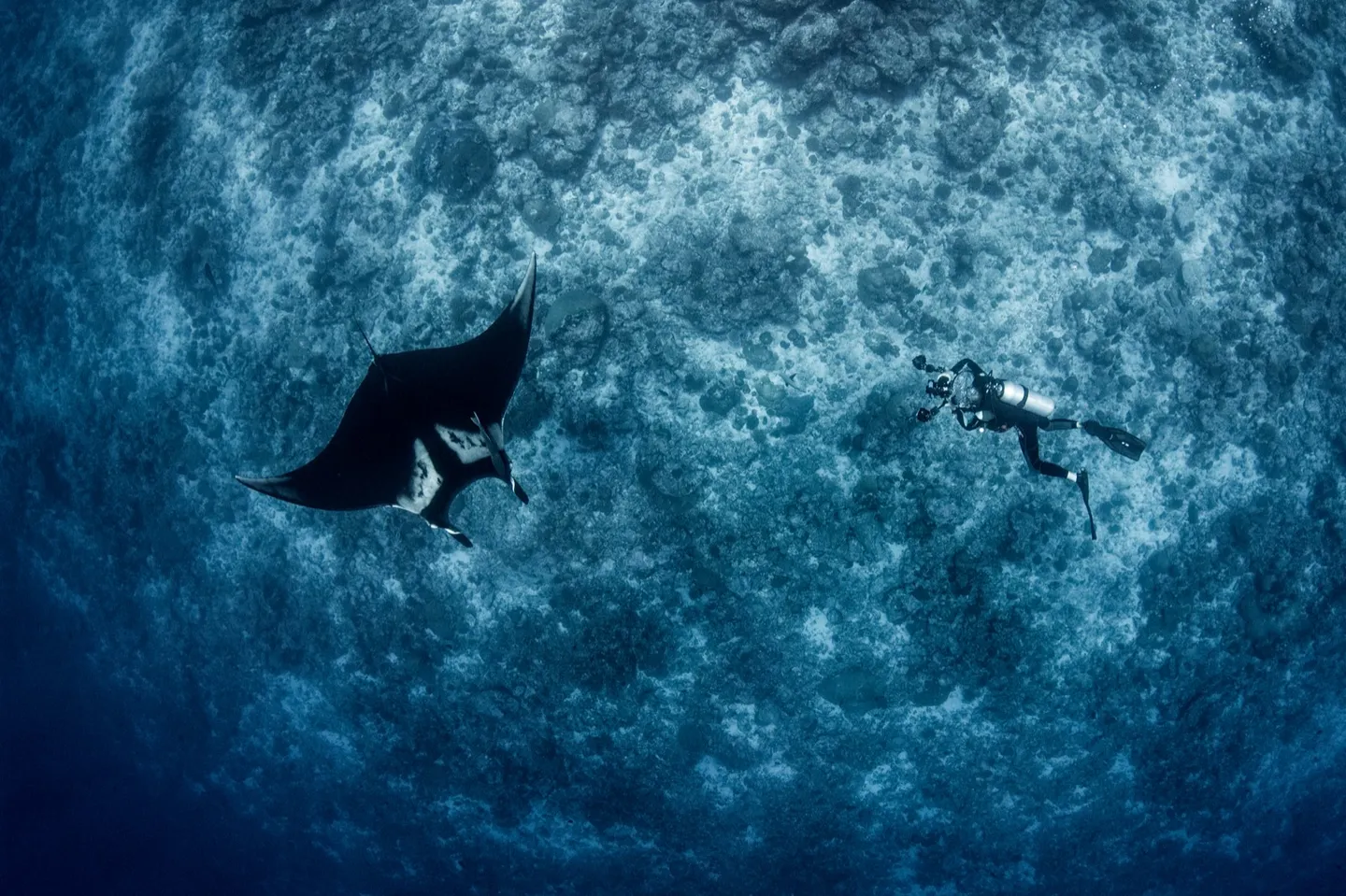
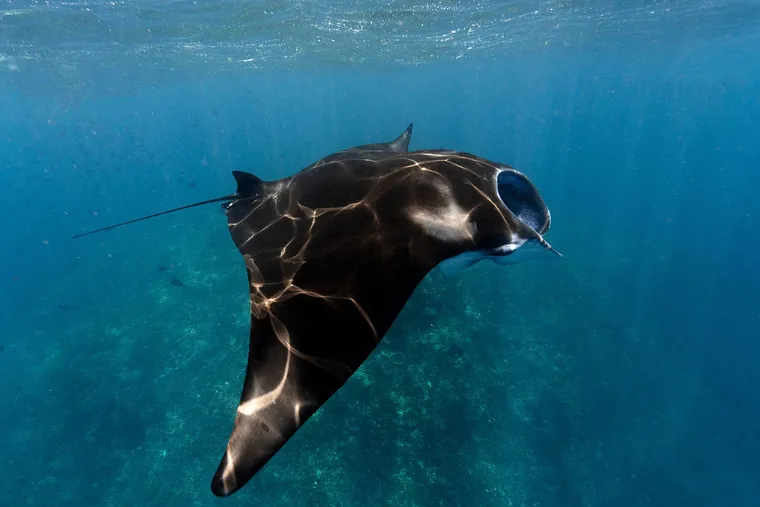
An oceanic manta ray (Mobula birostris) in the waters of Fuvahmulah, Maldives — with a wingspan that can exceed 7 metres, distance is even more essential. Photo credit: Simon Hilbourne / Manta Trust
A Word from the Editor: The Photo You Take Today Determines Whether the Next Person Gets to See a Manta Too
The Editor has always believed that what sets divers apart from ordinary tourists when encountering large marine life is this: we know we cause disturbance, so we choose to get as close as possible with as little impact as possible.
Manta Trust's 10 steps may seem straightforward, but in the water, in the moment, far fewer people follow them than you'd think. Next time you're abroad and you see someone in your group about to charge forward — about to reach out a hand — you can be the one who holds them back and quietly says the word.
The ocean belongs to all of us. How you interact with a manta ray today determines whether the next diver, the next snorkeller, will still get to see one in that same stretch of sea. The Editor believes divers are the people closest to the ocean — so let this code of conduct start with us.
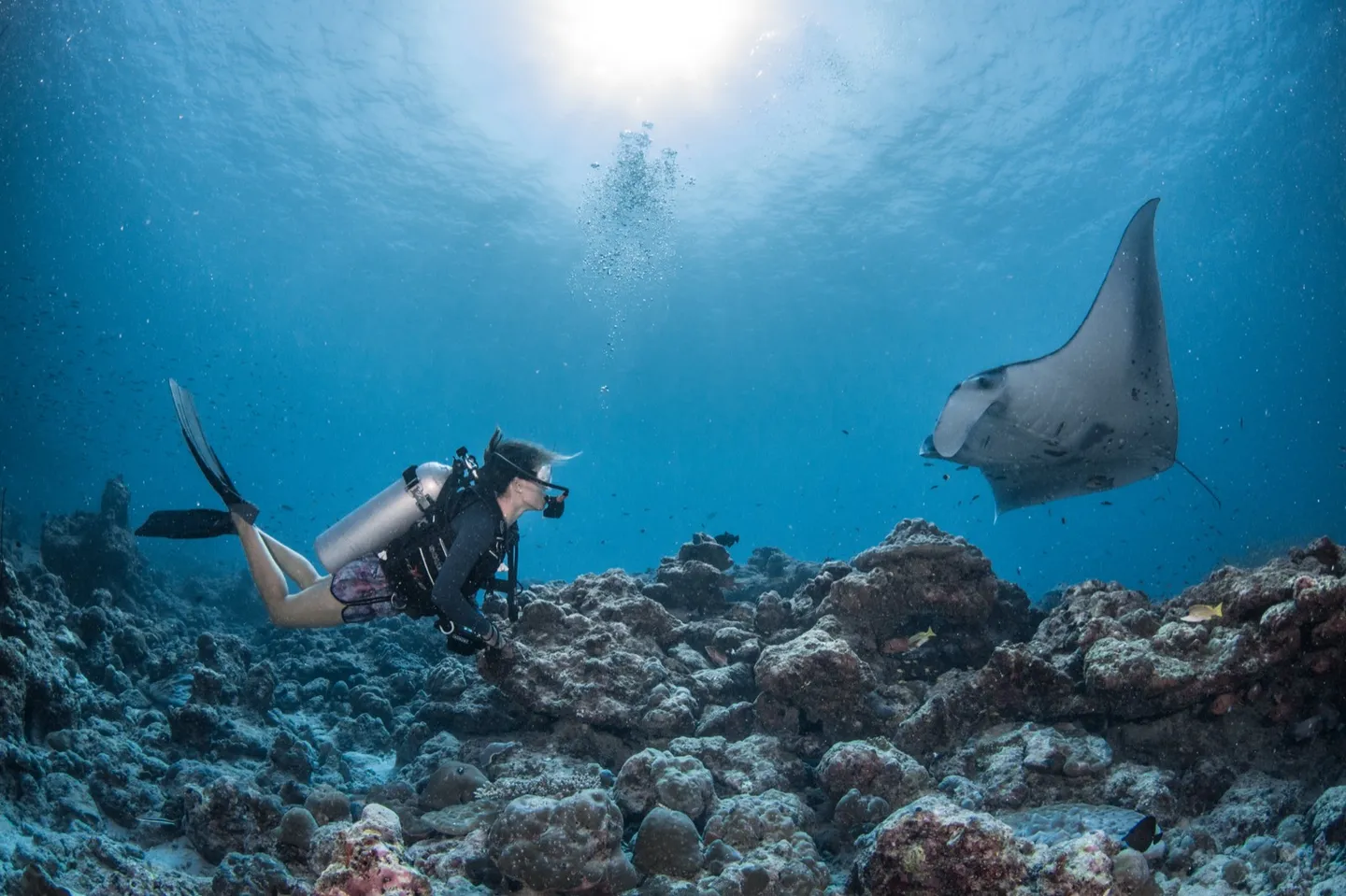
A diver holds a low profile near the seabed, and a manta ray comes in naturally to investigate. Photo credit: Simon Hilbourne / Manta Trust
References and Sources
- Manta Trust, swimwithmantas.org
- Manta Trust, How to Swim with Mantas — 10-Step Guide
- Manta Trust official website, https://www.mantatrust.org
- All underwater photography by Simon Hilbourne, taken in the Maldives, used with permission from Manta Trust
- Step-by-step diagrams (Steps 1–9 line illustrations) excerpted from the Manta Trust official Traditional Chinese edition of "How to Swim with Mantas — 10 Step Guide" PDF
※ The 10-step content in this article is adapted from the Manta Trust "How to Swim with Mantas" official Traditional Chinese PDF, edited and rewritten by the BlueTrend editorial team. We gratefully acknowledge Manta Trust's permission to use the images.