Contents(6)
- We can evaluate a shell's condition using 5 criteria:
- Point 1: Is the shell dead-collected or live-collected? How do you tell?
- Point 2: A shell's category — tourist shell? collector's shell? specimen shell?
- Point 3: What is the shell's "maturity"?
- Point 4: The shell "grading" system — how is it determined?
- Point 5: Does the shell show any "abnormality"?
No shell — and no person — is perfect, just as this world is endlessly and wonderfully strange.
In the first four episodes we built a basic understanding of shell "families."
After sorting common shells into their respective categories,
one question inevitably arises: "Why can I still not identify what kind of shell this is?"
This episode we'll talk about a shell's condition (quality and appearance),
and re-examine the specimens in your hand —
hopefully clearing up some of that confusion!
-
First, one very important concept that bears repeating:
"A shell is the exoskeleton of a mollusc" (i.e., it is bone).
The main component is calcium carbonate, and its appearance varies depending on the family.
It is absolutely not "something that grows on a hermit crab's back" or "a pretty rock"!
※ Even fishmongers are often confused — you may hear stories about crabs somehow sprouting shells and turning into hermit crabs. Just smile and move on.
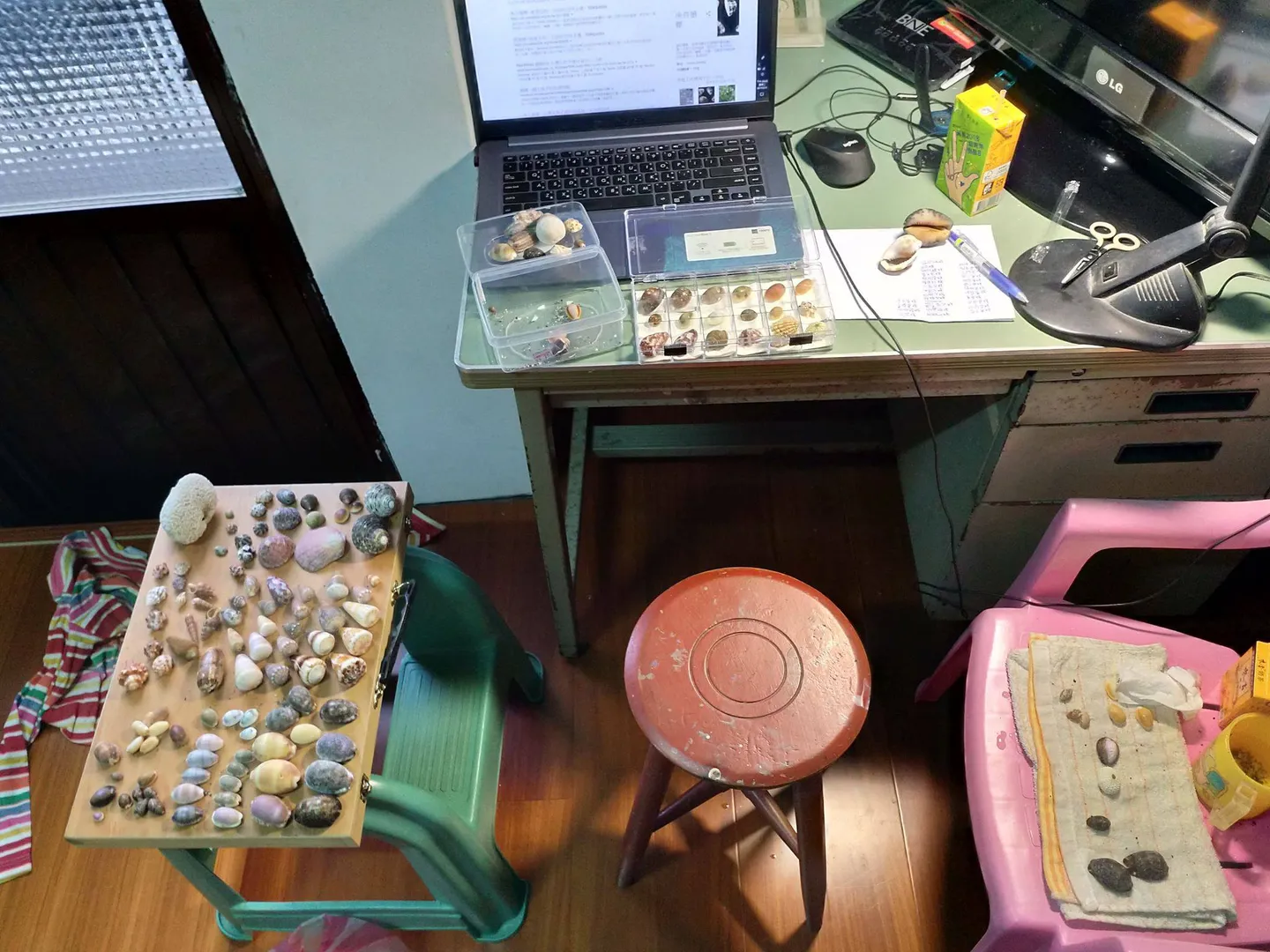
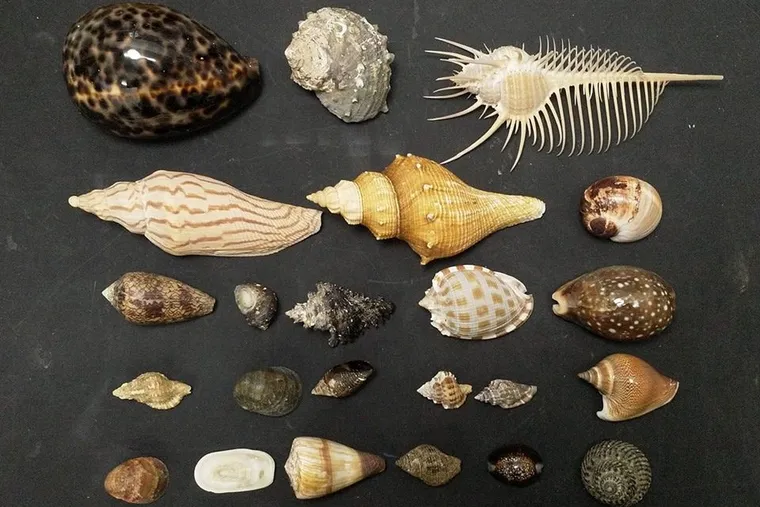
Photo: The desk of a shell enthusiast from Taitung — species are recorded and then returned to the sea.
-
We can evaluate a shell's condition using 5 criteria:
-
Is it a "dead shell" or a "live-collected shell"?
-
What is this shell's "category"?
-
What is the shell's "maturity"?
-
What "grade" does the shell receive?
-
Does the shell show any "abnormality"?


Point 1: Is the shell dead-collected or live-collected? How do you tell?
(Photo: A Fig Cone still retaining its operculum — Source: Taiwan Fish Database)
First, let's understand what a dead shell is:
A shell found with only the exoskeleton remaining — the soft tissue inside has already decomposed.
In other words, a snail that was found having died naturally.
This includes shells washed ashore by waves, carried by hermit crabs, hauled up in fishing nets with barnacles encrusting the aperture, and so on.
Next, let's recognise what a live-collected shell is:
A shell found with the snail's body still inside — usually still retaining the operculum.
In other words, a snail that was still alive at the time of collection.
This includes night-market turban shells, papaya shells from the fishing harbour, museum display specimens, and so on.
※ You may occasionally hear the term fresh dead — just as the name suggests, these are shells found already dead but with soft tissue still present inside.
-
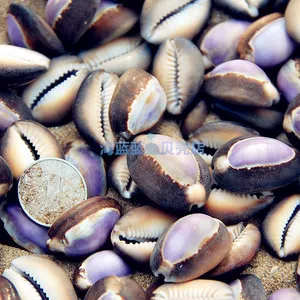
Photo: A Snow Mountain Cowrie worn down by abrasion to expose the base layer — Source: Taobao
The biggest difference between the two is that a live-collected shell retains the complete shell, periostracum, operculum, and radula,
whereas a dead shell is usually damaged, worn, and dull — nothing like the image in a field guide.
(This is precisely why many people who pick up shells cannot identify the species.)
Therefore, live-collected specimens have far greater value than dead shells — or, to put it bluntly:
"95% of dead shells washed ashore by waves have no collecting value whatsoever."
The remaining 5% have value in documenting the species present in a given area as a literature record (provided you can actually identify them).
So please, dear readers, save yourselves the effort and don't try selling beach-combed shells online!
-
Point 2: A shell's category — tourist shell? collector's shell? specimen shell?
The distinctions between these three can be a bit blurry, yet they're not particularly hard to tell apart.
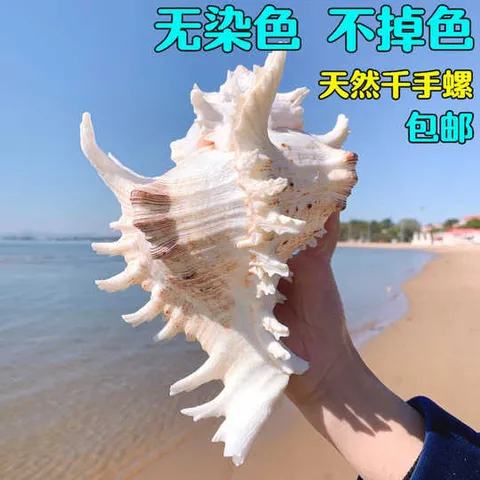
Photo: Large White Spider Conchs imported in bulk for tourist shops — Source: Taobao
What is a tourist shell?
Tourist shells refer to the inexpensive, craft-grade shells commonly found in seaside souvenir shops.
These shells are typically: imported from abroad (especially the Philippines), sanded, acid-washed, and polished into handicrafts.
They lack an operculum, have unknown provenance, and show obvious signs of artificial processing.
They are mass-harvested, mass-processed, mass-sold, and ultimately mass-discarded as decorative objects.
We strongly discourage purchasing them — it runs entirely counter to our vision of understanding marine life.
(Photo: A Top Shell polished down to its nacreous layer — Source: Shell23)
(Photo: A Queen Conch with obvious artificial polishing)
What is a collector's shell?
Collector's shells generally come from domestic or international auctions and shell dealers.
Condition is the primary consideration — prices range from tens of thousands of US dollars down to mere pocket change.
Compared with tourist shells, collector's shells place much greater emphasis on intact shell form, preserved operculum, and provenance information.
They can satisfy the connoisseur's appreciation and also hold a degree of academic value.
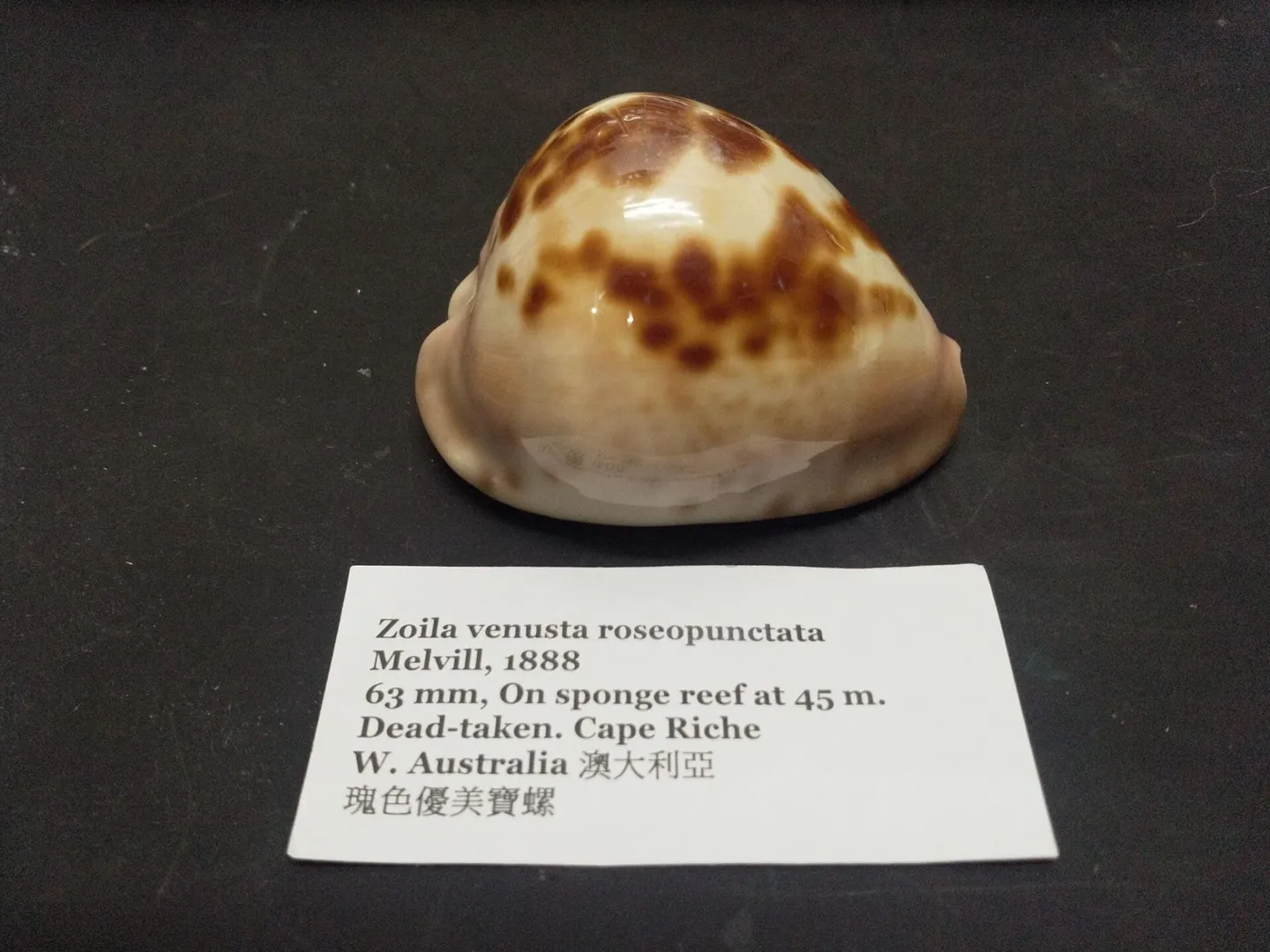
Photo: A fine subspecies of Cypraea elegans acquired at auction
What is a specimen shell?
This refers broadly to shells of specimen quality that can serve as samples for species identification.
They are usually obtained through personal collection or by commissioning fishermen to set aside catches.
Provenance information is valued even more highly than condition, so each specimen requires a considerable investment of time and effort.
A data tag (ID) is attached, noting the scientific name, collector, location, and collection conditions (time, season, weather, etc.).
The operculum and periostracum are usually retained; a small number will also include a radula specimen.
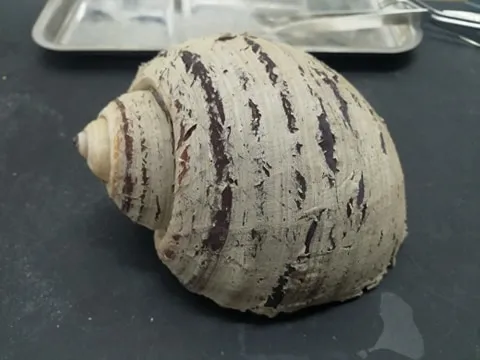
Photo: A Tun Shell (Tonna perdix) with periostracum intact
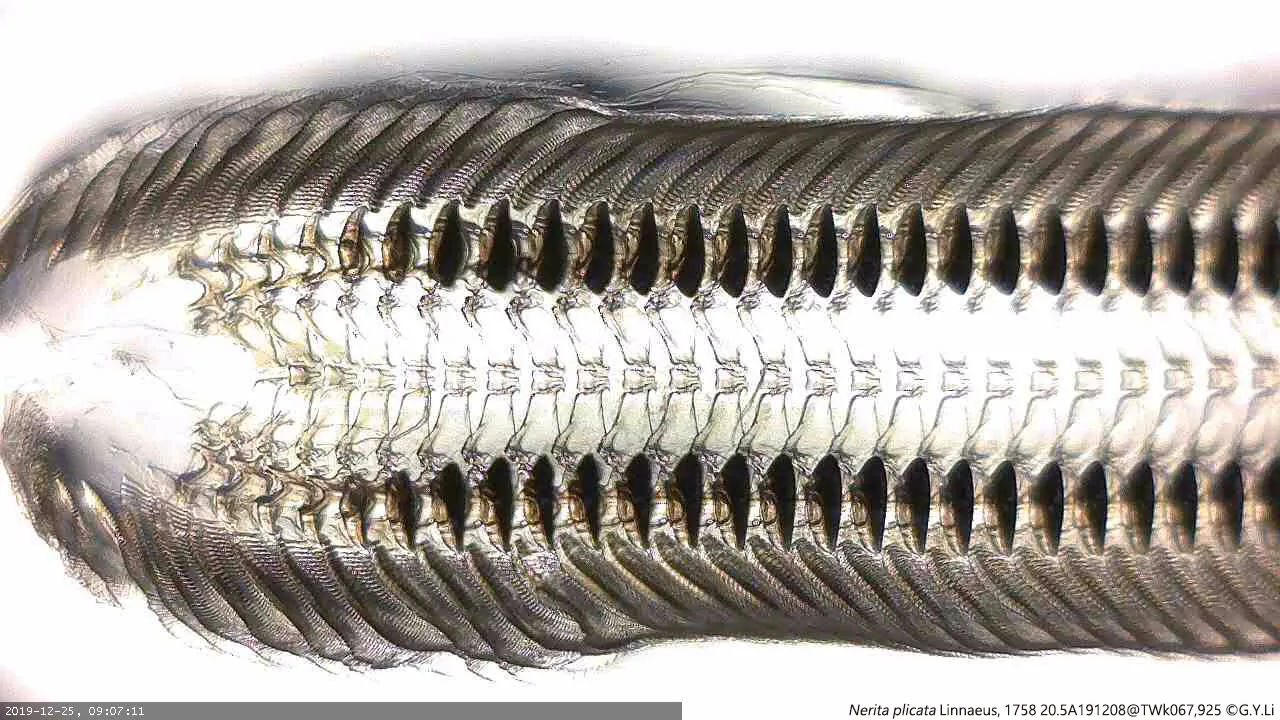
Photo: Radula specimen of Nerita plicata
Point 3: What is the shell's "maturity"?
The growth stages of a shell can be broadly divided into three phases:
juvenile, sub-adult, and adult.
While there is no clear-cut boundary, it is still possible to tell them apart from telltale signs.
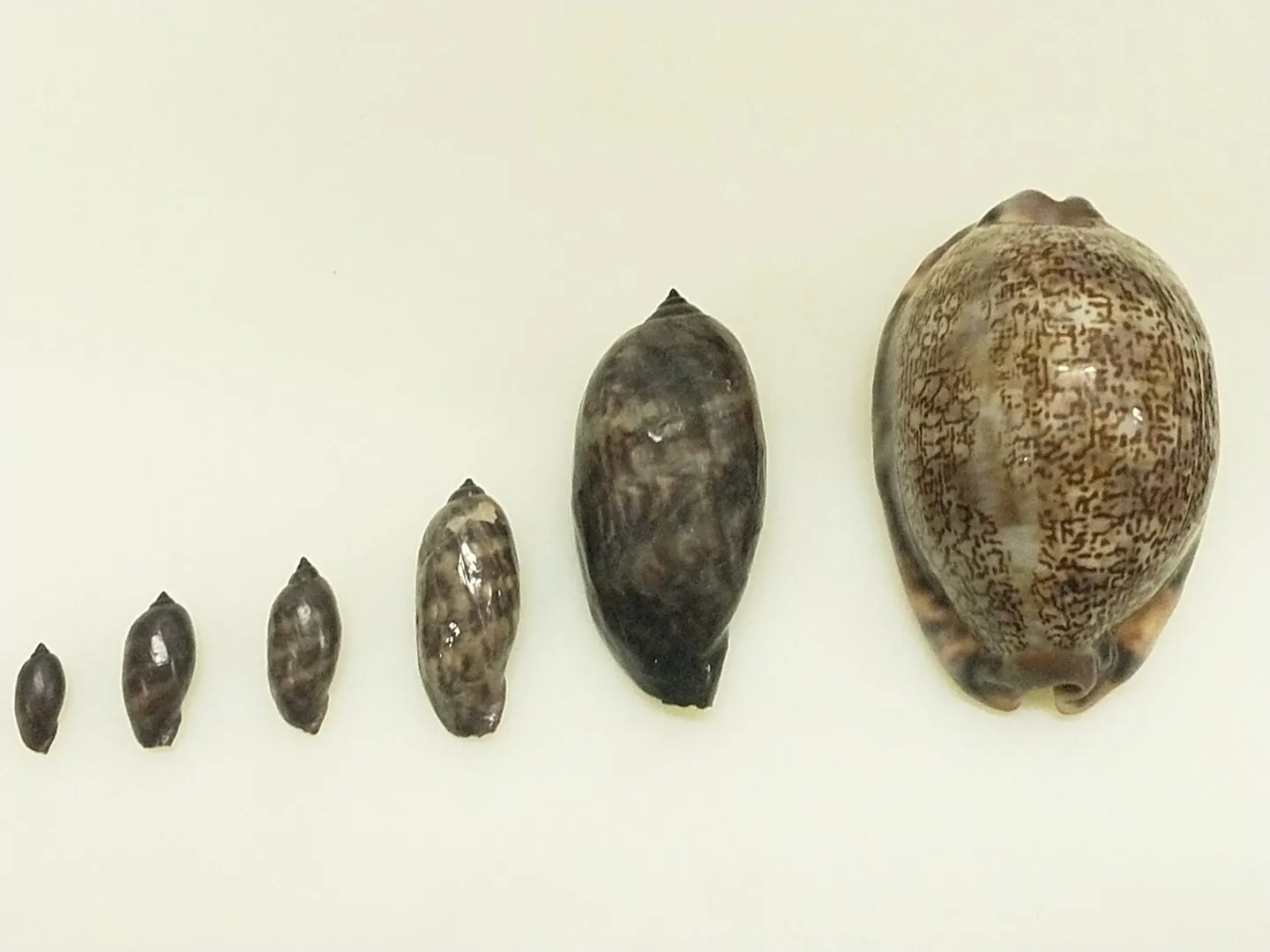
Juvenile, sub-adult, and adult
Rather than getting bogged down in terms like "juvenile" or "sub-adult,"
we more often simply say "this one isn't mature yet" or "this one is really old (mature)."
Common indicators for assessing shell maturity:
1. Thickening of the lip
2. Thickening of the shell wall
3. More pronounced characteristic features
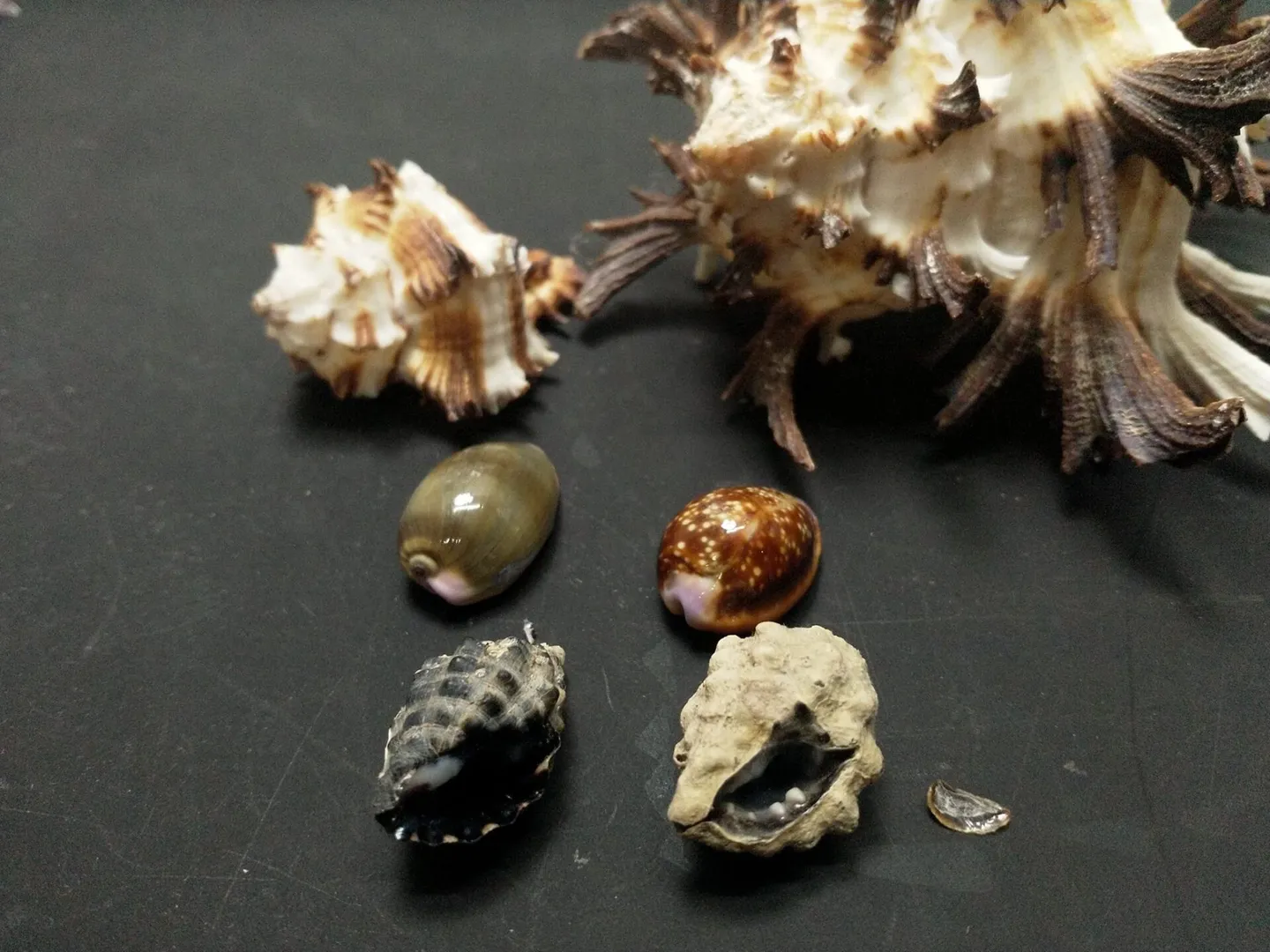
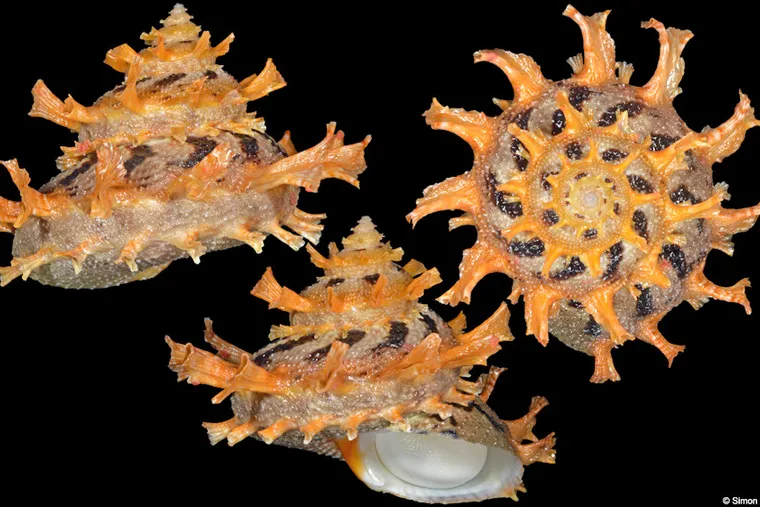
Photo: Left is younger, right is more mature — Lettuce Murex, Miliaris Cowrie, and Knobbed Whelk
Whether in domestic or international shell trading and auctions, adult specimens are the standard.
Avoiding the collection of juvenile live shells has become an established consensus.
Juveniles are generally used only as scientific research specimens and not as general collectibles.
In collecting, older (more mature) specimens are prized above all — this is also one of the key criteria for judging shell quality.
-
Point 4: The shell "grading" system — how is it determined?
The grading system here is premised on collecting value.
A shell has collecting value when it is "live-collected and adult."
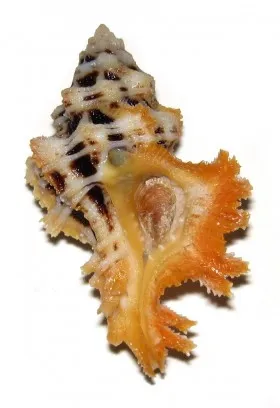
Photo: Latticed Murex — Source: topseashells
According to the internationally used HMS-ISGS shell grading system:
Shell condition is assessed on a five-tier scale:
gem : Gem grade — truly flawless, with no defect of any kind and no artificial repair whatsoever.
F+++ : Appears undamaged at first glance; only a very faint, tiny blemish upon close inspection.
F++ : Overall intact; only minor, negligible imperfections, growth marks, or sand inclusions.
F+ : Key features intact; visible impact damage or cracks, but the species characteristics remain clearly identifiable.
F : Just passable — obvious breakage, severe scratching … a shell you might consider throwing back into the sea.
Before assigning a grade,
the shell must be compared extensively against reference specimens to confirm its correct colouration and characteristic features.
This requires years of accumulated experience and exposure.
※ If you ever see a shell labelled gem++ (with any number of plus signs), it is a sure sign that the seller does not understand the grading system.
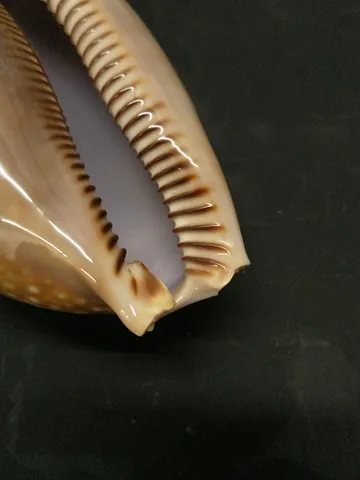
Photo: A Maculated Cowrie with severe damage to the anterior canal
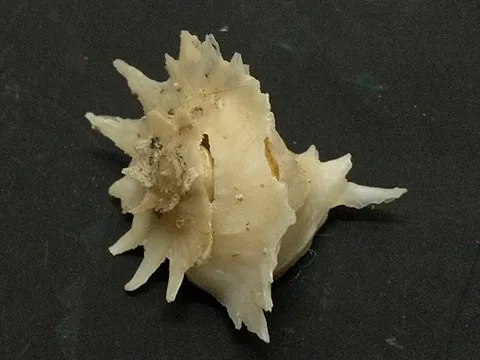
Photo: A Pease's Murex with a chipped shell margin
Point 5: Does the shell show any "abnormality"?
The special conditions most commonly discussed are:
abnormal form and colour variation.
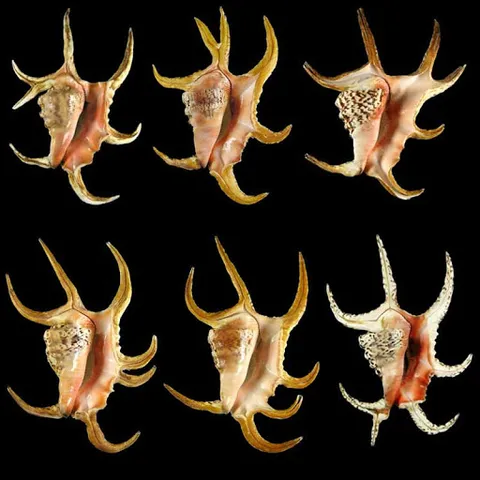
Photo: Water Scorpion Conch (Lambis scorpius) — Source: stromboidea
Shells are living organisms and may undergo varying degrees of variation due to natural or human-induced factors.
This includes twisted shell forms, pattern variations, abnormal siphonal canals, albinism, and so on.
In collecting, abnormal forms and colour variants are typically valued more highly than ordinary shells.
This is also why forgeries are most commonly encountered in this category.
So-called fake shells are usually produced through various craft techniques —
painting shells, baking them in a sealed environment, polishing, filling in damage, and other such methods —
in an attempt to pass ordinary shells off as deformed or colour-variant specimens,
or even to fashion them directly into an entirely different rare species, inflating the price accordingly.
Because the technology for producing fake shells has grown increasingly sophisticated in recent years, they are very difficult to detect without many years of experience.
Your best bet is to avoid purchasing expensive shells that you are not already very familiar with.
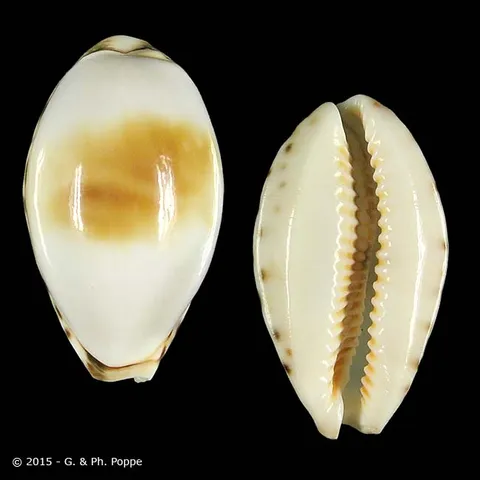
Photo: A forged Lynx Cowrie — Source: Conchology
Having covered family classification and condition assessment,
you now possess the foundational knowledge of a shell enthusiast.
The next step is hands-on practice!
It's time to pick up a camera, head outside, and connect with nature.
The next episode will begin introducing intertidal zone observation essentials —
covering attire, equipment, habitat, and precautions, one by one.
We hope this helps everyone become an ecological observer who truly enjoys the experience!
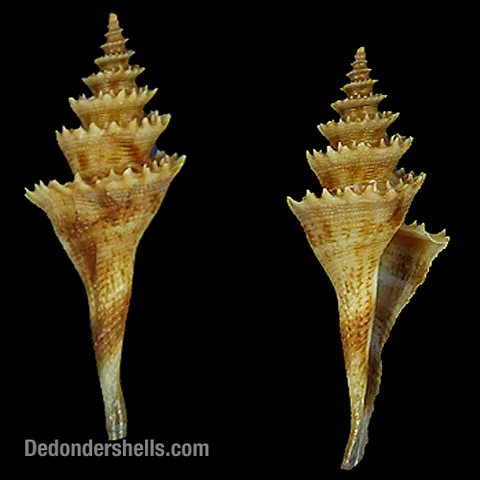
(Header image: Turritella terebra — Source: dedondershells)
Further reading: