![[BlueTrend Mini Classroom] The Star Killer & Most Venomous Shrimp: The Devoted Harlequin Shrimp](/_images/ab8fda5b39ae-1440w.webp)
Contents(9)
- Basic Introduction to the Sea Star Killer: The Harlequin Shrimp
- The Devoted Harlequin Shrimp: A Lifelong Passion for Sea Stars
- Toxins in the Harlequin Shrimp
- A Little Story from BlueTrend
- Which Other Relatives Also Love Eating Sea Stars?
- Leopard Shrimp Phyllognathia simplex
- Spiny Shrimp Phyllognathia ceratophthalma
- What to Do If You Encounter One in the Wild
- Want to Learn More About the Ocean?
The Editor says: The harlequin shrimp may look small and adorable, but it actually goes by the nickname "sea star killer" — using clever little tricks to drag sea stars back to its den for a feast. But how exactly does it haul home prey so much larger than itself? Follow along with BlueTrend as we uncover the "street smarts" of the harlequin shrimp!
Basic Introduction to the Sea Star Killer: The Harlequin Shrimp
With its striking patterns, the harlequin shrimp (Hymenocera picta) has earned nicknames like "poodle shrimp" and "clown shrimp" due to its unique appearance. Because it loves to feed on sea stars, it is also called the "starfish shrimp." Its body length is typically around 2–3 cm, with a maximum size of up to 5 cm. Females are generally larger than males.
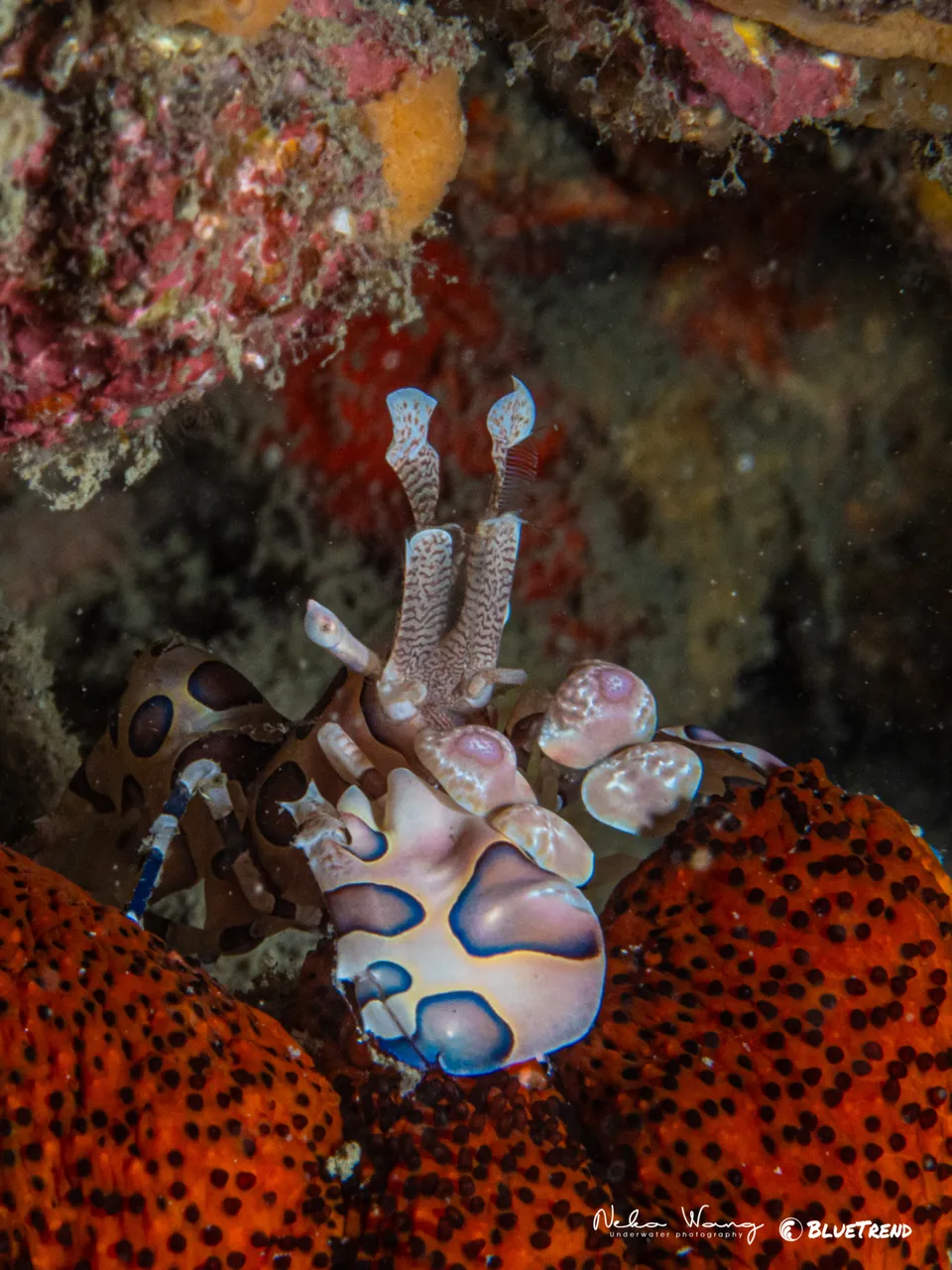
The harlequin shrimp's large claws — nearly as wide as its body yet wafer-thin — give it a truly distinctive look! photo credit: Neko Wang
Their body color is predominantly white, adorned with yellowish-brown patterning and blue-purple spots edged in black. They possess a pair of large claws that are almost as wide as their body but as thin as a cracker (the left claw is usually larger). The broad, flat, serrated claws sway as they move, resembling a dancer waving floral sleeves — utterly charming.
They are commonly found in Taiwan's coastal reef zones, primarily inhabiting the deeper subtidal belt. They typically hide in reef caves or crevices, and a keen eye is needed to spot them!


The Devoted Harlequin Shrimp: A Lifelong Passion for Sea Stars
Unlike most other crustaceans, harlequin shrimp generally live in male-female pairs. When two harlequin shrimp meet in the ocean, they stay together for life — isn't that romantic and devoted?
And they're not only devoted in love — they're devoted in diet too! True to their "starfish shrimp" nickname, sea stars are virtually the only thing on the harlequin shrimp's menu; they show little interest in other food. They mainly prey on members of the families Ophidiasteridae and Goniasteridae, and occasionally take larger sea stars as well. The harlequin shrimp uses its claws to sever the arms of a sea star, nibbling from the tip inward while slowly dragging the meal back to its den.
Toxins in the Harlequin Shrimp
As the saying goes, "the more beautiful, the more deadly" — and the gorgeous harlequin shrimp is no exception. However, the toxins it carries do not originate within the shrimp itself; they are derived from its food source — sea stars — and converted internally. The harlequin shrimp's vivid colors and striking appearance therefore serve as aposematic warning coloration, signaling to other animals that it is dangerous to approach or consume. As a result, it has very few natural predators!
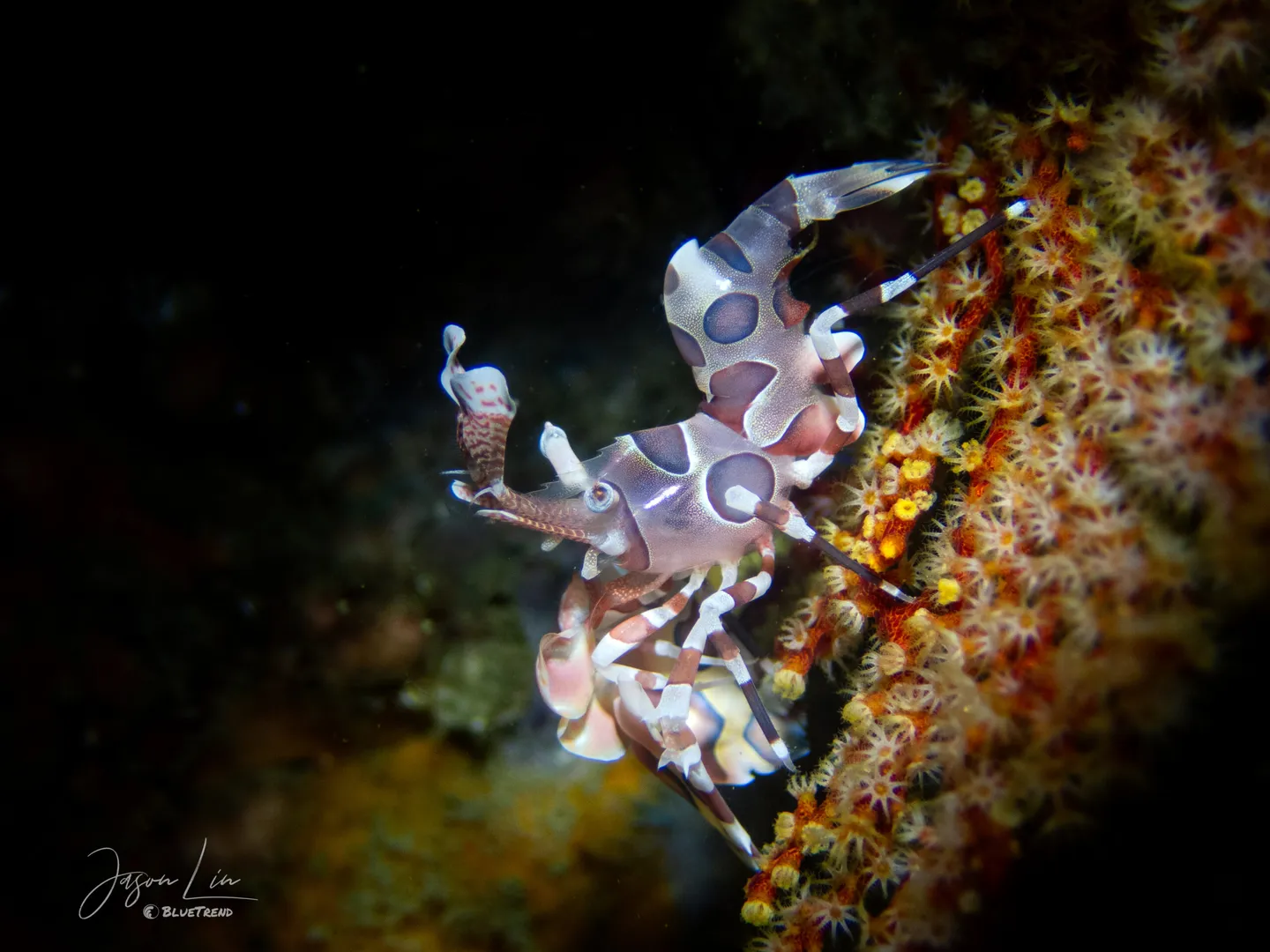
photo credit: 林晉賢
A Little Story from BlueTrend
An inseparable pair of harlequin shrimp live and forage together. If they're lucky, they can drag an entire sea star back into their den, where they begin sawing off its arms and devouring it at their leisure.
The sea star, however, doesn't just accept its fate — it will try to escape. But with one arm already gone, its movement slows considerably. The merciless harlequin shrimp will drag it back into the den again before it can reach the opening, resume cutting off arms, and keep eating.
That said, sea stars do have remarkable regenerative abilities. So when a sea star really does find itself cornered by a harlequin shrimp, it may shed one of its own arms as a self-defense mechanism.
Which Other Relatives Also Love Eating Sea Stars?
Besides the harlequin shrimp, there are two other members of the subfamily Hymenocerine that also share a fondness for sea stars. They are even smaller than the harlequin shrimp — often under 3 cm — so you'll need sharp eyes to spot them lurking at the base of the reef!
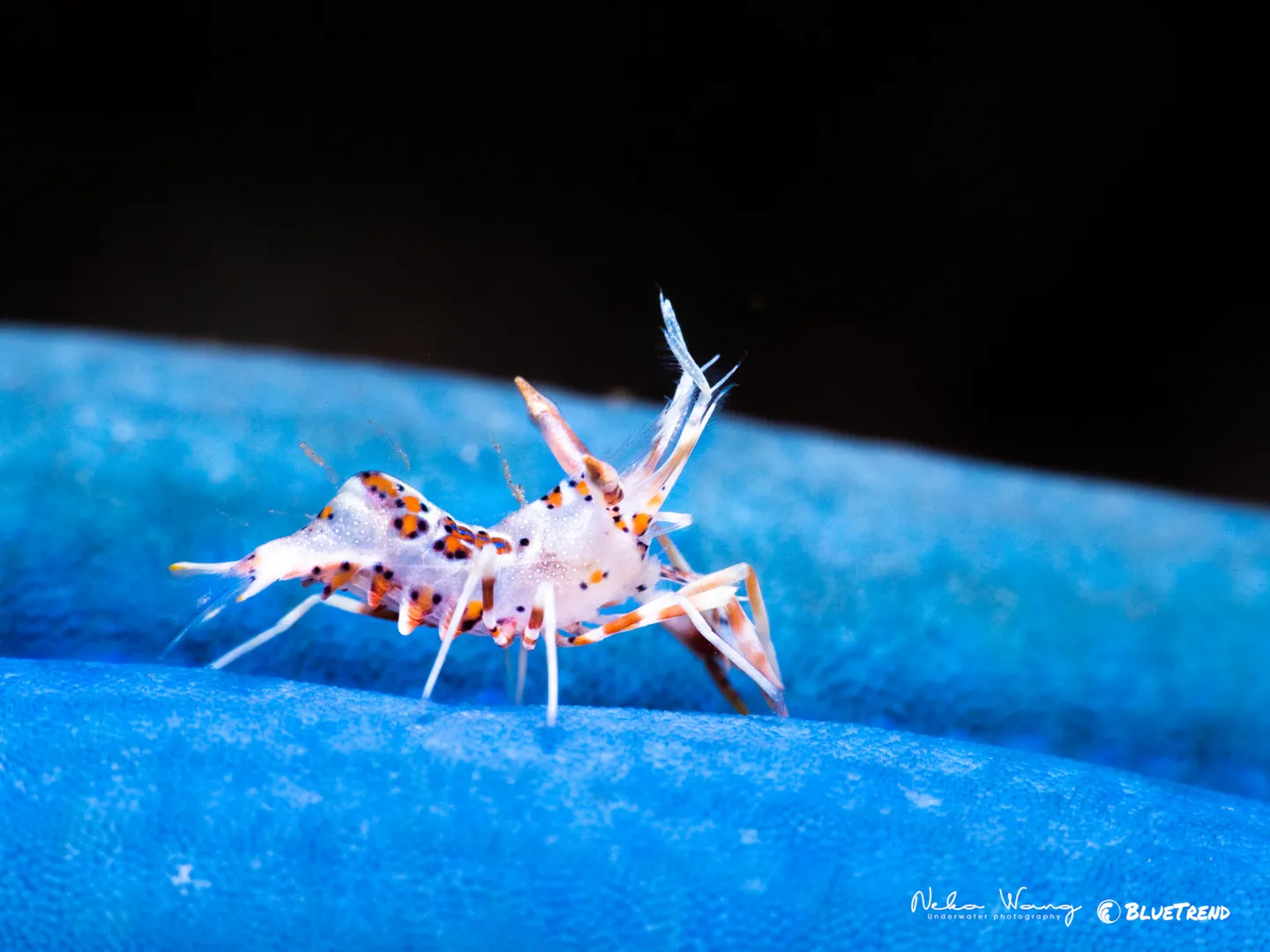
Leopard Shrimp Phyllognathia simplex
Named the "leopard shrimp" for the complex spots covering its body, this species is rare and seldom encountered. It prefers hiding near the sandy substrate at the base of coral reefs, where its intricate patterning and tiny frame help it blend in and avoid predators. While it occasionally feeds on small sea stars, it actually prefers brittle stars with their elongated arms!
Spiny Shrimp Phyllognathia ceratophthalma
Its bold striped markings give this tiny "tiger shrimp" a surprisingly fierce look. photo credit: Neko Wang
Known as the "tiger shrimp" for its alternating yellow, black, and white stripes, this species is covered in prominent spines that make it easy to identify. Tiger shrimp are small in size and prefer hiding in rock crevices at the base of coral reefs; combined with their nocturnal habits, they are not easy to find. They enjoy feeding on small sea stars, which they often carry back to their den to eat.
What to Do If You Encounter One in the Wild
Many people are alarmed to hear that the harlequin shrimp is venomous — but encountering one poses no real danger! Its shell does not secrete toxins, so as long as you don't eat it, you can safely approach and observe it up close. However, when photographing or observing, please do not move or displace them — doing so could cause them to lose their way back home, or separate them from the prey they worked so hard to haul in!
Most importantly, take a photo and upload it to a biodiversity database so that everyone can better understand the appearance and distribution of these beautiful little shrimp!
Want to Learn More About the Ocean?
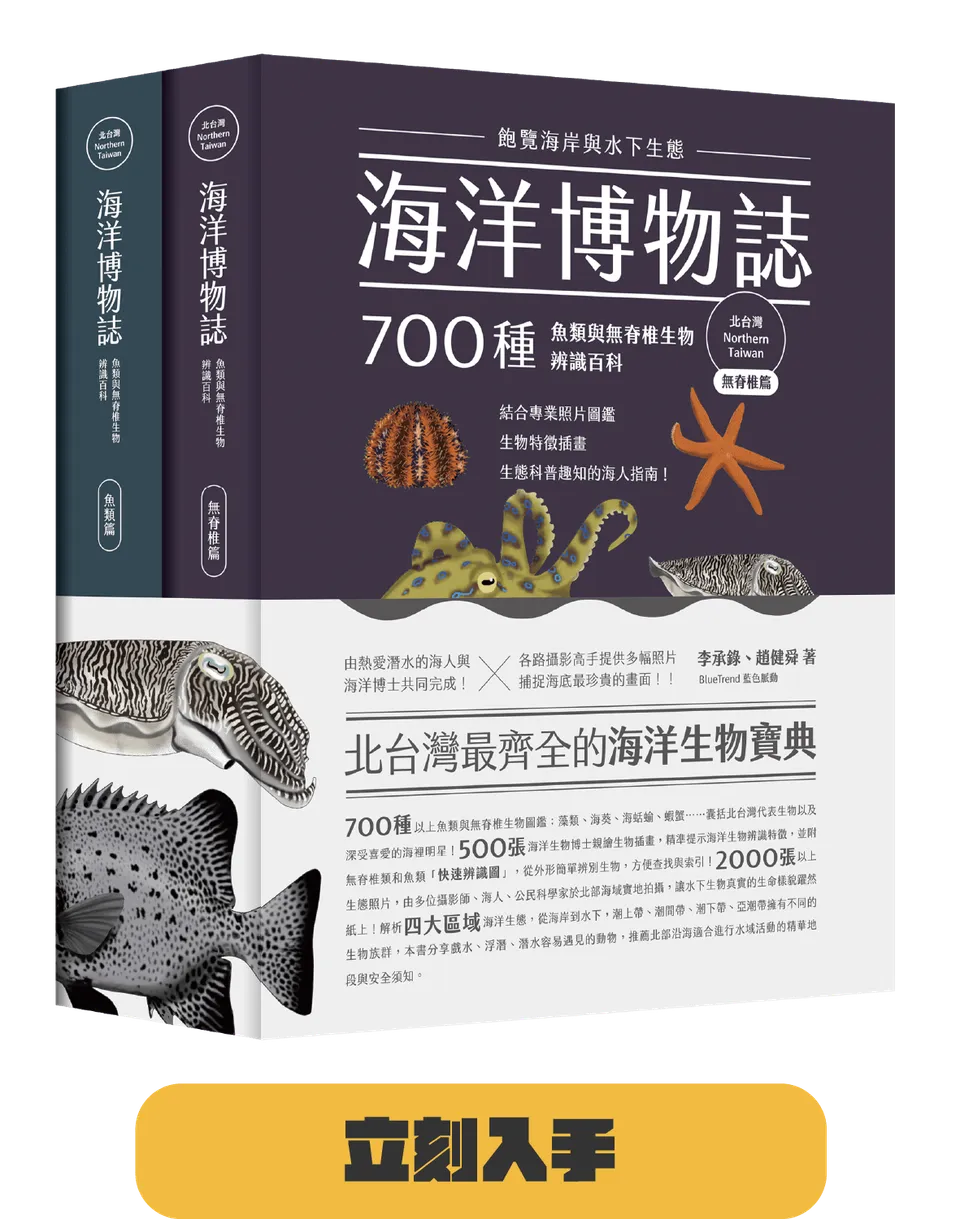
海洋博物誌-北台灣
海洋博物誌-近岸珊瑚礁

Further Reading:
![[BlueTrend Mini Classroom] Stressed Out and Dropping Limbs? The Sea Star Is the Ocean's Most Dramatic Creature — and Its Biggest Enemy Might Surprise You!](/_astro/004_%E5%B8%83%E9%AD%AF%E5%B0%8F%E6%95%99%E5%AE%A4_vivipic_Z2g4jPr.webp)