Contents(5)
Many people chose to go diving during the Dragon Boat Festival long weekend to decompress after a stressful stretch. But does the shop or instructor you booked actually carry the legally required insurance for your water recreation activity? Please be careful — don't let yourself be deceived. This is a long read, but it is critically important for the safety and protection of everyone who loves diving. Feel free to share widely.
A False Sense of Security
Last August marked the point at which all dive instructors became able to purchase the water recreation liability insurance that operators are legally required to carry for their guests. Nearly a year on, just when you — as a passionate diver — thought you no longer had to worry about being unprotected, I'm sorry to say: there is such a thing as believing you're covered when you're not. In a recent conversation with an insurance industry contact, I learned that a significant number of dive instructors, after purchasing a policy, simply keep the policy document on hand in case regulators come knocking. In practice, they never actually register their guests' names with the insurer. Then, after some time has passed, they exploit loopholes in the policy terms and tell the insurer they never used the policy — demanding cancellation and a full refund — even though they have been actively working all along. And after getting that refund, they still hold onto the now-void policy document and continue using it to mislead consumers.
To put it plainly, this is a form of three-way deception practiced by some dive instructors.
- Deceiving government authorities by claiming to hold valid insurance, when in fact the policy has already been voided through a refund-and-cancellation request.
- Deceiving the insurance company by claiming the policy was never used — thereby avoiding the cost tied to the number of insured persons — and demanding a full refund.
- Most seriously, deceiving consumers into believing their diving activity is legally insured. Some instructors may even charge clients for the cost of insurance while never actually purchasing coverage on their behalf — all to pocket the premium they should have paid for you.


You Might Ask: Does It Really Matter If There's No Insurance?
In the simplest terms, if something happens to you and the instructor failed to insure you, a court would, as a matter of basic reasoning, hold the instructor personally liable for at least the NT$2.5 million covered under a standard policy. Civil judgments, however, take into account your social standing, income, and other circumstances — so the actual award will almost certainly exceed NT$2.5 million.
An instructor who won't spend a minimum of NT$28,500 a year on a policy — do you really think that person can cover a judgment like that out of pocket? I can say with confidence to everyone reading this: more than half of dive instructors probably could not come up with that kind of money. What you'd be left with is a situation where the attitude is essentially, "Go ahead and lock me up — I have no money, so what are you going to do?"
How to Make Sure the Shop You Chose Has Proper Insurance
So here, once again, is a reminder for all diving enthusiasts:
- Confirm that the dive shop or instructor you are booking has legally purchased water recreation liability insurance. Before your trip, ask the shop or instructor to provide their policy number, then contact the insurer directly to confirm the policy is still active.
- Before participating in any diving activity, make sure you have signed your own enrollment/insured-person paperwork with the shop or instructor, and that you have seen proof that the shop or instructor has actually registered you with the insurance company.
- For your own protection and safety, always choose a shop or instructor that is legally insured.
If any shop or instructor still tells you they cannot obtain insurance, know this: it is a lie, plain and simple. Fubon Insurance currently accepts applications for water recreation liability coverage from corporate scuba diving shops. Wangwang Union Insurance accepts applications for freediving and scuba diving water recreation liability coverage from both corporate shops and individual (freelance) instructors. So unless there is a specific case involving a poor claims history, there is absolutely no reason anyone cannot obtain coverage. - A shop or instructor willing to deceive government authorities, deceive an insurance company, and deceive you about your insurance coverage — if they also deceive you in any other part of a dive-related transaction, don't be surprised. It's simply what they do.
One final word to all operators — corporate shops and individual instructors alike. Building trust in society takes time. Please, all of you, follow the rules and obey the law. Give the guests who trust you the coverage they are legally entitled to. Don't let the profession of dive instructor become synonymous in the public mind with dishonesty, untrustworthiness, and unprotected diving experiences. And on that note — dive happy, come home safe. Taiwan's ocean is beautiful, and as citizens of an island nation, we should embrace our sea.
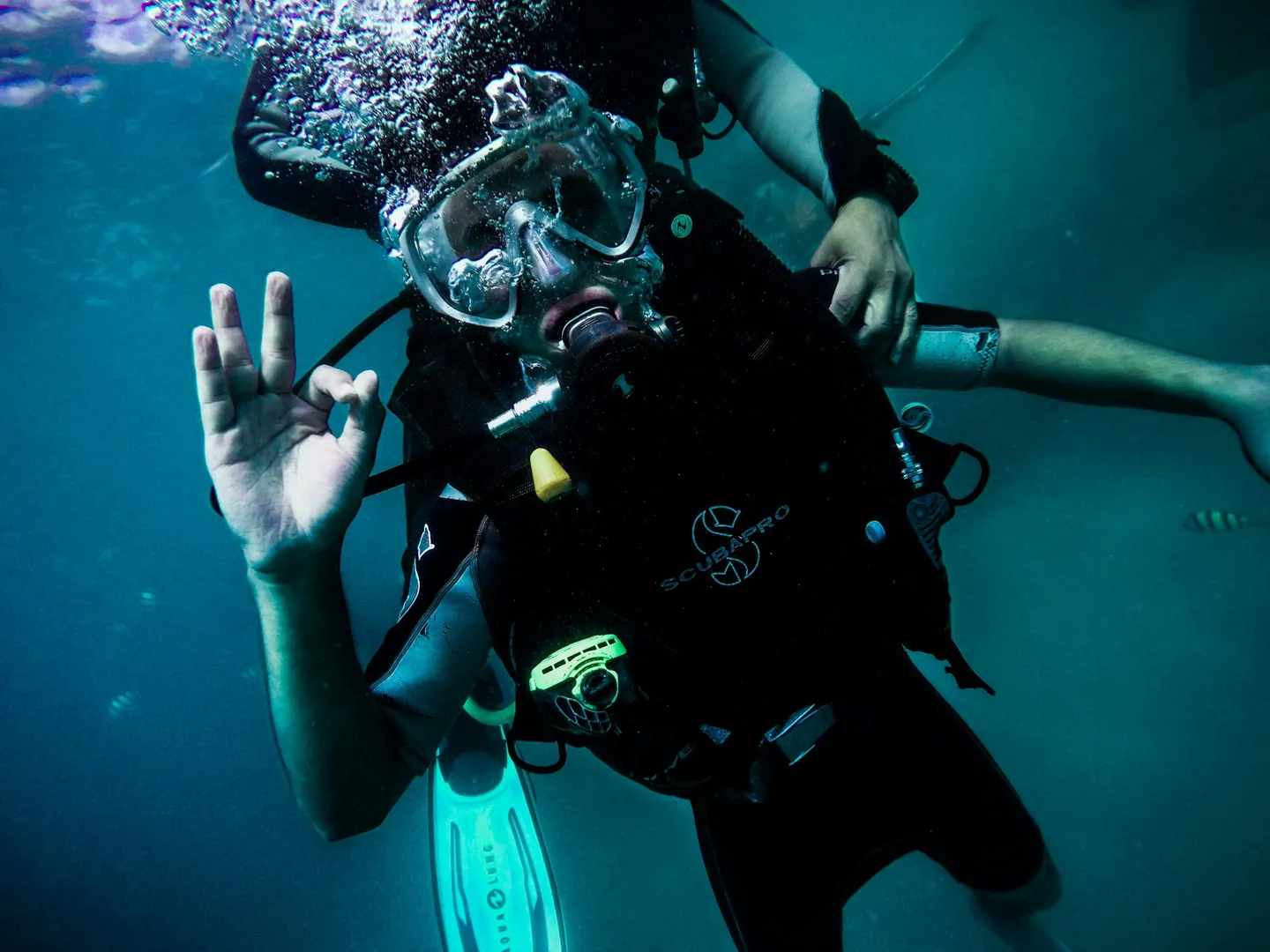
Cover photo credit: Photo by Anurag Harishchandrakar on Unsplash
Related Links
- Ryan's Personal Facebook
- Fubon Insurance – Water Activity Insurance
- Non-Life Insurance Association of the R.O.C. – Water Activity Insurance Zone
- Online Insurance Now Includes Water Activity Coverage — Daily Premium Starting at Around NT$75
Further Reading