

I spent three dive seasons in Okinawa, and the entire time I stayed on the main island.
This year, at the very end of the season, I finally had the chance to set foot on the heart of Okinawa's Yaeyama Islands — Ishigaki Island (pronounced "Yuan," not "Huan")!
Ishigaki Island actually shares a very deep bond with Taiwan. During the Japanese colonial period, the then-undeveloped Yaeyama Islands had a "Yaeyama Revitalization Plan" that recruited Taiwanese people to come and cultivate the land. Even after World War II ended, many Taiwanese chose to remain on Ishigaki Island. Because of these geographic and historical ties, Ishigaki Island actually looks very much like the countryside of Taiwan. Apart from the Japanese on the street signs, it doesn't feel much like Japan at all.
I spent five days and four nights on Ishigaki Island, with three days dedicated to diving.
According to the local dive guides, the best dive sites on Ishigaki Island (and the closest ones) are all concentrated in the north, departing from Kabira Bay. Some of the more beautiful southern sites — such as Kuroshima and Iriomote Island — were unfortunately out of reach this time due to the short itinerary. However, when the north wind picks up and the swells roll in, boats simply cannot depart from north-facing Kabira Bay and must instead launch from the southern pier. So when making reservations, be mentally prepared: safety comes first, and there's no guarantee that a dive shop can take you to any specific site! In most cases, the departure pier is only confirmed the evening before. As for me, I was lucky enough to depart from Kabira Bay all three days!
[caption id="" align="aligncenter" width="4000"]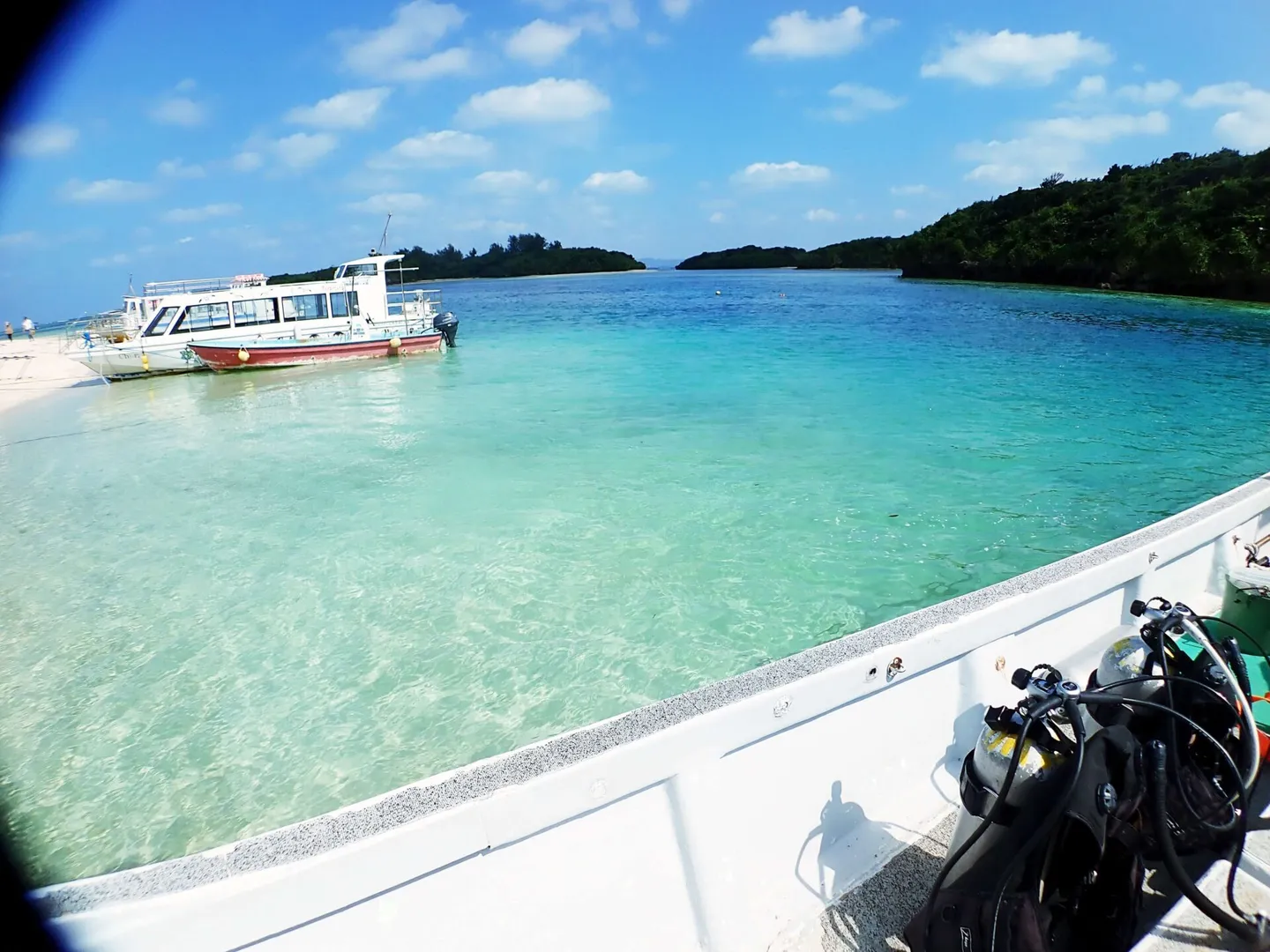 Kabira Bay[/caption]
On the first day, I started diving at one in the afternoon. We boarded a boat called Napoleon, captained by a wonderfully quirky character — Osamu-san.
[caption id="" align="aligncenter" width="3024"]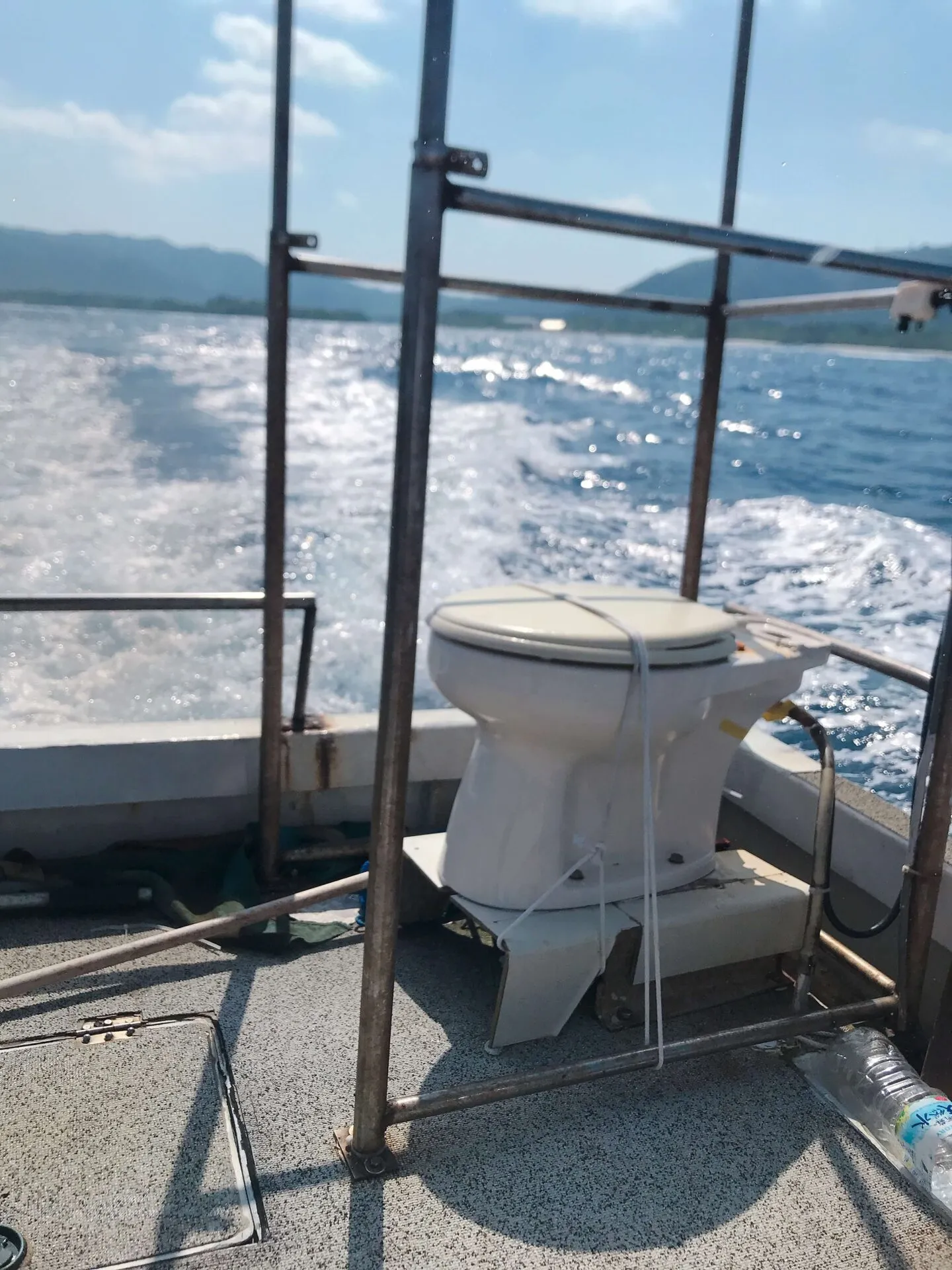 The 360° panoramic ocean-view toilet on board[/caption]
It was actually a north-wind day, but Osamu-san judged that heading out was still feasible. Our first dive was the one every diver visiting Ishigaki Island looks forward to most — マンタシティーポイント, the Manta Point! The journey to the dive site was quite a challenge… The boat ride took about 20 minutes, and because the boat was small, even moderate swell made it toss around quite a bit. By the time I had my gear on, I was nearly ready to vomit, and after surfacing I just lay flat on the stern unable to get up…
On Ishigaki Island, just like on Okinawa boat dives, the dive guide has to wear many hats — dropping anchor, setting up the ladder, and handling all sorts of deckhand duties (so please don't give your instructor a hard time!). Before we descended, dive guide Jerry made sure to brief us on the rules at Manta Point:
- When descending, regardless of whether you're an instructor or an experienced diver, everyone must hold the bow line to descend.
- Once at the cleaning station, you must remain stationary — no swimming around, and absolutely no chasing the manta rays.
Then I watched Osamu-san gear up and jump in the water with us! That's right — nobody left on the boat 😂
(I had actually heard stories about Osamu-san before. As the most respected captain and senior instructor in Kabira Bay, he gets to anchor his boat in the prime spot. When other boats drop anchor, they need two or more anchors — he uses just one. And if he jumps in to dive and his anchor drifts loose, he just gets the newer, less experienced skippers on nearby boats to give him a ride back to his vessel, then drives it back himself. Absolutely legendary!)
The moment I rolled into the water I couldn't help letting out a gasp, because the visibility was absolutely insane. Even with the big swells above, I estimated it at at least 30 metres — and according to Jerry, it can get even better.
After Osamu-san led us around for a while, we settled on a reef platform (though not the cleaning station) and he signalled us to stay put — we could hold onto the reef. There was a current underwater, but I didn't grab the rocks. While waiting for the manta rays, I spotted a Blacktip Reef Shark and a very young sea turtle. I was beginning to feel just a tiny bit disappointed, wondering if no manta rays would show — then, 15 minutes into the dive, four of them came soaring in at once! Watching them glide through the water with those graceful wingbeats was truly mesmerising.
Since it wasn't a cleaning station, the manta rays didn't linger, and once they flew off Osamu-san led us back. We swam to a reef platform at around 7–8 metres, where he signalled us to stop and then swam away. I assumed he was going to check further ahead for more manta rays — but about three minutes later, he came back towing his boat, like walking a small dog on a lead, and re-anchored it right where we were waiting! Ha!
Once he brought the boat over, we were treated to a second wave of manta rays, and this time they swept in much closer to us — I was completely spellbound.
After the dive, we had originally planned to hit Manta Point again for a second tank, but the swell was simply too rough, so we relocated to a site closer to the bay — 米原アウトリーフ (Yonehara Outer Reef).
[caption id="" align="aligncenter" width="1477"]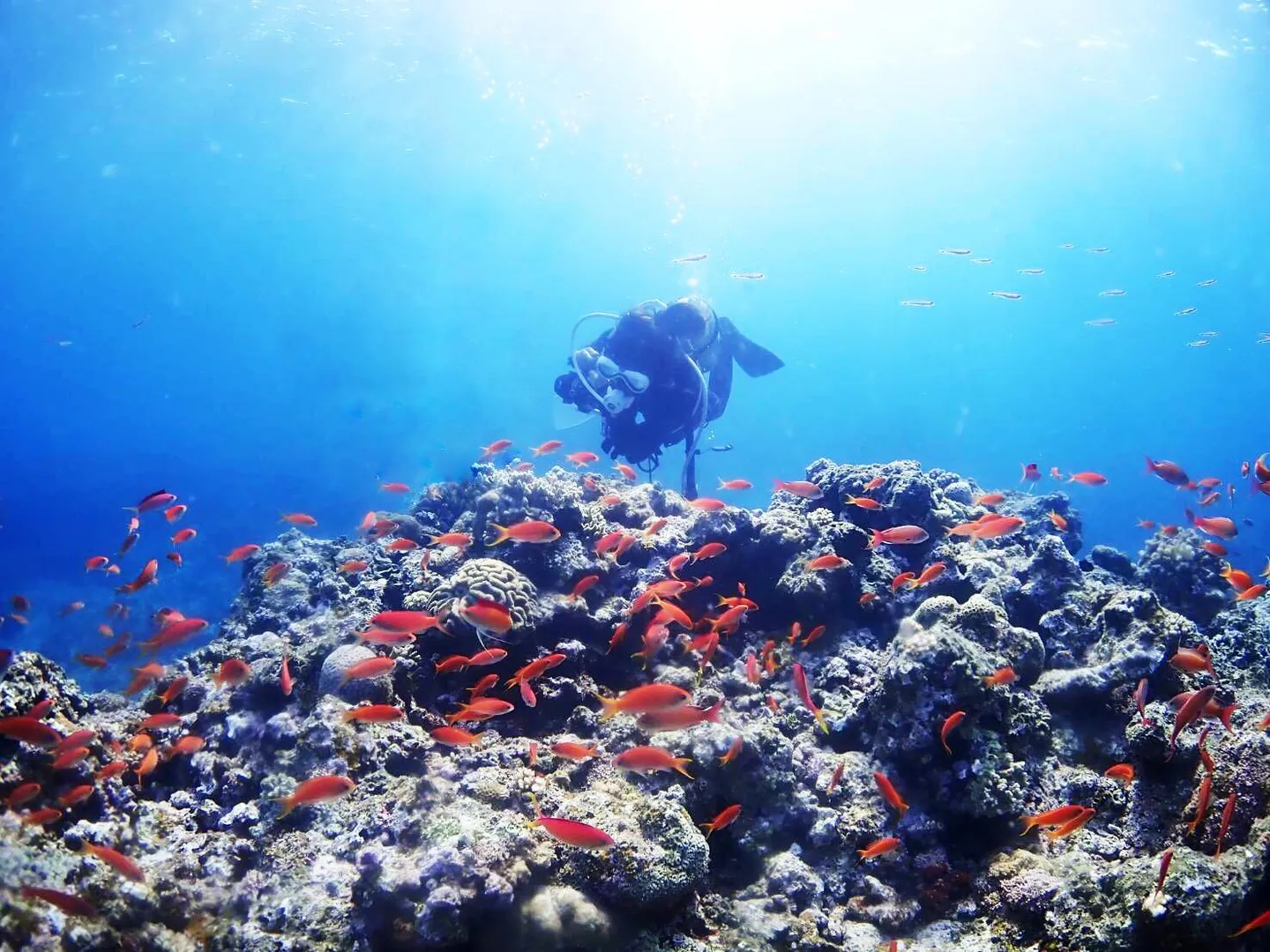 Safety stop at 5 metres[/caption]
The six dives over the following two days were also at Yonehara due to wind and swell — but I thought they were absolutely worth it!
The schedule generally went like this: boats departed at around 8:00 a.m., we completed two dives, and returned to Kabira Bay at around 11:30 a.m. We'd swap tanks, have lunch, then head out for a third dive.
Yonehara is a hard coral reef at around 15 metres. At low tide, the top of the reef sits less than a metre below the surface, extending down to over 20 metres. The reef is surrounded by vast expanses of staghorn coral, and grouper are plentiful throughout. With clear water and minimal current, diving here is genuinely very pleasant.
[caption id="" align="aligncenter" width="4000"]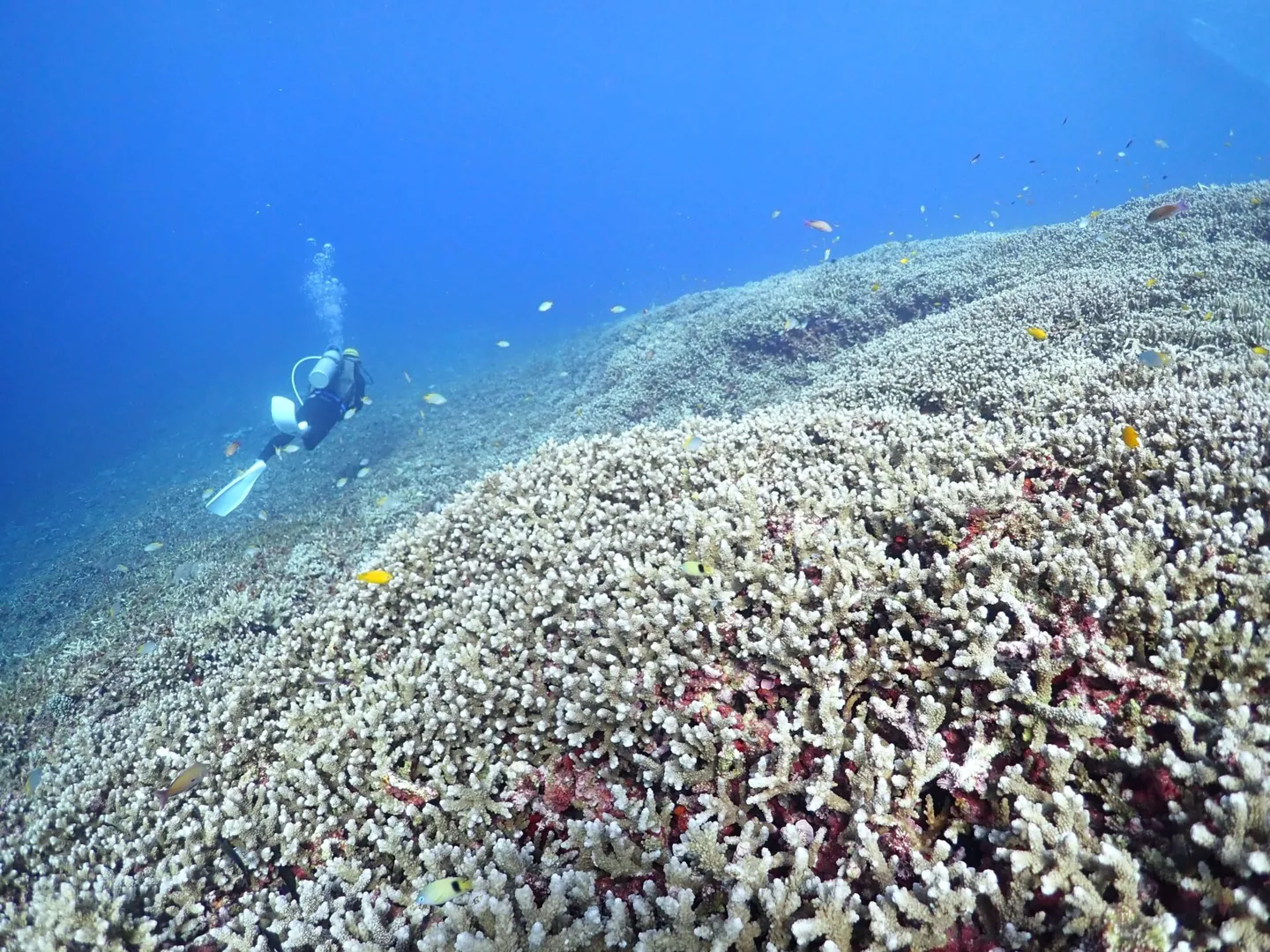 Diving with Osamu-san as guide[/caption]
[caption id="" align="aligncenter" width="4000"]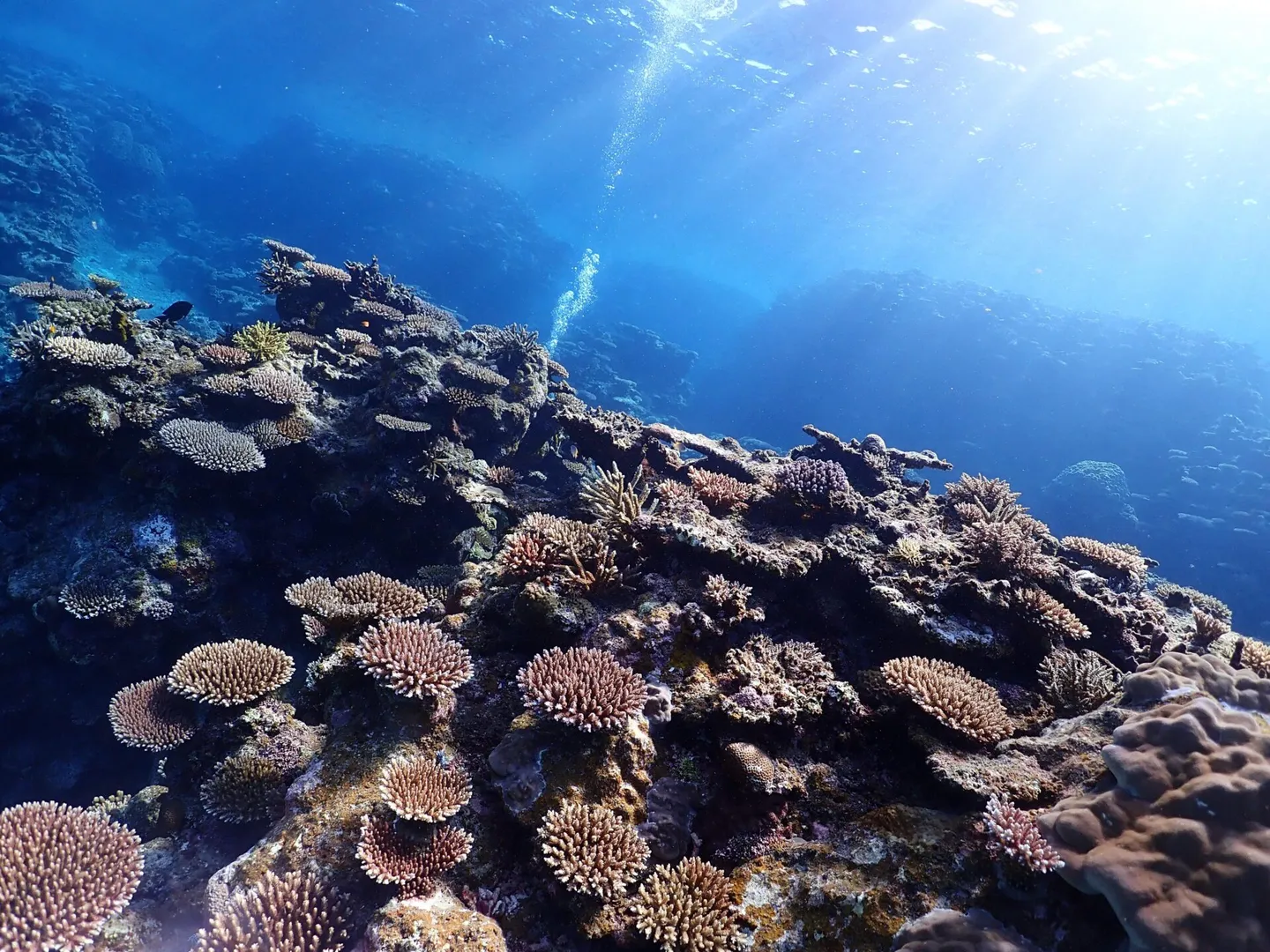 Shallow reef zone[/caption]
[caption id="" align="aligncenter" width="4000"]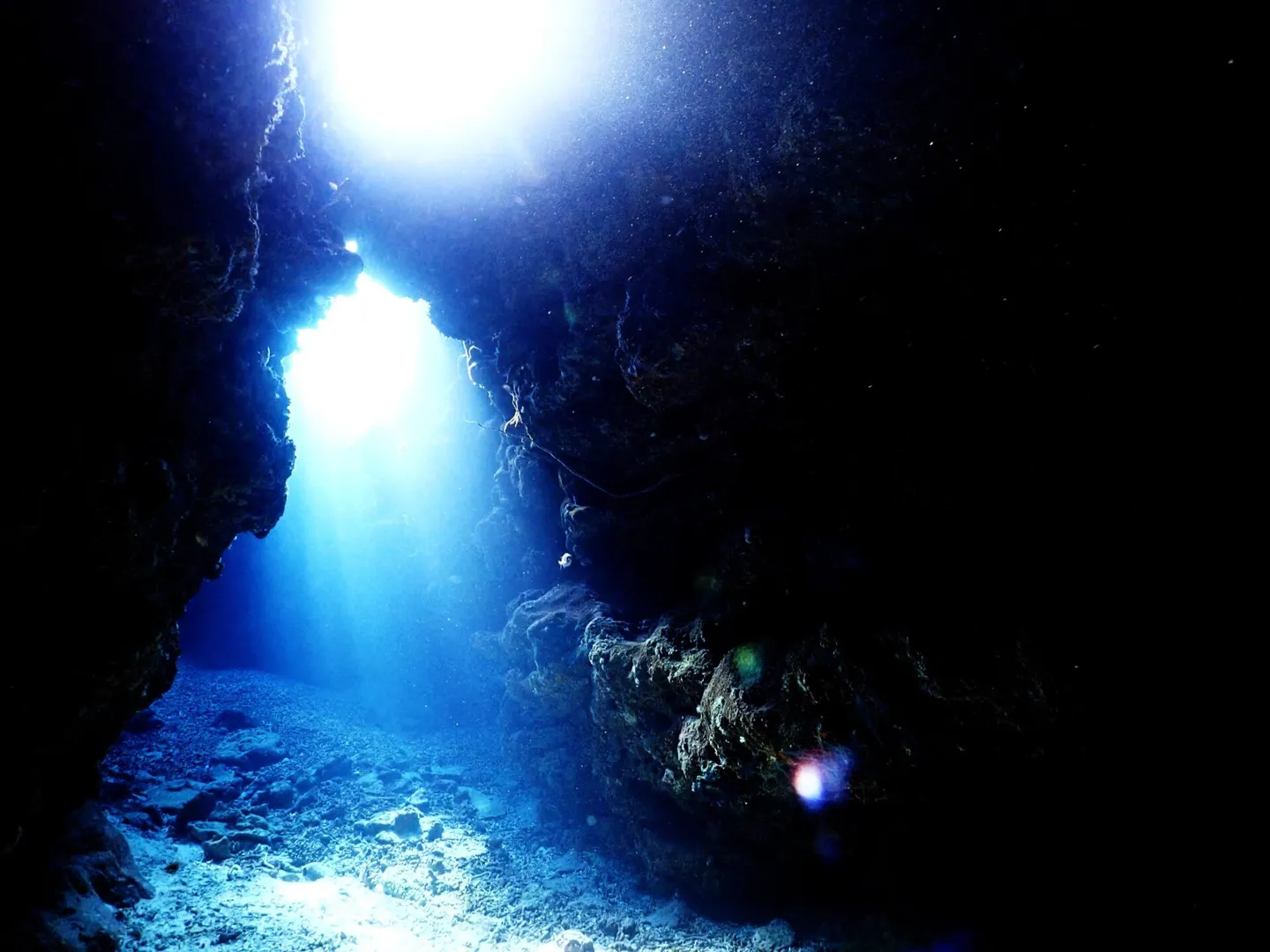 A canyon through the coral reef[/caption]
[caption id="" align="aligncenter" width="3000"]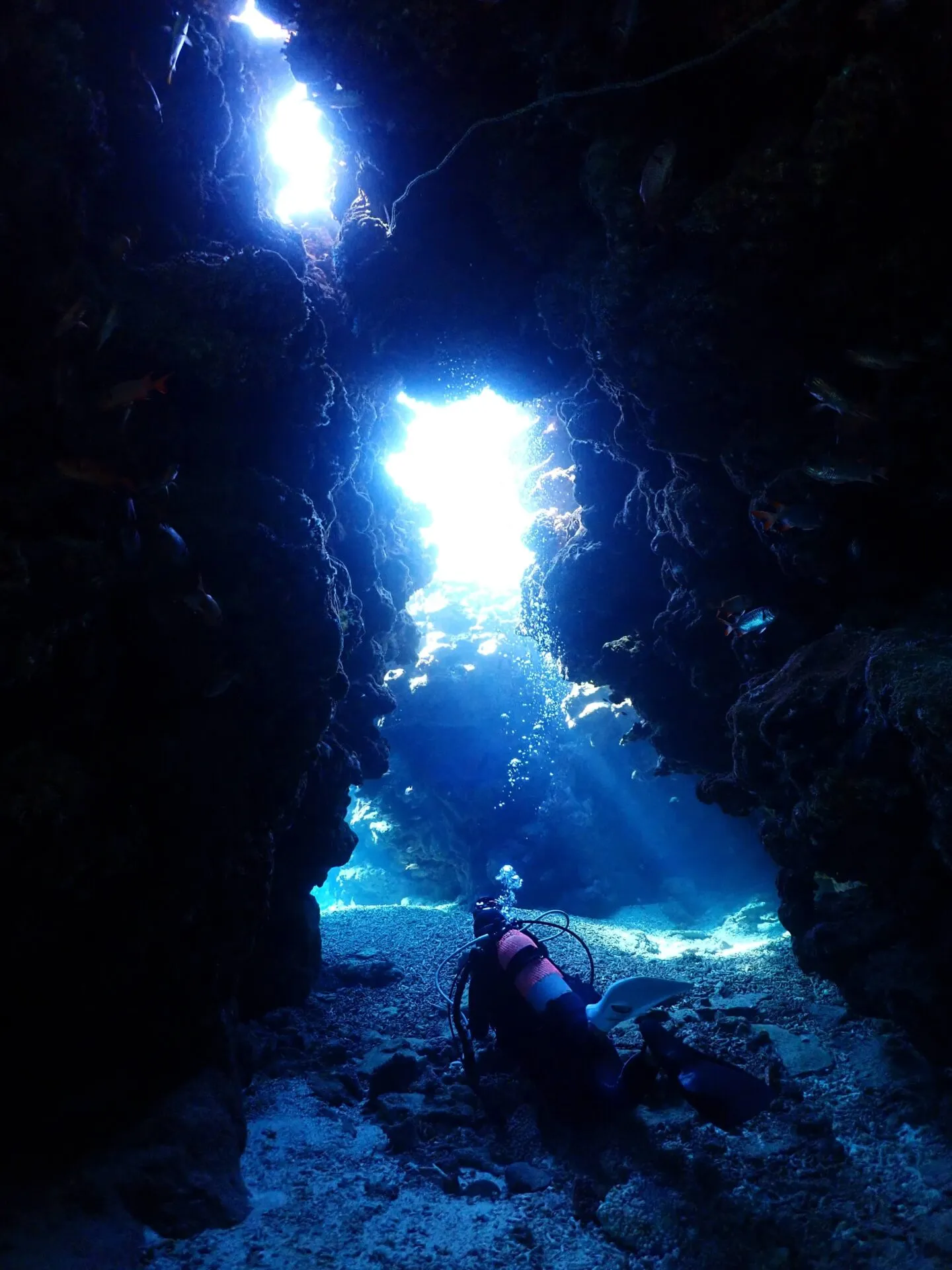 Sunbeams filtering down — absolutely stunning[/caption]
During one of our six Yonehara dives, we motored over to a nearby site called 米原Wリーフ (Yonehara W.R.). The moment I hit the water I felt a pang of unease, because near the rocky reef there were clusters upon clusters of marine debris. It was a genuine, heartbreaking sight. Reducing plastic consumption can no longer be a future aspiration — it has to start right now.
No matter how diligently you recycle, this trash still exists — either buried on land, or sinking into the sea.
[caption id="" align="aligncenter" width="960"]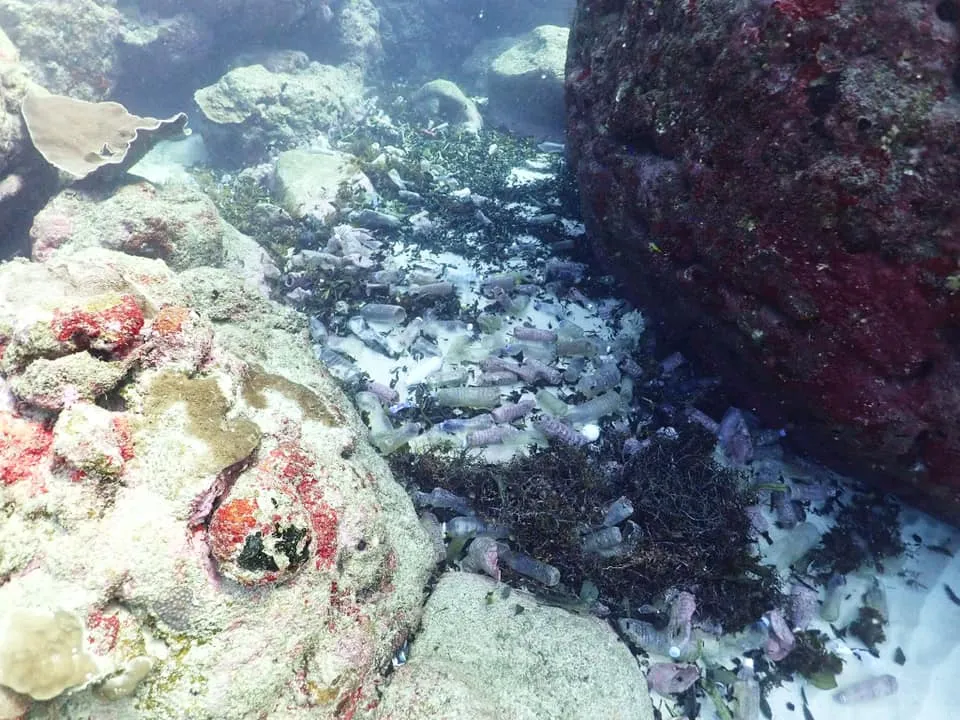 A glimpse of the shocking number of plastic bottles[/caption]
[caption id="" align="aligncenter" width="720"]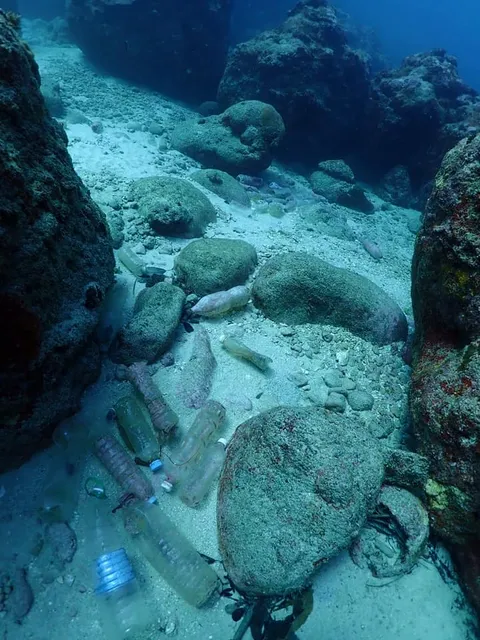 Reducing plastic use is an urgent necessity![/caption]
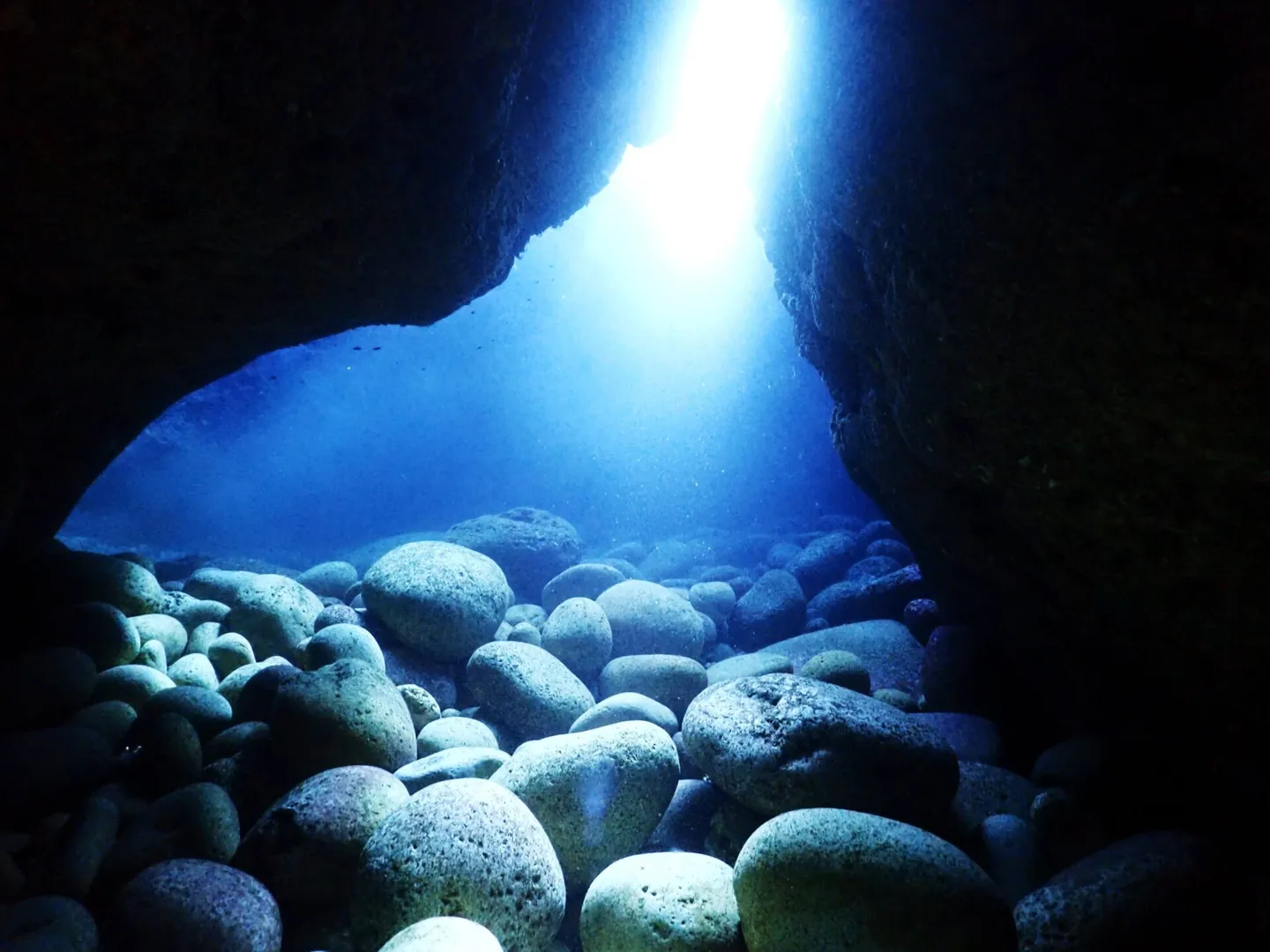
But once you duck inside the caves, the caverns formed by the interplay of boulders are truly spectacular. With the sun making a fortunate appearance, the scene felt like a time tunnel you never want to leave!
[caption id="" align="aligncenter" width="4000"]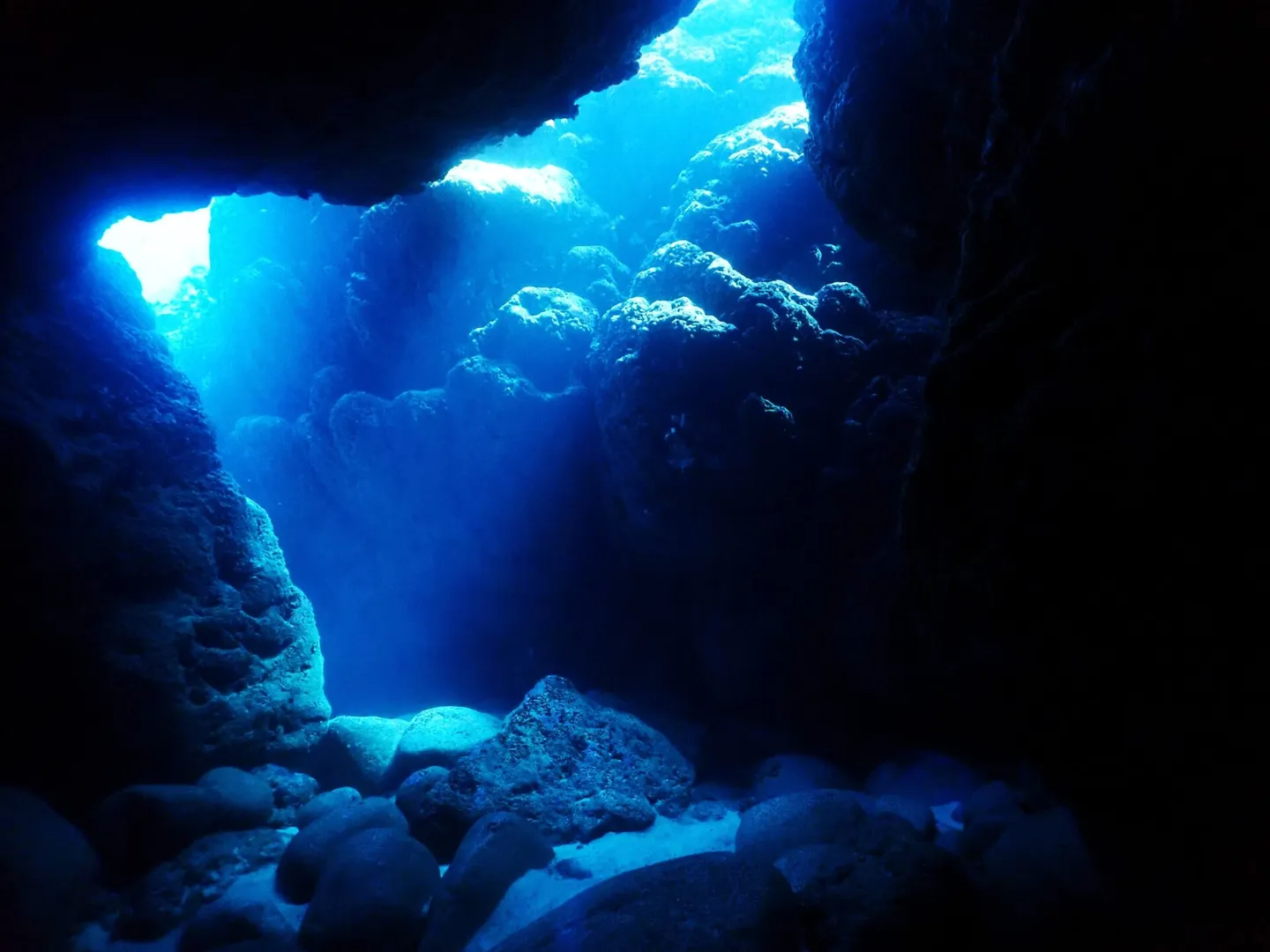 Time tunnel[/caption]
[caption id="" align="aligncenter" width="4000"]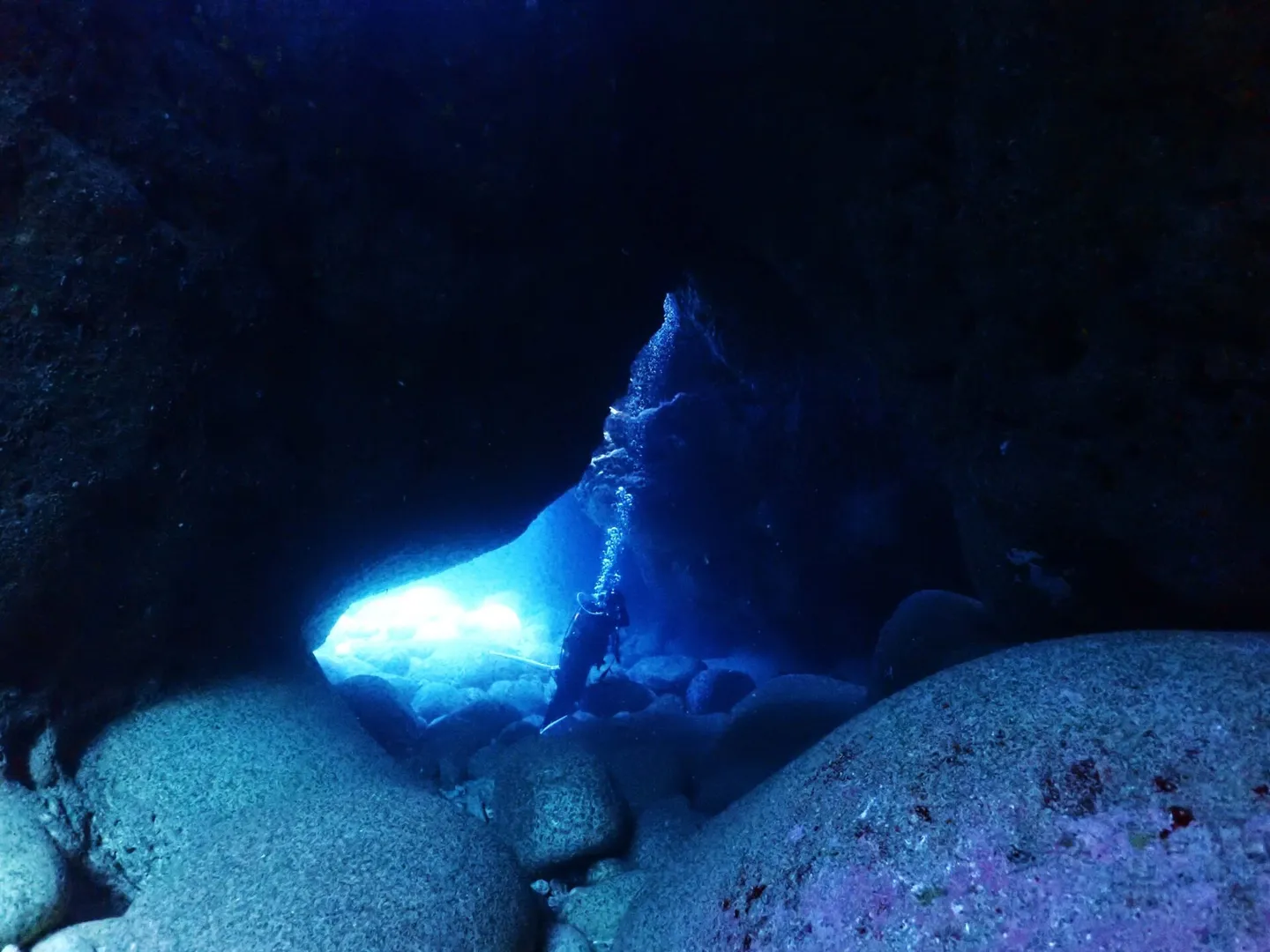 Time tunnel[/caption]
[caption id="" align="aligncenter" width="3000"]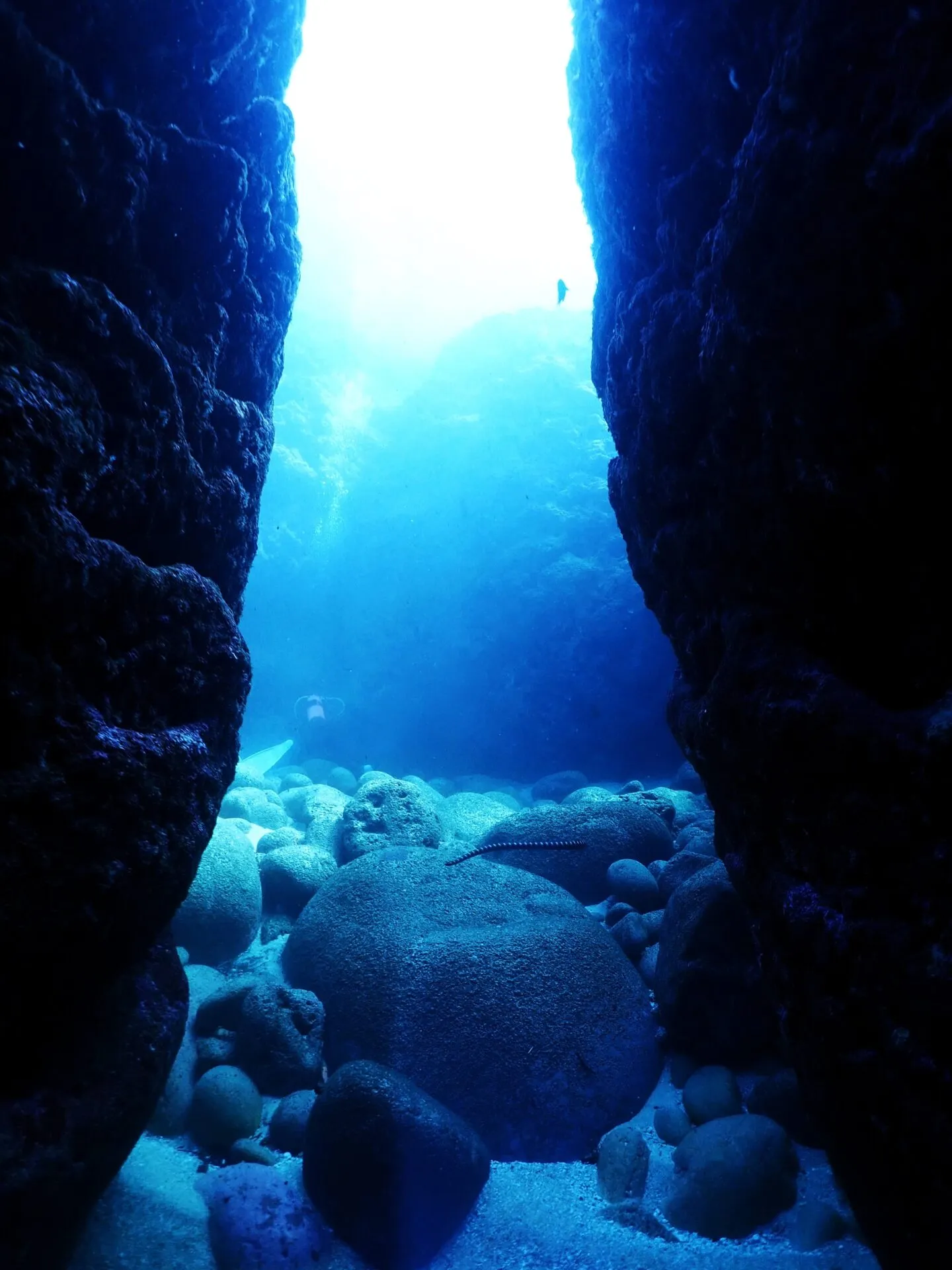 Lots of lobster hiding beyond this tunnel[/caption]
On several of those dives, Osamu-san personally guided me underwater. Knowing that I'm an instructor who loves photography, he'd seek out little critters for me to shoot. He's a fascinating character — a real free spirit. Mid-dive, he'd suddenly kneel on the sandy bottom and stare off into the distance, like he was meditating. On the very last dive, near the end, since he knew the other guests were beginners, he told the other two dive guides to take them back first. I assumed he was bringing me somewhere special to find hidden little creatures and got excited — but instead he led me deeper and deeper to around 20 metres. While I was still trying to figure out what was going on, he lay sideways on the sandy slope (like a carefree drunken monk) and, after gazing around for a moment, made a frame with his thumbs and index fingers and pushed it back and forth toward me. At first I thought he was shooting me a heart — then it immediately dawned on me that he thought the composition looked beautiful and was telling me to take a photo 😂😂 Haha!! I wasn't really feeling it, but I obediently followed his angle and shot a series of mystifying images:
[caption id="" align="aligncenter" width="2048"]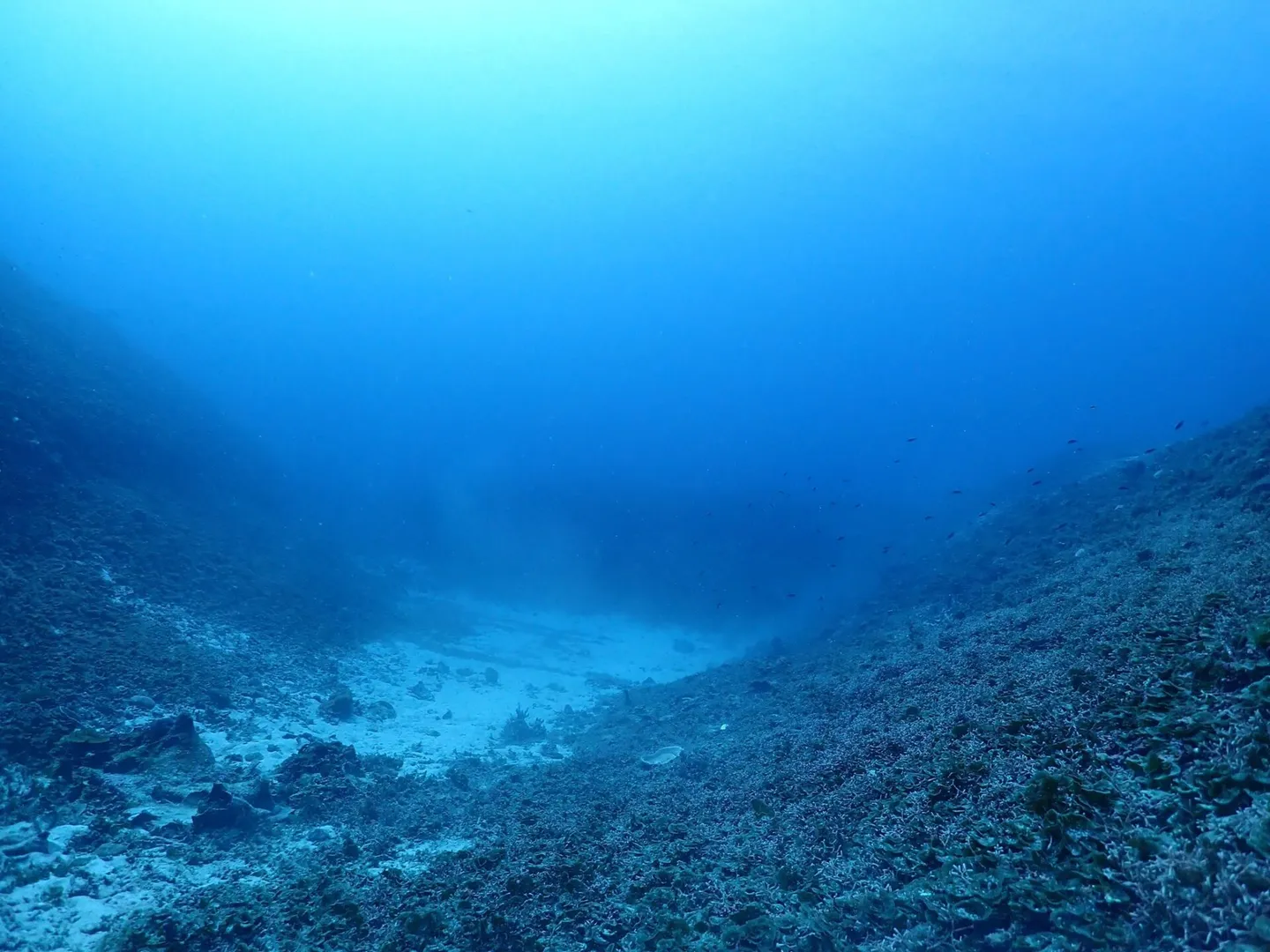 Osamu-san's artistic vision[/caption]
[caption id="" align="aligncenter" width="4000"]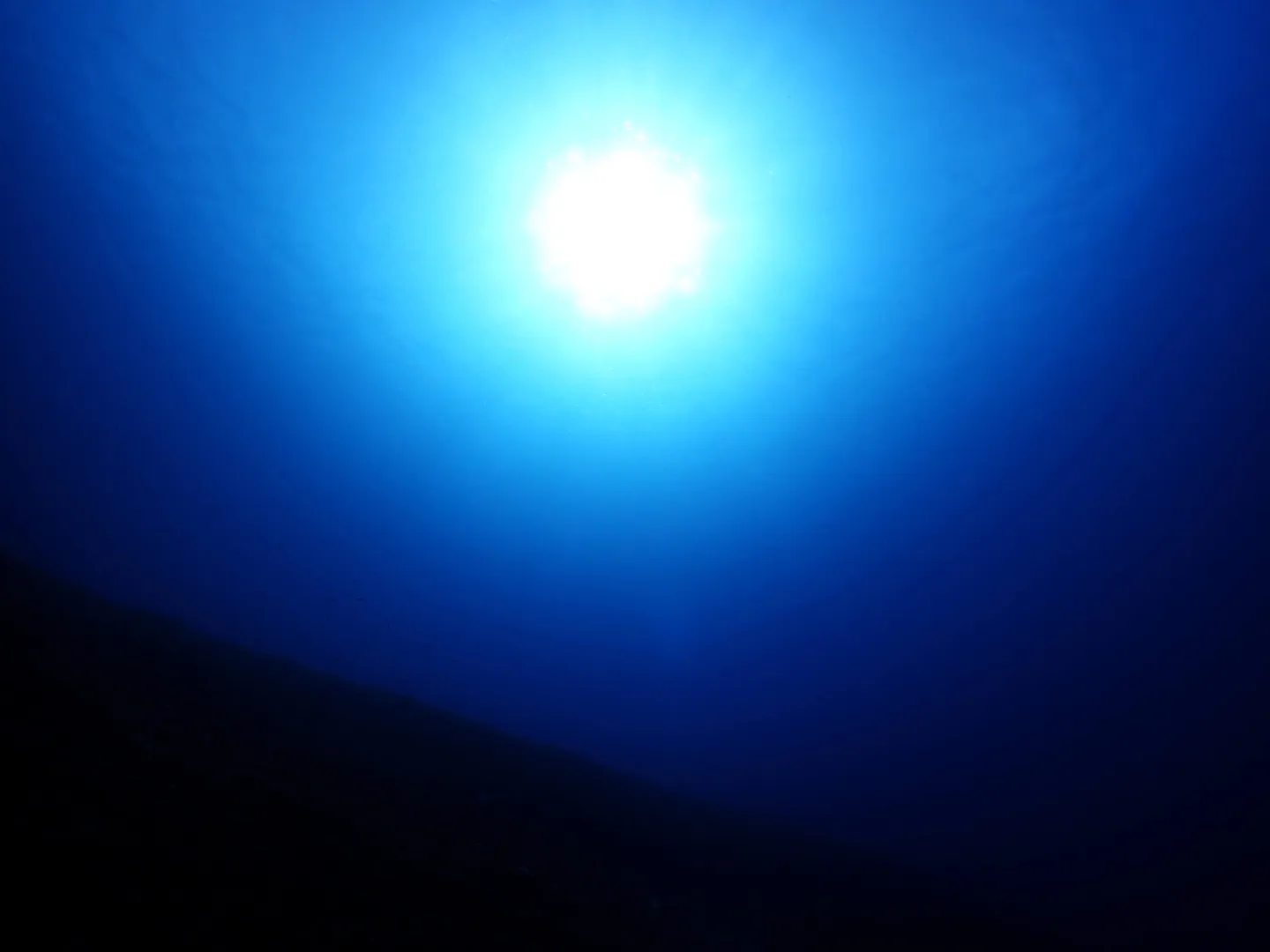 He told me to photograph the sun[/caption]
I spent the remaining time in the shallows photographing notoriously tricky small fish. Japanese dive shops typically impose a surface time limit — usually 40–45 minutes and then back on the boat. But because I knew the shop personally, and Captain Osamu-san happened to be more relaxed about rules than most Japanese operators, I stayed down for 50–60-plus minutes on quite a few dives.
[caption id="" align="aligncenter" width="4000"]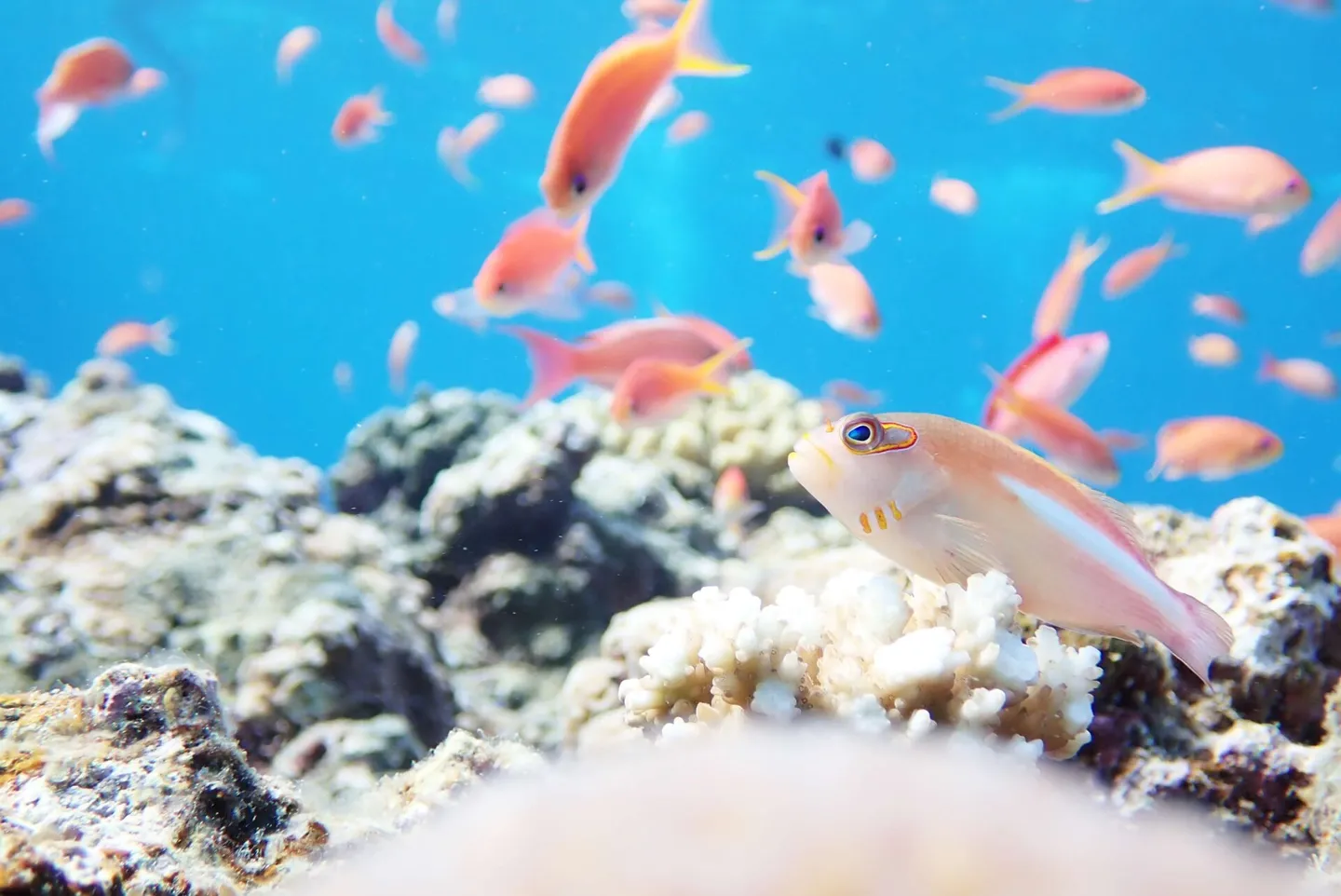 Spent a long time bonding with this combtooth blenny[/caption]
[caption id="" align="aligncenter" width="4000"]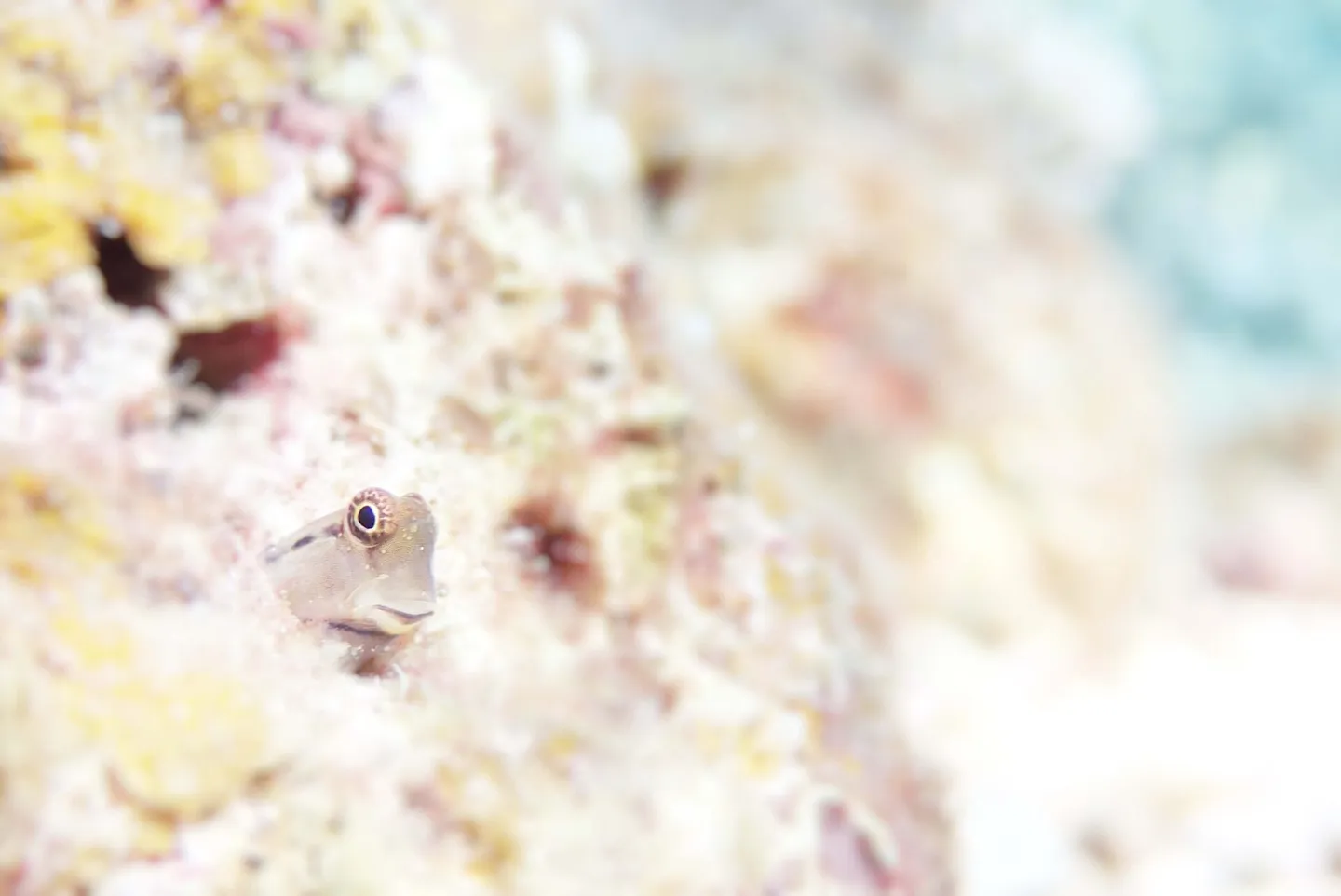 An adorable Yaeyama blenny[/caption]
[caption id="" align="aligncenter" width="4000"]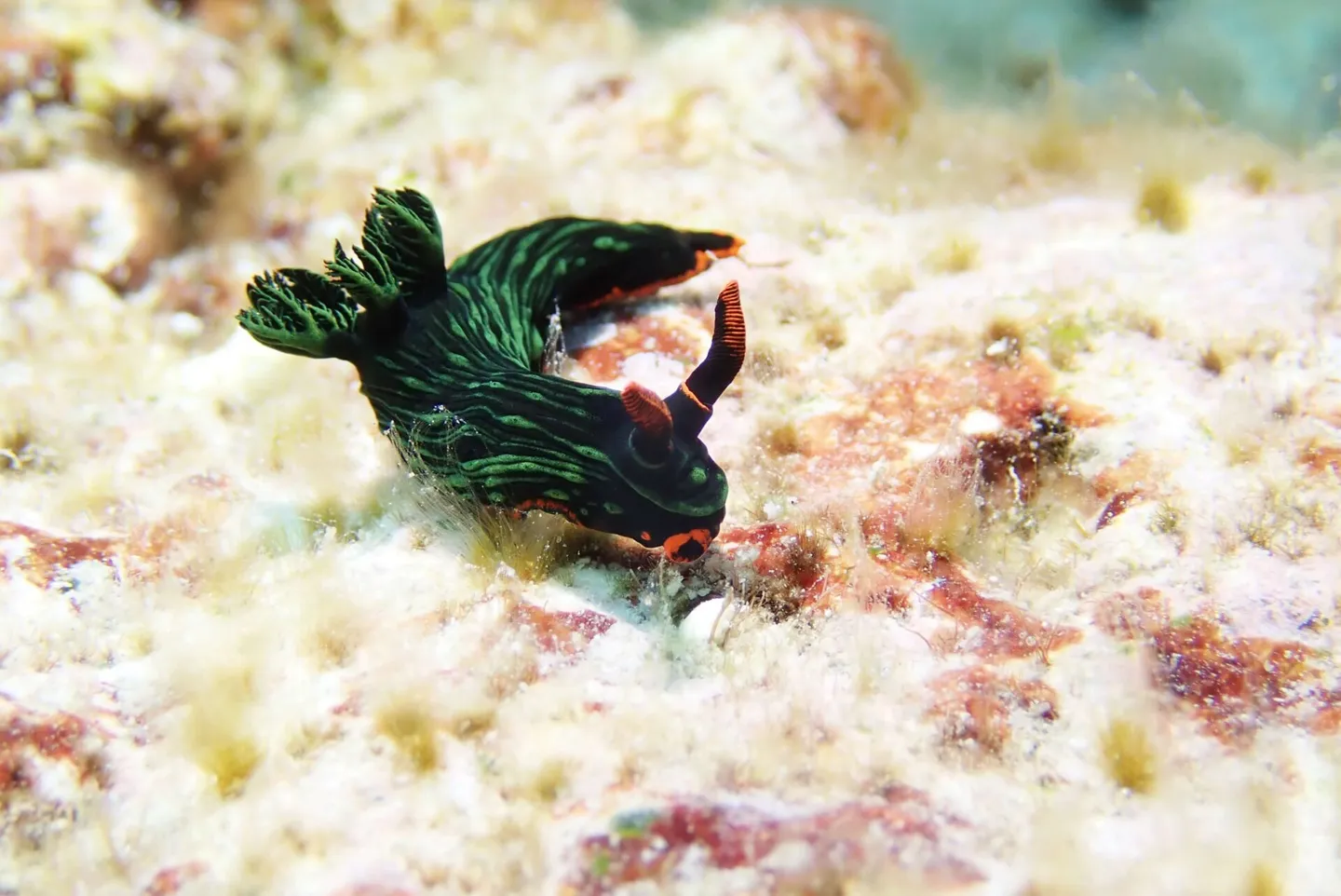 A striped nudibranch[/caption]
[caption id="" align="aligncenter" width="4000"]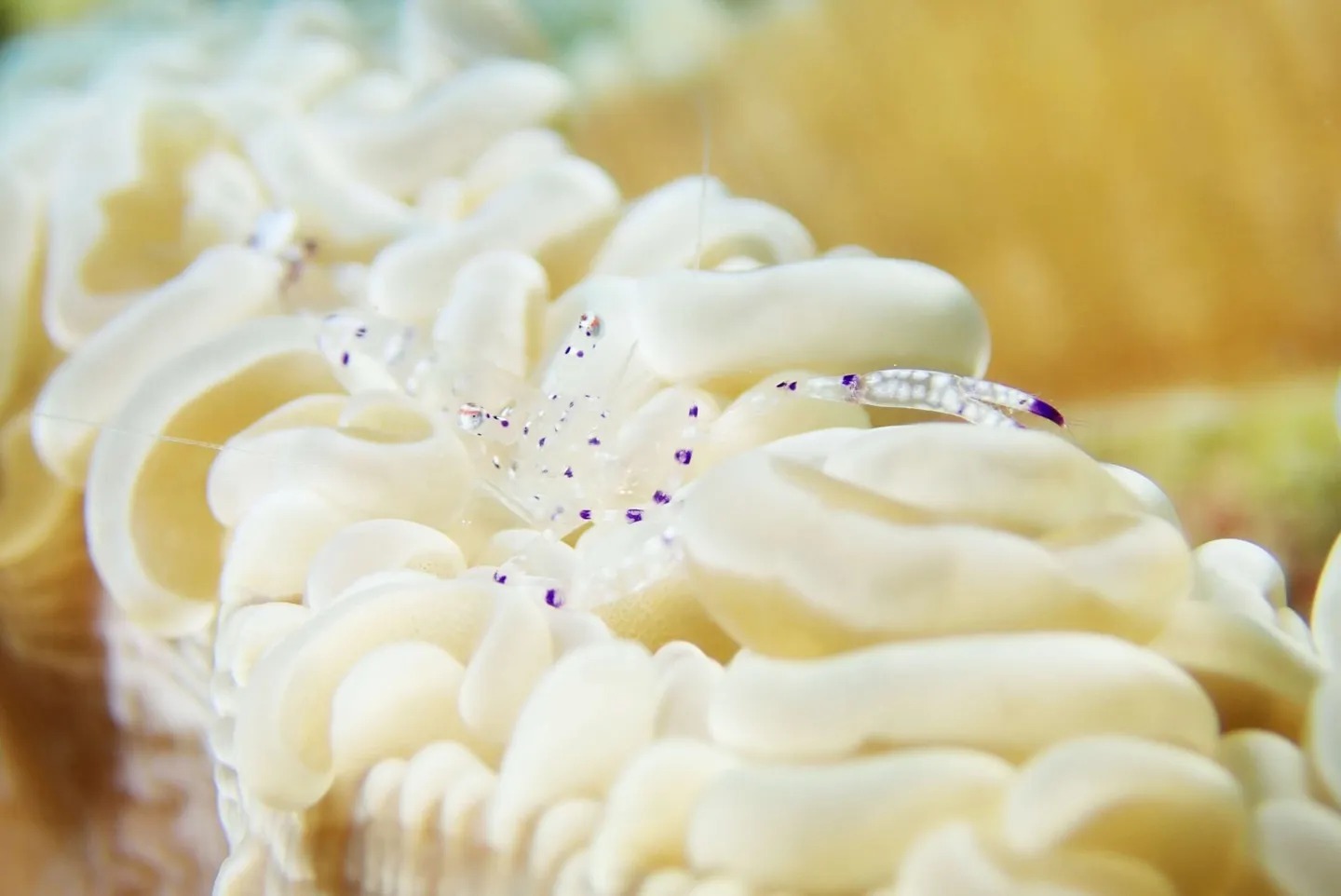 A short-armed rock shrimp[/caption]
Compared to Okinawa's main island, I actually prefer Ishigaki Island's more rustic, unhurried atmosphere. The underwater scenery is also outstanding — coral, visibility, sea turtles, caves — it has it all. In my personal opinion, it's absolutely worth making the trip for a laid-back diving holiday in Japan!
[caption id="" align="aligncenter" width="1365"]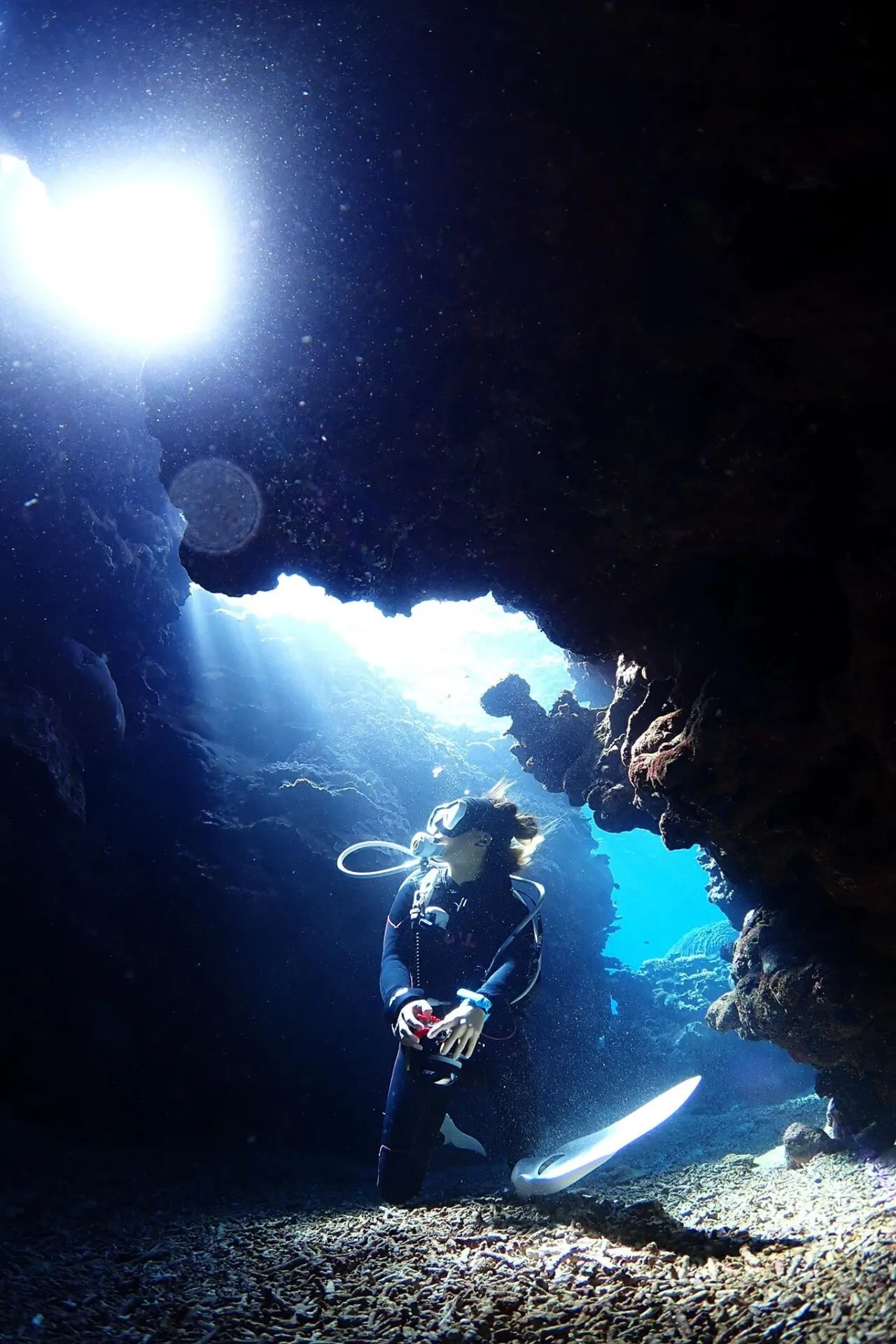 Perfect backdrop for effortlessly stylish photos[/caption]
There are many ways to travel between Taiwan and Ishigaki Island. Setting cruise options aside, you can fly via Okinawa and then connect to Ishigaki, or take a direct flight.
Currently, the only airline offering direct flights to Ishigaki Island is China Airlines. The flight is under an hour — genuinely very close! Tickets generally run around NT$10,000.
This time I bought my Okinawa–Ishigaki round-trip ticket at the last minute while already in Okinawa. The flight is also around one hour (yes, roughly the same as flying from Taiwan directly to Ishigaki). I flew on Solaseed Air (an ANA subsidiary), which included a free 20 kg checked baggage allowance, and the fare came to around ¥15,000 — just for reference.
Related links:
- Cave Diving, Sharks, and Beautiful Coral Reefs — Unveiling Okinawa's Hidden Dive Sites at Cape Manzamo
- Step Outside Your Comfort Zone and Dive Your Way Around the World!
- Okinawa Diving Is More Than the Blue Cave! 5 Insider Secrets About Diving in Okinawa
- The Most Complete Okinawa Diving Guide Ever — Stop Saying Diving in Japan Is Too Hard!
- Article author: Erica — Pixnet
- Author's page: 小島日常-islandvibes studio
Frequently Asked Questions
How is a BlueTrend dive trip different from an unknown, no-name dive group?
Choosing us means full peace-of-mind protection and a smooth experience from start to finish. Every trip we run holds to three things.
First, full legal protection and a professional dive leader: we strictly follow Taiwan's travel regulations and provide complete travel-agency liability insurance, travel insurance, trip-inconvenience insurance and dive insurance. Every group is accompanied by a certified, foreign-language dive leader who joins you on both the dives and the land itinerary, liaising seamlessly with local dive shops and operators on your behalf to keep things running smoothly — the person our travellers trust most.
Second, fully licensed with secure payments: every payment goes into a licensed travel agency's account, with multiple safe payment channels (bank transfer, credit card and more) and a legal collect-and-remit receipt, so every transaction is open, transparent and protected, avoiding the fraud and dispute risks of transferring money privately to an individual.
Third, hand-picked quality we vet in person: every trip, dive site and partner shop is scouted on the ground by our own team, from the guides' professionalism and safety standards to the food, lodging, environment and service details on land, all vetted by us so you don't get caught out.
I want to sign up for a dive trip. Are there certification-level or logged-dive requirements?
Each dive site is different, so the entry bar varies. 'Bali Tulamben', for instance, is relatively beginner-friendly. 'Malapascua in the Philippines' is also beginner-friendly, but since thresher sharks tend to cruise between 20 and 30 metres, we recommend AOW certification with 20+ logged dives to enjoy this trip comfortably. For 'the Maldives' or 'Palau', we suggest AOW with 50+ logged dives for a more relaxed experience. If you're not sure whether your experience fits the trip you want, message us and our dive editors will assess it and help you find the trip you'll feel safest on.
Can I join if I'm signing up alone? How are rooms arranged?
Plenty of our travellers sign up solo! For rooms and beds, we prioritise pairing you with a same-gender traveller, and if you'd rather have your own space you can pay the difference to upgrade to a single room. For the diving, our professional leader will pair you with a suitable buddy, and with the happy vibe on our trips you'll quickly make a great group of dive friends. Many people sign up alone, make new friends, and end up organising the next trip together!
Does the trip fee include dive insurance, gear rental, taxes and instructor tips?
It depends on the trip, the destination's regulations and the local operators. Every BlueTrend dive trip has a detailed web page with a clear 'included / not included' list, transparent and with no hidden charges. All payments are collected by a licensed travel agency, with a standard-form contract for your protection.
I'm a new diver / haven't dived in a long time — will I fall behind the group?
Before you complete your booking, our team assesses a suitable trip based on your certification level and experience. Before departure, we strongly recommend taking time to refresh in Taiwan with an instructor, or a fun dive to get your feel back. On the trip itself, our professional dive leader groups and pairs everyone by experience, keeps a close eye underwater on travellers who need extra care, and steps in to help right away.
Will the photos and videos taken during the trip be shared with us?
During the dives, 'safety' is always the leader's top priority, so whenever it's suitable and safe the leader will capture great shots and record the best moments. During or after the trip, we compile a cloud album for all travellers to download, so you go home loaded with memories!
Besides your scheduled trips, can you arrange a private group charter or independent travel for me and my friends?
Absolutely! Besides group trips, we also arrange private group charters and independent travel. We can communicate, enquire and coordinate services with local operators based on your needs, saving you time and effort and taking the language barrier off your plate, to tailor the smoothest, most reassuring dive trip just for you. Contact our LINE support and our editors will arrange it for you!

![[Expert Dive Travel] Diving in Okinawa — Everything You Need to Know in Just 1 Article!](/_astro/20191220_191227_0051-1_1XHWxV.webp)