Contents(4)
The Editor says: Don't think the Izu Peninsula only has Hammerhead Shark storms to offer! Beyond its rich coral and marine life, it's also home to the largest wreck in Japan open for recreational scuba diving — the "Asahi Maru No. 16." Who are the little residents living on board? Join the Editor and find out! <Full article reprinted from: 3小a的隨手拍寫>
West Izu Peninsula and Atami
The underwater world of Shizuoka's Izu Peninsula is teeming with both soft coral and fish life. In addition to Mikomoto Island in South Izu, West Izu and Atami are also excellent diving destinations. The original plan was to dive in Tateyama, Chiba — driving straight there after finishing at Mikomoto — but the sea conditions those days were poor and the trip was cancelled. Plans never survive contact with reality (laughs). Although Japanese diving friends said West Izu is more beautiful, schedule constraints led to choosing Atami as the second stop of this dive trip, and it turned out to be a genuinely lovely place, well-suited for underwater photography. This article introduces the dive sites and the recommended dive shop, "ダイビングサービス熱海."
The dive shop I contacted for this trip was "ダイビングサービス熱海," run by Toyoshima-san. I'd recommend having at least basic Japanese communication skills before making a reservation — that said, I had no trouble calling in just the day before to book a last-minute spot. Shop owner Toyoshima-san is a diver with over 25 years of experience and 11,000+ dives under his belt. What makes him truly remarkable is that he still keeps a handwritten dive log for every single dive, and you can see the neat rows of record books lined up on the wooden shelves in the shop.
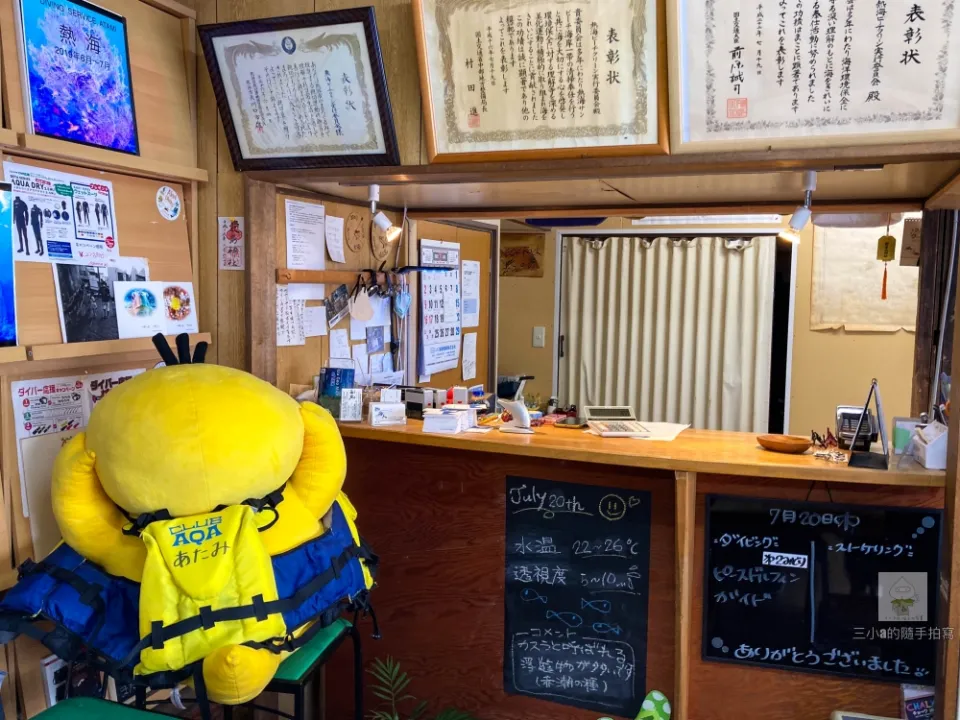
The counter also displays that day's water temperature and visibility
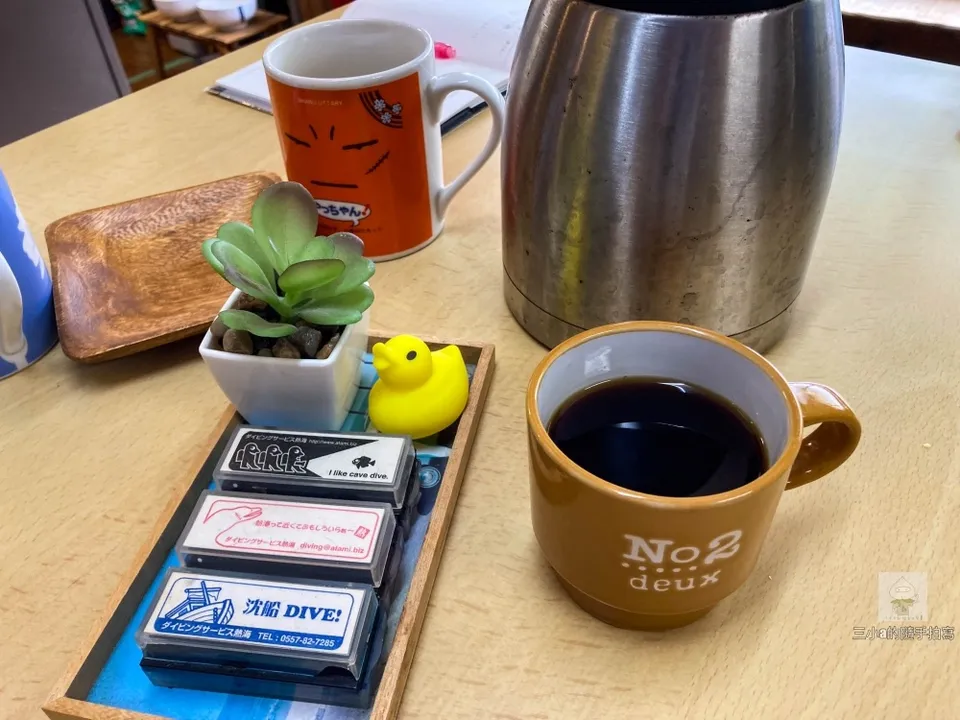
At the front counter, you can check the day's water temperature, visibility, and the name of the boat you'll be boarding. After diving and rinsing your gear, Toyoshima-san will brew you a hot coffee and have a friendly chat. If you want to fill in your dive log, there's even a special stamp you can use here. There's also a unique Hatsushima diving excursion available — unfortunately, with only one day in Atami, that would have to wait for another trip.


Atami Diving
If we're talking strictly about the nearshore sites around Atami, there are only four dive sites, all within a 5–10 minute boat ride: the wreck "Asahi Maru No. 16," "Bitaga-ne," "Sodai-ne," and "Koso-ga Doukutsu." Excluding Koso-ga Doukutsu, which is a winter-only site, the three regularly diveable spots are the first three. It's best to stay at least one night nearby and head out the next morning for 2–3 dives. In terms of difficulty, Bitaga-ne is somewhat easier than Sodai-ne. There are a few important points to keep in mind:
- With the exception of Koso-ga Doukutsu (which is around 15 m deep), all the other dive sites here are at significant depth — you need to reach at least 25–30 m underwater before there's anything to see. It is therefore strongly recommended that divers hold an Advanced Open Water Diver (PADI cert) certification, have 30+ logged dives, and be capable of self-reliance underwater.
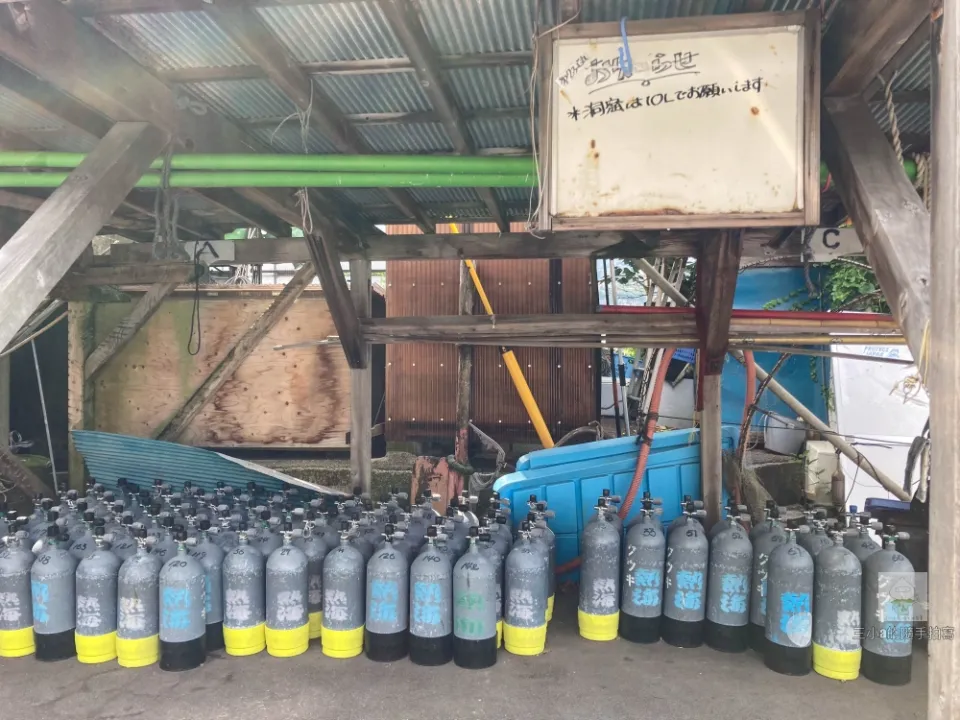
- "ダイビングサービス熱海" uses steel tanks, available in 10-litre and 12-litre sizes (no surcharge for the 12-litre). However, if you plan to enter the cave, you must use the 10-litre tank, so weighting will need to be adjusted accordingly.
- Boat dives here are conducted from a fishing vessel, meaning you must be fully kitted up on land before walking down the pier to board.
- All dive sites have a descent line; after the dive guide leads you around the site in a loop, you typically return to the starting point before ascending and performing your safety stop.
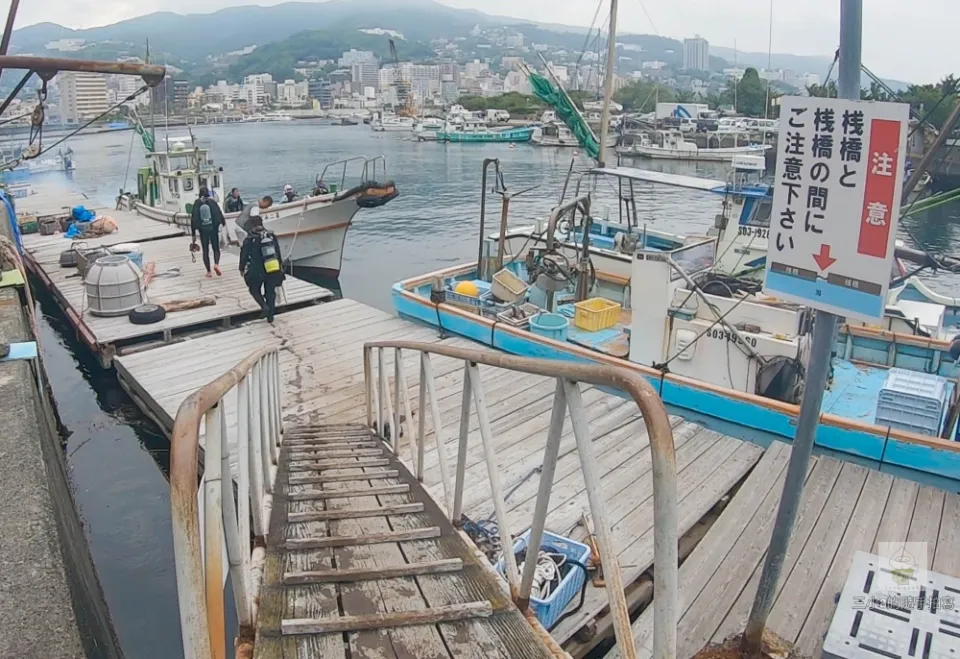
The boat used for boat dives here is a fishing vessel — you need to be fully geared up before boarding!
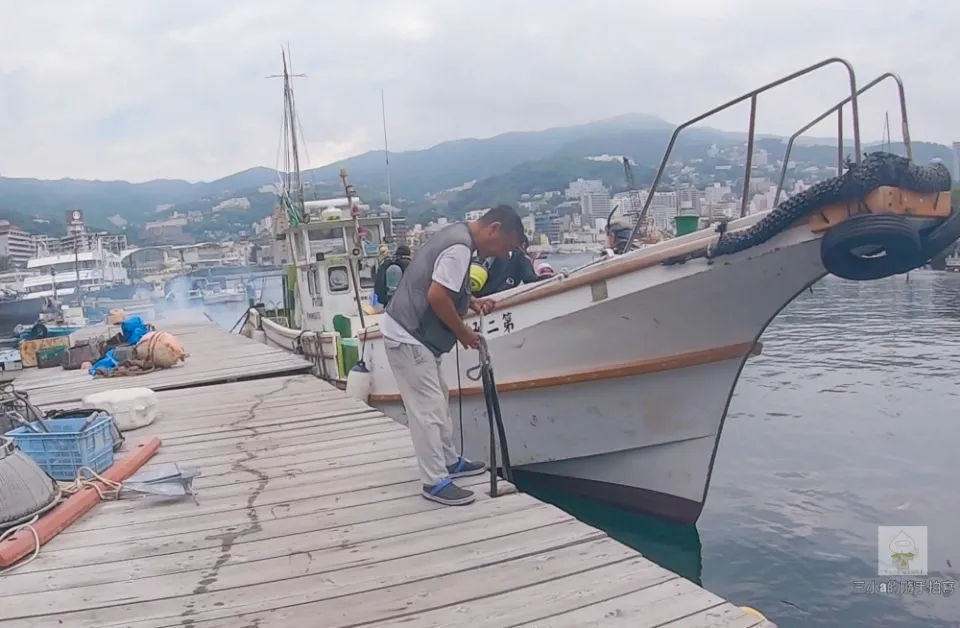
Boat dives in this area are quite different from Taiwan — there are no dedicated dive vessels here
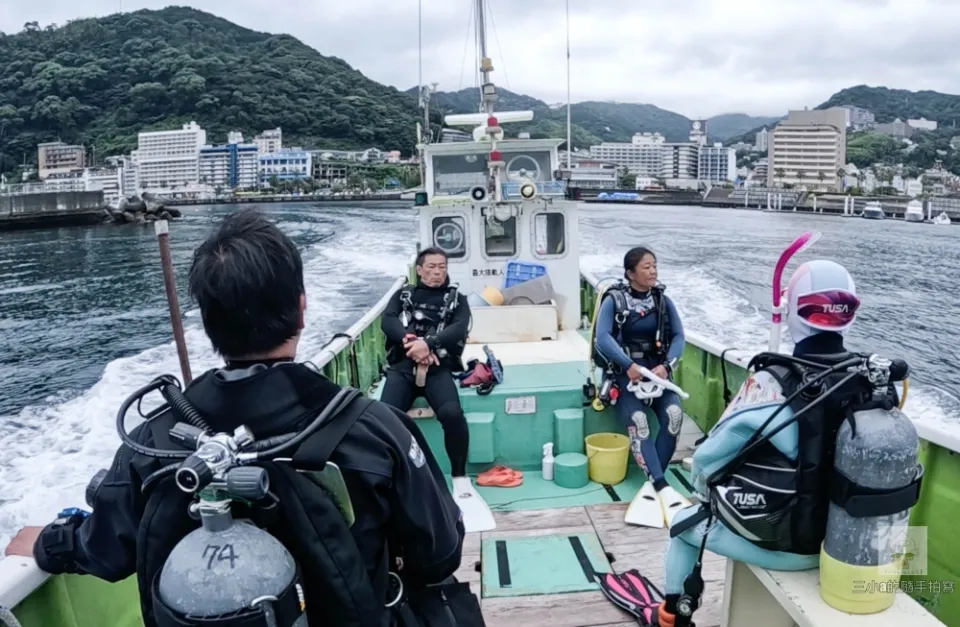
The fishing boat doesn't have much spare space on board, so all your gear is worn on your body!
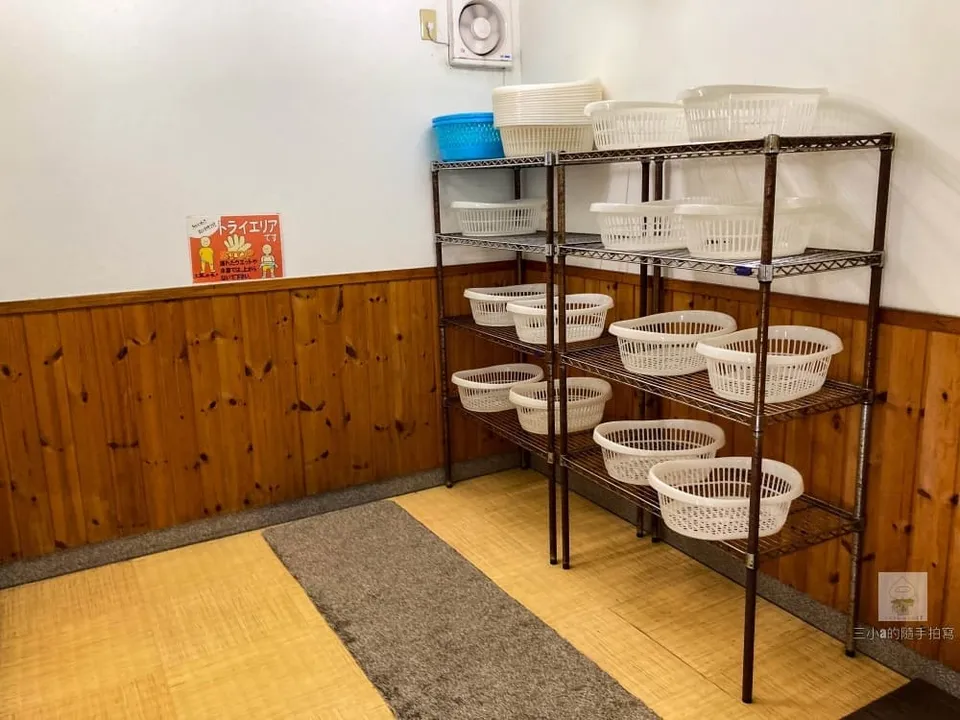
Although "ダイビングサービス熱海" is a small operation, it has everything you need: a gear rinse station, a drying rack, and a shower room. Body wash is provided, but you'll need to bring your own towel.
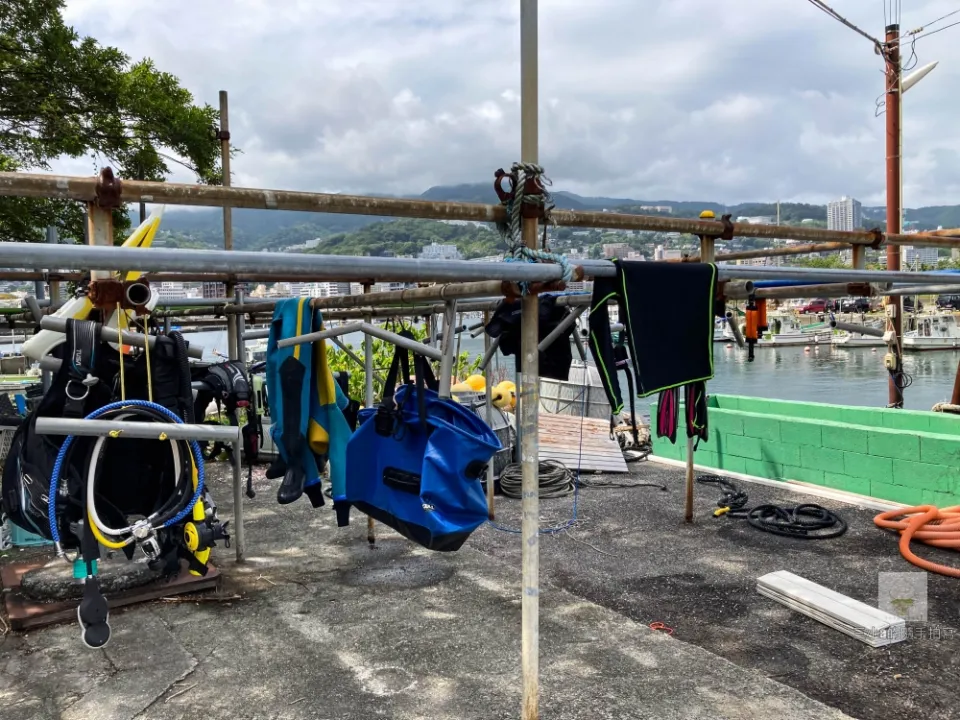
The gear rinse & drying area
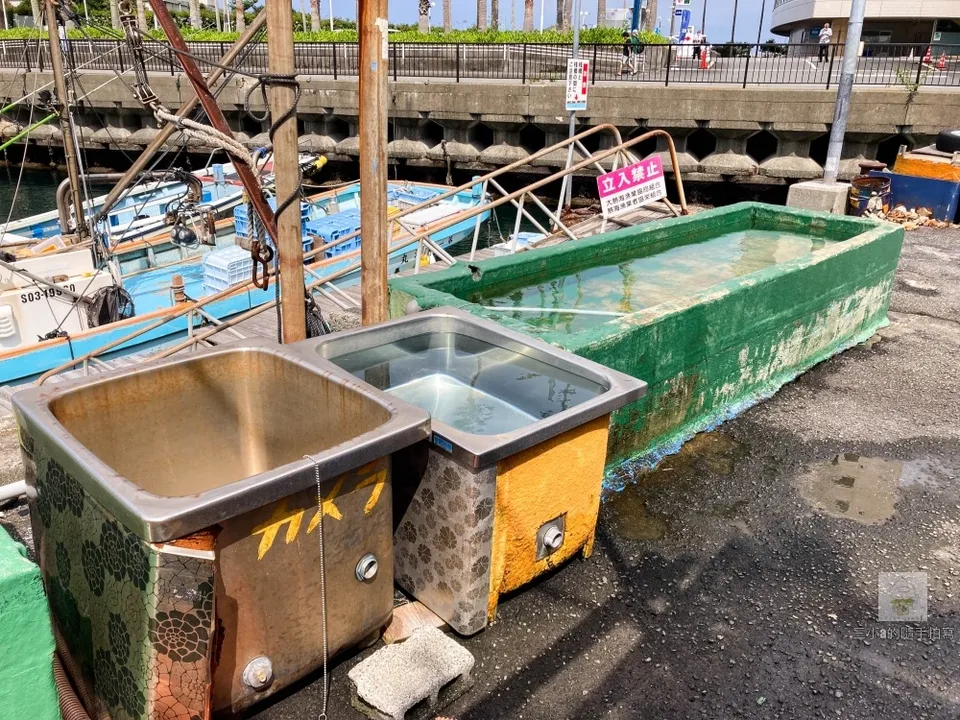
A small basin for rinsing your gear
Check-in starts at 9 a.m. to fill out some paperwork and a liability waiver, with the first dive going in around 10 a.m. After surfacing, the boat returns to port so divers can swap scuba tanks and rest before the second dive. With two dives done, you're typically back on land by around 1 p.m. On a clear day, after rinsing and hanging up your gear to dry, you can have everything packed up and ready to leave in roughly two hours. Overall, it's a wonderfully relaxed pace.
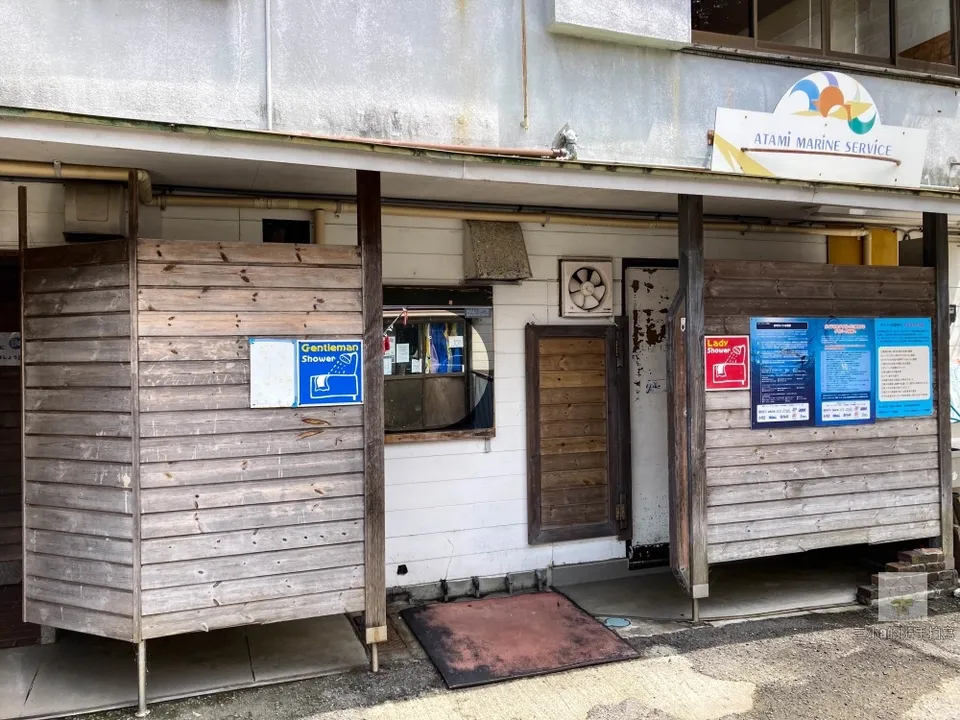
The simple shower and wash facilities are right inside here
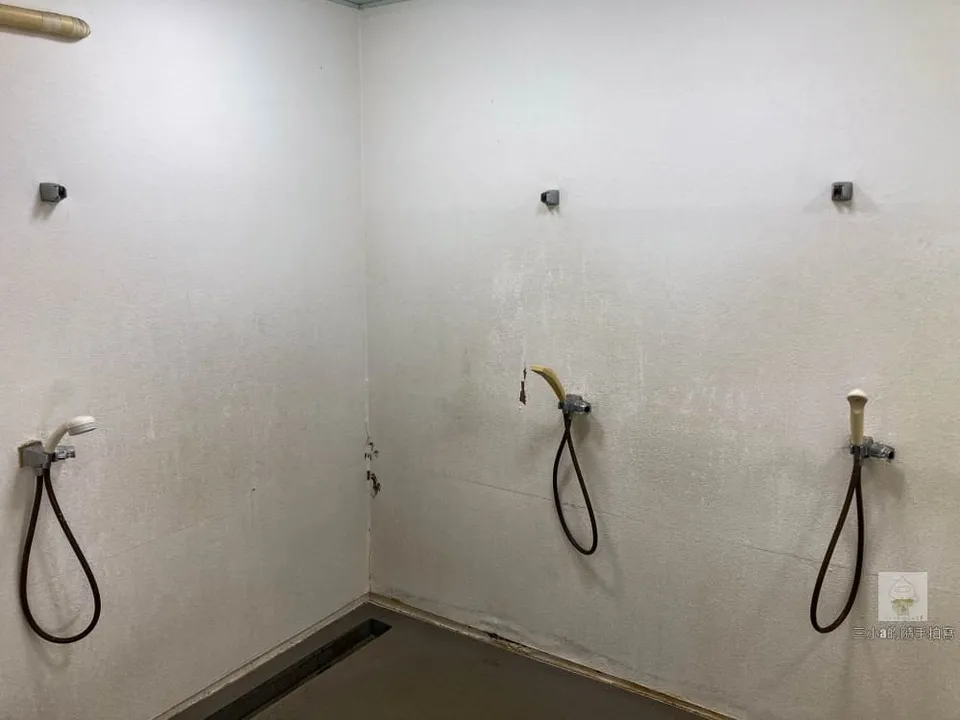
The simple shower and wash facilities
Dive Site: Wreck "Asahi Maru No. 16"
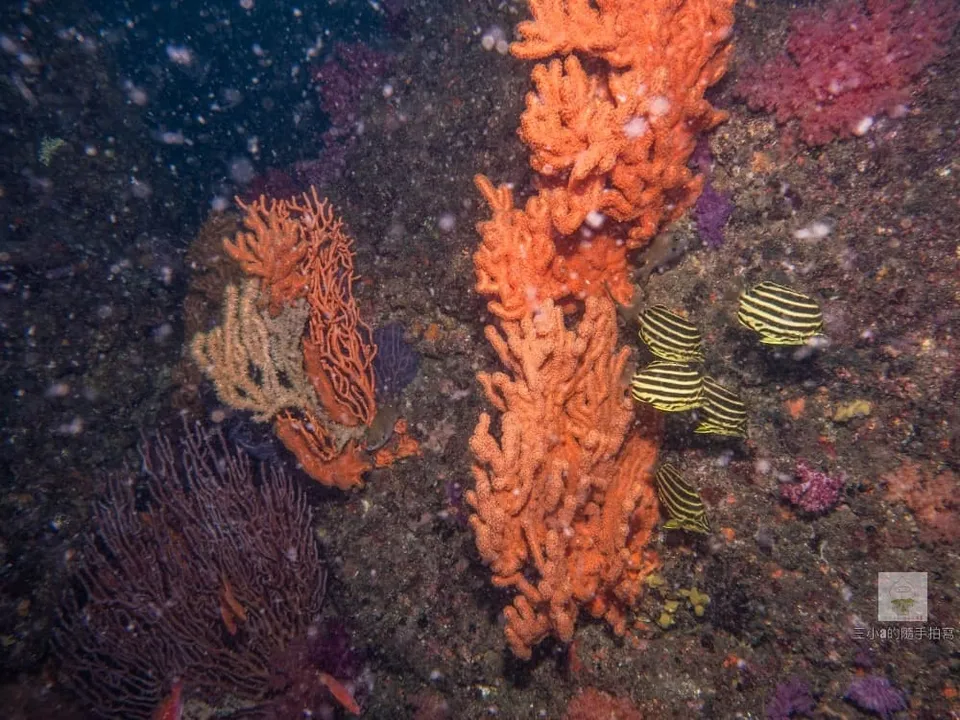
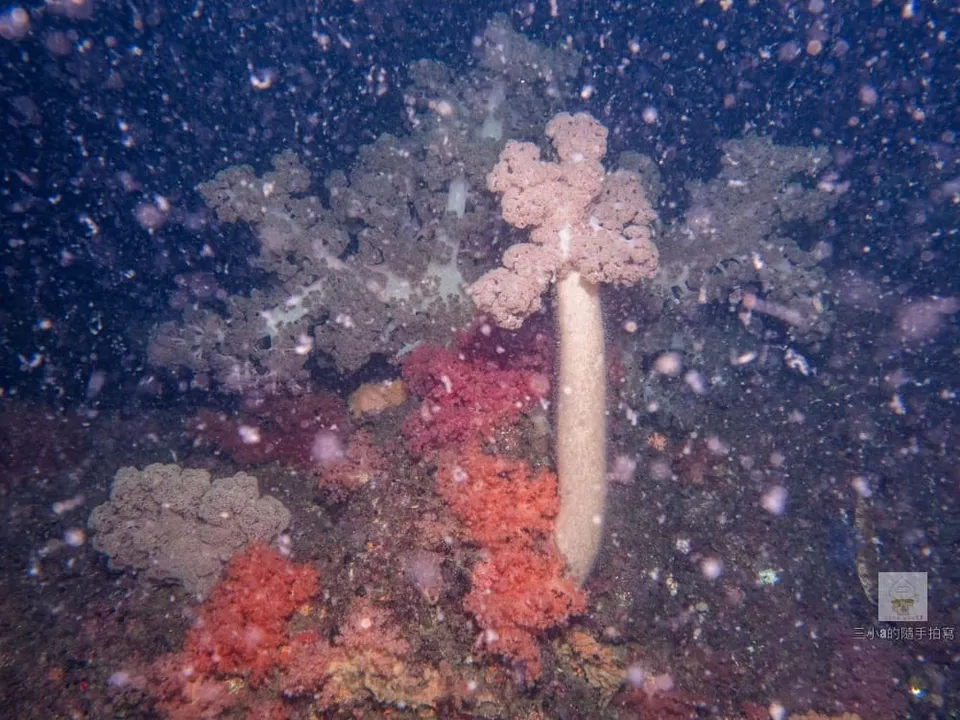
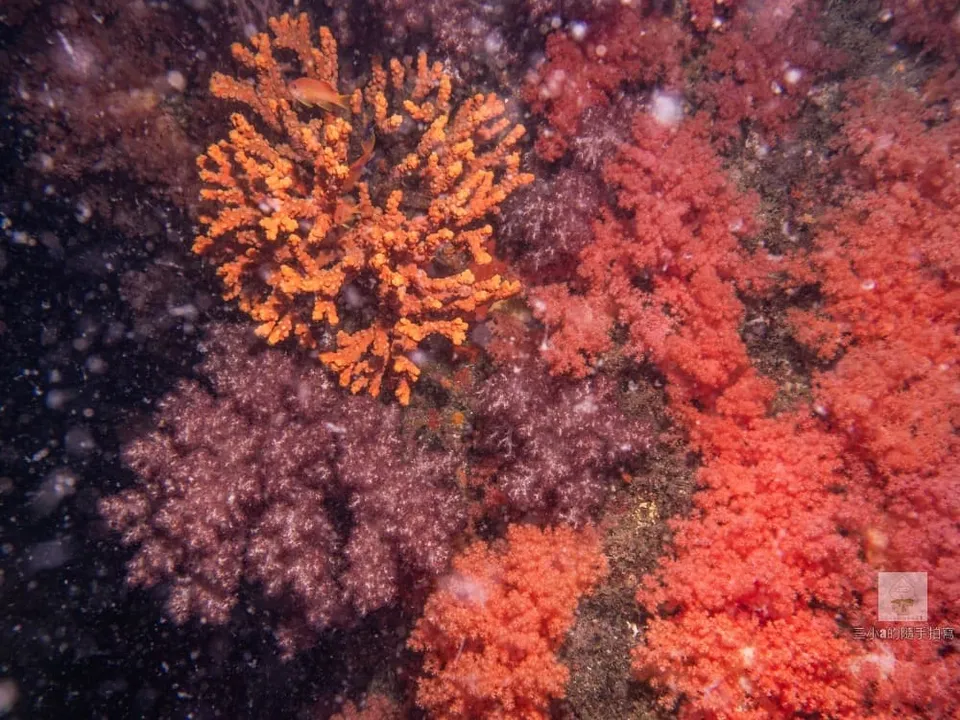
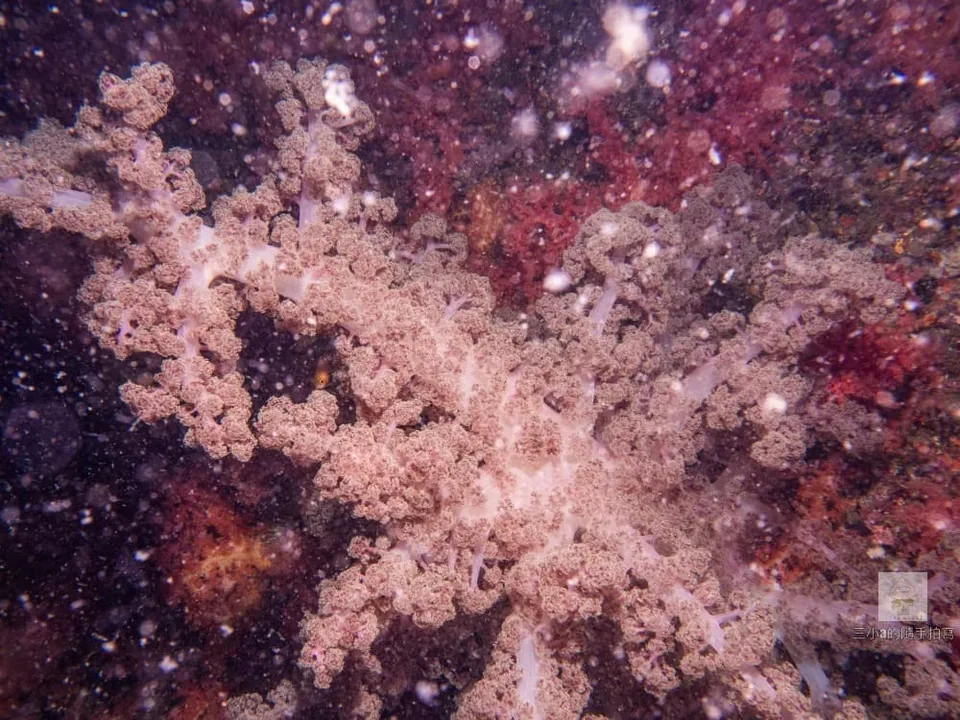
Now for a brief introduction to the two dive sites on this trip. First up is the "Asahi Maru No. 16," an 81 m long vessel and currently the largest wreck in Japan accessible for recreational diving. The site sits at around 30 m depth; the hull has broken in two at the middle, with the descent line tied to the bow. After the dive guide leads the group on a full circuit, you ascend from the bow and complete your safety stop. The hold draws a large gathering of fish, and the soft coral coverage along the hull is impressively dense and well-established — making this a must-dive whenever you visit Atami. Visibility was unfortunately poor on this particular day, so a clear view of the full hull was not possible.
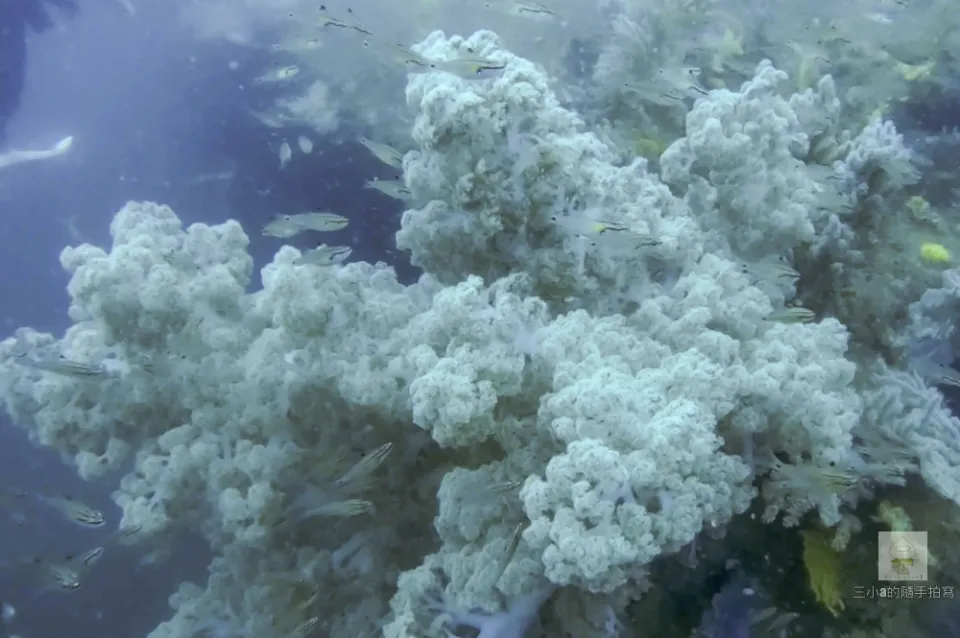
A vast blanket of soft coral drapes the wreck, drawing in large numbers of fish!
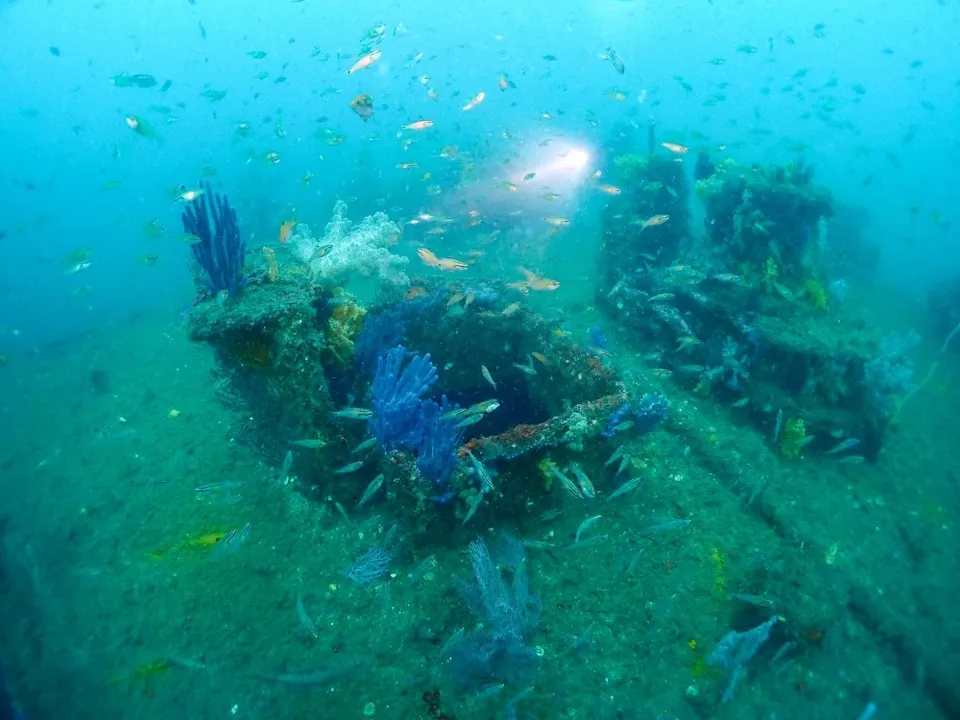
Photos courtesy of the dive shop.
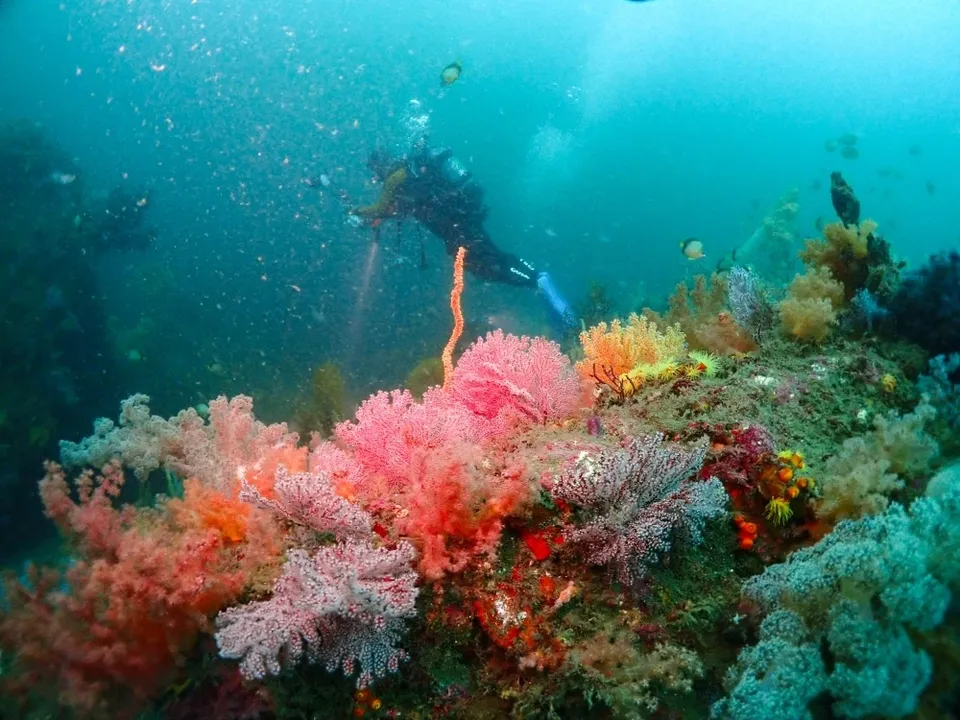
Photos courtesy of the dive shop.
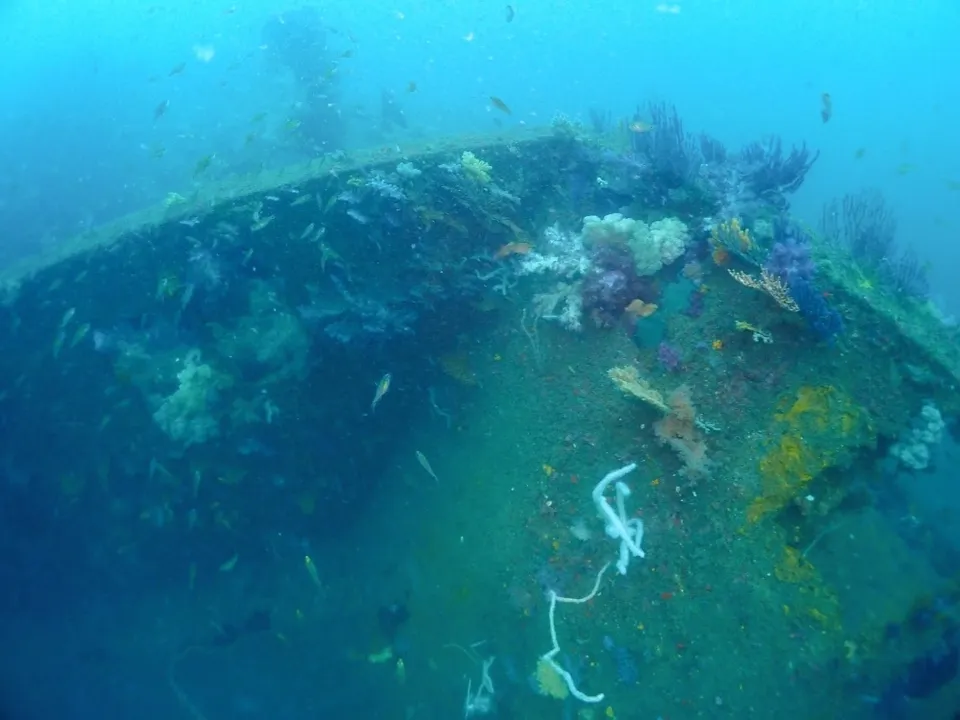
Photos courtesy of the dive shop.
Photos courtesy of the dive shop.
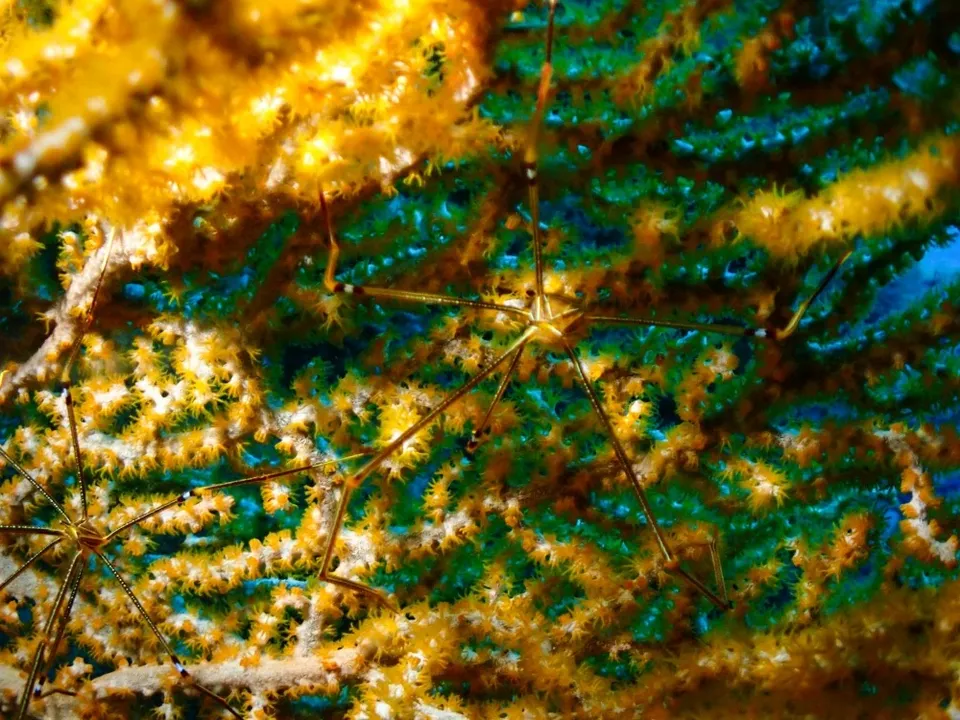
Photos courtesy of the dive shop.
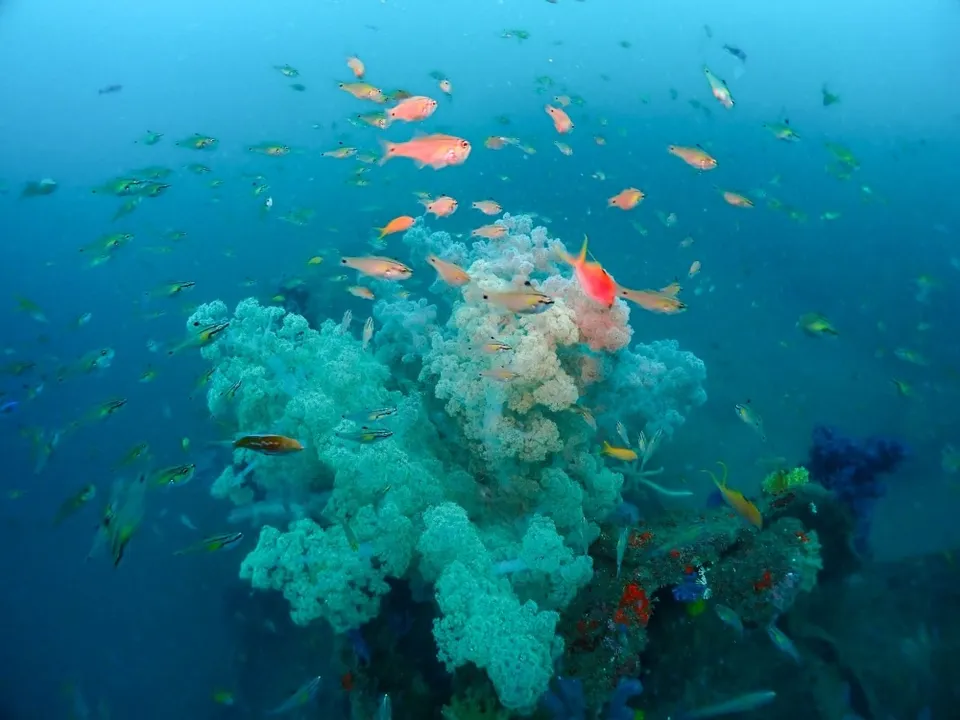
Photos courtesy of the dive shop.
Dive Site: "Bitaga-ne"
For the second dive, the original plan was to tackle the more challenging "Sodai-ne," but since there were less experienced student divers on the boat, we opted for the more accessible "Bitaga-ne" instead. This site is equally abundant in both fish and soft coral. Moray eels back home tend to hide in rock crevices with just their heads poking out — but the moray eels here seemed almost desperate to be noticed, with several of them trailing their full bodies right out in the open and swimming past directly in front of us. It was absolutely fascinating!
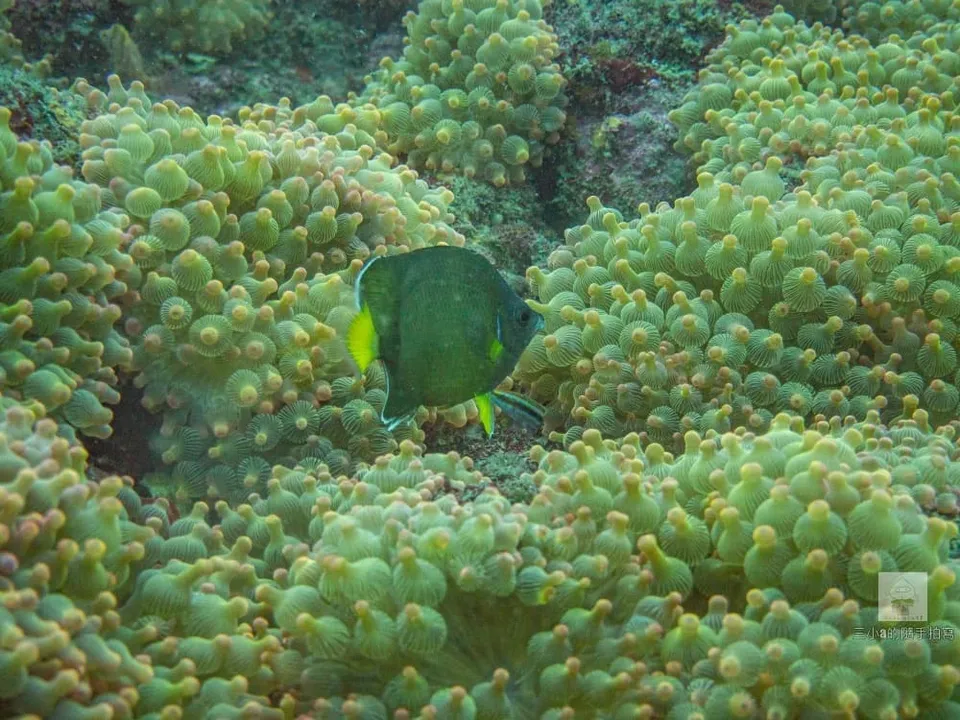
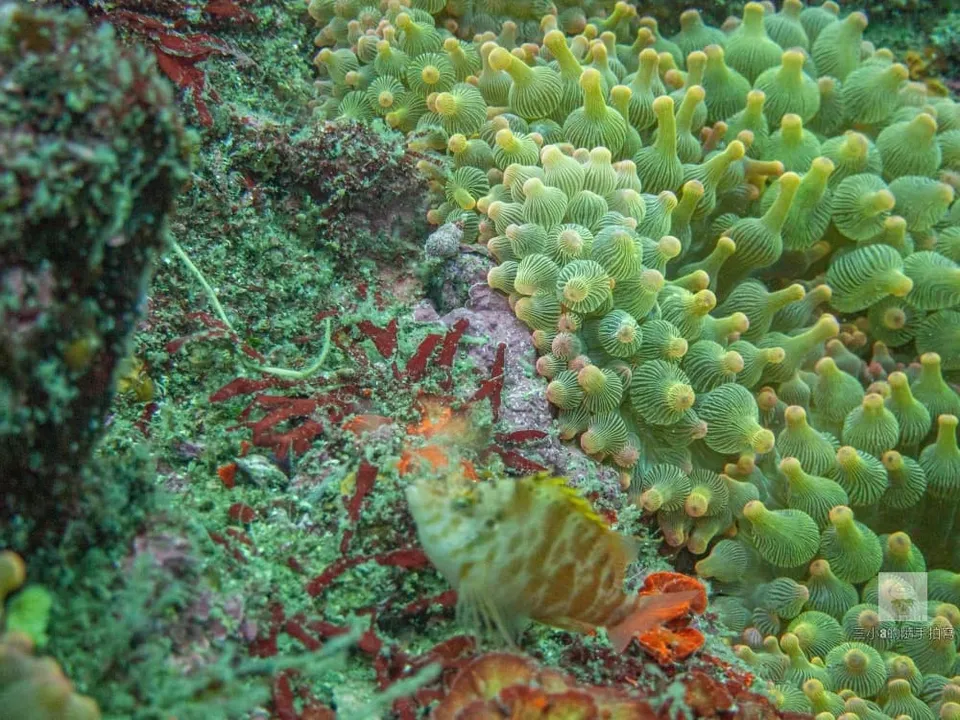
Full article reprinted from: 3小a的隨手拍寫
Further reading:
- 【娘娘不要走, Around the World ing】Snorkeling in the Galápagos and Spotting Hammerhead Sharks — Galápagos Islands Day Trip
- Downwellings, Washing-Machine Currents, and Near-Death Flows — Staying Calm Is the Only Answer When You Encounter Strong Currents!
- Kyotaro Sensei Teaches You How Not to Be a Terrible Guest When Diving in Japan
- 【A Taiwanese Woman's Secret Okinawa Dive Spots】First-Hand Report: Hammerhead Shark Storms and Underwater Ruins at Yonaguni
- 【Must-Read for Divers】Always Getting Turned Away When You Try to Join a Group? How to Become a Self-Sufficient Diver
- 【Japan · Mikomoto Island】Unlocking the Hammerhead Shark Storm — Mikomotojima Hammers
Frequently Asked Questions
How is a BlueTrend dive trip different from an unknown, no-name dive group?
Choosing us means full peace-of-mind protection and a smooth experience from start to finish. Every trip we run holds to three things.
First, full legal protection and a professional dive leader: we strictly follow Taiwan's travel regulations and provide complete travel-agency liability insurance, travel insurance, trip-inconvenience insurance and dive insurance. Every group is accompanied by a certified, foreign-language dive leader who joins you on both the dives and the land itinerary, liaising seamlessly with local dive shops and operators on your behalf to keep things running smoothly — the person our travellers trust most.
Second, fully licensed with secure payments: every payment goes into a licensed travel agency's account, with multiple safe payment channels (bank transfer, credit card and more) and a legal collect-and-remit receipt, so every transaction is open, transparent and protected, avoiding the fraud and dispute risks of transferring money privately to an individual.
Third, hand-picked quality we vet in person: every trip, dive site and partner shop is scouted on the ground by our own team, from the guides' professionalism and safety standards to the food, lodging, environment and service details on land, all vetted by us so you don't get caught out.
I want to sign up for a dive trip. Are there certification-level or logged-dive requirements?
Each dive site is different, so the entry bar varies. 'Bali Tulamben', for instance, is relatively beginner-friendly. 'Malapascua in the Philippines' is also beginner-friendly, but since thresher sharks tend to cruise between 20 and 30 metres, we recommend AOW certification with 20+ logged dives to enjoy this trip comfortably. For 'the Maldives' or 'Palau', we suggest AOW with 50+ logged dives for a more relaxed experience. If you're not sure whether your experience fits the trip you want, message us and our dive editors will assess it and help you find the trip you'll feel safest on.
Can I join if I'm signing up alone? How are rooms arranged?
Plenty of our travellers sign up solo! For rooms and beds, we prioritise pairing you with a same-gender traveller, and if you'd rather have your own space you can pay the difference to upgrade to a single room. For the diving, our professional leader will pair you with a suitable buddy, and with the happy vibe on our trips you'll quickly make a great group of dive friends. Many people sign up alone, make new friends, and end up organising the next trip together!
Does the trip fee include dive insurance, gear rental, taxes and instructor tips?
It depends on the trip, the destination's regulations and the local operators. Every BlueTrend dive trip has a detailed web page with a clear 'included / not included' list, transparent and with no hidden charges. All payments are collected by a licensed travel agency, with a standard-form contract for your protection.
I'm a new diver / haven't dived in a long time — will I fall behind the group?
Before you complete your booking, our team assesses a suitable trip based on your certification level and experience. Before departure, we strongly recommend taking time to refresh in Taiwan with an instructor, or a fun dive to get your feel back. On the trip itself, our professional dive leader groups and pairs everyone by experience, keeps a close eye underwater on travellers who need extra care, and steps in to help right away.
Will the photos and videos taken during the trip be shared with us?
During the dives, 'safety' is always the leader's top priority, so whenever it's suitable and safe the leader will capture great shots and record the best moments. During or after the trip, we compile a cloud album for all travellers to download, so you go home loaded with memories!
Besides your scheduled trips, can you arrange a private group charter or independent travel for me and my friends?
Absolutely! Besides group trips, we also arrange private group charters and independent travel. We can communicate, enquire and coordinate services with local operators based on your needs, saving you time and effort and taking the language barrier off your plate, to tailor the smoothest, most reassuring dive trip just for you. Contact our LINE support and our editors will arrange it for you!