Contents(7)
Mikomoto Island (みこもとじま), located near the Izu Peninsula in Japan, is a pilgrimage site for divers worldwide, renowned for its spectacular schools of Hammerhead Sharks. Just three hours from Tokyo, the island draws divers from every corner of the globe thanks to its convenient location and rich marine life. Mikomoto offers not only a heart-pounding dive experience, but also embodies the vision of local operators who seek to revitalize the region through tourism and attract young people into the diving industry.
Mikomoto: A Hammerhead Shark Paradise
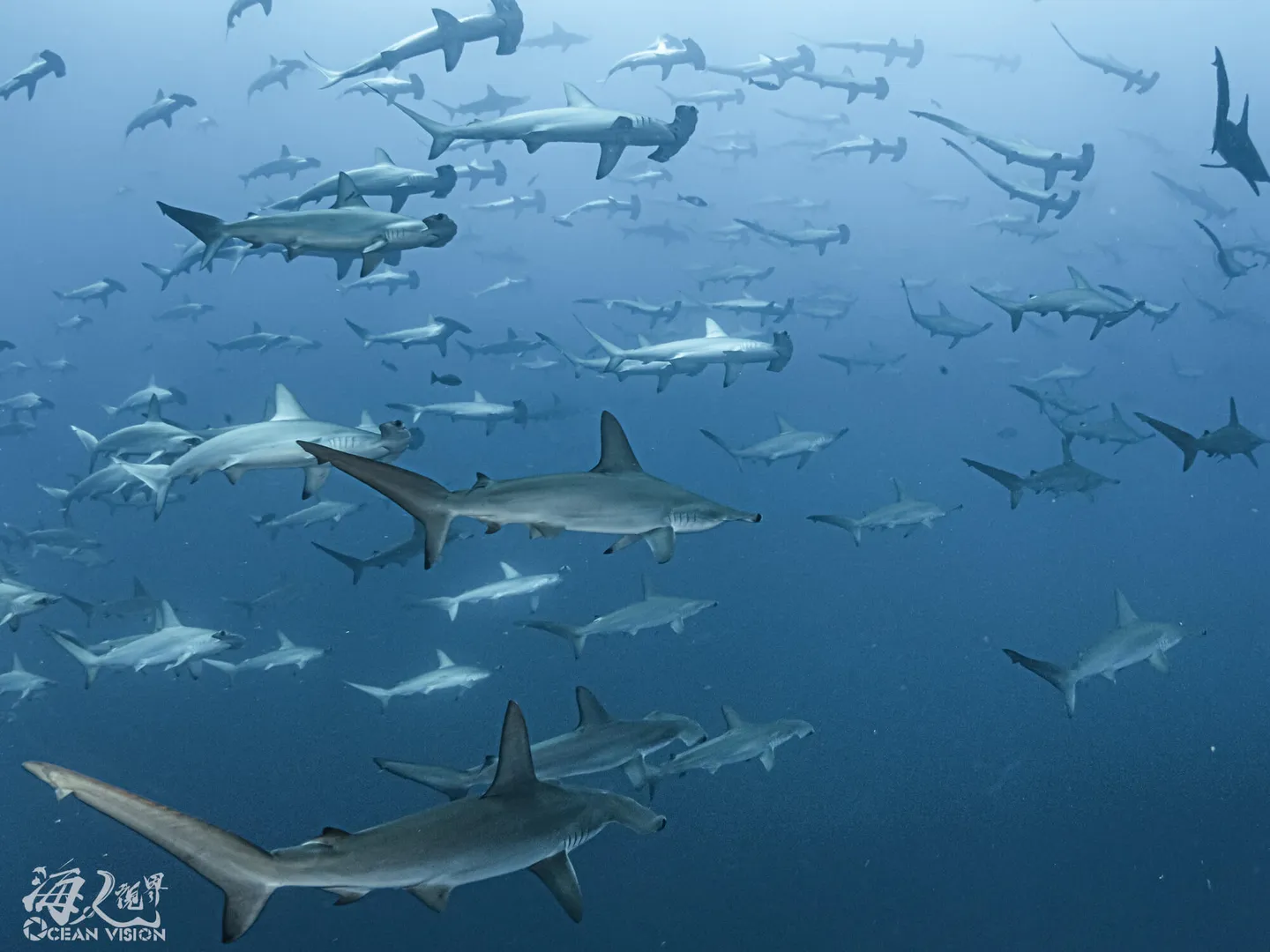
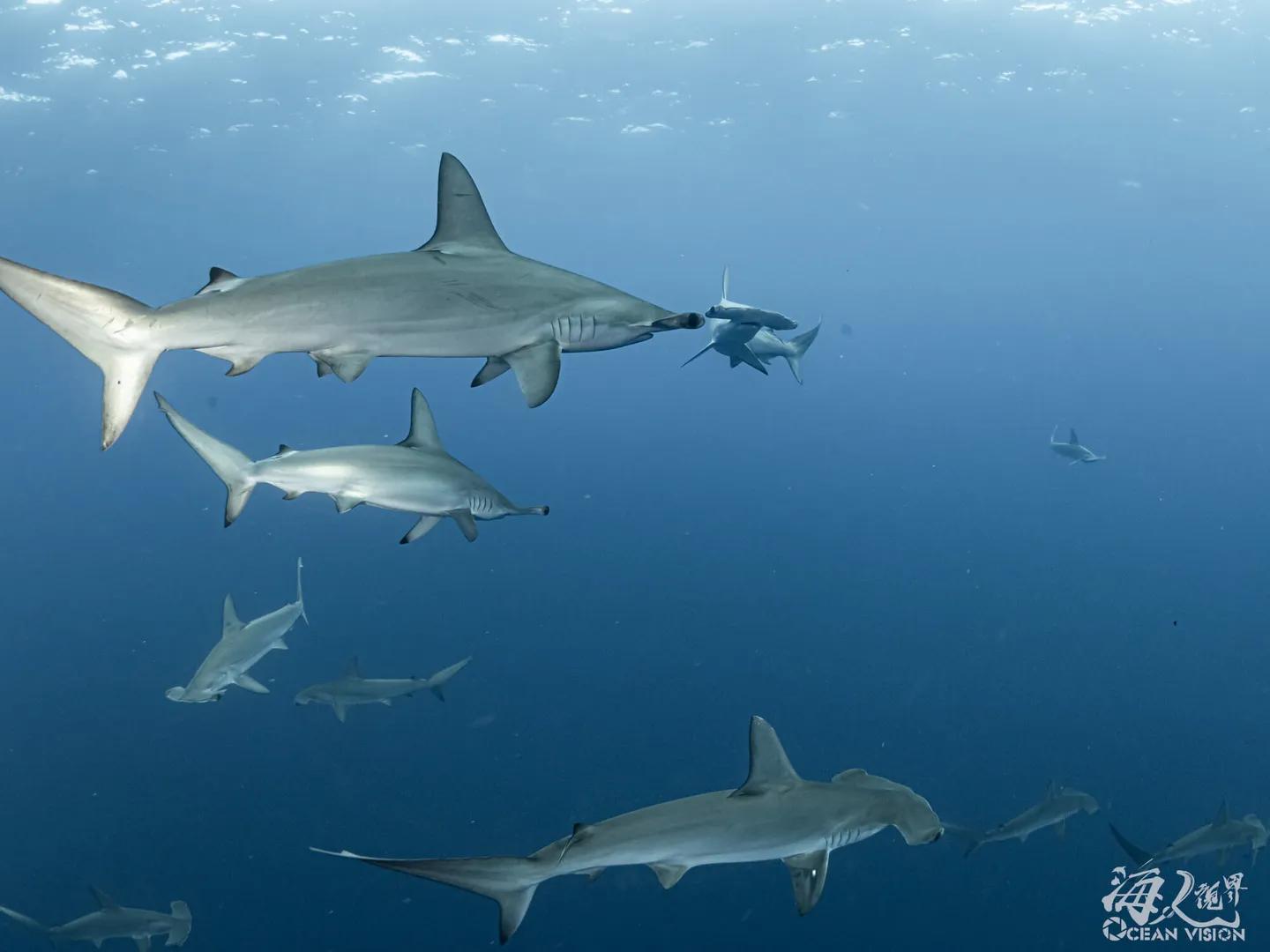
At Mikomoto, Japan, there is a 70% chance of witnessing an overwhelming school of Hammerhead Sharks. Photo courtesy of 京太郎
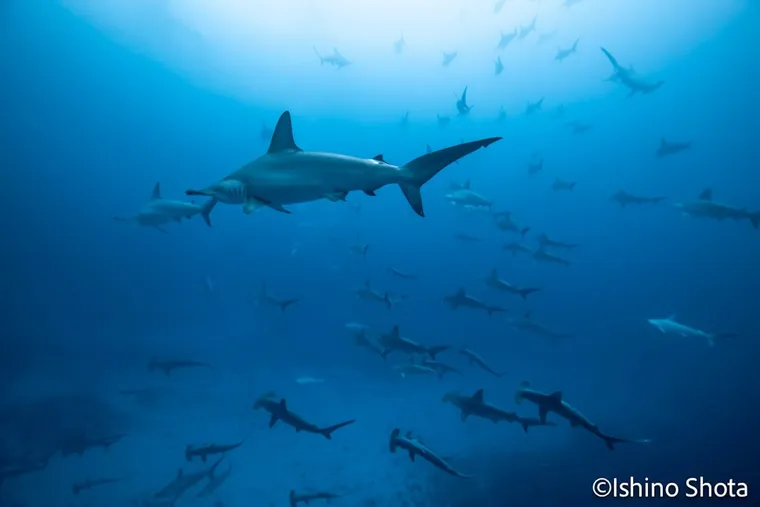
Makoto Arimatsu (有松 真), one of Mikomoto's local dive operators — whom we'll affectionately call Arimatsu-san — shared with us that the island's greatest highlight is undoubtedly the Hammerhead Shark. From June to October each year, warm Kuroshio currents bring in schools of Hammerhead Sharks, sometimes numbering in the hundreds, giving divers up to a 70% chance of witnessing this spectacular phenomenon.
Compared to other Hammerhead Shark dive sites, which are typically located in remote areas, Mikomoto's proximity to a major metropolitan area is exceptionally rare on a global scale. The volcanic rock topography surrounding the island, powerful currents, and diverse marine life — including mackerel, jack fish, and colorful coral — add even more appeal to every dive.
However, the strong currents and high swells make Mikomoto an advanced dive site. The local association requires divers to have a minimum of 50 logged dives and be comfortable with drift diving. Because the waters can produce powerful currents, boat operators are mindful of how far apart divers drift and, to mitigate risk, each dive is limited to 35 minutes to ensure everyone's safety.


Marine Conservation and Fisheries Coexistence
Arimatsu-san explained that, unlike some regions where sharks are harvested for food or fishmeal, there is no tradition of shark fishing in the Mikomoto area, allowing Hammerhead Sharks to thrive freely here. Local dive operators collaborate with four traditional fishing boat captains — some of whom have transitioned into dive tourism — to jointly establish diving guidelines that protect the marine ecosystem and maintain sustainable tourism. This model, overseen by the local association, ensures that diving activities and fisheries coexist harmoniously, setting a benchmark for other regions to follow.
Overseas Experience Sparks Community Revitalization
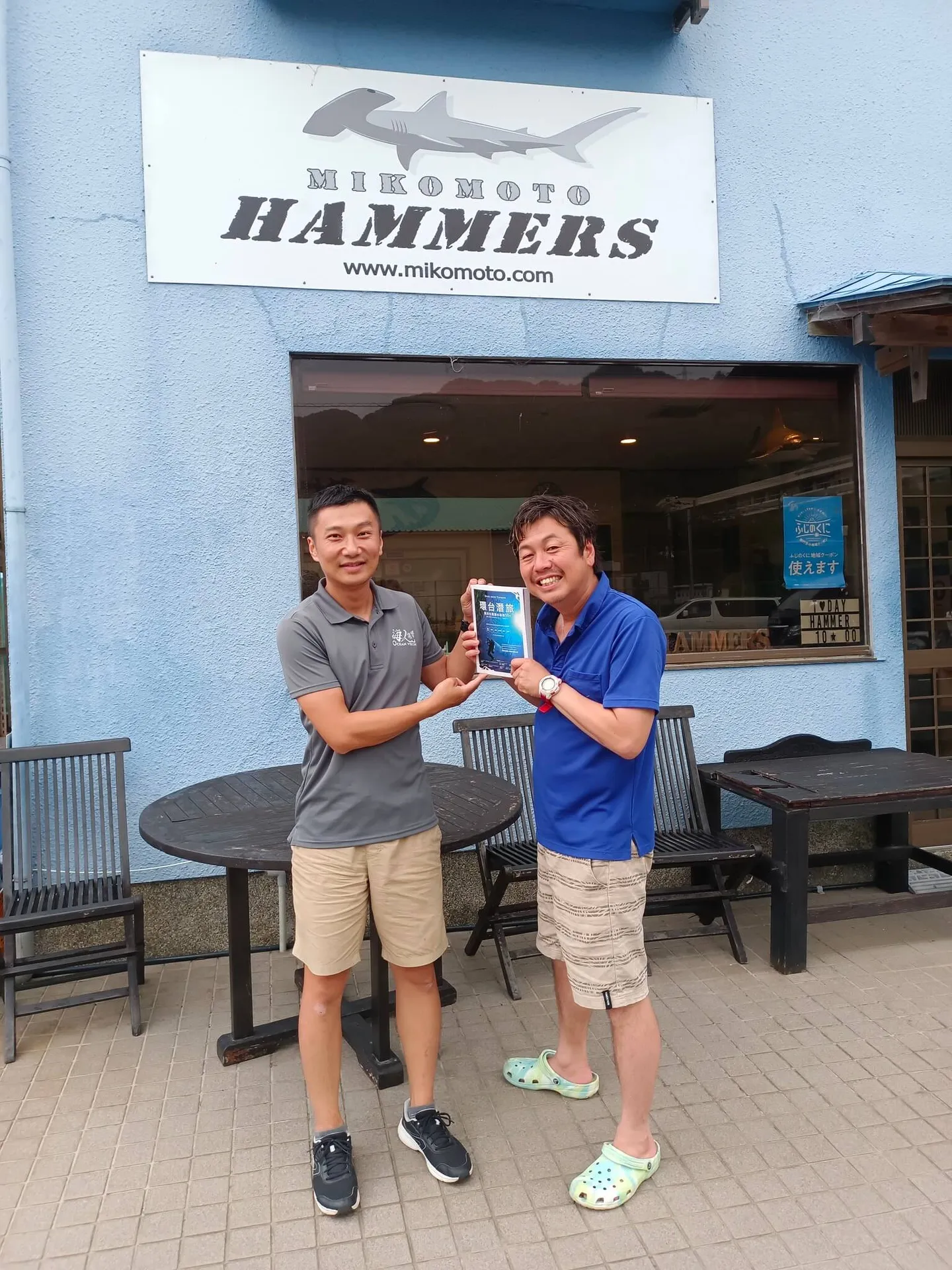
The enthusiastic Arimatsu-san (right). Photo courtesy of 京太郎
Arimatsu-san recognized that Japan's diving industry broadly suffers from low wages and high turnover, with many dive instructors finding it difficult to remain in the profession after starting a family. In response, they have invested in upgrading facilities — for example, expanding their dive boat's passenger capacity from 24 to 40 — and partnered with local inns and restaurants to create more employment opportunities.
These efforts aim to improve working conditions, attract young people to the diving industry, and bring economic vitality to the Shimoda area. In recent years, Arimatsu-san has also actively participated in international dive expos, including ADEX and DRT, welcoming foreign divers to the area. Services are currently offered in English and Japanese, with plans to hire a Mandarin-speaking instructor to serve more Taiwanese and Chinese-speaking visitors.
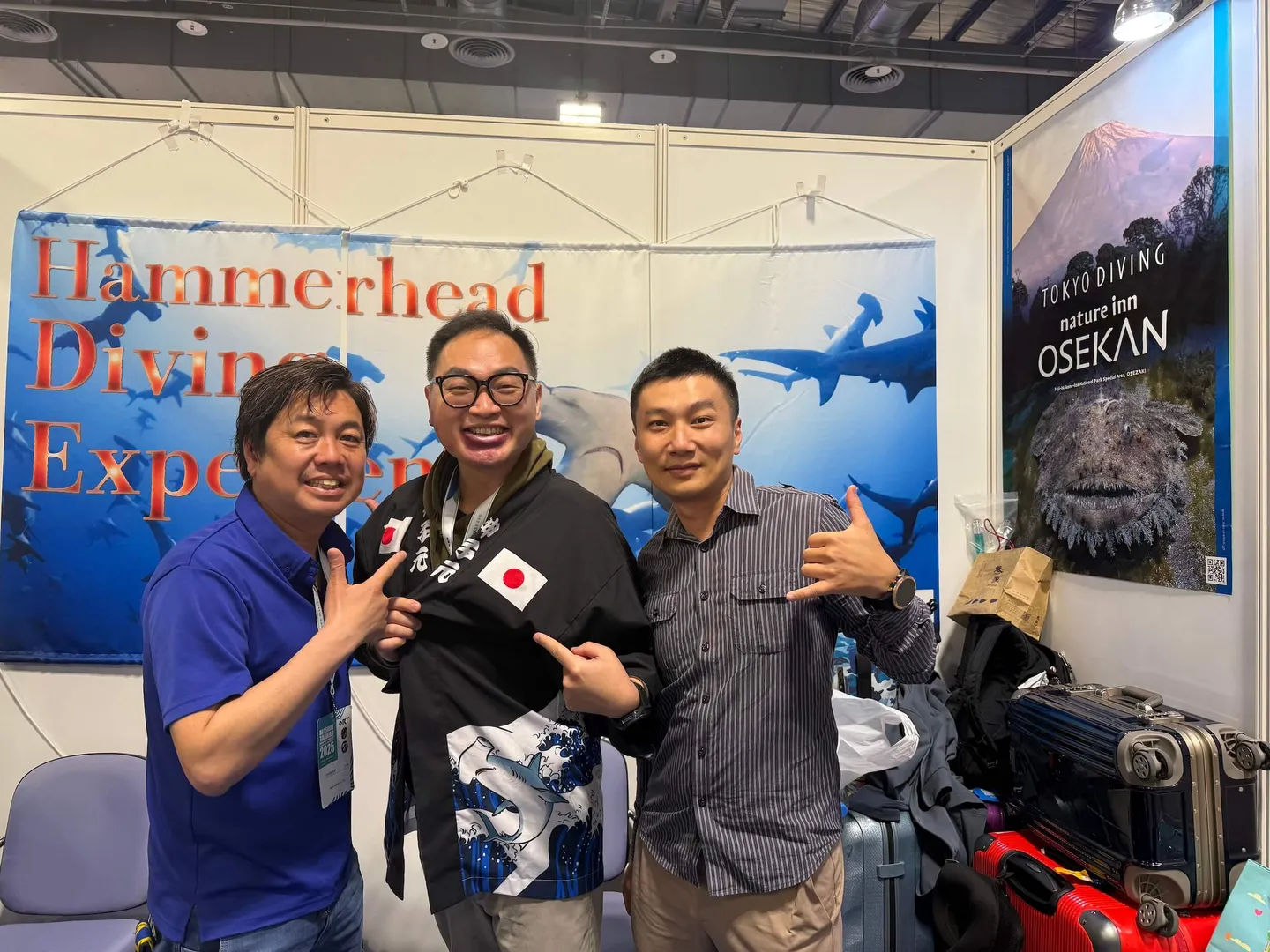
Arimatsu-san (left) actively promotes Mikomoto at international dive expos such as ADEX and DRT.
Early in his career, Arimatsu-san worked as a diver in Australia, Thailand, Palau, and other destinations, bringing back an international perspective and passion for the sport. It is also because of those early years working abroad that his team is the only one among the four local dive operators willing to welcome English-speaking guests.
They are dedicated not only to providing a top-tier dive experience, but also to driving economic development in the Shimoda region through tourism. Over the past decade, rising water temperatures and the approaching Kuroshio current have caused Hammerhead Shark populations to surge, while online promotion has spread Mikomoto's reputation far and wide, attracting a large number of foreign divers. Currently, 70% of visitors come from overseas, with Taiwanese guests accounting for 30%.
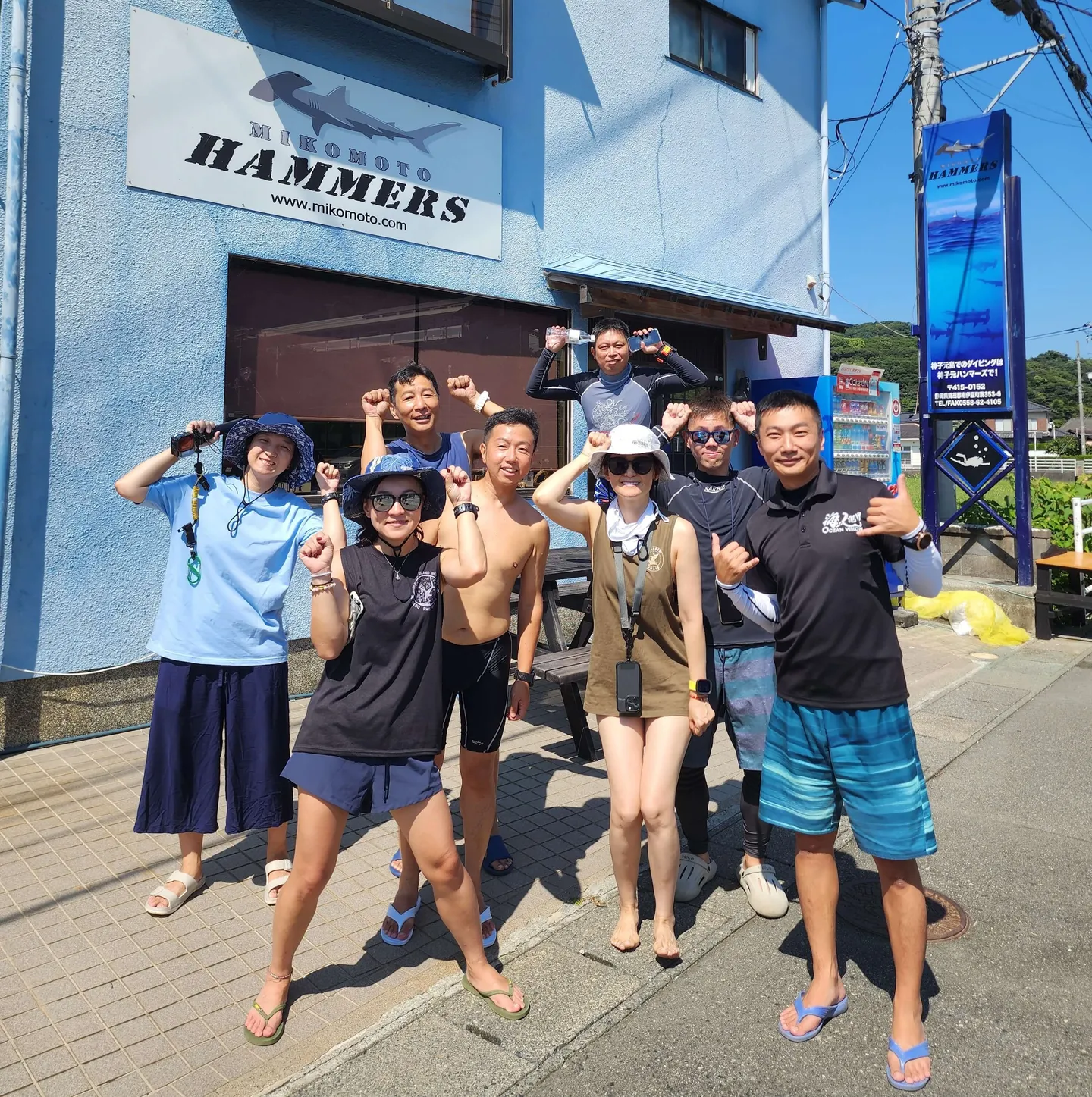
Arimatsu-san hopes that dive tourism will transform the local industry and drive community revitalization. Photo courtesy of 京太郎
Planning Your Diverse Mikomoto Getaway
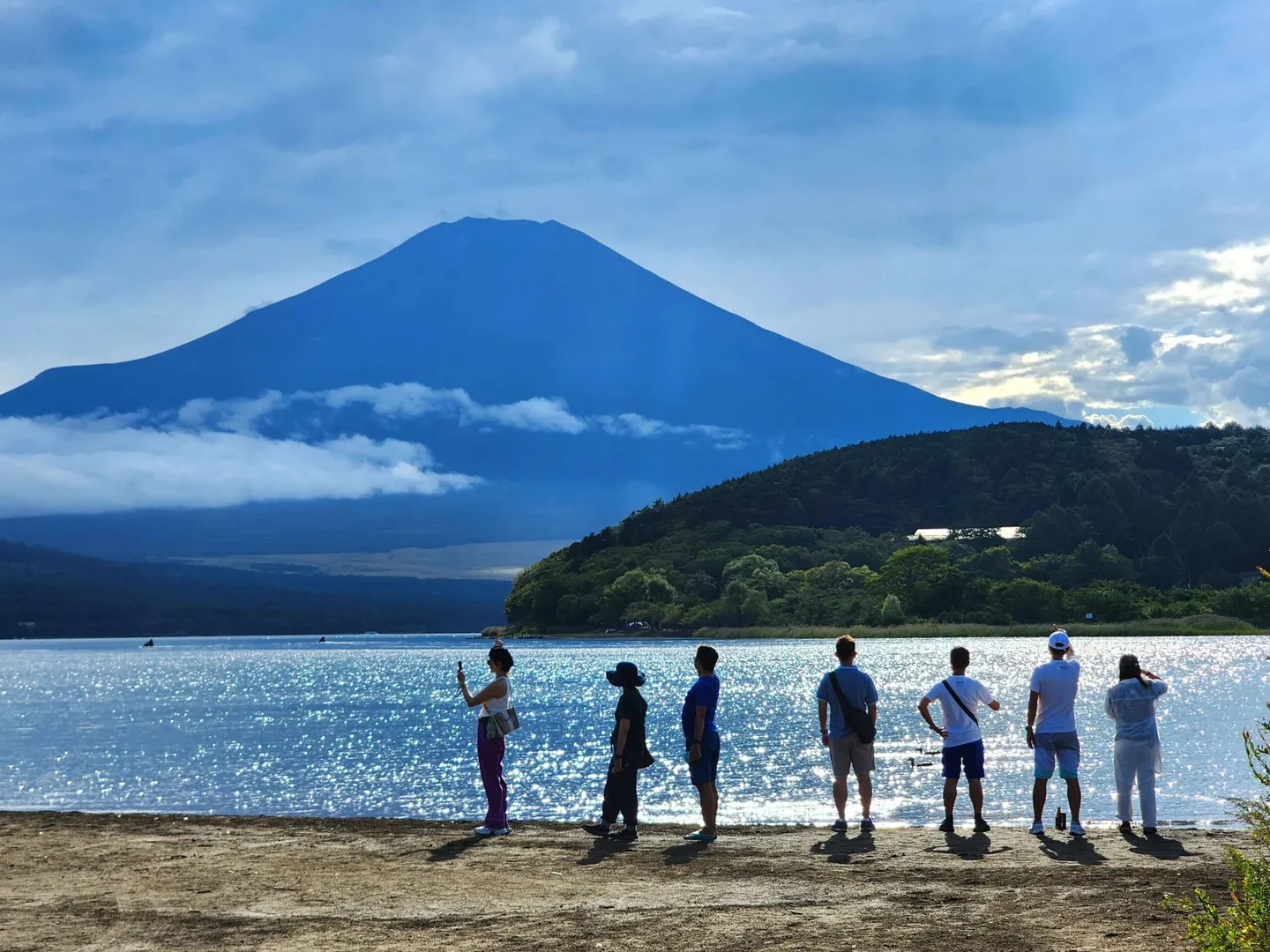
Visit the area and experience a travel atmosphere unlike the big cities. Photo courtesy of 京太郎
The best diving season at Mikomoto runs from June through the end of October each year, when water temperatures range from 21°C to 28°C and a 5mm wetsuit is sufficient. While Hammerhead Sharks can be spotted year-round, winter brings low temperatures and rough seas that result in a 40% trip cancellation rate, making it inadvisable for foreign visitors to plan trips during this period.
Unlike dive environments in Southeast Asia, diving in Japan requires each person to assemble their own equipment — primarily because operators use this simple step to assess how familiar divers are with their own gear and to ensure they are prepared for the challenges of an advanced dive site.
Beyond diving, visitors can enjoy hot springs in the Shimoda area where Mikomoto is located, savor fresh seafood (such as eel rice), or soak up the lively beach atmosphere at the local swimming beaches in summer (especially in August) — a welcome contrast to the bustle of major cities like Tokyo and Osaka.
Where Adventure Meets Mission
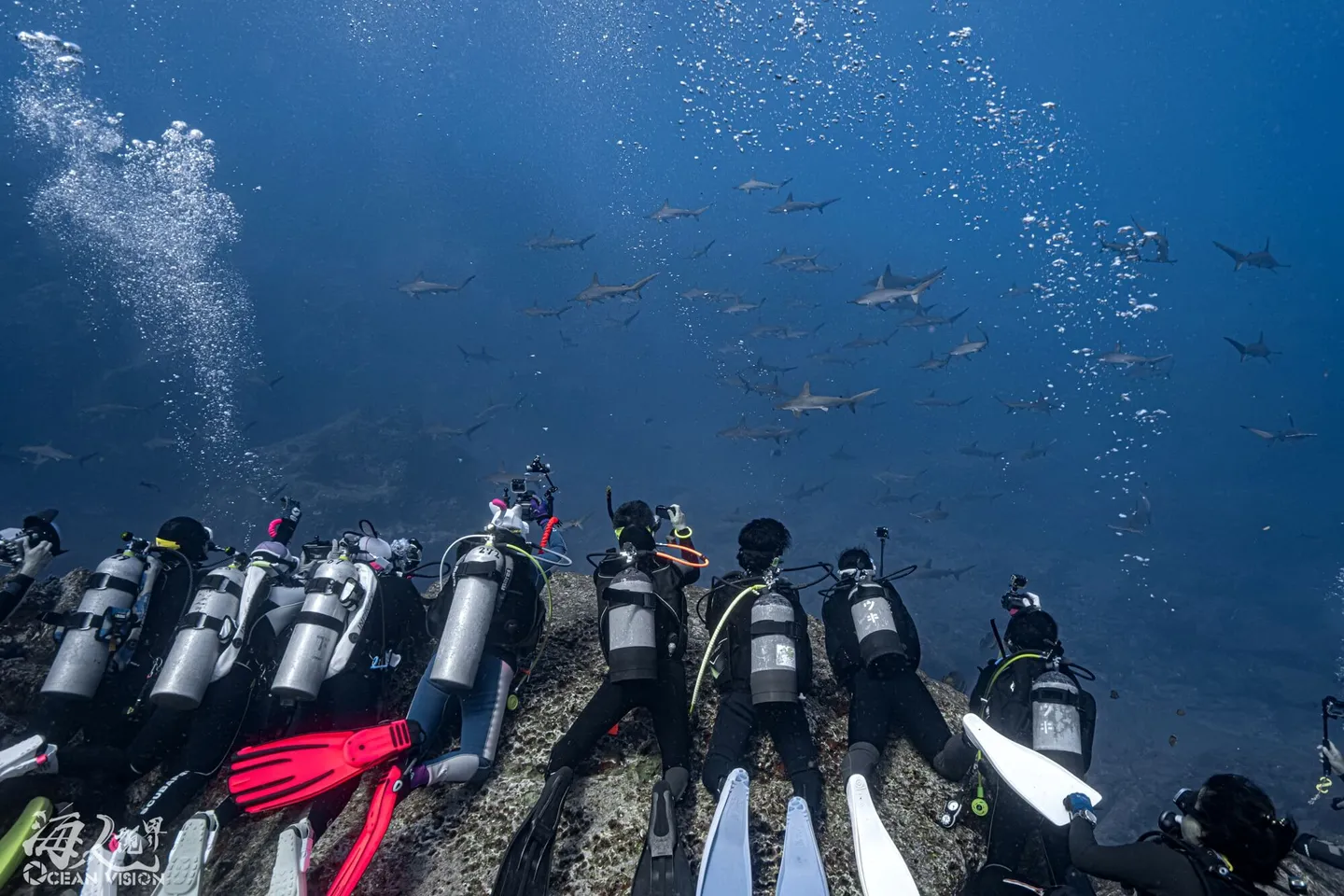
Mikomoto is not only a diver's paradise, but also a microcosm of marine conservation and community revitalization. Photo courtesy of 京太郎
Mikomoto is not only a diver's paradise, but also a microcosm of marine conservation and community revitalization. Arimatsu-san hopes that by promoting dive tourism, more people will come to appreciate the beauty of this ocean, while also creating promising career paths for local young people.
Currently, only four registered vessels are permitted to offer dive services at Mikomoto, and only the dive shop run by Arimatsu-san provides services in Japanese and English (with Chinese services potentially available in the future). Because visiting Mikomoto to see the Hammerhead Sharks is extremely popular, it is advisable to plan your dive trip six months to a year in advance.
Whether you are an experienced diver or an adventurer ready to take on an advanced dive site, Mikomoto will offer you an unforgettable journey that blends excitement, culture, and environmental meaning.
Start planning your Mikomoto dive trip now — dance with the Hammerhead Sharks and support the sustainable development of the local community!
Arimatsu-san
Related Links
Further Reading
Frequently Asked Questions
How is a BlueTrend dive trip different from an unknown, no-name dive group?
Choosing us means full peace-of-mind protection and a smooth experience from start to finish. Every trip we run holds to three things.
First, full legal protection and a professional dive leader: we strictly follow Taiwan's travel regulations and provide complete travel-agency liability insurance, travel insurance, trip-inconvenience insurance and dive insurance. Every group is accompanied by a certified, foreign-language dive leader who joins you on both the dives and the land itinerary, liaising seamlessly with local dive shops and operators on your behalf to keep things running smoothly — the person our travellers trust most.
Second, fully licensed with secure payments: every payment goes into a licensed travel agency's account, with multiple safe payment channels (bank transfer, credit card and more) and a legal collect-and-remit receipt, so every transaction is open, transparent and protected, avoiding the fraud and dispute risks of transferring money privately to an individual.
Third, hand-picked quality we vet in person: every trip, dive site and partner shop is scouted on the ground by our own team, from the guides' professionalism and safety standards to the food, lodging, environment and service details on land, all vetted by us so you don't get caught out.
I want to sign up for a dive trip. Are there certification-level or logged-dive requirements?
Each dive site is different, so the entry bar varies. 'Bali Tulamben', for instance, is relatively beginner-friendly. 'Malapascua in the Philippines' is also beginner-friendly, but since thresher sharks tend to cruise between 20 and 30 metres, we recommend AOW certification with 20+ logged dives to enjoy this trip comfortably. For 'the Maldives' or 'Palau', we suggest AOW with 50+ logged dives for a more relaxed experience. If you're not sure whether your experience fits the trip you want, message us and our dive editors will assess it and help you find the trip you'll feel safest on.
Can I join if I'm signing up alone? How are rooms arranged?
Plenty of our travellers sign up solo! For rooms and beds, we prioritise pairing you with a same-gender traveller, and if you'd rather have your own space you can pay the difference to upgrade to a single room. For the diving, our professional leader will pair you with a suitable buddy, and with the happy vibe on our trips you'll quickly make a great group of dive friends. Many people sign up alone, make new friends, and end up organising the next trip together!
Does the trip fee include dive insurance, gear rental, taxes and instructor tips?
It depends on the trip, the destination's regulations and the local operators. Every BlueTrend dive trip has a detailed web page with a clear 'included / not included' list, transparent and with no hidden charges. All payments are collected by a licensed travel agency, with a standard-form contract for your protection.
I'm a new diver / haven't dived in a long time — will I fall behind the group?
Before you complete your booking, our team assesses a suitable trip based on your certification level and experience. Before departure, we strongly recommend taking time to refresh in Taiwan with an instructor, or a fun dive to get your feel back. On the trip itself, our professional dive leader groups and pairs everyone by experience, keeps a close eye underwater on travellers who need extra care, and steps in to help right away.
Will the photos and videos taken during the trip be shared with us?
During the dives, 'safety' is always the leader's top priority, so whenever it's suitable and safe the leader will capture great shots and record the best moments. During or after the trip, we compile a cloud album for all travellers to download, so you go home loaded with memories!
Besides your scheduled trips, can you arrange a private group charter or independent travel for me and my friends?
Absolutely! Besides group trips, we also arrange private group charters and independent travel. We can communicate, enquire and coordinate services with local operators based on your needs, saving you time and effort and taking the language barrier off your plate, to tailor the smoothest, most reassuring dive trip just for you. Contact our LINE support and our editors will arrange it for you!