Contents(4)
The Editor says: With their big eyes, adorably dopey expressions, and sleek, elegant tails, witnessing a Hammerhead Shark storm is surely a dream on many divers' bucket lists! The English-speaking dive shop 「神子元ハンマーズ」 is your best bet to make it happen! <Full article reprinted from: 3小a的隨手拍寫>
When people think of diving in Japan, many immediately picture Okinawa's vast, glassy-blue waters. But Japan has plenty of other great dive destinations — the Izu Peninsula in Shizuoka Prefecture is one of them. Mikomotojima, located in the southern part of Izu, sits right in the path of the Kuroshio Current, making it not only rich in marine life but also one of the best spots to encounter schools of Hammerhead Sharks.
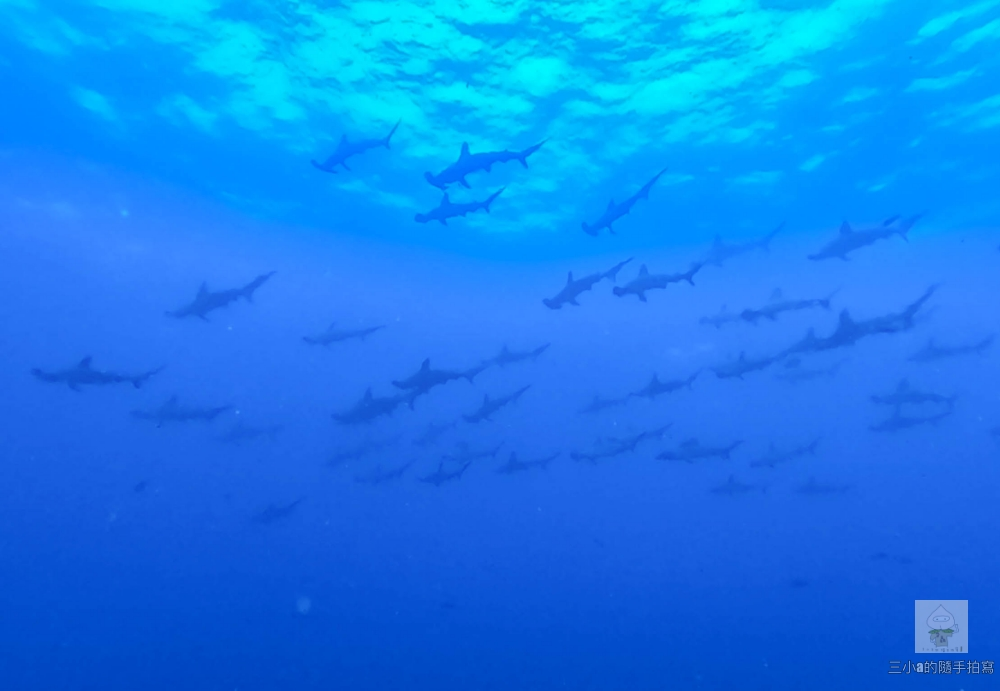A Hammerhead Shark storm — a dream come true for so many divers!
The best time to visit is between May and October each year. However, many divers are unfamiliar with the local scene and find it hard to get started. This article is a quick introduction to 「神子元ハンマーズ」, a local dive shop that can accommodate English-speaking guests.
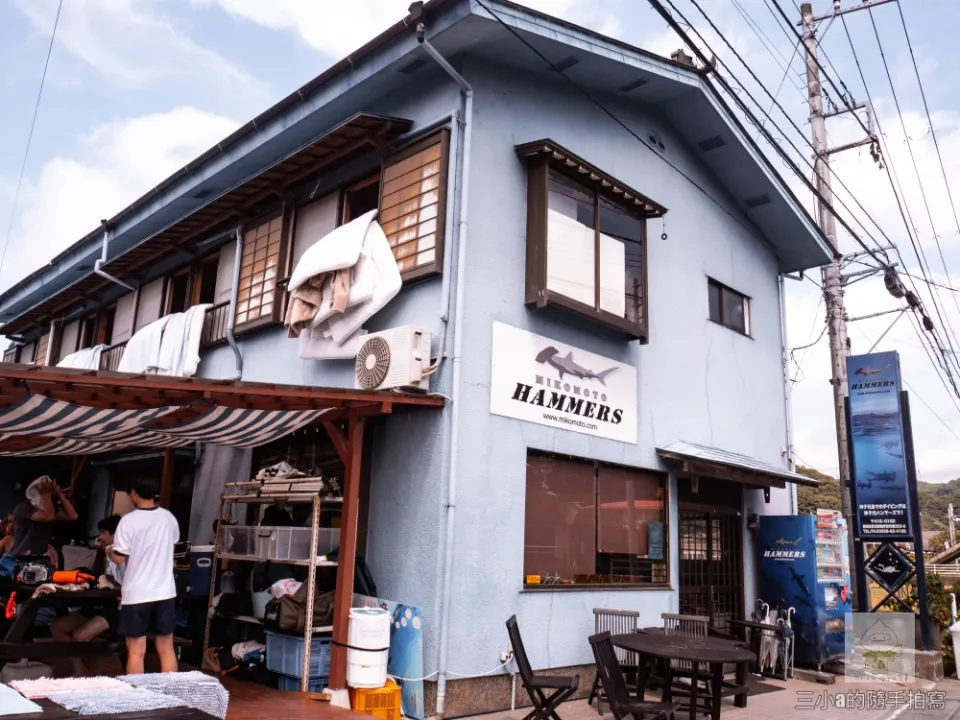
The exterior of the dive shop — compact and welcoming.
How to Get to Southern Izu
How do you get from Tokyo to the southern Izu area? If you're travelling to Japan with a full set of dive gear, the most convenient option is to rent a car and drive from Tokyo. Loading all your heavy equipment straight into a car is simply the easiest approach. It takes roughly 3.5 hours from central Tokyo to your destination. Once you're there, having a car makes it much easier to get around, check into accommodation, pop into a convenience store, or find a restaurant — you won't be limited by transport options.
If driving isn't an option, you can take the limited express train "Odoriko" from Tokyo Station, or the more luxurious "Super View Odoriko," riding all the way to the final stop at Izukyū-Shimoda Station without any transfers. The journey takes around 2.5 hours, though accommodation options near the station are more limited and tend to be pricier.
「神子元ハンマーズ」 offers a free shuttle service to and from Izukyū-Shimoda Station. The ride from the station to the dive shop takes about 10–15 minutes. The shop is right on the roadside, with a convenience store within walking distance. The building is a two-storey house — the ground floor houses the dive shop and the second floor is a guesthouse. For those who can't drive, staying on-site is a convenient option if you don't mind sharing bathroom facilities. A signboard on the ground floor displays the day's lunch menu and the shuttle departure times.
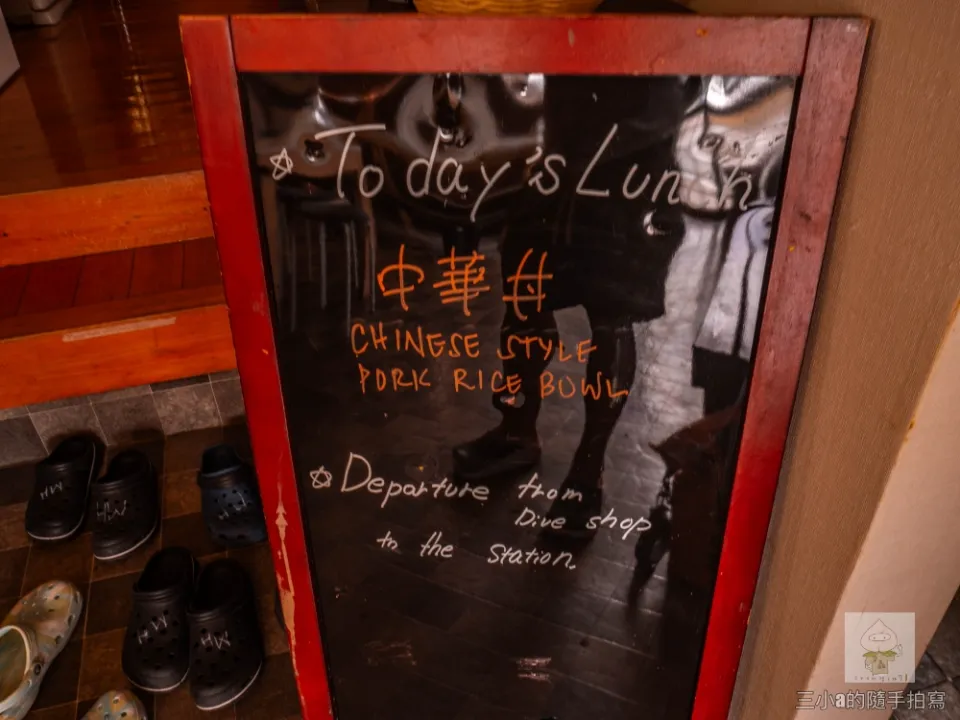
The signboard lists the day's lunch menu.


Pre-Dive Briefing
Before heading to the harbour, staff will conduct a briefing at the dive shop, covering group assignments, your assigned dive guide, and where to stow your gear on the boat. All of this information is displayed on the whiteboard inside 「神子元ハンマーズ」.
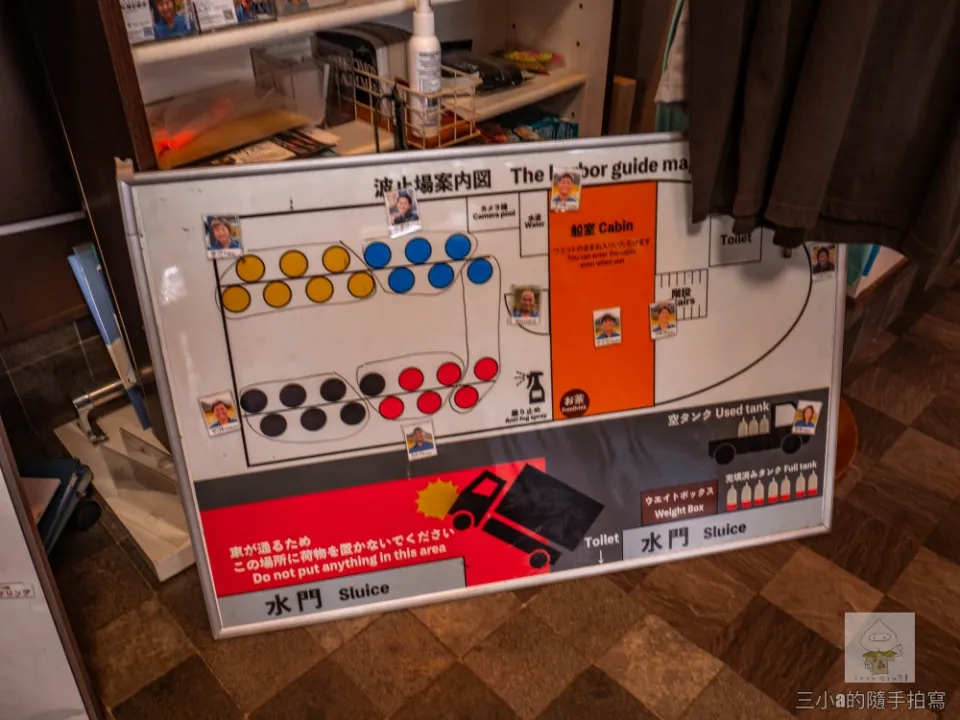
A layout diagram of the dive boat — you can spot Japanese thoroughness in even the smallest details.
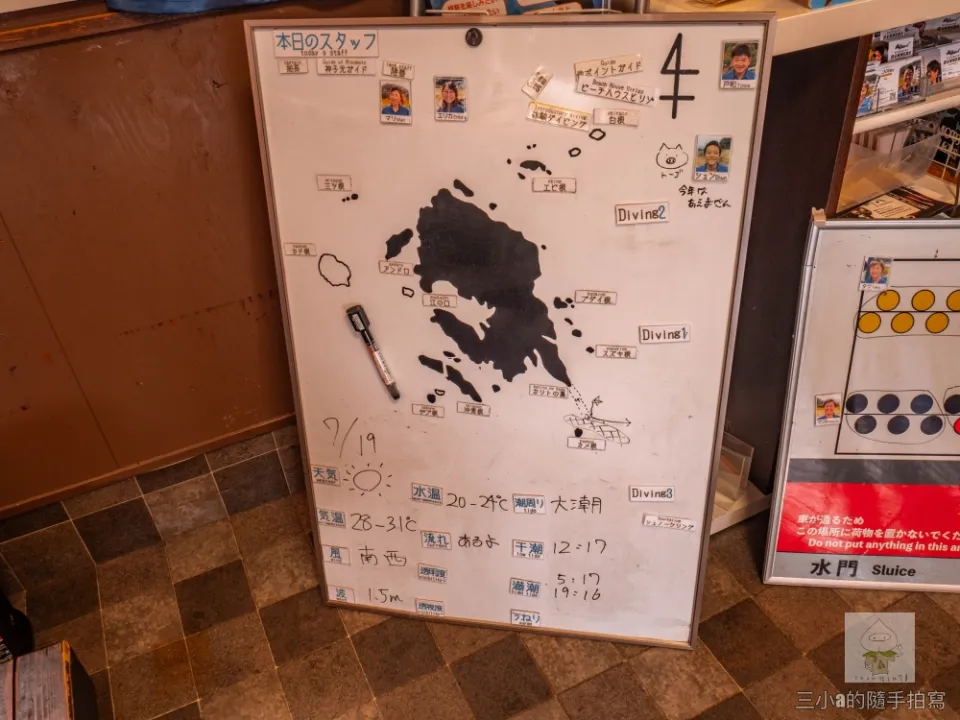
Seeing a water temperature of 20°C made me shiver just a little…
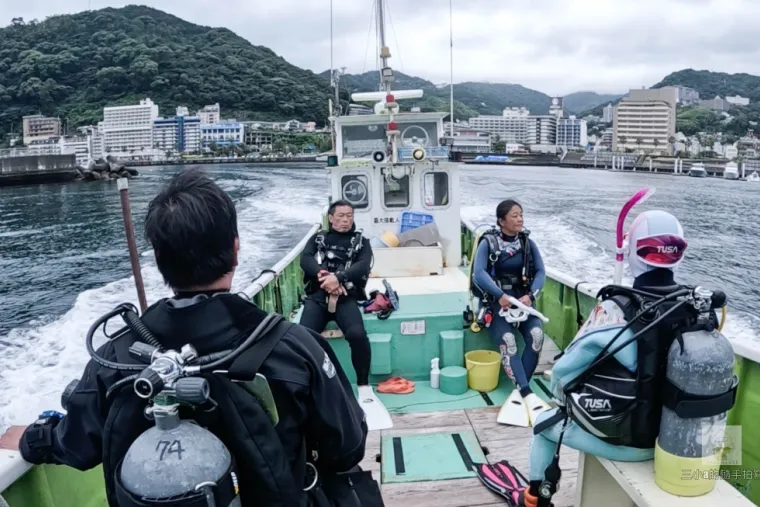
The harbour is about a 5–7 minute drive away. The dive boat is compact, accommodating up to 26 divers and their scuba tanks at a time. The stern is fitted with an automatic lift platform, so when you surface and are ready to board, you simply step onto the platform — no need to remove your fins or climb a ladder first. The diving style here is also a bit different from what you might be used to in Taiwan or the Philippines.
When there are many divers, they are typically split into an early group and a late group. The early group does dives one and three, while the late group does dives two and four, staggering the timing. The slight inconvenience is that after each dive, everyone must carry their gear back ashore to make way for the next group to load up. That said, if the number of guests is smaller and conditions allow, it's also possible to do three consecutive dives before taking a break.
Japan places enormous emphasis on "safety," and diving practices here are correspondingly conservative. Typically, after 30–35 minutes into the dive, regardless of how much air remains, everyone must follow the dive guide's signal and begin ascending for the safety stop.
An Intermediate-to-Advanced Dive Site — The Hammerhead Shark Storm
A special note for anyone planning to visit Mikomotojima to experience the Hammerhead Shark storm: because this is a drift diving site, it is strongly recommended that you hold an Advanced Open Water Diver (PADI cert) certification and have 30+ dives of experience, as well as the ability to take care of yourself underwater.
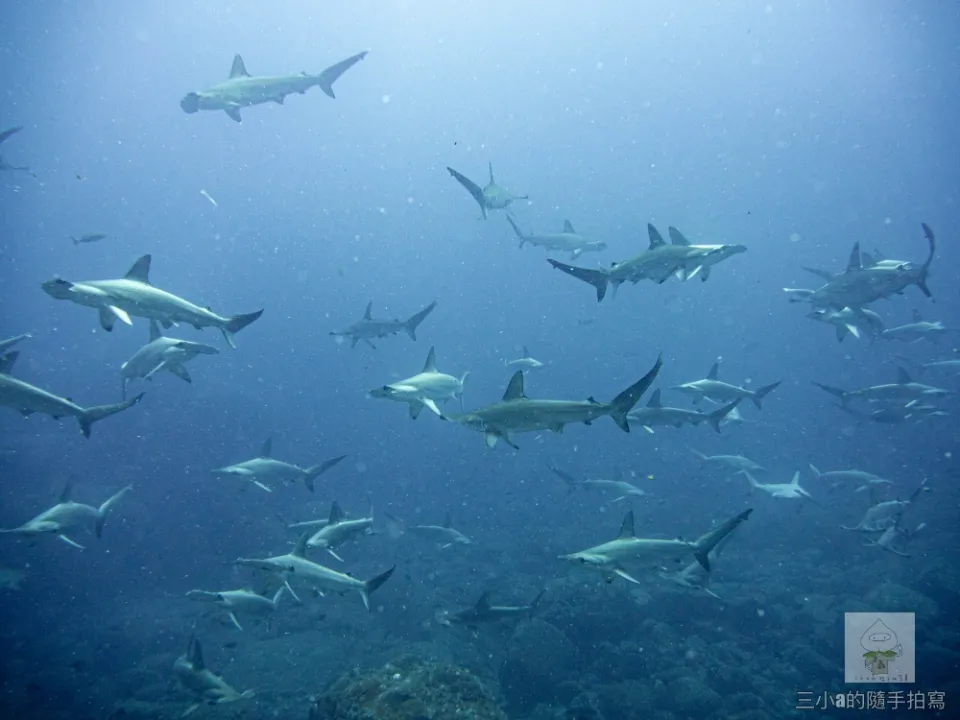
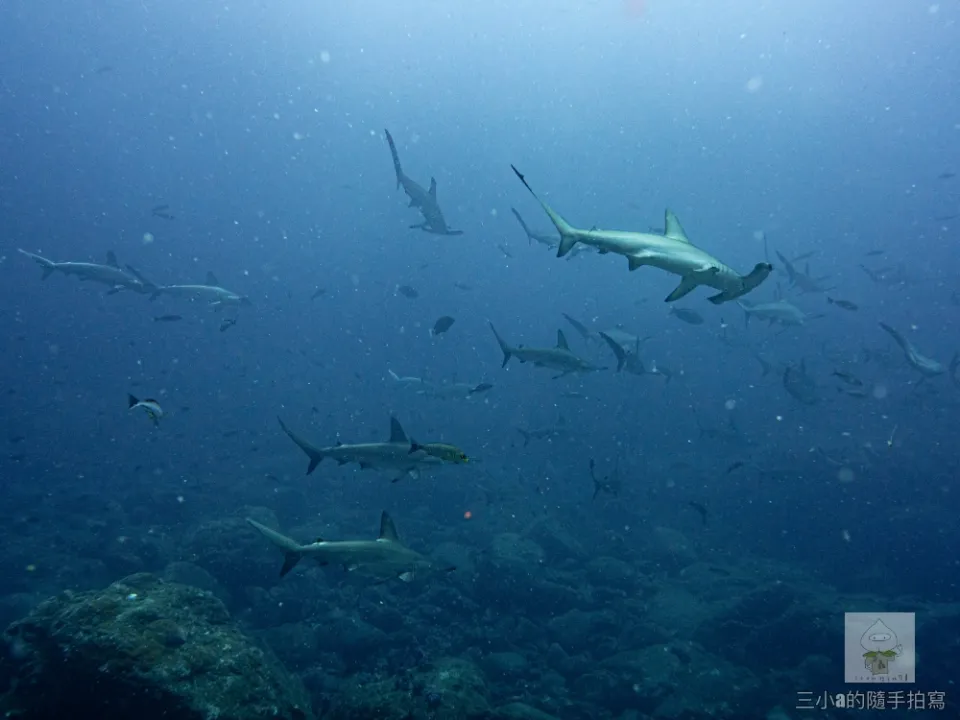
Hammerhead Sharks swirling all around — those big eyes are absolutely adorable.
When it's time to enter the water at the dive site, you cannot dawdle, as it will delay the next group's entry. Once everyone has gathered on the surface, the descent is quick, so if your ear equalization is slow, you may want to practise before making the trip.
When packing your gear back in Taiwan, remember to pack your gloves — when there's a strong current or when you need to get close to the Hammerhead Shark school, you'll need to grip the sandy bottom or reef rocks, and gloves will protect your hands from being cut. In the week before I departed, a friend of a friend had just returned from the same spot and had gone down four times over two days without spotting a single Hammerhead Shark, which made me a little nervous. Fortunately, luck was on my side — over two days and three dives, my sighting rate was 100%. I'll be honest, I almost got a little tired of seeing Hammerhead Sharks (just kidding).
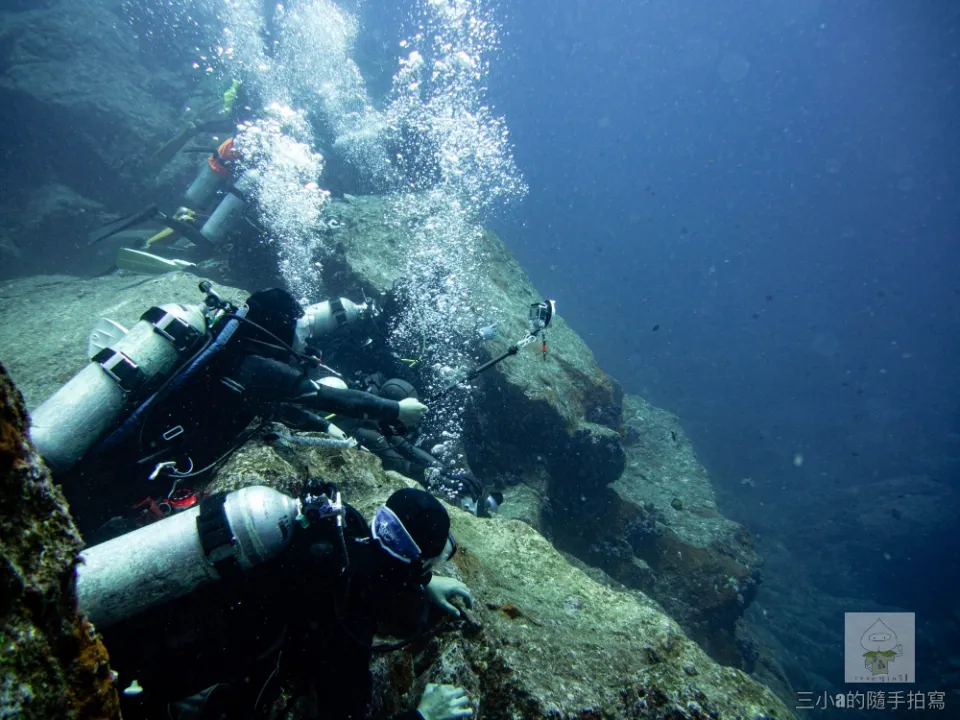
When the current picked up, the dive guide signalled us to hold onto the reef and wait.
On the way back to the harbour after diving, it's customary that if everyone on the boat spotted Hammerhead Sharks, the crew will ask each person to make fists and hold them up beside their temples for a group photo — they call it the "Hammer Pose." For a July visit, water temperatures are around 23°C, with the occasional cold current dipping to around 20–21°C, so a 5mm wetsuit is recommended. Also, although the boat ride from the harbour to Mikomotojima only takes about 15 minutes, the swell can be quite significant — it's wise to bring seasickness medication just in case.
Unlocking the Hammerhead Shark storm demands cold-water endurance, seasickness resilience, and the physical stamina to battle strong currents!
A Deeply Satisfying Journey Home
If you're in the early group and complete two dives, you'll typically be back at 「神子元ハンマーズ」 by around 1 p.m. There's a rinse tank just outside the shop where you can start washing your gear and hang everything up to dry in the sun.
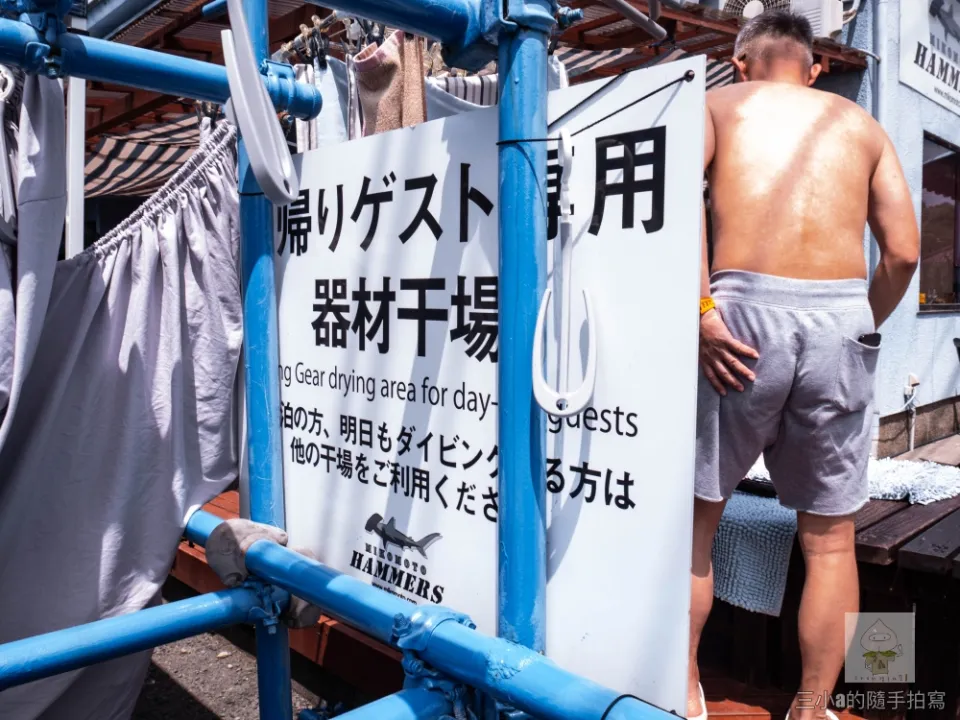
The gear-hanging area, clearly labelled "器材干場" (Equipment Drying Area).
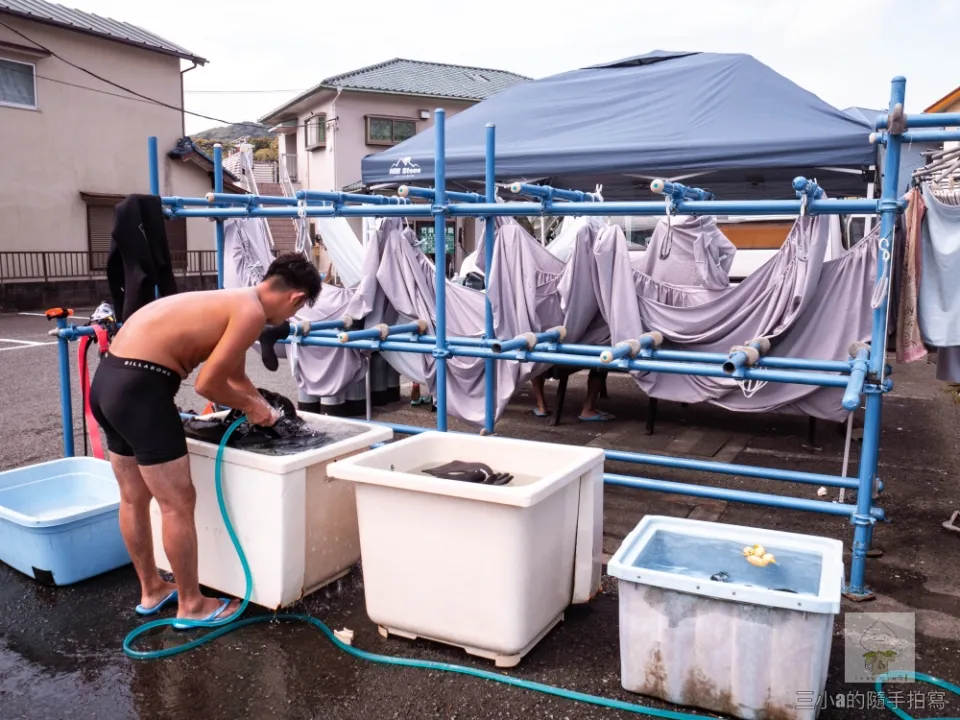
In addition to rinse buckets for a quick initial clean, there are also racks where you can hang your gear up to dry.
After rinsing your gear and freshening up, 「神子元ハンマーズ」 arranges a post-dive briefing led by your group's dive guide. Using diagrams and written notes, the guide introduces the names and characteristics of the dive sites and draws the dive route so divers can fill in their dive log. The "A-point" marked on the map is the spot with the highest Hammerhead Shark sighting rate. On my first dive, we encountered a strong current right after descending, so for safety we went with the drift diving flow instead — and saved the Hammerhead Shark hunt for the second dive.
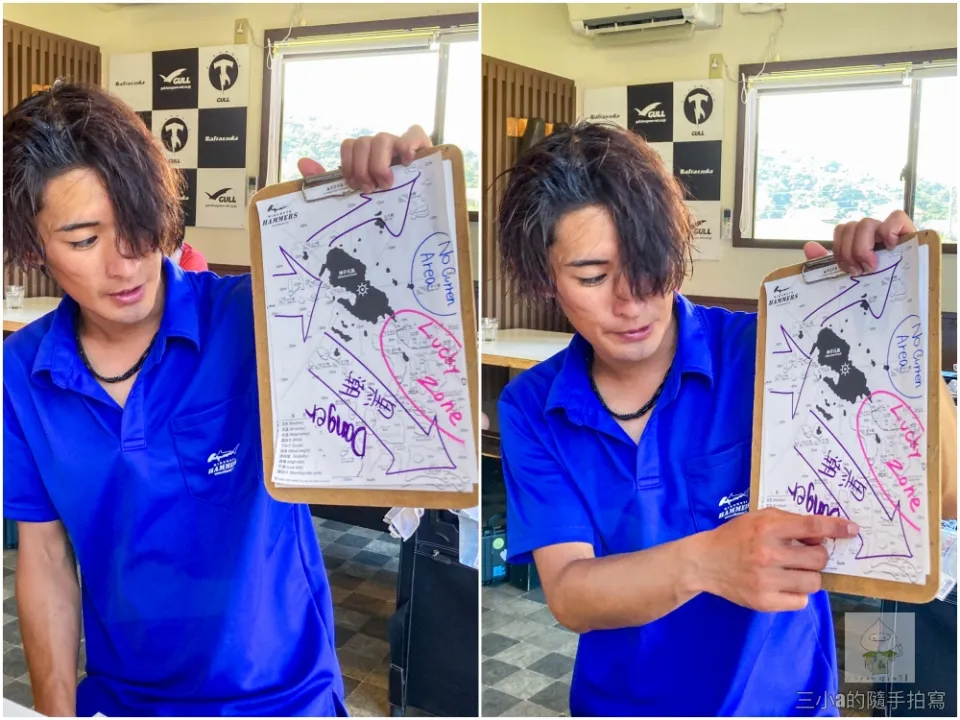
The dive guide explaining everything so earnestly — honestly looked like someone straight out of a commercial. So cool!
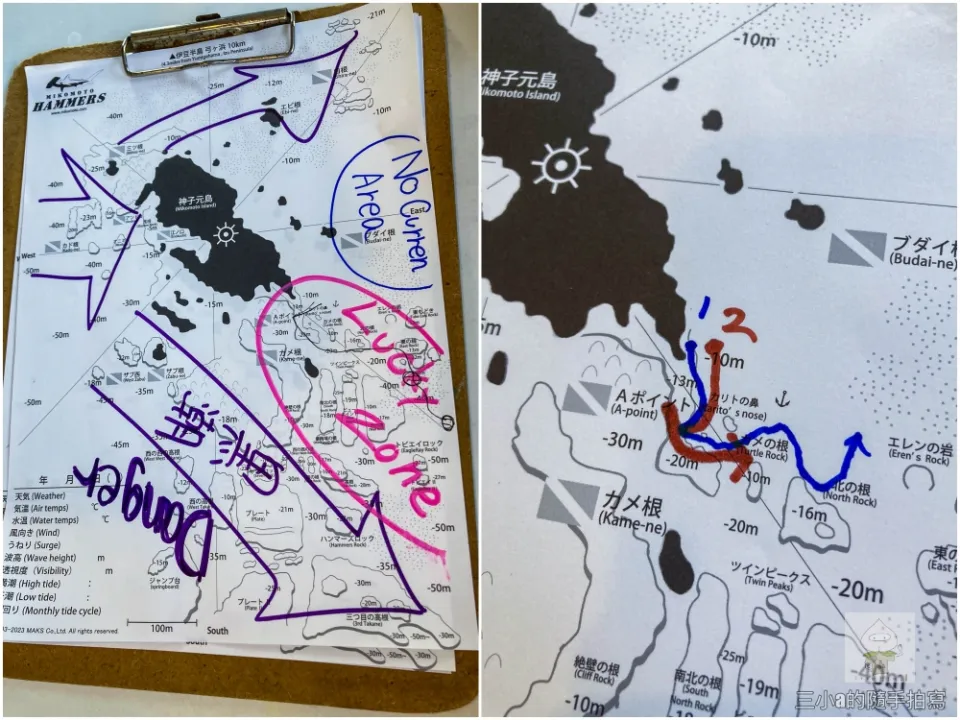
Safety first — guess we'll try our luck again next time!
There's also a box of stamps on the table, each bearing a staff member's name. After filling in your paper dive log, you can stamp it as a souvenir. The shop also sells related merchandise and T-shirts — if you're interested, don't forget to grab something to remember the trip by!
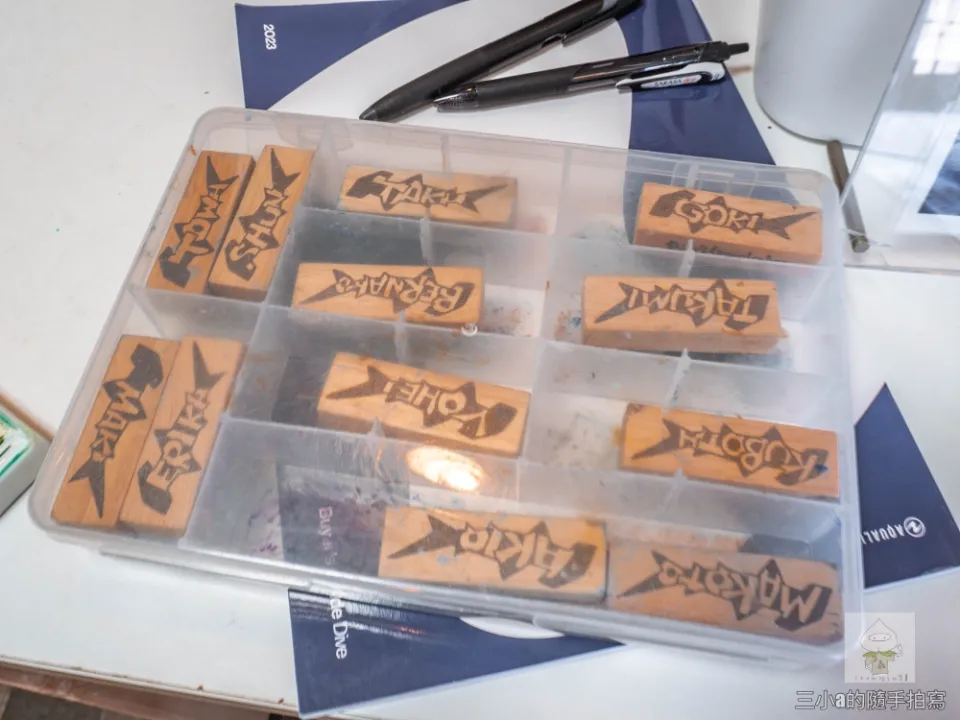
Custom name stamps for each staff member — stamp your dive log as a keepsake!
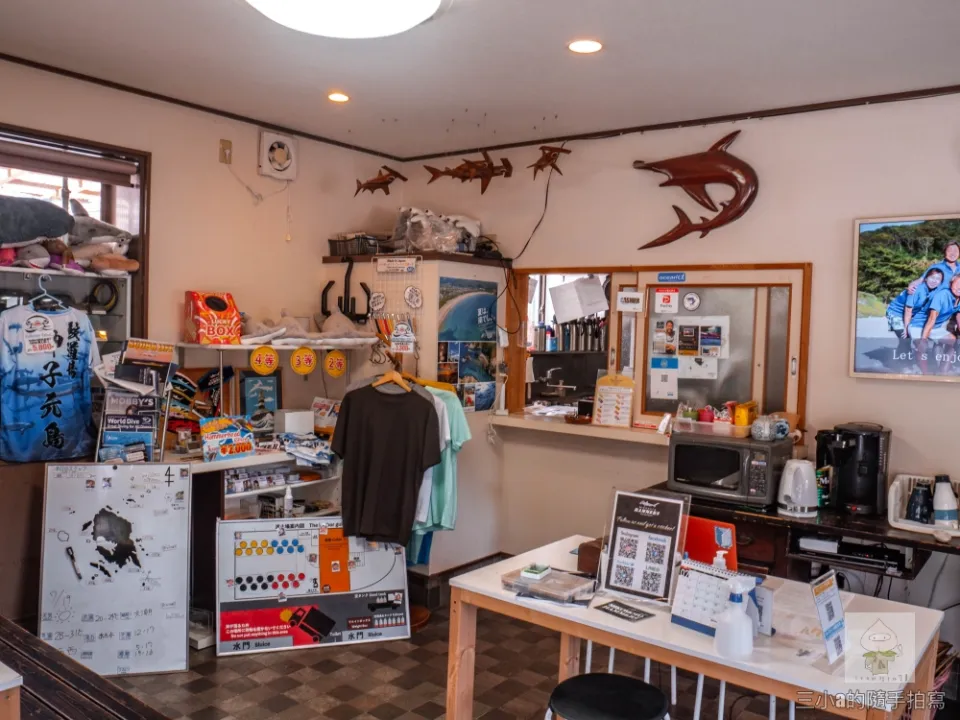
The shop sells all sorts of souvenirs — I nearly emptied my wallet!
Full article reprinted from: 3小a的隨手拍寫
Further reading:
- 【娘娘不要走,環遊世界ing】Snorkelling in the Galápagos and Spotting Hammerhead Sharks — A Day Trip to Galapagos Islands
- Downwellings, Washing-Machine Currents, and Deadly Currents — How to Stay Calm When You Encounter a Strong Current
- Kyo-tarou Sensei Teaches You How Not to Be a Problem Diver When Diving in Japan
- 【A Taiwanese Woman's Secret Okinawa Dive Spots】Yonaguni — First-Hand Account of Hammerhead Shark Storms and Underwater Ruins
- 【Must-Read for Divers】Always Getting Turned Down When Trying to Join a Dive Group? How to Become a Self-Sufficient Diver
Frequently Asked Questions
How is a BlueTrend dive trip different from an unknown, no-name dive group?
Choosing us means full peace-of-mind protection and a smooth experience from start to finish. Every trip we run holds to three things.
First, full legal protection and a professional dive leader: we strictly follow Taiwan's travel regulations and provide complete travel-agency liability insurance, travel insurance, trip-inconvenience insurance and dive insurance. Every group is accompanied by a certified, foreign-language dive leader who joins you on both the dives and the land itinerary, liaising seamlessly with local dive shops and operators on your behalf to keep things running smoothly — the person our travellers trust most.
Second, fully licensed with secure payments: every payment goes into a licensed travel agency's account, with multiple safe payment channels (bank transfer, credit card and more) and a legal collect-and-remit receipt, so every transaction is open, transparent and protected, avoiding the fraud and dispute risks of transferring money privately to an individual.
Third, hand-picked quality we vet in person: every trip, dive site and partner shop is scouted on the ground by our own team, from the guides' professionalism and safety standards to the food, lodging, environment and service details on land, all vetted by us so you don't get caught out.
I want to sign up for a dive trip. Are there certification-level or logged-dive requirements?
Each dive site is different, so the entry bar varies. 'Bali Tulamben', for instance, is relatively beginner-friendly. 'Malapascua in the Philippines' is also beginner-friendly, but since thresher sharks tend to cruise between 20 and 30 metres, we recommend AOW certification with 20+ logged dives to enjoy this trip comfortably. For 'the Maldives' or 'Palau', we suggest AOW with 50+ logged dives for a more relaxed experience. If you're not sure whether your experience fits the trip you want, message us and our dive editors will assess it and help you find the trip you'll feel safest on.
Can I join if I'm signing up alone? How are rooms arranged?
Plenty of our travellers sign up solo! For rooms and beds, we prioritise pairing you with a same-gender traveller, and if you'd rather have your own space you can pay the difference to upgrade to a single room. For the diving, our professional leader will pair you with a suitable buddy, and with the happy vibe on our trips you'll quickly make a great group of dive friends. Many people sign up alone, make new friends, and end up organising the next trip together!
Does the trip fee include dive insurance, gear rental, taxes and instructor tips?
It depends on the trip, the destination's regulations and the local operators. Every BlueTrend dive trip has a detailed web page with a clear 'included / not included' list, transparent and with no hidden charges. All payments are collected by a licensed travel agency, with a standard-form contract for your protection.
I'm a new diver / haven't dived in a long time — will I fall behind the group?
Before you complete your booking, our team assesses a suitable trip based on your certification level and experience. Before departure, we strongly recommend taking time to refresh in Taiwan with an instructor, or a fun dive to get your feel back. On the trip itself, our professional dive leader groups and pairs everyone by experience, keeps a close eye underwater on travellers who need extra care, and steps in to help right away.
Will the photos and videos taken during the trip be shared with us?
During the dives, 'safety' is always the leader's top priority, so whenever it's suitable and safe the leader will capture great shots and record the best moments. During or after the trip, we compile a cloud album for all travellers to download, so you go home loaded with memories!
Besides your scheduled trips, can you arrange a private group charter or independent travel for me and my friends?
Absolutely! Besides group trips, we also arrange private group charters and independent travel. We can communicate, enquire and coordinate services with local operators based on your needs, saving you time and effort and taking the language barrier off your plate, to tailor the smoothest, most reassuring dive trip just for you. Contact our LINE support and our editors will arrange it for you!