Contents(12)
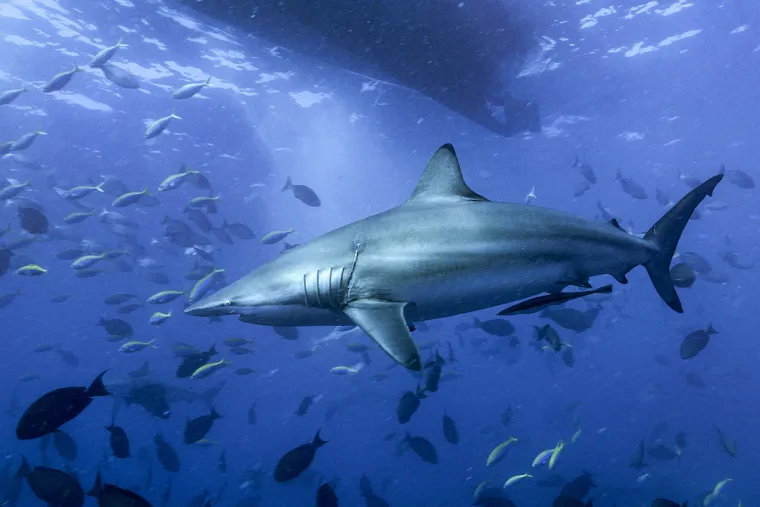
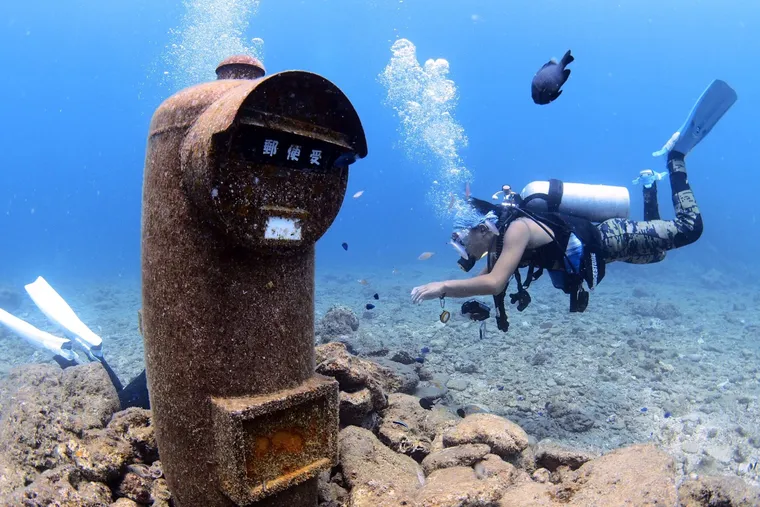
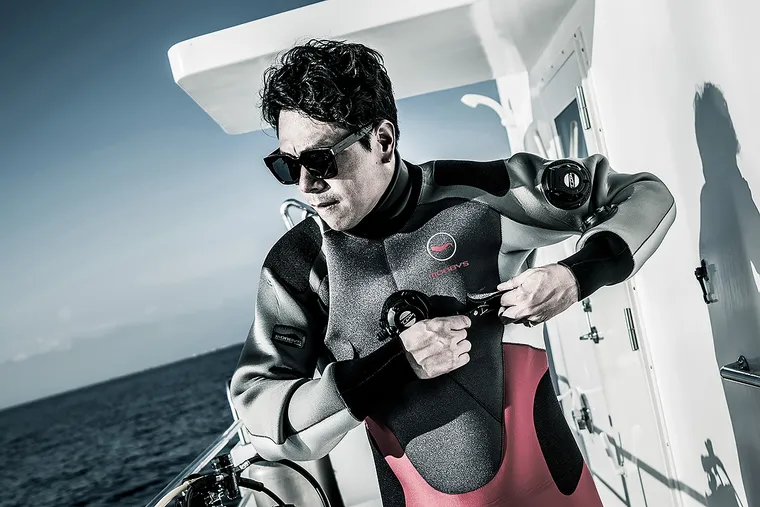
Maldives scuba diving is famous for offering encounters with an incredible variety of large marine life all in one trip. While staying at a one-island, one-resort property is undeniably luxurious, if you're serious about diving, a liveaboard is the only way to go — it lets you rest between dives while relocating to the next dive site across different atolls. With as many as 80 liveaboard vessels operating in the Maldives, how do you pick one that's comfortable and keeps the fun going all trip long?
Maldives 101:
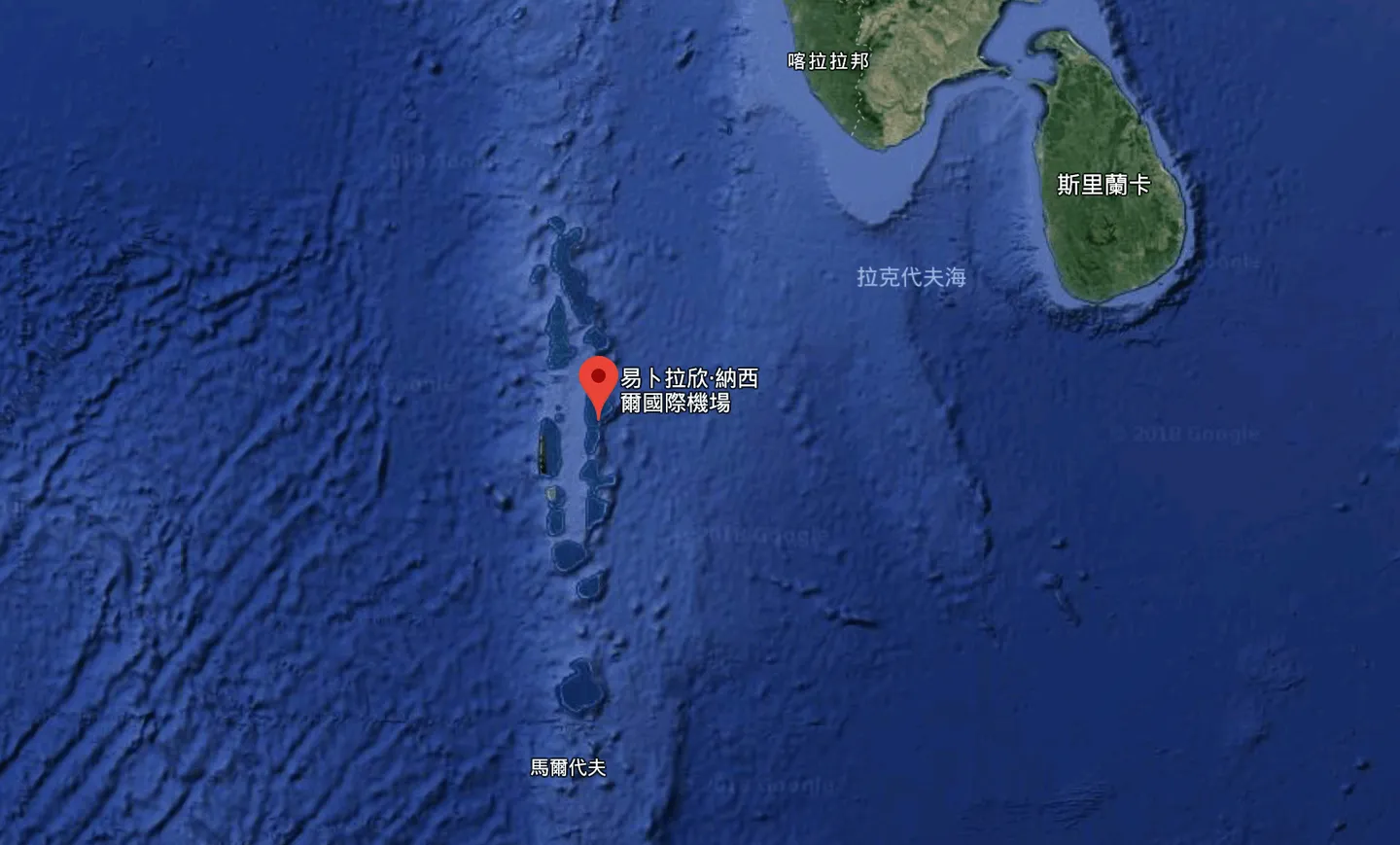
Malé's international airport sits roughly at the centre of the island chain.
The Maldives is a sprawling archipelago in the western Indian Ocean — often described as pearls scattered across the sea by God. It comprises 26 atolls and 1,192 islands arranged in a long, narrow chain roughly 120 km wide and 820 km long from north to south, which is precisely why liveaboards are so essential for getting around.
The capital, Malé, sits alongside the airport island, and the two are now connected by a cross-sea bridge. Around 200 of the Maldives' islands are inhabited, so dive itineraries often include stops at local residential islands — bring your camera and soak up everyday island life.


Getting to the Maldives:
Most Maldives liveaboard itineraries depart on Monday and return on Sunday, so pay close attention to your flight times. If you arrive too early or return too late, you'll need to book a night's accommodation in Malé.
Conveniently, Singapore Airlines flights departing Taiwan can reach Malé on the same calendar day. Below are the Editor's reference flights — though flights via Hong Kong or Kuala Lumpur are reportedly cheaper, so it's worth comparing fares. Just don't forget that luggage weight limits are every diver's eternal nemesis; paying excess baggage fees would rather defeat the purpose.
Outbound flights:
SQ 877 Taoyuan 14:10 ~ Singapore 18:55
SQ 453 Singapore 20:35 ~ Malé 22:10
Return flights:
SQ 451 Malé 23:25 ~ Singapore 07:10
SQ 878 Singapore 11:40 ~ Taoyuan 16:30
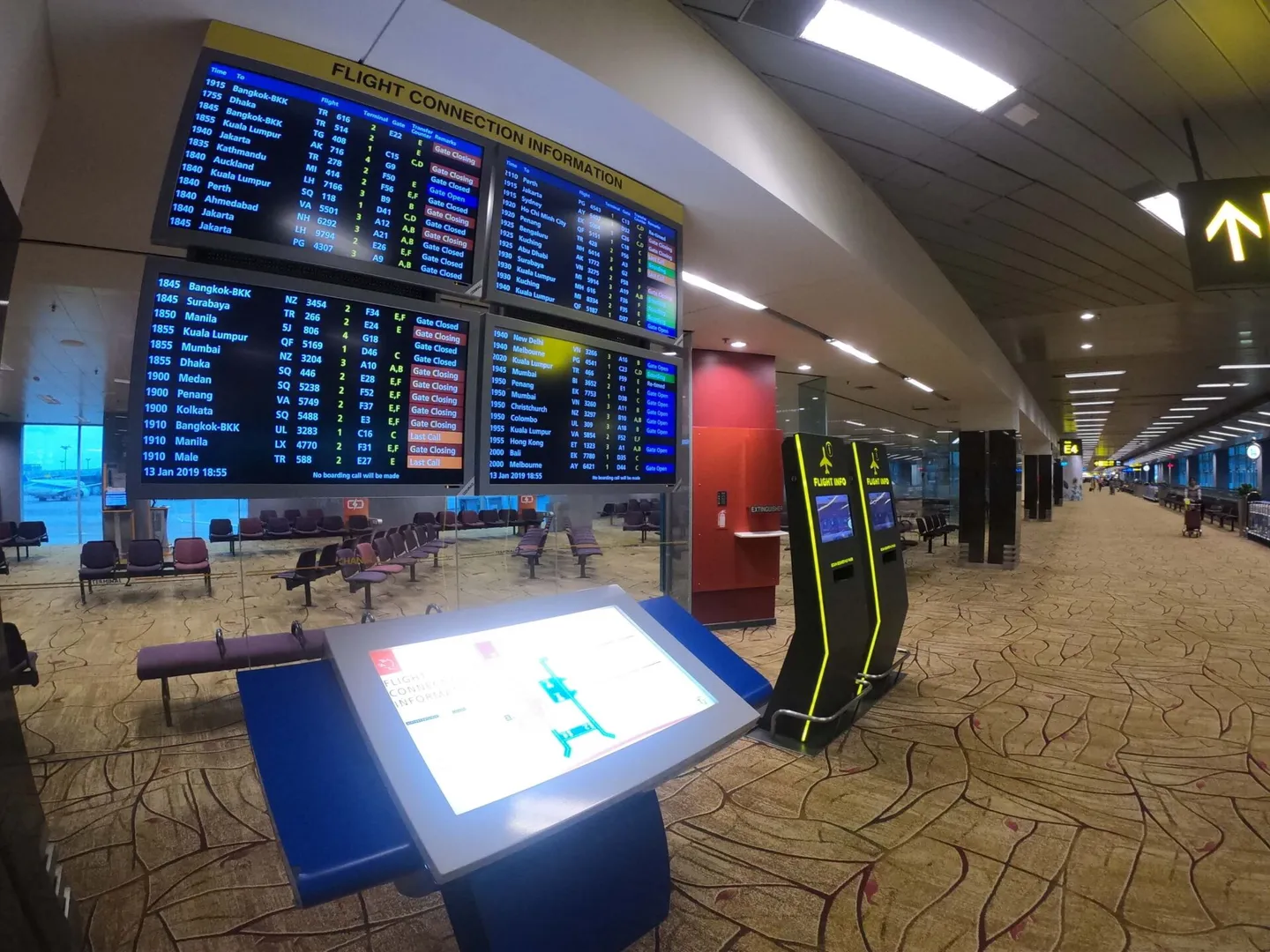
Using a Kiosk multimedia terminal to check connecting flight information is very handy.
After arriving in Singapore, don't forget to double-check your connecting flight details on the departures board or one of the Kiosk terminals along the walkways. Changi Airport has four terminals spread across a vast area, so make sure you head to the right gate.
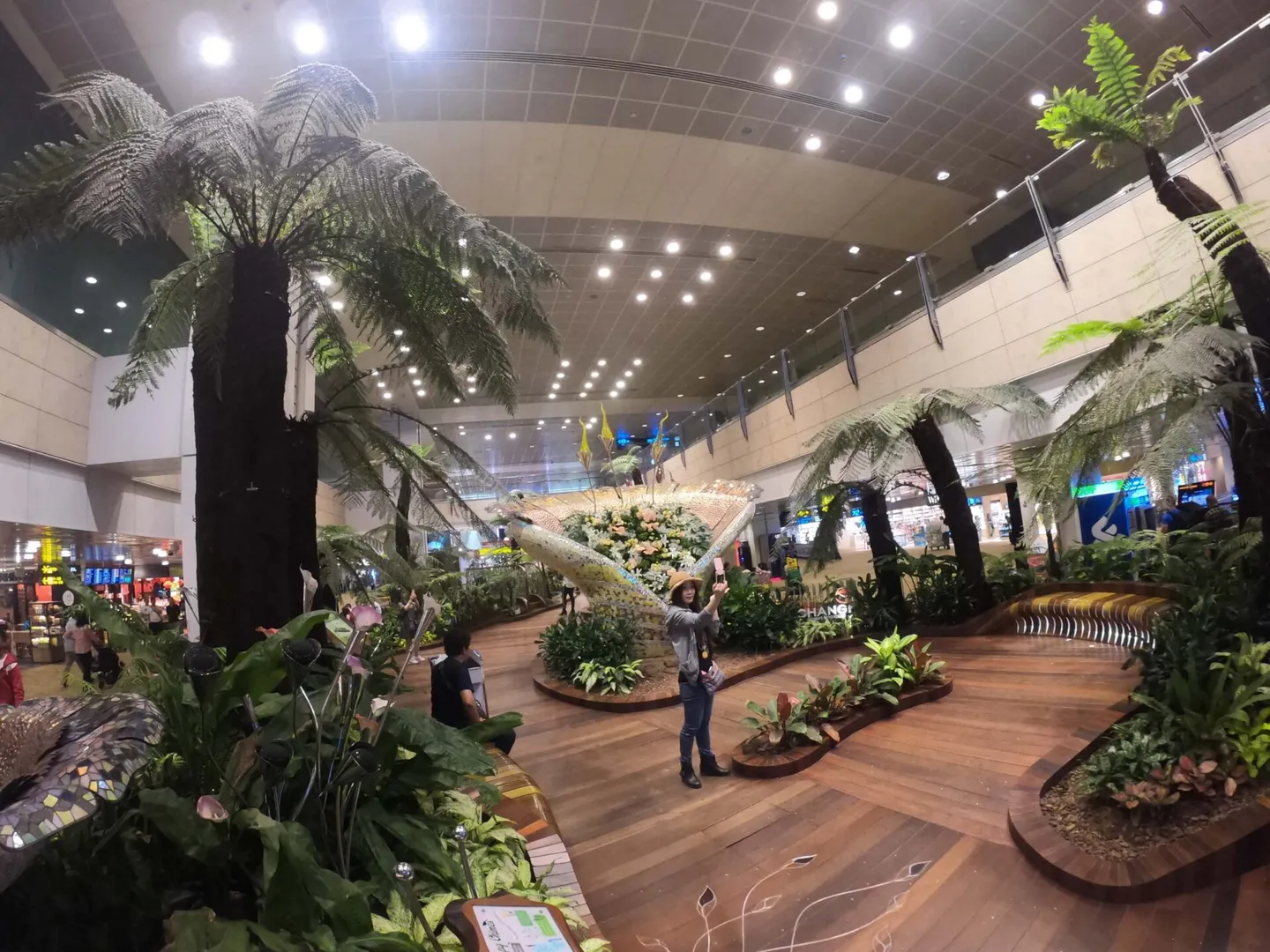
Singapore Airport's tropical rainforest décor makes for great photos.
Changi is also famous for its tropical rainforest installations and an impressive range of must-buy souvenirs, so make good use of your layover time!
Arriving in the Maldives:
Taiwanese passport holders currently do not need a visa to enter the Maldives. Simply collect an arrival card, fill in your personal details along with your liveaboard (or resort) information, and you're good to go.
If you're heading to a resort, you'll see designated resort meeting points as soon as you clear immigration. Our flight arrived in Malé in the evening. Despite being remarkably small — probably even smaller than Penghu Airport — Malé airport handles a staggering volume of passengers. Unfortunately, the airport Wi-Fi is not particularly reliable, so be sure to confirm your flight details with the liveaboard's pickup crew before departure so they can meet you at the exit.
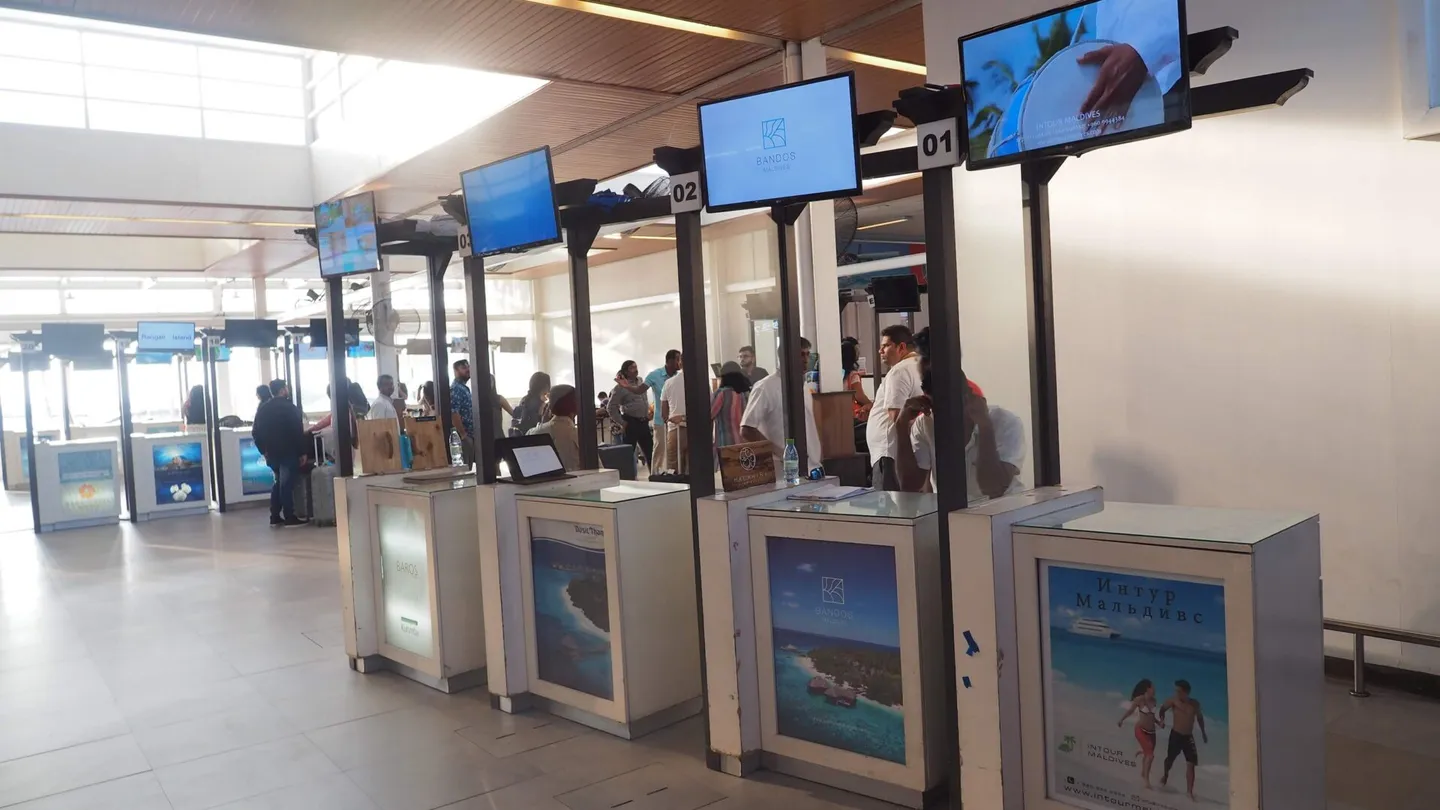
The resort meeting area, photographed on the way back out.
Boarding the Maldives Liveaboard
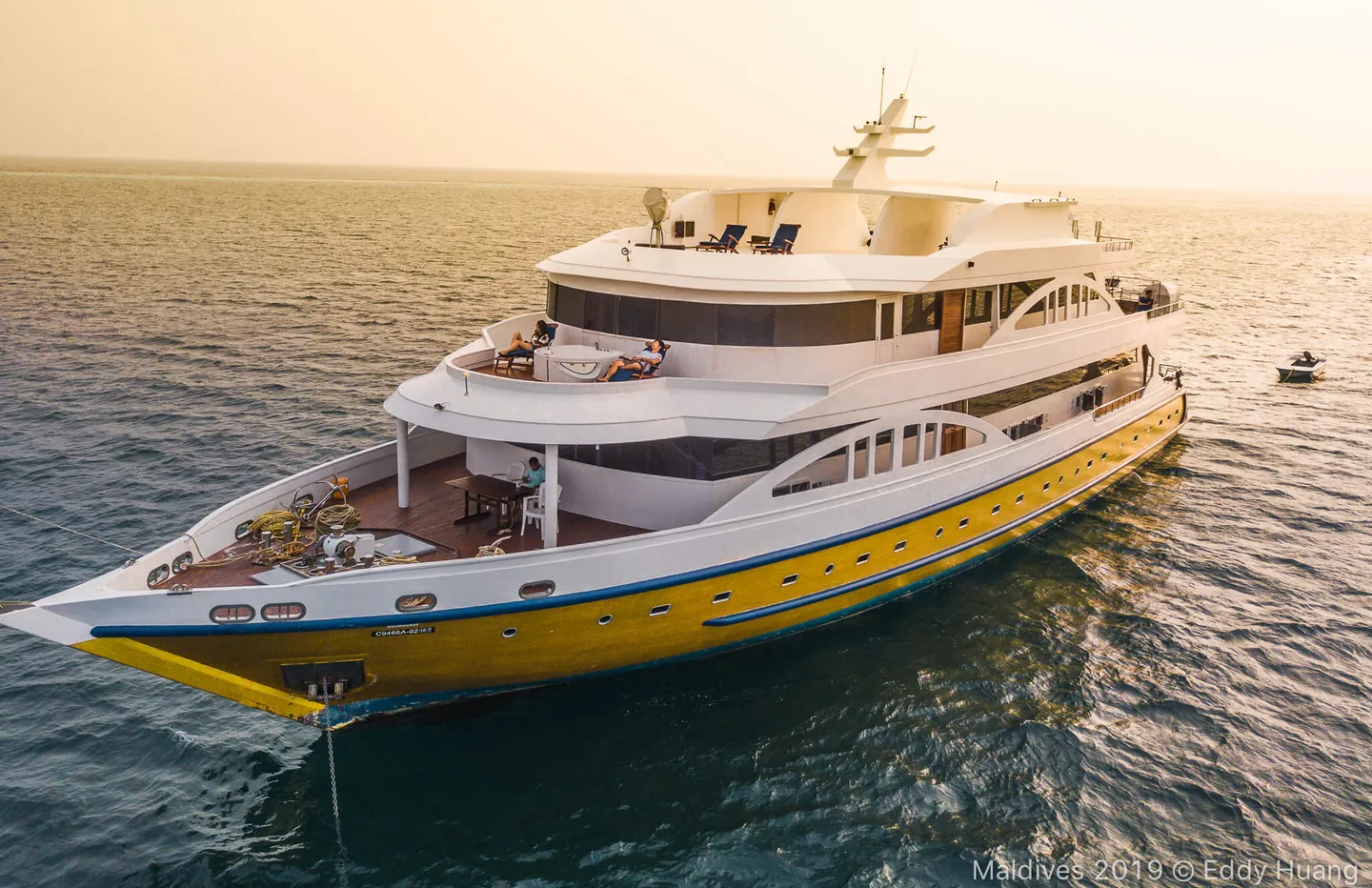
For this trip we boarded a mid-sized liveaboard capable of accommodating 20 divers.
A quick heads-up for fellow divers: although the standard Maldives liveaboard routine is to transfer by tender to the mothership upon arrival and rest up before diving begins the next morning, some operators only allow boarding on Monday morning. This means you may need to plan an extra night of accommodation ashore, so confirm this with your operator before you leave home.
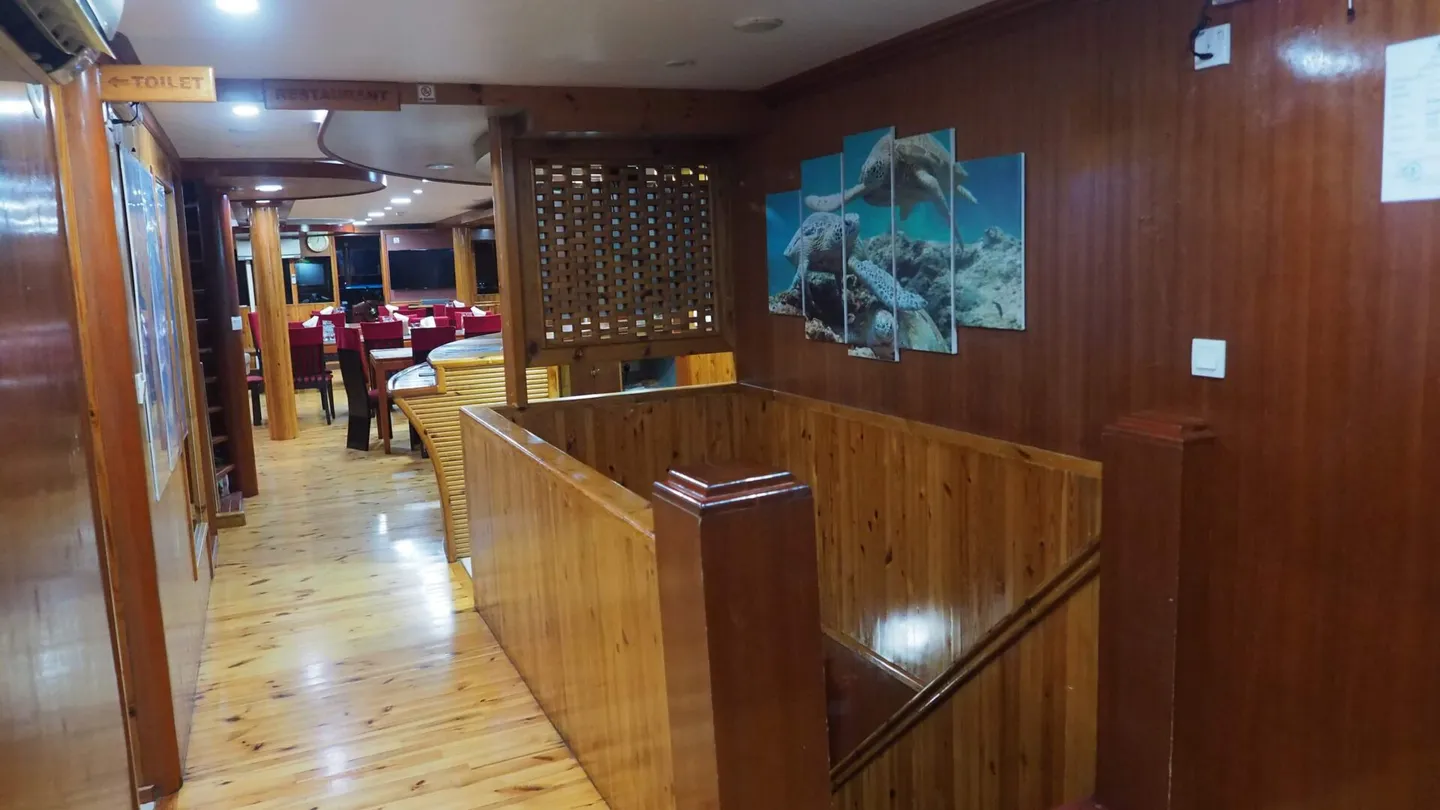
The mothership is very spacious, divided into upper, middle, and lower decks.
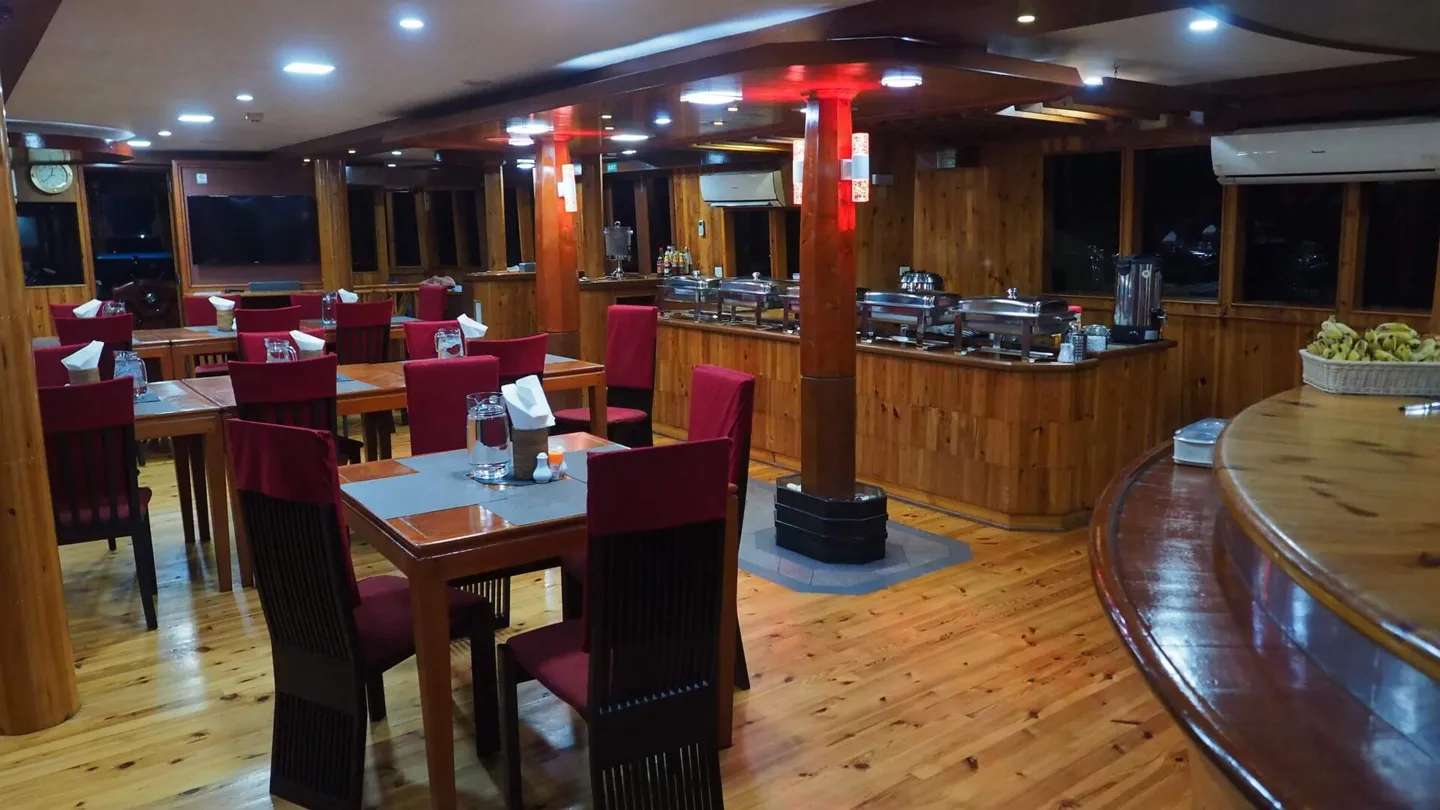
The dining area comfortably seats all 20 divers at once.
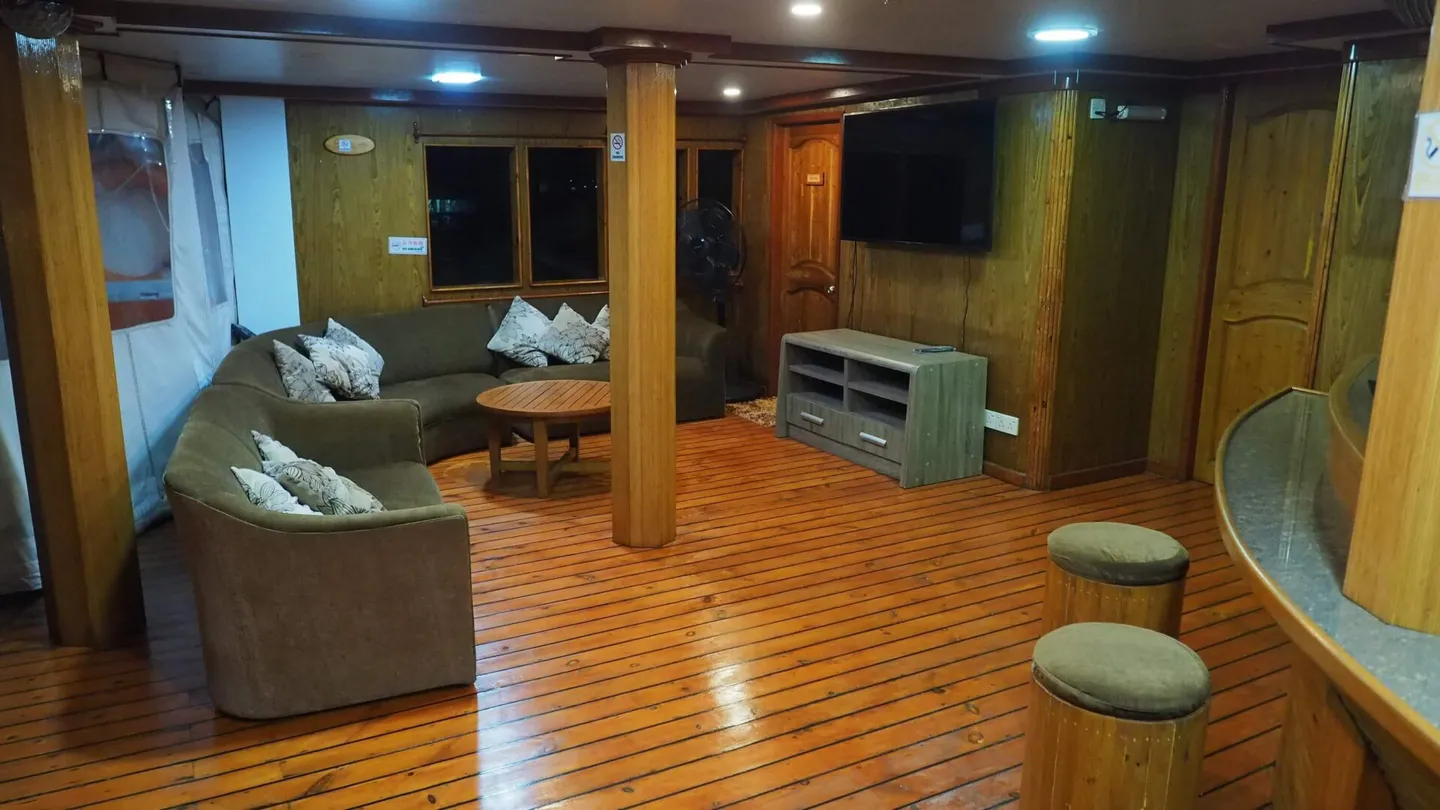
The lounge and bar area on the upper deck.
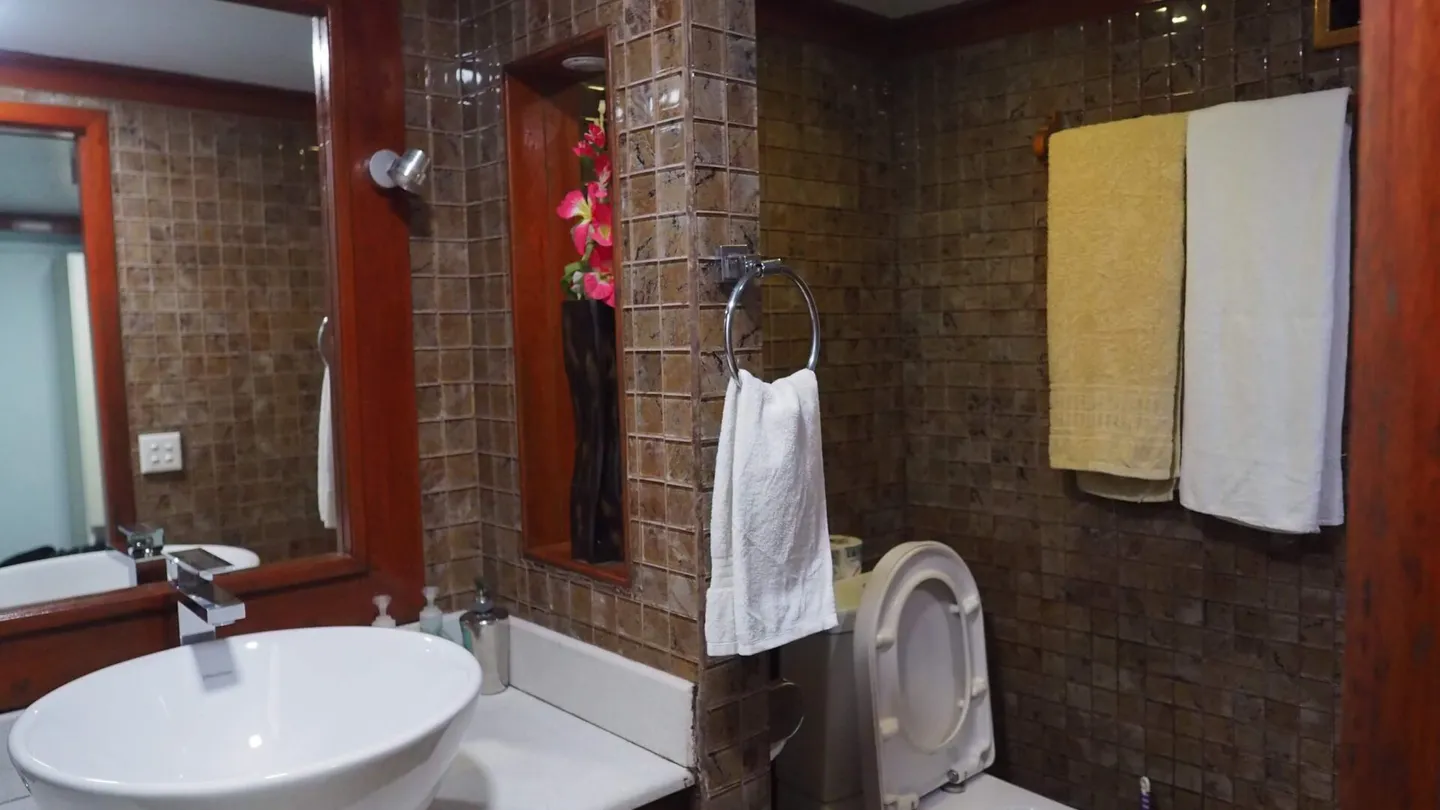
Each cabin has its own private bathroom — compact but fully equipped.
Boarding late at night doesn't make for great photography — everyone was exhausted and headed straight to bed to prepare for the packed diving schedule ahead. That said, here are a few things people tend to ask about:
-
The boat uses a seawater desalinator rather than resupplying at inhabited islands, so there are no water shortage concerns.
-
During the day while you're diving, cabin staff change bed linen and replace bathroom towels.
-
You're welcome to bring your own drinks on board, or purchase from the boat — the owner's prices are very generous.
-
The liveaboard does not sail at night in the Maldives, so engine noise won't disturb your sleep.
-
Seas are calmer within the atolls, but crossing open channels can get choppy — those prone to seasickness should pack motion sickness tablets.
-
Enriched air nitrox (EANx) cylinders are provided at no extra cost throughout the trip — remember to bring your nitrox certification card!
-
Three dives are scheduled per day as standard; the third dive is either a twilight dive or night diving, depending on the route.
-
Wi-Fi is available on board at US$20 per person for the entire trip.
-
A vessel-wide gratuity of US$80 applies, plus a green tax of US$6 per day (US$42 total).
The next morning, you'll have a chance to photograph the boat in daylight — so here are some lovely shots taken by our trip's underwater model!
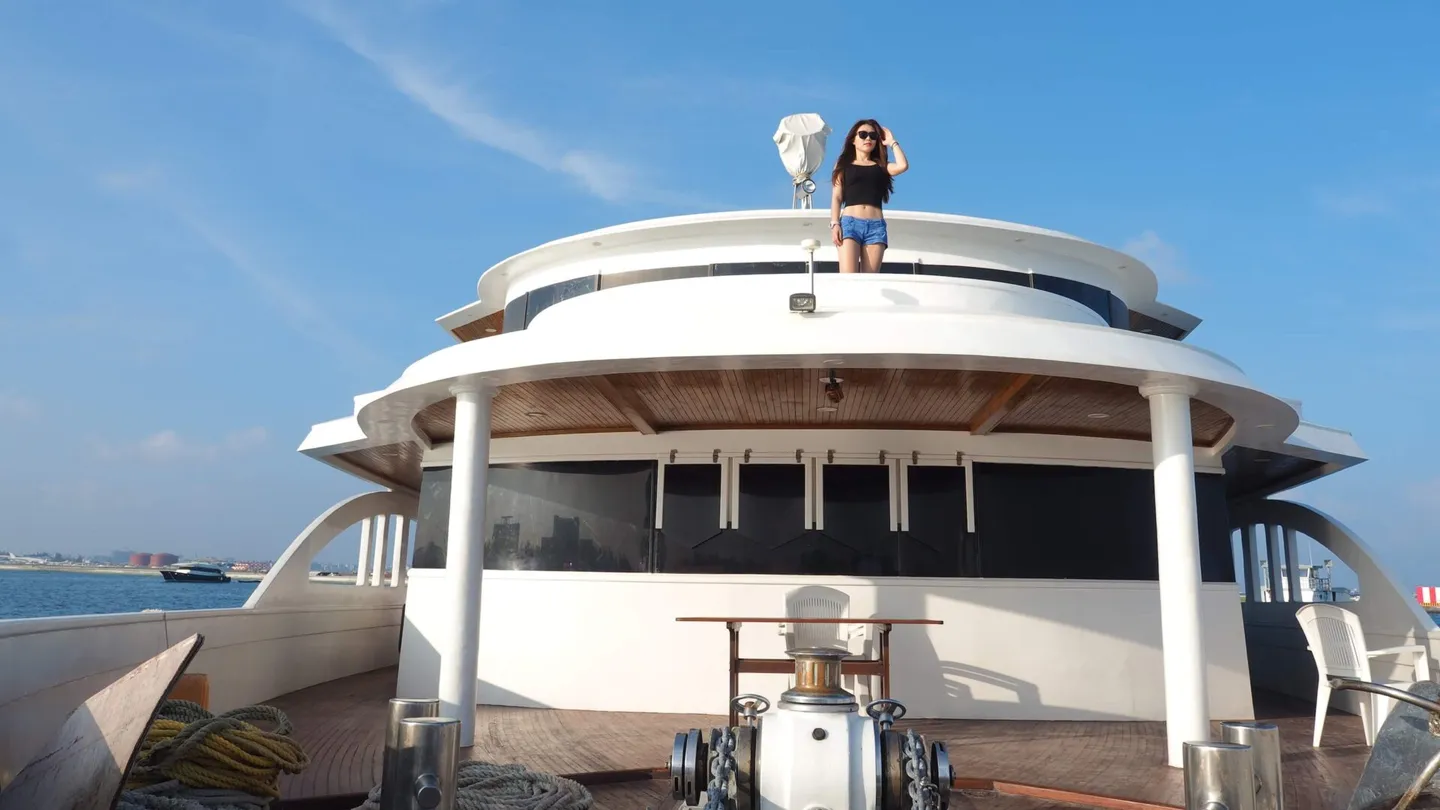
Looking up at the upper deck from the bow netting — the boat is impressively large.
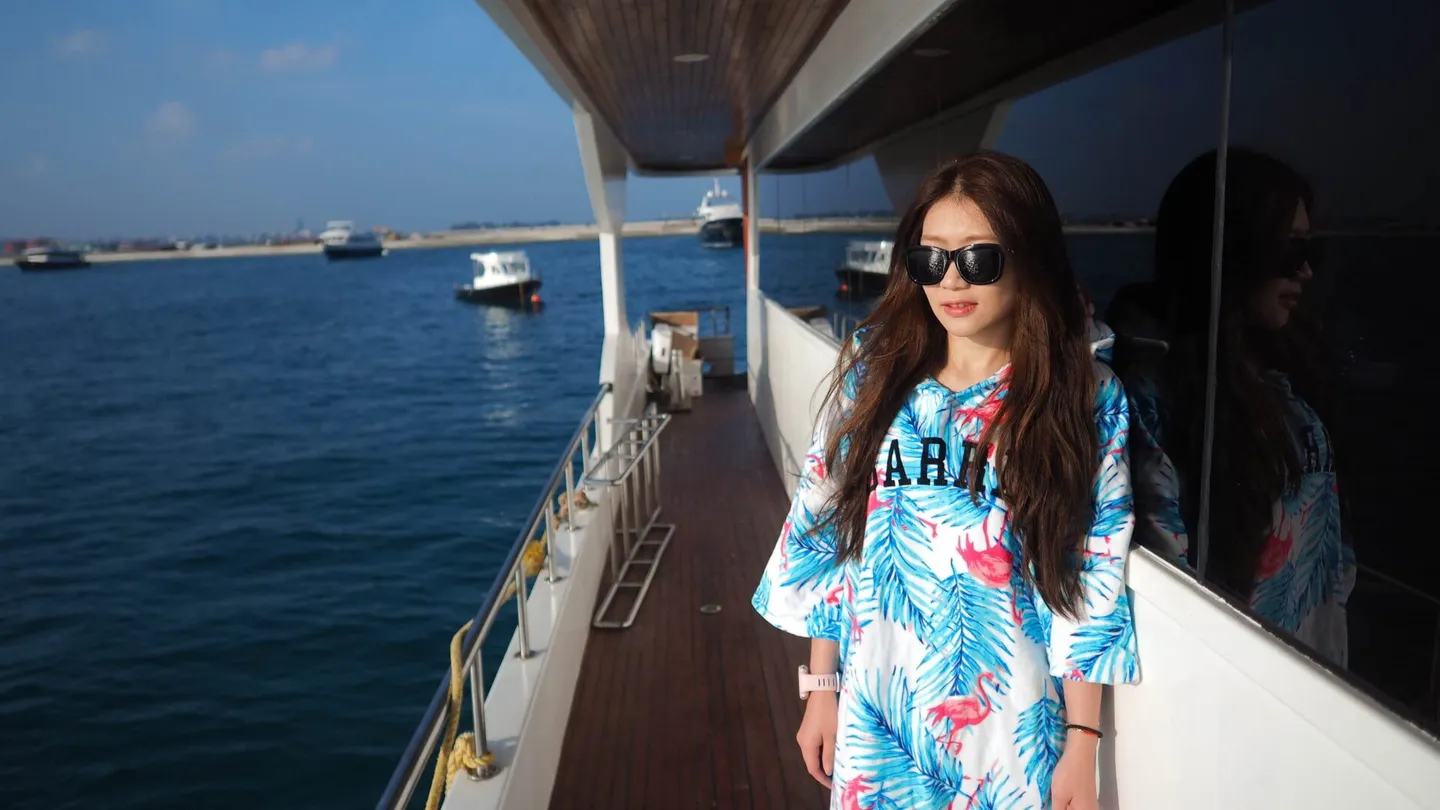
The side deck is the perfect spot for a gorgeous travel photo.
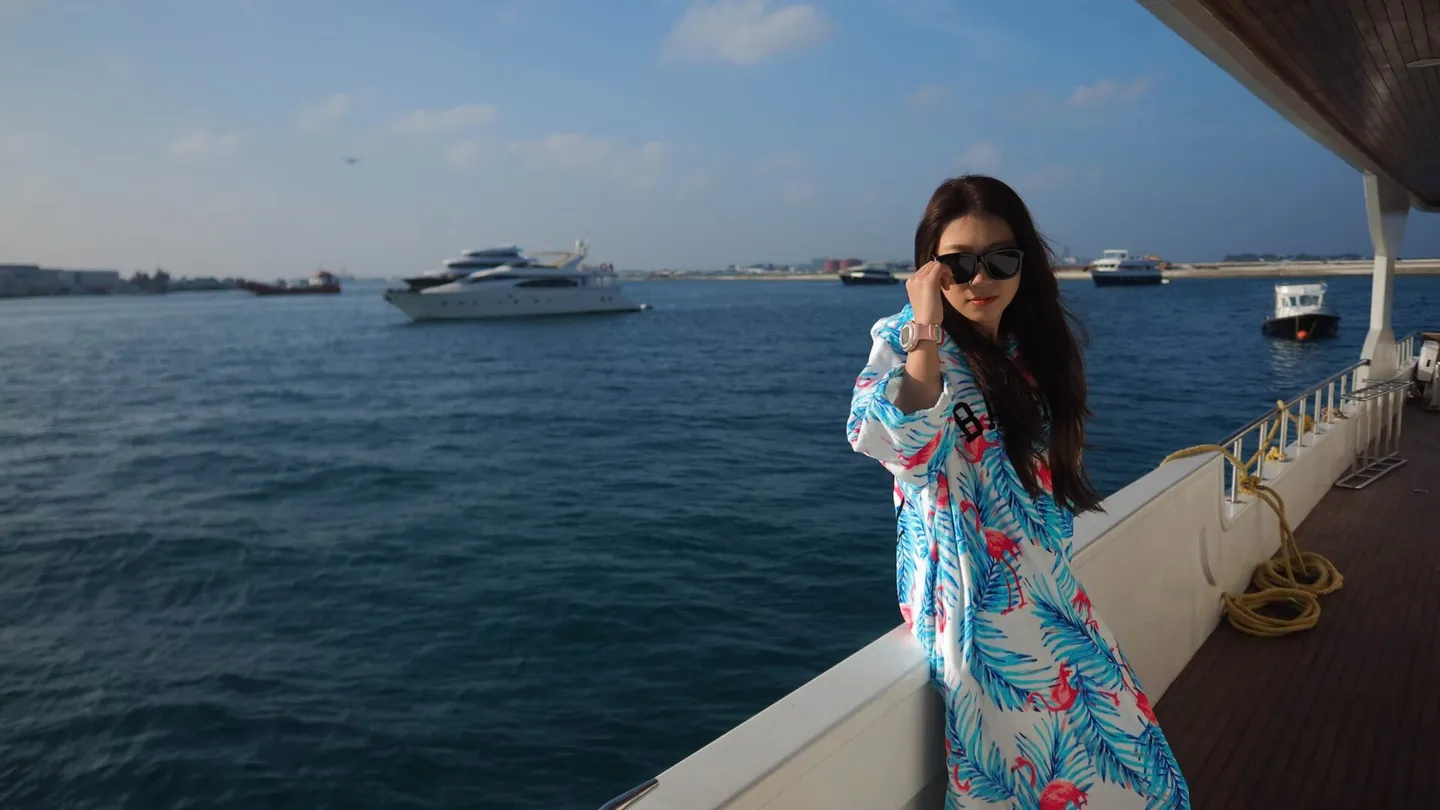
Other liveaboard vessels are visible in the anchorage.
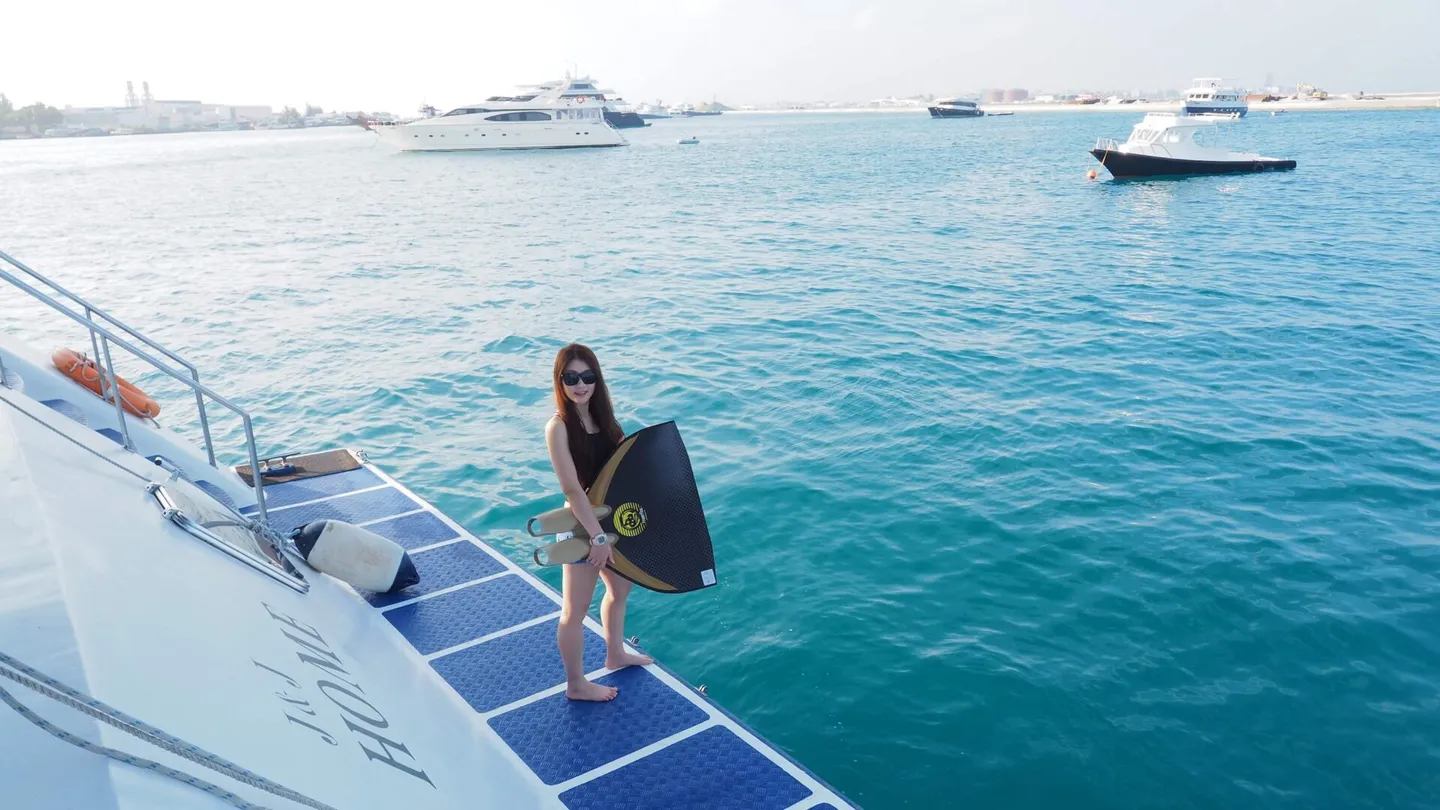
The stern deck would later take on a mysterious role: a night dive with manta rays.
Food on Board:
Food is everything, and hard-working divers need hearty meals to keep going. The liveaboard operator specially hired a chef from northeastern China, and every meal delivered a generous spread of dishes. Alongside the comforting flavours of home-style Chinese cooking, there were also local Maldivian flavours to try!
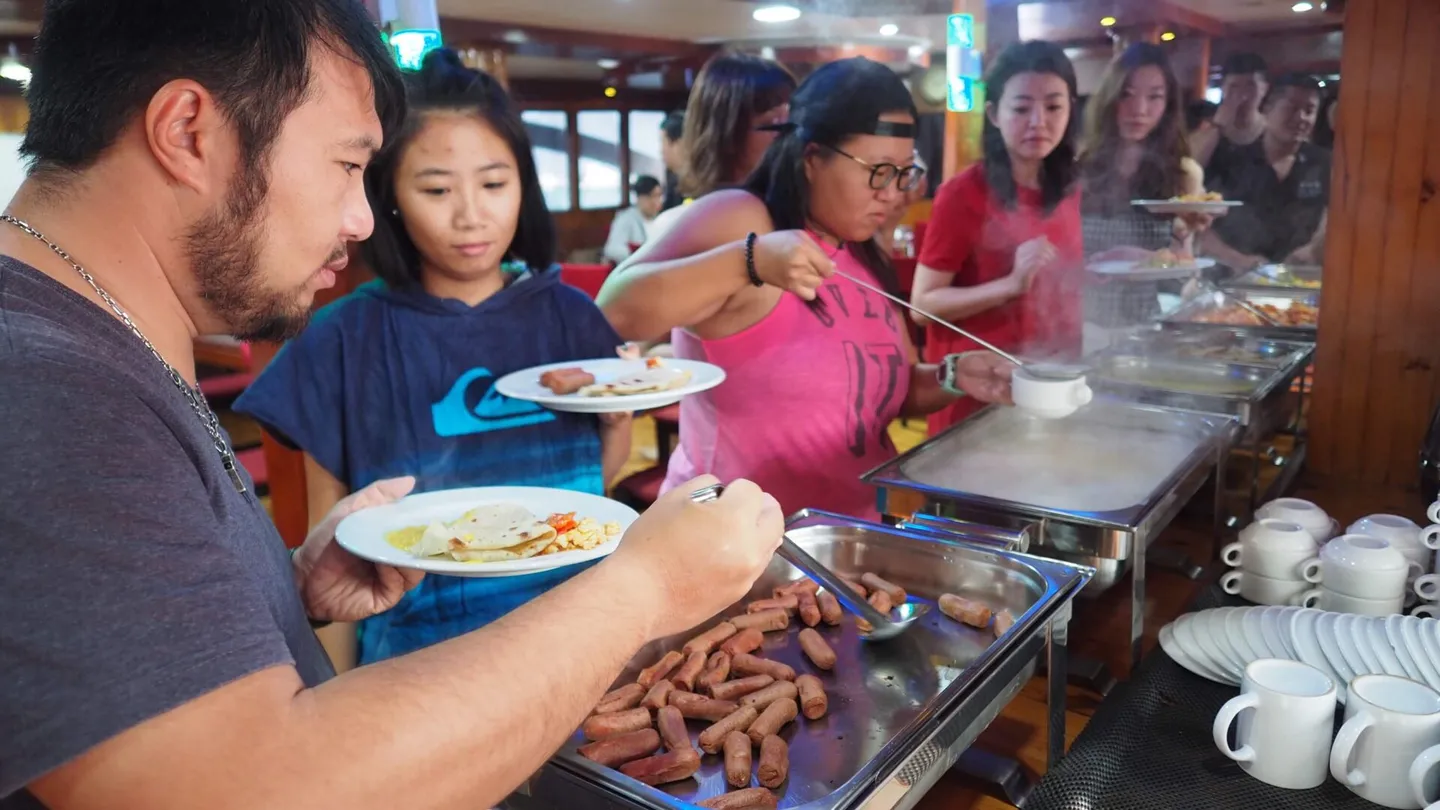
Multiple dishes and a soup — the classic spread that keeps every diver satisfied.
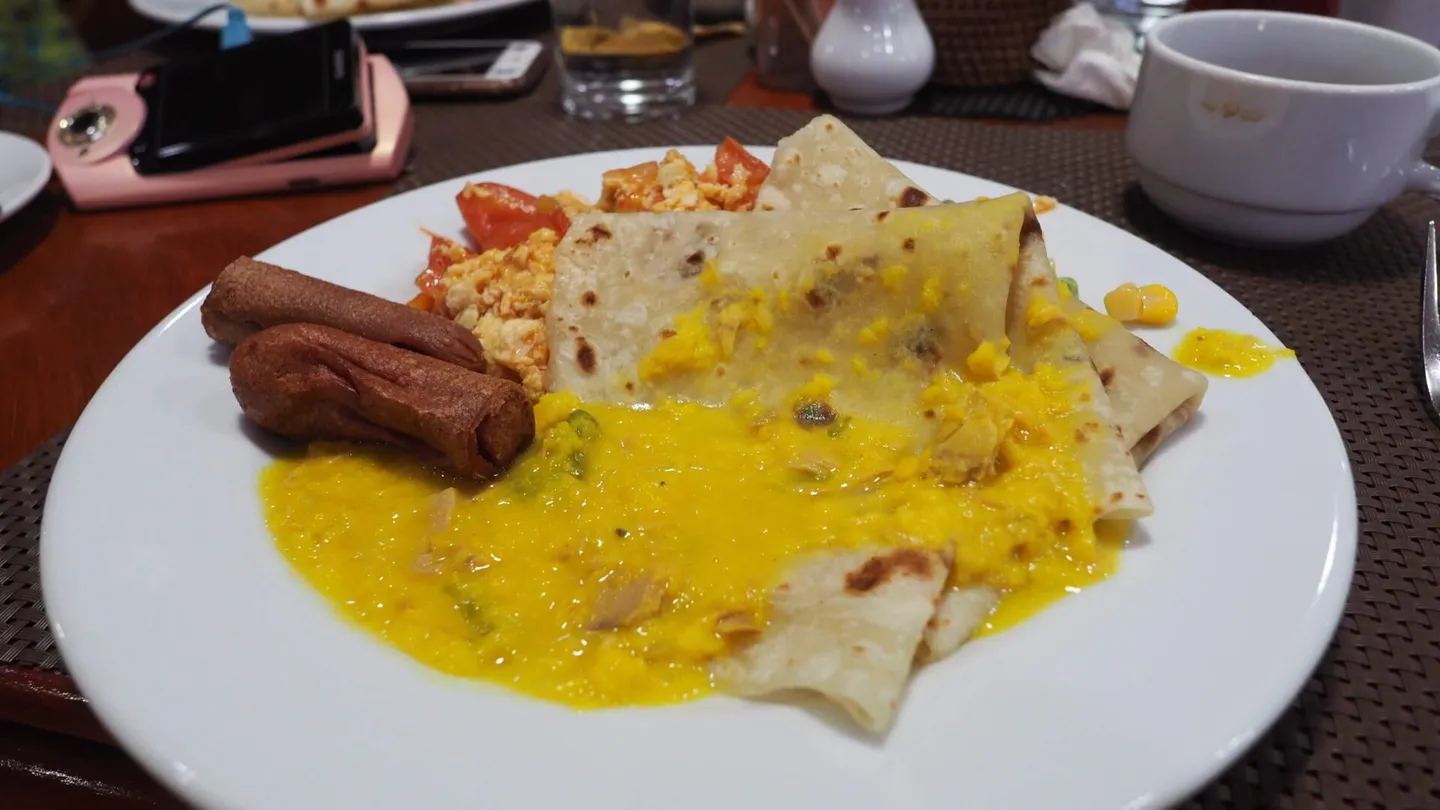
A hearty breakfast with local flavours to boot.
Beyond the three standard meals, the owner would always prepare ginger tea — a warming cup to take the chill off after every dive. He often said with a smile: as long as you don't get cold, the diving will be great, and you'll feel right at home!
Pre-Dive Preparation
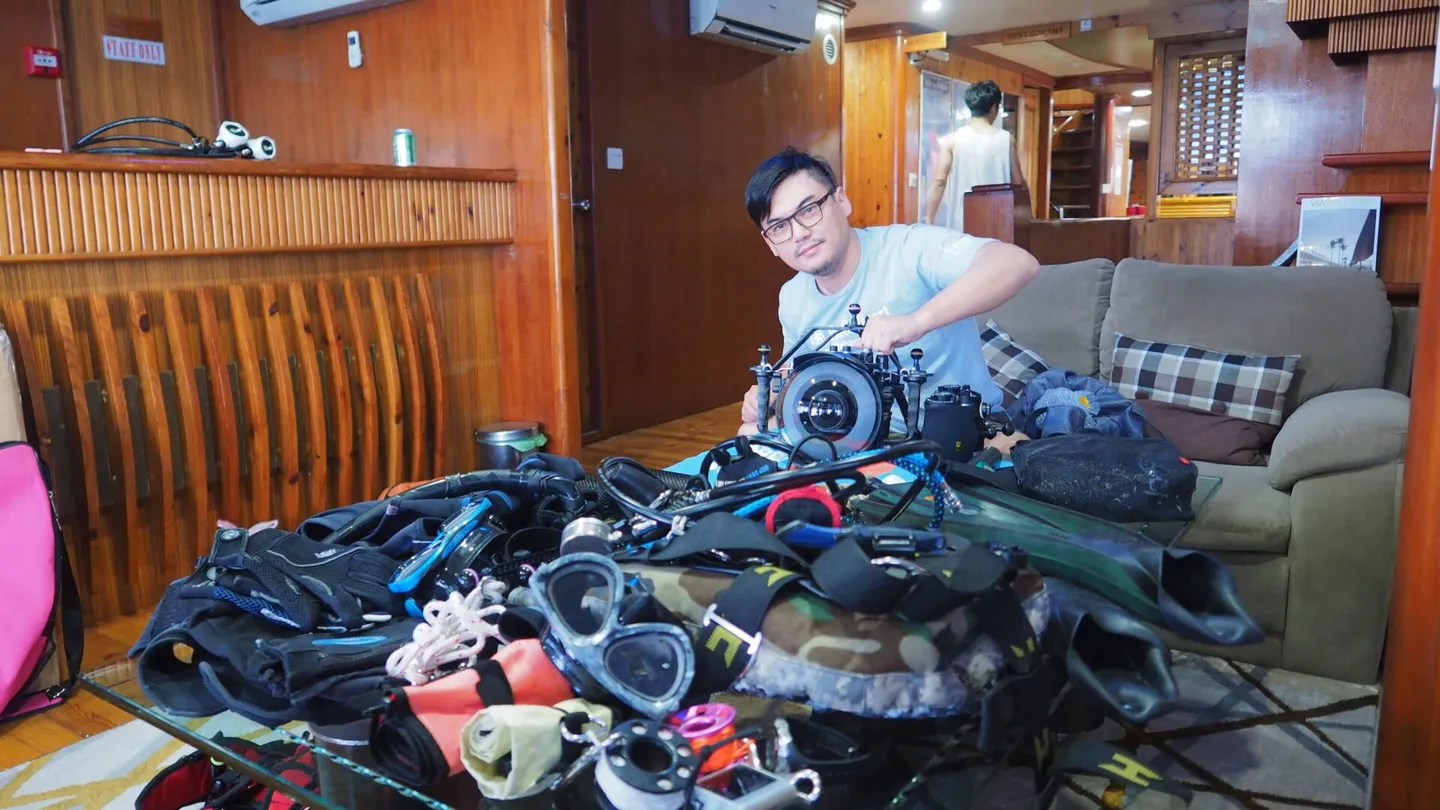
Our fellow photographer's underwater camera rig was seriously impressive!
For Maldives liveaboard diving, the mothership provides accommodation while a separate dive tender handles the actual diving operations, including tank fills. On day one, simply place your personal gear in a basket and the crew will transfer everything to the dive tender and set up your cylinder. After that first assembly and buddy check, you won't need to swap tanks yourself for the remaining six days of diving — how convenient is that?
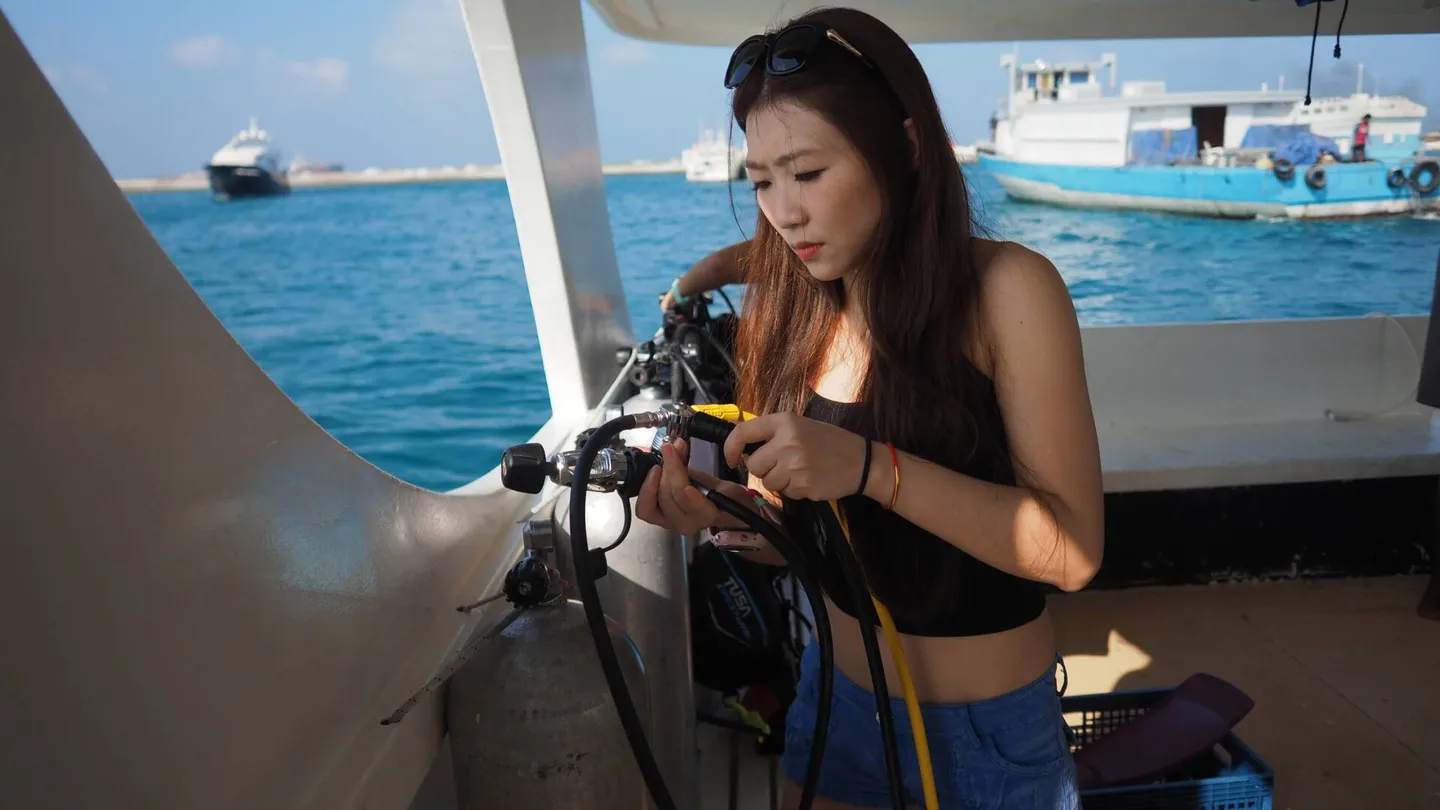
Setting up and checking personal gear before the first dive.
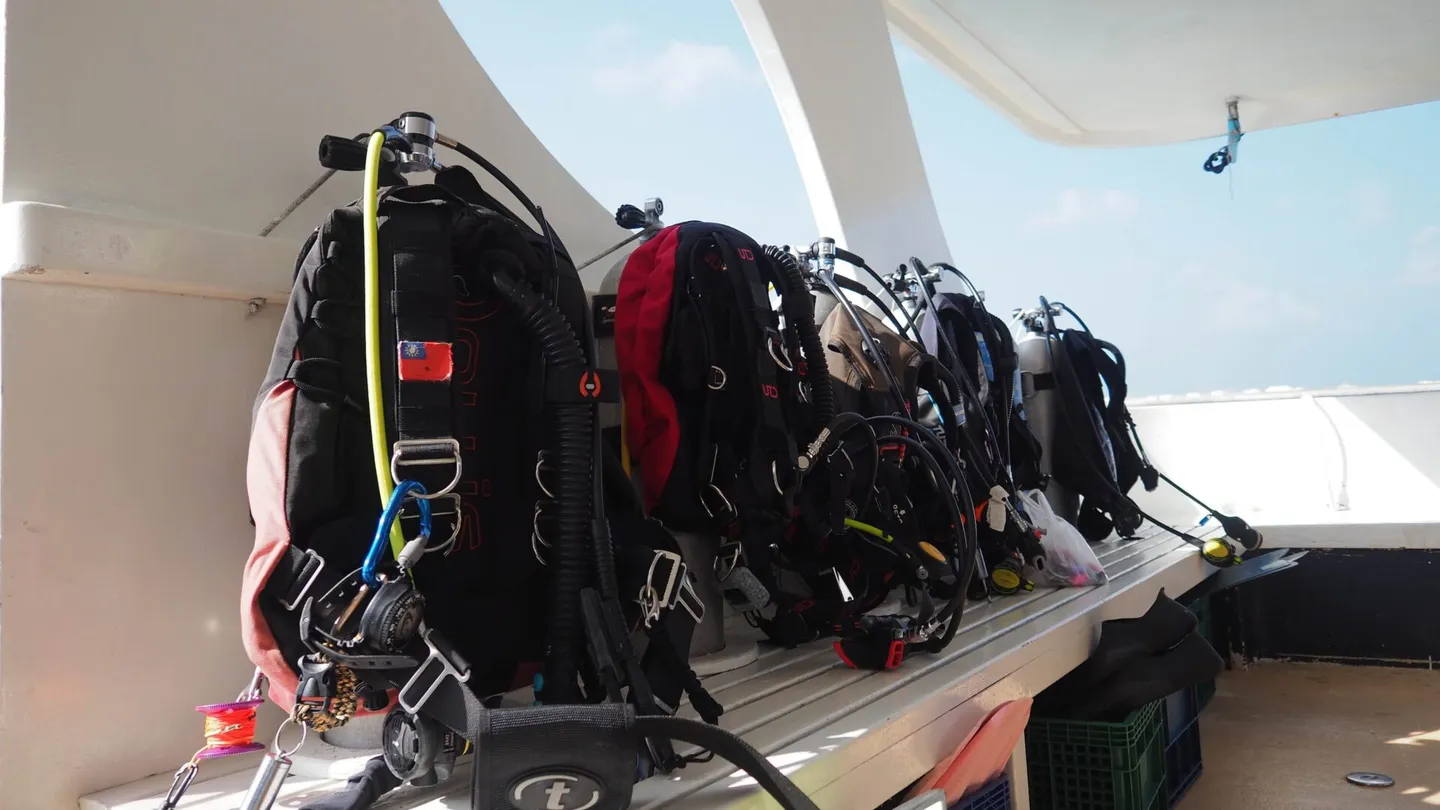
Gear assembled — all that's left is to jump in!
Time to Dive!
Our itinerary followed the classic Maldives liveaboard "Square Route," which departs from Malé and circumnavigates multiple atolls in either a clockwise or counter-clockwise direction, tracing a rough square shape — hence the name. There is also a "Deep Blue Route," which moves the vessel south of the Maldives depending on the season. That route is known for strong currents and big-animal encounters; the Square Route is comparatively more beginner-friendly.
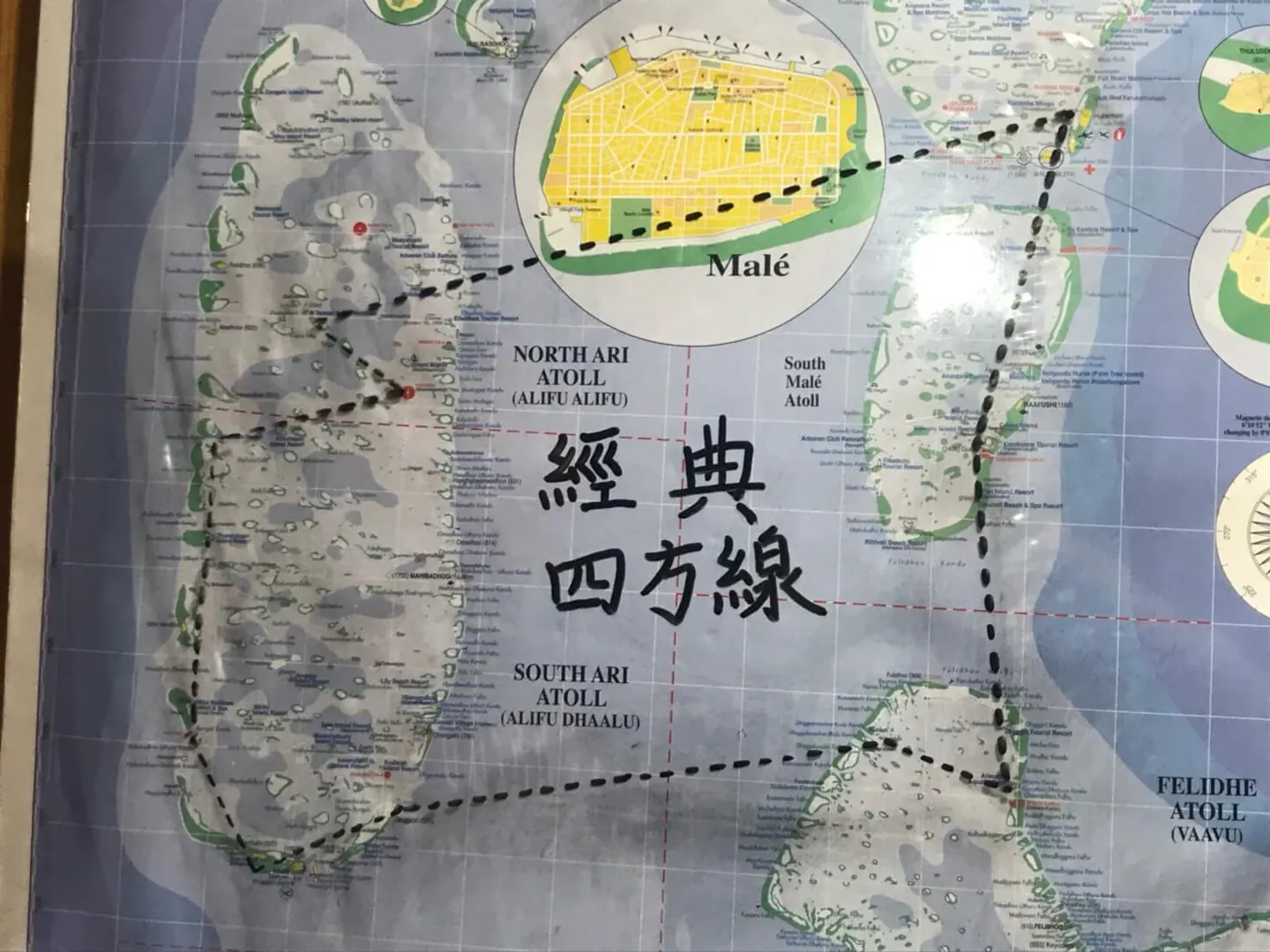
Navigation chart for the Square Route.
Some operators shift to the Deep Blue Route from February through May. June and July are low season, when many boats undergo annual maintenance. Operations on the Square Route typically run from August through to January of the following year, though some liveaboards now venture further north to explore different dive site ecosystems.
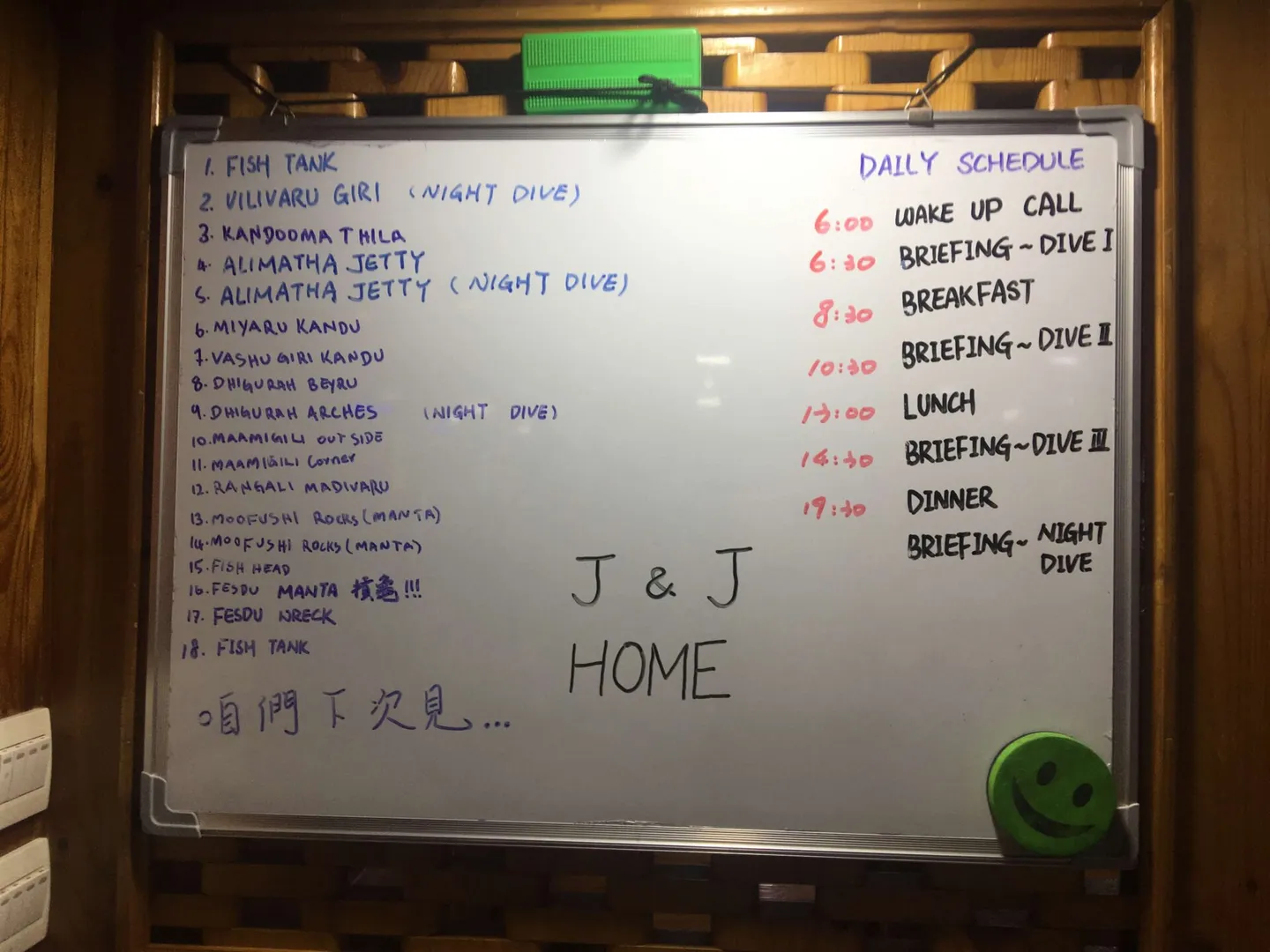
As mentioned above, roughly three cylinders are scheduled per day. Remember to check the whiteboard each evening for the next day's plan. A dive briefing is held in the dining area thirty minutes before every dive — the dive guides deserve serious praise here; their hand-drawn site maps are beautifully detailed and their verbal briefings are thorough and complete. Briefings are conducted in English, so if your English isn't strong, ask the owner to help translate.
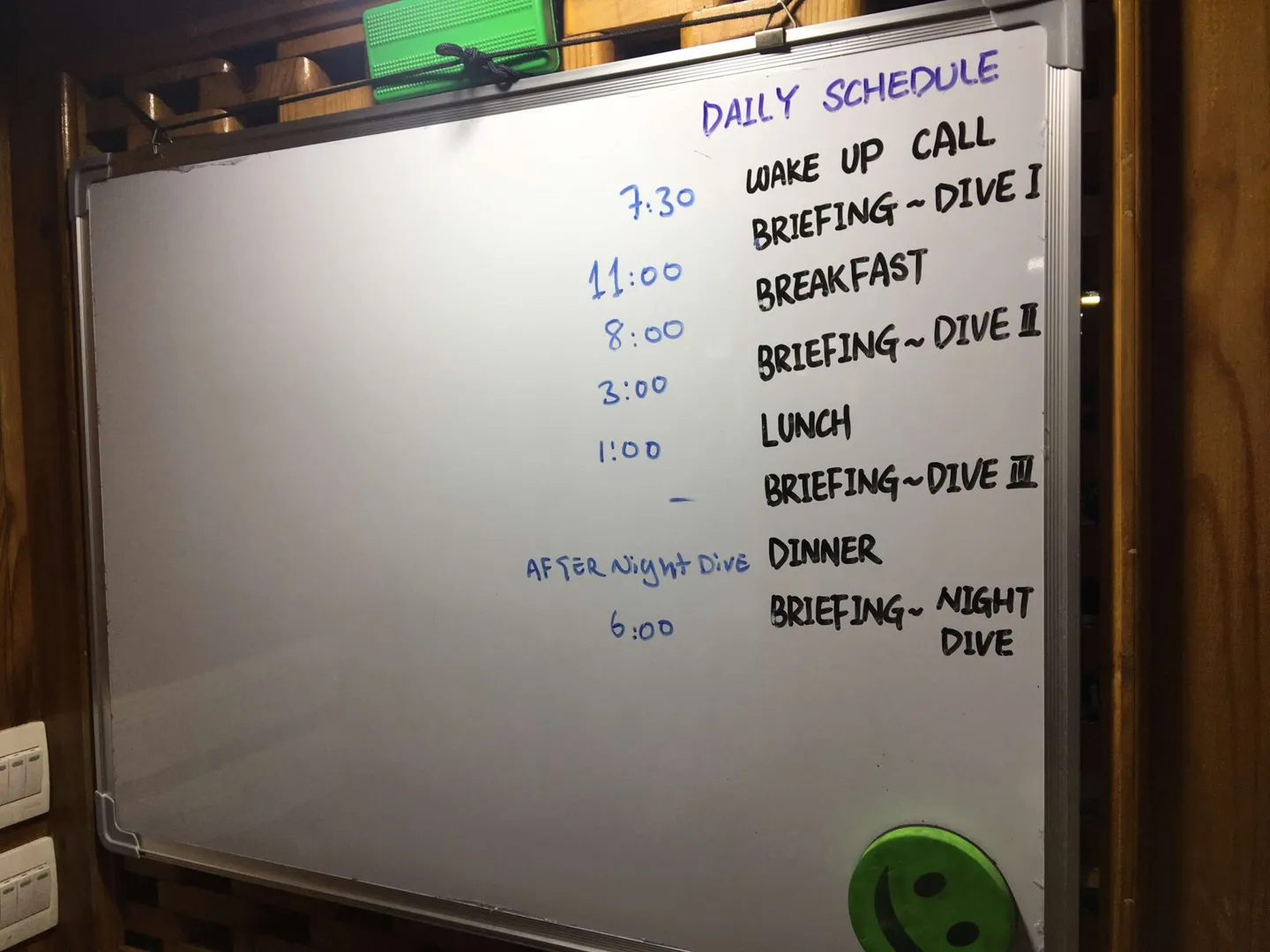
Each day's schedule is written up on the whiteboard.
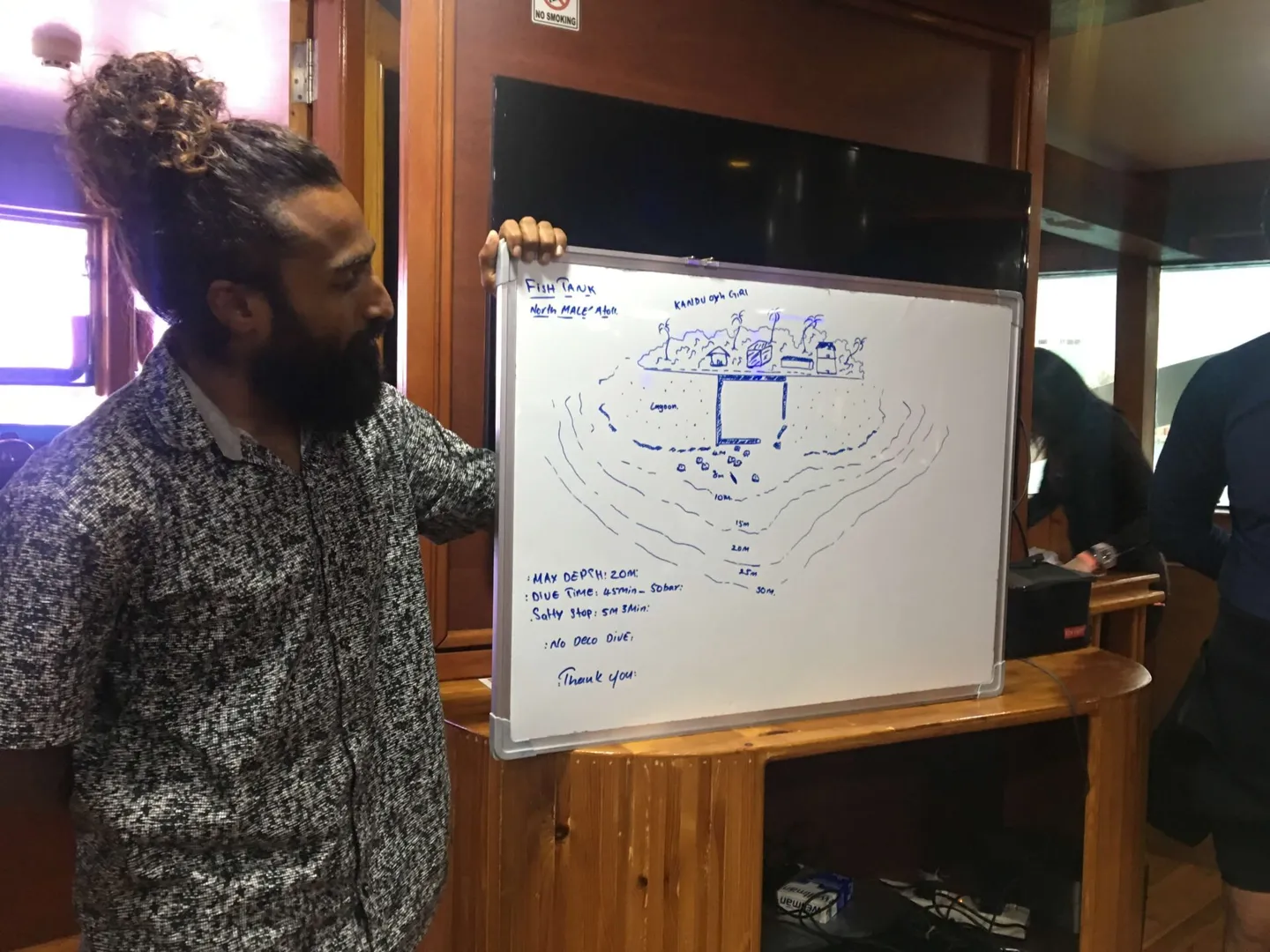
Our dashing dive guide, whom everyone affectionately nicknamed "Sea King."
This trip included 18 dives in total, so rather than walking through every single site, we've picked a few standout marine life encounters to share — complemented by stunning images from our fellow traveller and photography master Eddy, which truly showcase just how teeming with life the Maldives is!
Stingray Swarms:
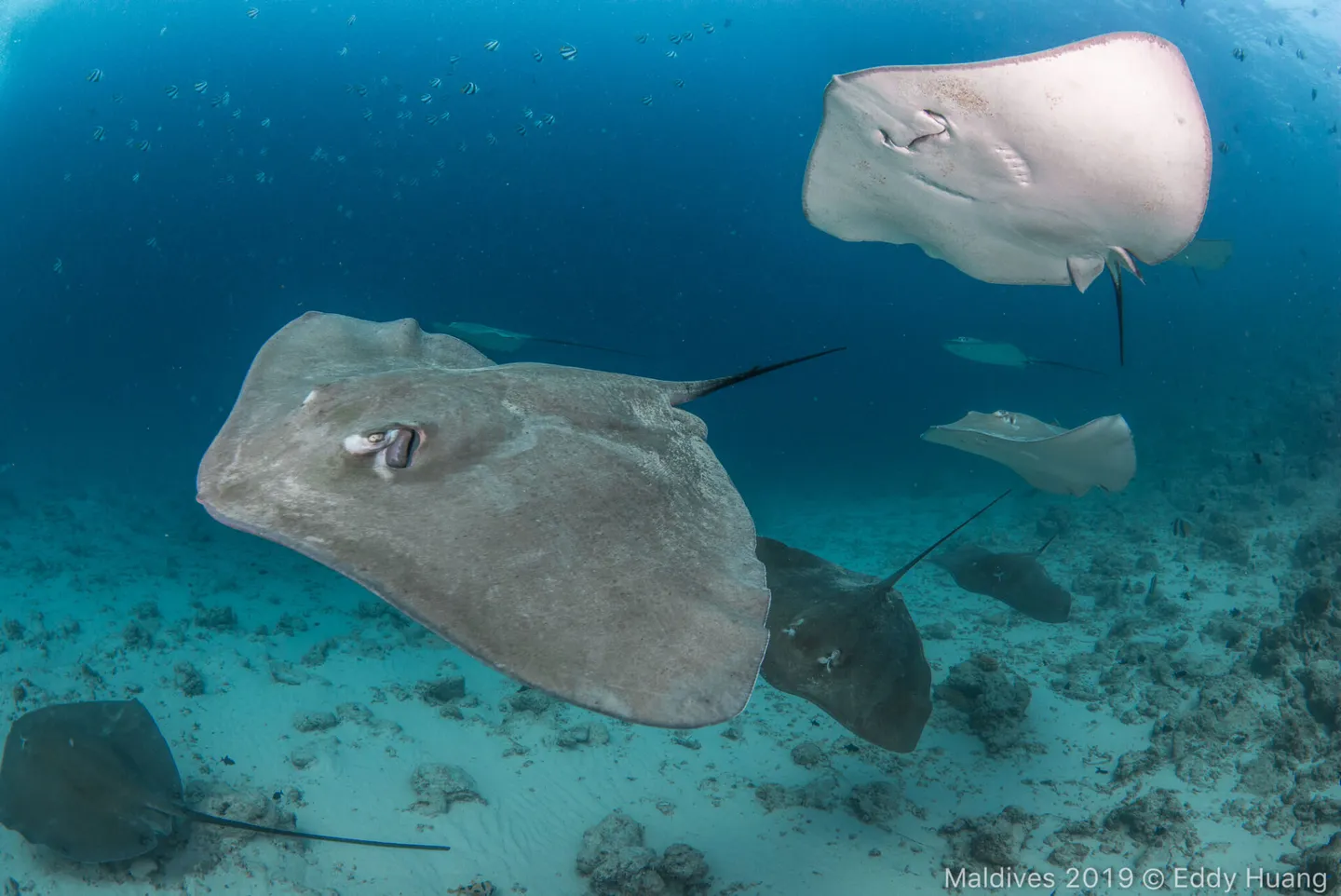
At the "Tuna Can Factory," you have a chance to witness a massive tornado of Stingrays.
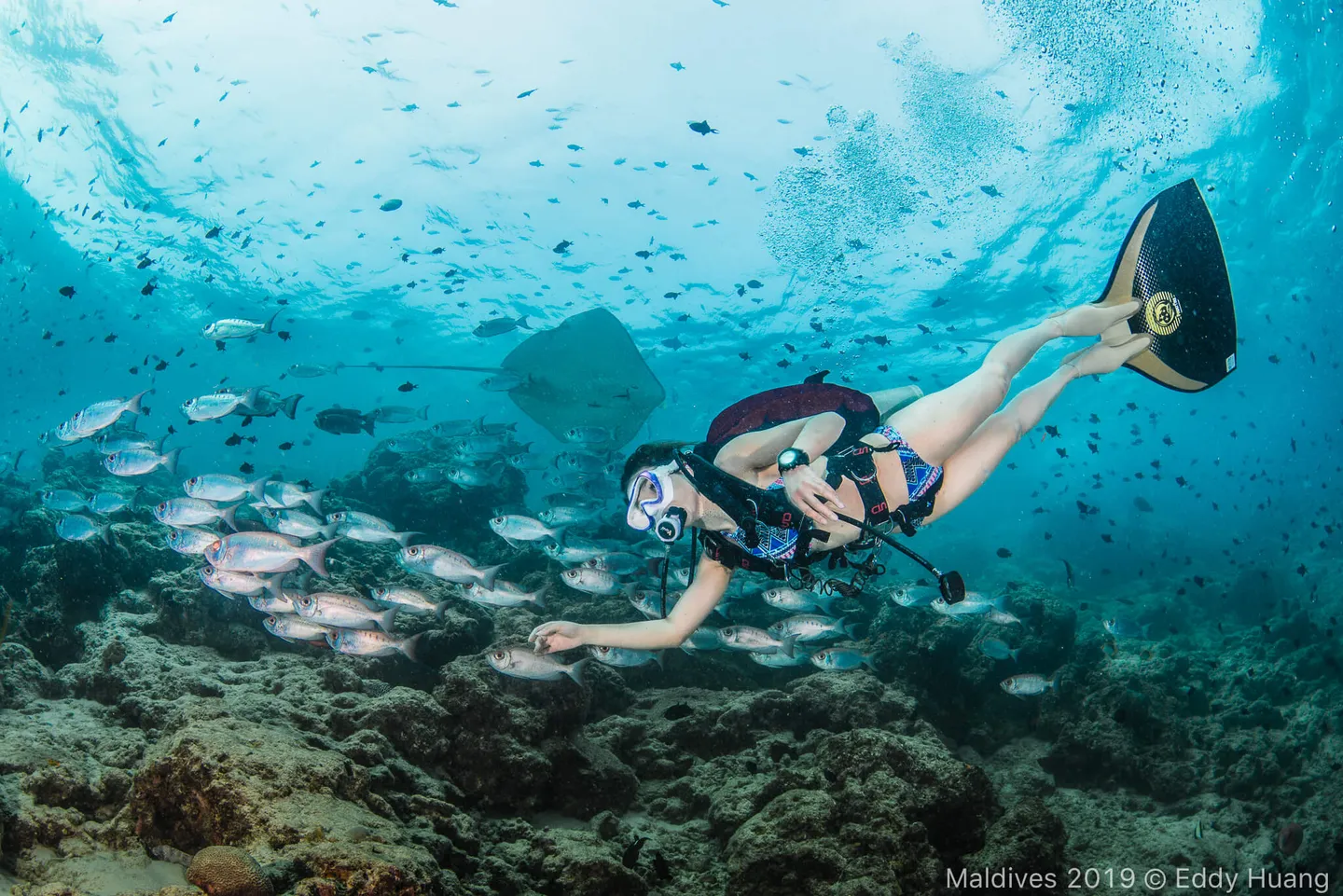
Underwater model, fish school, and Stingrays — a perfectly harmonious scene.
For our check-out dive, we headed to what's locally known as the Tuna Can Factory. We happened to arrive during a feeding period, and the water was absolutely filled with Stingrays and moray eels — every diver in the group was completely lost in the moment, camera in hand. Stingrays are gentle by nature, but it's still wise to maintain a respectful distance when photographing them.
Even if you're unlucky and miss the Stingray aggregation, don't be disheartened — this site also offers incredibly rich fish life, including Humphead Wrasse, large schools of moorish idols, and an astonishing number of moray eels.
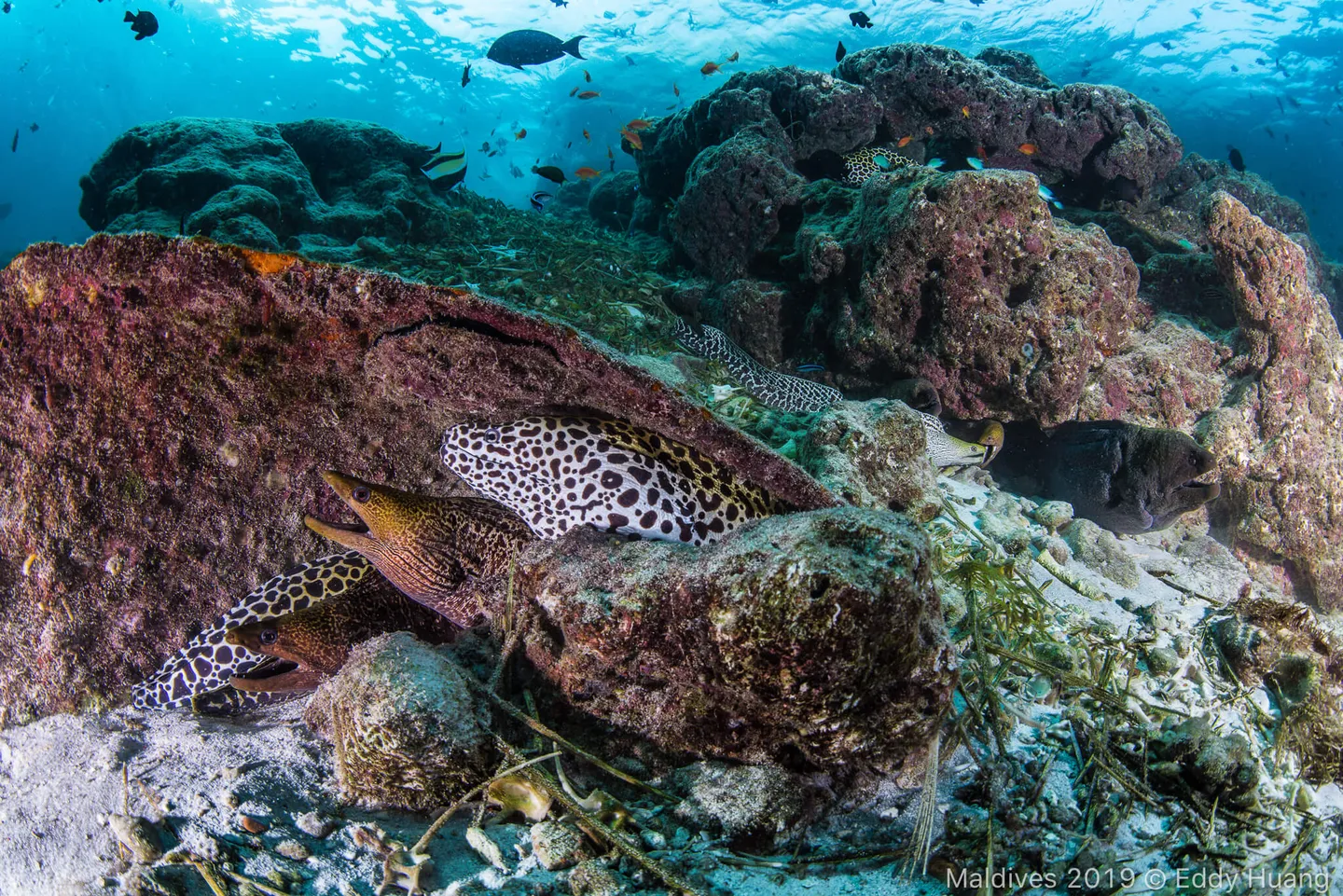
Can you count how many moray eels are in this frame?
Night Diving with Nurse Sharks:
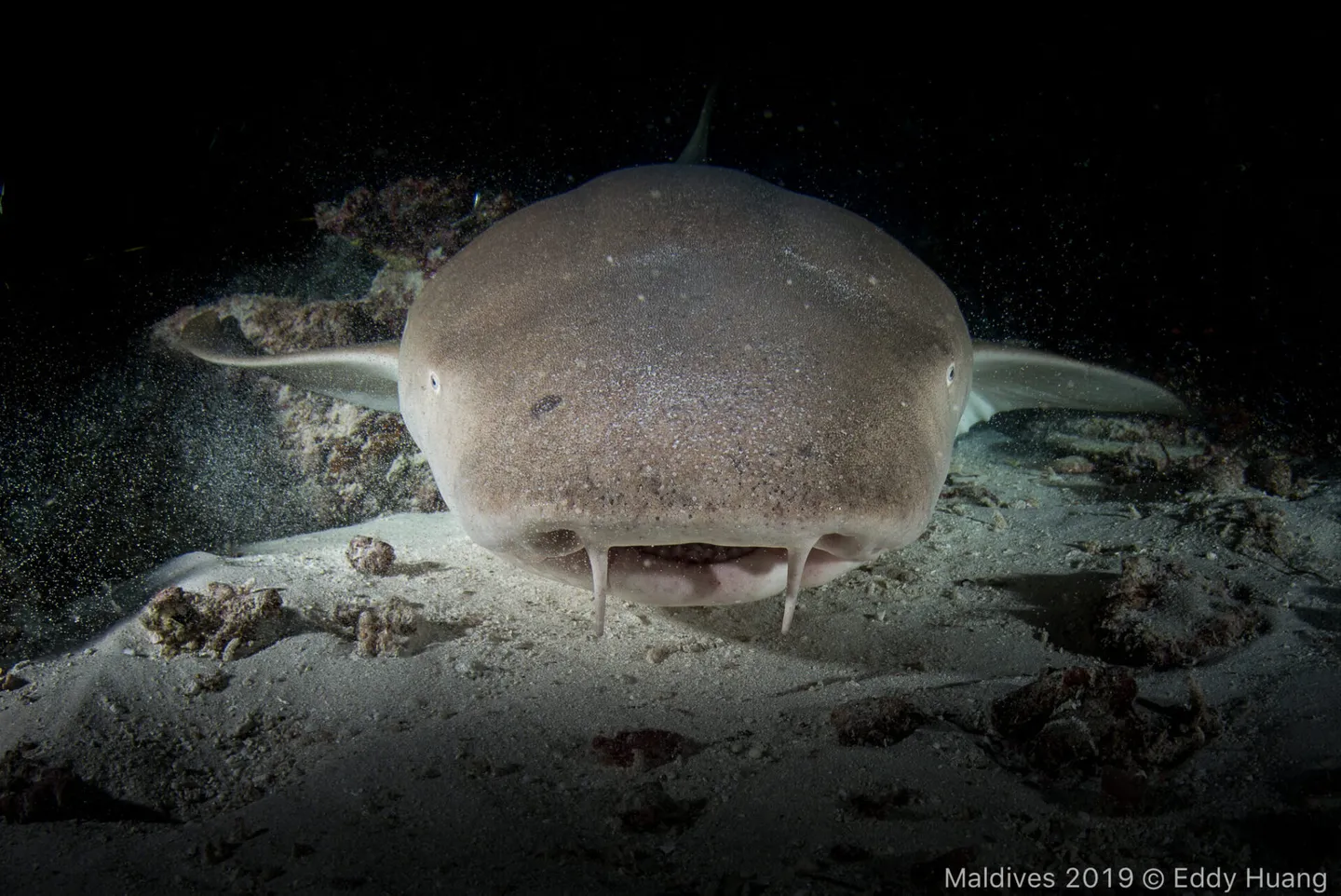
Nurse Sharks are a guaranteed sighting in the Maldives.
The highlight of day two was a dive at Alimatha Jetty — a small pier where, thanks to the tidal currents and topography, hundreds of Nurse Sharks congregate every night. As dusk approaches, liveaboard dive tenders line up outside this small island, and once you're underwater, don't get so caught up watching the sharks that you lose track of your group!
Manta Ray Bombers:
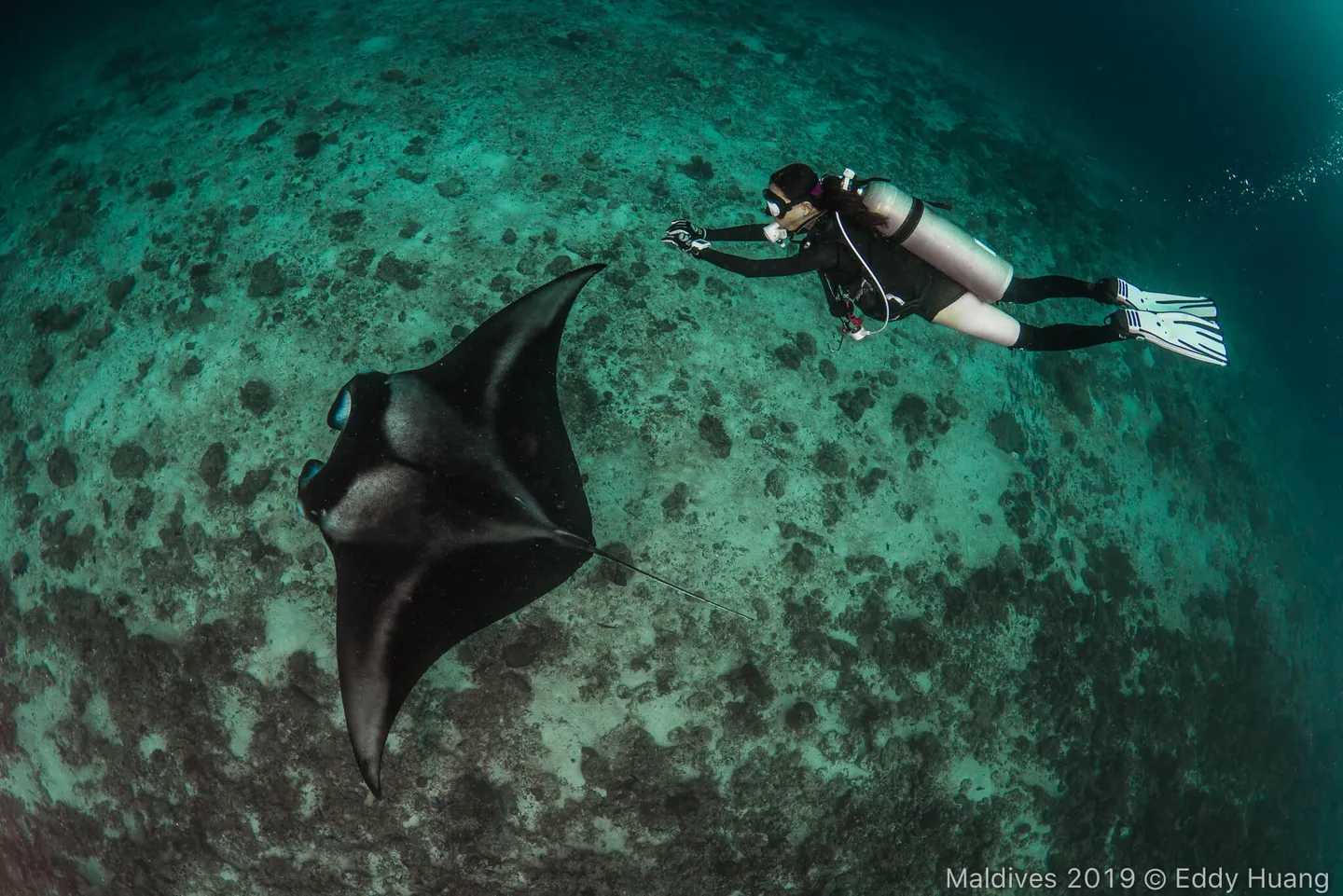
Manta rays are another guaranteed encounter.
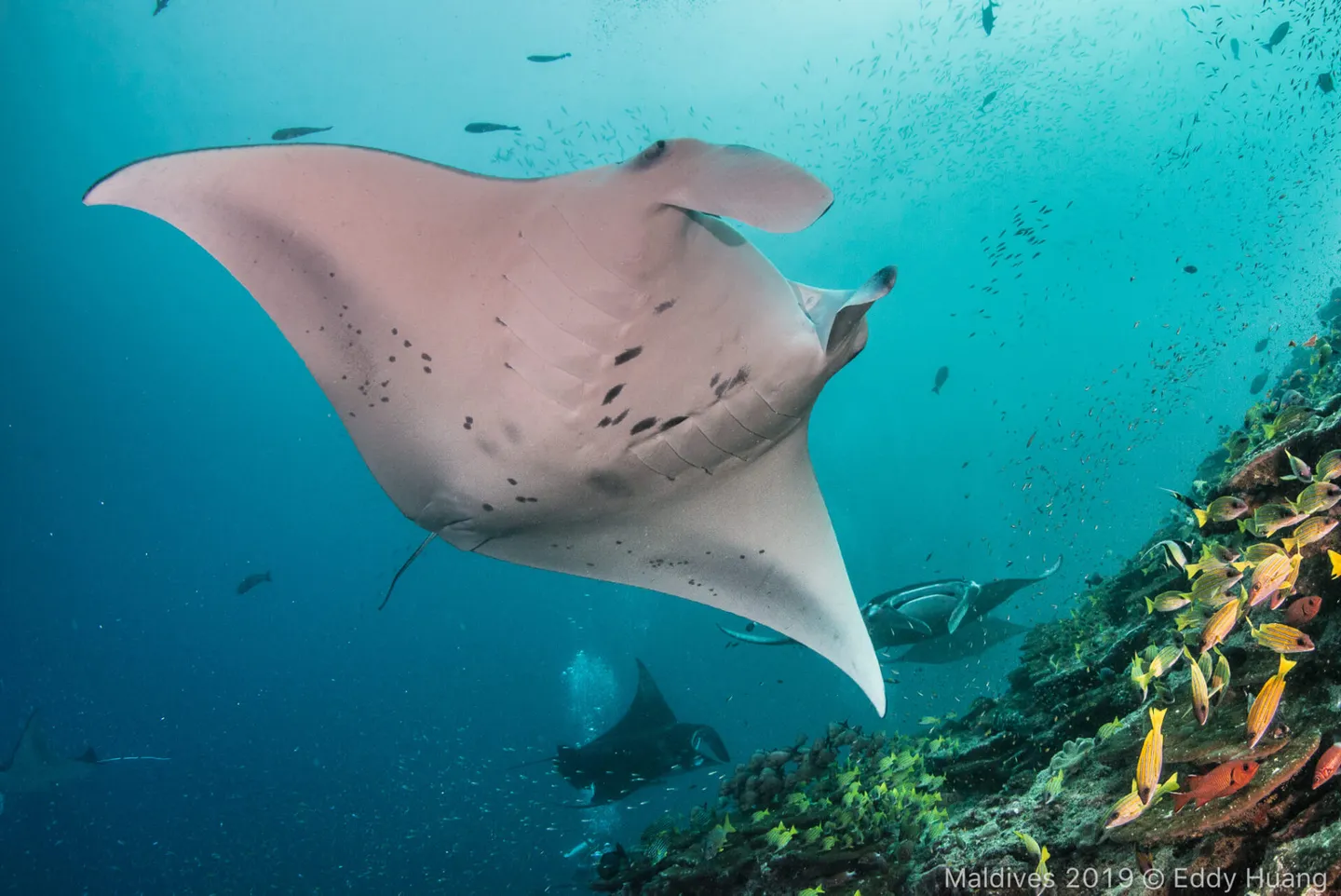
Spotting more than 20 manta rays in a single dive was absolutely exhilarating.
Towards the end of the route, we passed several manta ray cleaning stations. Moofushi Rocks was by far the most jaw-dropping — dozens of manta rays glided past us as soon as we entered the water, and moving closer to the cleaning station, we looked up to see mantas circling directly overhead. The dive guide specifically reminded us not to ascend onto the reef platform of the cleaning station to avoid damaging the coral.
It's worth recommending that divers have a solid skill level before attempting Maldives diving. The Maldives is made up of numerous atolls, and between each atoll lie channels where powerful ocean currents funnel through narrow passes every day. Certain species — sharks in particular — love these high-flow zones. Kandooma Thila, which the owner described as a five-star dive site on the Square Route, is one such premium spot for observing large pelagic fish.
In the Maldives, almost every dive involves entering the water directly from the tender and assembling underwater — otherwise the current will carry you away from the site before you descend. A reef hook and a surface marker buoy (SMB) are essential pieces of kit. If you do get swept off by a strong current, follow your dive computer's instructions to complete your safety stop, then deploy your SMB and wait on the surface for the boat to come to you.
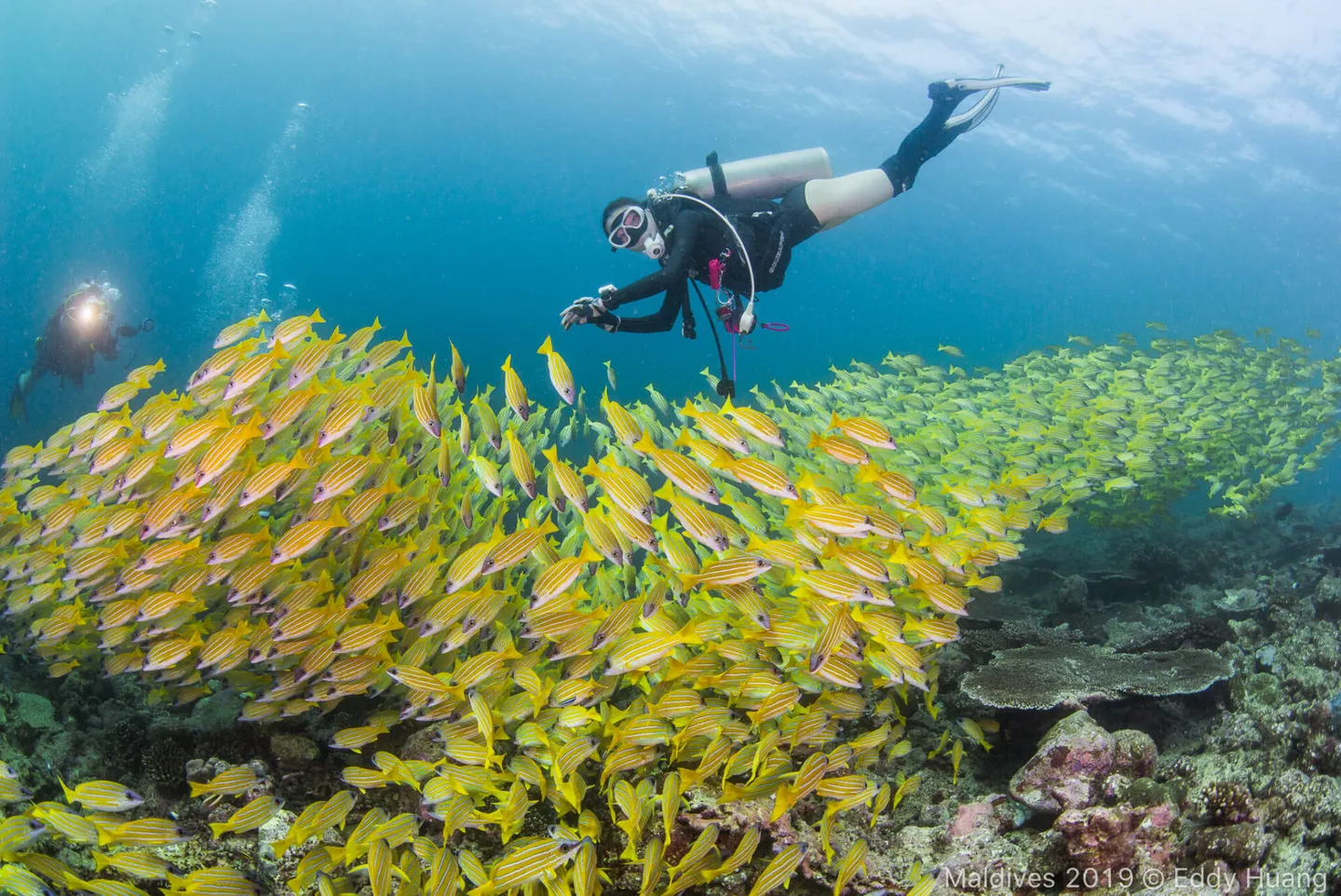
The current may be strong, but for photos like these, every bit of effort is worth it.
One regret the Editor carries from this trip is missing the Whale Shark — perhaps the ocean is telling me I need to return to the Maldives! When diving abroad, chance encounters matter enormously. Case in point: on our very last dive, we bumped into Taiwan's legendary underwater photographer Yorko Summer — an absolutely thrilling surprise!
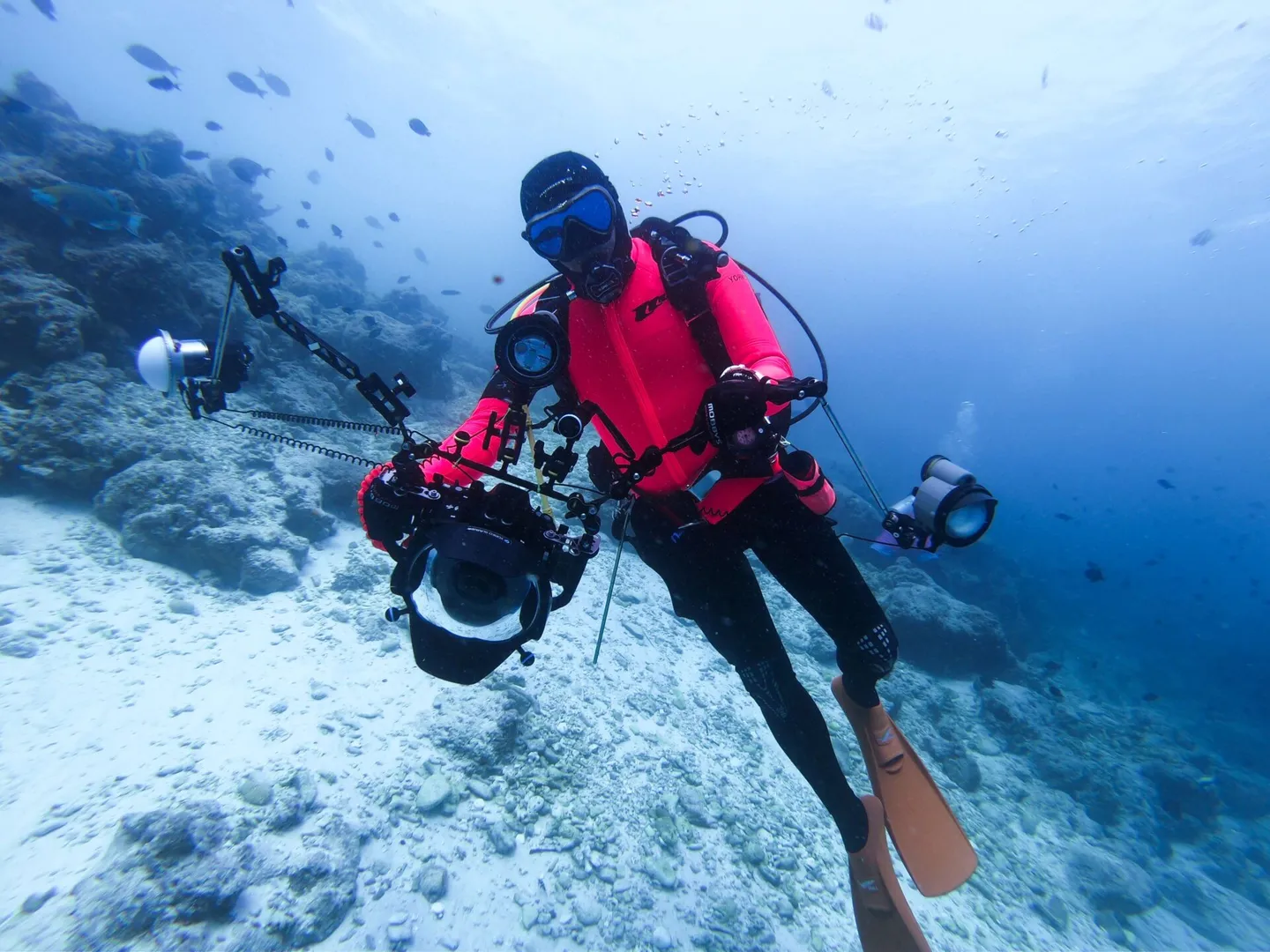
An unexpected underwater encounter with Taiwan's celebrated underwater photographer Yorko Summer.
Activities Beyond Diving
Coming to the Maldives doesn't mean your world has to revolve entirely around diving, eating, and sleeping on repeat. For the Editor, one of the most anticipated parts of the trip was going ashore to explore the islands. If you're the type who loves to wander with a camera and chat with locals in broken English, you'll absolutely love these excursions.
The liveaboard includes two island visits. Ours were Guraidhoo, a desert island BBQ, and a trip to the capital island Malé. Let's take a look at what makes these inhabited islands special!
Guraidhoo Island:
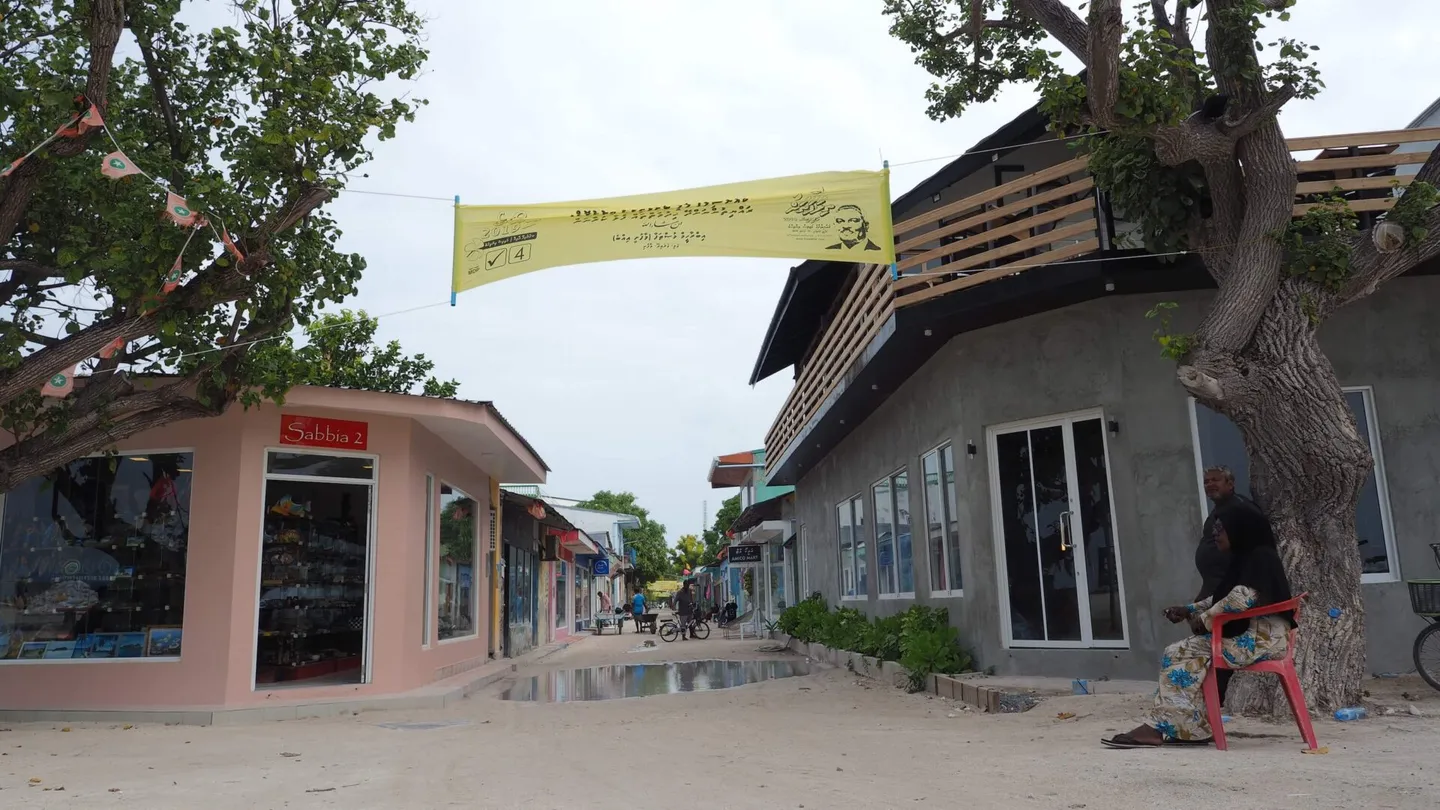
The main street of Guraidhoo is incredibly tiny.
This island is very small and, by Maldivian standards, quite off the beaten track. A leisurely walk around the perimeter takes about 30 minutes, and the Editor barely crossed paths with any locals during the circuit — a wonderfully peaceful experience. While dive tourism exists here, Guraidhoo is actually more popular with international visitors for surfing between May and October. There are some decent hotels on the island, but the commercial atmosphere is decidedly low-key, making it better suited to travellers who simply want to relax.
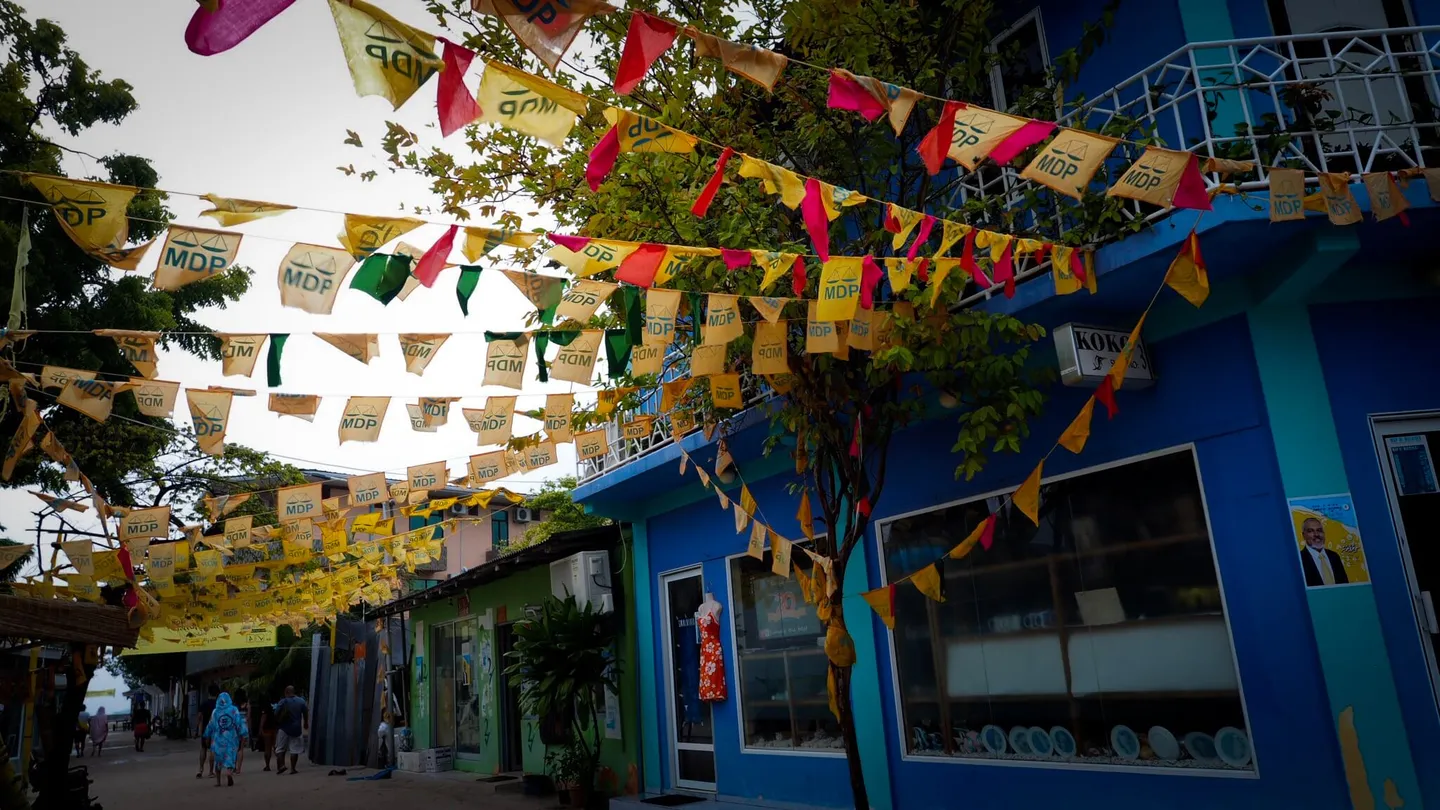
The island's bold colour schemes make for surprisingly great photos.
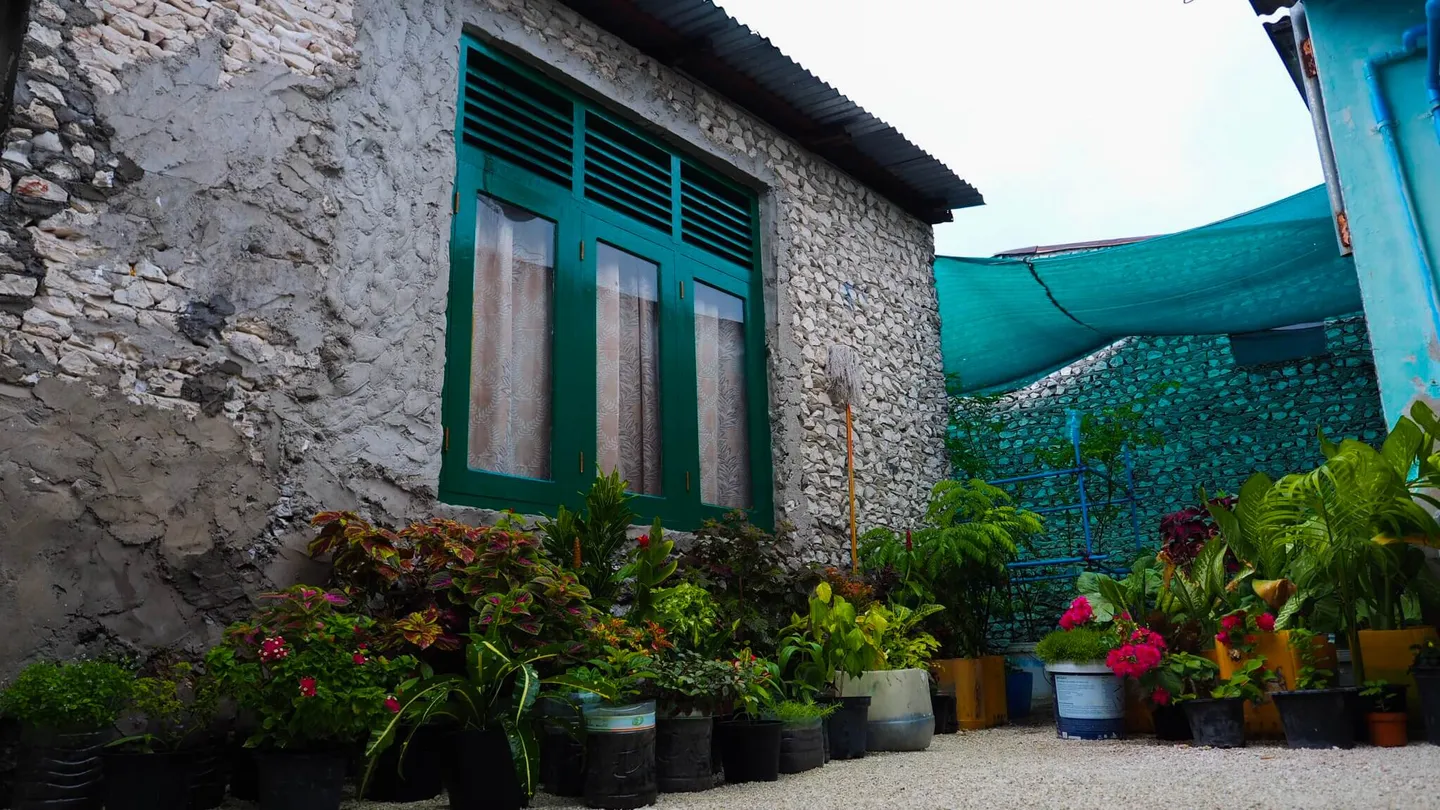
Accidentally wandering into someone's backyard can lead to unexpected surprises.
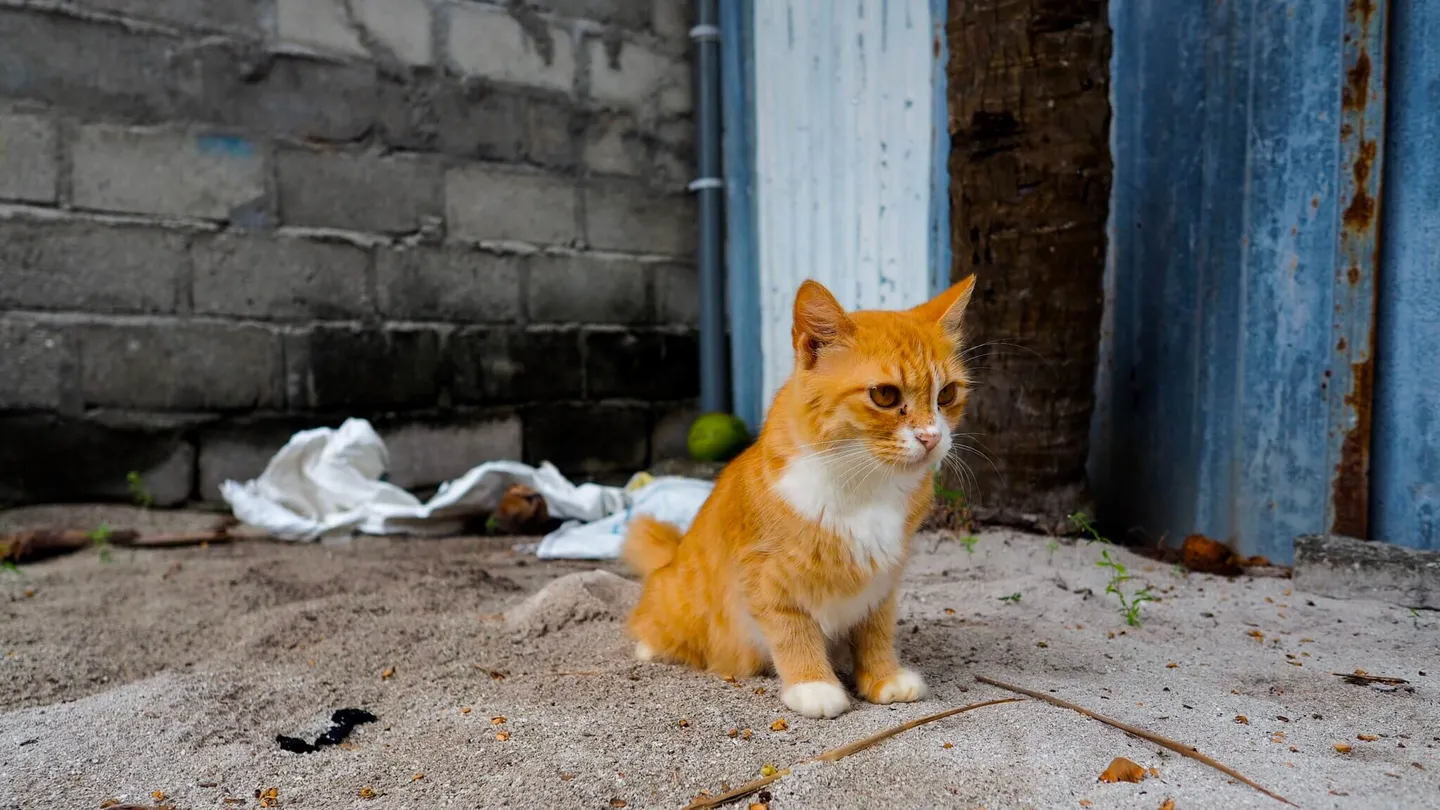
Muslims may keep cats but not dogs, so you'll spot cats along the roadsides everywhere.
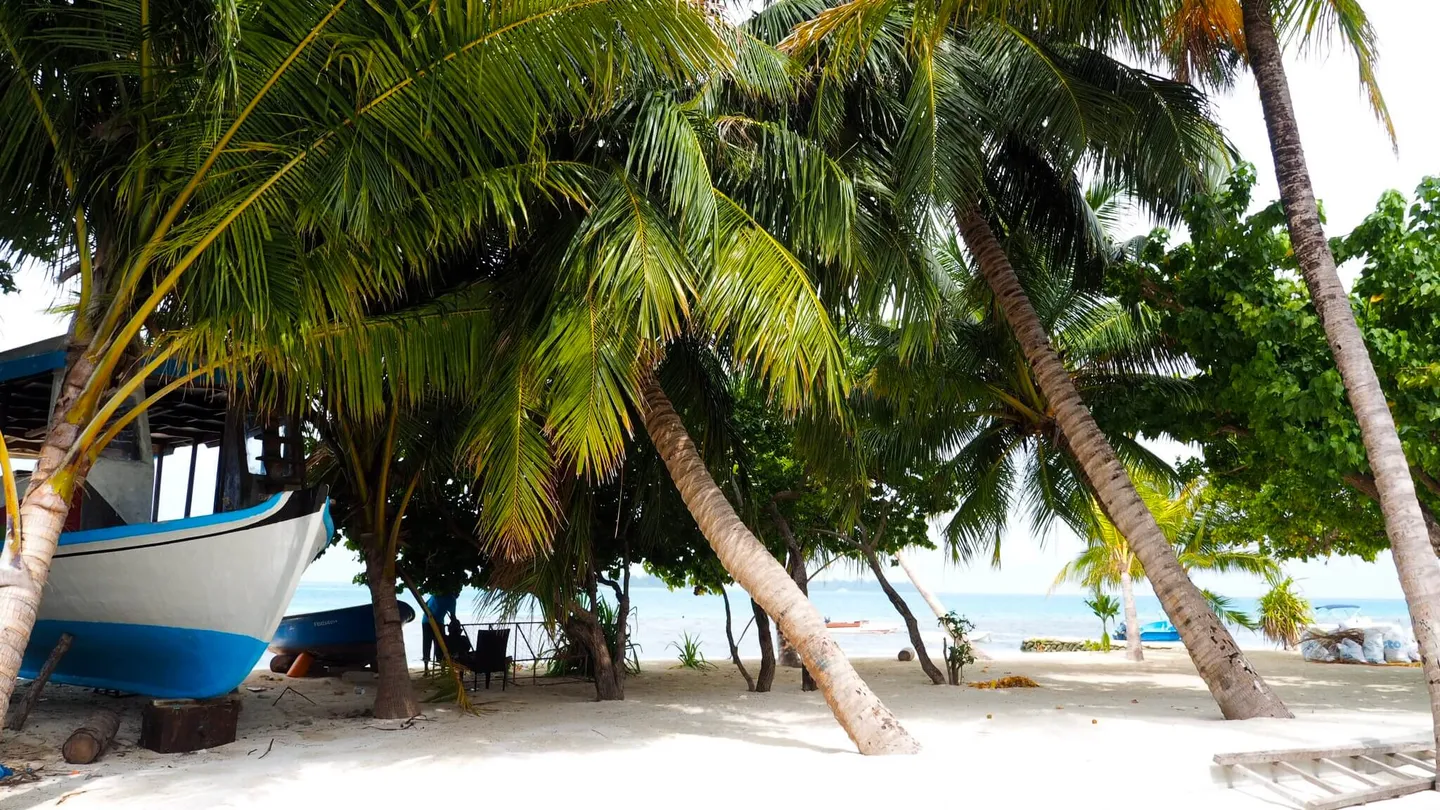
Pristine white sand beaches and coconut palms greet you at every turn around the island.
On the other side of the island is a very nicely maintained resort — the Editor couldn't help but daydream about honeymooning there. Also, when your tender is coming in or leaving the harbour, scan the water carefully — you just might spot an eagle ray!
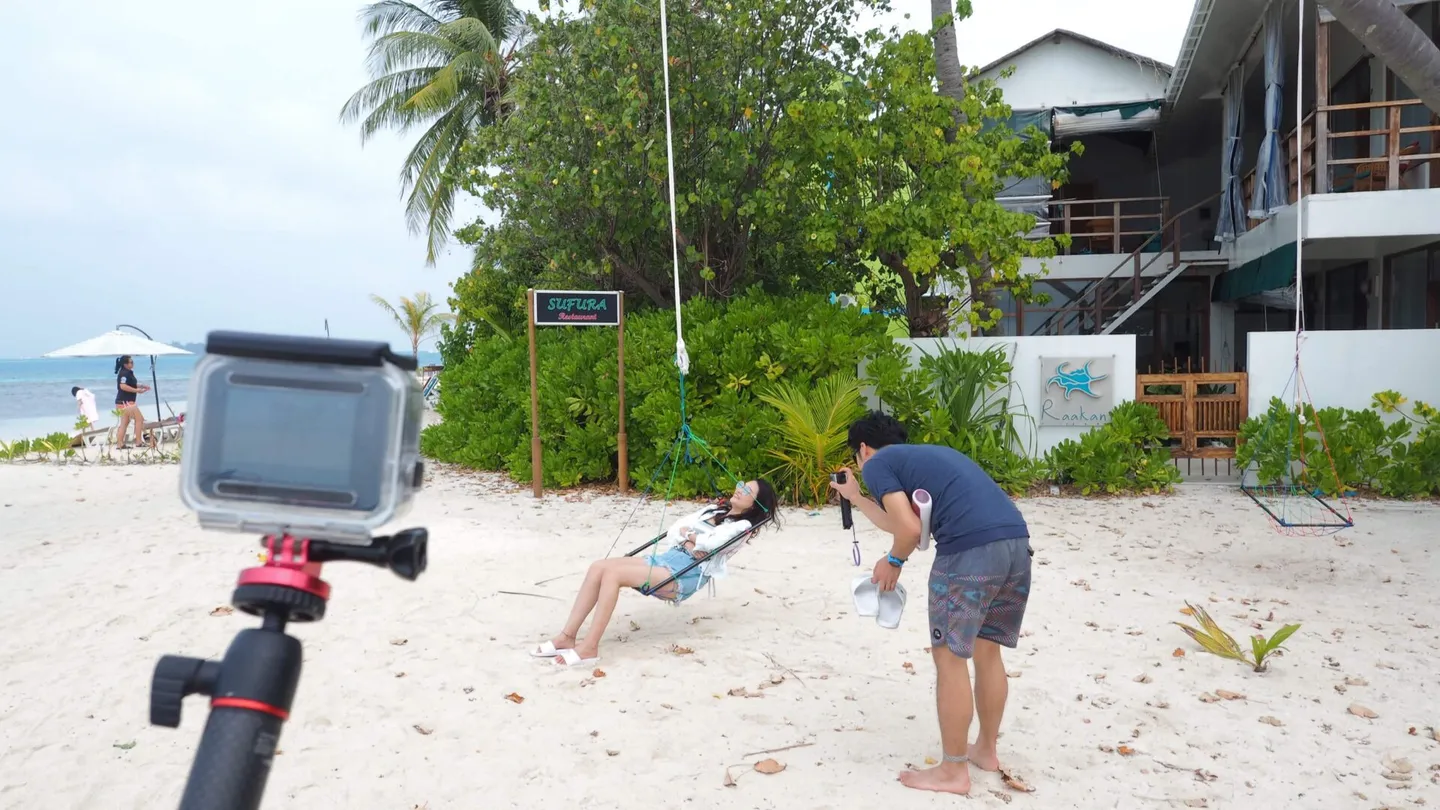
The perfect place for couples to capture all kinds of sweet, romantic shots!
Desert Island BBQ
As mentioned, the Maldives has 1,192 islands but only around 200 are inhabited, leaving the rest scattered as uninhabited gems across the vast Indian Ocean. On the Square Route, many liveaboards arrange a BBQ on one of these desert islands. Since there are no dock facilities, a small dinghy ferries everyone from the mothership to shore — and the first thing everyone does on arrival is, naturally, take a flurry of photos!
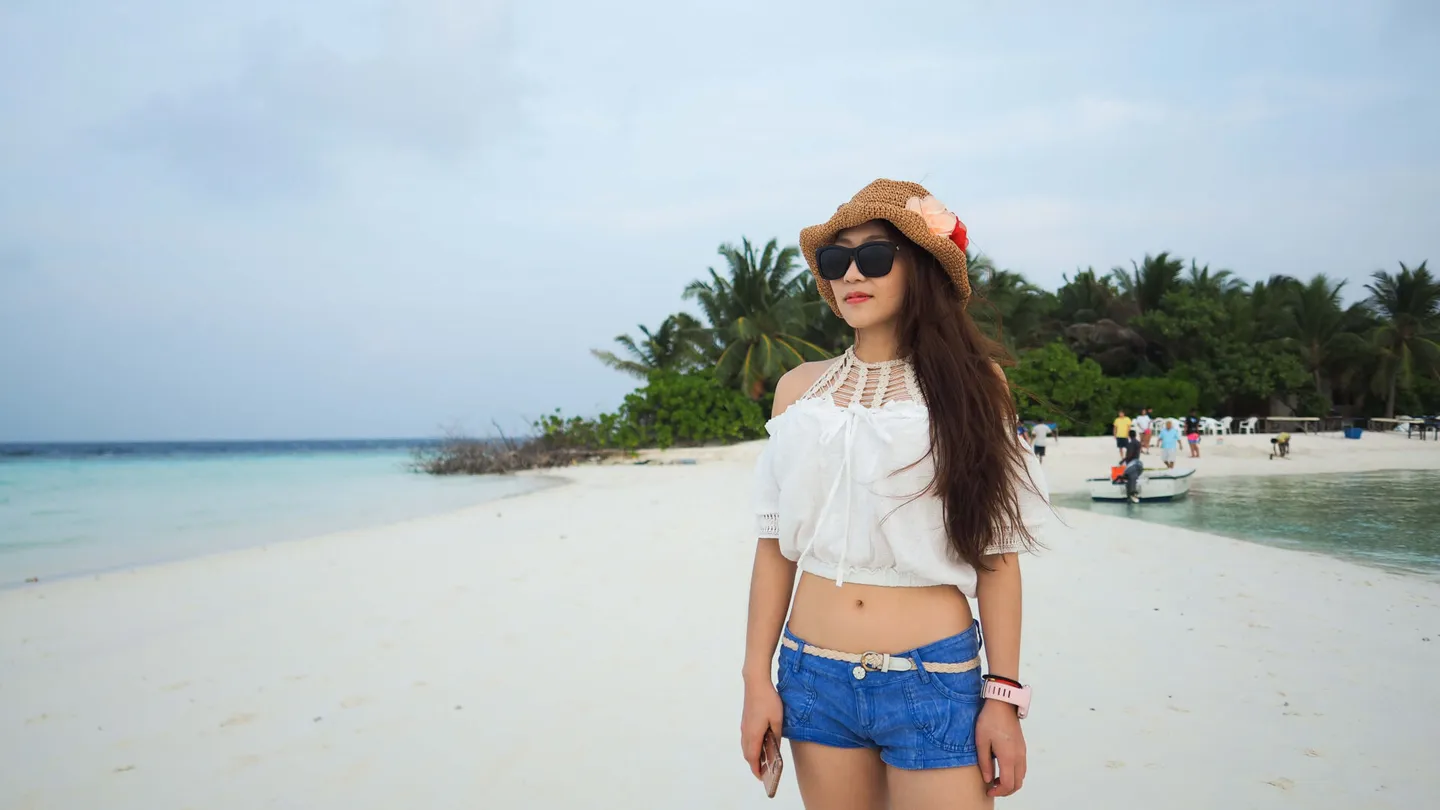
A desert island!! You absolutely have to get a photo to remember this.
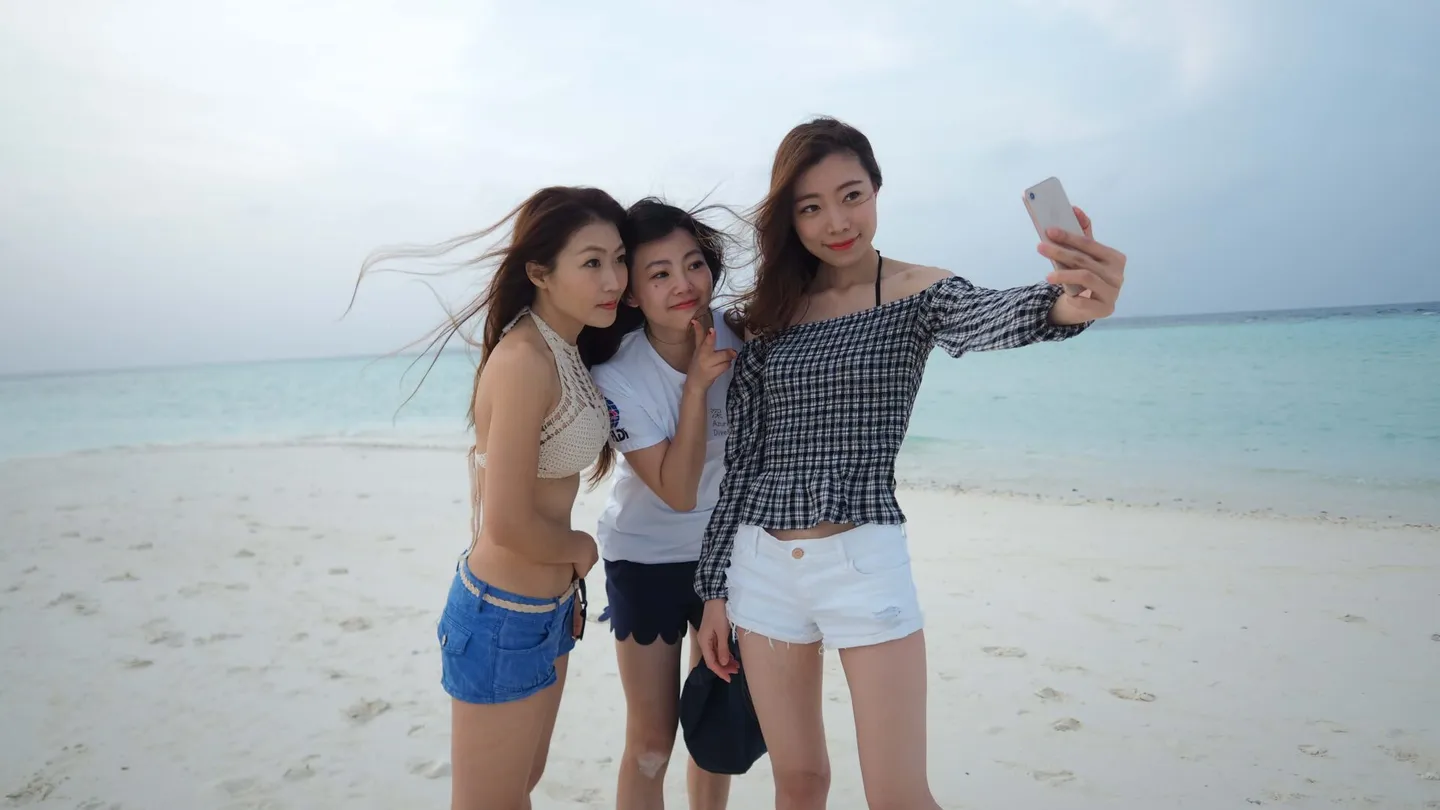
Making new friends through diving — a truly rare and special kind of connection.
The crew even sculpted a Whale Shark from sand, complete with dark fabric and white sand to replicate the distinctive spots on its skin. Lit up after dark, it looked wonderfully romantic!
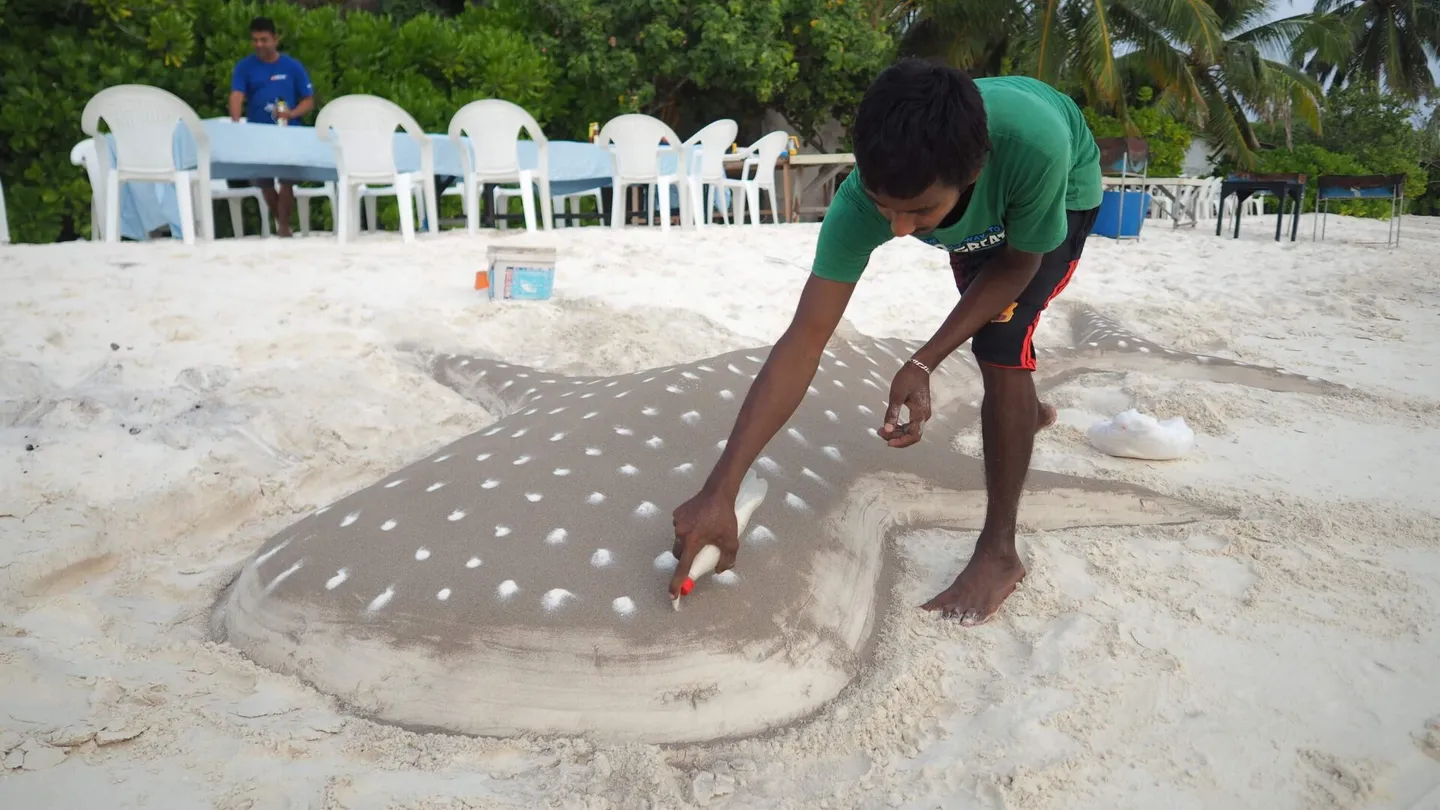
The crew pulled off a remarkably lifelike Whale Shark sand sculpture in just 10 minutes.
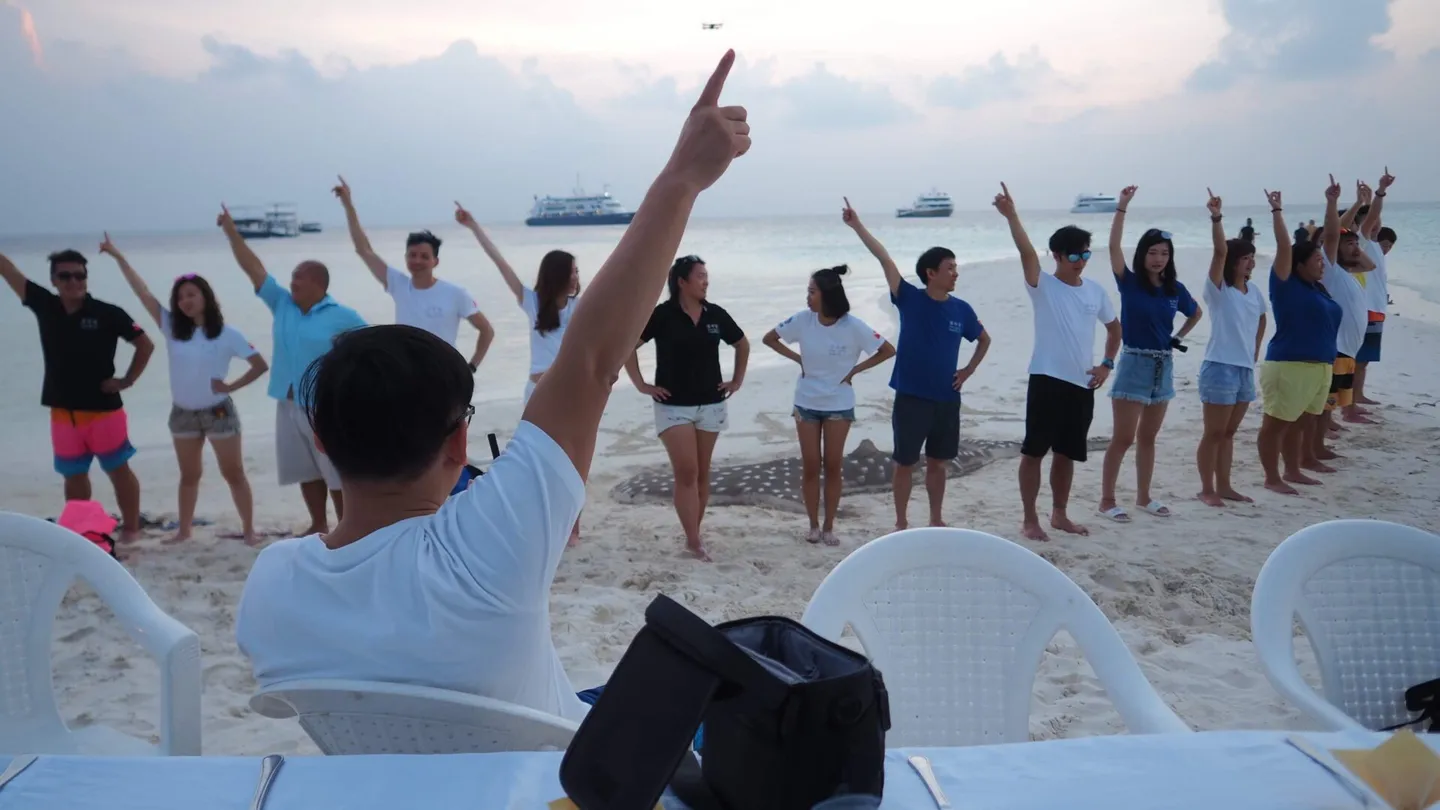
Everyone, listen to the photographer's directions!
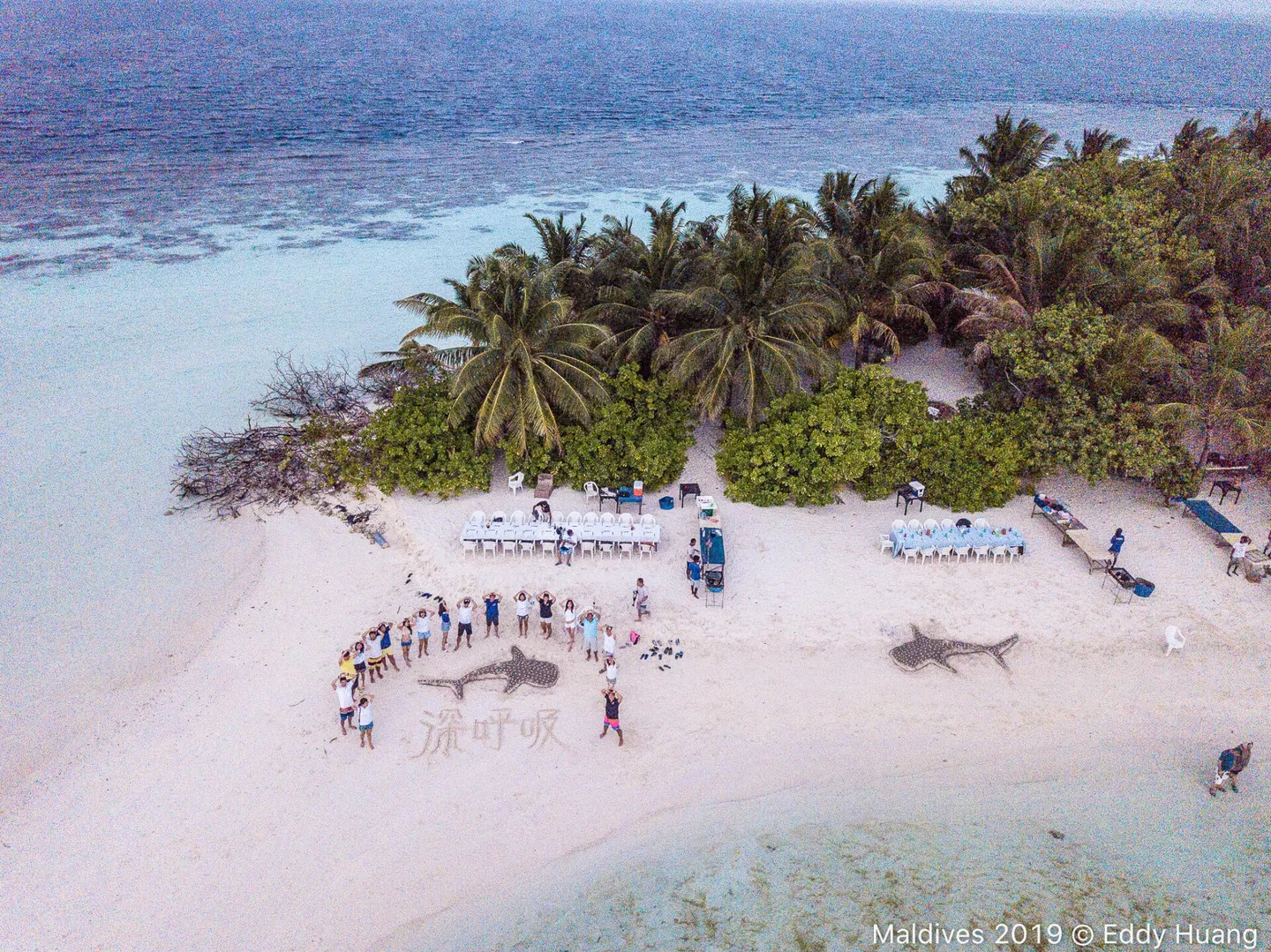
If you have a drone, don't miss this composition.
As the sun dipped lower in the sky, the charcoal grill and candles were lit one by one. If the weather is clear, make sure you catch the sunset — and grab one more unforgettable romantic shot to cap off your desert island adventure!
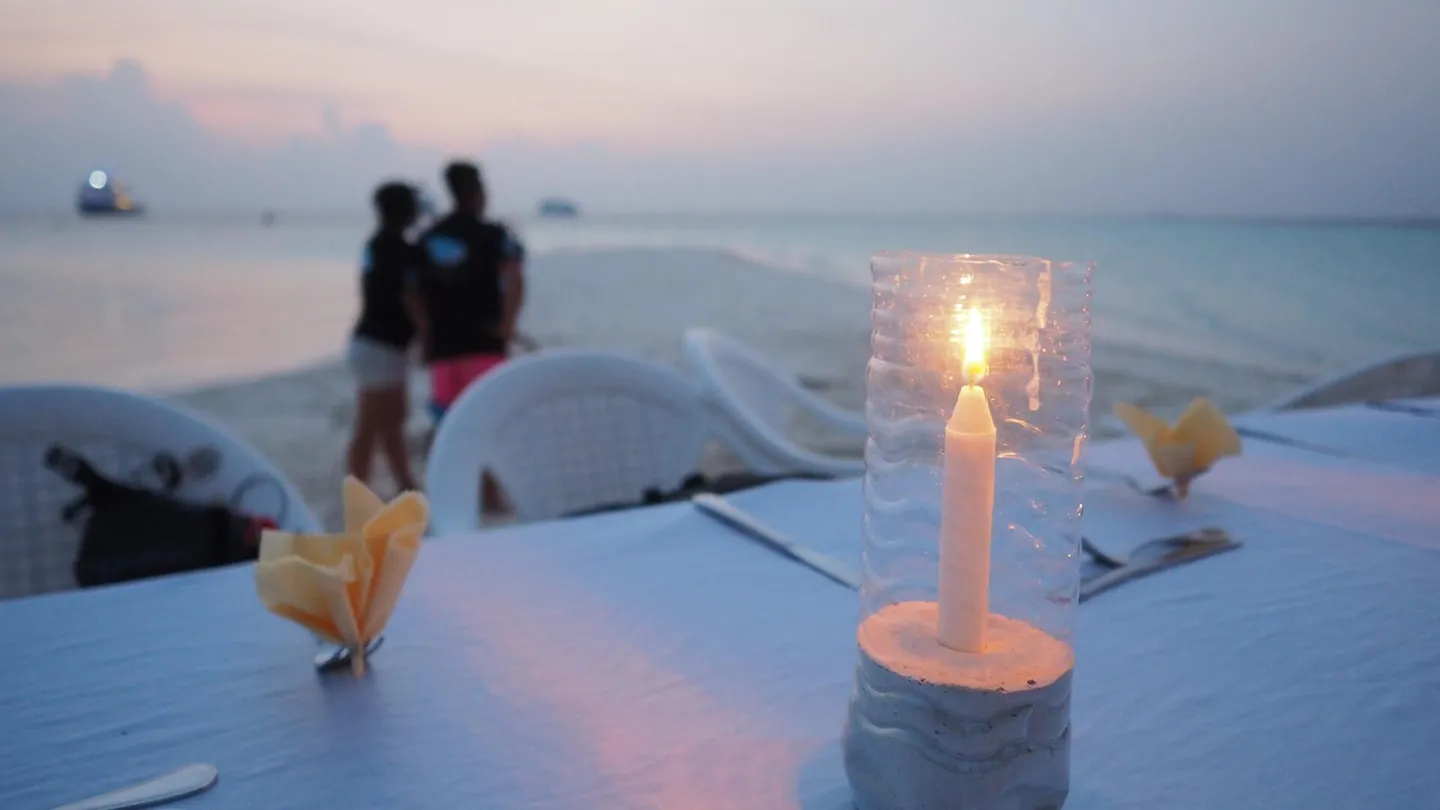
Even the most unromantic person turns romantic in a setting like this.
By the time hunger set in, night had fallen — and that meant it was time to eat. The spread was more than generous: chicken drumsticks, seafood, and pizza among the mains, best enjoyed with a light drink or two. The Editor and fellow dive buddies on this trip were strangers at the start, but through days and nights spent together at sea, we gradually got to know one another — a rare and precious kind of connection that only comes from diving abroad.
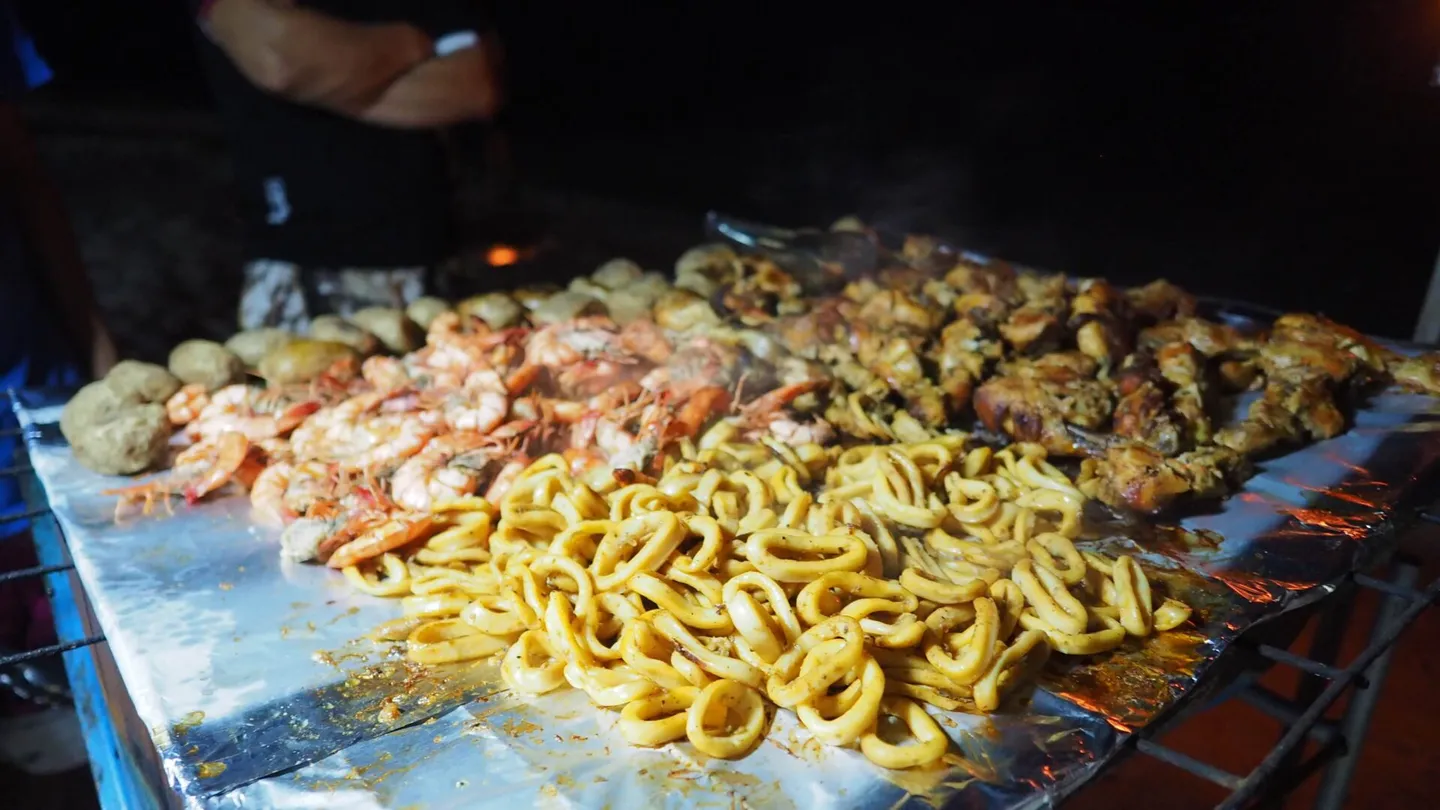
The food on the desert island was excellent too.
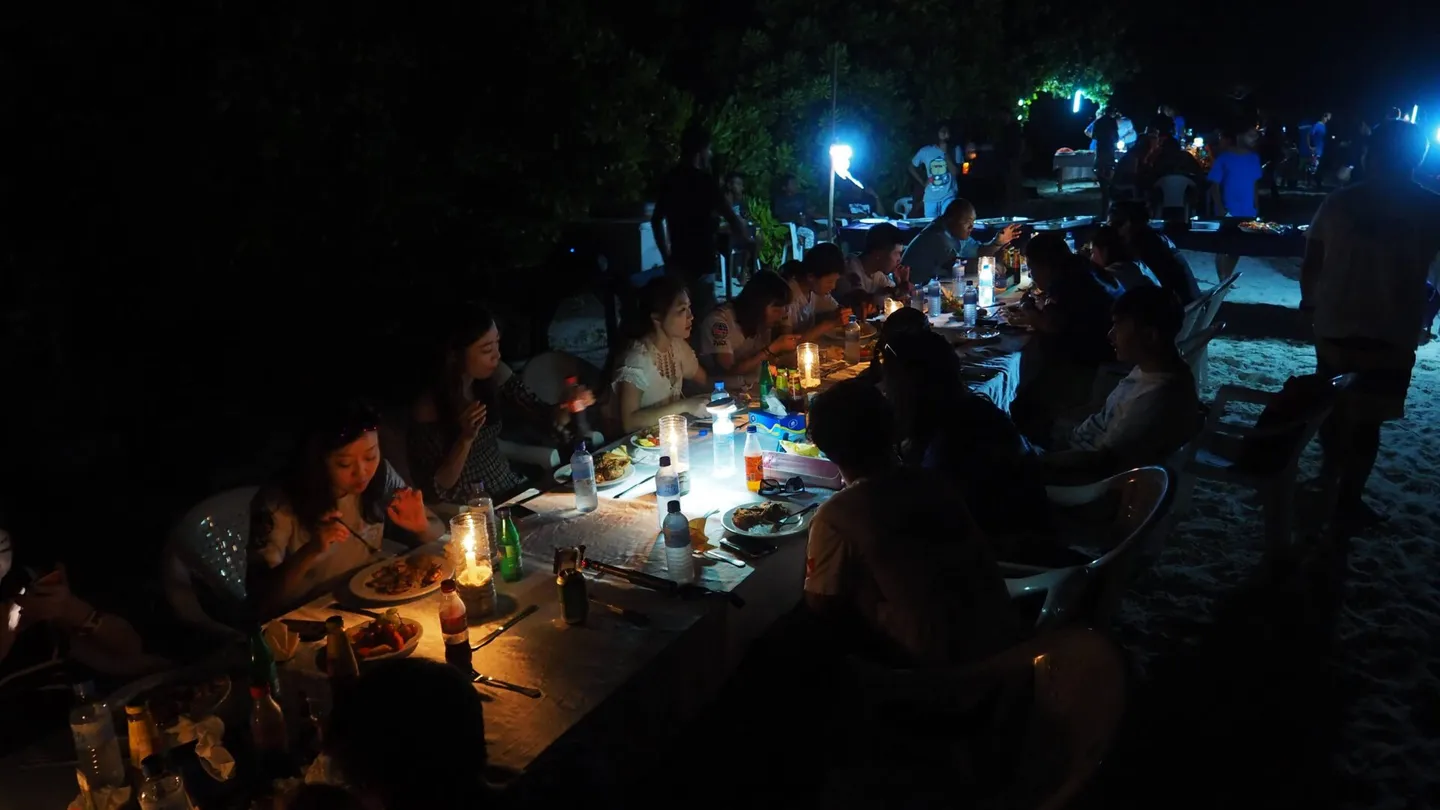
Sharing a meal together, with the sea breeze and sand between our toes — who knows when we'll all meet again?
A Shopping Stroll Around the Capital Island:
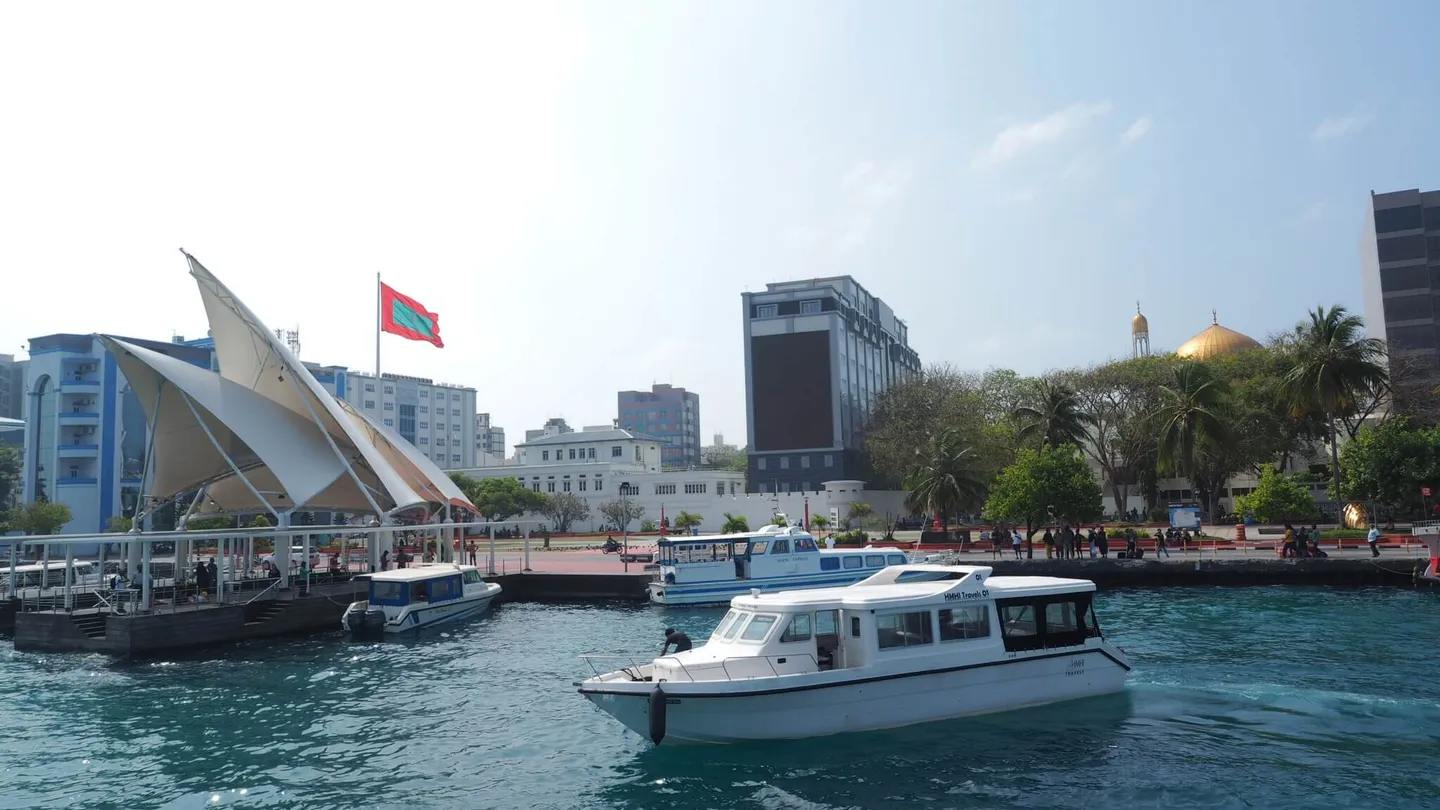
The Presidential Palace comes into view as you pull into port.
On the final morning, the owner arranged a shopping trip to Malé. The capital island is neither huge nor tiny, and as tourists we stuck mostly to the area near the pier. If you want a taste of local life, head to the fish market. Note that while the Maldives has its own currency — the Rufiyaa (MVR) — US dollars are the dominant currency for transactions. Don't make the same mistake as the Editor, who naively spent local currency and thought everything was suspiciously cheap.
1 US dollar ≈ 16 Rufiyaa; 1 Rufiyaa ≈ NT$2
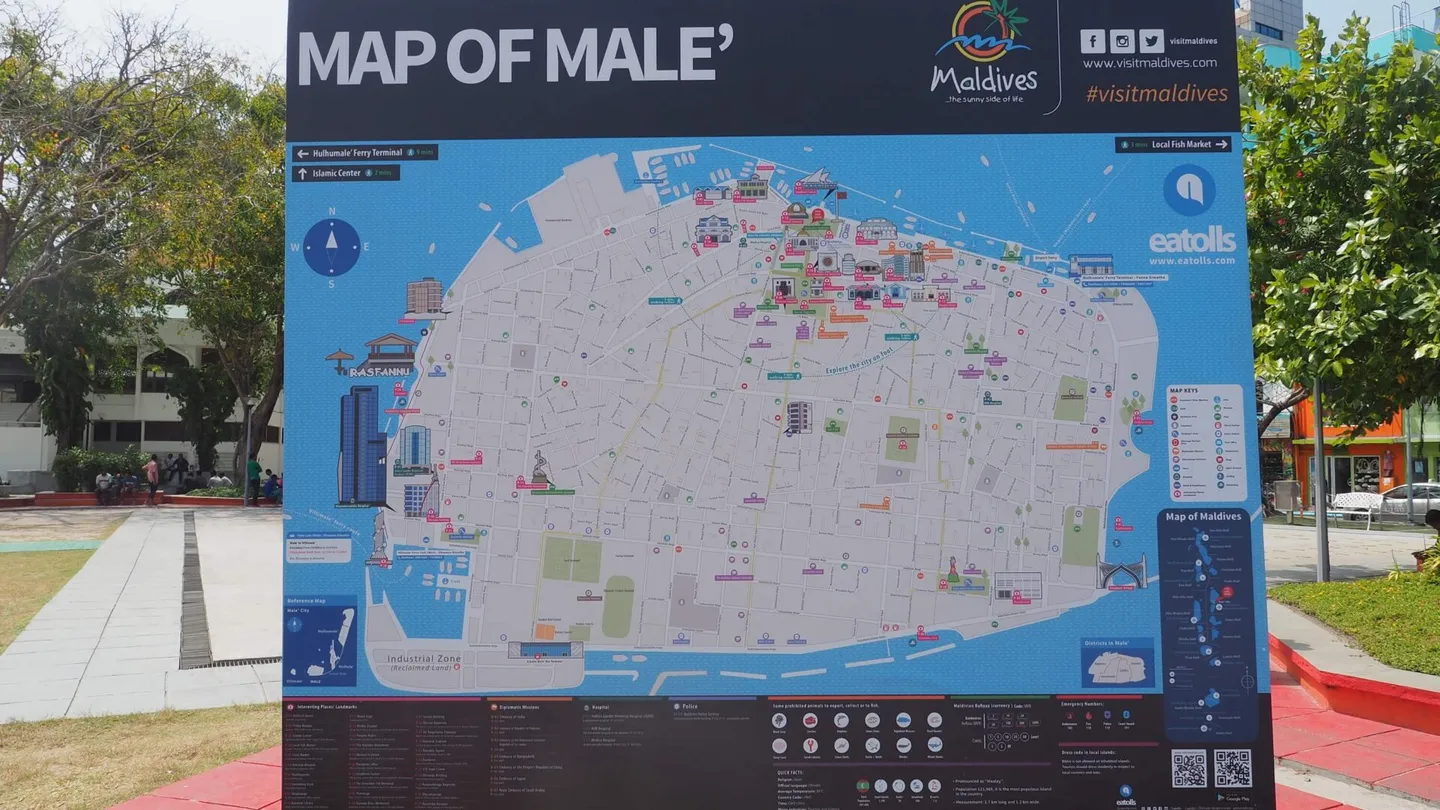
Most activities are concentrated in the small upper section of the capital island.
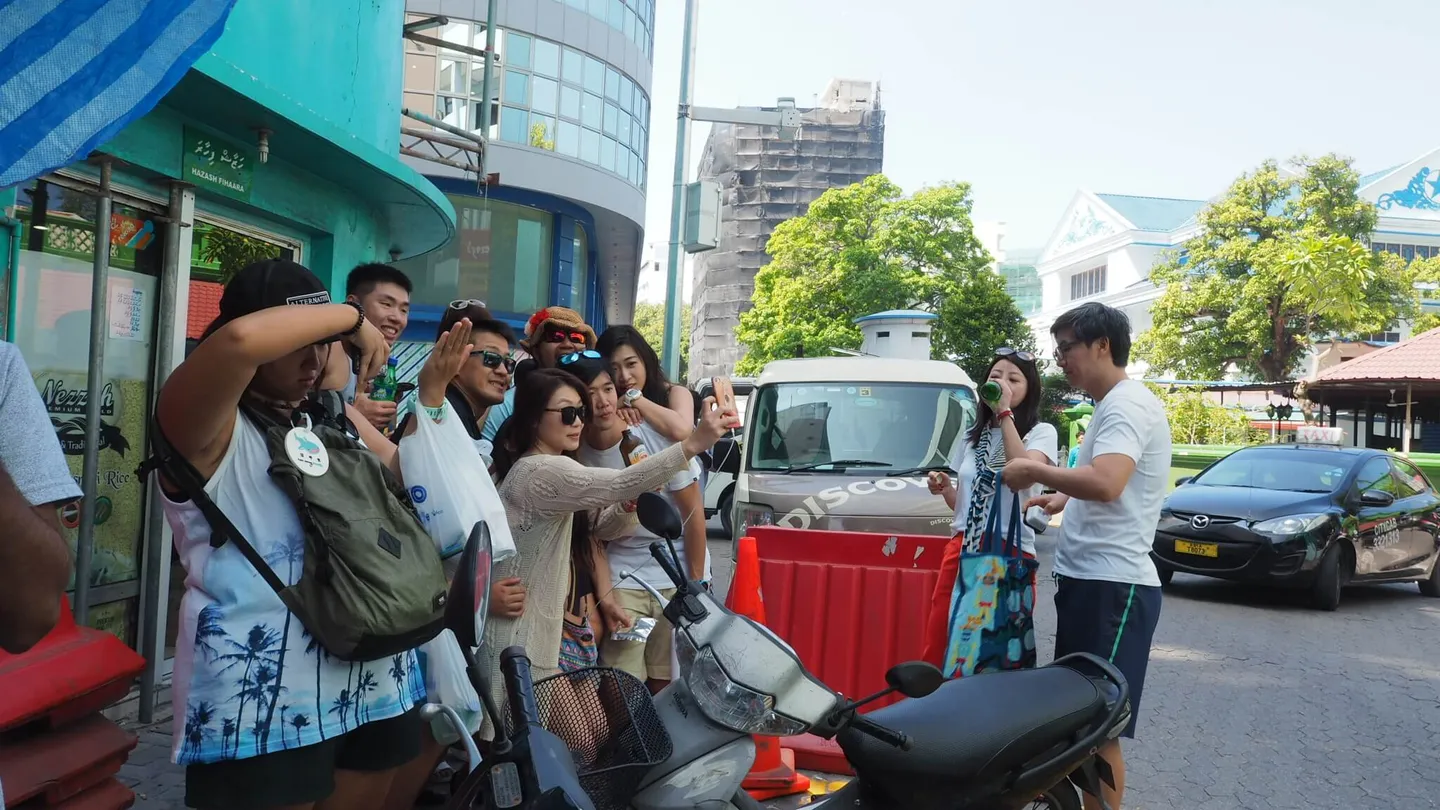
Everyone went a little wild on the streets, snapping photos and having a blast.
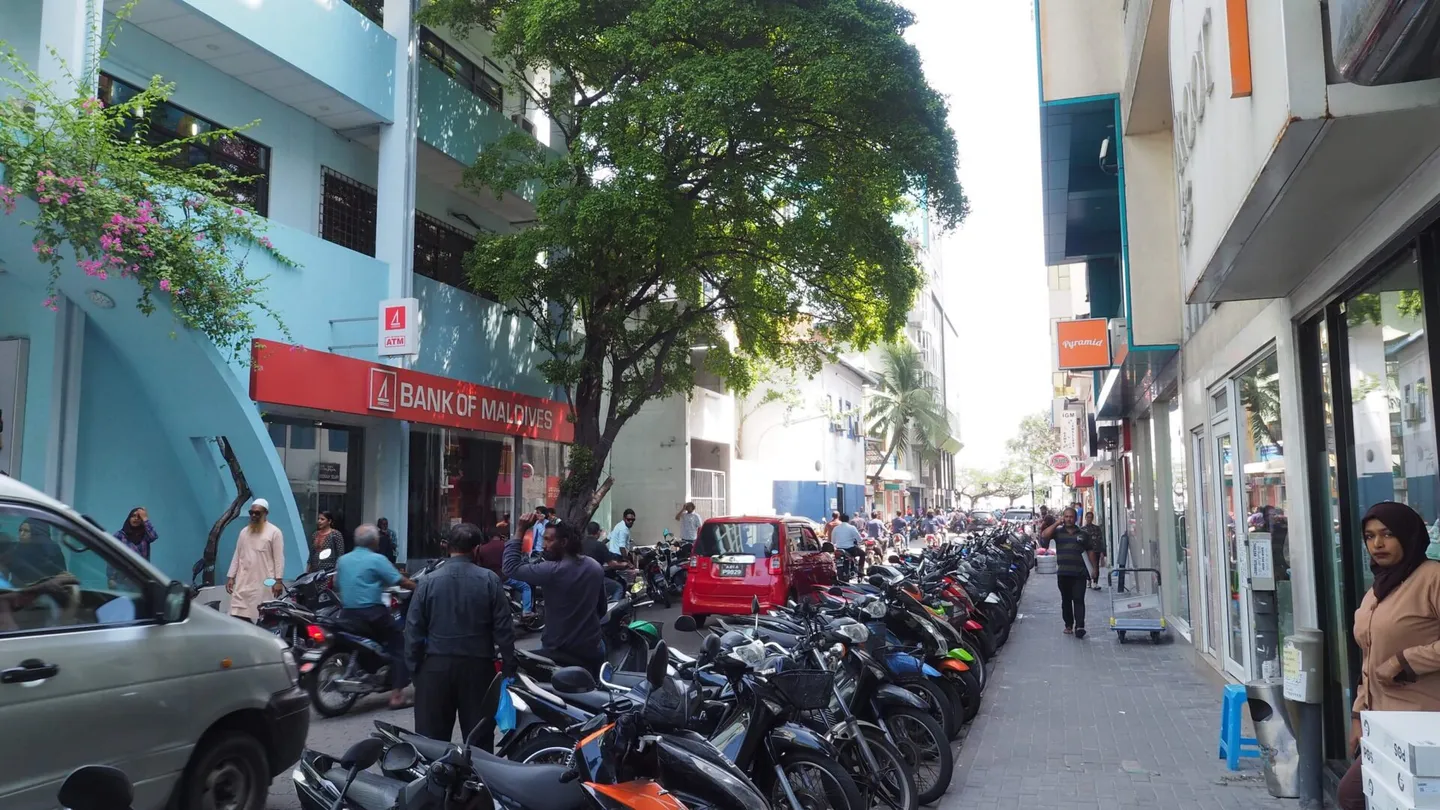
Traffic near the harbour is surprisingly hectic — the number of motorbikes could give Taipei a run for its money — but it's generally safe. Pop into a local supermarket to pick up some unique snacks as souvenirs. If you're after gifts, check beyond the ground-floor shops, as many souvenir stalls are tucked away on the second floor. For anyone running low on cash, ATMs at local banks can dispense foreign currency withdrawals, though some machines only issue Rufiyaa, which may be less practical.
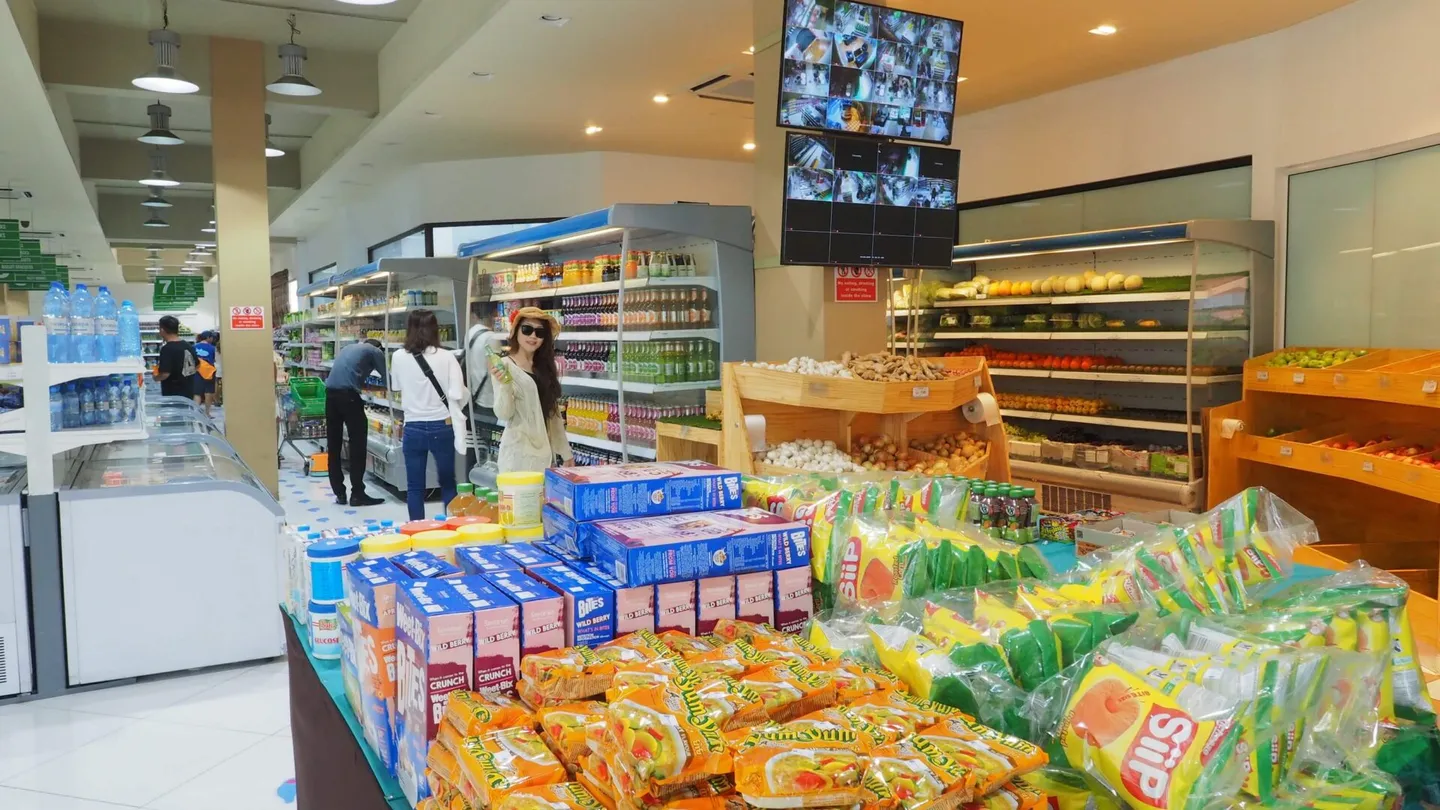
Browsing the supermarket for local snacks to bring home to friends.
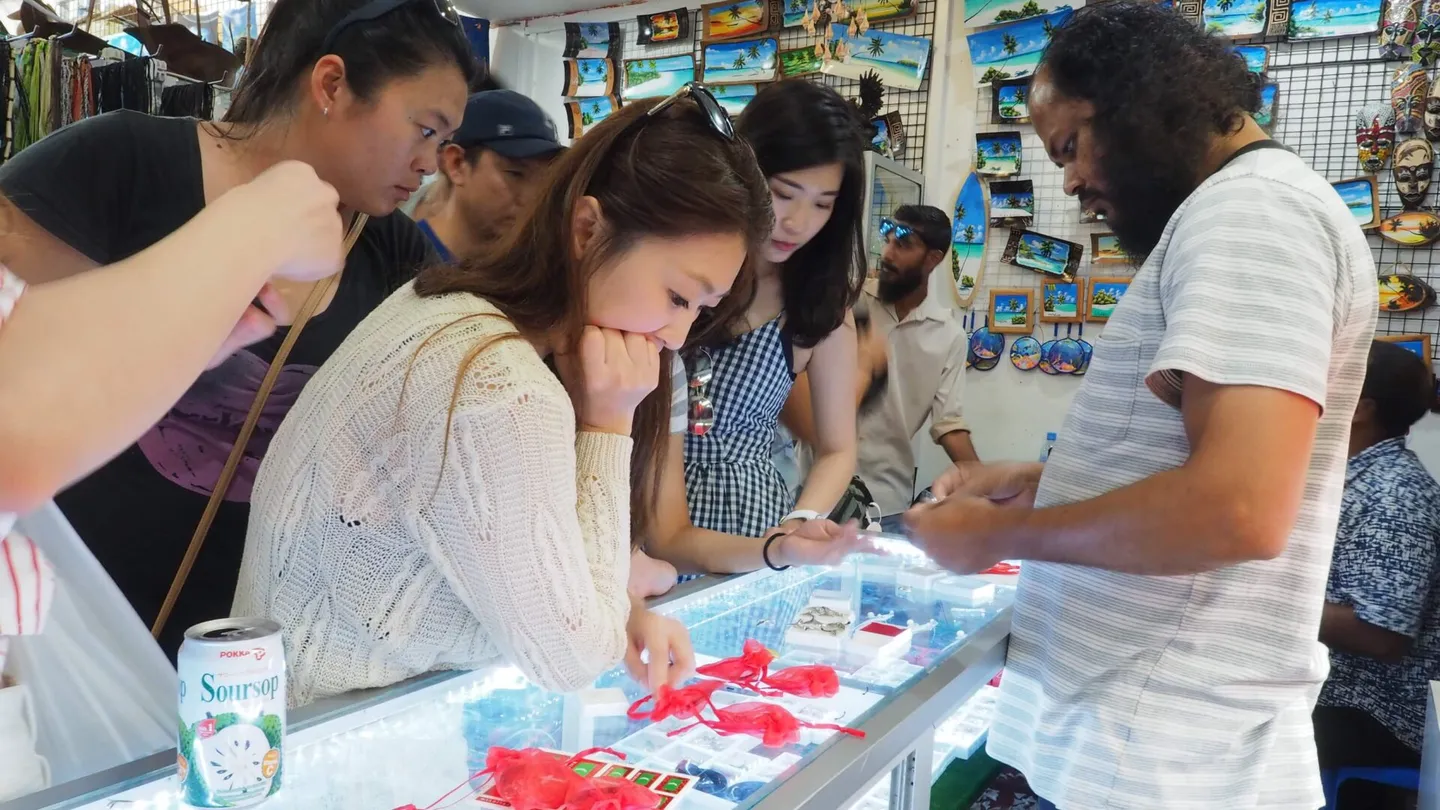
Everyone went a little crazy when they spotted the manta ray necklaces.
What Else Can You Do on the Boat?
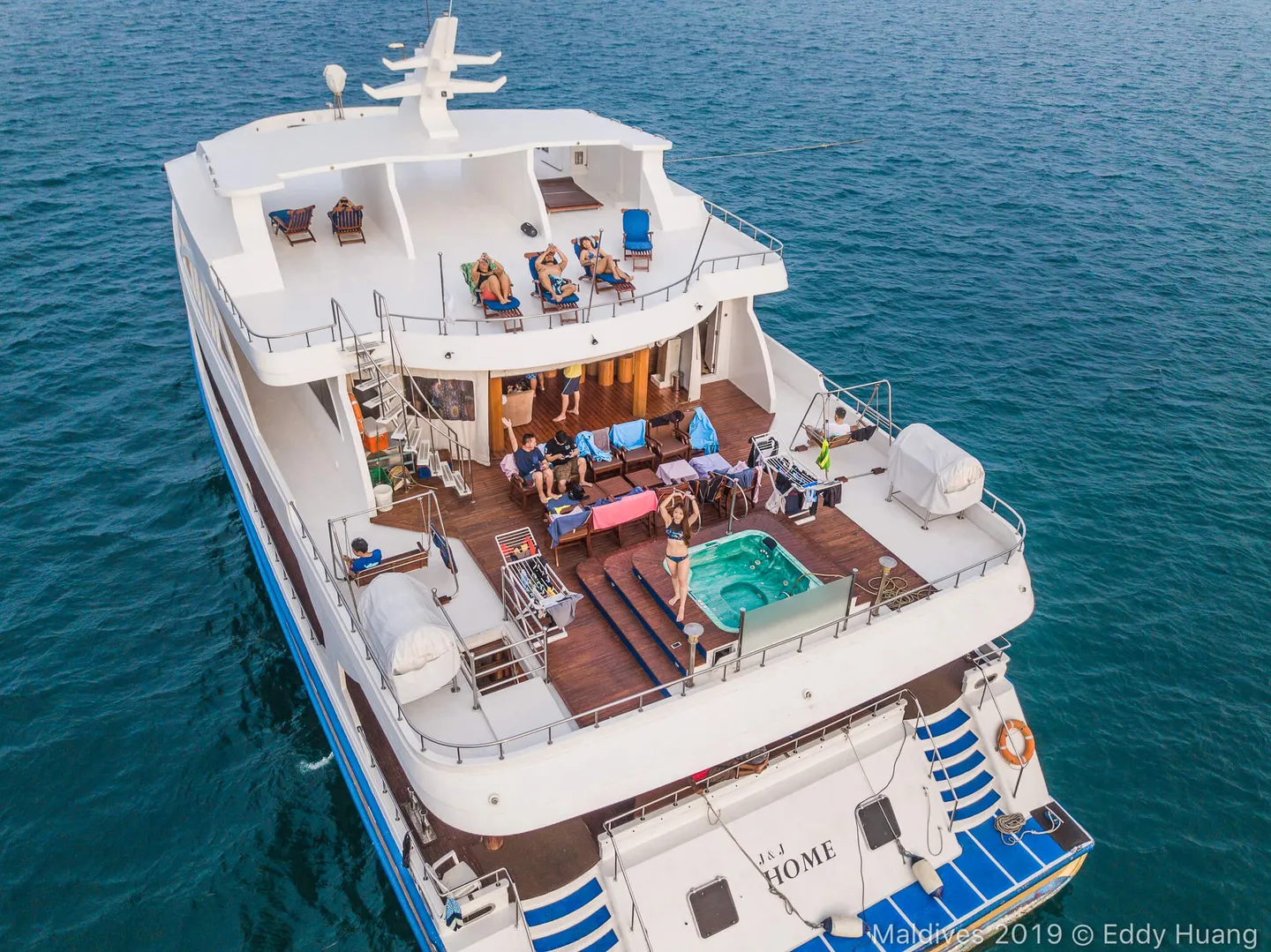
Sunbathing and chatting with friends on deck.
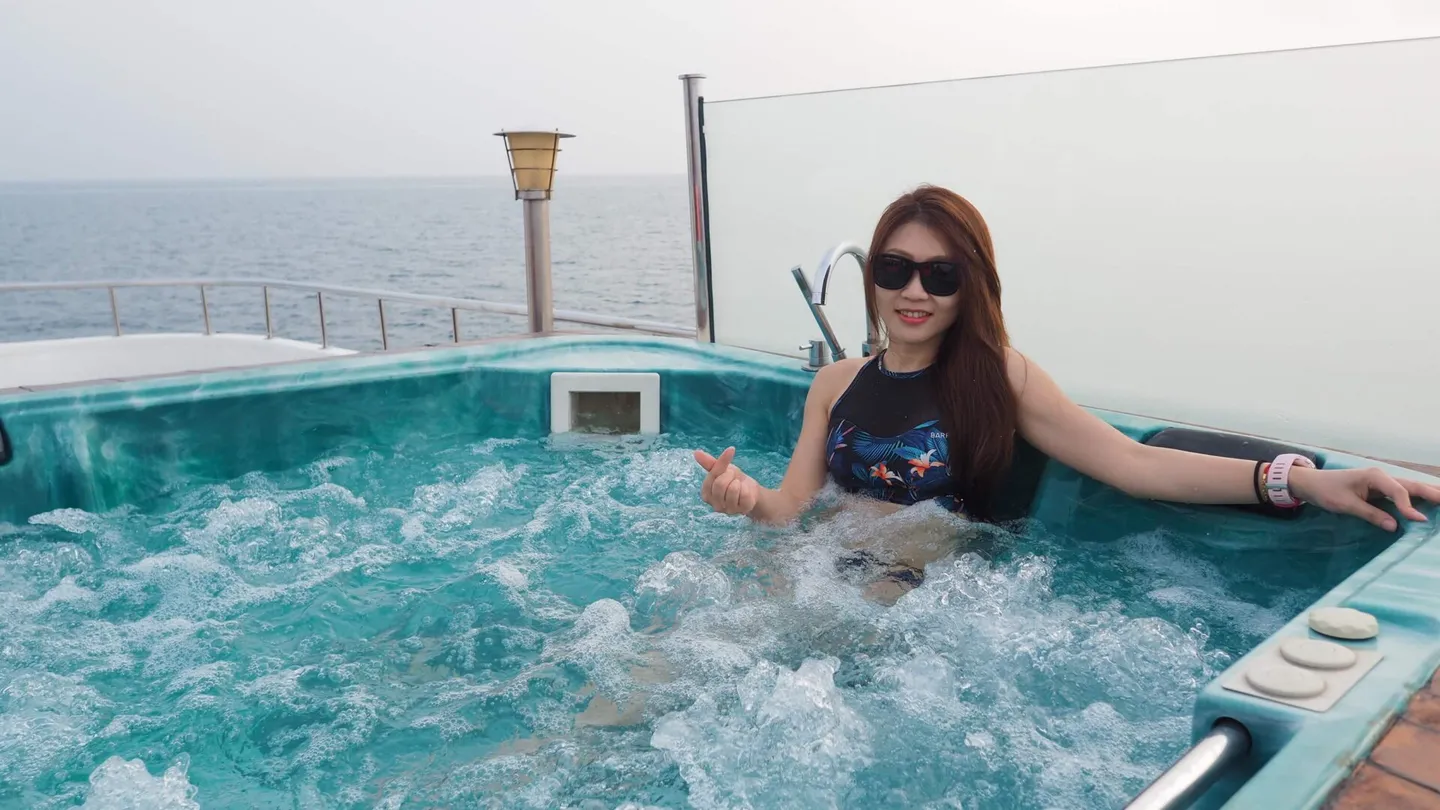
Soaking in the spa on the upper deck — pure bliss.
And with that, our Maldives liveaboard adventure came to a close. We hope this inspires you to experience the Maldives for yourself one day!
A diving itinerary this fulfilling leaves you with nothing but pure satisfaction!
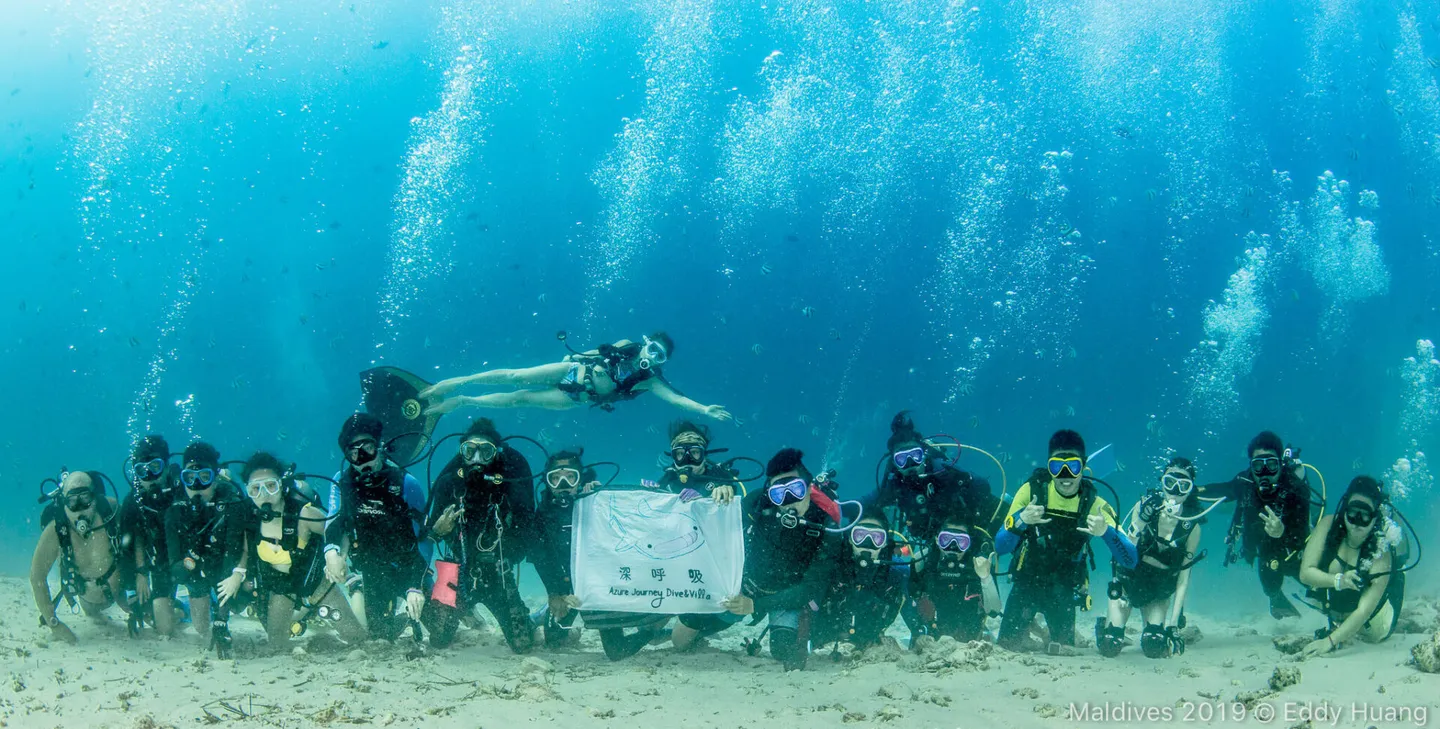
Fate is like the ocean — it gathers friends from all corners of the world to meet on this one boat.
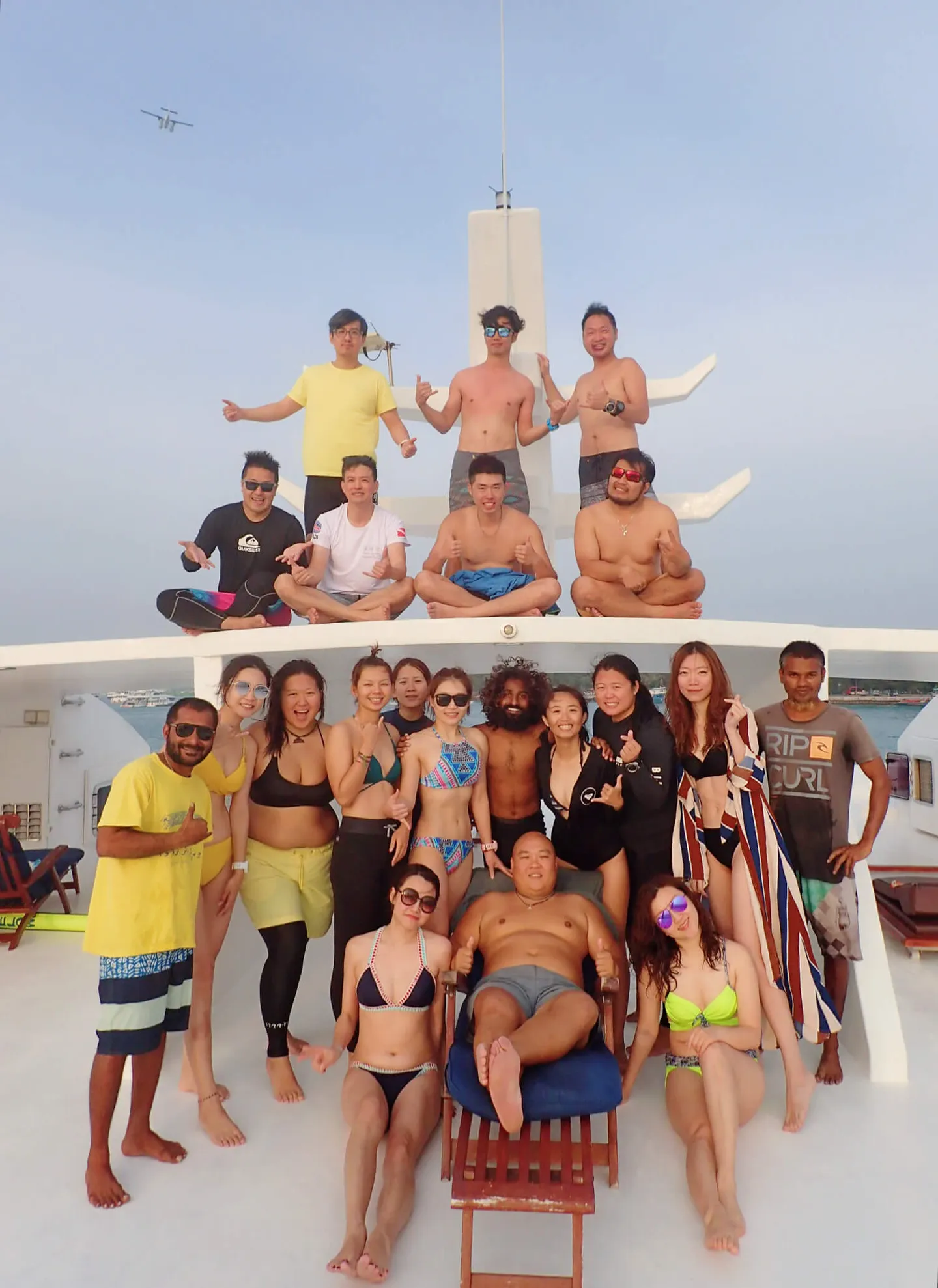
Every face on board radiates the warmth of home.
Further reading:
Frequently Asked Questions
How is a BlueTrend dive trip different from an unknown, no-name dive group?
Choosing us means full peace-of-mind protection and a smooth experience from start to finish. Every trip we run holds to three things.
First, full legal protection and a professional dive leader: we strictly follow Taiwan's travel regulations and provide complete travel-agency liability insurance, travel insurance, trip-inconvenience insurance and dive insurance. Every group is accompanied by a certified, foreign-language dive leader who joins you on both the dives and the land itinerary, liaising seamlessly with local dive shops and operators on your behalf to keep things running smoothly — the person our travellers trust most.
Second, fully licensed with secure payments: every payment goes into a licensed travel agency's account, with multiple safe payment channels (bank transfer, credit card and more) and a legal collect-and-remit receipt, so every transaction is open, transparent and protected, avoiding the fraud and dispute risks of transferring money privately to an individual.
Third, hand-picked quality we vet in person: every trip, dive site and partner shop is scouted on the ground by our own team, from the guides' professionalism and safety standards to the food, lodging, environment and service details on land, all vetted by us so you don't get caught out.
I want to sign up for a dive trip. Are there certification-level or logged-dive requirements?
Each dive site is different, so the entry bar varies. 'Bali Tulamben', for instance, is relatively beginner-friendly. 'Malapascua in the Philippines' is also beginner-friendly, but since thresher sharks tend to cruise between 20 and 30 metres, we recommend AOW certification with 20+ logged dives to enjoy this trip comfortably. For 'the Maldives' or 'Palau', we suggest AOW with 50+ logged dives for a more relaxed experience. If you're not sure whether your experience fits the trip you want, message us and our dive editors will assess it and help you find the trip you'll feel safest on.
Can I join if I'm signing up alone? How are rooms arranged?
Plenty of our travellers sign up solo! For rooms and beds, we prioritise pairing you with a same-gender traveller, and if you'd rather have your own space you can pay the difference to upgrade to a single room. For the diving, our professional leader will pair you with a suitable buddy, and with the happy vibe on our trips you'll quickly make a great group of dive friends. Many people sign up alone, make new friends, and end up organising the next trip together!
Does the trip fee include dive insurance, gear rental, taxes and instructor tips?
It depends on the trip, the destination's regulations and the local operators. Every BlueTrend dive trip has a detailed web page with a clear 'included / not included' list, transparent and with no hidden charges. All payments are collected by a licensed travel agency, with a standard-form contract for your protection.
I'm a new diver / haven't dived in a long time — will I fall behind the group?
Before you complete your booking, our team assesses a suitable trip based on your certification level and experience. Before departure, we strongly recommend taking time to refresh in Taiwan with an instructor, or a fun dive to get your feel back. On the trip itself, our professional dive leader groups and pairs everyone by experience, keeps a close eye underwater on travellers who need extra care, and steps in to help right away.
Will the photos and videos taken during the trip be shared with us?
During the dives, 'safety' is always the leader's top priority, so whenever it's suitable and safe the leader will capture great shots and record the best moments. During or after the trip, we compile a cloud album for all travellers to download, so you go home loaded with memories!
Besides your scheduled trips, can you arrange a private group charter or independent travel for me and my friends?
Absolutely! Besides group trips, we also arrange private group charters and independent travel. We can communicate, enquire and coordinate services with local operators based on your needs, saving you time and effort and taking the language barrier off your plate, to tailor the smoothest, most reassuring dive trip just for you. Contact our LINE support and our editors will arrange it for you!