Contents(3)
To advance ongoing marine conservation efforts, the Keelung City Government this year executed three landmark programs: a baseline ecological survey of the Wanghaixiang Chaojing Bay Resource Conservation Area, a Marine Citizen Scientist training program, and a fish fry release and restocking plan. Together, these three initiatives encompass the key dimensions of basic marine survey, public participation, and ecological restoration for Keelung City — and have yielded impressive results.
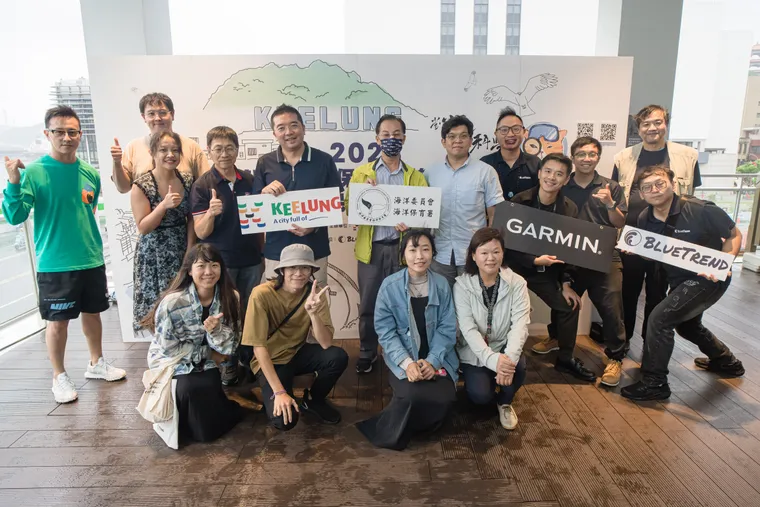
A group photo of attendees and the Marine Citizen Scientists
Keelung City's First Marine Citizen Scientist Training Camp
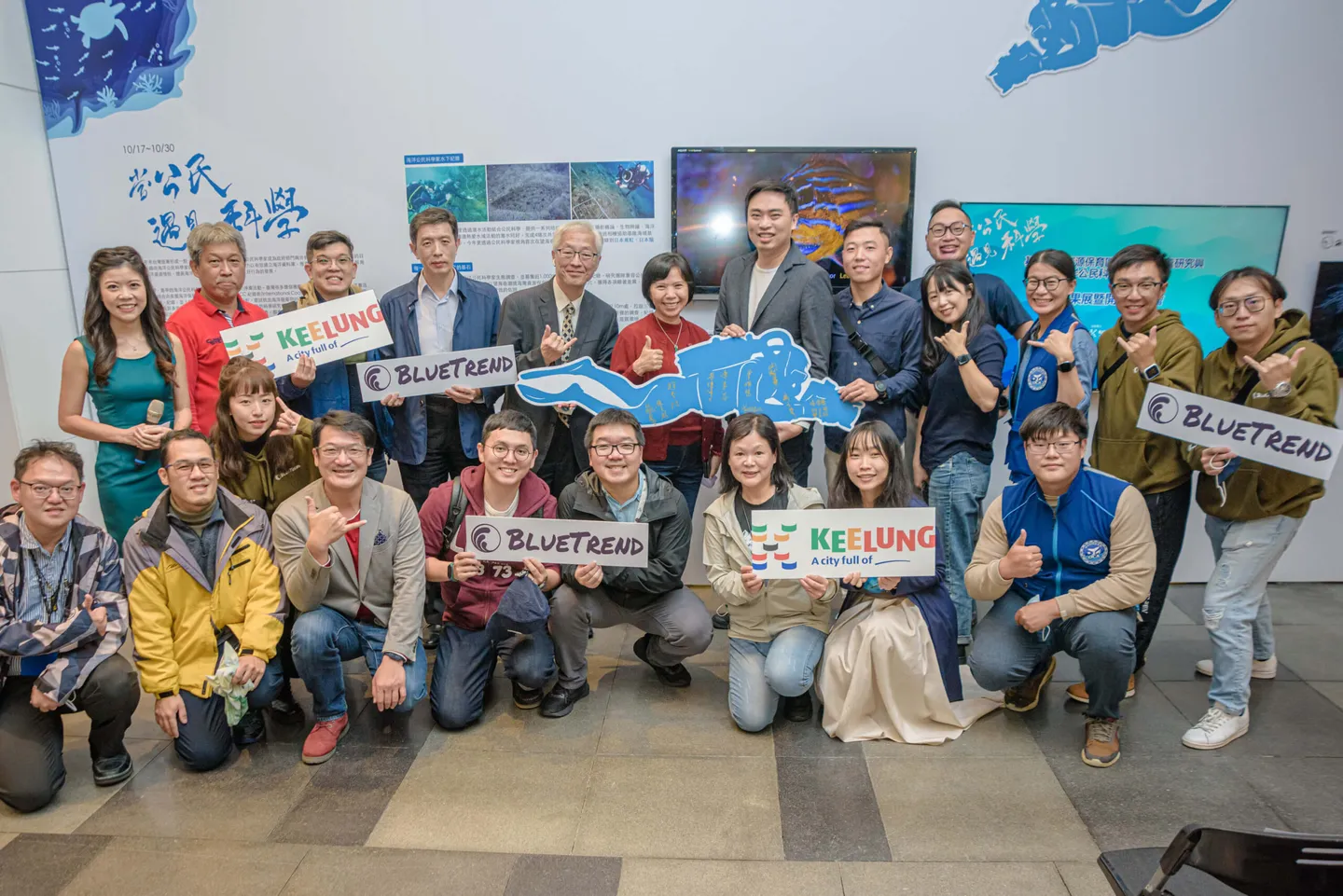
This year, the Keelung City Government partnered with the Ocean Conservation Administration to organize Keelung City's inaugural Marine Citizen Scientist training program. A total of 56 volunteer divers were trained, producing more than 1,000 underwater photographs of marine life. These precious underwater images will be on display from October 17 to 30 at the first-floor lobby of the Keelung East Wharf Mall. The opening ceremony was jointly presided over by Huang Jian-feng, Director of the Keelung City Government's Department of Industrial Development; Chen Su-fen, Director of the National Museum of Marine Science and Technology; Jan Fan-hua, Vice President of National Taiwan Ocean University; Tseng Chen-te, Chief Secretary of the Fisheries Research Institute; Chen Wen-chin, General Manager of the Keelung District Fishermen's Association; and Lin Wen-chi, Director of the Ocean Conservation Administration's North Keelung Station. The public is warmly invited to visit the exhibition during its run.
Director Huang Jian-feng of the Department of Industrial Development noted that while government resources are limited, the power of the community is boundless — and that through the participation of citizen scientists, every individual can contribute to the ocean


The Spirit of Marine Citizen Science: Everyone Can Do Their Part for the Environment
Director Huang Jian-feng of the Department of Industrial Development noted that while government resources are limited, the power of the community is boundless. Through the participation of Marine Citizen Scientists, divers can contribute to the ocean simply by sharing photographic records taken during their recreational dives. Marine Citizen Scientist Jin Ying-yue, who has logged more than 250 scuba tank dives, shared that the ecology of the Chaojing conservation area is remarkably rich — especially the wide variety of strikingly colorful and adorable nudibranchs, making it a veritable "nudibranch paradise." Through the training and guidance offered by the Marine Citizen Scientist program — such as learning to observe and incorporate the surrounding environment of a subject into the composition — divers are able to capture images of genuine research value.
Marine Citizen Scientist and dive instructor Jian Chen-yu documented a rare sighting of a Japanese eagle ray spawning alongside a barrel sponge
Dive instructor Jian Chen-yu, who grew up in the Changtan fishing village adjacent to the Chaojing conservation area, also noted that conducting baseline underwater ecological surveys allows scientific data to clearly demonstrate the tangible conservation outcomes achieved within the Chaojing conservation area. Being able to lead divers in ongoing ecological survey work — and give back to his hometown in the process — makes the endeavor all the more meaningful.
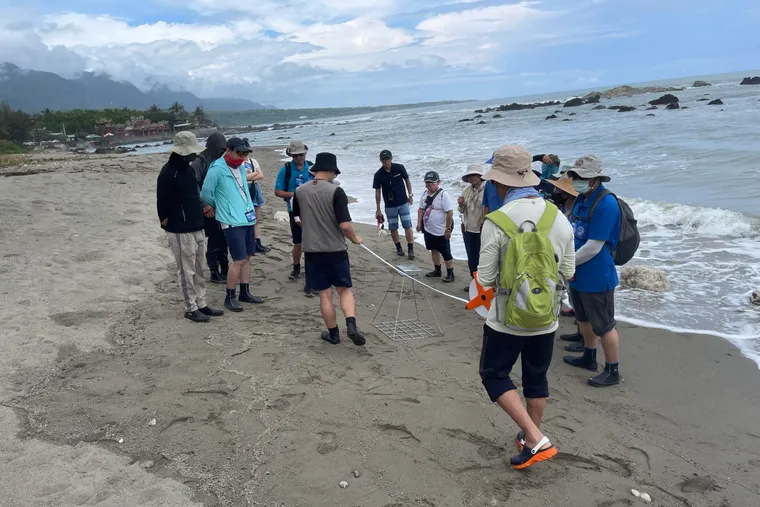
To further enhance marine restoration outcomes, the Keelung City Government's Department of Industrial Development organized three fish fry release events this year, releasing a combined total of 40,000 juvenile fish, including spotted knifejaw (Oplegnathus punctatus), barred knifejaw (Oplegnathus fasciatus), and black porgy (Acanthopagrus schlegelii), to steadily replenish fishery resources. In parallel, eight rounds of baseline ecological surveys were conducted within the Wanghaixiang Chaojing Bay Resource Conservation Area, contributing data of significant benchmark importance to Taiwan's conservation area biological database. The eight Marine Citizen Scientist training sessions held this year produced 56 trained volunteer divers and more than 1,000 precious underwater photographs of marine life — including the first-ever recorded sightings of a Japanese eagle ray and a Japanese wobbegong within the Chaojing area by volunteer divers.
The underwater ecosystem of Keelung's Chaojing conservation area is rich with marine life
Such rare and valuable records enable researchers and government agencies to evaluate the effectiveness of conservation area management and serve as a policy reference for its administration. By continuously accumulating long-term, wide-ranging records of precious underwater life through sustained programs, conservation trends can be identified from large datasets. These trends can in turn serve as evidence for researchers studying habitat and environmental change, and as a vital scientific basis for government agencies to advance marine conservation policy.
Next year, even more members of the public will be invited to join the ranks of Marine Citizen Scientists
Driving Marine Policy Forward Through Local Co-Prosperity and Shared Growth
Director Huang Jian-feng of the Department of Industrial Development stated that Keelung's marine policy starts from the heart and draws on the combined strength of industry, government, academia, and the community — which is what has made the current achievements possible. Looking ahead, the City Government hopes to drive industrial transformation through the "Ocean-Friendly Dive Shop Certification" and the sustainable conservation outcomes of the Marine Citizen Scientist program, positioning the Chaojing conservation area as the most important marine industry and marine education experience hub in northern Taiwan. This would bring greater added value to local residents, while ensuring that future generations can also share in the beauty of the blue ocean.
Every photograph is a cornerstone of marine research provided by the Marine Citizen Scientists
Further reading: