

Contents(8)
- A Once-Packed Dive Destination from a Decade Ago
- The Six Zones of Longdong Bay "Longdong No. 4 / Hemei Elementary School"
- Diving in Longdong Bay: Don't Miss the Rich Ecology Hidden in the Sand
- What Marine Life Can You See at Longdong No. 4 / Hemei Elementary School?
- Exploring the Mysterious Dragon's Back Rock at Longdong No. 4 / Hemei Elementary School
- Best Time to See Marine Life at Longdong No. 4 / Hemei Elementary School
- Recommended Species to Look For at Longdong No. 4 / Hemei Elementary School
- Beyond Longdong No. 4 / Hemei Elementary School — What Else is There to See Diving in Longdong Bay?
Longdong Bay is a key scuba diving base on the Northeast Coast. The bay was carved out by wave erosion eating rapidly into soft shale and sandy shale, and it is home to four major dive sites: Longdong No. 1, No. 1.5, No. 3, and No. 4. No. 4 sits on the southern side of Longdong Bay, backed by Hemei Elementary School — which is why many divers also call it by that name.
Dive instructor Luo Yun-Chang (nicknamed Lao Dan) has more than 20 years of teaching experience. In his earlier years he explored every dive site on the Northeast Coast, but later, needing a gentler environment to rehabilitate an old injury, he fell in love with the easy entry conditions at Longdong No. 4. For nearly 15 years he has shown up here almost every weekend, generously sharing tips on what marine life to look for. Fellow divers have affectionately dubbed him the "Warden of Longdong No. 4."
[caption id="" align="aligncenter" width="1000"]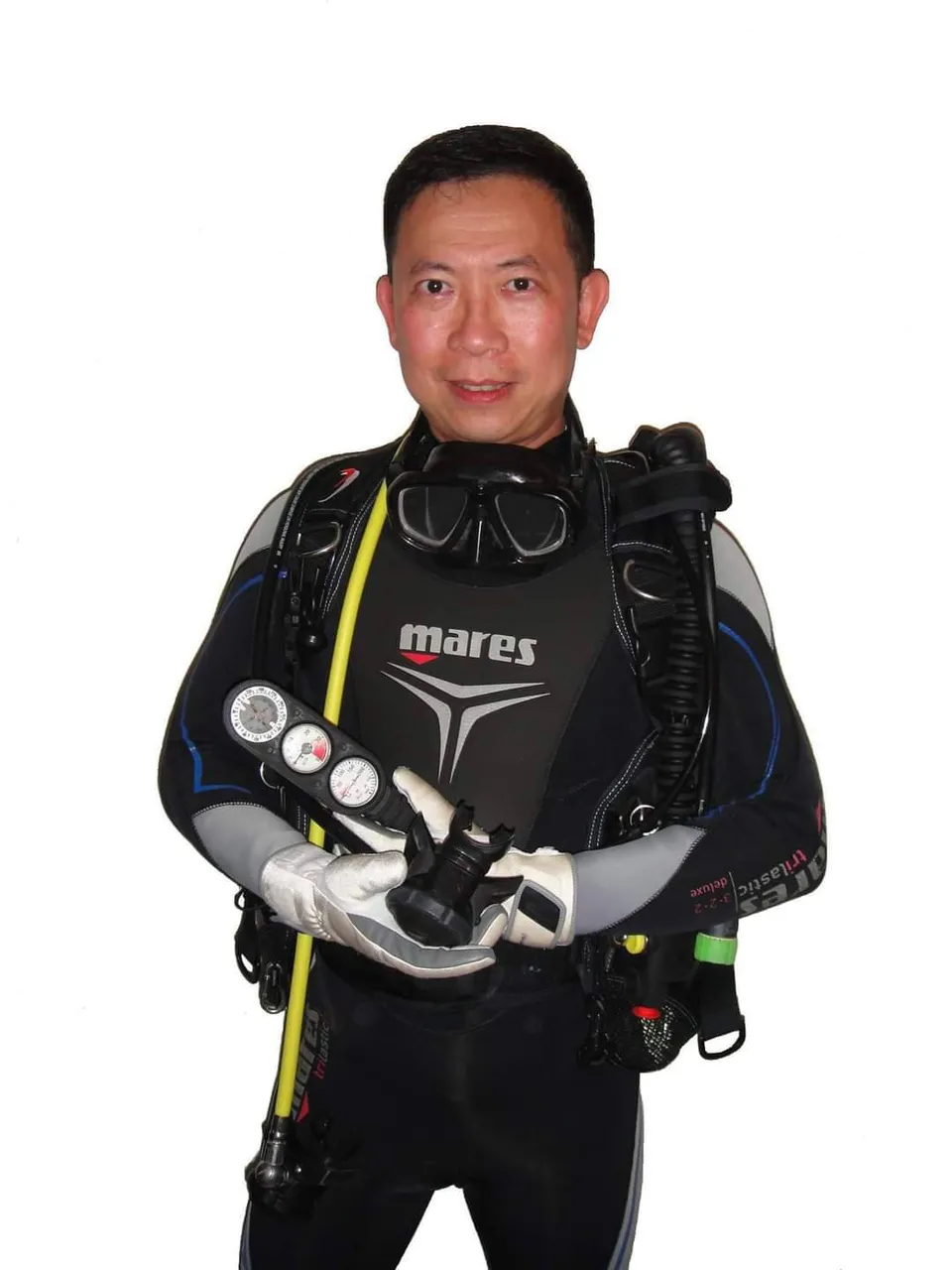 Instructor Luo, intimately familiar with diving in Longdong Bay and affectionately nicknamed the "Warden of Longdong No. 4" by fellow divers.[/caption]
A Once-Packed Dive Destination from a Decade Ago
More than a decade ago, Longdong No. 4 was not the crowded hotspot it is today — many divers regarded it as an unremarkable teaching ground with average marine ecology. Even so, Instructor Luo had a gut feeling there were some unusual creatures waiting to be found. While recovering from his injury, he began methodically exploring the site section by section, privately dividing Longdong No. 4 into six zones based on terrain and features:
The Six Zones of Longdong Bay "Longdong No. 4 / Hemei Elementary School"
- Inner Slope
- Inner Sand Channel
- Dragon Tail Large Gap
- Dragon's Back Rock
- Six-Metre Reef
- Outer Sand Flat
Taking the most popular route as an example — enter the water at the front of the abalone pool (jiukong chi) entry point (as shown in the diagram below), descend, and head in on a bearing of 330 degrees. Within 3 m you will mostly see large boulders, followed by a gently sloping reef zone that descends from 5 to 15 m (the Inner Slope). You then pass through the Inner Sand Channel and Dragon's Back Rock in sequence. Beyond Dragon's Back Rock opens up the wide Outer Sand Flat. Following the Dragon's Back and rounding the Dragon's Head, the cliff face along this stretch is teeming with marine life. Before ending the dive, return to the Inner Slope, complete your safety stop, then head back on a bearing of 150 degrees and exit at the entry point or the newly built trail exit.
[caption id="" align="aligncenter" width="1000"]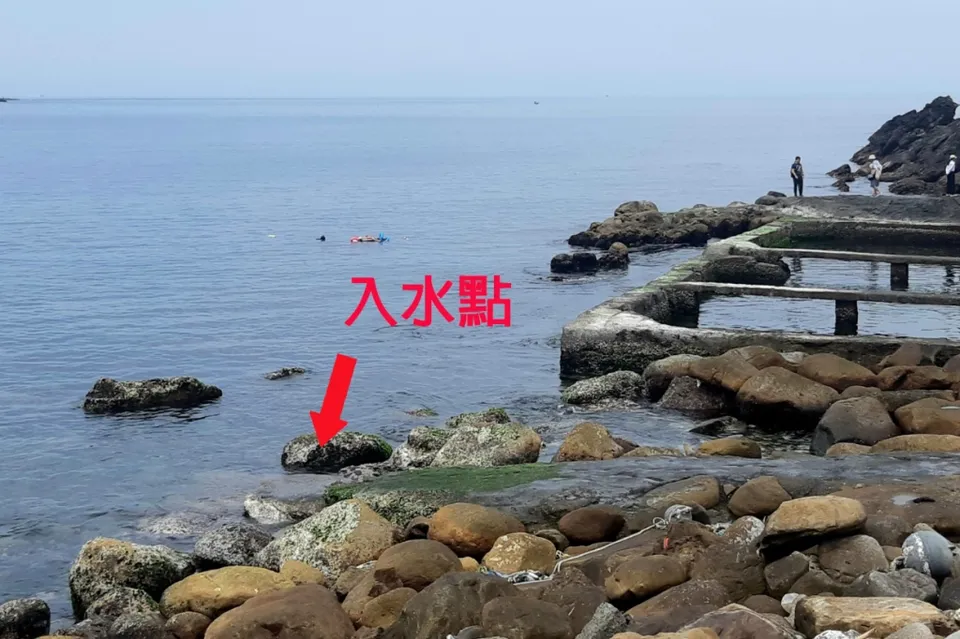 Diving in Longdong Bay — this is the popular entry point for Longdong No. 4 / Hemei Elementary School.[/caption]


Diving in Longdong Bay: Don't Miss the Rich Ecology Hidden in the Sand
The route above takes divers through reef, sand flat, and cliff terrain all within a mere 100–150 m from shore — which is exactly why it is such a favourite. The variety of terrain is also one of the reasons for the site's remarkable species diversity. Over the years, Instructor Luo has recorded at least 230 fish species at Longdong No. 4, along with 10–11 species of cephalopods, more than 20 species of shrimp, more than 60 species of nudibranch, and many more.
What Marine Life Can You See at Longdong No. 4 / Hemei Elementary School?
In terms of species distribution, the large boulder area is home to schools of fish including priacanthids, cardinalfish, batfish, and snappers. On the slope zone you can find harlequin shrimp, octopus, and a wide variety of nudibranch. On the sandy channel floor at the base of the slope, the Trachyrhamphus bicoarctatus — commonly known as the double-ended pipefish or "dried-branch pipefish" — is a regular resident. On both sides of the sand channel in spring and summer you can look for Sepia thurstoni, commonly called the flame cuttlefish; large nudibranch exceeding 30 cm also turn up from time to time, and occasionally a lionfish saunters past like royalty.
[caption id="" align="aligncenter" width="1000"]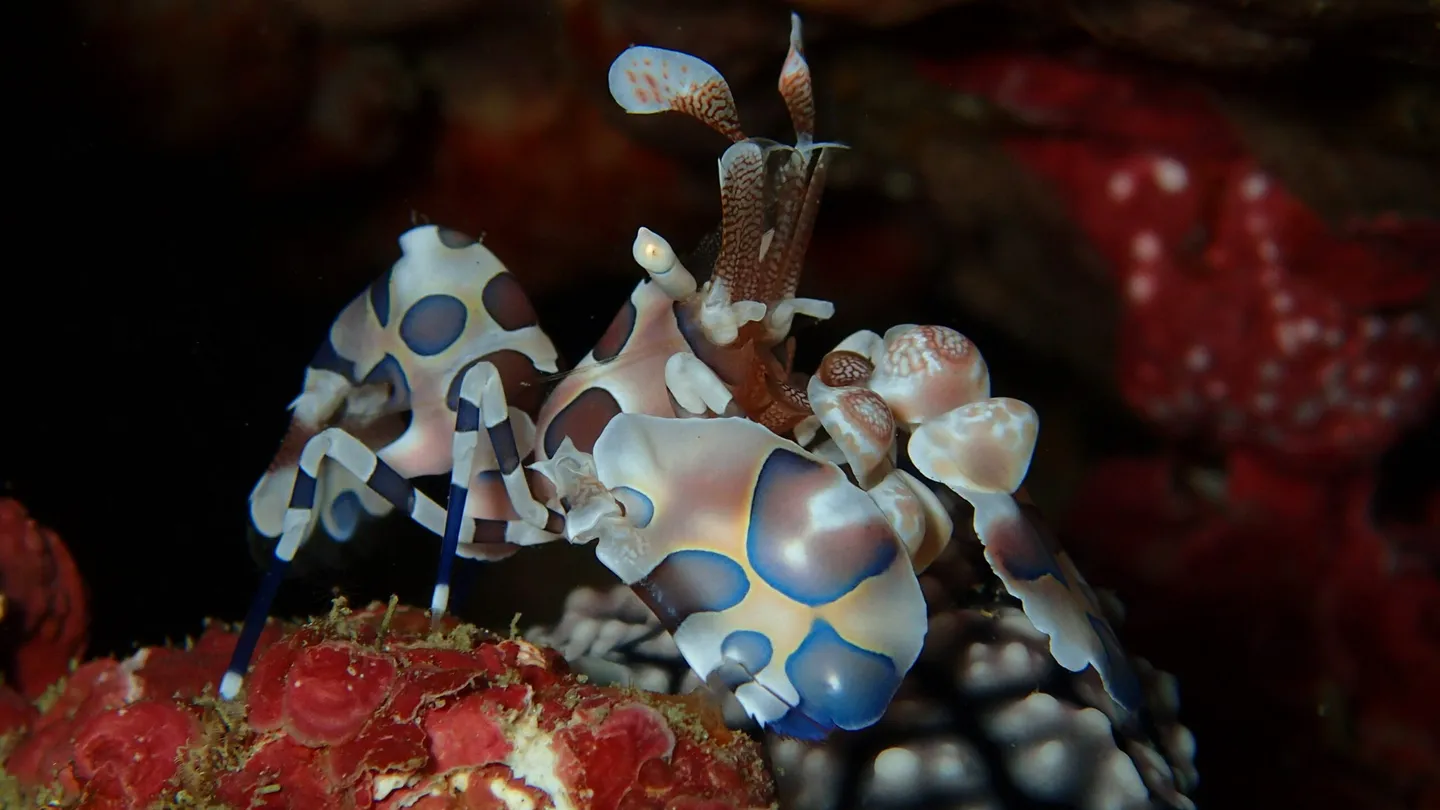 Divers in Longdong Bay have a chance to spot the charming harlequin shrimp. photo credit:羅運昌[/caption]
Exploring the Mysterious Dragon's Back Rock at Longdong No. 4 / Hemei Elementary School
Beyond nudibranch, Dragon's Back Rock is also an excellent spot for watching schools of yellowtail amberjack, snappers, and cardinalfish, as well as razorfish. The outer sand flat beyond Dragon's Back has been jokingly dubbed "Taiwan's version of Lembeh" by Luo and his dive buddies. On this sand flat they have found seahorses brooding juveniles, flatfish and other sand-dwelling species, as well as coconut octopus, mimic octopus, and blue-ringed octopus.
This sand flat has also yielded several new records or previously unnamed species of goby, snake eel, nudibranch, and other rare creatures. But what astonished Instructor Luo most was an encounter near the right-hand side of the bay mouth, where he came face to face with three rare Alectis indicus (Indian threadfish) — each roughly one metre in size — swimming straight toward him without any hesitation and crossing right past him.
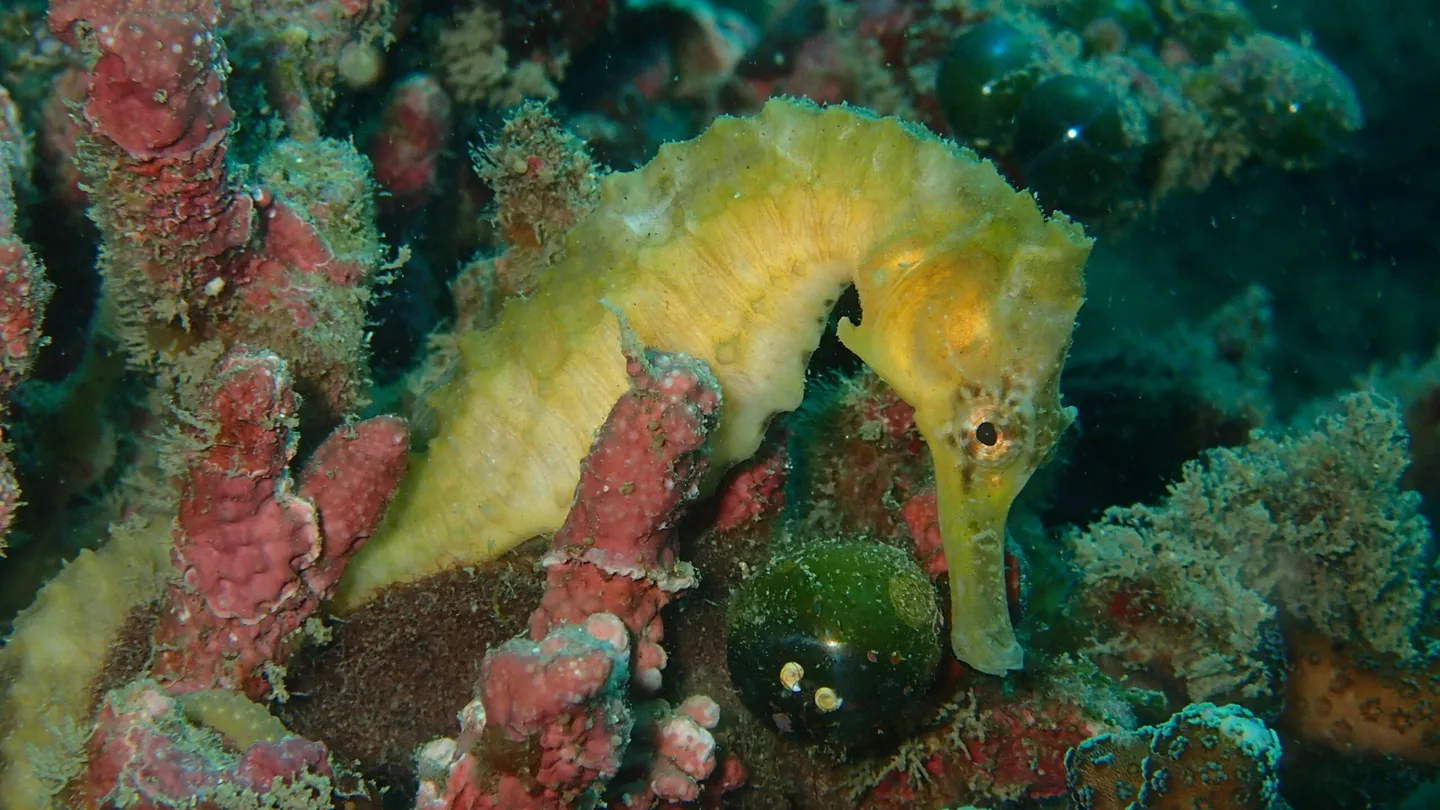
Seahorses are one of the most captivating species at Longdong No. 4. photo credit:羅運昌
Best Time to See Marine Life at Longdong No. 4 / Hemei Elementary School
Breaking down marine life sightings by season, Instructor Luo draws on years of observation: "From April to June you can search for the flame cuttlefish. When water temperatures reach 20–22°C, schools of yellowtail amberjack move in. After June and July it is essentially an ecological explosion — all kinds of creatures are abundant. After August, as autumn sets in, you can look forward to large schools of yellowtail amberjack appearing on the outer sand flat."
Instructor Luo says that at Longdong No. 4, as long as you are willing to learn about the habits of marine life and search with care and patience, you will never run out of surprises. Having witnessed Longdong No. 4's transformation from an overlooked site to a packed hotspot, he believes divers should never limit themselves. He recommends trying out all kinds of dive sites and exploring the wonders of different diving styles. Don't blindly follow others' opinions — follow your own instincts, dive at ease, and dive happily. Sometimes the most unassuming and modest dive site is exactly where the most extraordinary surprises are waiting.
Recommended Species to Look For at Longdong No. 4 / Hemei Elementary School
-
Flatfish: Many species of flatfish inhabit the sandy bottom at Longdong. They are often overlooked, but they actually display fascinating behavioural ecology.
-
Mimic octopus: Also known as the "mystery guest," it lives on the sand flat and uses its long, slender eight arms to mimic a variety of different marine creatures.
-
Seahorse: Commonly found on soft coral or seaweed on the sandy bottom. Males and females differ in appearance; males help females by carrying and brooding the eggs.
Special thanks to marine life consultant for this article — Wox Lee
Beyond Longdong No. 4 / Hemei Elementary School — What Else is There to See Diving in Longdong Bay?
【Taiwan Northeast Coast 82-5k】Dive Site Introduction – A Macro Paradise Along the Coastal Highway
【Carol's Dive Diary】The Cradle of Beginner Divers in Northern Taiwan – Longdong No. 3: The "Stairway to Heaven" for Diving Beginners
【Carol's Dive Diary】Love at First Sight with Taiwan's Northeast Coast Dive Sites — Where a Passion for Diving Began
【Carol's Dive Diary】Taiwan Northeast Coast Dive Site – Yingge Rock: A Special Dive Trip to Clean the Ocean and Remove Wooden Shrimp Traps
【Carol's Dive Diary】Taiwan Northeast Coast Dive Site – Mosquito Pit (Hemei St. / 83.9K): The Adorable "Beginner's Village"
References:
Frequently Asked Questions
How is a BlueTrend dive trip different from an unknown, no-name dive group?
Choosing us means full peace-of-mind protection and a smooth experience from start to finish. Every trip we run holds to three things.
First, full legal protection and a professional dive leader: we strictly follow Taiwan's travel regulations and provide complete travel-agency liability insurance, travel insurance, trip-inconvenience insurance and dive insurance. Every group is accompanied by a certified, foreign-language dive leader who joins you on both the dives and the land itinerary, liaising seamlessly with local dive shops and operators on your behalf to keep things running smoothly — the person our travellers trust most.
Second, fully licensed with secure payments: every payment goes into a licensed travel agency's account, with multiple safe payment channels (bank transfer, credit card and more) and a legal collect-and-remit receipt, so every transaction is open, transparent and protected, avoiding the fraud and dispute risks of transferring money privately to an individual.
Third, hand-picked quality we vet in person: every trip, dive site and partner shop is scouted on the ground by our own team, from the guides' professionalism and safety standards to the food, lodging, environment and service details on land, all vetted by us so you don't get caught out.
I want to sign up for a dive trip. Are there certification-level or logged-dive requirements?
Each dive site is different, so the entry bar varies. 'Bali Tulamben', for instance, is relatively beginner-friendly. 'Malapascua in the Philippines' is also beginner-friendly, but since thresher sharks tend to cruise between 20 and 30 metres, we recommend AOW certification with 20+ logged dives to enjoy this trip comfortably. For 'the Maldives' or 'Palau', we suggest AOW with 50+ logged dives for a more relaxed experience. If you're not sure whether your experience fits the trip you want, message us and our dive editors will assess it and help you find the trip you'll feel safest on.
Can I join if I'm signing up alone? How are rooms arranged?
Plenty of our travellers sign up solo! For rooms and beds, we prioritise pairing you with a same-gender traveller, and if you'd rather have your own space you can pay the difference to upgrade to a single room. For the diving, our professional leader will pair you with a suitable buddy, and with the happy vibe on our trips you'll quickly make a great group of dive friends. Many people sign up alone, make new friends, and end up organising the next trip together!
Does the trip fee include dive insurance, gear rental, taxes and instructor tips?
It depends on the trip, the destination's regulations and the local operators. Every BlueTrend dive trip has a detailed web page with a clear 'included / not included' list, transparent and with no hidden charges. All payments are collected by a licensed travel agency, with a standard-form contract for your protection.
I'm a new diver / haven't dived in a long time — will I fall behind the group?
Before you complete your booking, our team assesses a suitable trip based on your certification level and experience. Before departure, we strongly recommend taking time to refresh in Taiwan with an instructor, or a fun dive to get your feel back. On the trip itself, our professional dive leader groups and pairs everyone by experience, keeps a close eye underwater on travellers who need extra care, and steps in to help right away.
Will the photos and videos taken during the trip be shared with us?
During the dives, 'safety' is always the leader's top priority, so whenever it's suitable and safe the leader will capture great shots and record the best moments. During or after the trip, we compile a cloud album for all travellers to download, so you go home loaded with memories!
Besides your scheduled trips, can you arrange a private group charter or independent travel for me and my friends?
Absolutely! Besides group trips, we also arrange private group charters and independent travel. We can communicate, enquire and coordinate services with local operators based on your needs, saving you time and effort and taking the language barrier off your plate, to tailor the smoothest, most reassuring dive trip just for you. Contact our LINE support and our editors will arrange it for you!

![[Philippines – Malapascua] Reunited with the Dreamlike Thresher Shark After 3 Years!](/_astro/%E8%8F%B2%E5%BE%8B%E8%B3%93%E5%AA%BD%E5%AA%BD%E5%B3%B6%E9%95%B7%E5%B0%BE%E9%AF%8A_vqonr.webp)
![[Philippines · Bohol] Taiwan's #1 Representative! Exclusive Dive Site Discoveries at Bholdex 2023 — No Secrets Held Back, feat. Enjoyislands](/_astro/DSC0587601-2_C3xEx.webp)