

Contents(7)
- Getting to Longdong Site 3 Means Crossing the "Stairway to Heaven"
- Longdong Site 3's Leg-Strengthening Workout for Divers
- What You'll Find Underwater at Longdong Site 3
- The Surprises Longdong Site 3 Has in Store for Beginner Divers
- A Special Underwater Guest at Longdong Site 3
- The Editor's Roundup: Love Snorkeling at Longdong? Go Deeper and See So Much More!
- Recommended Dive Sites at Longdong and Around Northern Taiwan — Dive In from Snorkeling to Scuba Diving!
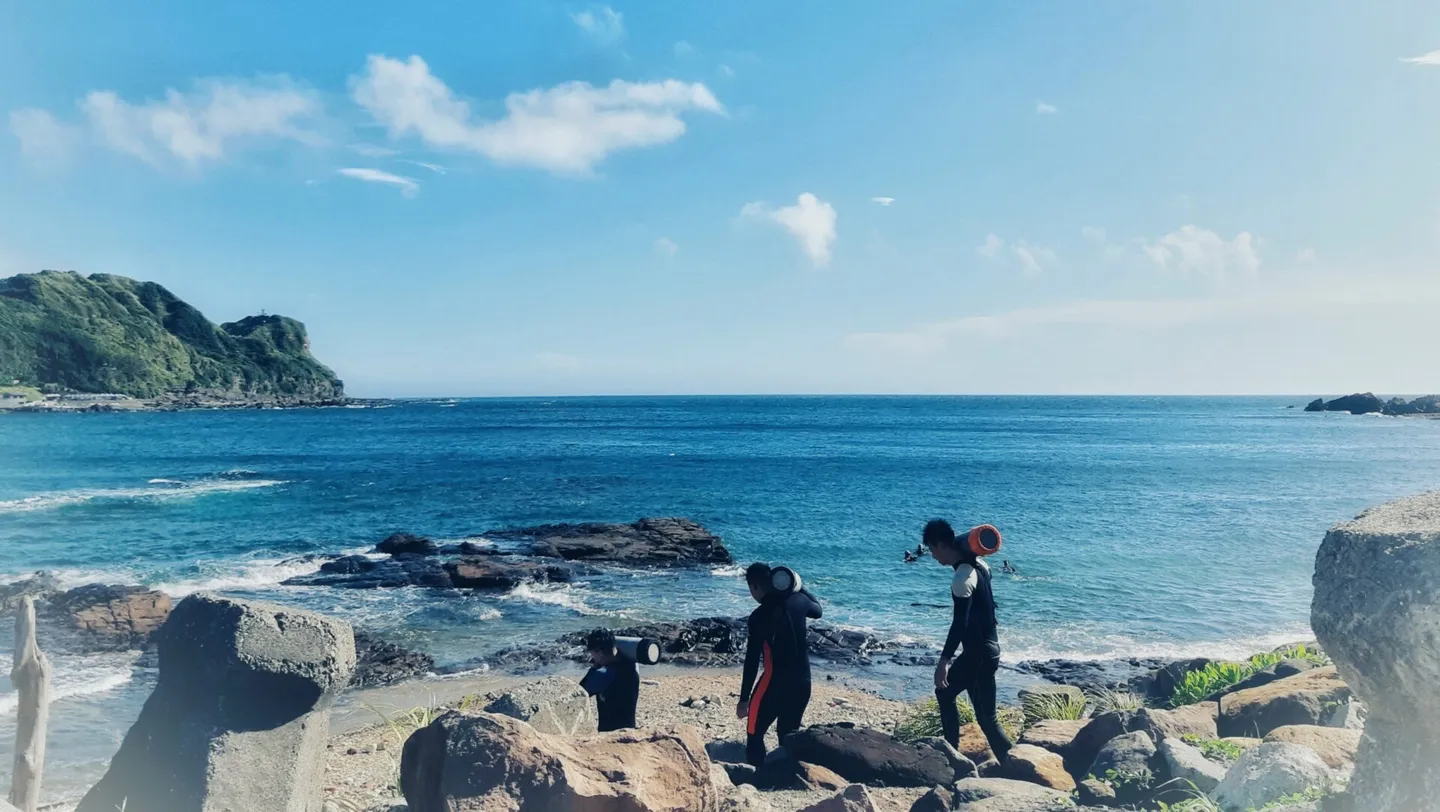
When divers organize group dive trips, the most commonly heard dive-count thresholds are 30, 70, and 100 logged dives. On September 1, 2019, I returned to Longdong Site 3 to complete my 70th dive. As I stood looking at this training ground for divers, memories came flooding back.
I still remember the first time Instructor Ada introduced Longdong Site 3 to us before we'd ever been there: "When we head down to Longdong Site 3 in a bit, you'll pass a stretch we call the 'Stairway to Heaven.' Why do we call it that? You'll understand once you get there!"
Getting to Longdong Site 3 Means Crossing the "Stairway to Heaven"
And once I got there, I understood. To reach Longdong Site 3, you have to kit up in full gear, scuba tank and all, clamber over a low sea wall, and then make your way down a steep slope. At the time, I had zero open-water training experience. Just imagining myself hauling a scuba tank down there felt like quite an accomplishment. The reality, however, was far more grueling. The slope was steep, the tank was heavy, and keeping my footing on the rocks was a constant battle. By the time I reached the shoreline, I was completely out of breath — and everyone else was already ready to dive while I was still gasping. That descent is genuinely punishing, which is exactly why it's called the "Stairway to Heaven."
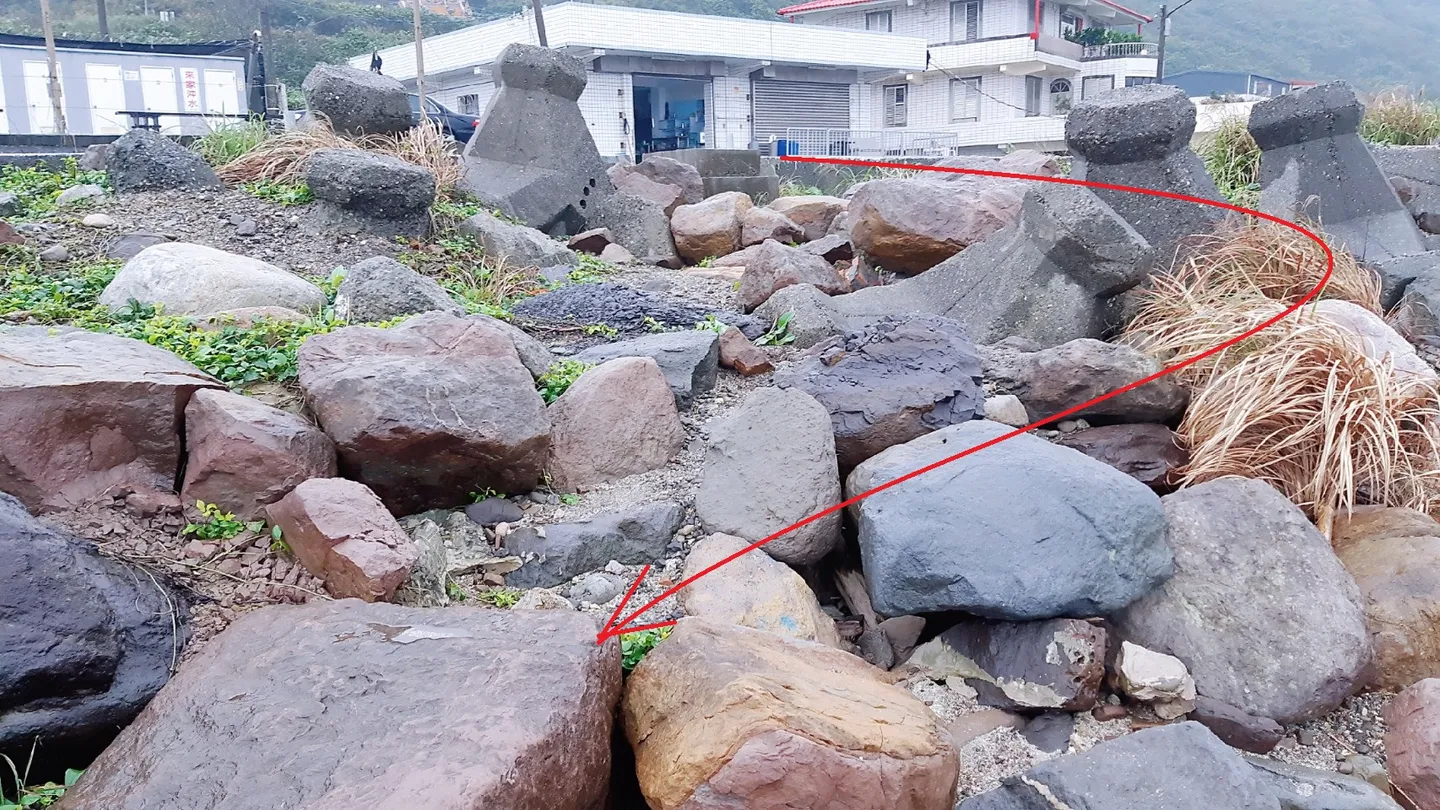
The red line marks the "Stairway to Heaven" route from top to bottom — for me back then, it was intimidatingly steep
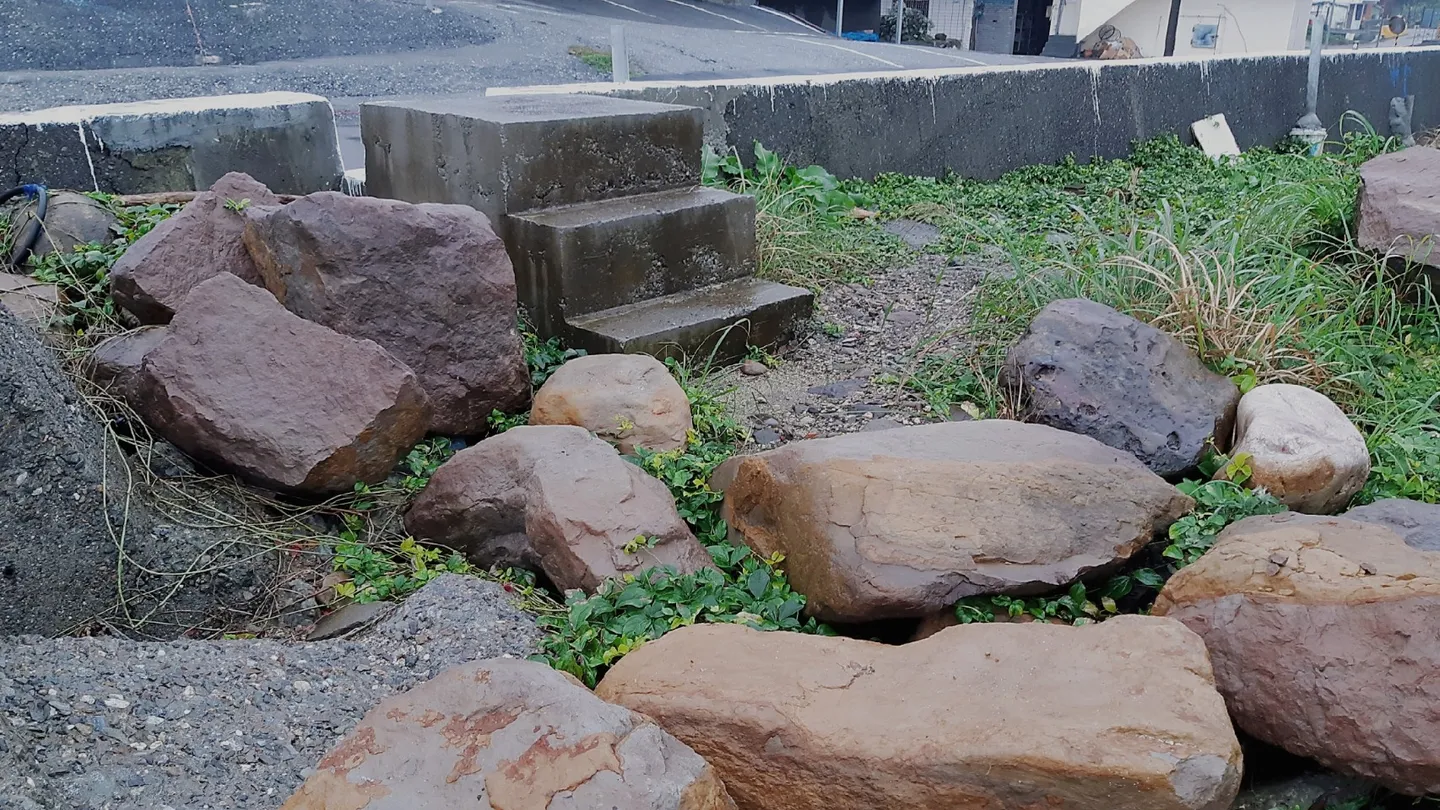
A set of steps has since been added to the low sea wall at Longdong Site 3, which divers everywhere can celebrate as a true blessing


Longdong Site 3's Leg-Strengthening Workout for Divers
From that day on, Longdong Site 3 left a deep psychological scar on me, and I was always puzzled as to why it was chosen as the training base — the path is just so brutal! The access to the Bat Cave dive site, for example, is so much easier. One time I couldn't help but ask the instructor why we didn't use the more accessible Bat Cave as our training ground instead. Instructor Ada just smiled and said with an air of sage wisdom: "Longdong Site 3 is there specifically to build up your leg strength. After this, every other dive site will feel easy."
For some reason, looking at his warm, friendly smile, I had the nagging feeling he might be pulling my leg. Still, I trust him completely — and thinking about it, he's not wrong. After all, it was precisely the "Stairway to Heaven" that pushed me to start exercising again and working on my breathing. Not only did I stop arriving at the water's edge gasping for air, but I eventually built up enough stamina to move freely between the various dive sites along the Northeast Coast.
By the time I returned to Longdong Site 3 for my 70th dive, I looked at that "Stairway to Heaven" with a quiet sense of pride. I thought about how I'd gone from huffing and puffing to strolling down it with ease, feeling rather pleased with myself. Then, out of the corner of my eye, I caught Divemaster Jia lifting two scuba tanks — one on his right shoulder, one in his left hand — and calmly heading down the path. I silently turned my head away and decided I had absolutely no interest in watching that.
What You'll Find Underwater at Longdong Site 3
Setting aside what the "Stairway to Heaven" puts beginners through — and the character it builds — Longdong Site 3 is actually a great place to dive. We can practice putting on and taking off our fins against the rock face, moving slowly and descending gradually. Once underwater, you first encounter a rocky area. Kick out a little further and a sheer cliff wall comes into view. From there, we follow the cliff face, diving at an average depth of around 10 to 13 m. At the end of the cliff, we turn 210 degrees and head back. Out in the open water, a 10 m buoy serves as a landmark.
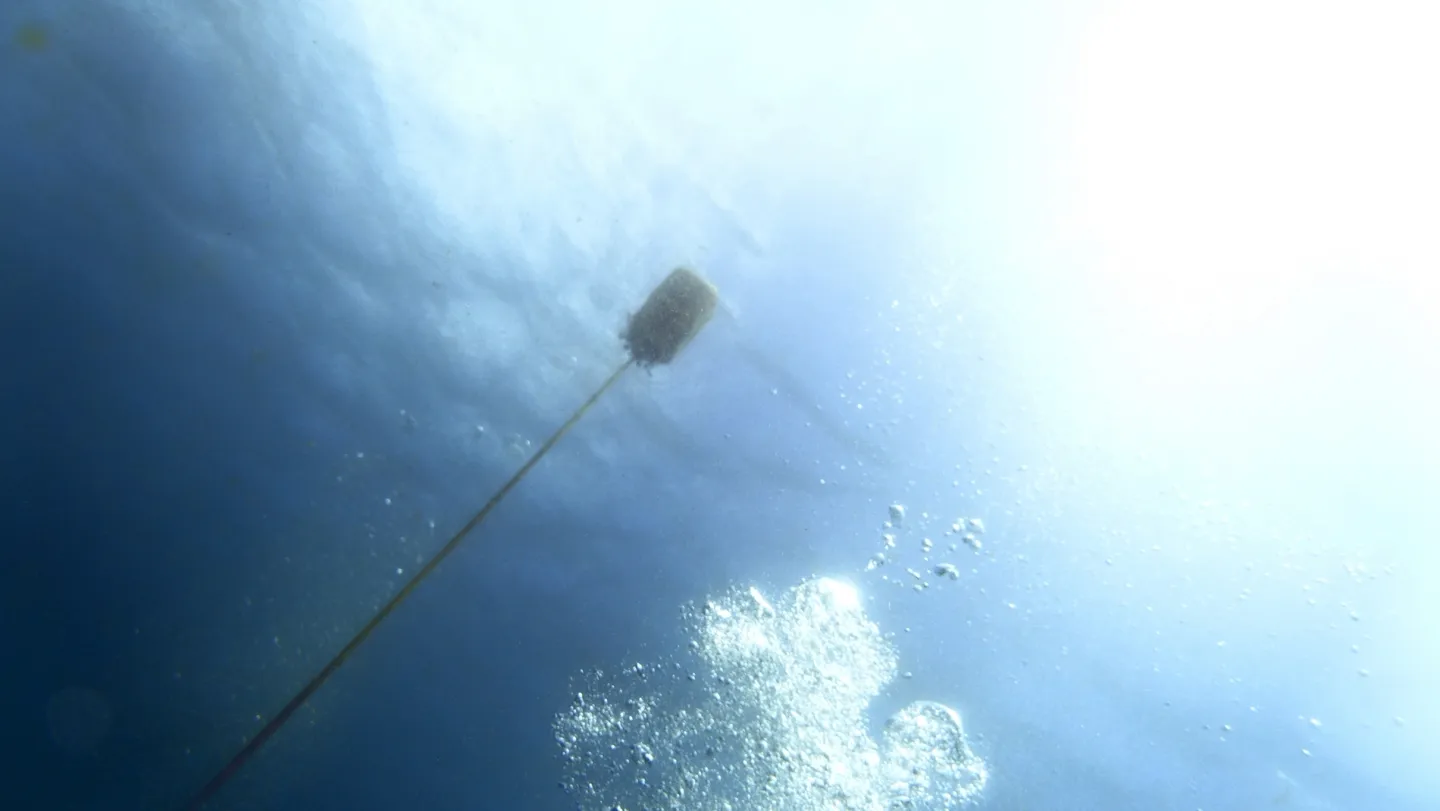
Looking up at the 10 m buoy from the seafloor
All along the cliff wall there's plenty of marine life to see, including pufferfish (and really, where on the Northeast Coast can't you find pufferfish?), moray eels, scorpionfish, Lionfish, and hermit crabs — the usual familiar faces you encounter throughout the Northeast Coast. What makes Longdong Site 3 special, though, is the way it occasionally produces an unexpected new face or a truly bizarre creature out of nowhere.
The Surprises Longdong Site 3 Has in Store for Beginner Divers
I remember once, while the instructor had everyone practicing in groups and I was waiting on the side, a massive Lionfish suddenly emerged from a rock crevice right in front of me. Its pectoral fins were spread at least 40 cm wide as it circled languidly in front of me (did it think it was walking a runway? = =). The Lionfish I'd seen before were all around 20 cm. That was the first time I had any idea they could grow so large.
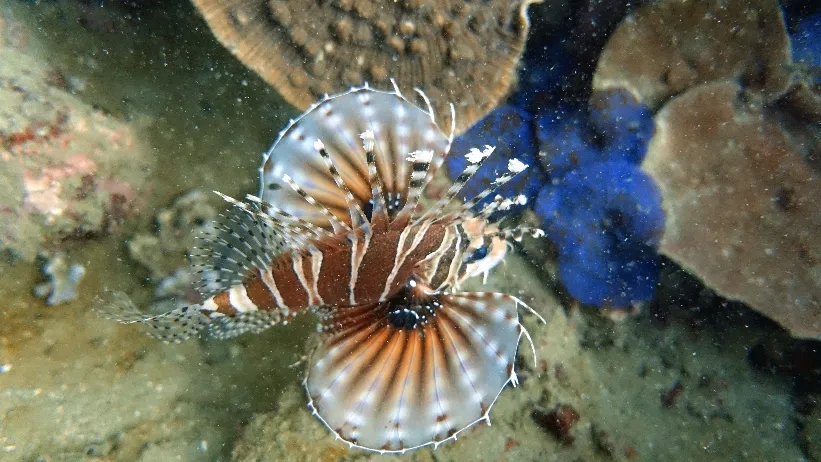
The Lionfish (Pterois volitans) typically spotted at Longdong Site 3 are much smaller
Then there was another time — I remember it was the eve of a typhoon. Instructor Ada was leading the dive while Instructor Junyao was bringing up the rear. Midway through our underwater tour, I suddenly heard Instructor Junyao shaking his rattle alarm furiously. I followed Instructor Ada over to where he was, and all I could see was a pitch-black cavern in the rock wall. I was still wondering what we were supposed to be looking at when, without warning, an octopus head the size of a human head burst out of the cavity — nearly hitting Instructor Ada, who had leaned in close to peer inside — and then instantly retreated back into the darkness. We couldn't get a photo, and when we told people afterward, they were skeptical. "No photo, no proof," they laughed. An octopus that big would practically qualify as a "sea monster." But it truly was enormous. That fleeting glimpse stayed burned in my memory, and I spent much of this past summer chasing after octopuses hoping to find it again.
A Special Underwater Guest at Longdong Site 3
In the summer of 2019, a special guest appeared at Longdong Site 3 — a harlequin shrimp. Everyone even prepared a sea star feast in its honor. Setting aside whether or not that's in line with marine conservation principles, I was rather fond of the gesture. It spoke to a kind of warmth and romance that people feel toward their ocean companions. It was charming, really. Instructor Ada even filmed it, and in the video the shrimp's claws waved up and down. We all laughed and said: "It's doing a little thank-you dance."
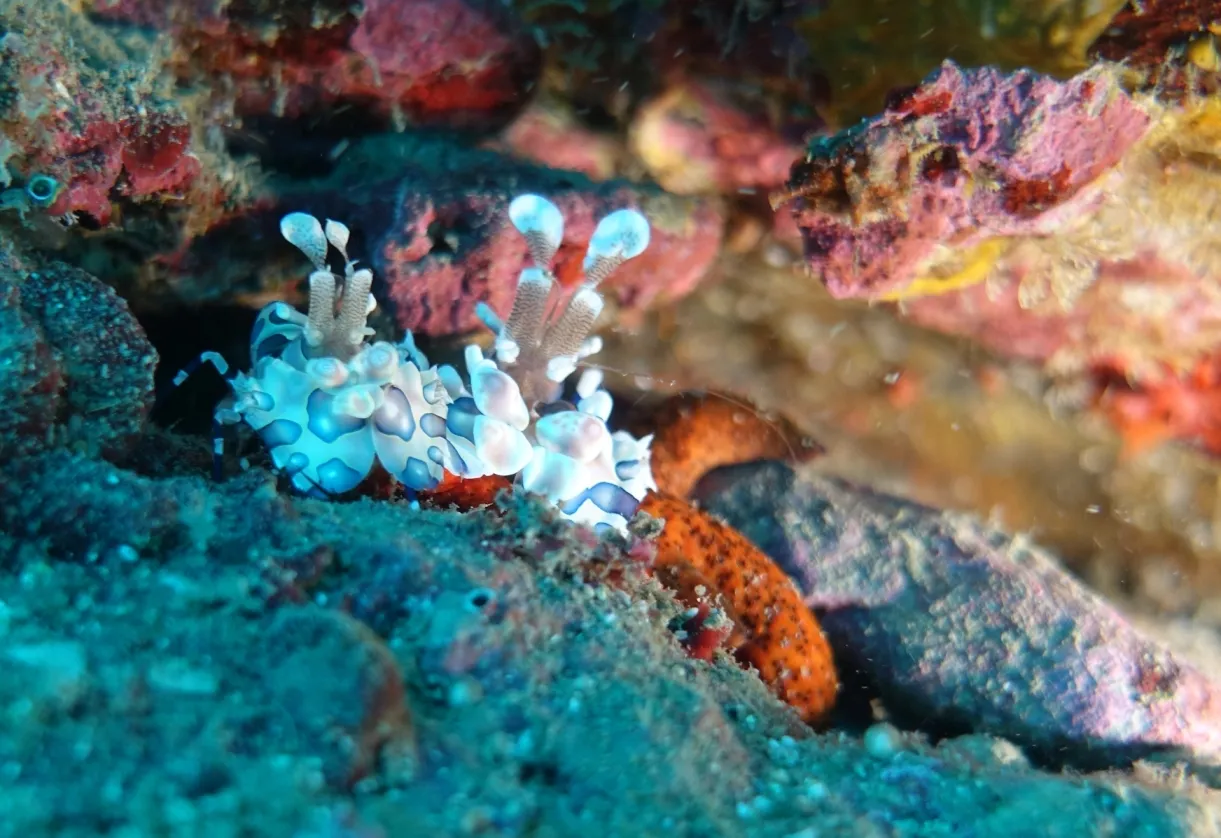
A special Northeast Coast guest — the harlequin shrimp
I'm so glad that my 70th dive, back at Longdong Site 3, brought back so many wonderful memories of diving — along with all the earnest advice the instructors have given me over the years. Everything seemed to remind me that no matter how much fun diving is, there is one thing to never forget: dive safe above all else.
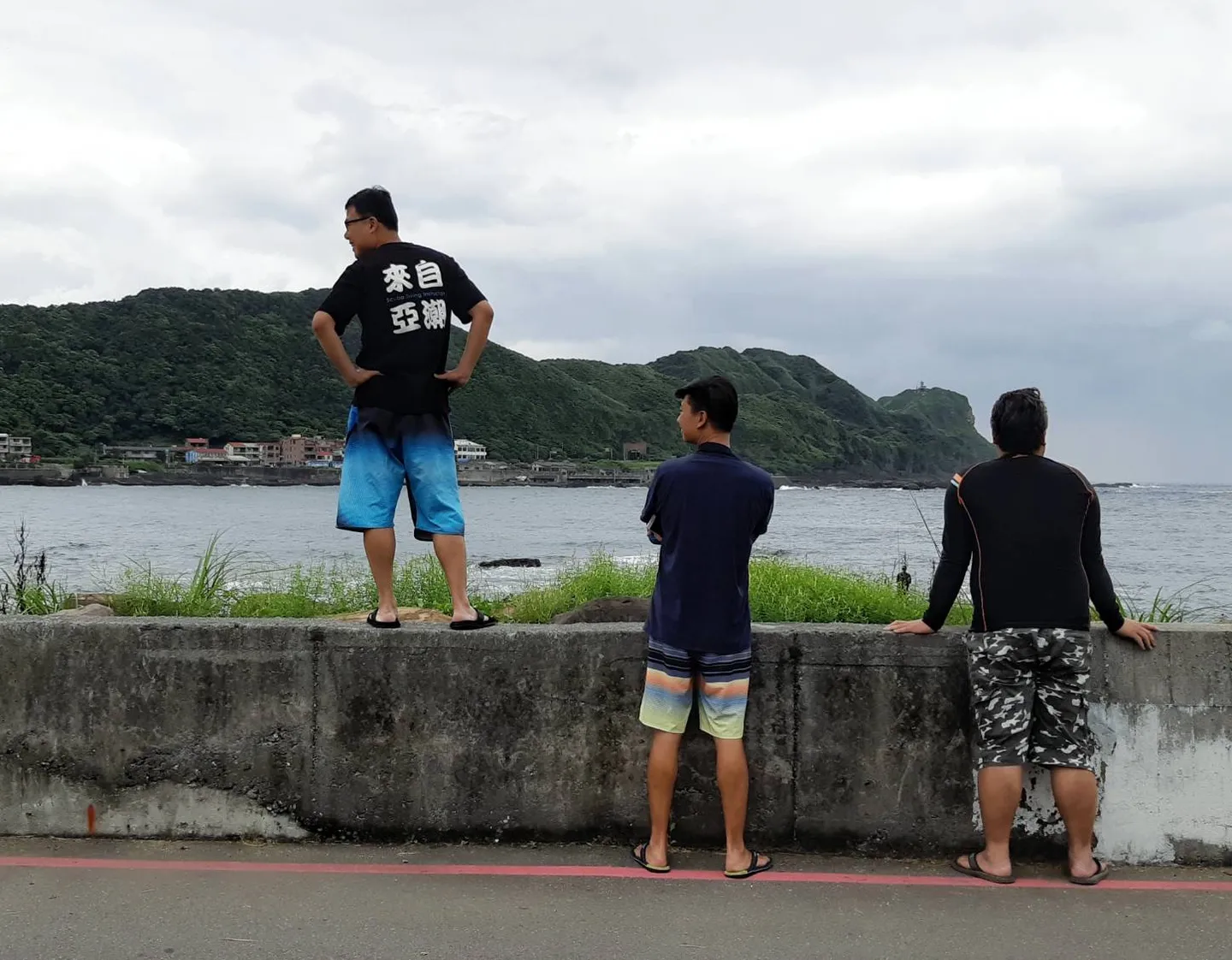
From right to left: lead instructor Ada, assistant instructor Junyao, and instructor Jianlong
The Editor's Roundup: Love Snorkeling at Longdong? Go Deeper and See So Much More!
The Editor knows that every summer, plenty of people flock to Longdong for snorkeling and cliff jumping. If you've enjoyed the snorkeling experience there and want to encounter even more diverse marine life, don't miss out on scuba diving! Longdong Site 3 is the cradle of beginner divers in northern Taiwan — there's no better place to take your first plunge into the ocean. What kinds of rich underwater scenery can you discover by scuba diving at Longdong, beyond what snorkeling offers? The Editor has put together a selection of Carol's dive logs to share with you — take a look!
Recommended Dive Sites at Longdong and Around Northern Taiwan — Dive In from Snorkeling to Scuba Diving!
【Taiwan Northeast Coast 82-5k】Dive Site Introduction — A Macro Paradise Along the Coastal Highway
【Carol's Dive Log】Longdong Site 4 / Hemei Elementary School Dive Site — A Hidden Lembeh in Disguise
【Carol's Dive Log】Love at First Dive on Taiwan's Northeast Coast — Where a Passion for Diving Began
【Carol's Dive Log】Taiwan Northeast Coast Dive Site — Yingge Rock: A Special Ocean Cleanup Dive to Remove Wooden Shrimp Traps
【Carol's Dive Log】Taiwan Northeast Coast Dive Site — Mosquito Pit (Hemei Street / 83.9K): The Adorably Beginner-Friendly "Newbie Village"
【2019.9.1 — Back at Longdong Site 3 for Dive No. 70】
Related links:

![[Diving with Da-Tou Shi] How to Organize a Safe Ocean Cleanup Dive](/_astro/%E8%9E%A2%E5%B9%95%E5%BF%AB%E7%85%A7-2019-08-04-%E4%B8%8B%E5%8D%889.24.17-e1564925237369_Z2mHAub.webp)