

Contents(6)
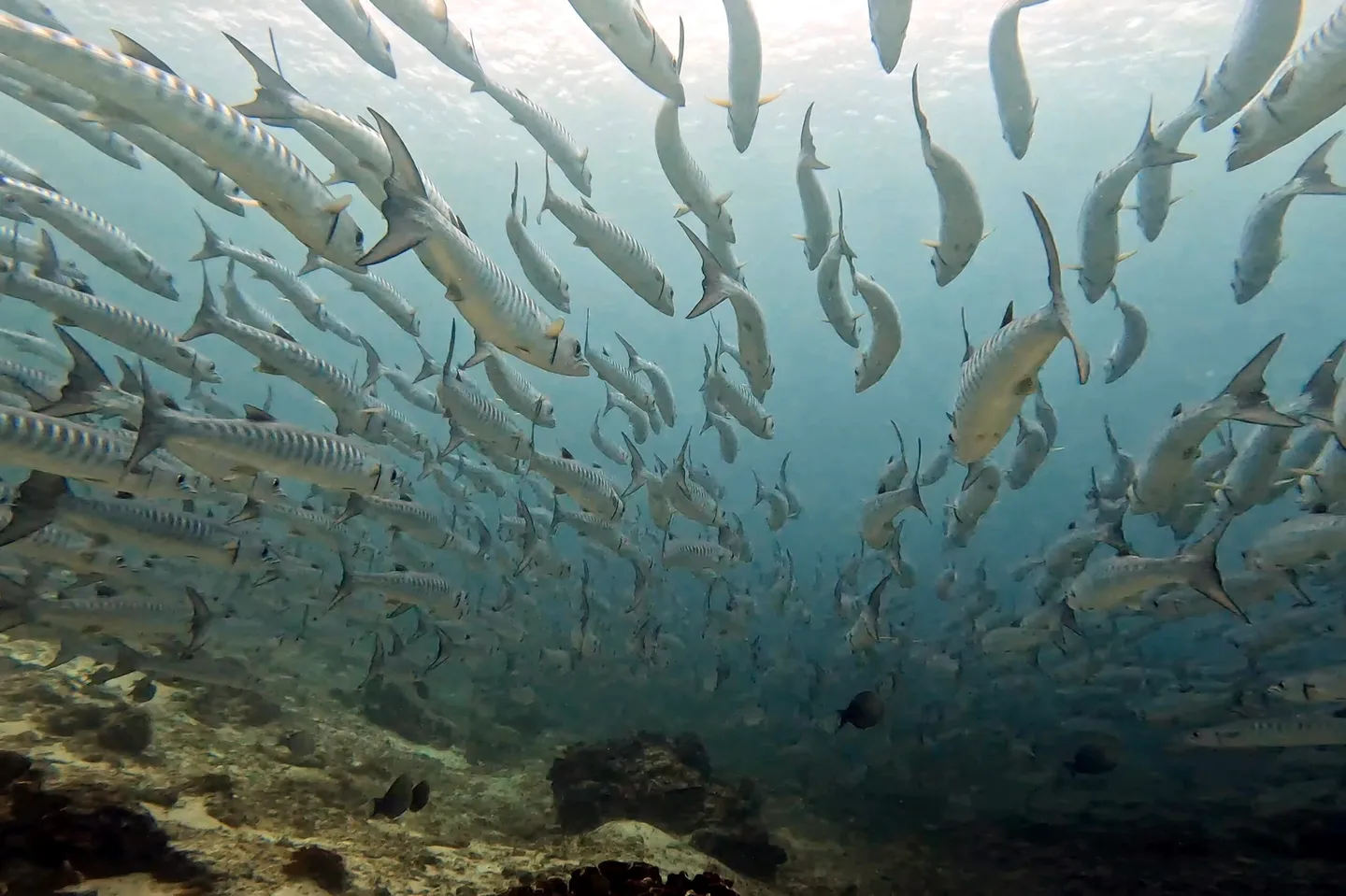
Plunging straight into the barracuda storm, blending into the school, and pushing forward together!
Sipadan — hailed as one of the world's top-10 must-dive sites — has daily entry permits that are snapped up in an instant. Yet the moment you find yourself surrounded by barracuda, a wave of pure joy washes over you. Swimming through the school of fish, you can't tell whether what's clouding your mask is seawater or tears!
For diving enthusiasts, Sipadan needs no introduction. Holding the title of one of the world's top-10 dive sites, it draws divers from every corner of the globe each year to experience it for themselves. To protect the island's ecosystem, the Malaysian government caps the number of daily entry permits, and at the end of every year the reserve is closed to visitors for a rest period — giving this beautiful island a chance to breathe.
Where Is Sipadan?
Sipadan is located south of Semporna, surrounded by crystal-clear water, and takes approximately 60–90 minutes to reach by boat — farther than the other nearby islands. Other islands in Semporna (such as Mabul and Kapalai) have on-island resorts where guests can stay, but Sipadan is the only one where tourists are not permitted to stay overnight.
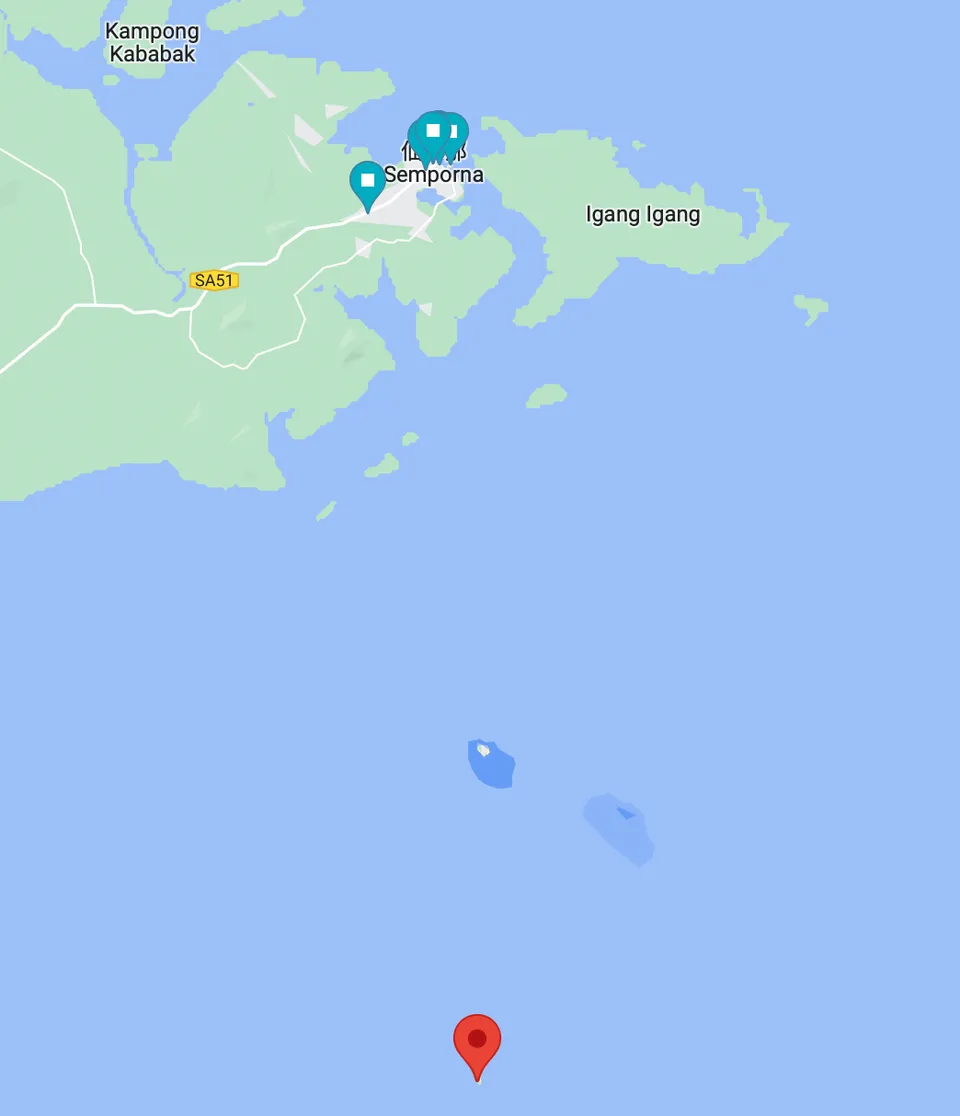
The red pin marks Sipadan — noticeably farther out than the other islands!
Sipadan Island is small — you can walk around the entire island in about 30 minutes! It is Malaysia's only oceanic island, shaped a bit like a mushroom cap: the area near the shore features shallow coral reefs, but once you kick out beyond the edge, the seabed plunges into an impossibly deep wall.
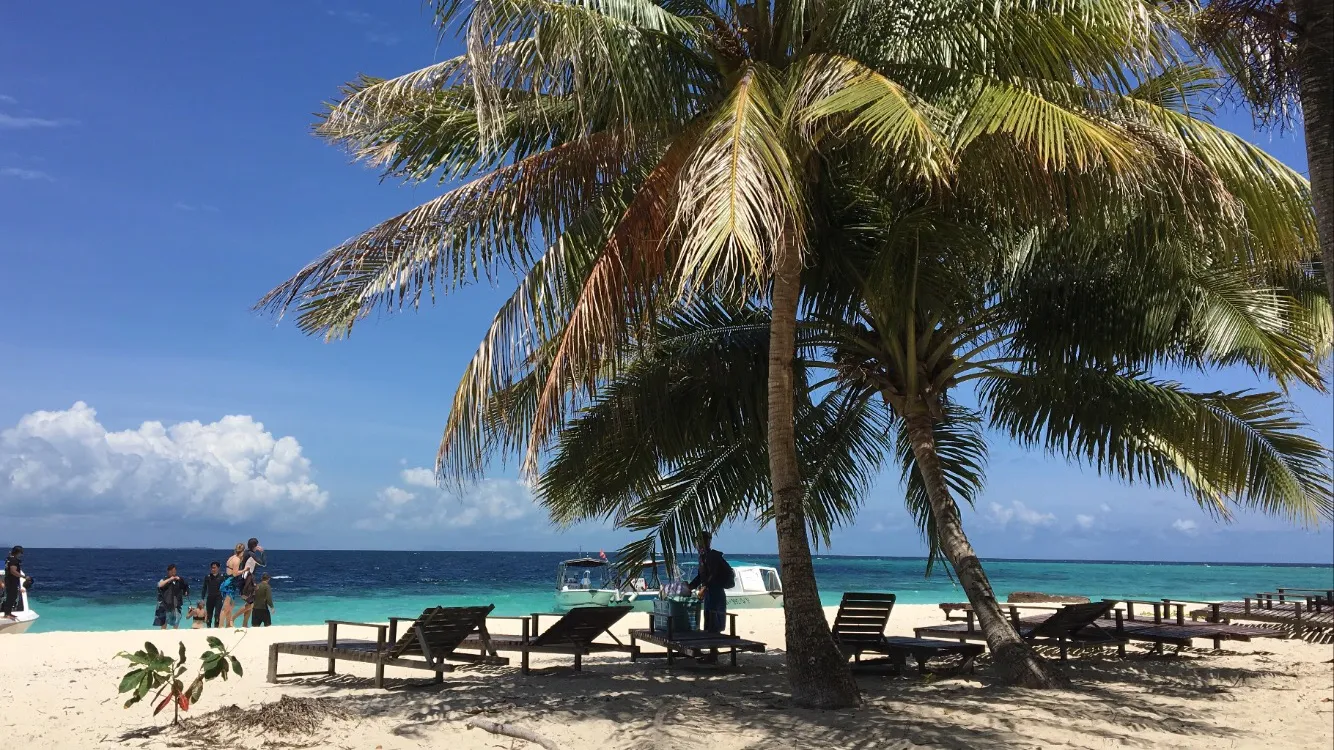
Blue skies, turquoise water, sandy beaches, and coconut palms — during surface intervals you can soak up the sun on the beach


How Do You Get a Permit for Sipadan?
You can book a Sipadan day trip through a partnered dive shop or resort. Prices vary between operators. Sipadan fees have been climbing steadily since last year — the Editor's booking this time came to 1,100 MYR (approximately NT$7,700), which included equipment, lunch, two dives, the island dive fee, landing tax, jetty tax, and tourism tax. A few years ago it cost under 1,000 MYR for three dives — ouch! 😂
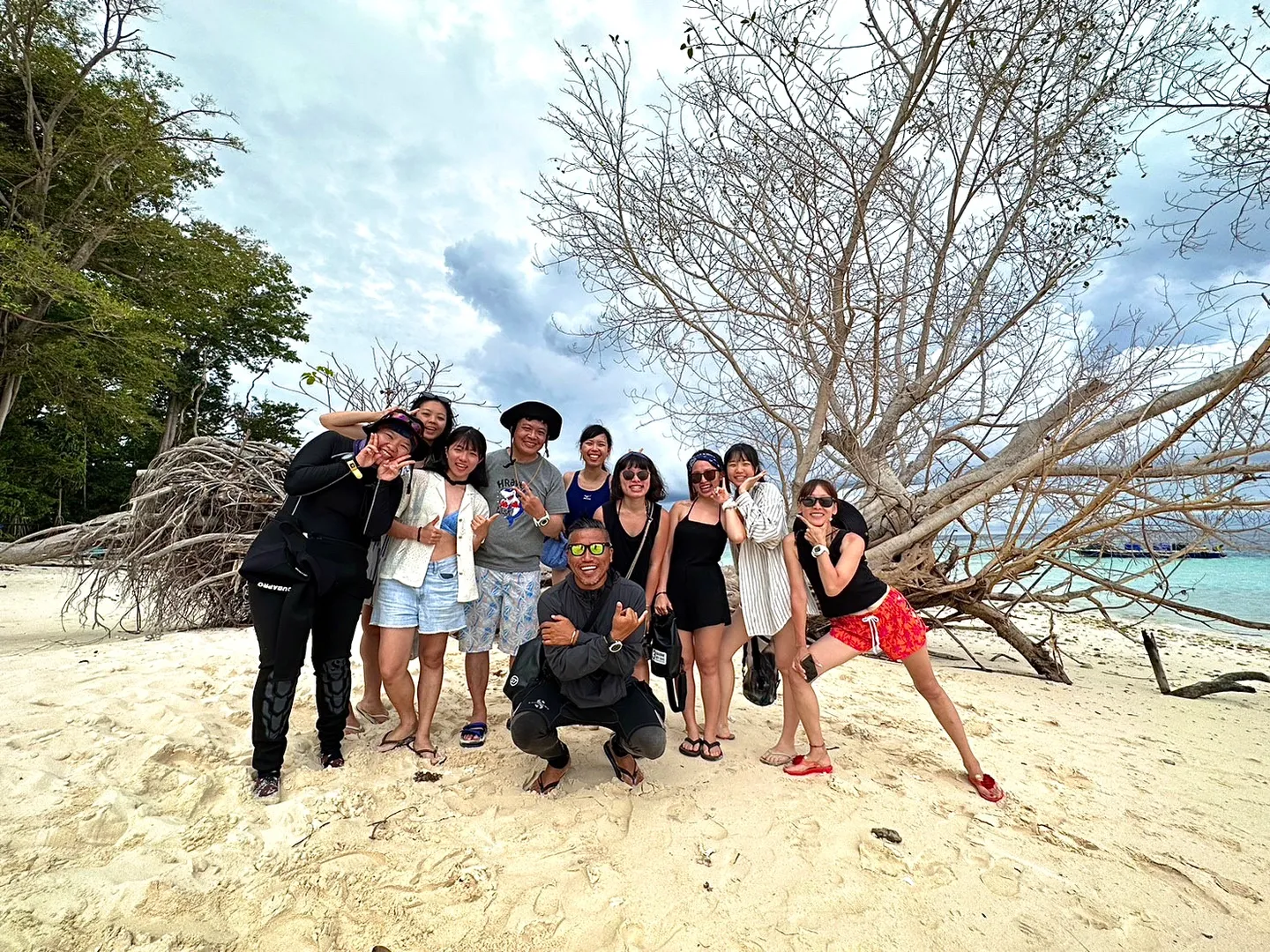
The dive guide said a photo in front of Sipadan's big log is a must — apparently it's the perfect backdrop for a great shot
Island Entry: What You Need to Know
After arriving at Sipadan, you come ashore first and rangers verify everyone's identity one by one — so have your passport and dive certification ready for registration!
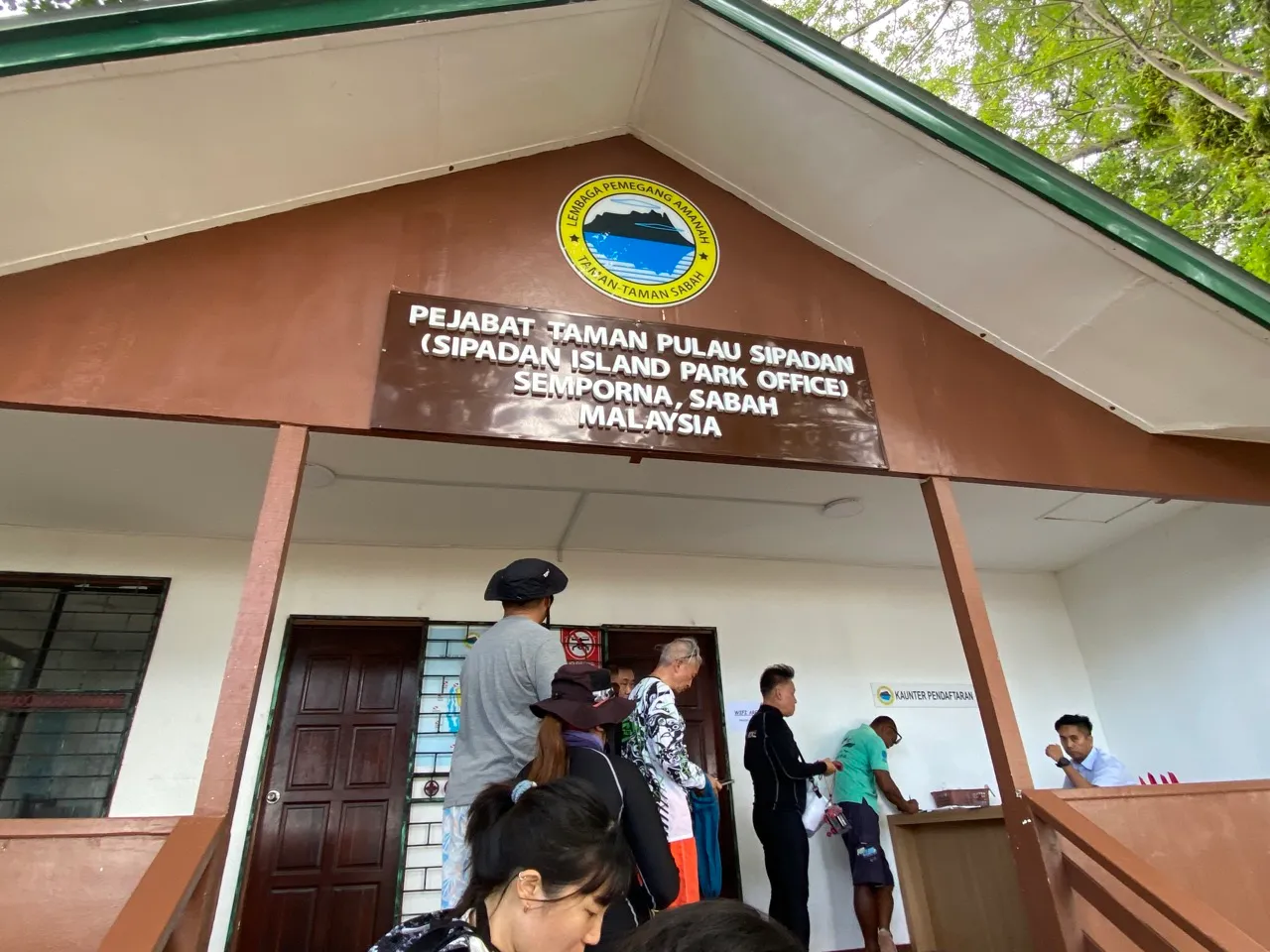
The rangers are thorough — every single person's identity is carefully verified
To protect Sipadan's ecosystem, the government has established a set of basic rules. Be sure to plan well in advance, as permits fill up very quickly!
- Daily visitor quota has been expanded to 200 people (including scuba diving, freediving, and snorkeling)
- Entry is restricted to divers holding an Advanced Open Water Diver (PADI cert) certification or above (proof required)
- A maximum of two scuba tank / cylinder per person per day
- A passport must be presented for identity verification upon landing (digital copies are accepted)
- The same dive site may not be visited twice in one day
- No more than 50 people may dive simultaneously
- gloves and drift hooks are prohibited
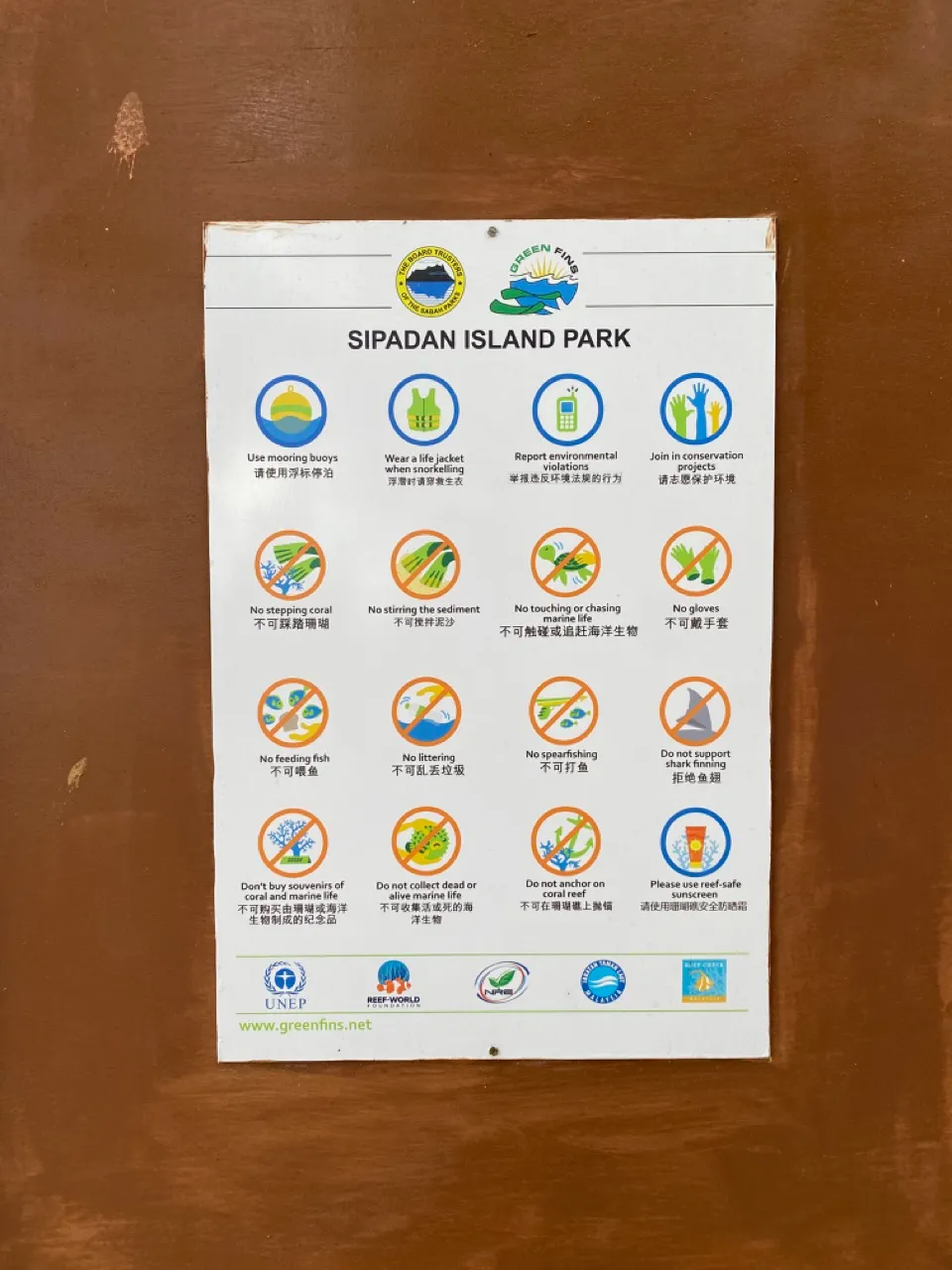
Read the rules carefully — the prohibition on gloves and drift hooks in particular is worth remembering
Most of the rules are things any responsible diver should already follow. The ban on gloves and drift hooks is the one to keep especially in mind; everything else is standard practice for a conscientious diver.
The rangers here also conduct periodic underwater patrols to check for violations — stepping on coral, touching marine life, and so on. Offenders face fines, and we've heard that serious cases can result in being held for questioning!
A Day Trip Itinerary for Sipadan
Because Sipadan is relatively far out, we headed to the dive shop early to gear up and set off without delay!
The Editor was impressed by how well-maintained all the rental equipment was — everything looked practically new, with no worn-out, damaged, or mouldy gear in sight (which, trust me, can't always be taken for granted 😄).
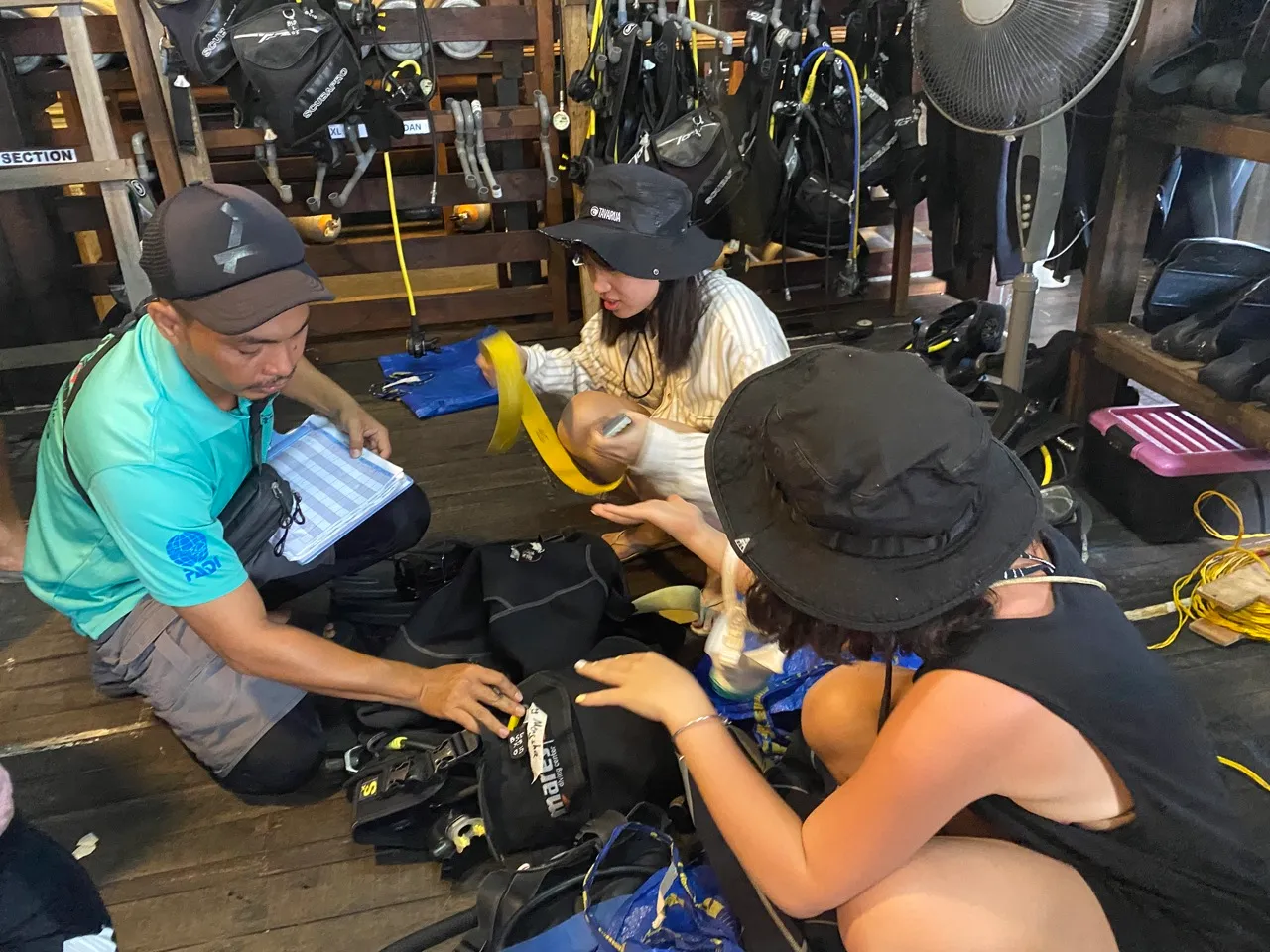
Each piece of equipment is labelled with a size and number — remember your number and you won't mix it up with anyone else's!
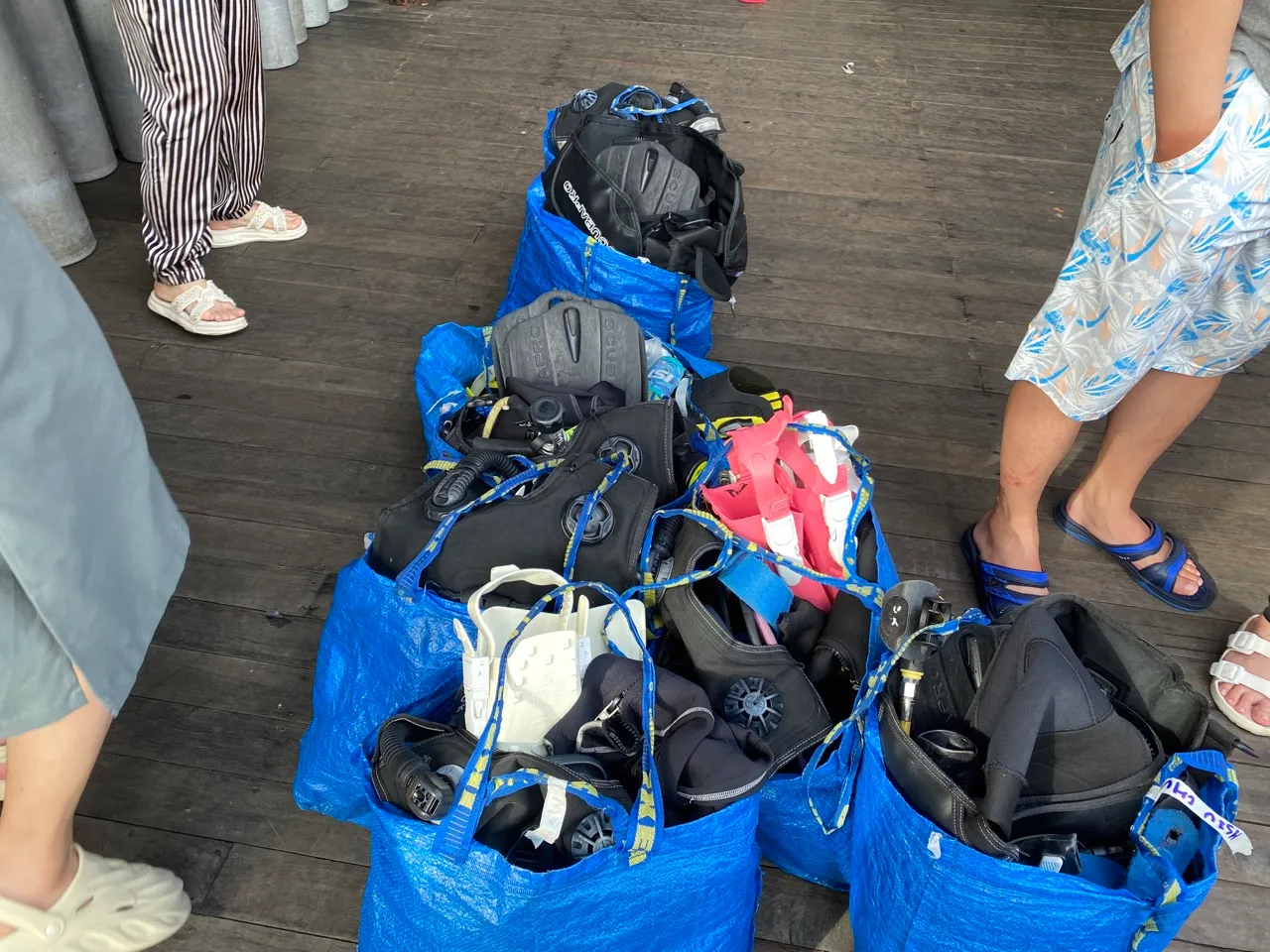
Once you've collected your gear, it's packed up into individual bags like this
Dive boats in Semporna are small and nimble like speedboats, with limited deck space. When you arrive at a dive site, you need to move fast — get geared up, do your buddy check, and roll in without hesitation. If the captain spots a school of fish or a big animal below and signals everyone to enter, you don't want to miss it by being slow!
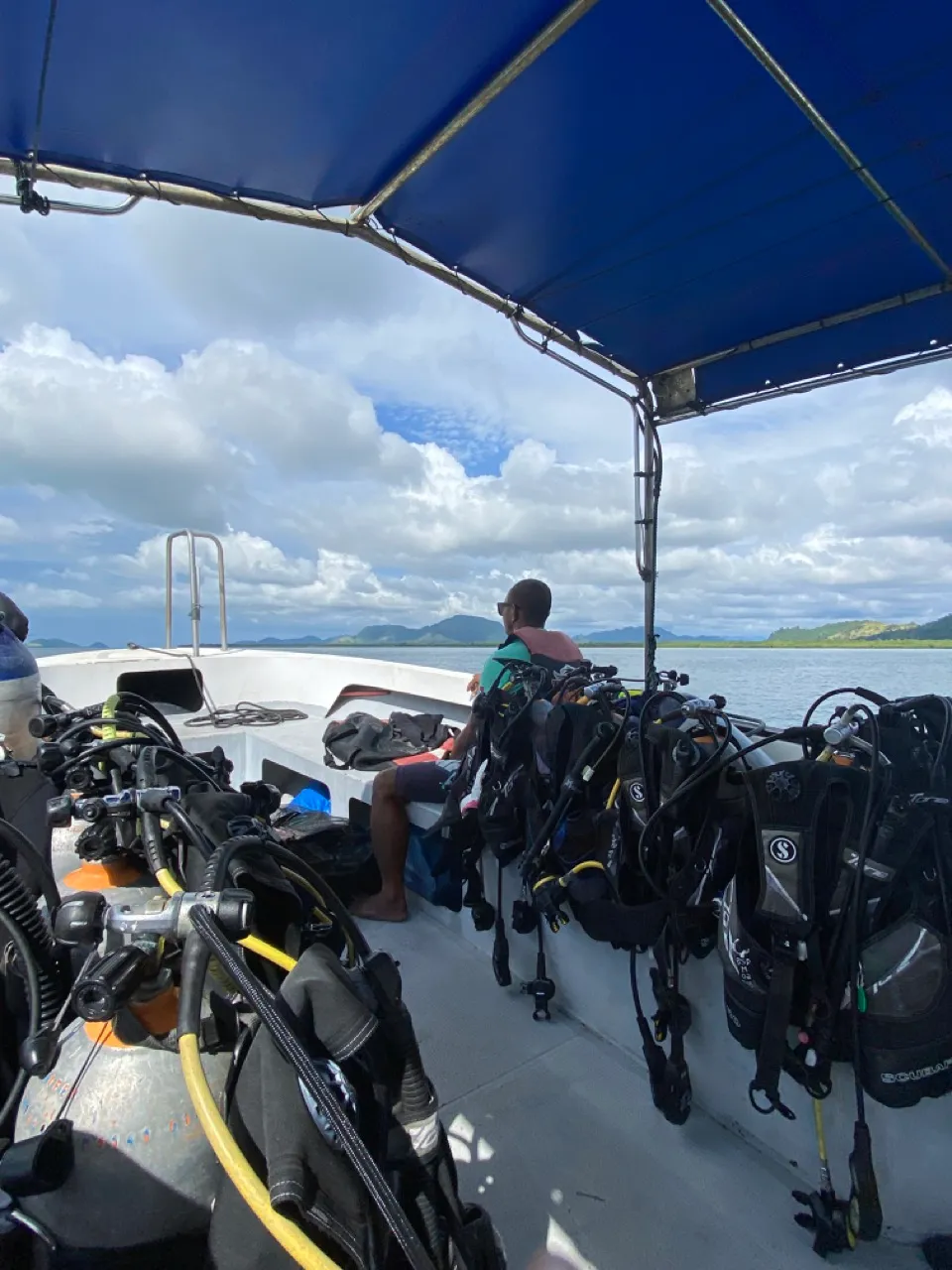
Life jackets are mandatory whenever you're out on the boat
After going ashore for the identity check, the dive guide gave a general introduction to Sipadan and outlined the dive plan for the day.
The Editor picked up a few key points worth sharing:
- Expect nothing, regret nothing — The dive guide made no guarantees about seeing storms or big animals. If they promised and luck wasn't on our side, that would be awkward (though the odds of missing out are slim!)
- There will be current — push through it — The guide casually mentioned that there's always current here, and that's what makes it exciting. When you hit a current, just kick hard and you'll get through it. (I... sure... felt like I'd signed up for a triathlon.)
- The underwater rangers mean business — The guide specifically noted that the park rangers here take their job seriously, occasionally diving in plain clothes to patrol for rule-breakers.
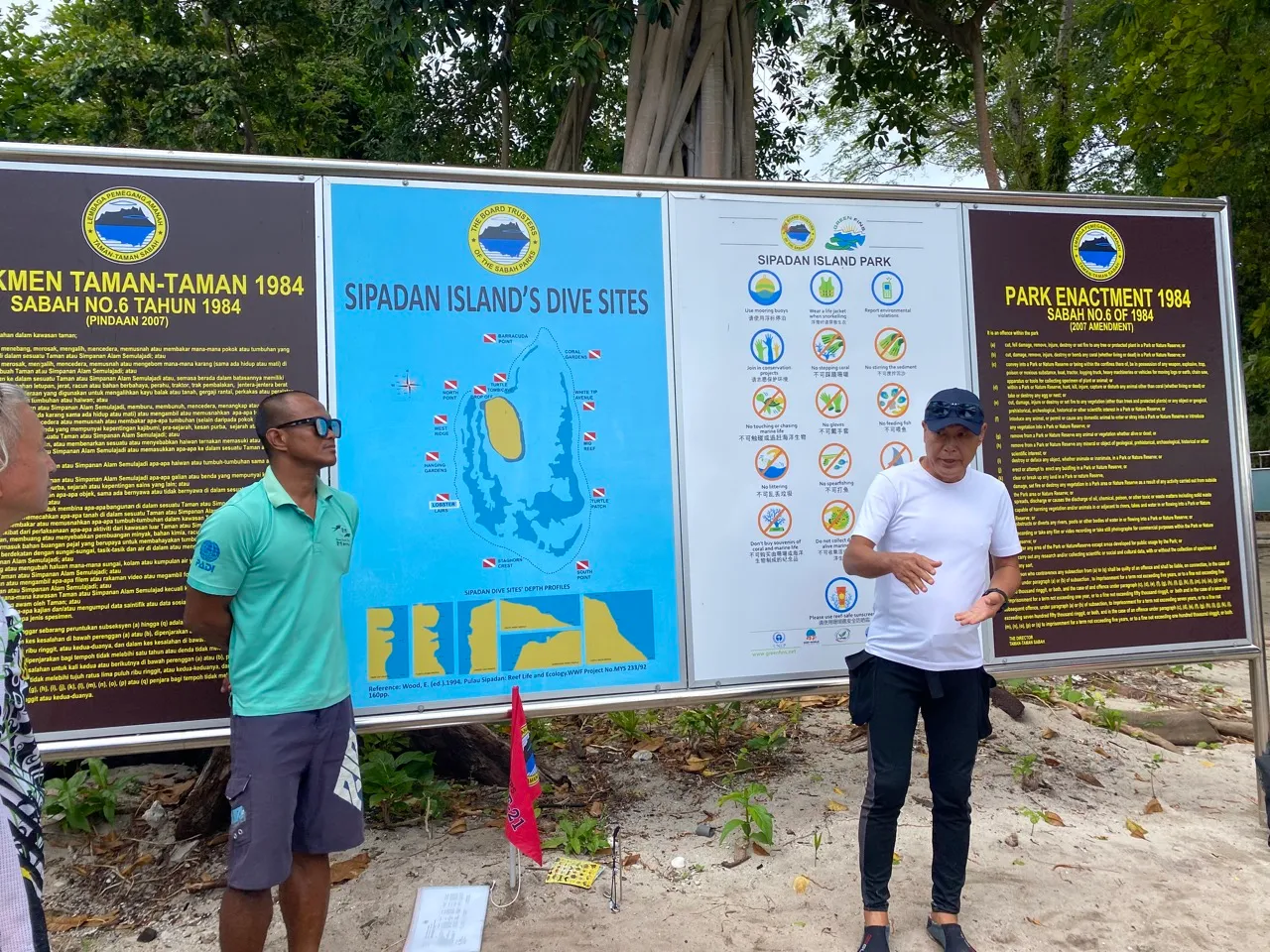
The dive guide giving a thorough briefing; the red flag below is issued to every boat and must be returned when heading back to town after diving
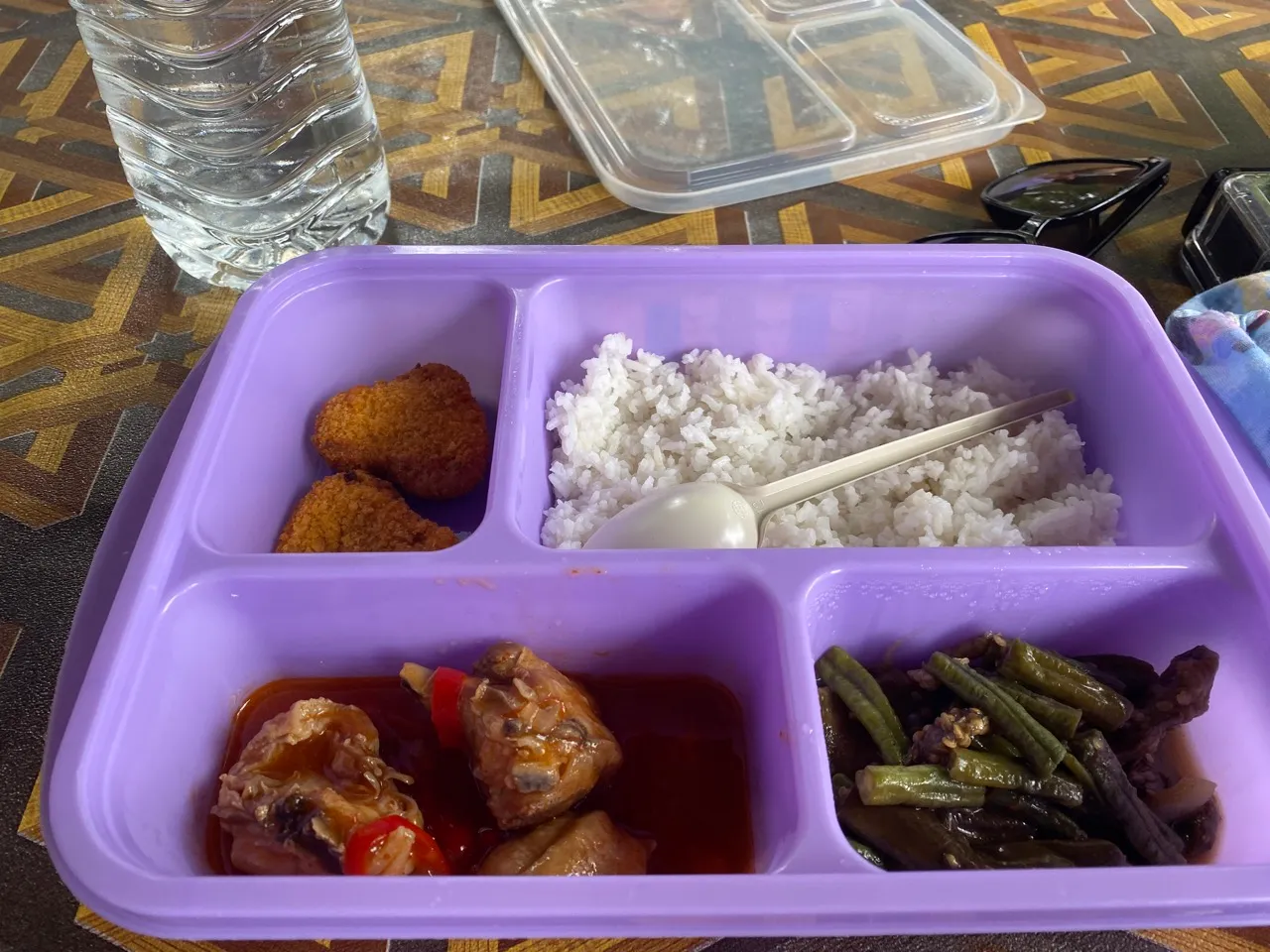
Today's lunch box — one vegetable dish, one meat dish, one serving of rice; simple, authentic flavours that were absolutely delicious
What Will You See Underwater?
Once on board, the captain starts scouting for the "most exciting" spot, so use that time to start setting up your gear — the moment the dive guide gives the signal, you jump in!
In a flurry of splashing, everyone descended quickly, and sure enough, waiting for us was a massive school of jacks — a jack storm! Anyone with a fear of dense swarms might find the hair on the back of their neck standing up. The endless, rolling formation of jacks was truly spectacular.
You really have to hand it to the captain — the moment we hit the water, we were greeted by a massive, swirling jack storm
Common sightings at Sipadan include: jaw-dropping jack storms, humphead parrotfish feeding in the early morning, breathtaking barracuda storms, countless sea turtles, and charming Whitetip Reef Sharks. If you're lucky, the ever-popular Whale Shark — a regular visitor here — may also make an appearance!
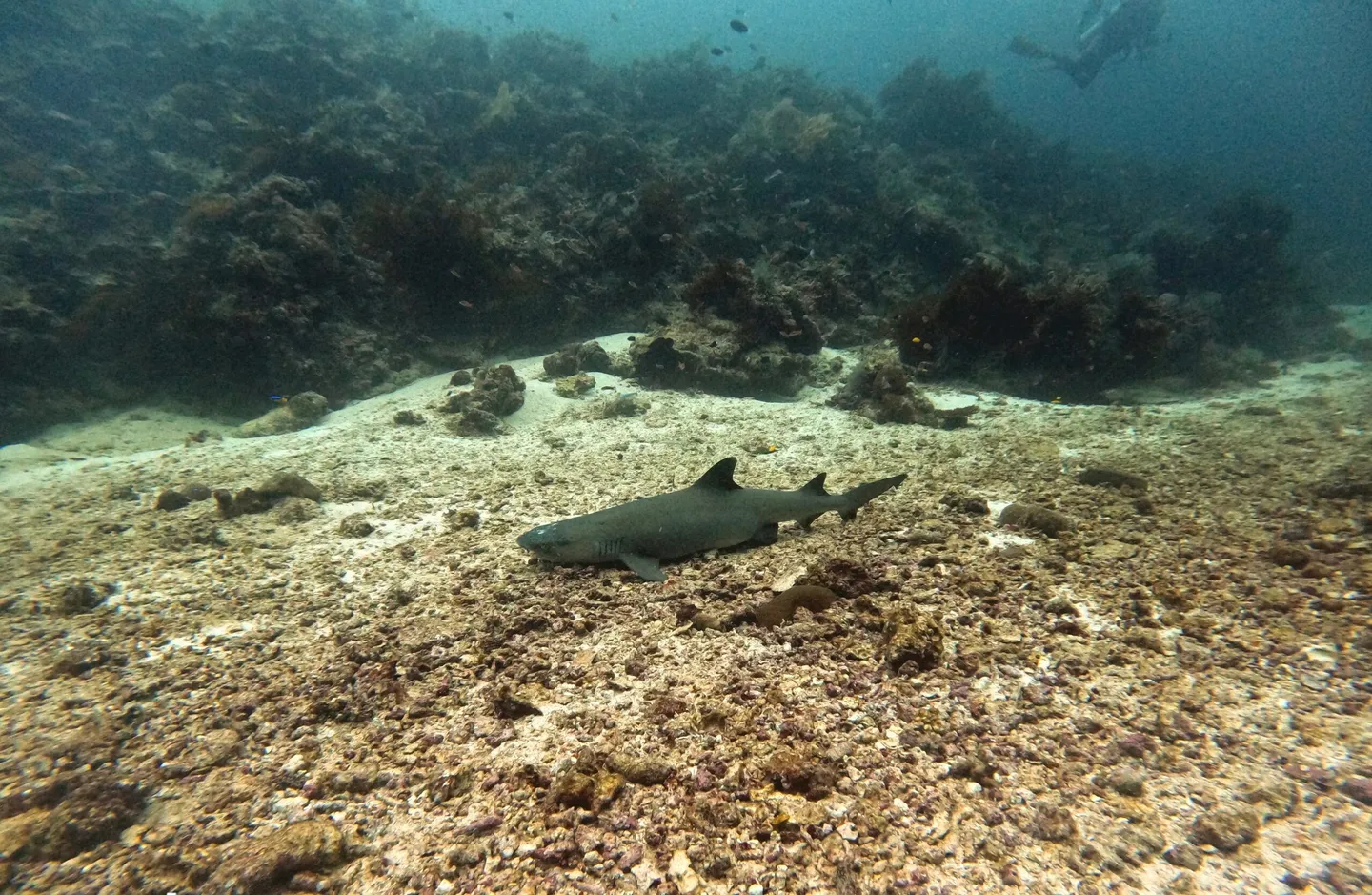
On this dive we spotted around 3 Whitetip Reef Sharks — they were mostly just resting quietly in place
The terrain at Sipadan is typical wall diving. While you're busy taking photos, always keep an eye on your depth — it's easy to drift down too deep chasing a creature along the wall! When a shark actually appeared, I didn't dare get too close. Small as it was, that fierce-looking face was still a little intimidating!
A Whitetip Reef Shark gliding into the depths
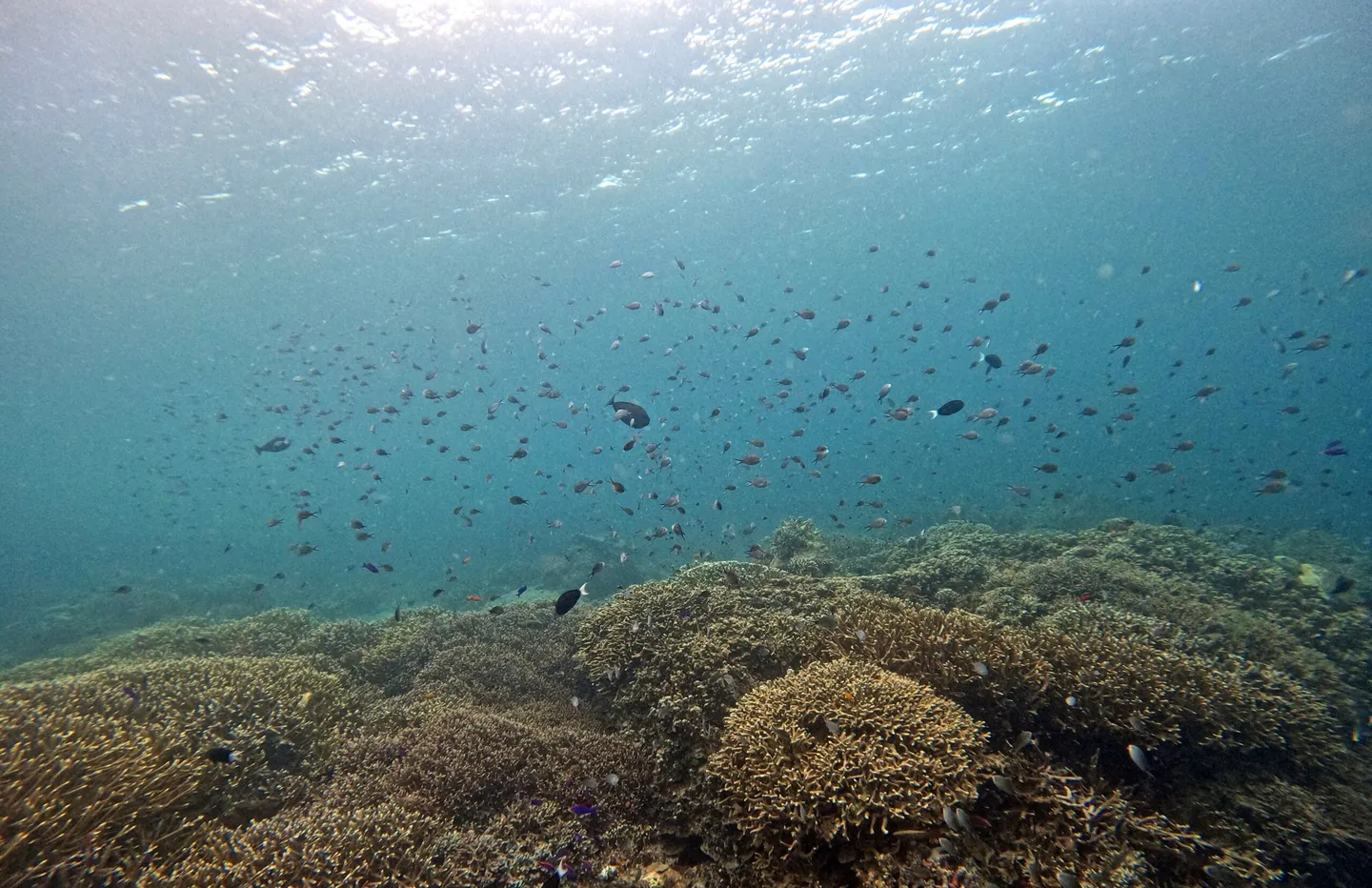
Endless small fish keeping us company as we kicked against the current chasing the storm
After chasing the barracuda storm, I genuinely felt like I'd just competed in a sporting event. The current started off manageable, but as we closed in on the barracuda storm it grew noticeably stronger. The Editor kicked with everything she had, all in the name of breaking through to the heart of it!
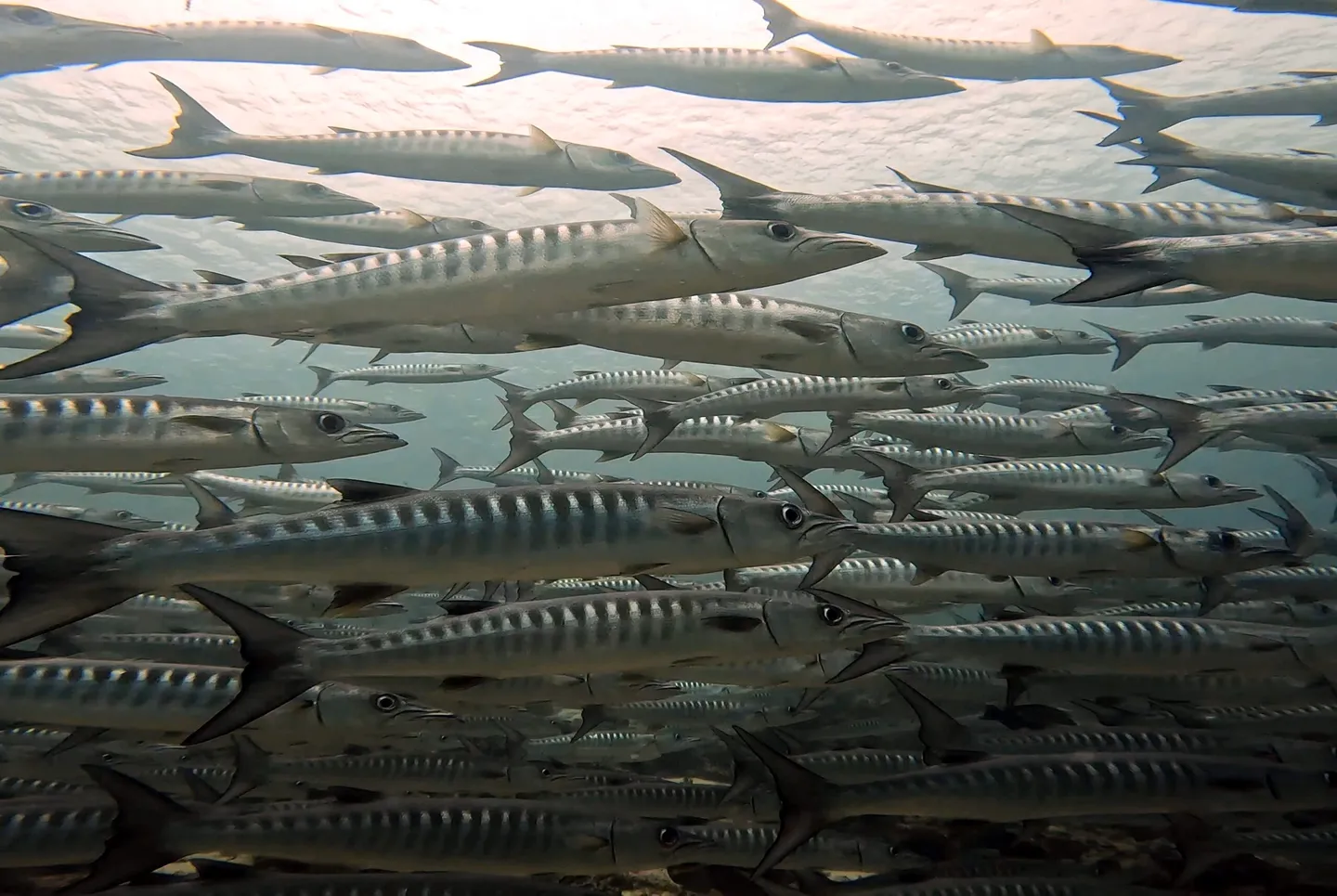
If barracuda were people, they'd definitely be the most dashingly handsome ones in the room!
Swimming side by side with the barracuda, I got a clear look at their faces — large, round eyes, slender bodies, and scales that seemed to shimmer with reflected light. They were breathtaking. That moment is etched into my memory forever. Every ounce of effort spent chasing those barracuda was absolutely worth it. So the next time you hit a current, don't give up — push through to the end, and the most magnificent sights and biggest creatures will be your reward!
Some of the divers who came up later shared that no matter how hard they kicked, they just couldn't make any headway — and eventually gave up on the chase (laughing).
People always call Sipadan "God's Aquarium," but after that dive I'd say it felt more like God's Gymnasium — my legs were absolutely wrecked from all that kicking!
There are also plenty of batfish in Semporna, though they're a bit shier than the ones at Green Island's Steel Reef. With their big, round eyes, drifting along in schools — they're impossibly soothing to watch!
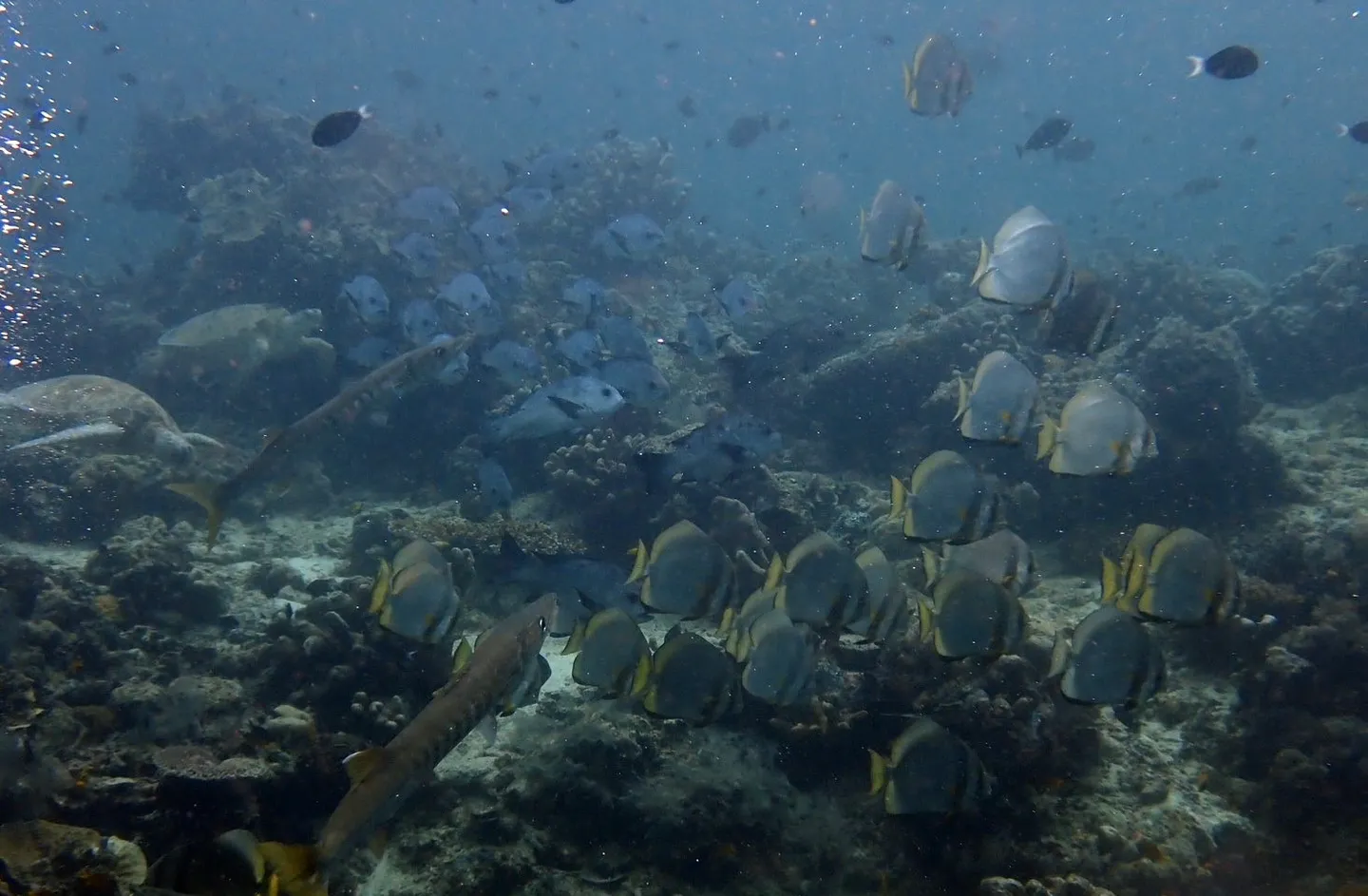
Looking at the photo later, I spotted two sea turtles in the background!
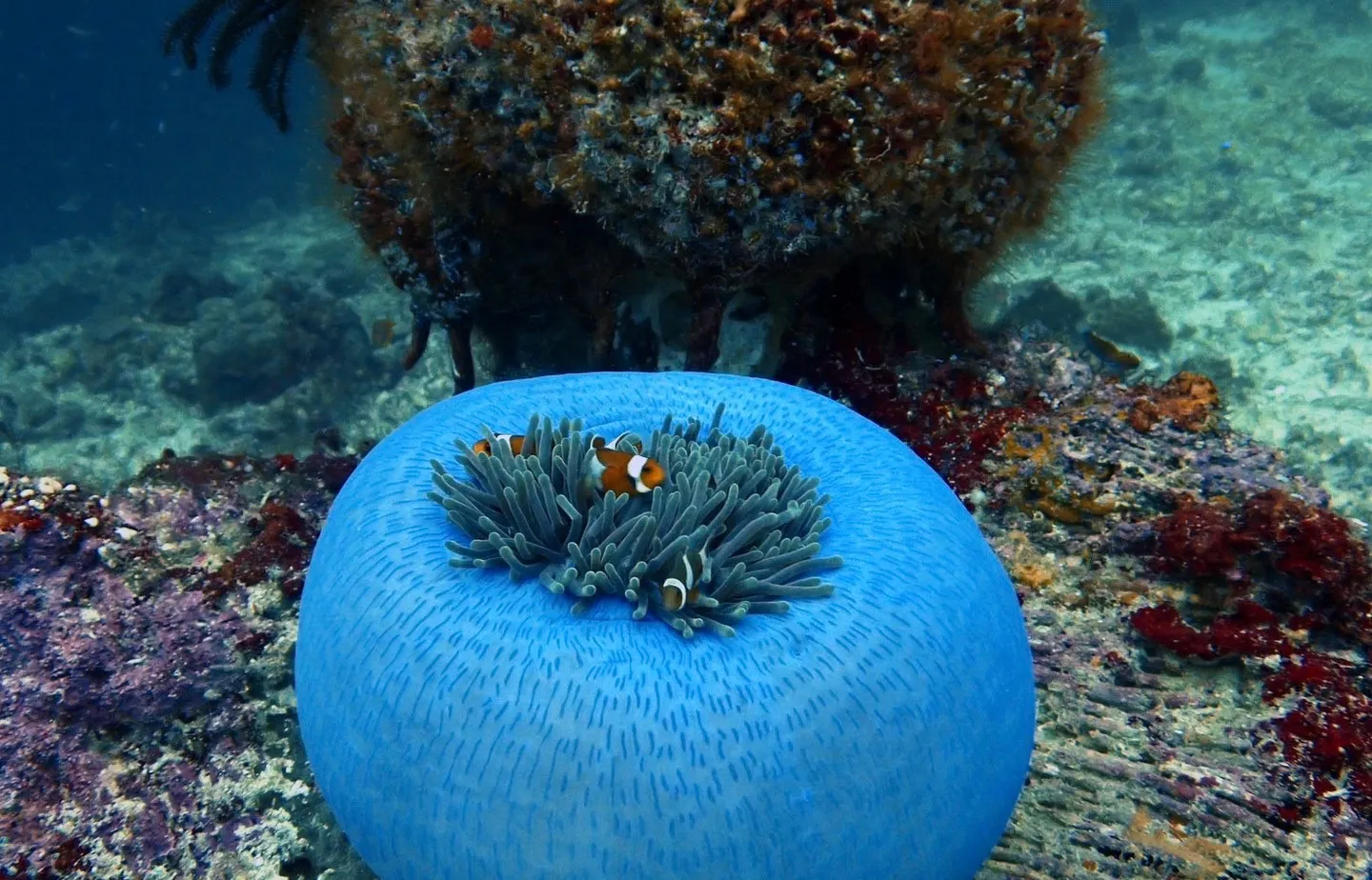
An adorably dopey Clownfish staring right at us
Beyond the incredible marine life, Sipadan's coral is equally astounding — vast and enormous in scale. There are sprawling fields of staghorn coral everywhere, with sunlight filtering down through the water from above. Just floating there and taking it all in is deeply restorative. This, truly, is what it means to be a diver at their happiest.
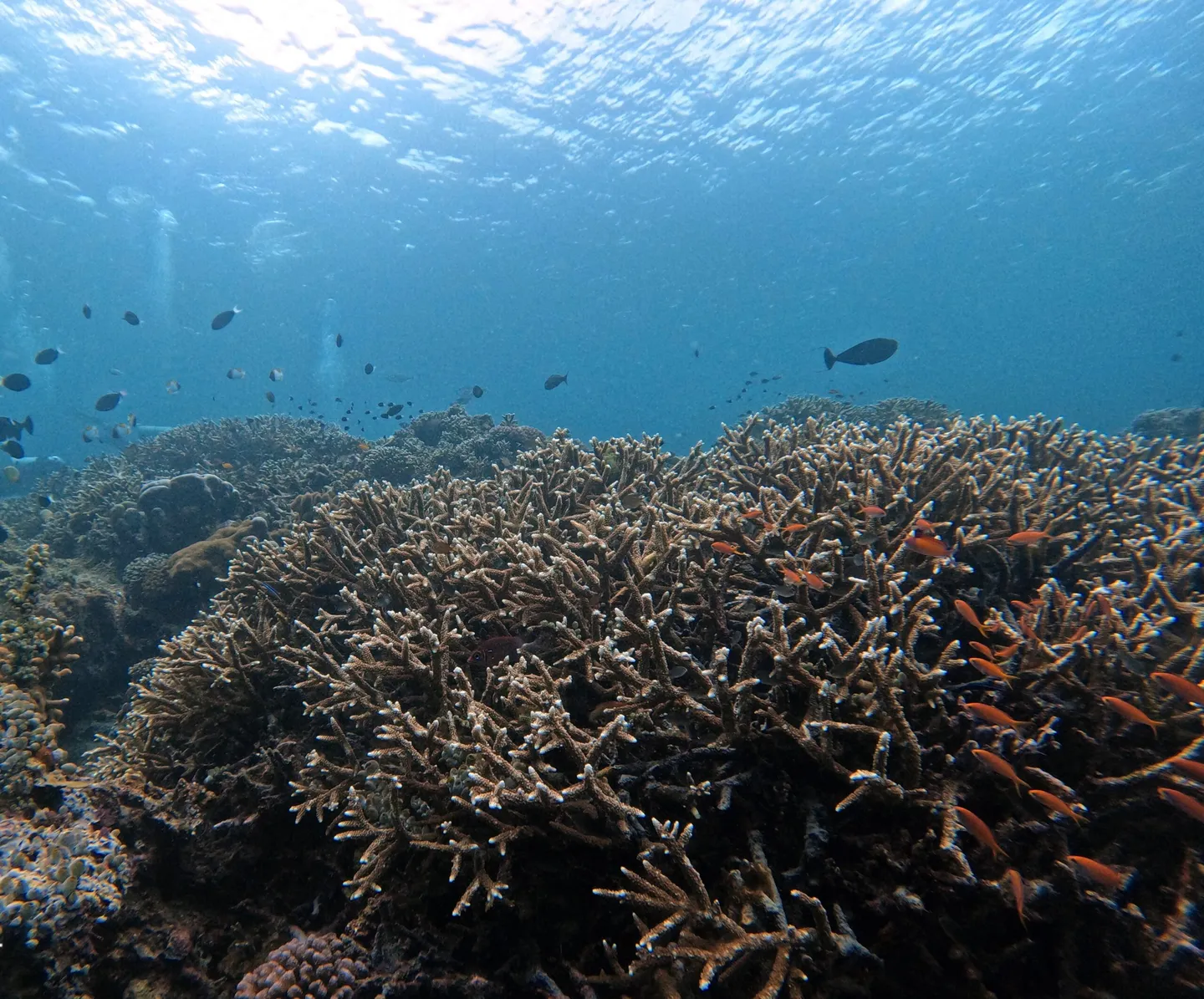
"Wall-to-wall coral" was coined for this place!
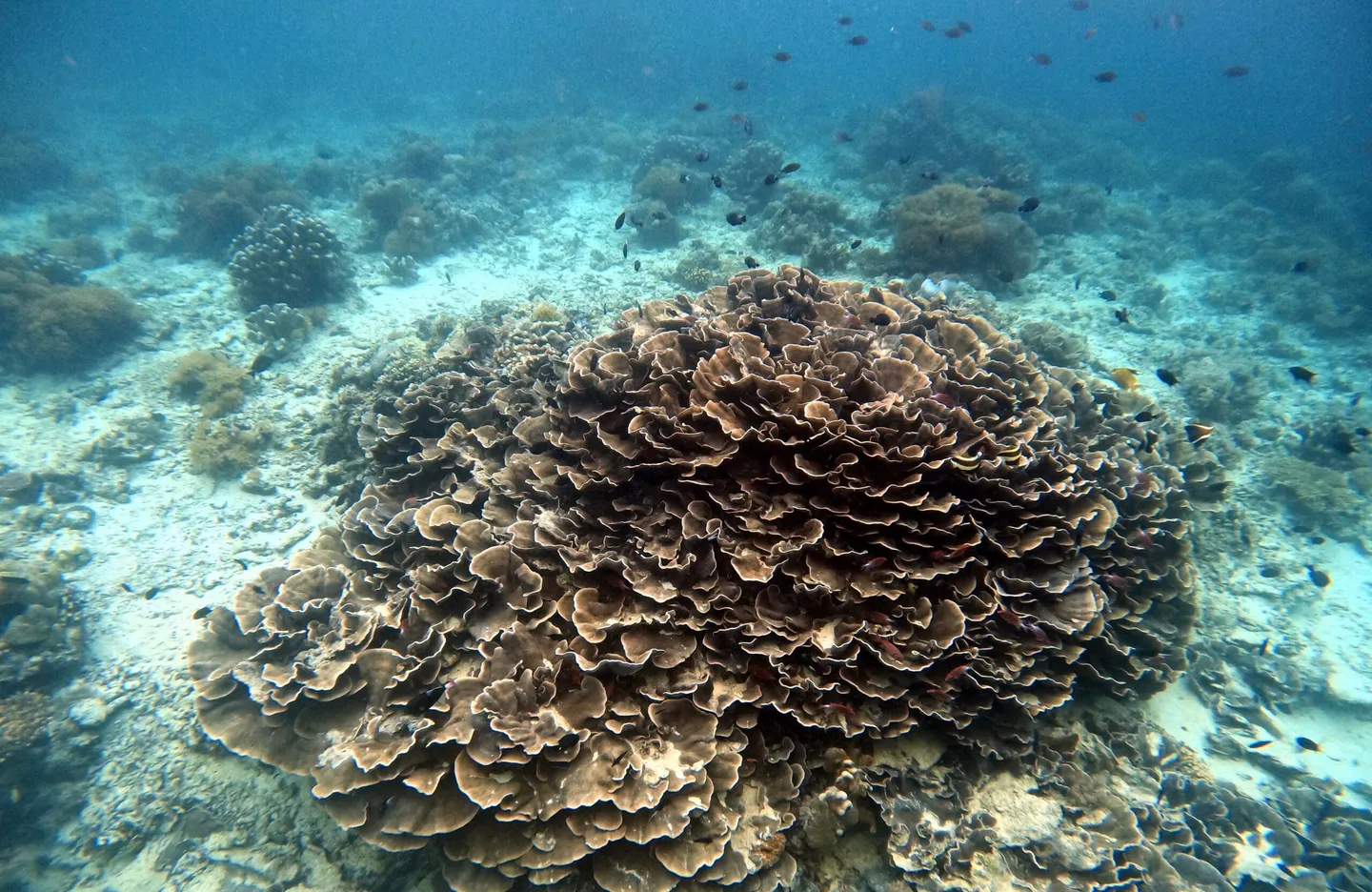
An enormous rose coral
The Editor's Sipadan Dive Takeaways
The Editor loves the diving atmosphere in Southeast Asia — everyone gets lively together, singing along, and enthusiastically sharing food and photos from the dives. Both dives at Sipadan this time clocked in at around 53 minutes each, at depths of approximately 22–25 m, water temperature above 28°C, and visibility of roughly 15 m — a little less than what's been reported in past years.
But seeing the storm and the sharks was more than enough! 😄 I'd only ever seen storm photos and videos online before; when it appeared right in front of me, the excitement and emotion were beyond words. Yes, fighting the current is exhausting — but hold on, and you'll find yourself swimming alongside the fish, diving right into the middle of the school, moving forward with them, and basking in the pure joy of being completely surrounded.
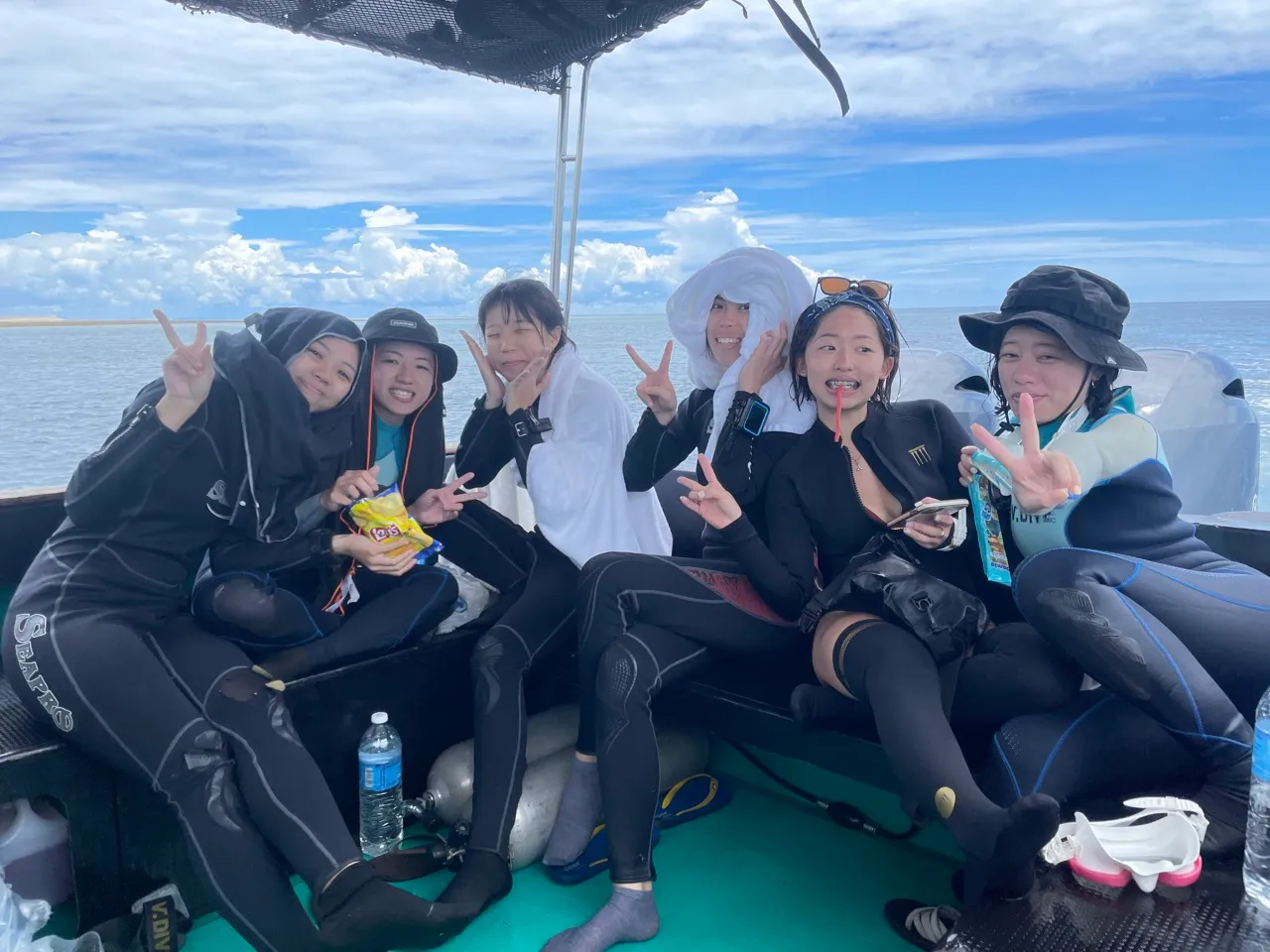
The very first thing to do once back on the boat — break out the snacks
Further Reading
-
Dive Shop: 52Hz Dive Shop 鯨音潛社
Frequently Asked Questions
How is a BlueTrend dive trip different from an unknown, no-name dive group?
Choosing us means full peace-of-mind protection and a smooth experience from start to finish. Every trip we run holds to three things.
First, full legal protection and a professional dive leader: we strictly follow Taiwan's travel regulations and provide complete travel-agency liability insurance, travel insurance, trip-inconvenience insurance and dive insurance. Every group is accompanied by a certified, foreign-language dive leader who joins you on both the dives and the land itinerary, liaising seamlessly with local dive shops and operators on your behalf to keep things running smoothly — the person our travellers trust most.
Second, fully licensed with secure payments: every payment goes into a licensed travel agency's account, with multiple safe payment channels (bank transfer, credit card and more) and a legal collect-and-remit receipt, so every transaction is open, transparent and protected, avoiding the fraud and dispute risks of transferring money privately to an individual.
Third, hand-picked quality we vet in person: every trip, dive site and partner shop is scouted on the ground by our own team, from the guides' professionalism and safety standards to the food, lodging, environment and service details on land, all vetted by us so you don't get caught out.
I want to sign up for a dive trip. Are there certification-level or logged-dive requirements?
Each dive site is different, so the entry bar varies. 'Bali Tulamben', for instance, is relatively beginner-friendly. 'Malapascua in the Philippines' is also beginner-friendly, but since thresher sharks tend to cruise between 20 and 30 metres, we recommend AOW certification with 20+ logged dives to enjoy this trip comfortably. For 'the Maldives' or 'Palau', we suggest AOW with 50+ logged dives for a more relaxed experience. If you're not sure whether your experience fits the trip you want, message us and our dive editors will assess it and help you find the trip you'll feel safest on.
Can I join if I'm signing up alone? How are rooms arranged?
Plenty of our travellers sign up solo! For rooms and beds, we prioritise pairing you with a same-gender traveller, and if you'd rather have your own space you can pay the difference to upgrade to a single room. For the diving, our professional leader will pair you with a suitable buddy, and with the happy vibe on our trips you'll quickly make a great group of dive friends. Many people sign up alone, make new friends, and end up organising the next trip together!
Does the trip fee include dive insurance, gear rental, taxes and instructor tips?
It depends on the trip, the destination's regulations and the local operators. Every BlueTrend dive trip has a detailed web page with a clear 'included / not included' list, transparent and with no hidden charges. All payments are collected by a licensed travel agency, with a standard-form contract for your protection.
I'm a new diver / haven't dived in a long time — will I fall behind the group?
Before you complete your booking, our team assesses a suitable trip based on your certification level and experience. Before departure, we strongly recommend taking time to refresh in Taiwan with an instructor, or a fun dive to get your feel back. On the trip itself, our professional dive leader groups and pairs everyone by experience, keeps a close eye underwater on travellers who need extra care, and steps in to help right away.
Will the photos and videos taken during the trip be shared with us?
During the dives, 'safety' is always the leader's top priority, so whenever it's suitable and safe the leader will capture great shots and record the best moments. During or after the trip, we compile a cloud album for all travellers to download, so you go home loaded with memories!
Besides your scheduled trips, can you arrange a private group charter or independent travel for me and my friends?
Absolutely! Besides group trips, we also arrange private group charters and independent travel. We can communicate, enquire and coordinate services with local operators based on your needs, saving you time and effort and taking the language barrier off your plate, to tailor the smoothest, most reassuring dive trip just for you. Contact our LINE support and our editors will arrange it for you!

![[Malaysia · Semporna] Island-Hopping Dives Beyond Sipadan — Sea Turtles, Macro, and Big Animals, All in One Trip!](/_astro/84B1C85A-BD43-43C9-A9EF-679BB8033E1E_ZsT3am.webp)
![[Malaysia · Semporna] Explore Sabah's Semporna — The Complete Guide to Flights, Accommodation & Food in the Ocean Eden!](/_astro/IMG_3571_GsYir.webp)
![[Malaysia · Semporna] 6 Days & 6 Nights Deep in Semporna: A DIY Travel Guide to Sipadan Diving](/_astro/IMG_9503-1-scaled_Z1gdkBH.webp)