Contents(10)
- Maldives Deep South: Must-Watch Video — Tiger Sharks, Manta Rays, Spinner Sharks, Grey Reef Sharks, Hammerhead Sharks & Sailfish
- Maldives Deep South: ★★★★☆
- Diving Difficulty on the Maldives Deep South: ★★★☆☆
- Marine Life on the Maldives Deep South: ★★★★☆ or ☆☆☆☆☆
- Tiger Zoo — Guaranteed Tiger Shark Encounters
- Spinner Shark — Guaranteed Spinner Shark Encounters
- Grey Reef Sharks in Formation
- Other Dive Sites on the Maldives Deep South
- Beyond the Dives:
- Quick Summary:
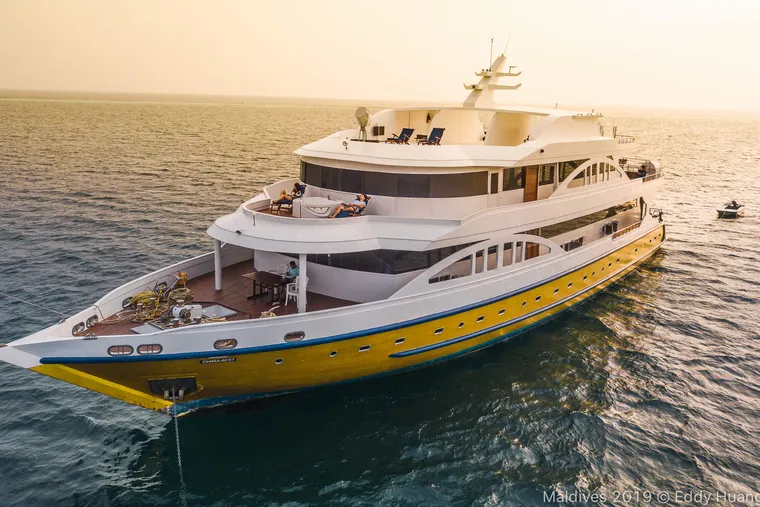
The Editor is thrilled to have joined a Maldives liveaboard for two consecutive years. In 2019, we explored the classic Four-Atoll Circuit (related article: Mastering a Maldives Liveaboard on Your First Try – Great Value, Big Marine Life, and a Home Away from Home); in 2020, we took on the legendary big-animal destination — the Maldives Deep South. Before we even departed, we were buzzing with anticipation for the legendary Tiger Sharks and all the other megafauna that awaited us. Read on to find out exactly what incredible creatures we encountered!
Maldives Deep South: Must-Watch Video — Tiger Sharks, Manta Rays, Spinner Sharks, Grey Reef Sharks, Hammerhead Sharks & Sailfish
After watching the video above, you should be able to feel the vibrant marine life teeming beneath the surface of the Maldives Deep South. As always, let's start with a quick summary of the trip — if you'd like more details on the itinerary, take a moment to read through the sections below, where we break things down by each rating category.
-
Transportation cost: ★★★★☆
-
Diving difficulty: ★★★☆☆
-
Underwater marine life: ★★★★☆ or ☆☆☆☆☆


Maldives Deep South: ★★★★☆
First, let's give you a quick overview of where the Maldives Deep South is located. The Maldives is a long, narrow chain of coral reef atolls in the Indian Ocean, often described as "pearls scattered by God across the Indian Ocean." Pristine white sandy beaches paired with dreamlike azure waters make it feel like paradise on earth — no wonder so many Westerners choose the Maldives as their top destination for honeymoons or extended family holidays!
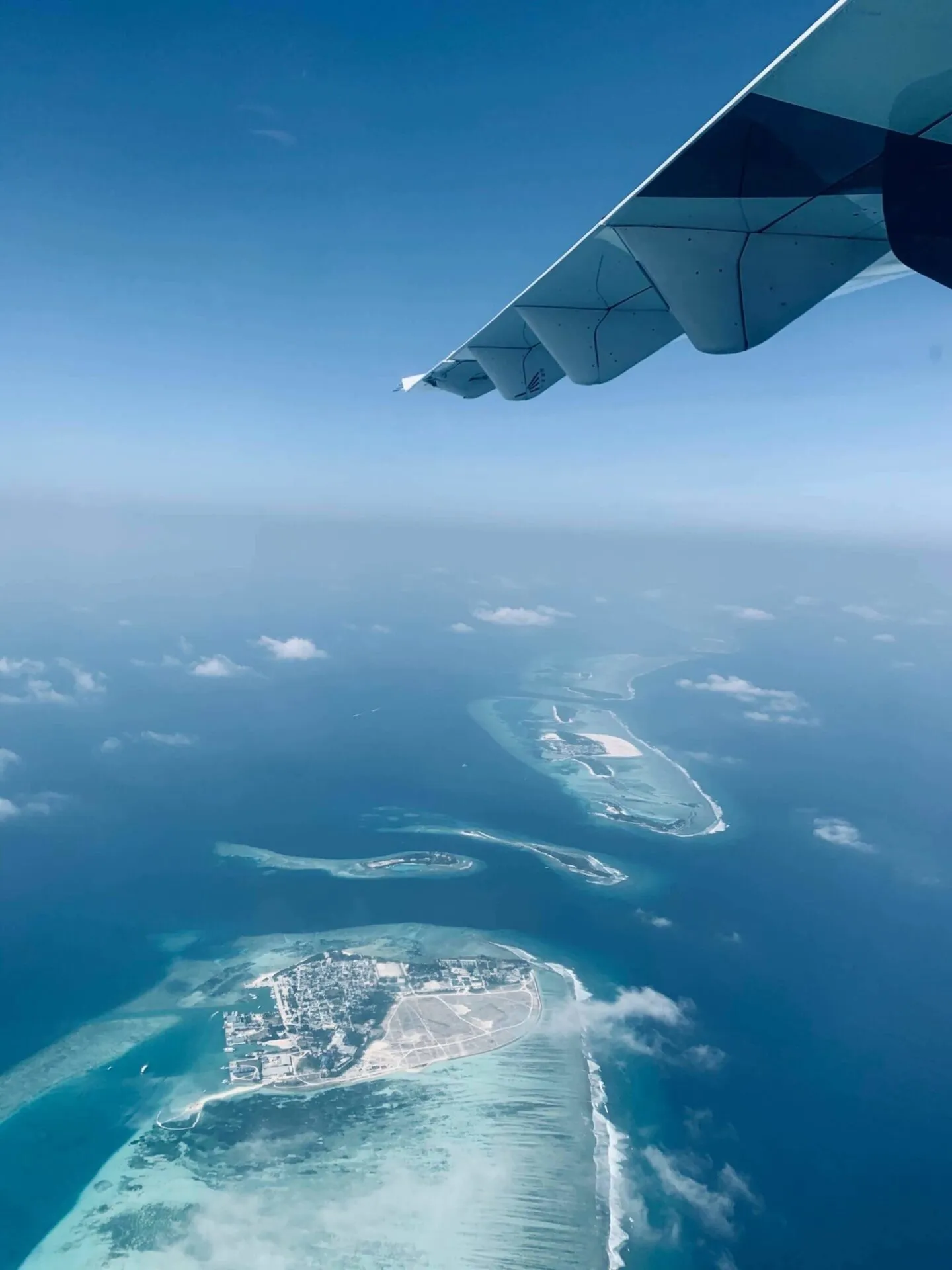
The atolls of the Maldives, like a string of pearls
The Maldives can be roughly divided into three main liveaboard routes: the well-known classic Four-Atoll Circuit (related article: Mastering a Maldives Liveaboard on Your First Try – Great Value, Big Marine Life, and a Home Away from Home), the Northern Route famous for manta ray storms, and the star of this article — the Maldives Deep South. As the names suggest, the Northern Route lies in the northern part of the archipelago, the Deep South is in the south, and the Four-Atoll Circuit sits right in the middle.
The biggest difference between the Deep South and the Four-Atoll Circuit is that the latter departs from the capital Malé and follows a clockwise or counterclockwise loop around the atolls before returning to the starting point. The Deep South, on the other hand, is a one-way journey — one trip might run from Kooddoo Island southward to Gan Island, while the next departure would head north from Gan back to Kooddoo.
This gives you a sense of why transportation cost earns ★★★★☆ (4 stars). If you're flying from Taiwan, you'll take AirAsia to the Maldives capital Malé, then arrange a domestic flight onward to Kooddoo Island or the even more southern Gan Island. Connecting times can be tricky to coordinate, and the round-trip domestic airfare is surprisingly equivalent to the cost of an international flight from Taiwan to the Maldives (approximately NT$14,000). If the connection doesn't line up, you may need to book an extra night of accommodation. The overall time and financial investment is therefore considerably higher than on the Four-Atoll Circuit — the Editor's itinerary this time included the domestic airfare plus two additional nights of accommodation at either end — so careful pre-trip planning is essential!

After nearly 10 hours of flying, we finally arrived at the familiar, compact Malé international airport
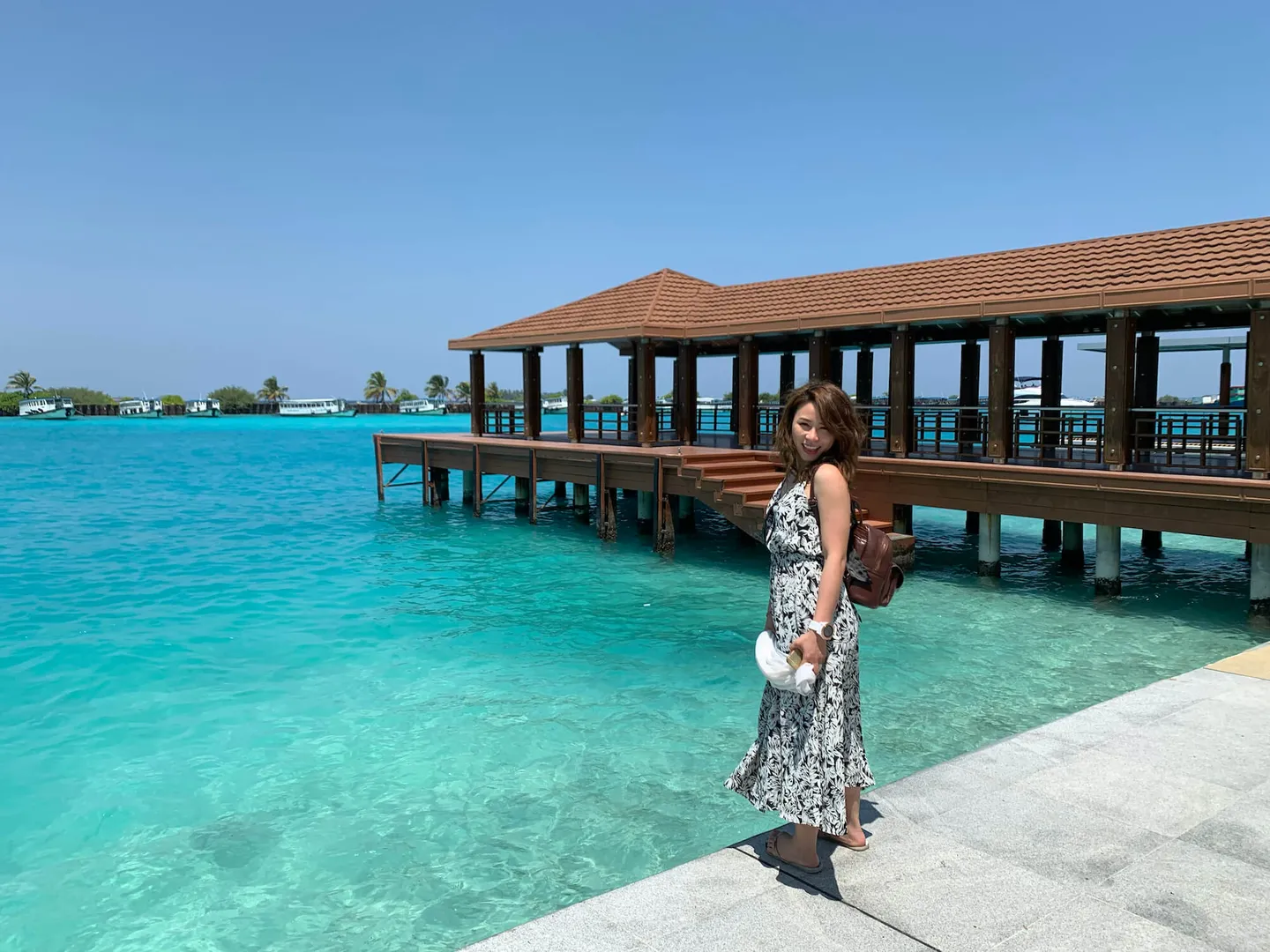
Marveling at the Maldivian blue while waiting for our domestic connecting flight the next morning

A special treat on this trip: a chartered domestic flight for the Deep South route!
We flew first to Kooddoo Island and spent three days diving the channels around it, then headed south to Fuvahmulah Island for two days of Tiger Shark diving. The final two days took us across the equator to the even more southerly Gan Island, where we dived a manta ray cleaning station and a wreck.
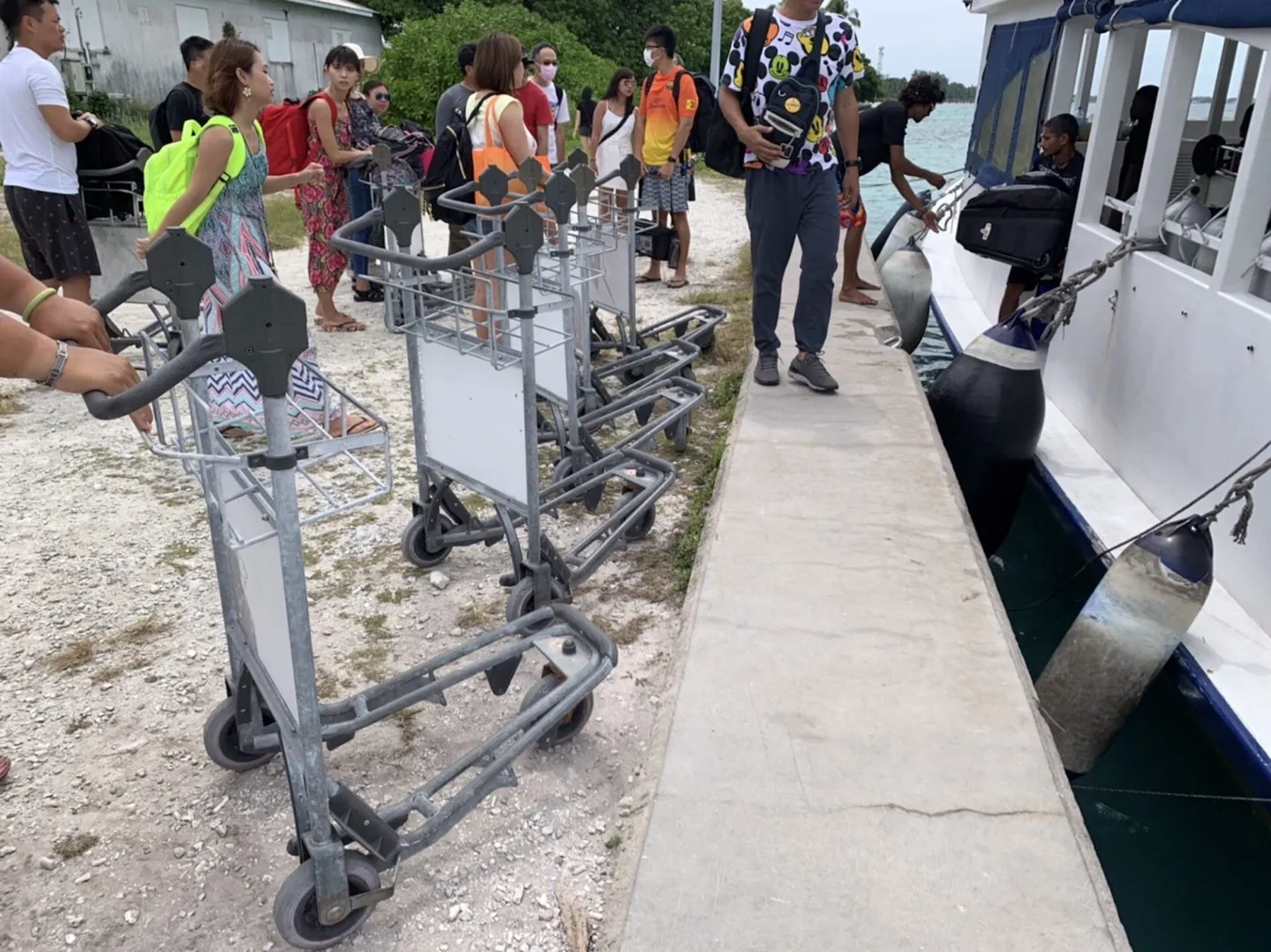
At the outer island airport, our luggage was uniquely wheeled directly to the harbor on trolleys and loaded straight onto the boat
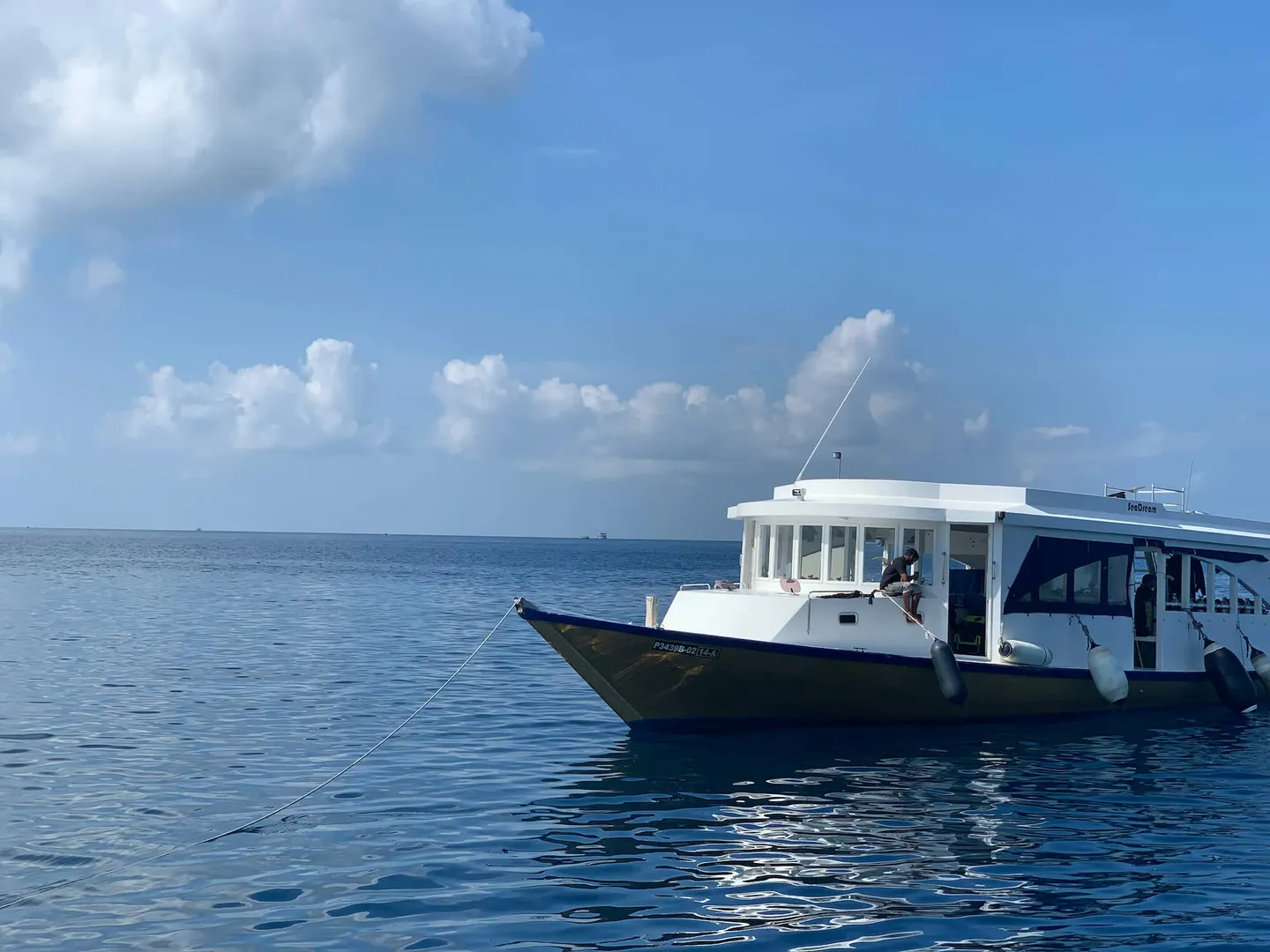
Looking back at our dive tender after boarding — the surface was as still as a lake
Diving Difficulty on the Maldives Deep South: ★★★☆☆
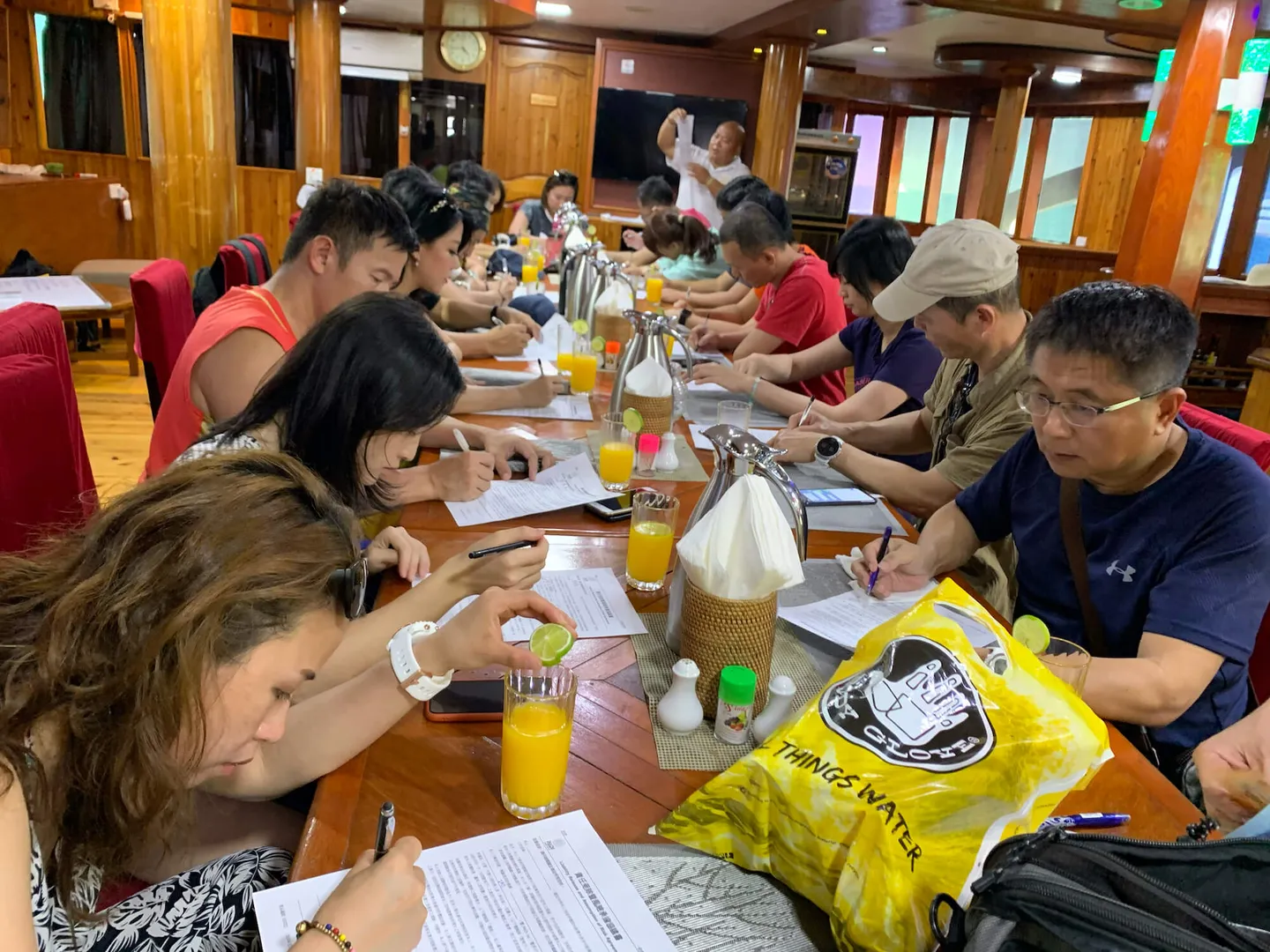
Filling in waivers and reviewing safety guidelines after boarding
As its name implies, the Maldives Deep South means deep and south. Compared to the classic Four-Atoll Circuit, dive sites here are generally much deeper. During the first three days of channel diving around Kooddoo Island, the reef hook points were typically at around 30 m depth. This means that after a giant-stride entry from the boat, divers need to descend rapidly to the designated spot to avoid being swept away by the strong surface current — beginners who struggle with ear equalization should take particular note.
Because of the depth, none of the Deep South liveaboard vessels provide enriched air nitrox (EANx). Spending too long at 30 m on air makes it very easy to enter a decompression obligation. Divers must therefore bring their own dive computer and be thoroughly familiar with depth monitoring and NDL tracking. In the pursuit of big animals at depth, it's easy to drift deeper without realizing it — the Editor accidentally reached 46 m on this trip (not an example to follow). Should you inadvertently enter deco, simply follow the instructions on your dive computer to complete the required decompression stops. Missing a stop would lock your computer and affect subsequent dives. In the Maldives, diving without a dive computer is not permitted!
Strong currents can scatter a group. If this happens, don't panic — deploy your surface marker buoy (SMB) and ascend slowly following your dive computer's guidance. The dive boat will pick everyone up in turn, so every diver must be capable of deploying an SMB independently.
Recommended experience level for the Maldives Deep South: Advanced Open Water Diver (PADI cert) with 60+ logged dives. Reef hook, dive computer, and surface marker buoy (SMB) are all essential!
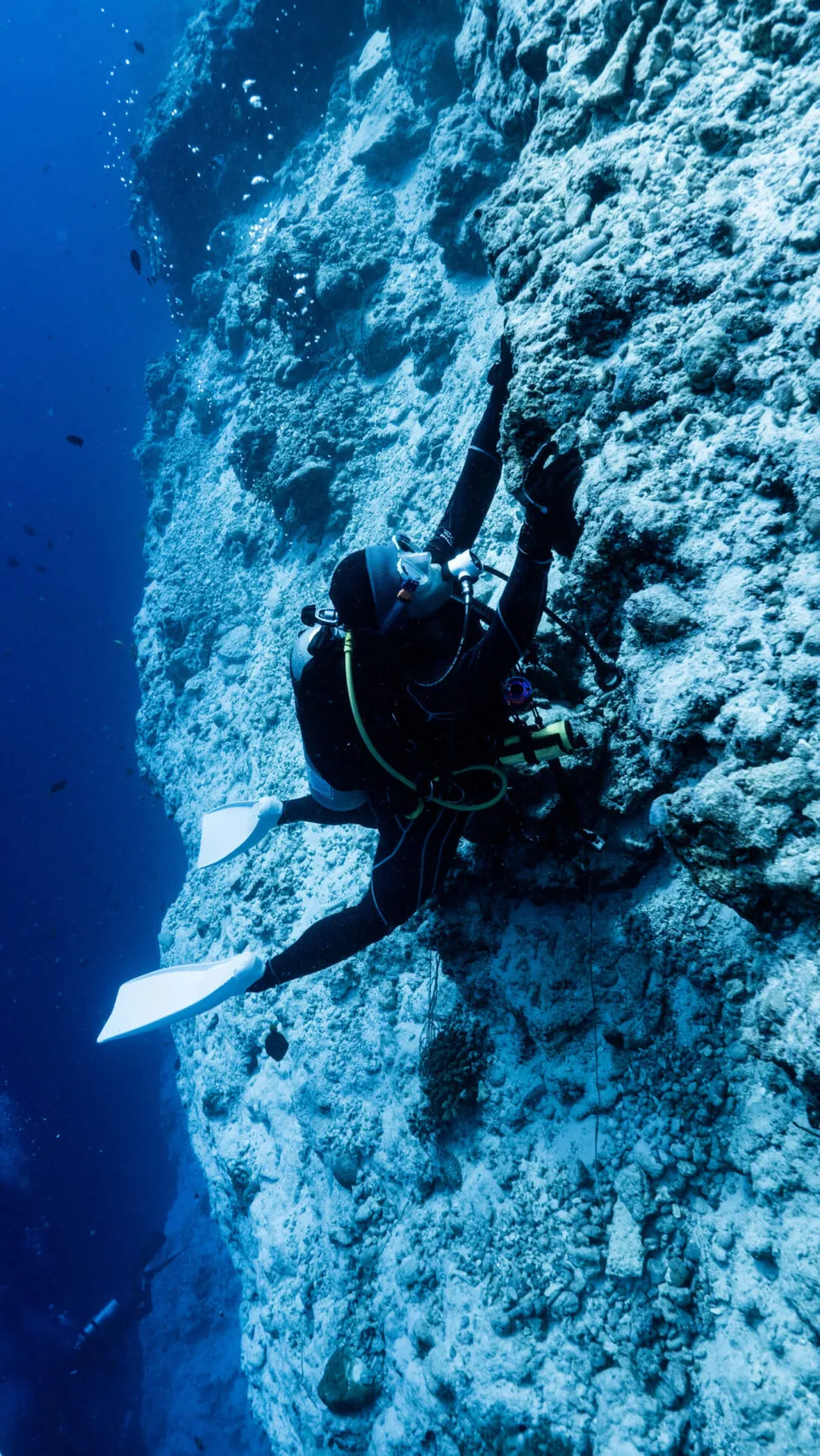
The Maldives features steep, near-vertical walls — water depth can plunge from 2–3 m at the shoreline to 70 m instantly. Maintaining neutral buoyancy is critical to avoid inadvertently going too deep.
Marine Life on the Maldives Deep South: ★★★★☆ or ☆☆☆☆☆
Many people wonder: why does the rating swing between 4 stars and 0 stars — isn't that gap a bit extreme? Yes, and that's exactly the point. The Maldives Deep South is a destination where luck plays a huge role. If the timing and tides are off, you may spend an entire dive staring into a featureless blue void. The previous departure before ours unfortunately ran into poor conditions — not only was the passage rough, but underwater megafauna were virtually absent throughout.
To put things in perspective, the Four-Atoll Circuit offers more variety, more consistent wildlife sightings, and cuts out the domestic connecting flight, making it a better fit for less experienced divers. The Deep South, despite all its inconveniences and unpredictability, is located in the relatively remote southern Maldives, where seamounts rise dramatically from the deep ocean, and upwelling currents deliver a rich supply of nutrients, creating a unique environment that concentrates big animals. In addition to the near-guaranteed Tiger Shark, Spinner Shark, Grey Reef Shark, and manta ray encounters described below, you also have a chance of spotting Hammerhead Sharks, sailfish, Thresher Sharks, Whale Sharks, Bull Sharks, oceanic manta rays, and other elusive megafauna. In short, if your luck holds, you can check off virtually your entire dream dive species list in one go!
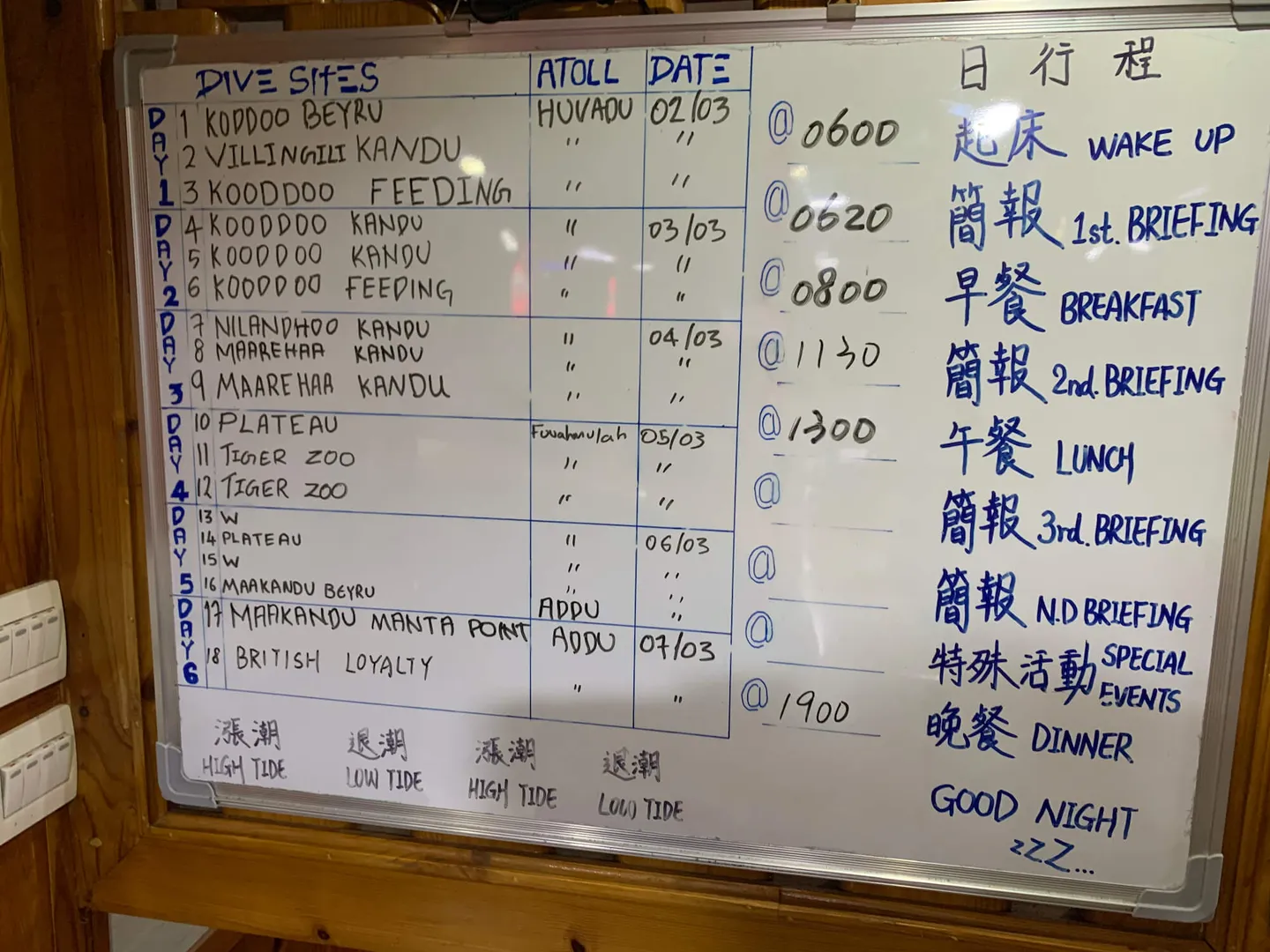
Our dive log for the Maldives Deep South trip — a packed 18-dive itinerary
Tiger Zoo — Guaranteed Tiger Shark Encounters
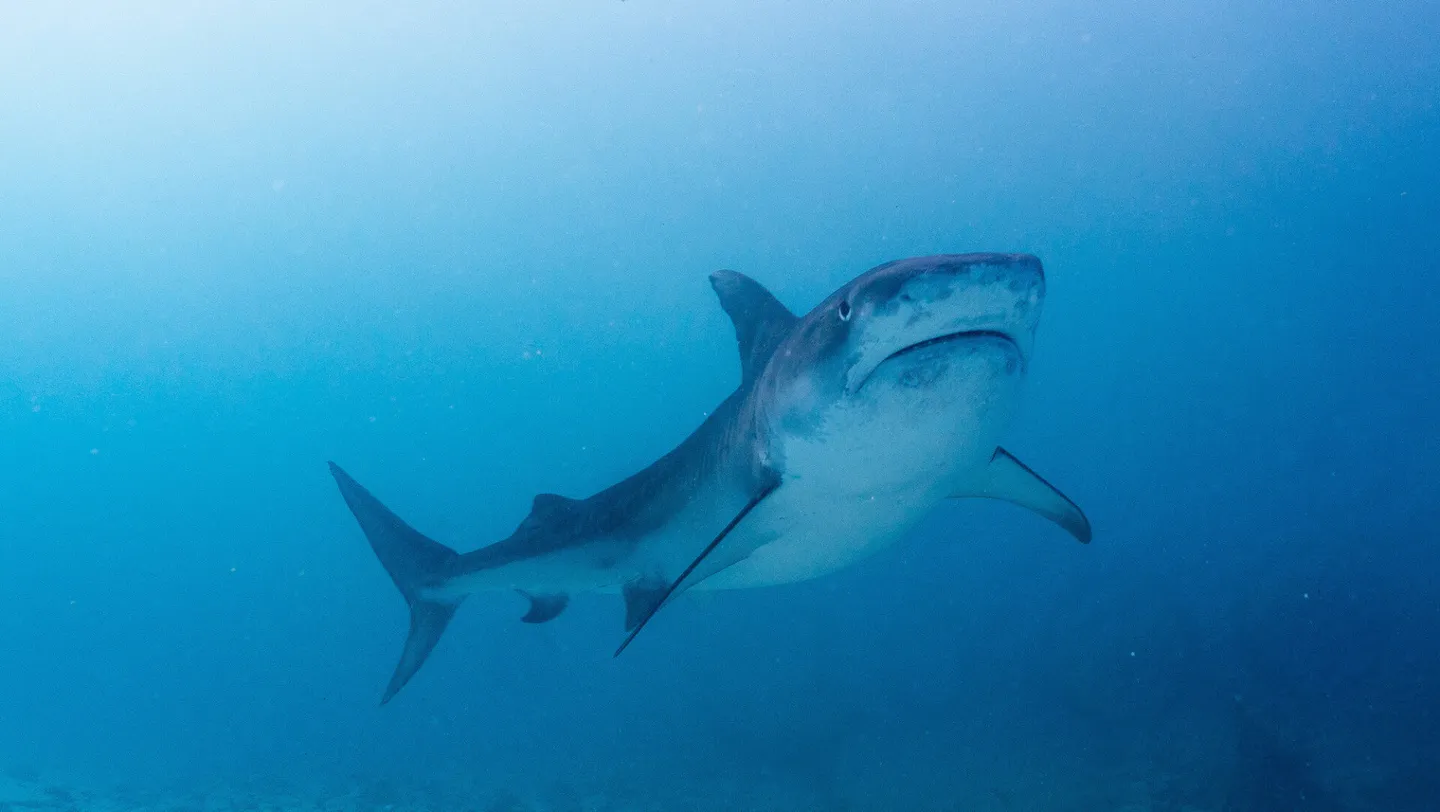
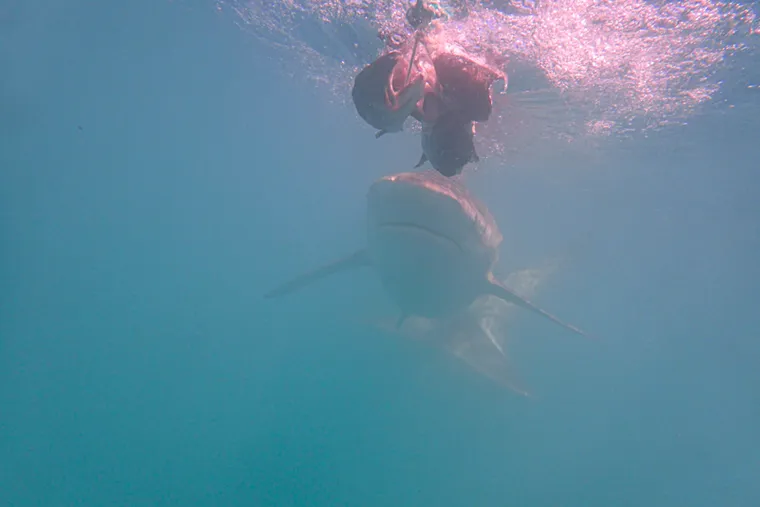
The Tiger Shark may have a fierce and impressive reputation, but up close it's actually pretty goofy-looking
Coming to the Maldives Deep South, the adorably dopey-faced Tiger Shark is of course the main attraction! Although the Tiger Shark is one of the few shark species with recorded attacks on humans, follow your dive guide's instructions and you can observe them safely at very close range. One important note: Tiger Sharks are attracted from a depth of around 40 m up to a shallow reef at about 5 m by baiting. If you accidentally block a Tiger Shark's path, it will turn around and leave — just like a partner who's had a change of heart — and everyone else will miss their close-up encounter.
Spinner Shark — Guaranteed Spinner Shark Encounters
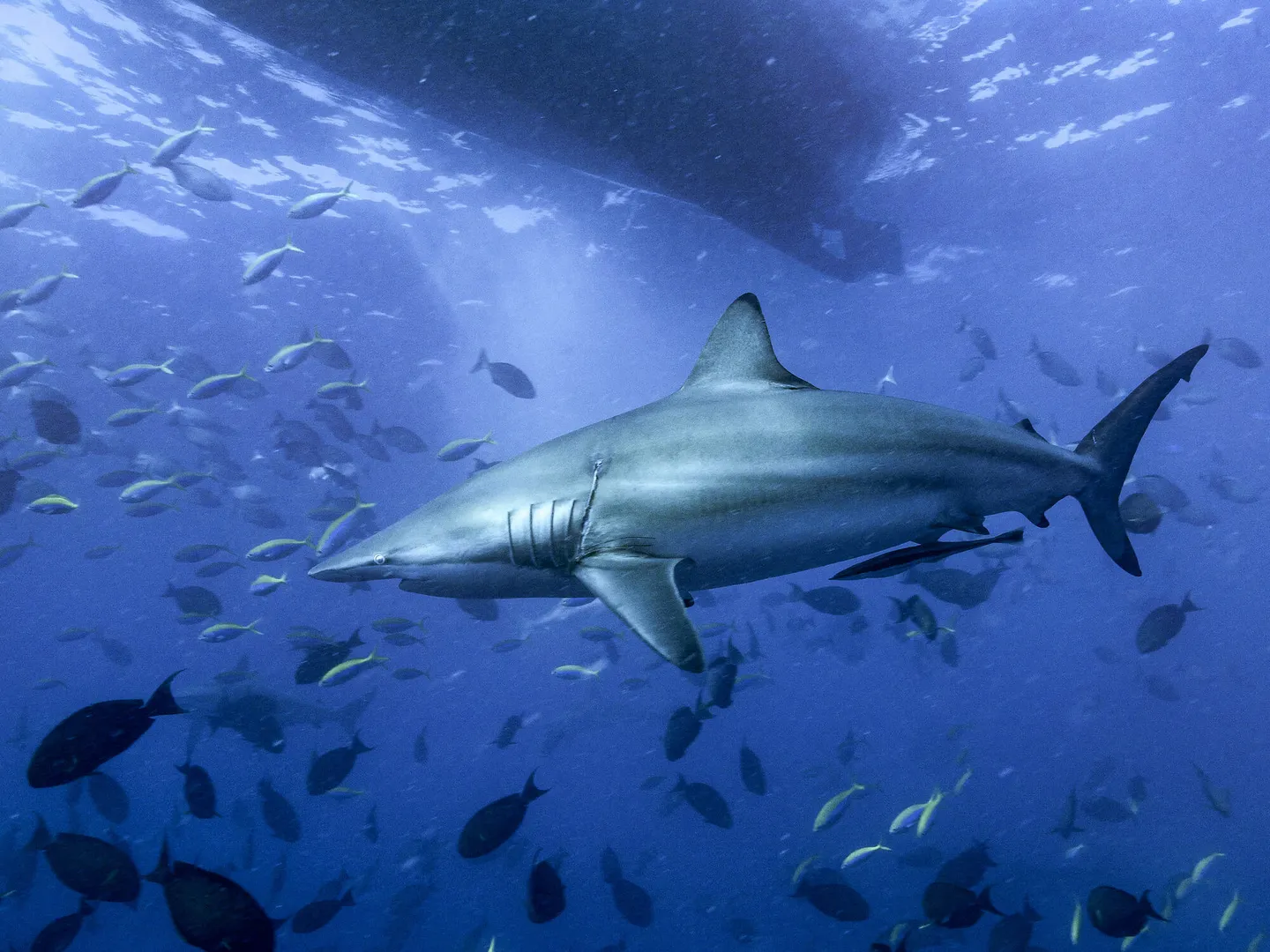
The muscular lines of the Spinner Shark — simply stunning
The Spinner Shark (Carcharhinus brevipinna) is also attracted here by baiting. The moment you enter the water, dozens of Spinner Sharks begin circling you in patrol formation. Watch them burst through the crowd at lightning speed to snatch fish heads tossed into the water — it's electrifying. While you're absorbing the spectacle, keep your neutral buoyancy in check and raise your camera to capture the moment! In addition to the impressive Spinner Shark aggregation, a Bull Shark is also resident at the base of this dive site at around 33 m — if you're lucky, that's another species to tick off your big-animal list. One key safety note at this site: don't drift too close to the surface while shooting photos, as there are many dive boats passing overhead!
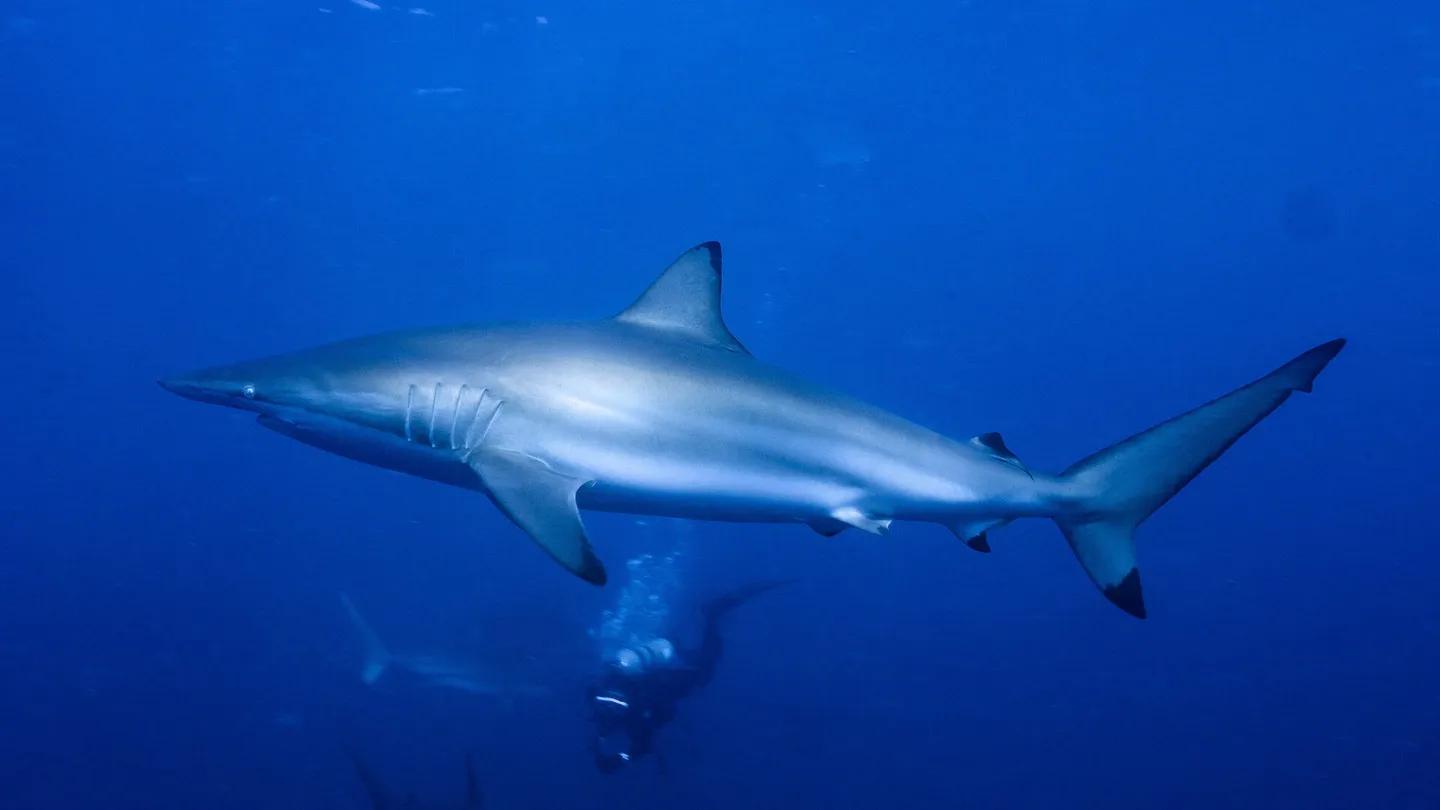
At first glance you'd almost mistake them for dolphins
Grey Reef Sharks in Formation
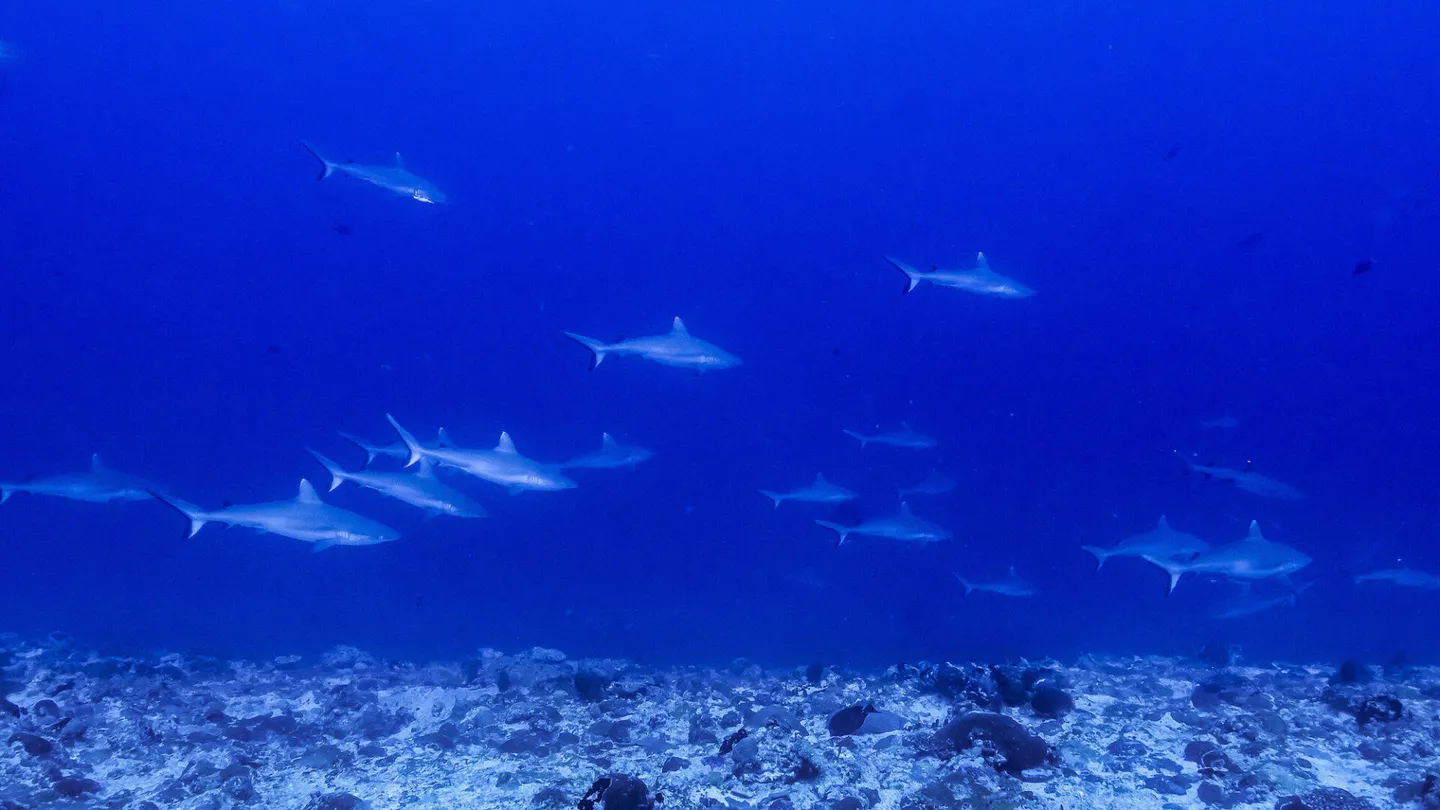
A school of Grey Reef Sharks sweeping past
In the channel dives around Kooddoo Island, you have a chance to witness enormous schools of trevally and barracuda on parade. And of course, a Maldives trip wouldn't be complete without sharks — here it's remarkably easy to watch entire groups of Grey Reef Sharks powering into the strong current as they hunt, advancing in formation like a military procession — an absolutely breathtaking sight. Make sure you're using your reef hook correctly during these channel dives, and always monitor your no-decompression limit (NDL). When you're ready to end the dive, unclip the reef hook and enjoy the exhilarating rush of drift diving. The latter section of the channel drift can be topographically monotonous — but don't let your guard down. On this trip we spotted a massive gathering of Humphead Wrasse holding what looked like a convention in an otherwise quiet stretch of channel, and we even came across a chubby Nurse Shark — a relatively rare sight in the Deep South — tucked in and snoozing among the reef.
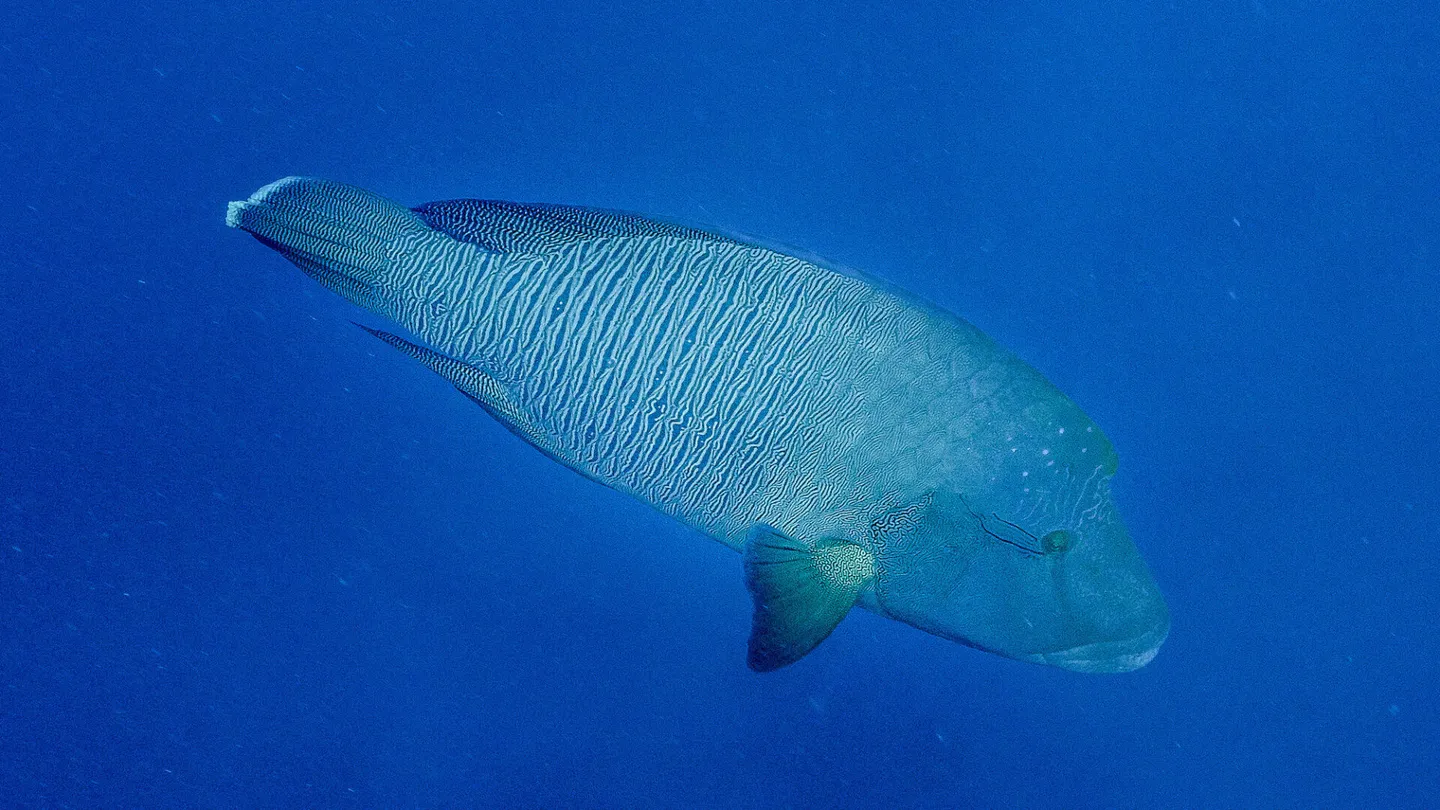
The goofy-faced Humphead Wrasse is also a regular visitor in the Maldives
Other Dive Sites on the Maldives Deep South
The Maldives Deep South itinerary includes a manta ray cleaning station dive near Gan Island. The manta rays here are smaller than those on the Four-Atoll Circuit and don't tend to pass in large groups, but sighting rates are high, making it a worthwhile species tick. Gan Island also features a wreck dive — the British Loyalty, a Royal Navy fuel tanker that was towed to its current resting place when British forces withdrew from the Maldives at the end of World War II, then sunk by a Royal Navy warship. A large hole penetrates the mid-section of the hull, allowing you to swim right through for a satisfying wreck dive experience. Since the Gan Island dive sites are all within the atoll lagoon, visibility is generally poor — the British Loyalty wreck site, for example, has visibility comparable to Taiwan's Northeast Coast (yes, really). A single night dive is usually included on the Deep South itinerary, but honestly it's fairly uneventful — nothing like the macro-rich night dives in Taiwan — so keep expectations measured.
Overall, the underwater marine life of the Maldives Deep South is remarkably rich. Beyond the near-guaranteed encounters with key target species (luck permitting), the broader ecosystem is extremely healthy. Schools of tuna, surgeonfish, giant trevally, and bigeye trevally sweep through certain dive sites in enormous numbers — an experience that hits extra hard for those of us used to the quieter waters around Taiwan.
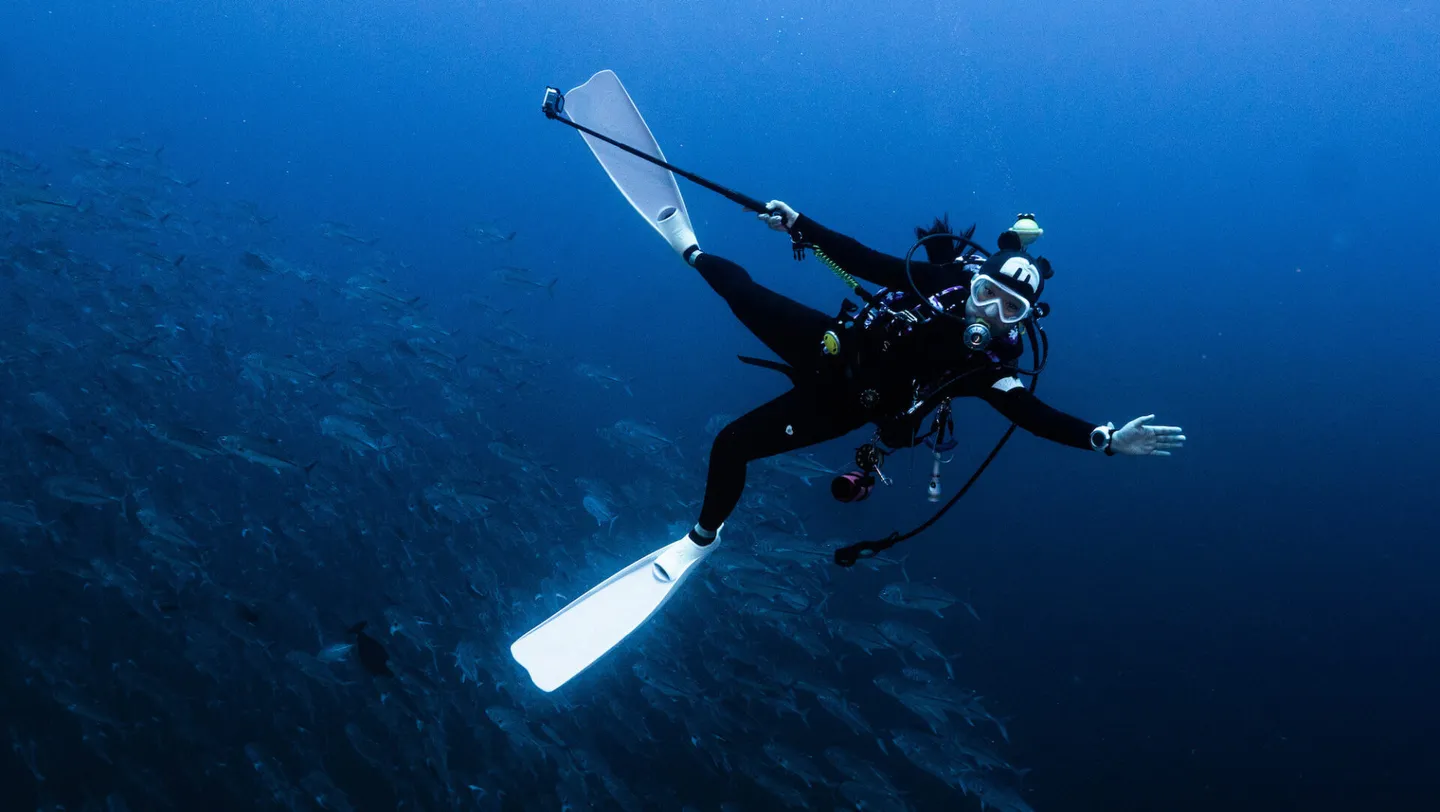
A tornado of bigeye trevally — always keep an eye on your depth when you're in the blue
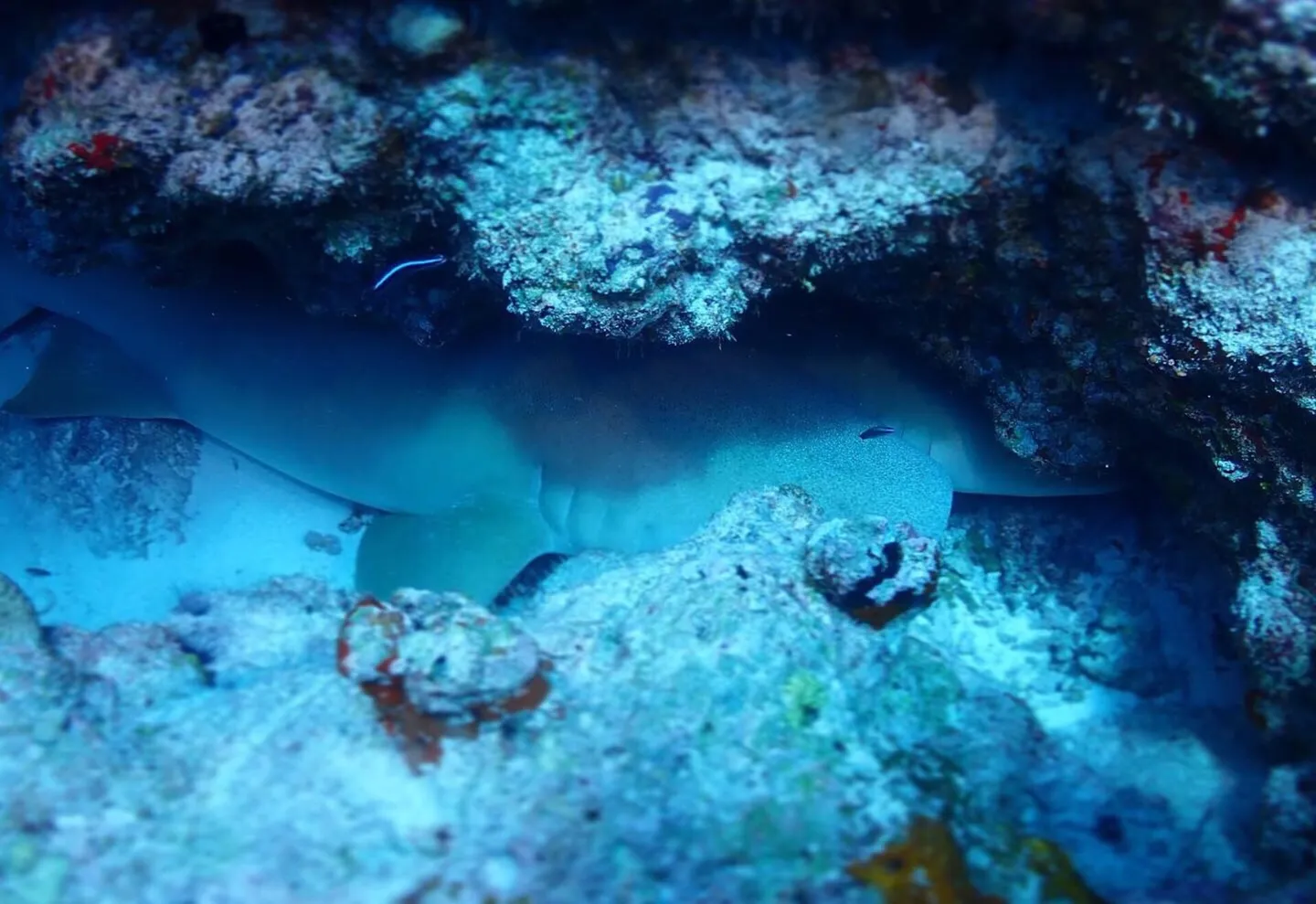
An unexpected delight: a Nurse Shark napping in the reef (Nurse Sharks are rarely encountered on the Deep South)
Beyond the Dives:
The Four-Atoll Circuit typically includes a desert-island BBQ, but unfortunately that service isn't available on the remote Deep South route. The boat does, however, still arrange excursions ashore to uninhabited sandbanks and local inhabited islands — just make sure you apply thorough physical sun protection before heading out to soak up the exotic atmosphere!
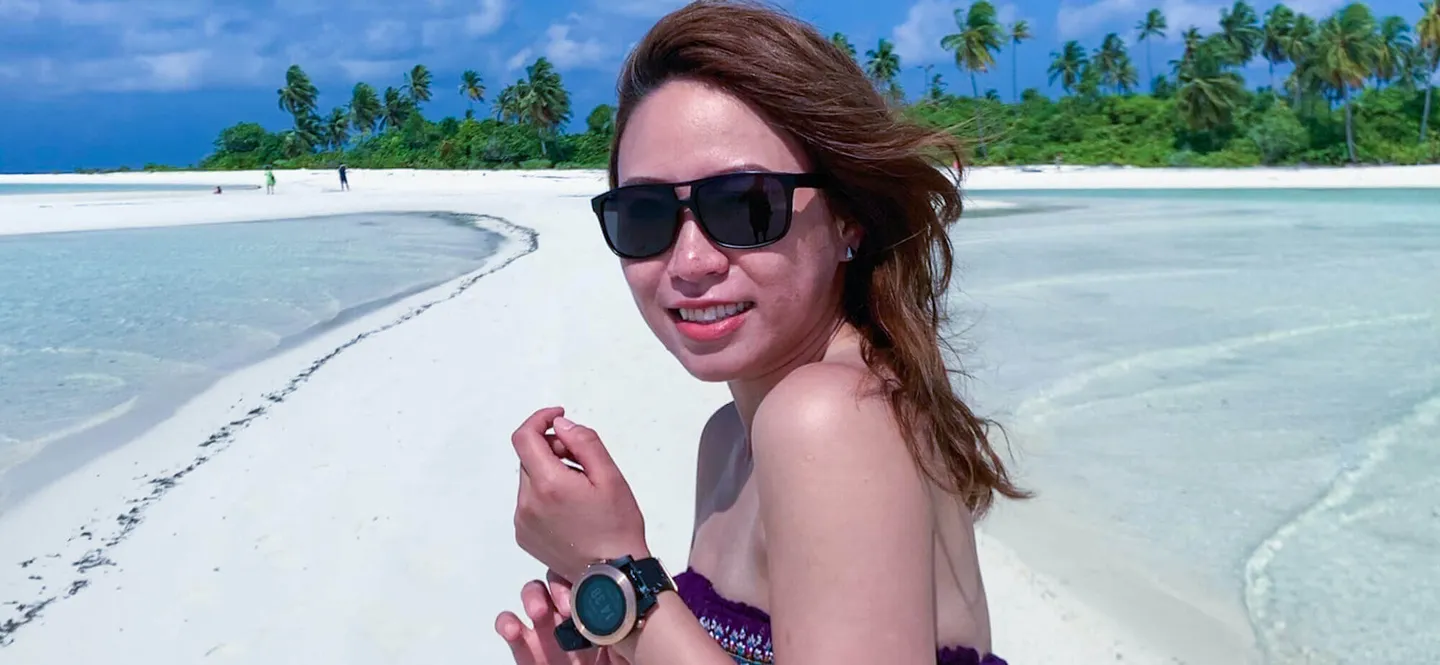
A desert island visit calls for the obligatory Instagram-worthy photo
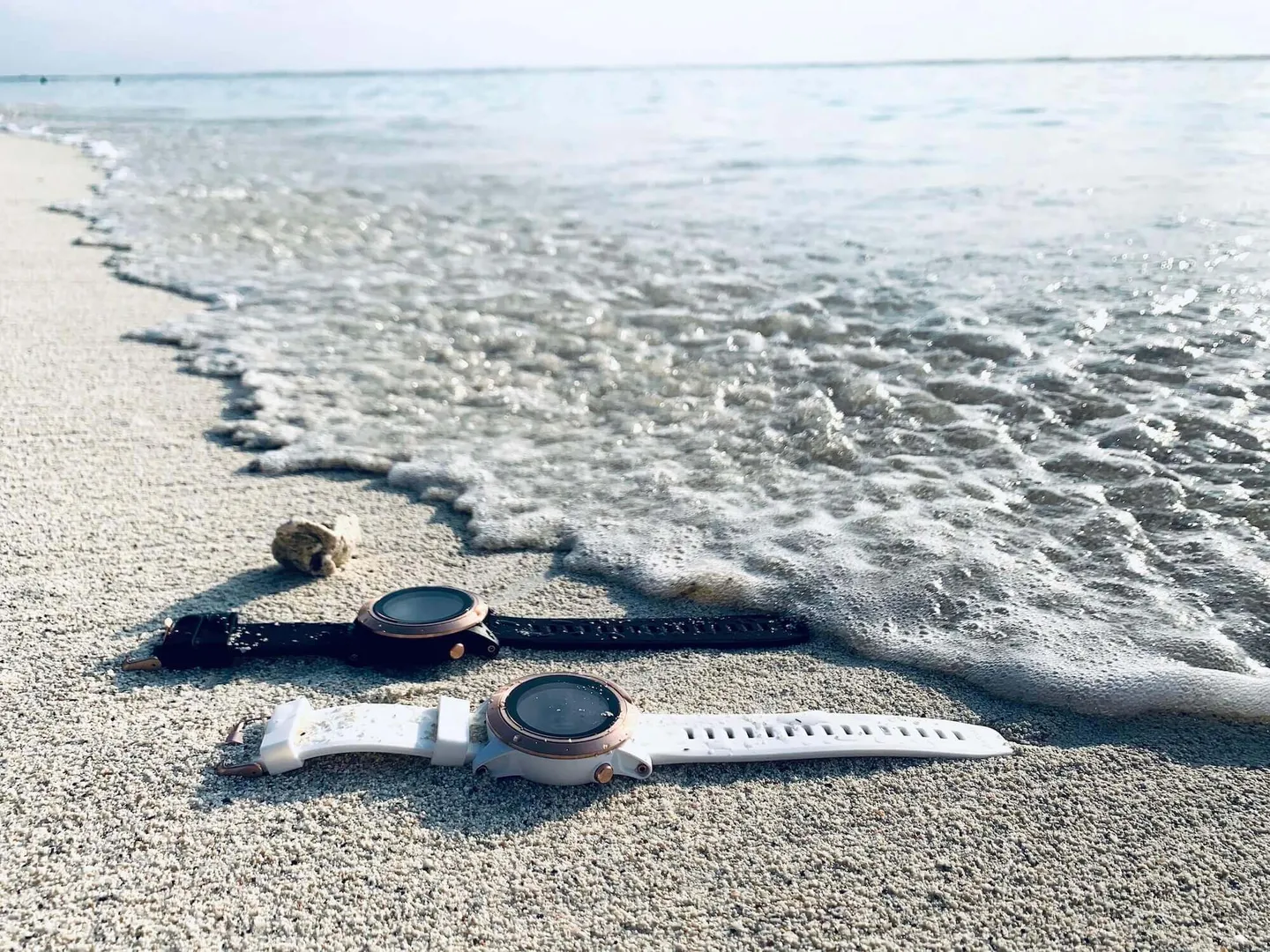
The white sands of the uninhabited island — beautiful from any angle!
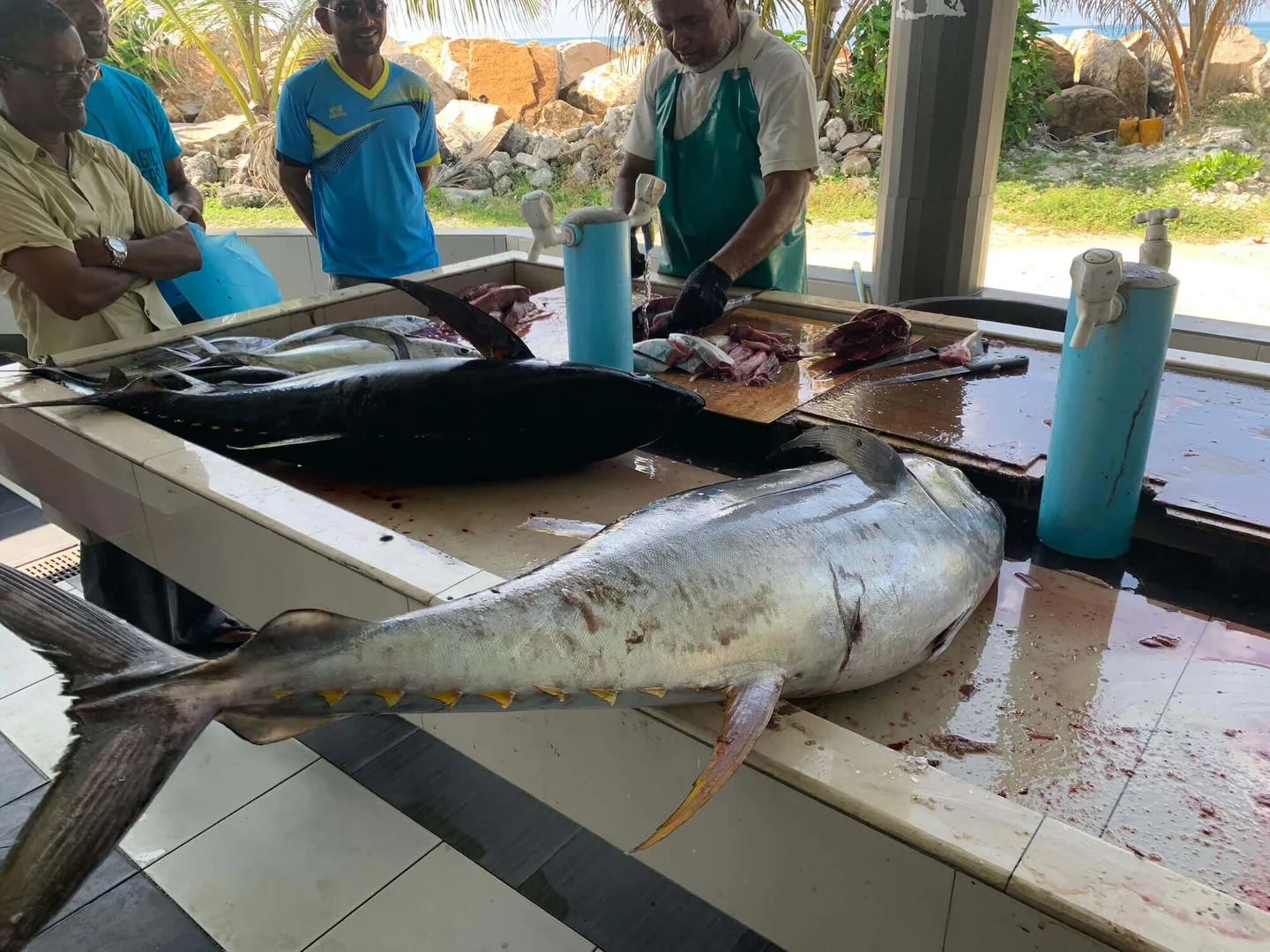
The fish market on the local inhabited island — tuna is virtually the only protein source on offer
Quick Summary:
If your luck is on your side, one trip to the Maldives Deep South will have your shutter finger aching for days!
Related links:
Frequently Asked Questions
How is a BlueTrend dive trip different from an unknown, no-name dive group?
Choosing us means full peace-of-mind protection and a smooth experience from start to finish. Every trip we run holds to three things.
First, full legal protection and a professional dive leader: we strictly follow Taiwan's travel regulations and provide complete travel-agency liability insurance, travel insurance, trip-inconvenience insurance and dive insurance. Every group is accompanied by a certified, foreign-language dive leader who joins you on both the dives and the land itinerary, liaising seamlessly with local dive shops and operators on your behalf to keep things running smoothly — the person our travellers trust most.
Second, fully licensed with secure payments: every payment goes into a licensed travel agency's account, with multiple safe payment channels (bank transfer, credit card and more) and a legal collect-and-remit receipt, so every transaction is open, transparent and protected, avoiding the fraud and dispute risks of transferring money privately to an individual.
Third, hand-picked quality we vet in person: every trip, dive site and partner shop is scouted on the ground by our own team, from the guides' professionalism and safety standards to the food, lodging, environment and service details on land, all vetted by us so you don't get caught out.
I want to sign up for a dive trip. Are there certification-level or logged-dive requirements?
Each dive site is different, so the entry bar varies. 'Bali Tulamben', for instance, is relatively beginner-friendly. 'Malapascua in the Philippines' is also beginner-friendly, but since thresher sharks tend to cruise between 20 and 30 metres, we recommend AOW certification with 20+ logged dives to enjoy this trip comfortably. For 'the Maldives' or 'Palau', we suggest AOW with 50+ logged dives for a more relaxed experience. If you're not sure whether your experience fits the trip you want, message us and our dive editors will assess it and help you find the trip you'll feel safest on.
Can I join if I'm signing up alone? How are rooms arranged?
Plenty of our travellers sign up solo! For rooms and beds, we prioritise pairing you with a same-gender traveller, and if you'd rather have your own space you can pay the difference to upgrade to a single room. For the diving, our professional leader will pair you with a suitable buddy, and with the happy vibe on our trips you'll quickly make a great group of dive friends. Many people sign up alone, make new friends, and end up organising the next trip together!
Does the trip fee include dive insurance, gear rental, taxes and instructor tips?
It depends on the trip, the destination's regulations and the local operators. Every BlueTrend dive trip has a detailed web page with a clear 'included / not included' list, transparent and with no hidden charges. All payments are collected by a licensed travel agency, with a standard-form contract for your protection.
I'm a new diver / haven't dived in a long time — will I fall behind the group?
Before you complete your booking, our team assesses a suitable trip based on your certification level and experience. Before departure, we strongly recommend taking time to refresh in Taiwan with an instructor, or a fun dive to get your feel back. On the trip itself, our professional dive leader groups and pairs everyone by experience, keeps a close eye underwater on travellers who need extra care, and steps in to help right away.
Will the photos and videos taken during the trip be shared with us?
During the dives, 'safety' is always the leader's top priority, so whenever it's suitable and safe the leader will capture great shots and record the best moments. During or after the trip, we compile a cloud album for all travellers to download, so you go home loaded with memories!
Besides your scheduled trips, can you arrange a private group charter or independent travel for me and my friends?
Absolutely! Besides group trips, we also arrange private group charters and independent travel. We can communicate, enquire and coordinate services with local operators based on your needs, saving you time and effort and taking the language barrier off your plate, to tailor the smoothest, most reassuring dive trip just for you. Contact our LINE support and our editors will arrange it for you!