Contents(4)
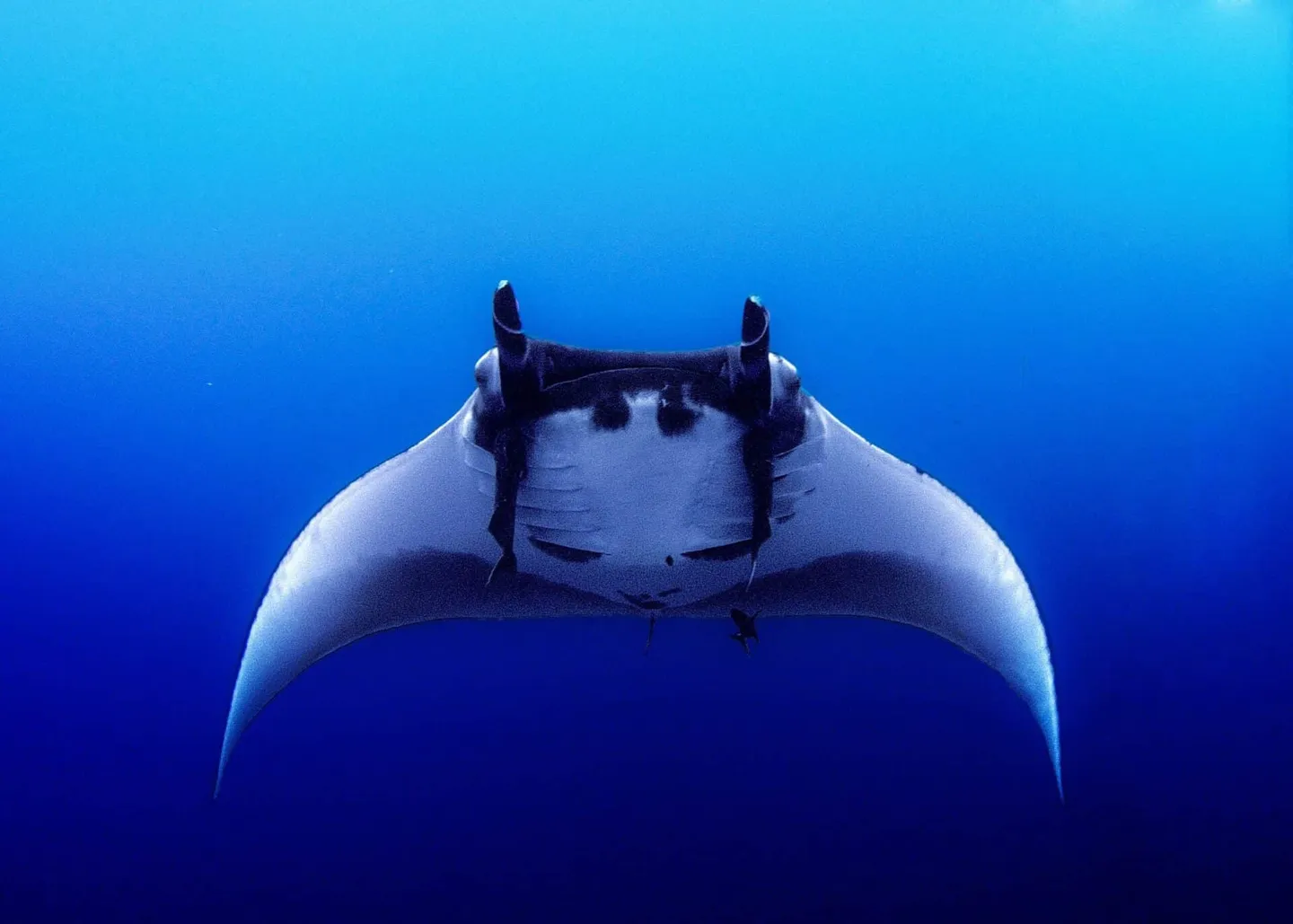
Manta rays belong to the family Mobulidae, genus Mobula. Two species of manta ray have been recorded in Taiwan: the oceanic manta ray (Mobula birostris) and the reef manta ray (Mobula alfredi). They are primarily distributed in the Pacific waters off Taiwan's eastern coast, though Taiwanese fishermen operating in the Taiwan Strait and the waters around the Northern Three Islands have also encountered them basking at the surface.
Wow! Can manta rays do acrobatics?
Not exactly! The manta ray's backflip is actually a unique feeding behavior. Rather than charging headlong at its prey (mainly plankton), it much prefers to eat by somersaulting through the water!
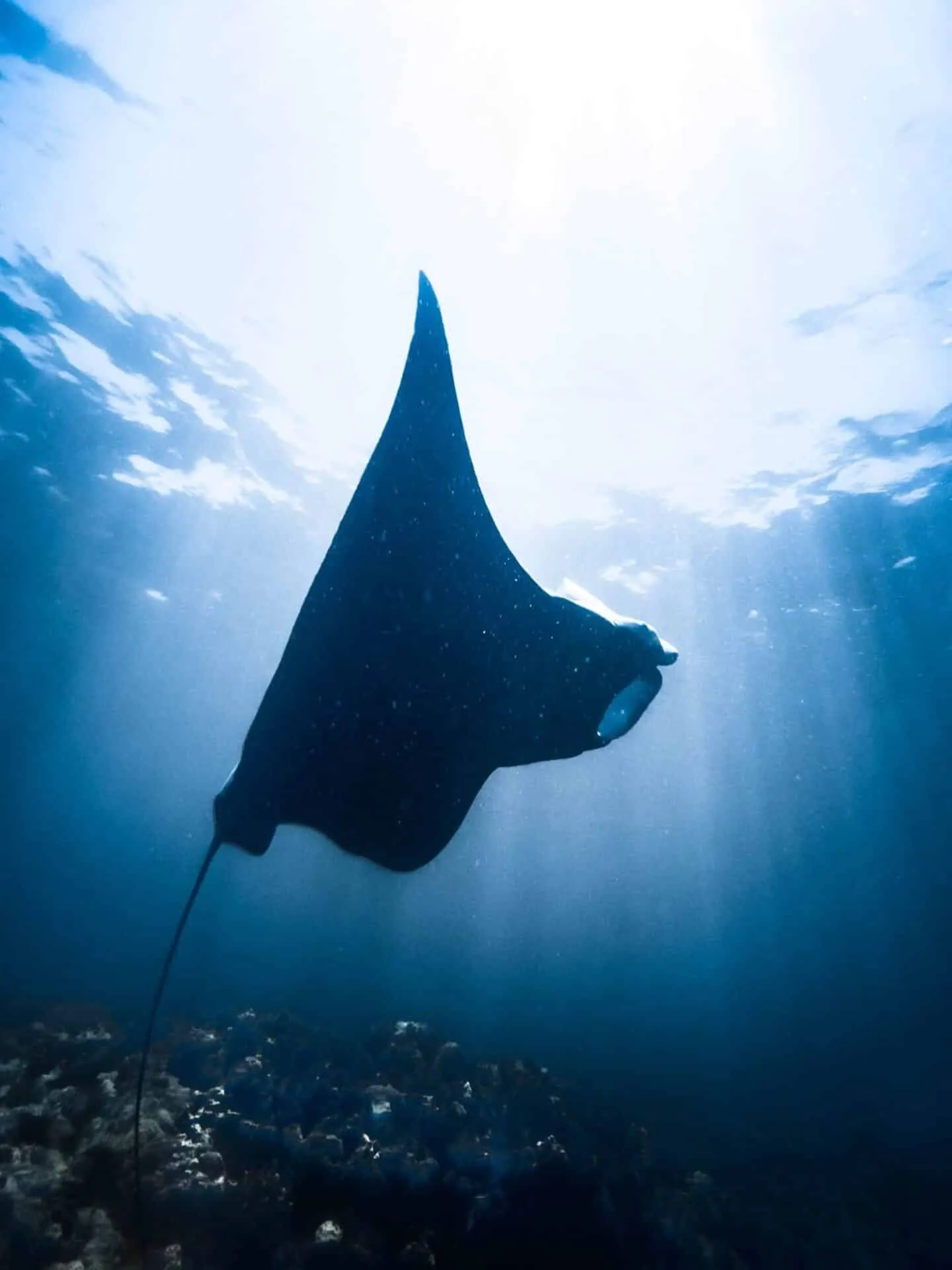
Photo by Steve Halama on Unsplash


Is a total fishing ban — or a complete boycott of aquariums — really the only answer?
Unlike humans, fish don't mate year-round. Beyond reaching sexual maturity, they typically need the right environmental conditions to reproduce — and that is precisely what makes aquaculture so challenging. In Japan, most aquariums go beyond profit and education; they also shoulder the weight of serious scientific research, gradually unveiling the secrets of the ocean through academia-industry collaboration in pursuit of sustainable coexistence. It is only within this broader framework that aquariums have been able to create an environment where manta rays feel safe enough to mate and successfully give birth.
Okinawa Churaumi Aquarium in Japan has documented the complete process of manta rays in its care — from mating and pregnancy through to birth. This has made a significant contribution to the fundamental biology of fisheries science, greatly deepening our understanding of their ecology and habits.
Without knowing them, how can we ever truly fall in love with them?
All of this scientific research exists so that, should human intervention for conservation ever become necessary, there will be a solid scientific foundation to build on — allowing us to target the problem precisely and find the right solution. In Japan, manta rays are not subject to a fishing ban, and dive trips where you can encounter manta rays are also available on Ishigaki, the island neighboring Okinawa.
Looking at Taiwan: trying to understand Taiwanese fisheries policy and public sentiment from a different angle
A memory from the summer of 2016 — a fisherman's chance encounter with a manta ray out at sea.
It was a clear, sunny day, just like any other, heading out to sea full of hope. Following the usual routine, he rigged his lines and dropped the bait into the fathomless ocean below. Throttle in and out, a wide banking turn, and the fishing vessel came to rest above the fishing grounds.
The captain introduced us to these waters: "This is the Northern Three Islands — Pengjia Islet, Mianhua Islet, Huaping Islet — the finest fishing grounds in northern Taiwan."
A massive, dark shape drifted slowly toward the boat from the distance. Perhaps we were the only foreign objects in this vast expanse of ocean? Its enormous body drew every fisherman's gaze away from the rods, and everyone spontaneously reached for their phones to snap a few photos as a keepsake. The giant creature beat its great wings and glided with the wind and current, circling lazily alongside the boat — as if sizing something up. Perhaps its curiosity was satisfied, for it drifted away again with the wind and current.
We asked the captain: "Have you ever thought about taking passengers out to see manta rays?"
Captain: "Even if I won the lottery jackpot, I wouldn't do it!" "I'd never encountered one before, and I haven't seen one since. In all my decades at sea, that was the only time..."
Captain: "I thought you only ran into them off Hualien!" — muttered the captain, a man born into a fishing family.
The captain lamented: "What I want to catch is sailfish, tuna, and Spanish mackerel!"
Watching a large cluster of buoys sink beneath the surface, he thought he'd landed something good. But when the answer was revealed, it was the enormous body of a manta ray that broke the surface. With everyone working together, they finally hauled the manta ray aboard, and the captain immediately ordered the crew to cut the ropes tangled around it, warning them to watch out and not get struck by its wings.
"A bruise at best, a broken bone at worst." Getting hit by one is no laughing matter! Although manta rays lack the lethal tail barb of other Stingray species, a fish that can easily weigh over a hundred kilograms — if those thick, powerful wings were to strike you, it could cost someone their life.
The manta ray: "I was absolutely terrified!" A manta ray accidentally hauled aboard will fight with every ounce of strength it has, thrashing its enormous wings at anything that comes near — even the fishermen trying to release it back into the sea... after all, no one yet knows how to communicate with a manta ray.
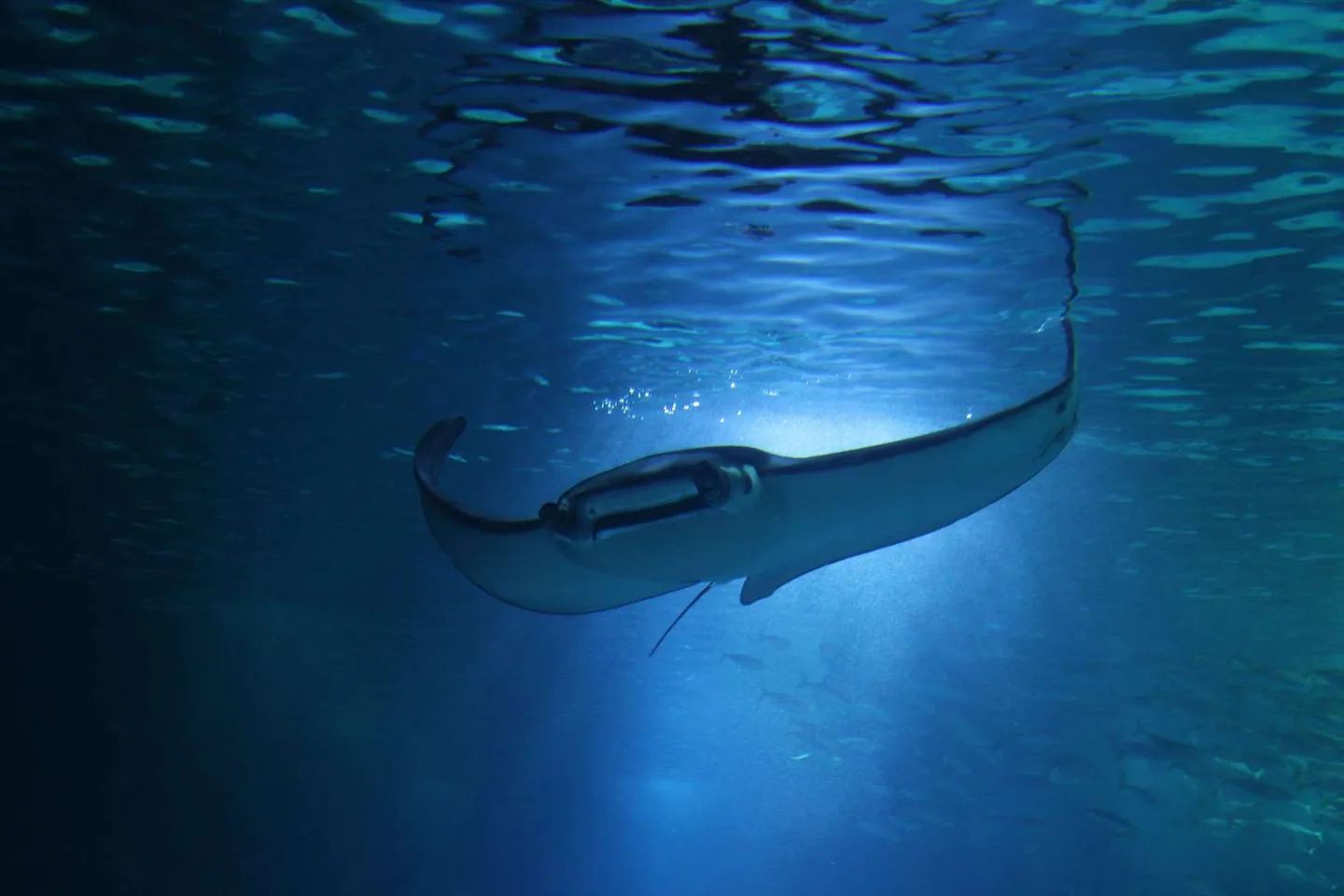
Photo by Constança Rodrigues on Unsplash
"Saving a manta ray earns you no applause."
When sea conditions permit, fishermen might manage to keep a cool head and release it in the least harmful way possible. But in most cases — just as with accidentally catching a shark — they knock it unconscious or kill it first and deal with it afterward. Safety, after all, is the one unchanging truth at sea.
According to bycatch notification statistics for captured manta ray species, the fishing gear most commonly responsible for manta ray bycatch is drift gill nets. Yet when manta rays are accidentally caught, what most often ensnares them is not the netting itself but the ropes connecting the net panels or the float lines — a strange mode of accidental capture that left the captain completely baffled.
The captain said: "Would you believe it? Honestly, if I hadn't seen it with my own eyes, I wouldn't have believed it either!" He recalled finally spotting a manta ray at sea and, out of curiosity, throwing a cable in its direction. The thick cable bobbed up and down on the waves near the manta ray. Whether it was the sound or the bubbles, the manta ray seemed to mistake the area around the cable for a food source and launched into its backflip routine — one loop, two loops, three loops — and in no time at all, the manta ray had "gift-wrapped" itself. A panicked captain quickly hauled the cable back in and cut the lines tangled around the manta ray.
We naively asked: "Wouldn't it just be easier to bring it back and sell it?"
The captain replied with a scowl: "Do you think there's a lot of space in the ice hold on this boat? Do you think a dead manta ray is worth much? And don't let the weight fool you — a fish weighing several hundred jin sells for just over NT$1,000. Not NT$1,000 per jin — a fish weighing hundreds of jin is worth just over NT$1 per jin!" "And you have to file a report on top of that? The very act of bringing it back makes you a fool!!!"
Before the current comprehensive fishing ban was put in place, in order to build a scientific management basis for manta rays, any manta ray caught had to be reported by law, and the complete carcass had to be held for 24 hours until personnel from a government-designated academic institution arrived to collect samples — only then could the carcass be auctioned and utilized. Like all cartilaginous fish, manta rays share the common problem of producing a strong ammonia odor as freshness deteriorates. On top of that, among ray species, the flesh of the manta ray is considered some of the least palatable. A dead manta ray has no economic value whatsoever beyond its usefulness for academic research.
Unless a fisherman has come up completely empty-handed all day, with nothing in the hold, and happens to accidentally catch one — just to pocket that NT$1,000-odd for a bit of cigarette and drinking money — there is simply no fisherman who would go out of their way to catch a manta ray.
"In the eyes of a fisherman, a manta ray is worth absolutely nothing."
Cover photo credit: Photo by Max Gotts on Unsplash
Further reading: