Contents(3)
In our previous article, we tried to share the issue of bycatch through a narrative approach — Manta Rays Are Valuable Abroad, So Why Do Taiwanese Fishermen Catch and Sell Them? A Change of Perspective for a More Complete Understanding of Fisheries Policy. This time, we draw on real-life cases to share the current situation facing manta rays and other iconic dive species in Taiwan.
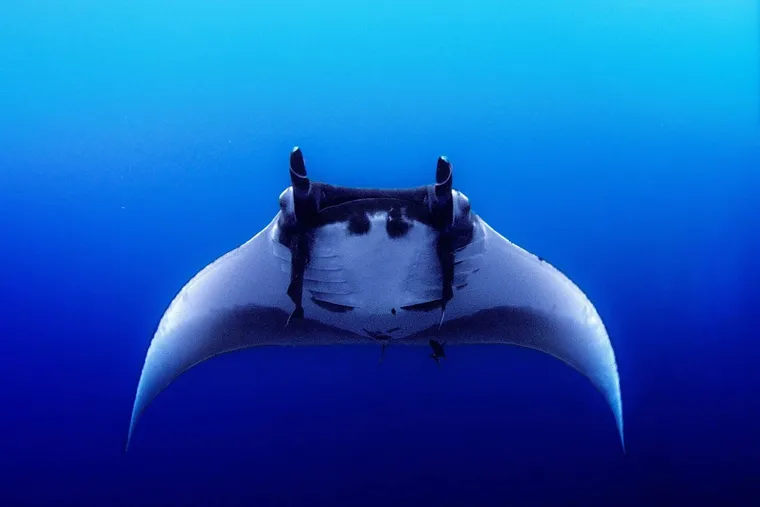
At night, the engine cut, the anchor dropped, the lights switched on — to catch squid, the captain directed the crew as they got to work. The fish-attracting lights aboard the fishing vessel lured in countless plankton, small fish, and shrimp, but those tiny creatures weren't the only ones drawn in. Braced against the waves as they crashed one after another, the anchor held the fishing boat firmly in place through its cable — yet the bubbles and sounds produced by the current striking that cable led one creature to mistake this spot for a meal.
Manta ray: "All I wanted was something to eat!"
One loop! Two loops! Three loops! Then suddenly — it couldn't turn anymore……!?!?!?!?!?!?
It thrashed its wings in a panic, but no matter how massive its body, it was no match for the opposing pull of the anchor and the fishing vessel, bound together by the cable. With each push of the waves, the harder it struggled, the deeper and tighter the cable dug in — loop after loop, loop upon loop! The manta ray was bound fast.
By the look of it, the creature weighed at least several hundred kilograms. A human being standing beside it would appear utterly insignificant — like a sumo wrestler squaring off against a kindergartner. And those thick, powerful wings, when fully spread, could send a person reeling with a single casual flap. Could you convince it to stay still long enough for someone to dive in and free it?
Perhaps cutting the rope from the deck would do the trick — but the anchor was tangled up with the manta ray as well. Cut the rope from above, and it would sink straight to the seafloor, anchor and all, left to die.
"Just deal with it tomorrow," the government official instructed over the phone. After all, there was simply no handling that giant creature out at sea. The captain had no choice but to carefully pilot the boat back to port, slowly towing the manta ray along.
"One rope, one anchor — that's not worth much! And that fish wouldn't fetch much money even if you hauled it in!" "Just cut the rope and let it be — dead or alive, who cares! Better than ending up in the mess we're in now." "Report it? This is what you get for trusting the government!" — Comments from other fishermen who learned of the incident.
Amid a crowd of onlookers all talking at once, rumors spread and rubberneckers appeared. "You're free to go!" And at last, to cheers from the crowd, the manta ray — battered and utterly exhausted — was forcibly dragged back out to sea.
Crew member: "It's gone home. Maybe it'll come back in seven days." The moment the rope was cut, the manta ray drifted down toward the seafloor like a great kite that had lost its wind.
It wasn't a whale, a dolphin, or a sea turtle — so its injuries didn't matter. It was just dragged out and dumped at sea.
What Matters and What Doesn't When It Comes to Manta Rays
Us: "So what exactly do you plan to do about this manta ray situation?"
Civil servant: "Do you smoke? Let's go outside and talk." "You know, manta rays actually play with ropes! I've talked to quite a few boat captains, and they all say they found the manta rays tangled in cables — only a small number were actually caught in nets."
Us: "I know that. But why don't you tell the public the truth? It would also clear the name of the fishermen who are willing to cooperate with fisheries management — isn't that what the government should be doing?"
The fishermen were simply being law-abiding and compliant, yet they became the targets of public criticism and abuse.
Civil servant: "Come on! The election was ages ago!" "Besides, we're already swamped with work — who has time to deal with all those trivial things?" He furrowed his brow and took a long drag of his cigarette. The ember flared red for a moment, as if protesting the daily grind that had long since burned everyone out.
Us: "Then why not increase the science and research budget to solve the problem? Or work with industry and academia to improve fishing gear? Isn't that what Japan does?"
Civil servant: "That's not really important, is it?" "Why waste that money! Once we ban the catch, the rest isn't our problem anymore. Same as with the Whale Shark — as long as no fish are brought back to port, who cares how many are still alive out in the ocean?" He flicked his ash onto the tiles, and a convenient gust of wind carried it away. In a moment it was gone without a trace, as if no one had ever smoked there at all.
Just like fish — as long as no fish are brought in, out of sight, out of mind. Who cares what happens out at sea?
Civil servant: "Besides, getting a paycheck on time every month — that's what really matters." He exhaled a long stream of smoke, though it was impossible to tell whether he was blowing smoke or letting out a deep sigh. There was a look on his face — faint but unmistakable — of exhaustion and resignation.
Did the system of the past give rise to the environment of today, or did today's environment produce today's system? Is this a case of reaping what you sow, or of being caught up in forces beyond your control? Perhaps for him, drifting along like a fish — keeping his head down and staying safe — was enough. People and fish, maybe the difference between them isn't so great after all.
What matters more — people or fish? Perhaps in this environment, none of it matters anymore.
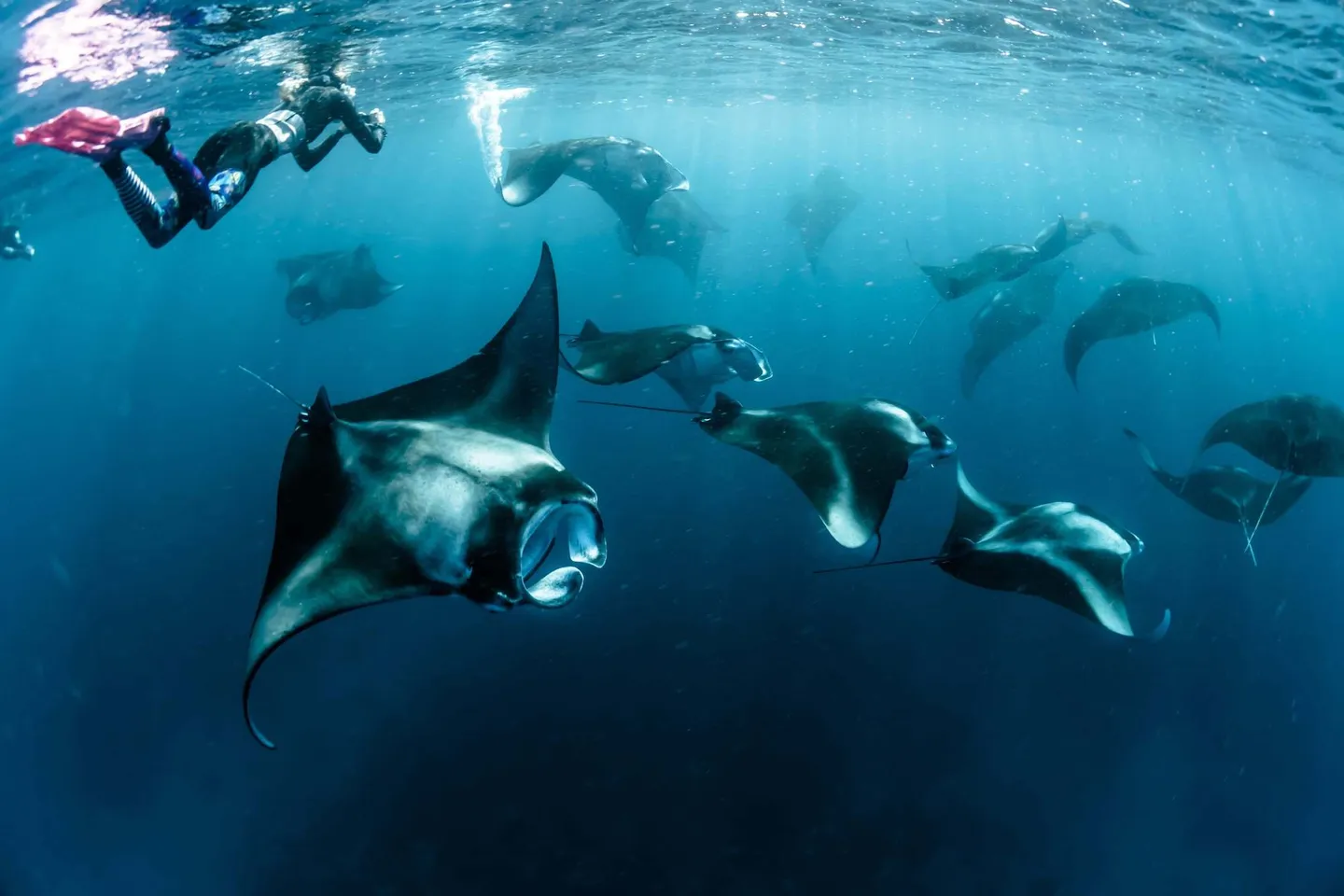
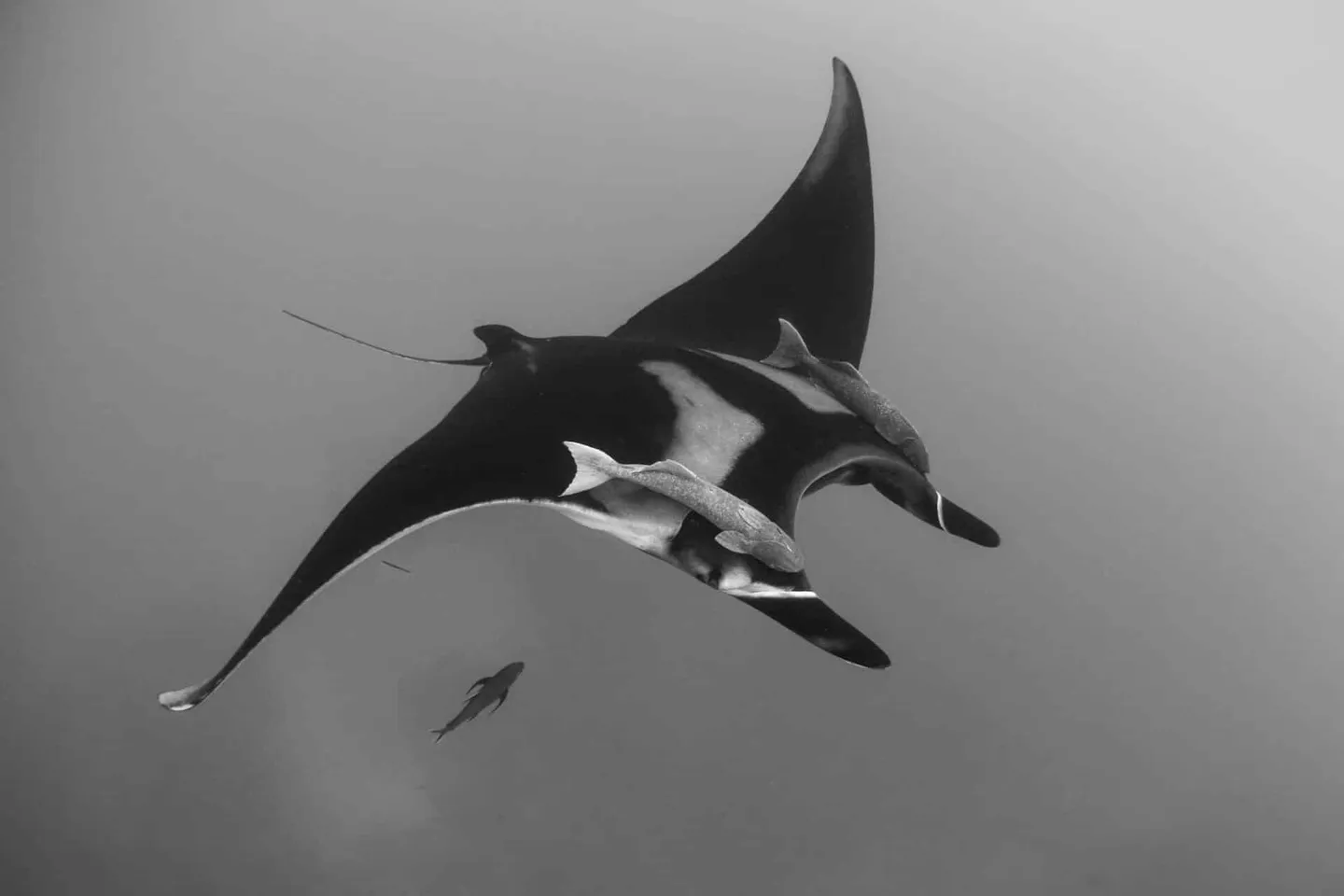
Photo by Sebastian Pena Lambarri on Unsplash


That February, and an Encounter with a Manta Ray
"That February, I met you. You said you had just lost your way. You said you were tired. You said you just needed somewhere to rest for a while…"
At the time, manta rays had not yet been protected under a fishing ban. A set-net operator discovered a manta ray in the fishing grounds that was extremely weak, with netting wrapped around its wings — most likely cut free by a fisherman who found reporting too much trouble. The operator originally planned to follow the usual practice and release it elsewhere, but upon closer inspection found that the netting had already become deeply embedded in its muscle tissue. The wound on the wing was so severe that the operator simply couldn't bear to leave it. People could wait, but the fish couldn't! The entire set-net operation mobilized at once.
After filing a report on the manta ray, they quickly found a research institution willing to offer space for it to recover. After all, observational data on live manta rays was sorely lacking domestically, and this was a rare opportunity for industry–academia collaboration.
Because there were no manta ray specialists in Taiwan, and no veterinarians or caretakers with experience handling them, the operator reached out to overseas experts who had years of experience caring for manta rays. Upon hearing the situation, the experts immediately dispatched a specialist to Taiwan to assist, and promised to provide ongoing medication and food to support the manta ray's recovery until it could return to the ocean.
For the manta ray's sake, the set-net operator paid all expenses out of pocket during this period and assigned staff to work in shifts to care for it. But with domestic facilities and equipment still quite limited, getting it abroad as soon as possible for better medical care was the only real chance of saving its life.
The operator hurried to prepare documentation under the Convention on International Trade in Endangered Species of Wild Fauna and Flora (CITES), and within a few weeks successfully obtained export permits from the relevant government agencies. Just as everyone was beginning to breathe a sigh of relief for the manta ray's future, no one could have imagined the string of troubles that was about to follow.
"Don't you think it's cruel to keep it locked up?"
Members of a conservation group submitted a statement to the media, claiming that "the set-net operator was misappropriating public funds to illegally confine the manta ray, with the intention of selling and exporting it for profit." The group also stirred up public petitions online to attack the operator, demanding the manta ray's immediate release.
The documentation and export permits the operator had painstakingly prepared were, swept up in the changing political winds, revoked by every government agency involved. The conservation group then ramped up pressure from multiple directions, even using back-channel connections to have the medication and food sent by the overseas experts held up at customs. When the manta ray's lifeline had been successfully cut off, the members of the conservation group erupted in celebration — because now, without medicine and without food, the manta ray was closer to death. The operator would be forced to take it out to sea while it was still alive. And if the manta ray were to die prematurely, that too could be exploited for another wave of media controversy.
Thereafter, as the conservation group's members continued their incessant "inspection visits," the manta ray grew increasingly distressed, stopped eating, and deteriorated steadily. The day it might return to the ocean seemed further away with every passing moment. But even government officials with professional expertise in fisheries went along with the conservation group, and it became impossible to tell who actually held any professional knowledge at all. All of this left the set-net operator thoroughly disheartened.
"Just release it! The ocean has miraculous healing powers!" one of the conservation group's representatives declared confidently to the operator.
Without medicine, without food, and able only to watch helplessly as the manta ray's condition worsened day by day, the operator had no choice but to take the still-unrecovered manta ray out to sea and release it, hoping against hope that the ocean truly had the miraculous healing properties the conservation group had claimed. Where did it go in the end? Did it ever find its way home? None of that matters anymore.
"The manta ray has gone home!" The conservation groups once again celebrated this as a major and significant victory — and called on everyone to donate and continue supporting their work.
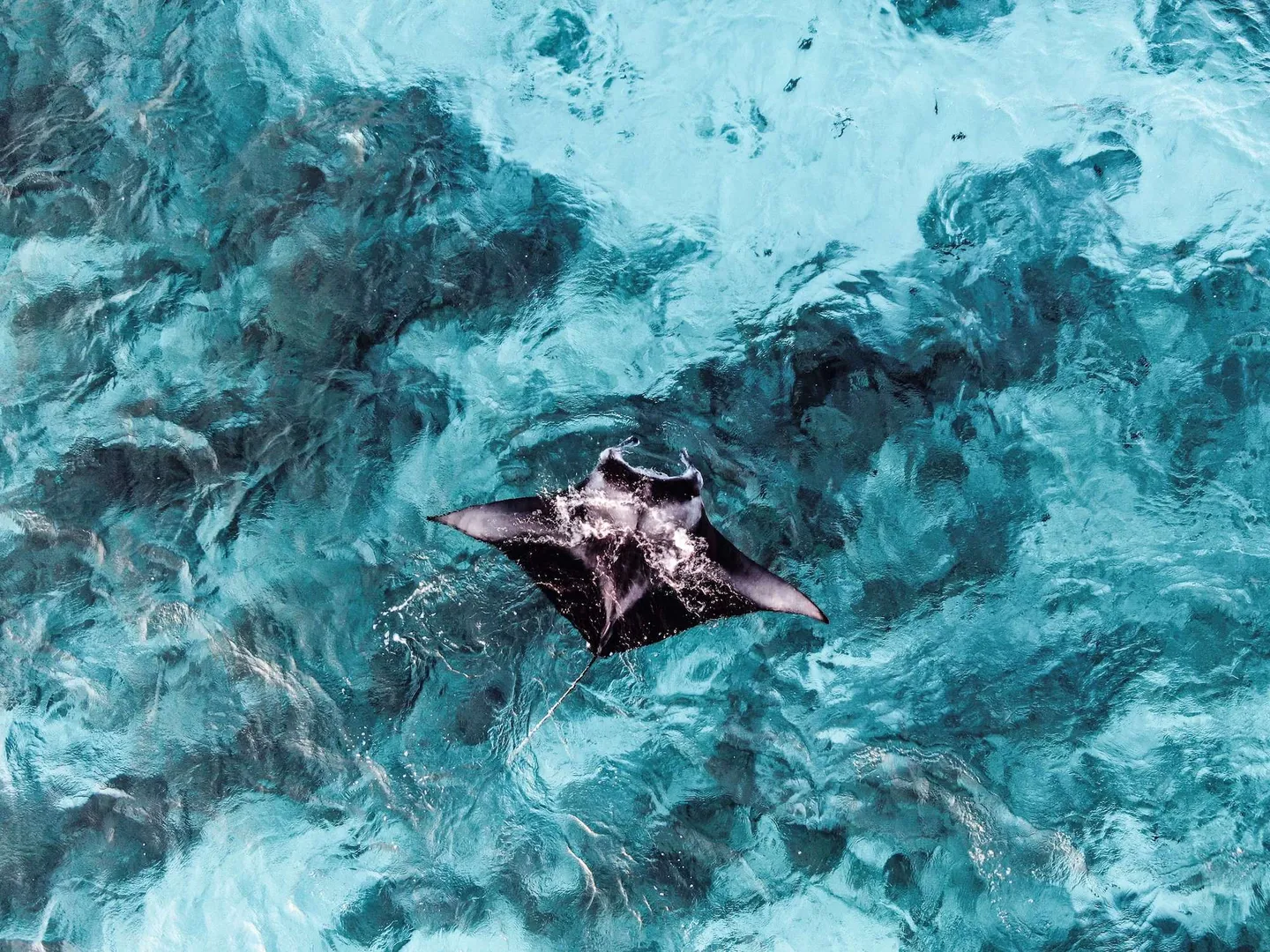
Photo by Adam Juman on Unsplash
What Really Matters and What Doesn't When It Comes to Manta Rays
So is there actually a solution to this bycatch problem? It is a matter of great importance to manta rays. But to some people, it doesn't seem to matter very much at all. Whether it gets solved or not — that, apparently, no longer matters either.
This article is based entirely on real events involving a real animal, adapted only to a minor degree to prevent anyone from identifying specific individuals. Every industry has its bad actors, but law-abiding, well-meaning fishermen have been subjected to relentless and baseless slander. Their goodwill has been exploited and used against them, and to this day not a single apology has been issued. Meanwhile, those responsible continue to exploit the public's ignorance about the ocean and the fishing industry, remaining active on the public stage and carrying on with their fundraising campaigns.
Cover photo: Photo by Alex Rose on Unsplash
Related links: