The Importance of a Single Photo
Many research projects around the world have their origins in a single photograph taken by an ordinary person — whether it captured an unusual animal behavior by chance or a massive egg mass in the ocean. One photo can catch the attention of researchers, spark a study, and ultimately deepen our understanding of the environment and the ecosystem.
Research shouldn't be confined to ivory towers. Citizen science has become increasingly important in this era: it can expand the scope of inquiry, and through active participation, help us better understand our environment. We know far too little about the ocean in particular, which is all the more reason why everyone needs to get involved in learning about our own seas.
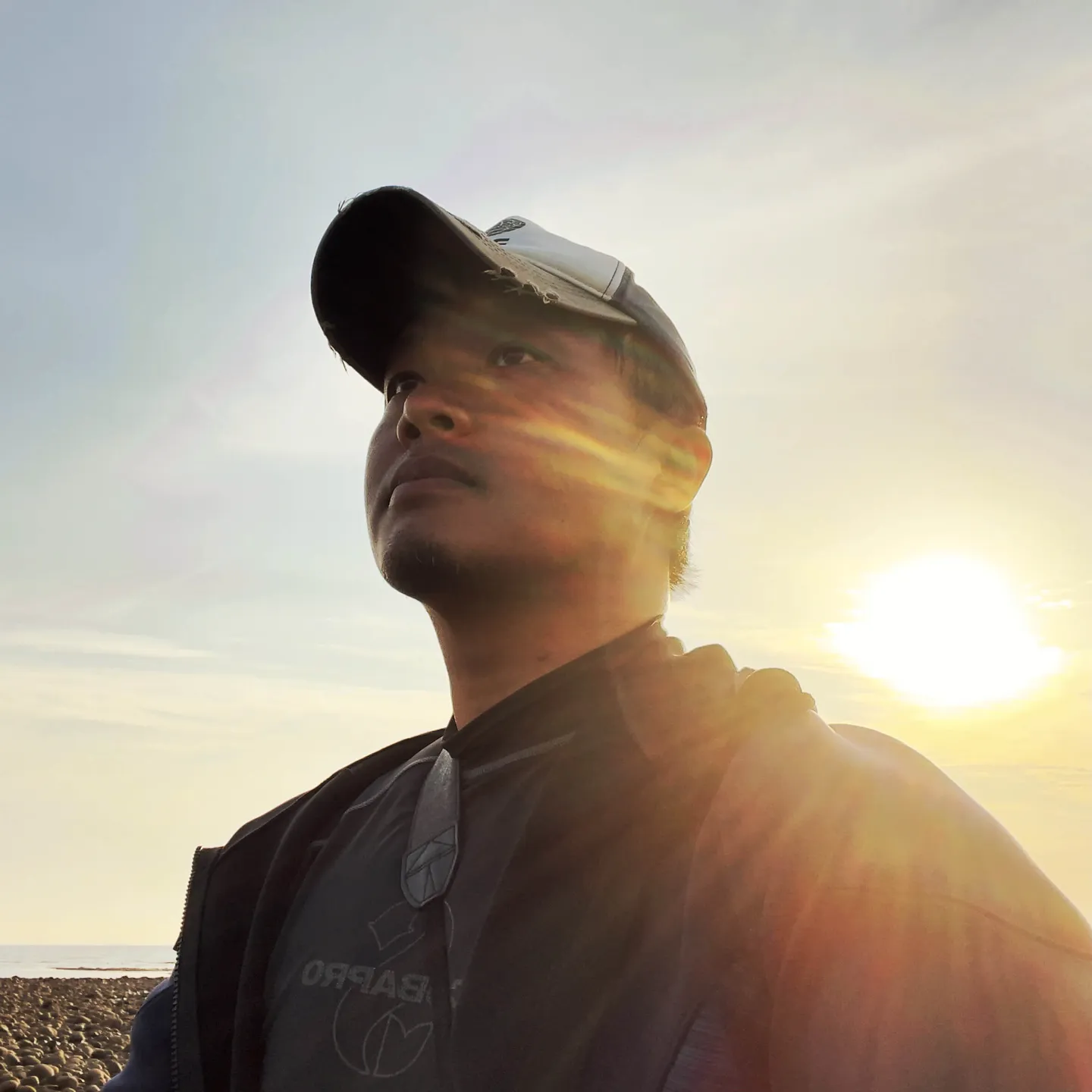
Marco Chang has been actively participating in marine citizen science programs in recent years.
Taking Action to Join the Program
Marco Chang, one of Taiwan's most prominent underwater photographers, has in recent years gradually shifted his underwater photography practice toward championing underwater citizen monitoring programs. In 2020 — a year that saw the worst coral bleaching ever recorded in Taiwan's waters — he not only captured one stunning bleaching photograph after another with his camera, but also took concrete action to help give birth to an early model of a marine citizen science program.
From September to December 2020, Marco assisted a non-profit organization in rolling out a coral monitoring program across Taiwan. The goal was to enlist diving enthusiasts and underwater photographers from different regions of the island to document the bleaching status of corals at fixed locations on a regular basis. Determining which corals were locally significant, which individual colonies were accessible enough to photograph, and whether nearby reference markers were available for long-term georeferencing — all of this groundwork and discussion was critical to the program's success.
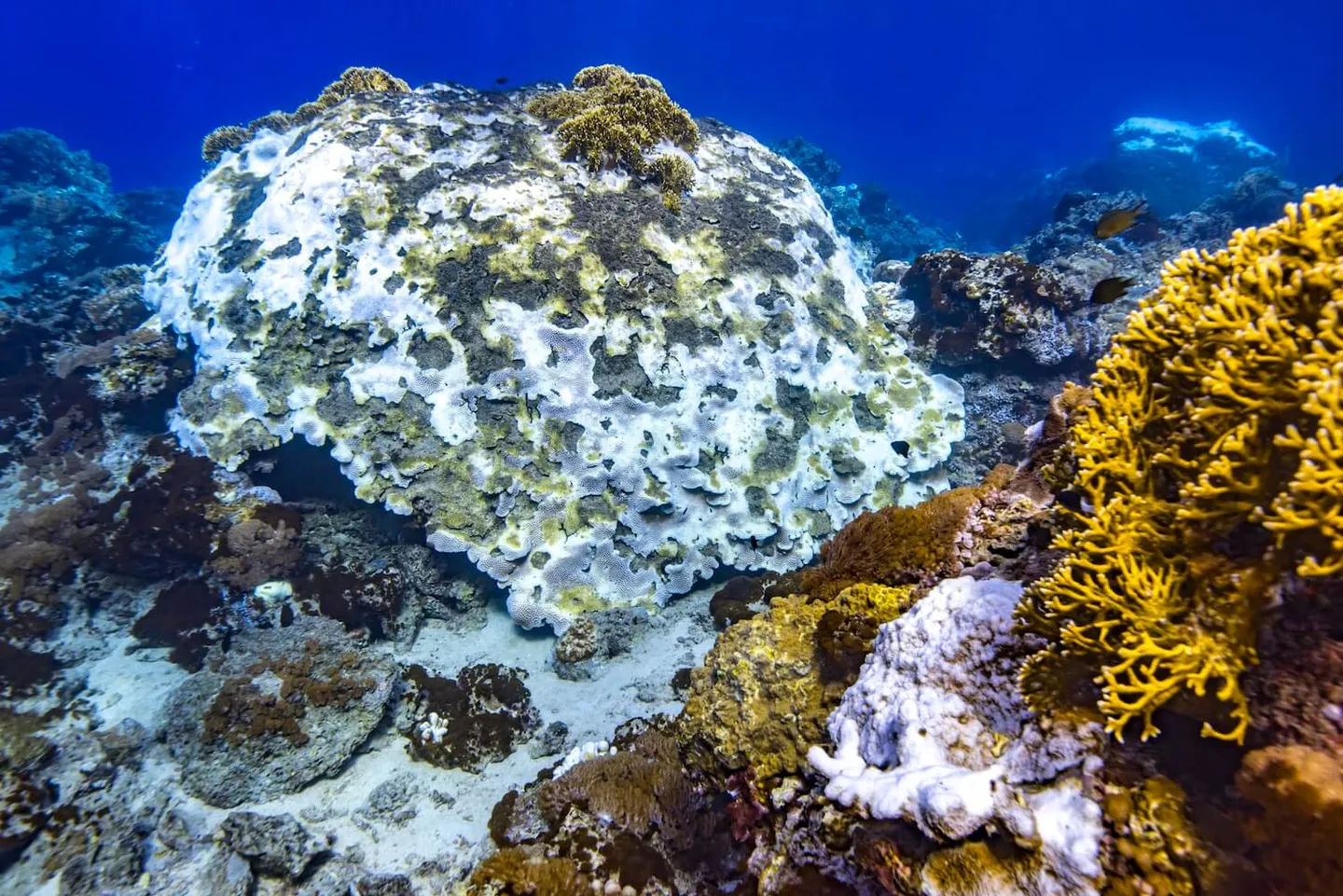
Spine-cup corals at Shilang, Green Island, Taiwan, after the coral bleaching event of summer 2020.
A marine citizen science program is not simply a matter of writing a slogan and handing it off to the public to carry out. It requires a carefully designed standard operating procedure, so that the data collected by participants actually has scientific value.
Visibility and lighting conditions during underwater photography greatly affect image quality. Different cameras have different aperture and shutter settings, and different white balance configurations — so even photographs of the same coral colony can show noticeable differences in color. For this reason, when Marco first joined the program, he spent a considerable amount of time working with the team to establish a standard operating procedure for shooting.
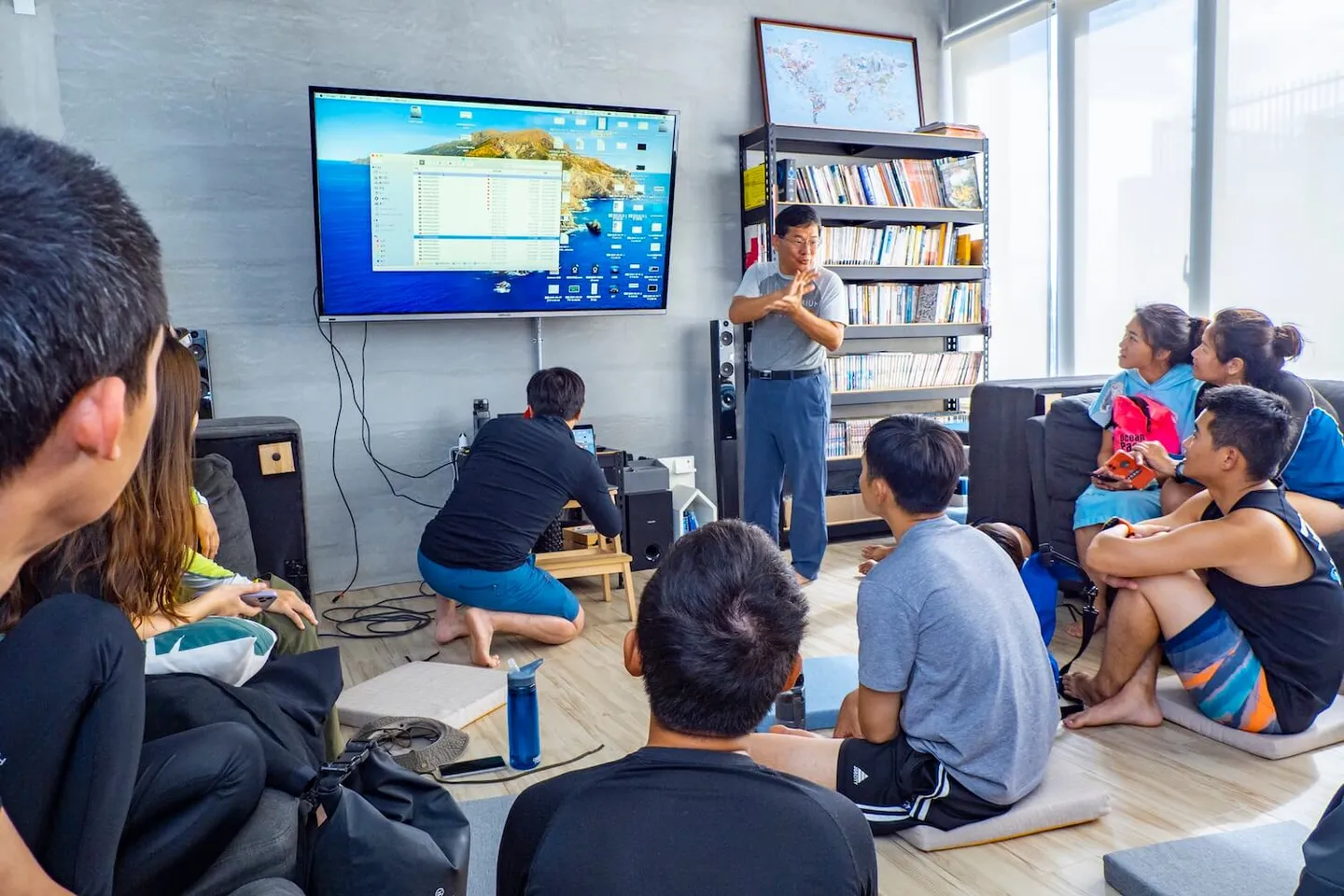
Marine citizen science programs require advance training and team coordination.
On top of that, underwater photography and research photography are quite different. Photographs taken by photographers often lack scientific value — for example, photographers tend to favor dramatic head-on shots or close-ups of the eye, not realizing that researchers identifying certain species need a clear lateral view showing the distribution of fins. If a systematic guide could be developed outlining the key photographic requirements for identifying various species, and given how cheap it is to take a photo in the digital age, a photographer who has just captured a beautifully composed artistic shot could simply press the shutter a few more times — and might just end up with an image that has genuine research value.
Over the four months of the island-wide underwater monitoring survey, Marco witnessed scenes that were truly staggering. The Dabaisha dive site at Green Island, normally known for its high coral coverage, had seen nearly 80% of its corals bleach within the 15 m depth zone following the abnormally high sea temperatures of summer 2020. Even after water temperatures dropped in autumn and winter, the symbiotic algae that should have returned to live within the coral polyps had still not recovered — and as a result, more than 50% of the corals were covered by macroalgae and declared dead.
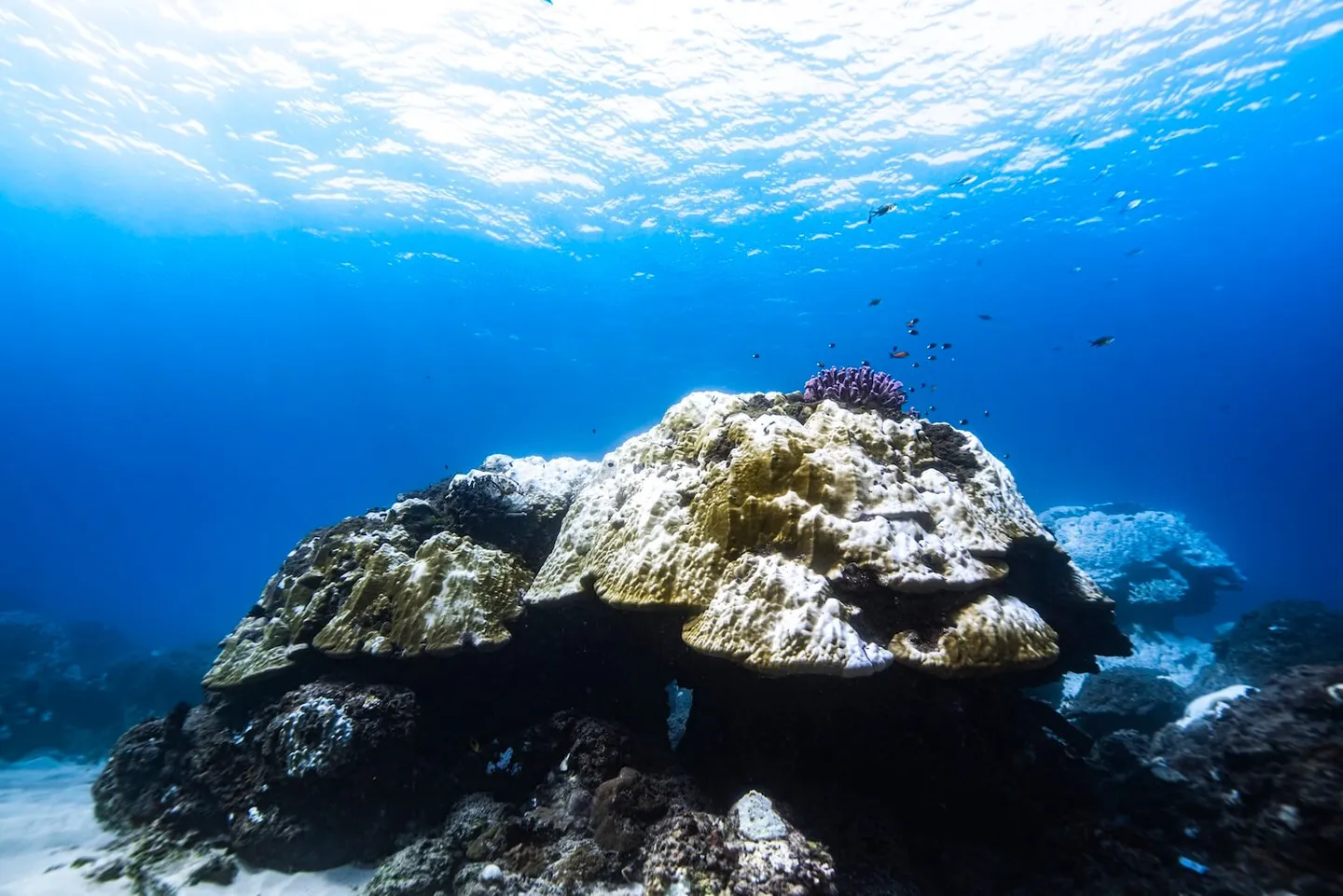
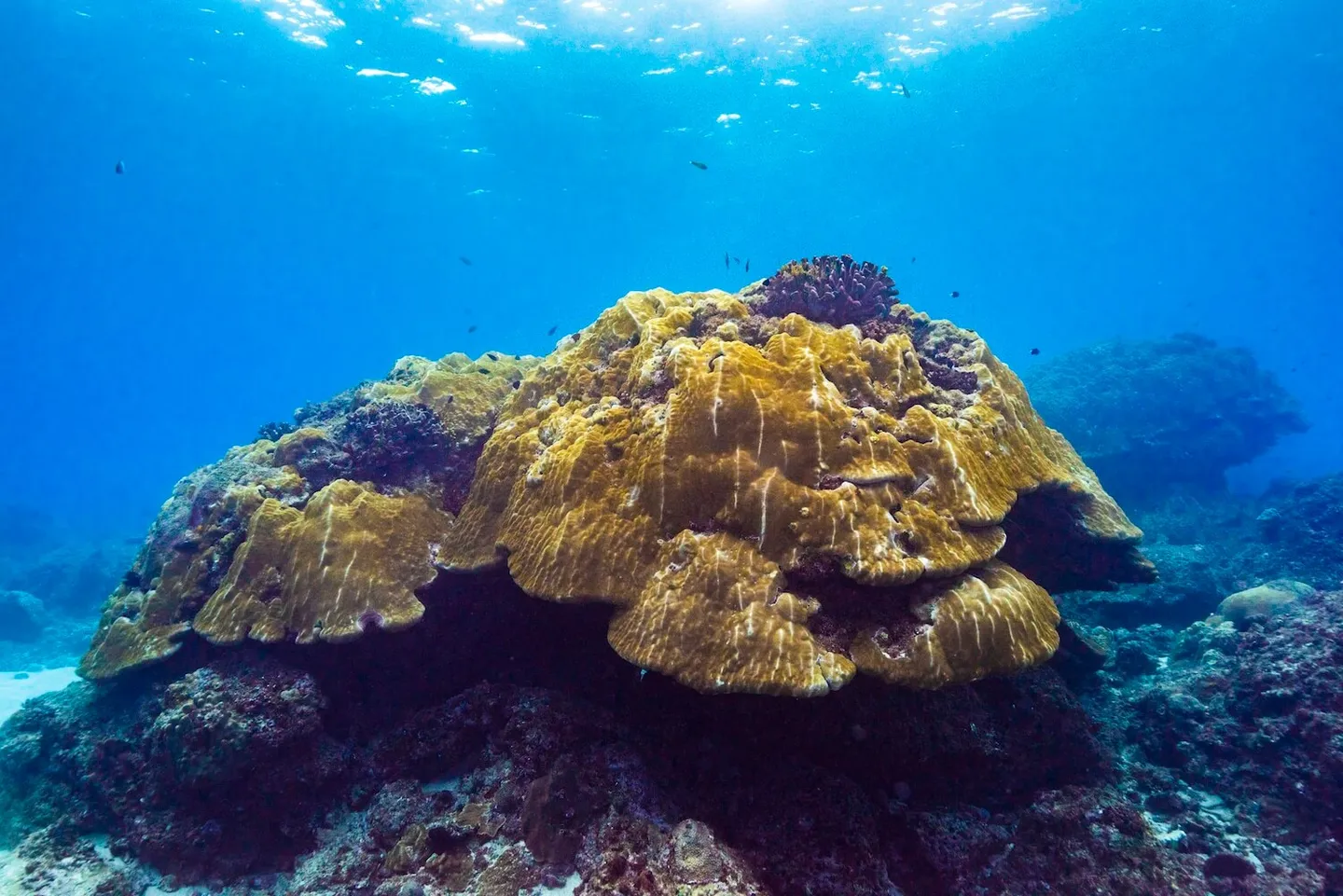
Left: Porites corals at Xiaoliuqiu, Taiwan, during the 2020 coral bleaching event. Right: the same site after partial recovery in autumn and winter.
Coral bleaching is not the same as death — the symbiotic algae have only temporarily departed, and there is a chance they will return once conditions improve. However, coral polyps without their symbiotic algae are deprived of an energy source and become relatively weak, making them far more vulnerable to environmental stress or being smothered by macroalgae.
Marco believes that a photographer's work should have a soul. That soul might be driven by a desire to enter competitions, or simply to capture the joy of a friend underwater — or it might be the hope that a single image will change the way people think about the ocean. There are many examples in international scientific research that trace their origins to a casual snap by a photographer. You often have no idea that the shutter you press right now, the composition you consider perfectly ordinary, might be — in the eyes of a marine scientist — a rare species or an unusual animal behavior that is worth its weight in gold. After all, humanity has only explored about 5% of the ocean's total area.
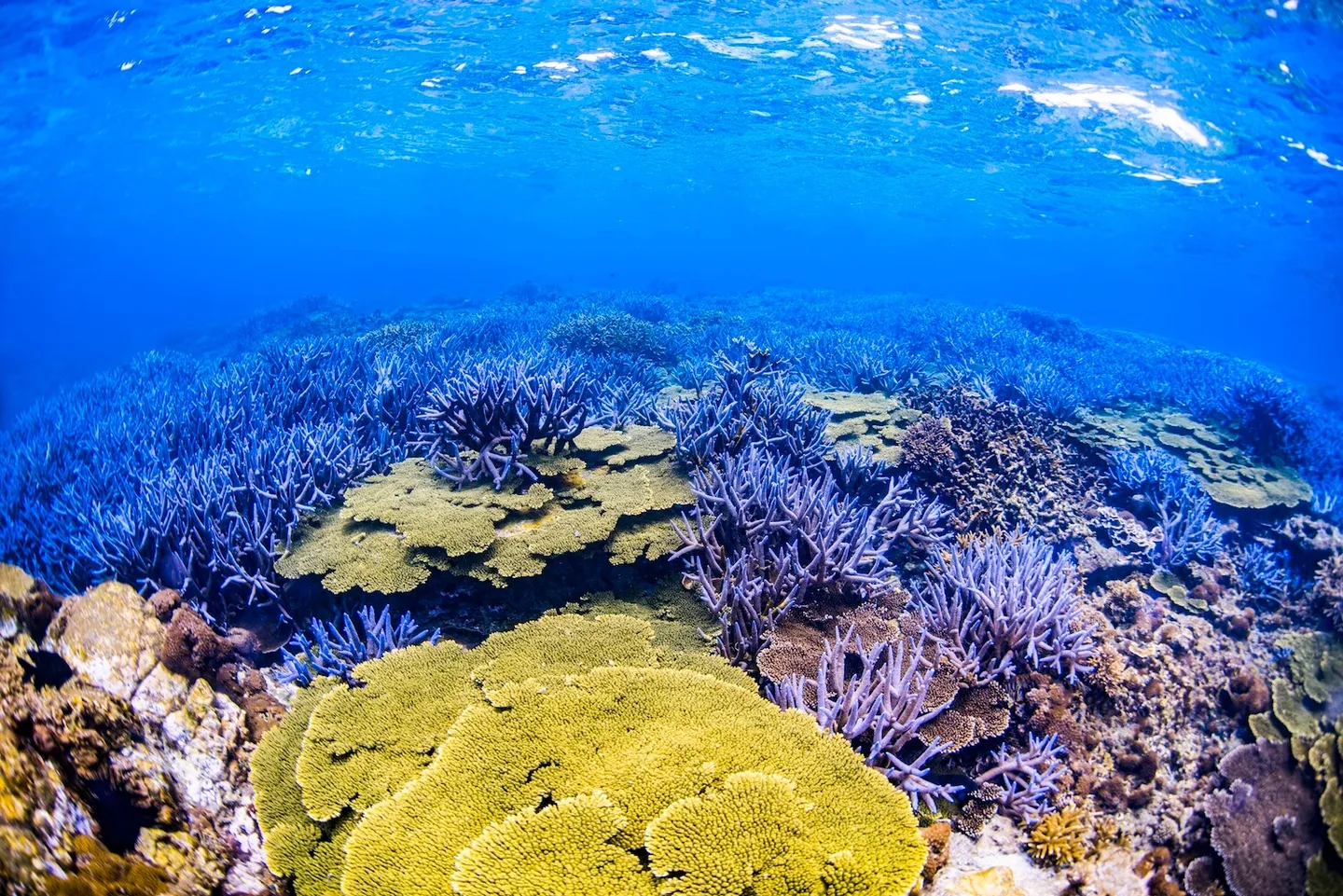
Taiwan's underwater world is home to a rich coral ecosystem.
The ocean is in decline, and a great deal of research has already made clear that within our lifetimes, our generation will witness this vast transformation firsthand. Every shutter we press beneath the surface has the potential to become a cornerstone of Taiwan's marine research — and may even help Taiwan address the impacts of extreme climate change. Perhaps that is another mission for the marine citizen scientist.
Further reading: