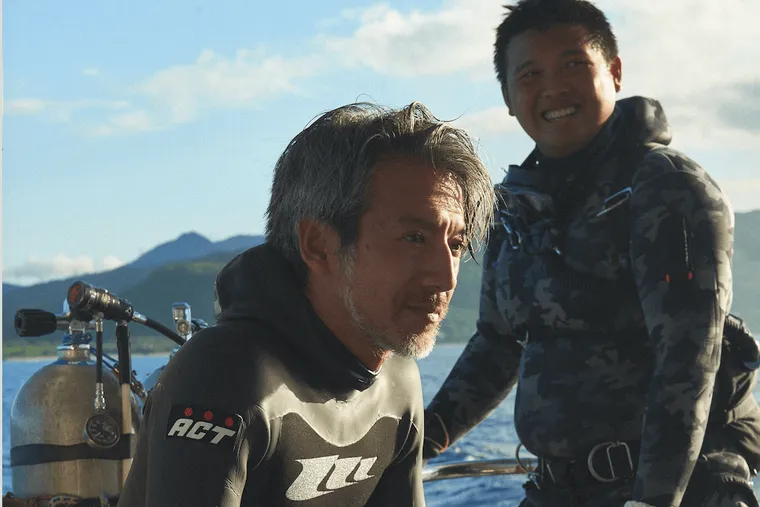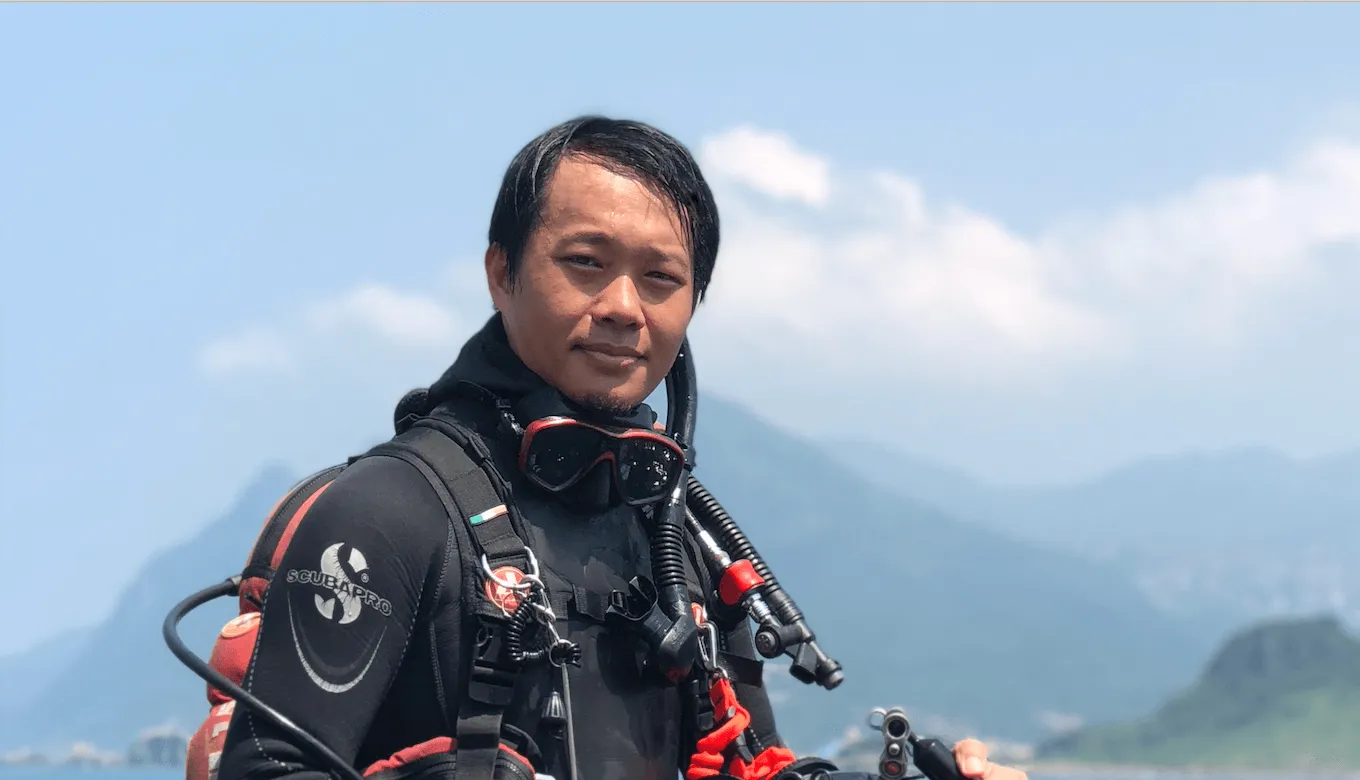
Marco Chang — affectionately nicknamed "Gold Medal Bro" by everyone around him (a playful nod to his fondness for Gold Medal beer) — has become a perennial champion at major underwater photography competitions across Taiwan in recent years. Through dive trips that have taken him and his camera to countries around the world, he has rediscovered why he dives and reaffirmed his commitment to the ideals of underwater photography. Marco has always been generous in sharing his techniques and creative concepts, driven by a single hope: that more people in Taiwan will take up underwater photography, and that more of the public will get to witness the breathtaking beauty beneath the surface.
Marco has been diving for about ten years and has been shooting underwater for roughly eight of those years. His motivation to learn to dive traces back to a crossroads in his life. Just after turning 26, he had finished a job when a friend who was volunteering at the Blue Angel Foundation on Orchid Island kept sending him photos of the island's stunning scenery. Those images stirred something deep inside him. After much deliberation, he chose to go to Orchid Island to work in exchange for room and board at a restaurant. During that time, every spare moment after work was spent either snorkeling beneath the surface or scouting the island's coastline for undiscovered snorkeling spots. On one occasion, in the waters just outside the nuclear waste storage facility — an area with powerful currents that local Tao people also advise against entering — he caught a fleeting glimpse of a brilliantly coloured eel. That moment quietly planted a seed in his heart: a desire to share everything he saw underwater with others.
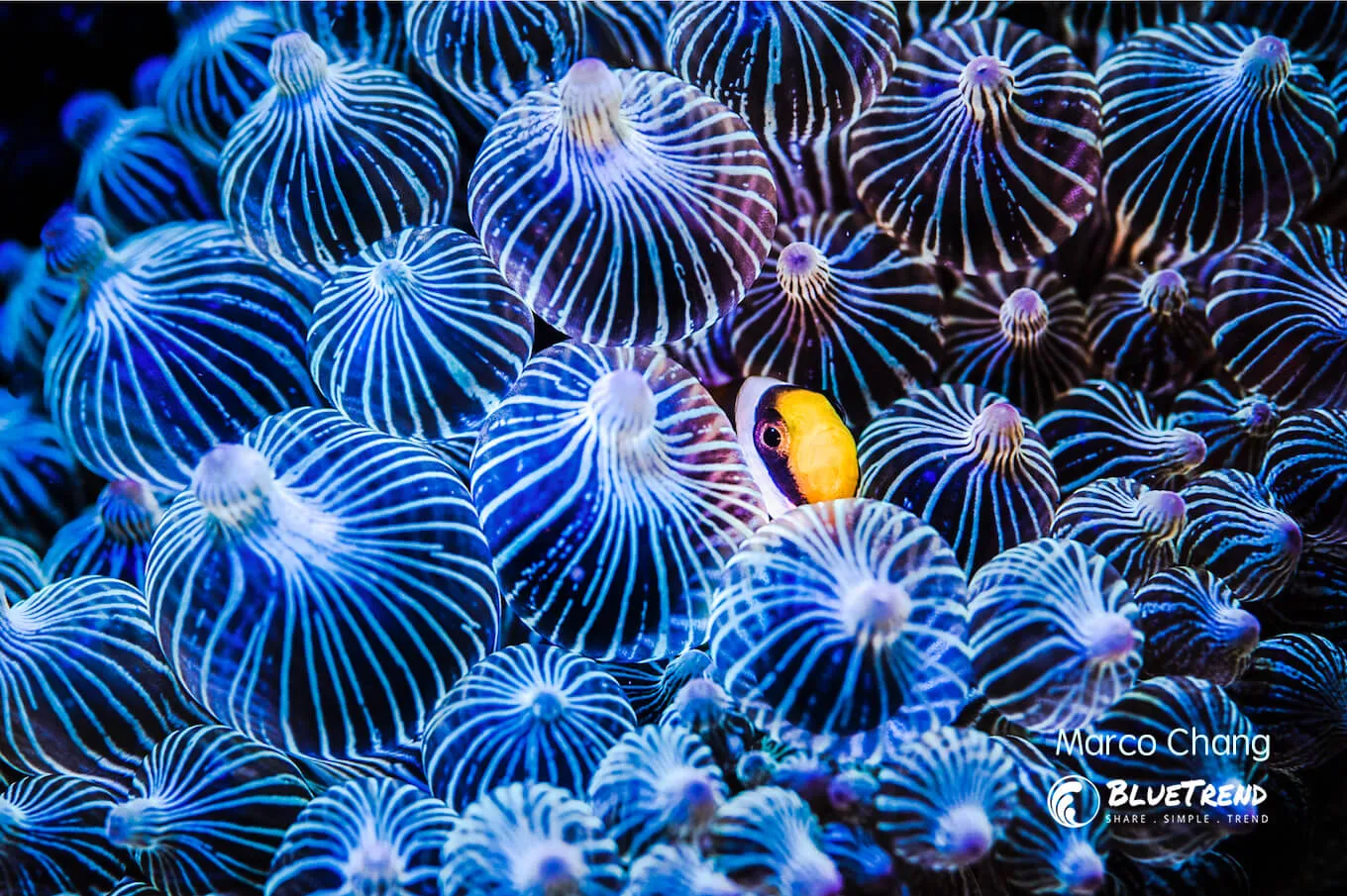
Marco hopes that through his camera, more people will come to appreciate the beauty of the ocean.
Marco Chang's Journey into Underwater Photography
After his brief working holiday came to an end, Marco returned to Taipei in August of that same year and immediately signed up for an entry-level scuba diving course at a dive shop without a second thought. A natural in the water, he sailed through the learning process without much difficulty — aside from an early incident where he lost his balance under the weight of the scuba tank and tumbled into a abalone pool. Once he completed the course without further mishap, he suddenly recalled the sense of wonder he had felt seeing the colourful eel on Orchid Island, and his underwater photography journey began.
Working professionally in visual design, photography had always been part of his job, and his work demanded not just technical skill but a cultivated aesthetic sense. Yet when it came to underwater photography, Marco started from absolute zero. He naively assumed that all he needed was to keep water away from his camera, so he bought a cheap plastic waterproof bag and sealed his Sony point-and-shoot inside it before heading underwater. The bag started leaking after fewer than ten dives, and he could only watch, helplessly, as water seeped in around the lens. After surfacing from that dive, he thoroughly researched the nuances of underwater camera systems, and from that point on, the cameras he brought beneath the waves grew steadily more advanced, larger, and more professional.
As Marco's skills matured, a senior photographer once joked to him: "That photo is fantastic — why don't you enter it in a competition?" Without overthinking it, he submitted the shot, and in a happy coincidence, it won first place. That was how his competitive underwater photography career began. Marco gradually made a name for himself as an internationally recognised underwater photographer. Of all the experiences in his photography career, the one that left the deepest impression was a trip to Papua New Guinea — sometimes called the "Amazon of Asia" — an expansive tropical Pacific island nation at the far eastern edge of Indonesia. Its vast territory, rich biodiversity, and relatively undisturbed underwater landscapes offer a rare glimpse of the Earth as it once was. He still recalls sitting on the plane during a transit stop and noticing that the biceps of the indigenous man seated next to him were roughly the size of his own face — the destination already had him captivated before he even arrived.
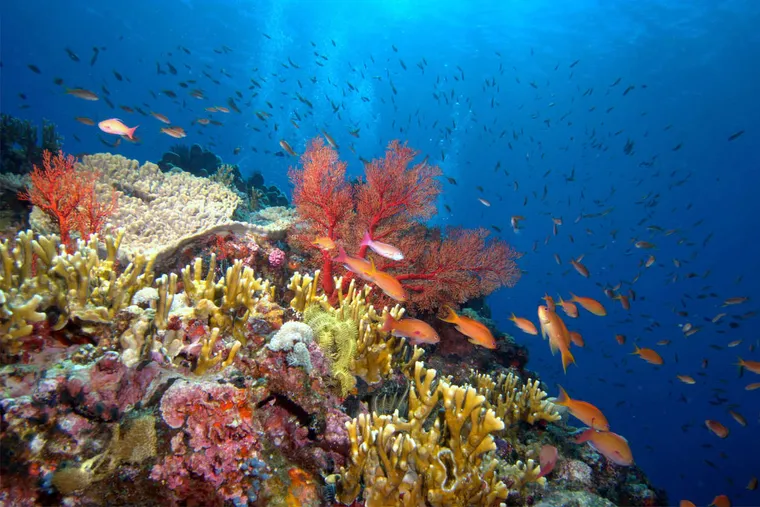
With only limited English, the dive briefing left him somewhat at sea, but the moment he jumped in, he was awestruck by gorgonian / sea fans measuring 3 to 4 metres across, accompanied by swirling schools of fish, clusters of coral, and gatherings of sharks. In that instant, his resolve became absolute: he had to share what his eyes were seeing with as many people as possible.
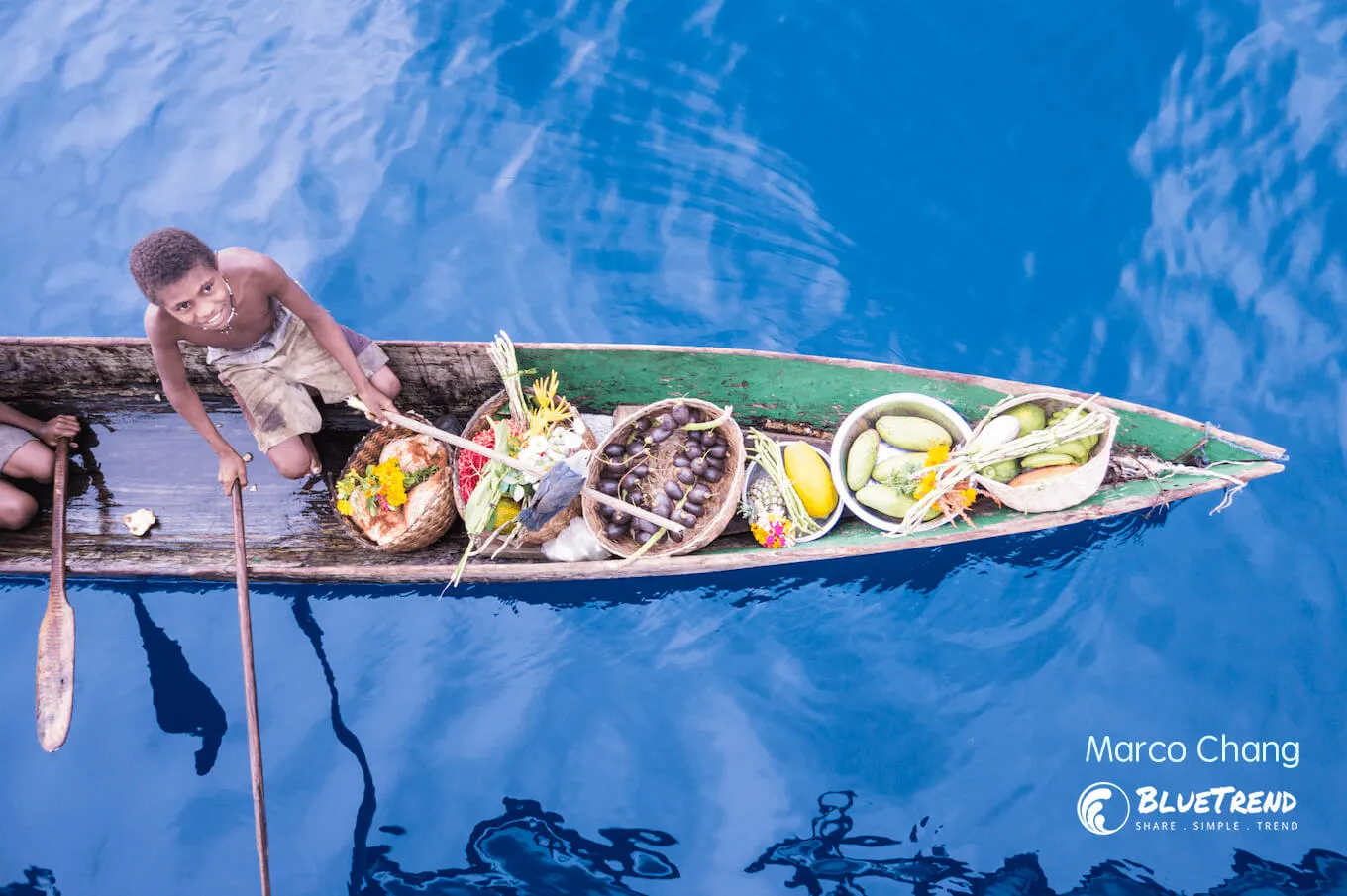
The pristine ecosystems and warm, unpretentious people of Papua New Guinea
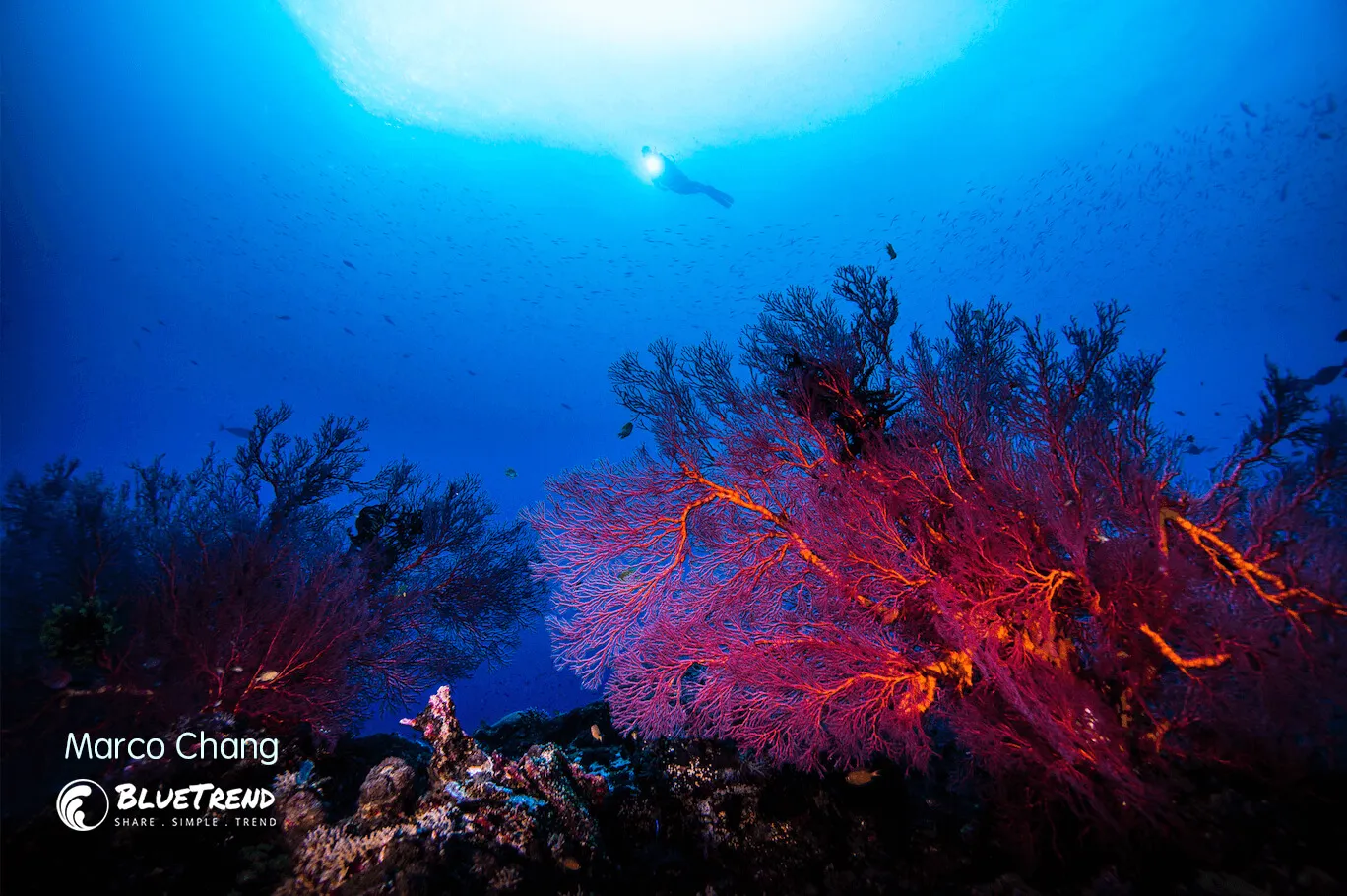
Breathtaking giant gorgonians / sea fans and the underwater ecosystem surrounding them
Along the way, Marco has accumulated some experiences that set him apart. He has been invited to serve on the working teams of several international underwater photography competitions, gaining insight into what judges look for in award-winning images and deepening his appreciation for what goes into organising an event of that calibre. In the years ahead, there is every reason to believe Marco will continue sharing everything he sees and learns from the world of underwater photography.
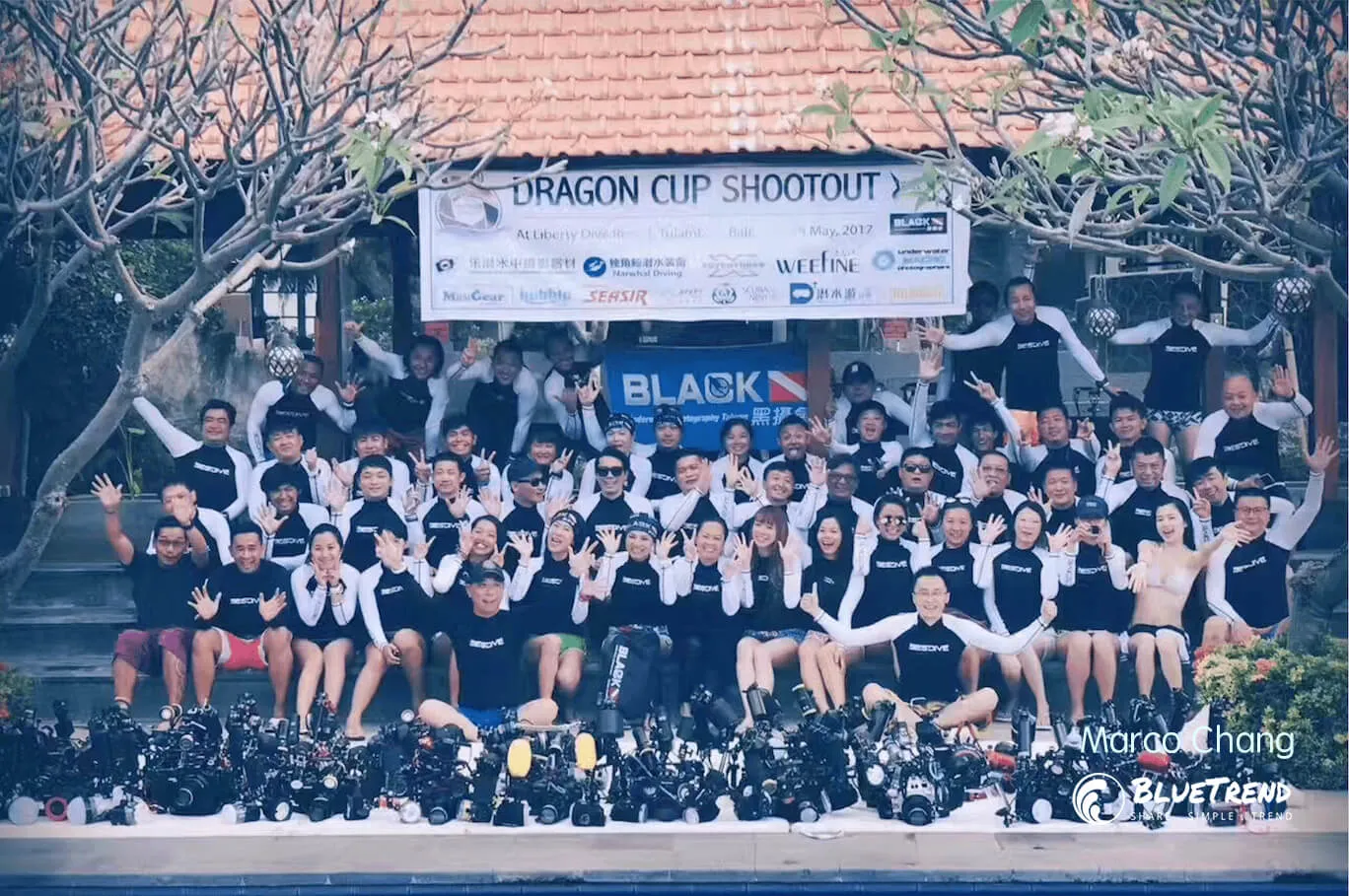
Participating in an overseas underwater photography competition
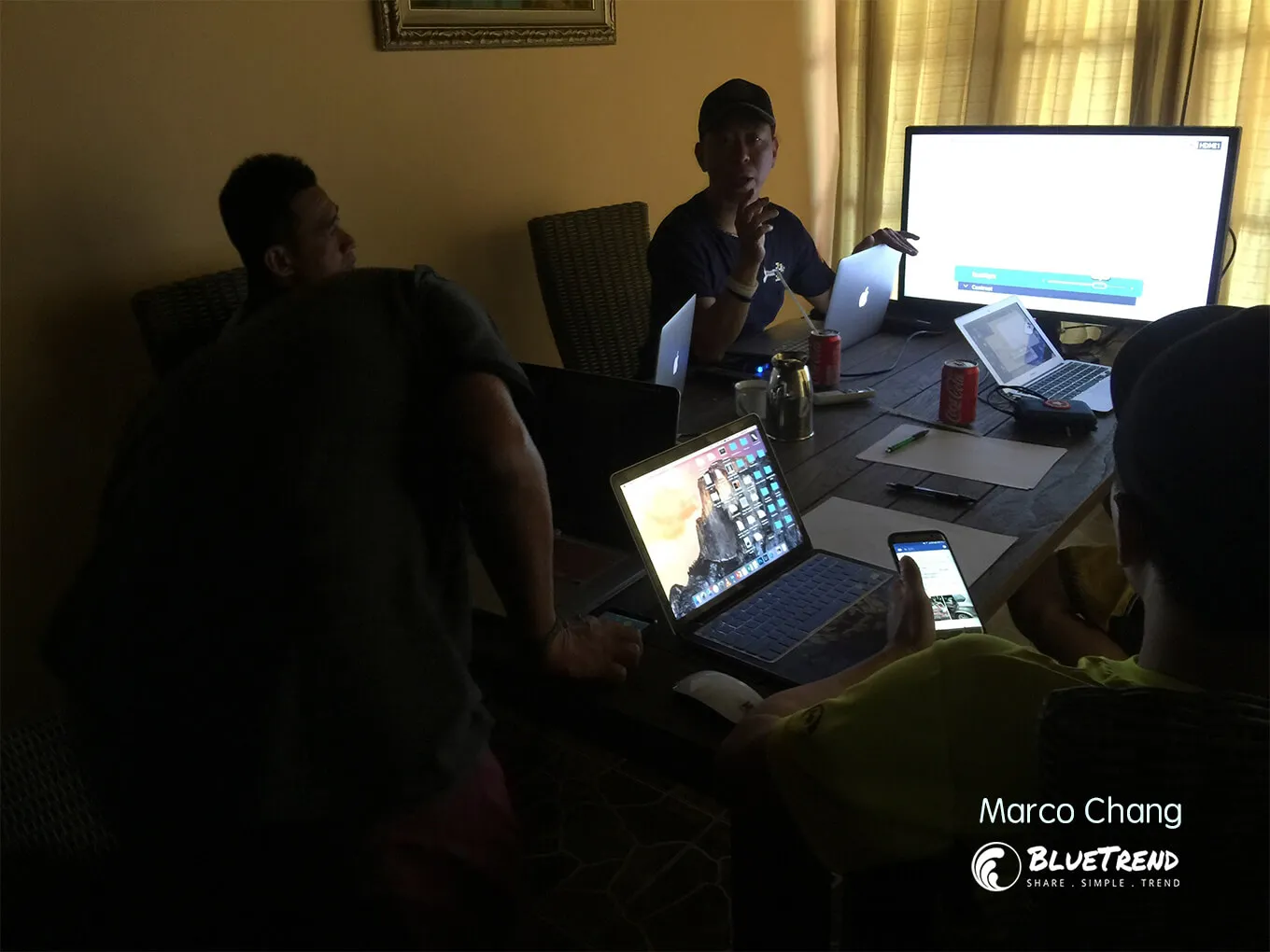
Behind the scenes at a ShootOut judging session


His Greatest Love Is Still Taiwan's Ocean
He has travelled the world on dive trips and witnessed its many wonders, yet no matter where he goes, the sea he loves most is Taiwan's own — and he believes there is tremendous room for improvement. Marco often brings up Indonesia, a country he visits frequently, noting how firmly the government there stands behind marine conservation. In recent years, the Indonesian government has made headlines by deliberately sinking illegal Chinese fishing vessels as a show of force, a level of decisive, principled enforcement that feels almost unimaginable in today's populist-driven Taiwan. He also cites the example of Xiaoliuqiu, which in 2015 was facing a severe collapse in fisheries — relentless overfishing had stripped the waters around the island bare.
In response, the local fishermen's association took matters into its own hands and established a voluntary net-ban policy. Within a few years, Xiaoliuqiu had transformed into one of the world's most remarkable concentrations of sea turtles, the underwater ecosystem began recovering, and the island started drawing a steady stream of tourists and the economic activity that comes with them. Many older fishermen on the island have since abandoned the higher-risk business of deep-sea fishing in favour of running guesthouses or taking divers out on boat dives. Beyond Xiaoliuqiu, however, Taiwan's only other relatively successful recent marine protected area (MPA) example is the Chaojing Wanghai Bay Conservation Area in Keelung. Elsewhere, MPAs continue to be caught in an ongoing tug-of-war with fishermen and anglers. Marco can only stay optimistic and suspect that change elsewhere may have to wait until other waters face the same fishless crisis that once threatened Xiaoliuqiu before a genuine, lasting transformation takes hold.
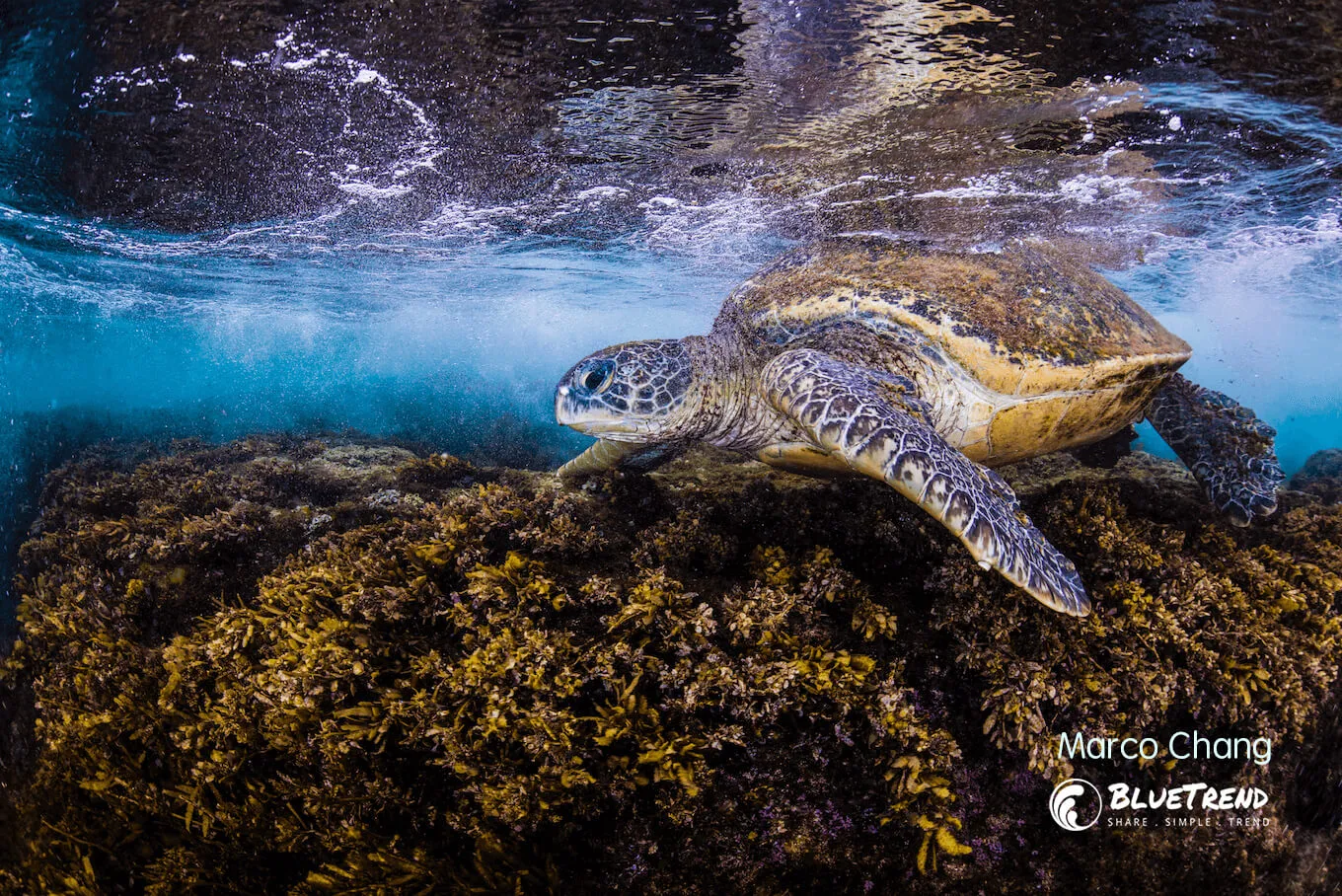
Xiaoliuqiu's abundant sea turtle population
He believes that both the Taiwanese government and its people need to develop an ocean-oriented mindset. For instance, he once puzzled over why pygmy seahorses — those endearing, grain-of-rice-sized creatures — had been sighted in the Philippines, Japan, and even Green Island, yet there were no records of them in Taiwan's Northeast Coast despite the country's position along the Pacific island chain. So when he discovered a pygmy seahorse on the Northeast Coast for the very first time, he was thrilled and hopeful that the find might prompt meaningful action from the government. As with so many similar cases, however, the discovery vanished without a ripple. By contrast, when pygmy seahorses were found in Manado, Indonesia, authorities immediately designated the area a protected zone. It now draws countless international visitors every year, generating an impressive ripple effect of dive tourism revenue.
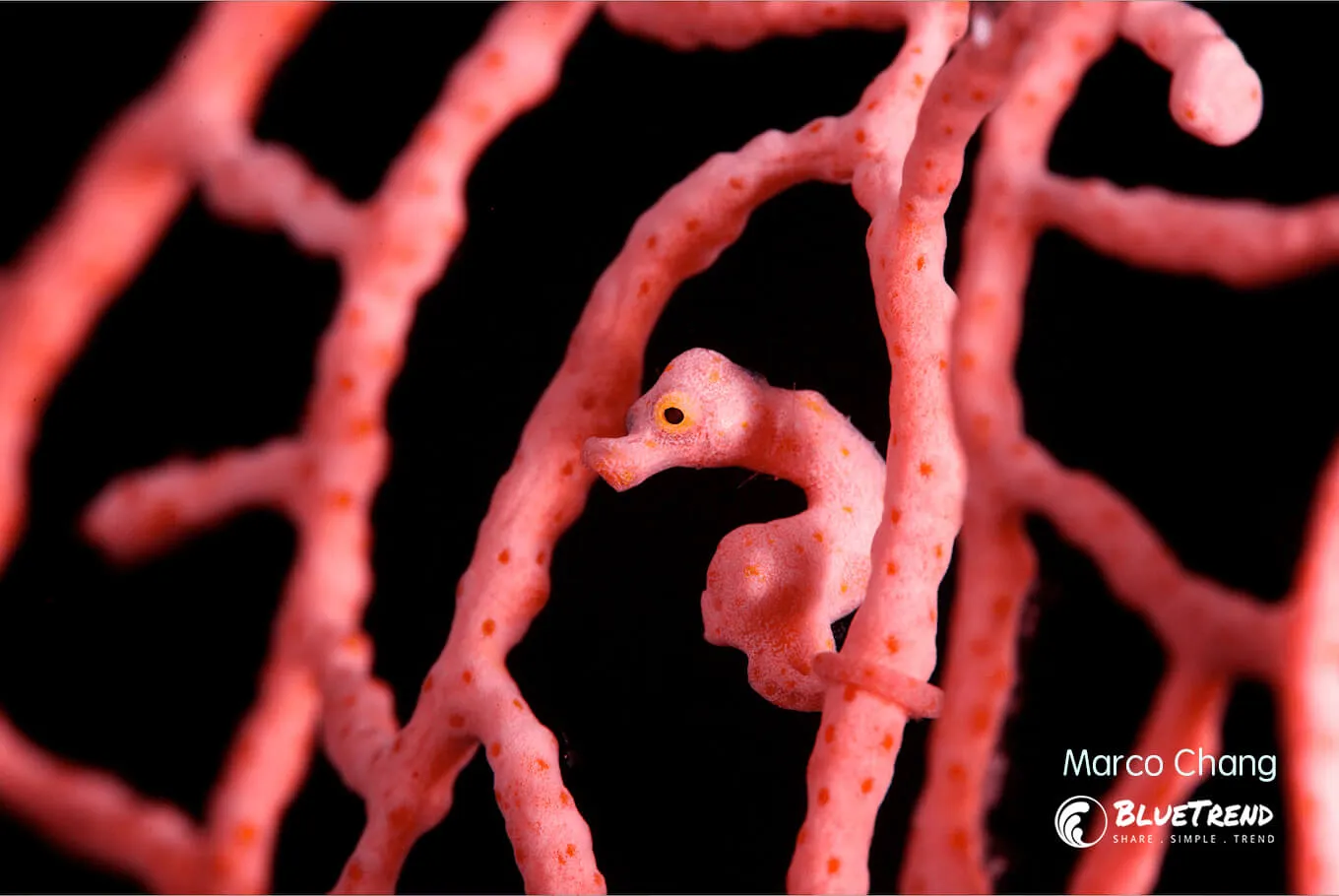
An adorably tiny pygmy seahorse, no bigger than a grain of rice
Turning the lens back on Taiwan, it is worth noting that the country's underwater ecosystems are in fact remarkably rich. Situated at the confluence of the Kuroshio Current and the China Coastal Current, with highly varied underwater topography, the Northeast Coast — particularly the 82.5 site that Marco dives regularly — teems with macro marine life: species such as the scorpionfish known as ryūōkajika in Japanese, and a nudibranch nicknamed "mushroom dumpling," among many others. After bringing foreign diving friends to this site, they invariably ask Marco, with genuine puzzlement, why Taiwan hasn't made more of an effort to develop dive tourism when a single spot can yield such an extraordinary variety of macro subjects. Perhaps that question speaks directly to the ocean mindset he believes Taiwan so urgently needs. If we continue to treat the sea as though it doesn't matter — dumping rubbish into it, reclaiming it for land, building fishing harbours that go unused, implementing misguided coastal armour policies that wall the Taiwanese people off from their own ocean — we will only deepen that estrangement. The first step toward making people care about the ocean is helping them rediscover it. Marco believes that every time he presses the shutter, he is scattering that seed a little further.
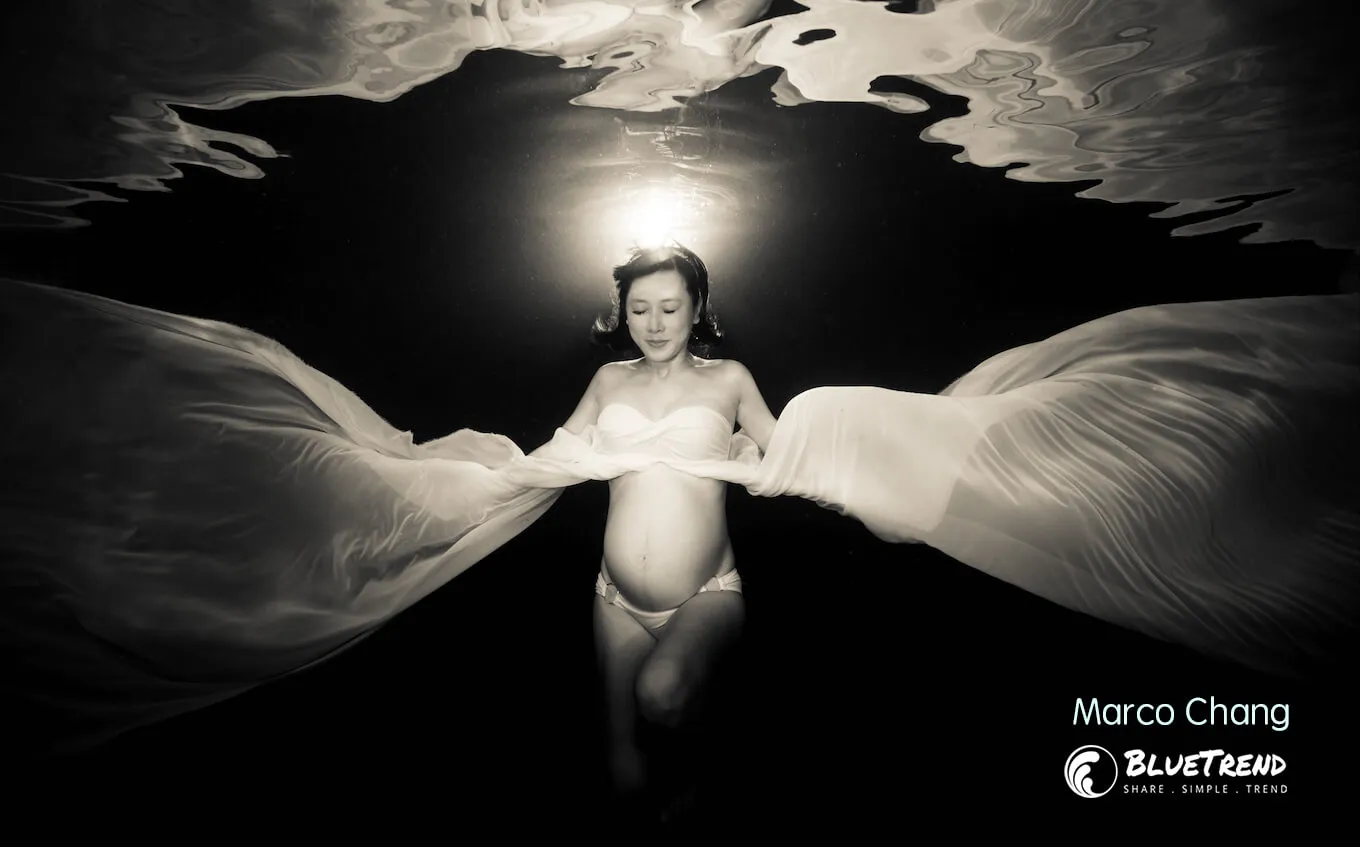
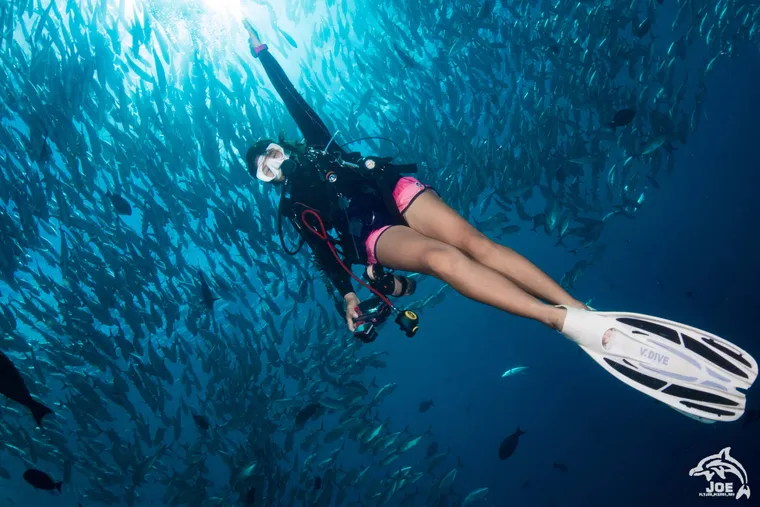
Marco is also highly skilled in underwater portrait photography.
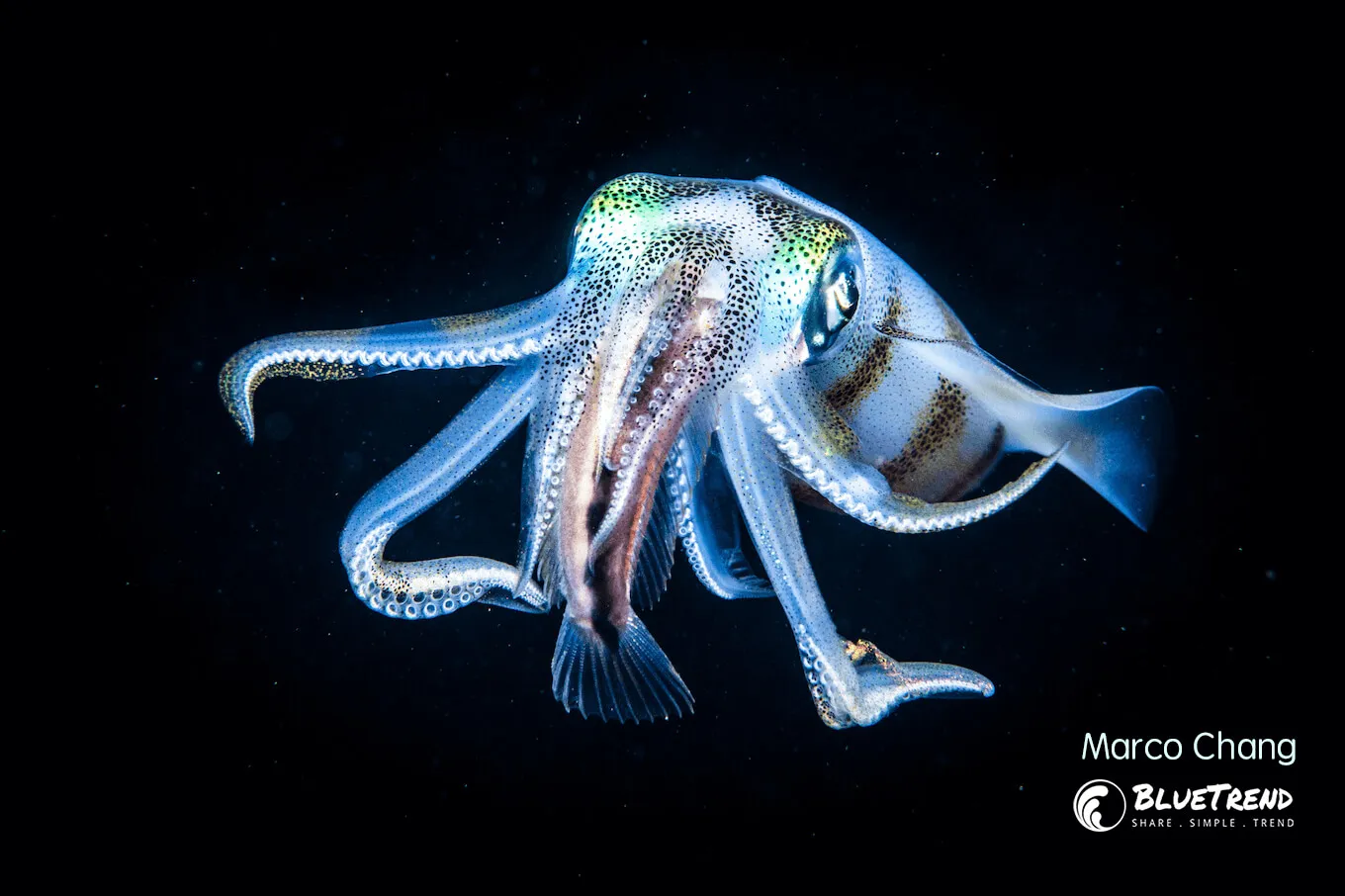
A classic Northeast Coast subject — the bigfin reef squid
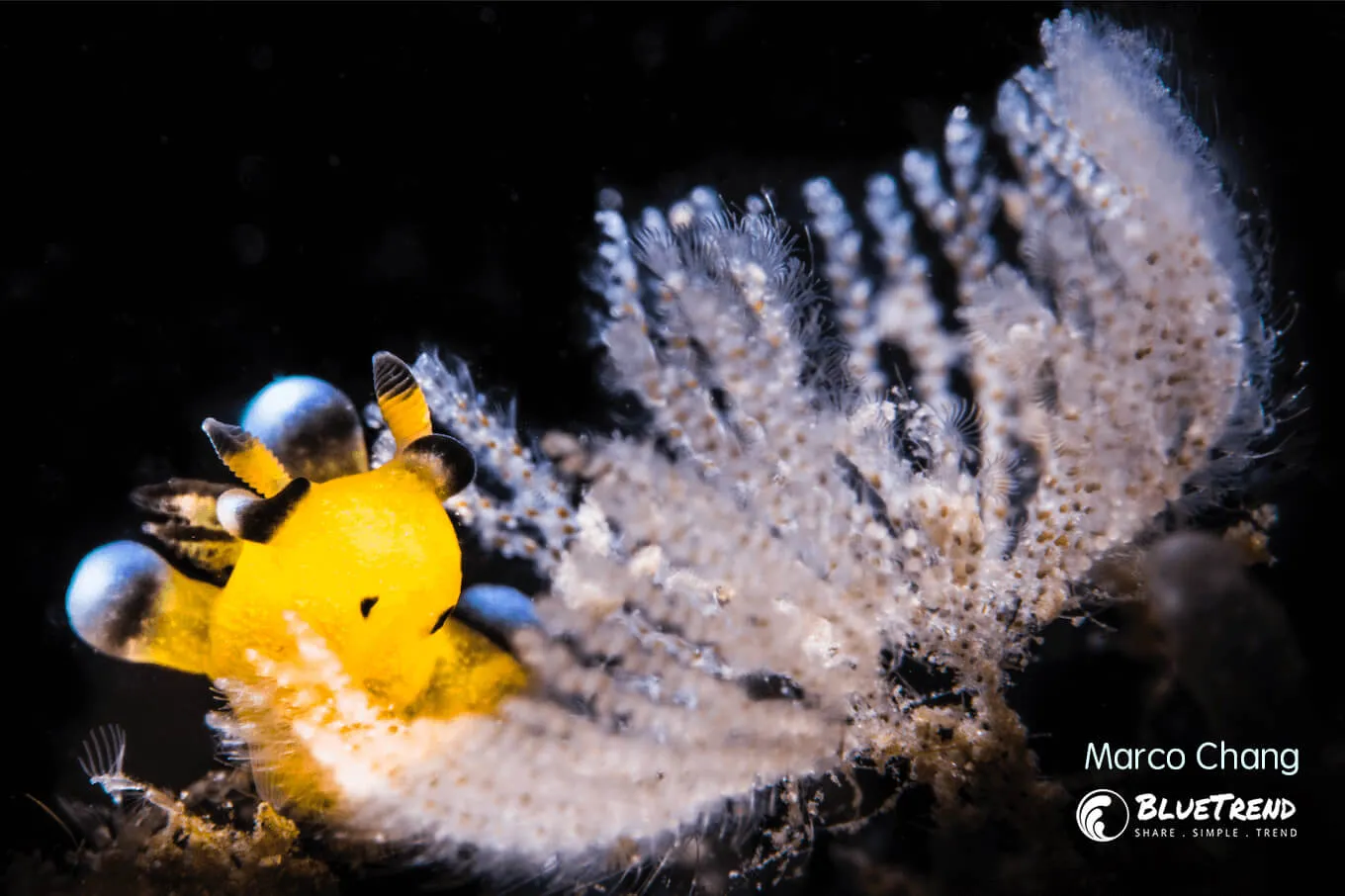
A Northeast Coast star, affectionately nicknamed "Pikachu"
Further reading: