

☝Don't forget to click the video above to catch these rare creatures in action!☝
In 2021, a dive at Chaoching kicked off with a stroke of incredible luck — divers were treated to sightings of two exceptionally rare scorpionfish family species:
Rhinopias frondosa and Rhinopias eschmeyeri.
Spotting them underwater must have been absolutely breathtaking — but can you correctly name each one on sight?
In the video, we share the quick identification tips featured in the BlueTrend Marine Field Guide.
Watch along and get to know these amazing marine creatures!
Meet the Scorpionfish Family
Scorpionfish are characterised by well-developed spiny protrusions on the head. They come in a stunning variety of forms and can change colour to blend in with their surroundings. They typically lie perfectly still among seagrass or coral that matches their colouration, patiently waiting for prey to draw close before striking — the moment a meal moves within range of their mouth, they inhale it at astonishing speed!
Scorpionfish are territorial. During the breeding season, males will square off over territory, opening their wide mouths to intimidate rivals and assert their claim.
Scorpionfish are masters of disguise — they shift body colour to merge seamlessly with the environment, and their highly developed skin flaps make accurate identification a real challenge. When trying to ID them, pay close attention to features such as the face and pectoral fin rays, and especially the arrangement of the hard spines on the top and sides of the head, which are key distinguishing characteristics!
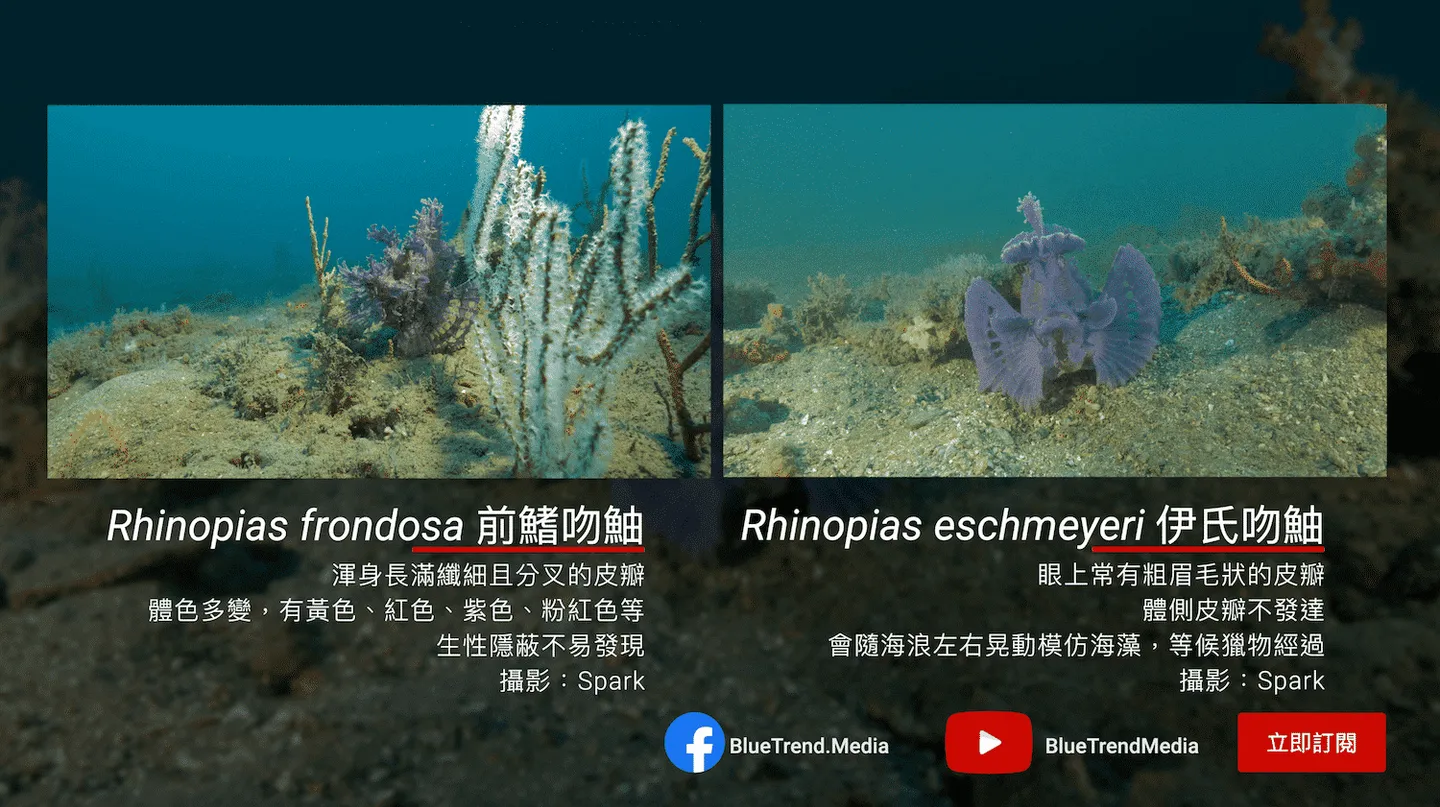
BlueTrend Marine Field Guide — Introduction to Scorpionfish


Are Scorpionfish Venomous? What Should You Do If You Encounter One?
Species in the families Scorpaenidae, including their close relatives, possess sharp venomous spines on their dorsal and pectoral fins, and their internal organs also contain toxins — all of which are protein-based venoms. A well-known Taiwanese saying ranks the most venomous sea creatures: "First the stingray, second the tiger, third the sea catfish, fourth the rabbitfish, fifth the coral grouper." The second creature, "tiger," broadly refers to scorpionfish. Accidentally brushing against their venomous spines triggers intense pain and a severe inflammatory reaction. We previously shared a first-hand account from someone who experienced this — click the article for a sobering read: What to Do If You Touch a sea urchin, jellyfish, or stonefish? A Real-Life Experience That Will Make You Take Dive Safety Seriously.
If you are accidentally stung, clean the wound immediately with soap or hydrogen peroxide, then rinse thoroughly with large amounts of fresh water to flush out the venom. Soak the affected area in warm water — the heat causes the protein-based venom to denature and lose its potency. That said, we strongly recommend seeking emergency medical attention at a hospital for proper treatment.
We hope these marine life facts have deepened your appreciation of the ocean! If you'd like to learn more about the habits and fascinating stories of marine creatures, be sure to support the BlueTrend Marine Field Guide and our Marine Citizen Science Database Project published by BlueTrend!
Related links:


![[Taiwan Diving – Dylan Chen Column] 3 Essential Qualities of a Competent Divemaster Assistant Instructor (The Second-in-Command)](/_astro/0503_Z1EK3hU.webp)