Contents(11)
- A Snapshot of Participation: 2024 KPI Data
- Geographic Distribution of Photos: Divers' Favorite Ecological Hotspots Revealed
- Species Diversity and Highlights: Annual Photo Selection
- Marine Reptiles: A Microcosm of Green Sea Turtle Ecology
- Fish: Rare Species Make an Appearance
- Arthropods: A Double Delight of Color and Behavior
- Mollusks: A Visual Feast of nudibranchs
- Echinoderms: A Fleeting Glimpse of Hidden Ecology
- The Power of Data: From Photos to Scientific Foundation
- Join Us in Building the Marine Data Center
- Further Reading
In 2024, the AI Ocean Marine Data Center brought together the passion of citizen scientists and the wonders of the ocean captured through their lenses. These photos not only document ecological data but also freeze awe-inspiring moments in nature. This article uses key performance indicators (KPIs) to present the number of photos uploaded, participants involved, and species recorded. It also highlights exceptional photos from various taxonomic groups, supported by visualized geographic and species distribution analyses, offering readers a glimpse into the rich marine life of Taiwan. We hope to emphasize how the data shared by these citizen scientists forms the core of a foundational marine biodiversity database, and to call on more members of the public and research institutions to participate and amplify the future impact of this dataset.
A Snapshot of Participation: 2024 KPI Data
As of the end of 2024, the AI Ocean Marine Data Center had accumulated contributions from 8,357 citizen scientists, with a total of 19,905 photos uploaded. In 2024 alone, 1,694 new photos were added. After filtering out 56 invalid photos that were blurry or unidentifiable, the number of valid photos reached 1,638, representing a validity rate of 96.66%. Invalid photos were excluded primarily due to poor image quality or because they were not taken in natural ecological settings (e.g., photos taken in aquariums); these are not included in the analysis and will be progressively removed.
We extend our heartfelt thanks to all marine citizen scientists for their dedication, which has produced 1,638 ecological records from across Taiwan, demonstrating the power of citizen science. The following sections take a deeper look at the geographic distribution of photos and species highlights, revealing the surprises hidden within this dataset.


Geographic Distribution of Photos: Divers' Favorite Ecological Hotspots Revealed
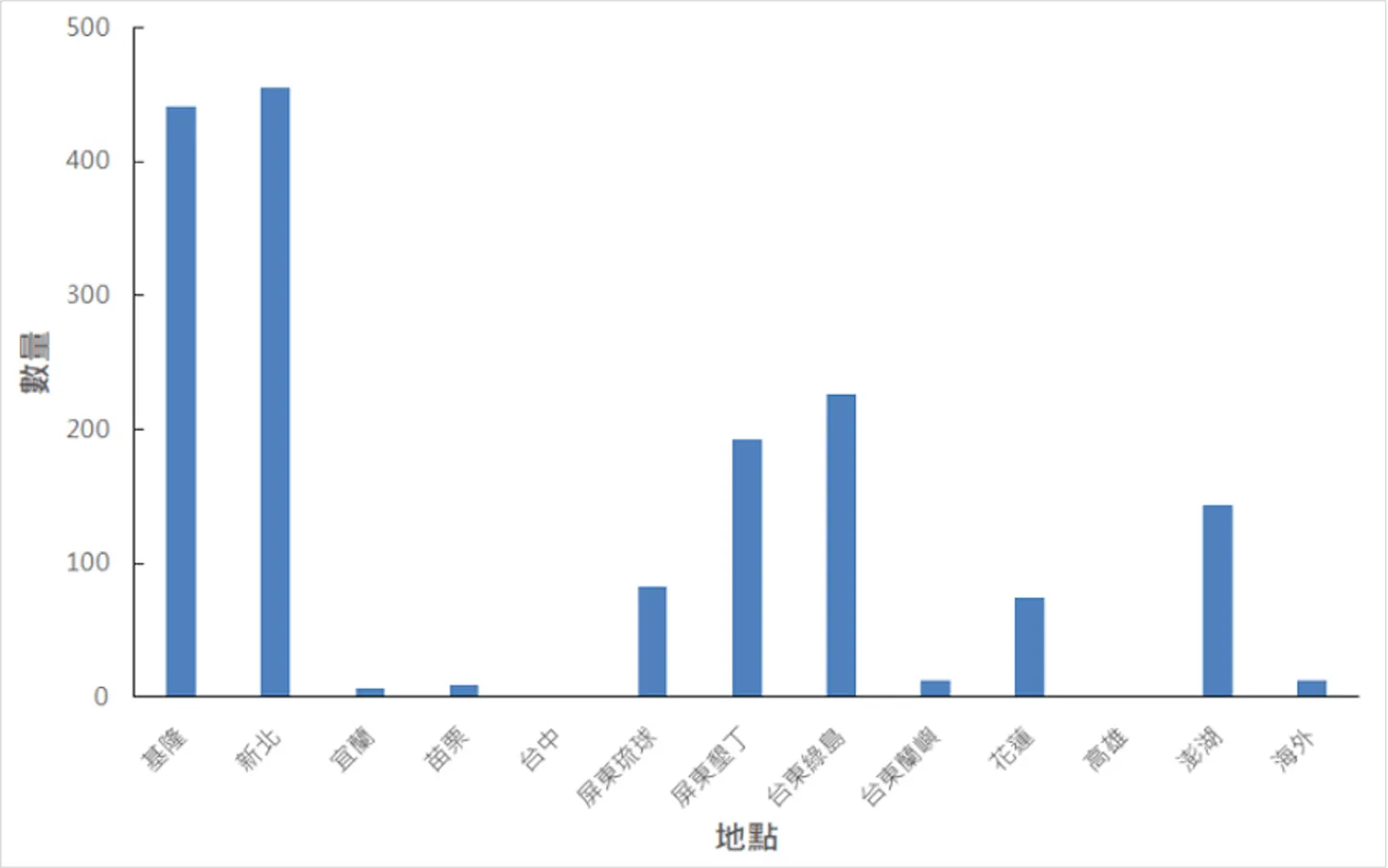
Photos from 2024 span Taiwan's coastline, with the northern region (including Keelung and New Taipei) contributing 896 photos, accounting for 52.89% of the total. Key hotspots include Keelung Chaojing Park and Longdong in New Taipei, which have become focal points for ecological photography. The eastern region (Hualien, Taitung, Green Island, and Orchid Island) contributed 314 photos, or 18.54%; while the southern region (Xiaoliuqiu and Kenting) recorded 275 photos, or 16.54%.
As illustrated in "Figure 1: Geographic Distribution of 2024 Photos," the northern data forms a pronounced peak, highlighting it as the core area of citizen scientist activity. Diving destinations in the eastern and southern regions have yielded unique records — such as rare fish species documented on the sandy-muddy seabed of Penghu — making us eager to see further exploration in these areas.
Species Diversity and Highlights: Annual Photo Selection
The 1,638 photos from 2024 encompass a diverse range of species, including 81 photos of marine reptiles, 507 of fish, 235 of arthropods, 652 of mollusks, 75 of echinoderms, and 144 of other invertebrates. The following sections present data and standout annual photos from specific taxonomic groups, showcasing what makes them so remarkable.
Marine Reptiles: A Microcosm of Green Sea Turtle Ecology
- Data: 81 photos in total (4.95%), including Green Sea Turtle (75 photos) and Emydocephalus ijimae (6 photos).
- Highlights: Among the Green Sea Turtle photos from Xiaoliuqiu, one image captured an individual with a shell covered in algae — resembling an "ocean garden." It not only portrays the turtle's natural state but also hints at the subtle relationship between health and environment. Although fewer in number, the sea snake photos are equally captivating: a clear shot of an Emydocephalus ijimae gliding through the water conveys the hidden beauty of the deep.
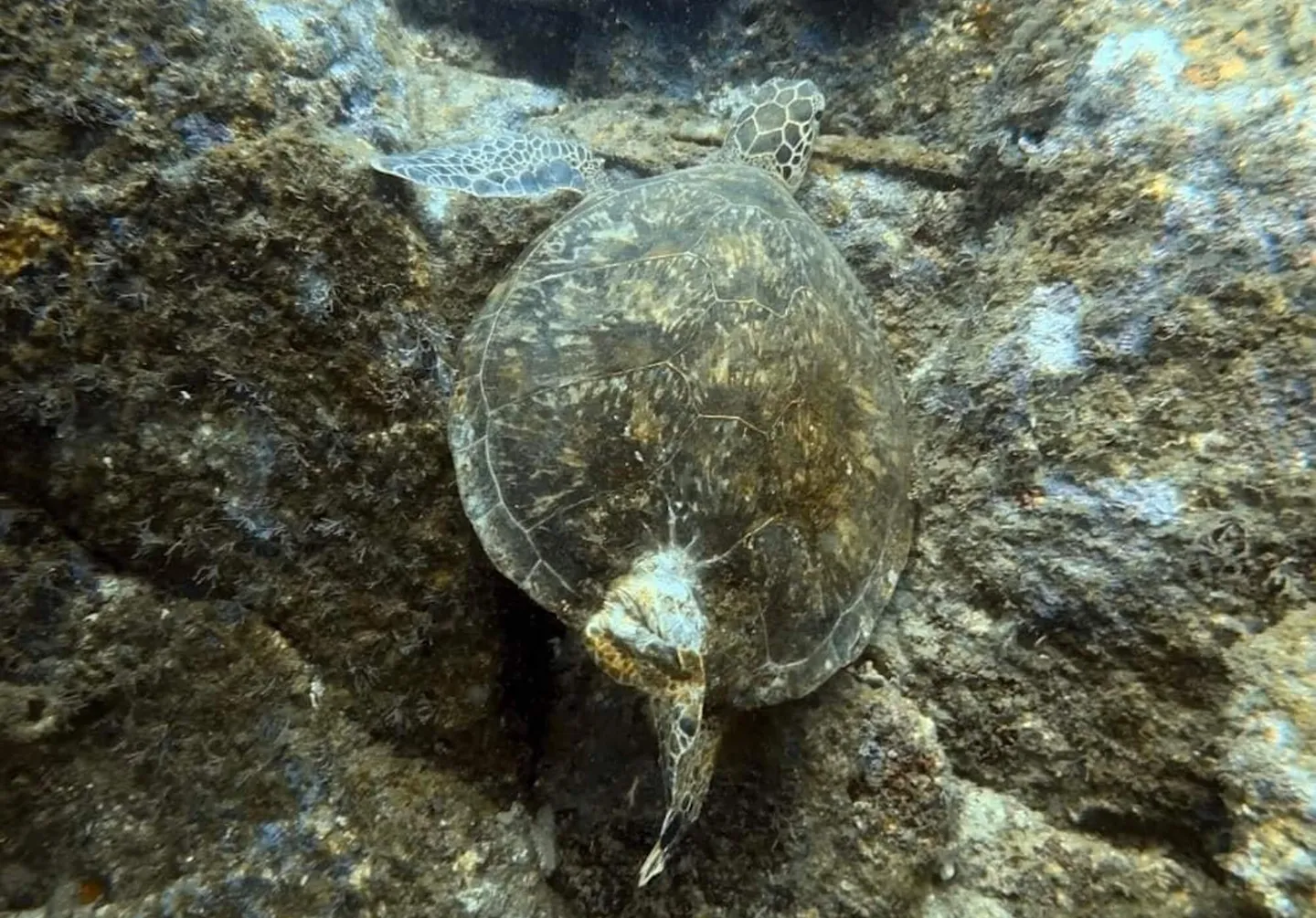
Green Sea Turtle. Photo credit: teaman0804, AI Ocean Biodiversity AI Data Center
Fish: Rare Species Make an Appearance
- Data: 507 photos in total (30.95%), documenting 248 species across 71 families. The top three families are Pomacentridae (32 photos), Muraenidae (31 photos), and Syngnathidae (31 photos); the top three species are Hippocampus bargibanti (25 photos), Amphiprion leucokranos (9 photos), and Paramonacanthus japonicus (8 photos).
- Highlights: The photo of a Trachyrhamphus longirostris recorded in Penghu is the year's standout surprise — this species, which inhabits murky sandy bottoms, was photographed drifting serenely, a truly rare sight. Another ecological shot of the crab-eating Pisodonophis cancrivorus (commonly known as "tu long" or land eel) caught the moment it poked its head out of the mud and sand, like an underwater detective, leaving viewers in awe of its secretive lifestyle. The pygmy seahorse (Hippocampus bargibanti) at Keelung Chaojing Park, dancing alongside a gorgonian in its miniature form, has become a favorite subject among divers.
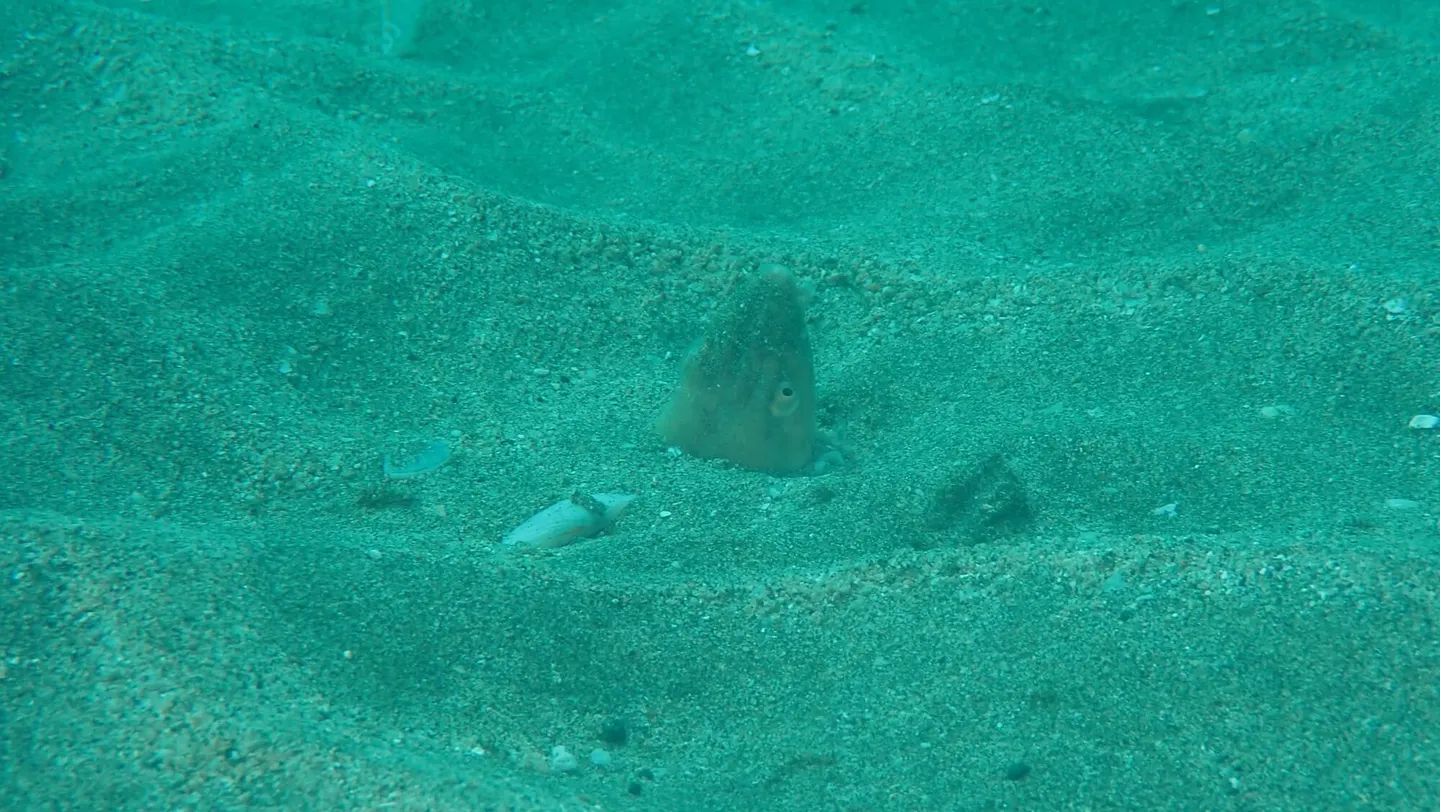
Pisodonophis cancrivorus. Photo credit: cyc0424, AI Ocean Biodiversity AI Data Center
Arthropods: A Double Delight of Color and Behavior
- Data: 235 photos in total (14.35%), with Decapoda (crustaceans) accounting for 217 photos (85 species across 34 families). The top three families are Palaemonidae (70 photos), Hippolytidae (35 photos), and Portunidae (14 photos); the top three species are Mimic algae shrimp (30 photos), Lysiosquillina maculata (18 photos), and Hymenocera picta (8 photos).
- Highlights: A photo of the spanner crab (Ranina ranina), commonly called "xu xie," was recorded in Xincheng, Hualien; and Odontodactylus japonicus, a mantis shrimp that burrows into sandy seafloors, was documented at Tongpan Islet in Penghu. Both species are mostly concealed in muddy or sandy substrates at greater depths. Although they are commonly seen in fish markets, in-the-wild ecological photographs of live specimens are extremely rare.
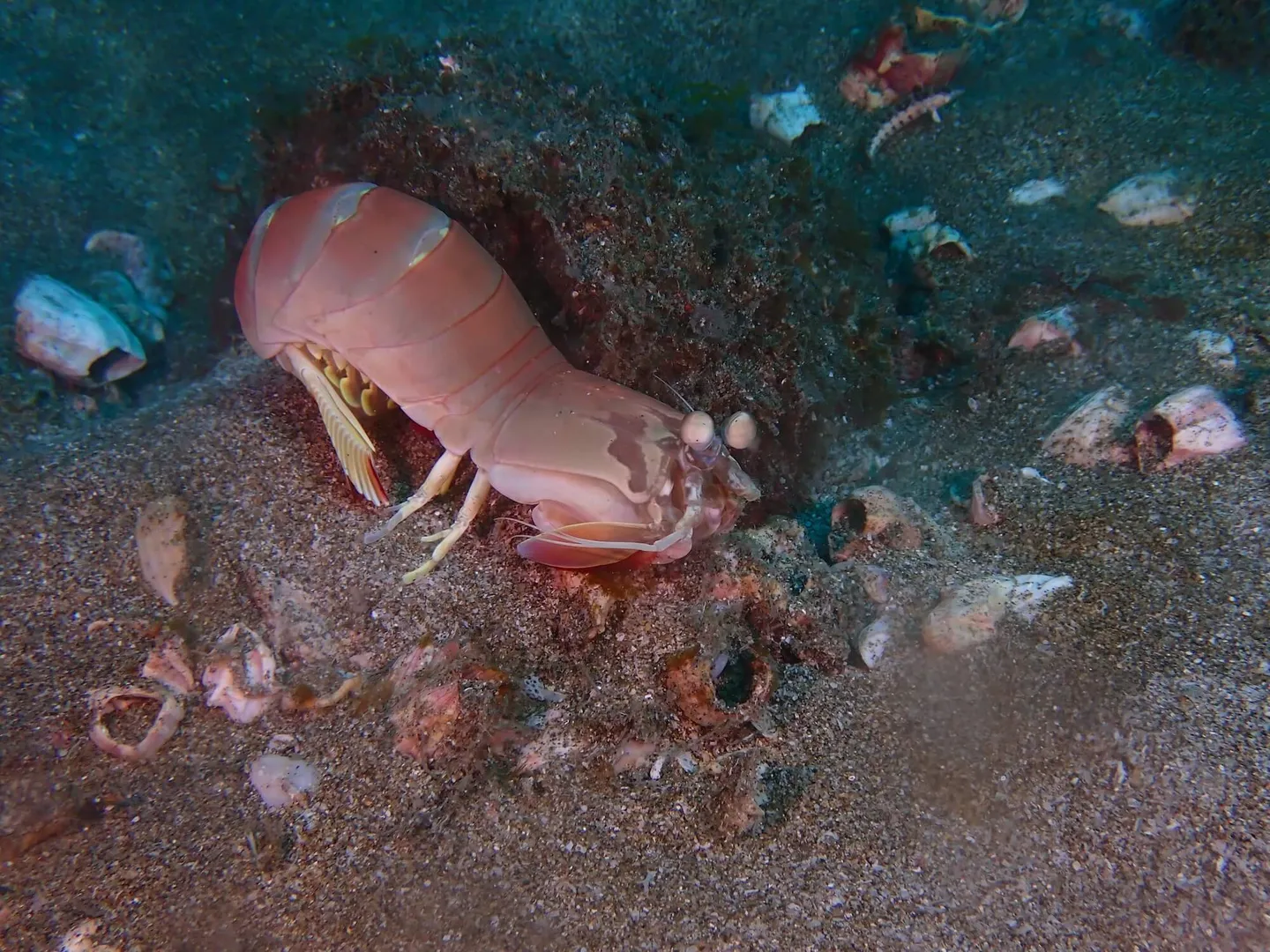
Odontodactylus japonicus. Photo credit: cyc0424, AI Ocean Biodiversity AI Data Center
Mollusks: A Visual Feast of nudibranchs
- Data: 652 photos in total (39.80%), with nudibranchs accounting for 503 photos (176 species across 39 families). The top three families are Chromodorididae (137 photos), Polyceridae (62 photos), and Plakobranchidae (48 photos); the top three species are Dermatobranchus rodmani (15 photos), Mexichromis multituberculata (14 photos), and Coryphellina rubrolineata (14 photos).
- Highlights: A photo of Ceratophyllidia africana taken at Chaojing Park is this year's rarest find — this fantastically colored species may represent the first recorded sighting on the Northeast Coast, a true gem of the deep.
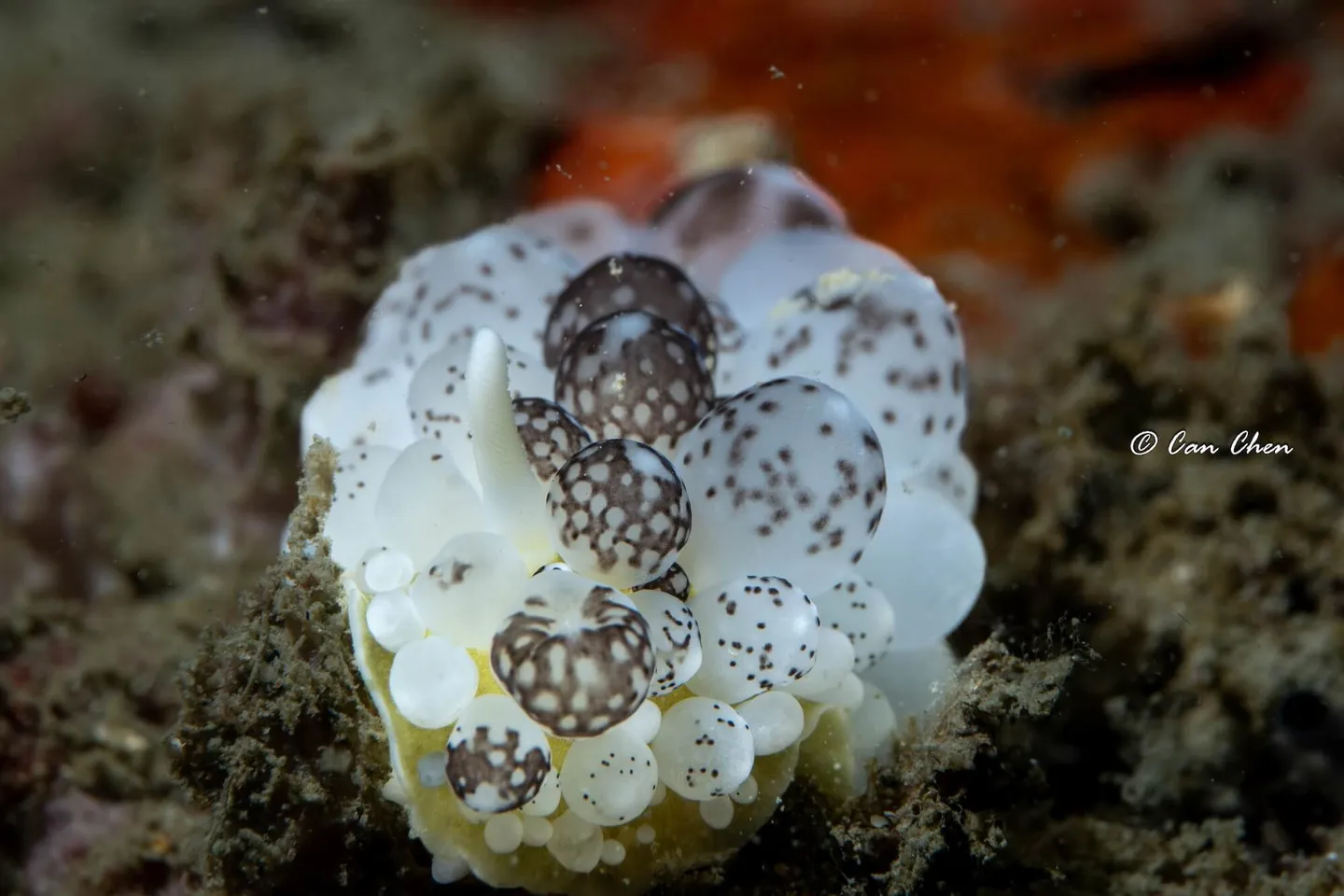
Ceratophyllidia africana. Photo credit: Can Chen, AI Ocean Biodiversity AI Data Center
Echinoderms: A Fleeting Glimpse of Hidden Ecology
- Data: 75 photos in total (4.58%), documenting 42 species across 23 families. The top three families are Holothuriidae (19 photos), Ophiocomidae (7 photos), and Diadematidae (7 photos).
- Highlights: The crown-of-thorns sea star (Acanthaster planci) was recorded at Qimei, Penghu. This species feeds on hard coral and can cause widespread coral reef mortality, making it a key indicator species. This record serves as a reminder that we should pay greater attention to the health of coral reefs.
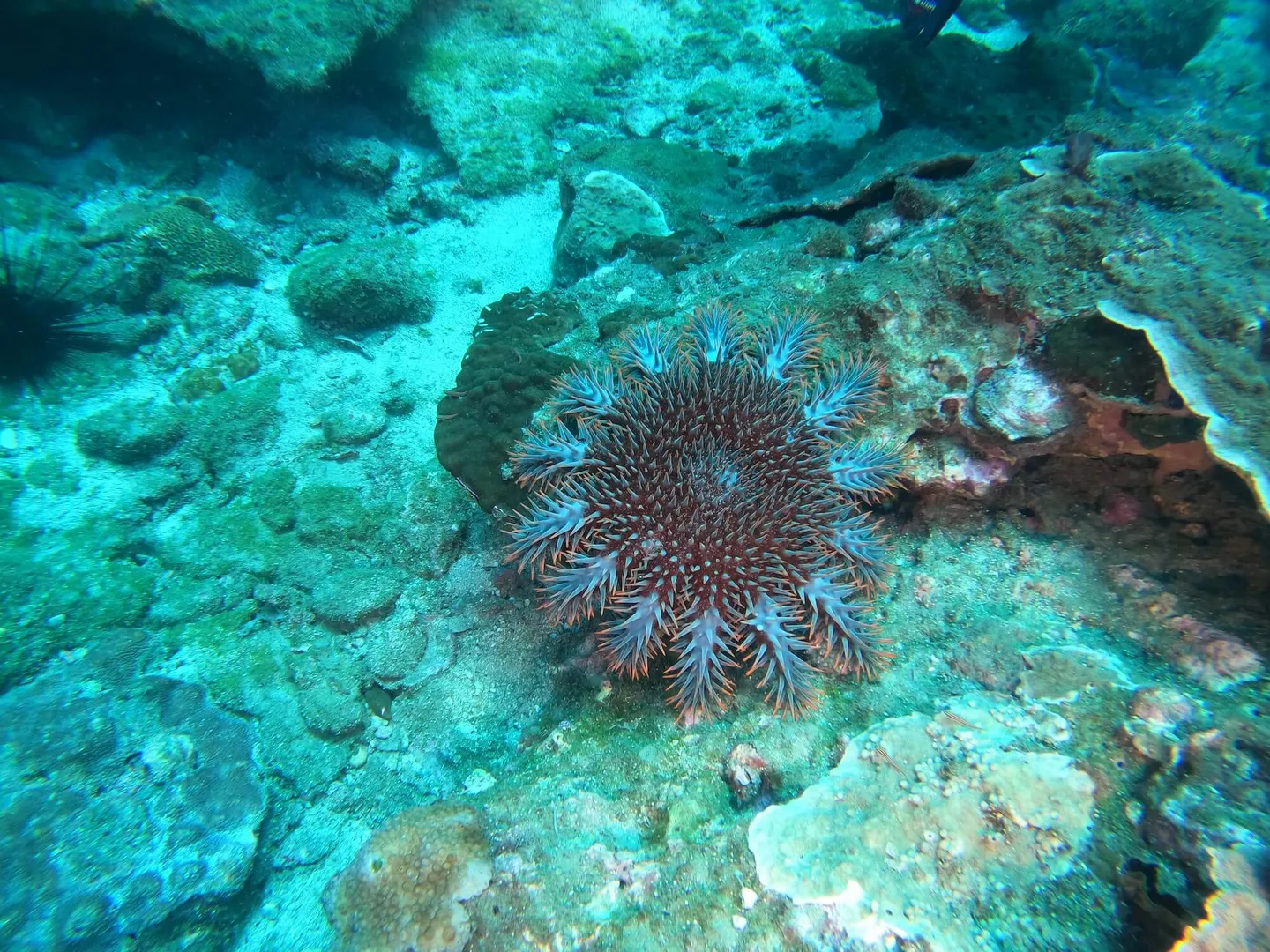
Crown-of-thorns sea star (Acanthaster planci). Photo credit: cyc0424, AI Ocean Biodiversity AI Data Center
The Power of Data: From Photos to Scientific Foundation
These photos are not merely visual pleasures — they form the foundational database of marine biodiversity. The 1,638 photos reveal the ecological diversity along Taiwan's coastline: the crown-of-thorns sea star in Penghu alerts us to the health of coral reef ecosystems, while the cryptic species inhabiting Penghu's sandy-muddy seabeds provide crucial clues for conservation and research. Visualized charts — such as geographic and species distribution maps — make the results immediately accessible and spark public interest. In the future, this data can be applied to habitat monitoring, species protection, and climate change analysis, becoming a valuable resource for global marine science.
Join Us in Building the Marine Data Center
In 2024, citizen scientists used 1,694 photos to tell the ocean's story — from the Green Sea Turtle's "ocean garden" to the wondrous "Pikachu" encounter of nudibranchs. Every photo is an interweaving of wonder and knowledge. These results have not only enriched the AI Ocean Marine Data Center but have also paved the way for future research. We sincerely invite more members of the public and research institutions to join us. Pick up your camera, capture the beauty of the ocean, and let the power of data protect this blue frontier — opening a new chapter toward a sustainable future.
Further Reading