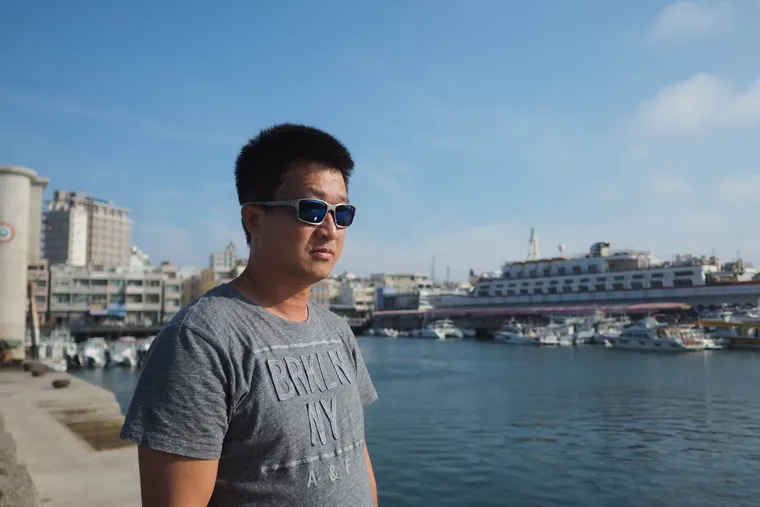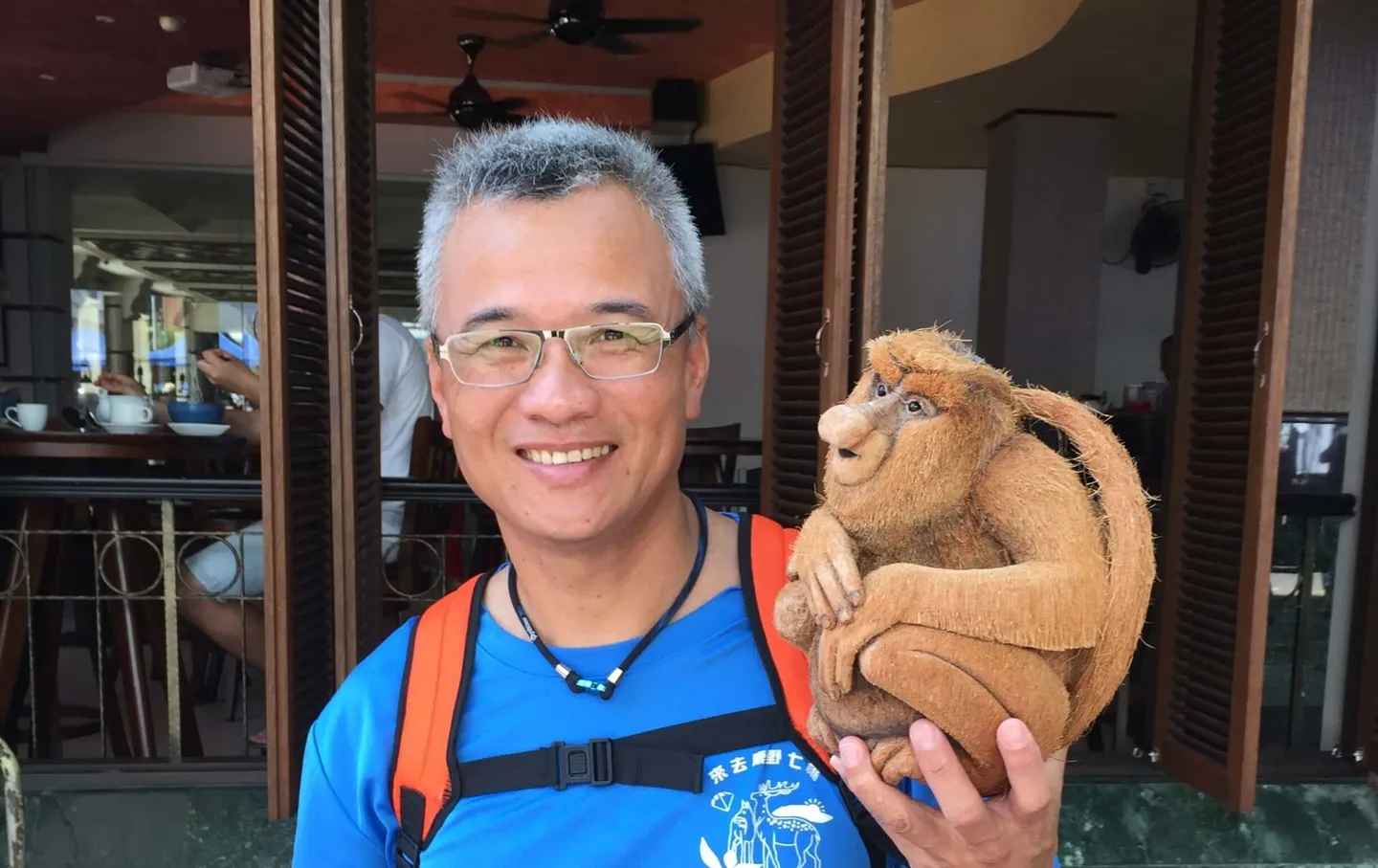
Known affectionately as "Shark Brother," Wu Zu-Xiang has been one of Taiwan's most active advocates for ocean issues in recent years. From an early petition campaign to ban the trade of shark fins, to an advocacy drive for the Southern Penghu Islands, he took things a step further in 2018 by founding the Southern Penghu Islands Conservation Association to directly support marine conservation efforts there. His years of unpaid dedication reflect not only a hope that more people will pay attention to ocean issues, but also a silent protest against Taiwan's bureaucratic government system.
Shark Brother's Diving Story
With 24 years of diving experience under his belt, Wu came to the sport through an unconventional path — not through a certification course, but through his time serving in the Navy. He once served as a rescue chief aboard a naval rescue vessel, surrounded by elite underwater operators (professional divers from the Naval Rescue Corps). At the time, he had not yet dived himself; he patrolled the seas aboard naval vessels, and his impression of the ocean was limited to the deep blue of the water's surface.
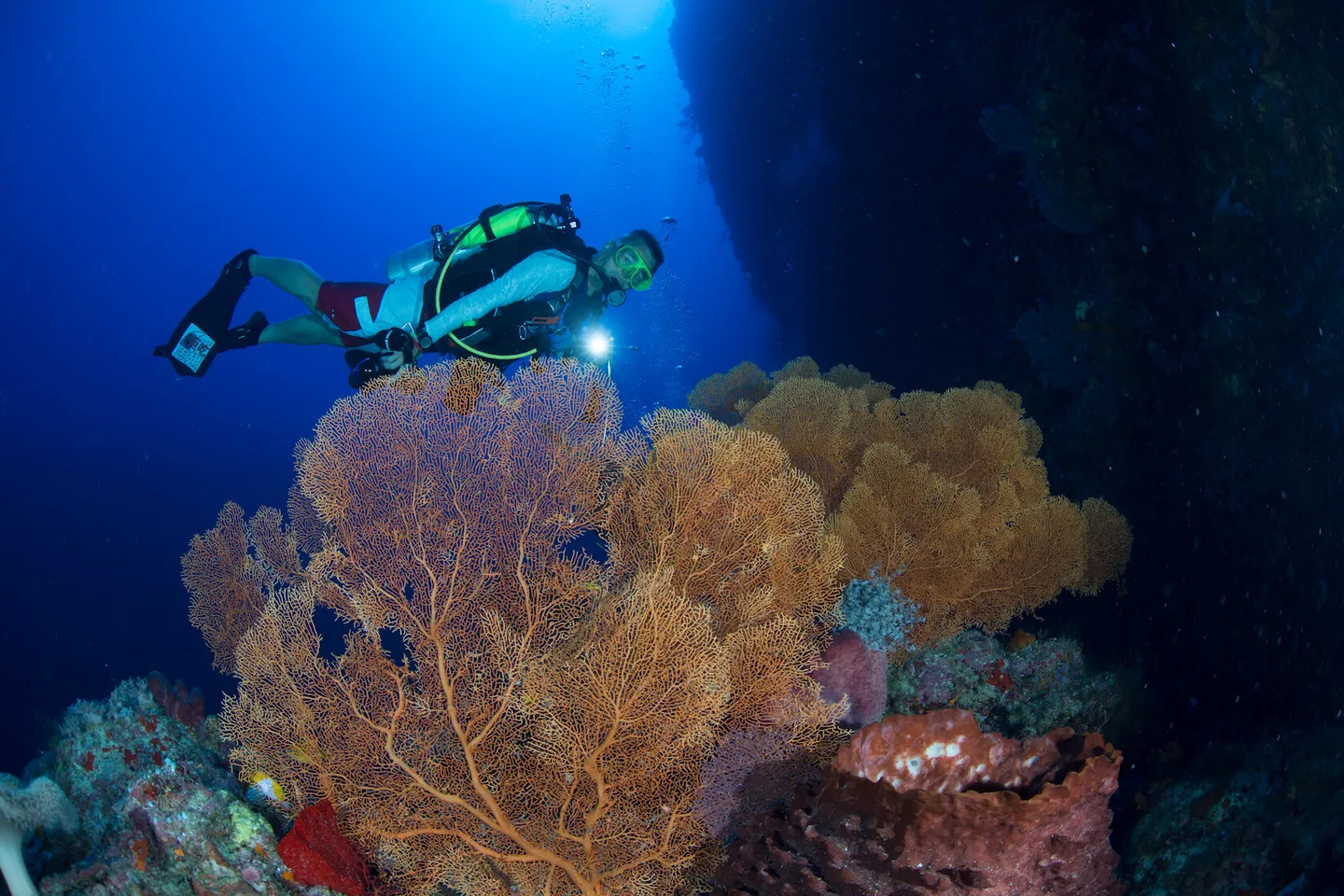
After learning to dive, he discovered just how beautiful the underwater world truly is.
By a fortuitous twist of fate, he received dive training through the Naval Rescue Corps and fell deeply in love with the sport from that moment on. Diving information in Taiwan was extremely hard to come by in those early days, and although he received comprehensive practical training in the military, it was a foreign dive instructor who helped fill the gaps in his theoretical knowledge. Over the course of his many years in the water, he also witnessed a heartbreaking moment firsthand: during a dive trip to Gunshui Bi on Green Island to observe Hammerhead Sharks, a dive buddy on the same boat passed away unexpectedly after surfacing. Despite his extensive rescue experience, the vastness of the ocean and the fragility of human life left a profound mark on him.
Across 24 years of dive travel, he speaks with great sadness about the gradual decline of Taiwan's marine resources. Visiting the Gunshui Bi dive site on Green Island to observe Hammerhead Sharks had long been one of his favorite plans, but since 2000, sightings have dwindled from around 50 individuals down steadily, and in recent years it has become entirely possible to complete a dive without spotting a single Hammerhead Shark. On Taiwan's main island, outside of the protected zones in Kenting, the number and variety of marine life have also become severely impoverished.
I hope to do a little something to make a difference. I really don't want the future of diving in Taiwan to mean only photographing things that can't move and can't be eaten. Taiwan is surrounded by the sea on all sides, yet if you want to see wildlife, you have to spend money to go abroad.


An Unbreakable Bond with Sharks
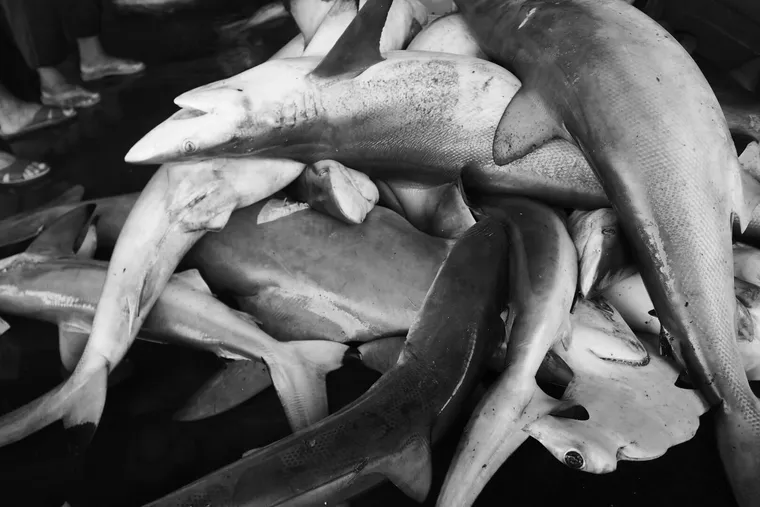
His first step was to focus on sharks — the star species that divers love to observe. He started simply by using Facebook groups to rally his friends and family, spreading the message that even small personal actions could reduce shark deaths. Then, when the head of the Environmental Protection Administration attended a banquet featuring shark fin dishes hosted by a vendor, he realized that staying within Facebook communities would do nothing substantive to advance his cause. He launched his very first online petition on the Public Policy Network Participation Platform: "Ban the Trade of Shark Fins! Severe Penalties for 'Finning'! Stop the Killing!" Before the deadline, he successfully gathered 5,163 co-signatures and opened a door to face-to-face dialogue with the government — though this turned out to be the beginning of an even more disheartening chapter.
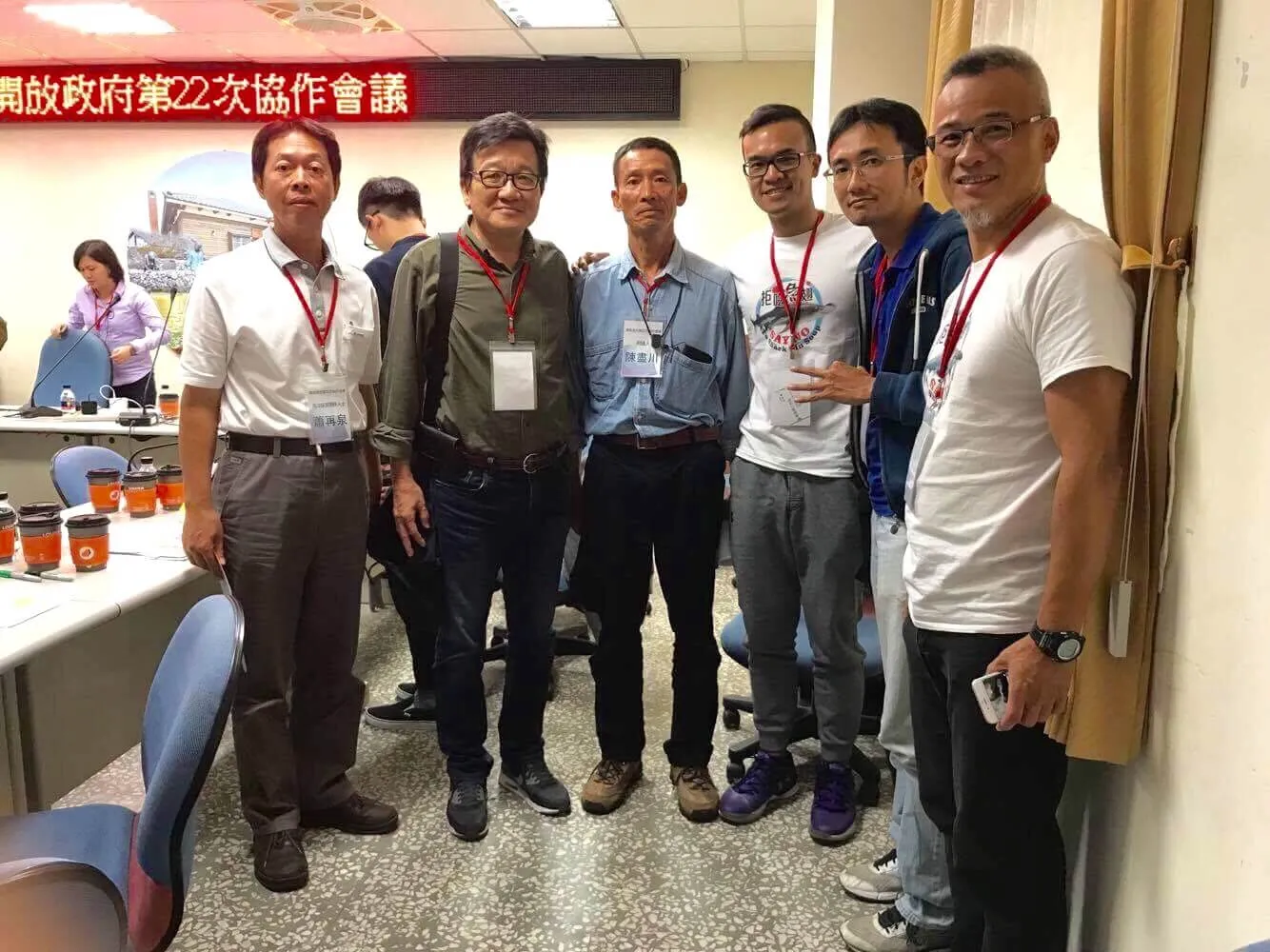
The petition campaign gave him the opportunity to hold collaborative meetings with government agencies, helping him understand the urgent need to establish a formal association.
Once a petition on the Public Policy Network Participation Platform reaches the required number of co-signatures, the relevant government agencies are obligated to convene collaborative meetings with the petitioner and other stakeholders to discuss the issue. But at those meetings, Wu came to fully appreciate just how fragmented the government's approach to ocean affairs was — and how its bureaucratic mindset was the final nail in the coffin for Taiwan's seas. Divers, for instance, often hope the government will follow international conventions and add certain species to protected lists prohibiting their capture — such as manta rays and Hammerhead Sharks — but the government routinely deflects with the claim that "there is insufficient scientific survey data," leaving the issues perpetually unresolved.
The same pattern repeated itself during Shark Brother's second petition: "Designate the East-West Ji Corridor Sea Area of the Southern Penghu Islands National Park as a Complete No-Take Zone." This time he gathered 6,157 co-signatures, and the government again convened a collaborative meeting — but the meeting saw some peculiar stakeholder representatives appear, including the Penghu Inshore Fisheries Association, township representatives, fishing associations, sea angling associations, and diving associations, all of which held views contrary to his own. Without any organizational backing, his voice risked being drowned out whenever the group needed to speak up or vote. After that collaborative meeting, Shark Brother resolved to take more concrete action in support of the Southern Penghu Islands, and threw himself wholeheartedly into establishing the Southern Penghu Islands Conservation Association.
The voice of conservation is very small. The next time the government wants to discuss policy, it will be the same group of people doing the discussing and the drafting. We need to form a group, bring together people who share the same values, and be ready — when the government conducts a comprehensive review in the future — to participate in policy formulation from the very beginning, under the name of a formal association.
Why did Shark Brother choose Penghu as the site of his long-term campaign? The roots of it all trace back to 2017, when he visited the Southern Four Islands National Park for the first time. Those three days of diving moved him deeply — he described seeing more fish in those three days than the entire accumulated total from all his dives around Taiwan's main island throughout the whole year. It was almost impossible to imagine such an underwater spectacle still existed in Taiwan. Yet this tiny patch of ocean depended almost entirely on the lone efforts of Dao'ao patrol officer Ye Sheng-Hong and squad leader Xiao Zai-Quan on the front lines, with little substantive support. This realization planted a seed in his heart.
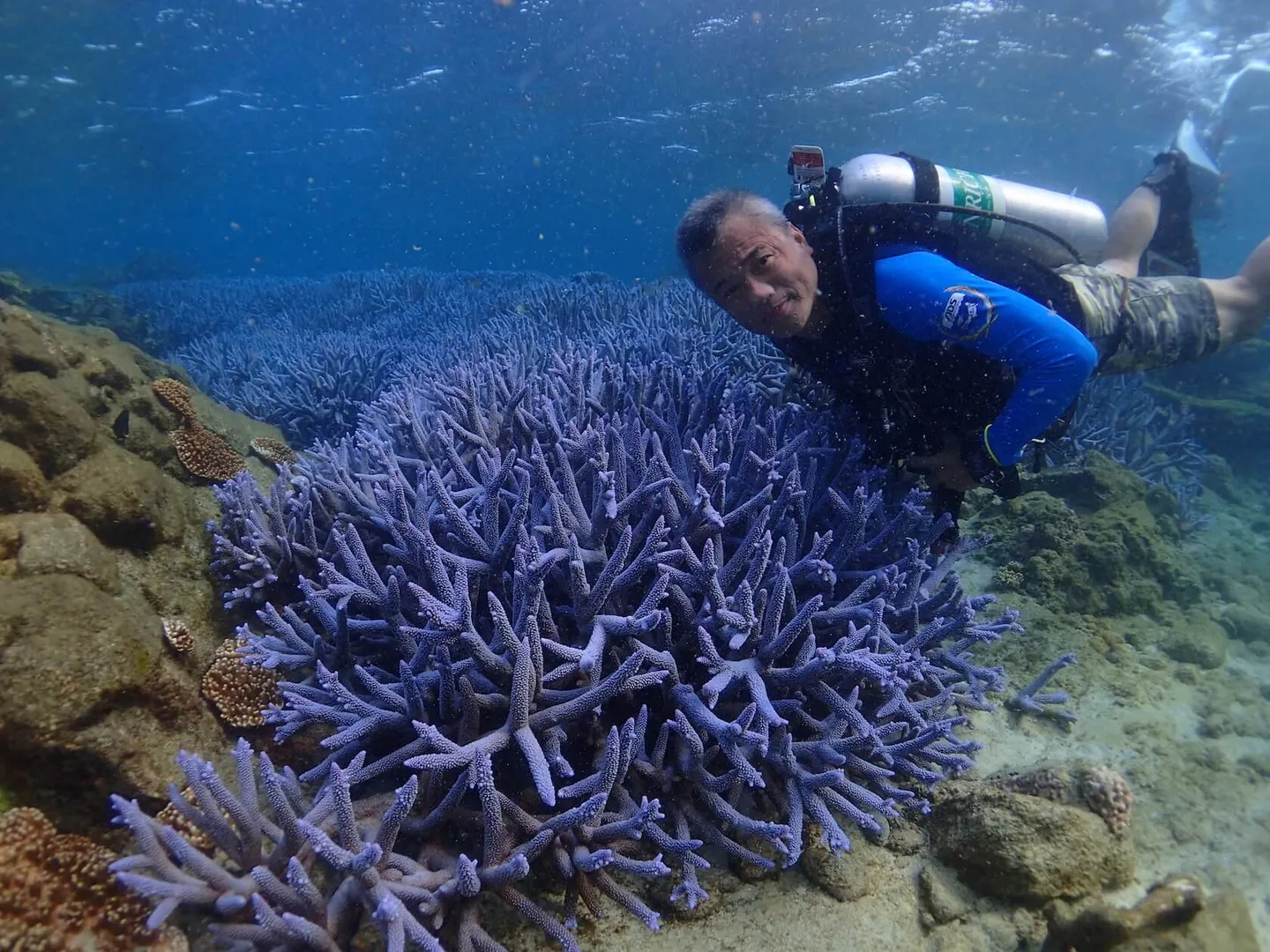
The beauty of Penghu inspired Shark Brother to commit even more of himself to protecting this sea.
During the Penghu collaborative meetings, he also came to fully feel the difficulty of pushing ocean issues forward. When conservation advocates tried to explain concepts like source populations and spillover effects, other stakeholders were thinking about the commercial value of fish catches. When the discussion turned to whether fishing should be permitted within national park boundaries, conflicting central and local laws, along with the fragmented jurisdiction over marine affairs, created a vacuum that different stakeholders exploited by choosing whichever interpretation best served their own interests — leaving enforcement agencies without clear direction and giving an already deteriorating underwater ecosystem even less room to breathe.
On April 22, 1990, footage documenting Penghu fishermen hunting and slaughtering dolphins was broadcast from the United States to the world. The graphic scenes shocked global audiences, and the fishermen of Sha Harbour in Penghu suddenly found themselves at the center of international condemnation. Four months after the dolphin killing incident became public, international pressure mounted from all directions, and under pressure from global conservation organizations, Taiwan finally enacted legislation formally listing cetaceans as protected animals — marking the beginning of Taiwan's marine conservation journey. On May 21, 2018, an online livestream of a manta ray incident in Penghu shook the public conscience. The very next day, Council of Agriculture Fisheries Agency Director-General Huang Hong-Yan swiftly announced that because manta rays are frequently caught as bycatch, the Fisheries Agency would — ahead of the Ocean Affairs Council's formal listing of manta rays as protected wildlife — issue a notice under the Fisheries Act prohibiting fishermen from catching them, with the measure to take effect as early as August of the same year. Taiwan prides itself on being an ocean nation, yet not only is the public far removed from the sea, but even the government and scientific research lack a true maritime mindset. Perhaps what we need is not more keyboard warriors online, but more hands-on advocates like Shark Brother who take real action for the ocean. Do you want to join his ranks?
Related links: