Contents(7)
Last December, the ocean documentary Turtle Rescue, starring Eddie Peng, made its debut. The film was produced by WildAid in partnership with the China Sea Turtle Conservation Alliance and Youku, with award-winning cinematographer Andrew Wegst serving as executive director. Across three episodes, viewers follow Eddie Peng to Costa Rica, Ecuador, Malaysia, Indonesia, the Philippines, and China to meet a group of remarkable "turtle warriors" and discover what sea turtle conservation means for both humanity and the environment.
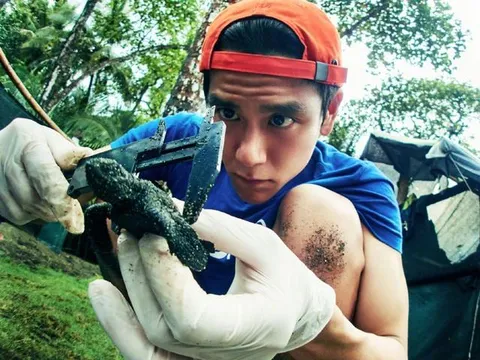
Turtle Rescue
After watching this vivid and captivating documentary, the Editor was reminded that the Great Barrier Reef is also home to a remarkable number of sea turtles.
In fact, six of the seven known sea turtle species in the world are residents of the Great Barrier Reef. Some range widely across the reef system, while others are only occasional visitors.
Queensland, where the Great Barrier Reef is located, launched a sea turtle research program 30 years ago. Thanks to the dedication of marine scientists, Indigenous communities, and local fishers, our understanding of sea turtles and their conservation has advanced enormously.
Today, let me take you on a dive into the world of our sea turtle friends and introduce you to the species living on the Great Barrier Reef!
Species #1: Green Sea Turtle
The Green Sea Turtle is arguably the most commonly encountered sea turtle on the Great Barrier Reef. Their shells are typically smooth and dome-shaped, olive-green in colour, occasionally marked with brown, reddish-brown, or black highlights. Adult carapace length ranges from 0.9 m to 1.2 m, and they can weigh over 100 kg.
Green Sea Turtles are found in tropical and subtropical waters around the world. They reproduce in relatively large numbers and are particularly fond of warm, shallow reef environments. Most adult Green Sea Turtles are herbivores, feeding on algae, seagrass, and jellyfish.
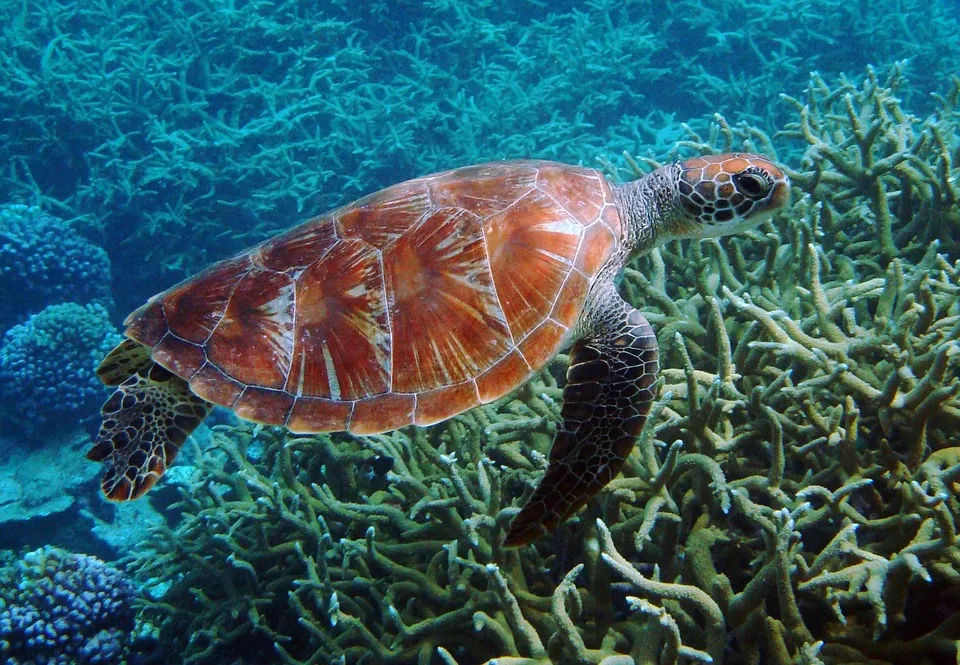
Green Sea Turtle
Within the Great Barrier Reef World Heritage Area, there are two genetically distinct populations of Green Sea Turtles: a southern population and a northern one. The southern population sees an average of 8,000 turtles come ashore to nest each year, while the remote but famous Rain Island in the north attracts up to 30,000 female turtles annually — making it one of the most spectacular sea turtle nesting sites in the world.
Their migration routes are also remarkably varied. Green Sea Turtles travel each year between Indonesia, Papua New Guinea, Vanuatu, and the Great Barrier Reef.
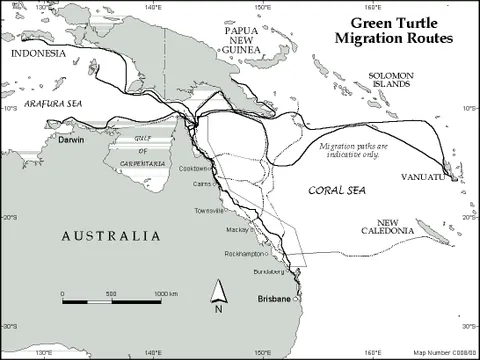
Green Sea Turtle migration routes (solid and dashed lines represent different populations)
Green Sea Turtle Quick Facts
Scientific name: Chelonia mydas Nesting season: Late October to February Reproductive age: 45 years Average clutch size: 115 eggs Hatching period: December to May Hatching success rate: 84% Egg and hatchling predators: crabs, herons, dingoes, giant trevally, sharks, and other fish


Species #2: Loggerhead Turtle
You might not guess the name from the Chinese, but "loggerhead" refers directly to this turtle's large head. Loggerheads have powerful, thick jaws capable of crushing shells and molluscs such as crabs, sea urchins, and jellyfish — all of which are part of their diet. They prefer to forage on coral reefs, continental shelves, and shallow seagrass beds.
Adult Loggerheads are brown, with carapace tops showing light brown, reddish-brown, or black tones, and a typically yellow underside. They measure 1–2 m in length and generally weigh over 100 kg. Juveniles usually have dark brown carapaces and pale brown plastrons.
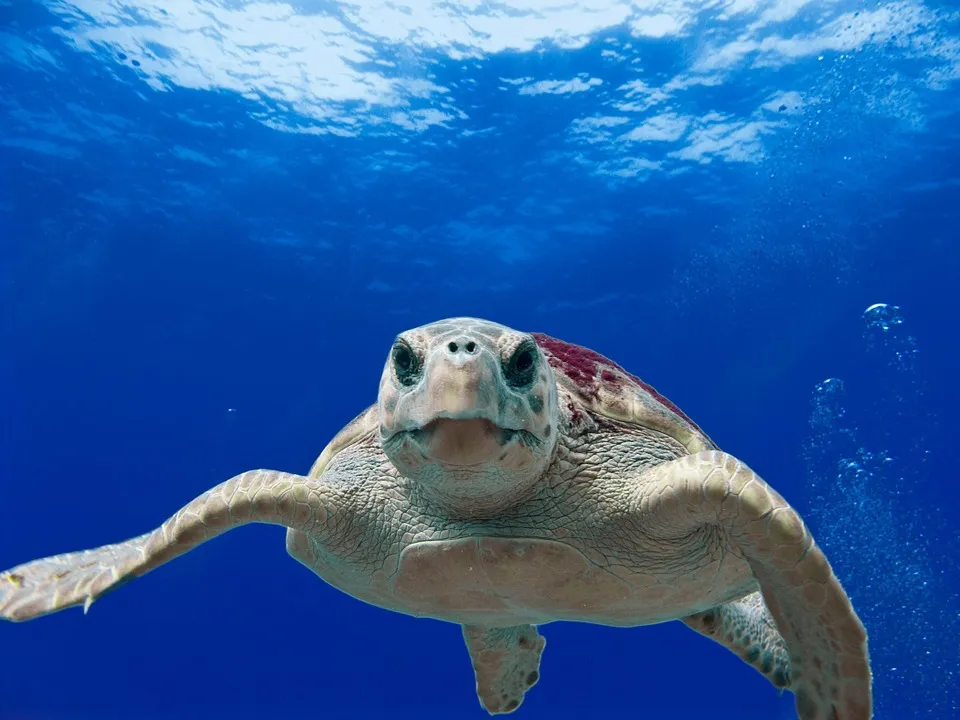
Loggerhead Turtle
There are two genetically distinct Loggerhead Turtle populations in Australian waters — one along the east coast and one along the west coast. Research shows that populations nesting and foraging on the Great Barrier Reef migrate to Arnhem Land, the Torres Strait, and Papua New Guinea.
Female Loggerhead numbers once fell below 1,000 individuals, putting the species at risk of extinction due to increasing mortality rates. As a result, they were listed on the IUCN Red List of Threatened Species as Endangered in 2012. In response, the Queensland Government made turtle excluder devices mandatory in fisheries from 2001, reducing bycatch mortality. Nesting numbers have shown a positive recovery trend in recent years.
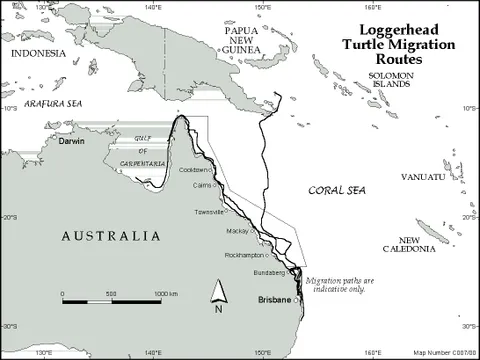
Loggerhead Turtle migration routes
Loggerhead Turtle Quick Facts
Scientific name: Caretta caretta Nesting season: Late October to March, peaking in December Reproductive age: 20–25 years Average clutch size: 127 eggs Hatching period: December to April Hatching success rate: 80% Egg and hatchling predators: foxes, kookaburras, crows, seagulls, raptors, reef egrets, ghost crabs, giant trevally, sharks, and other fish
Species #3: Hawksbill Turtle
The Hawksbill Turtle is perhaps the most recognisable of all sea turtles. It bears beautiful and varied black-and-brown patterned markings, with a distinctively narrow head and a sharp, bird-like beak. It generally reaches about 0.6 m in length, with larger individuals up to 1.6 m, and an average weight of 46–70 kg.
Hawksbill Turtles are found worldwide and typically inhabit tropical and subtropical intertidal and subtidal coral reef environments. Their diet includes invertebrates such as jellyfish, sea anemones, shrimp, crabs, and molluscs, as well as fish and seaweed.
In ancient times, Hawksbill shells were prized for making ornaments and jewellery. Today, however, overexploitation has driven the species to endangered status, and it has nearly vanished from China's coastal waters. No demand, no killing — the Editor urges everyone to take action and refuse all products made from wildlife.
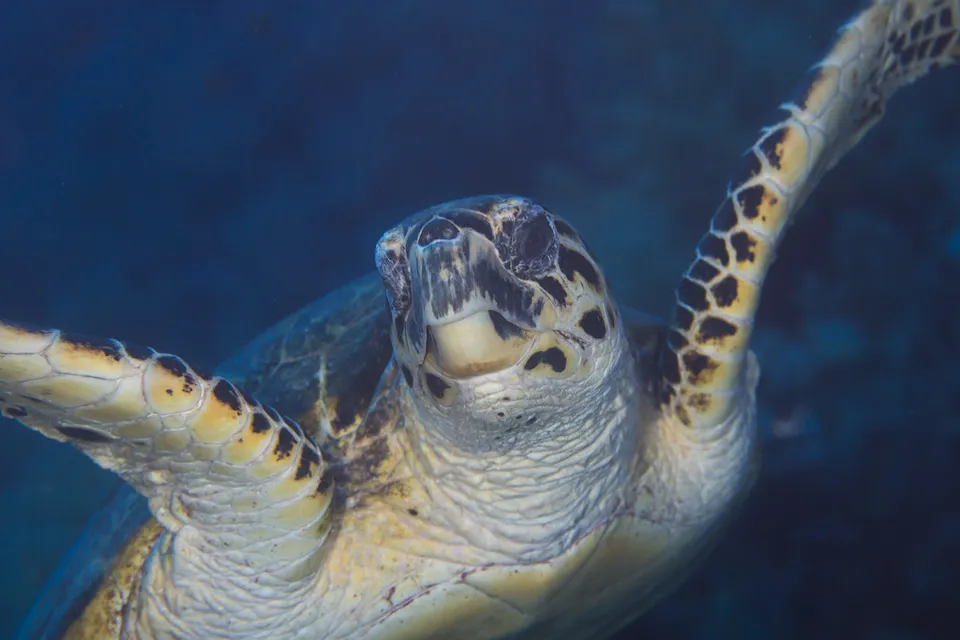
Hawksbill Turtle
There are three major nesting areas for Hawksbills in Australia: the northern Great Barrier Reef (thousands of nesting females), northeastern Arnhem Land (approximately 2,000 individuals), and Western Australia (thousands of individuals). In particular, the entire far-northern section of the Great Barrier Reef and Torres Strait is of significant international importance for Hawksbill conservation, as populations in many parts of the world are in decline.
Marine researchers have found that Hawksbill populations nesting on the Great Barrier Reef migrate to Indonesia, Papua New Guinea, the Solomon Islands, and Vanuatu.
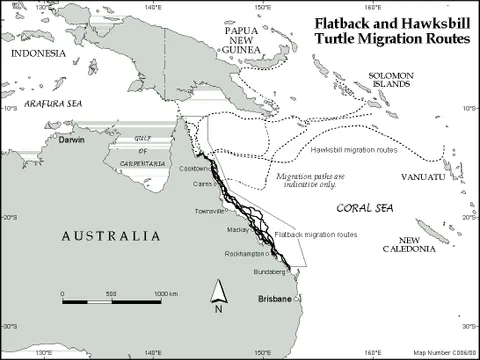
Hawksbill Turtle (dashed lines) and Flatback Turtle (solid lines) migration routes
Hawksbill Turtle Quick Facts
Scientific name: Eretmochelys imbricata Nesting season: Year-round, concentrated November–February, peaking in January Reproductive age: 30–35 years Average clutch size: 122 eggs Hatching period: Year-round, concentrated February–April Hatching success rate: 79% Egg and hatchling predators: seagulls, reef egrets, ghost crabs, crocodiles, fish, sharks, crabs, and dingoes
Species #4: Flatback Turtle
True to its name, the Flatback Turtle has a low-domed, distinctly flat carapace with thin, waxy marginal scutes. Adult Flatbacks are typically olive-grey on top and white on the underside. They can grow up to 1 m in length and weigh up to 80 kg.
The Flatback Turtle is essentially Australia's own sea turtle, as it is found exclusively on Australia's continental shelf, feeding primarily on soft coral, sea pens, and jellyfish. Although they do venture into Indonesian and Papua New Guinean waters to forage, they nest only on Australian shores — this is because Flatback hatchlings live exclusively in nearshore coastal waters and never venture into the open ocean.
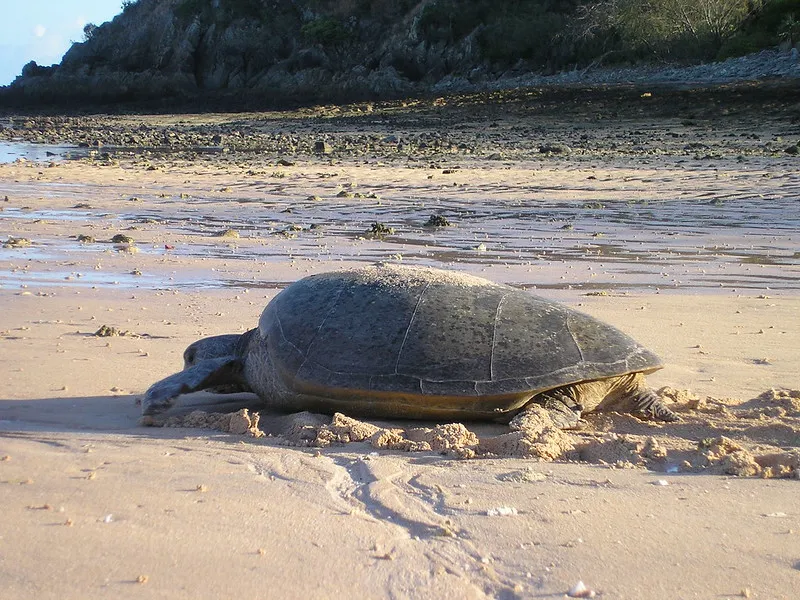
Flatback Turtle
All known Flatback Turtle nesting sites are located in Australia. While researchers are not yet certain about population trends, studies indicate that Flatback nesting numbers along Australia's east coast, including the Great Barrier Reef, are relatively stable.
Flatback Turtle Quick Facts
Scientific name: Natator depressus Nesting season: November–February Reproductive age: 20 years Average clutch size: 54 eggs Hatching period: January–April Hatching success rate: 80% Egg and hatchling predators: pelicans, ghost crabs, crocodiles, and sharks
Species #5: Olive Ridley Turtle
Listed as Vulnerable by the IUCN and the smallest of all sea turtle species, the Olive Ridley measures 0.6–0.7 m in length and weighs approximately 34–45 kg. Its shell, viewed from above, is distinctively round and heart-shaped. Adult Olive Ridleys range in colour from grey to olive-grey, while juveniles are black.
Olive Ridleys are commonly found in tropical and subtropical waters of the Pacific and Indian Oceans. In Australia, they mainly inhabit the protected shallow waters of southern Queensland or Joseph Bonaparte Gulf in Western Australia. They typically prey on molluscs, jellyfish, and other invertebrates, and occasionally eat fish eggs and plant material.
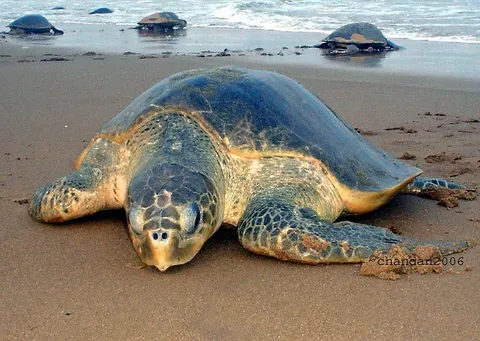
Olive Ridley Turtle
In Australia, there are two main Olive Ridley nesting areas. One is in the Northern Territory, with approximately 1,000 nesting females each year; the other is in the Gulf of Carpentaria above Queensland, with fewer than 100 nesting females annually. Although Olive Ridleys do forage within the Great Barrier Reef World Heritage Area, no nesting by this species has been recorded there.
Because Olive Ridleys are uncommon on the Great Barrier Reef, they have rarely been the focus of local scientific attention, and their long-term population trends in the region remain unclear. Much of their life history, breeding biology, population dynamics, and migration patterns also remain unknown.
Olive Ridley Turtle Quick Facts
Scientific name: Lepidochelys olivacea Nesting season: September to January Reproductive age: 45 years Average clutch size: 110 eggs Hatching period: November to March Egg and hatchling predators: crabs, raccoons, pigs, snakes, and birds
Species #6: Leatherback Turtle
The Leatherback is the largest of all living reptiles in the order Testudines, averaging 1–1.5 m in length, with the heaviest individuals reaching 700 kg, and is critically endangered. Its shell is typically black with white spots and has a leathery, rubber-like texture — not the hard bony shell of other turtles — with five prominent longitudinal ridges along its back.
Leatherbacks are found in oceans across the globe but breed primarily in tropical regions, with occasional nesting recorded on Australia's east coast. They feed mainly on fish, shrimp, crabs, and jellyfish. They have no teeth, but their oesophagus is lined with large, sharp, backwards-pointing papillae that help break down food before it passes into the stomach and intestines for digestion.
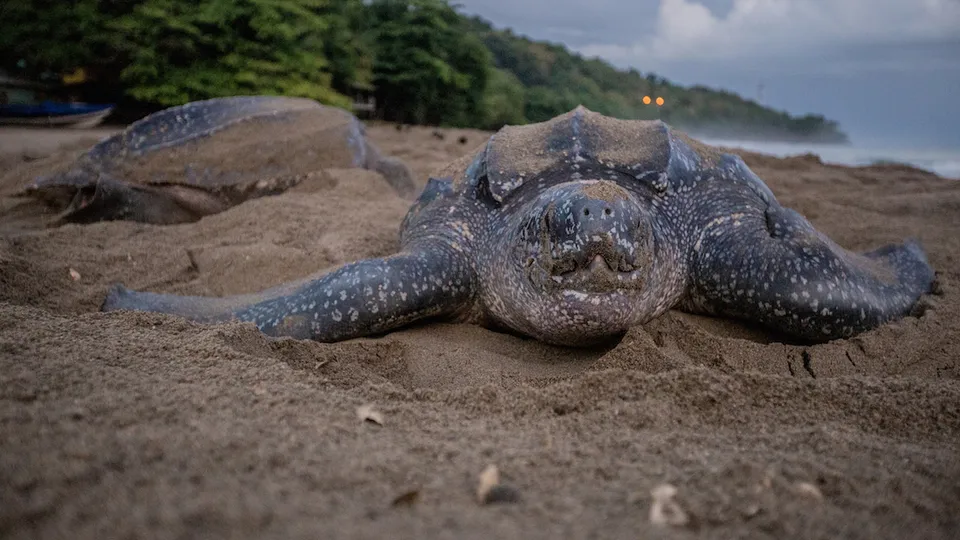
Leatherback Turtle
Fewer than 10 Leatherback Turtles nest on Australian shores year-round. During nesting season, they typically migrate to nearby countries, particularly Papua New Guinea and Indonesia.
The long-term population trend for Leatherbacks on the Great Barrier Reef is unknown, and related scientific research remains limited. However, given that Leatherback populations across the South Pacific have declined dramatically and that Great Barrier Reef marine life may be threatened by the same pressures, there is growing concern among marine researchers about this largest of sea turtles.
Leatherback Turtle Quick Facts
Scientific name: Dermochelys coriacea Nesting season: December–January Average clutch size: 90 eggs Hatching period: February–March Hatching success rate: Low Egg and hatchling predators: crabs and foxes
Summary
That's your introduction to the sea turtle residents of the Great Barrier Reef! All information has been sourced from the Great Barrier Reef Marine Park Authority's website (www.gbrmpa.gov.au).
If you're still not quite sure how to tell them apart, the website also provides a helpful identification guide:
A marine researcher who worked in Antarctica once said that only by going into the ocean yourself, and seeing these creatures and their home with your own eyes, will you truly understand why we must treasure it all. I think that's absolutely right.
Finally, the Editor hopes you'll save this article or share it with others — so that more people can awaken to the cause and join us in exploring and protecting the ocean.
As Eddie said:
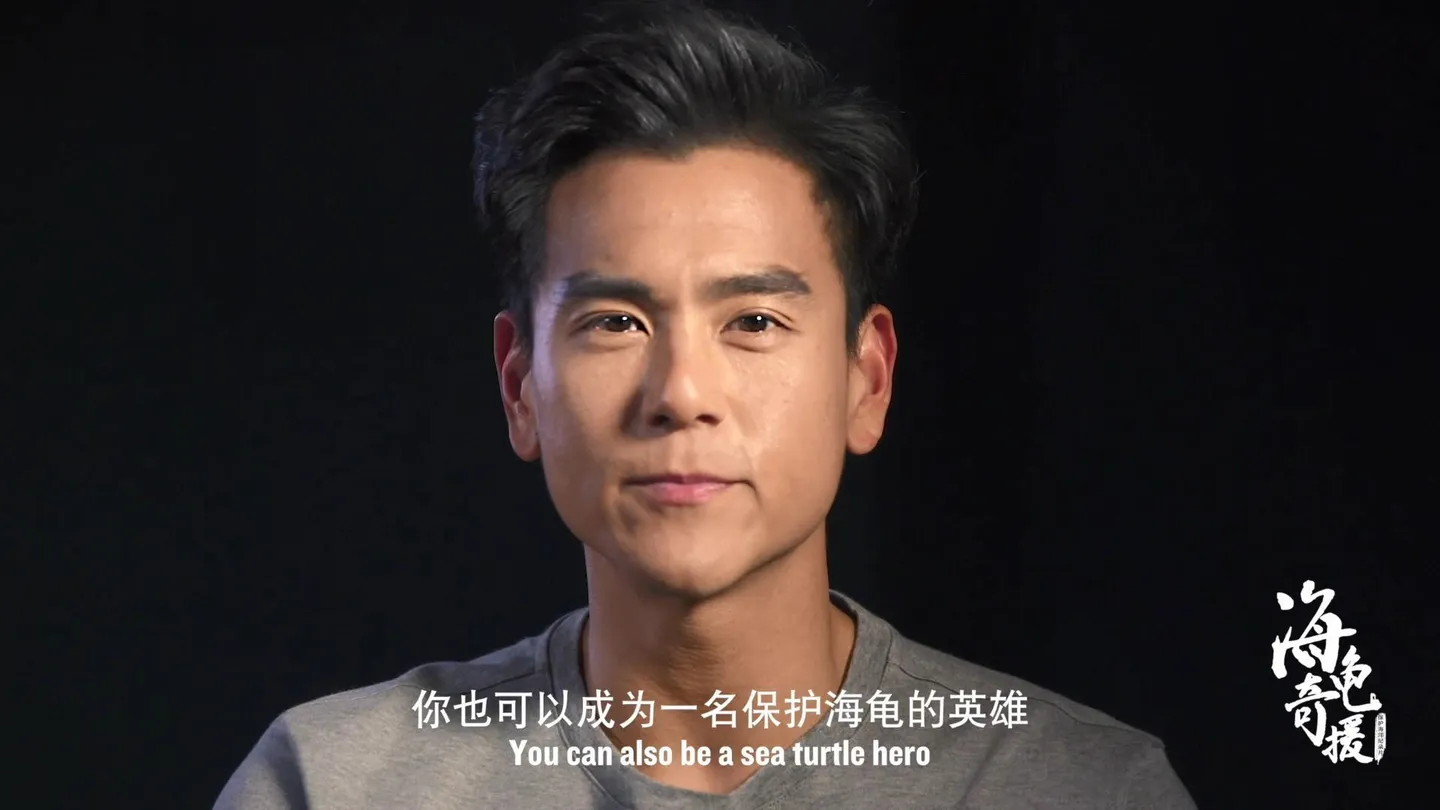
Turtle Rescue
Further reading:
Frequently Asked Questions
How is a BlueTrend dive trip different from an unknown, no-name dive group?
Choosing us means full peace-of-mind protection and a smooth experience from start to finish. Every trip we run holds to three things.
First, full legal protection and a professional dive leader: we strictly follow Taiwan's travel regulations and provide complete travel-agency liability insurance, travel insurance, trip-inconvenience insurance and dive insurance. Every group is accompanied by a certified, foreign-language dive leader who joins you on both the dives and the land itinerary, liaising seamlessly with local dive shops and operators on your behalf to keep things running smoothly — the person our travellers trust most.
Second, fully licensed with secure payments: every payment goes into a licensed travel agency's account, with multiple safe payment channels (bank transfer, credit card and more) and a legal collect-and-remit receipt, so every transaction is open, transparent and protected, avoiding the fraud and dispute risks of transferring money privately to an individual.
Third, hand-picked quality we vet in person: every trip, dive site and partner shop is scouted on the ground by our own team, from the guides' professionalism and safety standards to the food, lodging, environment and service details on land, all vetted by us so you don't get caught out.
I want to sign up for a dive trip. Are there certification-level or logged-dive requirements?
Each dive site is different, so the entry bar varies. 'Bali Tulamben', for instance, is relatively beginner-friendly. 'Malapascua in the Philippines' is also beginner-friendly, but since thresher sharks tend to cruise between 20 and 30 metres, we recommend AOW certification with 20+ logged dives to enjoy this trip comfortably. For 'the Maldives' or 'Palau', we suggest AOW with 50+ logged dives for a more relaxed experience. If you're not sure whether your experience fits the trip you want, message us and our dive editors will assess it and help you find the trip you'll feel safest on.
Can I join if I'm signing up alone? How are rooms arranged?
Plenty of our travellers sign up solo! For rooms and beds, we prioritise pairing you with a same-gender traveller, and if you'd rather have your own space you can pay the difference to upgrade to a single room. For the diving, our professional leader will pair you with a suitable buddy, and with the happy vibe on our trips you'll quickly make a great group of dive friends. Many people sign up alone, make new friends, and end up organising the next trip together!
Does the trip fee include dive insurance, gear rental, taxes and instructor tips?
It depends on the trip, the destination's regulations and the local operators. Every BlueTrend dive trip has a detailed web page with a clear 'included / not included' list, transparent and with no hidden charges. All payments are collected by a licensed travel agency, with a standard-form contract for your protection.
I'm a new diver / haven't dived in a long time — will I fall behind the group?
Before you complete your booking, our team assesses a suitable trip based on your certification level and experience. Before departure, we strongly recommend taking time to refresh in Taiwan with an instructor, or a fun dive to get your feel back. On the trip itself, our professional dive leader groups and pairs everyone by experience, keeps a close eye underwater on travellers who need extra care, and steps in to help right away.
Will the photos and videos taken during the trip be shared with us?
During the dives, 'safety' is always the leader's top priority, so whenever it's suitable and safe the leader will capture great shots and record the best moments. During or after the trip, we compile a cloud album for all travellers to download, so you go home loaded with memories!
Besides your scheduled trips, can you arrange a private group charter or independent travel for me and my friends?
Absolutely! Besides group trips, we also arrange private group charters and independent travel. We can communicate, enquire and coordinate services with local operators based on your needs, saving you time and effort and taking the language barrier off your plate, to tailor the smoothest, most reassuring dive trip just for you. Contact our LINE support and our editors will arrange it for you!