Contents(4)
The Editor has heard from many friends that scuba diving in Okinawa is boring — you squeeze into a cave with crowds of scuba divers and snorkelers, and the whole experience is pretty miserable. It's a lot like heading to a single tourist hotspot during peak season: not only is the quality of the trip poor, but you can't really soak up the local culture either. In early 2020, the Editor was invited by mic21 Naha — the world's largest dive shop — to visit the waters of the Kerama Islands off Okinawa during the quieter, mid-winter month of January. Let the Editor take you along for the ride through words and photos!
Also in this series:
If you're not yet familiar with diving in Okinawa, we recommend browsing the many Okinawa dive travel articles on the BlueTrend website first to get a comprehensive overview. Don't forget there are plenty of other articles to explore — make good use of the search function!
Okinawa diving related articles:
An Unfiltered Take on Diving in the Kerama Islands, Okinawa:
Before we get into the details, let's share some quick impressions from this trip along with feedback from friends who have dived in Okinawa — hopefully useful as a reference when planning your own Okinawa diving itinerary. Okinawa is very close to Taiwan, and budget airlines make the flight even more affordable. Honestly, the total cost of a trip to Okinawa — in terms of both money and time — is comparable to or even cheaper than taking the high-speed rail from Taipei to Kaohsiung and then a bus to Kenting. No wonder so many people feel that Okinawa beats Kenting as a destination.
What's more, the overall quality of travel in Okinawa is more comfortable than many places in Taiwan. The general cost of living is higher, of course, but if it's within your budget, it offers that "overseas feeling" while delivering a noticeably elevated travel experience — which is probably why the number of Taiwanese visitors to Okinawa keeps climbing year after year.
That said, this comparison is purely between Taiwan and Okinawa, without factoring in diving and Southeast Asia. While Okinawa's main island and outer islands do occasionally offer big-animal encounters (setting aside the Hammerhead Sharks at Yonaguni and the Manta rays at Ishigaki for now), it simply can't match Southeast Asia's near-guaranteed sightings. And the ultra-affordable diving costs and five-star service culture in Southeast Asia are hard to beat. So all things considered, the right mindset for diving in Okinawa shouldn't be the same as Southeast Asia, where diving is the sole purpose of the trip. Instead, it's better to come to Okinawa to relax, and slot in some diving along the way. On a five-day Okinawa trip, dedicate one or two days to diving, and spend the rest exploring Okinawa's land-based attractions — that makes for a much more well-rounded itinerary.


Let's Go Diving in the Kerama Islands, Okinawa!
The Kerama Islands lie roughly a 40-minute boat ride off the western coast of Okinawa's main island. Most operators depart around 8:00 a.m., with two tanks dived in the morning, a lunch break, and then a third tank in the afternoon, returning to the main island around 3–4 p.m. Keep this in mind when arranging transport and activities before and after your dive day. The mic21 shop is located in central Naha — if you have a rental car, you can park at a designated parking facility and walk to the meeting point. If you don't have a car, you can arrange a hotel pickup with the shop in advance.
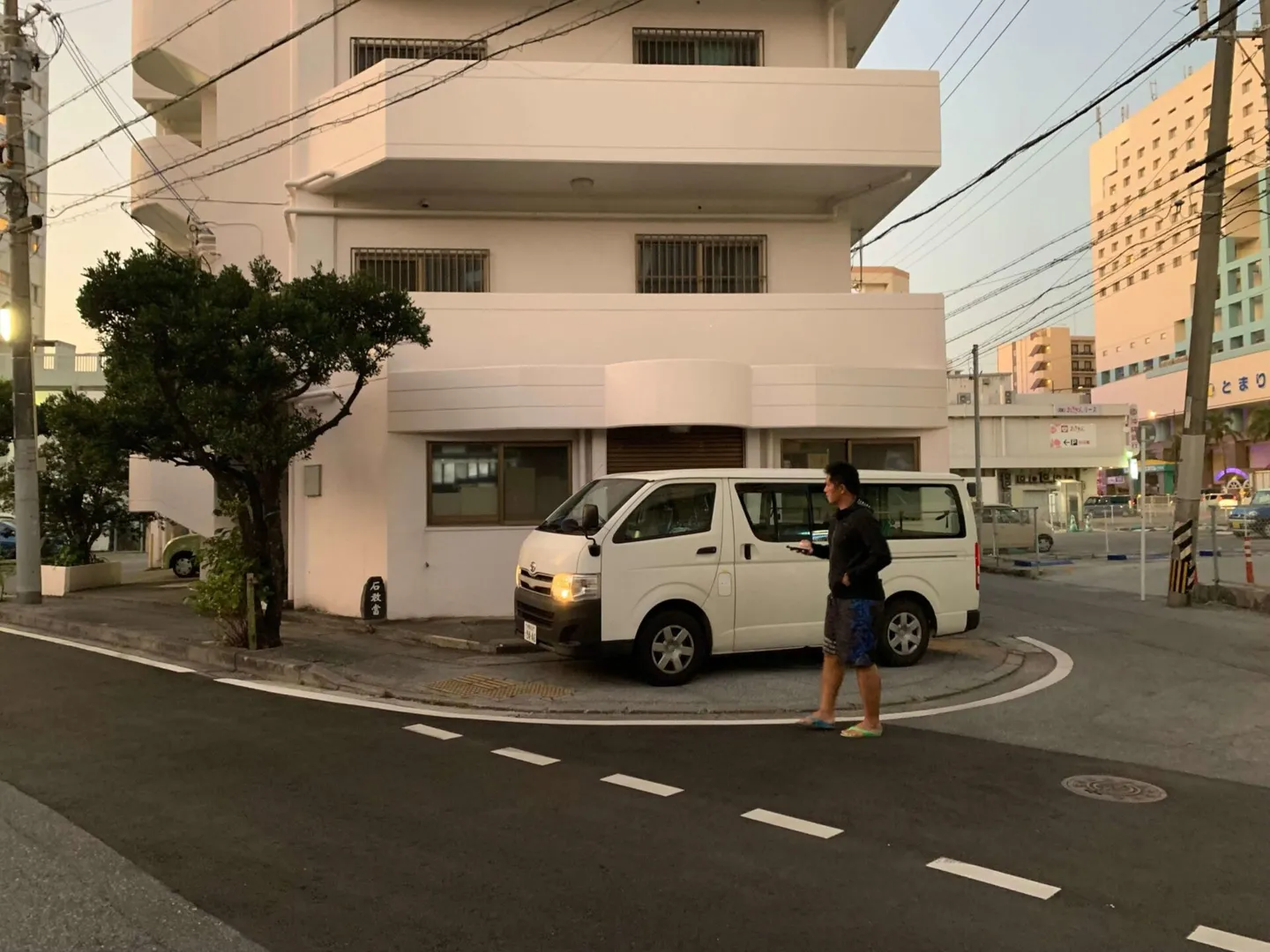
Meeting up outside mic21 Okinawa at 7:30 in the morning
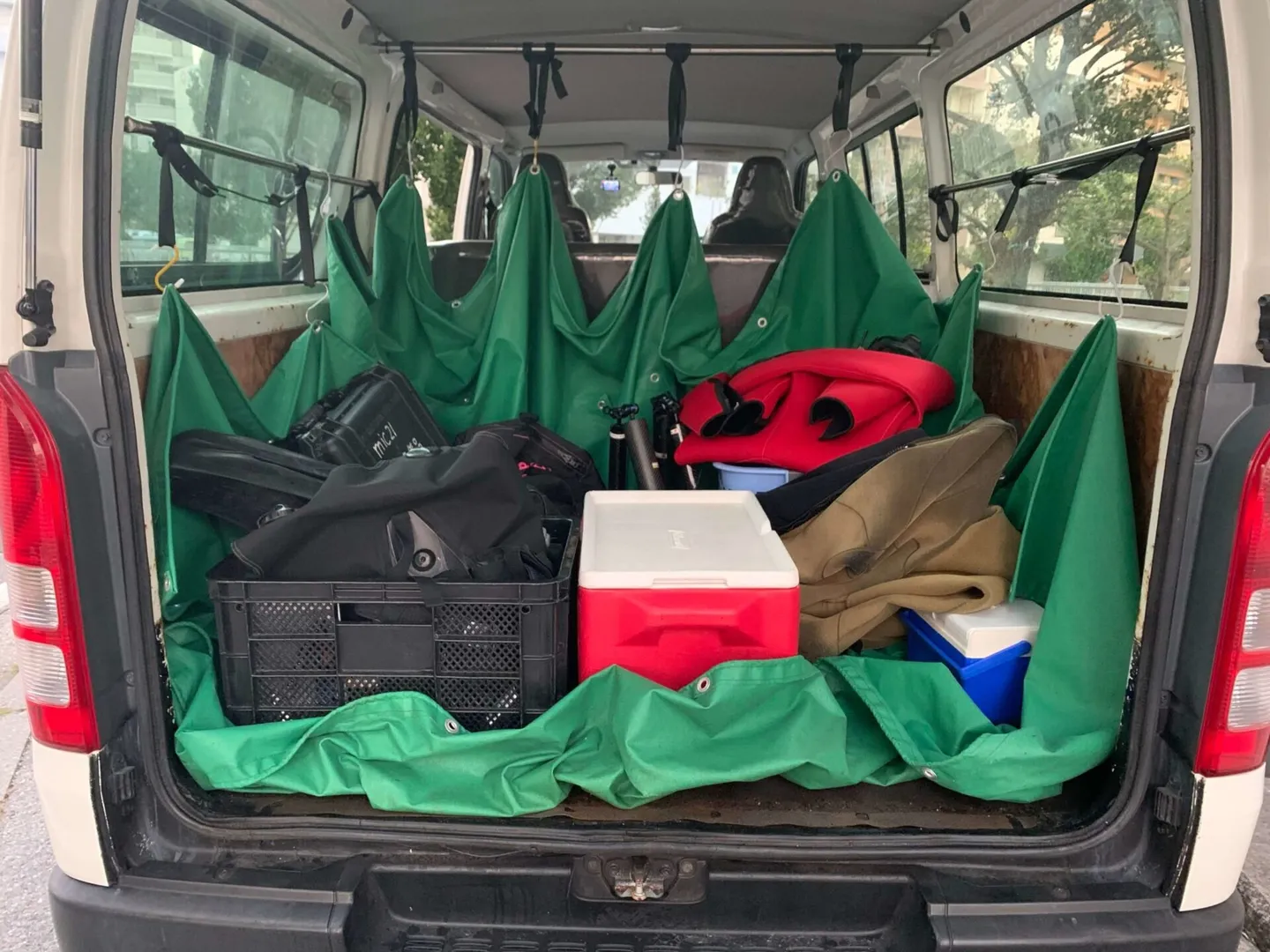
Japanese shop vehicles are immaculate — Taiwanese dive shops might want to consider fitting waterproof canvas liners too
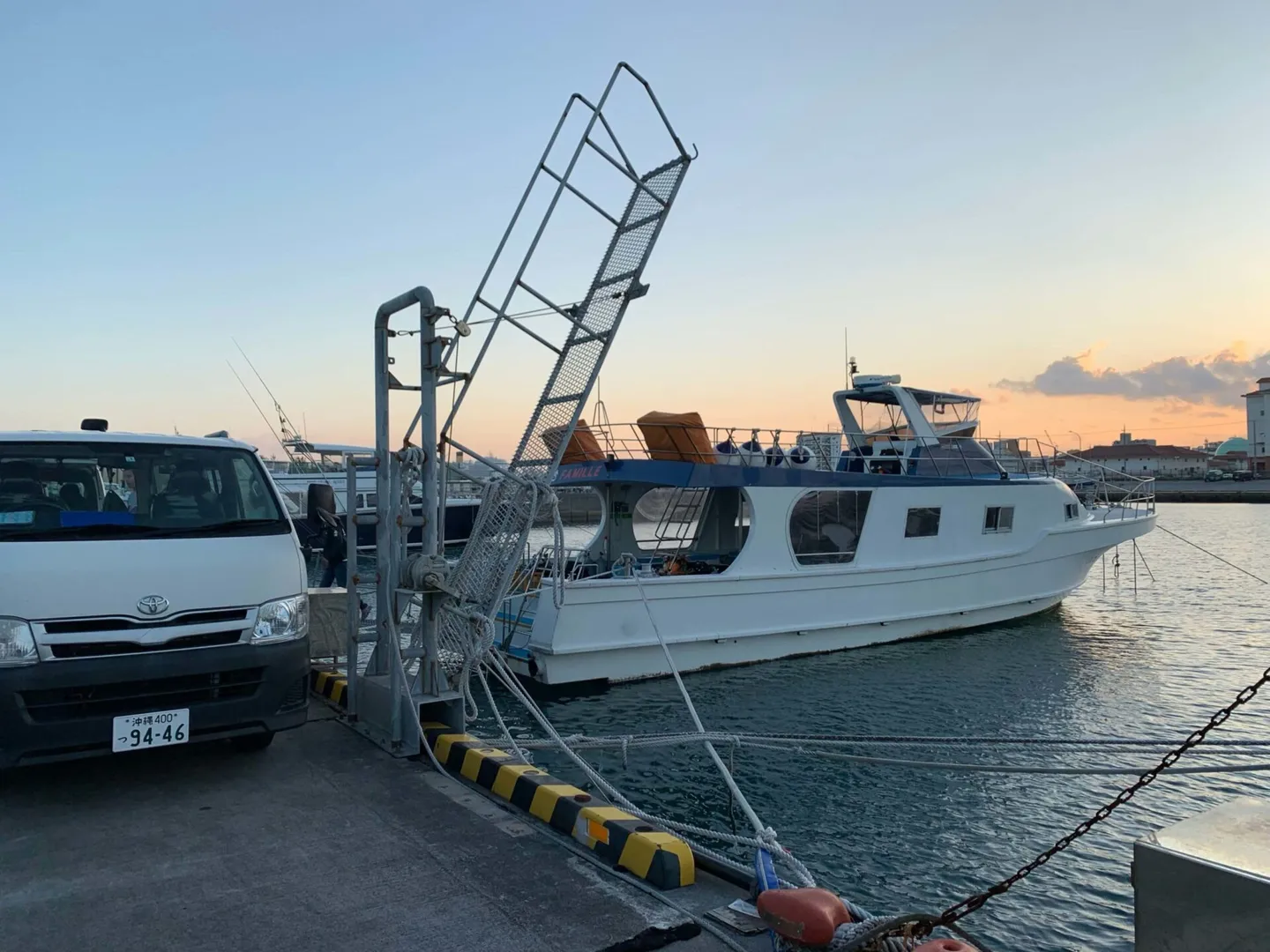
The embarkation port is about a 20-minute drive from the dive shop
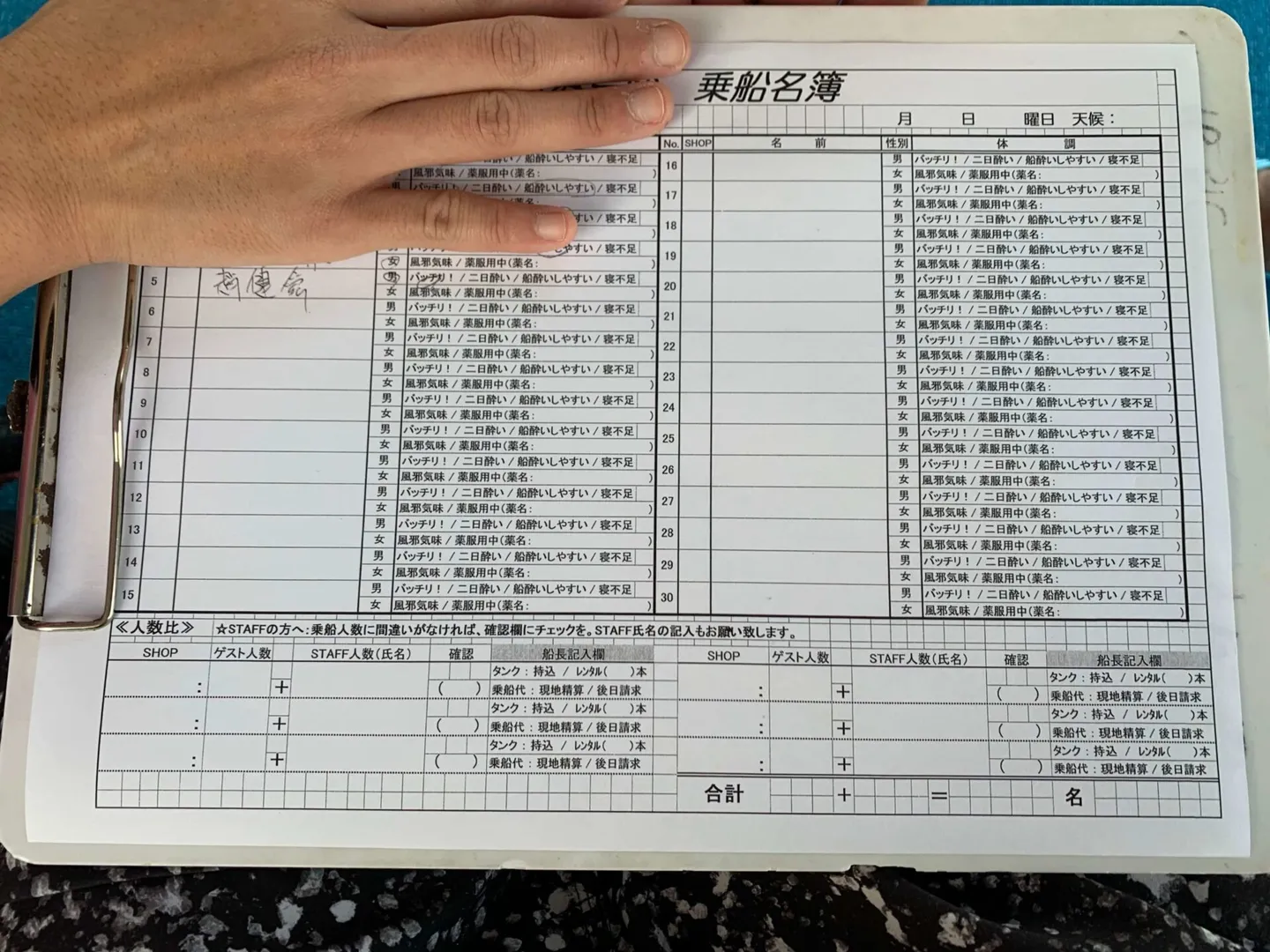
Is this the standard customs form you fill out before going out to sea in Taiwan? Nope — that kind of maritime registration culture seems unique to Taiwan. This form is more of a personal health check
Diving in Taiwan vs. Japan — the Differences!
With that, we were ready to head out to sea. Here are some small but notable differences between diving culture in Taiwan and Japan that we observed on this trip — worth keeping in mind.
-
Be on time: Japanese punctuality is legendary. To avoid causing inconvenience to everyone else, always respect the meeting time!
-
In Taiwan, you need to fill out a customs/departure form before going out to sea, and at some ports you even have to check in at the coast guard station (a formality?). In Japan, the paperwork is more of a self-assessment health questionnaire.
-
On the boat, the dive instructors and dive guides have no seats! It may be that during peak season, the limited seats are reserved for guests — but over time it has become the norm for all guides and instructors to stand throughout the trip.
-
Some boats in Okinawa don't use elastic cords to secure scuba tanks the way Taiwanese boats do, so pay extra attention when setting up your gear.
-
Okinawa boats don't drop anchor, so the boat crew or dive guides need to freedive down to tie off the mooring line.
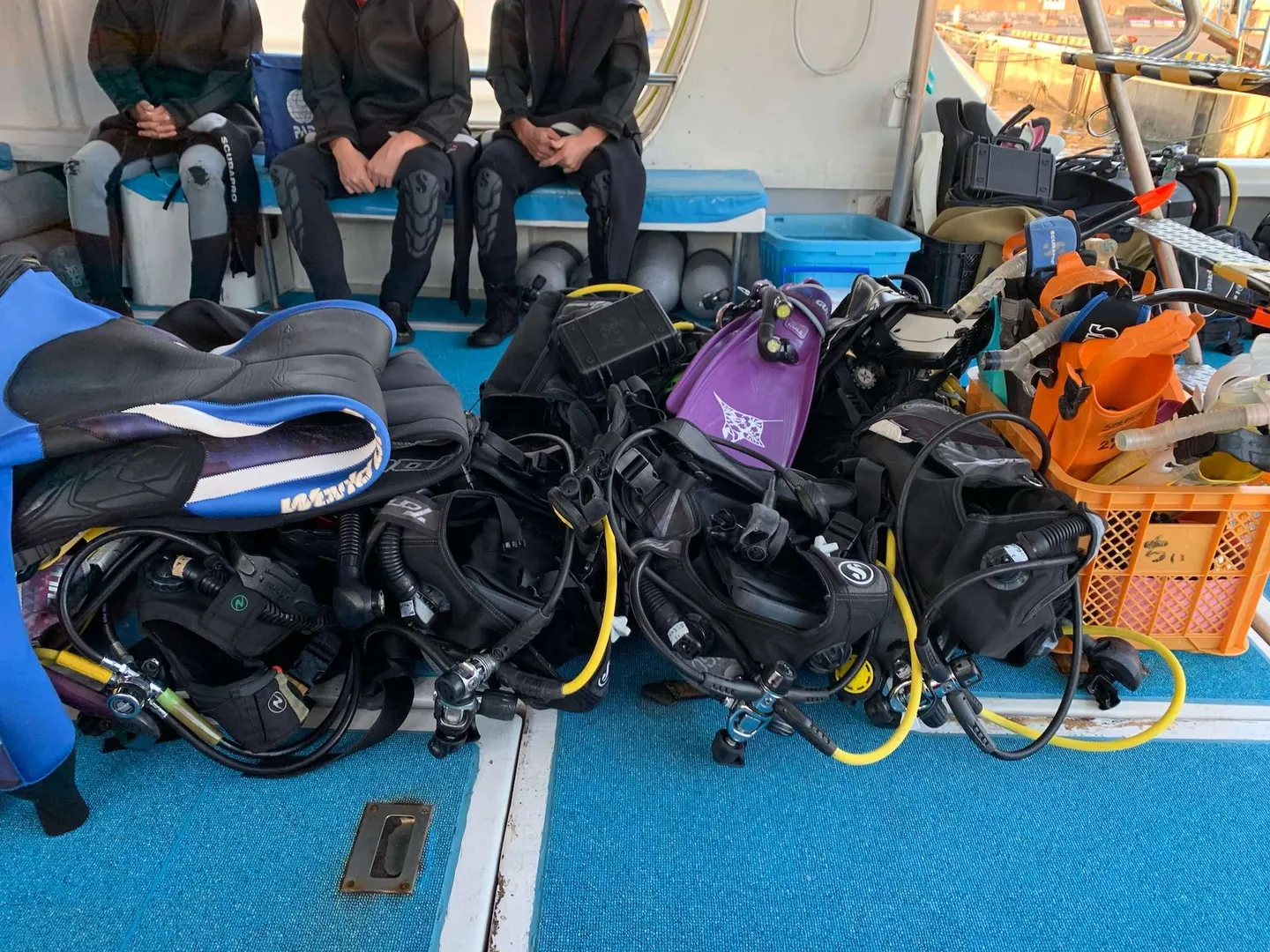
Gear stowed in the middle of the boat to keep the walkways clear
Diving in the Kerama Waters
A friend who sails told us that the Kerama area is ideal for winter sailing. The waters are enclosed by a ring of islands, so although the crossing from the Okinawa main island can be a little bumpy thanks to the northeast monsoon, the moment you enter the inner waters it becomes as calm as a lake! In summer the crossing is even smoother, so those prone to seasickness can breathe easy.
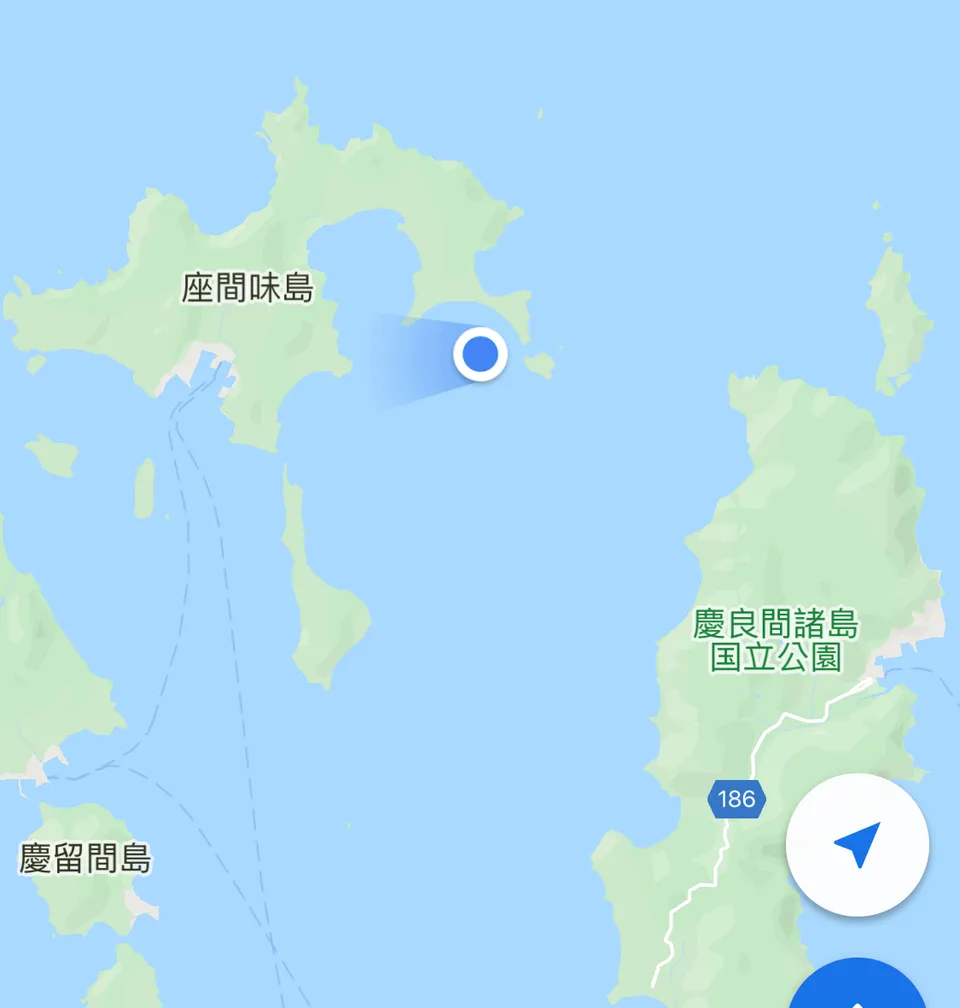
Diving among a cluster of islands means almost no swell
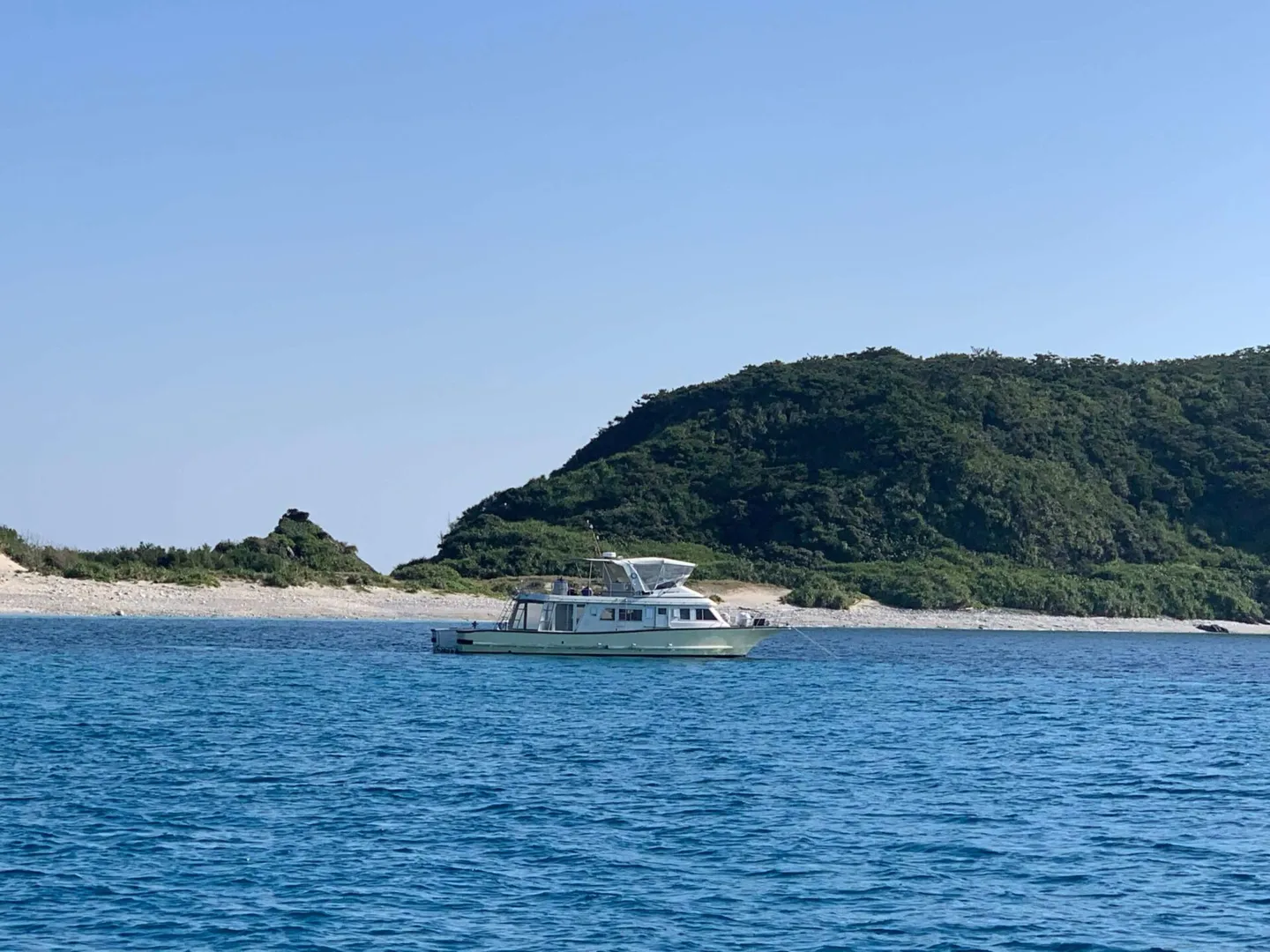
Dive site: Toma 2
We dived three sites on this trip: Toma, Toma 2, and Turtle Paradise. Because this was something of a joint trip — with some Open Water certification students on board — the sites chosen were relatively easy. In summary, these three sites share one outstanding feature: 50-metre crystal-clear visibility. Thanks to the Kuroshio Current flowing nearby, the waters around the Kerama Islands are exceptionally clear, and even in winter the water temperature holds at around 21–23°C — 3–4°C warmer than the Northeast Coast of Taiwan. However, marine life density at these three sites is not particularly high; they are better suited for beginner training or macro photography. That said, the combination of flat conditions, exceptional visibility, and minimal current makes the Editor think these sites would actually be excellent for freediving!
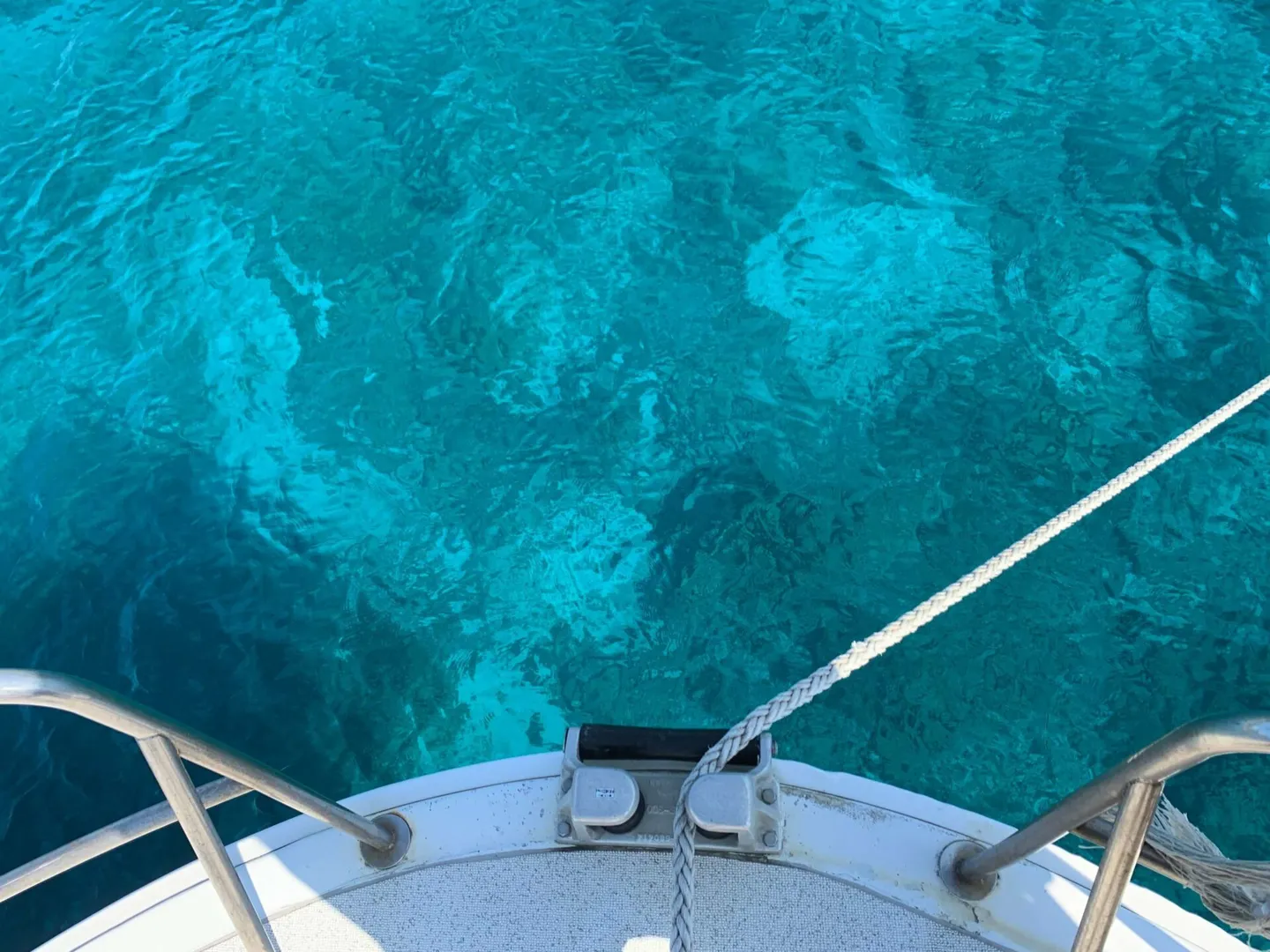
50-metre ultra-clear visibility — the legendary Kerama Blue
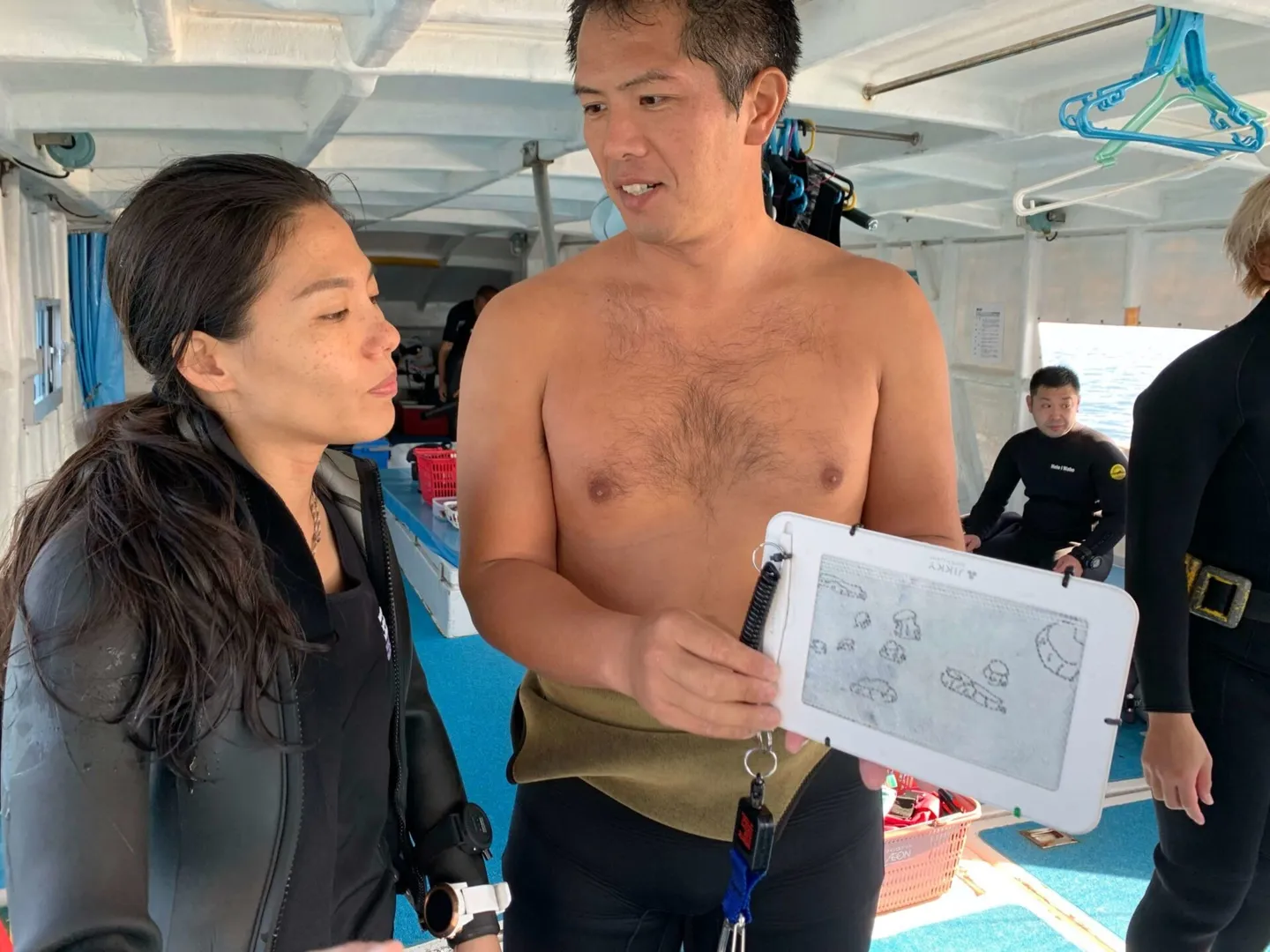
Many thanks to Olive, mic21's Taiwan representative, for interpreting the dive briefing
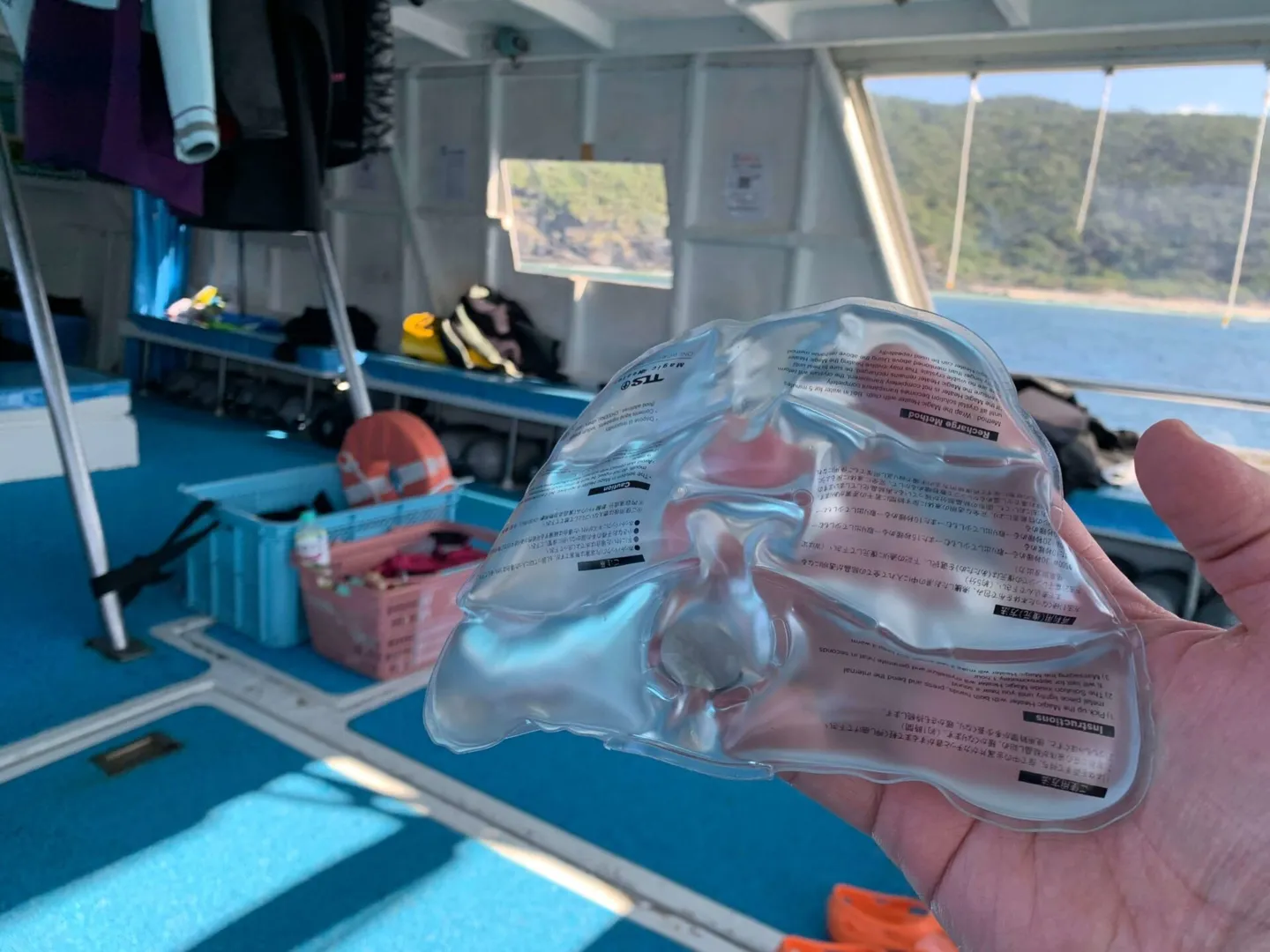
The secret weapon for cool water — one-press heated vest
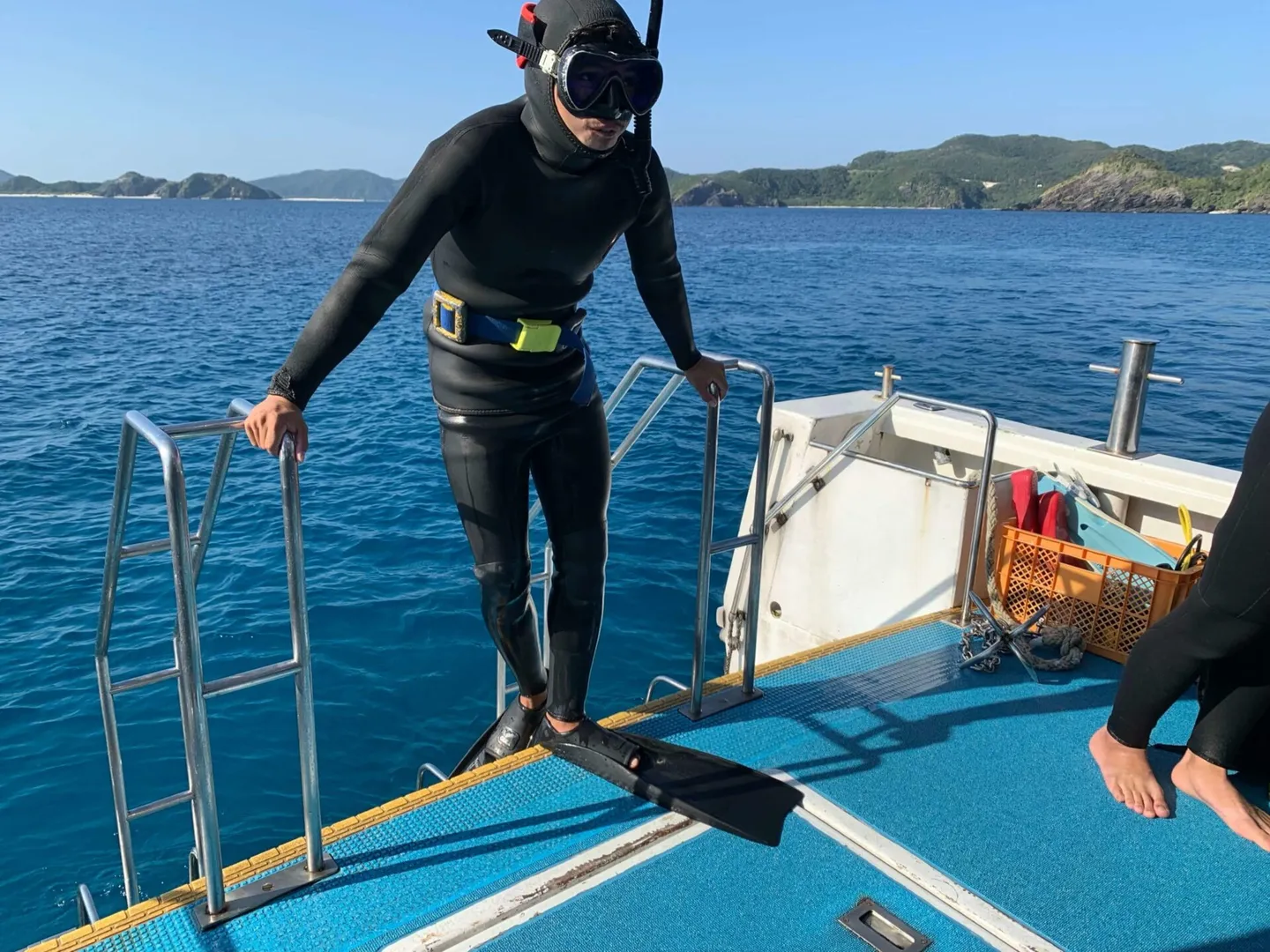
The dive guide gets ready to freedive down and tie off the mooring line
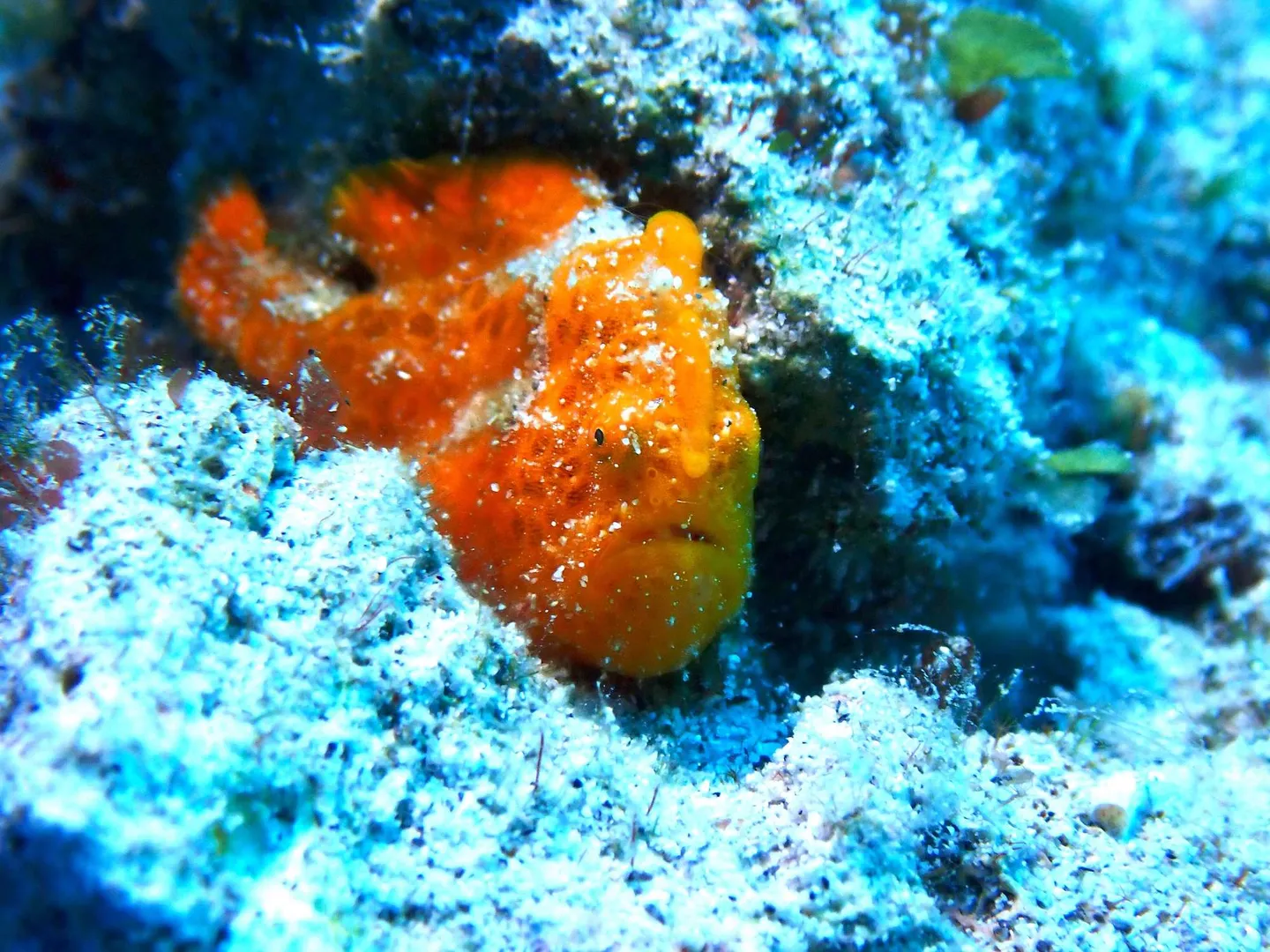
A gentle dive site with plenty of macro life. Site: Toma Photo: Kentaro
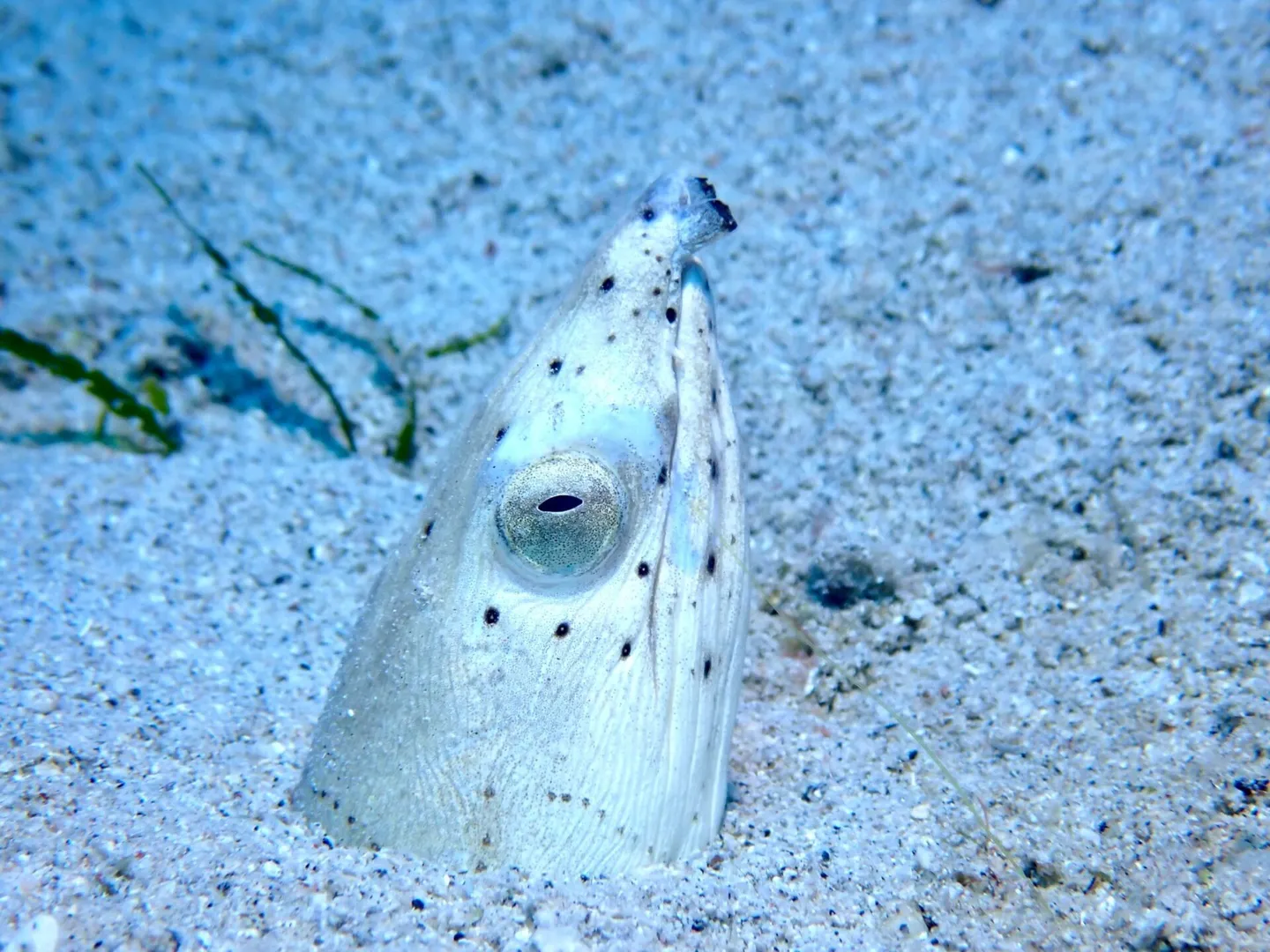
The moray eel's expression is absolutely priceless. Site: Toma Photo: Kentaro
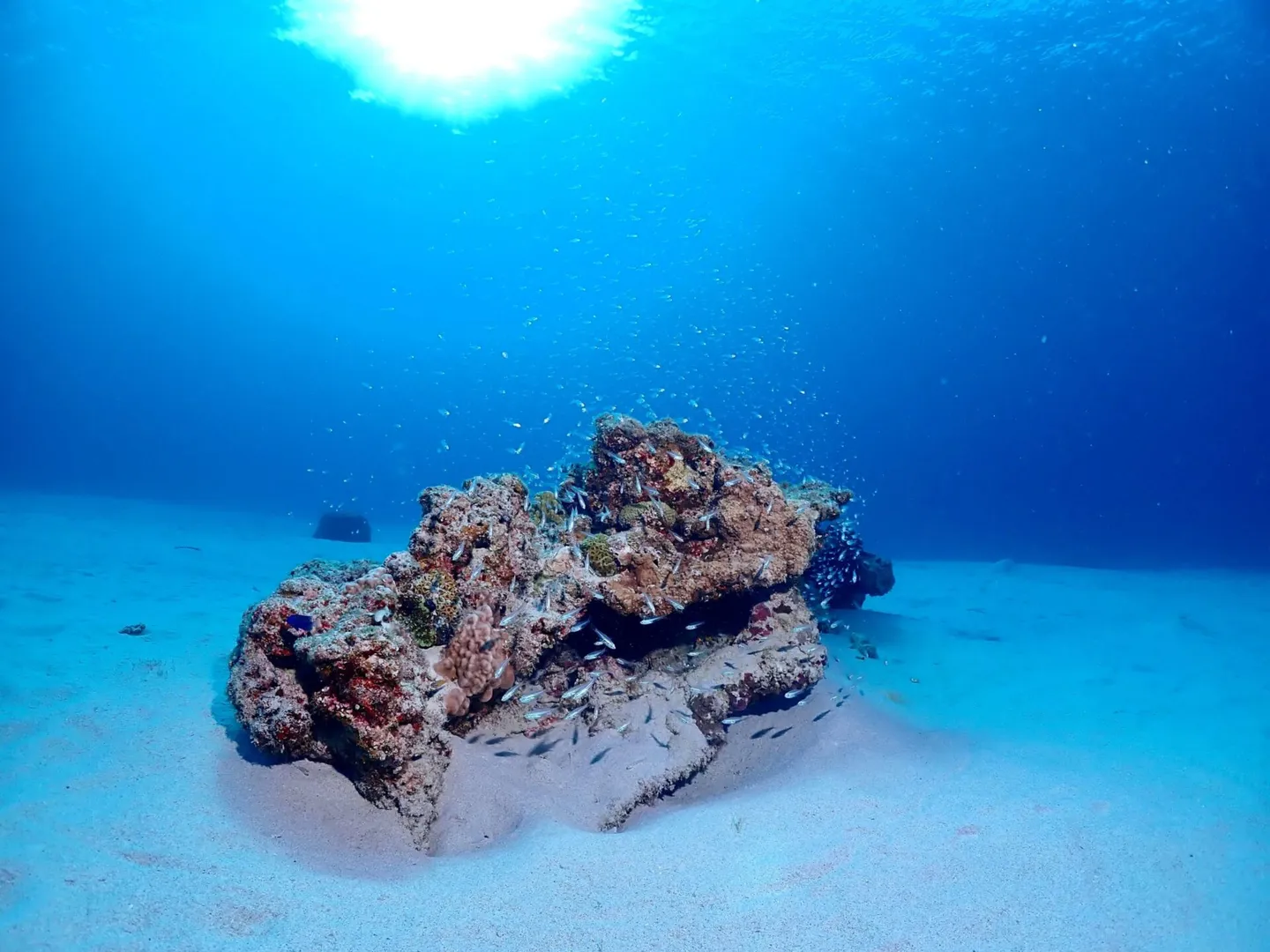
Glassfish in crystal-clear visibility. Site: Toma Photo: Kentaro
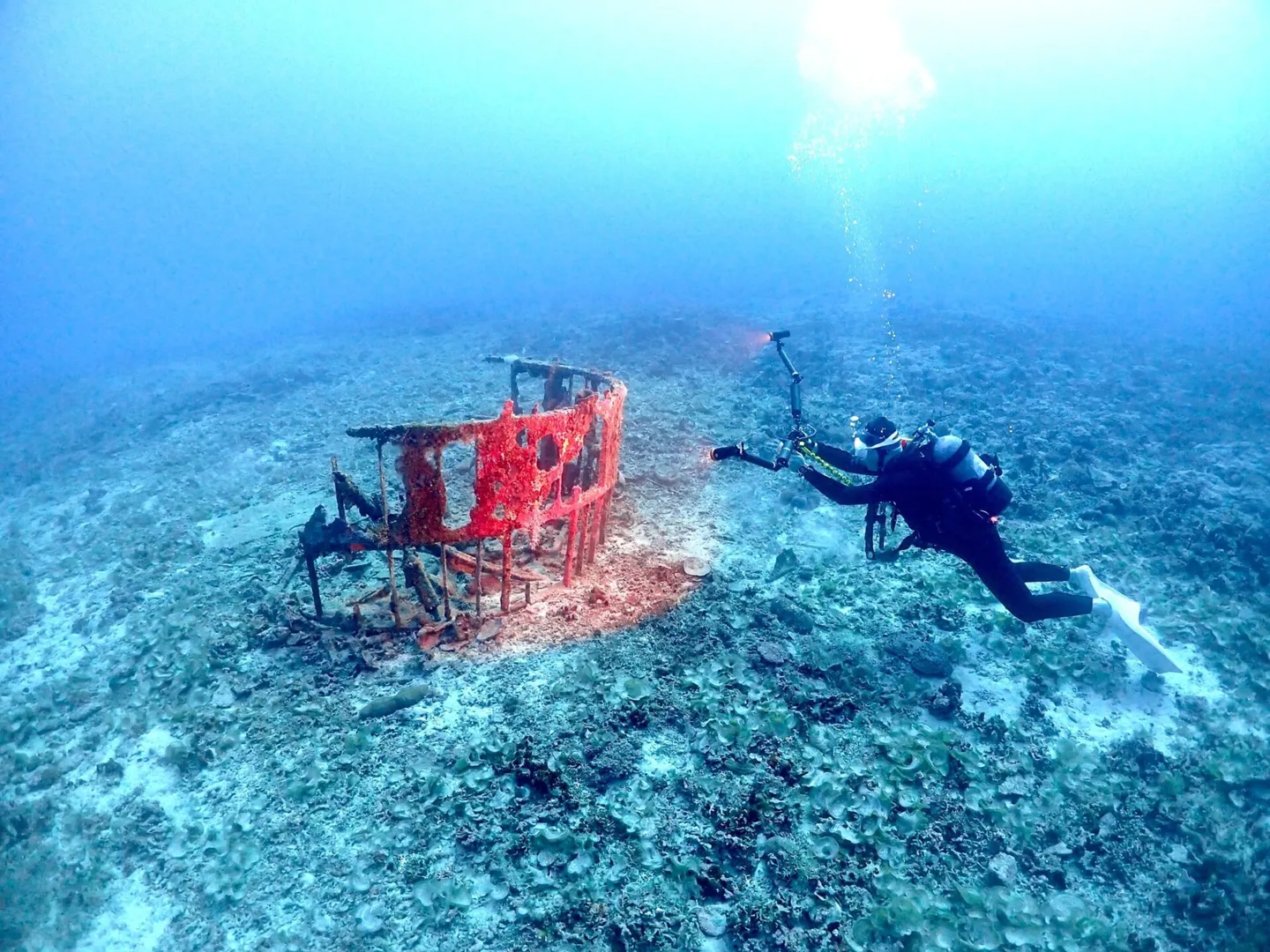
Toma 2 features an aircraft wreck used as a film set. Site: Toma 2 Photo: Kentaro
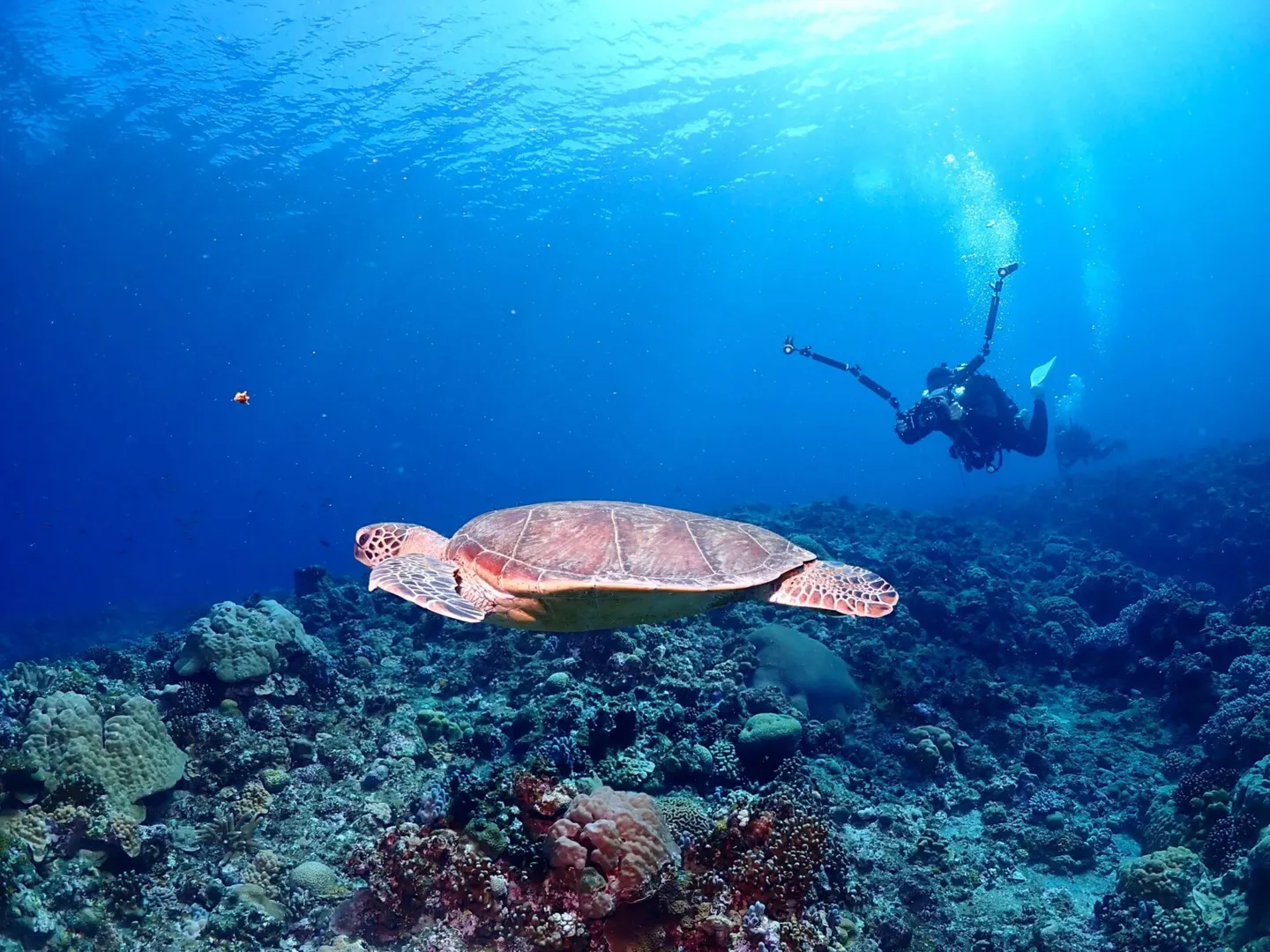
Spotting sea turtles at Turtle Paradise is, well, only natural. Site: Turtle Paradise Photo: Kentaro
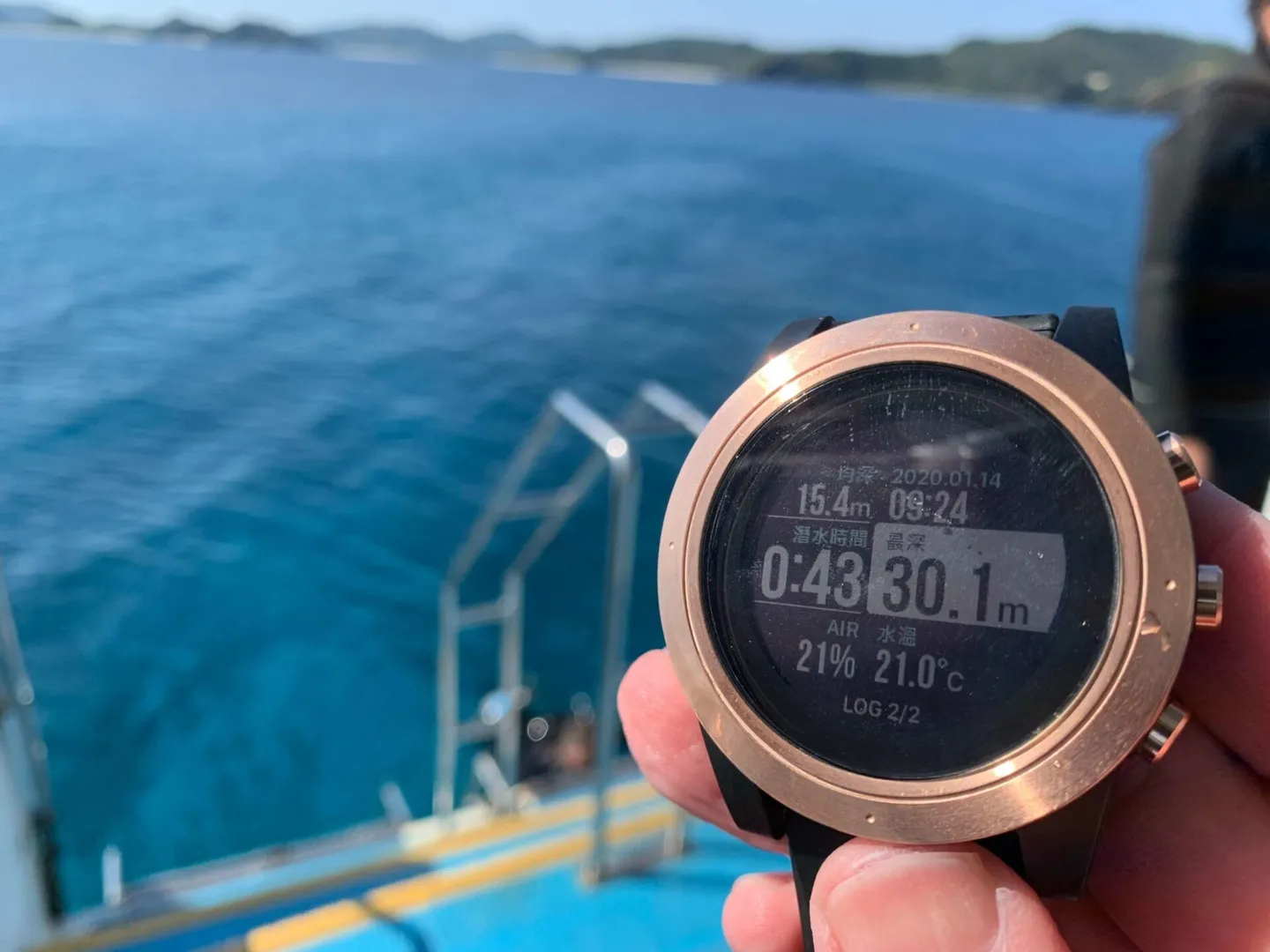
Bright sunshine above, but the water temperature is still only 21–22°C
One important note: mic21's standard dive trips do not include lunch. We recommend bringing instant noodles on board, though if your group is five or more, mic21 can also help arrange bento boxes. If you're joining a different dive operator, be sure to check in advance so you don't end up hungry out at sea! There is one Japanese diving ritual that they take very seriously: the post-dive debrief. This isn't about critiquing anyone's dive technique — it's a chance for everyone to share what they saw and experienced that day, helping the whole group learn more about the ocean around them. Perhaps Taiwanese dive shops could strengthen this post-dive ritual too, as a way of elevating the overall diving experience!
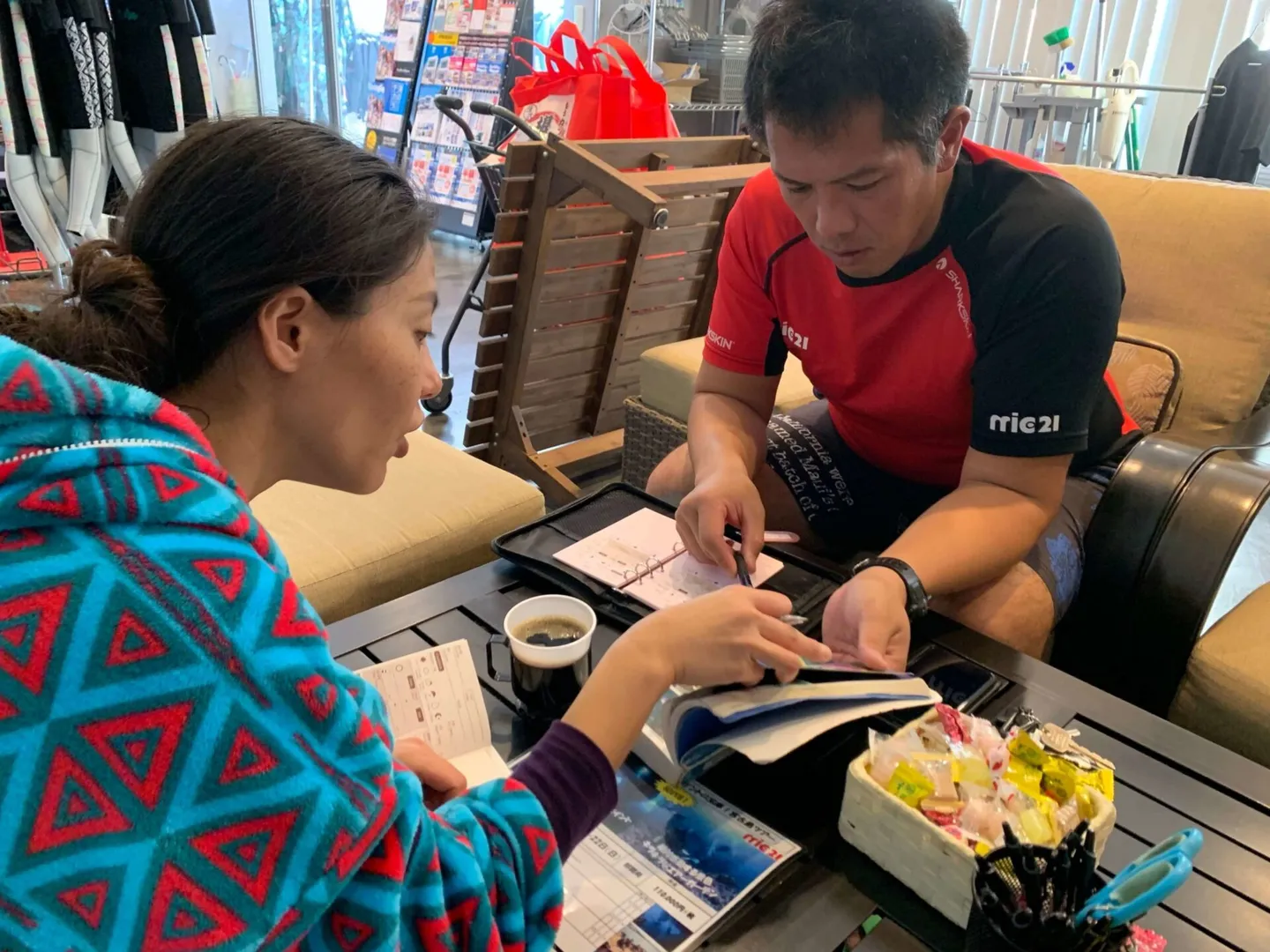
The post-dive debrief in session
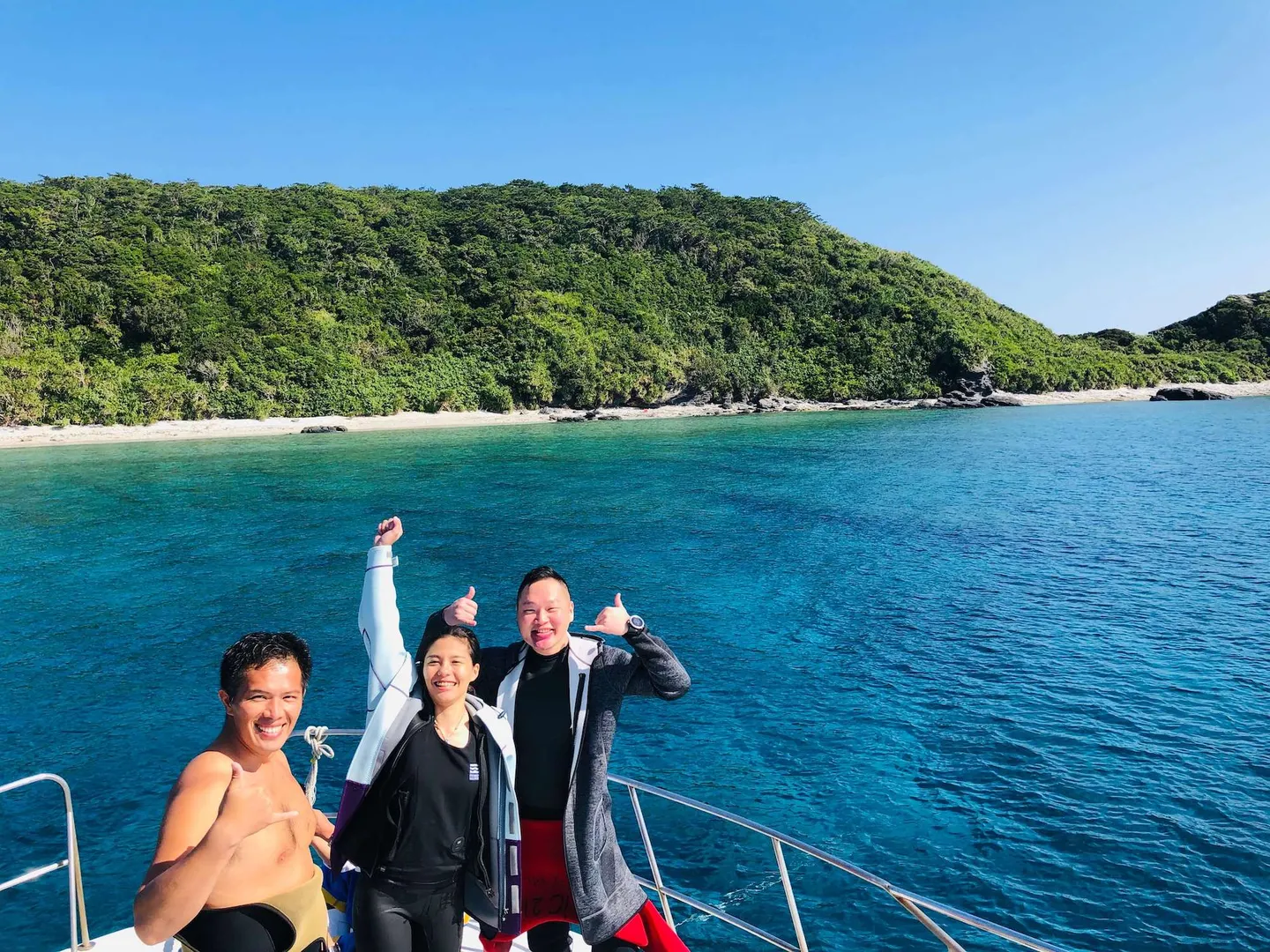
Come dive with Olive, mic21's Taiwan representative — she'd love to see you!
Starting in March, Olive — mic21 Naha's Taiwan representative — will be launching a series of dedicated Okinawa diving packages, including 2-day/1-night, 3-day/2-night, and 4-day/3-night options, with a minimum of just five participants to confirm a departure. Your very own tailored Okinawa diving trip is no longer a dream! Reach out to Olive or follow her on IG: diver_olive.
Related links:
Frequently Asked Questions
How is a BlueTrend dive trip different from an unknown, no-name dive group?
Choosing us means full peace-of-mind protection and a smooth experience from start to finish. Every trip we run holds to three things.
First, full legal protection and a professional dive leader: we strictly follow Taiwan's travel regulations and provide complete travel-agency liability insurance, travel insurance, trip-inconvenience insurance and dive insurance. Every group is accompanied by a certified, foreign-language dive leader who joins you on both the dives and the land itinerary, liaising seamlessly with local dive shops and operators on your behalf to keep things running smoothly — the person our travellers trust most.
Second, fully licensed with secure payments: every payment goes into a licensed travel agency's account, with multiple safe payment channels (bank transfer, credit card and more) and a legal collect-and-remit receipt, so every transaction is open, transparent and protected, avoiding the fraud and dispute risks of transferring money privately to an individual.
Third, hand-picked quality we vet in person: every trip, dive site and partner shop is scouted on the ground by our own team, from the guides' professionalism and safety standards to the food, lodging, environment and service details on land, all vetted by us so you don't get caught out.
I want to sign up for a dive trip. Are there certification-level or logged-dive requirements?
Each dive site is different, so the entry bar varies. 'Bali Tulamben', for instance, is relatively beginner-friendly. 'Malapascua in the Philippines' is also beginner-friendly, but since thresher sharks tend to cruise between 20 and 30 metres, we recommend AOW certification with 20+ logged dives to enjoy this trip comfortably. For 'the Maldives' or 'Palau', we suggest AOW with 50+ logged dives for a more relaxed experience. If you're not sure whether your experience fits the trip you want, message us and our dive editors will assess it and help you find the trip you'll feel safest on.
Can I join if I'm signing up alone? How are rooms arranged?
Plenty of our travellers sign up solo! For rooms and beds, we prioritise pairing you with a same-gender traveller, and if you'd rather have your own space you can pay the difference to upgrade to a single room. For the diving, our professional leader will pair you with a suitable buddy, and with the happy vibe on our trips you'll quickly make a great group of dive friends. Many people sign up alone, make new friends, and end up organising the next trip together!
Does the trip fee include dive insurance, gear rental, taxes and instructor tips?
It depends on the trip, the destination's regulations and the local operators. Every BlueTrend dive trip has a detailed web page with a clear 'included / not included' list, transparent and with no hidden charges. All payments are collected by a licensed travel agency, with a standard-form contract for your protection.
I'm a new diver / haven't dived in a long time — will I fall behind the group?
Before you complete your booking, our team assesses a suitable trip based on your certification level and experience. Before departure, we strongly recommend taking time to refresh in Taiwan with an instructor, or a fun dive to get your feel back. On the trip itself, our professional dive leader groups and pairs everyone by experience, keeps a close eye underwater on travellers who need extra care, and steps in to help right away.
Will the photos and videos taken during the trip be shared with us?
During the dives, 'safety' is always the leader's top priority, so whenever it's suitable and safe the leader will capture great shots and record the best moments. During or after the trip, we compile a cloud album for all travellers to download, so you go home loaded with memories!
Besides your scheduled trips, can you arrange a private group charter or independent travel for me and my friends?
Absolutely! Besides group trips, we also arrange private group charters and independent travel. We can communicate, enquire and coordinate services with local operators based on your needs, saving you time and effort and taking the language barrier off your plate, to tailor the smoothest, most reassuring dive trip just for you. Contact our LINE support and our editors will arrange it for you!