Contents(3)
On a calm and sunny afternoon, a 76-foot luxury yacht slowly glides into Kaohsiung Harbor. On the distant skyline stand the Kaohsiung 85 Sky Tower and rows of high-rise buildings; the middle ground is filled with the modern Kaohsiung Exhibition Center. Following the yacht as it gently docks, you're greeted by a well-organized marina with full berthing facilities. A Lounge Bar on the waterfront plays easy-listening music while guests in cocktail attire chat and laugh at the pier's edge. The scene feels like Sydney's Darling Harbour — until a bold industrial-style sign reading "Chia Hsin Pier 22 Yacht Marina" snaps you back to the realization that you are living the comfortable yacht life right here in Kaohsiung.
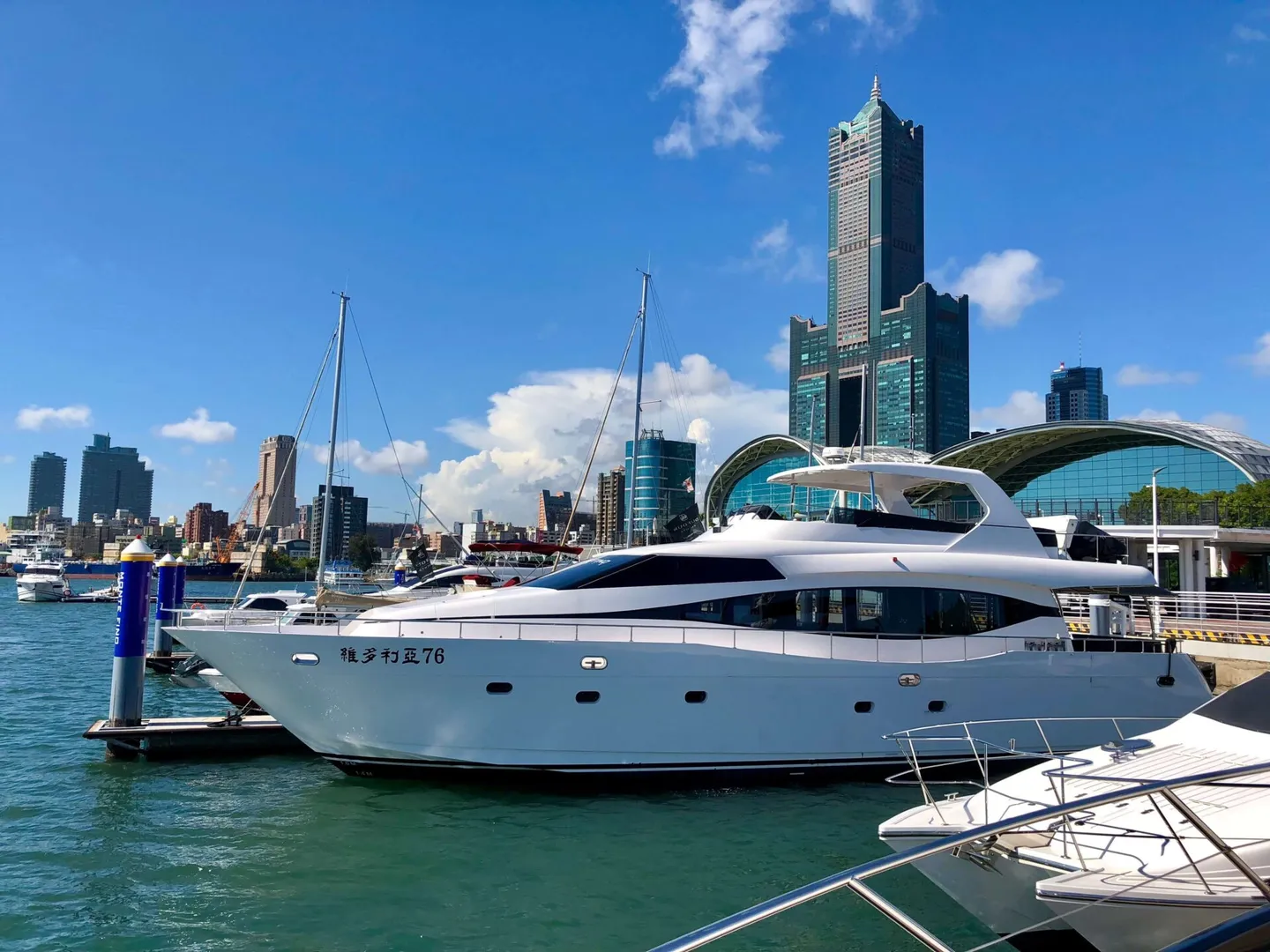
It's hard to believe this view is in Kaohsiung, Taiwan
Taiwan's First Liveaboard — Monte Fino Yachts
Monte Fino Yachts, now ranked among the world's top five luxury yacht manufacturers, has taken a bold leap beyond its stable core business to build a lavish 76-foot liveaboard yacht and set its home port in Kaohsiung — launching a liveaboard program uniquely Taiwanese. Facing Taiwan's unpredictable weather and its notoriously bureaucratic sea-access culture, Howard Gong (referred to as Howard below), who also serves as chairman of the Taiwan Yacht Industry Association, sat down with us to tell the story behind his stubborn dream of a Taiwanese liveaboard.
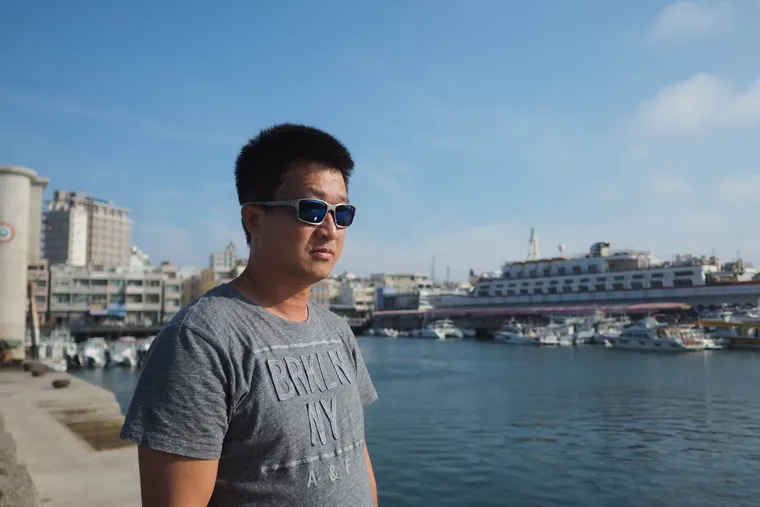
Howard grew up in a fishing family. His elders were all involved in the fishing trade — at one point the family owned as many as five fishing vessels along with various fish-farming operations. Tagging along to the fish market to sell the catch was a perfectly ordinary part of childhood. He recalls that, before global fishery resources were depleted, the fishing industry was genuinely profitable. Then, on the eve of a typhoon, three of the family's boats went out to sea; only his father's vessel returned safely. After that accident, the family decided to sell all their boats and pivot. The company initially traded in timber, with a pond on the property used as a log storage basin. On a business partner's advice, they pivoted again into yacht manufacturing, and that same pond became a yacht test basin — and so, step by step, the company transformed into a world-class luxury yacht builder.
Howard studied environmental engineering and worked briefly in that field after graduating. But as the older generation gradually stepped back, he was persuaded by his father to return and take over the business sixteen years ago, renewing his connection to the sea. Selling yachts required Howard to understand the activities buyers enjoyed on board — sailing, fishing, and the like — and that curiosity led him to take up scuba diving five years ago.
An avid photographer, Howard had long captured stunning mountain scenery during hikes. Once he learned to dive, he began bringing his camera underwater, believing that photography was the best way to share the beauty of the ocean with more people. But was there no other way to let more people feel that beauty firsthand? And so, to everyone's surprise, his Taiwanese liveaboard dream quietly took shape.
Unlike Thailand or the Maldives, Taiwan sits in a monsoon belt where winds alternate between summer and winter, and typhoons frequently lash the island in warmer months — conditions that are far from ideal for the high-cost liveaboard business. The depletion of Taiwan's coastal fisheries is also an undeniable fact, making it a hard sell to convince divers to choose a local liveaboard over the spectacular underwater ecosystems found at overseas destinations. Even if those hurdles could be cleared, Taiwan's long-neglected ocean culture posed yet another major obstacle for Monte Fino's liveaboard ambitions — from the difficulty of obtaining vessel-berthing permits to inconsistent standards across different regulatory bodies. Howard actually sees the bureaucratic tangle as the thorniest issue of all, requiring the most effort to overcome.
The same berthing application works differently depending on where you go: the competent authority for Xiaoliuqiu is Pingtung County Government, while Houbihu in Kenting falls under the Kenting National Park Administration, which reports to the Ministry of the Interior. The two agencies apply completely different standards. The fundamental problem with Taiwan's oceans is that authority is too fragmented — there is no single unified window for managing maritime affairs.
Despite these inherent disadvantages and accumulated dysfunction, Howard still steeled himself to convince the board of directors. Persuading shareholders was no small feat: conventional yacht manufacturing is entirely order-driven — you don't build a yacht before a buyer appears, and you certainly don't operate one yourself. He argued that the liveaboard project should be viewed through a public-relations and marketing lens. Rather than spending money on boat shows, why not let every diver who steps aboard become a brand ambassador, spreading Monte Fino's values through lived experience? In the end, shareholder approval was secured, and Taiwan's first liveaboard yacht was finally born.


Overcoming Taiwan's Liveaboard Challenges One by One
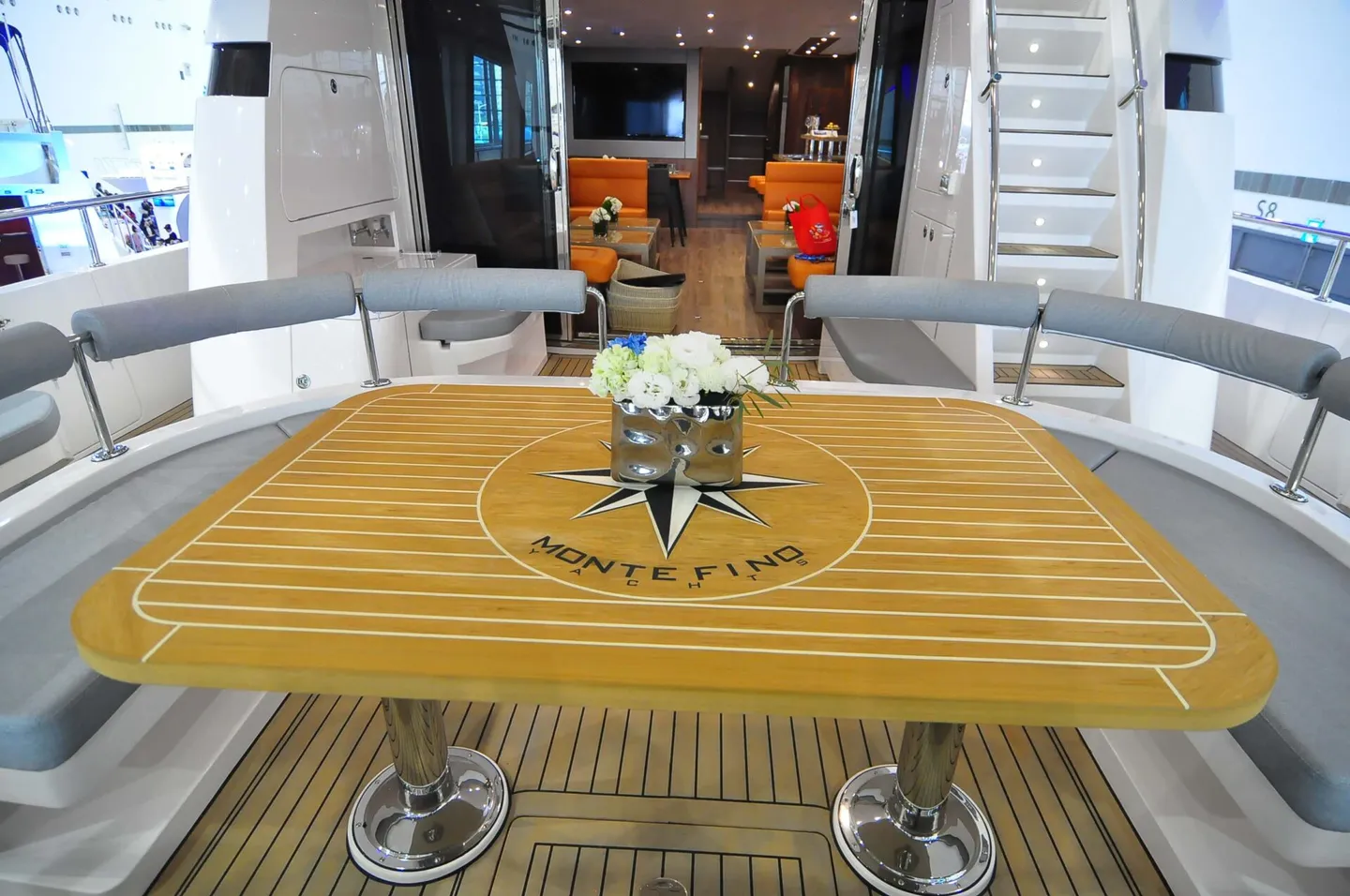
During the planning phase, the team traveled to the Similan Islands to study liveaboard operations and observe how other teams worked. While divers rolled in one after another, Howard stayed aboard watching how the crew was positioned and deployed — after all, this was Monte Fino's first purpose-built dive liveaboard. Construction itself went smoothly, thanks to the company's decades of expertise; it was the dive-specific peripheral systems that cost the team a small fortune in hard-won lessons. Dive compressors need fresh air intake and therefore cannot share an engine room with the main engines. The team also hadn't anticipated that a single compressor would be insufficient — when a second was added, there wasn't enough voltage to run both. Every one of these problems tested Howard's and the team's ability to adapt on the fly.
Beyond the hardware challenges, there was another critically difficult factor: Taiwan simply had no liveaboard experience. The crew, the chef — everyone needed to be trained from scratch. Dive guides are indispensable to any liveaboard operation, but most guides are only deeply familiar with a single dive area. If a liveaboard itinerary island-hops to different sites, guides must become proficient in multiple dive zones — a process that can only be built through time and accumulated experience; there are no shortcuts.
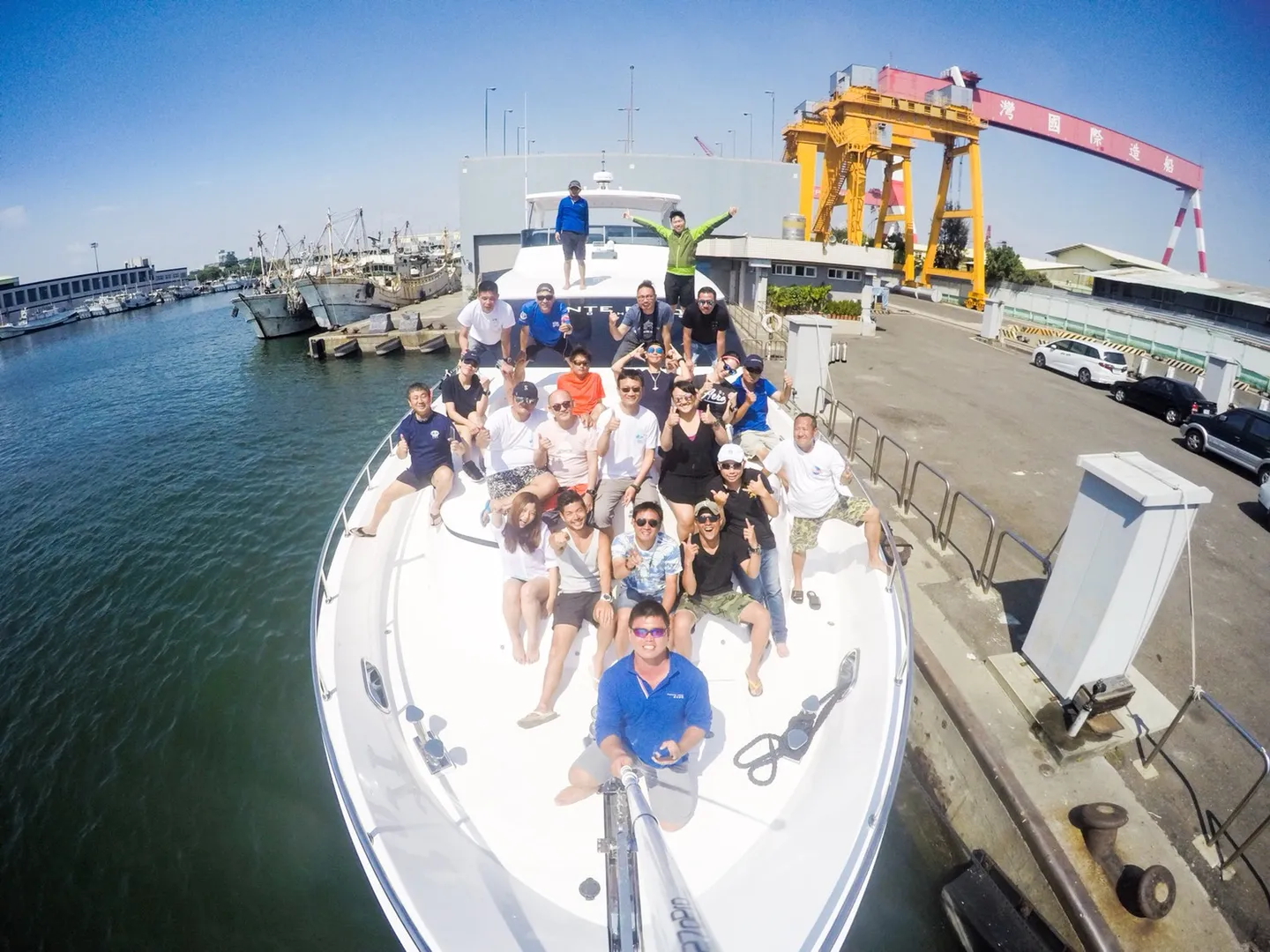
A Milestone for Monte Fino Yachts — and for Taiwan
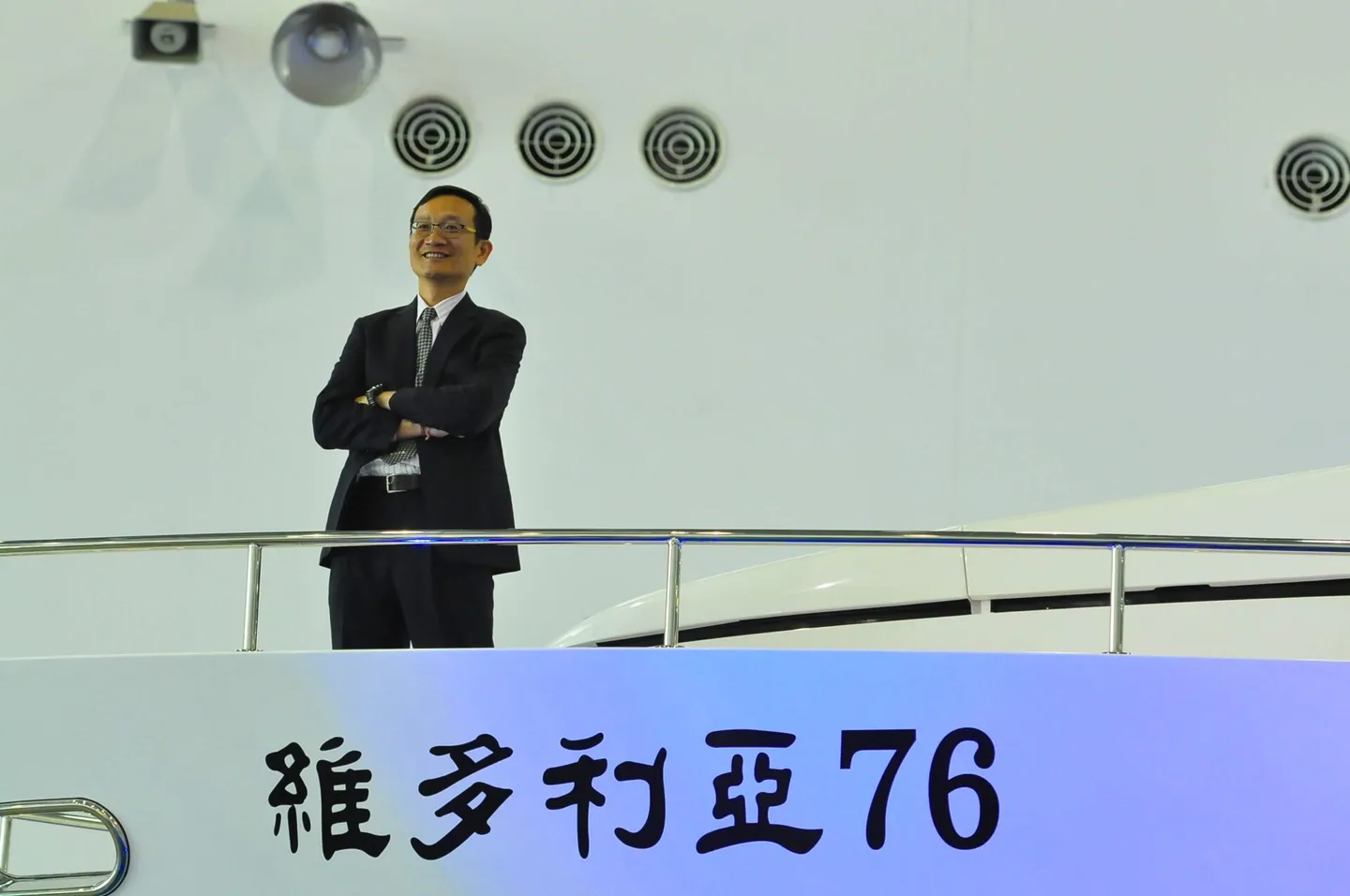
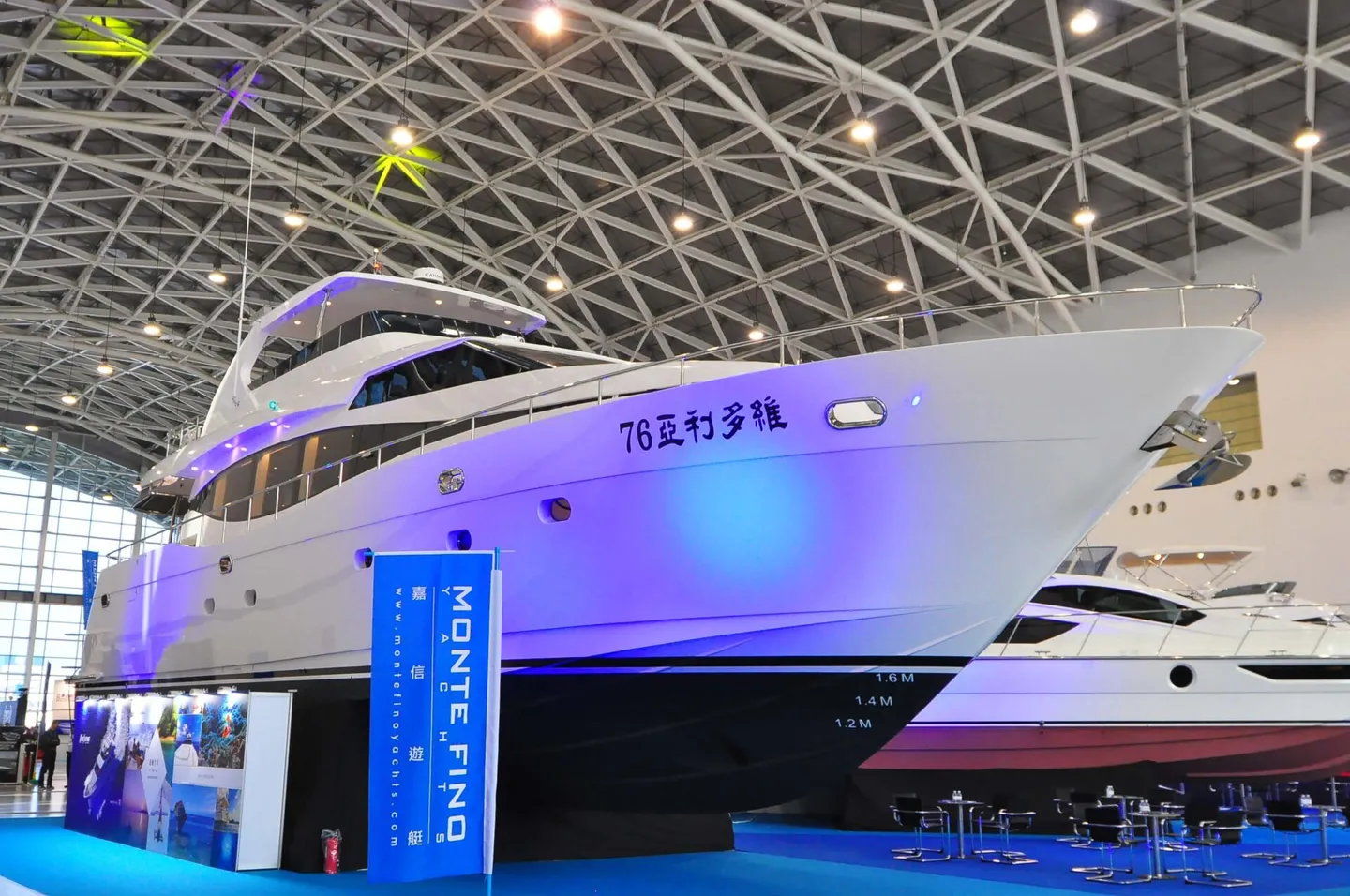
In 2018, the Victoria 76 finally set sail, opening a new chapter in Taiwanese diving history as the island's first liveaboard dive vessel. To put things in perspective: 99% of Monte Fino Yachts' annual revenue comes from overseas orders — a ratio that likely applies to every shipyard in Taiwan. Politicians reliably proclaim that Taiwan is a "maritime nation" at every election cycle, yet the distance between the Taiwanese people and the sea has not narrowed one bit.
In 2018, with support from the Kaohsiung City Government, Monte Fino developed "Chia Hsin Pier 22 Yacht Marina" within Kaohsiung Harbor. In addition to yacht charter services and international yacht berth rentals, the facility was designed to give citizens a magnificent venue to enjoy the harbor at sunset. A series of ocean-themed activities will also be organized at the venue — sea turtle education sessions, marina open days, underwater photography workshops, and more. Once the hardware is in place, the software follows: a vision communicated through thoughtful programming, and a dream of bringing the Taiwanese people back to the sea.
Related links:

![[Slash Life] Give Your Passion a Fulcrum! Garmin Engineer: Diving Helped Me Build a Brilliant Slash Life](/_astro/067-2_Z1yTcpw.webp)