Contents(5)
Editor's Note: In recent years, diving has surged in popularity. Beyond the established world of scuba diving, freediving has also attracted a growing number of young enthusiasts, fuelled by the rise of social media. That said, diving carries inherent risks, and knowing how to have fun while staying safe is a far more fundamental concern than looking cool for photos or enjoying a dive vacation abroad. We'd like to thank Instructor Su Huai of Islander for sharing on his Facebook page the insights he's gathered over many years of dive instruction. We hope you'll take a moment to read and reflect on what he has to say.
[On Diving Safety, Here's What I Want to Say...]
Whether you've taken a scuba or freediving course, I'm sure your instructor emphasised safety from every angle — covering dive physiology, psychology, theory, and equipment. Beyond all that professional knowledge, I'd like to share a few personal thoughts on the human side of things: social norms, local customs, and the stuff that never makes it into the textbooks.


- Respect the Locals
We all know we should be polite when visiting someone else's home, and that travelling to a new place means respecting local customs and playing by the local rules. But how many of us actually live up to that?
Having money doesn't make you the boss, and having professional knowledge doesn't mean you're above everyone else. The uncle who's lived in that community for generations, without much formal education, fishing with a rod or spear gun to make ends meet — he has far more right to speak about the ocean than any of us.
Some people dive, snap their photos, check in on social media, and leave without a second thought — staying if they like the place, moving on if they don't. But do you realise that some locals, whatever life throws at them — good times or bad — will always be there, with little choice about leaving? Because this is everything they have. This is their home.
Respecting the locals also means respecting the local environment, the ocean, and its marine life.
2. Let the Locals Lead the Way
If you genuinely respect the locals, then you'll naturally agree that letting them lead is always the best approach.
In diving, that means asking a local dive guide or instructor to take you into the water. These people don't just know the local conditions best — they know what the conditions are right now. Why emphasise "right now"? Because wind, waves, and currents are constantly changing. A local dive guide may have been in the water just yesterday or even moments ago, and is always keeping an eye on what's happening at the dive site. Their judgment is the most accurate and reliable you'll find.
Without these guides, it's hard to judge which site suits your ability or your dive buddy's, you won't know where to go once you're in the water, and you risk inadvertently violating local customs. Take Xiaoliuqiu, for example — over the past year or so, divers have occasionally been spotted straying into shipping lanes, putting themselves in extreme danger and causing headaches for the local community.
Editor's note: In 2019, a diver was fined for straying into a shipping lane at Bitou Fishing Harbor on the Northeast Coast. On busy holiday weekends, freedivers often drift into boat traffic lanes at Chao Jing as well.
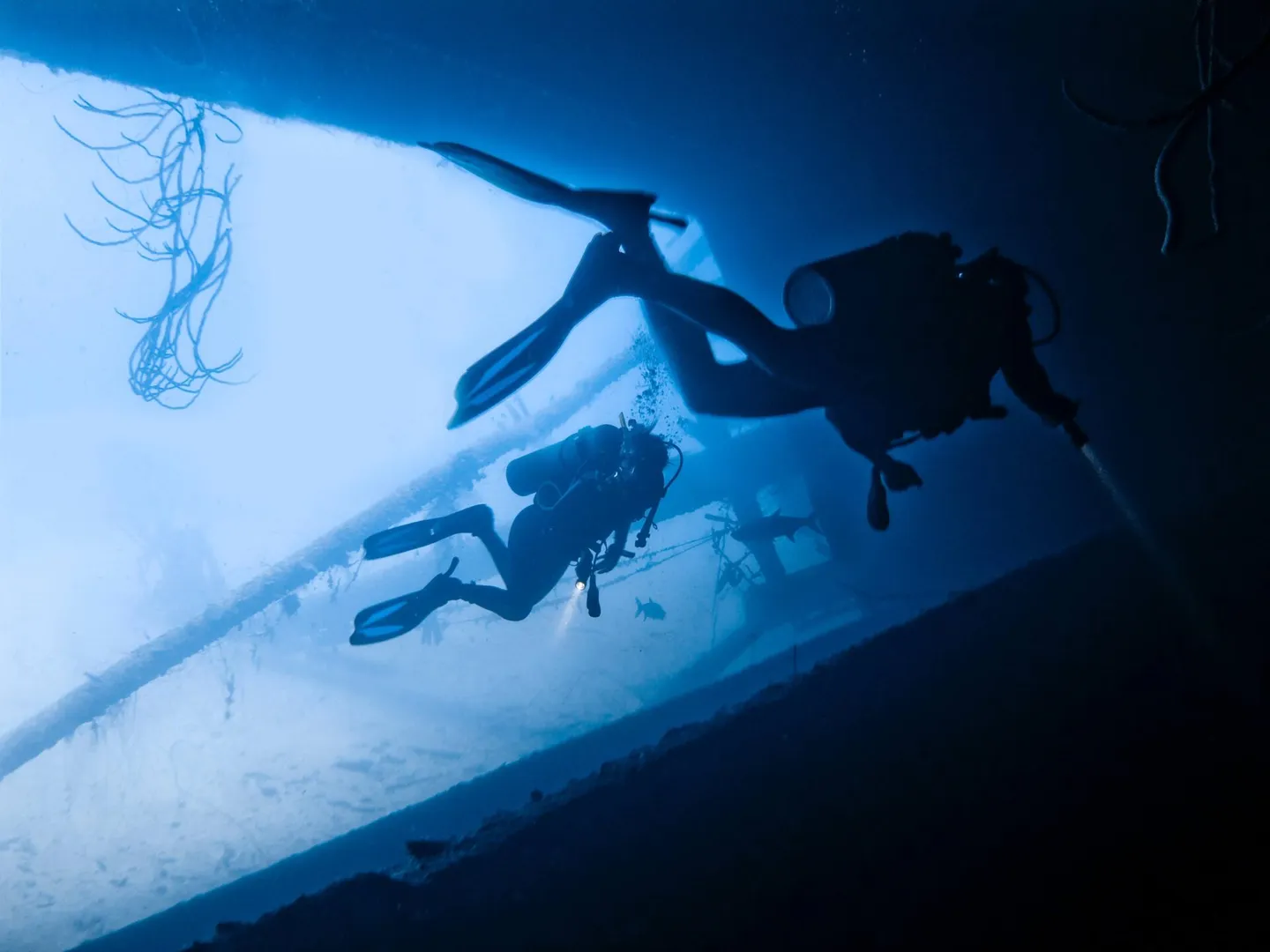
3. Be Someone Who Values Their Life
If you're unfamiliar with a local dive area, aren't a strong swimmer, or aren't fully confident in the water, would you really feel comfortable letting a group of people you met online take you diving?
Someone like me, who is very much attached to staying alive, wouldn't dare. I used to be terrified of water — a classic landlubber. The first time I went snorkeling in Kenting, I clung obediently to a life jacket and gripped the instructor's life ring for dear life.
Take Xiaoliuqiu as an example. If you're not the strongest swimmer, joining a snorkeling activity here is actually quite safe. The instructors leading the group are, in the vast majority of cases, highly experienced and deeply familiar with local waters. They'll walk everyone through the equipment and help them get comfortable in the sea before setting off. If you watch closely, you'll notice that snorkeling routes are always the most conservative ones — because if something goes wrong out there, you need to be able to get everyone back to shore in the shortest possible time.
Of course, different routes suit different ability levels — but the most conservative, most "safety-first" route is always the one that gets you home safely.
4. Stay Alert
We live in an age dominated by social media, and it's easy to understand why capturing the perfect underwater shot matters so much to so many people.
Whether you're a scuba diver who loves hunting for tiny critters or a freediver chasing that epic, breathtaking moment, remember: "Respect the Locals," "Let the Locals Lead the Way," and "Value Your Life" should always come first — and you should stay alert at all times, rather than letting your mind fill with nothing but viewfinders and selfie sticks. The moment you throw caution to the wind just to get the shot, you've also thrown safety out the window.
And when you're scrolling through your feed, marvelling at stunning underwater photos and thinking, "I want to go shoot that!" — take a few extra seconds to ask yourself: "Beyond the photos, what else is really important here?"
Finally, if you're someone who loves the ocean, never forget: making it back to shore safely is the only reason to enter the water in the first place, and coming home in one piece is the value you should never compromise.
Because if the day ever came when someone didn't make it back, the ones left heartbroken, grieving, and picking up the pieces would be the people waiting on shore — the ones at home who care about you the most, worry about you the most, and love you the most.
Cover photo credit: Photo by Marek Okon on Unsplash
Further reading: