Contents(7)
Before you became a diver, you learned one name
" PADI "
After you became a diver, you came to know another
" Project AWARE "
Project AWARE
Do you still remember the marine conservation knowledge you learned during your Open Water theory course?
As a diver, we should not only be thrilled by the stunning scenery hidden beneath the waves — we must also take pride in our ability to protect the ocean.
Spread awareness of energy saving and plastic reduction to friends and family,
Refuse to touch marine life or watch animal performances,
Join beach cleanup activities or debris-collection dives,
Inspire more people to fall in love with the sea through diving…
There is no doubt that the diving community holds tremendous influence in driving marine conservation forward. And throughout this ongoing environmental revolution, Project AWARE has always been a leading example for all of us.
Today, let's take a deeper look at Project AWARE and revisit some practical knowledge along the way!
Who Is Project AWARE?
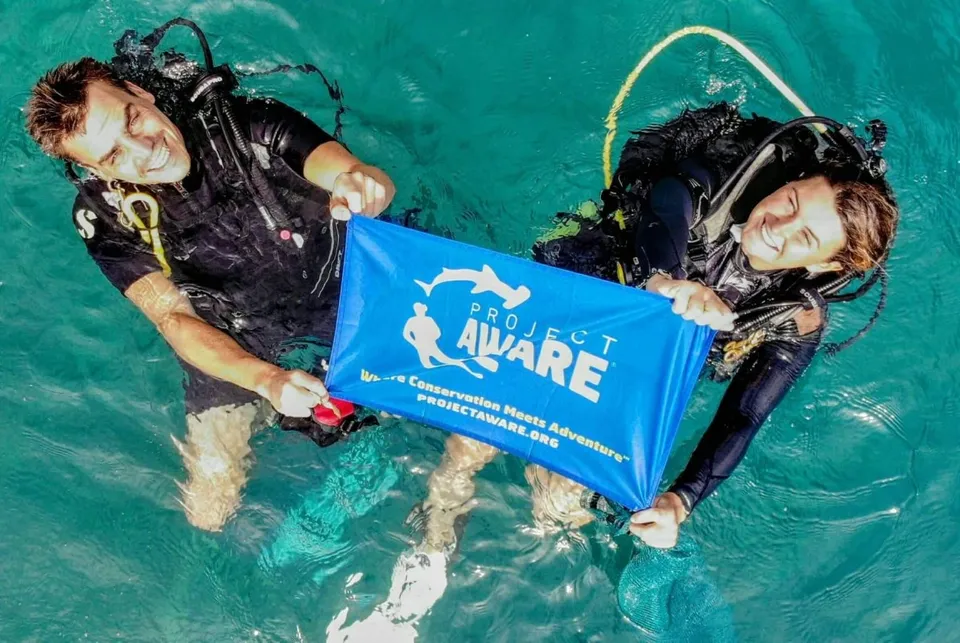
Project AWARE Foundation (the Editor's translation: 海洋覺醒計劃) is a nonprofit organisation founded by volunteer divers, advocating for everyone to contribute to the protection of our ocean planet on every single dive.
The initiative focuses on two key ocean issues — "Sharks in Peril" and "Marine Debris". As divers, we play a unique role in both of these issues, with the ability to make direct, proactive, and lasting improvements.
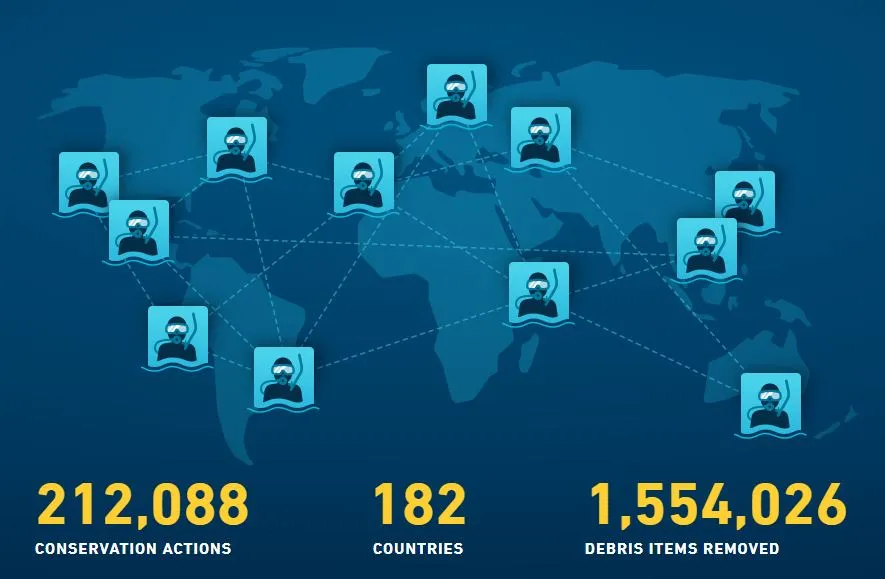
To date, through the collaboration of divers and dive professionals, Project AWARE has carried out 212,000 conservation actions across 182 countries and has collected more than 1.55 million pieces of marine debris in total.
So what exactly can we do to support Project AWARE?
Read on to find out.


First — Get to Know Project AWARE's Issues
【Sharks in Peril】
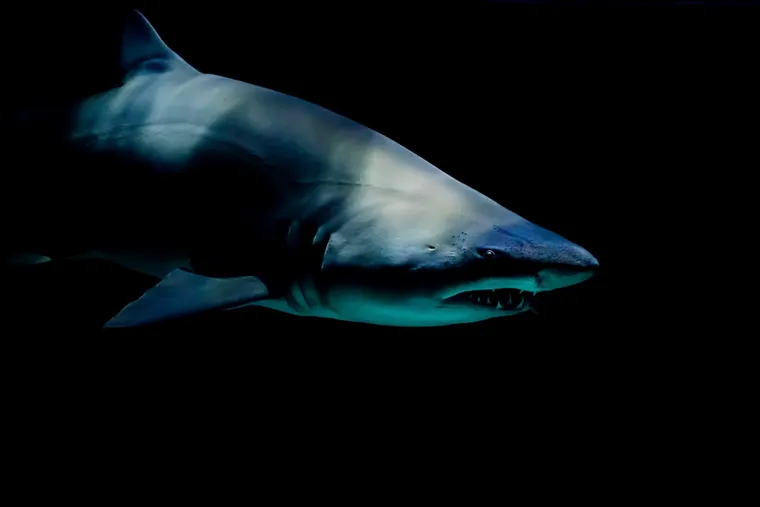
Did you know? Of the shark species classified by the International Union for Conservation of Nature (IUCN), nearly one in five face the threat of extinction — and this doesn't even account for the hundreds of shark species (nearly half of all sharks) that haven't yet been assessed.
Sharks may be the rulers of the sea, yet they are also incredibly vulnerable. They grow slowly, reproduce in small numbers, and are especially susceptible to harm from overfishing, unintentional capture, and deliberate hunting driven by the demand for shark fin.
Every single day, humans are killing sharks in our oceans.
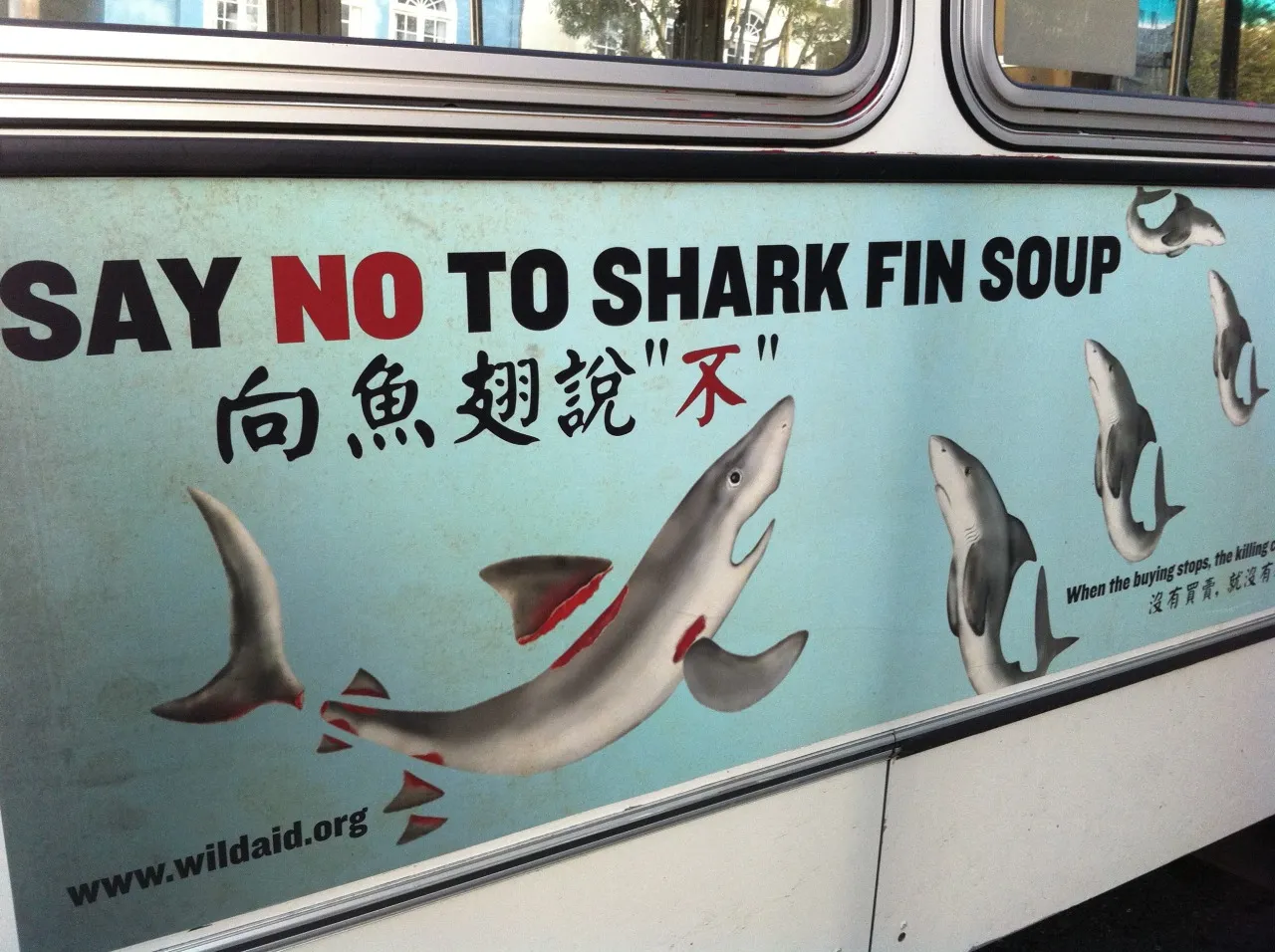
The first step in marine conservation: say no to shark fin
You might ask, why the special focus on sharks?
Because a healthy and vibrant ocean environment needs species like sharks to maintain the balance of the entire ecosystem. Places like Palau especially depend on sharks — they generate enormous economic value for local dive tourism every year.
As a diver and a global citizen, your actions can make a powerful difference for shark conservation. By uniting our collective strength, we can present more effective demands to ensure that sharks are protected from extinction.
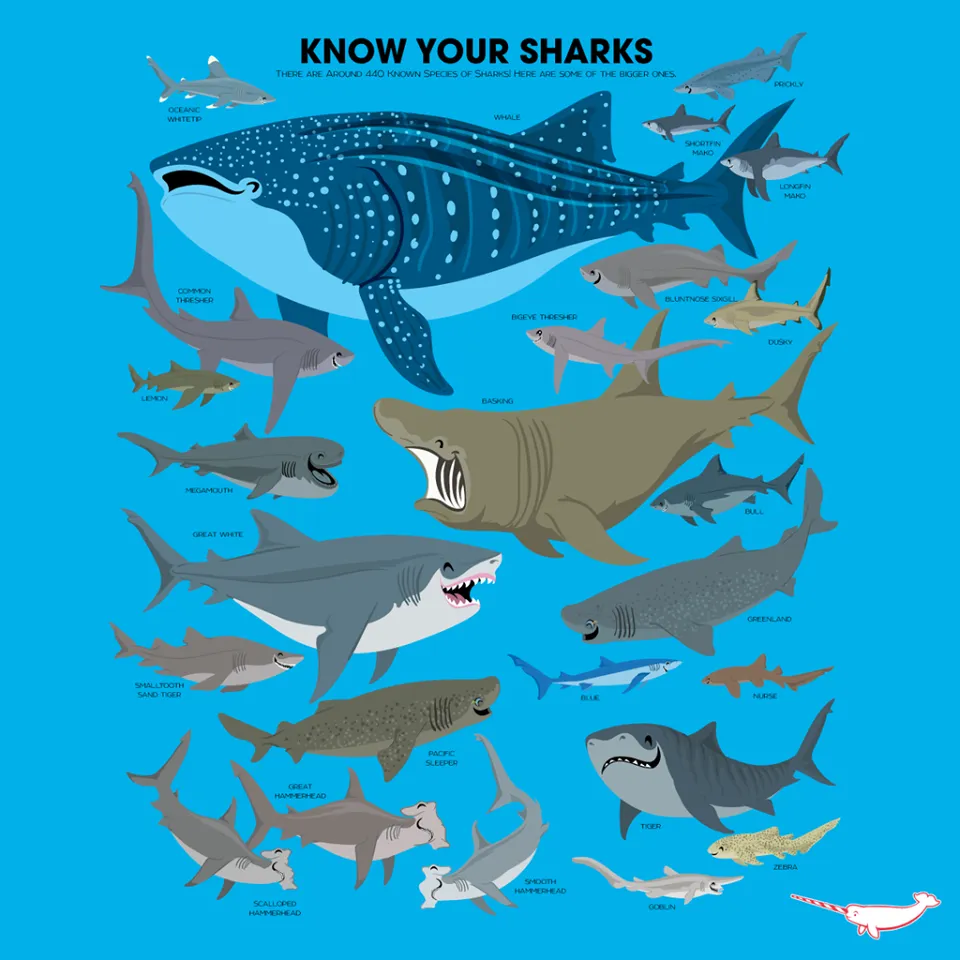
If sharks disappear, we will be in serious trouble
【Marine Debris】
From the tiniest plastic fragments, car batteries and spare parts, all the way to the most notorious ghost nets — these everyday "items" we use are dumping into the ocean by the tonne every single day. The world's ever-growing population consumes more and more disposable products, which are discarded and then gradually erode our oceans, inch by inch.
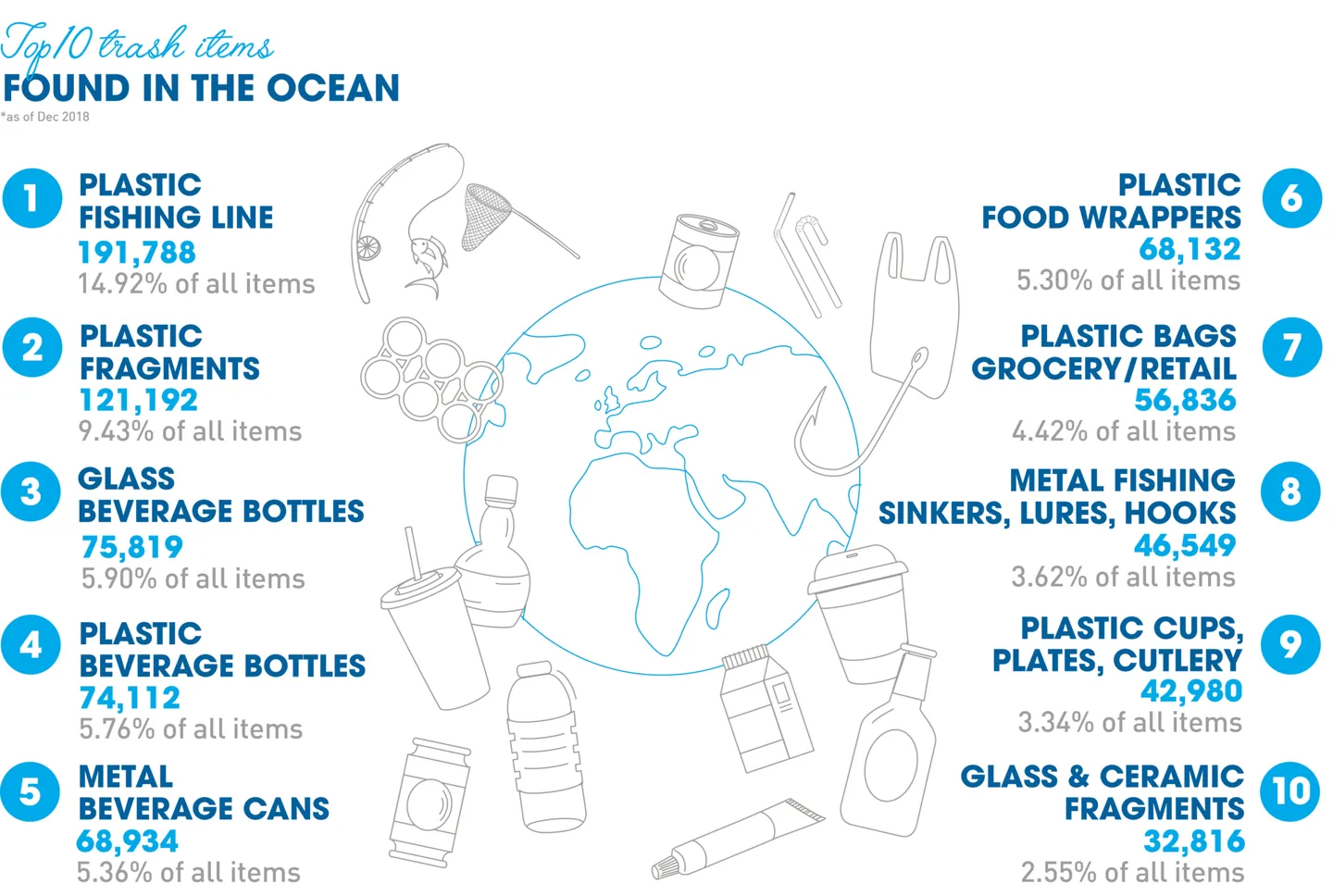
The 10 most commonly found items of trash in the ocean
Project AWARE regularly partners with dive shops around the world to run Diving Against Debris events. By participating in these special dives, you can help build a clean and healthy future for the ocean.
The data you collect and the reports you submit can help spread the word about the state of our oceans, and in turn persuade and support policymakers to come up with solutions that rescue marine life in crisis.
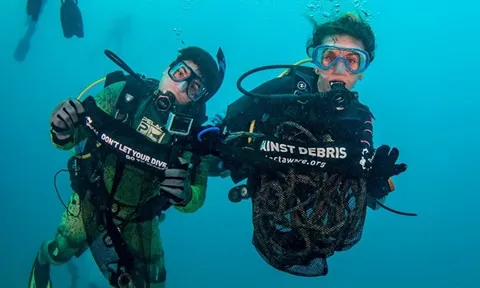
Diving Against Debris
Next — Remember These 10 Tips for Protecting the Ocean
Divers share a deep connection with the ocean. Not just while diving — your everyday consumer choices and travel decisions can also make a difference for our ocean planet. Here are 10 tips from Project AWARE on how to protect the underwater world.
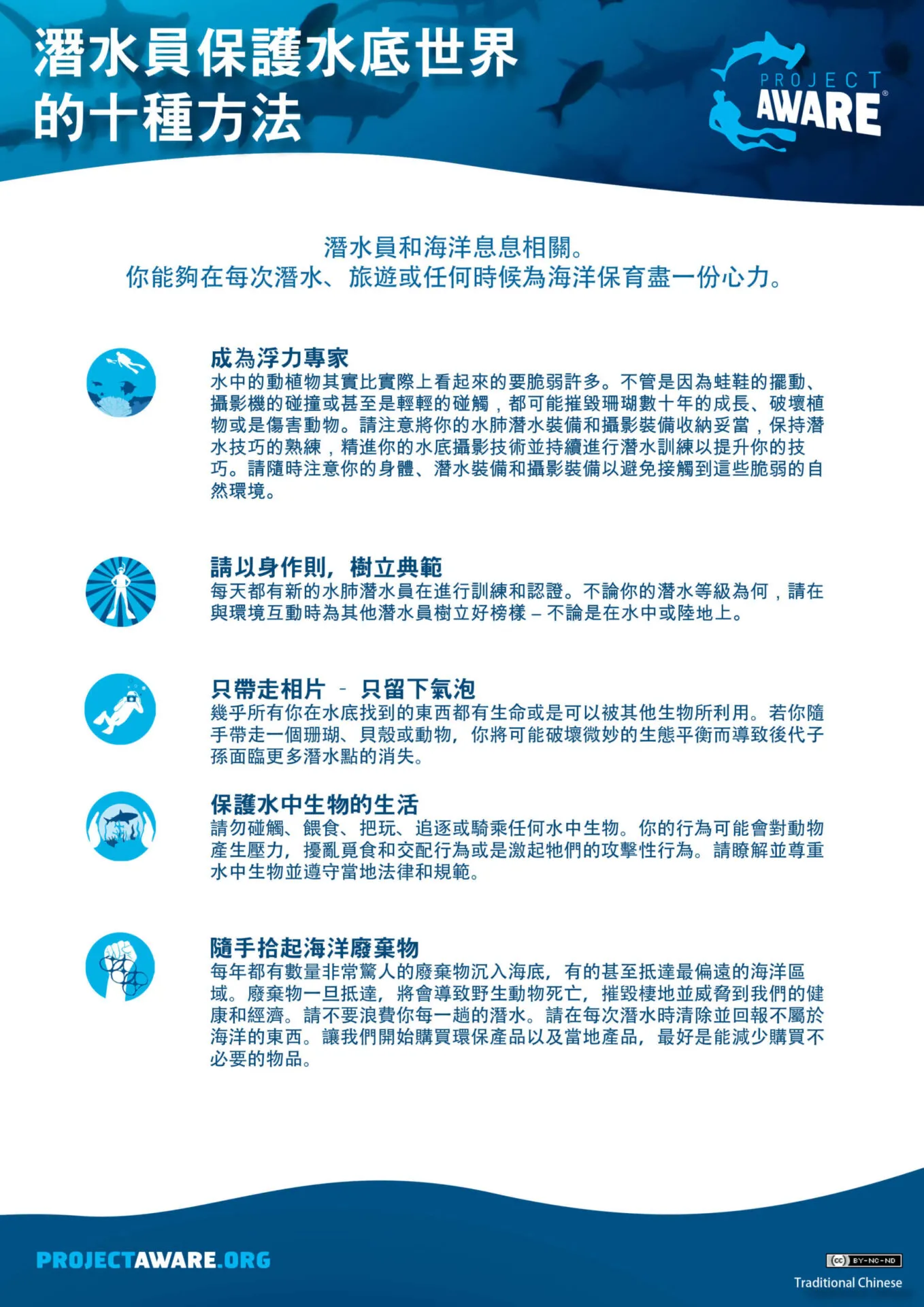
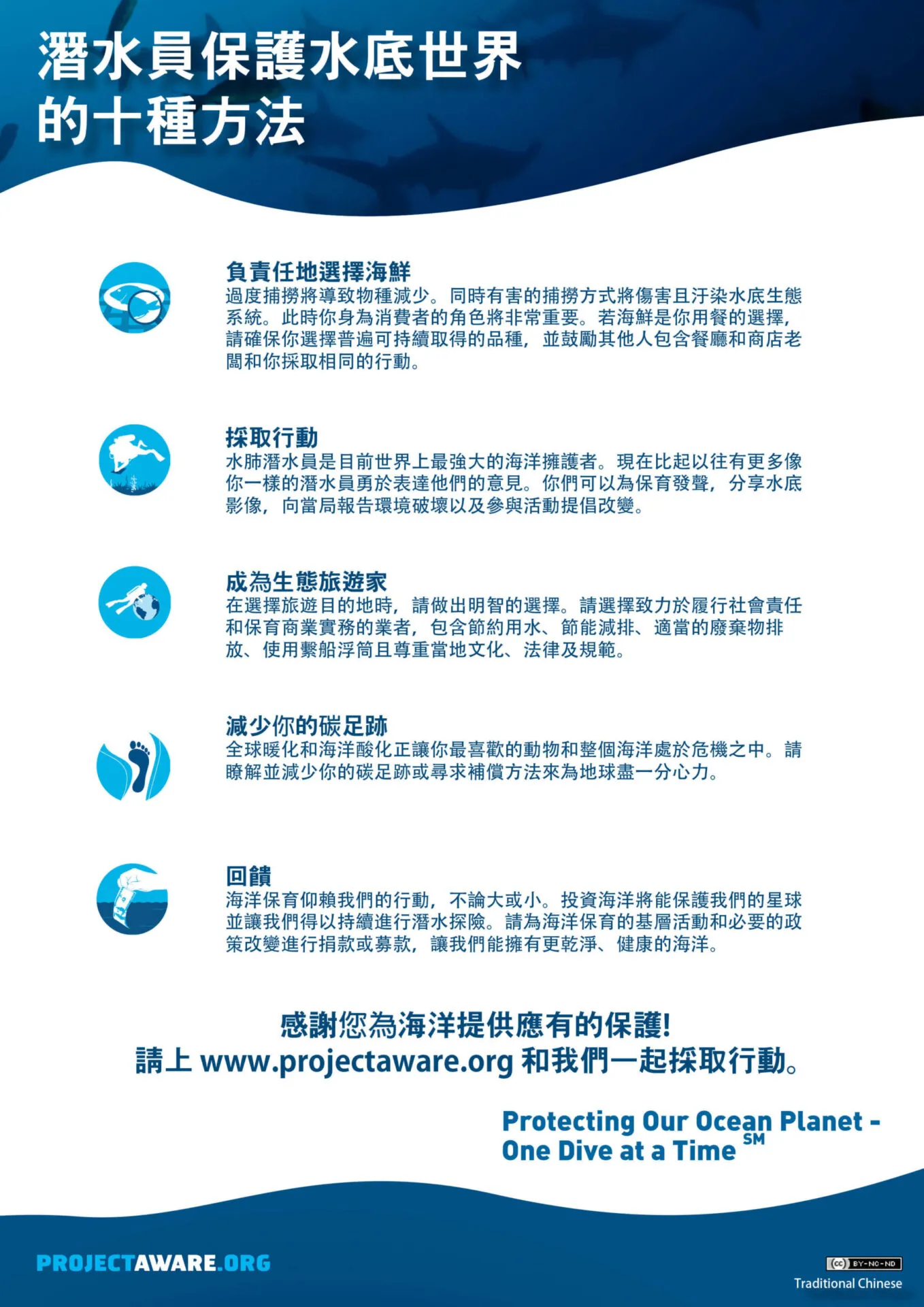
10 Tips for Protecting the Ocean
Finally — Choose a Responsible Dive Shop
Pessimists say that human activity has devastated the planet's ecosystems, but the Editor would like to remind everyone: it is precisely because we are human that we have both the right and the ability to protect the Earth.
We now know that whether it's a single straw or a takeaway container, every consumer choice you make has an impact on the environment. The same is true when it comes to choosing an operator.
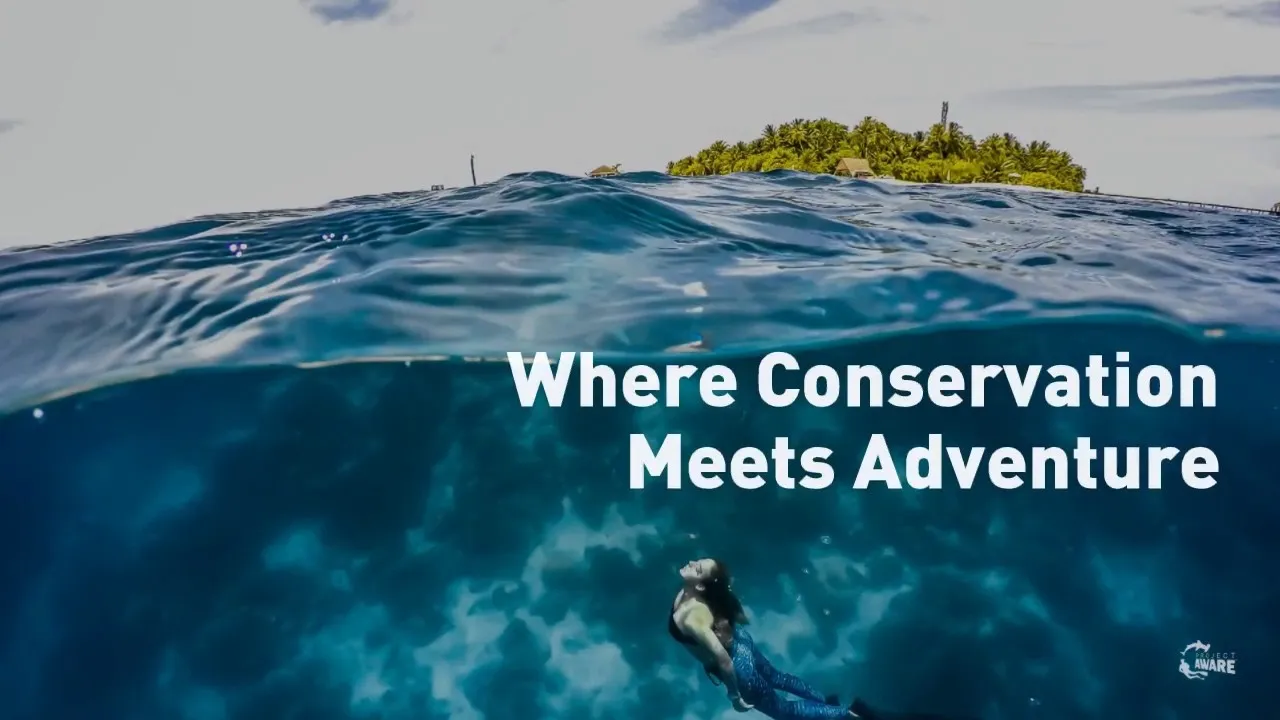
Divers Den has been certified as a Project AWARE Eco Operator since 2006, which means we are committed to minimising the impact of diving on marine ecosystems while promoting the protection of the local environment, economy, and culture.
Beyond us, there are many dive shops around the world that prioritise conservation and uphold responsible standards.
And beyond Project AWARE, organisations such as Green Fins and Eco Certified Tourism also evaluate and monitor various tourism operators.
When planning a dive trip, you can make better consumer choices by visiting dive shop websites and looking for relevant certification logos.
Finally, you don't have to be a diver to join the movement to protect the ocean. Everything we can do ultimately comes down to this:
Lead by example
Inspire others
Break bad habits
Choose wisely

Further reading:


![[NCCU Diving Club] Reflections on a Beach Cleanup: A Little Inconvenience for Us, Infinite Opportunities for the Ocean](/_astro/94387669_2786902881408514_3988714893476888576_o_mQFSh.webp)