Contents(8)
- Navigating the Indo-Pacific: Promoting Regional Cooperation on Marine Debris Governance
- Upcycling Marine Debris to Create a Blue Economy: 5 Innovation Case Studies
- Marine Debris Recycling Case 1: Far Eastern New Century
- Marine Debris Recycling Case 2: Lite-On Technology
- Marine Debris Recycling Case 3: ITRI (Industrial Technology Research Institute)
- Marine Debris Recycling Case 4: Cheng Jia Textile Technology
- Marine Debris Recycling Case 5: Fomosa Taffeta
- Expanding the Circle of Marine Debris Governance: The Public Can Participate Too
Marine debris knows no borders. To further advance cross-border cooperation and address the global marine debris crisis, the Ocean Affairs Council hosted the "Marine Debris Innovation × Navigating the Indo-Pacific: Blue Economy Forum," inviting experts from industry, government, academia, and research to share marine debris recycling technologies and industry innovation case studies. Deputy Minister Wu Mei-hong of the Ocean Affairs Council also announced plans to establish an Indo-Pacific Regional Marine Debris Governance Platform to promote international exchange on marine debris governance. She expressed hopes to deepen cooperation with Indo-Pacific nations, advance a circular economy for marine debris, and foster ocean sustainability — co-creating a shared blue economy.
Navigating the Indo-Pacific: Promoting Regional Cooperation on Marine Debris Governance
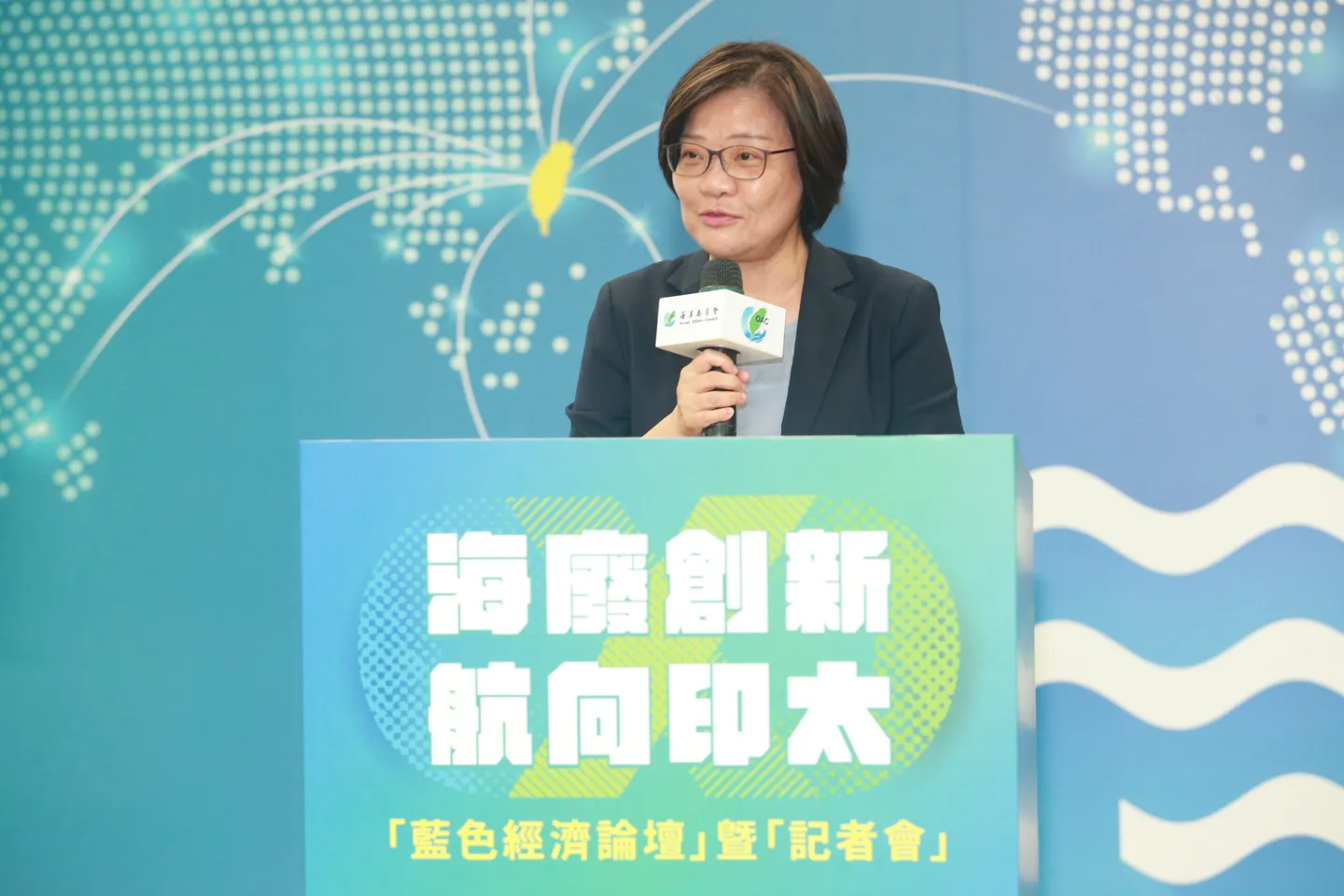
Deputy Minister Wu Mei-hong of the Ocean Affairs Council delivers opening remarks
In response to the challenge of marine debris, the Marine Conservation Administration of the Ocean Affairs Council established the "Marine Debris Recycling Alliance" in 2021, successfully linking upstream and downstream industry players to build a complete marine debris resource circulation chain and improve the effectiveness of marine debris recovery and reuse. However, marine debris is a global issue. Deputy Minister Wu Mei-hong stated that the Ocean Affairs Council, building on the foundation of the Marine Debris Recycling Alliance, is now establishing an Indo-Pacific Regional Marine Debris Governance Platform: "We want to make Taiwan the hub for marine debris governance dialogue, promoting cross-sector and cross-departmental collaboration among industry, government, and academia to advance the sustainable development of the blue economy across the region." This four-year plan was officially launched in 2024, joining hands with Indo-Pacific nations to confront the global marine debris challenge.
Deputy Minister Wu noted that Taiwanese businesses possess innovative capability and flexibility in handling marine debris, with technologies "at the forefront of the world," capable of providing effective and sustainable models of cooperation for the Indo-Pacific region. President Yadav of the India-Taipei Association also expressed his expectation for greater collaboration with Taiwan on marine debris governance and the blue economy. He said: "The Indian Ocean is the only ocean in the world named after a country — we have a deep connection with the sea. India also has a blue economy initiative, and we are proud to be Taiwan's partner in effectively addressing marine debris." President Yadav noted that India's Prime Minister has raised the issue of marine debris at forums such as the G7 and G20, underscoring India's commitment to tackling the problem.
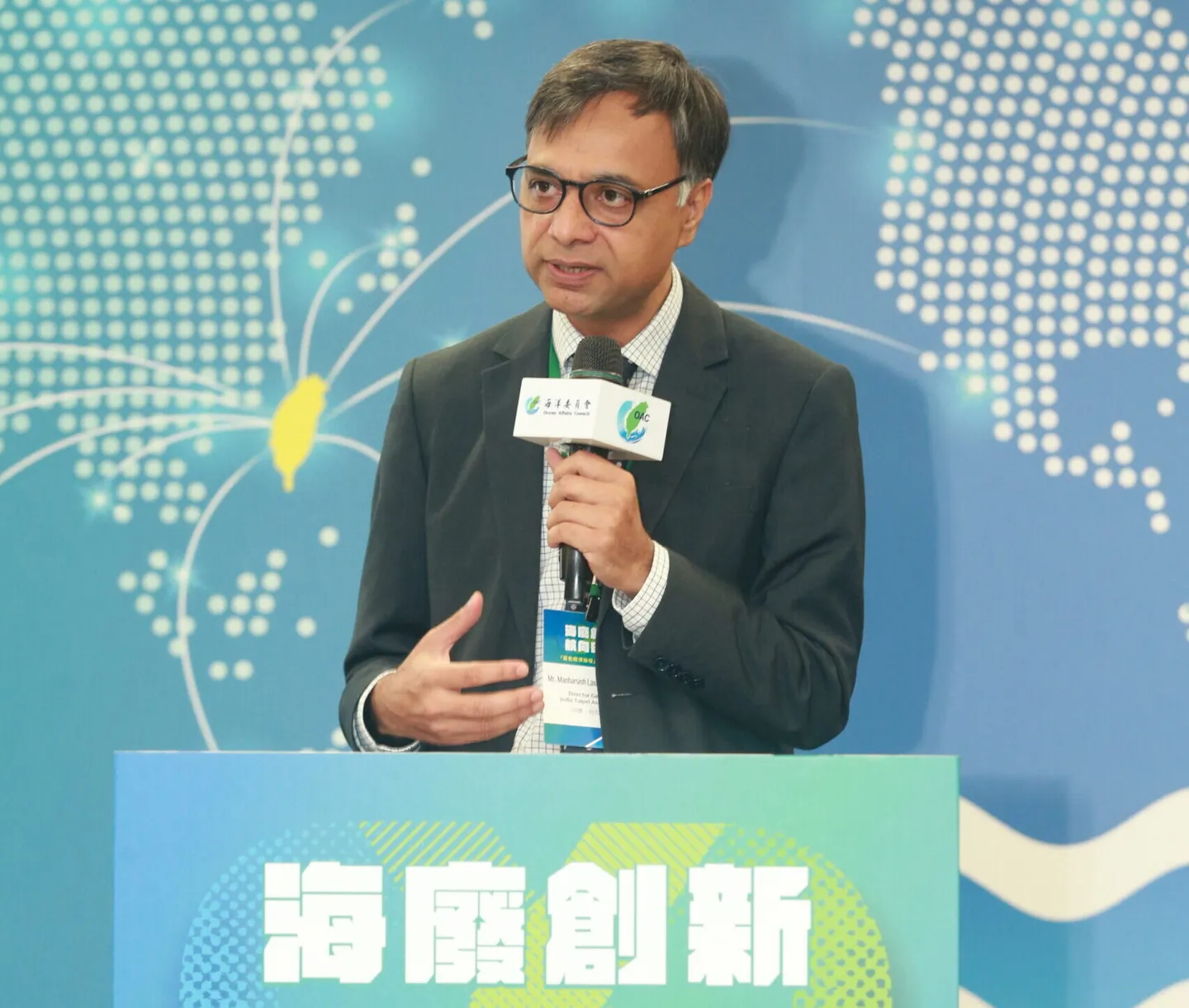
President Yadav of the India-Taipei Association delivers remarks
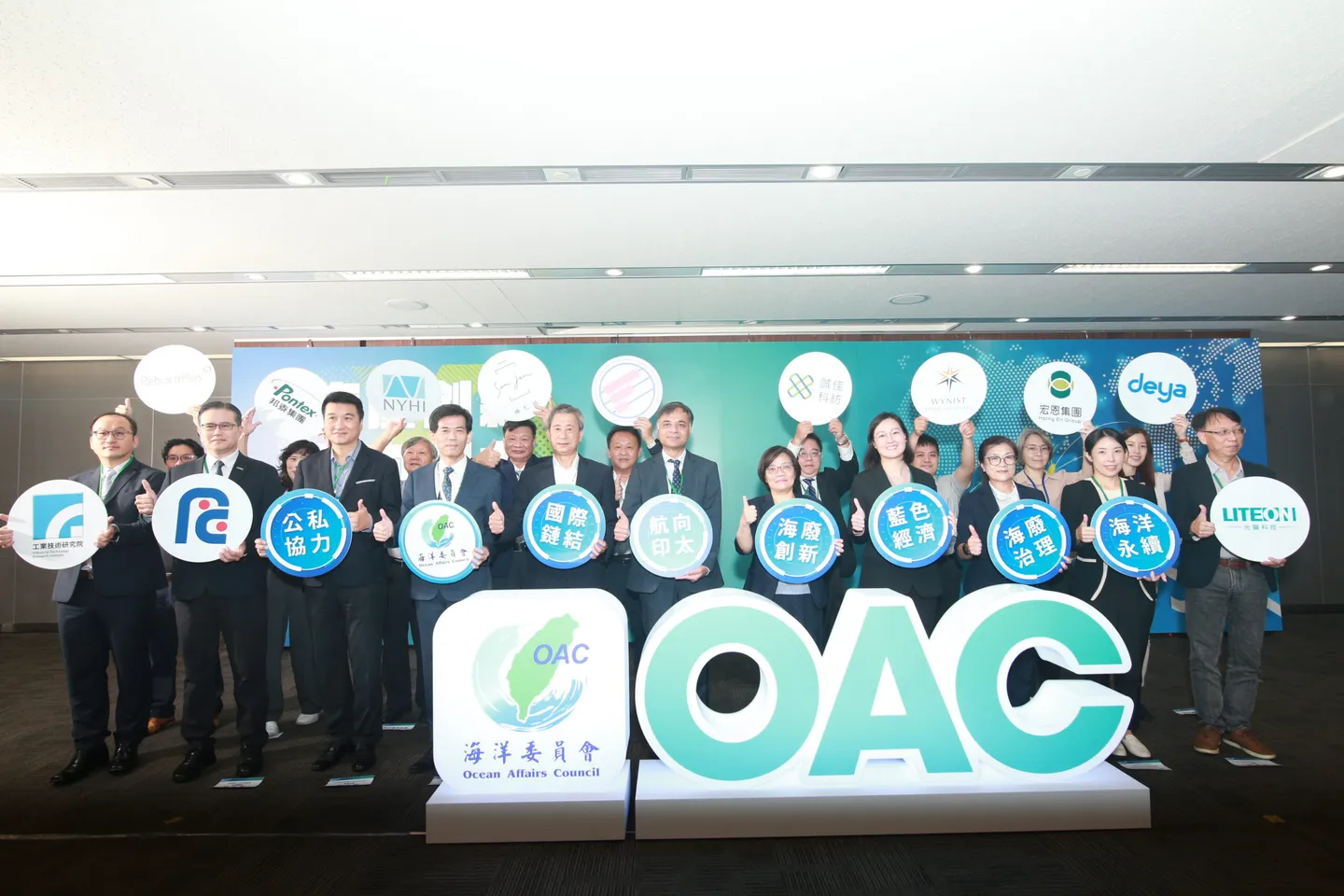
The Ocean Affairs Council invited a first cohort of benchmark enterprises to attend the forum and share their marine debris recycling experiences. Deputy Minister Wu expressed her hope that through such exchanges, they would "bring international friends in, while also uniting industry, government, and academia to venture out together."


Upcycling Marine Debris to Create a Blue Economy: 5 Innovation Case Studies
At the Blue Economy Forum, experts from industry, government, and academia shared how marine debris can be upcycled into products with market value — using innovative technologies to give plastics, oyster shells, discarded fishing nets, and other forms of marine debris a second life.
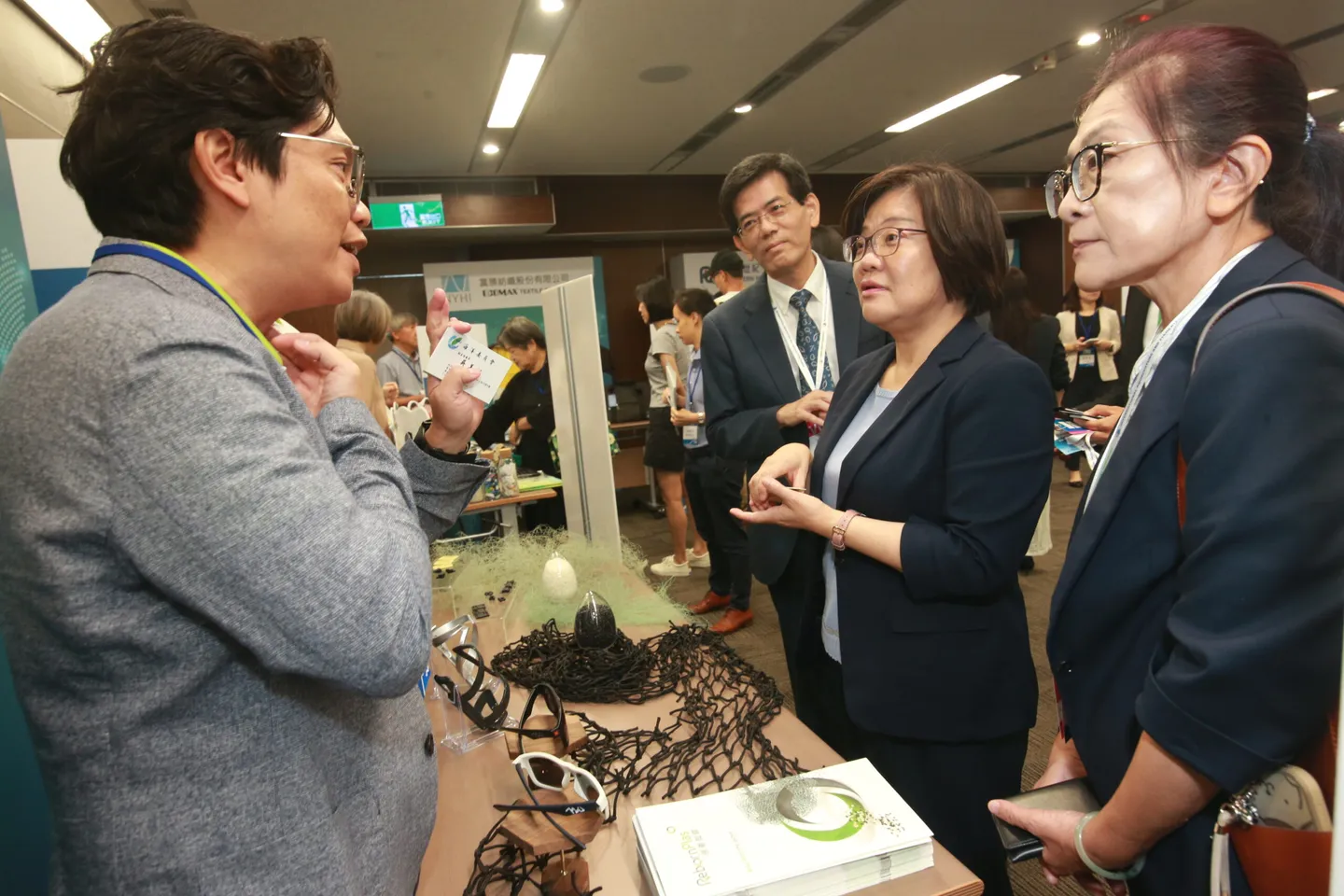
Deputy Minister Wu Mei-hong of the Ocean Affairs Council engages actively with benchmark members on site
Marine Debris Recycling Case 1: Far Eastern New Century
"Taiwan's PET bottle recycling rate has reached 95% — among the highest in the world!" Vice President Huang Chuan-yi of Far Eastern New Century backed his claims with data, noting that Taiwan's recycling system is already highly mature and can serve as a model for the world. He said: "We are not just recycling waste — we are transforming it into high-value-added products." Since 2015, the company has widely incorporated recycled marine plastic into sports footwear, and continues to collaborate with internationally renowned brands such as Patagonia, Adidas, and Puma to enhance the environmental value of their products. Vice President Huang emphasized that every stage of the recycling process is highly transparent, ensuring that the source and manufacturing process can be verified, thereby building consumer trust in eco-friendly products.
Marine Debris Recycling Case 2: Lite-On Technology
Director Chen Ching-hui of Lite-On Technology shared that in recent years, Lite-On has progressively incorporated marine debris recovery technology into its product supply chain. Taking EPS (expanded polystyrene, commonly known as styrofoam) as an example, he noted that while it is a common type of marine debris material, its structural properties make it extremely difficult to recycle. Lite-On Technology co-developed a heat-compression technology with partners that can "volume-reduce" EPS, successfully transforming it into materials usable in electronic products such as keyboards and mice. He said: "Our goal is not only to manufacture high-quality products — more importantly, we want every product to contribute to environmental sustainability." These innovative materials have already gained recognition in international markets. Director Chen stressed that the company will strengthen cooperation with Indo-Pacific nations going forward, continuing to upcycle marine debris into commercial products.
Marine Debris Recycling Case 3: ITRI (Industrial Technology Research Institute)
To strengthen Taiwan's technological capabilities, ITRI continuously develops advanced technologies and collaborates with industry to ensure those technologies are practically applied across a range of products. In the area of front-end marine debris processing, ITRI has developed advanced spectral analysis technology capable of accurately sorting different types of plastic materials. Associate Section Manager Huang Guan-ye of ITRI's Material and Chemical Research Laboratories noted that precise sorting is the foundation for achieving efficient downstream reuse. In addition, ITRI is committed to enhancing the performance of recycled materials by endowing them with additional functions such as antibacterial and UV-resistant properties, helping recycled materials become more competitive in the market.
Marine Debris Recycling Case 4: Cheng Jia Textile Technology
It's not just plastics — discarded oyster shells can be recycled too! Chairman Wang Ye-hsun of Cheng Jia Textile Technology noted that the brand's product development philosophy is "visible, touchable, and felt." For example, textiles made from recycled oyster shells mimic the feel of wool while offering antibacterial, insulating, and deodorizing properties. The company continues to apply nanotechnology to incorporate oyster shells into textiles, building materials, and everyday items, and is further expanding into electronic products. Cheng Jia Textile Technology is also preparing for an IPO with the aim of expanding its market influence.
Marine Debris Recycling Case 5: Fomosa Taffeta
Tackling the intractable problem of discarded fishing nets, Fomosa Taffeta has developed a 100% ocean-recovered nylon fabric made from recycled fishing nets. Vice President Chen Kun-yuan generously shared the company's experience at the forum, noting that since 2018 the company has partnered with Taihua to restore discarded fishing nets back into Nylon 6 for reuse — not only as textiles, but also making Fomosa Taffeta the world's first brand to apply this material in tire cord fabric. Tire cord fabric is a reinforcing material used in tires that provides stability, handling, and durability.
Expanding the Circle of Marine Debris Governance: The Public Can Participate Too
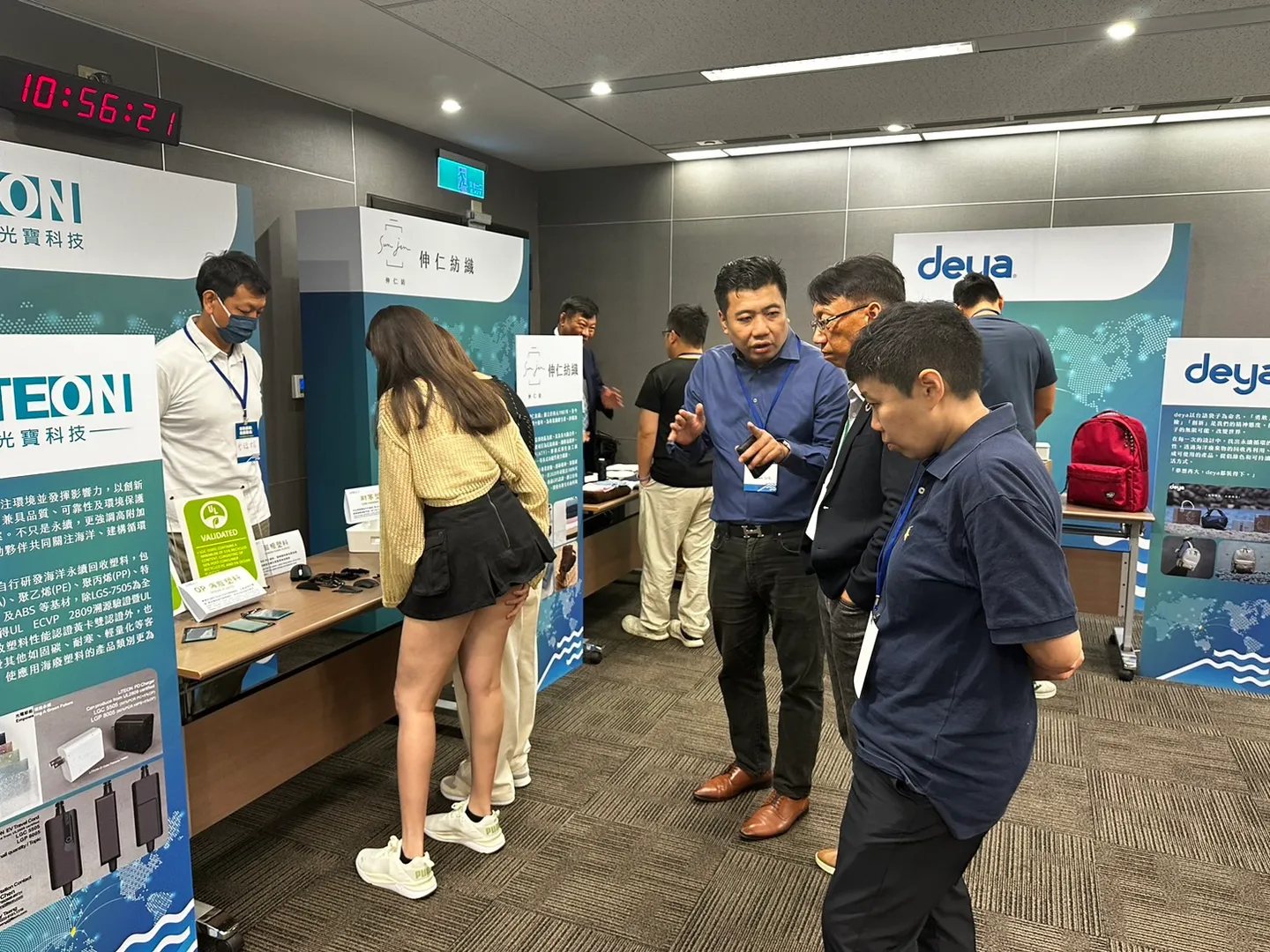
Government agencies and supply chains play a key role in marine debris innovation and governance — but "how do we increase citizen participation?" is equally critical. During the forum, an audience member raised the question: "How can members of the public and non-governmental organizations (NGOs) get involved and contribute to marine environmental conservation?"
Deputy Minister Wu Mei-hong of the Ocean Affairs Council responded: "We are actively promoting citizen science programs, inviting the public to join in the investigation and data collection of marine debris — this is enormously helpful for marine environmental conservation." In addition, the Ocean Affairs Council holds multiple beach cleanup activities each year, while also strengthening public outreach and education so that people understand the hazards and severity of marine debris. Through citizen participation, raising public awareness of and action on marine conservation issues also contributes to improving the marine ecosystem.
The ocean is a bridge connecting the world. The Ocean Affairs Council is expanding the concept of Taiwan's local marine debris alliance into an Indo-Pacific marine debris governance ecosystem. By deepening international exchange, Taiwanese brands can broaden their cross-border collaborations and amplify their influence on the world stage.