Contents(5)
- Who Says Ocean Conservation Has to Be Boring!
- The Stone Weirs of Xinwu, Taoyuan — A "Great Wall of the Sea"
- A Light Journey Through the Wetlands — Weaving Environmental Education into Tourism
- Have You Ever Seen a Horseshoe Crab?
- Local Care + Creative Solutions = The Winning Formula of the Ocean Conservation Local Stewardship Program
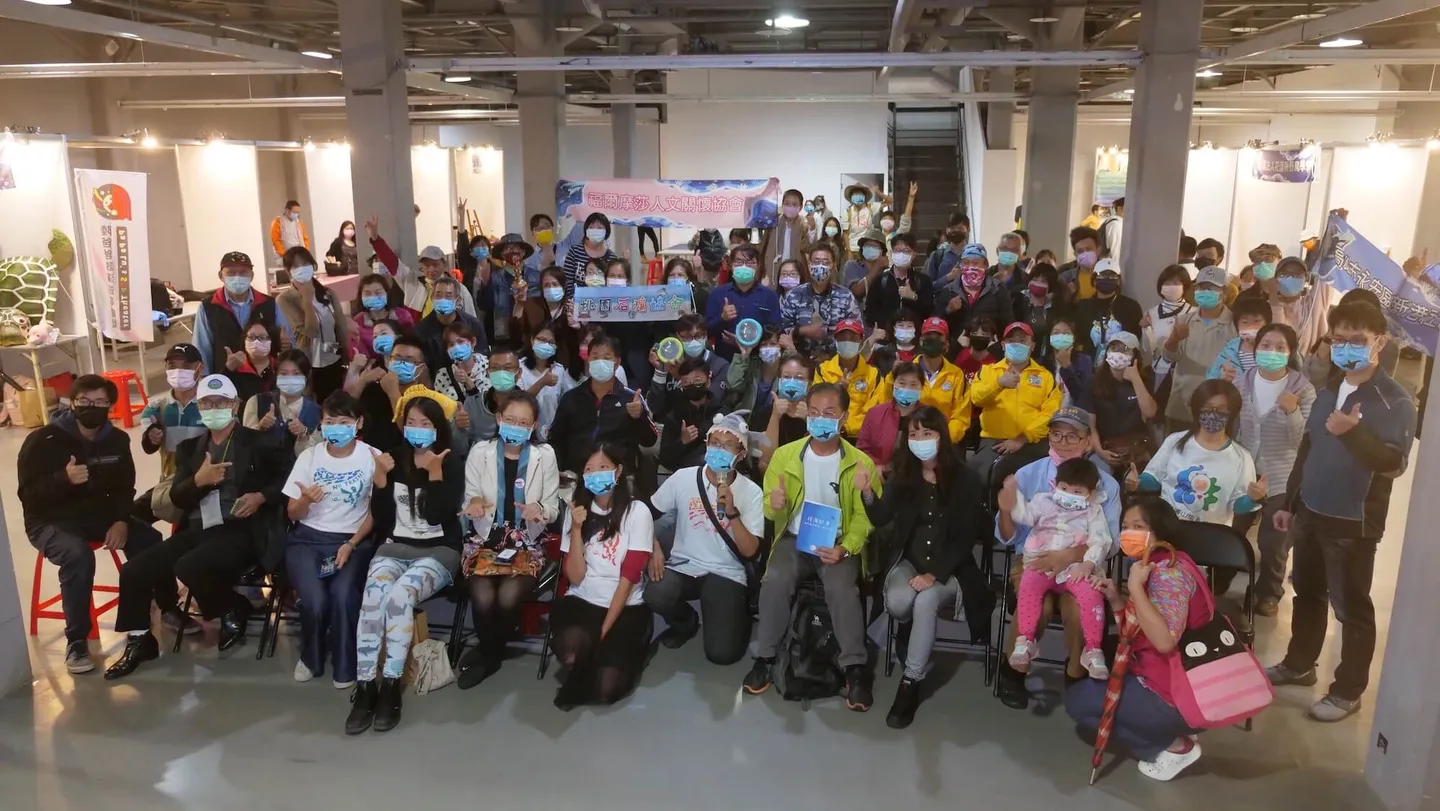
The Ocean Conservation Local Stewardship Program provides resources and a platform through the Ocean Conservation Administration, empowering local groups to protect the ocean in creative ways.
On October 24, 2021, at Huashan in Taipei, 38 local ocean stewardship groups from 19 coastal and outlying island counties and cities across Taiwan gathered to present the results of the "Ocean Conservation Local Stewardship Program." This year, the participating groups collectively organized 48 beach cleanup and ocean cleanup events, removing 7,339 kg of marine debris; monitored and restored 94 habitat sites covering a total of 34.5 hectares; and conducted 1,392 citizen marine science surveys, among other achievements (for full details, please visit the Ocean Conservation Administration website). Each local group presented its own perspective and conservation strategy for the marine environment, and the event showcased the collaborative results achieved between government agencies and civil society organizations.
Who Says Ocean Conservation Has to Be Boring!
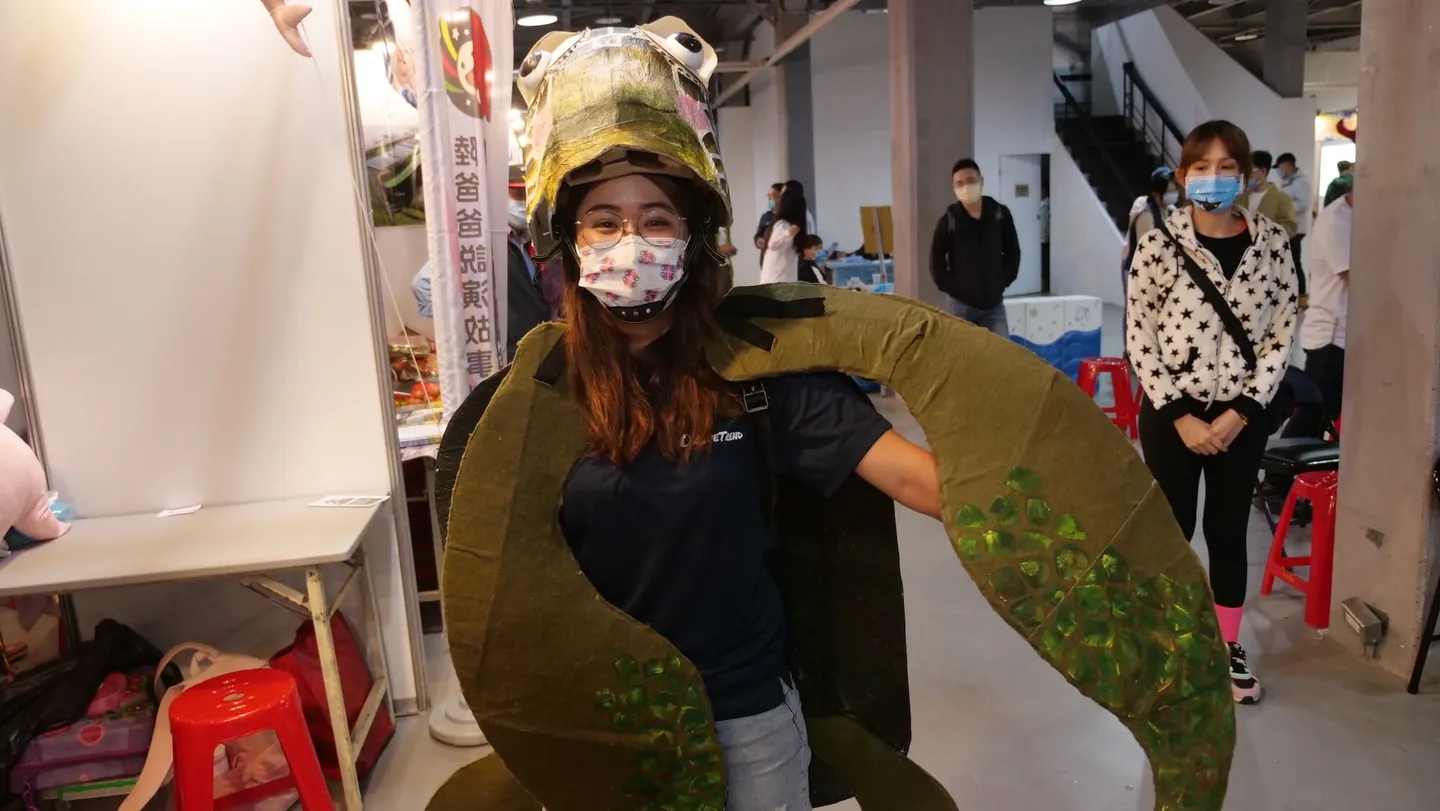
"Papa Lu's Storytelling Theater" creates sea turtle props made from recycled materials, used in environmental education programs across Taiwan.
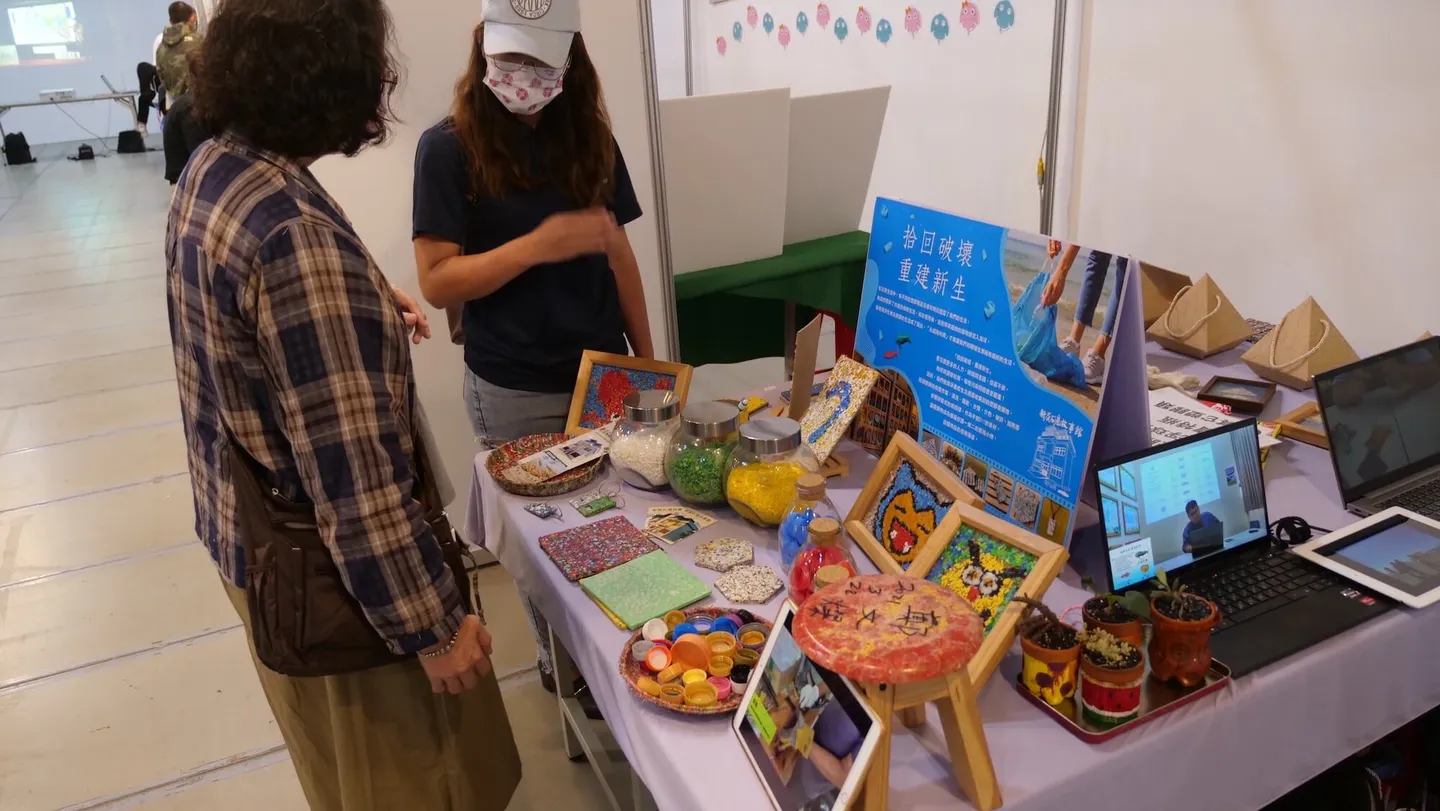
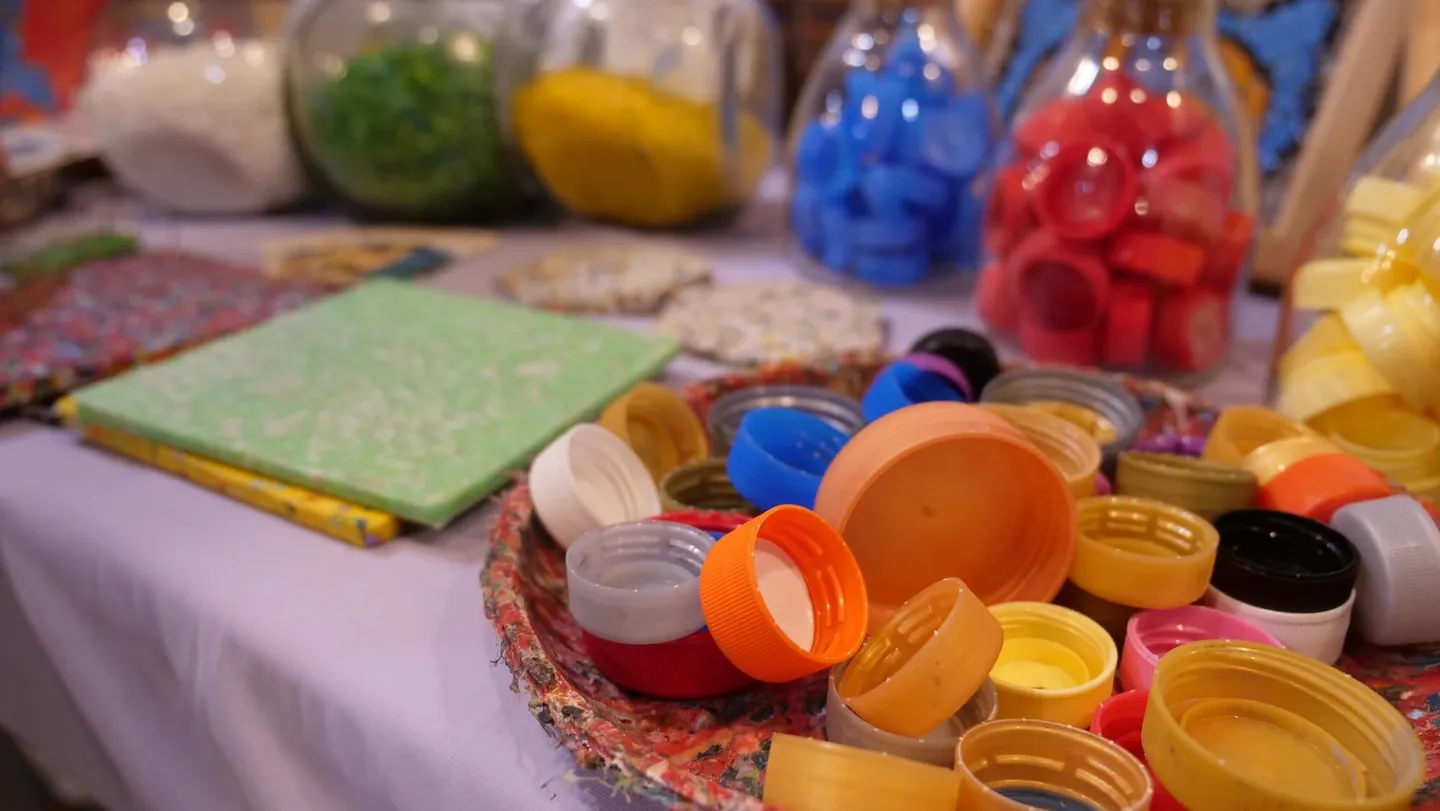
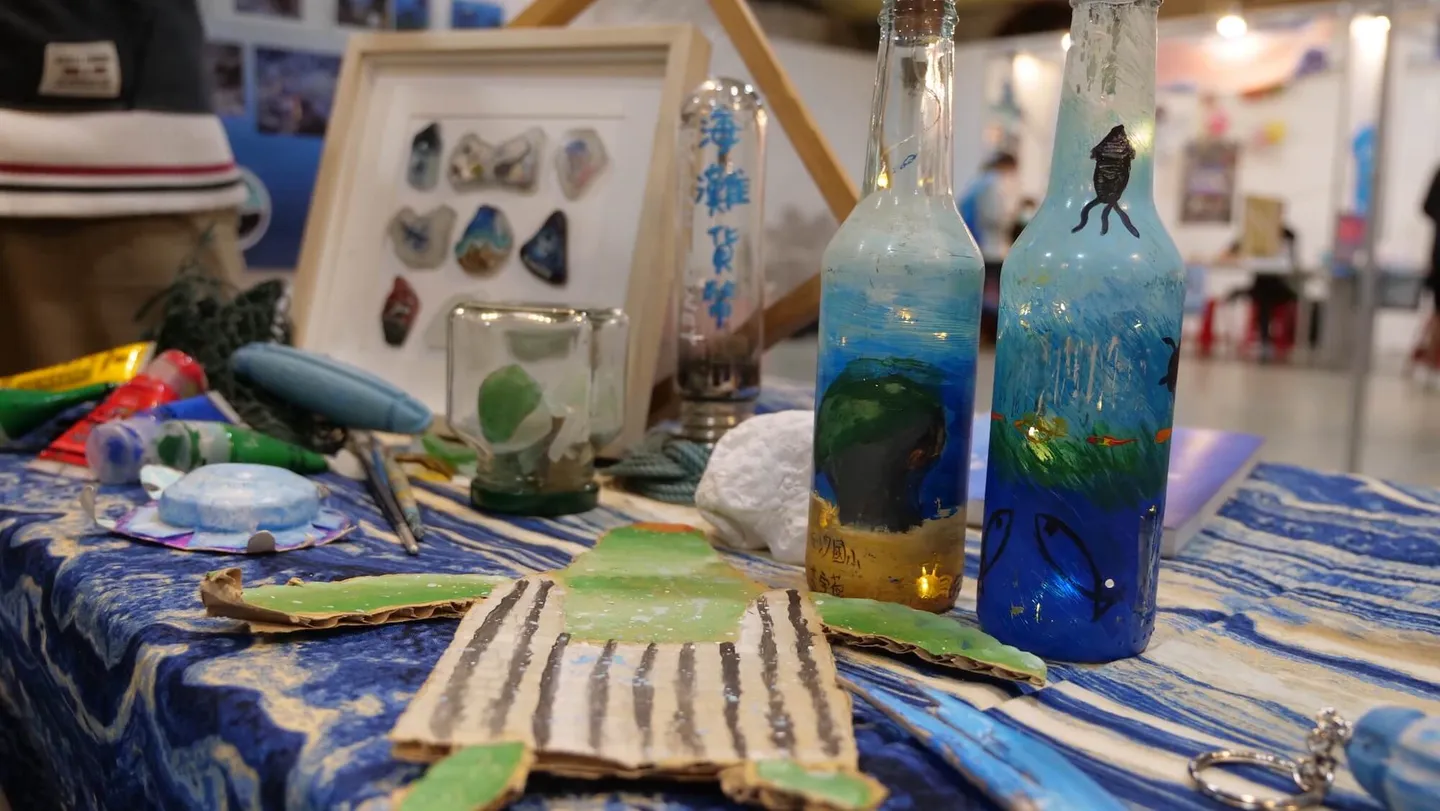
From across the room, visitors were immediately drawn in by the adorable marine creatures on display. "Papa Lu's Storytelling Theater" promotes ocean conservation through musical theater, using storytelling to help children understand the issue of marine debris. The stage props — sperm whales, Whale Sharks, sea turtles, Stingrays, and other marine life — are all crafted from recycled materials. Through his professional expertise, Papa Lu hopes to merge marine conservation with the arts, breaking free from the cold, fact-heavy framework of environmental education and adding a sense of fun to serious eco-topics, encouraging children to care more about the ocean and marine debris.
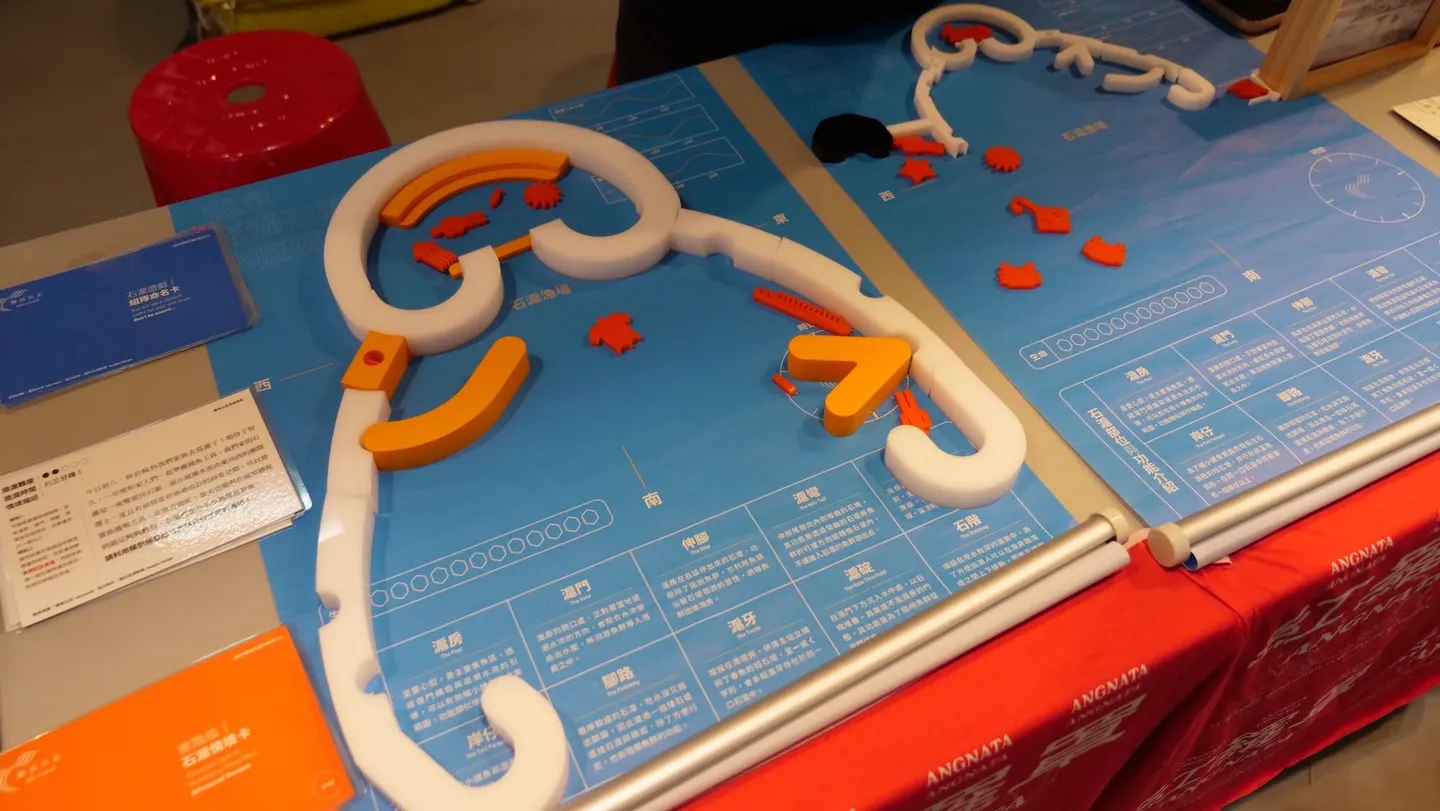
"Isle Travel" designed a miniature stone weir (shih-hu) board game that is both educational and entertaining.
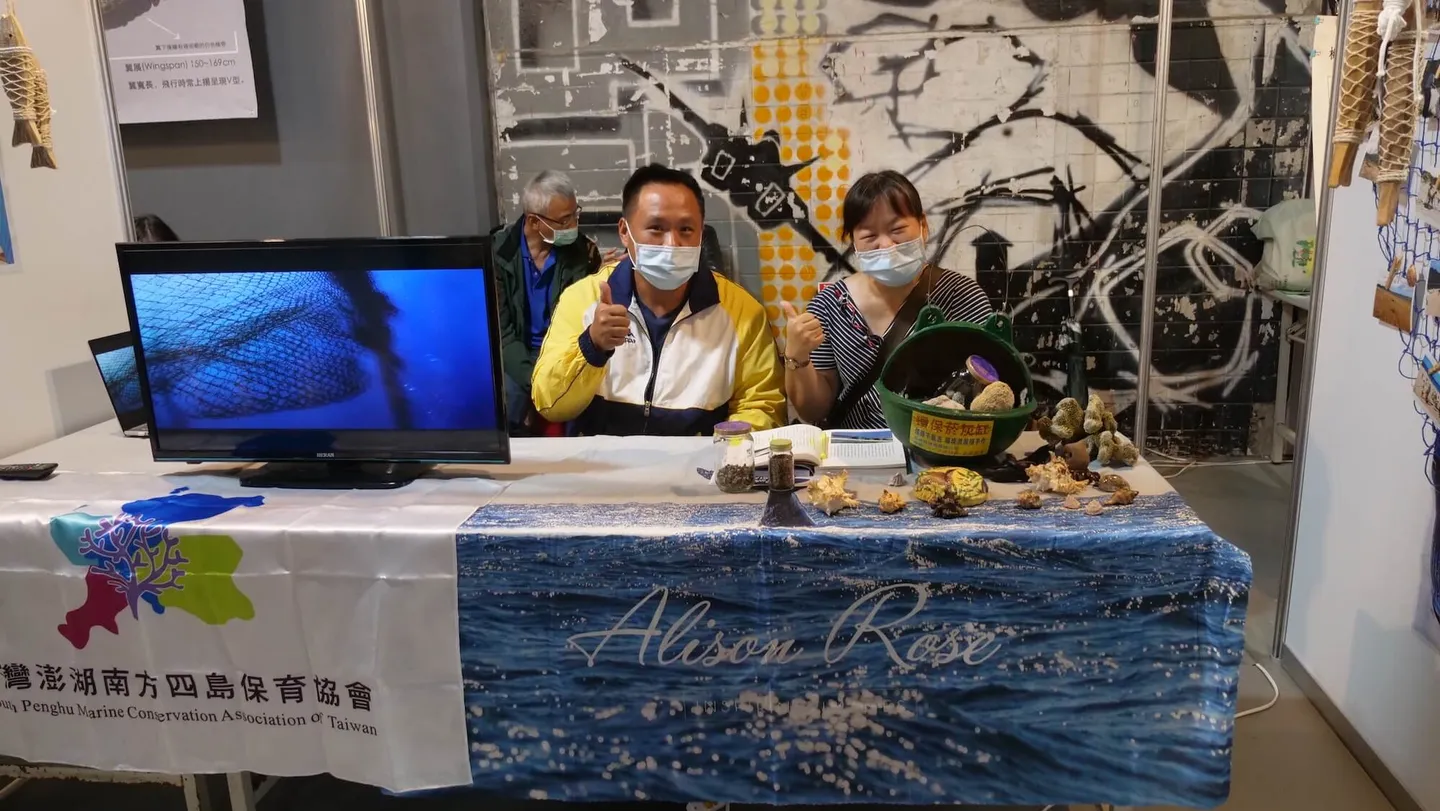
Turning to the center stage, it was the turn of Penghu's "Hongluo Community Development Association" to share their story. It turns out that Penghu's stone weir (shih-hu) complex is the highest-density, best-preserved, and still-functioning cultural heritage of its kind in the world. Of the 700 stone weirs, the oldest date back over 300 years, and the largest of them all is located in Hongluo Village, Huxi Township. Adapted to the intertidal terrain, a traditional fishing method combining "zhanping" platforms and stone weirs — known as "mohu'an" — emerged from this landscape. However, due to the depletion of fishery resources, the mechanization of fishing, and a breakdown in generational knowledge transfer, the craft of building and maintaining stone weirs has been gradually neglected, and these traditional fishing techniques now face the risk of being lost forever.
In response, the "Hongluo Community Development Association" partnered with "Isle Travel" to develop a series of promotional plans for preserving the "mohu'an" tradition. They applied for government subsidies and adopted a commercial model to fund weir restoration. Isle Travel designed a miniature stone weir board game that instantly brings the public closer to this cultural heritage. Players must understand the structure of stone weirs, ocean currents, tides, fishing grounds, and the common marine life found within them in order to complete the game's challenges. The beautifully crafted and engaging board game is ideal for children.


The Stone Weirs of Xinwu, Taoyuan — A "Great Wall of the Sea"
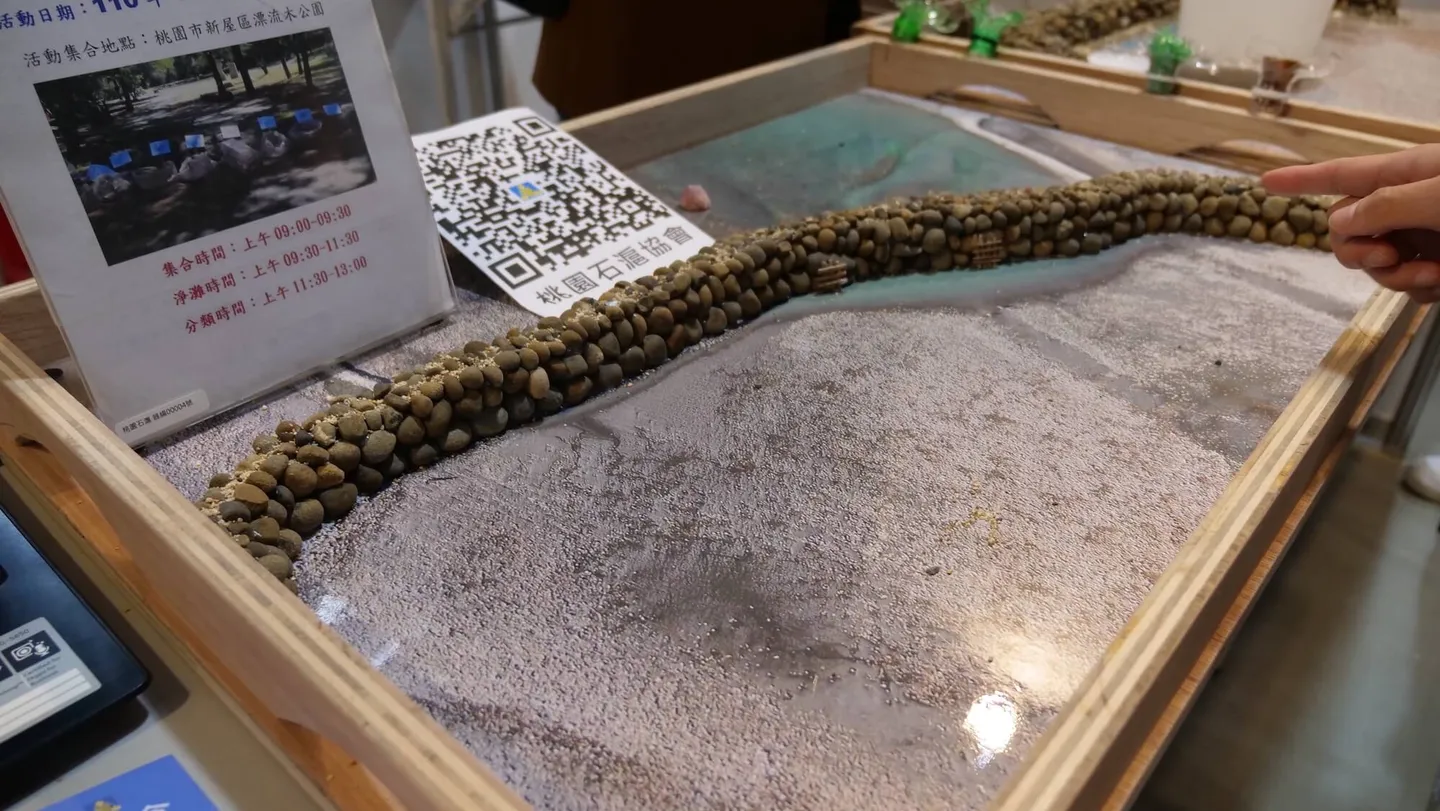
The "Taoyuan Stone Weir Association" uses a scale model of a stone weir to teach the public about its historical and practical value.
Stone weirs aren't unique to Penghu — Xinwu District in Taoyuan is also home to a century-old stone weir complex, which from a distance resembles a "Great Wall of the Sea" along the west coast. Unlike Penghu's weirs, which are built from coral limestone (gulu stone), Xinwu's weirs are constructed from smooth, densely packed pebbles that leave no gaps. As a result, Taoyuan's stone weirs feature specially designed drainage holes to speed up water drainage. Currently, there are 11 stone weirs stretching from Shenzhen North Shore to Kejian in Xinwu; the better-preserved ones still function as fish traps, though the entire complex is threatened by encroaching marine debris.
The "Taoyuan Stone Weir Association" actively promotes the Kejian Stone Weir Tour, giving visitors hands-on experiences such as fork-net fishing, haul-net fishing, and observing fish from the weir embankments. In addition, the Taoyuan City Government has renovated an old police dormitory into Taiwan's first stone weir heritage museum, helping the public learn about traditional fishing culture. With both civil organizations and the government working together, the century-old history of the Kejian stone weirs is being preserved and passed on.
A Light Journey Through the Wetlands — Weaving Environmental Education into Tourism
Taoyuan's coastline has four key ecological promotion areas, running from north to south: Xucuogang Wetland, Caotuo Sand Dunes, Guanxin Algal Reef, and the Xinwu Stone Weirs. A cycling trail crossing the Laojie River and Shuangxikou River, linking Xucuogang Wetland with Caotuo Sand Dunes, is expected to be completed in 2022. The Guanyin Datan algal reef in Taoyuan drew renewed attention when environmental groups launched a campaign to "Save the Algal Reef." In fact, Taoyuan's algal reefs extend approximately 27 km from Zhuwai Fishing Harbor in Dayuan District southward to Yong'an Fishing Harbor in Xinwu District.
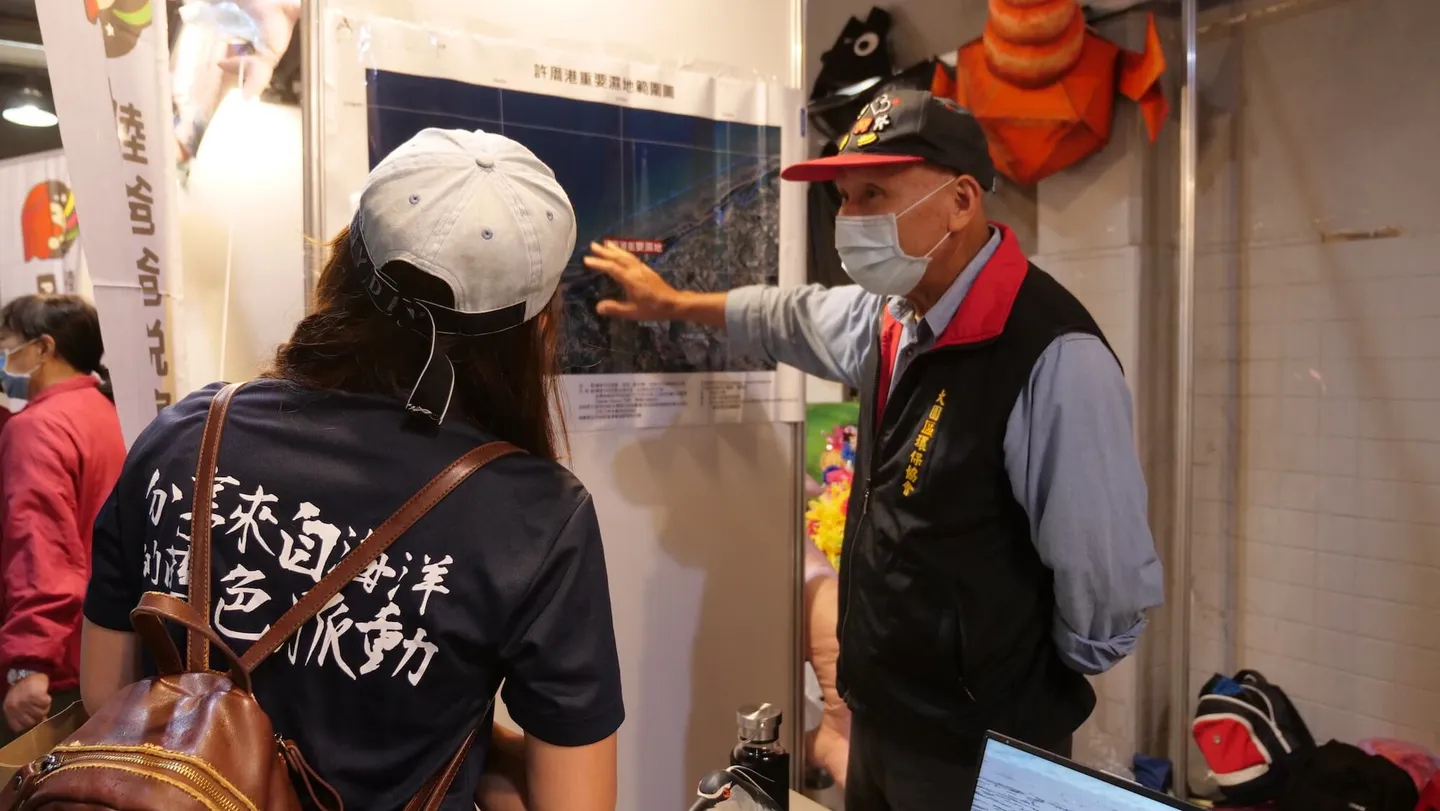
The "Taoyuan Dayuan District Environmental Protection Association" regularly organizes guided tours of Xucuogang Wetland.
The Xucuogang algal reef, stretching from Xinxikou to Laojie River estuary, is a nationally significant wetland. Every year, thousands of migratory birds stop here to rest and feed, while the diverse habitats — intertidal zones, marshes, sandbars, and windbreak forests — attract a wide variety of bird species. The "Taoyuan Dayuan District Environmental Protection Association" promotes light wetland tourism, introducing visitors to intertidal plants, migratory birds, local history and culture, and regional agricultural specialties. From November to February, when the weather turns cold, eel larvae congregate at river estuaries and eel seedling harvesters gather to collect them — making the eel fishing platforms a distinctive local attraction.
Have You Ever Seen a Horseshoe Crab?
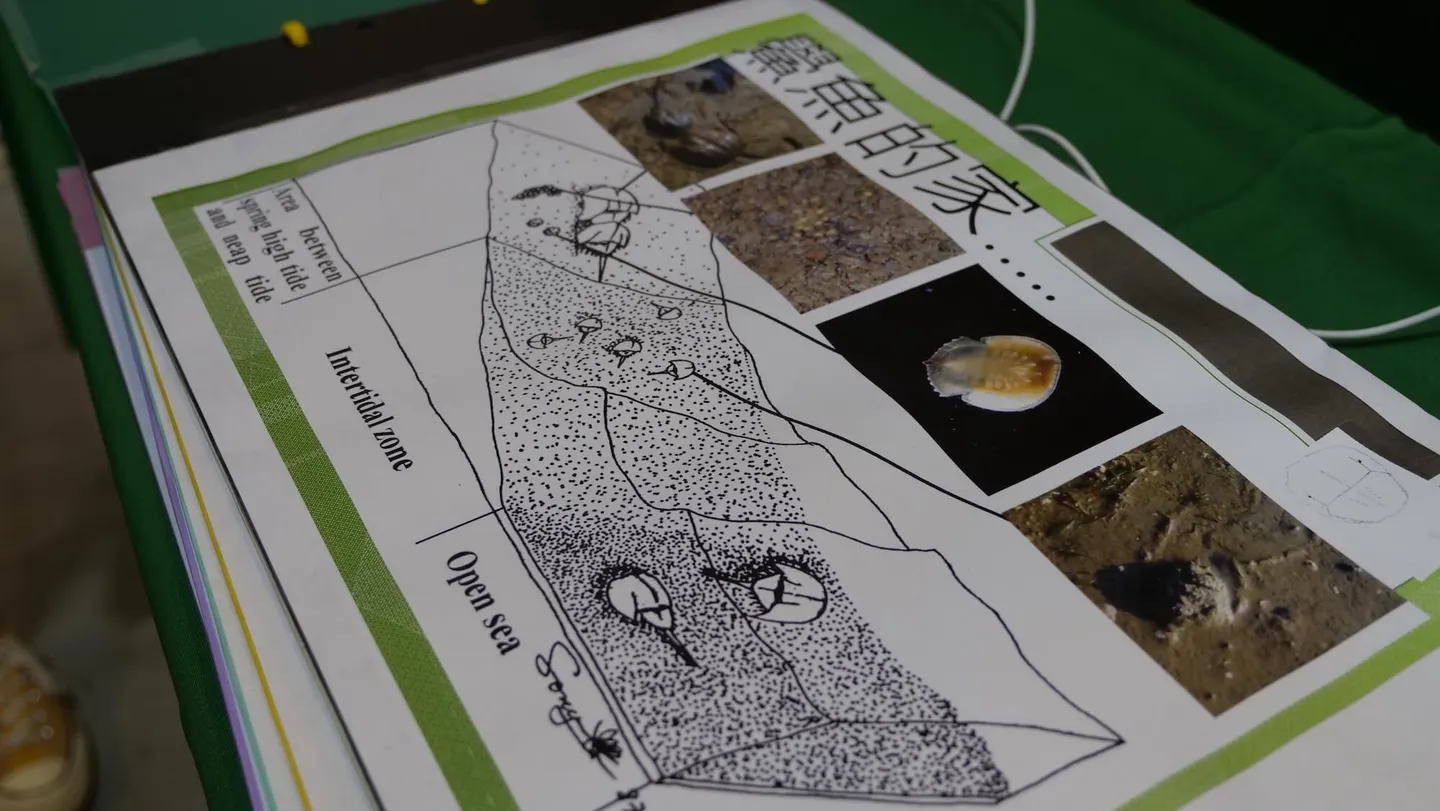
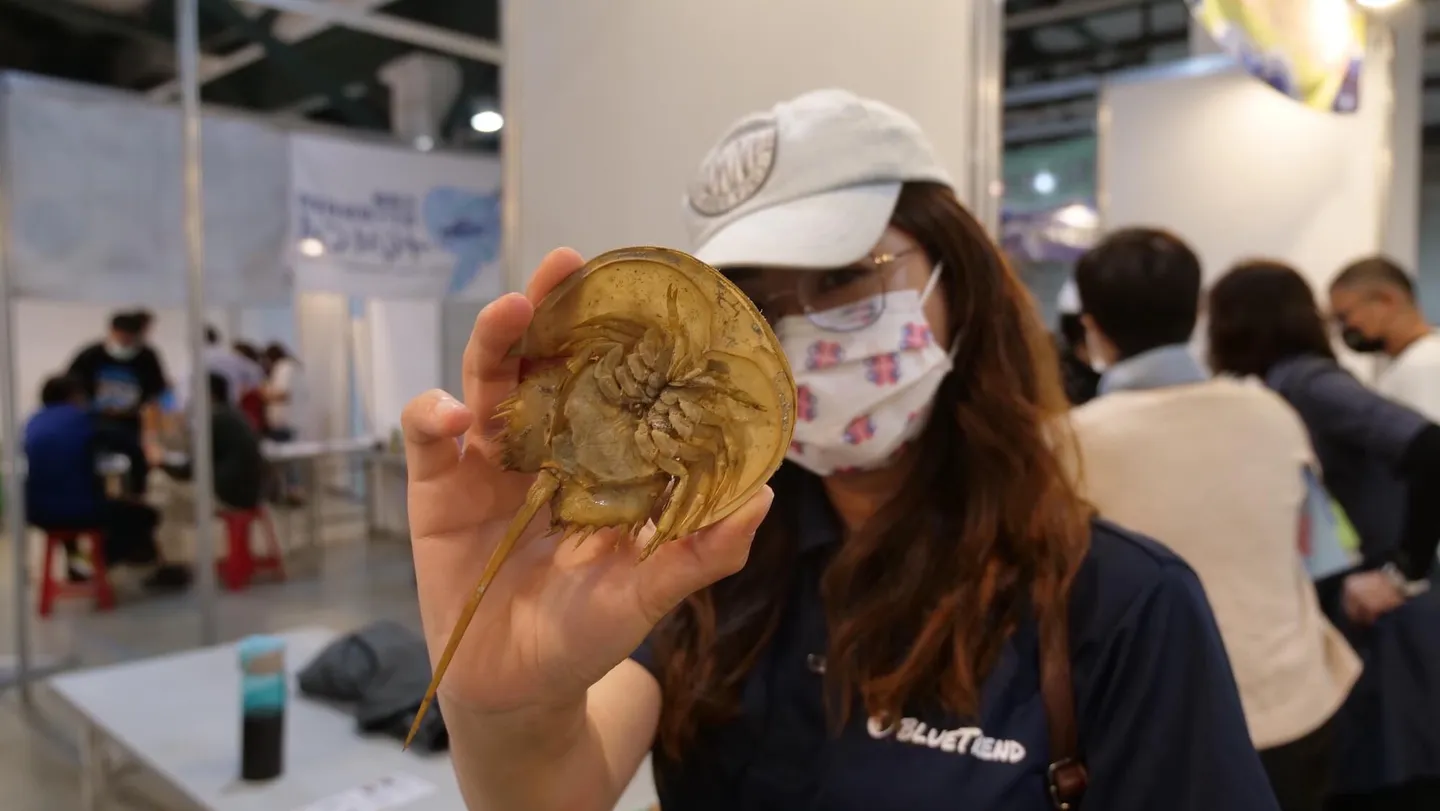
A living fossil that has survived on Earth for 400 million years, the horseshoe crab now faces a crisis as its habitat is increasingly destroyed. The construction of ports has created jetty effects that cause sandbars to shrink, damaging wetlands and shrinking the horseshoe crab's habitat. The "Chiayi County Ecological Conservation Association" partnered with Xinsen Elementary School to set up a "Horseshoe Crab Palace" holding pool on school grounds, providing a temporary refuge for accidentally caught horseshoe crabs. Volunteers regularly monitor water quality, feed the crabs, observe and record their behavior, incubate eggs, and even attempt artificial cultivation of horseshoe crab larvae.
The "Chiayi County Ecological Conservation Association" is also working with the Chiayi County Government to plan the construction of the nation's first horseshoe crab ecological conservation center, to be located in Budai, Chiayi. Once open, the public will be able to visit and learn about this remarkable creature that once shared the Earth with trilobites.
Local Care + Creative Solutions = The Winning Formula of the Ocean Conservation Local Stewardship Program
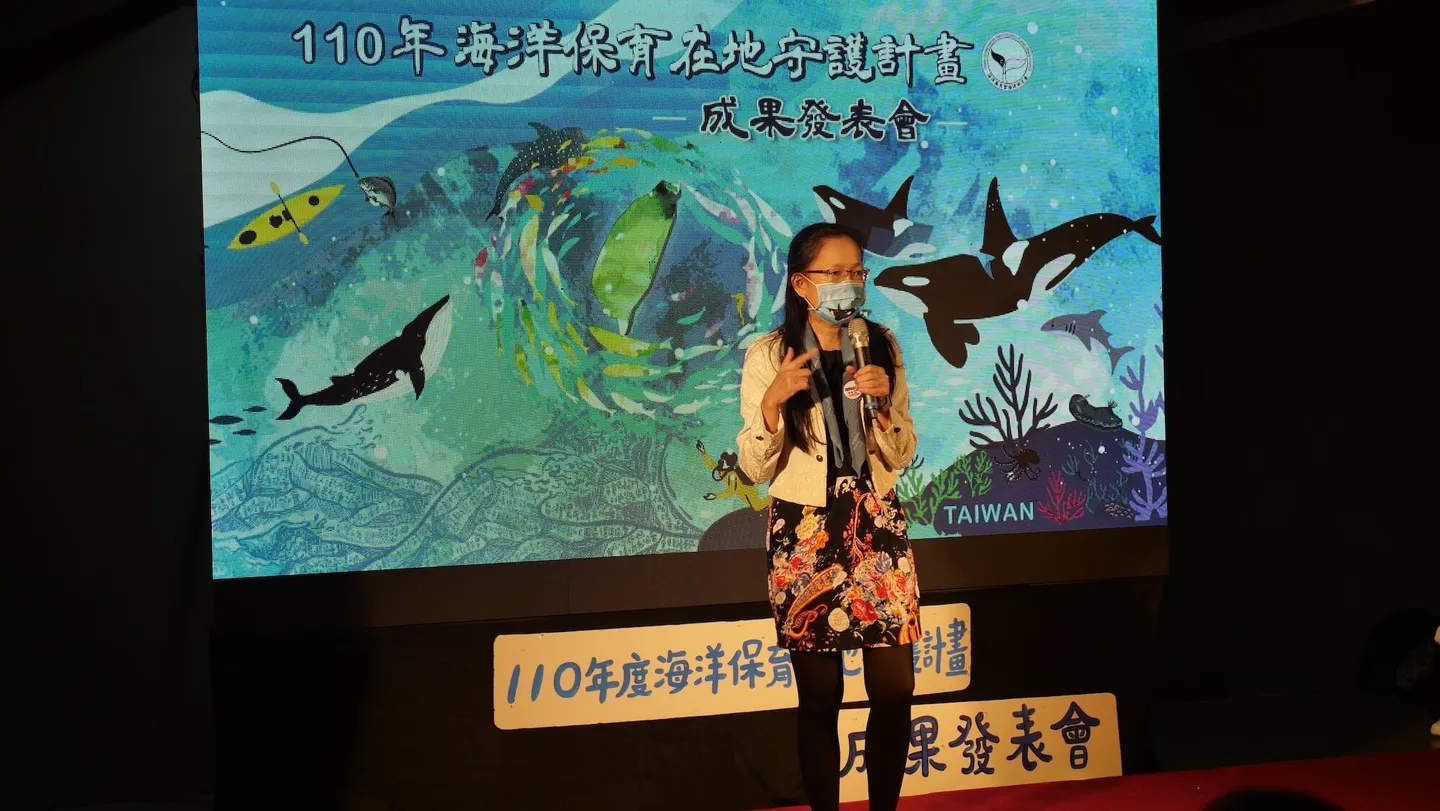
Ocean Conservation Administration Director-General Huang Hsiang-wen encourages everyone to protect local ocean issues in creative ways.
This results showcase moved well beyond the conventional approach of limiting ocean conservation to beach cleanups and ocean cleanups. Instead, it highlighted many teams looking at the relationship between the sea and human living environments from fresh angles — fishery ports, intertidal zones, stone weirs, water birds, and the fate of marine debris — all with the hope of capturing the attention of a broader range of stakeholders and taking the first step beyond the echo chamber.
In recent years, the Ocean Conservation Administration has actively championed the spirit of citizen science, and the "Ocean Conservation Local Stewardship Program" is one concrete way to put that into practice. Even though central and local governments hold administrative authority, pushing forward with marine conservation can often fall short of covering every aspect, and policies cannot address every dimension of the issue. The "Ocean Conservation Local Stewardship Program" provides resources and a platform from the Ocean Conservation Administration, enabling local groups across Taiwan to dig into problems from their own unique perspectives and find the best answers by combining creativity with local knowledge. Details on how to apply for the 2022 "Ocean Conservation Local Stewardship Program" can be found at the link.
Related links:
- Papa Lu's Storytelling Theater
- Isle Travel
- Penghu Hongluo Community Development Association
- Taoyuan Stone Weir Association
- Taoyuan Dayuan District Environmental Protection Association
- Chiayi County Ecological Conservation Association
- Ocean Conservation Local Stewardship Program — Application Guidelines

![[4th MediaTek Hometown Intelligence] Making Sustainable Development Easier! A Citizen Science Marine Biodiversity Database Built Through Nationwide Underwater Photography](/_astro/image2-2_234sng.webp)