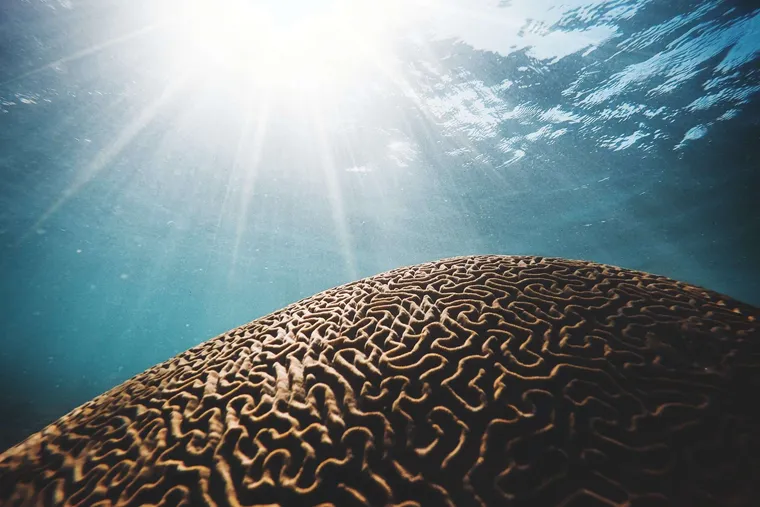
![[Ocean Reads] Give Yourself a Chance to Rediscover the Ocean — *Ocean Taiwan: A Record of the Great Blue Territory*](/_images/2a2bce0460cc-960w.webp)
Taiwan's Complete Ocean Record — A Breathtaking Window into Marine Life
Taiwan's land area is just over 36,000 square kilometres, and its territorial waters including internal waters cover 65,000 square kilometres — on a world map, the island often appears no larger than a grain of rice. But did you know that Taiwan's marine biodiversity is remarkably high?
More than 12,000 marine species have been recorded in Taiwan, including over 3,200 species of fish — one-tenth of all known fish species on Earth. Taiwan is also home to more than 500 species of stony coral, approximately 300 species of soft coral, around 600 species of seaweed, over 500 species of crabs and shrimp, approximately 50 species of seabirds, around 30 species of whales and dolphins, and 5 species of sea turtles. It is truly remarkable that such a small island holds such extraordinary marine richness.
Why is Taiwan's marine environment so exceptionally blessed? Because Taiwan sits at the intersection of three Large Marine Ecosystems — the East China Sea, the South China Sea, and the Kuroshio Current — and lies between the Ryukyu Archipelago and the Philippine Archipelago. Its surrounding waters include the Pacific Ocean (Philippine Sea), the Luzon Strait, the South China Sea, the Taiwan Strait, and the East China Sea. This confluence gives rise to a diverse range of marine ecosystems, including coral reef ecosystems, seagrass bed ecosystems, mangrove ecosystems, algal reef ecosystems, rocky reef ecosystems, and open-ocean ecosystems — all teeming with rich and varied life.
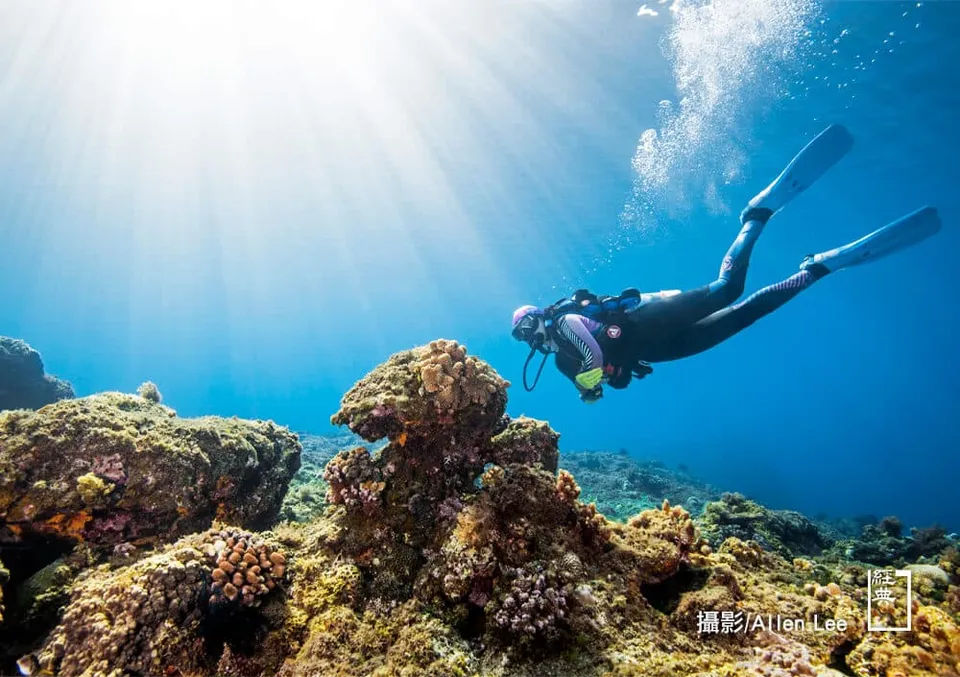
Author Huang Xiao-Mo of Ocean Taiwan: A Record of the Great Blue Territory has spent years traversing Taiwan's waters, diving in herself to report firsthand, undaunted by hardship or danger, bringing back on-the-ground accounts of Taiwan's ocean. (Photo / Allen-Lee)
Among these, coral reefs are a vital ecosystem sustaining human economies and livelihoods — and one that people can come to know through dive travel. By drawing closer to the ocean, we are inspired to cherish and protect it.
Taiwan has more than 160 islands and 1,988 kilometres of coastline. Coral distribution spans from the Northeast Coast in the north to the Hengchun Peninsula in the south, and extends to the outlying islands of Xiaoliuqiu, Green Island, Orchid Island, Keelung Island, Turtle Island, the North Three Islands, the Penghu Archipelago, Dongsha Atoll, and Taiping Island in the South China Sea.
Thanks to Taiwan's advantageous geographic position and highly diverse marine habitats, combined with the influence of converging ocean currents — with the warm northward-flowing Kuroshio running along the east, south, and past Xiaoliuqiu, and cold coastal waters from Fujian and Zhejiang flowing southward along the north and Penghu — the biogeographic distribution of Taiwan's marine life runs along a "upper-right to lower-left" diagonal, dividing the island into tropical and subtropical zones. This creates a striking difference in marine species between the northern and southern waters.
When facing the ocean, we should approach her with reverence and seek to understand her — but there is no need to fear her out of ignorance. As science and technology advance, there are more ways than ever for people to draw close to the sea and come to know her. Small but magnificent Taiwan holds so much diversity and wonder — come out to sea with us, dive in, and meet her for yourself.
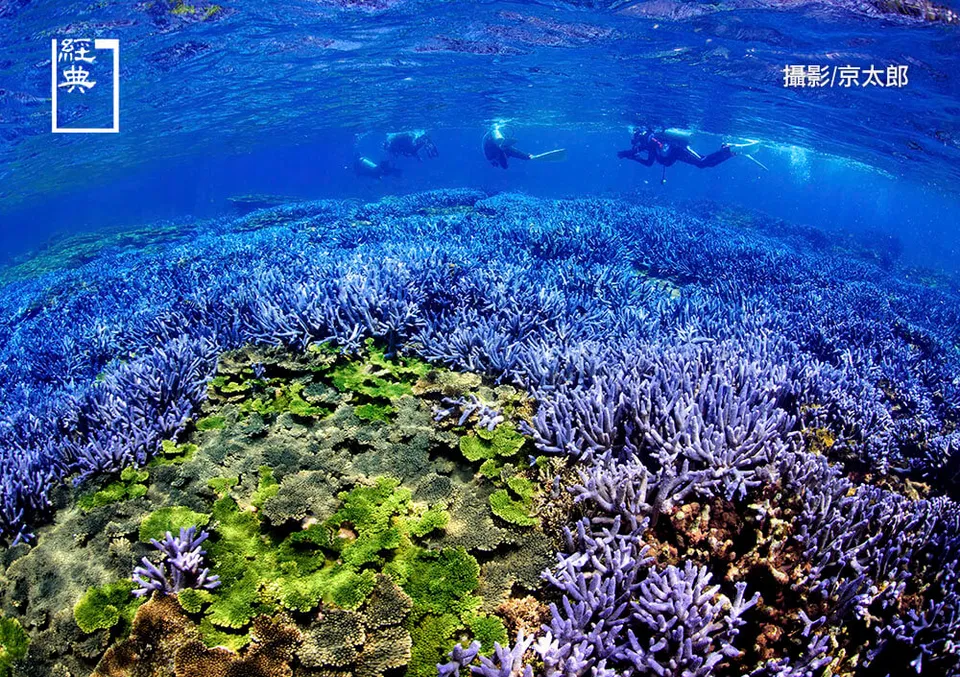
The waters of the Penghu South Islands National Park boast high coral coverage and abundant fish life. The spectacular purple Acropora coral reef off Dongji Island is so stunning that divers call it the "underwater lavender forest." (Photo / 京太郎)
This book is a marine documentary record completed over more than three years by Huang Chia-Lin (Huang Xiao-Mo), a contributing writer for Rhythms Monthly, together with a number of outstanding underwater photographers. Author Huang Chia-Lin (Huang Xiao-Mo) began venturing out to sea and diving for her reporting in 2014, travelling along the east and west coasts, north and south dive sites, and the outlying islands of Dongsha Atoll, Xiaoliuqiu, Green Island, Orchid Island, Penghu, and Turtle Island. Moving from the shoreline down beneath the surface, she was repeatedly astonished and moved by the extraordinary richness of Taiwan's marine life — and equally troubled by it, feeling guilt, anger, and helplessness on behalf of all who live on this land.
The book is filled with rare and precious photographs — breathtaking moments captured by dozens of underwater photographers who risked their lives and waited countless hours for the perfect shot. The editorial team carefully curated 205 images to bring readers face to face with the astonishing beauty of Taiwan's ocean, evoking both wonder and heartache at the island's natural world, and inspiring a deeper humility before nature.
It is our hope that this book will draw more people closer to the ocean, inspire them to care for it, open their minds to broader horizons, and help find a path that balances marine conservation with economic development — a sustainable way forward for humans and nature to coexist.
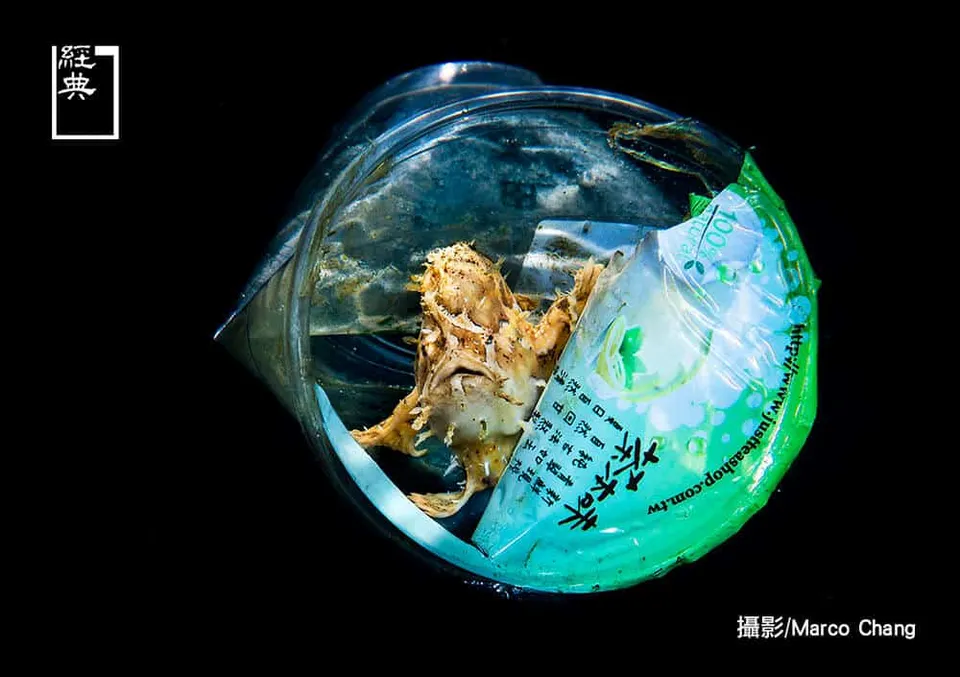
Eighty percent of marine debris originates from land. Every year, 8 million tonnes of plastic flow into the ocean, polluting the sea — and marine creatures have even begun to make their homes in it. A frogfish, which normally inhabits sargassum, has taken shelter inside a discarded drinks cup. (Photo / Marco-Chang)


Ocean Taiwan: A Record of the Great Blue Territory — About the Author
Author: Huang Chia-Lin (Huang Xiao-Mo)
Island travel lifestyle writer and advocate for sustainable tourism.
With over ten years of experience as a journalist, she has travelled extensively at home and abroad. In recent years she has combined marine environmental issues with the promotion of ocean travel, diving to report on renowned dive sites both in Taiwan and overseas. She has long followed ecotourism, dive tourism, and marine conservation, with work published across major media outlets. She frequently appears on radio, television, and online programmes to share her travel experiences, and gives talks at schools, government bodies, and corporations on sustainable tourism and marine conservation.
She learned to scuba dive at thirty, and it was her deep love for Taiwan that led her to pour her heart and soul into writing this book, Ocean Taiwan: A Record of the Great Blue Territory. Her passion for the sea and her love of exploration have kept her living between the city and the islands for years.
A graduate of the Department of Journalism at Shih Hsin University, she has worked as a travel reporter for the China Times, an arts and culture reporter for Wealth Magazine, and a Shanghai-based correspondent for Era Television. She is now a globe-trotting travel journalist, ocean journalist, content creator, independent reporter, and sustainable tourism marketing consultant — embracing a multi-hyphenate life.
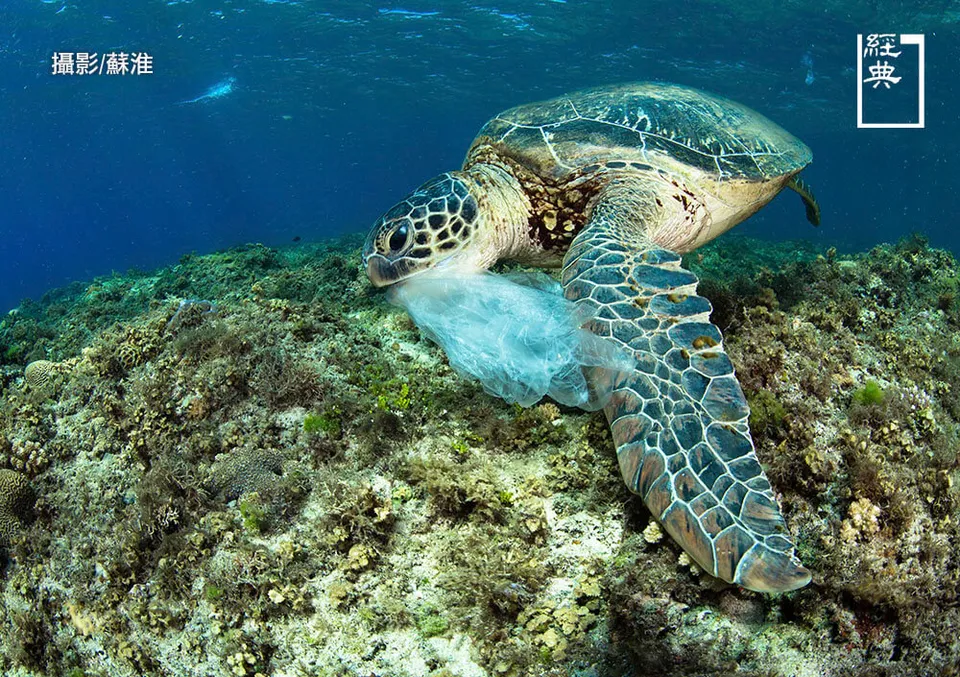
Every sea turtle has a unique arrangement of facial scales — this one is affectionately known as "Second Brother the Foodie." Plastic bags floating in the ocean resemble jellyfish and are frequently ingested by sea turtles by mistake; plastic has also regularly been found in their faeces. (Photo / 蘇淮)
[Endorsement] Huang Hsiang-Wen, Director-General, Ocean Conservation Administration, Ocean Affairs Council
Exploring the challenges facing our oceans from a scientific foundation — in terms of the scope and depth of interviews alone, this work is unrivalled. It also sets this book apart from other writing about the ocean by giving it a scientific dimension that is, nonetheless, never dry or difficult to read — it is thoroughly accessible and engagingly written.
[Endorsement] Chen Mei-Hui, Professor, Department of Forestry, National Pingtung University of Science and Technology
A large portion of the series approaches the subject through dive travel, inviting readers to appreciate marine ecosystems up close. This is a book that reads as ocean conservation writing while simultaneously championing responsible, environmentally friendly tourism.
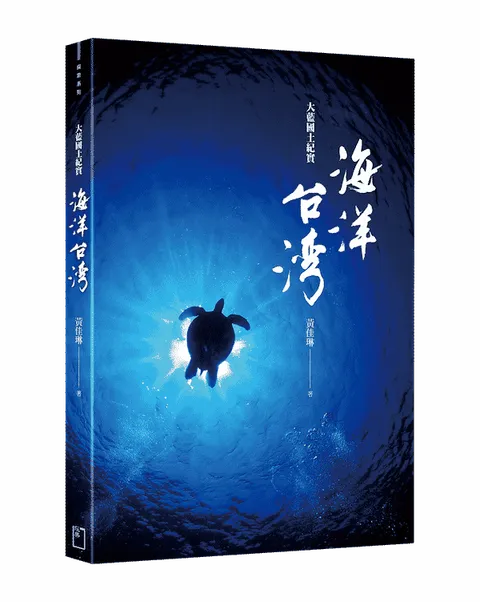
Ocean Taiwan: A Record of the Great Blue Territory
Further Reading:

![[Living in Harmony with the Ocean — A Must-Take Course] World Ocean Day, June 8: Ocean Advocates Launch Online Classes to Call for Saving the Sea](https://pub-7117f6d00fe54a2fb80f641ab6cb850d.r2.dev/posts/2021-06-08-save-the-ocean/images/1-城邦微學習團隊與台灣潛水執行長陳琦恩、海湧工作室執行長陳人平、旅遊作家黃小莫,合開線上課《與海共生的必修課:設計屬於你的愛海生活》。.jpg)
![[BlueTrend Mini Classroom] Beautiful Predators — A Shark Field Guide](/_astro/sea-water-ocean-animal-underwater-biology-1153301-pxhere.com-2_1JHxjW.webp)