Contents(9)
Okinawa has become one of the most popular travel and tourism destinations in recent years. Just a 90-minute flight from Taiwan — closer than Japan's main island — it offers the perfect blend of island vacation vibes, water activities, and, of course, diving. Yet compared to other popular overseas dive destinations among Taiwanese divers, such as Indonesia, Thailand, and the Philippines, diving on Okinawa's main island remains surprisingly unfamiliar to many. A quick search in Chinese turns up almost exclusively one dive site — the 青の洞窟 (Blue Cave) — or the Kerama Islands, celebrated for what locals call "Kerama Blue."
What Are Okinawa's Hidden Dive Gems?
In reality, diving is thriving throughout Okinawa's main island and its surrounding islands, with an abundance of dive sites to explore. Beyond the absurdly popular Blue Cave, the main island alone offers sites from south to north: Ginowan, Sunabe, Zanpa Cape, Manza-mou, Sakimoto-bu, Nago Bay, Oura Bay, Kin, Minna Island, Hedo Cape... (the list goes on), each area subdivided into 2–6 distinct sites. Add to that the outlying islands — Kerama, Miyako-jima, Ishigaki, the Amami Islands (historically part of the ancient Ryukyu Kingdom; though just north of Okinawa, they now belong to Kagoshima Prefecture), Aguni Island, Yonaguni, and more — and the options are truly endless. Each Okinawa dive site also has its own distinct character.
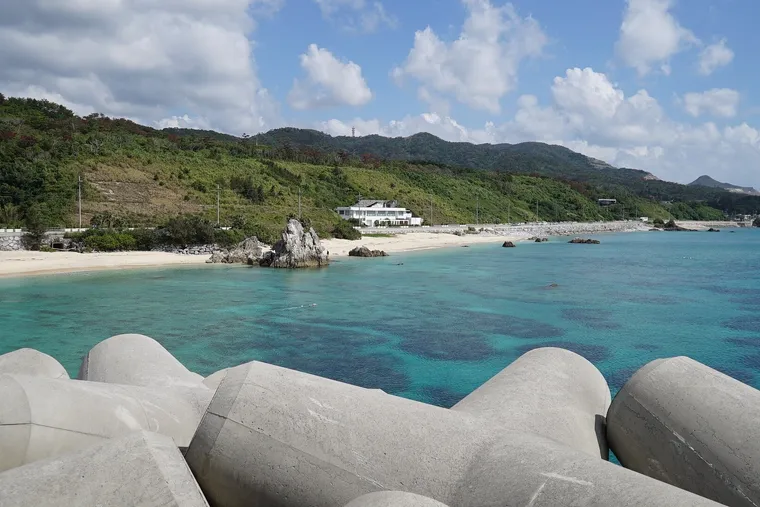
Take Sunabe, the main shore dive entry point of the dive shop where I work:
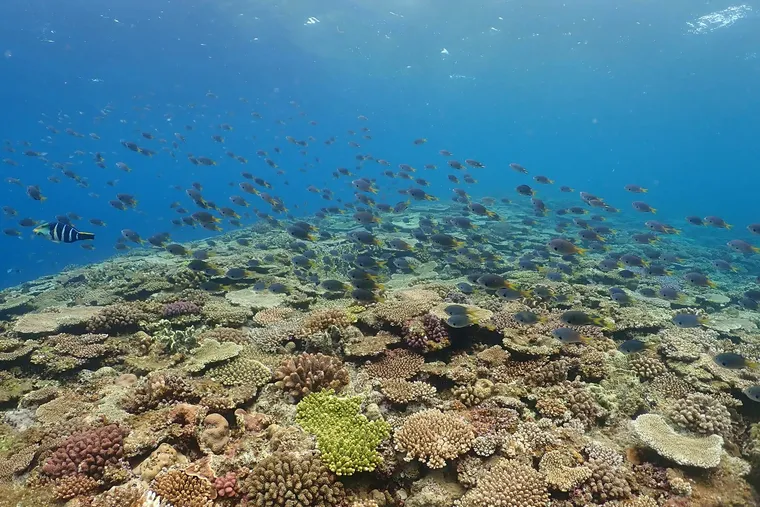
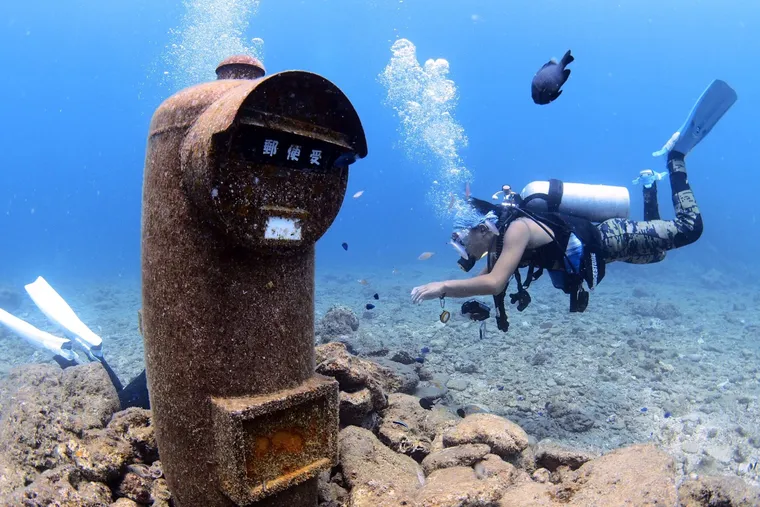
Apart from a distinctive underwater Japanese post box that's perfect for an Instagram photo, there is a nearly continuous coral reef stretching about one kilometre along the coast, with exceptionally high coverage of both soft coral and hard coral. Around 200 species of coral have been recorded in Okinawa's waters, and when I once casually counted during a discover scuba dive at Sunabe, I tallied over 40 species in a single dive! (Sadly, Typhoon Trami at the end of September 2018 caused some irreparable damage.)
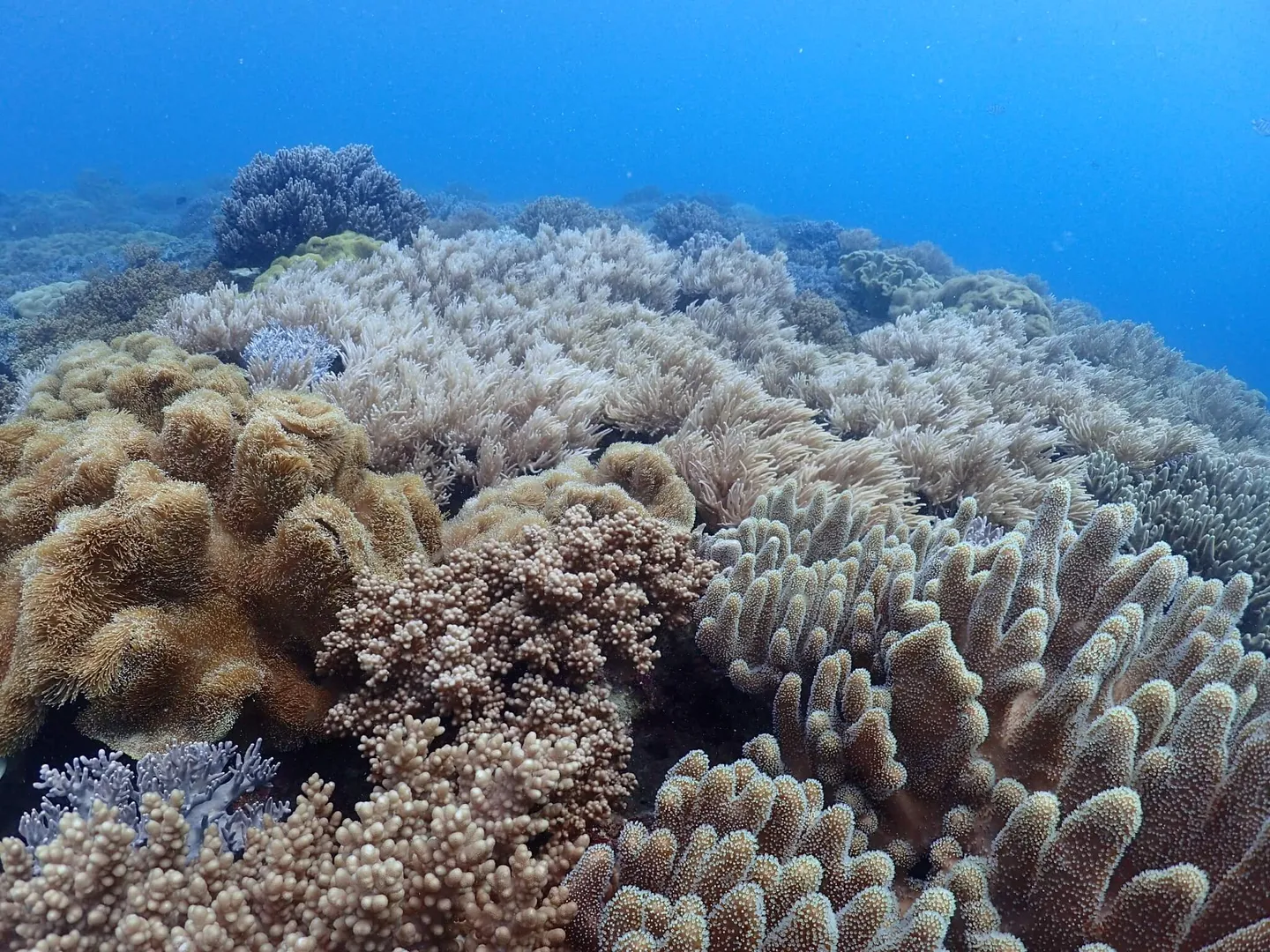
Sunabe Coral Sea
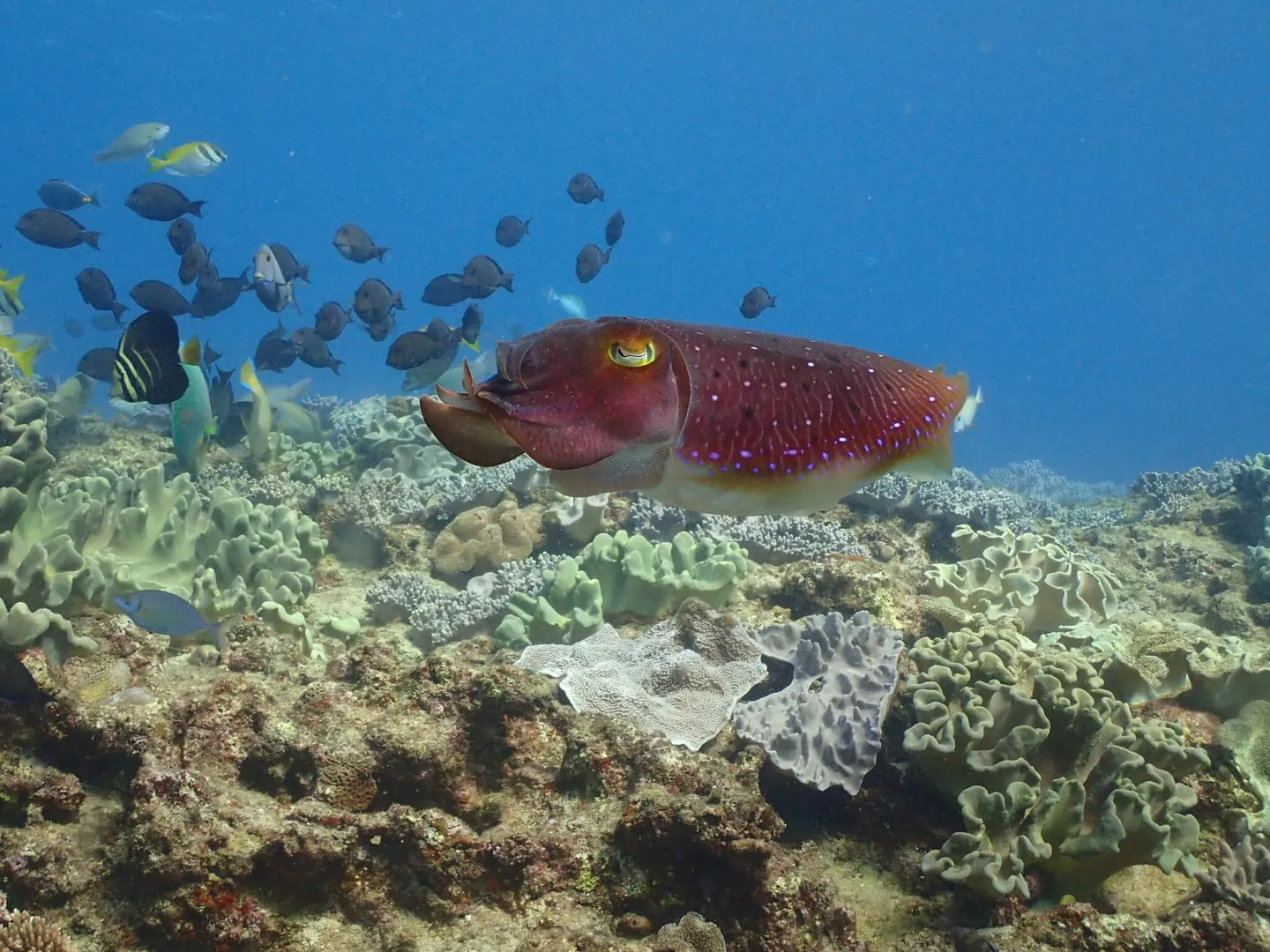
Mr. Cuttlefish
Sunabe is also a site that suits divers of all levels year-round. Maximum depth varies with the tide at around 20m, and the most beautiful coral reef sections are found between 4–10m. Setting aside the increasingly severe typhoon season in summer in recent years, the topography makes Sunabe virtually current-free (at most a mild shore break); as long as the wind direction cooperates, the swell is manageable in both summer and winter — calm, glassy water is a common sight (though there are days when waves are too rough to dive, especially in winter, but it is less dramatically affected by the northeast monsoon than Taiwan's dive sites).
Summer water temperatures can reach 30°C — (hopefully no higher in the future, or the coral will suffer) — while winter temperatures sit around 21–23°C. In terms of marine life, while there is nothing quite as spectacular as the guaranteed barracuda tornado aside, and the macro life doesn't rival Taiwan's, Whitetip Reef Sharks, blue-ringed octopus, and leaf scorpionfish are all regular residents of Sunabe.
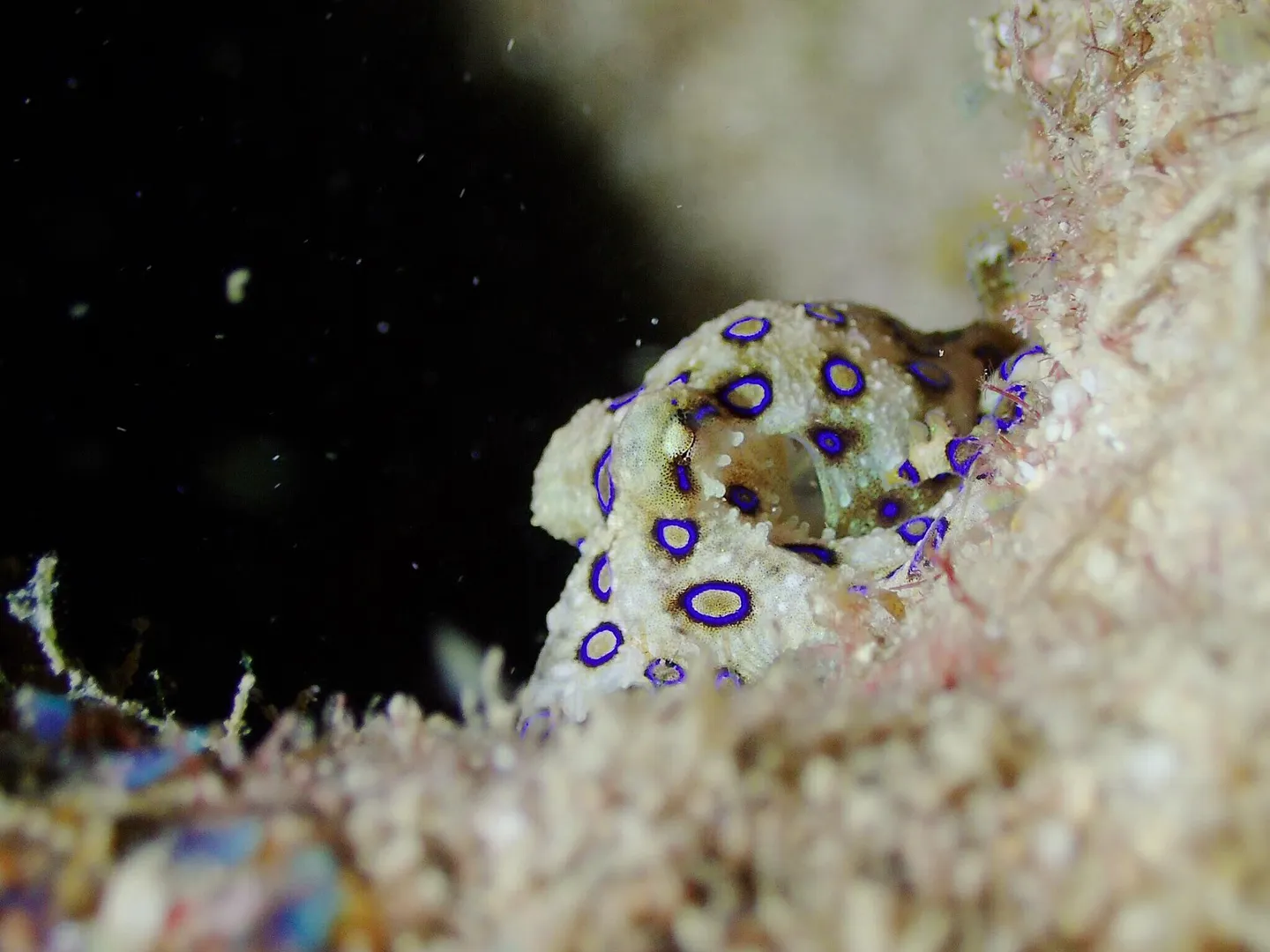
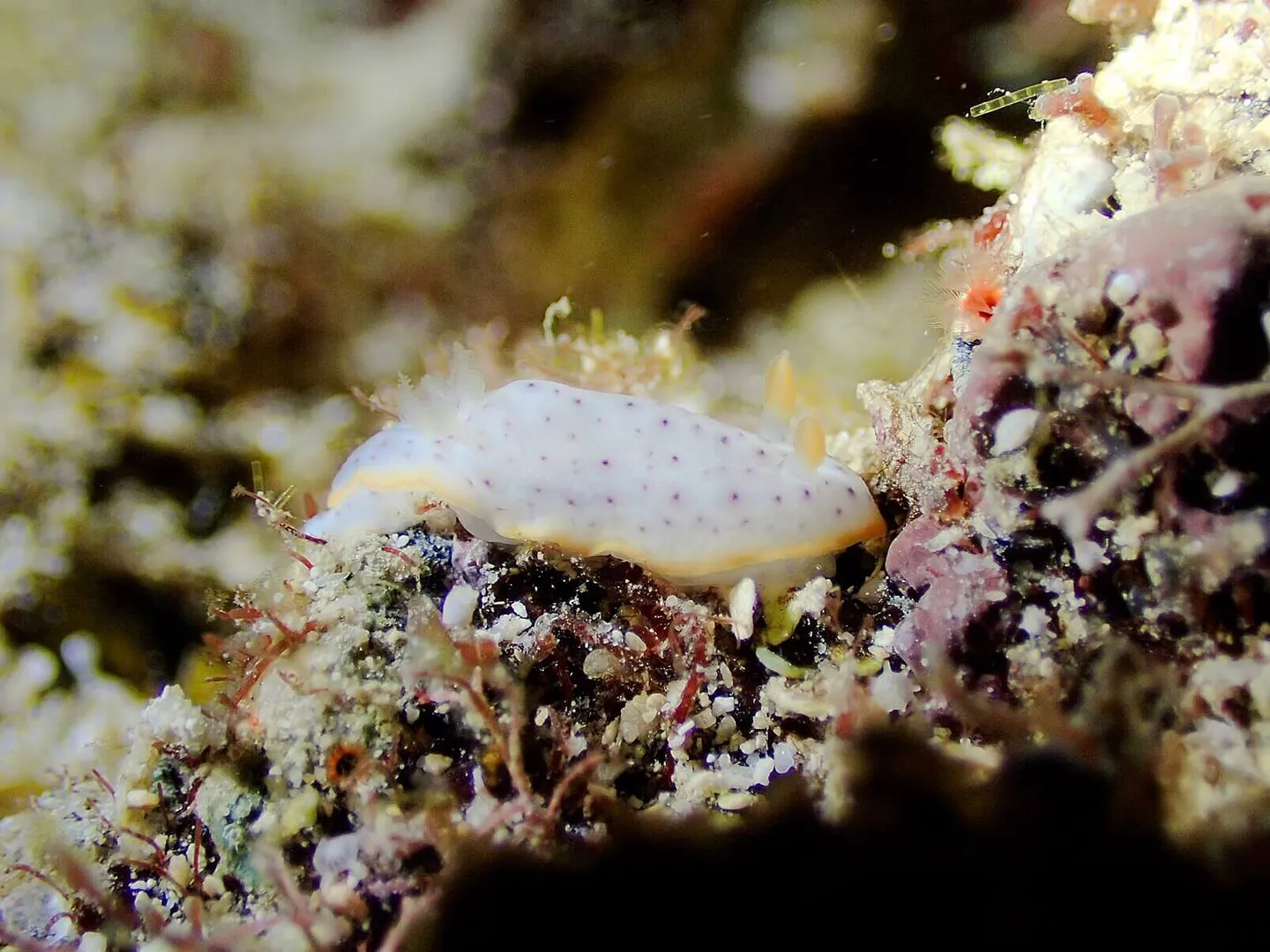
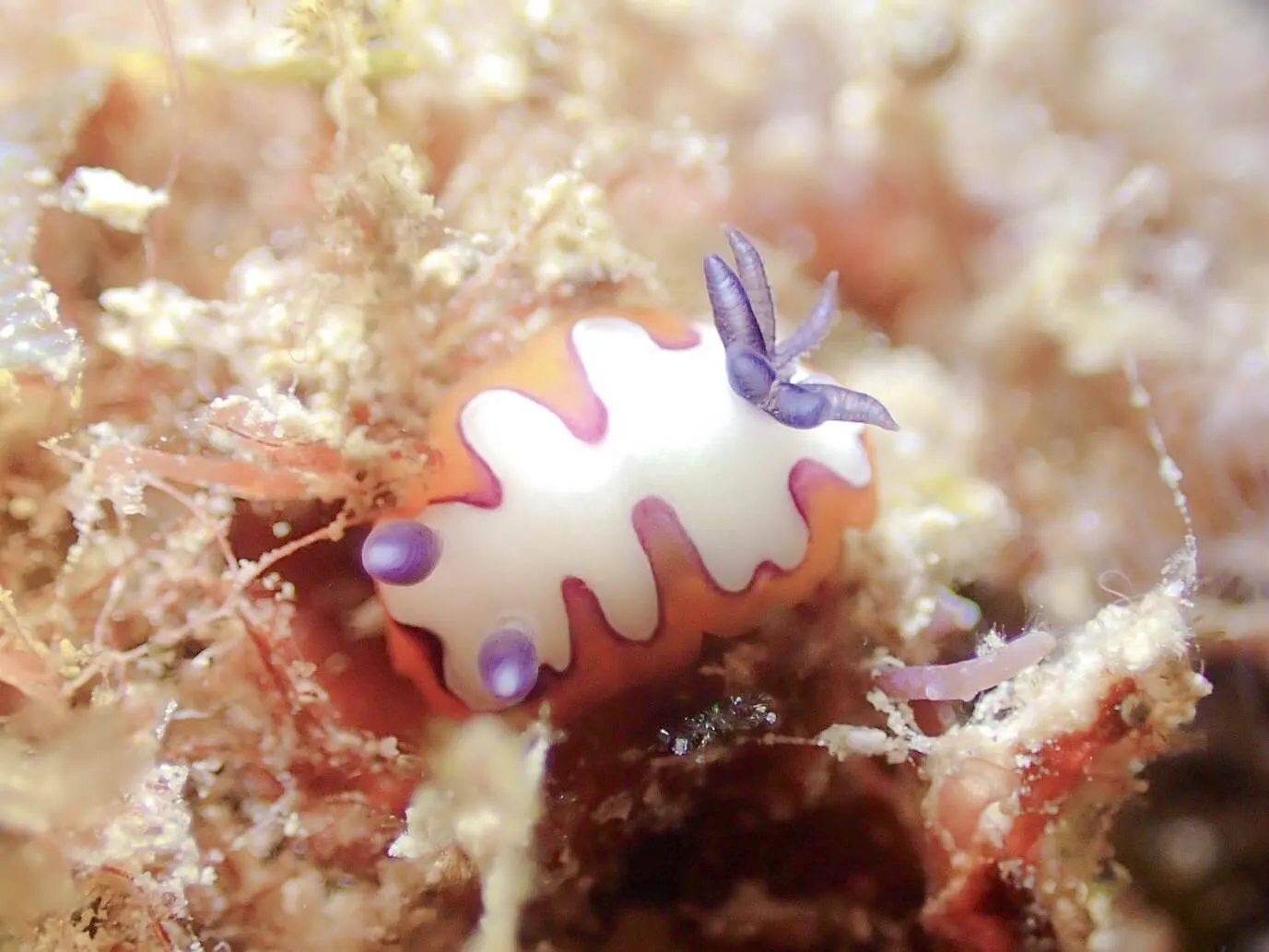
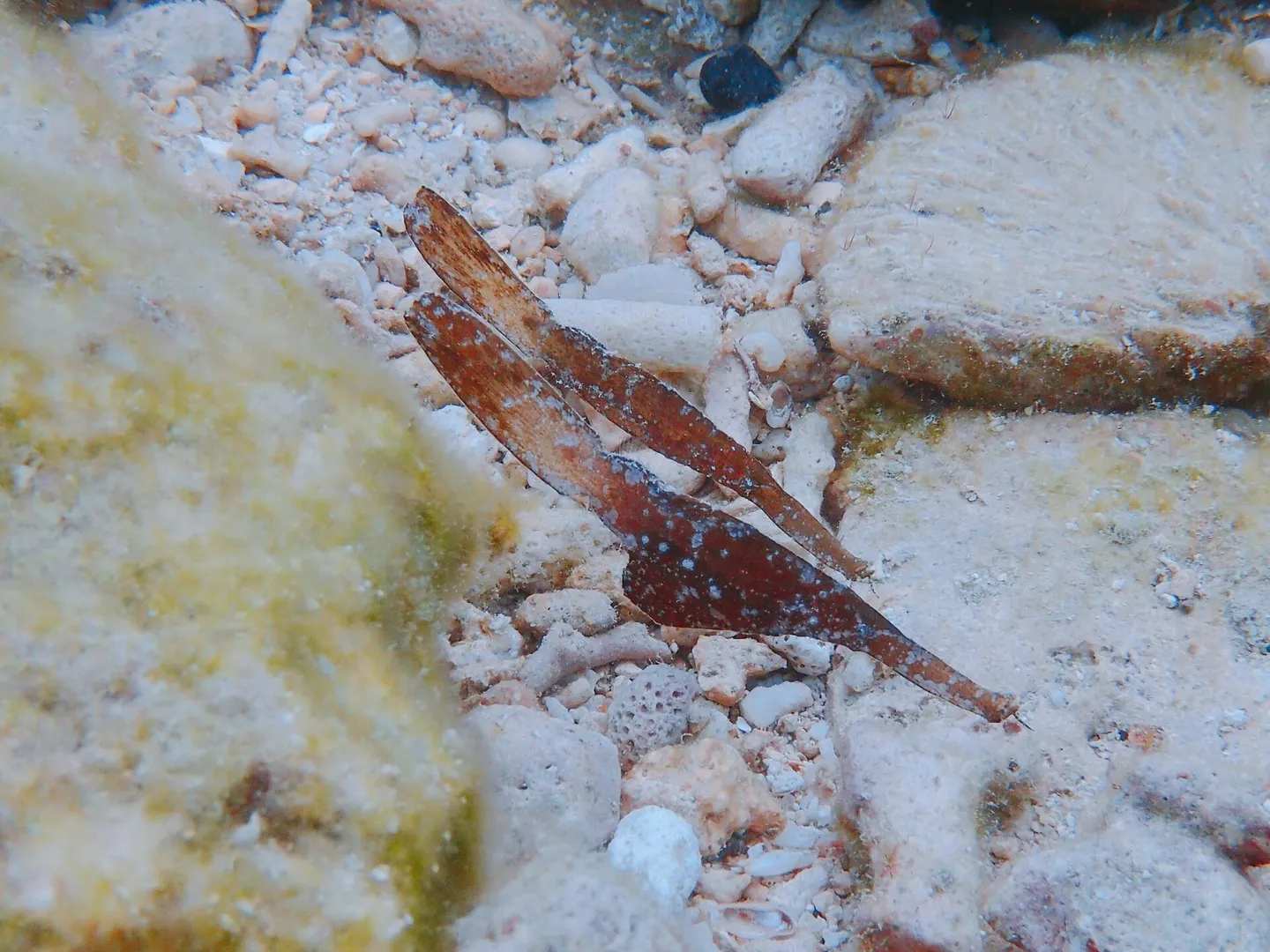
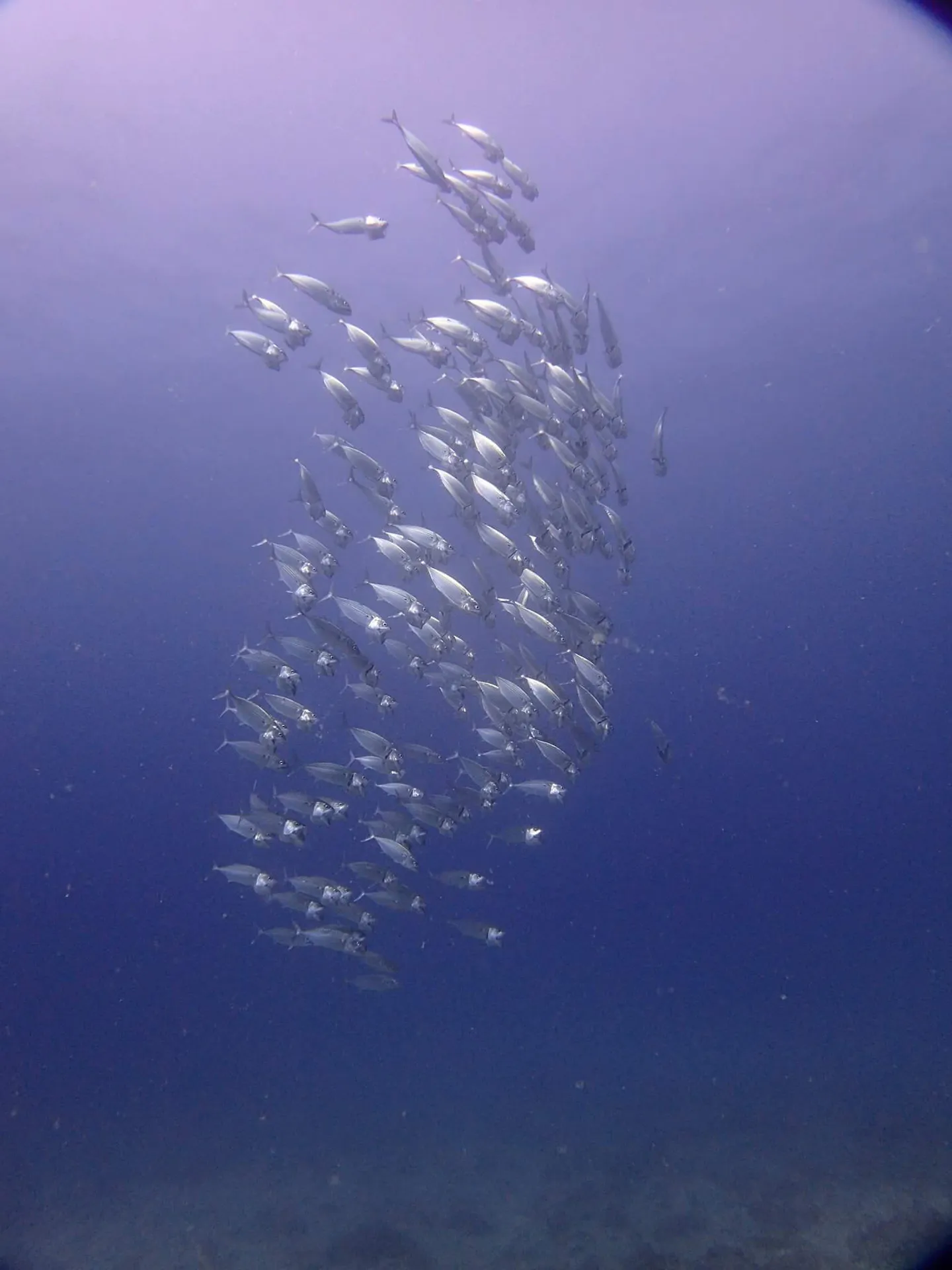
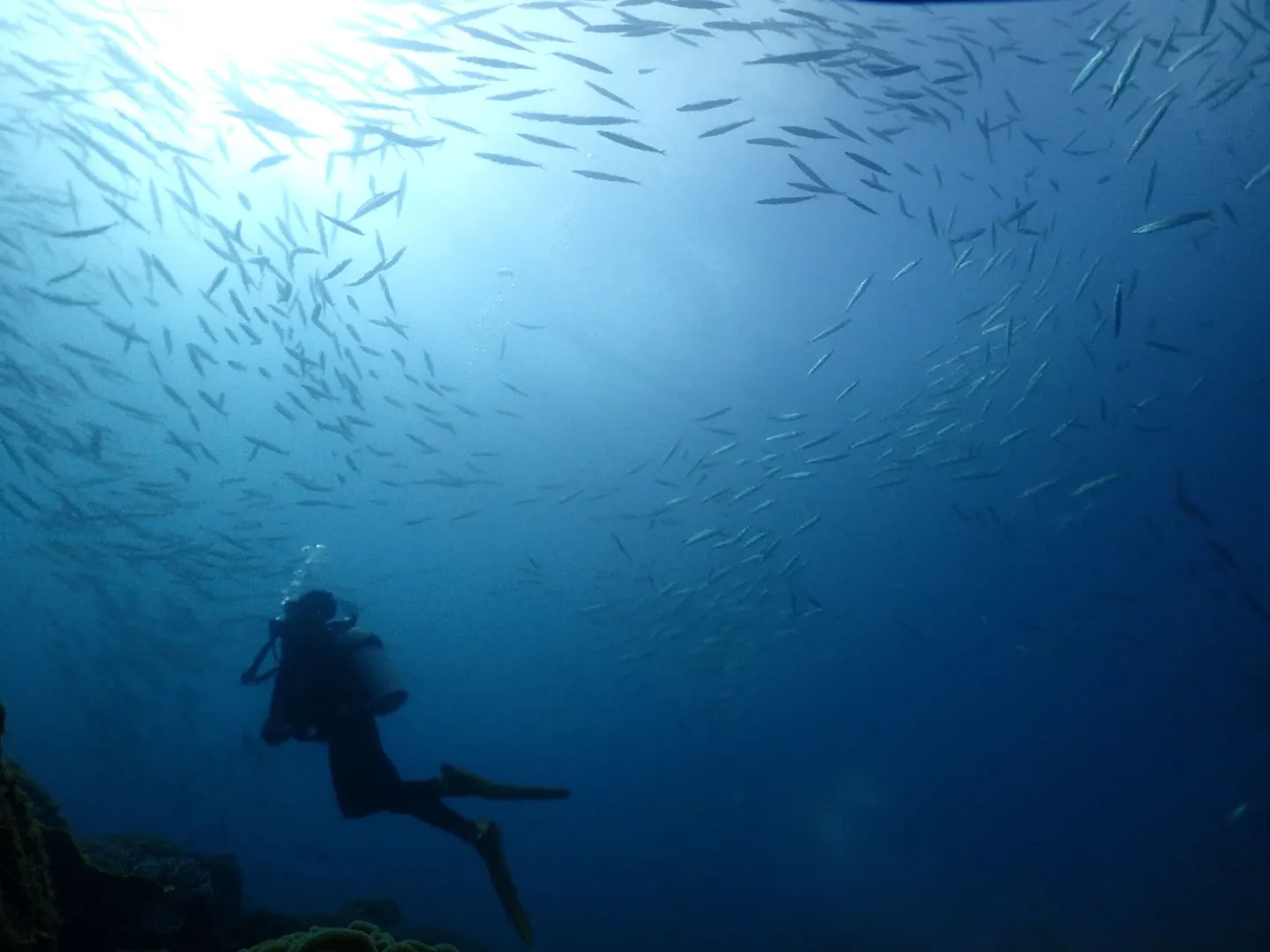
Beyond Sunabe, dive sites across the main island and outlying islands offer hard coral gardens with visibility starting from 30m, seemingly endless cave systems, wreck diving, underwater ruins, and stalactite caverns where fresh and saltwater meet. Marine life ranges from all manner of tropical fish, sea turtles, and Whitetip Reef Sharks to Hammerhead Sharks, jack fish tornadoes, and sardine bait balls. Larger pelagics include eagle rays, manta rays, and Blacktip Reef Sharks; in winter there are even chances of encountering whales, and with exceptional luck, dolphins too (Japan has its own dedicated dolphin island — Mikurajima in Tokyo). The Kuroshio Current is a gift that benefits far more than just Taiwan!
I have been immersed in the Okinawa diving scene since 2017, heading into my third dive season now. Though still a rookie instructor, I have developed some thoughts on why Okinawa diving remains so under the radar. Here is my unofficial breakdown:


1. The Language Barrier
As is well known, English proficiency in Japan is quite limited. Participating in local dive activities almost always requires a dive guide, and without one, many tank shops won't rent scuba tanks at all. Japanese operators are meticulous — if they cannot confirm that you can understand the pre-dive briefing, they will simply refuse to take you in the water. As a result, most dive shops ask whether you speak Japanese before confirming a booking, and if you don't, you may be turned away at the door.
This is why the customer base at Sunabe is so clearly segmented: Japanese shops serve Japanese clients, Korean shops serve Korean clients, American shops serve Western clients, and Chinese-language shops — of which there are currently only two — primarily serve Chinese-speaking guests. One of those is the dive shop where I work, "Diving Okinawa." Because the market is naturally divided, there is no cutthroat undercutting or price wars. *That said, the Blue Cave and Kerama are so popular with tourists that many Japanese dive shops now have resident Mandarin-speaking instructors or English-speaking Japanese instructors, and you will find some very competitively priced options there.
2. Name Recognition Is Everything
Whenever someone plans to come dive with me in Okinawa, the first question is almost always: "Can we go to the Blue Cave?"
The Blue Cave — billed as one of only two of its kind in the world — is something we quietly joke about among ourselves as the "queue cave," because during peak season the crowds are so thick that you line up from the car park entrance all the way through entry, snorkeling or diving, and posing for photos inside (Japanese visitors are wonderfully orderly). It is an interesting site, but even the best dive site loses its magic when it's packed wall to wall with people. The "one of only two in the world" description is also a wild exaggeration — any sea cave where light conditions are right will produce a blue glow. The most genuinely spectacular blue cave I have personally visited is on American Saipan!
Yet type the keywords into a Chinese search engine and virtually every result leads to the Blue Cave. Other far more impressive sites get almost no coverage, making it easy for the average person to assume that this is all Okinawa diving has to offer.
3. Price
Japan is a high-income country with correspondingly high prices, and diving is no exception. Compared to Southeast Asia and Taiwan, dive costs in Japan can easily run 1.5 to 2 times higher or more.
In Okinawa, a standard two-tank certified shore dive including equipment rental typically runs ¥14,000–¥16,500, while boat dives start from ¥18,000 (current TWD:JPY exchange rate is approximately 1:0.27).
Diving with a Japanese shop also comes with very strict time management — they adhere firmly to schedule and operate on a "table-turn" basis. Regardless of your air consumption, dives are typically capped at 40 minutes before you must surface. The shortest I have ever heard of was just 20 minutes!
4. A Different Business Model
Compared to the five-star, all-inclusive service model common in Taiwan and Southeast Asia, experienced divers visiting Okinawa may find the experience a little unfamiliar. Dive shops in Taiwan are typically located right next to the dive site, with a proper indoor facility where you can gear up and attend a briefing before entering the water. Southeast Asian dive shops often take care of everything — accommodation, transfers, carrying your tank, and even handing you a towel. In Okinawa, however, unless the shop is fairly large, there is rarely a dedicated space for pre-dive instruction; and if there is a shop front, it tends to be a retail display area.
Most commonly, guests meet the instructor directly at the dive site. The dive shop brings a gear van to the site, and you kit up and receive your briefing beside the van before heading into the water.
5. "Japan"
I think this is perhaps the biggest reason Okinawa diving remains so overlooked. Japan's unique culture and rich history have always been the primary draws for foreign visitors, and diving has never been a focus of government-promoted tourism. Many people come to Okinawa not because of the ocean or water activities, but simply because it is "Japan" — and the main island of Japan goes without saying.
That said, taken all together, Okinawa diving still holds enormous appeal and plenty of room to grow.
Most visitors spend 4–5 days in Okinawa. Between exploring the Ryukyuan heritage sites and going on a shopping spree, slotting in a day to experience Japan's deep blue is a fantastic option. The 90-minute flight from Taiwan, budget airline fares, no visa required, and Japanese food that suits Taiwanese palates make it far more accessible than, say, a well-known Philippine dive destination requiring a day or more of travel each way — and the price difference in diving can easily be offset by the savings on airfare.
Although Okinawa and Taiwan are close, some marine species can only be found — or are far more commonly sighted — in Japanese waters. Okinawa's greatest claims to fame are undoubtedly the winter Hammerhead Sharks of Yonaguni, which gather in groups of hundreds, and the near-100% manta ray sighting rate at Ishigaki.
The language barrier can be resolved by choosing a Chinese-language dive shop. Here are a few recommendations on Okinawa's main island:
Sunabe / Manza-mou / Zanpa Cape
Diving Okinawa (ask for Erica directly!)
https://www.facebook.com/okidives/
Kerama
海潛 Umi Dive Okinawa
https://www.facebook.com/umidiveokinawa/
青の洞窟 (Blue Cave)
青潛 Best Dive Okinawa
https://www.facebook.com/bestdiveokinawa/
If you found this article helpful for planning your Okinawa dive trip, please share it with your friends!
Further reading:
Frequently Asked Questions
How is a BlueTrend dive trip different from an unknown, no-name dive group?
Choosing us means full peace-of-mind protection and a smooth experience from start to finish. Every trip we run holds to three things.
First, full legal protection and a professional dive leader: we strictly follow Taiwan's travel regulations and provide complete travel-agency liability insurance, travel insurance, trip-inconvenience insurance and dive insurance. Every group is accompanied by a certified, foreign-language dive leader who joins you on both the dives and the land itinerary, liaising seamlessly with local dive shops and operators on your behalf to keep things running smoothly — the person our travellers trust most.
Second, fully licensed with secure payments: every payment goes into a licensed travel agency's account, with multiple safe payment channels (bank transfer, credit card and more) and a legal collect-and-remit receipt, so every transaction is open, transparent and protected, avoiding the fraud and dispute risks of transferring money privately to an individual.
Third, hand-picked quality we vet in person: every trip, dive site and partner shop is scouted on the ground by our own team, from the guides' professionalism and safety standards to the food, lodging, environment and service details on land, all vetted by us so you don't get caught out.
I want to sign up for a dive trip. Are there certification-level or logged-dive requirements?
Each dive site is different, so the entry bar varies. 'Bali Tulamben', for instance, is relatively beginner-friendly. 'Malapascua in the Philippines' is also beginner-friendly, but since thresher sharks tend to cruise between 20 and 30 metres, we recommend AOW certification with 20+ logged dives to enjoy this trip comfortably. For 'the Maldives' or 'Palau', we suggest AOW with 50+ logged dives for a more relaxed experience. If you're not sure whether your experience fits the trip you want, message us and our dive editors will assess it and help you find the trip you'll feel safest on.
Can I join if I'm signing up alone? How are rooms arranged?
Plenty of our travellers sign up solo! For rooms and beds, we prioritise pairing you with a same-gender traveller, and if you'd rather have your own space you can pay the difference to upgrade to a single room. For the diving, our professional leader will pair you with a suitable buddy, and with the happy vibe on our trips you'll quickly make a great group of dive friends. Many people sign up alone, make new friends, and end up organising the next trip together!
Does the trip fee include dive insurance, gear rental, taxes and instructor tips?
It depends on the trip, the destination's regulations and the local operators. Every BlueTrend dive trip has a detailed web page with a clear 'included / not included' list, transparent and with no hidden charges. All payments are collected by a licensed travel agency, with a standard-form contract for your protection.
I'm a new diver / haven't dived in a long time — will I fall behind the group?
Before you complete your booking, our team assesses a suitable trip based on your certification level and experience. Before departure, we strongly recommend taking time to refresh in Taiwan with an instructor, or a fun dive to get your feel back. On the trip itself, our professional dive leader groups and pairs everyone by experience, keeps a close eye underwater on travellers who need extra care, and steps in to help right away.
Will the photos and videos taken during the trip be shared with us?
During the dives, 'safety' is always the leader's top priority, so whenever it's suitable and safe the leader will capture great shots and record the best moments. During or after the trip, we compile a cloud album for all travellers to download, so you go home loaded with memories!
Besides your scheduled trips, can you arrange a private group charter or independent travel for me and my friends?
Absolutely! Besides group trips, we also arrange private group charters and independent travel. We can communicate, enquire and coordinate services with local operators based on your needs, saving you time and effort and taking the language barrier off your plate, to tailor the smoothest, most reassuring dive trip just for you. Contact our LINE support and our editors will arrange it for you!