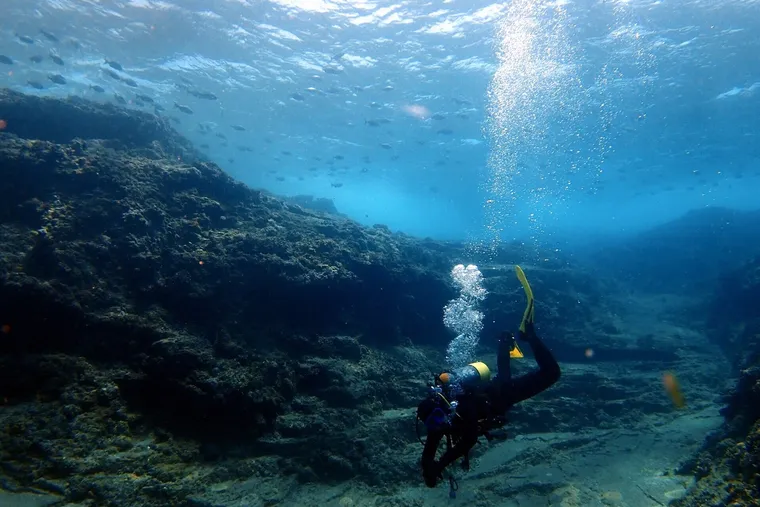
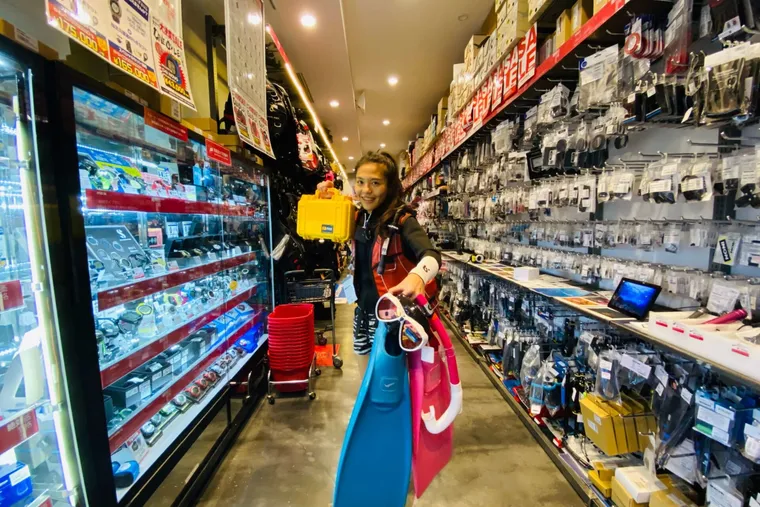
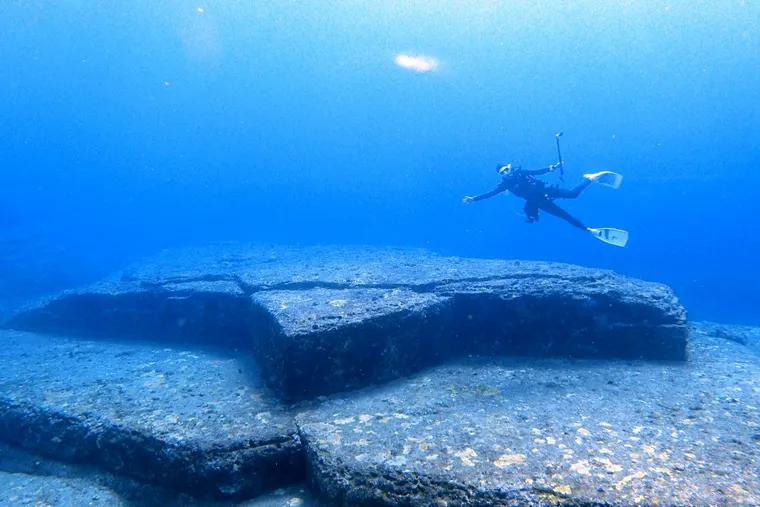
Compared to the overseas dive destinations that Taiwanese divers flock to — such as Indonesia, Thailand, and the Philippines — scuba diving on Okinawa's main island remains relatively unfamiliar. A quick online search for "Okinawa diving" mostly turns up posts about a single site, the Blue Cave (青の洞窟), or the Kerama Islands, celebrated for their legendary "Kerama Blue." So let me introduce a dive site that rarely gets written about online: Sunabe (砂边), the spot where I work every day.
Sunabe stretches roughly one kilometre of coastline and is blanketed with an exceptionally dense mix of soft coral and hard coral reefs. Around 200 species of coral have been recorded in Okinawan waters, and when I was once leading a discover scuba dive at Sunabe, I casually counted more than 40 different species just off the top of my head! (The exact figure is yet to be verified, but I'm confident the real number is far higher than my casual count.)
A side note: Sadly, Typhoon Trami at the end of September 2018 caused irreparable damage to parts of Sunabe's coral reefs. Add to that the increasingly erratic water temperatures driven by climate change, and as someone who makes a living from the sea, I feel it deeply. Watching a dive site you've visited a thousand times change day by day makes it very hard not to worry about our future. Saving energy is everyone's responsibility!
Quick Facts About Sunabe:
Maximum depth does not exceed 25 m, and the most beautiful coral gardens lie between 4–15 m — so who says a discover scuba dive means kneeling on a sandy seabed?
Water temperatures: winter (Dec–Feb) 21–23°C; spring (Mar–May) 23–26°C; summer (Jun–Aug) 28–30°C; autumn (Sep–Nov) 25–28°C.
Visibility is better in the morning than the afternoon, and better in winter than in summer — averaging 15–20 m.
Common marine life: sea snakes, abundant flame scallops, damsels, damselfish, six species of anemonefish (Clownfish), a wide variety of common reef fish, goldstripe sardinella, barracuda, various sea slugs, pipefish, ghost pipefish (legend has it there are pygmy seahorses here too, but I've yet to be lucky enough to find one).
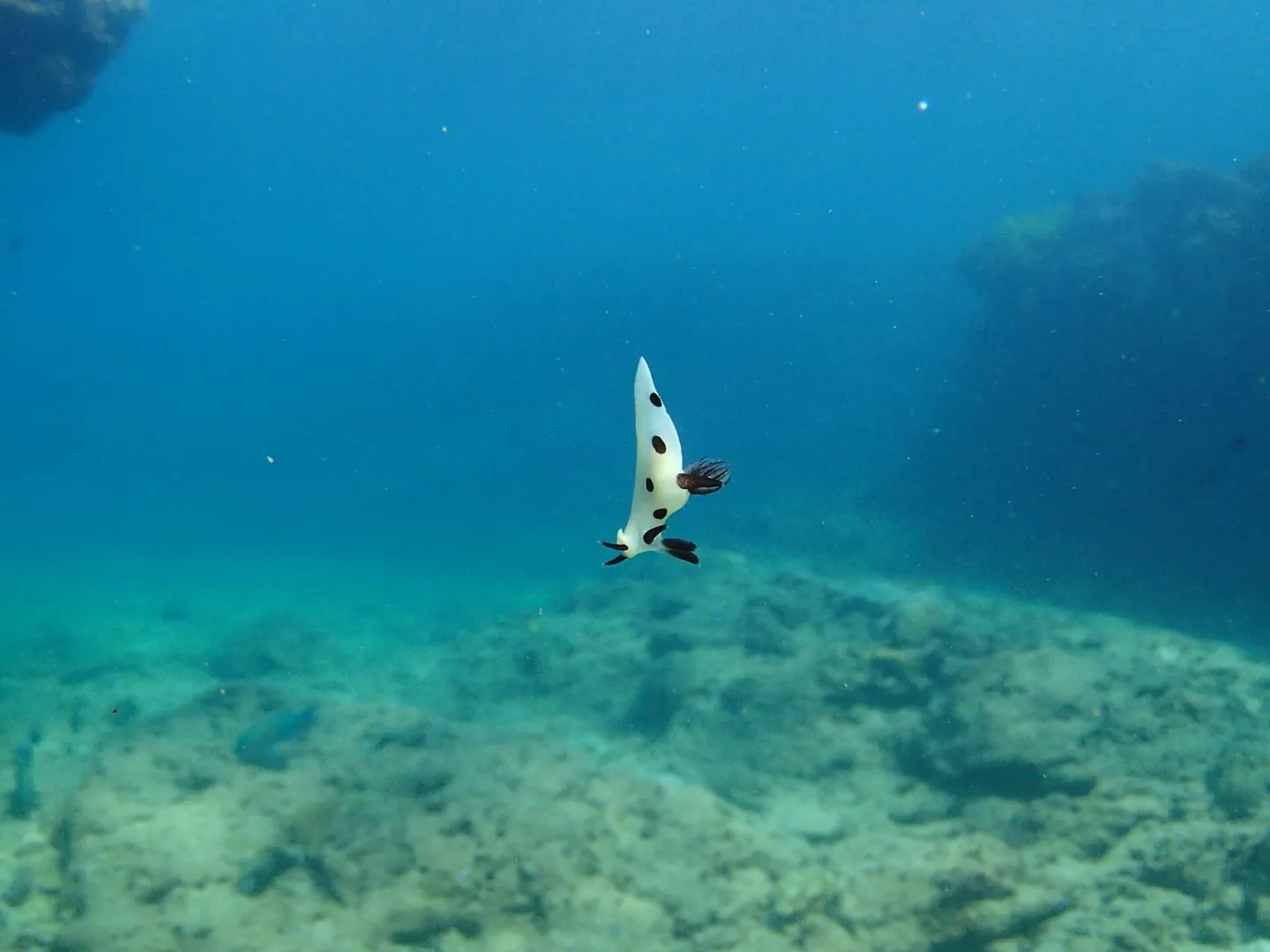
Nudibranchs that sometimes drift down from above like snowflakes
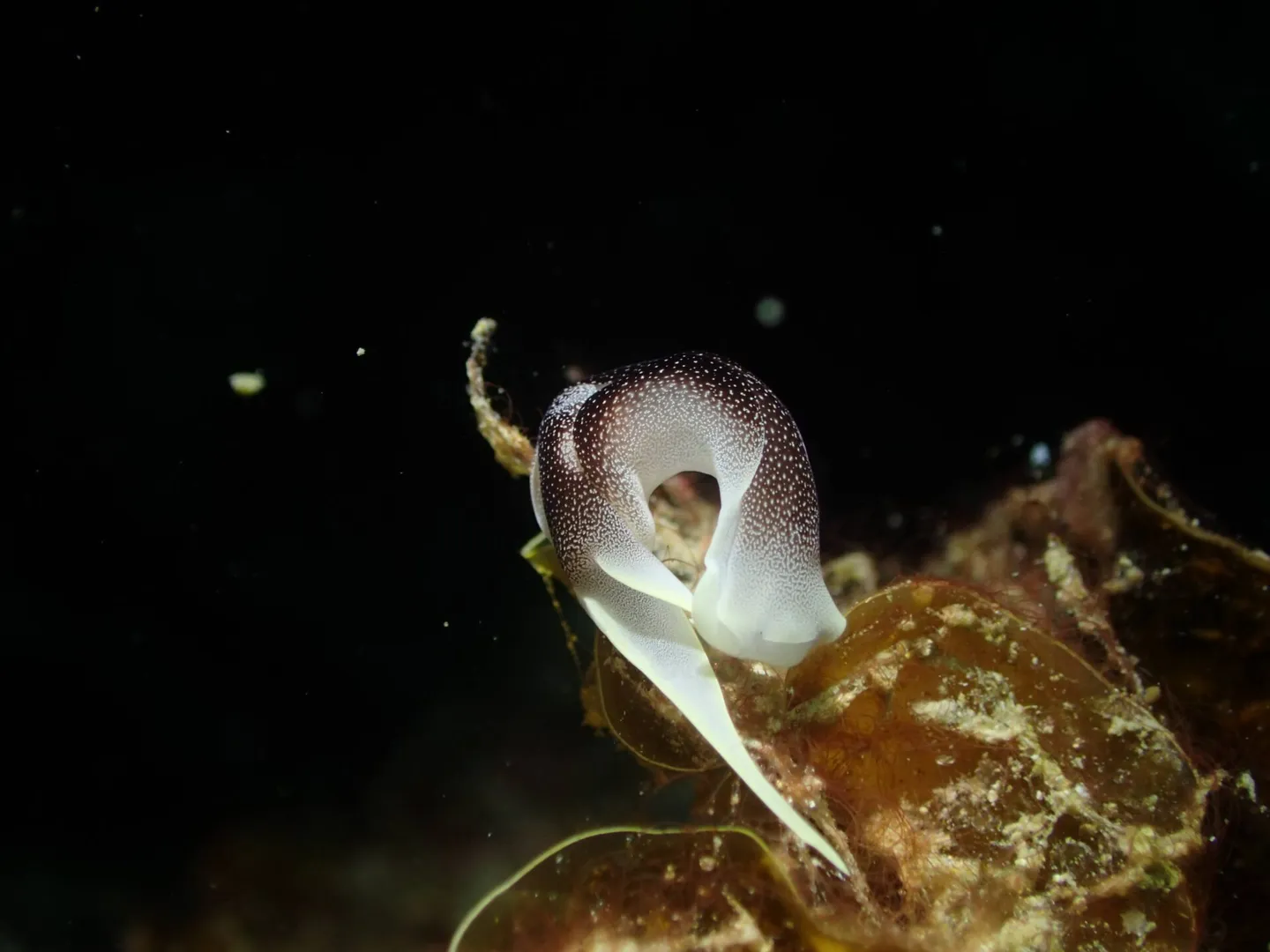
All kinds of nudibranchs waiting to be discovered
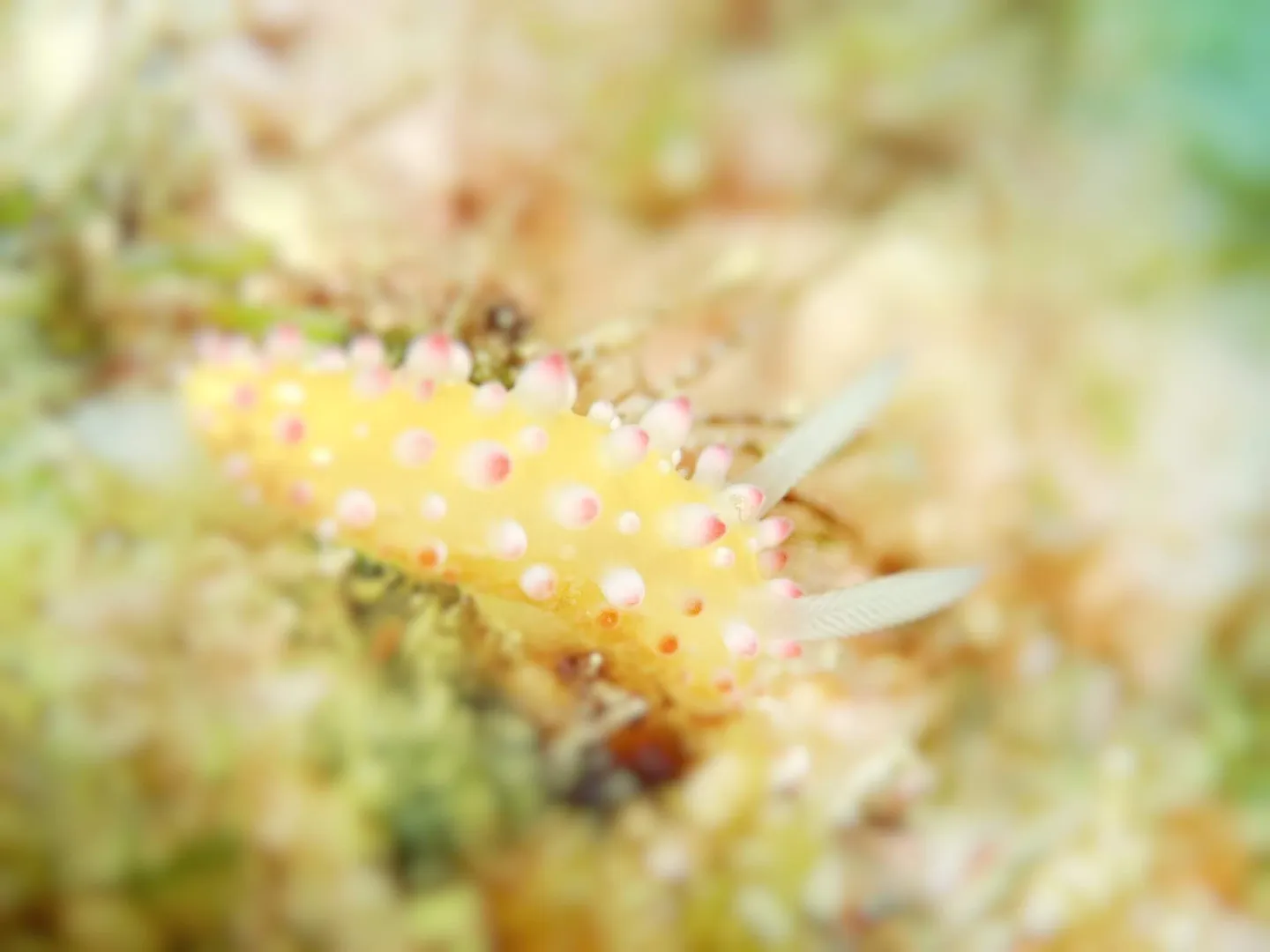
Every variety of nudibranch, waiting for you to find them
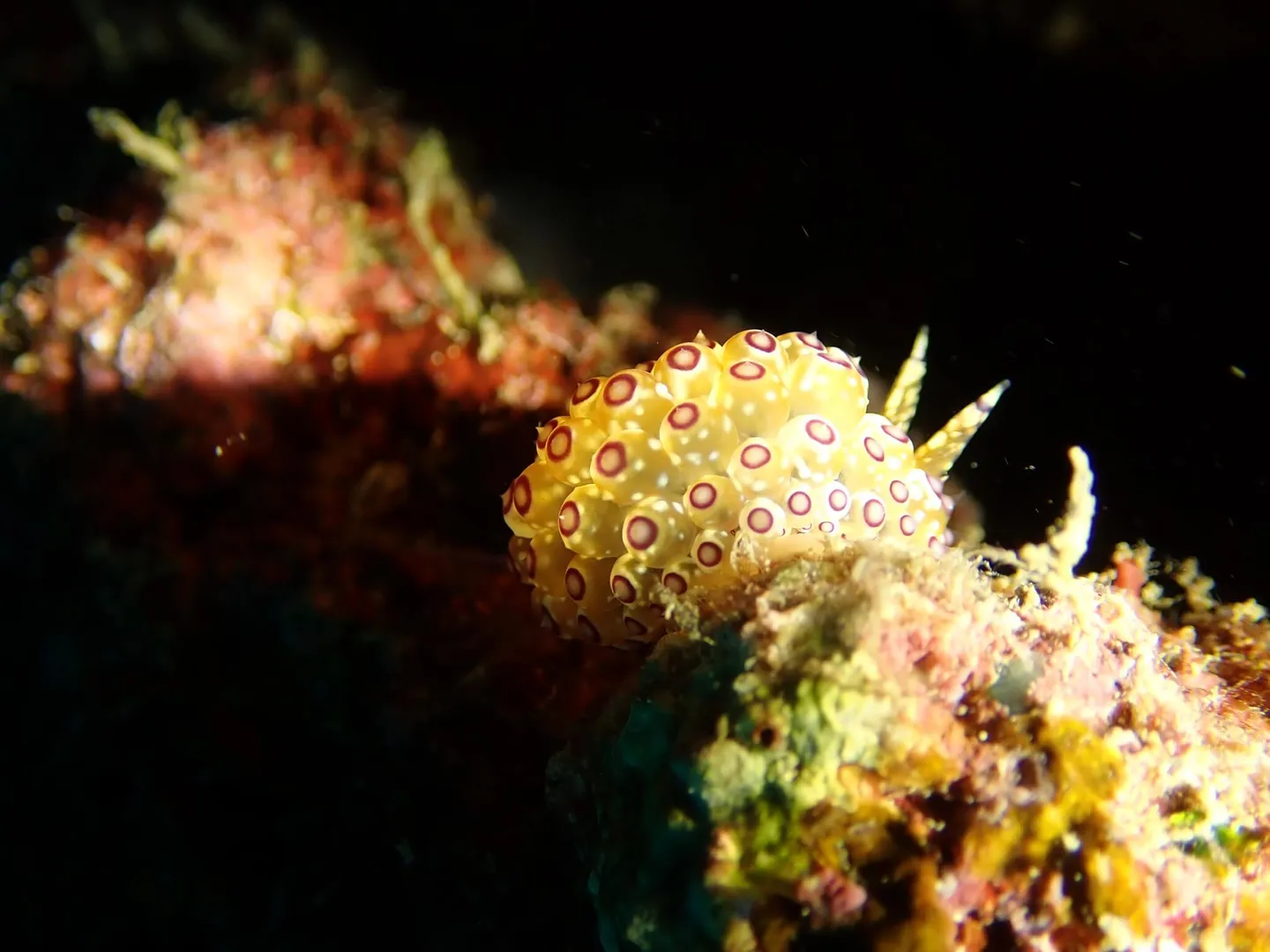
Every variety of nudibranch, waiting for you to find them
Sunabe Has Three Main Dive Sites
1、Sunabe No.1
Sunabe No.1 is an extremely easy entry point — you simply walk down a few steps. This makes it ideal for beginners and uncertified discover scuba divers, because you can get your footing on solid ground, fit your mask, bite down on your regulator, and slowly acclimatise before your instructor guides you into deeper water. After entering, heading west takes you into a channel terrain fitted with iron chains that divers can hold onto when there is some current. The channel may sound unremarkable, but it is home to a wealth of marine life — besides the usual tropical fish, there are also several stonefish lurking about, so please keep your hands to yourself!
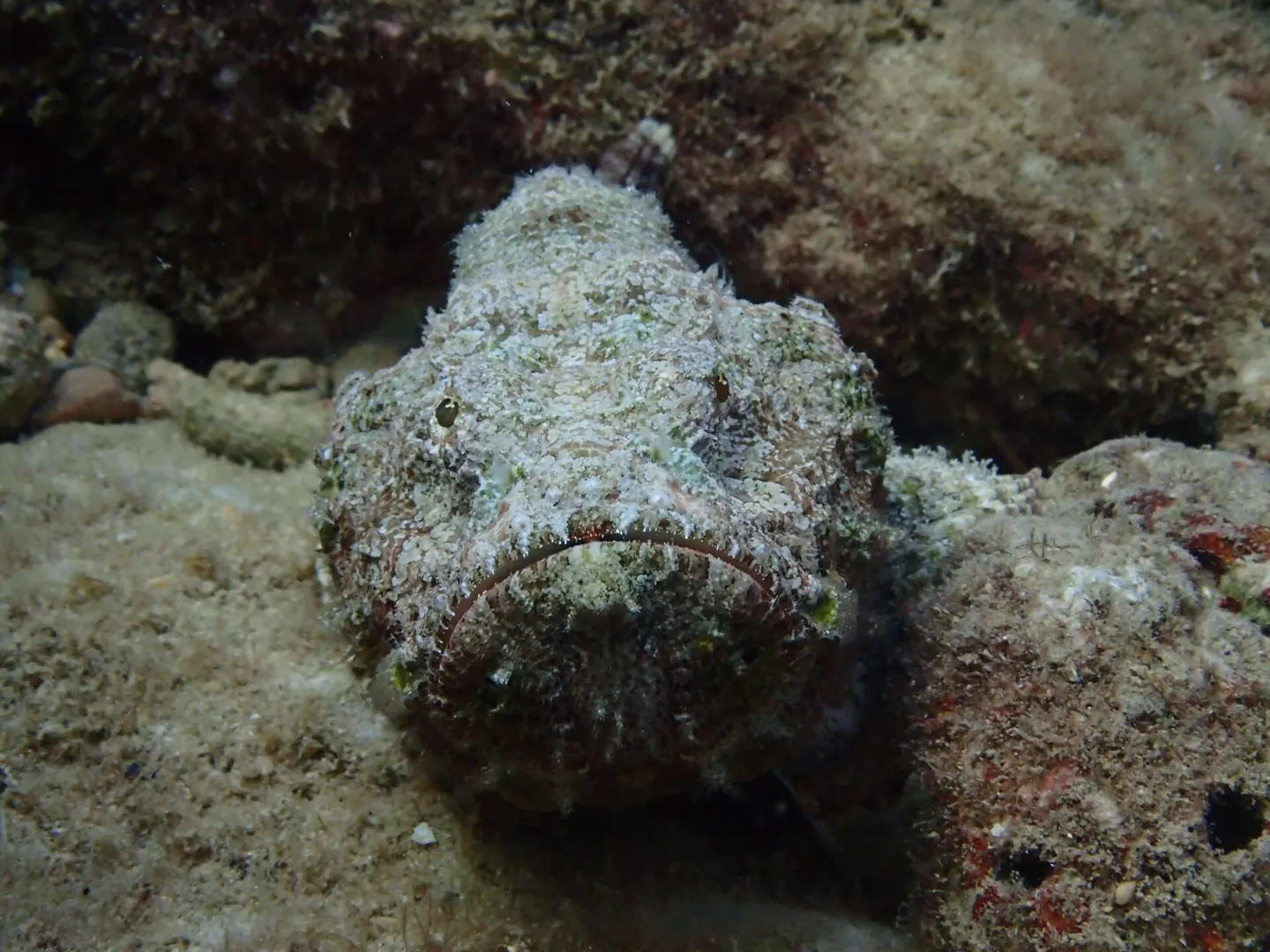
Stonefish Stephen
At the end of the chain, depending on the tide, there is a small drop-off, with a sandy bottom at roughly 6–8 m. In the middle of that sandy patch sits an underwater postbox — about five years ago it was a vivid red, but it has since rusted to a deep, dull crimson. Mail service has been suspended (it did operate once upon a time), but you can absolutely strike a pose and snap a photo!
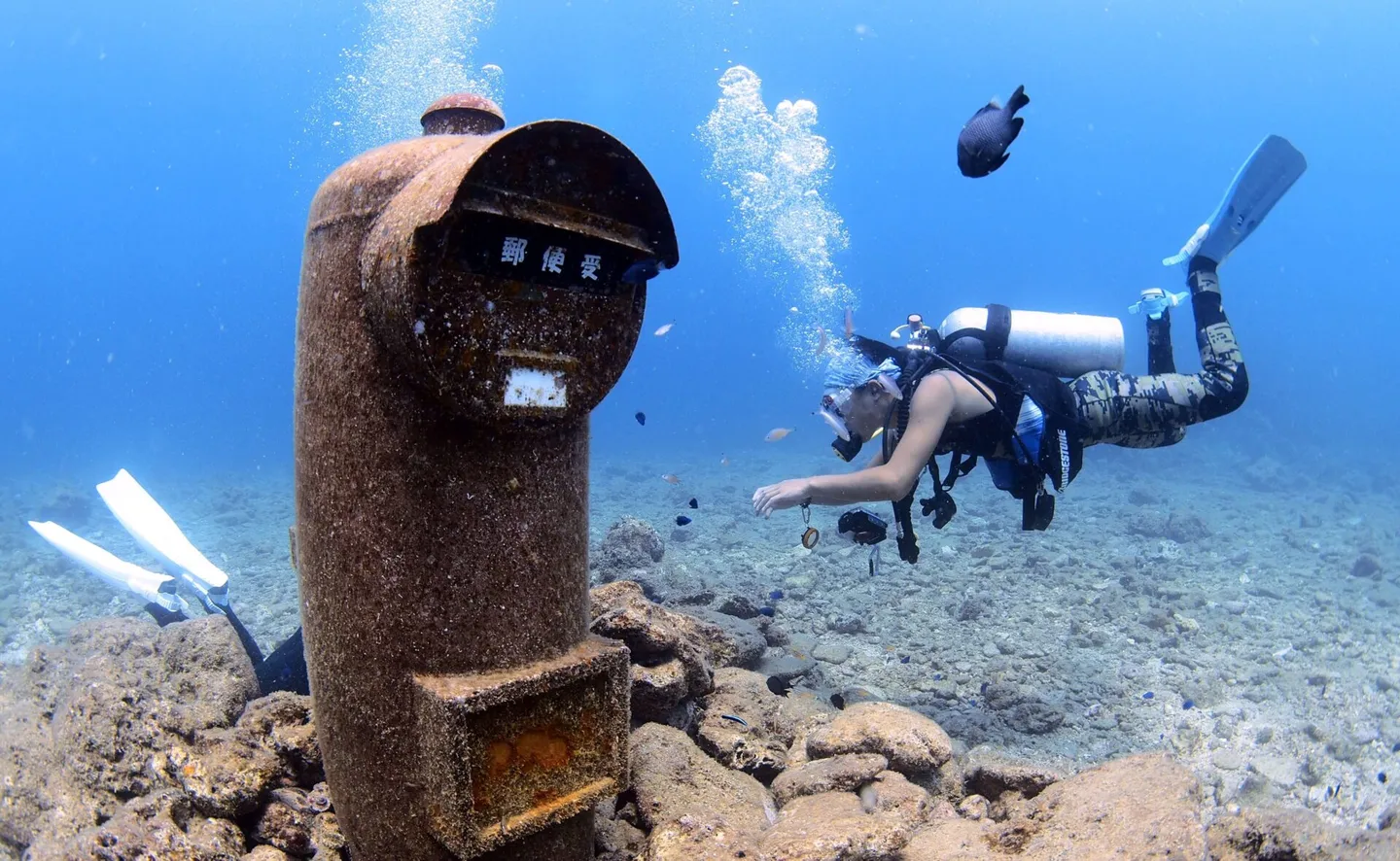
The underwater postbox — photo by okisen
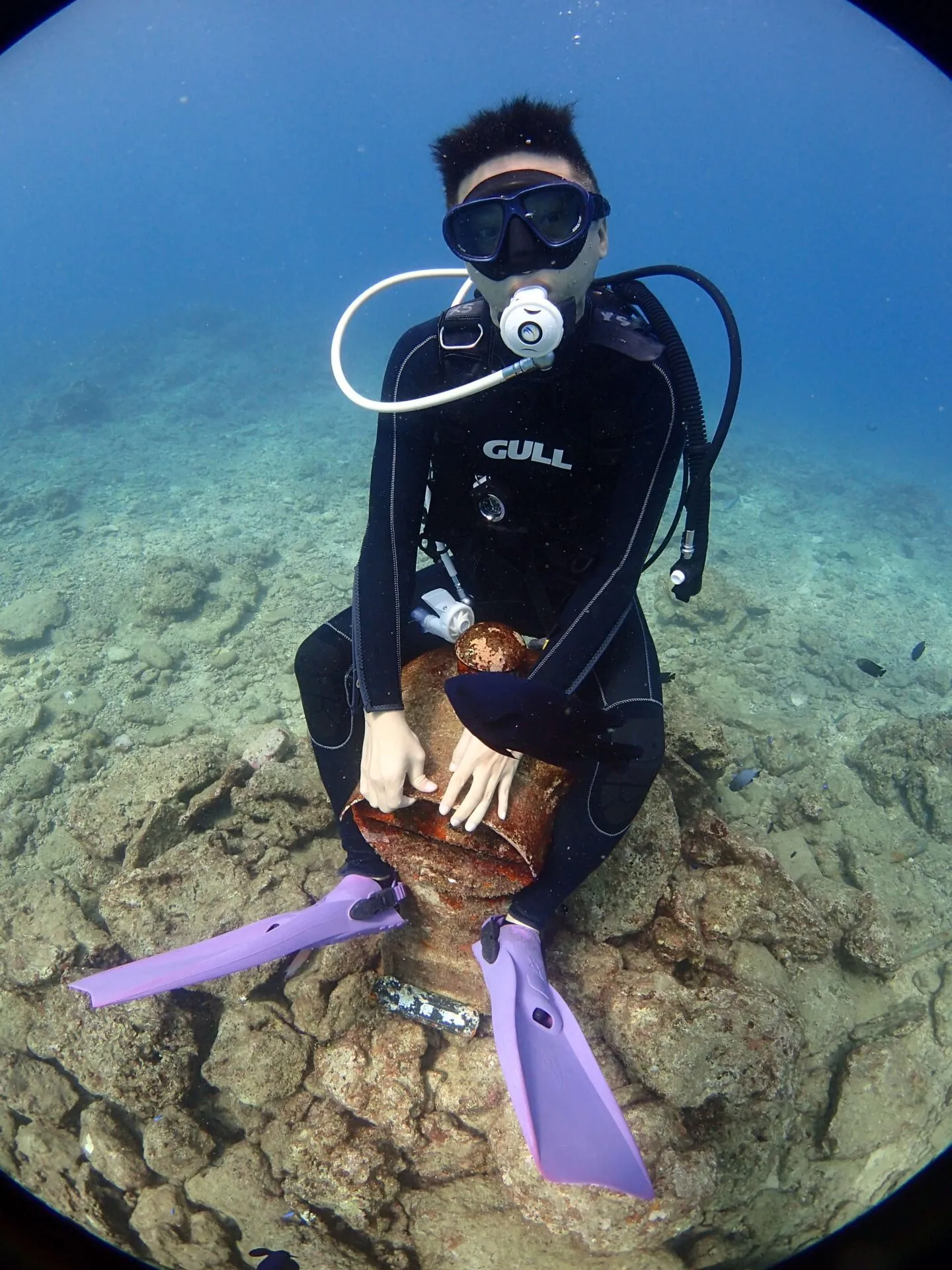
A fun underwater close-up shot
If you skip the chain route and have solid neutral buoyancy, you can grab a Torch and swim through the caves tucked inside Sunabe's coral garden. Honestly, cave diving here is way more fun than the Blue Cave! Especially when sunlight filters in through the openings alongside the glassfish (southern bigscale soldierfish) inside — it's truly breathtaking. Sometimes a giant lobster even ventures out of its cave to say hello.
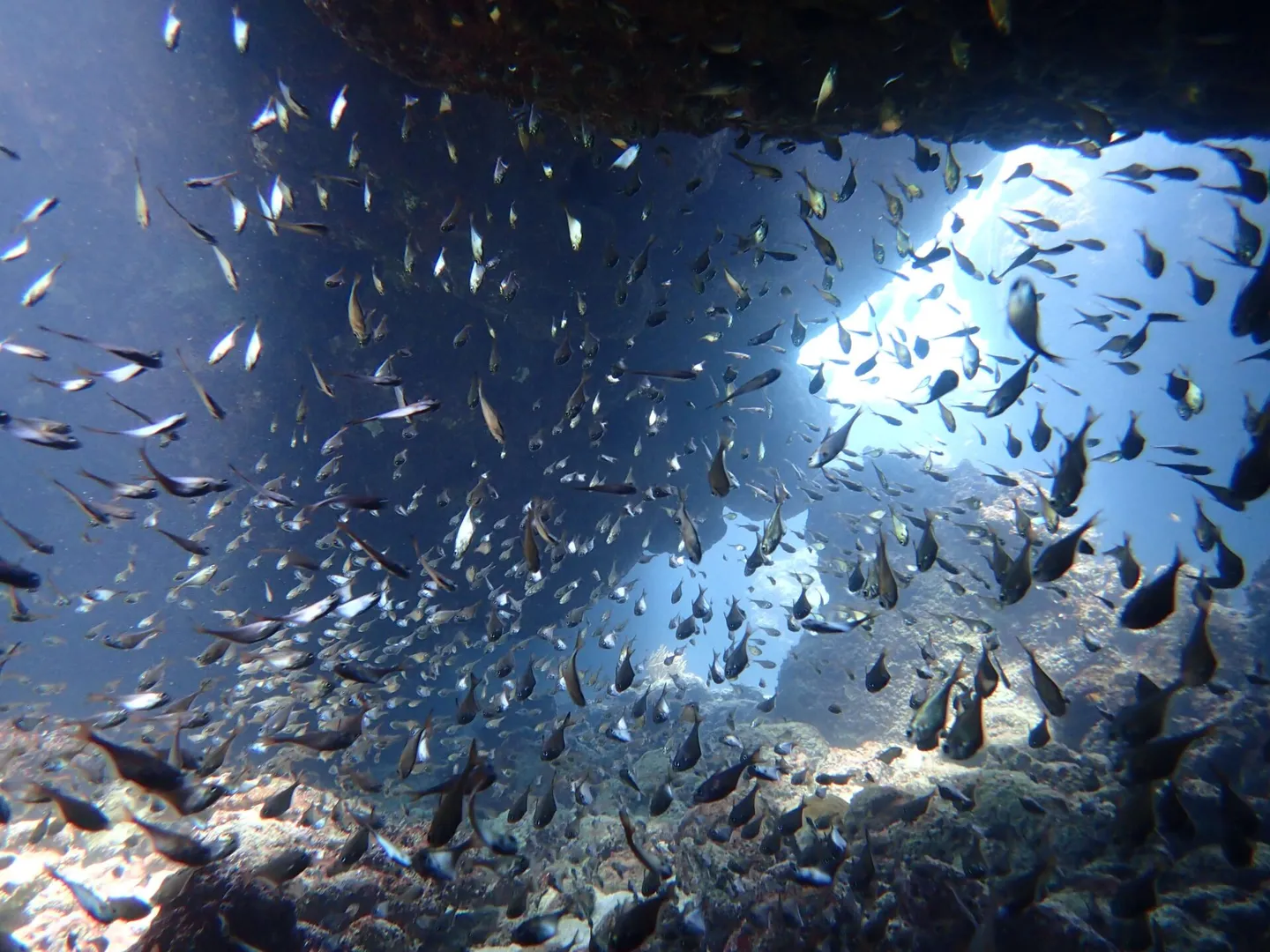
The secret cave — photo by okisen
On a typical dive route we continue west, following the coral wall. On your right will be the coral cliff; on your left, a sandy-and-rocky terrain. Maximum depth here is roughly 20–23 m. Ascending north over the drop-off brings you to a vast coral plateau at 4–8 m — so your 5-metre, 3-minute safety stop is anything but boring!
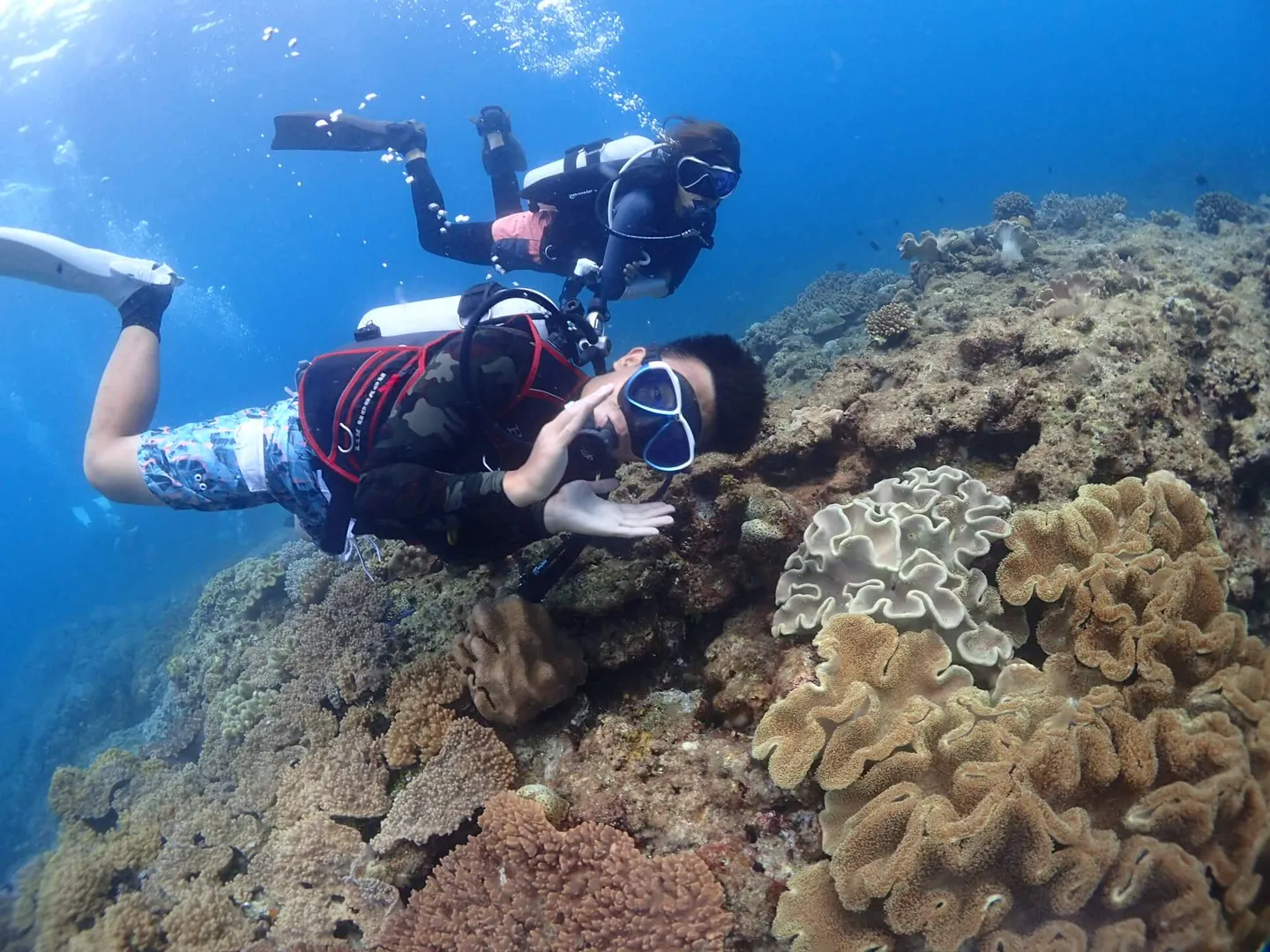
Shallow coral reef (please ignore the person trying to look cute)
During night diving here, if luck is on your side, you might encounter this highly venomous but utterly adorable shy little creature!
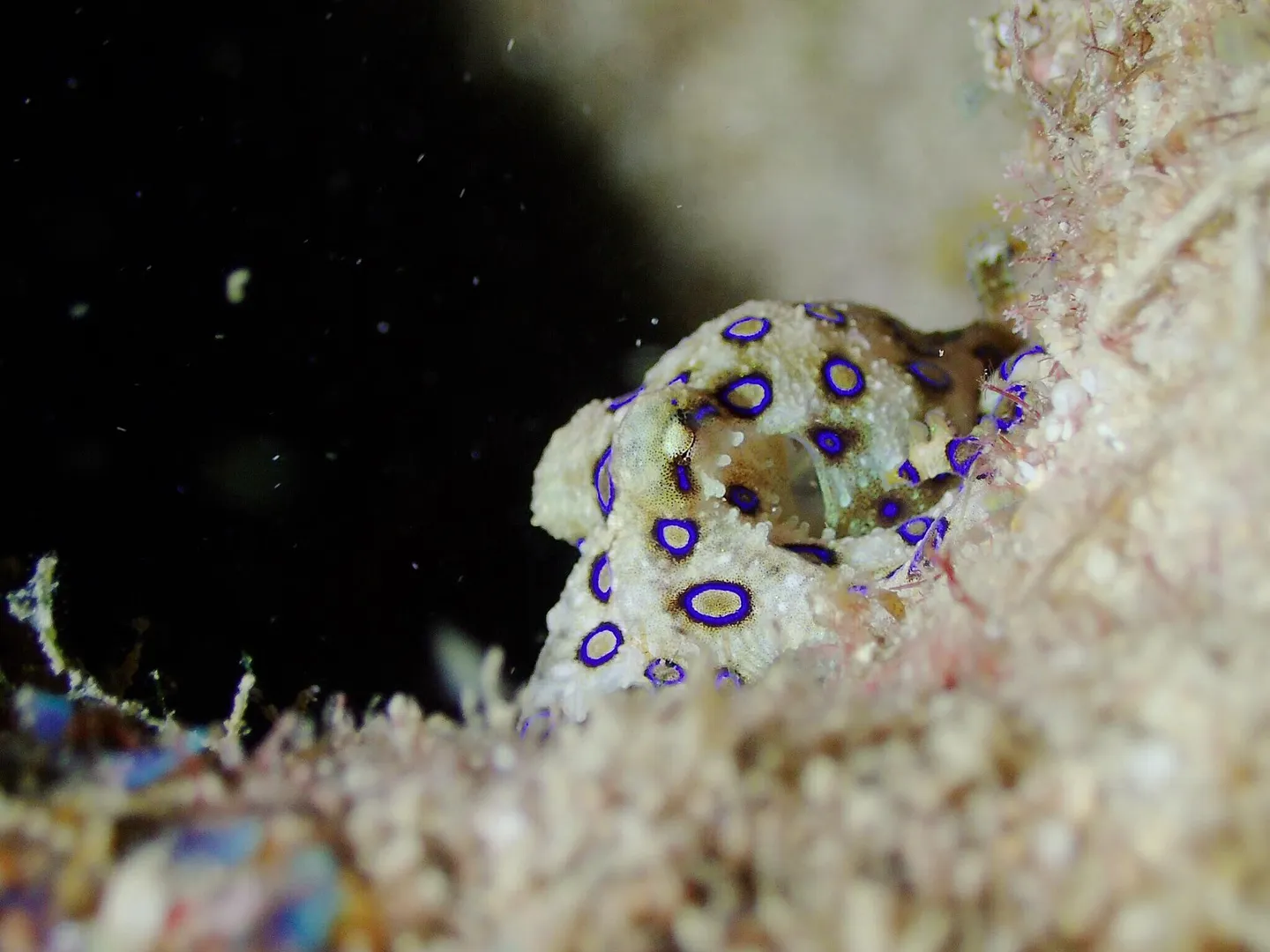
Blue-ringed octopus
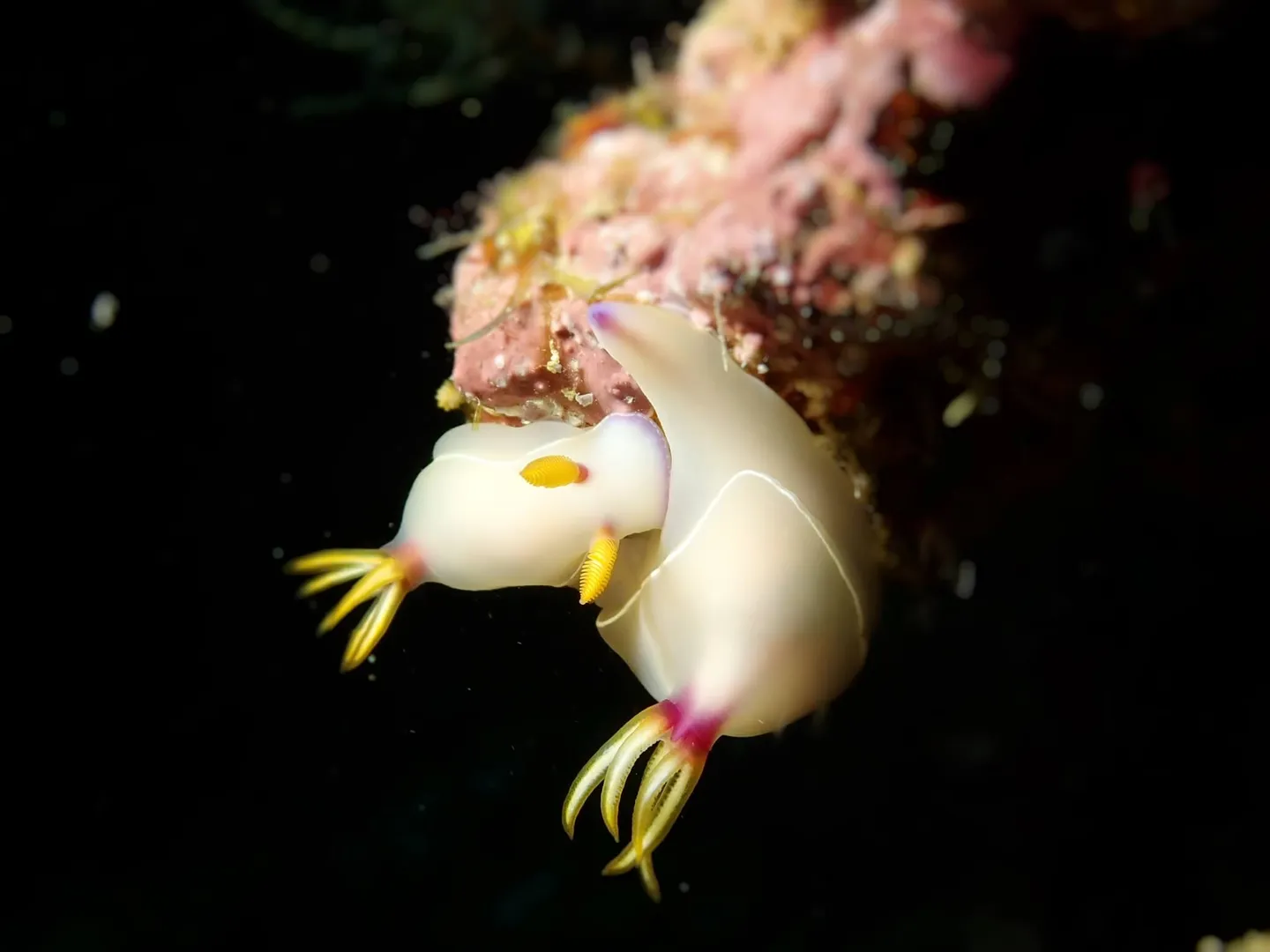
A crowd of adorable nudibranchs
2、California
California is a site I'd rather not dive when the tide is actively rising or falling, because the reef walk to the entry point is much longer than at No.1 — though honestly, compared to Orchid Island, Green Island, or even Chaoching (潮境), it's nothing, haha.
That said, once you're in the water, the route follows a channel that gradually deepens rather than dropping off a wall like No.1, which makes it better suited for uncertified divers who are a bit depth-shy or divers with sensitive ears.
The marine life and depths at California are broadly similar to No.1, but the terrain feels different — more like a series of coral valleys. Before Typhoon Trami, there was a wonderfully cheeky shisa (lion-dog guardian statue) sitting at 12 m with its bottom tilted up in the air. The typhoon smashed it to pieces; we'll see if a successor ever appears.
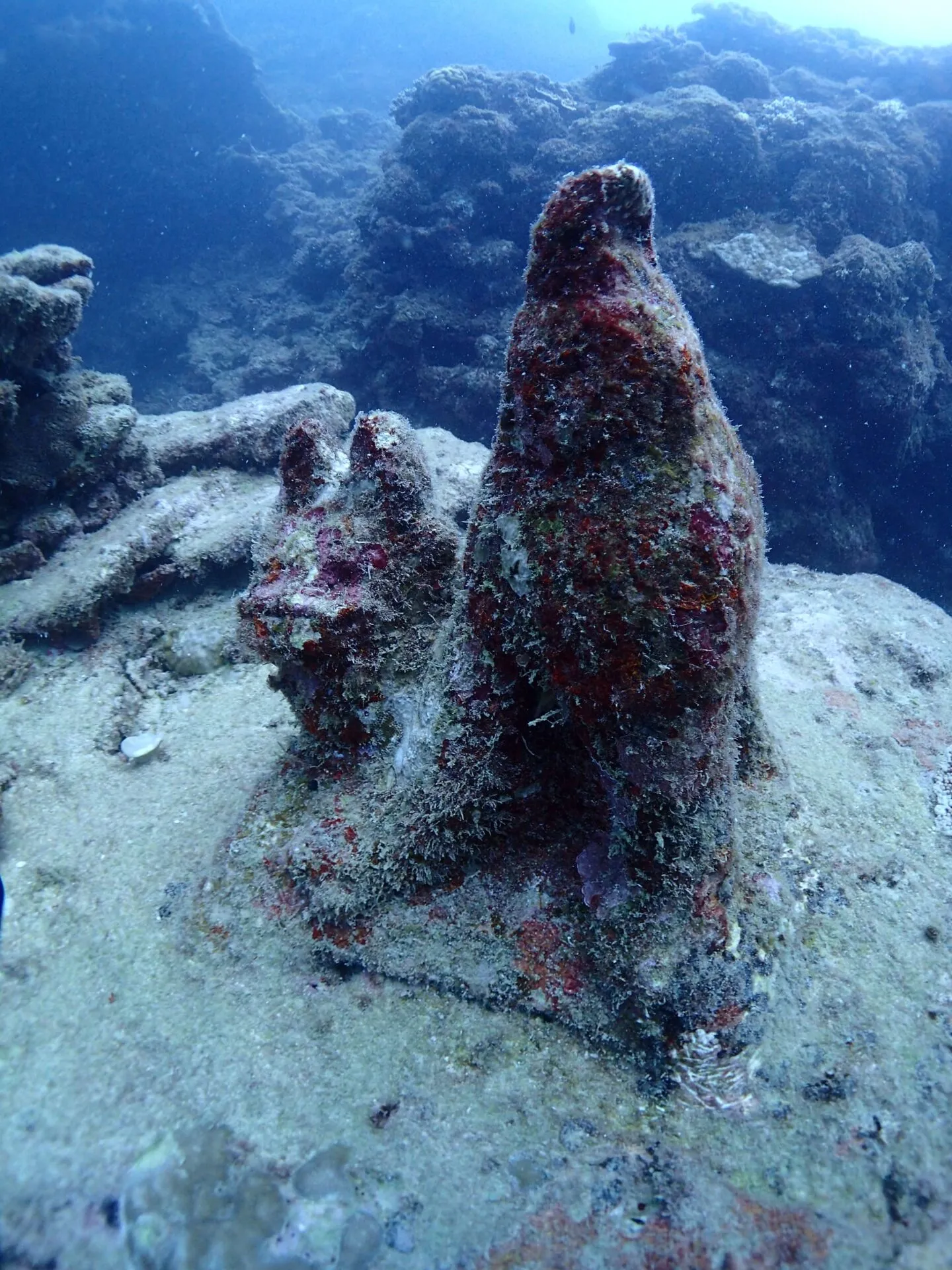
The shisa guardian statue
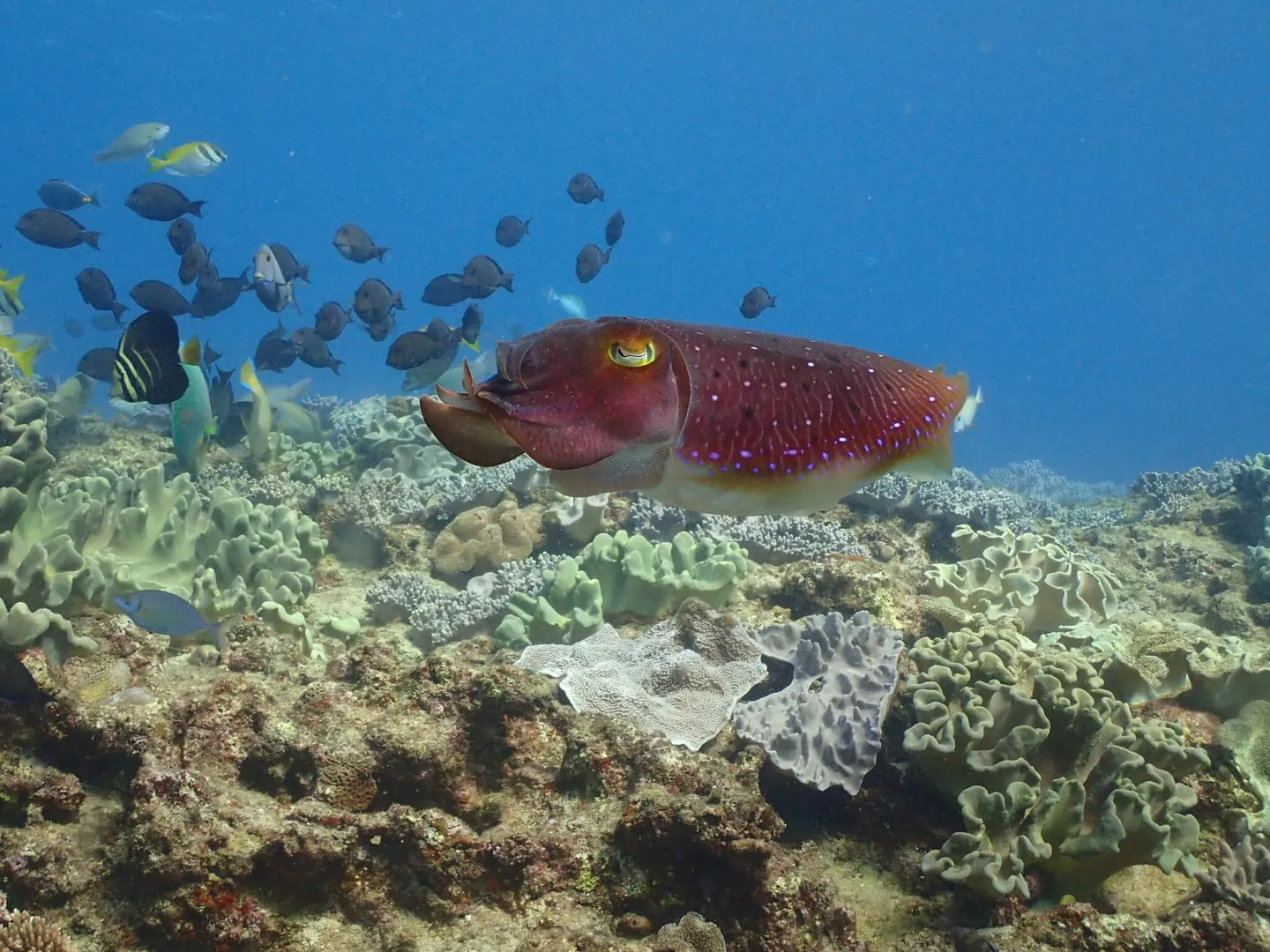
Mr. Cuttlefish
There are also several small swim-throughs here. One that's relatively easy to navigate at around 10 m offers a chance of spotting a Whitetip Reef Shark. In the summer of 2018, two Whitetip Reef Sharks had practically taken up permanent residence there — you could even see them from the cave entrance during discover scuba dives! After the typhoon, though, they seem to have gone on their own little journey somewhere. These days the cave is home to batfish and an impressively enormous trumpet fish.
You can also find ghost pipefish along the channel.
On top of all that, some snappers also call this place home — and one of them absolutely loves following divers around!!
I've named him A-Long (I have an incurable habit of naming sea creatures), and A-Long has a distinctive black spot on his forehead. Next time you're down there, feel free to say hi — he loves making friends!
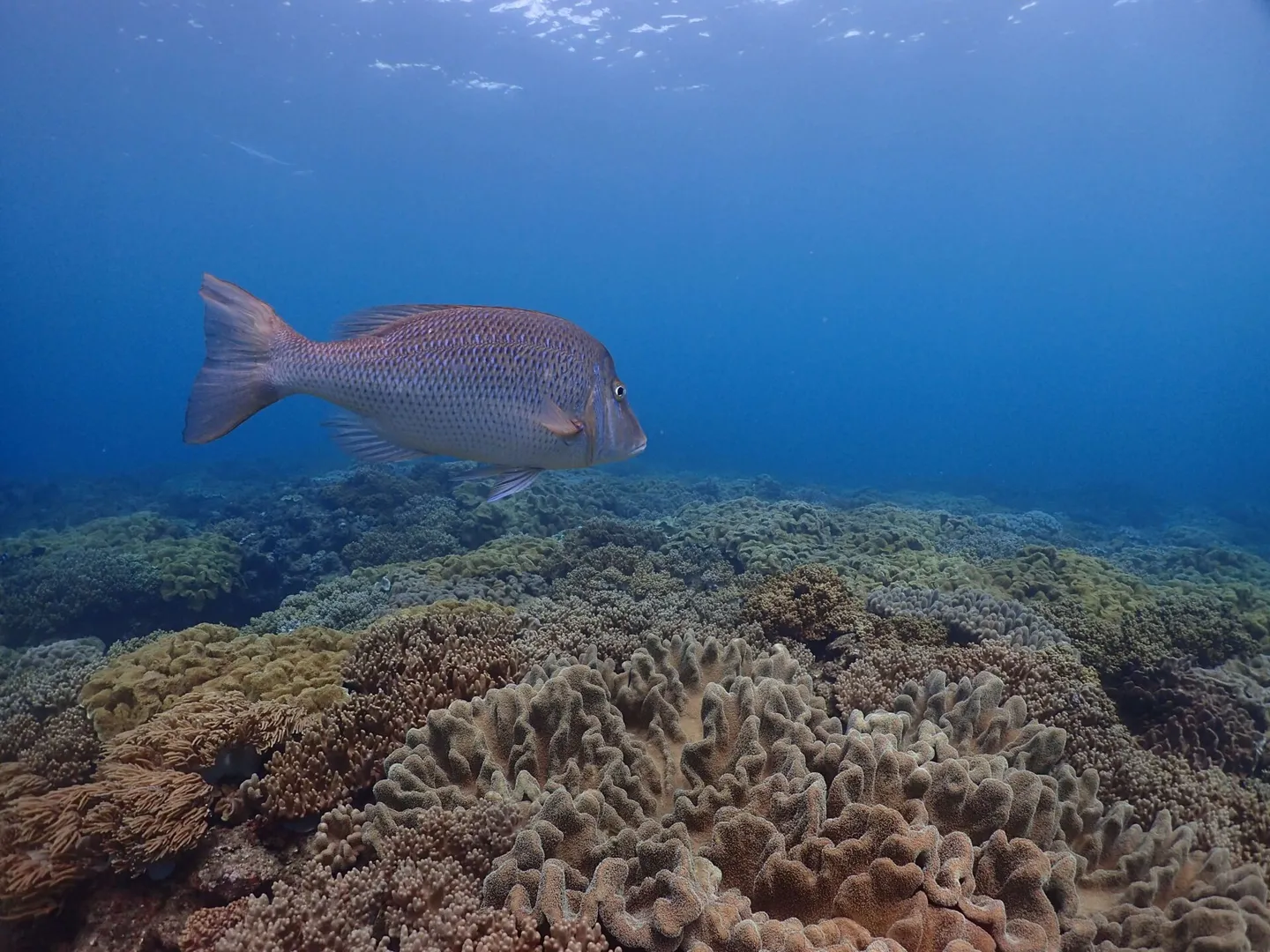
A-Long
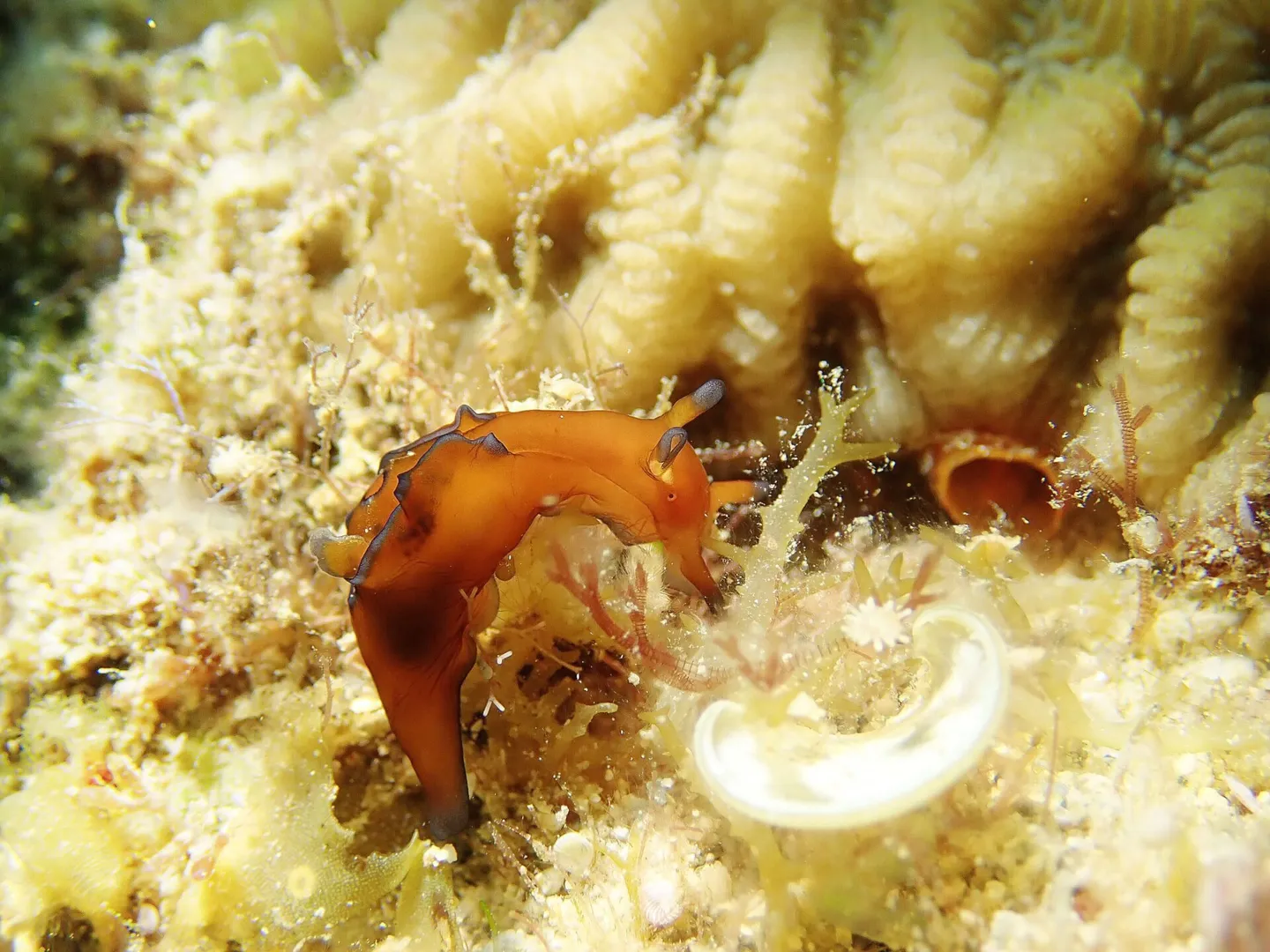
One more nudibranch shot
3、In Front of the Water Treatment Plant
This site has an utterly no-frills name — and for obvious reasons, since the entry point is right in front of the water treatment plant, haha!
It's not great to dive here at low tide or when there's a bit of swell, because a low tide means a long walk over the reef, and swell brings a sideways current.
It's also not ideal for checking buoyancy skills, and visibility is usually on the lower end — around 8–15 m.
That said, this site has a cage-shaped artificial steel reef (which once had an underwater sign-in book inside!), a tower that looks like a gun turret, and an almost 100% guaranteed barracuda wall (I won't say "tornado" — sometimes it's a full storm, sometimes it's just a regular school). The main terrain is large boulders interspersed with scattered soft coral reefs, and a small sea turtle lives here too — but only the lucky ones get to see it!!
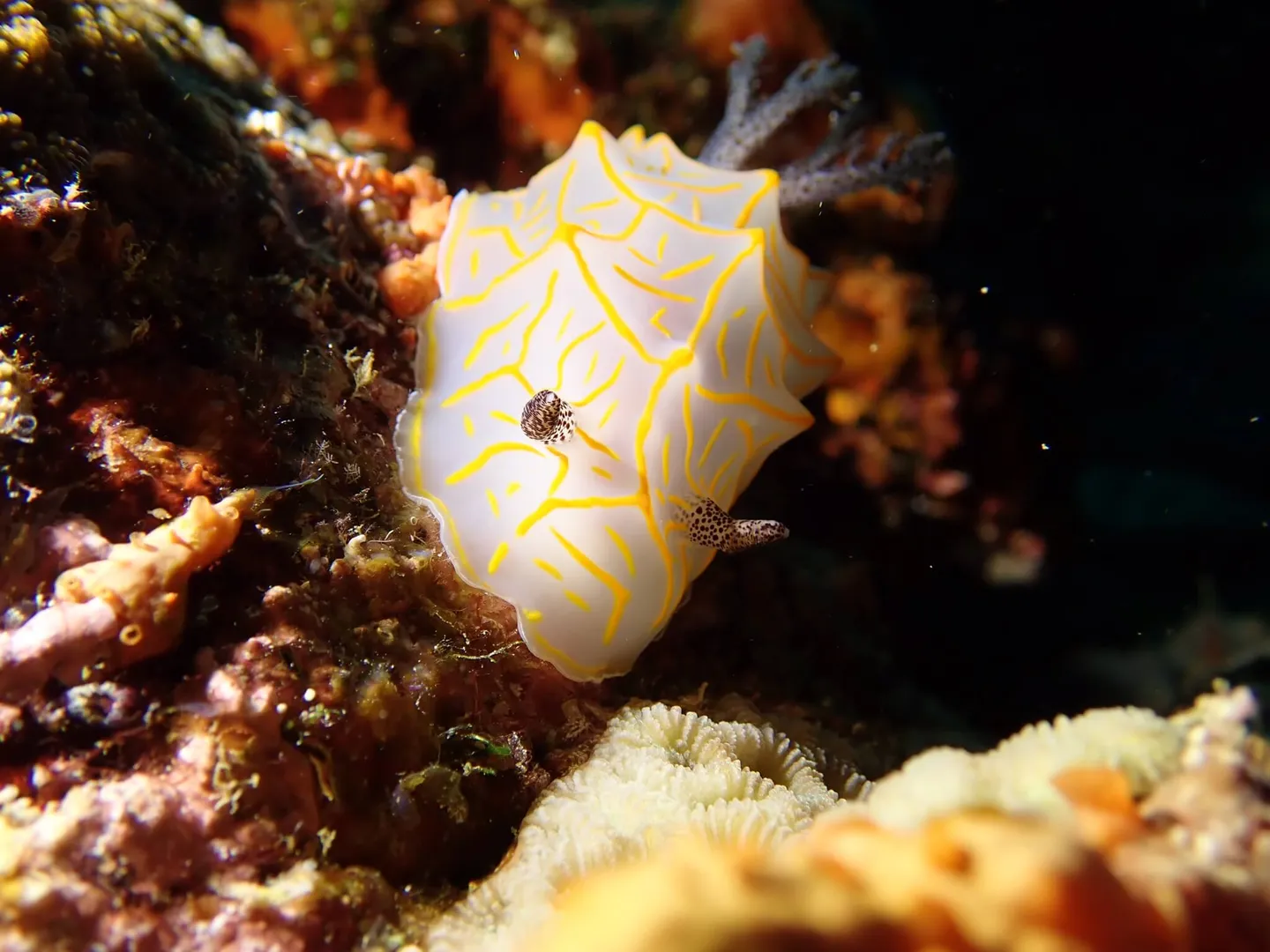
A vibrantly coloured nudibranch that looks just like a cookie
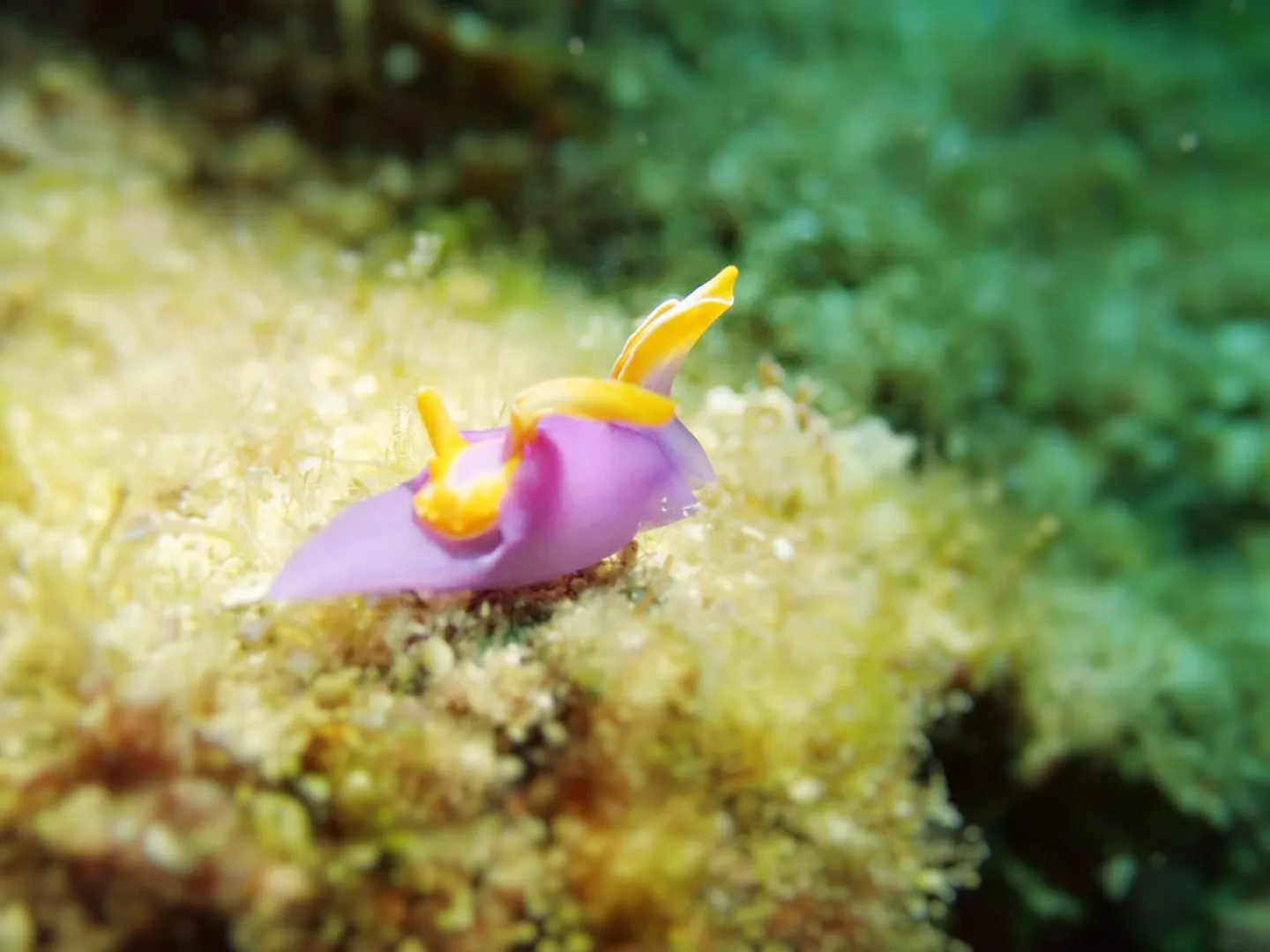
A dazzling array of nudibranchs
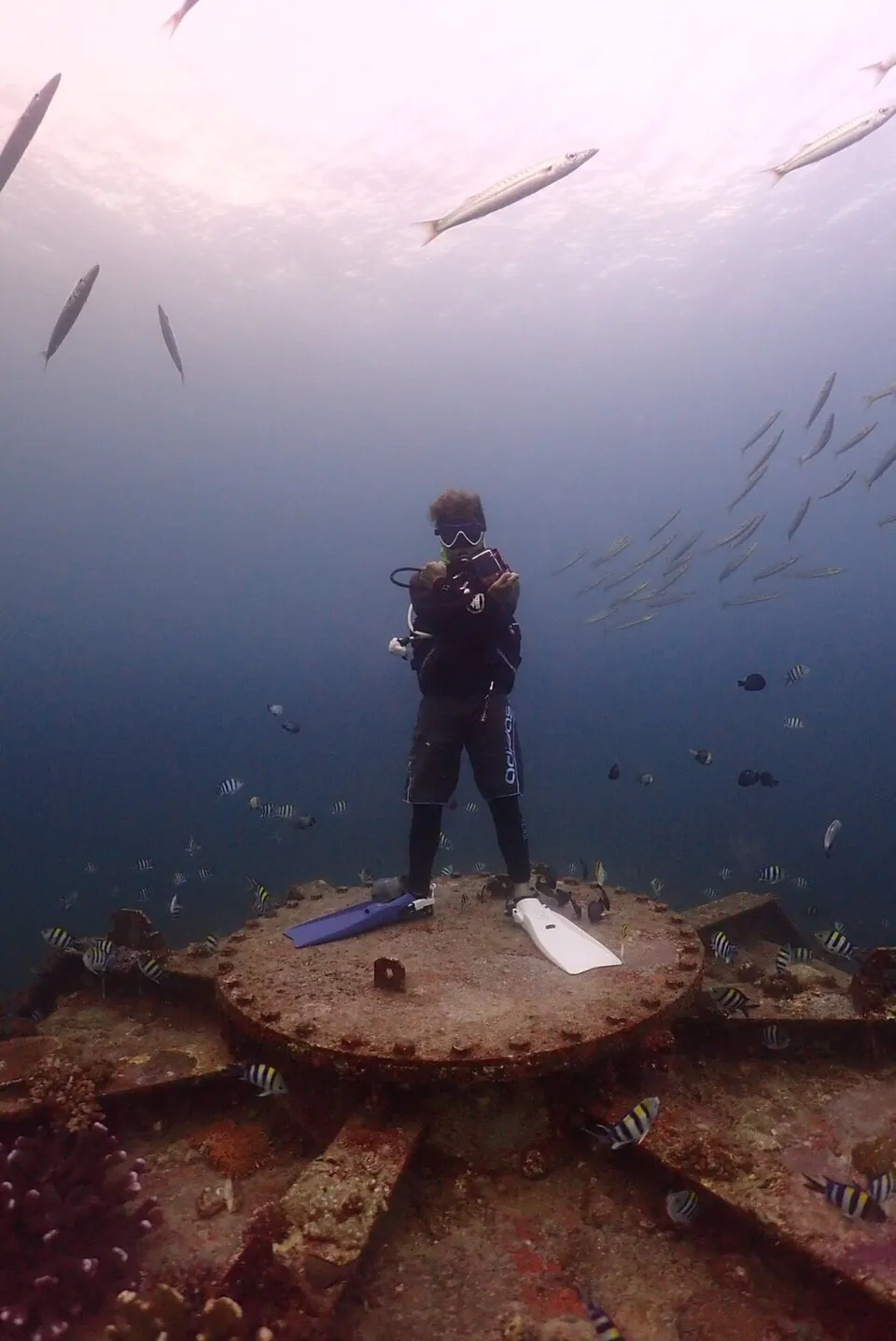
Now that's a cool pose!
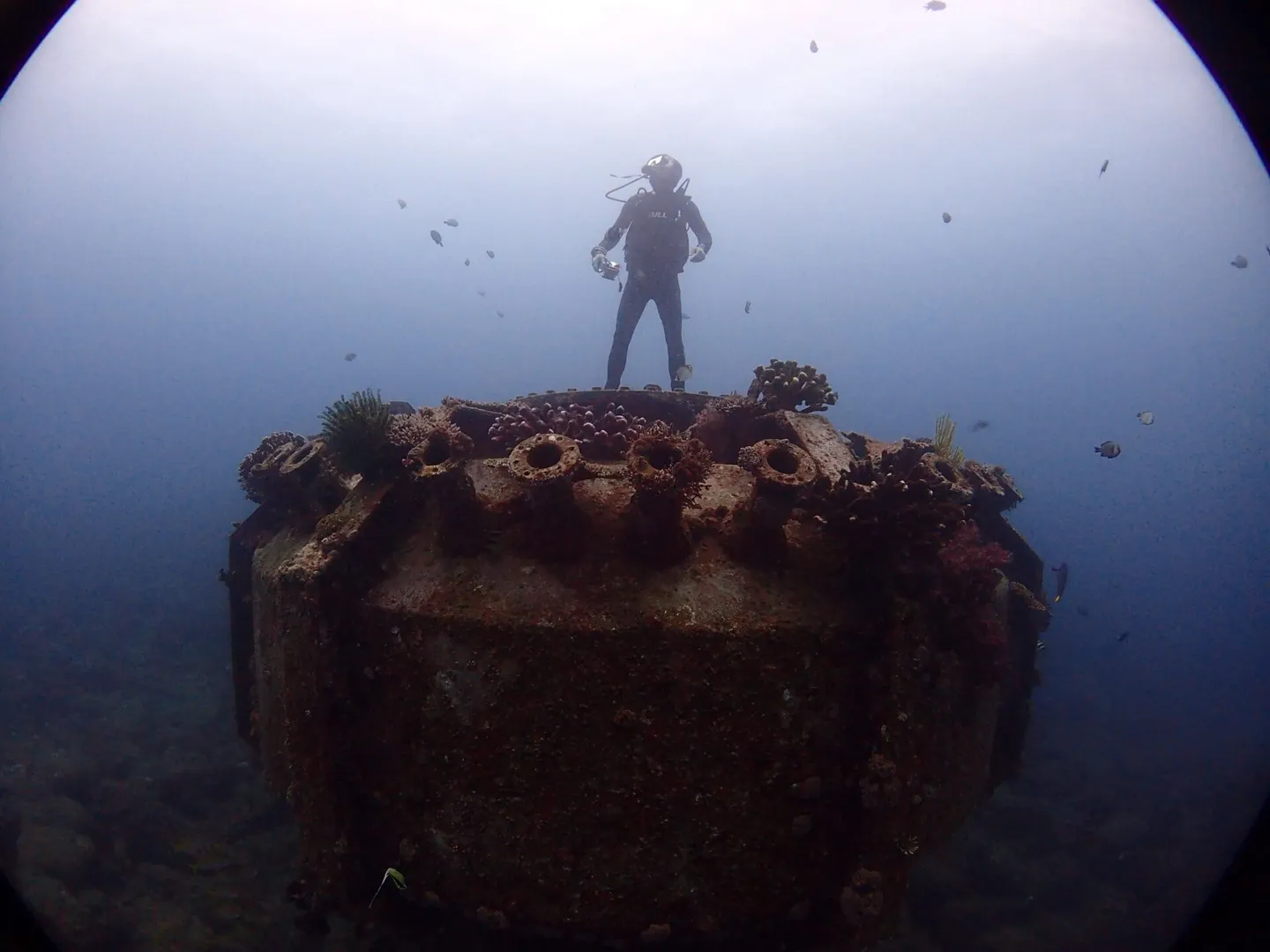
A dive site perfect for wide-angle photography
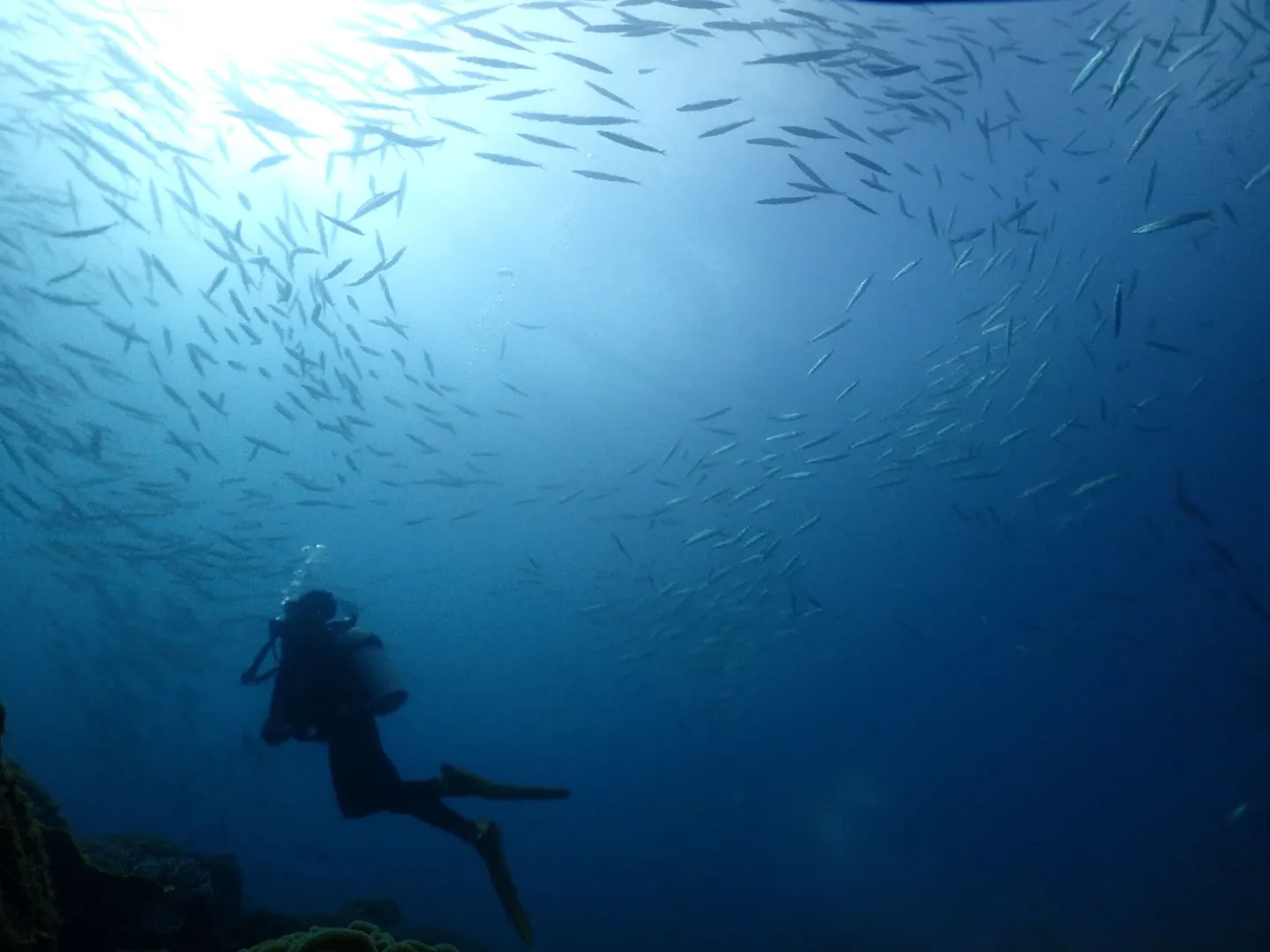
Barracuda... storm
The best season at Sunabe? I'd say April to June, hands down. That's nudibranch season and sardine season, and Erica absolutely loves nudibranchs! From autumn onward, there's a good chance of running into massive schools of goldstripe sardinella. Summer is also perfectly lovely — as long as no typhoon crashes the party. One word of warning though: warmer water brings jellyfish, so don't even think about jumping in wearing just a bikini for those Instagram shots when you dive at Sunabe!
Stop queuing up for the Blue Cave — come have fun at Sunabe instead!
Further reading:
-
Cave diving, sharks, and stunning coral reefs — uncovering Okinawa's hidden dive gems: Cape Manzamo
-
Step outside your comfort zone and dive your way around the world!
-
Okinawa diving is more than the Blue Cave! 5 insider secrets you need to know
-
The most complete Okinawa diving guide ever — stop saying diving in Japan is too hard!
-
Author: Erica — Pixnet Blog
-
Author's fan page: 小島日常-islandvibes studio
Frequently Asked Questions
How is a BlueTrend dive trip different from an unknown, no-name dive group?
Choosing us means full peace-of-mind protection and a smooth experience from start to finish. Every trip we run holds to three things.
First, full legal protection and a professional dive leader: we strictly follow Taiwan's travel regulations and provide complete travel-agency liability insurance, travel insurance, trip-inconvenience insurance and dive insurance. Every group is accompanied by a certified, foreign-language dive leader who joins you on both the dives and the land itinerary, liaising seamlessly with local dive shops and operators on your behalf to keep things running smoothly — the person our travellers trust most.
Second, fully licensed with secure payments: every payment goes into a licensed travel agency's account, with multiple safe payment channels (bank transfer, credit card and more) and a legal collect-and-remit receipt, so every transaction is open, transparent and protected, avoiding the fraud and dispute risks of transferring money privately to an individual.
Third, hand-picked quality we vet in person: every trip, dive site and partner shop is scouted on the ground by our own team, from the guides' professionalism and safety standards to the food, lodging, environment and service details on land, all vetted by us so you don't get caught out.
I want to sign up for a dive trip. Are there certification-level or logged-dive requirements?
Each dive site is different, so the entry bar varies. 'Bali Tulamben', for instance, is relatively beginner-friendly. 'Malapascua in the Philippines' is also beginner-friendly, but since thresher sharks tend to cruise between 20 and 30 metres, we recommend AOW certification with 20+ logged dives to enjoy this trip comfortably. For 'the Maldives' or 'Palau', we suggest AOW with 50+ logged dives for a more relaxed experience. If you're not sure whether your experience fits the trip you want, message us and our dive editors will assess it and help you find the trip you'll feel safest on.
Can I join if I'm signing up alone? How are rooms arranged?
Plenty of our travellers sign up solo! For rooms and beds, we prioritise pairing you with a same-gender traveller, and if you'd rather have your own space you can pay the difference to upgrade to a single room. For the diving, our professional leader will pair you with a suitable buddy, and with the happy vibe on our trips you'll quickly make a great group of dive friends. Many people sign up alone, make new friends, and end up organising the next trip together!
Does the trip fee include dive insurance, gear rental, taxes and instructor tips?
It depends on the trip, the destination's regulations and the local operators. Every BlueTrend dive trip has a detailed web page with a clear 'included / not included' list, transparent and with no hidden charges. All payments are collected by a licensed travel agency, with a standard-form contract for your protection.
I'm a new diver / haven't dived in a long time — will I fall behind the group?
Before you complete your booking, our team assesses a suitable trip based on your certification level and experience. Before departure, we strongly recommend taking time to refresh in Taiwan with an instructor, or a fun dive to get your feel back. On the trip itself, our professional dive leader groups and pairs everyone by experience, keeps a close eye underwater on travellers who need extra care, and steps in to help right away.
Will the photos and videos taken during the trip be shared with us?
During the dives, 'safety' is always the leader's top priority, so whenever it's suitable and safe the leader will capture great shots and record the best moments. During or after the trip, we compile a cloud album for all travellers to download, so you go home loaded with memories!
Besides your scheduled trips, can you arrange a private group charter or independent travel for me and my friends?
Absolutely! Besides group trips, we also arrange private group charters and independent travel. We can communicate, enquire and coordinate services with local operators based on your needs, saving you time and effort and taking the language barrier off your plate, to tailor the smoothest, most reassuring dive trip just for you. Contact our LINE support and our editors will arrange it for you!