Contents(6)
the Editor says: I still remember the first time I was moved by the sight of coral spawning — in an instant, the seemingly lifeless underwater world burst into a lively spectacle. This time, we follow Okinawa photographer Shota Ishino to witness the entire process of the arc-eye hawkfish (Paracirrhites arcatus), from courtship to spawning. What should you pay attention to when shooting in order to capture the perfect shot? Let's find out! Full article reprinted from: メガネゴンベのラブシーンはキュン死に必至!一瞬の産卵を捉えるまで。
June marks the peak of Okinawa's rainy season. The humidity makes the air feel heavy, and skin stays perpetually damp, never quite drying out. This season, southerly winds blow across the island, making it the calmest time of year for the seas around Onna Village.
After Golden Week (GW — Japan's consecutive spring holidays) comes to an end, water temperatures around Okinawa's main island begin to rise rapidly, spurring fish into intensified reproductive activity. Beyond spawning itself, it's also a great time to observe the brooding and hatching behaviors of various species. As a result, juvenile fish fill the ocean in every direction during this period, and night diving becomes particularly exciting. From late May through early June, the spectacular event of coral spawning takes place — the breathtaking scenes are so captivating that you won't want to sleep a wink!
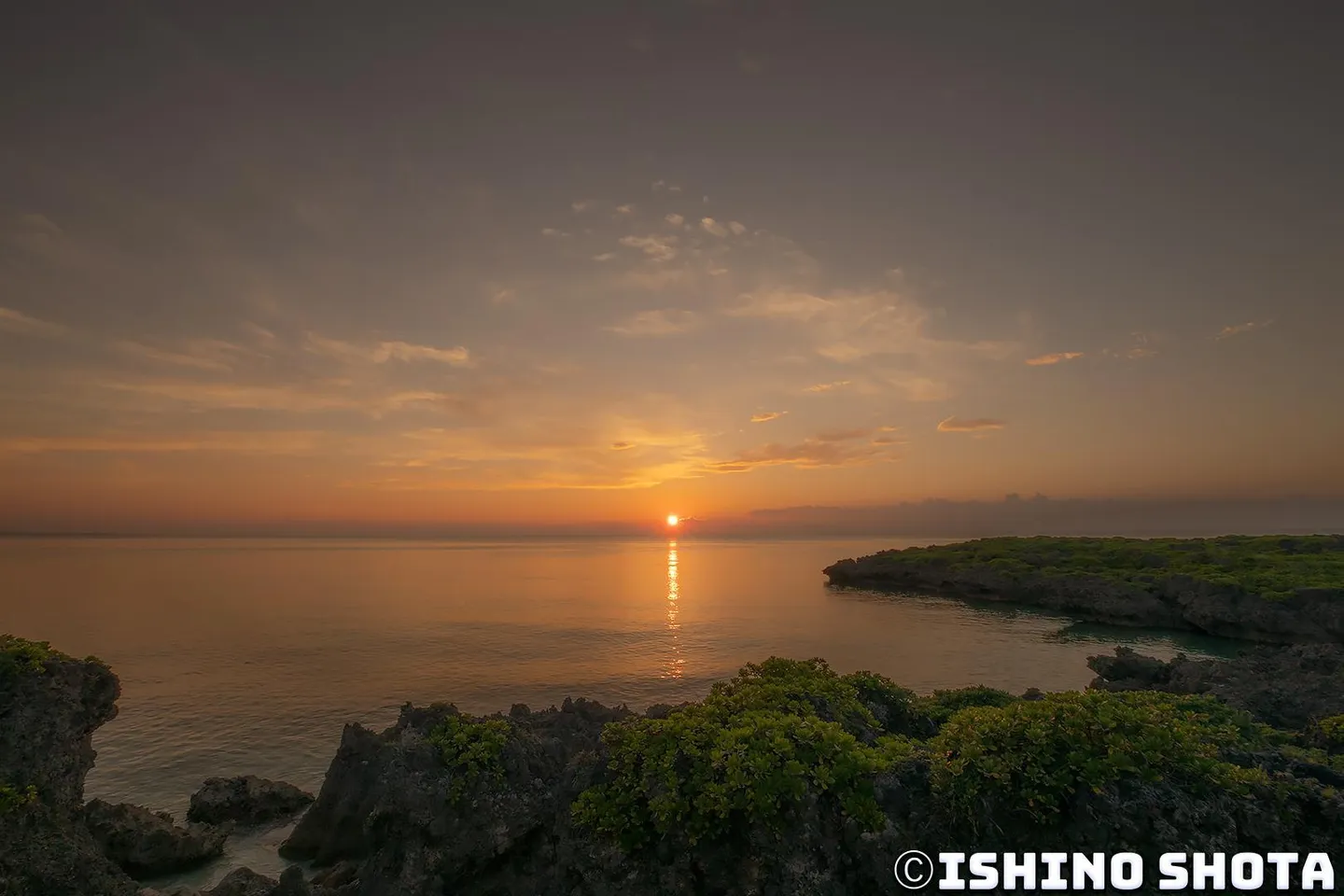
In this season when you can wade into shallow water in light clothing, the thrilling night dives after sunset are simply irresistible. And so, at dusk today, I slipped into the ocean alone.
Episode Three of Twilight Heart-Flutters: The Arc-eye Hawkfish
Welcome to the third installment of "Heartbeat Moments After Sunset." In the first episode, we introduced the "chasing behavior" of the Flame Angelfish (Centropyge loriculus) prior to spawning; in the second, we featured the shy courtship behavior of the Blackbar Soldierfish (Myripristis jacobus). That second article surprisingly ranked seventh in Oceanana's most-read articles for May. What I thought would be a niche piece that nobody would read ended up attracting unexpected attention — I'm a little embarrassed, but truly happy. I plan to keep introducing more spawning and reproductive behaviors that will delight a wider audience. That said, if I keep writing with such enthusiasm, some parents might say, "My kids can't read this (laughs)." So this time I'll keep a cool head and shift the tone a little, to introduce something that will leave a warm feeling in anyone who sees it: the reproductive behavior of the arc-eye hawkfish (Paracirrhites arcatus).
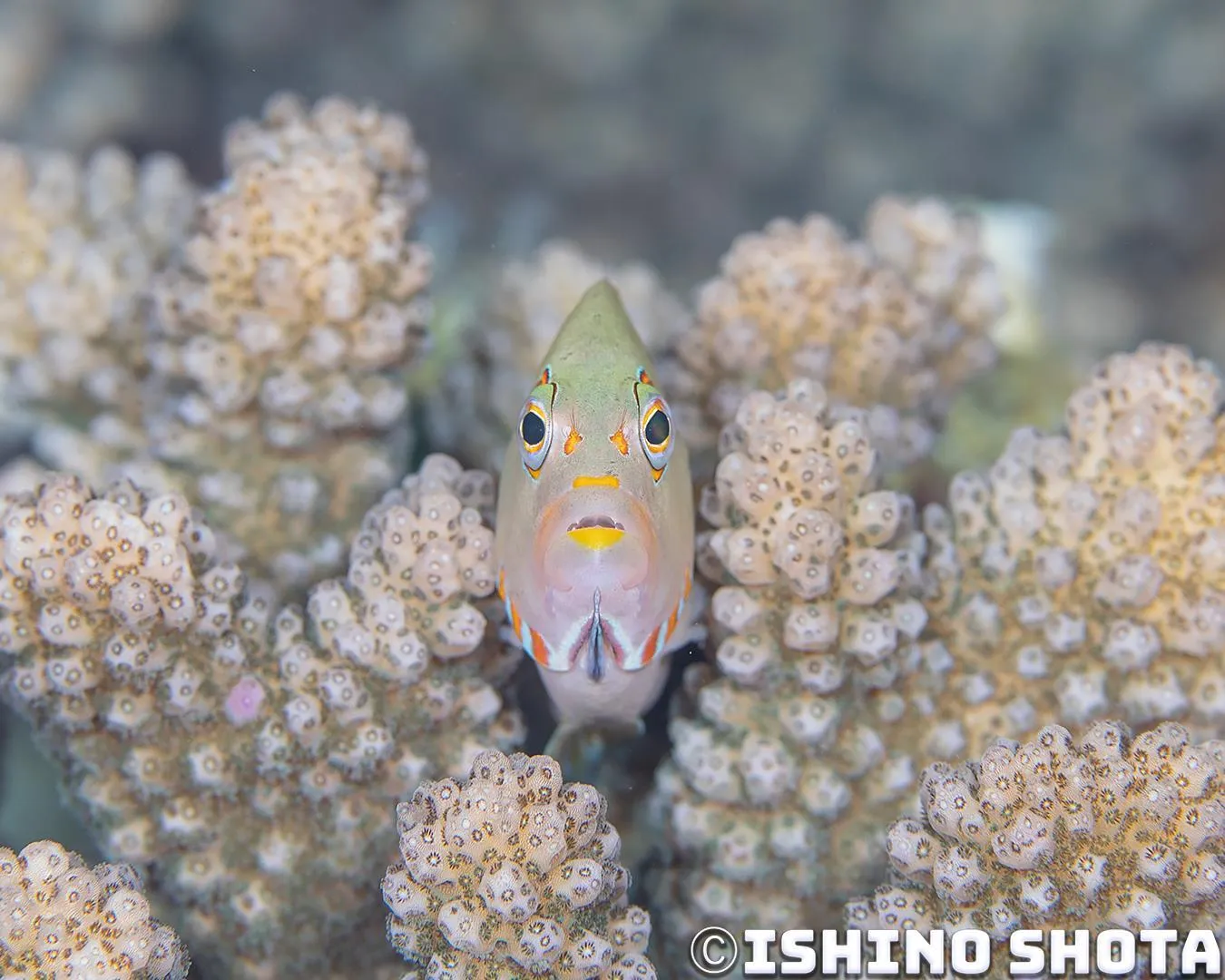
Widely distributed along the Pacific coast of southern Japan, the arc-eye hawkfish gets its Japanese common name from the distinctive pattern around its eyes — though what really catches the eye is the striking "bowtie" marking on its neck. I'm confident that anyone who witnesses the arc-eye hawkfish spawning will feel their heart leap with excitement.
Arc-eye hawkfish primarily inhabit branching stony corals. At night, two or more individuals often gather on the same coral head, but during the day each tends to perch at its own spot. They can frequently be seen sitting perfectly still on the coral, looking a little dazed. But in the brief window of fading light after sunset, that's when their reproductive behavior begins.


Heart-Stirring Moves
As the sun tilts westward, the male perches on the coral and begins to peep at the female living on the nearby coral. The female, noticing his attention, takes her position on the coral and locks eyes with him in a mutual gaze.
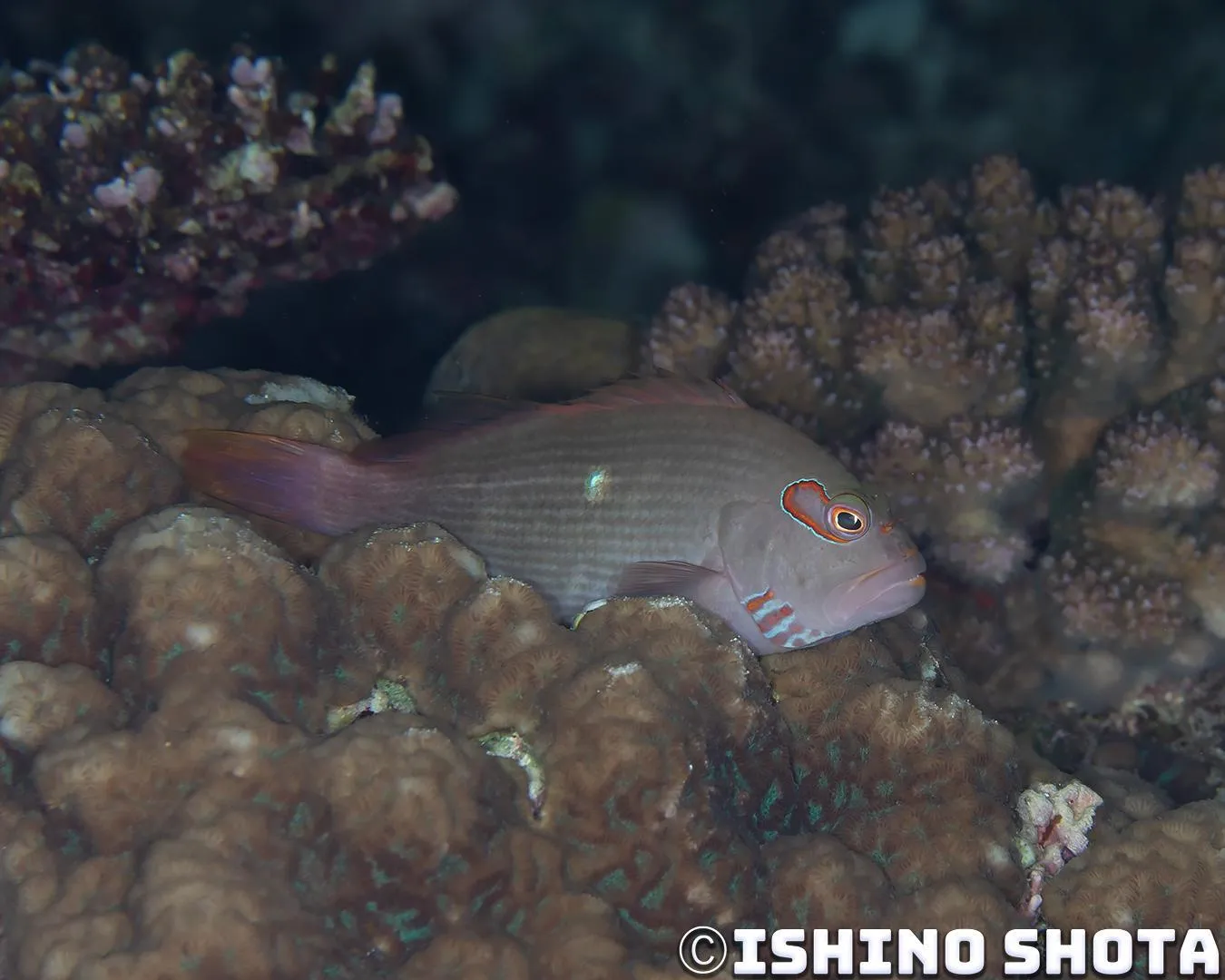
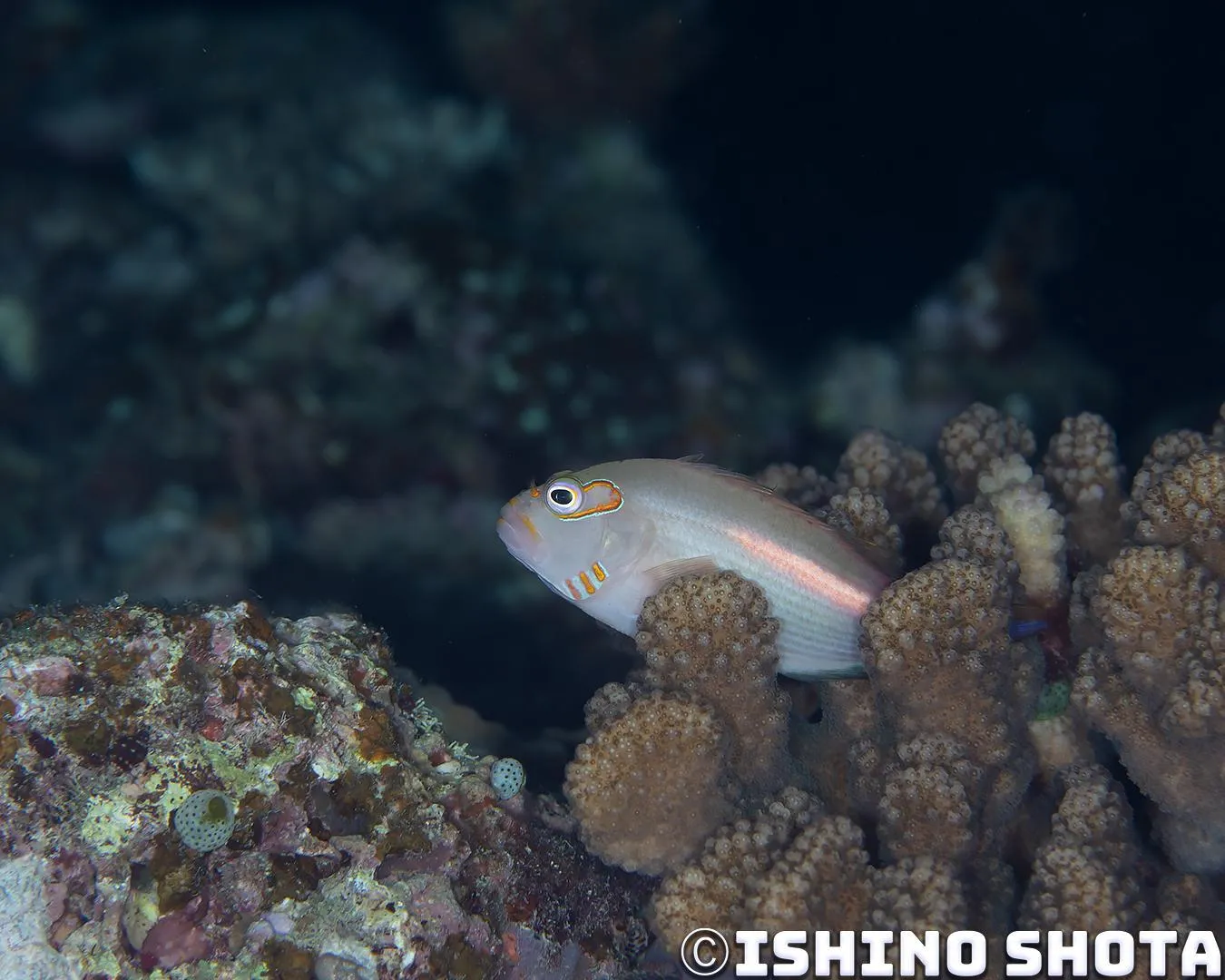
After facing each other for a moment, the male dashes over to the coral where the female resides. If the female is ready to receive him, the two begin adjusting their positions to draw closer to each other — and then the moment of spawning is at hand.
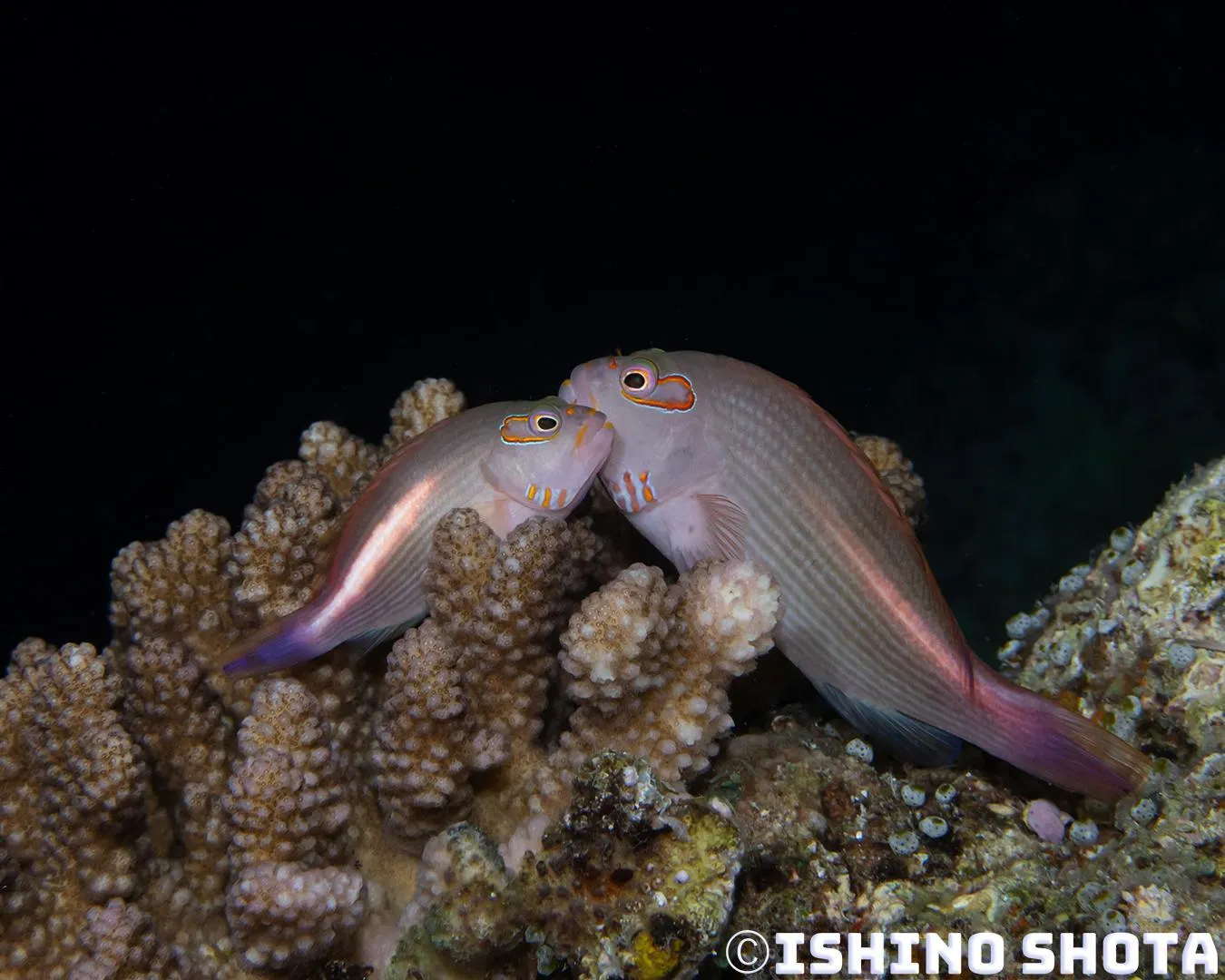
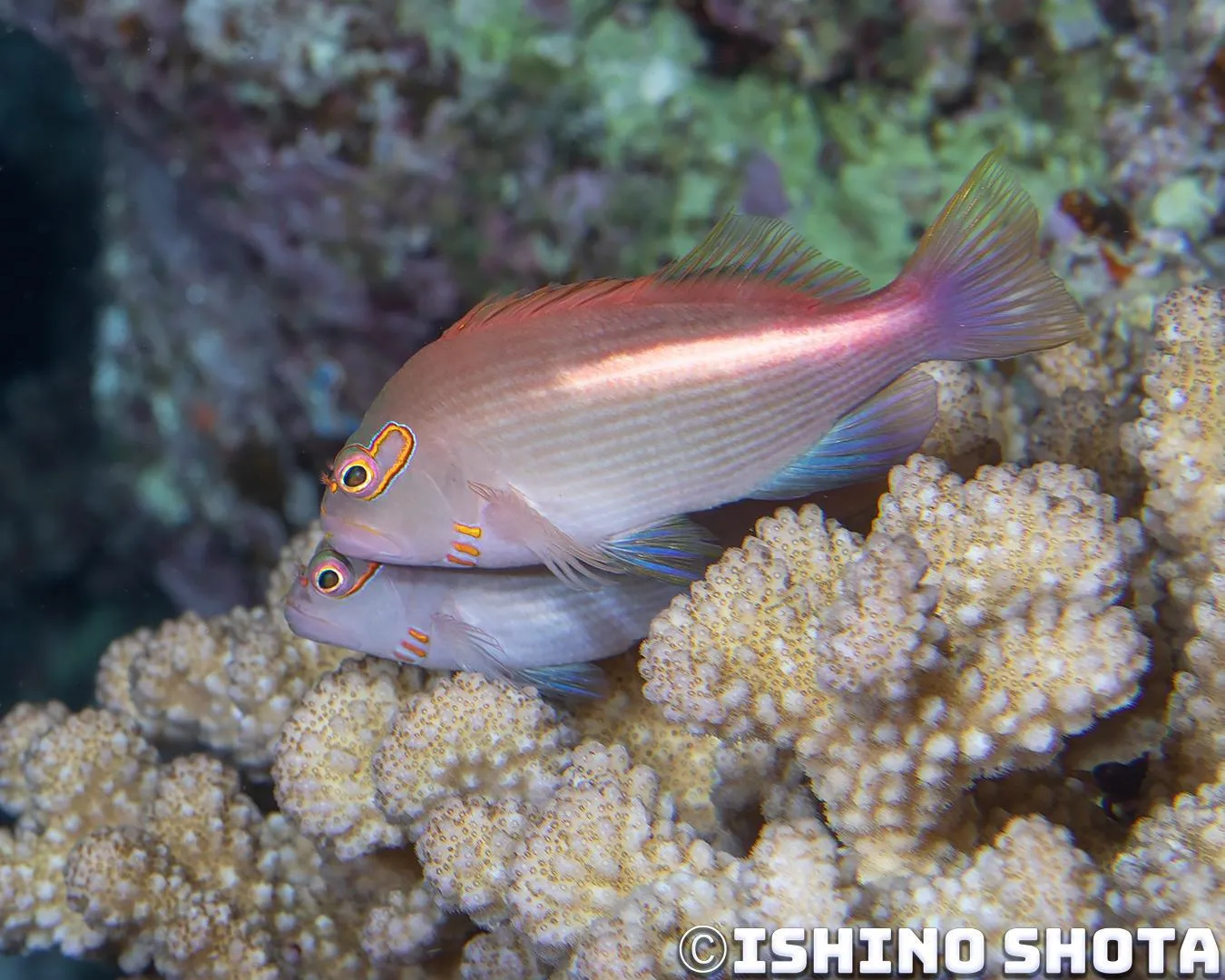
By the time you observe this moment, your heart is already racing — but what follows is an even more breathtaking courtship display. The male and female move in perfect coordination, as though timing themselves to each other's rhythm. Witnessing it from the side is deeply moving: they alternate using their pelvic fins to bob their bodies up and down, not unlike a human doing push-ups.
It's as if they're saying "one, two, three, go" and "one, two, three, follow" — the two fish rise and dip in perfect unison. At first the movement is a little out of sync, but as time passes, the rhythm gradually falls into place. Then, in a single fleeting instant, the spawning happens at a speed that is almost too fast to follow. Their spawning method involves both fish rising together and releasing their gametes simultaneously — the eggs are "pelagic, non-adhesive floating eggs." The whole thing happens so fast that if you blink at the wrong moment, you'll miss it entirely, left only with the eggs drifting through the water in the aftermath.

Photographing the Spawn Is Like a Speed-Quiz Game
With all of the above in mind, there's one key tip for photographing arc-eye hawkfish spawning: trust your instincts. To do that, you need the experience of having observed the spawning multiple times, so you become familiar with the precise timing of that instant and the distance of the upward rush.
To start, position yourself beside the coral where the pair is resting and observe from both front and side angles. Keep in mind that it's best to angle your camera diagonally upward at about 45 degrees, at a distance of roughly 30 cm — ideally with the courting fish just at the edge of the frame. When focusing, assume that the pair will rise upward at a lateral angle, then wait patiently for the spawning moment to arrive.
Keep a close eye on the intimate behavior of the two fish and wait in silence. Occasionally the male may make a false start, but don't be tempted to press the shutter — the sudden flash could startle the female. And whatever you do, never reach out to interfere with or disturb your subjects. Because the entire ascent lasts only an instant, sometimes the autofocus can't even keep up with the shutter, and I myself had to attempt this many times before finally capturing the shot.
The Pain of Childbirth and the Joyful Male
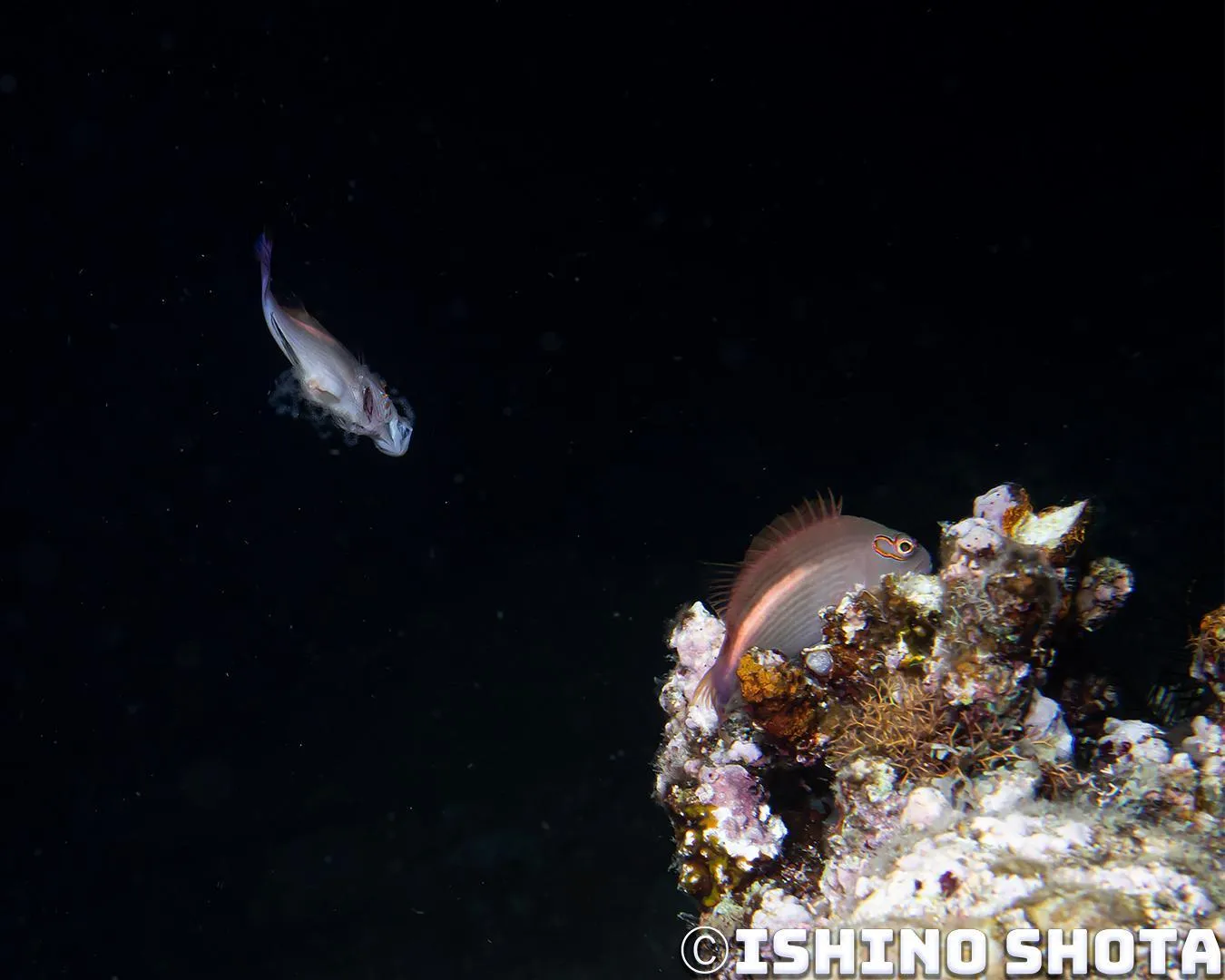
Through repeated failures, I also made some discoveries along the way. As you can see from the photo above, the instant the female releases her eggs, the male immediately turns and returns to the coral. Because it happens so fast, I often ended up with shots of only the female mid-spawn while the male was already back on the coral — frustratingly close but not quite there. After taking countless such photographs, I set my sights on a new goal: "capturing the precise instant when male and female are side by side, simultaneously releasing sperm and eggs." After many days of trying, that moment finally came.
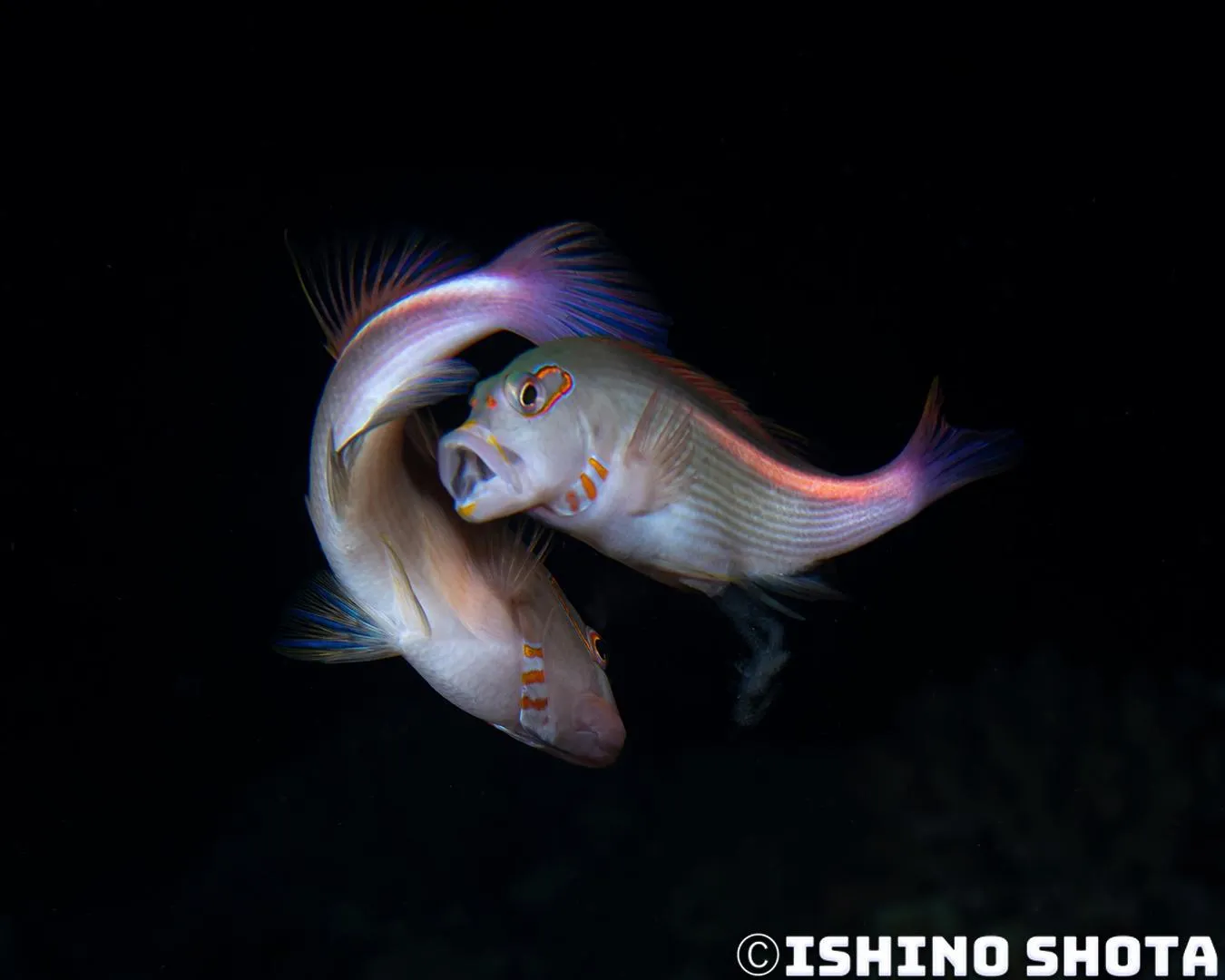
Strictly speaking, this photograph does not capture the exact instant of fertilization, but rather the moment just after the female has released her eggs, with the male in the process of releasing his milt while already beginning to turn back. The true moment of fertilization should be a shot of both fish swimming side by side in the same direction. In other words, even now my reflexes haven't been fast enough to capture the precise instant when the male releases his sperm onto the female's eggs. If anyone out there manages to photograph that moment, please share it widely.
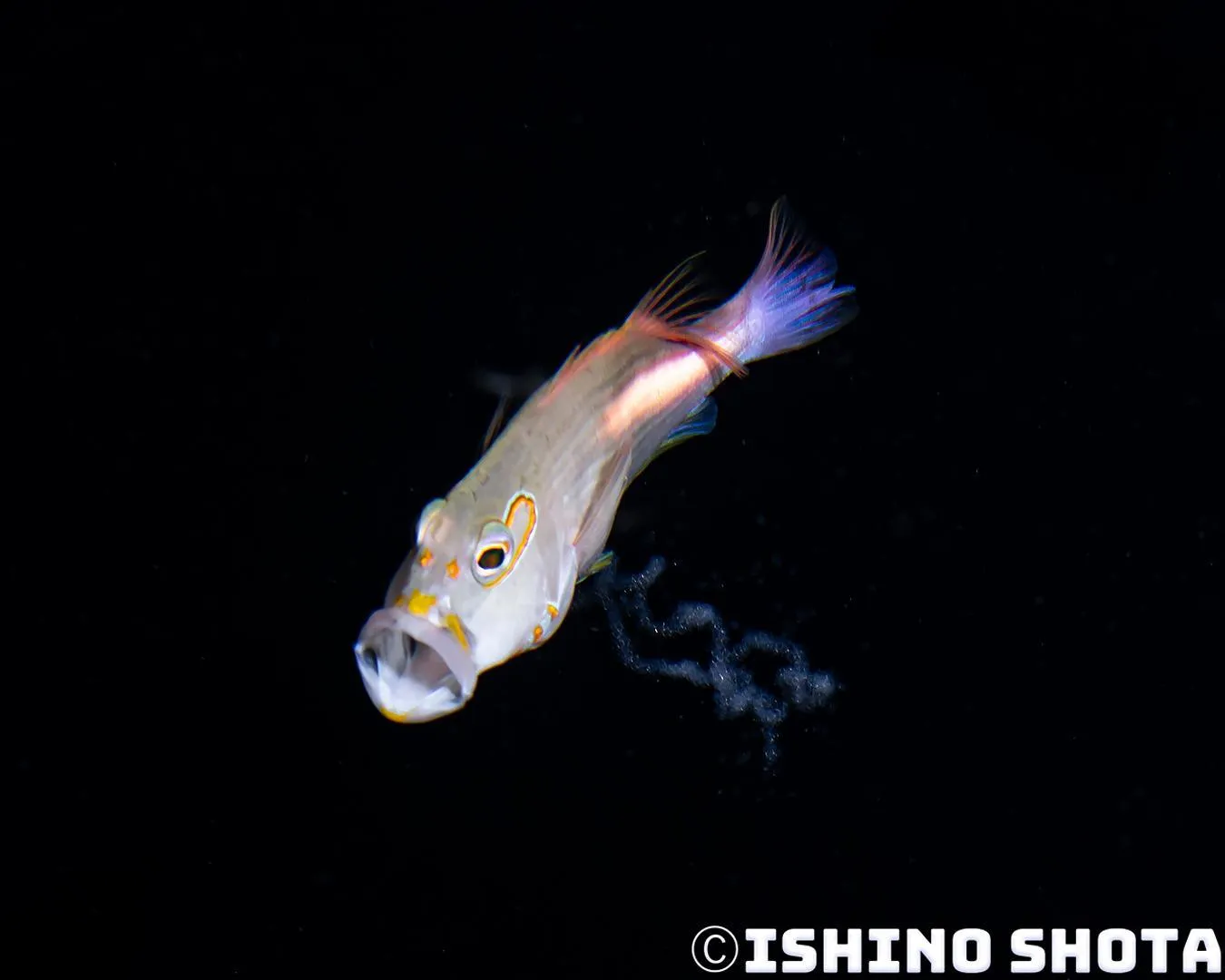
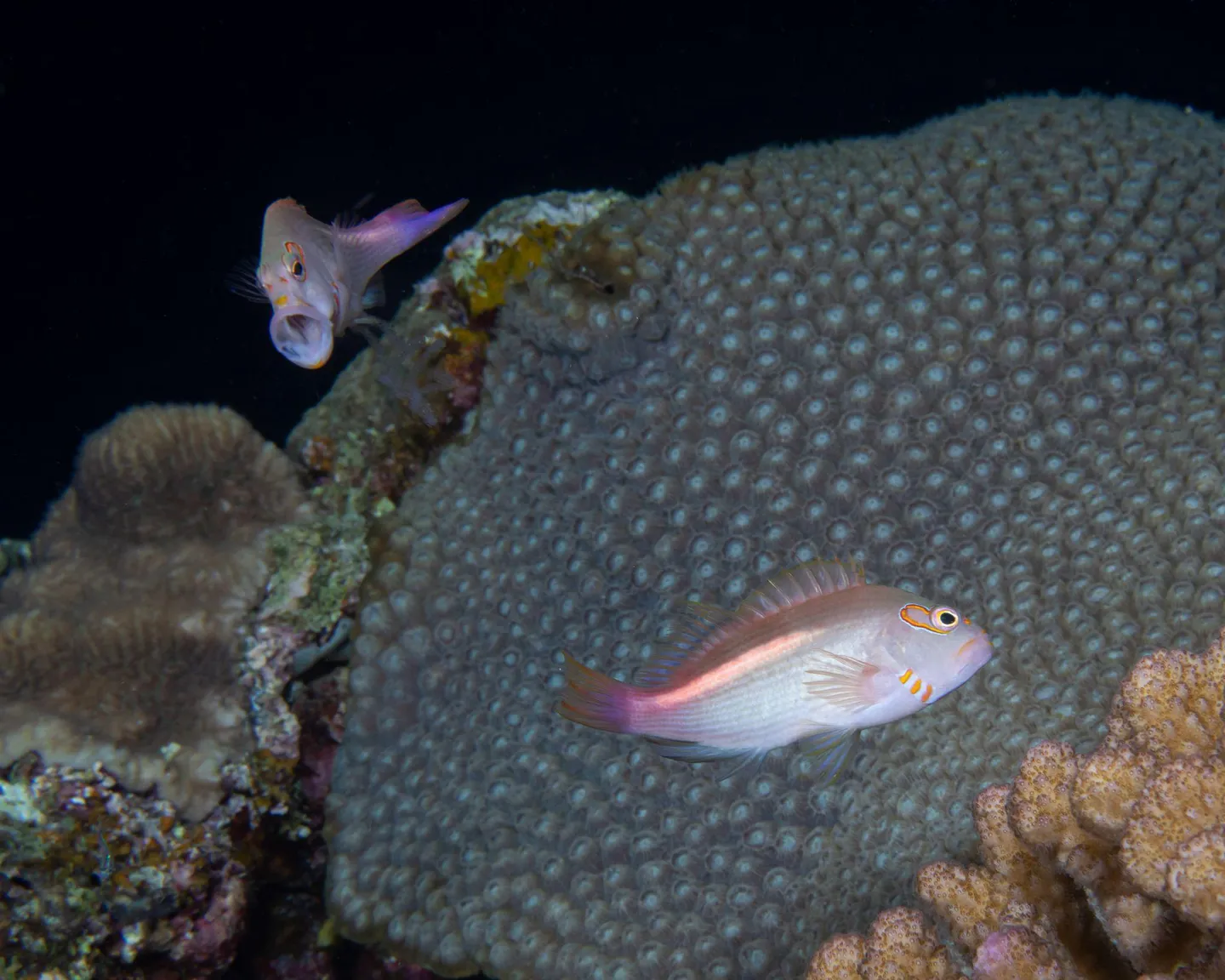
I also managed to capture the female arc-eye hawkfish's expression, full of the agony of labor — a stark contrast to the male, who looks entirely pleased with himself after the deed is done.
The male arc-eye hawkfish maintains multiple female mates within his territory, so after spawning he immediately heads off to the coral of another female. This behavior of the male is rather like a playboy straight out of a gossip magazine — and just like that, the warm, moving feeling from moments before fades away into something rather more ordinary.
Related Links
Further Reading
Frequently Asked Questions
How is a BlueTrend dive trip different from an unknown, no-name dive group?
Choosing us means full peace-of-mind protection and a smooth experience from start to finish. Every trip we run holds to three things.
First, full legal protection and a professional dive leader: we strictly follow Taiwan's travel regulations and provide complete travel-agency liability insurance, travel insurance, trip-inconvenience insurance and dive insurance. Every group is accompanied by a certified, foreign-language dive leader who joins you on both the dives and the land itinerary, liaising seamlessly with local dive shops and operators on your behalf to keep things running smoothly — the person our travellers trust most.
Second, fully licensed with secure payments: every payment goes into a licensed travel agency's account, with multiple safe payment channels (bank transfer, credit card and more) and a legal collect-and-remit receipt, so every transaction is open, transparent and protected, avoiding the fraud and dispute risks of transferring money privately to an individual.
Third, hand-picked quality we vet in person: every trip, dive site and partner shop is scouted on the ground by our own team, from the guides' professionalism and safety standards to the food, lodging, environment and service details on land, all vetted by us so you don't get caught out.
I want to sign up for a dive trip. Are there certification-level or logged-dive requirements?
Each dive site is different, so the entry bar varies. 'Bali Tulamben', for instance, is relatively beginner-friendly. 'Malapascua in the Philippines' is also beginner-friendly, but since thresher sharks tend to cruise between 20 and 30 metres, we recommend AOW certification with 20+ logged dives to enjoy this trip comfortably. For 'the Maldives' or 'Palau', we suggest AOW with 50+ logged dives for a more relaxed experience. If you're not sure whether your experience fits the trip you want, message us and our dive editors will assess it and help you find the trip you'll feel safest on.
Can I join if I'm signing up alone? How are rooms arranged?
Plenty of our travellers sign up solo! For rooms and beds, we prioritise pairing you with a same-gender traveller, and if you'd rather have your own space you can pay the difference to upgrade to a single room. For the diving, our professional leader will pair you with a suitable buddy, and with the happy vibe on our trips you'll quickly make a great group of dive friends. Many people sign up alone, make new friends, and end up organising the next trip together!
Does the trip fee include dive insurance, gear rental, taxes and instructor tips?
It depends on the trip, the destination's regulations and the local operators. Every BlueTrend dive trip has a detailed web page with a clear 'included / not included' list, transparent and with no hidden charges. All payments are collected by a licensed travel agency, with a standard-form contract for your protection.
I'm a new diver / haven't dived in a long time — will I fall behind the group?
Before you complete your booking, our team assesses a suitable trip based on your certification level and experience. Before departure, we strongly recommend taking time to refresh in Taiwan with an instructor, or a fun dive to get your feel back. On the trip itself, our professional dive leader groups and pairs everyone by experience, keeps a close eye underwater on travellers who need extra care, and steps in to help right away.
Will the photos and videos taken during the trip be shared with us?
During the dives, 'safety' is always the leader's top priority, so whenever it's suitable and safe the leader will capture great shots and record the best moments. During or after the trip, we compile a cloud album for all travellers to download, so you go home loaded with memories!
Besides your scheduled trips, can you arrange a private group charter or independent travel for me and my friends?
Absolutely! Besides group trips, we also arrange private group charters and independent travel. We can communicate, enquire and coordinate services with local operators based on your needs, saving you time and effort and taking the language barrier off your plate, to tailor the smoothest, most reassuring dive trip just for you. Contact our LINE support and our editors will arrange it for you!