

Contents(4)
The Editor says: The Philippines is home to a countless number of beautiful islands. Malapascua, for instance, is famous for its Thresher Sharks and has become a must-visit destination for divers — but Malapascua has far more to offer than just Thresher Sharks! You also have a chance to witness Mandarin Fish performing their courtship dance in colours reminiscent of the Na'vi. The surrounding area includes a small island that's perfect for both wide-angle and macro shooting, where Whitetip Reef Sharks and uniquely patterned Harlequin Ghost Pipefish await. And if you love taking gorgeous photos, Peggy has also recommended a picture-perfect uninhabited island — read on to find out more!
Malapascua Must-See: Mandarin Fish
Aside from the daily early-morning Thresher Shark dives, twilight dives for Mandarin Fish courtship are the other main event.
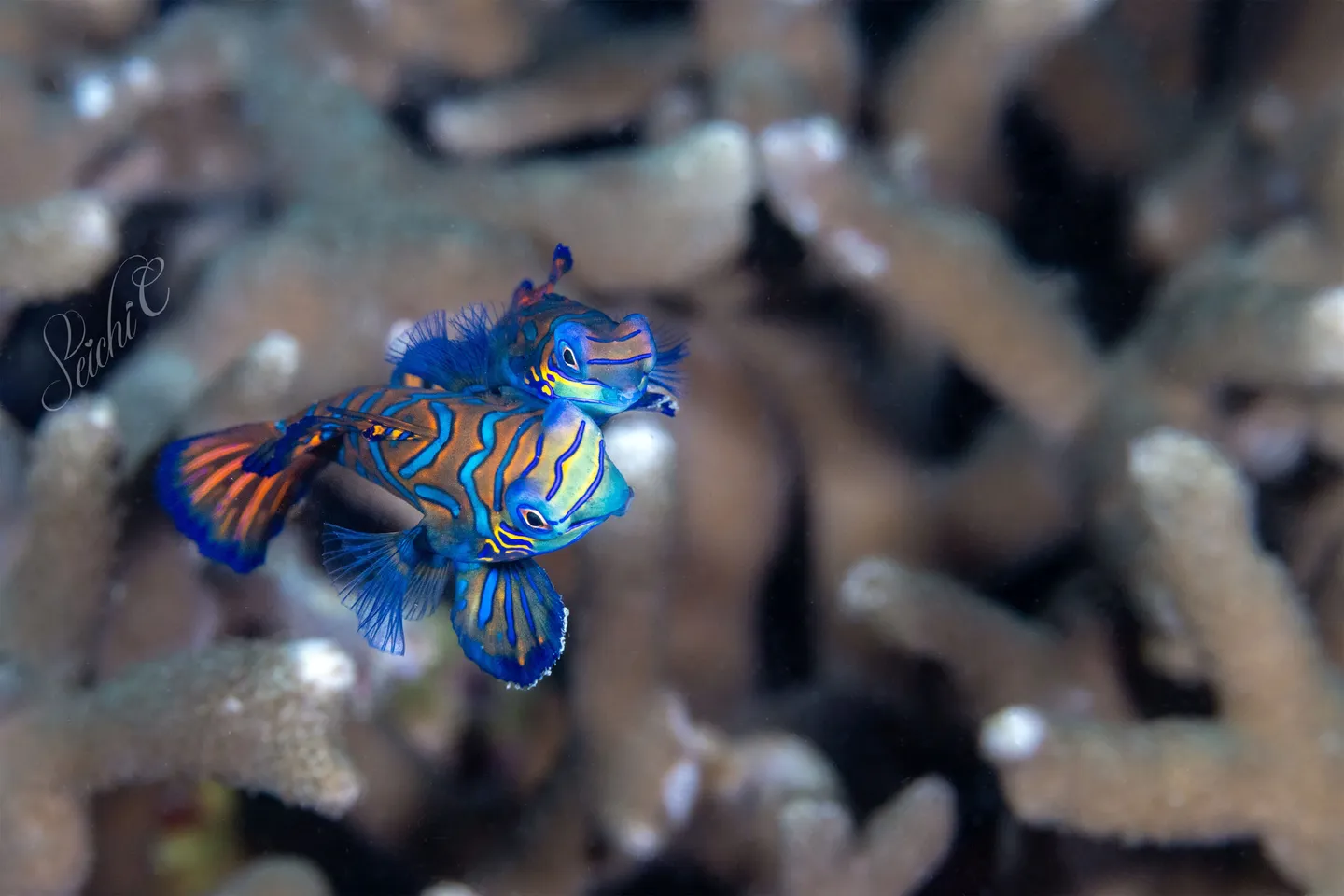
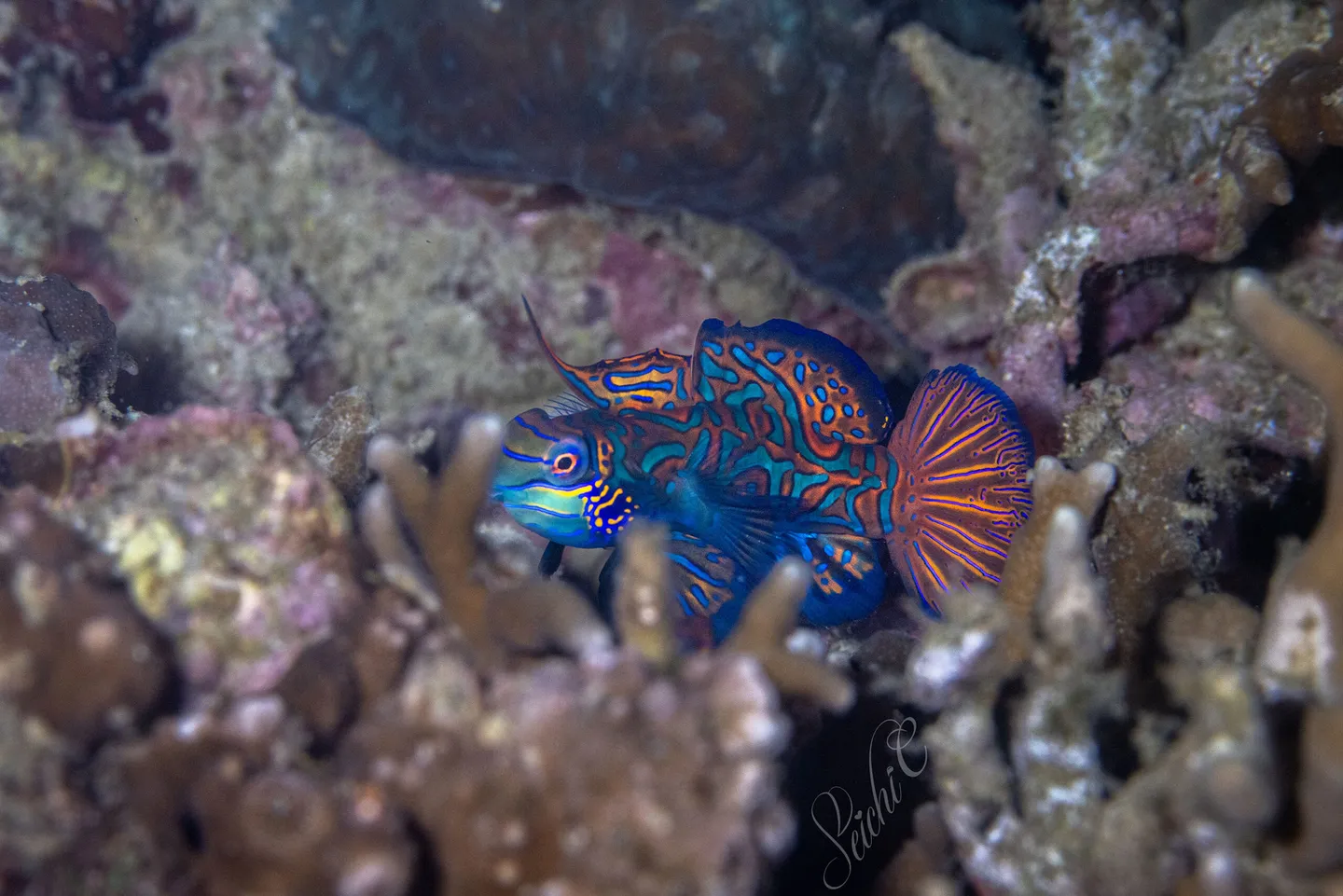
A quick introduction to the Mandarin Fish (Synchiropus splendidus): I think its blue stripes are somewhat reminiscent of the Na'vi from Avatar — countless blue lines printed over a body swirled with red, orange, yellow, and green. They are shy by nature and love to hide in the crevices of Acropora coral. As the sun sets and the light fades, they become more active, weaving through the coral. The males begin searching for a partner to court (and mate with); upon finding a female, the male quivers his pectoral fins and raises his dorsal fin, as if performing a courtship dance.
A male Mandarin Fish quivers his pectoral fins and raises his dorsal fin, as if performing a courtship dance for the female.
Males aren't very selective, but females can be quite choosy — they prefer males noticeably larger than themselves. If a female isn't impressed, the male moves on to the next one. If things go well, he wraps around the female and the two spiral upward together, simultaneously releasing eggs and sperm before both immediately dart back into the coral. But the busy male must then set off immediately for his next encounter — a male can spawn with up to eight females in a single night. From my own observations, though, they don't always follow through: sometimes it ends halfway up the water column, and sometimes damselfish follow close behind and devour the eggs!
I had heard that there were lots of Mandarin Fish here, so I was ready to go on a twilight dive as soon as I arrived on the island — but it wasn't until my third evening dive that I finally got any photos!
On the first night, I may have entered the water a bit too late; I only witnessed one mating attempt and it was already over, and the fish had their backs to me. Another evening, I watched a male court female after female, each one utterly uninterested, moving on to the next… and then the next… until it was completely dark and all the fish had gone to sleep, with not a single successful pairing the entire night! So I had no choice but to try one more night. Finally, this time the fish were more active, and the females were more receptive. At one point, just as one pair of Mandarin Fish began to mate, another female pressed in close beside them to join. Every night brings different animal behaviour — observing wildlife always yields fascinating new discoveries.
The most important rule when watching or photographing Mandarin Fish is: no white light! You must use a low-intensity red video light (with a diffused beam) to shoot, and wait quietly in one spot. They are extremely shy and are very easily disturbed — enough to make them unwilling to come out and mate.
One time I happened to be in the water on a Saturday night, when there were especially many divers. Everyone gathered around the various coral heads where Mandarin Fish appear (known as Mandarin Stations). To my astonishment, right across from me was a dive guide who, every time the Mandarin Fish began rising to spawn, would switch on his white-light torch so his guests could photograph them with their compact cameras. That night, each spawning rise was cut dramatically short — on several occasions the fish dove back into hiding within 2–3 seconds of the white light appearing. This guide kept turning on his light just as the fish were beginning to rise. In the moment I was absolutely dumbfounded and furious. I couldn't understand why a local dive guide would do such a thing — rather than properly explaining the behaviour to guests and fostering genuine appreciation for the animal, he was doing this.
Once I surfaced, I asked my own dive guide about him and learned he was a private instructor, making it impossible to report the behaviour to a shop and have it stopped. All we could do was ask the other dive guides to speak with him. If local dive guides keep disrupting Mandarin Fish courtship with white lights, I believe the Mandarin Fish population here will dwindle, and eventually disappear entirely. I hope that everyone who plans to photograph Mandarin Fish in the future will treat them with care.


Gato Island
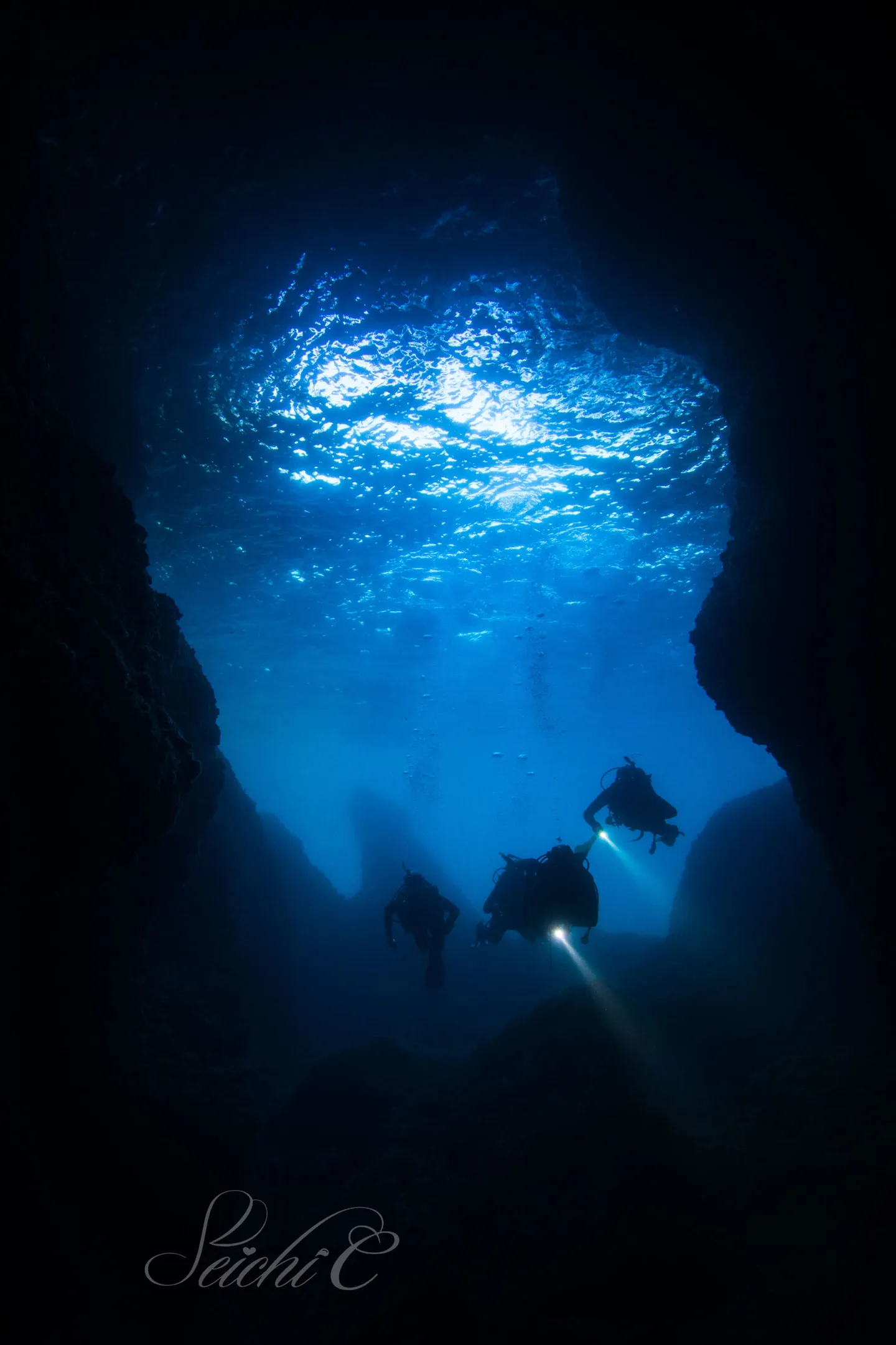
The entrance to the cave at Gato Island
This little island is about a one-hour boat ride from Malapascua and is perfect for doing two dives on your first day after a check dive. There is a very special underwater cave here — when visibility is good, shooting silhouettes from inside the cave toward the entrance is stunning. Inside the cave, you'll want to maintain good neutral buoyancy to avoid stirring up the fine silt on the bottom. The cave isn't large, and the exit is quite low; once you come out the other side, you're greeted by an entirely different scene. Outside the cave there is abundant soft coral, and Whitetip Reef Sharks live in the vicinity. The reef sharks here aren't overly shy, but you still need to approach slowly and calmly, or they'll swim away in an instant.
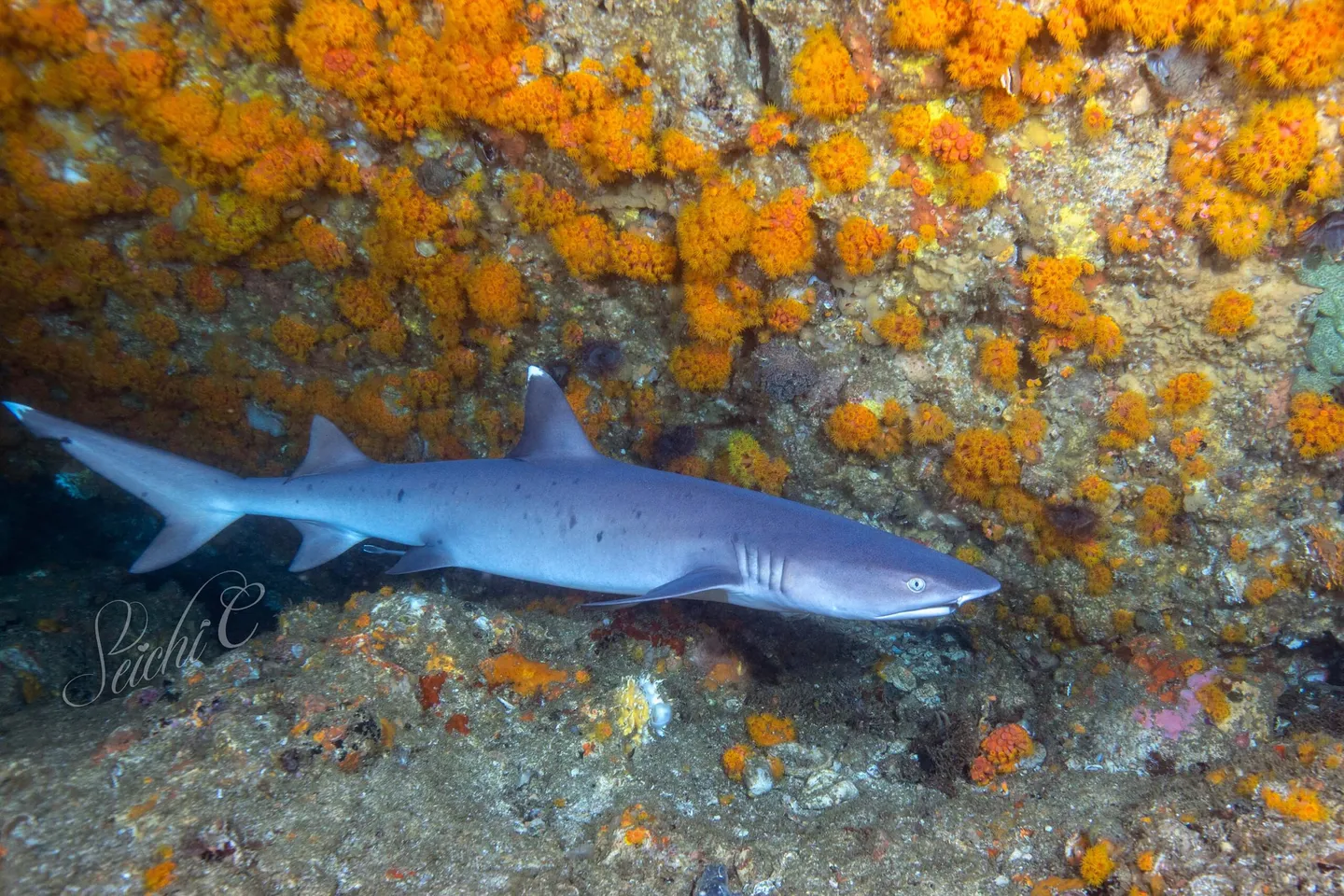
A somewhat shy reef shark.
There is also a rich variety of macro critters here — many species of nudibranch, spider crabs, Hippocampus kuda seahorses, Frogfish, and beautifully patterned Harlequin Ghost Pipefish. Having brought a DSLR, I constantly suffered from indecision, because this site is great for both macro and wide-angle shooting!
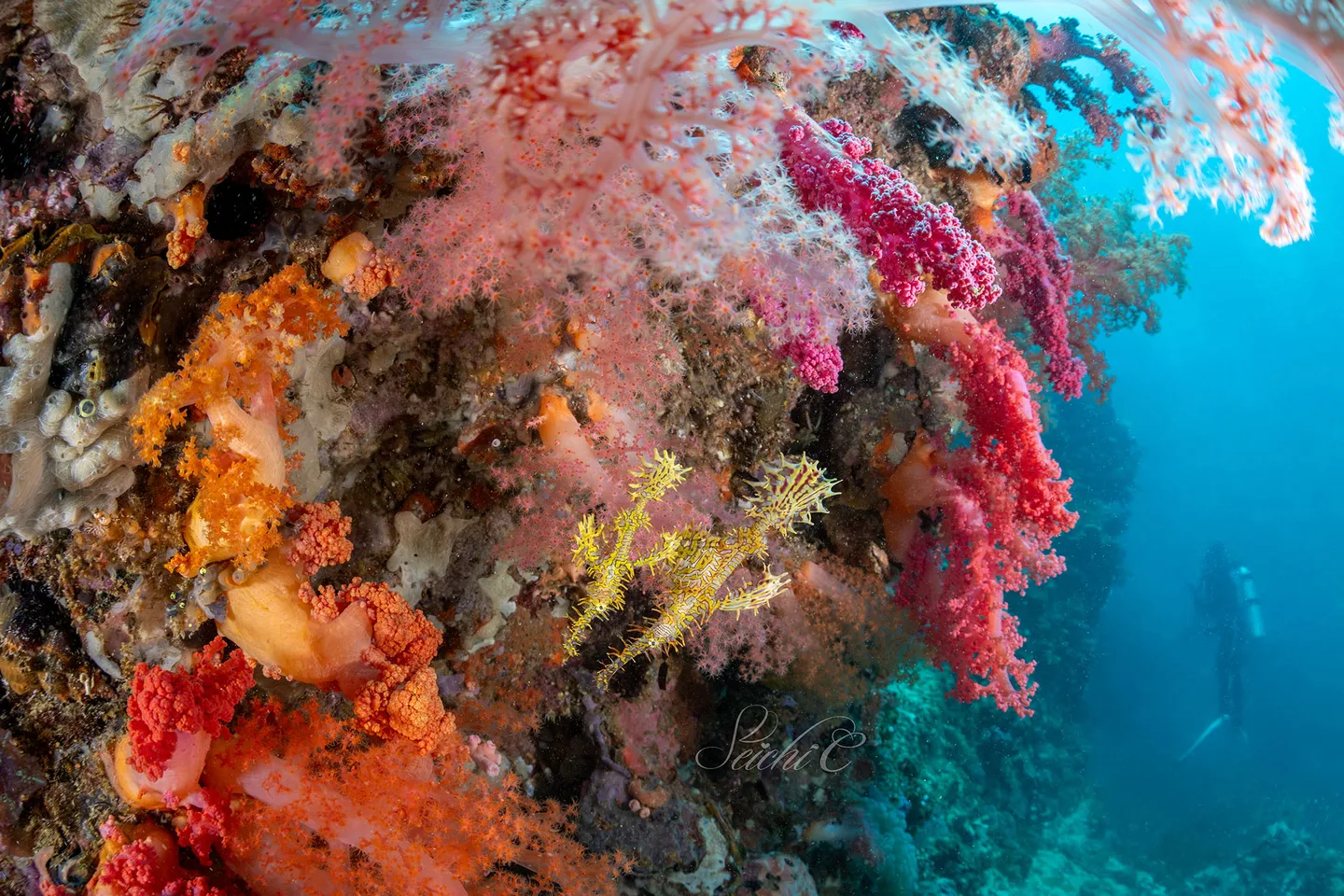
In the centre are two gorgeous Harlequin Ghost Pipefish — one male, one female — set against a riot of colourful coral. Isn't it utterly enchanting!
Kalanggaman Island
Kalanggaman Island is an extremely popular tourist destination. It is an uninhabited island blessed with a long stretch of white sand beach; the water shimmers in the sunlight in dreamy gradients of blue. If you visit during low tide, you can see a lengthy white sandbar extending from the island, and the shore is lined with coconut palms, exuding an abundance of tropical island charm.
The outrigger boat ride from Malapascua takes roughly two hours — a fairly long journey, though you may encounter dolphins swimming alongside the boat along the way. If you're on a dive travel itinerary, the island is usually visited after two morning dives, with a midday stop for lunch and a rest. You can also purchase a day-trip package on Malapascua itself. That said, I hope that on my next visit I can arrange to stay overnight here, to savour the tranquil twilight, sunrise, and star-filled skies free from light pollution.
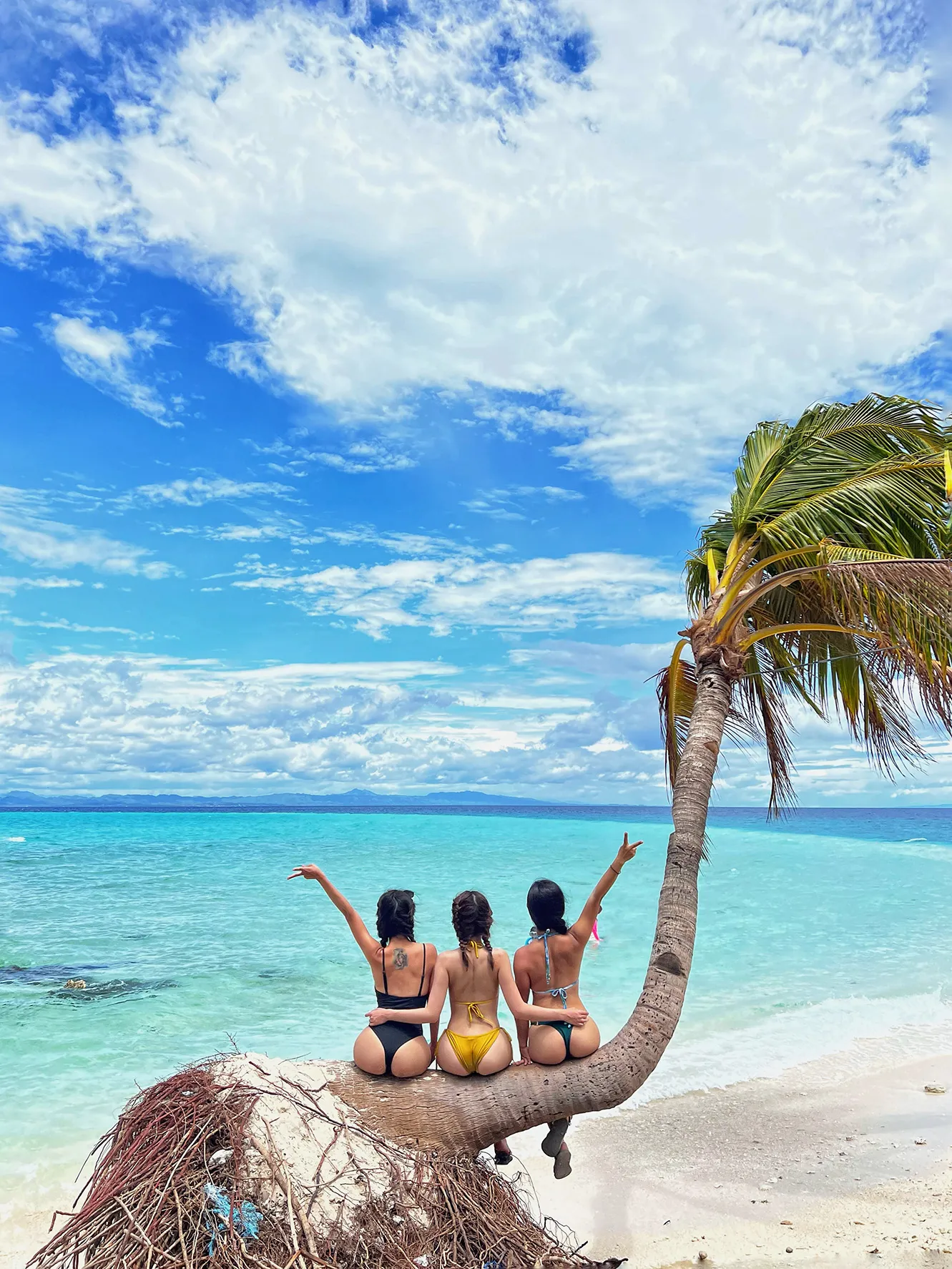
Crystal blue waters paired with fine white sand — a silhouette shot here is an absolute must.
Eating, Drinking & Activities on the Island
- Angelina beach resort & italian restourant — A well-known local Italian restaurant. The pizza, pasta, and risotto are all excellent. The ice cream is highly recommended by many visitors too. The outdoor seating is more breezy and comfortable.
- Rock 'N Pizza Malapascua — Recommended by local dive guides, this restaurant opened just this year. In addition to Western fare, there are plenty of Filipino and Chinese dishes, all genuinely delicious! Service may be a bit slow when it's busy. The indoor area has only fans, so it can get a little stuffy.
- Hippocampus Beach Resort Live music — Right on the lively beach, live performers take the stage on weekend nights. Low tables, floor cushions, and beanbags are set out on the sand — order some snacks and drinks, sit back or lie down, and let the live music mix with the sound of the waves. Pure bliss!
- Buena Vida Resort & Spa — Great news for those who want a relaxing massage! I don't usually get massages myself, but I looked into it for friends travelling with me and was surprised to find a rather impressive spa on this little island. Rooms are limited so reservations are needed. Friends who've been all loved it — one even returned for a second visit. The standard and service are said to be excellent, though prices are on the higher side. Bookmark this one if you need it.
This island may be far away, but I adore it. I've heard that many divers go for just two days and one night purely to see the Thresher Sharks. I hope that anyone who gets the chance to dive here can set aside a few extra days to soak up all that this place has to offer — I'm sure you'll fall in love with it too!
Further reading:
- 【Philippines Cebu · Malapascua】Three Years Later, Reunited with the Dream Thresher Shark!
- 【Philippines · Bohol】Taiwan's #1 Pick! Exclusive Dive Site Discoveries on Bohol, Holding Nothing Back feat. 海島瘋
- A Must-Visit Philippine Thresher Shark Dive Destination & Dive Fiesta 2017
- Maldives Deep South — The Moment of a Lifetime: Face to Face with a Tiger Shark – Tiger Shark, Manta Ray, Silvertip Shark & Grey Reef Shark Dream Dive Trip
Frequently Asked Questions
How is a BlueTrend dive trip different from an unknown, no-name dive group?
Choosing us means full peace-of-mind protection and a smooth experience from start to finish. Every trip we run holds to three things.
First, full legal protection and a professional dive leader: we strictly follow Taiwan's travel regulations and provide complete travel-agency liability insurance, travel insurance, trip-inconvenience insurance and dive insurance. Every group is accompanied by a certified, foreign-language dive leader who joins you on both the dives and the land itinerary, liaising seamlessly with local dive shops and operators on your behalf to keep things running smoothly — the person our travellers trust most.
Second, fully licensed with secure payments: every payment goes into a licensed travel agency's account, with multiple safe payment channels (bank transfer, credit card and more) and a legal collect-and-remit receipt, so every transaction is open, transparent and protected, avoiding the fraud and dispute risks of transferring money privately to an individual.
Third, hand-picked quality we vet in person: every trip, dive site and partner shop is scouted on the ground by our own team, from the guides' professionalism and safety standards to the food, lodging, environment and service details on land, all vetted by us so you don't get caught out.
I want to sign up for a dive trip. Are there certification-level or logged-dive requirements?
Each dive site is different, so the entry bar varies. 'Bali Tulamben', for instance, is relatively beginner-friendly. 'Malapascua in the Philippines' is also beginner-friendly, but since thresher sharks tend to cruise between 20 and 30 metres, we recommend AOW certification with 20+ logged dives to enjoy this trip comfortably. For 'the Maldives' or 'Palau', we suggest AOW with 50+ logged dives for a more relaxed experience. If you're not sure whether your experience fits the trip you want, message us and our dive editors will assess it and help you find the trip you'll feel safest on.
Can I join if I'm signing up alone? How are rooms arranged?
Plenty of our travellers sign up solo! For rooms and beds, we prioritise pairing you with a same-gender traveller, and if you'd rather have your own space you can pay the difference to upgrade to a single room. For the diving, our professional leader will pair you with a suitable buddy, and with the happy vibe on our trips you'll quickly make a great group of dive friends. Many people sign up alone, make new friends, and end up organising the next trip together!
Does the trip fee include dive insurance, gear rental, taxes and instructor tips?
It depends on the trip, the destination's regulations and the local operators. Every BlueTrend dive trip has a detailed web page with a clear 'included / not included' list, transparent and with no hidden charges. All payments are collected by a licensed travel agency, with a standard-form contract for your protection.
I'm a new diver / haven't dived in a long time — will I fall behind the group?
Before you complete your booking, our team assesses a suitable trip based on your certification level and experience. Before departure, we strongly recommend taking time to refresh in Taiwan with an instructor, or a fun dive to get your feel back. On the trip itself, our professional dive leader groups and pairs everyone by experience, keeps a close eye underwater on travellers who need extra care, and steps in to help right away.
Will the photos and videos taken during the trip be shared with us?
During the dives, 'safety' is always the leader's top priority, so whenever it's suitable and safe the leader will capture great shots and record the best moments. During or after the trip, we compile a cloud album for all travellers to download, so you go home loaded with memories!
Besides your scheduled trips, can you arrange a private group charter or independent travel for me and my friends?
Absolutely! Besides group trips, we also arrange private group charters and independent travel. We can communicate, enquire and coordinate services with local operators based on your needs, saving you time and effort and taking the language barrier off your plate, to tailor the smoothest, most reassuring dive trip just for you. Contact our LINE support and our editors will arrange it for you!

![[Philippines – Malapascua] Reunited with the Dreamlike Thresher Shark After 3 Years!](/_astro/%E8%8F%B2%E5%BE%8B%E8%B3%93%E5%AA%BD%E5%AA%BD%E5%B3%B6%E9%95%B7%E5%B0%BE%E9%AF%8A_vqonr.webp)