Contents(5)
- The Rebirth of Taoyuan's Algal Reef: From Open Harvesting to Ecological Protection
- The Green Oyster Lesson: Local Participation Is the Key to Conservation
- Beyond the Algal Reef: Exploring Yongan's Coastal Culture and Heritage
- The Spirit of Labor Exchange Lives On, Forging Yongan's Community Bond
- Further Reading
"Take the turban snail, for example — they used to be big and plump, as large as a NT$50 coin. Now they're much smaller." — a resident of the Yongan District.
The Rebirth of Taoyuan's Algal Reef: From Open Harvesting to Ecological Protection
The Guanxin Algal Reef Ecosystem Wildlife Refuge, located in Xinwu District and Guanyin District of Taoyuan City, along with the surrounding windbreak forests, were all military-controlled zones during the martial law era, leaving local residents with little opportunity to enter. After martial law was lifted and the coastal checkpoints were removed, the area was officially opened to the public — and the algal reef quickly became a popular spot for collecting snails and shellfish.
The algal reef ecosystem is rich in biodiversity and serves as a habitat for numerous mollusks and shellfish. It has even been called a "nursery" for many species. From dawn to dusk, people could be seen tapping and collecting along the reef — not just locals, but visitors from elsewhere who made special trips to harvest. Many organisms were taken before they had a chance to grow or reproduce, causing species diversity to dwindle and individual sizes to shrink.
As environmental awareness gradually grew in the local community, the Taoyuan City Government officially announced the establishment of the "Taoyuan Guanxin Algal Reef Ecosystem Wildlife Refuge" in 2014 (Republic of China Year 103), giving the local ecosystem room to breathe.


The Green Oyster Lesson: Local Participation Is the Key to Conservation
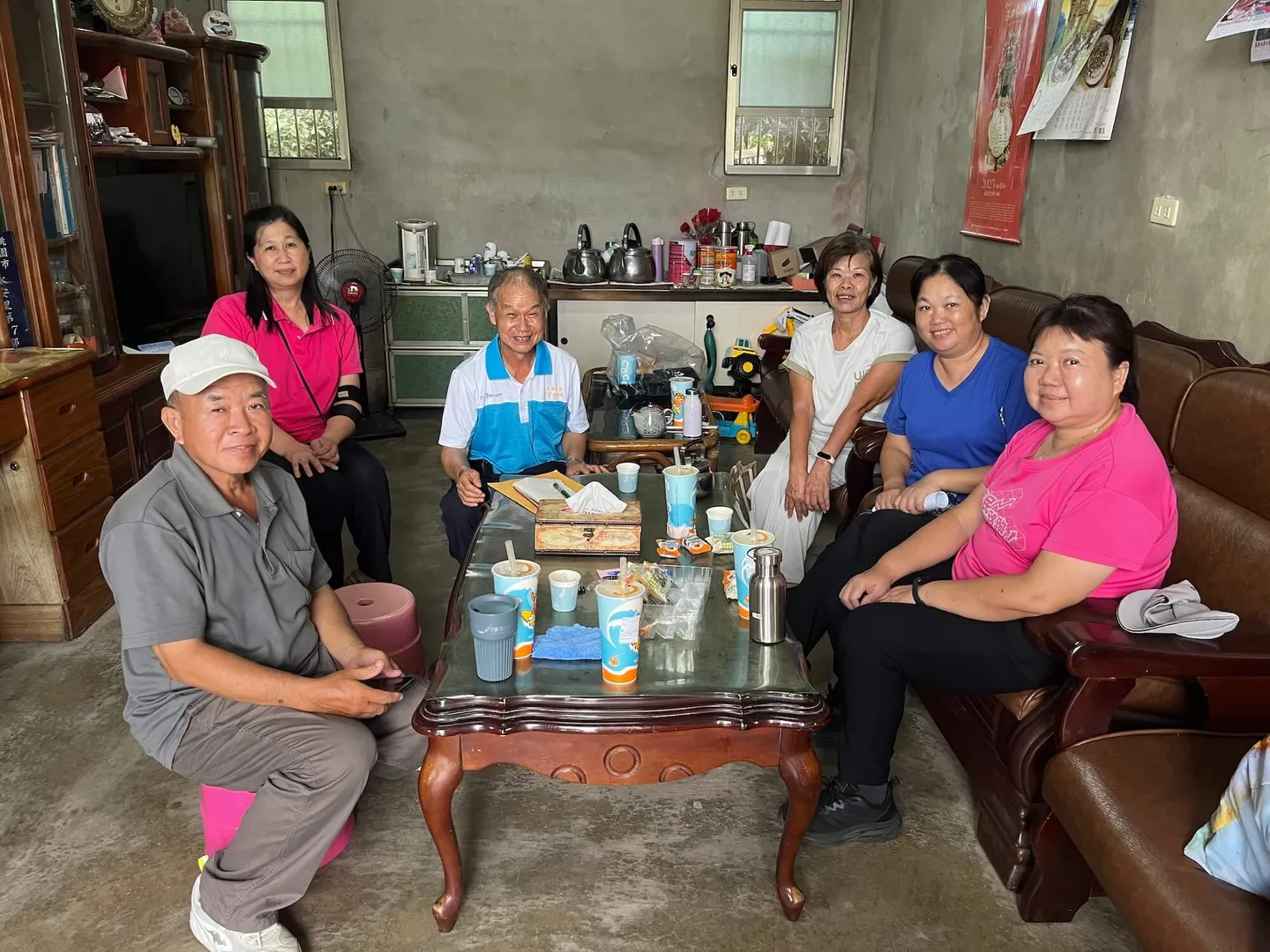
Conducting interviews with residents of the Yongan District.
The village chief mentioned that green oysters have become much rarer in recent years, but the initial discovery of green oysters made him seriously aware of the importance of water quality monitoring. The Guanxin Algal Reef sits adjacent to an industrial zone, making the role of the local community critically important. If locals notice something abnormal but are unwilling to speak up, how can we expect the outside world to know the true situation? Thanks to the efforts of Yongan residents, illegal wastewater discharge has since improved — and locals have even developed the knack of identifying which factory the smell is coming from just by using their noses!
In terms of environmental conservation, the Taoyuan City Environmental Protection Bureau and the Yongan District make strong partners. Only through collaboration can conservation patrol work continue to move forward. In addition to the existing coastal patrol teams, the village chief hopes to establish a river patrol team in the future to monitor water quality from the source. Only through long-term monitoring can changes in the ecosystem be detected — and further safeguard the algal reef ecosystem from contamination by industrial wastewater.
Beyond the Algal Reef: Exploring Yongan's Coastal Culture and Heritage
Many visitors are probably curious: aside from joining a guided tour of the Guanxin Algal Reef, what else is there to see nearby? In fact, traces of a life lived in harmony with the sea can be found throughout the Yongan District, waiting to be explored.
The ecological richness doesn't end at the algal reef — the surrounding windbreak forests are equally fascinating. Beyond that, stone weirs (石滬) were once an important fishing method in the Yongan area. Unlike those in Penghu, the stone weirs here are built from river cobblestones. In recent years, local efforts have focused on restoring these structures in hopes of preserving this traditional fishing technique for future generations.
Yongan Fishing Harbor is also the only Hakka fishing harbor in Taiwan. Remarkably, it was dug entirely by hand — one of the residents interviewed that day had in-laws who were among those who helped carve out the harbor, one basketful of earth at a time.
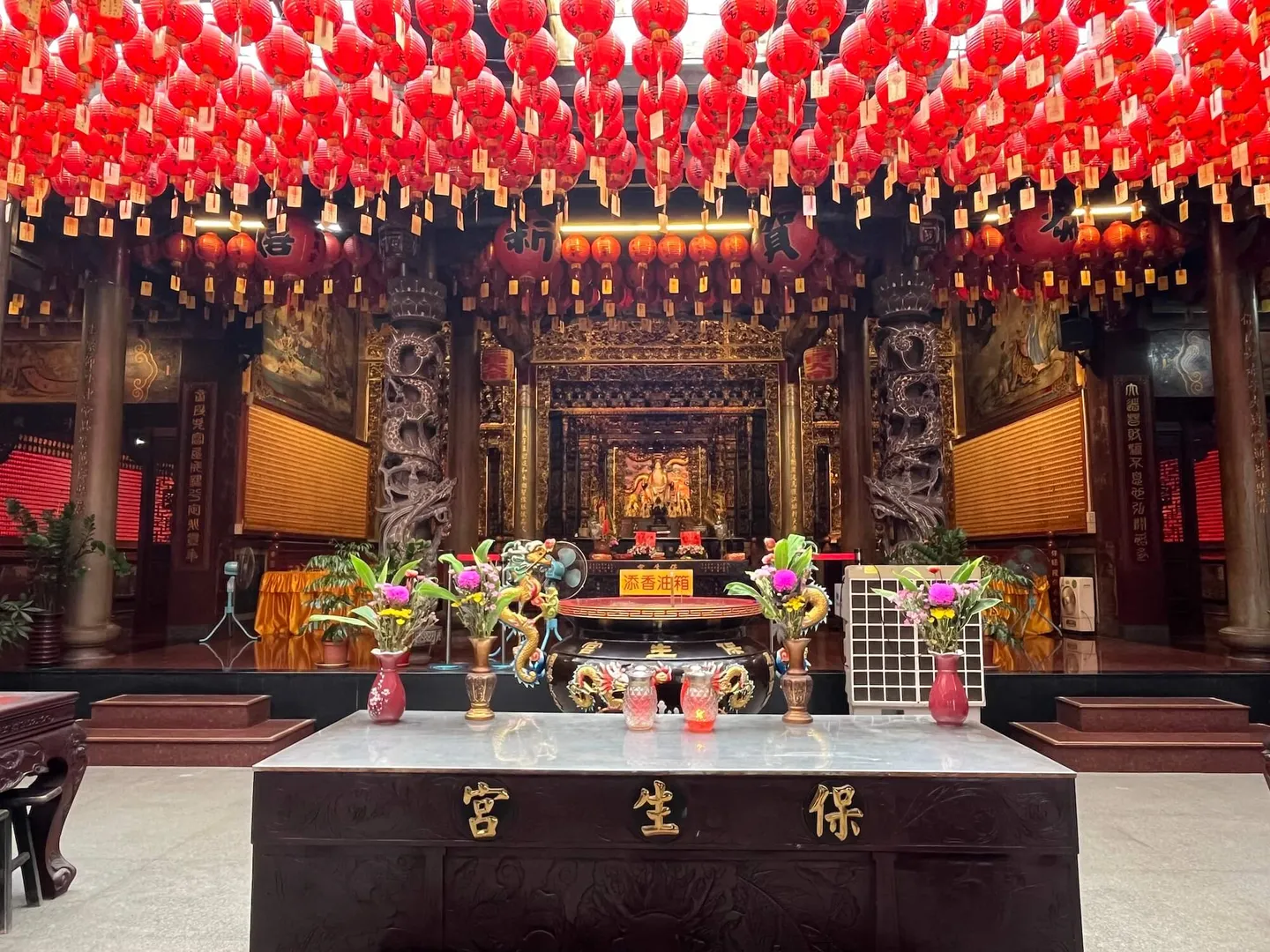
Baosheng Temple is an important local religious center and recently hosted the Baosheng Festival.
When time permits, a visit to Yongan's Baosheng Temple is well worth it. As a vital spiritual center for the community, the temple also chronicles the district's local history. Out of gratitude to the God of Medicine (Baosheng Dadi) for watching over them, local fishermen donated most of the temple's pillars. With a history of over sixty years, Baosheng Temple stands as a shared witness to Yongan's development.
The Spirit of Labor Exchange Lives On, Forging Yongan's Community Bond
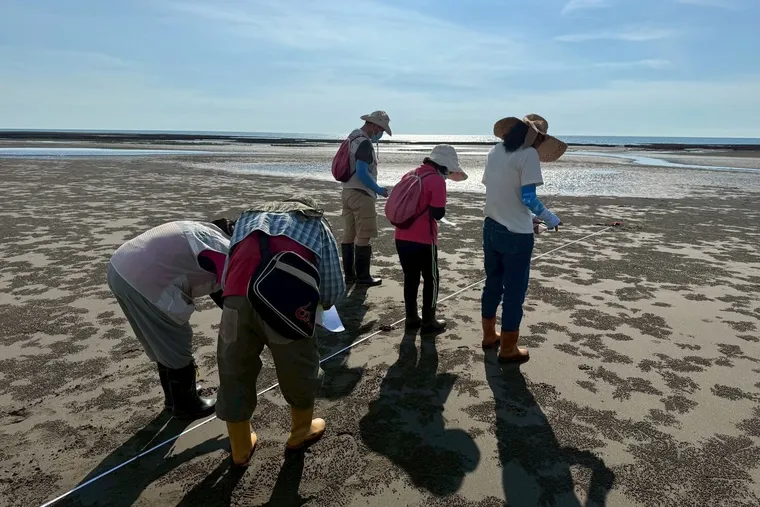
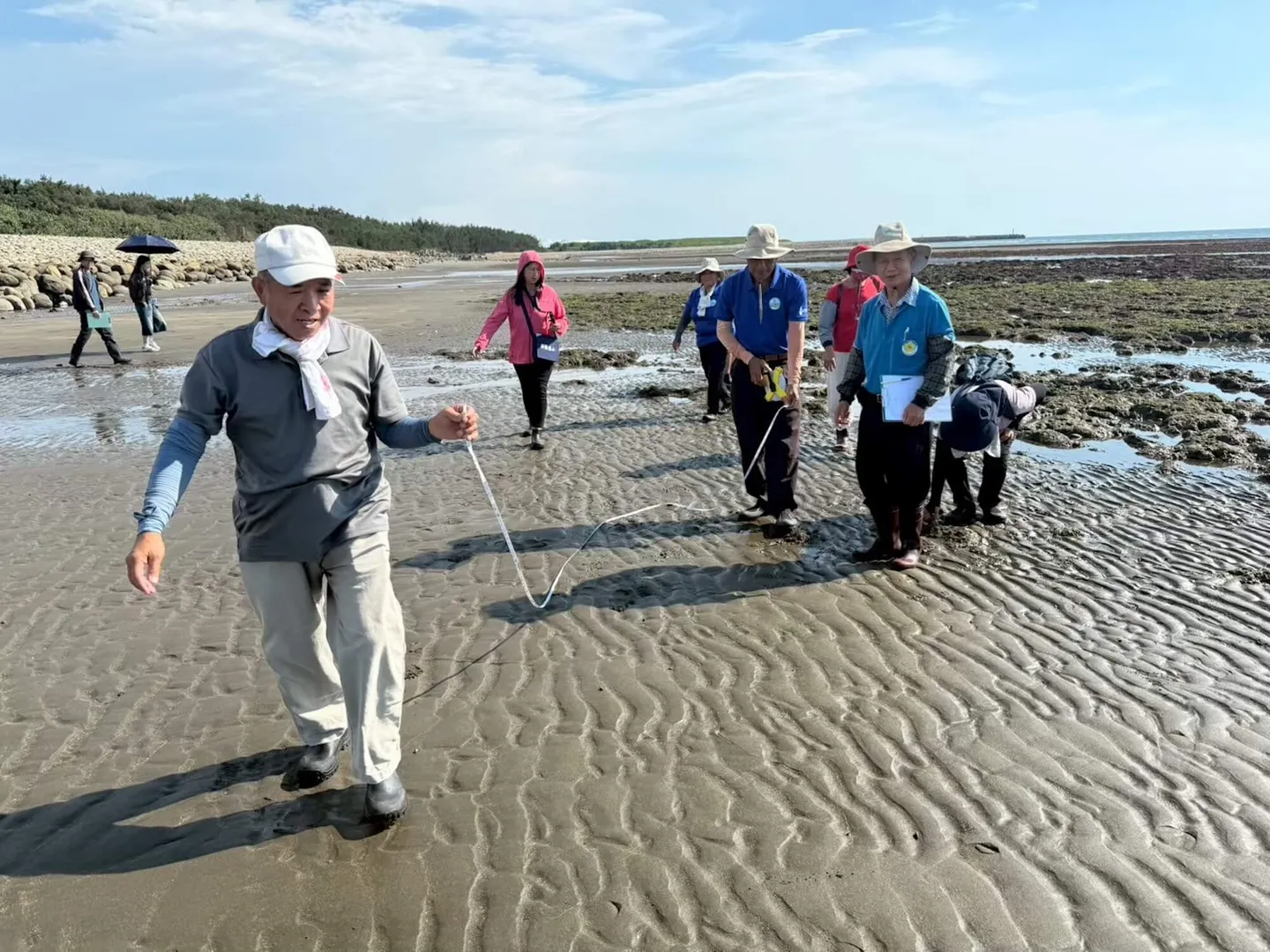
Supported by the Taoyuan City Environmental Protection Bureau, the Yongan District undertook a three-month citizen science survey as part of a community conservation patrol program. Patrols were conducted four times per month, with participants photographing the species they encountered along their routes. Locals laughed that during each outing they would always lose track of time — so captivated were they by observing the fascinating creatures, especially whenever a rare snail or shellfish turned up. As it happened, a typhoon had passed through just before our visit. After the storm, the sunset cast its light across the algal reef, framed by crashing waves — a sight the residents described as breathtakingly beautiful. Unfortunately, no one had thought to take a photo in that moment, so the stunning scene exists only in memory.
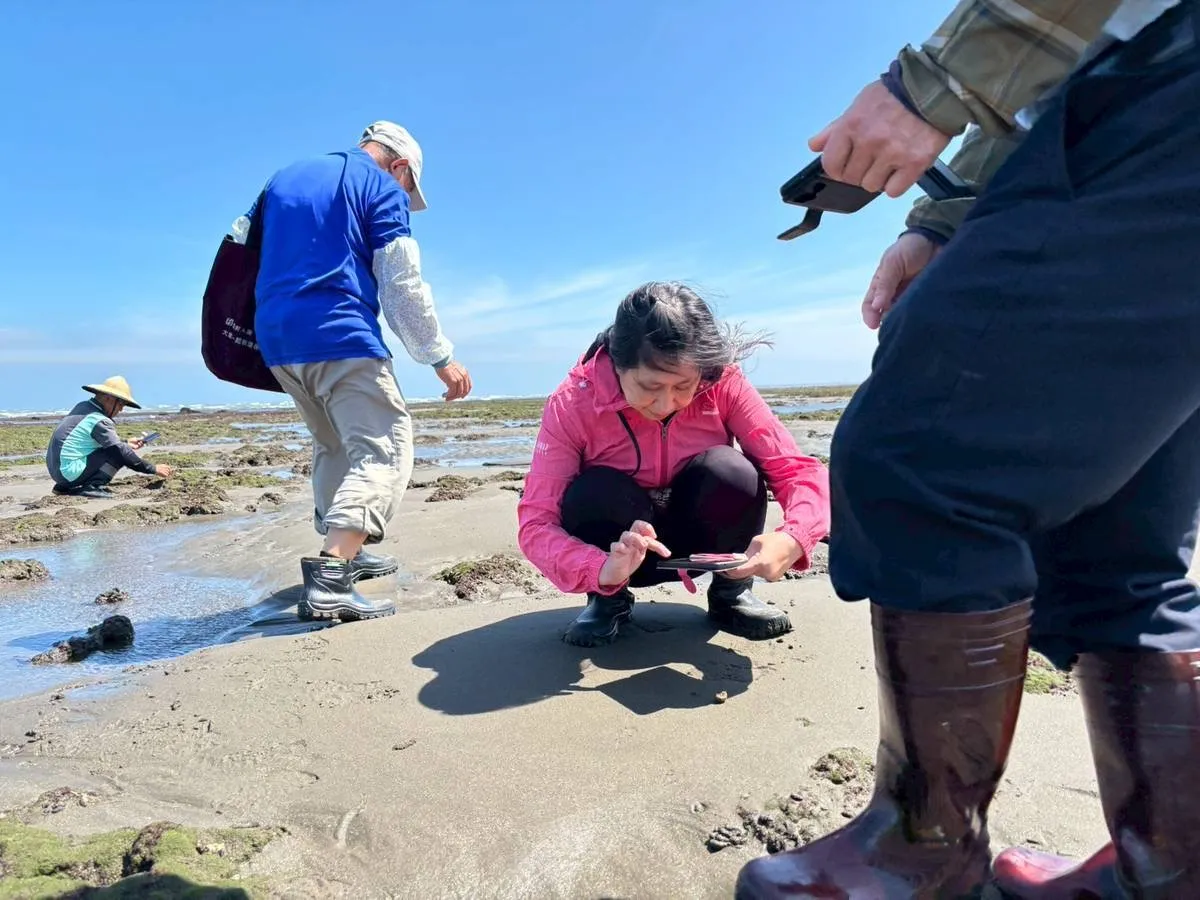
(Top) Local residents document species at the Guanxin Algal Reef using their mobile phones. (Bottom) Citizen science surveys help record changes in local species in the Yongan District.
With the establishment of the protected area and the ongoing efforts of the local patrol teams, many residents have noticed that species diversity seems to have been growing in recent years.
Throughout our exchanges with the Yongan community, a powerful sense of solidarity was ever-present. In casual conversation, it emerged that this spirit of unity may be rooted in the early tradition of "labor exchange" (換工) — a practice where neighbors would help one another as a matter of course: today helping one household with the harvest, tomorrow it would be their turn. Though farming and fishing have declined, this spirit has quietly carried forward into the patrol teams, where residents work together for the social and environmental wellbeing of the Yongan District.
Further Reading