![[BlueTrend Classroom] The Most Beautiful Sea Cucumber — The Sea Apple Is Actually a Hidden Underwater Bomb?](/_images/b6d1c1009834-1440w.webp)
Contents(4)
The Editor says: The sea apple is known for its vivid, striking appearance — its many tube feet bloom like flowers, and whenever they open up, divers flock to witness the spectacle. The more beautiful the creature, the more deadly it tends to be, and the sea apple is a textbook "poison apple." In normal circumstances it is harmless, so when exactly does the sea apple transform into a "poison apple" and release toxic substances to protect itself? Follow BlueTrend as we explore this most beautiful apple of the deep!
The Most Beautiful Sea Cucumber — An Introduction to the Sea Apple
The brilliantly coloured sea apple's formal name is the purple sea cucumber (scientific name: Pseudocolochirus violaceus), one of the sea cucumbers belonging to the family Cucumariidae.
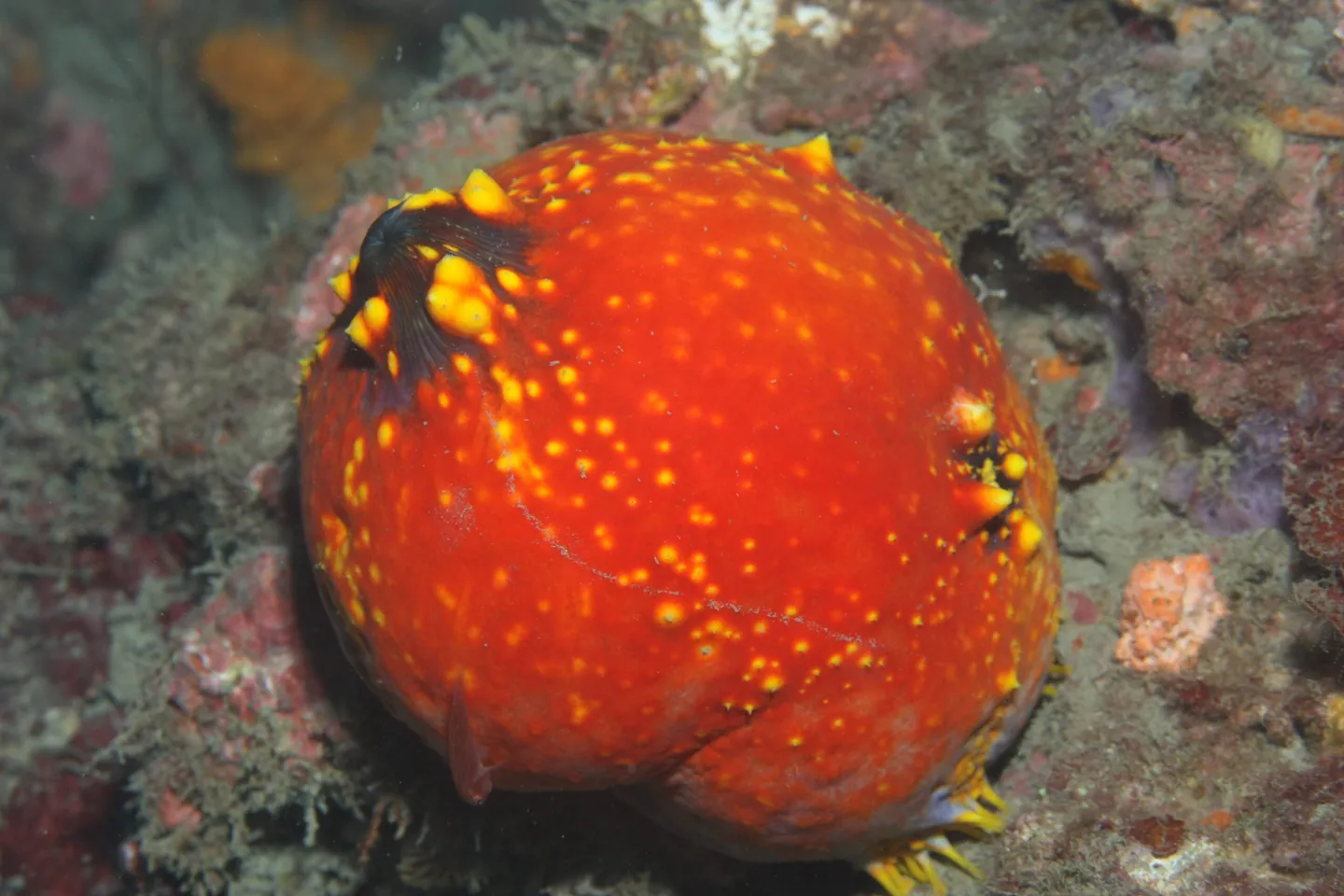
A sea apple that has not yet bloomed. photo credit:李承錄。
The sea apple looks quite different from the typical sea cucumber most people are familiar with. Its body is round and plump, and both its mouth and anus face upward toward the dorsal side — a rather unusual arrangement. Around the mouth are dozens of brightly coloured, bright-yellow, tree-like branching tentacles. Body colouration varies widely, usually in vivid shades of red or purple adorned with yellow spots. When in full bloom it resembles an apple, which is how it earned the name "sea apple."
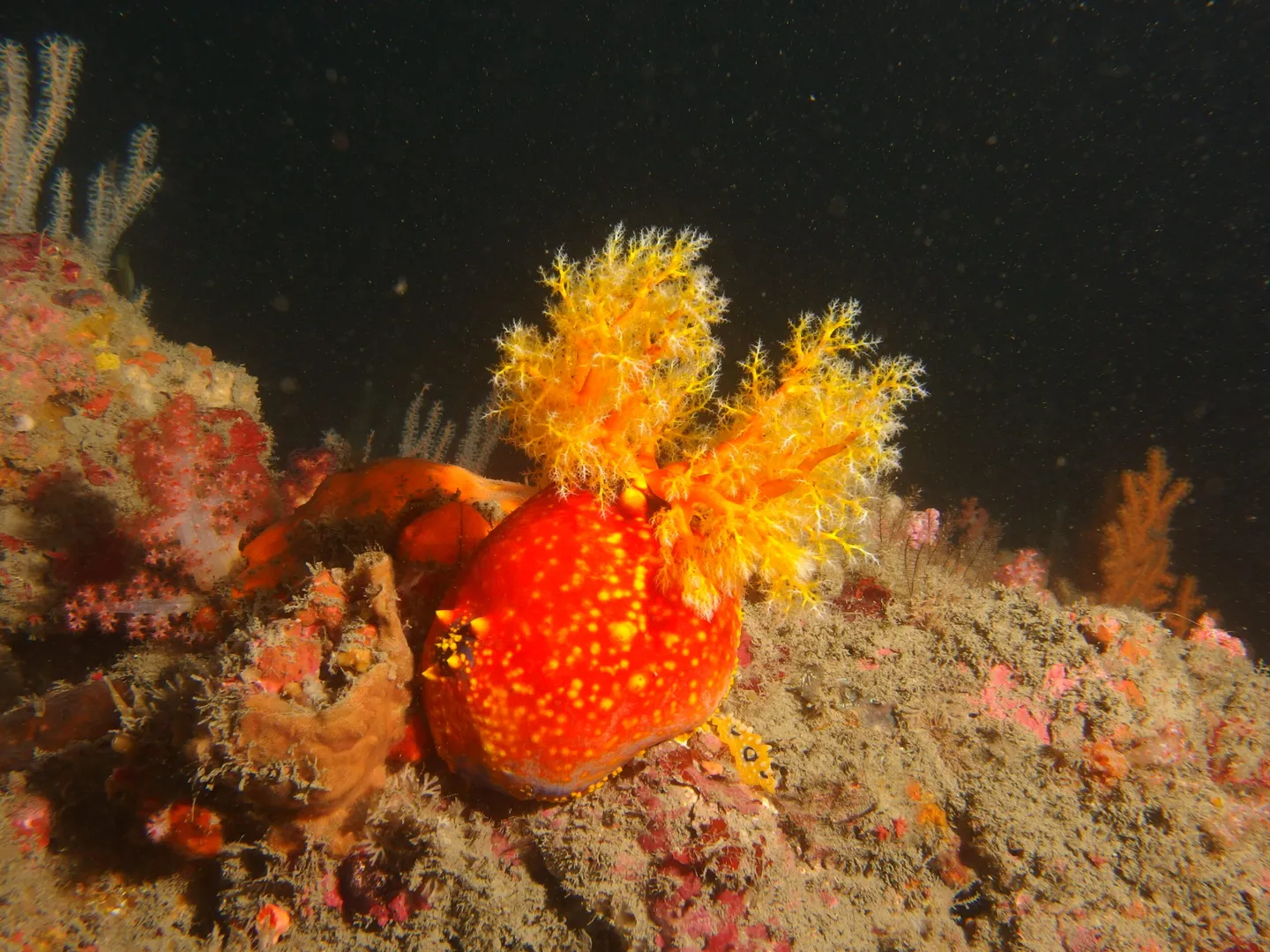
A fully bloomed sea apple is one of the true stars of the ocean floor! photo credit:林祐平。
Sea apples are typically found in subtidal rocky reef zones. They can also be spotted in the waters surrounding Taiwan, including at Longdong in Keelung (Chaoching), Penghu, and other locations.


The Sea Apple's Unique Filter-Feeding System
The sea apple has many prominent tube feet, with those on the ventral side being particularly well developed. These tube feet cling to the rocky reef on the seafloor, and with the help of strong water currents, the ten tree-like tentacles around the mouth can more easily capture and collect suspended organisms. The tentacles, covered in food particles, are then drawn into the mouth to be slowly savoured — making the sea apple one of the ocean's filter feeders.
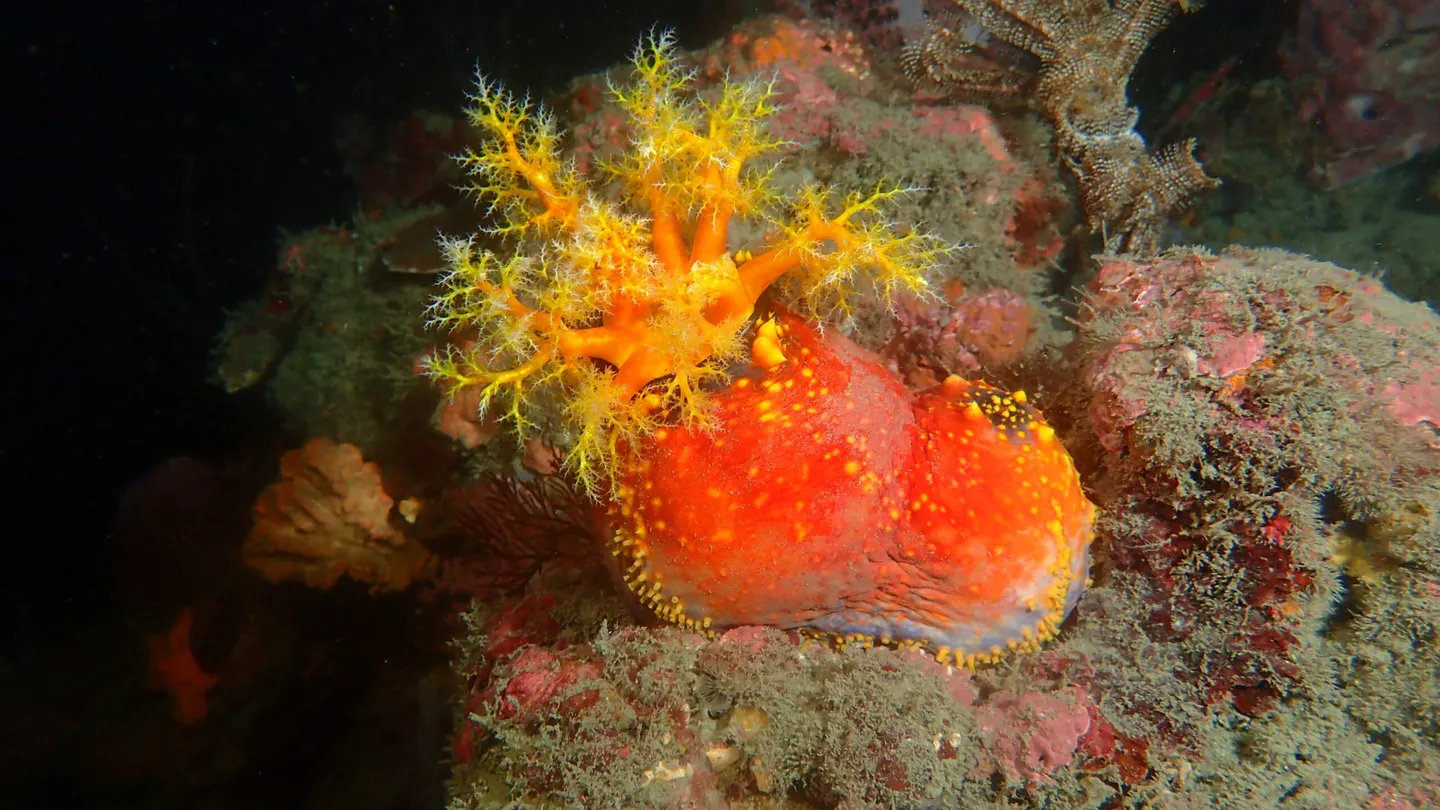
They use dozens of tentacles to collect plankton drifting through the water, then slowly draw them into their mouths to eat. photo credit:林祐平。
Although plankton makes up the bulk of its diet, the sea apple does not eat much — its digestive capacity is limited, so it never consumes food in large quantities.
The Poison Apple's Defence Strategy
Don't be frightened by some of the sensational headlines you might come across online — in reality, sea apples will not actively attack humans. Although both the body wall and internal organs are toxic, they only begin to release toxic substances when under extreme threat or close to death. This is actually quite a rare occurrence.
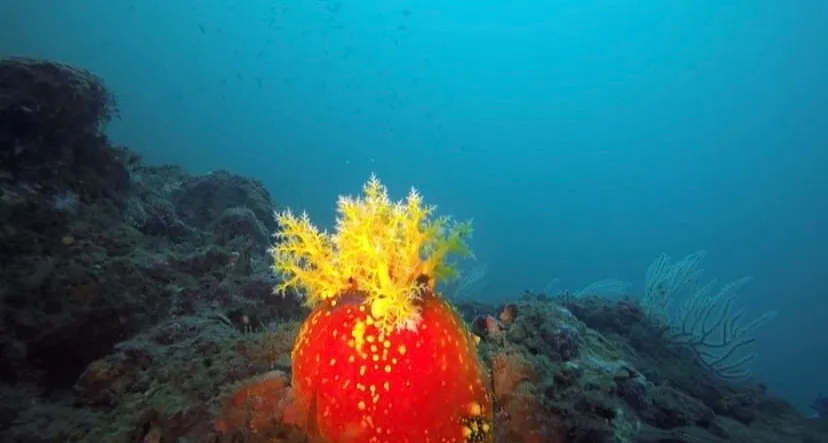
Sea apples bring a splash of colour to an otherwise dim and muted seafloor. photo credit:蔡佳均
What Should You Keep in Mind When You Spot a Sea Apple?
When you encounter a sea apple underwater, remember never to touch it with your hands, and do not disturb it in any way.
Most importantly, as a marine citizen scientist, once you have confirmed that the surrounding environment is safe, don't forget to take out your camera and snap some photos. After all, whenever you come across such a beautiful sea cucumber on the ocean floor, you absolutely must document it and upload the data to the database!
Editor-in-charge: Jenny Tsai
Further Reading

![[BlueTrend Mini Classroom] Stressed Out and Dropping Limbs? The Sea Star Is the Ocean's Most Dramatic Creature — and Its Biggest Enemy Might Surprise You!](/_astro/004_%E5%B8%83%E9%AD%AF%E5%B0%8F%E6%95%99%E5%AE%A4_vivipic_Z2g4jPr.webp)