the Editor says: With their tiny, pocket-sized bodies and perpetually pouty lips, pygmy seahorses are a must-have shot for countless divers. But if you manage to photograph a pygmy seahorse in the middle of doing its business, that's a genuine explosion of sharp eyes + patience + sheer luck all at once. Let's take a look at this classic moment captured by Bubblescuba/AOI exclusive photographer Joe Chang!
What Kinds of Pygmy Seahorses Are There?
The world's first pygmy seahorse was discovered in 1996. No matter which dive site you visit around the globe, the adorable appearance of pygmy seahorses always draws divers lining up to snap a photo. In Manado, Indonesia, a conservation zone was even established after pygmy seahorses were found there — attracting more than 20,000 divers a year and generating over NT$800 million in pygmy seahorse tourism revenue. There are four species of pygmy seahorse that have been discovered and named worldwide:
- Bargibant's pygmy seahorse (Hippocampus bargibanti)
- Coleman's pygmy seahorse (H. colemani)
- Denise's pygmy seahorse (H. denise)
- Pontoh's pygmy seahorse (H. pontohi)
The most commonly seen species in Taiwanese waters is Bargibant's pygmy seahorse, which can be found on gorgonians / sea fans in the Northeast Coast, Kenting, Green Island, and other locations. The rare images Joe captured this time at Green Island feature the even lesser-spotted Coleman's pygmy seahorse, Hippocampus colemani, colloquially known as the "paper seahorse" or "Xiao Qian pygmy."
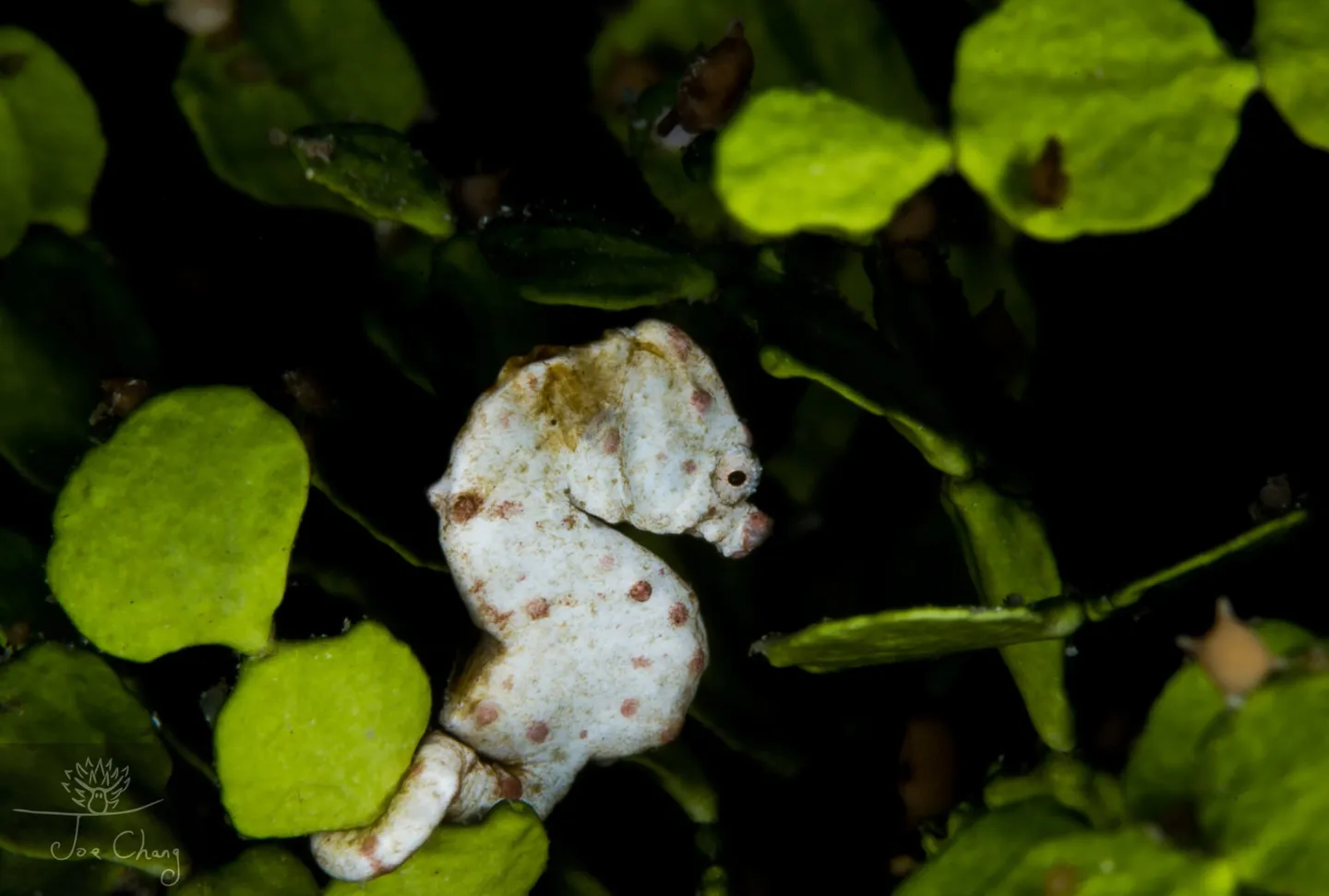
The Xiao Qian pygmy is incredibly tiny
Just what does a pygmy seahorse look like mid-poop? Scroll down to find out!
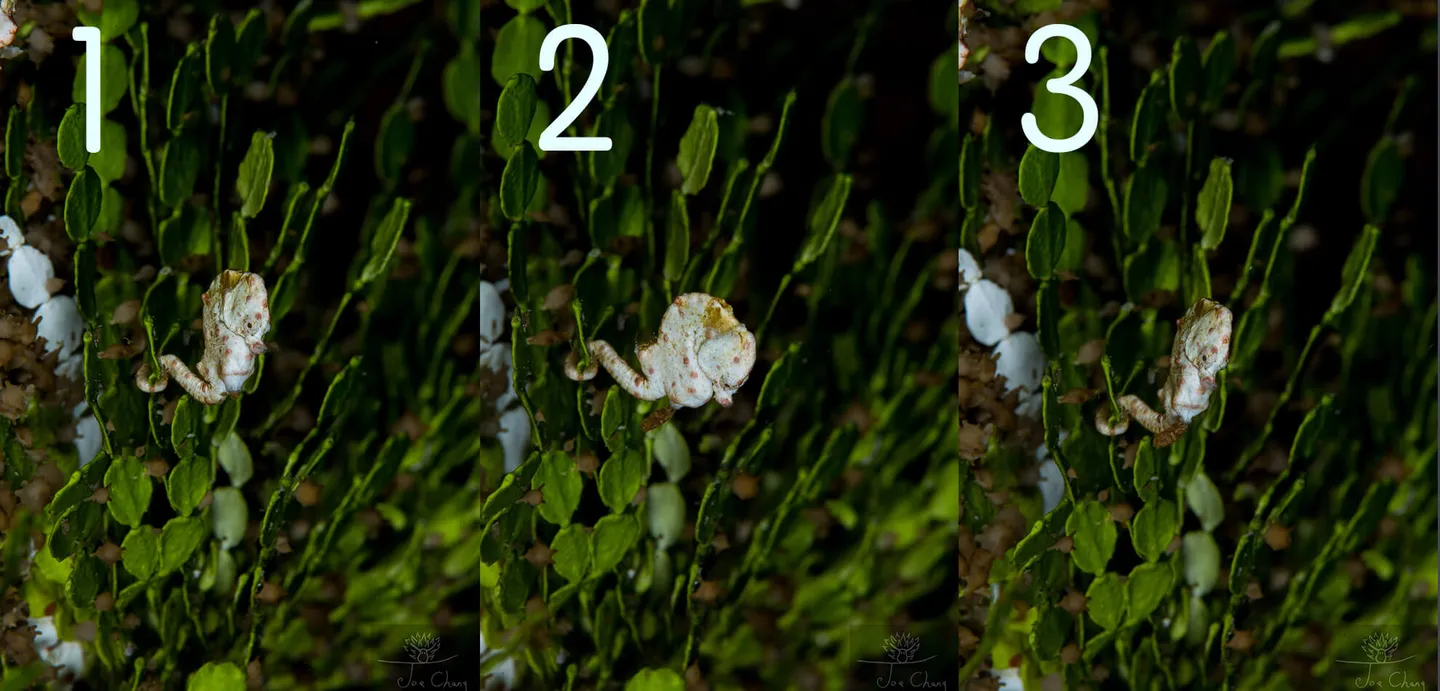
Who would have thought that such a tiny pygmy seahorse could produce such a surprisingly substantial amount of poop! Next time you're lucky enough to spot a pygmy seahorse underwater, don't forget to check whether it's in the middle of doing its business. 😄
Related links: