The Editor says: "A Life Changed by the Ocean" is an ambitious special feature series. Through ongoing interviews, we hope to understand what drives each ocean devotee, and to bring people closer to the sea. Chen Xin-Zhu of Dòngshǒu Ài Táiwān (Hands-On Love Taiwan) is a deeply home-grown, salt-of-the-earth big brother. What was the turning point that set him on a journey of seaside scavenging — now spanning 3 years and a cumulative total of 38,294 kg of marine debris collected (and still counting)?
Chen Xin-Zhu: The Beach Scavenger
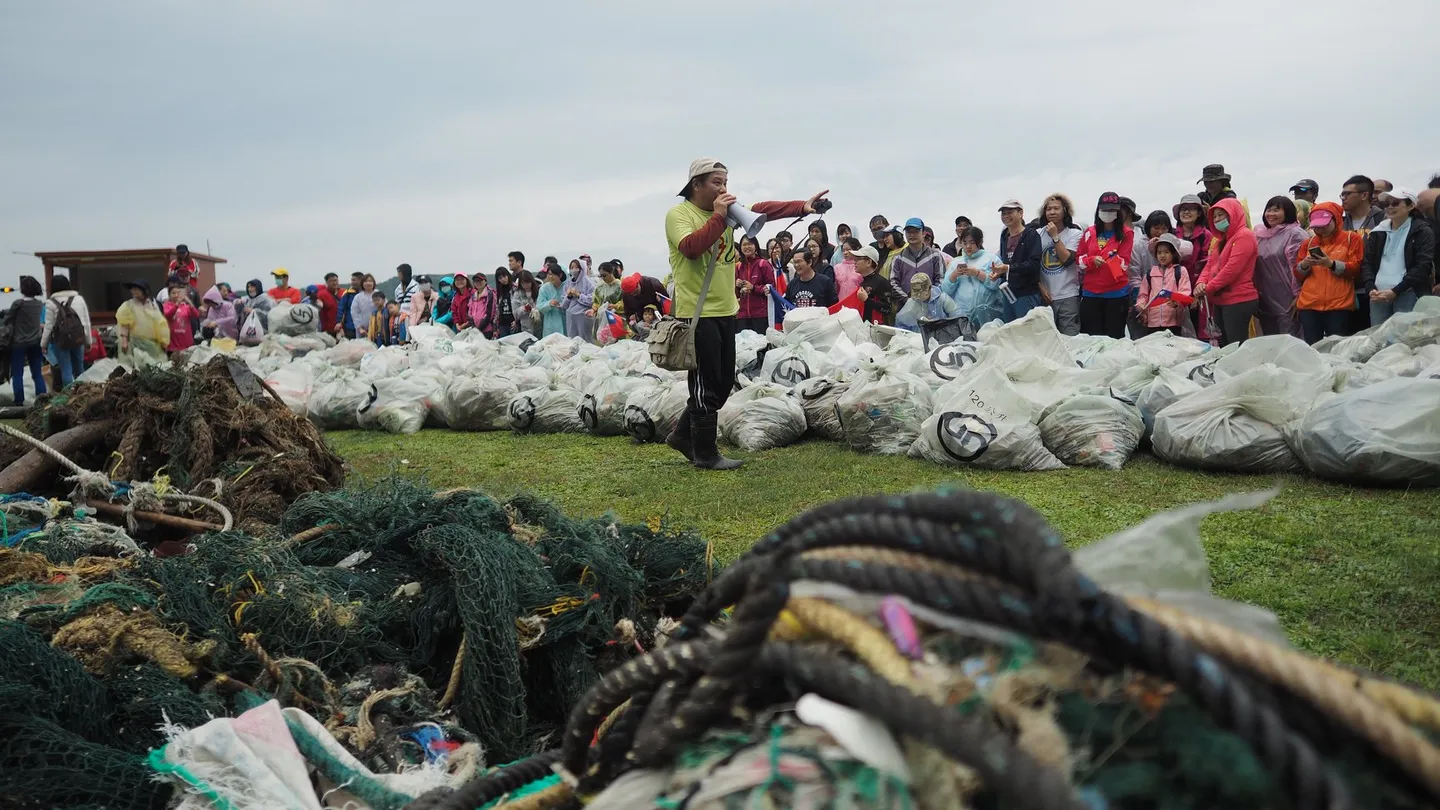
On New Year's Day 2016, heavy rain was falling from the sky and a cold northeast monsoon wind kept blowing at low temperatures — yet around 100 figures were moving along the beach. One man held a megaphone, directing everyone along the shoreline. That peculiar scene was the first time the Editor ever encountered the man known as the beach scavenger, Chen Xin-Zhu.
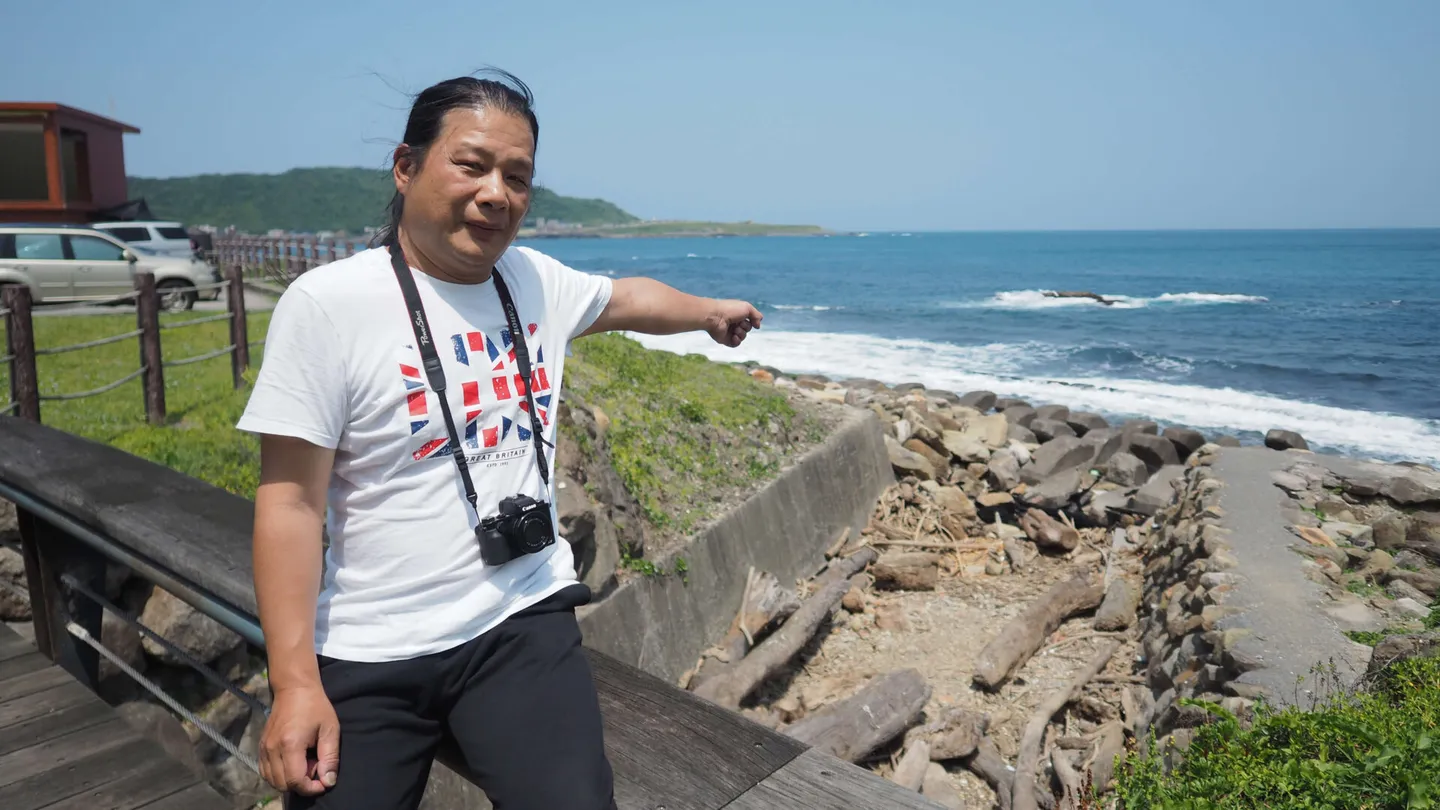
Chen Xin-Zhu posing with the "It's Always a Sunny Day" beach team
Chen Xin-Zhu is 52 years old this year — a middle-aged man with sun-darkened skin and long hair, whose warm and approachable manner makes it genuinely hard to picture him organizing beach cleanup events. Yet he has been quietly dedicating himself to exactly that for three years.
- 24 beach cleanups organized in total
- 3,097 participants mobilized in total
- 38,294 kg of marine debris collected in total
These remarkable figures are made all the more precious by the fact that they were achieved without any corporate sponsorship or government funding. But why did Chen Xin-Zhu decide to throw himself into the thankless work of beach cleanup? To understand that, we need to rewind three years. Chen was an ordinary photography enthusiast who would travel around Taiwan with a small point-and-shoot camera, capturing beautiful scenery. But back then, what puzzled him was why Taiwan, with its stunning natural landscapes, always had trash strewn along its coastlines and recreational areas. Then one day, he stumbled upon a video on YouTube of a foreign friend who had spontaneously organized a beach cleanup. It was as though a light switched on. Why couldn't he, as a Taiwanese person, do something for this land? And so his journey of seaside scavenging began.
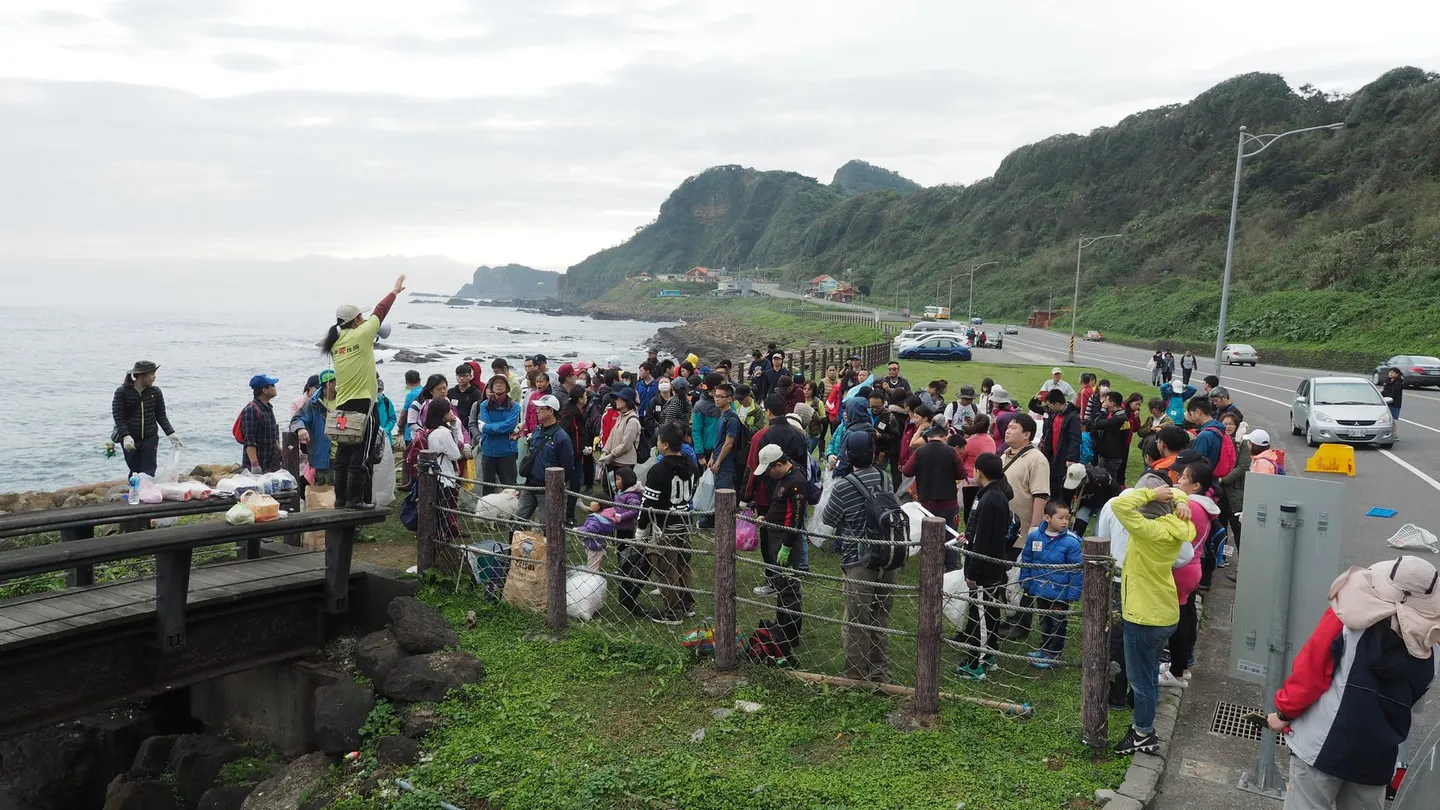
A successful beach cleanup requires thorough logistical planning and the support of many volunteers


I Ask Nothing of This Land — Only to Give, Without Complaint or Regret
Many people ask him whether, after organizing so many events, he ever feels burned out. Chen laughs heartily and replies: "I ask nothing of this land — only to give, without complaint or regret. Why would I ever feel burned out?" If picking up a plastic bag on the beach means one fewer whale swallows it, and picking up a straw means one fewer sea turtle ingests it by mistake, that is already a good deed. No matter how physically and mentally draining each event may be, seeing the trash collected is more than enough to make him feel at ease.
Having organized so many beach cleanups, he is also quite clear-eyed about the fact that beach cleanup is never the ultimate solution to marine debris. The sheer length of Taiwan's coastline demands an enormous amount of manpower, and a single typhoon can undo all the progress in an instant. But for him, a beach cleanup is more than simply picking up trash — it is an act of bending down to rethink the relationship between people and the ocean, and learning to respect and care for this beautiful land and sea.
A beach cleanup is more than simply picking up trash — it is an act of bending down to rethink the relationship between people and the ocean, and learning to respect and care for this beautiful land and sea.
He recalls one occasion when an 80-year-old grandmother, despite objections from the family members with her, still bent over to pick up trash alongside everyone else. There were also parents who brought their young children, the whole family pitching in together. One little girl said to her parents in a child's innocent voice: "I want to help pick up the garbage too, otherwise the sea turtles' home will get dirty." Perhaps events like these do more than redefine our relationship with the ocean — they are also a meaningful form of hands-on environmental education for the whole family.
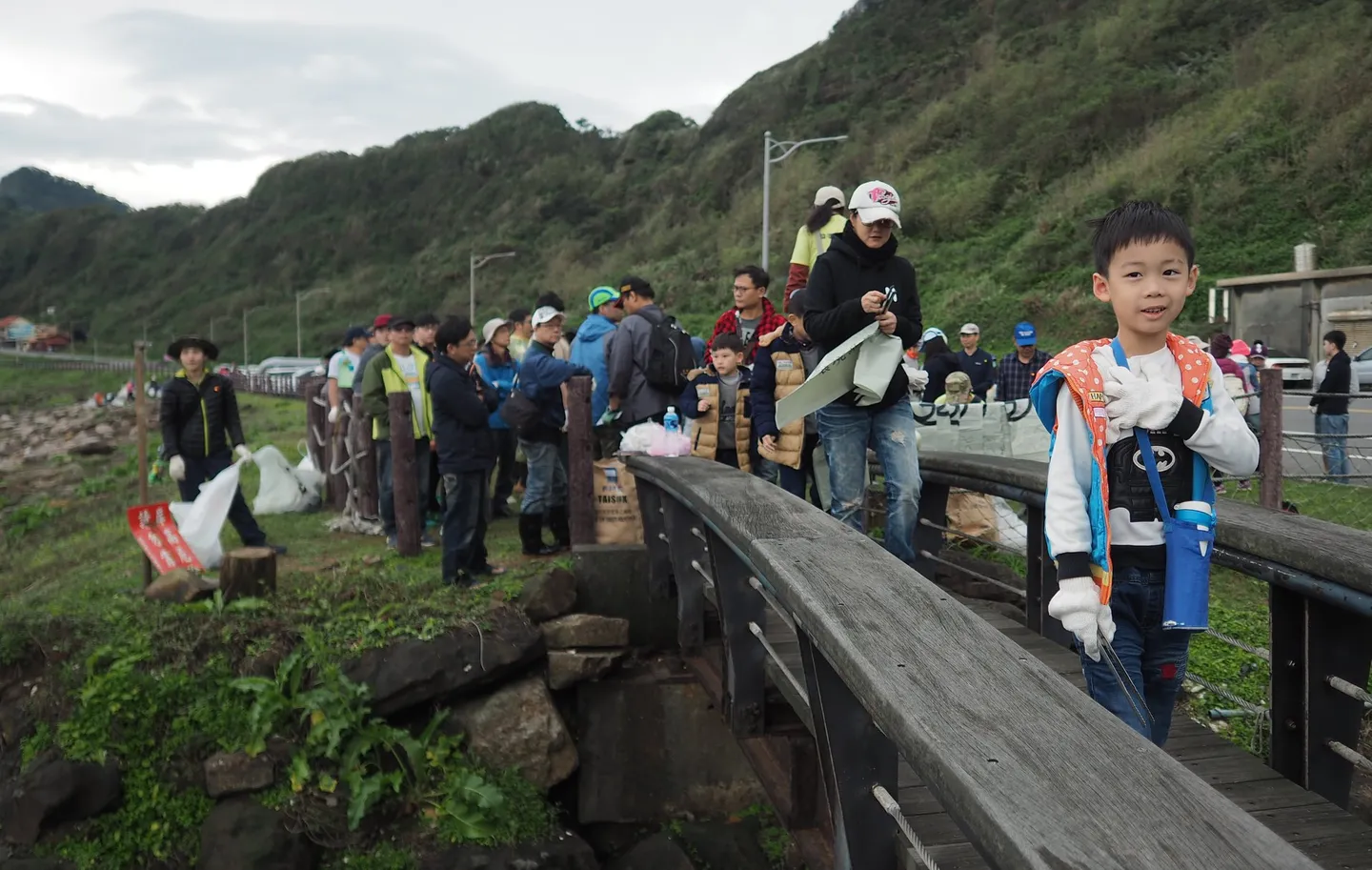
Instilling a love of the ocean from a young age is the true beginning of Taiwan's identity as a maritime nation
At Chen's home in Badouzi, Keelung, an entire room is filled with the "treasures" he has unearthed from the sea in recent years. Whenever the National Museum of Marine Science & Technology or other beach cleanup groups need items to display, he always goes out of his way to provide them — because every piece of marine debris carries the potential to deliver an environmental wake-up call.
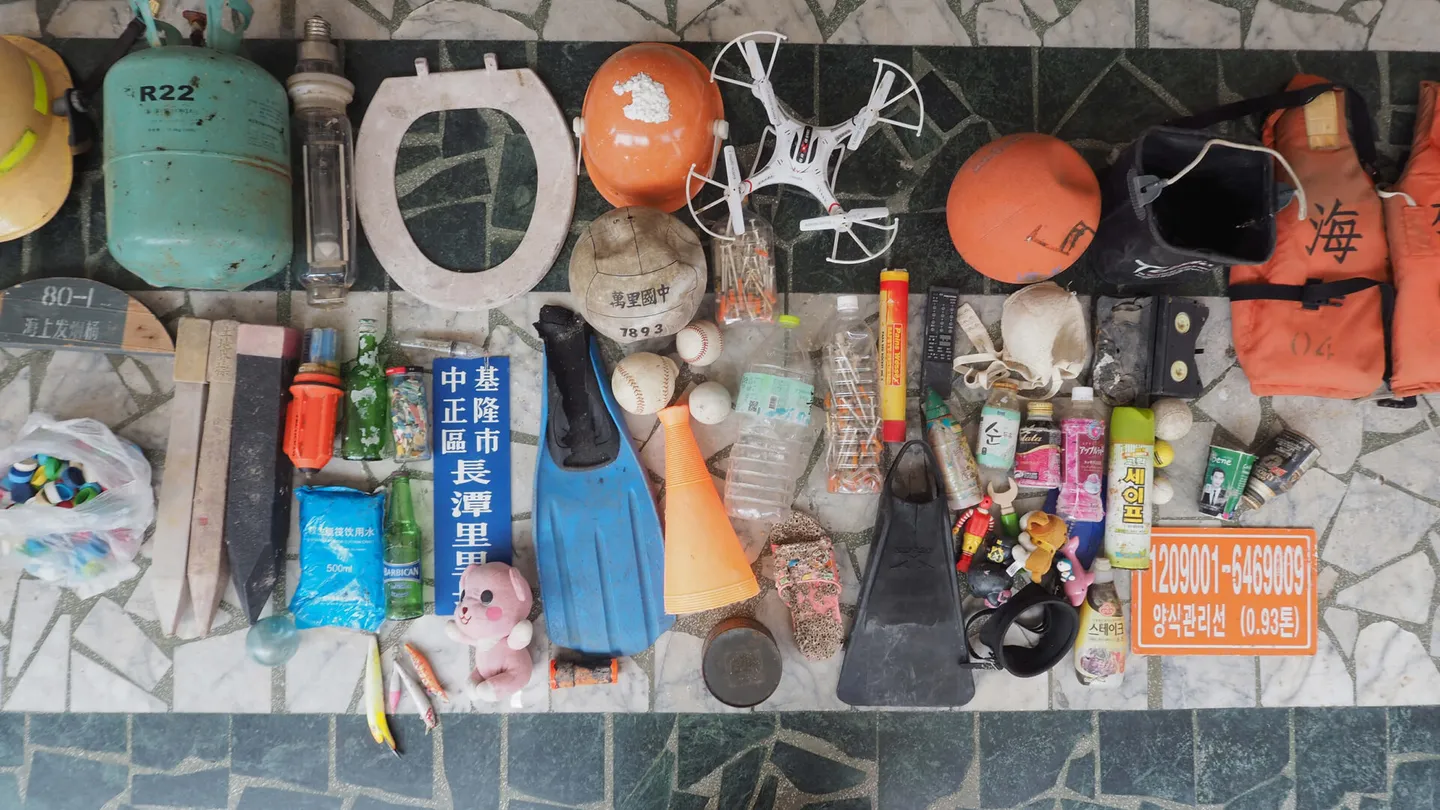
All manner of marine debris — from the moment you miss the bin, there is a very real chance it will end up on a beach
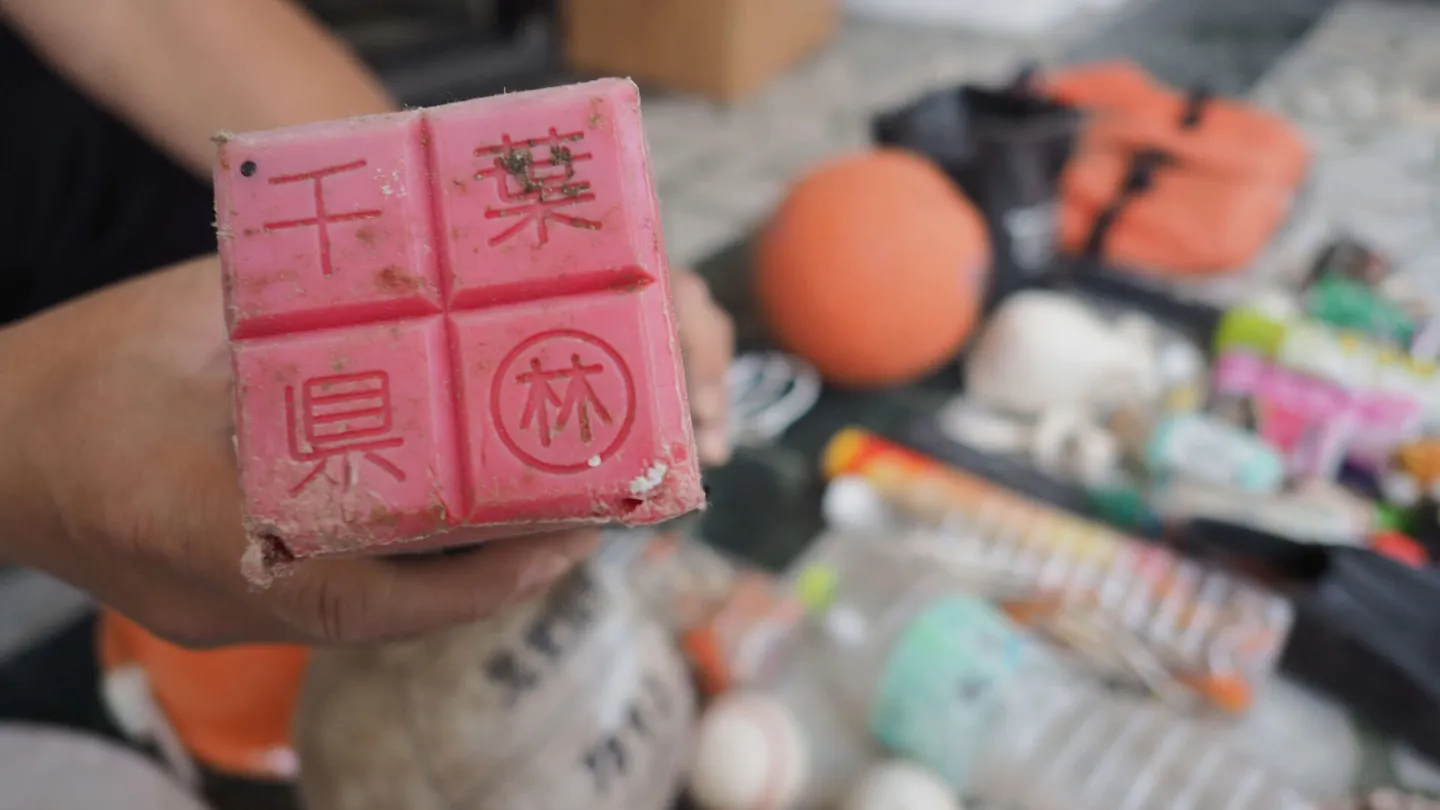
A Japanese friend once apologized to Chen after seeing this photograph
Marine debris knows no borders. Keelung sits at Taiwan's Northeast Coast, where the China Coastal Current and the Kuroshio converge, and every beach cleanup turns up treasures from all over the world — gas masks from the United States, beer bottles from the Middle East, life jackets from the Chinese Coast Guard, beverage cans from Japan and South Korea, and more. On one occasion, Chen even retrieved a plastic bottle that, once translated, turned out to be a message-in-a-bottle written by an Indonesian fisherman to his girlfriend back home.
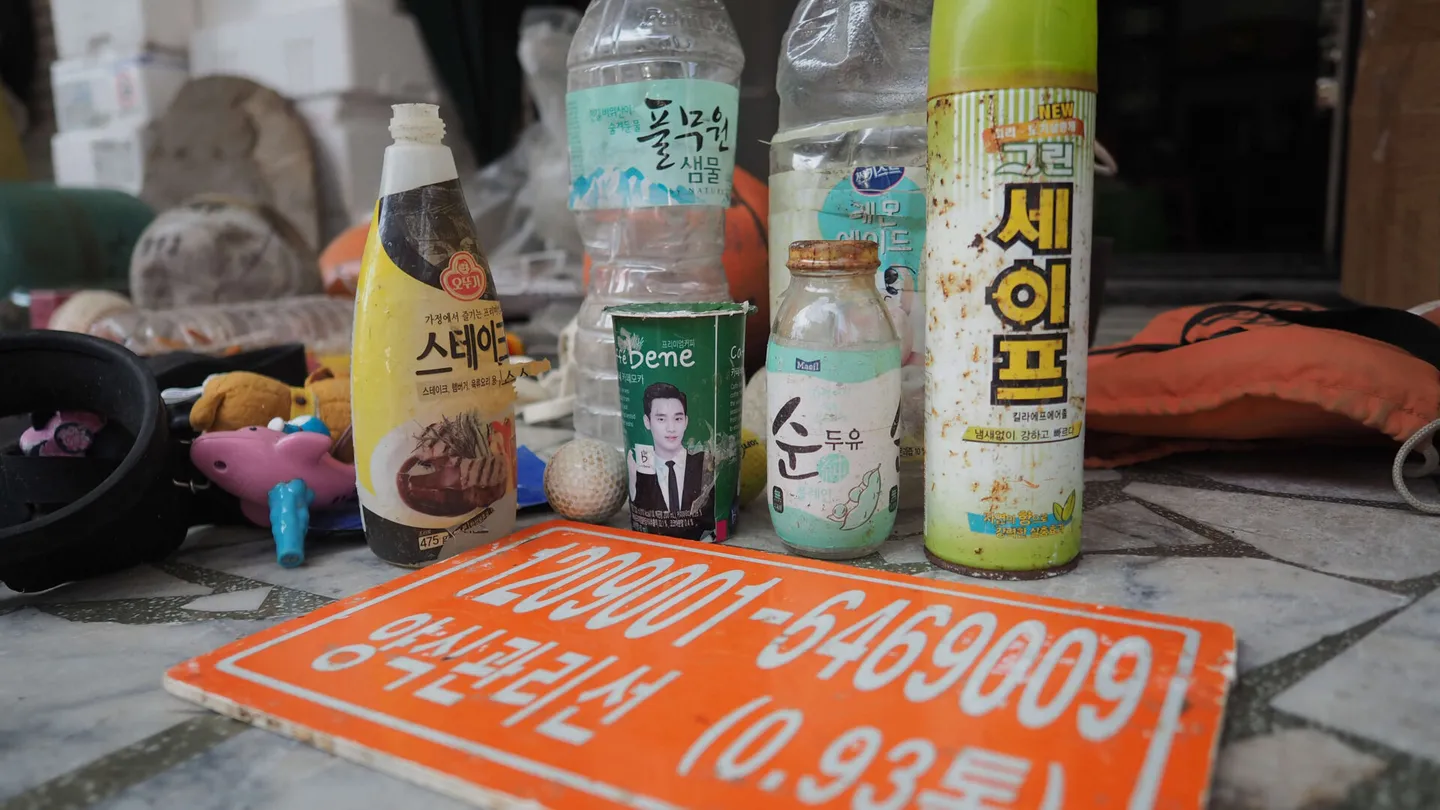
Ocean-drifted debris from South Korea, 1,458 km from Taiwan
Organizing events in Taiwan inevitably draws both supporters and online critics. Chen takes it all in stride — he believes there is already more than enough work to be done, and what he needs are like-minded partners. He has no interest in paying attention to the noise.
Now 52, Chen looks back and reflects that before the age of 49, he had truly been drifting through life. But after 49, beach cleanups gave him a new sense of direction. He hopes that after another 8 years of preparation, he can step back from the front lines. The logistics of organizing a beach cleanup — from selecting a site and coordinating waste removal teams, to managing the day-of workflow and documenting the aftermath — are enormously taxing, both mentally and physically. He hopes that through the events of these past few years, he can gradually cultivate a group of like-minded partners who will carry this mission forward.
The spirit of Hands-On Love Taiwan must continue to live on, spreading its influence ever wider
As for the future, the Hands-On Love Taiwan community — which has always held firm to its principle of accepting no corporate or government funding — still hopes to keep walking its own path. From a first beach cleanup with just 4 participants, to an average of 200–300 people per event today, with a recent event projected to draw as many as 800 participants, Chen never lets the surge in numbers breed complacency. His hope is that everyone who comes out for a beach cleanup will take the idea of reducing plastic use back into their daily lives. He also hopes to have more opportunities in the future to go into schools and share with students the journey behind his years of beach cleanups and the importance of marine plastic debris — so that this ethos can take root from the ground up.
So what does beach cleanup mean to Chen Xin-Zhu? He shares simply and quietly: before the age of 49, he truly felt he had wasted his life. But after 49, beach cleanups helped him rediscover his direction. If someone like him — a rough-and-tumble guy who spent four years without graduating from junior high school — can do this much for the land he loves, then what about you?
Further links:
Further reading: