Contents(6)
- Marine Debris Gradually Drifting Toward Tropical and Polar Regions
- Where Does Ocean-Drifting Debris Come From?
- Building an Analytical Model from Dongsha Atoll
- A Global Analysis of Ocean-Drifting Debris
- Is Recycling or Beach Cleanup Only a Stopgap Measure?
- Calling on Governments to Address the Problem at Its Source
Marine Debris Gradually Drifting Toward Tropical and Polar Regions
In recent years, the issue of marine debris has attracted considerable attention. Ming-Shiou Jeng, a researcher at the Biodiversity Research Center of Academia Sinica, assembled a team to use big data analysis to study ocean-drifting debris across seven major ocean zones over 25 years. The research found that windage effects and ocean currents both influence the distribution of debris, which is gradually shifting from subtropical regions toward tropical and polar areas. The accumulation of marine debris is most severe in the Pacific Ocean, and 50% of debris continues to drift at sea. The paper was published on October 6, 2020, in the journal Environmental Research Letters.


Where Does Ocean-Drifting Debris Come From?
Jeng, who has been close to the sea since childhood, is deeply saddened by how dirty the oceans have become. "In the past, when we went out diving or on a boat, the sea surface was very clean — people would only look out for whales, dolphins, or seabirds. Now it's different; almost everywhere you look, the surface is covered in garbage!" The problem is especially acute in certain areas. The Great Pacific Garbage Patch, located in the Pacific Ocean, has already grown to nearly 50 times the size of Taiwan, and it keeps expanding. This debris floats just below the surface, completely invisible from an airplane.
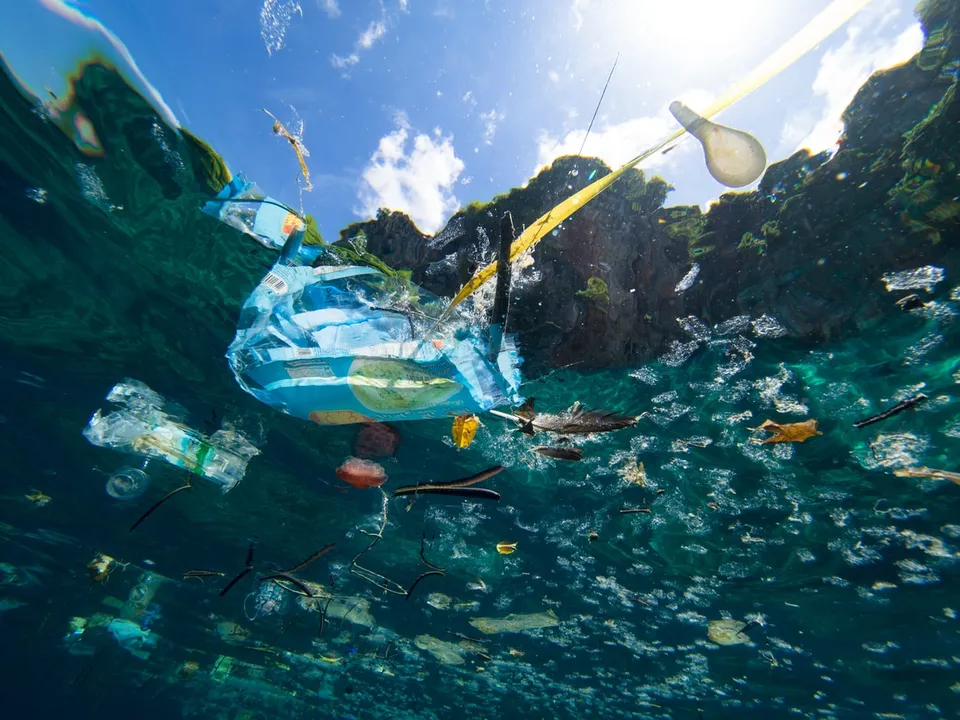
Having witnessed marine change across the world over decades, Jeng points out with great anguish that marine debris is the most serious environmental problem today. The photo shows plastic garbage floating on the ocean surface, shot from underwater. Photo │ Ming-Shiou Jeng
Marine debris comes in many forms: 20% floats and 80% sinks, such as fishing nets. It is estimated that globally, 4.8 to 12.7 million tonnes of floating debris enter the ocean every year. About 50% may be washed ashore by wind and waves, while the rest continues to drift, gradually weathering, breaking down, and fragmenting into microplastics — even down to nanoscale particles — under the sun and waves. These particles are then consumed by tiny zooplankton, which are in turn eaten by small fish, shrimp, and larger fish. Through the food chain, these particles accumulate in the organs and muscle tissue of marine animals, and may ultimately end up being consumed by humans.
Many scientists are studying the effects of plastic debris and microplastics on marine life. A well-known example is Midway Atoll in the Hawaiian Islands, where albatrosses mistake plastic for food and swallow it, and parent birds feed plastic to their chicks. Scientists who have dissected dead albatrosses found their stomachs stuffed with garbage. Other marine animals such as whales, sea lions, and seals have also been found with large amounts of debris in their stomachs.
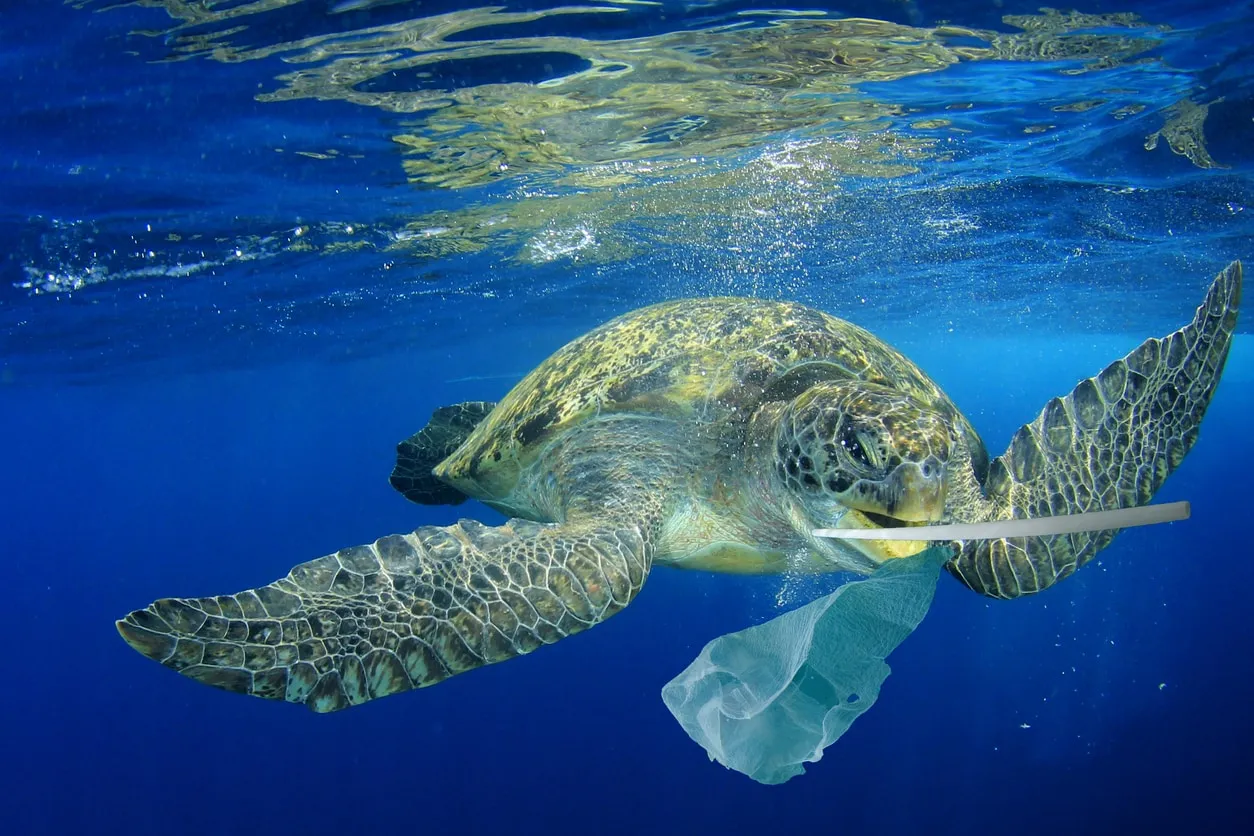
Green Sea Turtles mistake plastic bags for jellyfish and swallow them whole. Having no sense of taste and no way to distinguish or regurgitate the material, the plastic accumulates in their stomachs. Professor Yi-Juin Cheng of National Taiwan Ocean University, who has long studied Green Sea Turtles, has found all manner of debris inside the stomachs of deceased turtles. Photo │ Ming-Shiou Jeng
In addition, plastic contains plasticizers that, when dissolved into the sea, are harmful to marine life and act as endocrine disruptors — causing penile atrophy in male mollusks and feminization in other animals. "But because plasticizers are not acutely toxic and microplastics don't kill immediately, many people are indifferent to marine debris and don't realize they should be afraid," Jeng said.
Building an Analytical Model from Dongsha Atoll
The marine debris research team consists of Academia Sinica researcher Ming-Shiou Jeng, associate researcher Yi-Chia Hsin, and Yi-Chin Ko, associate professor at the Institute of Fisheries Science at National Taiwan University. They began by building an analytical model based on Dongsha Atoll. Why did they choose Dongsha Atoll as their study site? Jeng explained: "I've been to Dongsha Atoll more than 50 times. Over 20 years ago it was still very clean, but now the amount of ocean-drifting debris is staggering! I was very curious about where all this garbage was coming from."
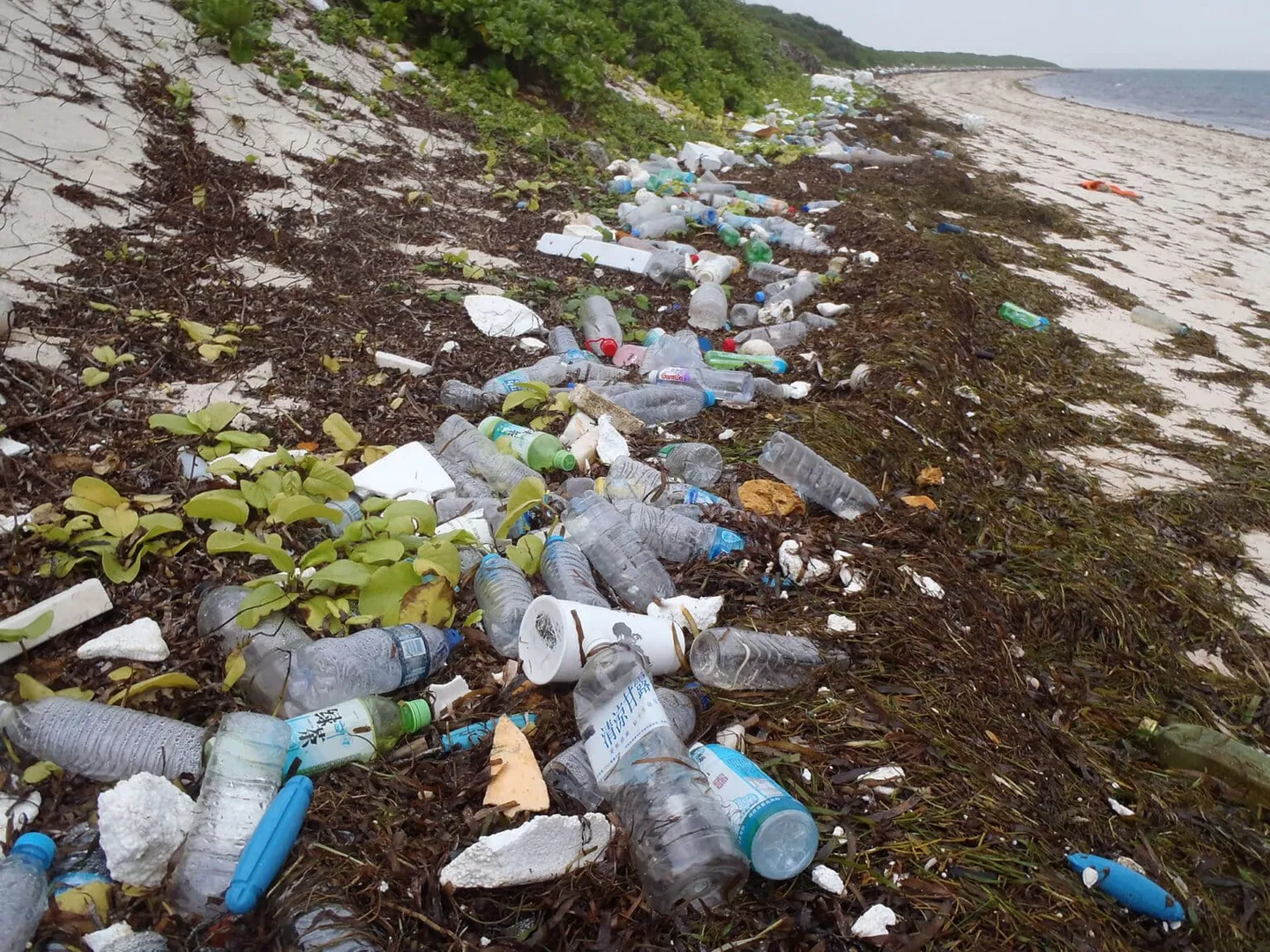
Jeng found the amount of ocean-drifting debris at Dongsha Atoll to be staggering. The photo shows marine debris washed ashore on Dongsha Atoll.
Photo │ Ming-Shiou Jeng
Furthermore, although Dongsha Atoll has a military garrison, littering is strictly prohibited there. Jeng's team concluded that all debris found on Dongsha Atoll must have drifted in from elsewhere, making it an ideal location for establishing a model to track marine debris. On beaches on both the north and south sides of Dongsha Atoll, staff from the Marine National Park Headquarters, research teams visiting the island, and Coast Guard personnel assist in monthly surveys of ocean-drifting debris. Analysis of its composition has found that most originates from China or Southeast Asian countries.
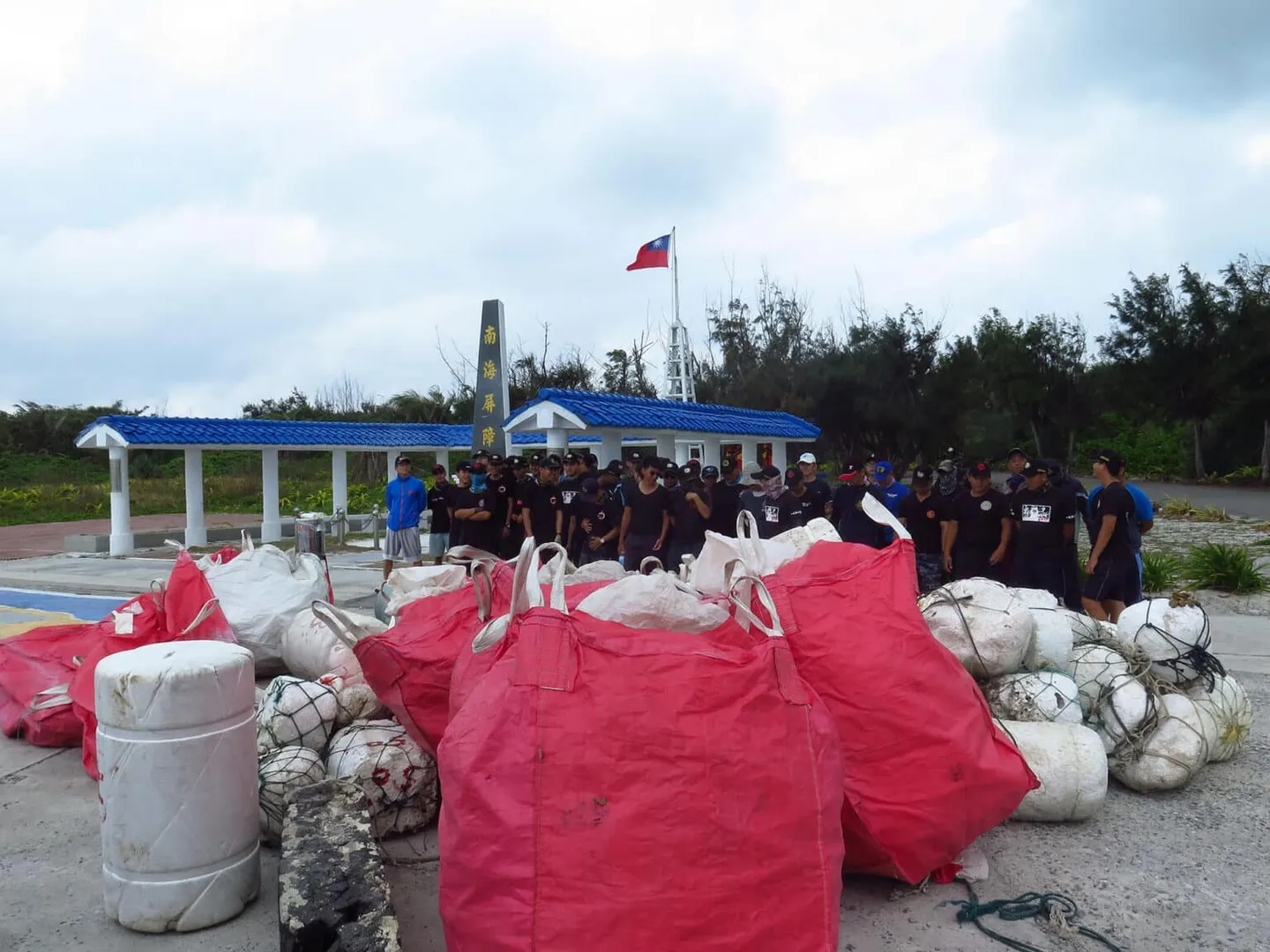
To understand where ocean-drifting debris comes from, staff from the Marine National Park Headquarters, research teams visiting the island, and Coast Guard personnel assist in monthly surveys of the debris and analysis of its composition. Identification has revealed that most originates from China or Southeast Asian countries. Photo │ Ming-Shiou Jeng
The team then collected data online from governments and relevant agencies around the world — gathering 25 years of global ocean current and wind direction data from the National Oceanic and Atmospheric Administration (NOAA), sea surface temperature data from the Central Weather Bureau, and fishing vessel operation locations from the Fisheries Agency — for big data analysis.
At Dongsha Atoll, the northeast monsoon blows in winter and the southwest wind current blows in summer, resulting in more debris arriving from China in winter and more from Vietnam in summer. The team fed all the collected ocean current and wind direction data into a computer to build a model, performed reverse-tracking of ocean-drifting debris at Dongsha Atoll, and compared the results against actual debris sources identified on-site. The findings matched, confirming that the theoretical model was valid.
A Global Analysis of Ocean-Drifting Debris
After the Dongsha Atoll model proved successful, the team found that ocean-drifting debris arrives from all directions, which inspired them to understand global ocean-drifting debris patterns. They then used data simulation to analyze the movement of marine debris worldwide. The team divided each degree of latitude and longitude into 3 grids, simulating the release of 10 pieces of debris in each grid across all global ocean zones, and observed where ocean currents and wind would carry them from 1993 to 2017. Associate researcher Yi-Chia Hsin explained that windage is a critical factor in pushing marine debris toward shores and coastlines, and that this study marks the first time globally that windage effects have been incorporated into the analysis of marine debris movement.
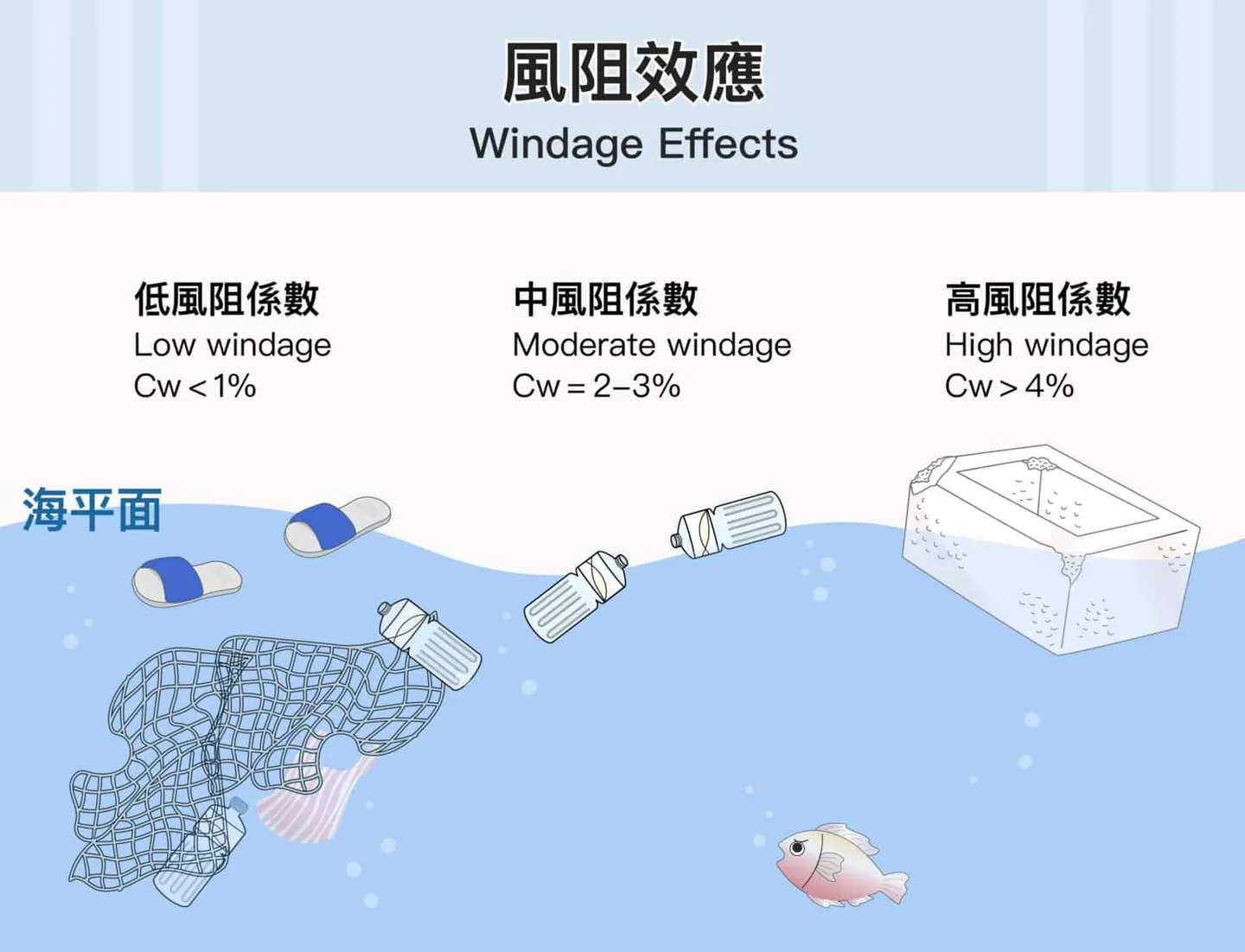
The windage coefficient (Cw) of ocean-drifting debris ranges from 0 to 0.1. Debris with a high Cw has a greater chance of being blown ashore by wind, while debris with a low Cw may remain floating on the surface. The higher the Cw, the greater the resistance from wind — for example, large-volume styrofoam has a large surface area exposed to wind and easily ends up on shore; a plastic flip-flop has a Cw of 0, meaning it won't sink but wind can't move it either, and it can only be swept ashore by large waves.
Photo │ Research Portal of Academia Sinica (Source │ Ming-Shiou Jeng)
As shown in the figure below, marine debris discarded in open-ocean areas with a low windage coefficient has a density greater than seawater and accumulates mainly at 30°N and 25°S–50°S latitude; mid- to high-windage debris such as styrofoam and PET bottles has a density lower than seawater, is easily transported by wind, and accumulates at 10°N and above 60°S. In addition, coastal debris is less susceptible to wind influence; regardless of windage, it tends to accumulate between 10°N and 5°S–15°S in tropical regions.
The research team not only identified marine debris hotspots but also used three colors to indicate different degrees of overlap between marine debris hotspots and ocean ecosystem service hotspots (Note 1). Ocean ecosystem service hotspots include: chlorophyll a concentration (as an indicator of marine primary productivity), total annual fishing effort (as an indicator of fisheries), and marine biodiversity.
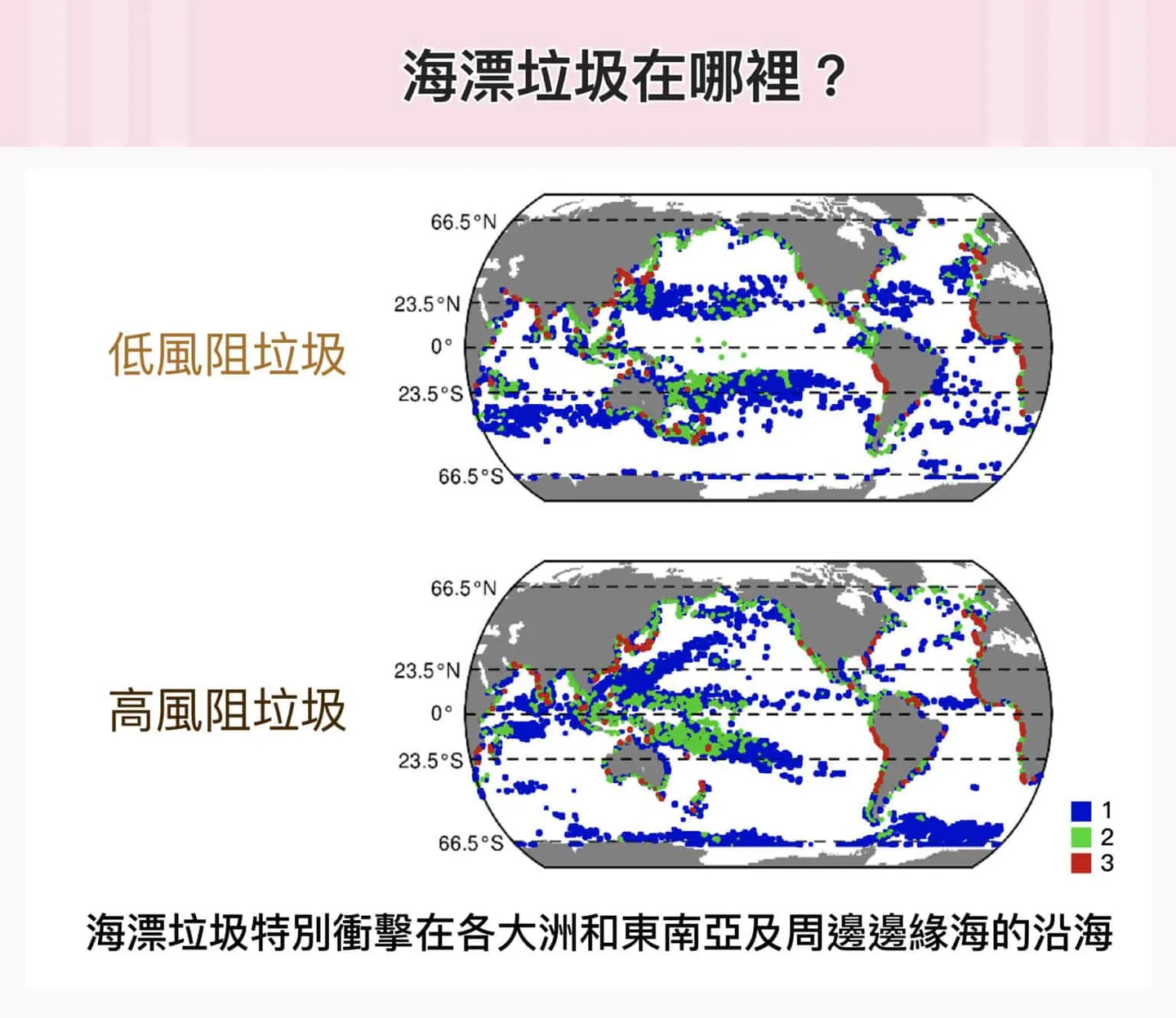
The figure above shows global distribution hotspot maps for low-windage and high-windage debris. Blue (marked as 1) indicates that a marine debris hotspot overlaps with 1 type of ocean ecosystem service hotspot; green (marked as 2) indicates overlap with 2 ecosystem service hotspot zones; and red (marked as 3) indicates overlap with all 3 ecosystem service hotspot types.
Photo │ Research Portal of Academia Sinica (Source │ Ming-Shiou Jeng)
Based on model simulation results, the distribution of marine debris has already shifted from subtropical regions to tropical and high-latitude areas, and will shift from the eastern Pacific to the western Pacific — meaning Taiwan and the broader Asian region may face enormous harm from marine debris. Furthermore, plastic debris, being less dense than seawater, can be transported over extremely long distances and may easily be carried to the poles; the Arctic and Antarctic oceans may become another major accumulation hotspot for marine debris.
This massive migration of ocean-drifting debris has already severely impacted global marine biodiversity, and is encroaching on fishing grounds. If the trend continues to increase without any reversal, the entire marine ecosystem and human economic activities will face serious consequences.
Is Recycling or Beach Cleanup Only a Stopgap Measure?
Now that the problem is understood, how can it be solved? Can plastic recycling, for example, eliminate the problem? "Although plastic can be recycled and remade, at present only countries with a high standard of living and a high degree of industrialization are capable of achieving high recycling rates. In Scandinavia, for instance, there are dedicated recycling machines — simply insert a PET bottle and receive a cash reward. In Taiwan, incentive payments are getting smaller and smaller, and public willingness to recycle is low."
In addition, local governments across Taiwan frequently organize beach cleanups or beach adoption programs, with the aim of letting the public see firsthand that coastlines are strewn with garbage, and inspiring change starting from the individual. However, Jeng notes that ordinary people tend to visit easily accessible beaches and swimming areas. For some of the harder-to-reach locations, the government still has to spend a great deal of money on cleanup — for example, on the southern islands of Penghu, a special task force is deployed, with workers suspended in mid-air to pick garbage off cliff faces, sometimes managing to haul up only a single large piece of styrofoam per trip. Fishermen have also organized eco-fleets, with fishing boats dedicated specifically to collecting garbage at sea, but these efforts can only be conducted on a small scale and require substantial funding.
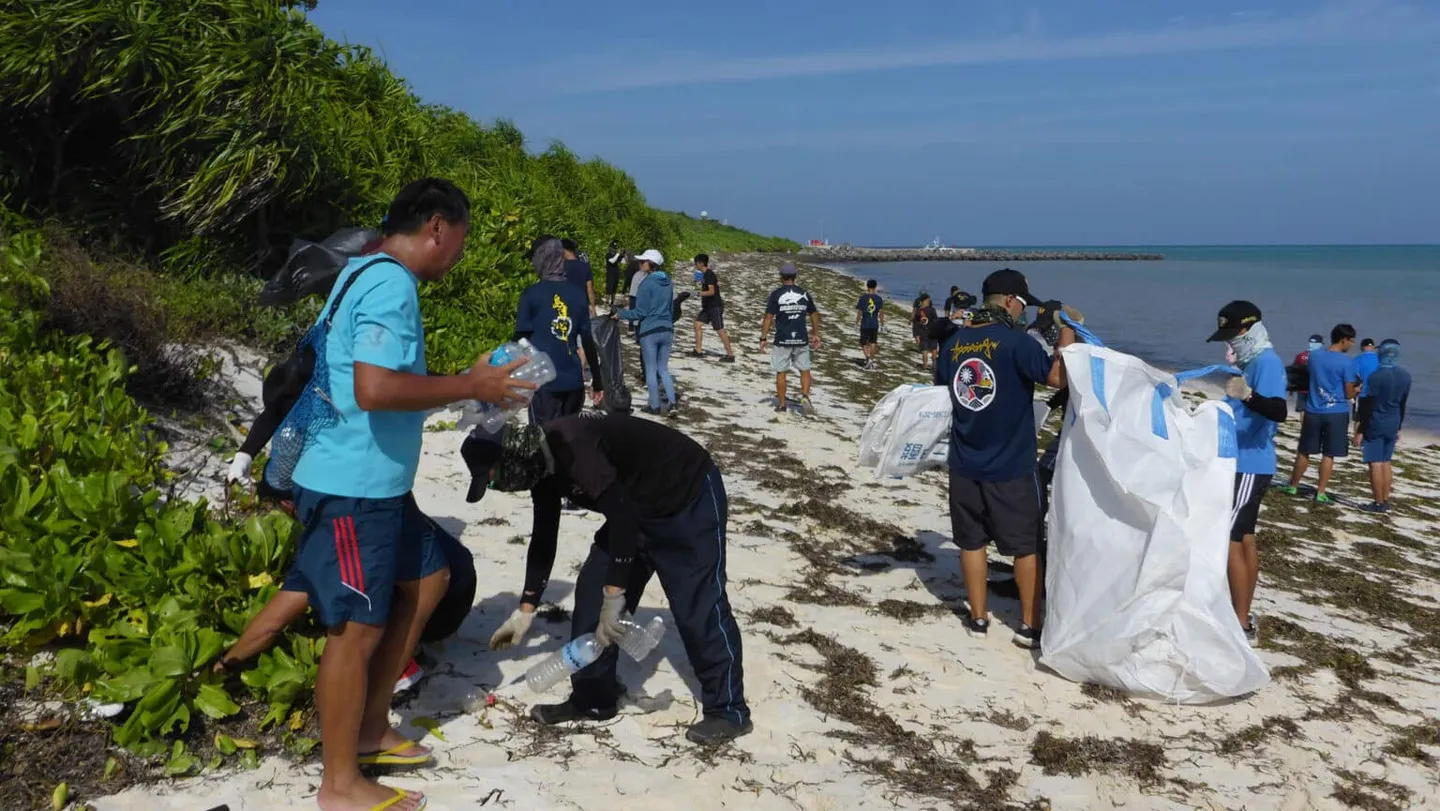
Beach cleanup and beach adoption programs aim to let the public see firsthand that coastlines are strewn with garbage, inspiring change starting from the individual.
Photo │ Ming-Shiou Jeng
In recent years, the massive volume of discarded fishing gear, styrofoam (oyster-farming floats), buoys, and fishing nets has become a major problem. In the past, fishing nets were expensive, so when they tore, fishermen would mend and continue using them. Now they are very cheap, and damaged ones are simply discarded — the same goes for other fishing gear. It is estimated that there are more than 100,000 abandoned ghost nets on the global seabed, frequently entangled on coral reefs and ensnaring countless marine creatures, destroying ecosystems. Taiwan's government has now introduced a real-name registration system for fishing gear, encouraging fishermen to return abandoned nets and equipment in exchange for incentives.
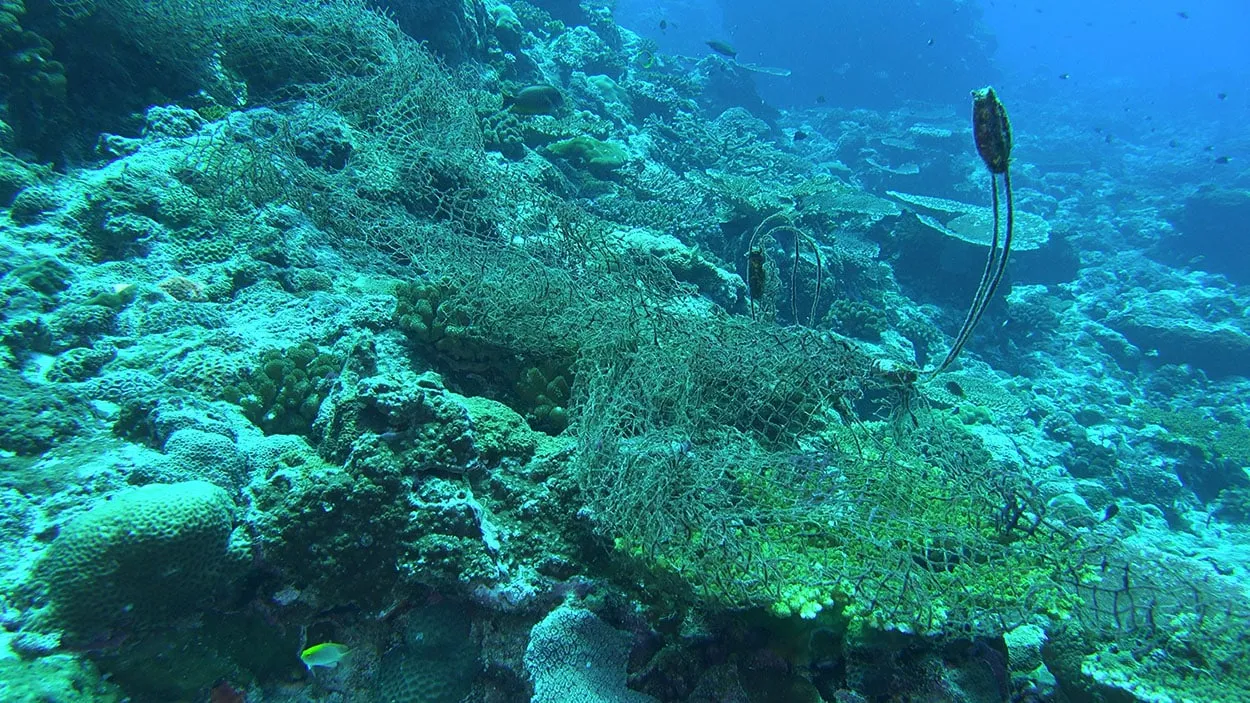
There are more than 100,000 abandoned ghost nets on the global seabed, frequently entangled on coral reefs and ensnaring countless marine creatures, destroying ecosystems.
Photo │ Ming-Shiou Jeng
Calling on Governments to Address the Problem at Its Source
Jeng said with deep conviction: "My view is that we should not focus on cleaning up garbage already at sea, because it can never be fully cleaned up. The source must be eliminated." Plastic was invented only decades ago, yet has already been massively overused — something that is extremely difficult to break down is often discarded after being used for less than 10 minutes. "The global plastics economy needs to change. Governments around the world must formulate relevant policies — such as making plastic products more expensive, banning them, or replacing them with alternatives — to control the problem at its source."
In recent years, Africa, with its less developed economies, has taken the most sweeping approach. "In many African countries, drainage systems have been clogged by plastic bags, causing flooding. They reasoned that since they can't deal with plastic waste, it's better to ban it outright." Currently, more than 60% of African countries have implemented bans on plastic bags, shutting down plastic factories and prohibiting the import of plastic bags nationwide.
"In addition, wastewater treatment is very important! Every time we do laundry, synthetic fiber clothing releases a large amount of microplastics that flow into the ocean through wastewater." Jeng added: "Although Taipei City's wastewater treatment rate is 86%, the rate for all of Taiwan is only 37%, meaning 63% of wastewater is discharged directly into the ocean without treatment. There is still enormous room for improvement."
Marine debris knows no borders. "All the world's seas are connected. Today, microplastics have been found even in the most remote Arctic and Antarctic regions and in the deepest point on Earth — the Mariana Trench. Only when the global ocean environment is healthy will Taiwan's ocean truly be healthy." Jeng hopes that more people will pay attention and continue conducting research, reminding governments around the world to recognize the severity of the marine debris problem.
Throughout his career, Jeng has been driven by a sense of mission, continuously promoting marine conservation in Taiwan, playing a pivotal role in the establishment of the Dongsha Atoll and Penghu South Islands national parks, and tirelessly running from place to place, explaining issues to the public and urging the relevant authorities to act. "If I know about it and say nothing, then it's my fault! I always remember one saying: success need not be mine — only then can you do the work with joy." His passionate, proactive, and optimistic character has allowed Jeng to keep moving forward on this difficult path.
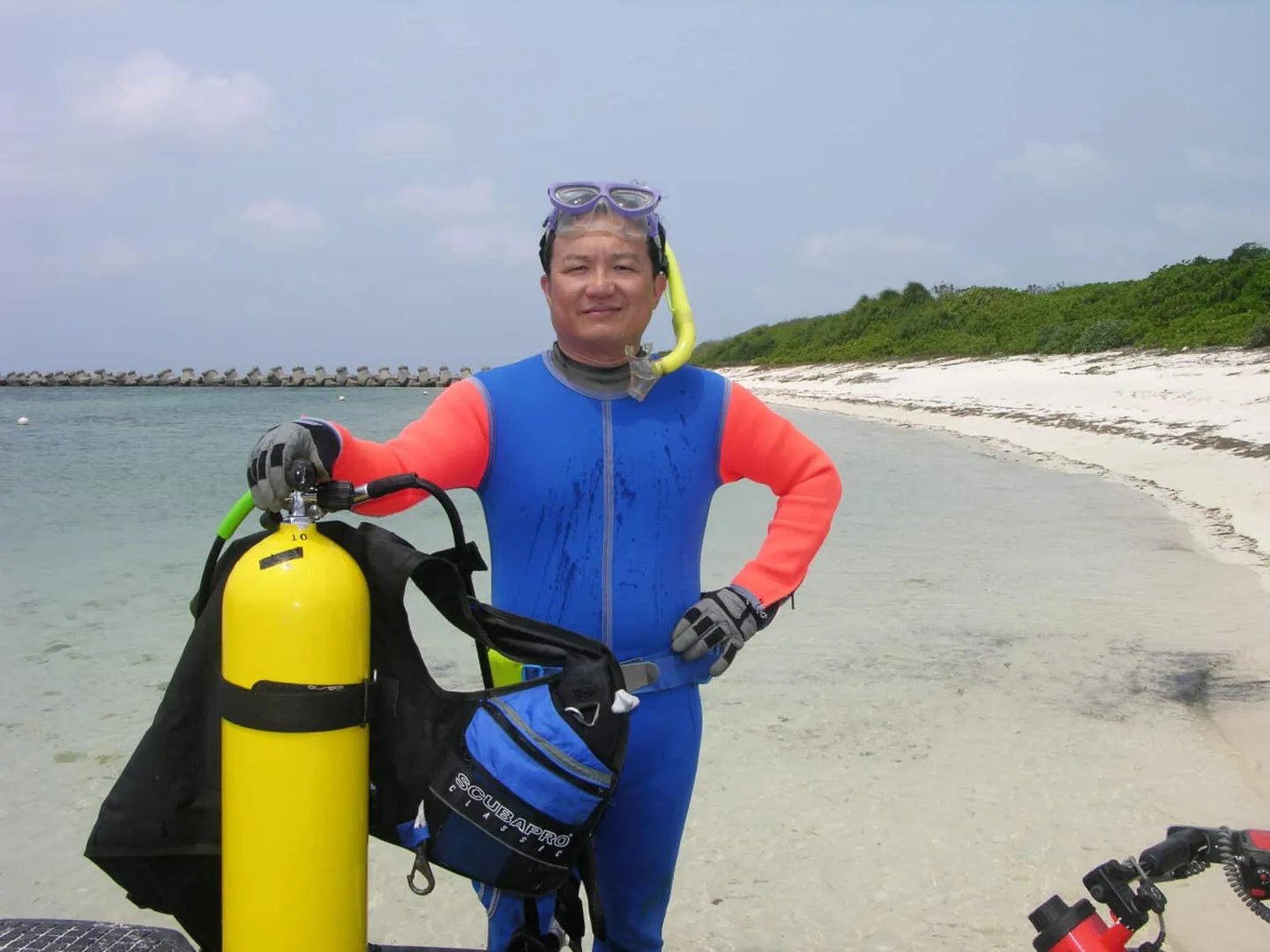
Ming-Shiou Jeng, researcher at the Biodiversity Research Center of Academia Sinica, became a pioneer of marine conservation in Taiwan through his love of the ocean, and considers marine debris the most critical environmental issue of our time.
Photo │ Ming-Shiou Jeng
Note 1: The "hotspots" referred to here are defined by ranking the global ocean grid values for each assessment item and selecting the top 25% of grids with the highest values.
Reporting and writing │ Yu-Tian Ou
Art design │ Xun-An Lin
Reprinted from Academia Sinica's Research Portal. URL: https://research.sinica.edu.tw/ocean-litter-windage/