![[BlueTrend Mini Classroom] Stressed Out and Dropping Limbs? The Sea Star Is the Ocean's Most Dramatic Creature — and Its Biggest Enemy Might Surprise You!](/_images/60a2cd42ddf1-1440w.webp)
Contents(4)
The Editor says: Have you ever seen a creature escape danger by shedding its own limb? That's exactly what sea stars do! When frightened, a sea star will detach one of its arms at the joint to make its getaway — and that severed arm can actually regenerate into an entirely new sea star. Beyond their remarkable self-healing abilities, the natural predators of sea stars are increasingly threatened by commercial fishing, causing sea star populations to grow unchecked and potentially tipping the balance of marine ecosystems. The Crown-of-Thorns sea star, notorious as a "coral killer," is one species that scientists have been keeping a close watch on for precisely this reason. Join BlueTrend as we explore the fascinating world of sea stars!
Introduction to Sea Stars
True to their name, sea stars look just like stars — they are echinoderms with a body plan based on five-fold radial symmetry. Inside, they have a complex water vascular system: water flow is regulated through a sieve-like plate near the center of their upper surface called the madreporite, which connects to numerous tiny tube feet on the underside of the body. These tube feet control movement, absorb water, and grasp prey.
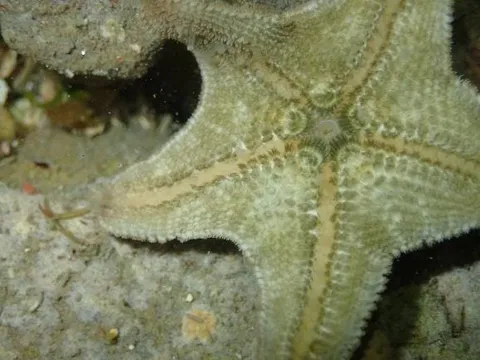
The underside reveals the ambulacral grooves lined with tube feet, as well as the central mouth. photo credit: 李承錄.
Despite their rigid texture, sea stars can maneuver their arms with surprising flexibility, weaving between rocks and reef structures. The group is enormously diverse, with approximately 1,600 known species distributed from tropical to polar waters, and from the intertidal zone all the way down to depths of 6,000 m in the open ocean.


The Sea Star's Remarkable Regenerative Ability
Sea stars possess extraordinary regenerative powers. A lost arm can regrow quickly, and the detached arm itself can develop into a completely new sea star. Sea stars are clever enough to use this ability as a defense mechanism — when threatened by a predator, they will deliberately shed an arm to create a distraction and make their escape.
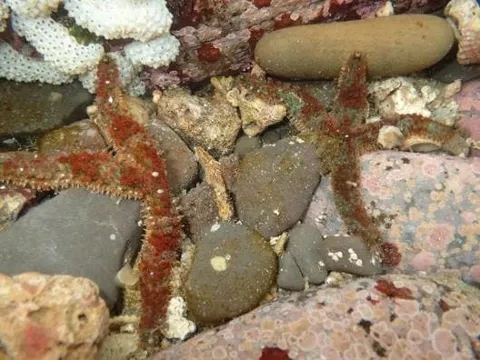
These two sea stars appear to have originated from the same individual through fission. photo credit: 李承錄.
How Sea Stars Feed
What we normally see on top of a sea star is actually its anus — the mouth is located on the underside of its body, facing downward.
The sea star's mouth is on the underside of its body! photo credit: 李承錄.
Don't be fooled by their cute, compact appearance — sea stars are carnivores. Their diet includes coral, crustaceans, other echinoderms, and more.
So how does a sea star eat a tightly shut clam? It uses its tube feet to pry apart the two hard shell halves, then does something truly extraordinary: it pushes its stomach out through its own mouth, enveloping the prey directly. Digestive enzymes secreted by the stomach slowly break the prey down on the spot. Once digestion is complete, the stomach is retracted and waste is expelled through the anus.
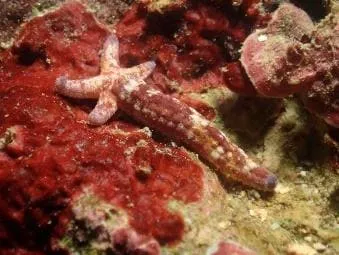
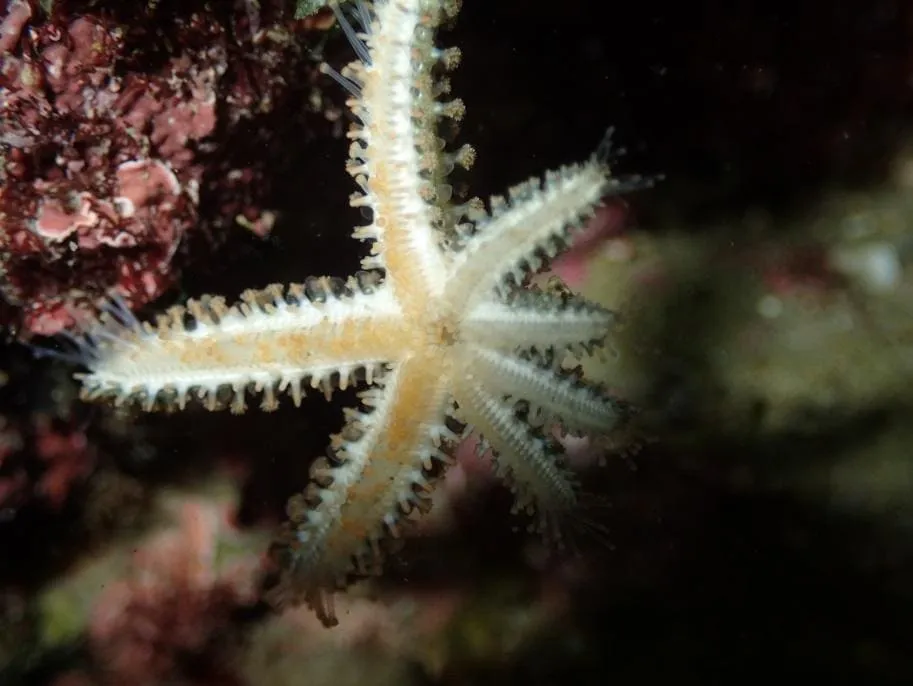
Small-bodied sea stars like this one are typically grown from a detached arm. photo credit: 李承錄.
Natural Predators of Sea Stars
Despite their tough outer armor, sea stars have no shortage of enemies capable of breaking through their defenses. In addition to the Harlequin Shrimp — a sea star assassin we introduced previously, which saws off a sea star's arms and drags them back to its den to feast on — large Triton's Trumpet snails, frog snails, crabs, and pufferfish are also known to prey on sea stars with great enthusiasm!
BlueTrend shares: Another predator rarely seen in Taiwan is the seagull, which seizes the opportunity at low tide to snatch up sea stars and swallow them whole — stuffing their beaks as if afraid someone might steal their meal. Doesn't that make for a wonderfully comical sight?
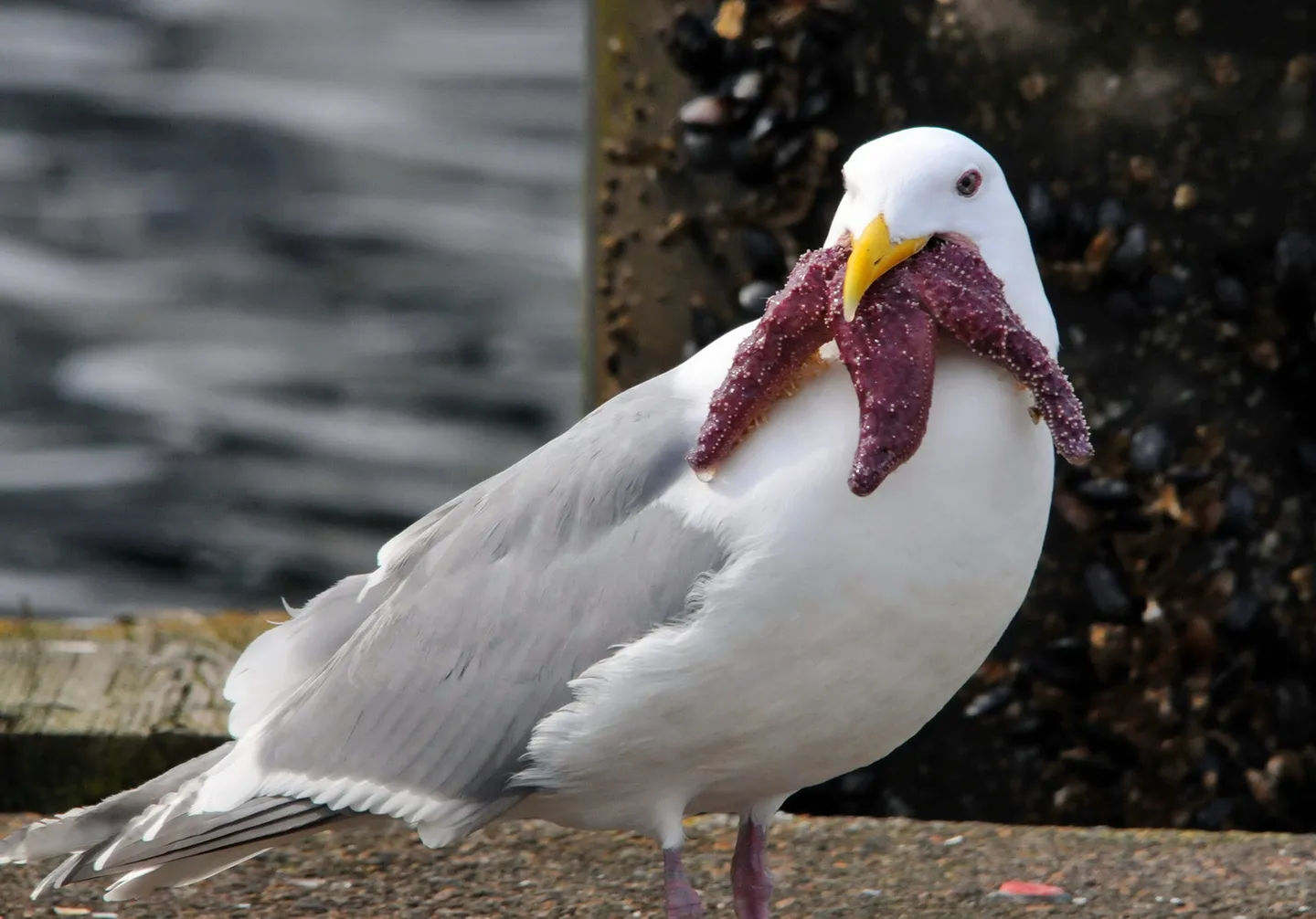
A greedy seagull takes a big bite of a sea star — doesn't it look like something out of a sci-fi film? photo credit: Edward Palm.
Editor-in-charge: Jenny Tsai
Further Reading:

![[BlueTrend Classroom] The Most Beautiful Sea Cucumber — The Sea Apple Is Actually a Hidden Underwater Bomb?](/_astro/004_%E5%B8%83%E9%AD%AF%E5%B0%8F%E6%95%99%E5%AE%A4_vivipic_Z1c6nxu.webp)
![[BlueTrend Mini Classroom] The Star Killer & Most Venomous Shrimp: The Devoted Harlequin Shrimp](/_astro/002_vivipic_2vdzYS.webp)