Contents(3)
Most people get chills just thinking about sharks — yet the odds of being attacked by one are far lower than the odds of being struck by lightning. Following four shark attacks in quick succession in Australia, experts are calling for a more measured approach and a deeper understanding of shark behaviour.
As night falls, a young woman impulsively dives into the ocean for a swim. Suddenly, she feels an agonising pain in her calf and an enormous force dragging her downward. She struggles with all her might, but before anyone notices, she is ruthlessly pulled into the ocean depths. This iconic scene from Jaws cemented the image of the shark as a terrifying monster in the public imagination.
In reality, the rate at which sharks attack humans is far lower than most people think. Shark bites are usually the result of the animal mistaking a person for prey and delivering a single exploratory bite, or a defensive response when the shark feels threatened. According to data from the International Shark Attack File (ISAF), given the tens of billions of aquatic recreational activities that take place globally each year, the probability of an unprovoked shark attack is just 0.000026% — far lower than the 0.0002% chance of being struck by lightning.
Nevertheless, Australia had already recorded 4 attacks in early 2026. On 18 January, a 12-year-old boy was attacked by a shark while swimming in Sydney Harbour and later died from his injuries. The following day, an 11-year-old boy was surfing at Dee Why Beach when a shark tore a large chunk out of his surfboard. A few hours later, a man was bitten by a shark at nearby Manly Beach and rushed to hospital in a critical condition. On 20 January, a fourth surfer was attacked by a shark 300 km offshore and sustained chest injuries.
Four shark bite incidents in just 48 hours — three of them occurring within a 15-kilometre stretch of Australia's east coast. "This is the closest clustering of shark attacks I've seen in 20 years of research," said Pepin-Neff, associate professor of public policy at the University of Sydney.

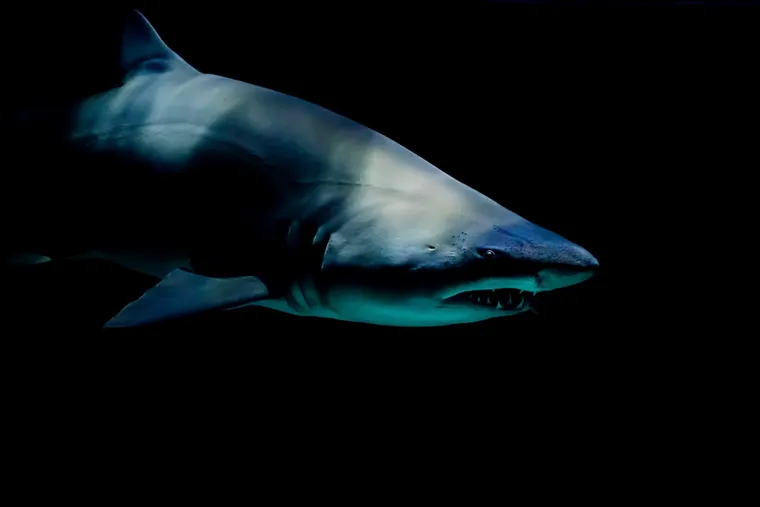
Four shark attacks occurred in Australia within 48 hours. Image credit: Stephen Chalmers/Unsplash
Why Did Shark Attacks Suddenly Spike After Heavy Rain?
The series of incidents drew intense public attention in Australia, prompting the closure of dozens of beaches amid fears of further attacks — and even calls for culling. So why did shark attacks spike so sharply and so suddenly?
Experts point to a strong link with several consecutive days of heavy rainfall. Sydney received 127 mm of rain within 24 hours, the highest recorded total in 38 years. "The heavy rain created ideal conditions for Bull Sharks — the freshwater flowing in from land is virtually perfect for them," Rebecca Olive, senior researcher at RMIT University, told the BBC. Bull Sharks favour warm, brackish water, and after heavy rain they are especially active around estuaries and turbid nearshore waters, increasing the likelihood of accidental encounters between Bull Sharks and people.
At the same time, the floodwaters flushed sewage into the ocean. Nutrient-rich wastewater attracts baitfish to new areas, and Bull Sharks follow. Nicholas Ray, a shark researcher at Nottingham Trent University in the UK, believes the rapid succession of attacks was the result of a complex interplay between climate change, ecosystem shifts, and human behaviour — not any single cause.
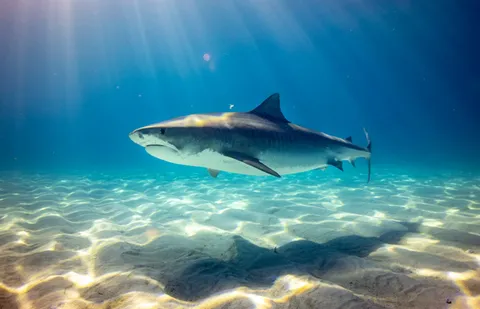
Multiple shark attacks occurring in a short period of time are rare and are usually linked to specific environmental factors. Image credit: Gerald Schömbs/Unsplash
Many people might assume that beaches are primarily human recreational spaces and that sharks "invade" them — and that culling sharks would therefore reduce attacks. But the ocean is the shark's natural domain. As mobile predators, they are simply drawn to wherever food appears. If warming continues and sewage keeps flowing into the sea, is culling really the best solution?


Instead of Driving Sharks Away, Reduce the Chances of Human–Shark Encounters
Changes to river systems, sewage overflows, and fishing activity all affect where baitfish congregate, making swimming or surfing near estuaries after heavy rainfall a high-risk activity. Climate warming is also extending the period during which sharks appear in coastal areas. "Rising water temperatures are causing sharks to linger longer at higher latitudes and to remain in their summer habitats for extended periods," added Victoria Camilieri-Asch, a shark behaviour specialist at Queensland University of Technology.
Experts are unconvinced that culling addresses the problem. "Culling only creates an illusion of safety — it doesn't actually make beaches safer," said Olive. She argues that the focus should be on understanding shark behaviour and learning to respect each other's living spaces, rather than eliminating the animals.
Two key measures can reduce the likelihood of an attack:
- Avoid the times and places where sharks feed: Murky waters and estuaries with dense concentrations of fish during dawn, dusk, and night-time hours.
- Reduce the chance of being mistaken for prey: Sharks' vision is not as refined as humans' — they typically rely on smell, water vibrations, and electroreception to identify prey. Avoiding splashing violently, wearing reflective jewellery, entering the water with open wounds, or wearing colours and patterns that resemble prey can all reduce the risk of being misidentified. Sharks also tend to approach isolated targets, so whenever possible, swim or dive with a buddy.
In truth, sharks are not particularly drawn to areas of human activity — they are more docile and shy than most people imagine. When an attack occurs, it is tempting to blame the shark, but their behaviour has not actually changed; they are simply following water temperature, food, and environmental cues. It is human activity and development, along with the changes brought by climate change, that have caused our ranges to overlap more and more frequently. Rather than reducing the problem to "eliminating the threat," perhaps we should seek to understand how these variables are driven by human actions — and rethink the way we coexist with the ocean.
References
- BBC, Four attacks in 48 hours: How East Australia's beaches became a 'perfect storm' for sharks
- euronews, Sharks aren't 'turning on us'. So what's behind the recent spate of attacks?
- The Independent, Australia closes dozens of beaches after fourth shark attack in 48 hours: 'Just go to a local pool'
- ABC News, After a horror week of shark attacks, how do we sift facts from fear?
※ This article is reprinted from the Delta Electronics Foundation's Low Carbon Life Blog: Do You Think Sharks Are Dangerous? Maybe We Just Don't Know Them Well Enough!, co-produced with BlueTrend.