Contents(6)
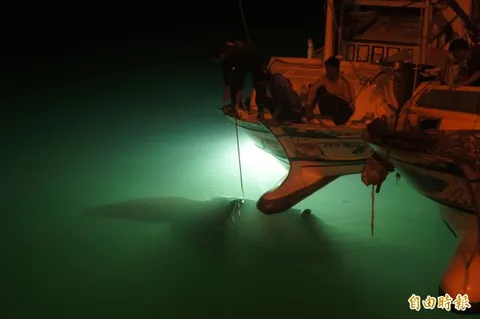
Image source: Liberty Times
Giant Manta Ray Makes the News
On 2018/5/22, a photo went viral online showing a massive manta ray with a wingspan of 5 meters that had been accidentally caught by fishermen at Suogao Harbor in Penghu. As the story spread across social media, it ultimately pressured the Penghu County Magistrate and Council Speaker to personally issue instructions late into the night on how to handle the situation. After negotiations between political forces and social media pressure, this rare manta ray was brought out to open waters and "released back into the wild" — all broadcast live on Facebook for the public to watch.
Behind what appeared to be a triumph for conservation and social justice lies a much deeper issue. After a night of online outrage driven by social media and news coverage, what do people actually remember? The next time a manta ray is hauled ashore, the same drama will play out all over again — and divers' dreams of one day watching a manta ray glide through the water in Taiwan will remain just as out of reach. It's worth taking a moment to step back from the noise and think carefully about what we can actually do.
For reporting purposes, on 2018.5.19 I had the opportunity to visit Penghu to interview Ye Shenghong (葉生弘), the owner of Island Ao 77 (島澳七七). Naturally, I seized the chance to ask him — a man who grew up in a fishing family — to take me to Magong Fishing Harbor, Penghu's largest, to learn about the local fish market culture. In those brief ninety minutes, I felt as though I had found an answer, yet at the same time I found myself deeper in a fog, drawn into even more complex questions.
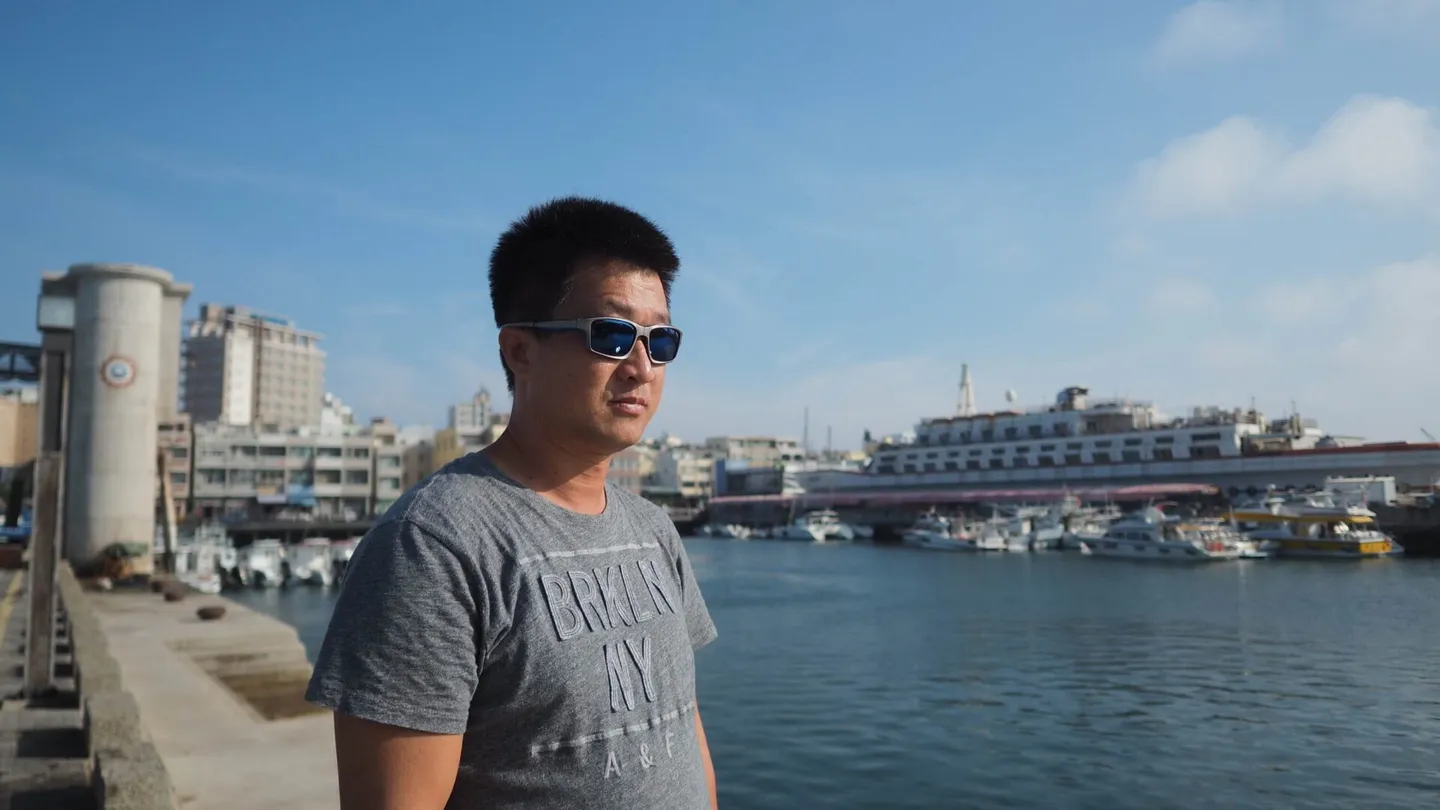
Brother Ye, who grew up by the sea in Jiangjunao, is a fisherman through and through.

The fish market begins operations at 4 a.m. every day, sustaining the livelihoods of Penghu's people day after day.


Penghu — A Market Overflowing with Catch
Penghu is best known for its Spanish mackerel (土魠魚), which fetches high prices around the Lunar New Year every year. Due to the influence of the Kuroshio Current's branch, Penghu's winter catch is dominated by migratory species, including Spanish mackerel, frigate mackerel, and yellowtail amberjack. In summer, bottom-trawl catches take center stage. Nearly all the seafood caught across Penghu County is transported to Magong Fishing Harbor before dawn to be sold. In the days when Brother Ye still went out to fish himself, they would set out at seven in the evening and work through the night before bringing the catch to Magong Harbor.
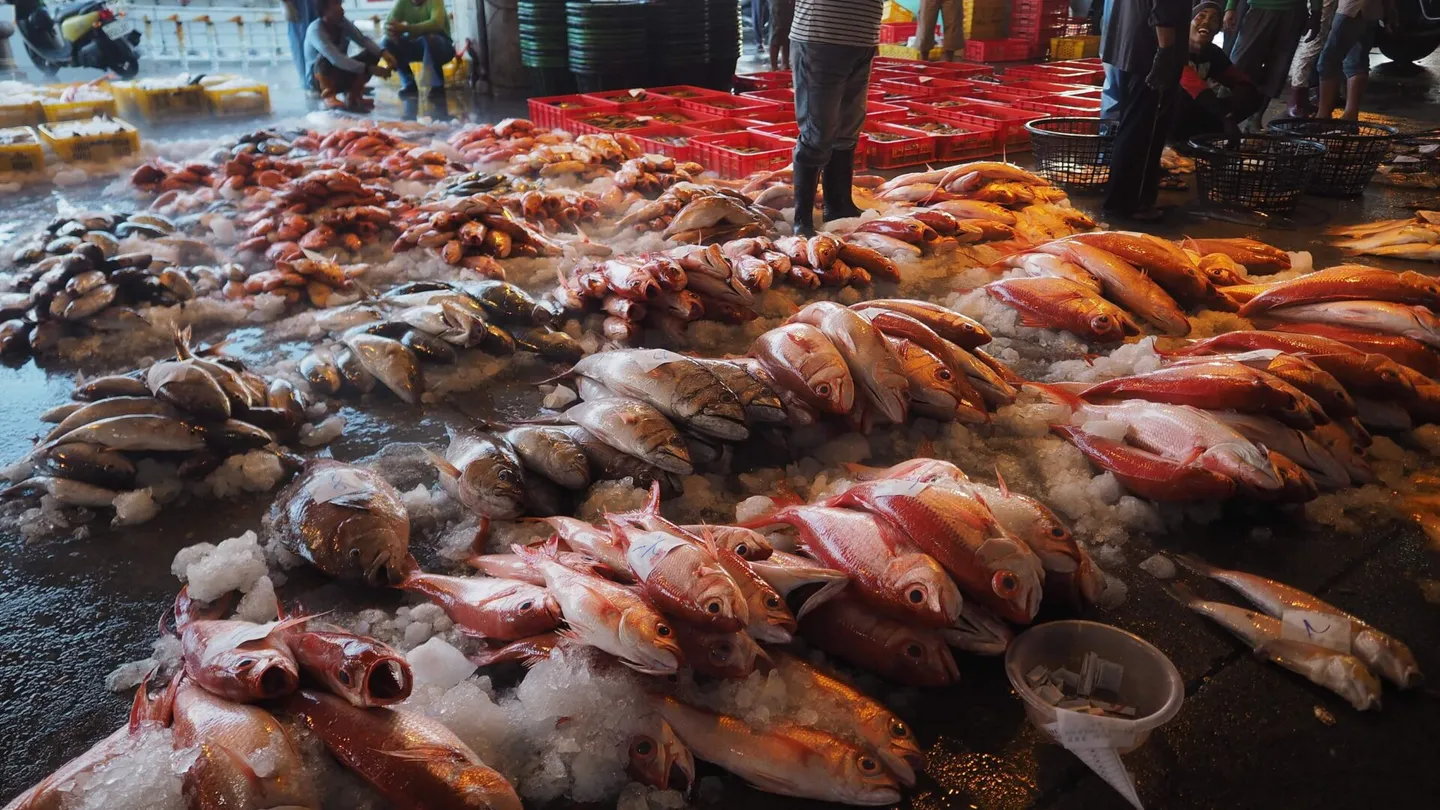
The volume of seafood at Penghu is truly staggering.
In Penghu you can see catches brought in by all kinds of fishing methods — longline, purse seine, drift gillnet (large mesh and legal), and trawl. All the catch is auctioned on-site. While some supplies the local Penghu market, the largest share of Penghu's seafood is actually shipped to mainland Taiwan. On-site ice-making equipment and professional boxing crews handle everything with impressive efficiency.
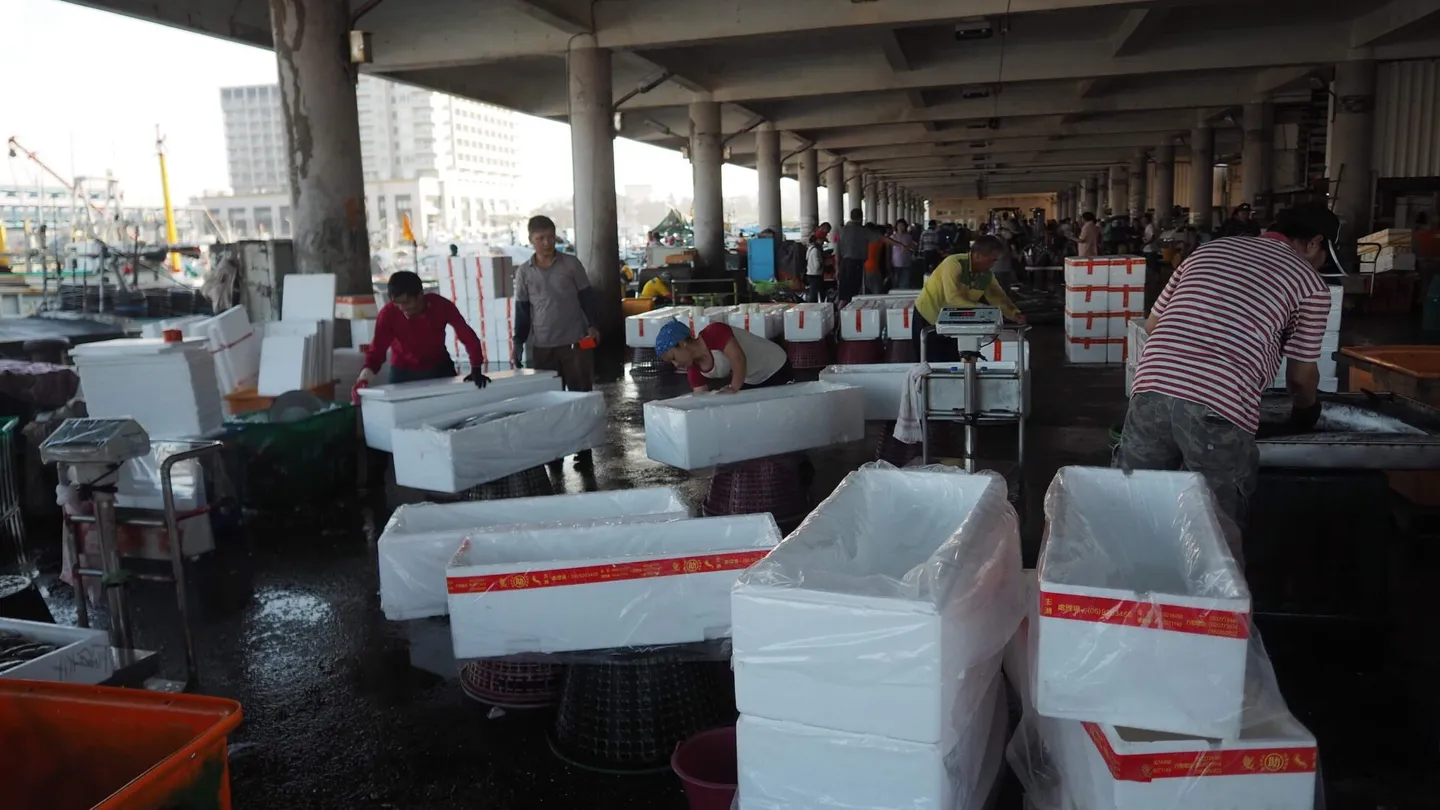
The fish market's professional boxing team at work.
Shark Bycatch
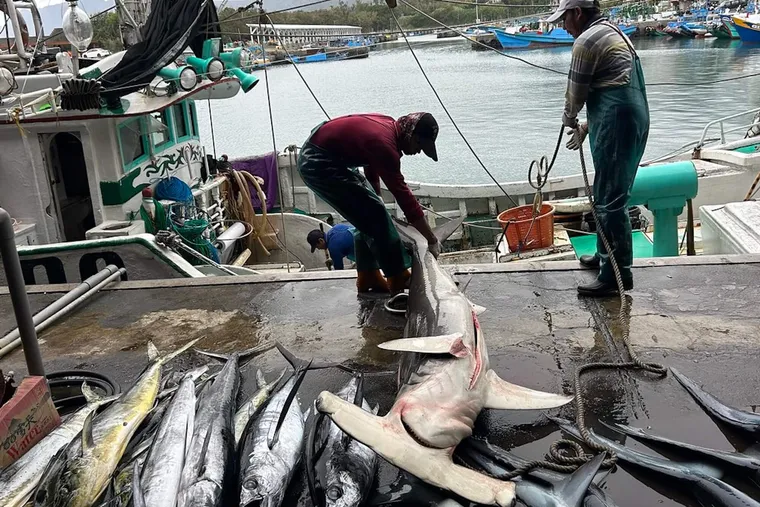
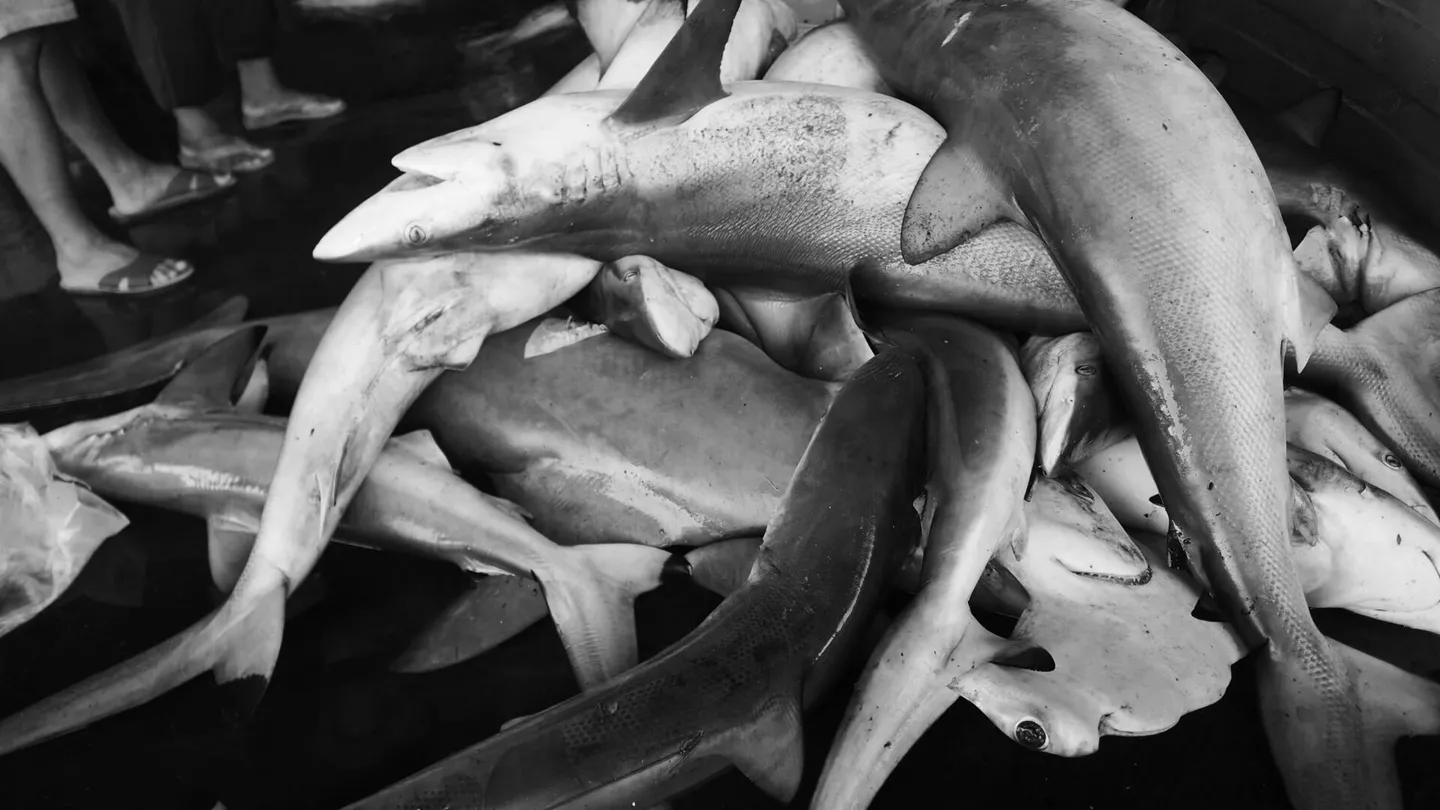
After getting a basic understanding of how the fish market operates, we came across a sight in one corner of the market that would break any diver's heart — a pile of sharks. No exaggeration: an actual heap of sharks, discarded in the most inconspicuous corner of the market. Unlike other catches, they weren't packed in ice or tagged with numbered bid stickers. They simply lay there in silence, as if a wordless fate were already waiting for them.
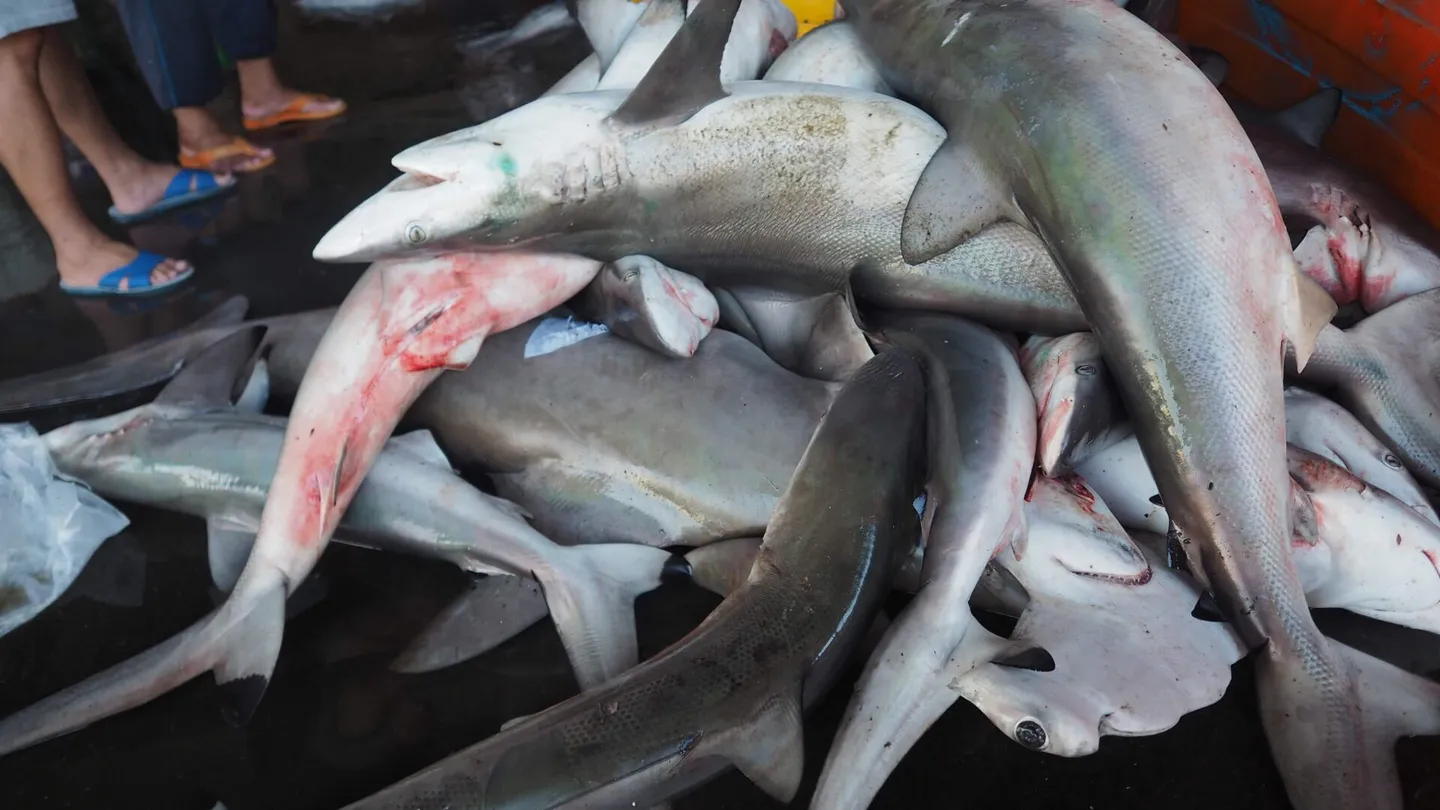
A pile of sharks — with a baby Hammerhead Shark buried underneath.
The shark pile contained various species. Alongside common Blacktip Reef Sharks were the celebrity species that divers dream of encountering — Hammerhead Sharks — pressed beneath the heap. Curious, I asked one of the fish traders nearby why all these sharks were just sitting there with no takers. The weathered fisherman answered in a plain, honest tone: "Because nobody wants them." It turns out that shark sells for roughly NT$50–80 per kilogram. Penghu's prized Spanish mackerel, during peak season, can fetch as much as NT$1,600 per kilogram; even when I visited out of season, it was still going for around NT$400–500 per kilogram. Shark is simply a very low-value commodity in the market.
So where do these sharks end up? The trader pointed to a middle-aged man in flip-flops and said: "That guy over there is the dealer who buys up all the sharks here — he'll haul them away by the truckload to be made into fish paste." It turns out these sharks are all shipped to a Penghu shop that makes oden (黑輪), where they are ground into fish paste and mixed into various processed food products.
Beside the shark pile, I spotted another large form lying on the ground — a black marlin (芭蕉旗魚) nearly 2 meters long, colloquially known as the "broken umbrella fish." It too lay quietly on the floor, awaiting the same fate as the sharks: destined to become the fish paste in everyone's oden. The reason was simple — poor texture, low market value.
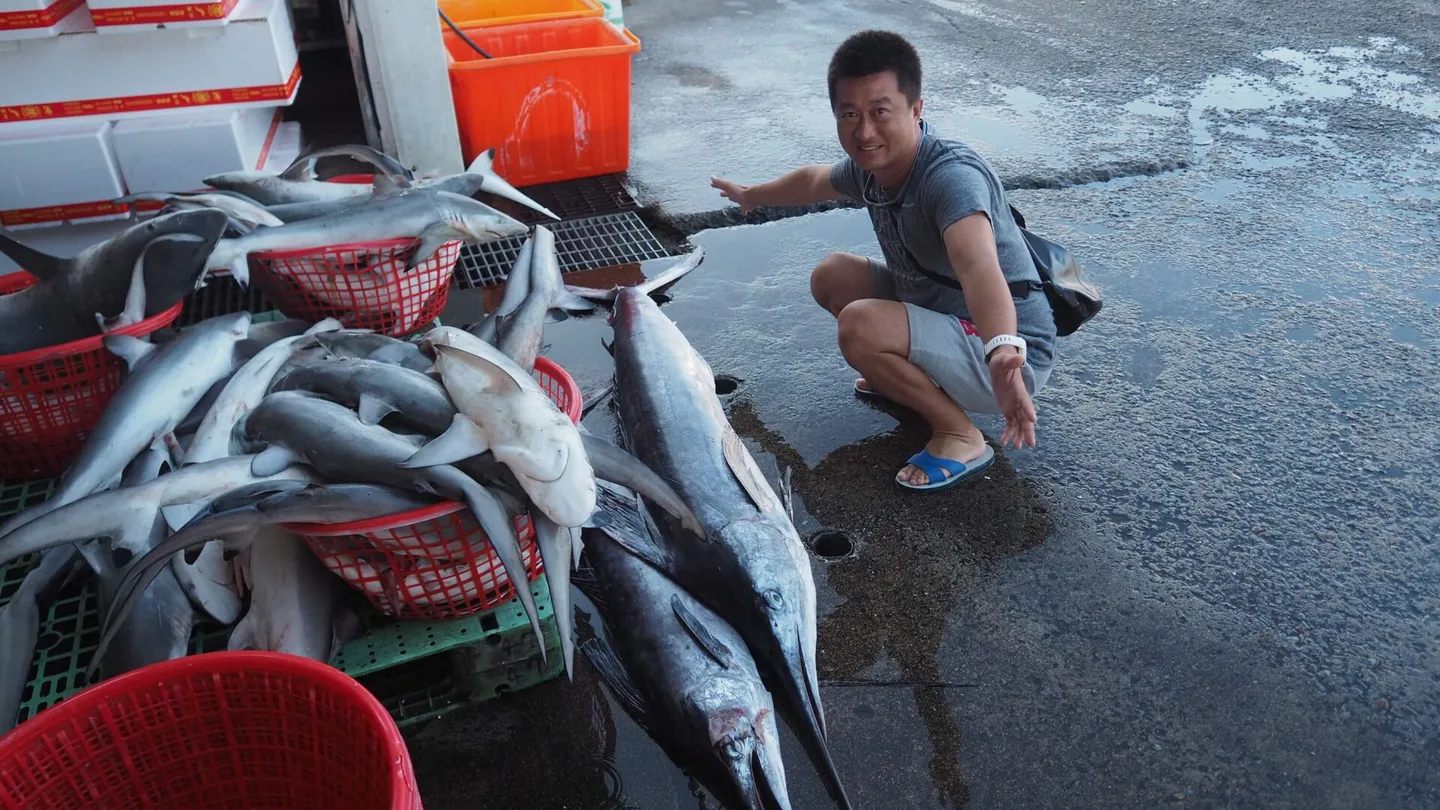
A black marlin nearly 2 meters in length.
Brother Ye said: "Everything divers love to see is what fishermen don't want."
Brother Ye, who has more recently gotten into recreational dive tourism, neatly identified the root of the tension that so often pits divers against fishermen. We often wonder: why is it that a single shark or manta ray can generate enormous economic value abroad through tourism, while in Taiwan we can only see them lying in fishing harbors? The emotional accusation of "fishermen = ignorant people" has even surfaced online. Brother Ye reflected thoughtfully that we all have a habit of projecting what we consider self-evident onto groups whose lives are completely different from our own — and forcing them to accept our point of view. That is where the conflict begins.
Consider this: a fisherman who has spent his entire life fishing — and knows nothing else — braves wind and waves to go out to sea, operating under the regulations set by the government. He happens to haul in some relatively low-value sharks. Since it isn't against the law, of course he brings them back to port to offset his fuel costs. It's entirely legal and reasonable. The dive tourism revenue that divers keep advocating for is completely foreign to fishermen. All they know is that if they don't go out and fish hard, there will be no income.
Beyond the reality that fishermen live day after day according to their experience and established way of life, Brother Ye also pointed to some issues in Taiwan's fisheries — and in fisheries worldwide — that deserve far more attention.
Is There a Solution to the Bycatch Problem?
The most controversial fishing method when it comes to bycatch today is the purse seine. A net stretching several kilometers cannot target a specific species. Modern purse seine fleets even deploy helicopters to scout fish schools and deploy fish aggregating devices for maximum efficiency — a single deployment sweeps up all kinds of marine life at once, yet a large proportion of what is caught is non-target species.
The canned tuna we all love is mostly caught by longline fishing. But beyond tuna, a large portion of the hooks baited on those longlines end up attracting sharks, sailfish, and even sea turtles as bycatch. Bottom trawling, which primarily targets shrimp, is similarly indiscriminate: aside from the high-value target catch, small fish with no commercial value are routinely turned into "trash fish" and sent to factories to be processed into fishmeal for aquaculture.
Many people ask: can't they just release the accidentally caught fish back into the ocean? Unfortunately, by the time fish are caught using the three high-bycatch methods described above, they are almost always already dead. Which brings us back to the fishermen's perspective: if everything that comes up on board is dead anyway, why not bring it to port and sell it to cover fuel costs?
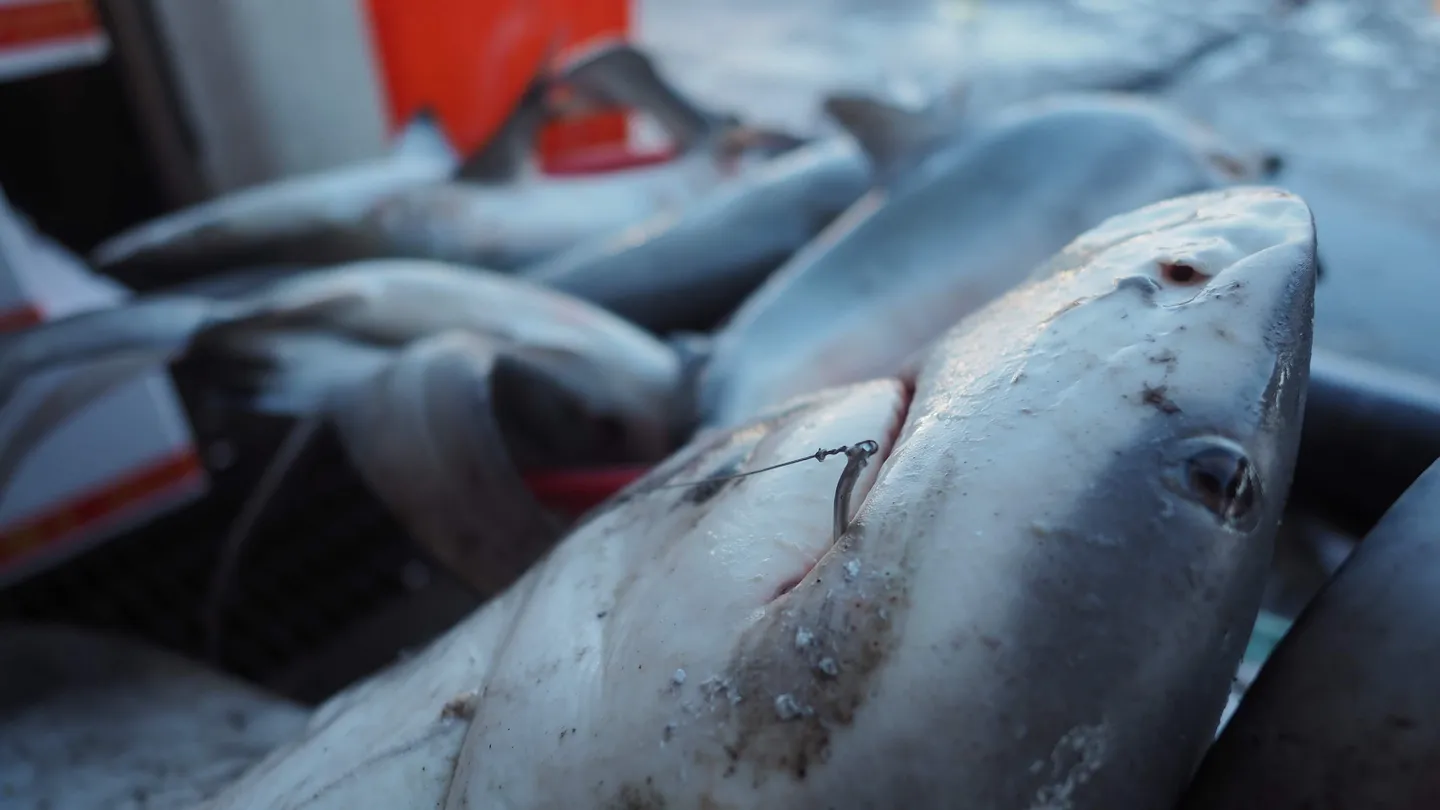
Bycatch is the primary reason sharks and other species beloved by divers end up accidentally caught.
Species-Specific Fishing Regulations and Protected Species Designations:
Oceans cover 70% of the Earth's surface and harbor an extraordinary diversity of marine life. Researching individual species thoroughly enough to establish fishing regulations is an enormous undertaking. Taiwan has few marine research institutions, and the resources required far exceed those needed for terrestrial species surveys. Given that all legislation must be grounded in clear, documented research findings, it is an undeniable fact that Taiwan's marine species fishing regulations lag significantly behind international standards. At the time of writing, Taiwan has no specific fishing regulations in place for sharks, manta rays, or even mola mola/ sunfish — all species that divers consider icons — let alone any framework for designating them as protected species in line with international norms.
But even if species-specific regulations were enacted, whether they could be effectively enforced is one question — and in a world where the bycatch problem remains unresolved, would sharks and manta rays simply stop being caught by fishermen? Under a law prohibiting the landing of these species, fishermen would have no choice but to throw them back overboard — because as long as they never make it to port, divers won't see them, the media won't see them, and there will be no controversy.
So What Can We Do?
Must this silent tragedy really play out every single day in Taiwan's fishing harbors with no end in sight? Brother Ye believes that the key is not fishing methods (referring to those operating under a legally issued government fishing license), but rather a question of zoning. If the government is willing to designate more no-take zones and enforce them rigorously, marine ecosystems will have a chance to recover. As Brother Ye put it: "No fishing inside protected zones; outside those zones, as long as you don't catch protected species, it's a lawful act of fishing — and fishermen fishing is the most natural thing in the world." He also urged divers not to keep measuring fishermen against our own values. Divers today believe sharks and manta rays have value as wildlife to observe, because we dive and get to see them. But before scuba diving was ever invented, everyone — divers included — would have thought of sharks and manta rays the same way fishermen do: as food. It's a matter of perspective.
If you truly care about what this means for the ocean, consider spending some time following these issues over the long term — such as supporting NGO organizations, joining petition drives and advocacy campaigns, urging the government to introduce relevant regulations, or simply sharing these ideas with the people around you. All of that is far more constructive than raging at each other online and deepening the divide between two communities.
Further reading:
- Liberty Times — Penghu fishing vessel catches thousand-jin manta ray; county government and council rush to release it overnight
- The News Lens — A rare manta ray caught by trawl sparks "bidding" controversy: the problem lies in Taiwan's regulations
- Ocean Citizens Foundation — [On Manta Rays — Captain Interview]
- Manta ray proposed for protected species listing; catch ban possible as early as August
- Seeing manta rays abroad brings high value — so why do Taiwan's fishermen catch and sell them? A change of perspective gives you a fuller understanding of fisheries policy