Contents(10)
- When it comes to marine shells, the simplest and most common beginner-friendly classification breaks them into three types:
- Shell Type 1: Univalves (cowries, murex, conch…)
- Shell Type 2: Bivalves (clams, giant clams, freshwater clams…)
- Shell Type 3: Those that are neither univalves nor bivalves (Polyplacophora, Scaphopoda, Cephalopoda…)
- Five Common Shell Types
- 1. Family Haliotidae ※ Flat shell, wide aperture
- 2. Family Trochidae ※ Pointed top shell, oval aperture
- 3. Family Cypraeidae ※ Egg-shaped shell, narrow slit aperture
- 4. Family Conidae ※ Elongated shell, narrow elongated aperture
- 5. Family Neritidae ※ Round shell, half-moon aperture
If humans went extinct, it would probably be insects and snails that ruled the Earth.
In the animal kingdom, arthropods make up the most species, and mollusks come in second.
And shells, for the most part, refer to "the exoskeletons of mollusks."
Living in Taiwan, we are fortunate to be able to begin exploring the ocean through these shells.
-
When you think of "shells," what's the first word that comes to mind?
Hermit crabs? Sea snails? Ocean waves? Sandy beaches? Grandma's Penghu Bay?
As islanders, we've all encountered shells of all shapes and sizes on the beach.
The shells we most commonly find on the beach can be simply understood as:
"The skeleton of a sea snail after it has died, before it has been decomposed." Easy enough, right?
(Shells absolutely do NOT grow out of a hermit crab's back!)
We can also broadly divide shells into four categories:
-
Those that crawl on land — land shells
-
Those that crawl in the sea — marine shells
-
Those that crawl in freshwater — freshwater shells
-
Those that crawl in saltwater — saltwater shells
This series of articles will mainly focus on "marine shells." Let's get to know these beautiful creatures together!
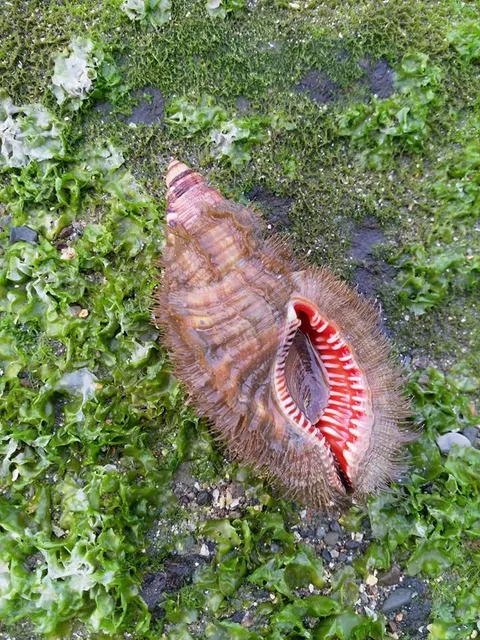
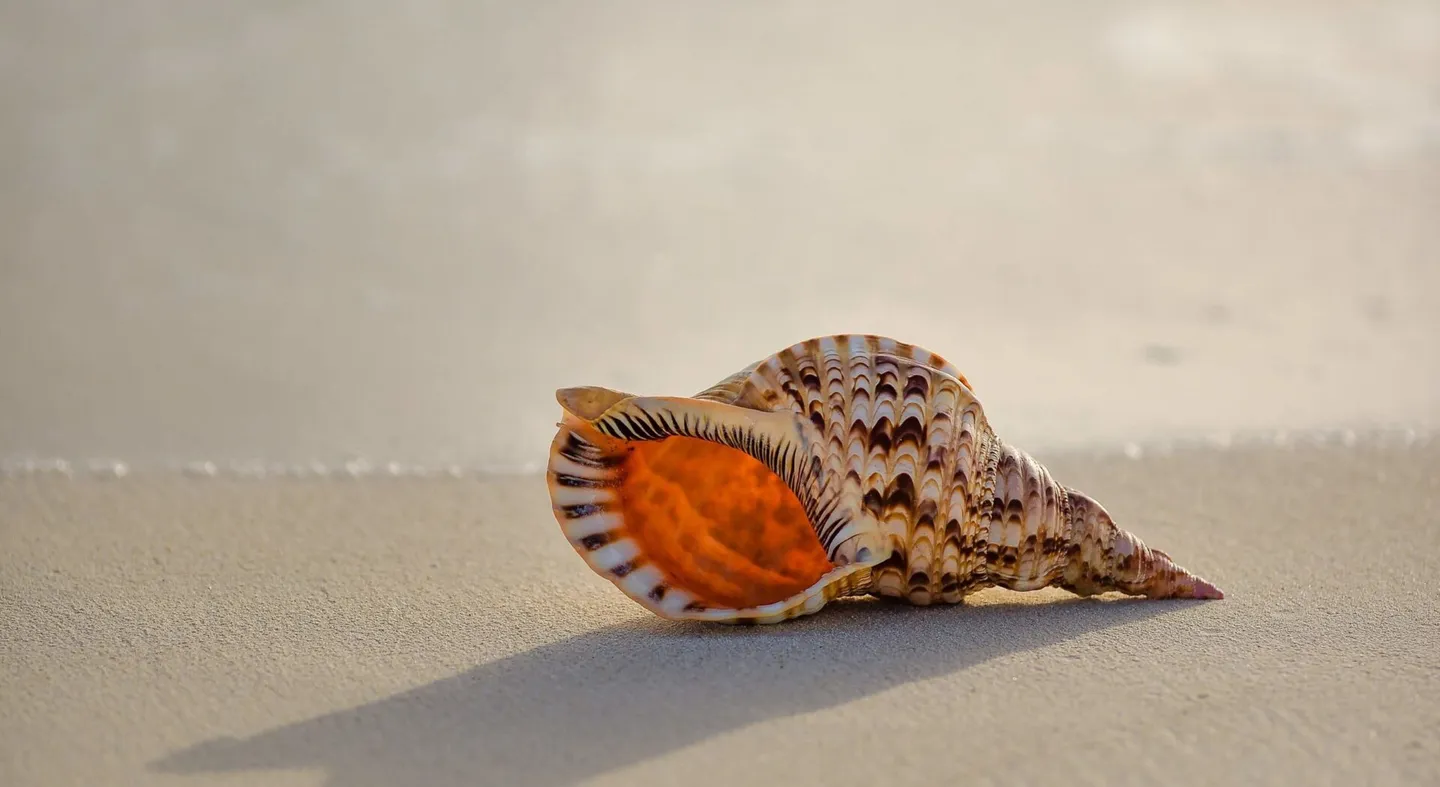
Pictured: Hairy triton, from the intertidal zone of Keelung
-
When it comes to marine shells, the simplest and most common beginner-friendly classification breaks them into three types:
Shell Type 1: Univalves (cowries, murex, conch…)
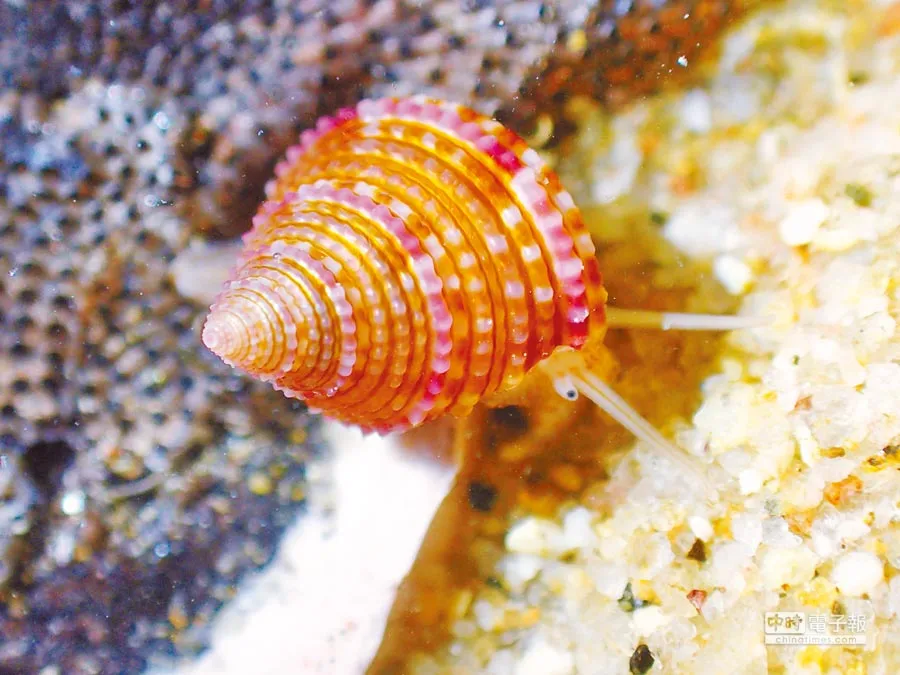
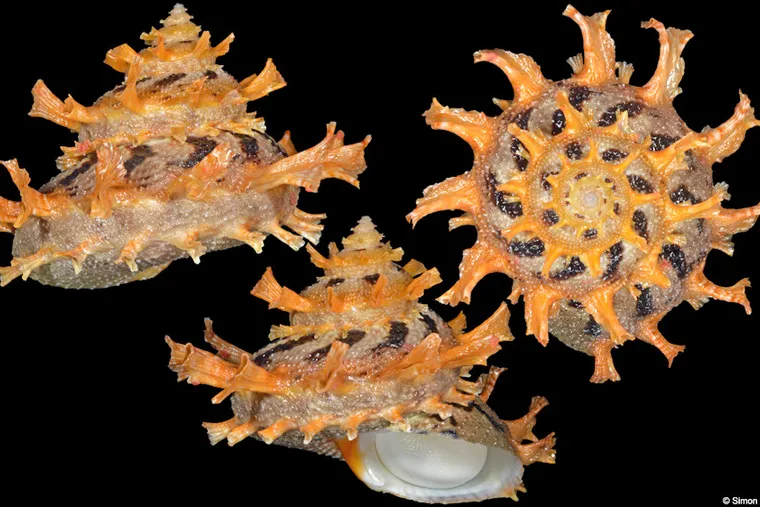
(Pictured: New species discovered in 2016 — Kinmen top shell) (Image source: China Times)
Shell Type 2: Bivalves (clams, giant clams, freshwater clams…)
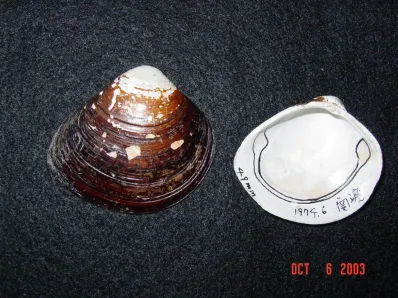
Pictured: Taiwan's extinct native species — the large freshwater clam (Image source: Teacher Ruilin's Chinese Language Teaching Resource Page)
Shell Type 3: Those that are neither univalves nor bivalves (Polyplacophora, Scaphopoda, Cephalopoda…)
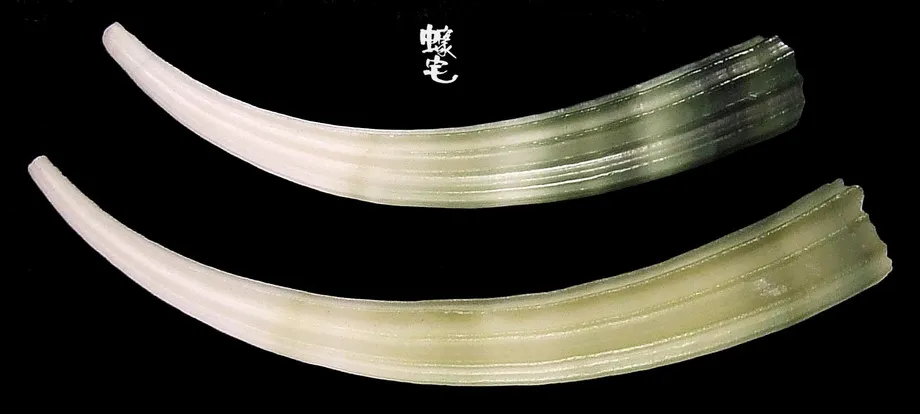
Pictured: Green tusk shell (Image source: Háozháo Shell Studio)
※ Quick reference: Polyplacophora = "chitons," Scaphopoda = "tusk shells," Cephalopoda = "nautiluses, octopuses"
-
Hopefully you're starting to get a feel for marine shells!
To help everyone begin identifying shells along the shore more quickly,
we need to narrow down the scope of classification.
Upcoming articles will focus primarily on the univalve class "Gastropoda."
Q: How do you tell if a shell is a gastropod?
A: Exclude bivalves (Bivalvia), chitons, tusk shells, and nautiluses — over 90% of the remaining shells belong to Gastropoda.
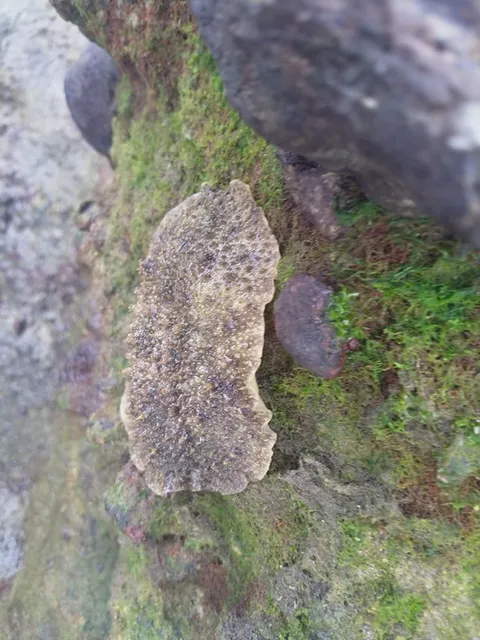
Pictured: Sea slug (Onchidium), also part of Gastropoda but with no exoskeleton (no shell) — somewhat analogous to a land slug
-
Within the "Gastropoda" branch, we'll skip over the more complex classification levels of subclass, order, and superfamily for now.
The upcoming articles will focus on classification at the "Family" level — a particularly important tier.
It is highly recommended that when identifying shells, you start with "confirming the Family as the first step in identification."
Many field guides launch straight into "such-and-such family… habitat… distinguishing features…," which leaves beginners immediately lost in a daze of "Who am I? Where am I? What am I doing?"
The author hopes to offer a simpler, more intuitive approach to help everyone get started with shell identification.


Five Common Shell Types
Before we begin, please familiarize yourself with the following five common shells. We will use the characteristics of these five shells as a jumping-off point to gradually introduce more different families:
1. Family Haliotidae ※ Flat shell, wide aperture
Haliotidae are commonly known as abalone. Among them, the nine-hole abalone (Haliotis diversicolor) is a widely consumed species in Taiwan.
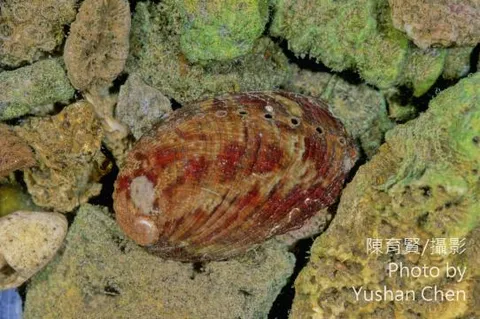
Pictured: Nine-hole abalone (Image source: Encyclopedia of Life in Taiwan)
-
2. Family Trochidae ※ Pointed top shell, oval aperture
Top shells are very common and are often polished to reveal the silvery iridescent layer beneath.
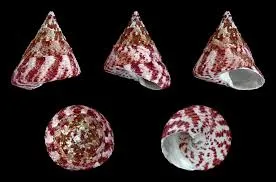
Pictured: Red-spotted top shell (Image source: Wikipedia)
-
3. Family Cypraeidae ※ Egg-shaped shell, narrow slit aperture
Easy to identify by shape and undeniably charming — cowries consistently rank as the most popular shell type. Upcoming articles will introduce cowries first.
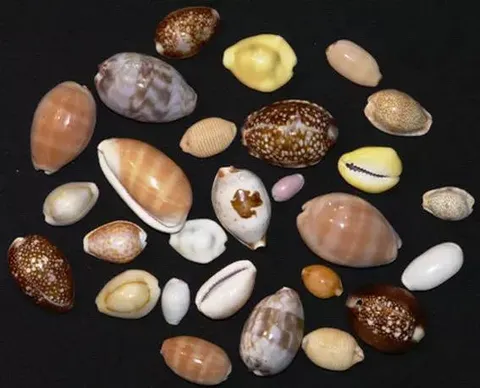
Pictured: Various common cowries (Image source: online)
-
4. Family Conidae ※ Elongated shell, narrow elongated aperture
Cone snails use a neurotoxin-bearing radula (tooth) to capture prey — handle with extreme care if encountered.
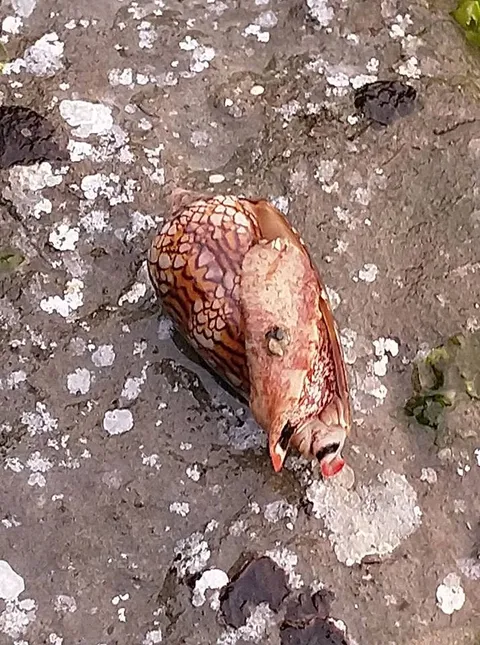
Pictured: Textile cone snail (Conus textile), from the intertidal zone of Keelung — carries potent neurotoxin
-
5. Family Neritidae ※ Round shell, half-moon aperture
This family spans land, freshwater, and marine species — a remarkably resilient group. Some species display highly variable shell patterns.
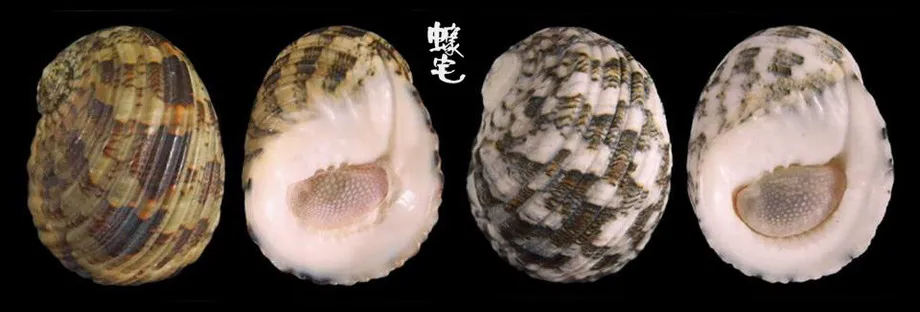
Pictured: Large nerite (Image source: Háozháo Shell Studio)
-
We've now taken a brief look at the shapes of these five shells: abalone, top shell, cowrie, cone snail, and nerite.
They can be broadly categorized into five shell forms: flat, pointed, oval, elongated, and round.
And by aperture type: wide, round, slit, narrow, and half-moon.
This classification system is not a hard rule, but it helps newcomers begin to identify shells.
In the next installment, we'll introduce families with shell shapes similar to these five, gradually building on what we've learned.
For those who haven't yet memorized these five shells — try searching the keywords in Google Images, e.g., top shell, cone snail.
The more images you look at, the easier identification becomes!
Cover image: Photo by Javardh on Unsplash
Further reading:
-
Marine Shell Identification Part 2 – Tips for Family-Level Identification
-
Marine Shell Identification Part 3 – A Key to the World of Shells: 26 Family Classifications
[wbcr_text_snippet id="7373"]