Contents(8)
Shells should be regarded as museum specimens, worthy of careful exploration.
Shells are far more fascinating than we might imagine.
Some fire venomous darts to catch fish; some coexist inside a shark's stomach.
Some carry fragments of gravel as a defence; some wander between land and sea.
Right there beneath that vast blue ocean, they wait for us to discover them.
Identifying Features of Shell Families
Last time we introduced five types of shells:
Abalone, limpets, cowries, cone shells, and nerites
(High-end New Year delicacy, triangular rock, money cowrie, inverted triangle, little stone)
This time we'll branch out from those five as our starting point.
To help the key features stand out, the author has sketched a simplified overview of each family's appearance.
Building on the foundations from the previous instalment, let's gradually get to know each family!
(Wherever you see a * symbol in the text, please refer to the glossary at the end of the article.)
Shells: Abalone, Limpets, and Fissurellidae
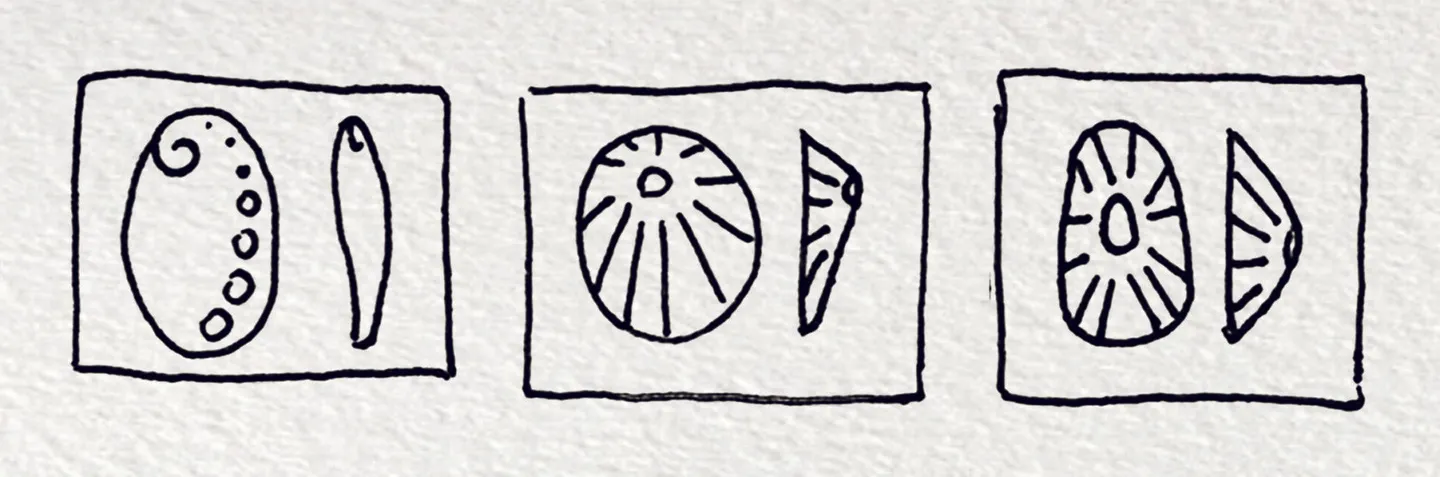
Tips for identifying shell families – flat shell shape and broad foot
All three share the same characteristics: flat shell shape and broad *foot
Whenever you encounter a shell with these features, these three families should be your first consideration.
(The cap-shaped gastropods can be further subdivided into Patellidae, Nacellidae, Lottiidae, Neoloricata, and others — for now we'll refer to them collectively as limpets.)
Interestingly, a study was once published (in Shellholic Journal, Volume 22) comparing limpet populations from abalone farms versus those in the wild, measuring the ratio of shell width to shell height.
The findings showed that the higher the wave energy, the taller the average limpet shell (more muscular tissue inside); in calmer waters, the shells tended to be flatter (less muscle).
The lesson? If you don't want to be swept away by the waves, you'd better start building some muscle!
Here are some common species names to help you find images for comparison:
.Haliotidae: Disk abalone Haliotis diversicolor (Reeve, 1846)
.Patellidae: Star limpet Scutellastra flexuosa (Quoy & Gaimard, 1834)
.Nacellidae: Cellana limpet Cellana toreuma (Reeve, 1854)
.Fissurellidae: Keyhole limpet Diodora suprapunicea (Otuka, 1937)
※ Fissurellidae are also known as keyhole limpets; members of this family commonly have an apical hole in the shell. The image below shows a species from this family that lacks the hole (the duck-bill limpet, Scutus).
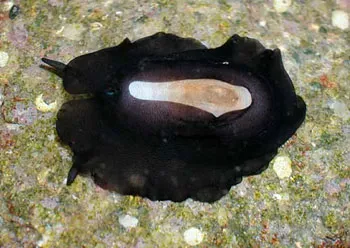
Illustrated: Scutus antipodes (duck-bill limpet), commonly found in Taiwan's intertidal zone. Its jet-black mantle has given quite a fright to many people. (Image source: Blue Zoology)
Shells: Trochidae, Turbinidae, and Angariidae
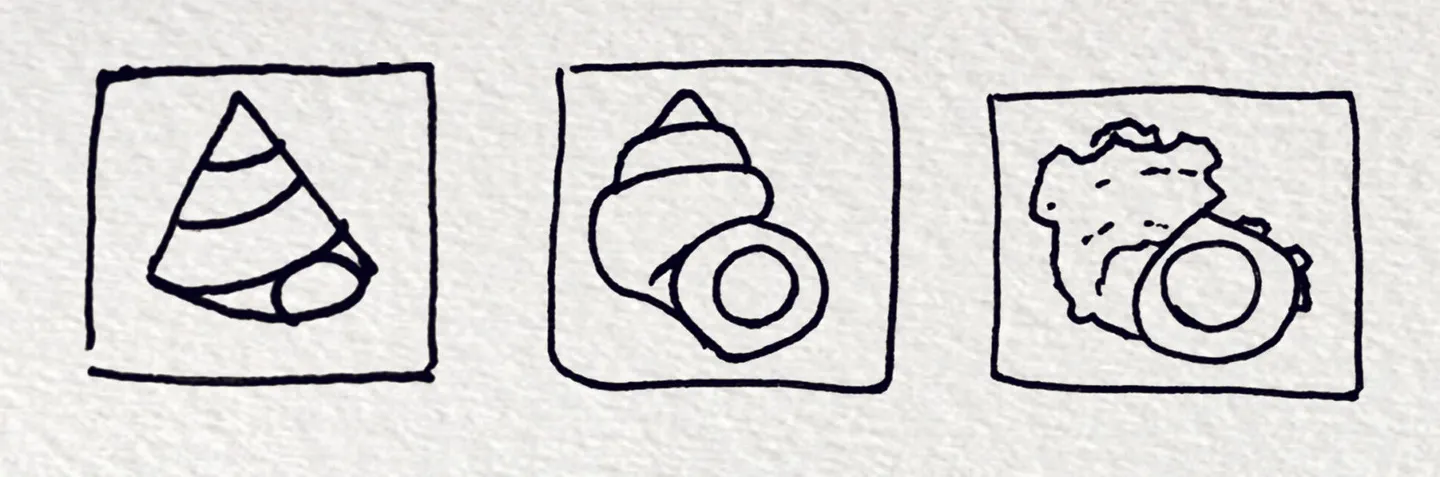
Tips for identifying shell families – oval aperture, generally low *spire
All good brothers within the superfamily Trochoidea, they share the same traits: oval aperture and generally low *spire
Many shells have oval apertures, but when you encounter one that can almost be drawn as a triangle, these three families are worth considering.
It is worth mentioning that the *operculum of Turbinidae is one of the thickest in the entire world of shells.
Viewed on its own, you might even wonder if it's some entirely different kind of shell.
When I was young, I occasionally came across these on the beach but had no idea what they were.
The moment I looked it up in a book and finally realised it was an operculum, I couldn't help but exclaim, "Oh! So that's what it is!" — and I'm sure many of you will share the same reaction.
Here are some common species names to help you find images for comparison:
.Trochidae: Top shell Tectus conus (Gmelin, 1791)
.Turbinidae: Silver-mouthed turban Turbo argyrostomus (Linnaeus, 1758)
.Angariidae: Delphinula Angaria delphinus (Linnaeus, 1758)
※ Both Turbinidae and Angariidae include quite a few species with long spines. If you're interested, look up two species in particular: Angaria melanacantha and Angaria neglecta.
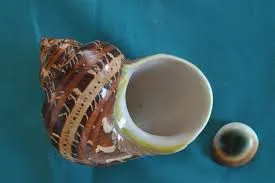
Illustrated: Cat's eye turban snail. The eye-like object on the right is the operculum. (Image source: National Taiwan Ocean University)
Shells: Cowries, Ovulidae, and Triviidae
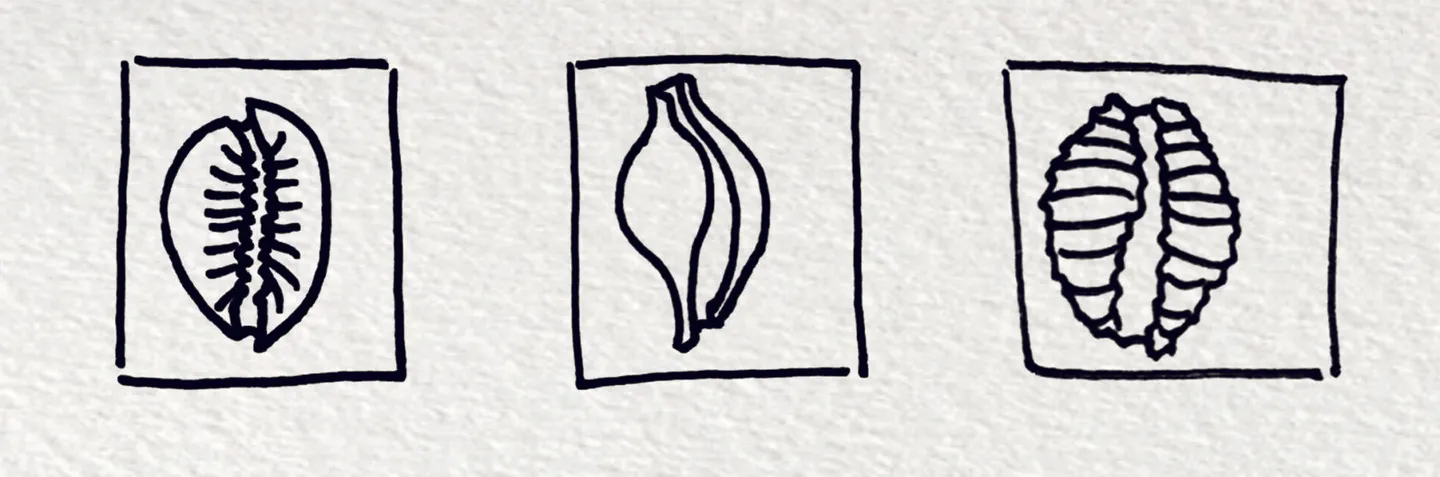
Tips for identifying shell families – spire barely visible, slit along the base
All three belong to the superfamily Cypraeoidea, and their shared characteristics are: spire barely visible and a slit along the base
(Cowries in which the spire is visible will be introduced later.)
Compared with other families, the cowrie group has such distinctive features that identification is quite straightforward.
All members of the cowrie group have a prominent *mantle, which means that photographing a live animal underwater and examining an empty shell on land result in two completely different appearances (rather like someone wearing a coat and sunglasses — completely unrecognisable).
A special mention goes to the Ovulidae: their shell shape is the most variable of the three families,
ranging from the spear-like Habe's egg shell (Volva habei) and the alien-esque Emperor Ovula (Rotaovula hirohitoi),
to the Flamingo tongue snail (Jenneria pustulata), which is often mistaken for a cowrie…
Their rebelliously diverse appearances make them a charming yet confounding villain for newcomers to the hobby.
Here are some common species names to help you find images for comparison:
.Cypraeidae: Serpent's-head cowrie Monetaria caputserpentis (Linnaeus, 1758)
.Ovulidae: Adamson's ovula Pseudocypraea adamsonii (Gray, 1832)
.Triviidae: Rice trivia Trivirostra oryza (Lamarck, 1810)
※ When the back of the serpent's-head cowrie is eroded and polished away, the underlying purple colour is revealed — this does not make it a different species!
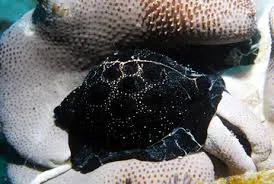
Illustrated: Ovula ovum (egg cowrie). Quite a striking mantle, isn't it? The white shell surface is almost entirely hidden. (Image source: OceanTag)
Shells: Cone Shells, Strombidae, and Ficidae
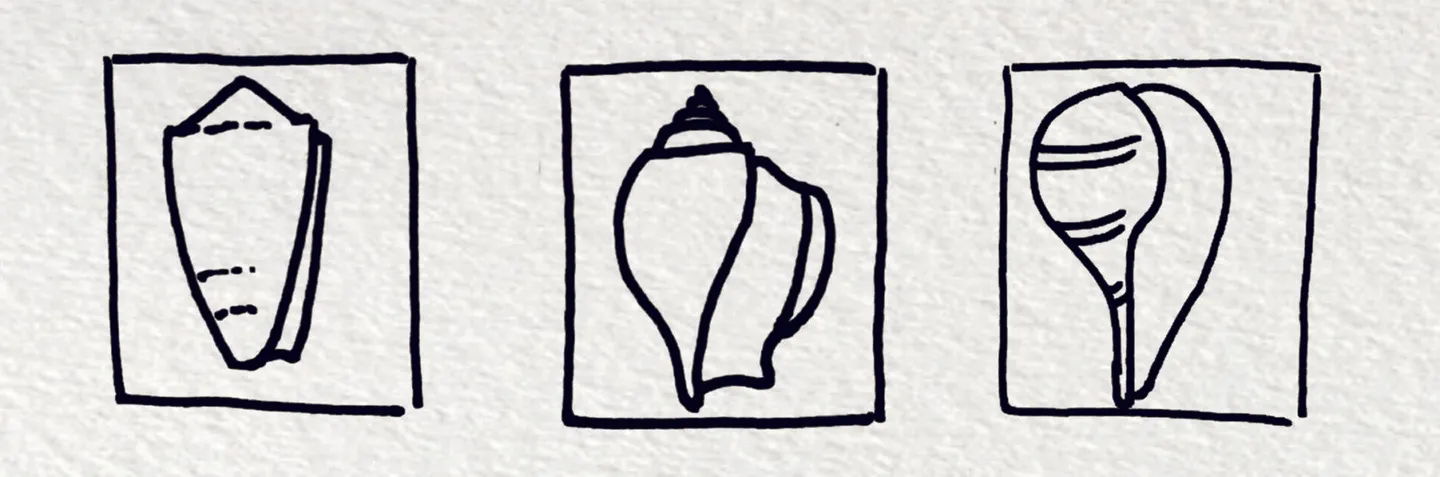
Tips for identifying shell families – narrow elongated aperture, aperture along the side
These three are not closely related, but in terms of appearance they all share: a narrow elongated aperture and an aperture positioned along the side
Cone shells use venomous darts to prey on small fish — never touch one with your bare hands if you encounter one at the beach!
There is much more to say about cone shells, but in terms of physical identification features it's important to draw attention to the Strombidae.
Strombids are not difficult to identify: examine the *outer lip beside the *siphonal canal carefully,
and you will usually find what is called the "stromboid notch" — a groove through which the strombid extends its eye.
It peers out at you from inside the shell like a single eyeball on a stalk; staring back at it intently can be quite startling.
Within Strombidae, four names deserve special attention because they look nothing like a typical stromb:
"Spider conch, scorpion conch, camel conch, and water conch" (the same applies to any XX spider conch variants)
Additionally, the Terebellum conch and the missile shell, which were formerly classified under Strombidae, have since been given their own families, though they still fall under the superfamily Stromboidea.
Here are some common species names to help you find images for comparison:
.Conidae: Textile cone Conus textile (Linnaeus, 1758)
.Strombidae: Little vase stromb Strombus microurceus (Kira, 1959)
.Ficidae: Fig shell Ficus ficus (Linnaeus, 1758)
※ In some strombid species the stromboid notch is less pronounced, but a slight indentation is still present unless the aperture is excessively worn.
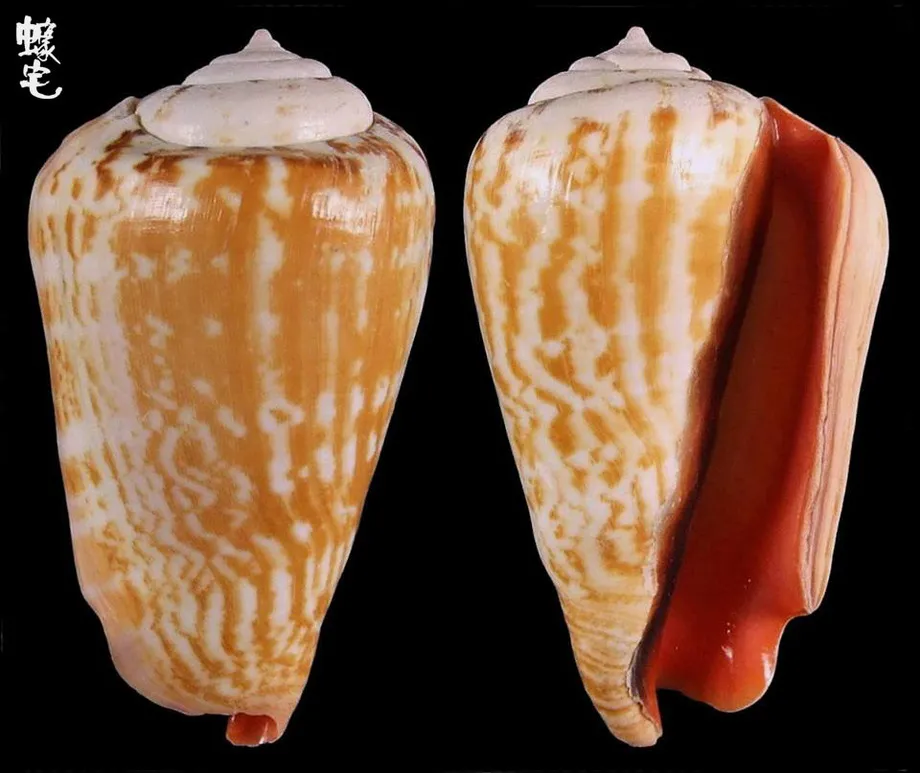
Illustrated: Rosy stromb. Doesn't it look just like a cone shell? (Image source: Oyster House Shell Studio)
Shells: Nerites and Moon Snails
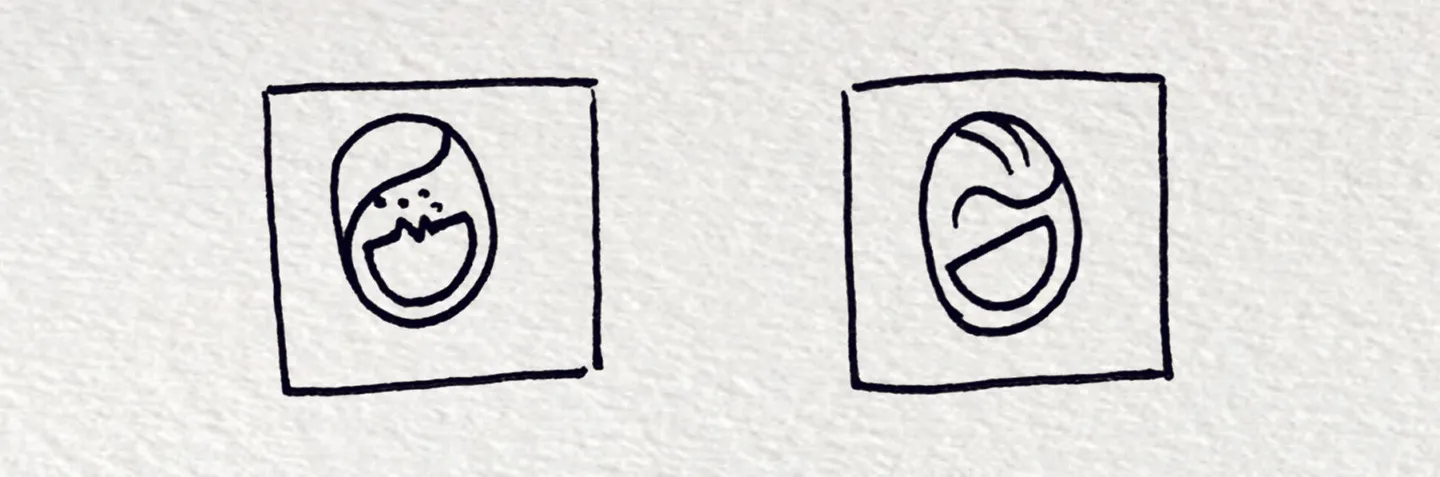
Tips for identifying shell families – round shell, semicircular aperture
These two shell types are also not easily confused with others; their characteristics are: round shell and semicircular aperture
Nerites and moon snails are actually easy to tell apart: nerites are always harder than moon snails, and the nerite's *callus covers a larger area.
Nerites are fascinating creatures — they hide under sand or rocks during the day,
then swarm onto rocks at midnight to bask in moonlight (actually to feed).
Relatives within Neritidae venture both up into the mountains and down to the sea, with some even living in freshwater rivers — such as the freshwater nerite and the wall nerite.
(The wall nerite bears a slight resemblance to the limpet family, though the former lives in freshwater.)
It is also worth noting that Taiwan is home to a remarkably diverse range of nerite species by global standards —
though in recent years land development and habitat destruction have taken their toll… a real shame.
Here are some common species names to help you find images for comparison:
.Neritidae: Ox-palate nerite Nerita albicilla (Linnaeus, 1758)
.Naticidae: Moon snail Natica gualteriana (Recluz, 1844)
※ Many nerite species show considerable colour variation in their shells; using the callus for identification is more reliable.
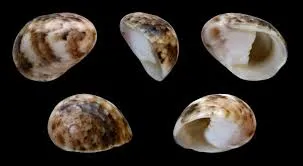
Illustrated: Nerita plicata (plicate nerite), typically active in the intertidal zone at midnight. (Image source: Wikipedia)


Four Slightly More Complex Shell Groups:
Tonnoidea (Tonnidae, Bursidae, Cymatiidae, Cassidae)
Muricoidea (Muricidae)
Buccinoidea (Buccinidae, Fasciolariidae, Melongenidae)
Olivoidea group (Olividae, Mitridae, Volutomitridae, Volutidae)
Next time, we'll begin exploring these four somewhat more complex groups one by one.
Shell Glossary:
Foot: The muscular organ used for locomotion in gastropod species — think of it as a beer belly that crawls forward.
Spire: Most gastropods grow in a spiral, secreting shell material as they grow and forming a tower-like structure called the spire. Many spires feature ridges, spines, and axial or spiral ribs.
Callus: Taking the nerite as an example, the area adjacent to the aperture on one side features a smooth, glossy patch — sometimes with granules — which is one of the key diagnostic features for nerite identification.
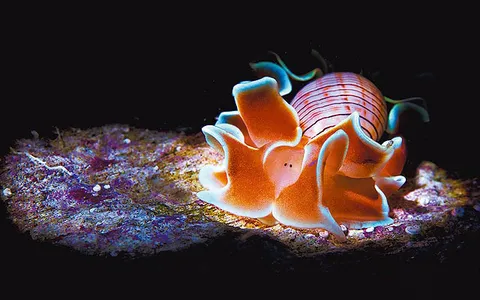
(Cover image: Hydatina physis, rosy bubble shell) (Image source: Apple Daily)
[wbcr_text_snippet id="7373"]
Further reading: