Contents(8)
- Shell Field Guide Step 1: "Flat shell, wide aperture"
- Shell Field Guide Step 2: "Tower-shaped shell, oval aperture"
- Shell Field Guide Step 3: "Egg-shaped shell, slit aperture"
- Shell Field Guide Step 4: "Elongated shell, elongated aperture"
- Shell Field Guide Step 5: "Round shell, half-moon aperture"
- Shell Field Guide Step 6: Advanced (see Episode 3: Marine Shell Identification Part 3 – A Key to Enter the World of Shells: 26 Family Classifications)
- For the remaining four groups, we can set up a simple SOP
- Shell Field Guide Step 7: Step 7
Rather than chasing expensive, well-known shells, learning to recognise the humble, unnamed shells right around you — and making your own field guide — carries far more ecological meaning.
In the previous two episodes we covered 24 of the most common families in the world of shells.
A combined summary is as follows:
1. Abalones, limpets, slit shells (flat shell, wide aperture)
2. Top shells, turban shells, spiny oysters (tower-shaped shell, oval aperture)
3. Cowries, ovulids, cyphaeids (egg-shaped shell, slit aperture)
4. Cone shells, strombids, tibia shells (elongated shell, elongated aperture)
5. Nerites, moon snails (round shell, half-moon aperture)
6. Tun shells, frog shells, tritons, helmets
7. Murex shells
8. Whelks, spindle shells, neptunids
9. Olivids, miters, volutids, volutes
This time the author has prepared a selection of shells commonly found along Taiwan's coast
and will sort them step by step in the order: 1 → 2 → 3 → 4 → 5 → 6 / 7 / 8 / 9
The goal this time is:
"Identifying the family in broad strokes."
-
First, here are today's specimens:
All collected locally in Taiwan — washed up on shores, sold at fishing harbours, found in intertidal zones… from all kinds of sources.
Since we found these shells ourselves, there is no need to worry about accidentally mixing in foreign species (which can't always be guaranteed with purchased shells).
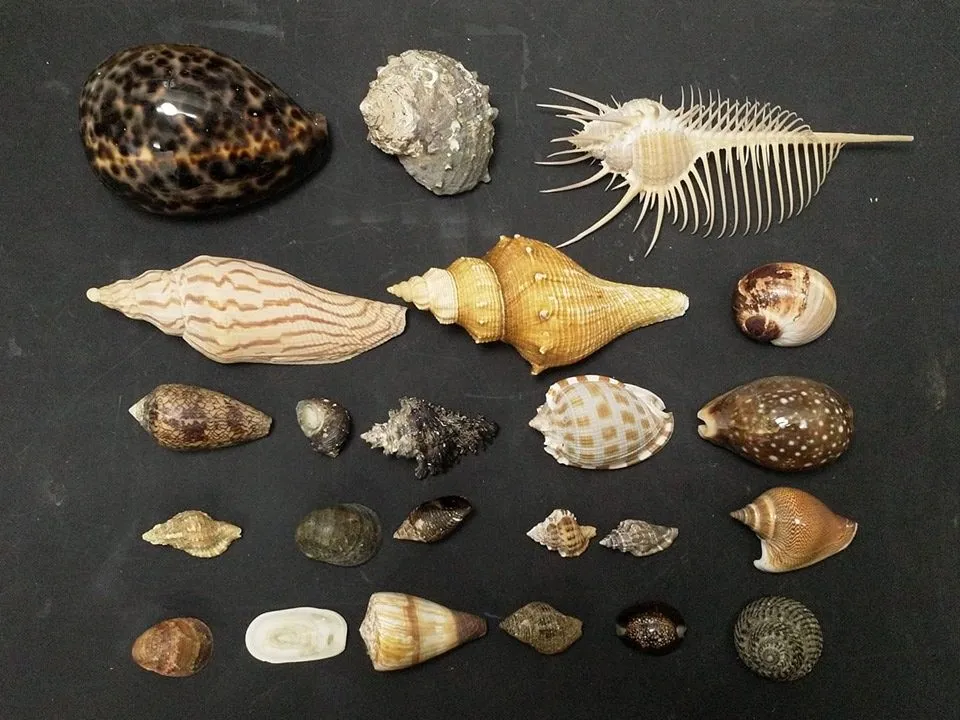
Common shells along Taiwan's coast
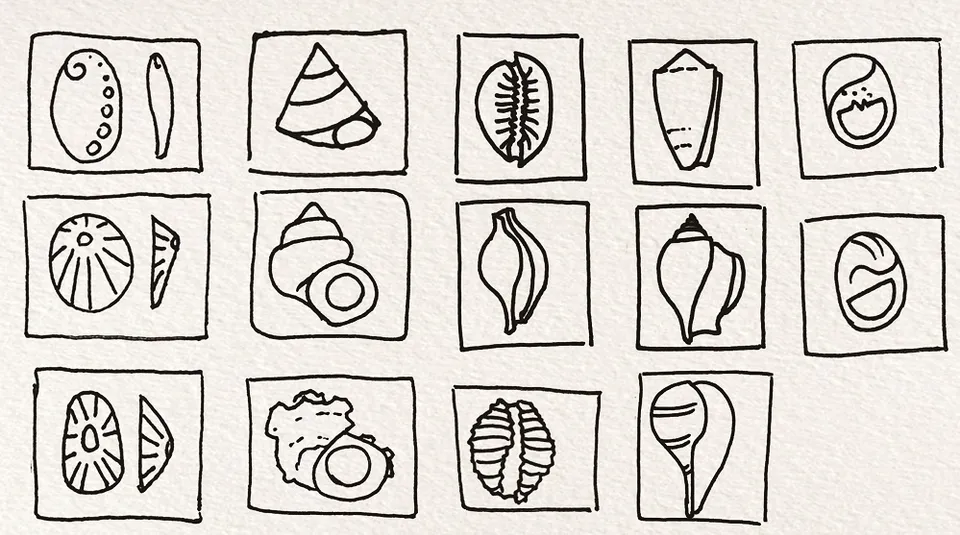
Revisiting the five shell types introduced in Episode 2 (each column represents one type):
Shell Field Guide Step 1: "Flat shell, wide aperture"
Viewed from the side, one white shell is clearly different from its neighbours — we set it apart.
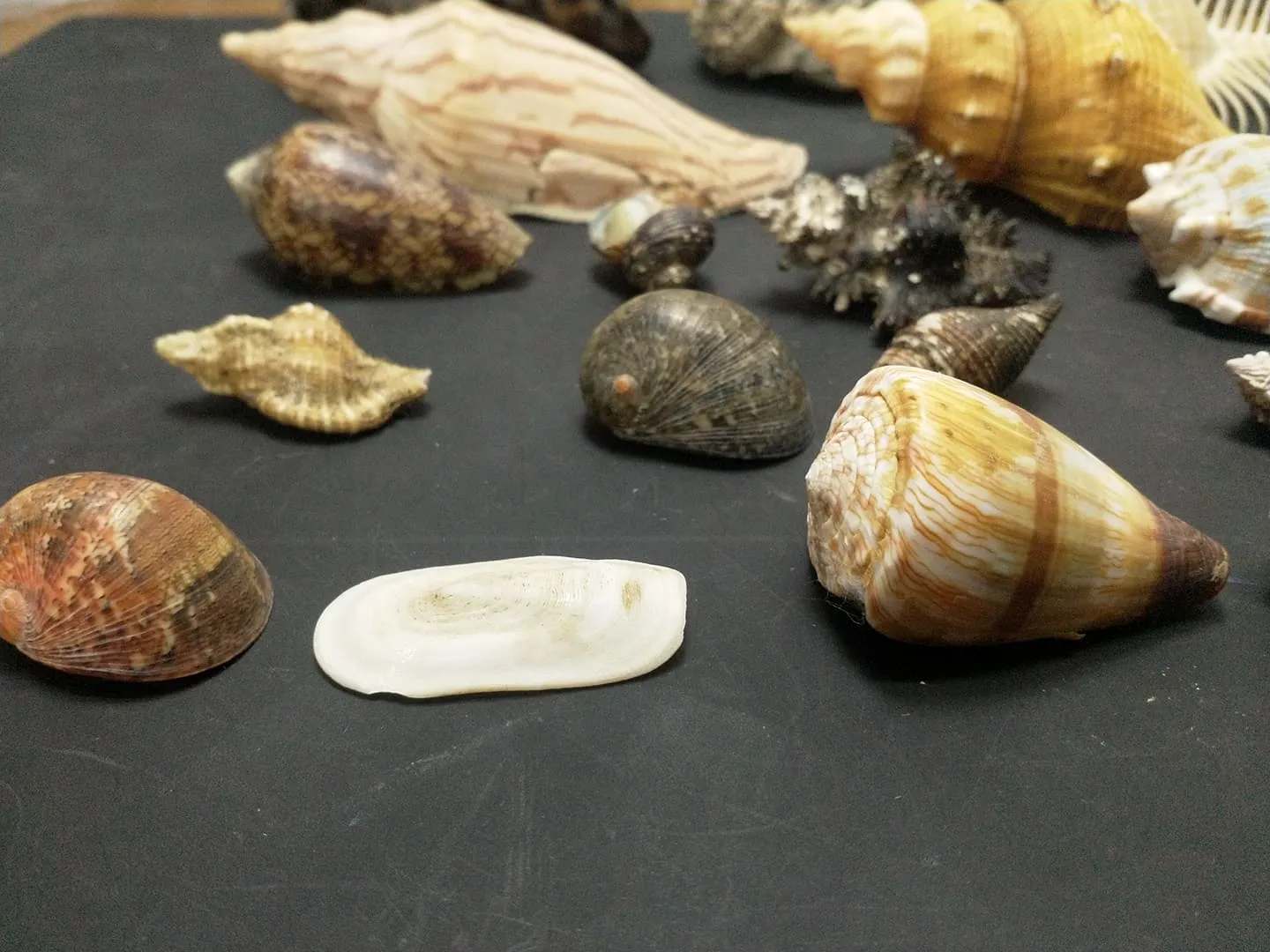
Abalones, limpets, slit shells
This is the easiest group to identify — the first shell type, belonging to (abalones, limpets, slit shells).
There are not many common shells with this characteristic, so we can essentially confirm these three families.
Once you know the broad family, you have a starting point from which to dig up more information.
※ An additional example of the same flat shape added to the upper-left corner: a mosaic limpet (Patella)
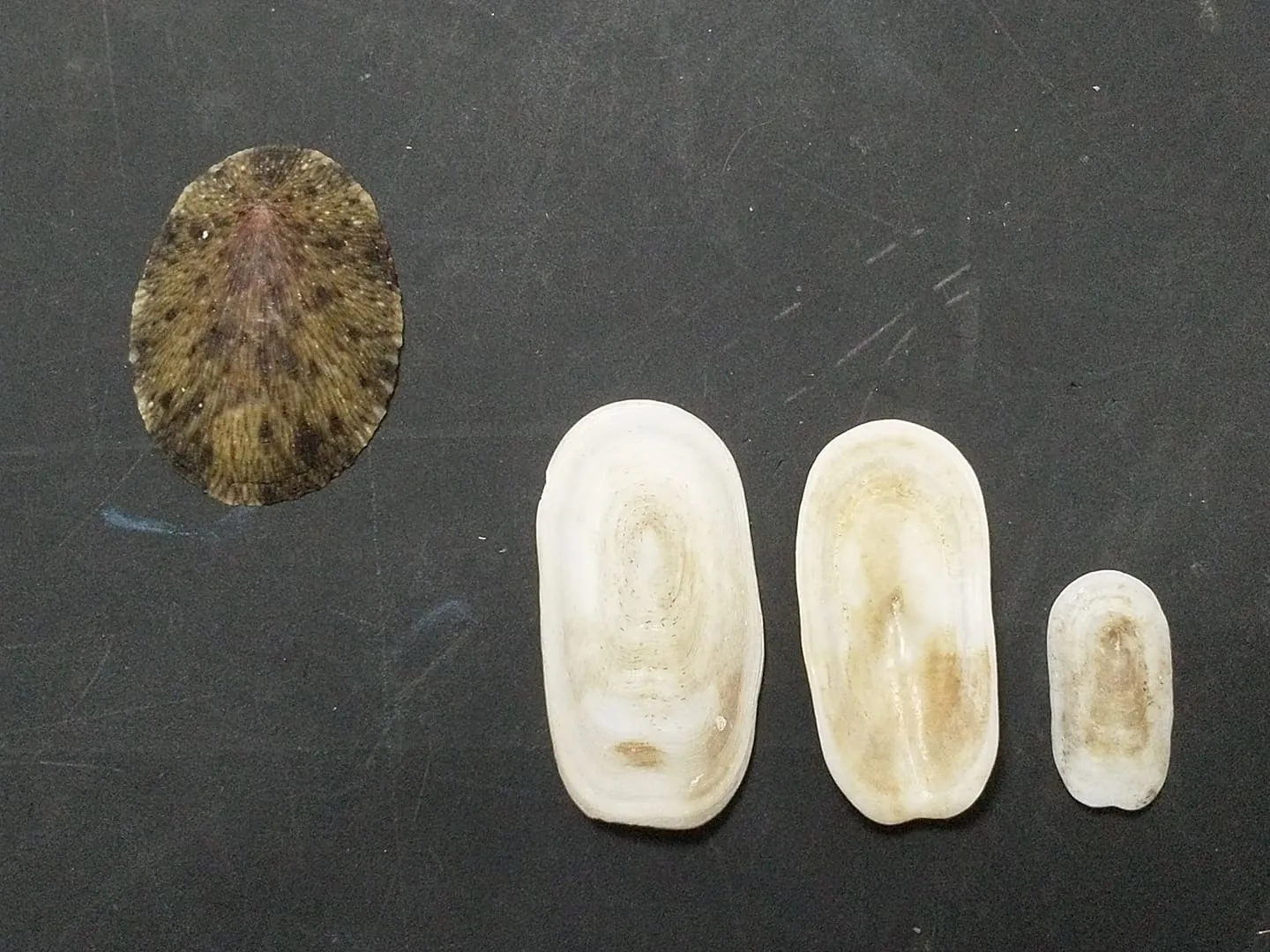
Left: mosaic limpet Right: duck-bill shell ×3
-


Shell Field Guide Step 2: "Tower-shaped shell, oval aperture"
A spire like a triangular pyramid, with an oval aperture.
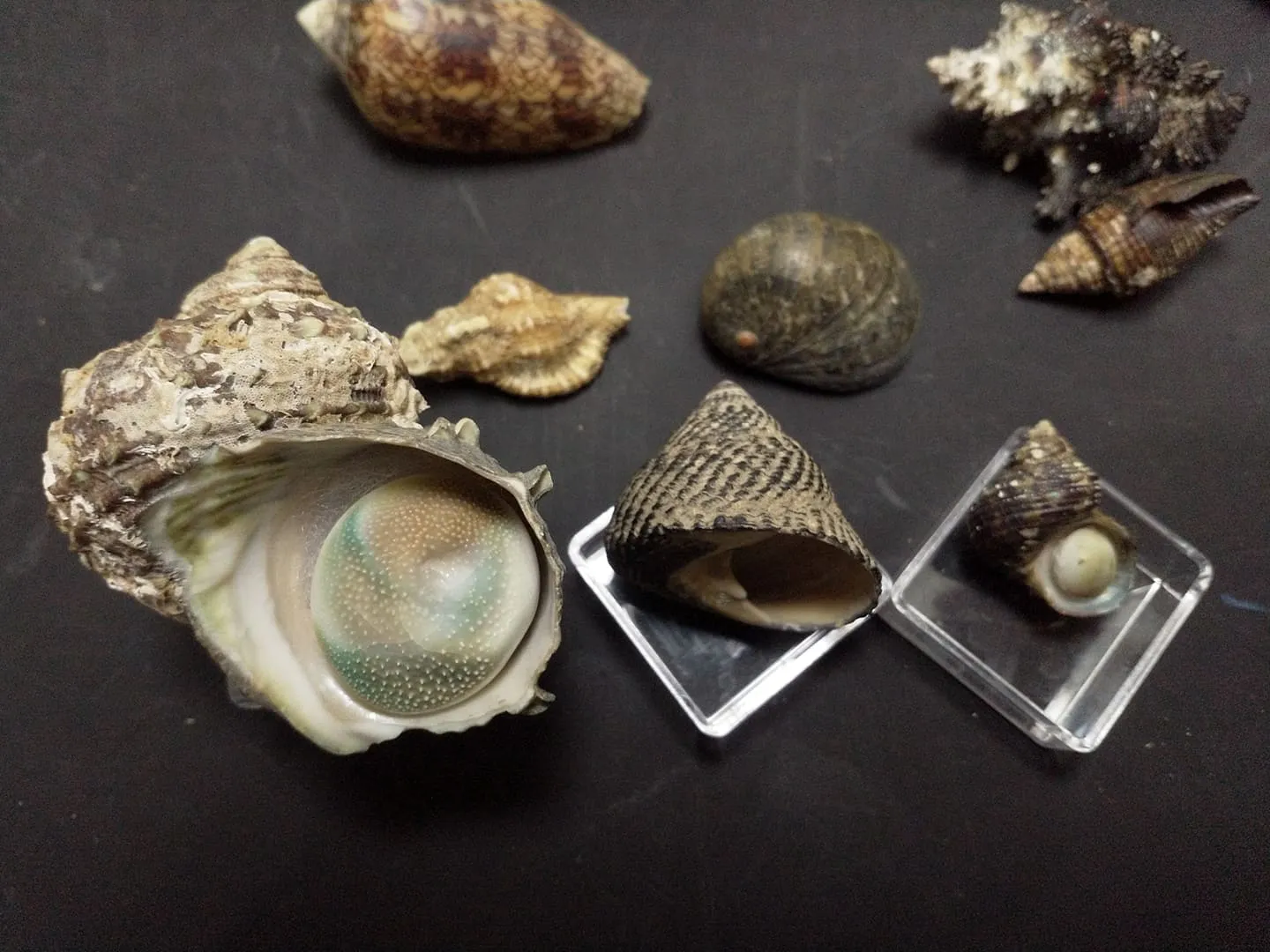
Top shells, turban shells, spiny oysters
Once you have identified the tower-shaped shells, they can broadly be classified as (top shells, turban shells, spiny oysters).
You will notice that the tower-shaped shells actually fall into two sub-types: a triangular overall profile (A), and only the spire being triangular while the body whorl is wider (B).
(Saying "triangular" may sound vague — think of it as the ratio of aperture to spire: the smaller the aperture relative to the spire, the more the whole shell resembles a triangle.)
If the operculum is still present, two additional characteristics can be observed: soft (A) and hard (B).
Common species roughly correspond to: top shells → AA, turban shells → BB, spiny oysters → BA.
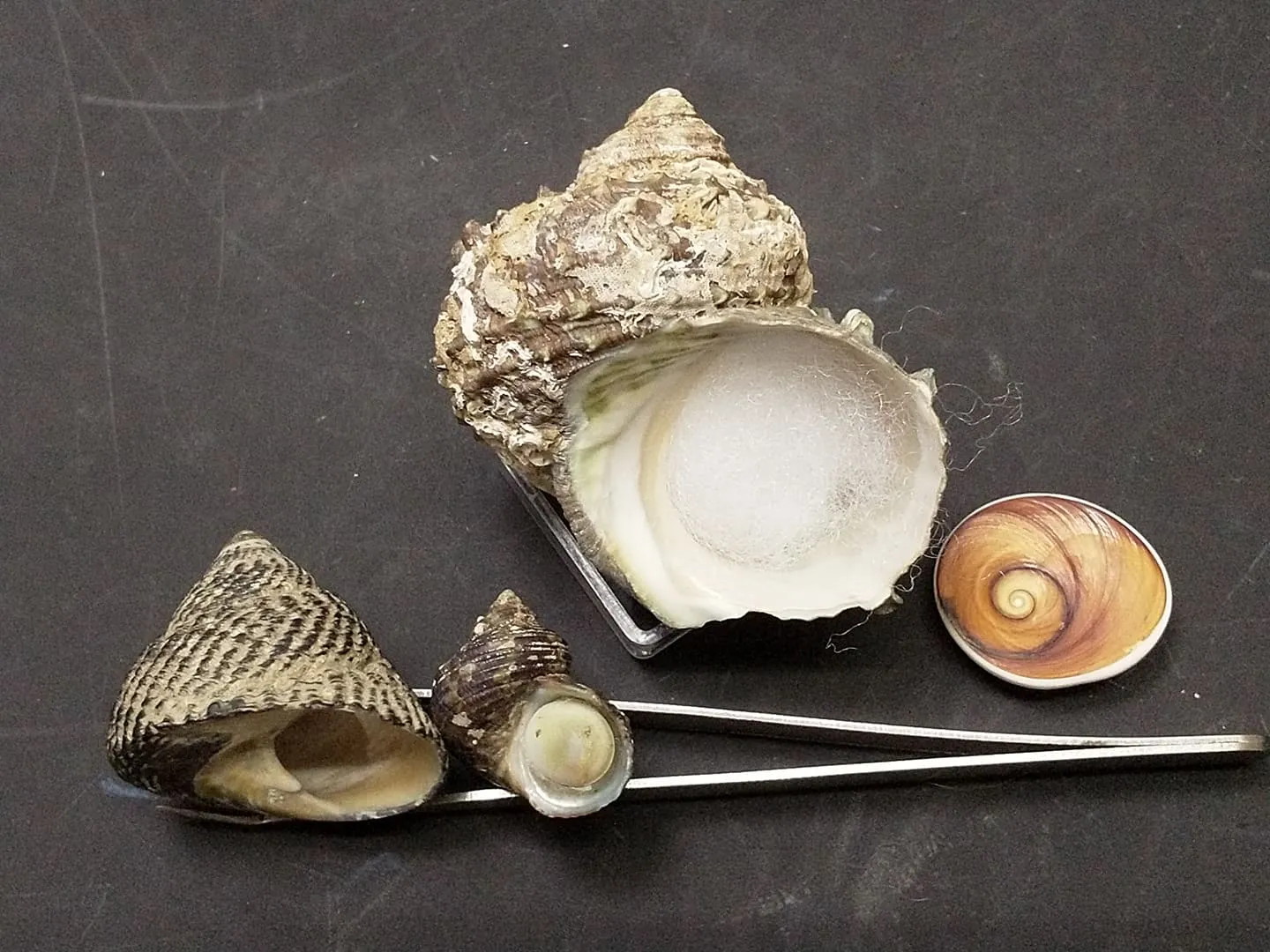
Left: black top shell Centre: high-waisted turban shell Right: Turbo chinensis
Shell Field Guide Step 3: "Egg-shaped shell, slit aperture"
The cowrie — familiar even to people who have never collected shells — is precisely what "egg-shaped shell, slit aperture" means.
So, using that existing mental image, simply pick out anything that looks like a cowrie!
※ Three additional examples added to the top of the image.
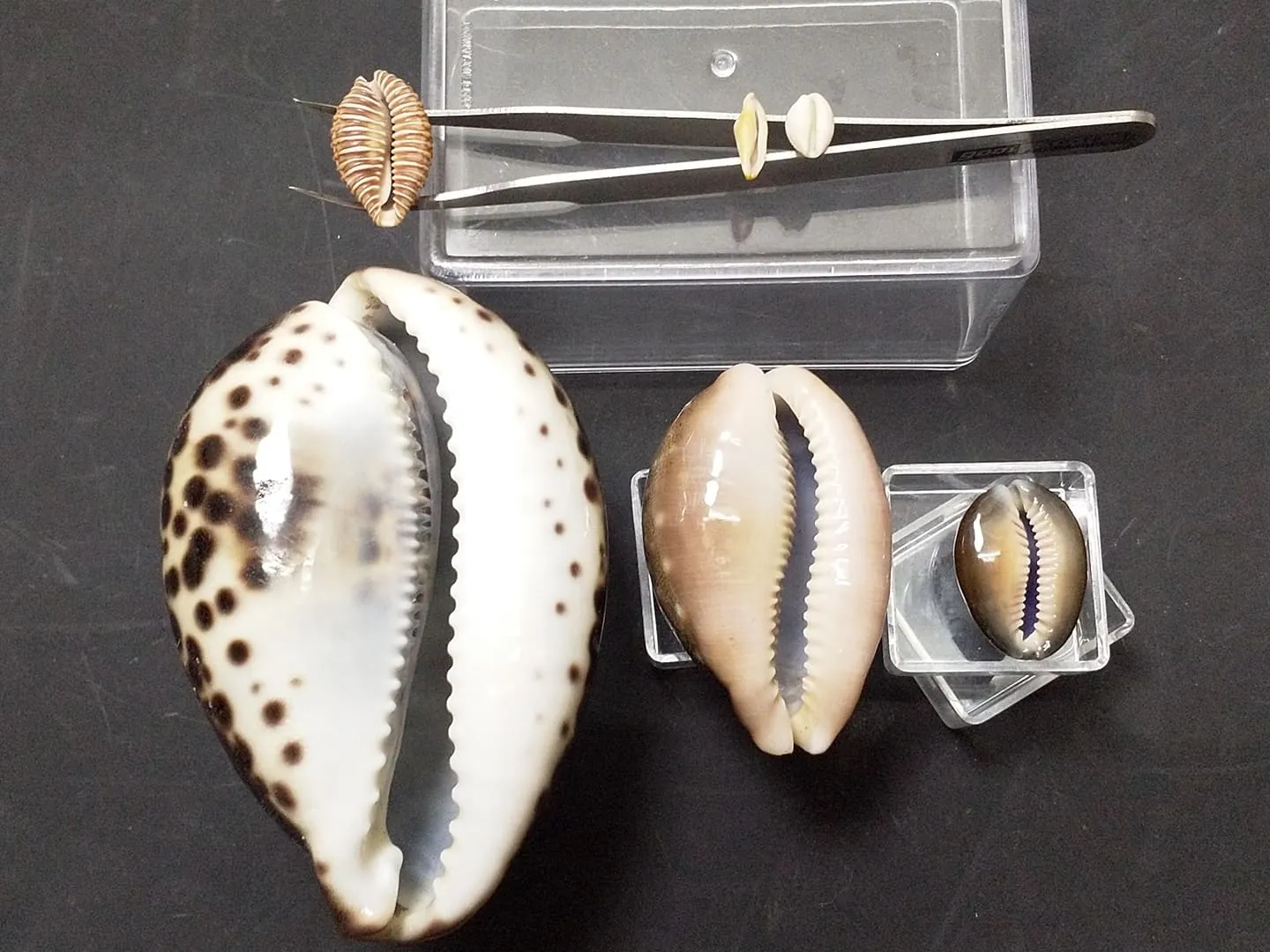
Cowries, ovulids, cyphaeids
Among the three egg-shaped shell families (cowries, ovulids, cyphaeids),
don't forget the other defining feature: an aperture that is slit-like.
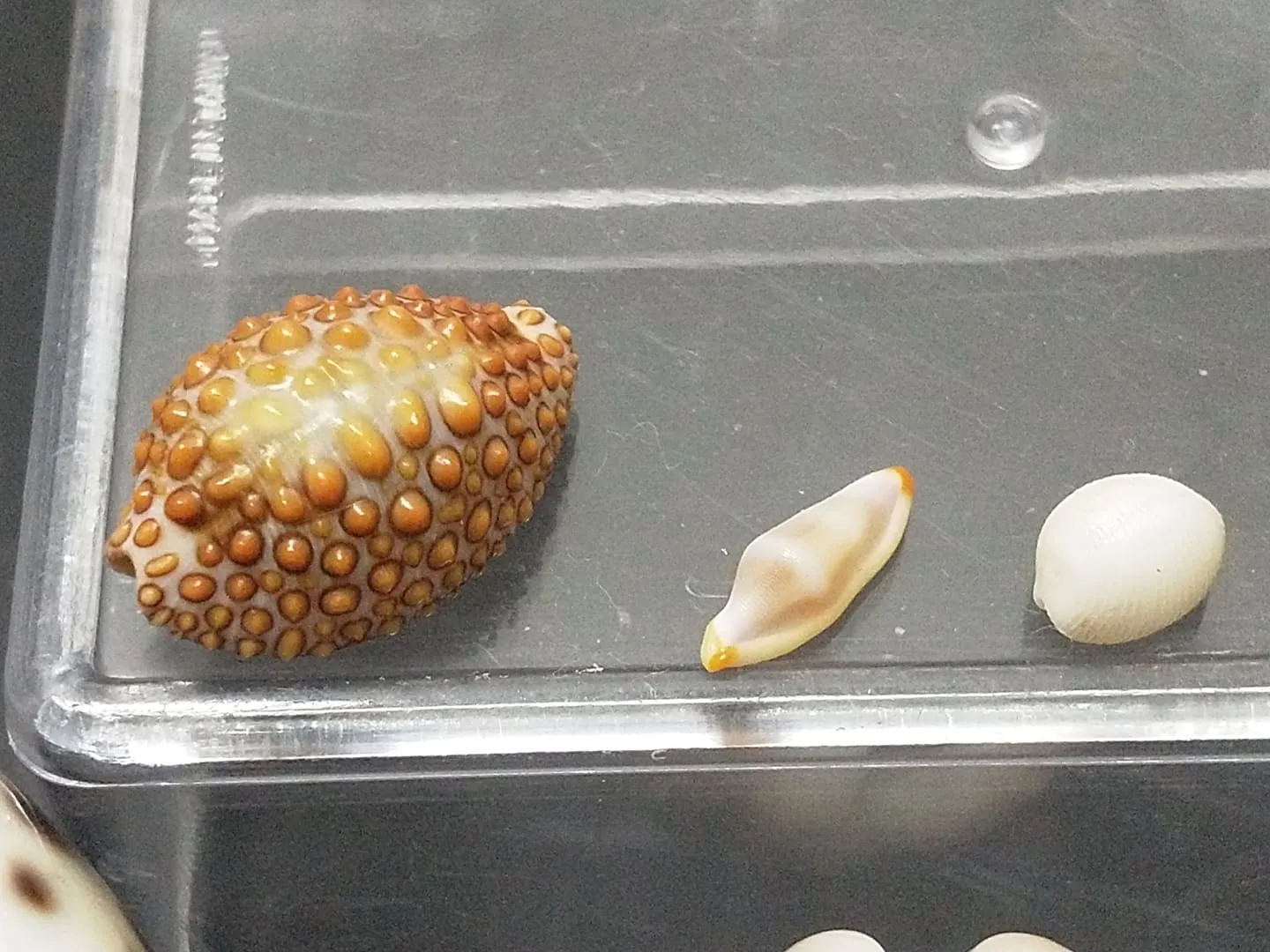
Left: pustulate ovulid (not found in Taiwan) Centre: Calpurnus verrucosus Right: white rice cypher shell
After all, most ovulids do not look particularly egg-shaped.
Shell Field Guide Step 4: "Elongated shell, elongated aperture"
Pick out any shell whose aperture appears to run all the way to the bottom — the target this time is "elongated shell, elongated aperture."
The definition is a little fuzzy, so for now just pull out anything that could plausibly fit.
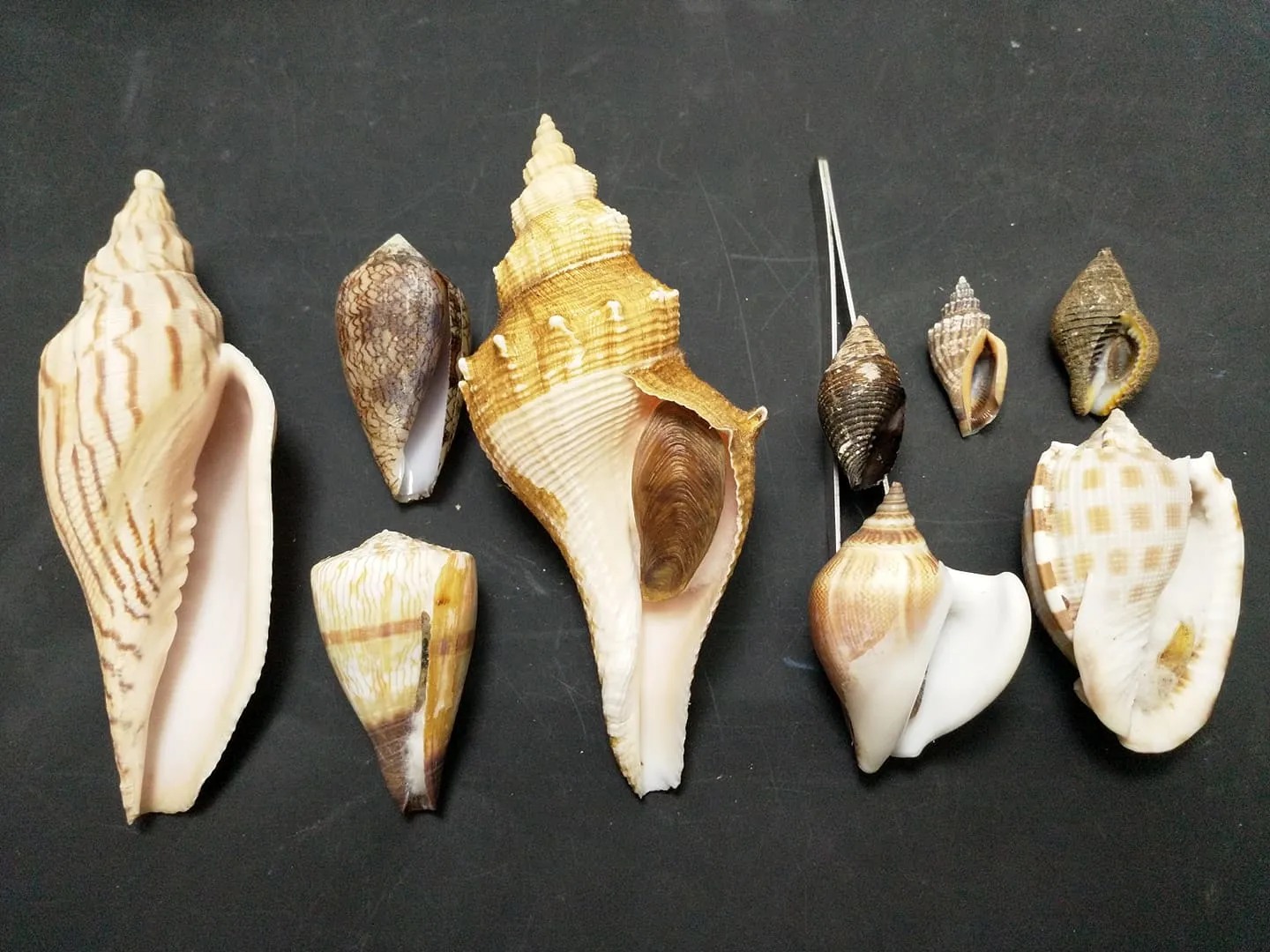
Cone shells, strombids, tibia shells
According to our notes, first identify the three typical types (cone shells, strombids, tibia shells).
Start with the easier ones to distinguish — do you remember the "stromb notch" we mentioned?
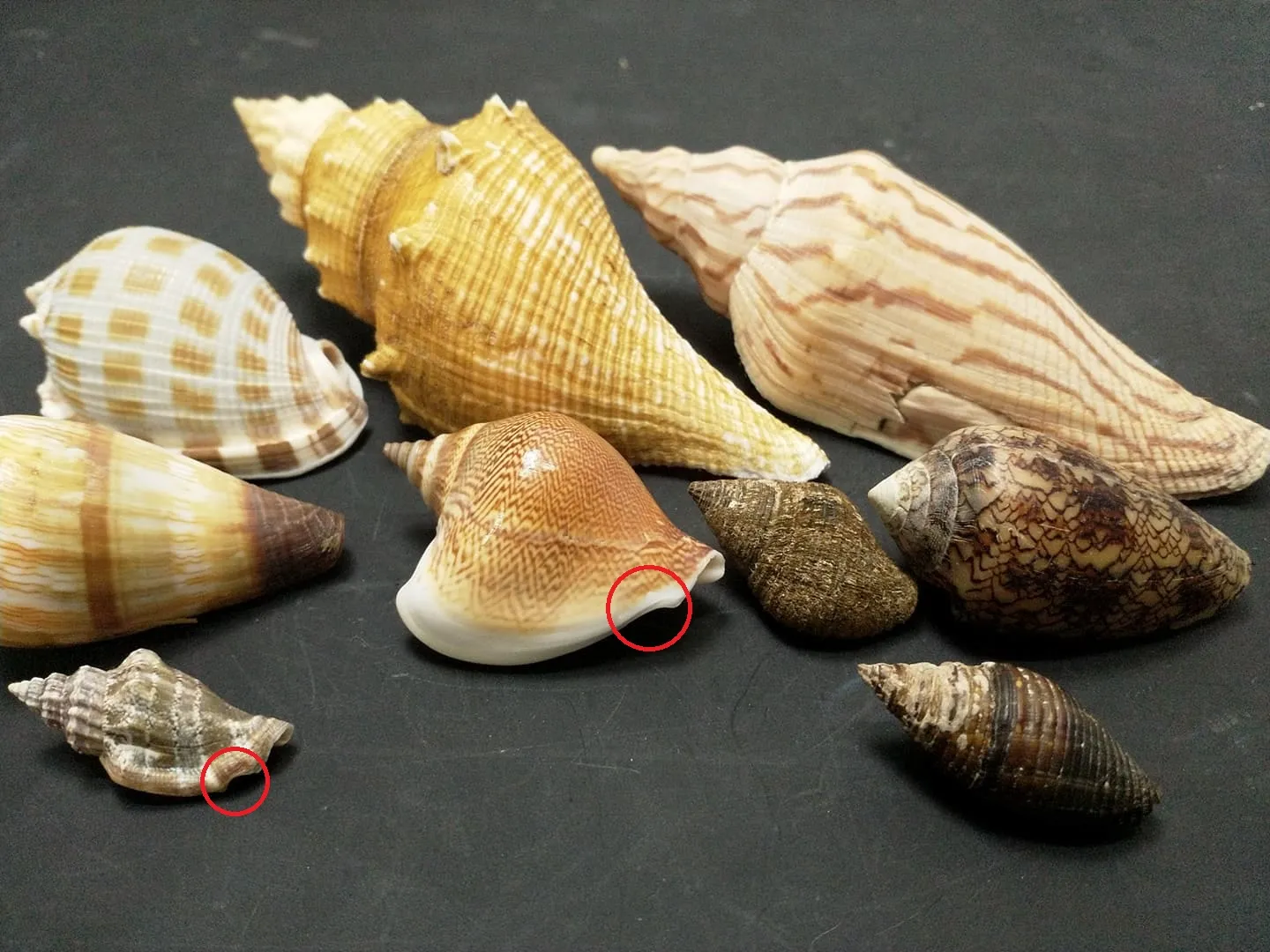
The stromb notch
By observing from different angles, strombids can be distinguished quite easily.
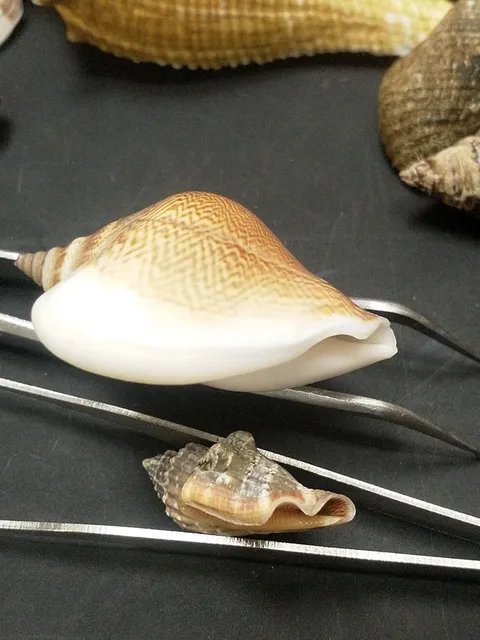
Top: Lambis violacea Bottom: Strombus mutabilis
Next, identify the cone shells — a name most people are quite familiar with.
If you still can't tell which ones are cones, you can use the ratio of spire to aperture as a reference.
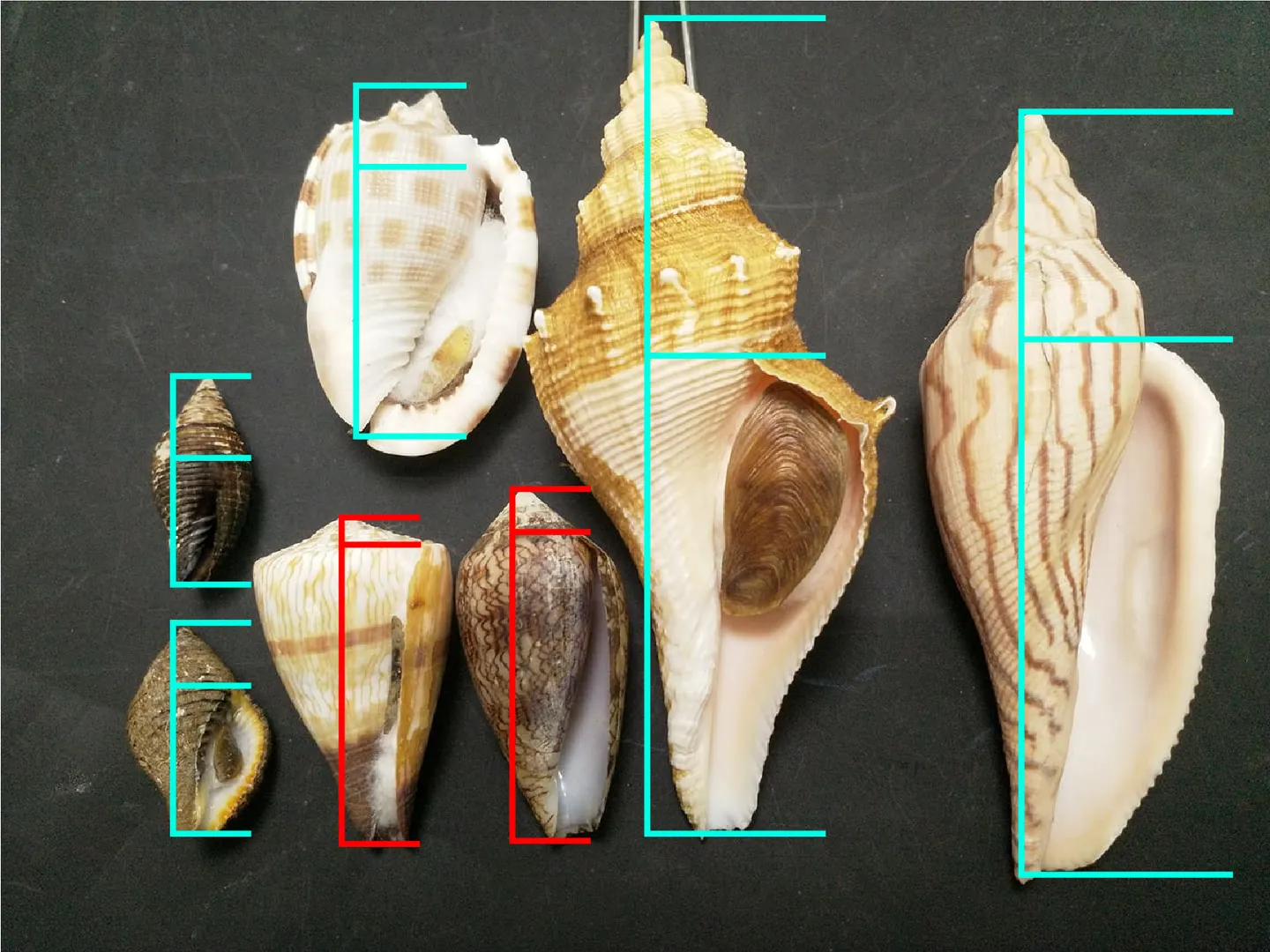
Use the ratio of spire to aperture as a reference
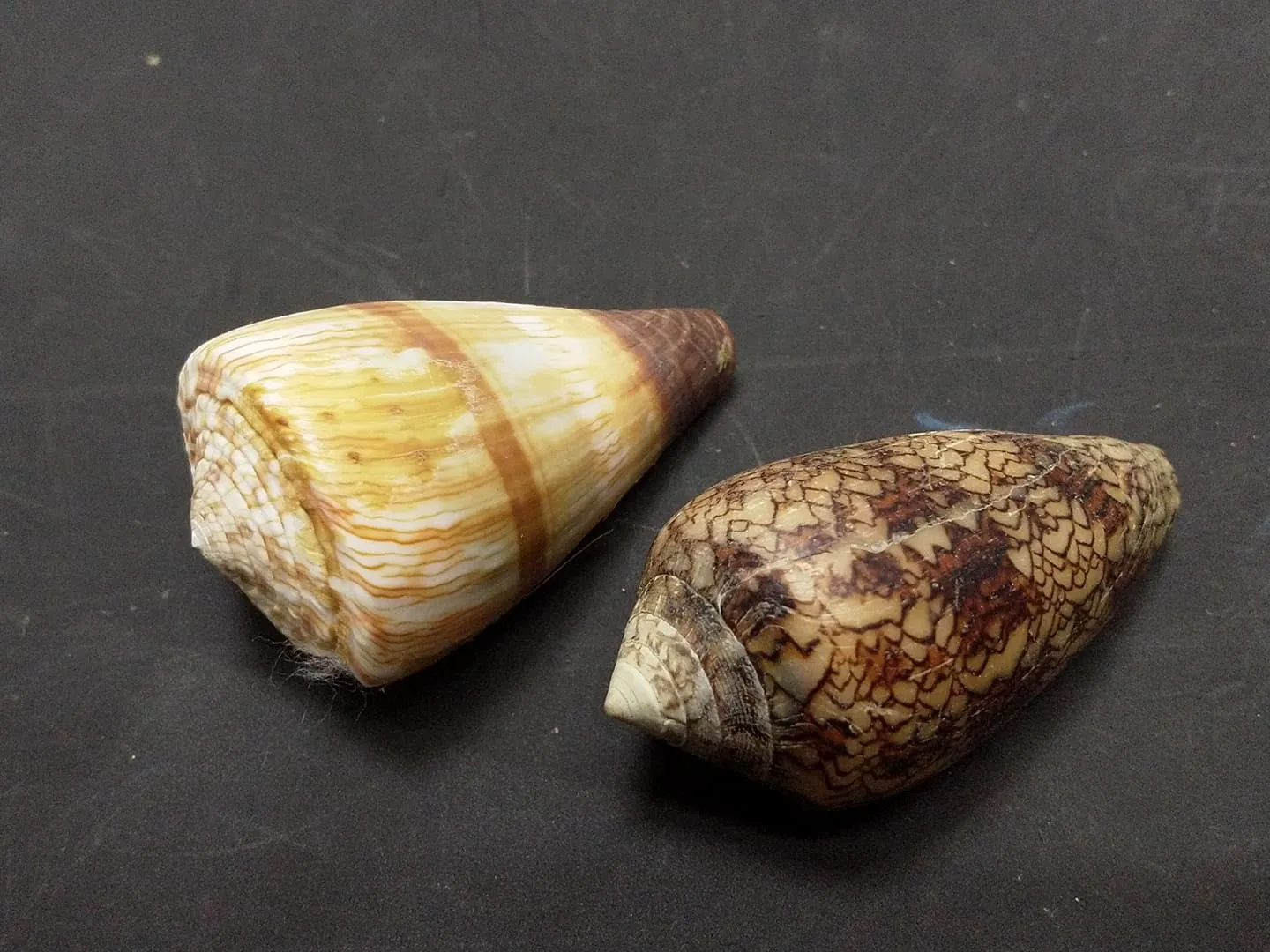
Left: Conus lividus Right: Conus textile
Next, we set aside the remaining shells (excluding tibia shells, which have a distinctive shape and did not appear this time).
These shells do not belong to the three categories in our notes.
Shell Field Guide Step 5: "Round shell, half-moon aperture"
Next come the stone-like "round shell, half-moon aperture" shells.
These shells rarely have spines and do not have the spire-height variation we saw above.
They are easy to pick out — you could even sort them in the very first pass.
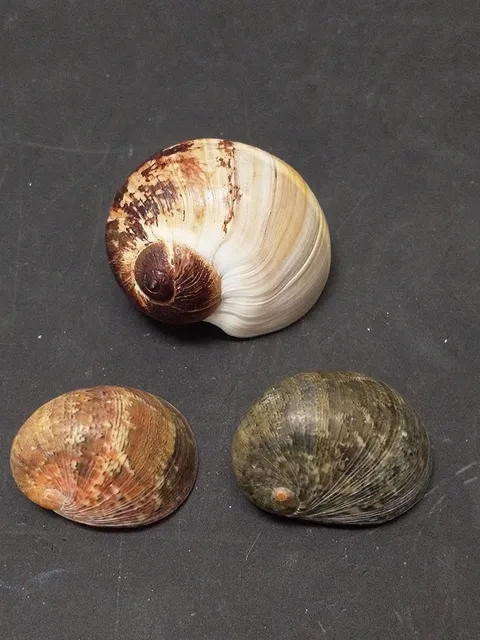
Nerites, moon snails
This category, however, encompasses both (nerites and moon snails).
If you are uncertain the first time you encounter one, you can refer to the size of the callus as a guide.
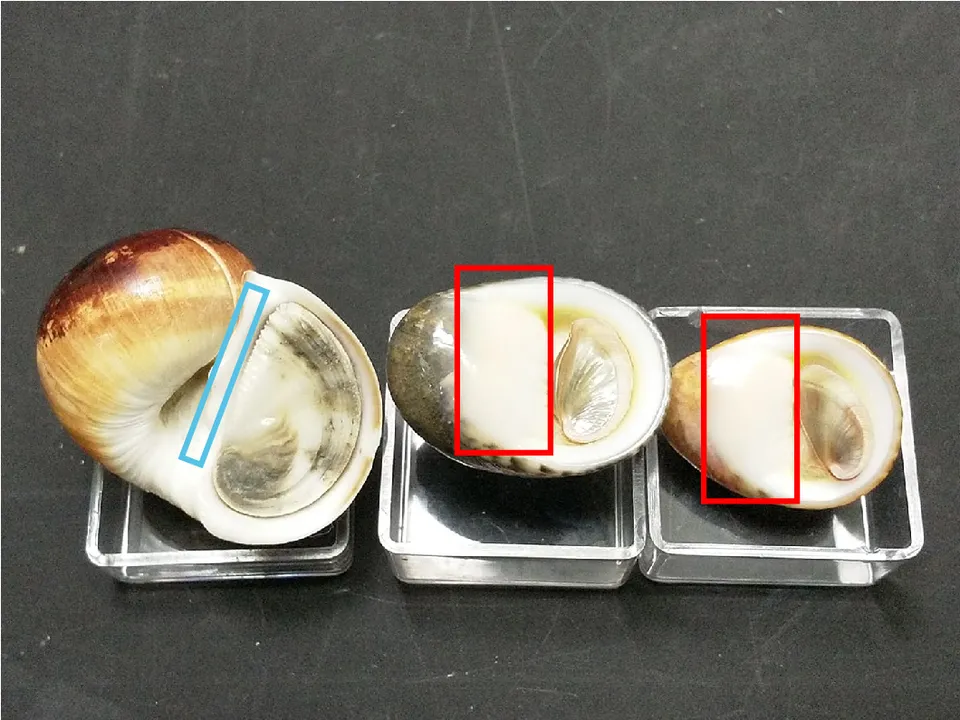
Left: Natica stellata Right: Nerita albicilla
-
Shell Field Guide Step 6: Advanced (see Episode 3: Marine Shell Identification Part 3 – A Key to Enter the World of Shells: 26 Family Classifications)
If none of the five steps above have identified which family a shell belongs to,
you can begin to venture into slightly more complex territory — the content of the previous episode:
Tonnoidea superfamily (tun shells, frog shells, tritons, helmets)
Muricoidea superfamily (murex shells)
Buccinoidea superfamily (whelks, spindle shells, neptunids)
Miter group (olivids, miters, volutids, volutes)
-
For those approaching this for the first time, there always needs to be a clear characteristic to distinguish shells by.
For the remaining four groups, we can set up a simple SOP
1. First, check whether the inner lip of the aperture has folds — this helps determine whether a shell might belong to the "miter group."
2. Next, check whether it resembles a typical murex shell (spiny and winged, like a stone), and consider the possibility of the "Muricoidea superfamily."
Exceptions that are spiny or winged but not murex: olive shells, latiaxis shells, banded murex…
3. Then compare examples under "Tonnoidea superfamily" and "Buccinoidea superfamily" to narrow it down.
At this point, bring back the shells set aside in Step 4 — the ones that were difficult to categorise in the previous stage.
You will notice that the three shells on the right (red box) have folds; compare them against the typical elongated-shell characteristic of the miter group.
Confirm that two of them match the miter group features, i.e. (olivids, miters, volutids, volutes).
From there, it becomes straightforward to distinguish the four families using the method from the previous episode.
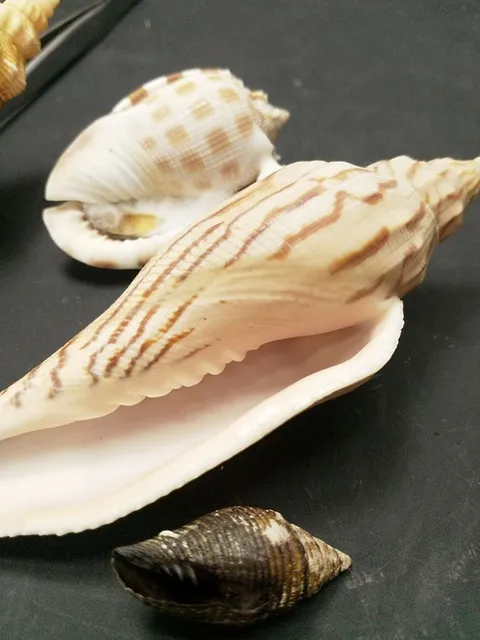
One of the shells differs too greatly in shape from the typical miter group.
Go back and check the other three common groups: Tonnoidea, Muricoidea, and Buccinoidea.
It does not match the murex (spiny and winged, like a stone) characteristics, so murex can be tentatively ruled out.
Based on its elongated aperture and short, stubby siphonal canal, compare it against the morphology of the remaining two groups.
Inner-lip folds, a low spire, and some resemblance to species in the Cassidae family under Tonnoidea are noted — begin searching for similar examples.
The classification can then be gradually confirmed.
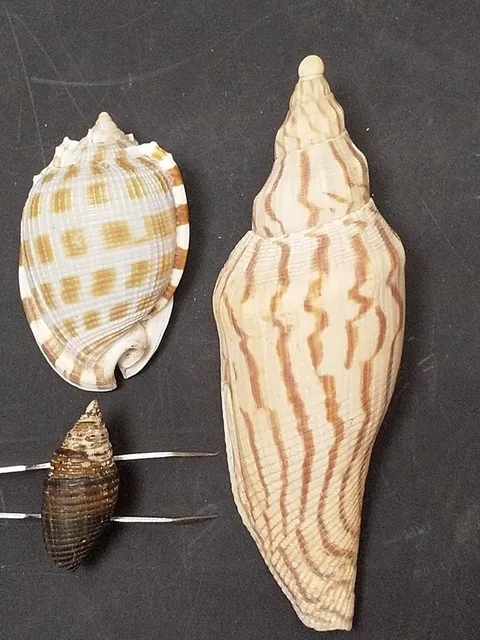
Top-left: Phalium bandatum Bottom-left: carved miter shell Right: lightning volute
Next, move on to the two shells on the left (blue box). With murex ruled out, narrow the search down between "Tonnoidea" and "Buccinoidea."
Tonnoidea (tun shells, frog shells, tritons, helmets):
For these two shells, the shapes are too different from tun shells and helmets — eliminate immediately.
The axial and spiral ribs are also not as pronounced as in typical frog shells or tritons, so the likelihood is low.
Buccinoidea (whelks, spindle shells, neptunids):
The shell on the right matches familiar whelk characteristics: short siphonal canal, moderate spire height — keep.
The shell on the left matches familiar spindle shell and neptunid characteristics: long siphonal canal, moderate spire height — keep.
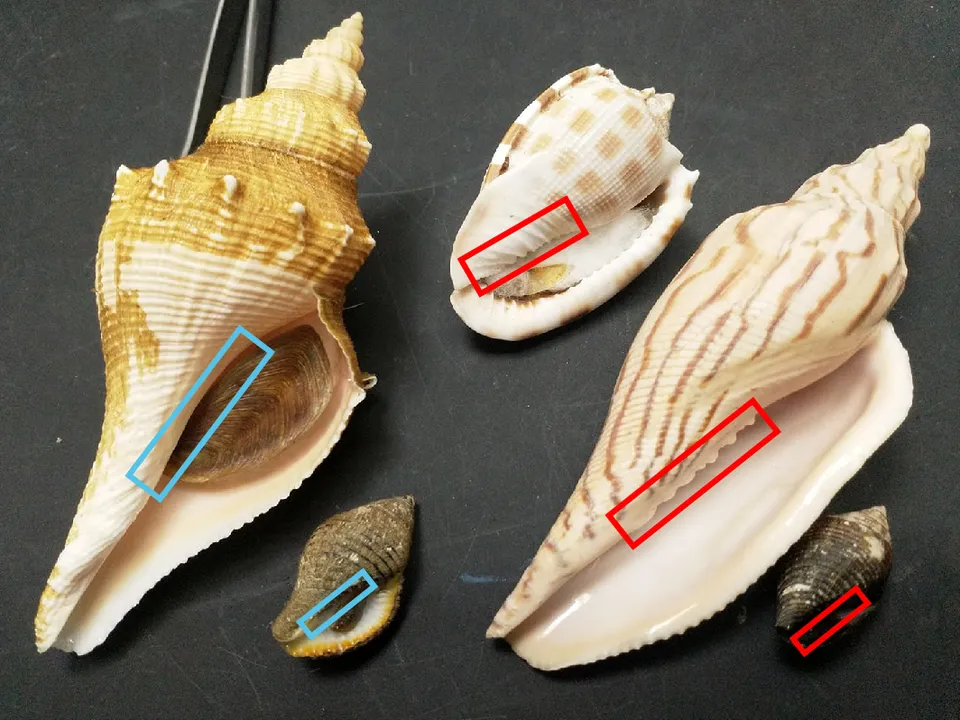
After comparison, the left shell is found to be remarkably similar to the neptunids commonly eaten at seafood restaurants.
It can essentially be confirmed as a neptunid species.
As for the right shell, working from the suspicion that it is a whelk, a wide search for whelk examples is carried out.
※ The image below supplements with examples of a large whelk and a small whelk.
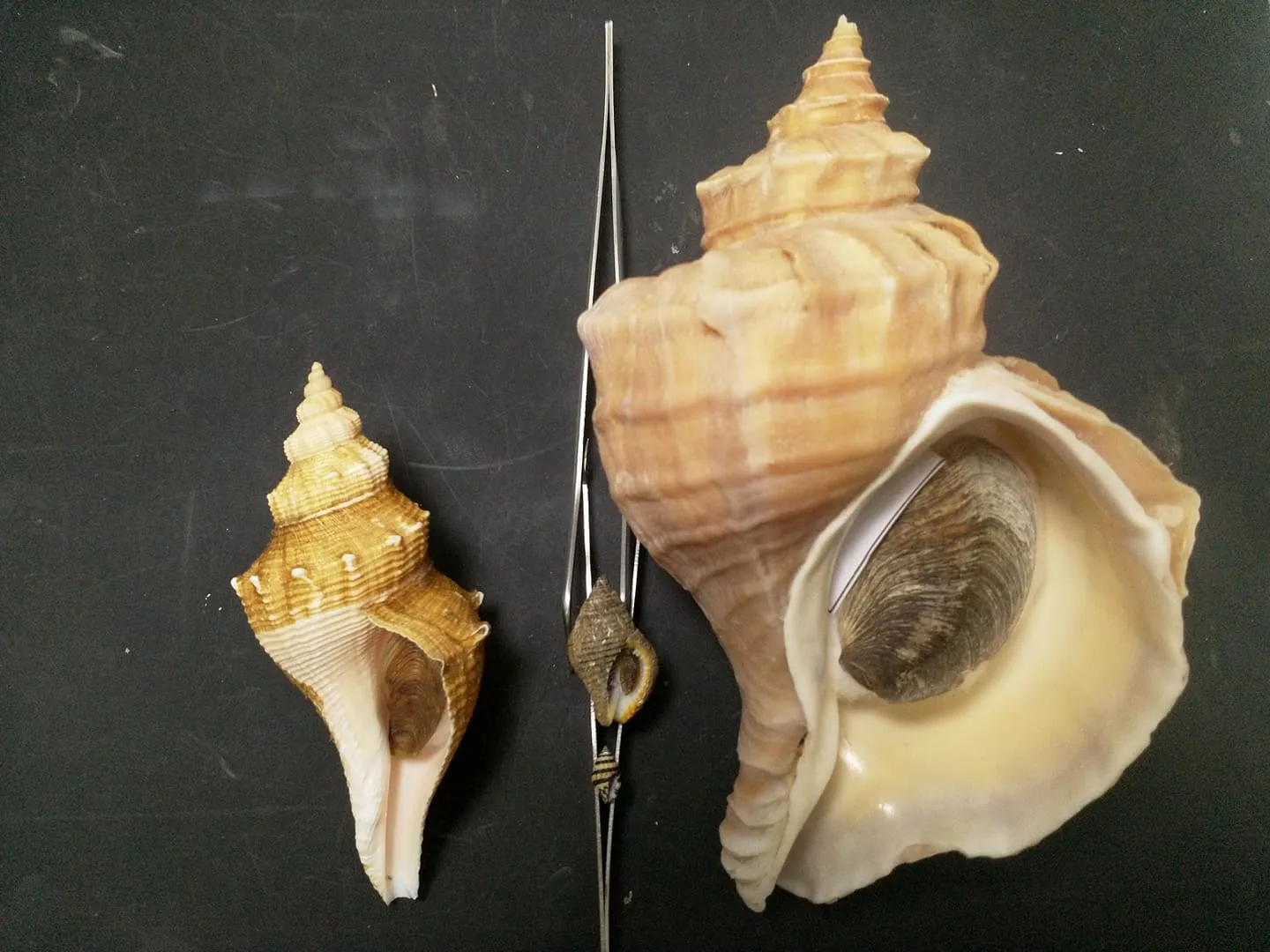
Left: Kawamura's neptunid Centre: coarsely-ribbed whelk Centre-bottom: zebra whelk Right: Ezo whelk
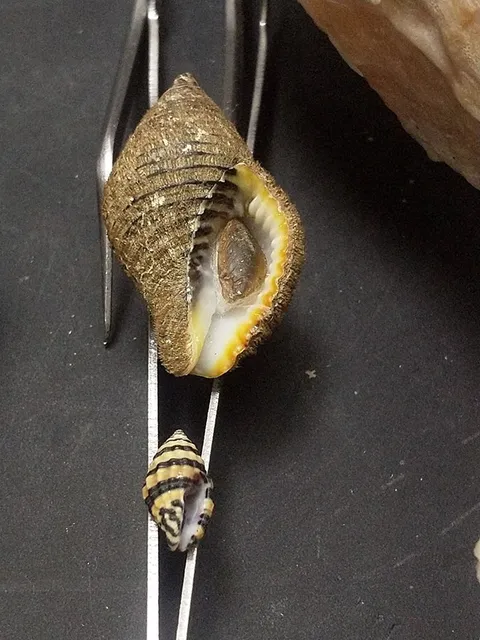
Top: coarsely-ribbed whelk Bottom: zebra whelk
-
Shell Field Guide Step 7: Step 7
The last four shells still to be classified.
Shells with prominent spines are very close to our mental image of murex shells.
So the two on the left are separated out directly, labelled as Muricidae, and can now be taken to a field guide for further identification.
The two on the right, however, stray a little too far from the (spiny, winged, stone-like) murex archetype.
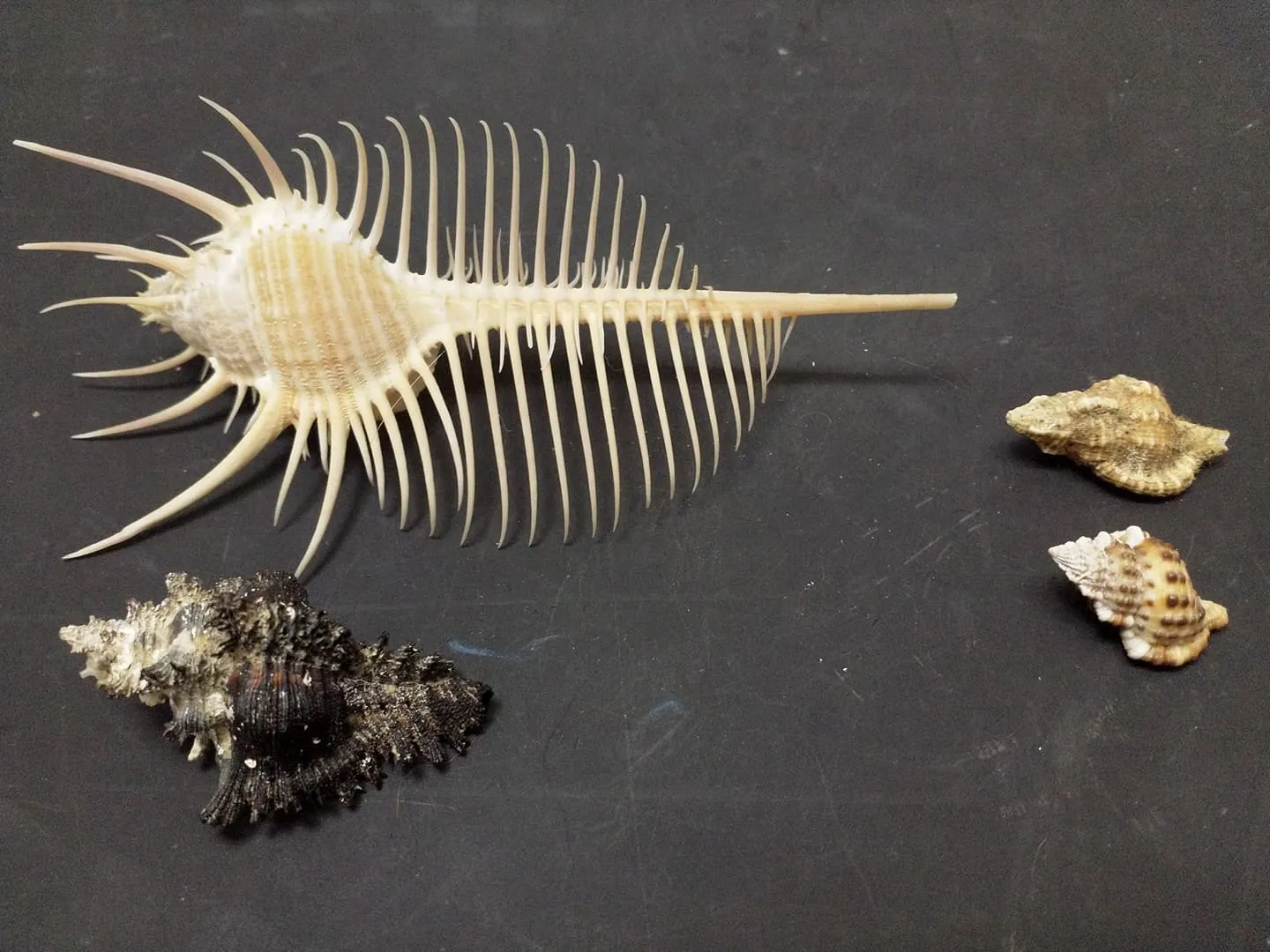
After checking through all the groups listed above, comparing various characteristics, it turns out these two shells deviate slightly from everything described so far.
(No inner-lip folds, no narrow elongated aperture, no familiar comparative species, and they don't belong to the original five types either.)
It then becomes apparent that two families have not yet been considered: frog shells and tritons (both have prominent axial and spiral ribs).
Recall our notes on frog shells and tritons:
Although the two look alike, they are not difficult to tell apart.
The most prominent difference is: frog shells have a clearly defined anterior siphonal canal; tritons do not.
With that, frog shells and tritons can be distinguished from each other.
※ One additional shell supplemented below (right shell)
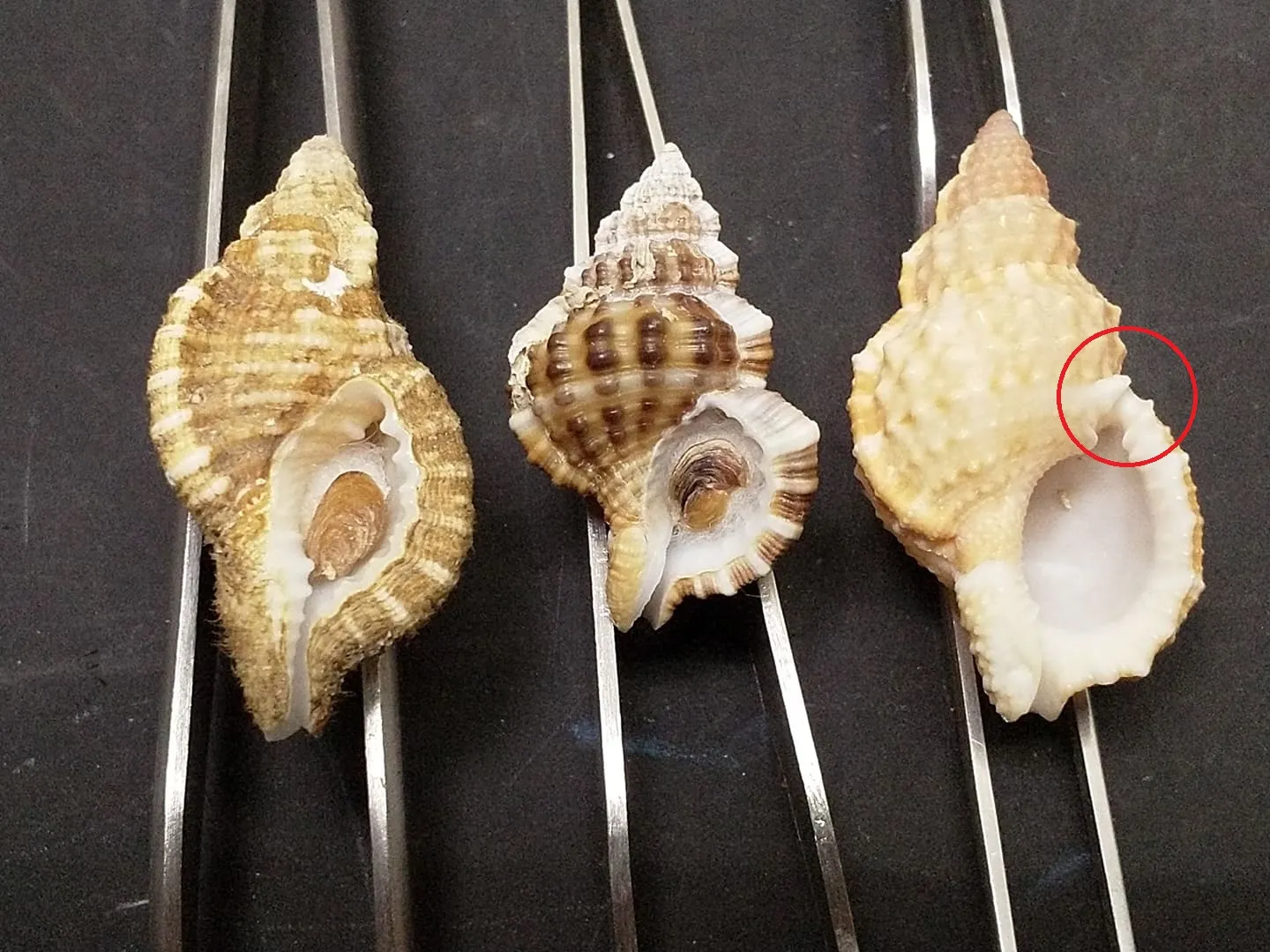
Left: small white triton Centre: Cymatium pileare Right: granular frog shell
An additional image below showing a clearly visible anterior siphonal canal.
※ One additional shell supplemented below (upper shell)
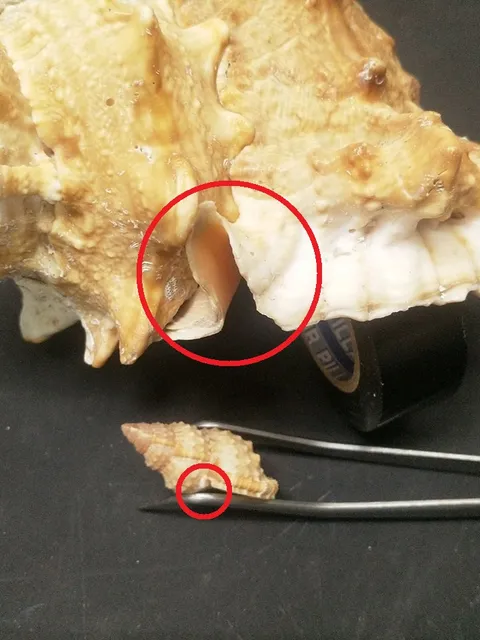
A clearly visible anterior siphonal canal
-
With classification completed to this point, we have taken a broad look at common shell families.
It bears repeating that molluscs number in the hundreds of thousands of species across hundreds of families.
It is truly impossible to cover them all in just a few short articles (there will always be exceptions).
This reminds us to keep broadening our perspective and continue getting to know these charming marine creatures.
Below are a few additional species that we have not yet covered in these four episodes.
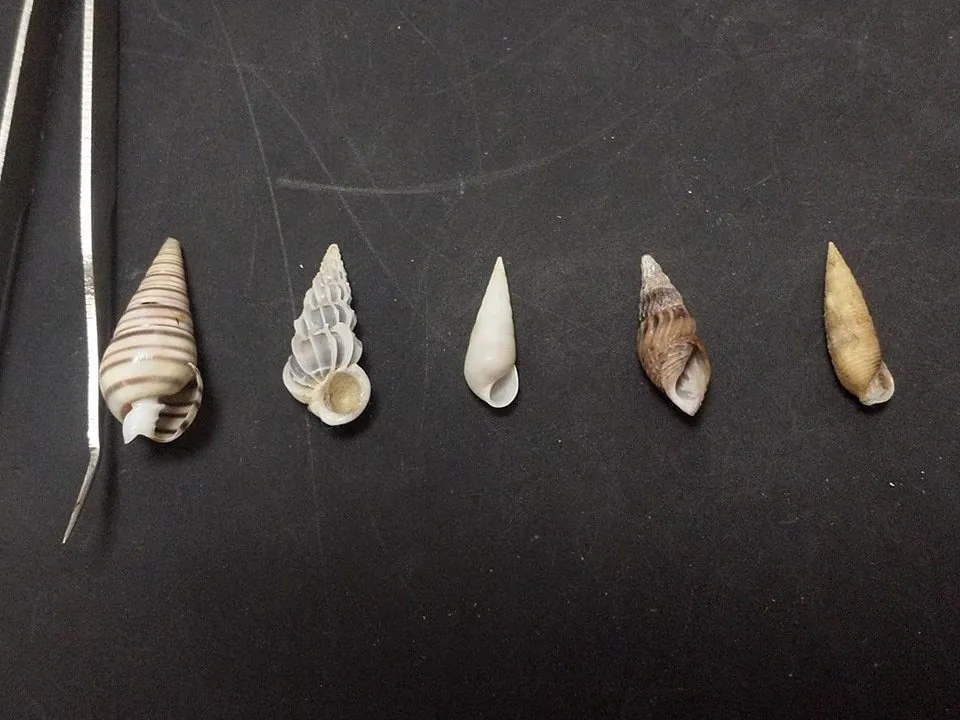
Small lion's paw shell, small lion's paw shell, white porcelain shell, ridged freshwater snail, pale-banded cerith
From left to right:
(Turritellidae) banded turritella
(Velutinidae) small velutina
(Triviidae) white trivia
(Thiaridae) ridged melanoides
(Cerithiidae) pale-banded cerith
These species can likewise be found in Taiwan's shallow seas, intertidal zones, and even at river estuaries.
Remarkable, isn't it! They look almost identical on the outside, yet their taxonomic classifications are worlds apart!
-
Next time (Episode 5), we will talk about shell quality.
The main focus will be on distinguishing between "tourist shells" and "specimen-quality shells,"
interspersed with examples of naturally worn shells that are easy to misjudge.
(After all, most people's introduction to shells begins with beachcombing.)
The examples shared will be drawn as much as possible from the 24 families introduced above.
We hope everyone can come to know shells — and the ocean — a little better together.
Related links: