Contents(3)
We're delighted that, just before the winter cold front swept in, the Editor had the chance to visit Manta European Cuisine and soak up the warm energy of a community deeply in love with the sea. This gathering — the Ocean Artisans' Story Feast, hosted at Manta European Cuisine — brought together three specialist speakers from very different corners of the ocean world: Sea Turtle's Life, Mermaid Ocean, and Lovelife Stone. Each of them shared what the ocean means to them.
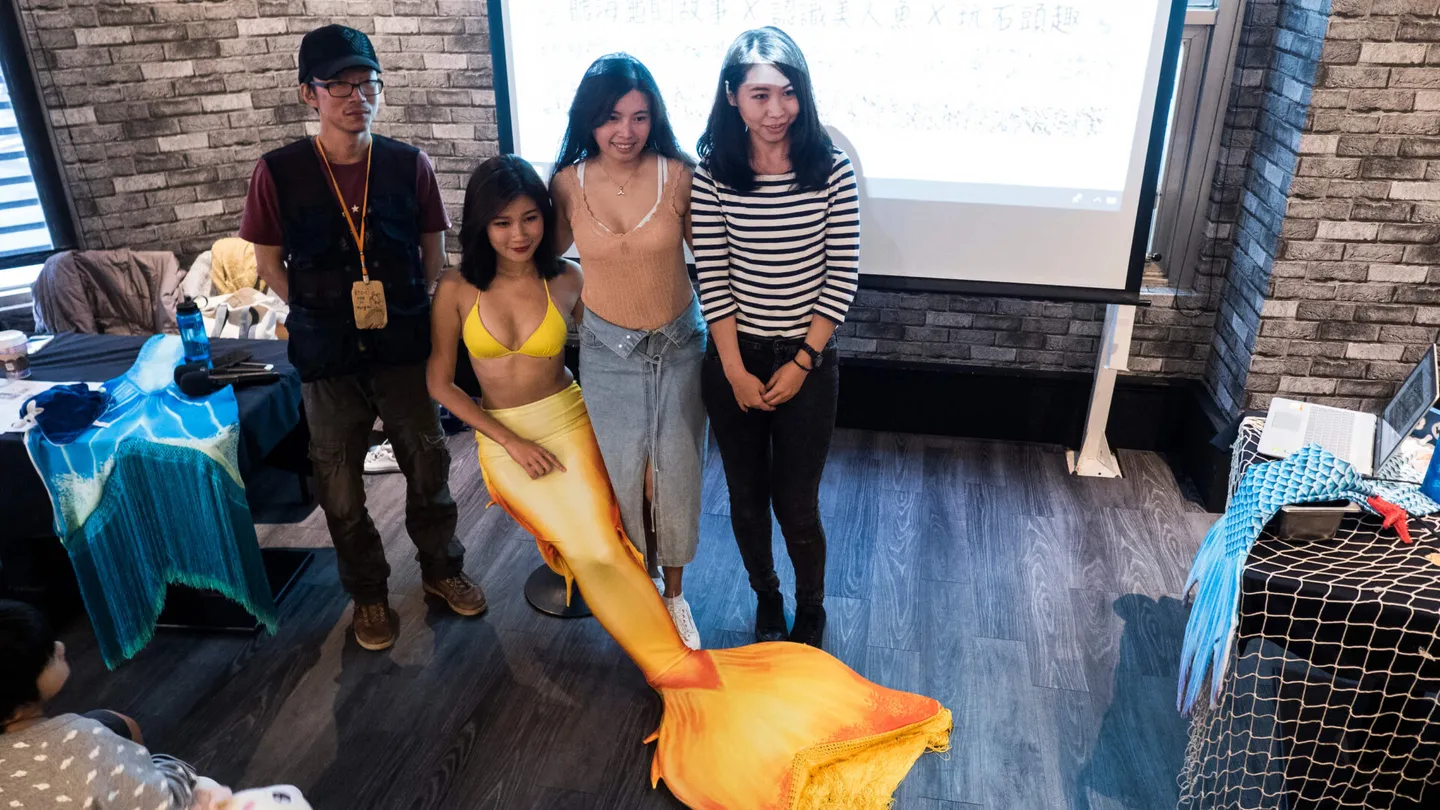
Today's speakers, from left to right: Sea Turtle's Life (ShuoYi), Mermaid Ocean (Audrey), and Lovelife Stone (Mei)
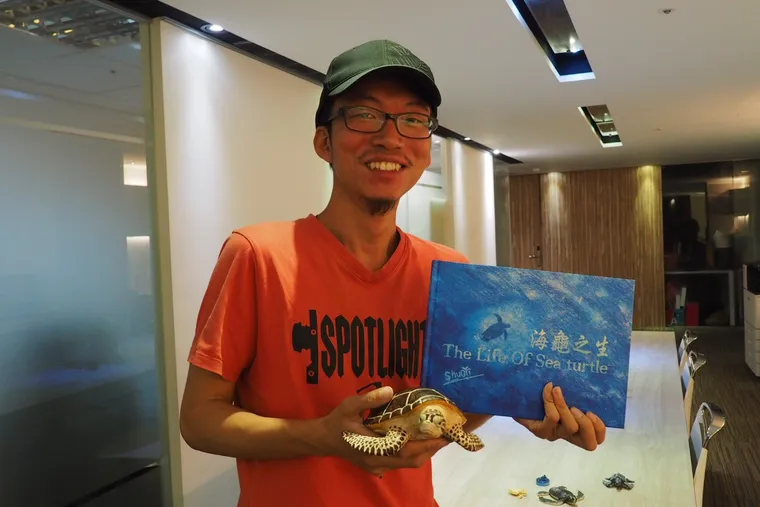
Sea Turtle's Life
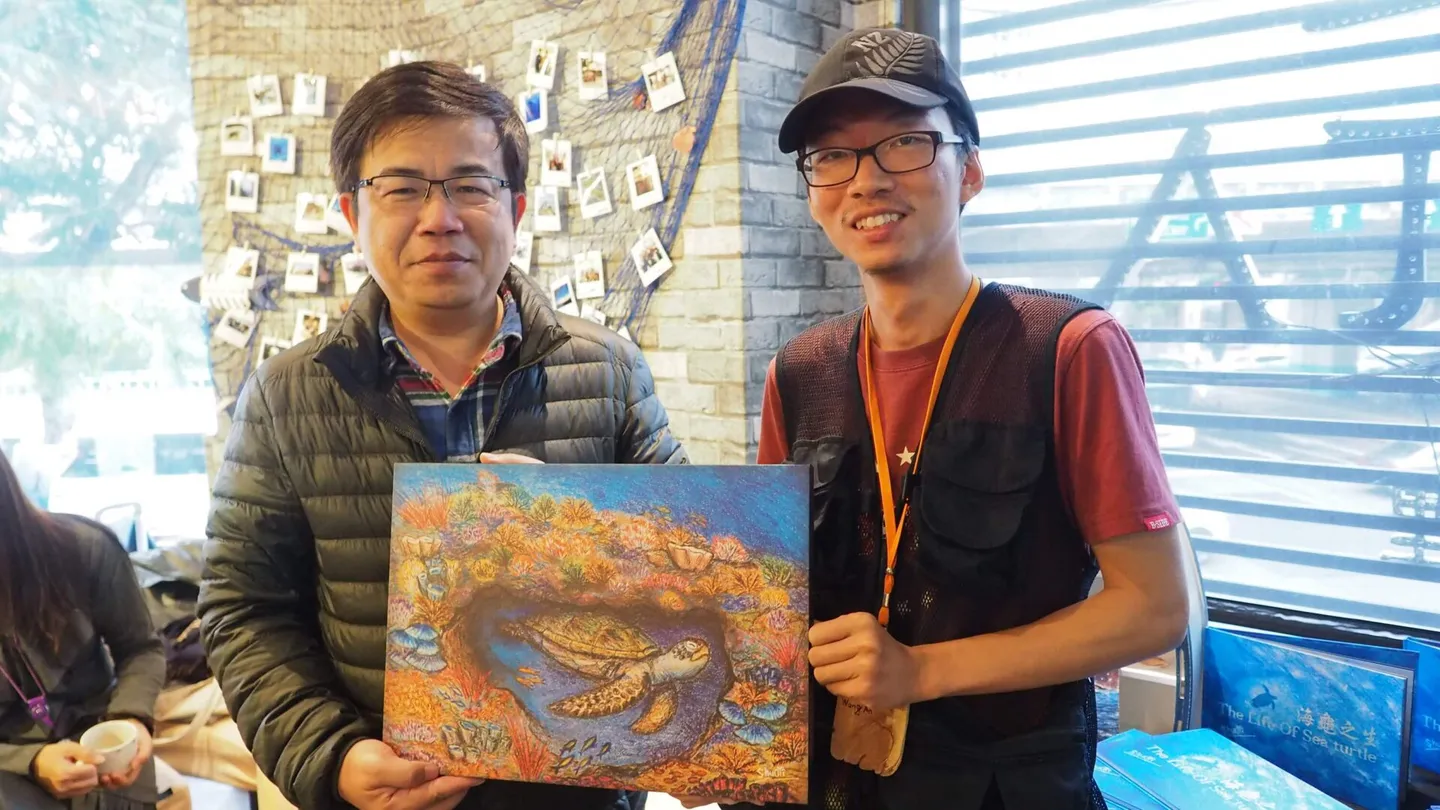
On the right: ShuoYi, the author of Sea Turtle's Life
Remember when the Editor previously interviewed ShuoYi, the author of Sea Turtle's Life? ShuoYi was also one of the featured guests at today's sharing session — let's revisit that earlier interview first! The Ocean Picture Book Every Islander Must Read — Sea Turtle's Life by ShuoYi
This time, beyond sharing the content of the Sea Turtle's Life picture book, ShuoYi also talked about his experience volunteering on Yakushima Island in Japan, and recounted a variety of fascinating sea turtle ecology stories he has observed through years of dedicated volunteer work.
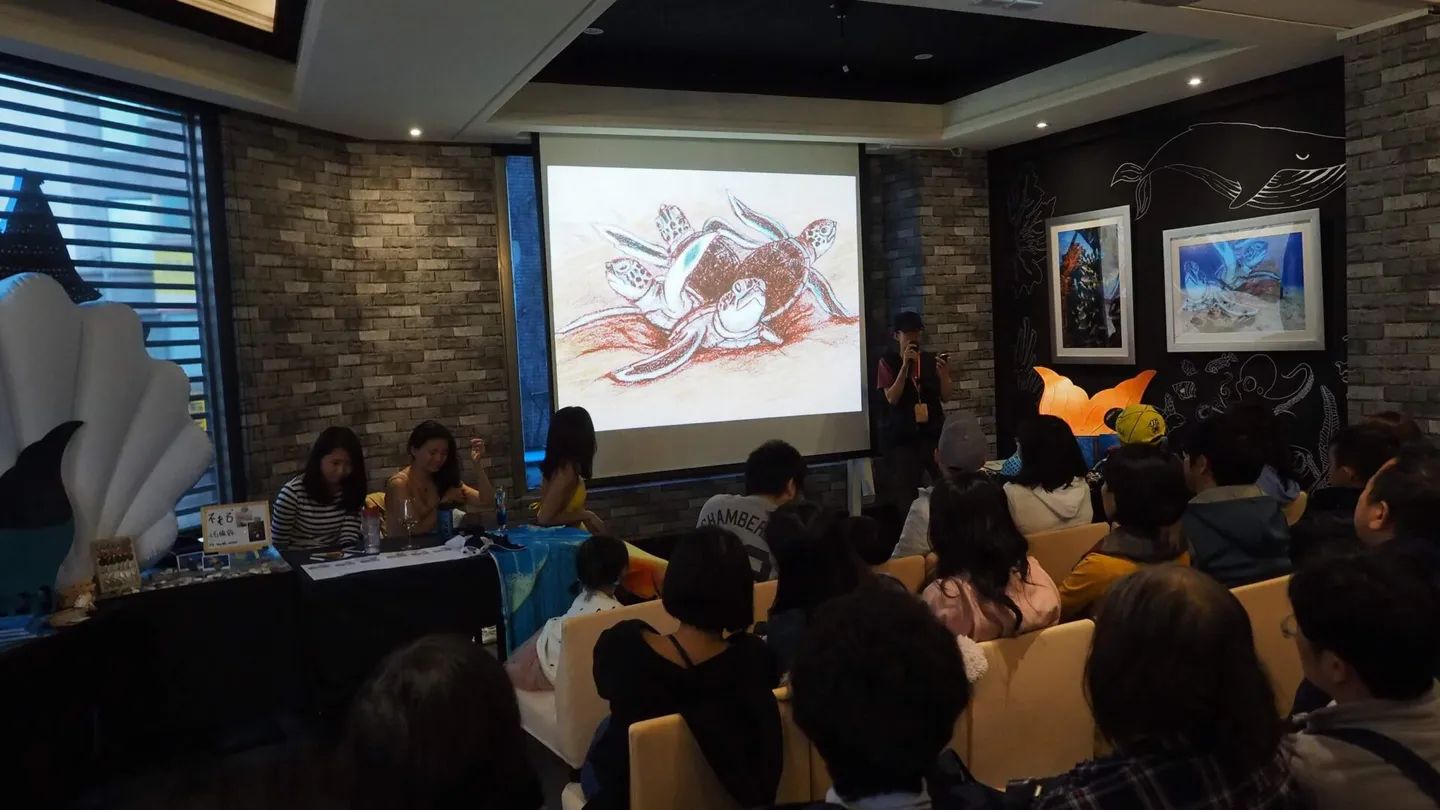
The author's humorous and engaging storytelling style is very welcome — feel free to invite him to share sea turtle stories at your next event!
ShuoYi told us that despite Taiwan's small size, historical records once documented sightings of multiple sea turtle species around the island. Sadly, due to coastal development and the expansion of the fishing industry, wild nesting records have gradually become confined to places like Xiaoliuqiu, Orchid Island, and Penghu — a real loss. The challenges sea turtles face in Taiwan include:
-
Single-use plastics such as plastic bags, which sea turtles frequently ingest by mistake
-
Extensive coastal development — buildings and light pollution from streetlamps deter sea turtles from coming ashore to nest
-
Human pollutants flowing into the sea, which may cause sea turtles to develop fibropapillomatosis (fibrous tumours)
-
Irresponsible land policy — wave dissipation blocks (tetrapods) that cut off the final stretch of a sea turtle's journey home
-
A thriving fishing industry that creates a bycatch problem, making it the leading cause of sea turtle casualties
Taking all of the above into account, it becomes clear just how extraordinarily difficult it is for a sea turtle to return to its original nesting ground. For ShuoYi, his role as a conservation volunteer is to minimise human interference as much as possible — to act as an ecological observer and recorder, documenting shifts in sea turtle populations and emerging threats over the past decade and more.
He closed by urging everyone to reduce plastic bag use, help pick up litter at the beach, respect the regulations of protected areas, and actively participate in marine conservation activities. And of course, if you'd like to learn more about the Sea Turtle's Life picture book, be sure to grab a copy to treasure at home!


Mermaid Ocean
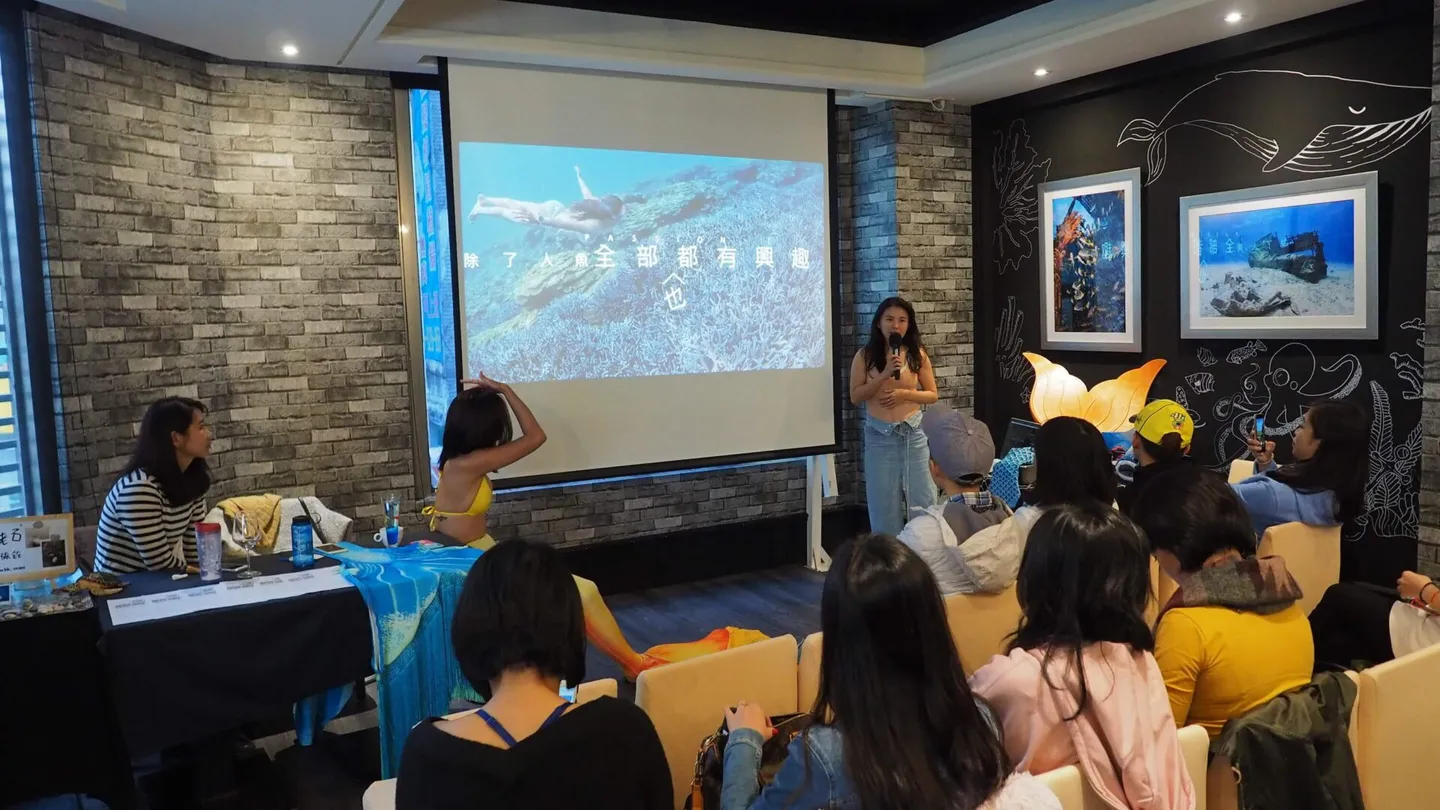
Outdoor girl Audrey begins sharing her story of getting close to the ocean
Audrey's story resonated deeply with the Editor — the starting point of her presentation was strikingly familiar. She opened with the observation that Taiwan is a country that feels remarkably distant from the sea. The moment a drowning incident occurs in any stretch of water, local authorities rush to designate it a danger zone and bar the public from going near it. This kind of thinking — baffling to those of us who love the ocean — is replicated again and again across Taiwan's coastlines and mountain ranges. Fear, perhaps, has prevented us from ever truly connecting with nature.
And so Audrey's goal is to use events and activities to reawaken in the island's people a sense of belonging to the sea. Only by reconnecting people's minds with the natural world can Taiwanese ever hope to break free from the cage of urban life.
City dwellers are constantly buried in their phones and computer screens, multitasking at all times. But when you engage in outdoor pursuits — hiking, rock climbing, freediving — you are forced to be fully present in that single, unrepeatable moment. One distracted step while hiking could send you tumbling into a thousand-metre ravine; in freediving, you must be entirely focused on that one brief breath as you descend into the deep blue and push against your own limits. That focus allows us city people to reclaim a part of our nature that has long been dormant, and to begin a conversation with ourselves.
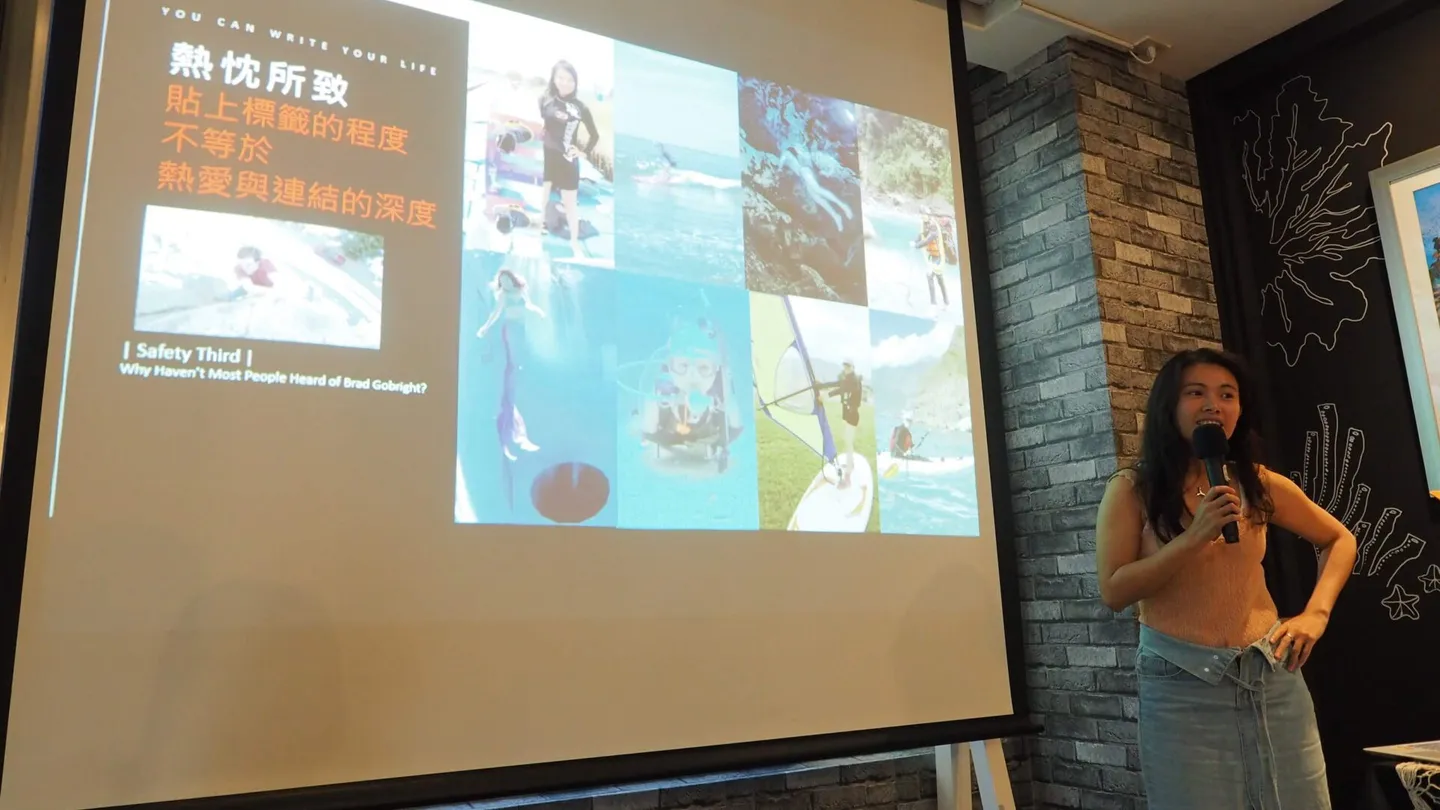
As an outdoor sports enthusiast, she has witnessed both the beauty and the heartbreak of nature with her own eyes
Through her personal experiences in scuba diving and mermaid performance, Audrey has witnessed firsthand the ongoing collapse of the underwater world. Watching marine documentaries from Taiwan and abroad has further opened her eyes to the reality that ocean issues are not merely a Taiwanese problem — they are a challenge facing the entire planet. Perhaps the power of one individual is limited, but change becomes possible the moment we begin to try. That is why she has chosen to start through education, working to shape Taiwanese people's relationship with the ocean from a young age.
Already a certified Divemaster and freediving instructor, Audrey is now embarking on a journey of mermaid teaching and promotion. Beyond training in mermaid performance art, she is committed to spreading the spirit of the Mermaid Ocean Ambassador — instilling through the teaching process the conviction that environmental stewardship must begin with oneself. As well as adult mermaid courses, she hopes that junior mermaid and parent-and-child mermaid classes can help children understand the ocean from an early age.
The presentation didn't just cover mermaid courses — it also offered a fascinating look at the history of mermaid performance, including how mermaids have been described in both Eastern and Western traditions, and the story of Weeki Wachee, the pioneer of commercial mermaid performance in the United States, which began in 1947. Beyond showcasing mermaid performance as a display of strength and beauty, the fact that women could wear swimsuits and earn their own living was, at the time, a powerful symbol of rising female social status. This rich and wide-ranging knowledge left us with a much deeper appreciation of what mermaid performance is truly about.
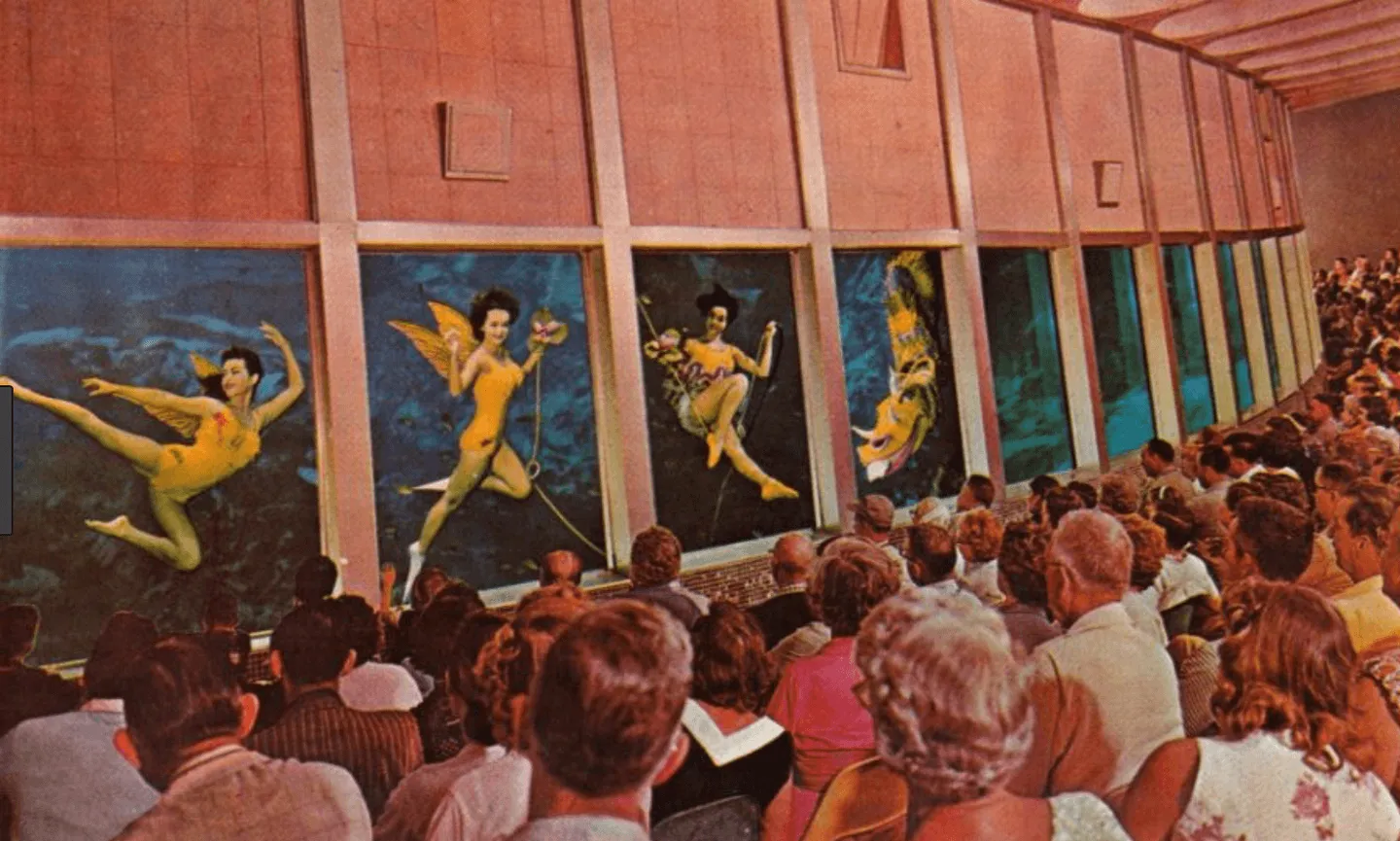
The spectacular Weeki Wachee mermaid show in the United States, 1947
Of course, as the art form has evolved and performance concepts have developed, mermaid shows have moved well beyond fixed poses and choreographed routines in a swimming pool. More and more professional performers are now taking to open water — far more challenging and risky than the calm confines of a pool — to display their graceful underwater artistry. International performers such as Hanna Mermaid are pushing the boundaries of mermaid performance to an entirely new level.
We truly hope that through the efforts of Audrey and her team, Taiwan will one day nurture its very own Hanna Mermaid — a world-class mermaid performance artist!
Lovelife Stone
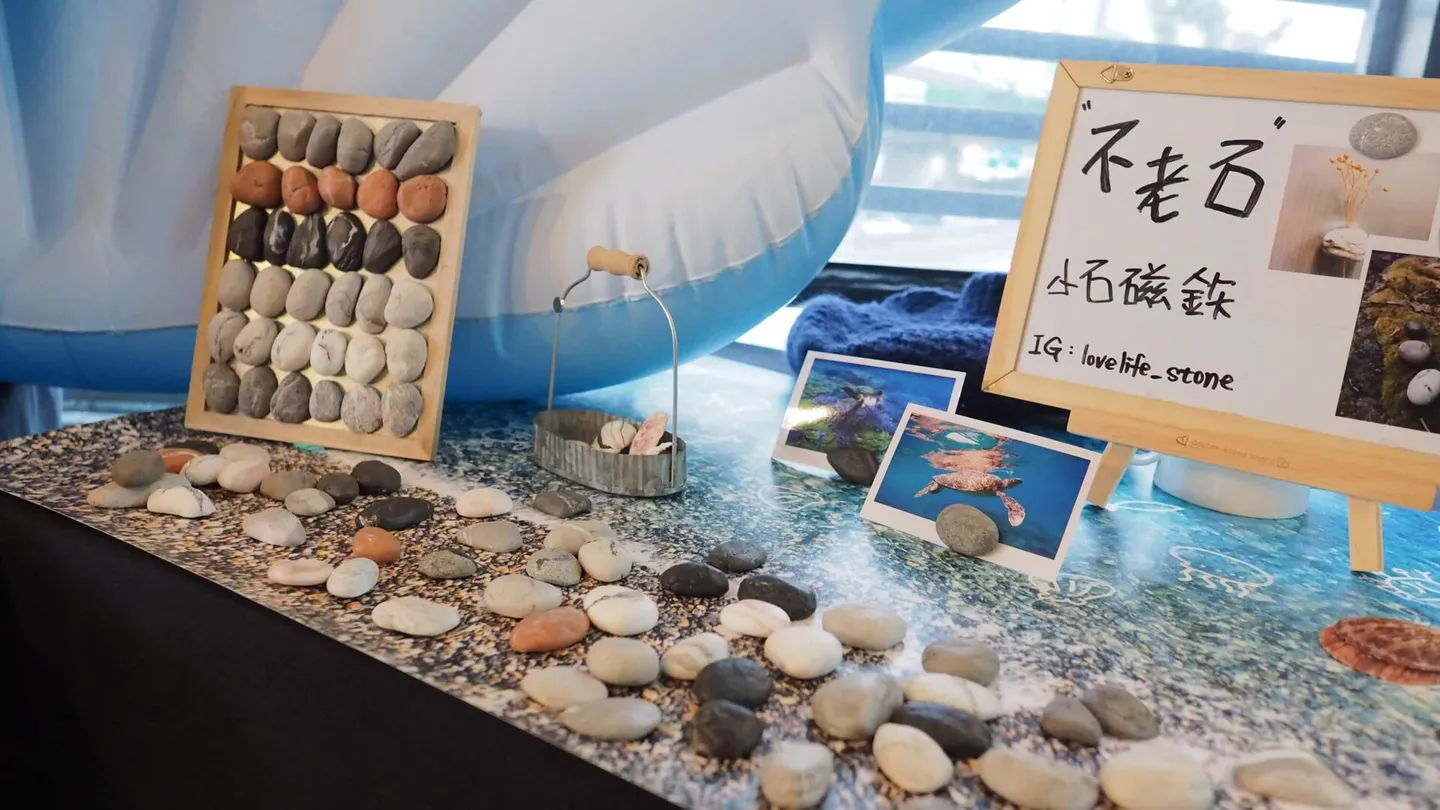
Can you tell that this stone isn't actually a stone?
When visiting the beach, we often come across beautiful stones. Some people bring them home as treasures; others photograph them as souvenirs. But Mei, as an artistic creator, uses air-dry clay as her medium to complete her own body of artwork — Lovelife Stone.
Mei has always had a love of stones, and when she discovered freediving this year, she became acutely aware of the rapid degradation the ocean is facing. Combine that with a market flooded with mass-produced, uniform products, and she felt driven to craft, with her own two hands, one unique, one-of-a-kind "stone" after another.
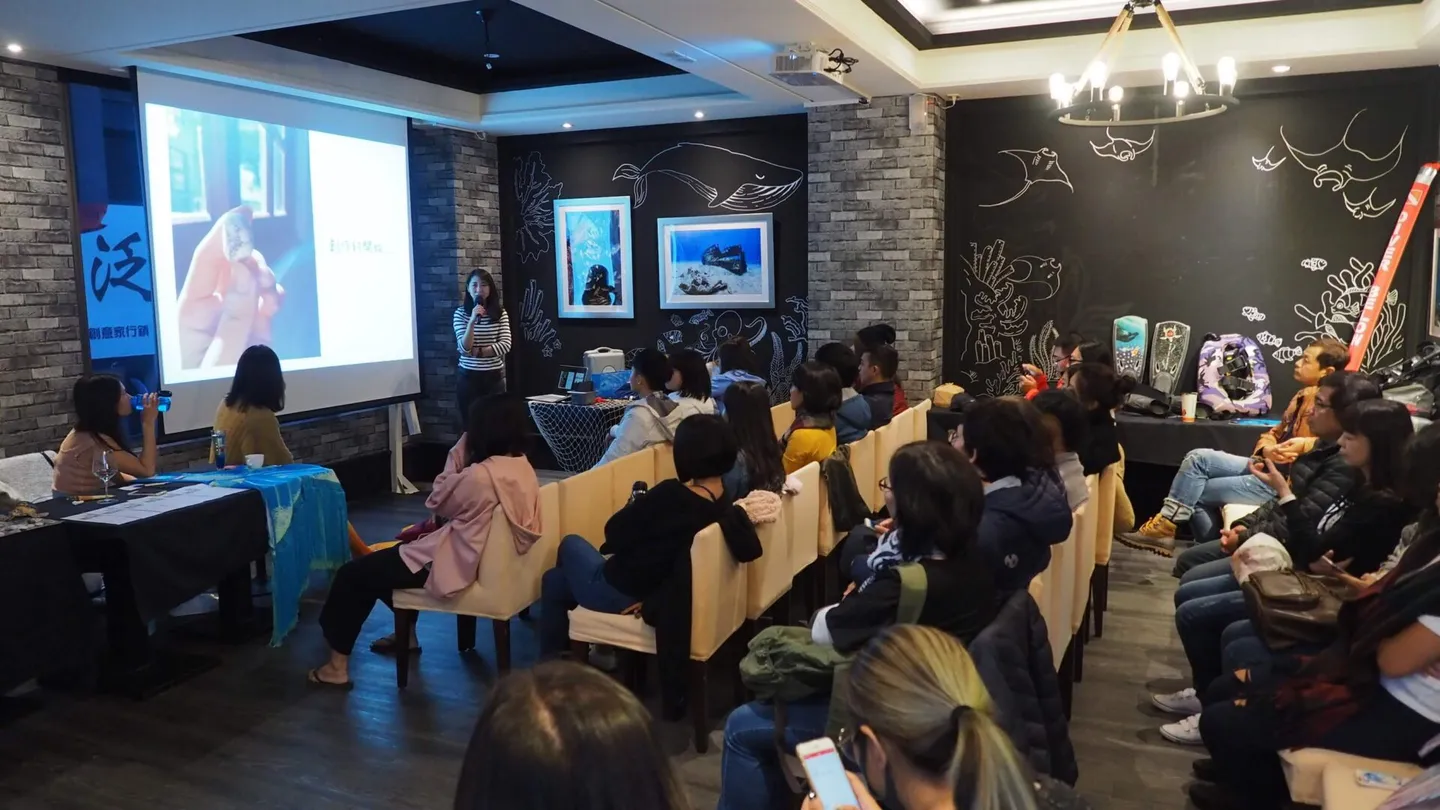
Every stone in nature carries its own story
The process of creating each stone requires you to understand why and how each type of natural stone forms, and in what kind of environment — only then can you replicate one with a similar texture and pattern. Along the way, you quietly absorb a wealth of natural science knowledge. This echoes exactly what the previous speaker, Audrey, shared: only through direct, personal experience and firsthand observation can we truly awaken our appreciation for the natural world.
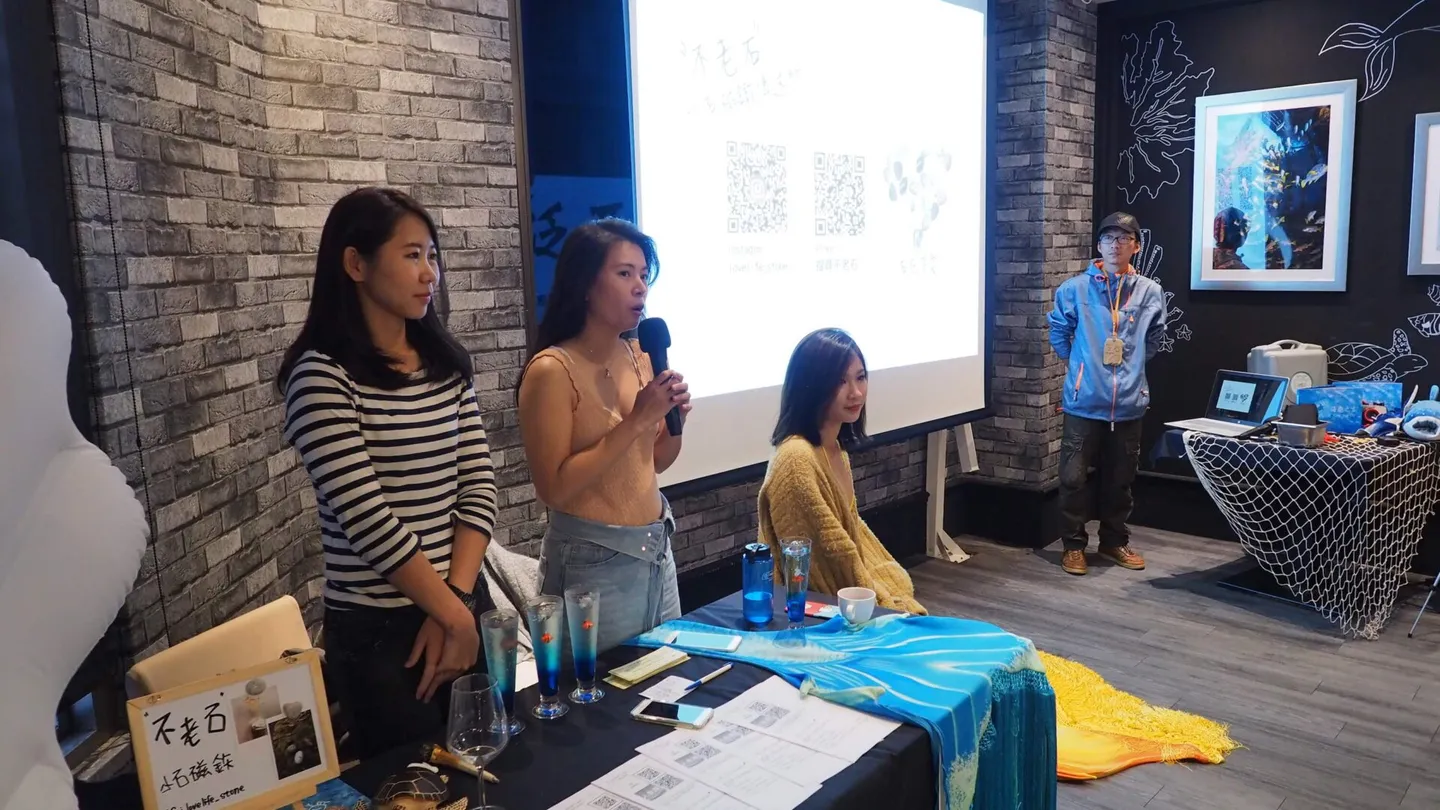
After the session, the audience engaged enthusiastically with the speakers
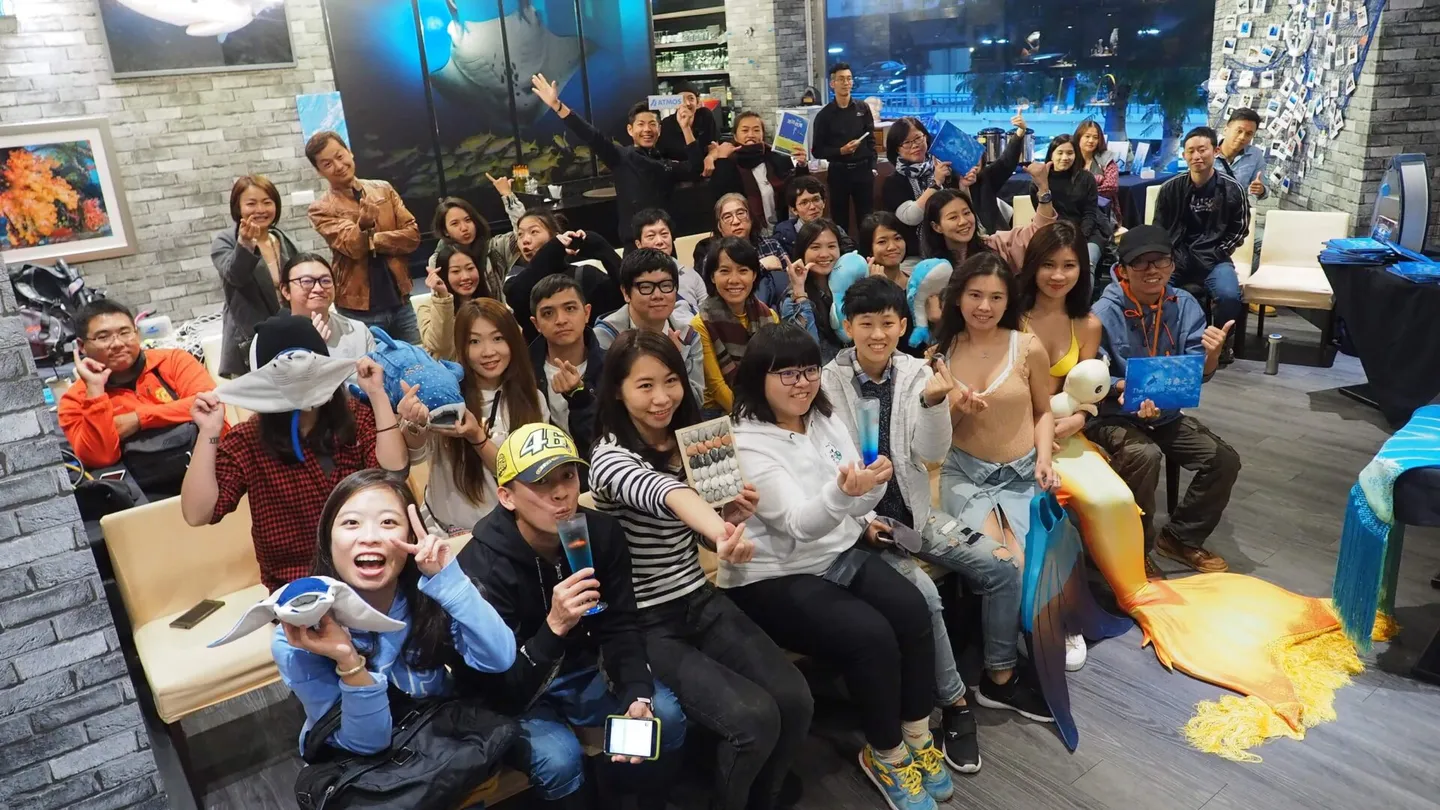
A truly enriching talk, brimming with everyone's passion for the ocean
Further links:
![[BlueTrend Mini Classroom] Getting to Know the Legendary Life of a Mother Octopus Through a Guide to Cephalopods](/_astro/IMG_6618_Z199Jz9.webp)